Authored by

Aayush Ghosh Choudhary
Co-founder & CEO at Scrut

Achieving ISO 27001 certification: Tips and guidance

In an era where data breaches and cybersecurity risks are omnipresent, businesses need more than just a robust IT infrastructure to protect their sensitive information. 

ISO 27001, one of the most recognized information security standards globally, provides a systematic approach to managing and safeguarding data assets. 

This comprehensive guide will take you through the intricacies of ISO 27001 certification, equipping you with the advice and guidance necessary for your organization to achieve this prestigious recognition.

Understanding ISO 27001

What is ISO 27001?

ISO 27001 is an international standard for Information Security Management Systems (ISMS). 

It is published by the International Organisation for Standardisation (ISO) and the International Electrotechnical Commission. ISO 27001 consists of 114 controls that are divided into 14 categories. 

Implementing the full list of ISO 27001’s controls is not mandatory since they are simply a representation of possibilities that an organization may consider. ISO 27001 offers a systematic approach to managing sensitive information, ensuring its confidentiality, integrity, and availability.  

An ISO 27001-certified ISMS can provide significant competitive advantages, such as increased customer trust, a competitive edge in the market, and reduced security risks.

Who needs ISO 27001 certification?

ISO 27001 certification is relevant to a wide range of organizations. Whether you’re a small business handling sensitive customer data, a multinational corporation with global operations, or a government agency, ISO 27001 can be tailored to fit your specific requirements. As the standard is versatile and scalable, it’s a viable choice for any entity that values the security of its information.

ISO 27001 certification cost

The cost of obtaining ISO 27001 certification can vary significantly based on several factors. One of the most significant considerations is the size and complexity of your organization. 

Larger companies with extensive operations and information systems may face higher costs due to the sheer scale of implementation. Moreover, the industry in which your organization operates plays a role, with highly regulated sectors often incurring greater expenses to meet compliance requirements.

The cost breakdown typically includes expenses related to hiring consultants or experts for guidance, internal resource allocation, and the implementation of security measures. This may involve investing in new technologies, strengthening existing systems, and providing employee training. 

Additionally, there are expenses associated with the actual certification process, such as assessment and audit fees. It’s essential for organizations to carefully evaluate these factors and budget accordingly to make the ISO 27001 certification journey as cost-effective as possible.

Benefits of ISO 27001 certification
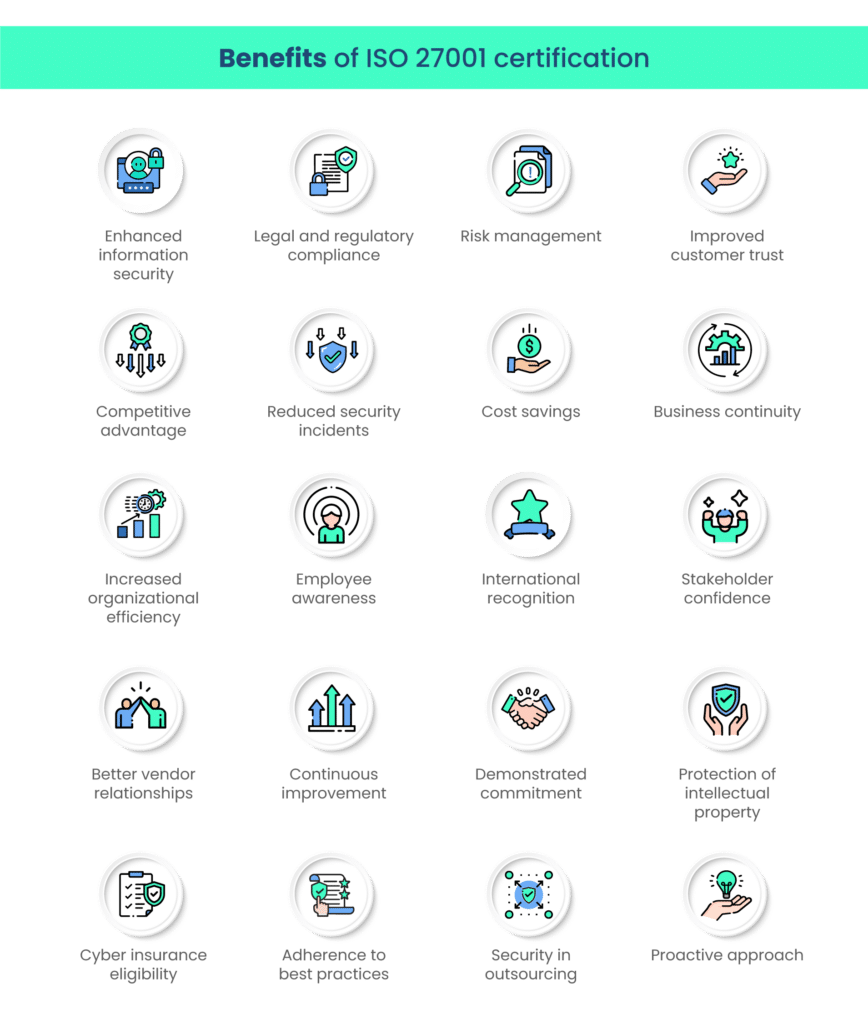
ISO 27001 certification offers a plethora of advantages for organizations of all sizes and sectors. By implementing this standard, you demonstrate your commitment to data security and the highest industry standards. 

  1. Enhanced information security: ISO 27001 helps you establish a robust information security management system, reducing the risk of data breaches and cyberattacks.
  1. Legal and regulatory compliance: It assists in ensuring compliance with data protection laws and regulations such as those exerted by European Union’s General Data Privacy Regulation (GDPR) and the United States’ Health Insurance Portability and Accountability Act (HIPAA), avoiding legal issues and associated penalties.
  1. Risk management: ISO 27001 provides a systematic approach to identifying, assessing, and mitigating security risks.
  1. Improved customer trust: Certification demonstrates your commitment to safeguarding customer data, enhancing their trust in your organization.
  1. Competitive advantage: It sets you apart from competitors who lack ISO 27001 certification, potentially attracting more customers.
  1. Reduced security incidents: A well-implemented ISMS can lead to a decrease in security incidents and their associated costs.
  1. Cost savings: Efficient risk management can result in savings, such as reduced insurance premiums and data breach-related expenses.
  1. Business continuity: ISO 27001 helps create effective business continuity plans, ensuring operations continue even during security incidents.
  1. Increased organizational efficiency: It encourages the optimization of processes and resource allocation.
  1. Employee awareness: ISO 27001 promotes a security-conscious culture, making employees more vigilant about data security.
  1. International recognition: ISO 27001 is globally recognized, facilitating international business relations.
  1. Stakeholder confidence: It instills confidence in shareholders, partners, and investors regarding your security measures.
  1. Better vendor relationships: Certified organizations are often preferred by vendors and partners concerned about data security.
  1. Continuous improvement: ISO 27001 encourages a cycle of improvement through regular audits and reviews.
  1. Demonstrated commitment: Certification reflects your dedication to information security, making it easier to attract and retain talent.
  1. Protection of intellectual property: Safeguarding sensitive data, including intellectual property, is a crucial aspect of ISO 27001.
  1. Cyber insurance eligibility: Certification can improve eligibility for cyber insurance, reducing financial risk.
  1. Adherence to best practices: ISO 27001 aligns your security practices with industry best standards.
  1. Security in outsourcing: It helps manage risks when outsourcing processes or data handling to third parties.
  1. Proactive approach: ISO 27001 promotes a proactive, rather than reactive, stance towards security.

Remember, the specific benefits may vary depending on your organization’s size, industry, and how effectively you implement ISO 27001.

ISO 27001 certification process: How to get ISO 27001 certification

The ISO 27001 certification process is a structured approach that aims to help organizations establish a robust ISMS. It includes a series of steps and assessments designed to ensure that an organization’s data and information assets are adequately protected.

Achieving ISO 27001 certification involves several key steps:

1. Gap analysis 

This critical starting point requires a meticulous examination of your organization’s existing information security practices. 

The gap analysis phase involves evaluating the effectiveness of your current security measures and identifying areas that do not meet ISO 27001 standards. 

This process often includes a comprehensive review of security policies, procedures, risk management practices, and control mechanisms. The insights gained from this analysis serve as a roadmap for refining your information security framework.

2. ISMS establishment 

Building your Information Security Management System (ISMS) is the cornerstone of ISO 27001 certification. This involves creating a structured system that aligns with ISO 27001 standards. 

The ISMS encompasses a range of components, such as security policies, risk assessment methodologies, defined procedures for incident management, and an array of security controls tailored to your organization’s specific needs. 

The development of a robust ISMS requires a methodical approach and the integration of security practices into your organizational culture.

3. Risk assessment

A thorough risk assessment is a pivotal aspect of ISO 27001 certification. This phase involves identifying, analyzing, and evaluating potential threats and vulnerabilities to your organization’s data assets. 

This comprehensive risk assessment provides a nuanced understanding of the security landscape, enabling your organization to develop proactive security measures and incident response strategies. It serves as a basis for determining the security controls necessary to mitigate risks effectively.

4. Documentation

Documentation is a cornerstone of ISO 27001 certification, ensuring transparency and compliance. It involves the creation of extensive records detailing your ISMS components, risk assessment results, policies, procedures, and controls. 

Central to this documentation is the Statement of Applicability (SoA), a comprehensive report that specifies which ISO 27001 controls are applicable to your organization’s specific context. 

Effective documentation is vital for demonstrating adherence to ISO 27001 standards during the certification audit.

5. Training and awareness

Building a culture of security awareness within your organization is paramount. This step involves developing training programs and initiatives that ensure all employees are well-versed in information security practices. 

Employee awareness extends beyond understanding security policies; it emphasizes individual responsibility in safeguarding data and reporting security incidents promptly. By fostering a security-conscious workforce, you enhance the overall effectiveness of your ISMS.

Ensure that all employees are adequately trained and aware of their roles in maintaining information security.

6. Internal audit

Regular internal audits are a crucial self-assessment mechanism. These audits are conducted to gauge how well your ISMS aligns with ISO 27001 standards. 

Internal audits offer insights into your system’s performance, highlighting areas of compliance and potential non-conformities. They provide opportunities to identify and address weaknesses, ultimately enhancing the effectiveness of your information security measures.

Components of Internal Audits 

During internal audits, the following components should be included:

  • Compliance Verification: Internal audits should ensure that your ISMS aligns with the ISO 27001 standards. This includes verifying that your security policies, procedures, and controls comply with the defined requirements.
  • Risk Assessment Validation: Auditors should assess whether your risk assessment methodologies are comprehensive and that potential threats and vulnerabilities have been adequately considered.
  • Control Effectiveness: Evaluate the effectiveness of the security controls in place. This includes reviewing access controls, encryption mechanisms, intrusion detection systems, and other protective measures to ensure they perform as intended.
  • Documentation Review: The internal audit should encompass a review of the extensive documentation associated with your ISMS. This includes the Statement of Applicability (SoA) and other records outlining your policies, procedures, and controls.

Types of internal audits

Internal audits come in various types, each serving a specific purpose. The key types of internal audits include:

  • Compliance Audits: These audits primarily focus on ensuring that your ISMS is in compliance with ISO 27001 standards. Auditors assess whether the ISMS components adhere to the defined requirements.
  • Risk-Based Audits: These audits are centered on assessing the effectiveness of your risk assessment and management processes. They help in identifying and mitigating potential risks and vulnerabilities.
  • Control Audits: Control audits are designed to evaluate the functionality and efficacy of your security controls. They assess whether the implemented controls adequately safeguard data assets and mitigate risks.
  • Documentation Audits: These audits focus on the completeness and accuracy of documentation related to your ISMS. Auditors ensure that records are well-maintained and provide comprehensive insights into your information security practices.
  • Operational Audits: These audits dive into the day-to-day operational aspects of your ISMS. They assess how well your security policies and procedures are implemented in real-world scenarios.
  • Policy Audits: Policy audits specifically review your security policies to ensure they are well-defined, up-to-date, and aligned with ISO 27001 requirements.

By incorporating these elements and types of internal audits, your organization can maintain a rigorous evaluation process, ensuring the continual effectiveness of your ISMS and a smoother path to ISO 27001 certification.

7. Corrective actions

The final phase revolves around addressing any non-conformities and deficiencies uncovered during the internal audit. Corrective actions are pivotal in rectifying deviations from ISO 27001 standards. 

This phase ensures that your ISMS aligns with certification requirements and remains effective over time. It’s an ongoing process of improvement and refinement that continues well beyond achieving ISO 27001 certification.

8. Certification audit

Engage an accredited certification body to conduct a certification audit to determine your organization’s compliance with ISO 27001 standards.

An accredited certification body refers to an independent organization that holds accreditation for conducting certification audits in accordance with ISO 27001 standards. 

These organizations are authorized and recognized for their competence and impartiality in assessing an organization’s compliance with ISO 27001. Engaging an accredited certification body ensures that the audit process is reliable and credible.

There are several accredited certification bodies around the world that can conduct ISO 27001 certification audits. Some examples include:

  • Bureau Veritas
  • DNV GL
  • TÜV SÜD
  • BSI Group
  • SGS
  • Intertek
  • DEKRA
  • LRQA (Lloyd’s Register Quality Assurance)
  • NSF International
  • Aprio

Please note that the availability of these bodies may vary by location, so it’s important to check for certification bodies accredited in your specific region. Accreditation is typically granted by relevant national accreditation bodies.

9. Certification

Upon successful completion of the audit, your organization will be awarded ISO 27001 certification.

Common challenges during ISO 27001 certification
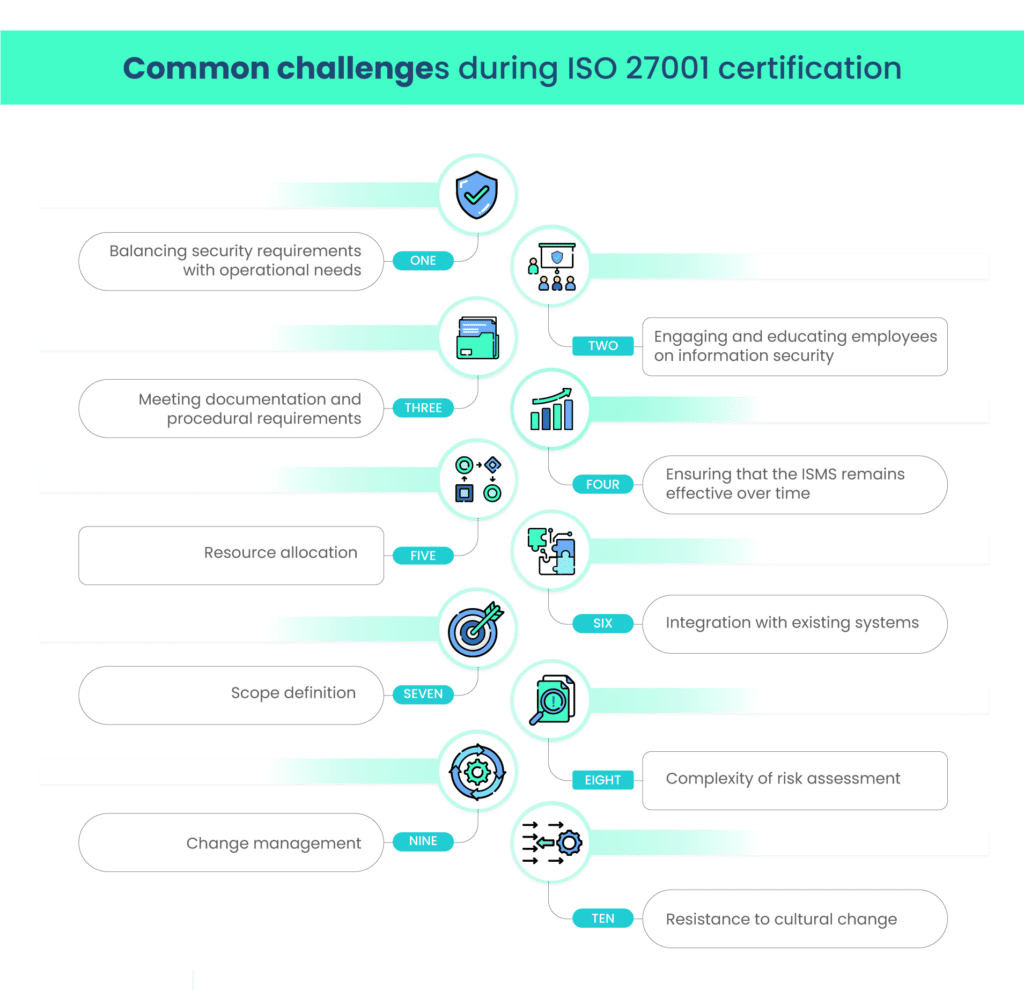
While the ISO 27001 certification process is highly beneficial, it can be challenging. Common challenges include:

1. Balancing security requirements with operational needs

Achieving ISO 27001 certification often involves striking a balance between stringent security measures and the operational needs of your organization. This challenge requires a thoughtful approach to ensure that security doesn’t hinder day-to-day operations.

2. Engaging and educating employees on information security

Employees play a pivotal role in information security, but ensuring their active engagement and understanding can be challenging. Education and awareness programs are essential to help employees recognize their role in maintaining a secure environment.

3. Meeting documentation and procedural requirements

ISO 27001 places considerable emphasis on documentation and documented procedures. This can be challenging, as it requires comprehensive documentation of policies, procedures, risk assessments, and more. Maintaining this documentation accurately and keeping it up to date is an ongoing challenge.

4. Ensuring that the ISMS remains effective over time.

Implementing an ISMS is not a one-time task. Ensuring that your ISMS remains effective over time requires continuous monitoring, regular audits, and updates to keep it aligned with evolving security risks and changing business needs.

5. Resource allocation

Allocating resources to information security efforts, especially in smaller organizations, can be challenging. It’s important to allocate both human and financial resources effectively to achieve certification without straining your organization.

6. Integration with existing systems 

Organizations with established processes and systems might face challenges when integrating ISO 27001 requirements seamlessly. The certification process involves aligning existing practices with the ISO standard, which can be a complex task.

7. Scope definition

Determining the scope of your ISMS is a critical yet challenging step. Defining the boundaries of the ISMS and understanding what is included and excluded can sometimes be tricky.

8. Complexity of risk assessment

Conducting a thorough risk assessment can be complex, as it requires identifying vulnerabilities, assessing potential threats, and calculating risks. The challenge lies in creating a comprehensive risk management strategy.

9. Change management

Implementing changes in policies, procedures, and practices to meet ISO 27001 requirements can meet resistance from employees and may disrupt established workflows. Effective change management is key to addressing this challenge.

10. Resistance to cultural change

Shifting the organizational culture to prioritize information security can face resistance from employees accustomed to a different mindset. Encouraging a security-conscious culture is an ongoing challenge.

Overcoming these challenges requires a strategic and committed approach, emphasizing the value of ISO 27001 certification and ensuring that it aligns with your organization’s specific needs and objectives.

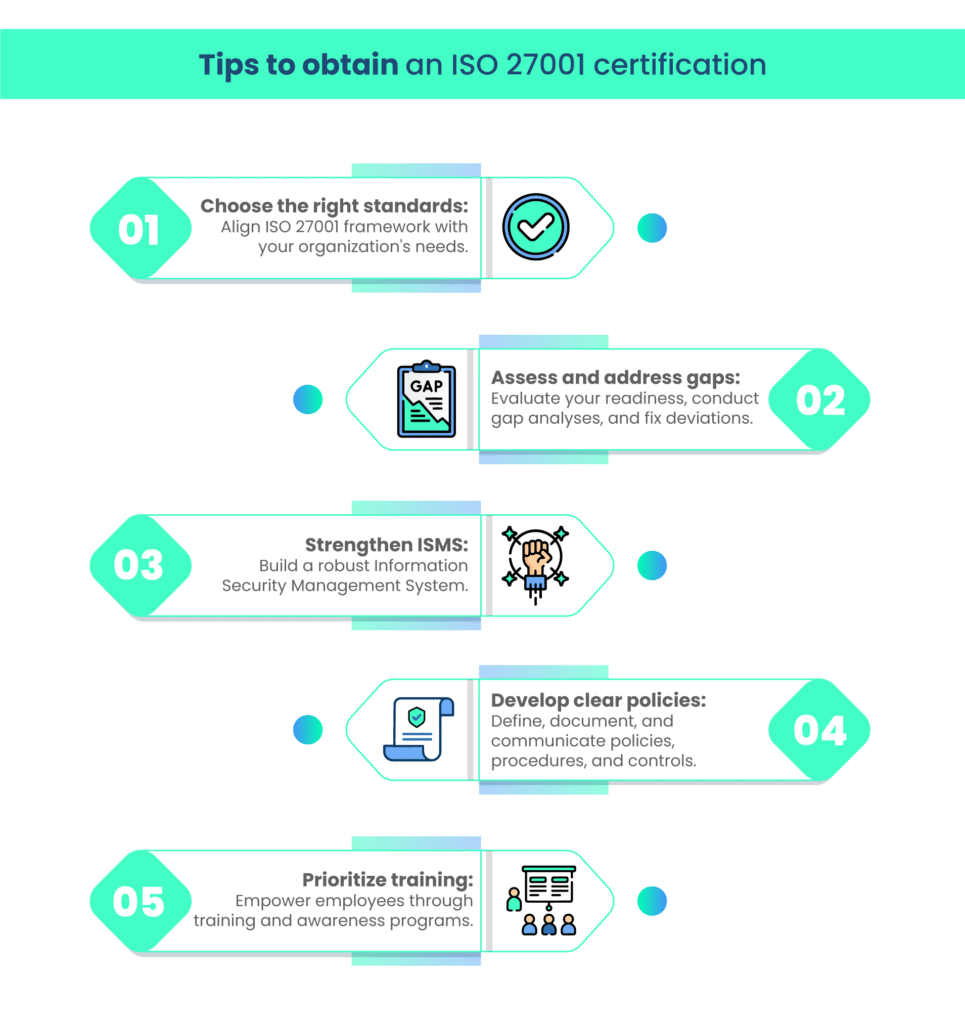
Tips to obtain an ISO 27001 certification
Maintaining ISO 27001 certification

ISO 27001 certification is not a one-time achievement but an ongoing commitment. Develop a plan for maintaining certification by continuously improving your ISMS, addressing non-conformities, and staying vigilant against emerging threats.

Wrapping up

Embarking on the ISO 27001 certification journey is a significant step towards fortifying your organization’s information security. While it may seem like a daunting path, remember that with the right guidance, such as the tips and guidance shared in this blog, the process becomes more manageable. 

Achieving ISO 27001 certification not only ensures that you meet internationally recognized standards but also demonstrates your unwavering commitment to safeguarding sensitive data and bolstering your cybersecurity posture.

So, take these tips to heart, prepare your team, and chart your course towards certification with confidence.

Frequently Asked Questions (FAQs)

1. What is ISO 27001 certification, and why is it important for organizations?

ISO 27001 certification is an internationally recognized standard for information security management systems. It’s crucial for organizations because it helps protect sensitive data, enhance cybersecurity, and build trust with clients and partners.

2. What are the common challenges during ISO 27001 certification?

Common challenges during ISO 27001 certification include balancing security requirements with operational needs, engaging and educating employees on information security, meeting documentation and procedural requirements, and ensuring the ISMS remains effective over time.

3. How can organizations choose the right ISO 27001 framework and standards?

To choose the right ISO 27001 framework and standards, organizations should consider alignment with their business goals and operational requirements. They can select a framework that best fits their industry and compliance needs.

4. What is the role of the ISMS in ISO 27001 certification?

The ISMS is a cornerstone of ISO 27001 certification. It includes security policies, procedures, and controls tailored to an organization’s specific needs, ensuring comprehensive data protection.

5. What are the key benefits of achieving ISO 27001 certification for organizations?

The key benefits of achieving ISO 27001 certification include improved data security, reduced risk of data breaches, enhanced business reputation, better compliance with data protection regulations, and increased competitiveness in the market. This certification not only safeguards organizations but also reassures clients and partners of their commitment to information security.

Authored by

Aayush Ghosh Choudhary
Co-founder & CEO at Scrut

Which entities are covered under HIPAA?

In the complex world of healthcare, the Health Insurance Portability and Accountability Act, more commonly known as HIPAA, stands as a crucial pillar for safeguarding patient information and ensuring the integrity of the healthcare system. 

HIPAA was enacted in 1996, and since then, it has played a pivotal role in regulating the healthcare industry. In this blog, we will explore the key aspects of HIPAA, why compliance is essential, and the scope of the regulations, particularly focusing on identifying which entities fall under its purview.

The importance of compliance with HIPAA regulations

HIPAA was introduced with the primary goal of improving the efficiency and effectiveness of healthcare delivery while protecting the privacy and security of patient information. 

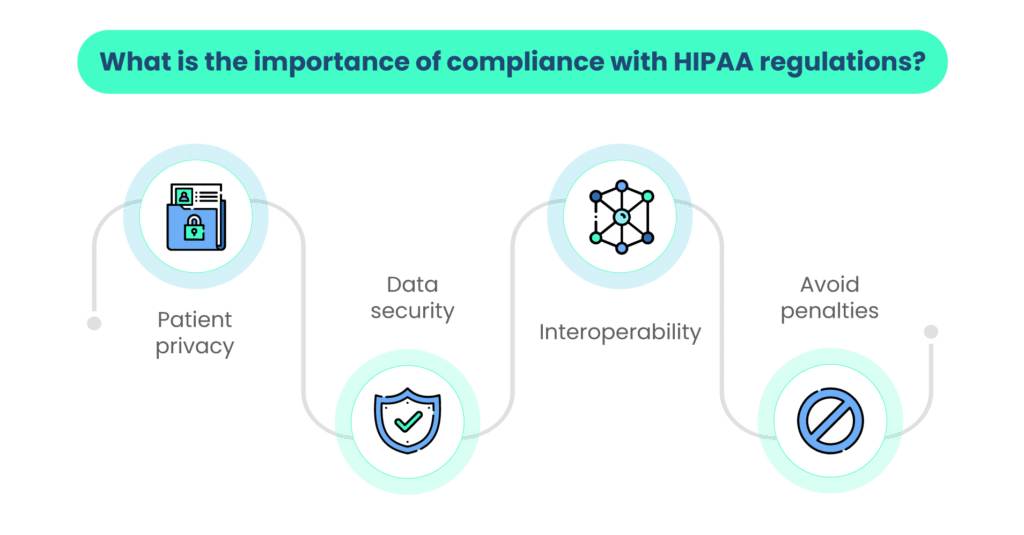
Compliance with HIPAA regulations is of paramount importance for several reasons:

  • Patient privacy: HIPAA establishes strict rules to protect the confidentiality of patients’ health information. Compliance ensures that patients can trust healthcare providers to keep their sensitive data secure.
  • Data security: In the digital age, healthcare data is vulnerable to breaches. HIPAA mandates security measures to safeguard electronic protected health information (ePHI) from unauthorized access or breaches.
  • Interoperability: HIPAA encourages the standardized exchange of healthcare information, making it easier for different entities within the healthcare system to communicate and collaborate effectively.
  • Avoid penalties: Non-compliance with HIPAA can result in hefty HIPAA violation fines and legal consequences for healthcare organizations, potentially damaging their reputation and financial stability.

Who enforces HIPAA?

HIPAA is enforced by several government agencies in the United States, each with its own specific responsibilities related to HIPAA compliance. 

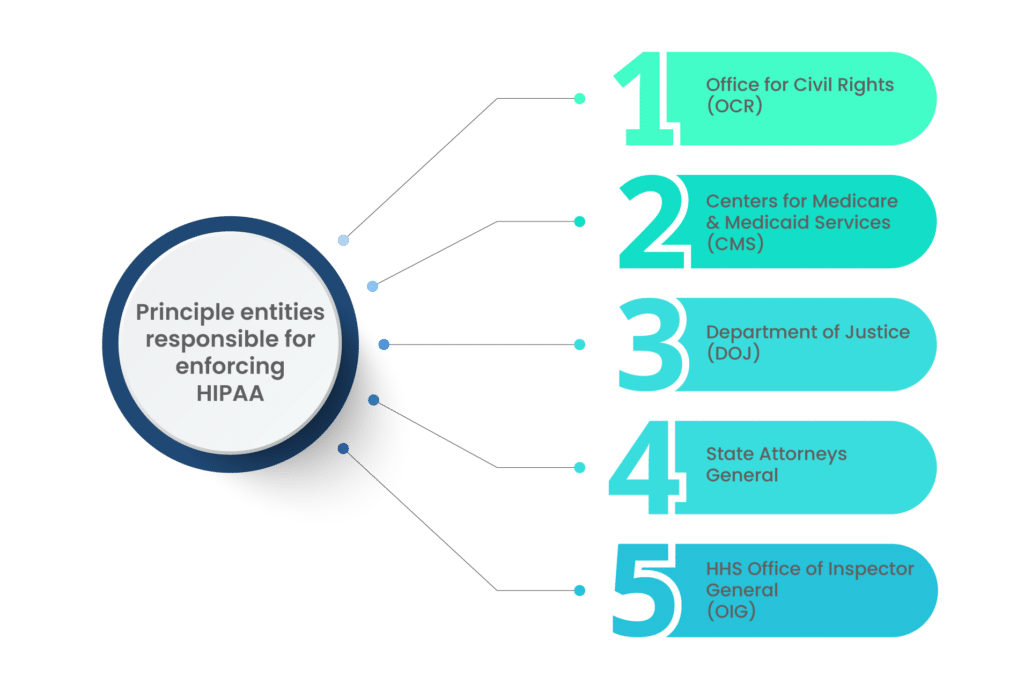
The main entities responsible for enforcing different aspects of HIPAA are:

A. Office for Civil Rights (OCR)

The OCR, a part of the U.S. Department of Health and Human Services (HHS), is the primary enforcer of HIPAA. Its main role is to oversee and enforce the Privacy Rule and the Security Rule, which pertain to the privacy and security of protected health information (PHI). The OCR investigates complaints, conducts audits, and provides guidance to covered entities and business associates to ensure compliance with these rules.

B. Centers for Medicare & Medicaid Services (CMS)

CMS is responsible for enforcing the Administrative Simplification provisions of HIPAA, which include the transaction standards, code sets, and unique identifiers. CMS ensures that covered entities use standardized electronic transactions when dealing with healthcare information for billing and other purposes.

C. Department of Justice (DOJ)

The DOJ may become involved in HIPAA enforcement in cases where willful criminal violations of HIPAA occur, such as healthcare fraud, identity theft, or intentional unauthorized disclosure of PHI. The DOJ can prosecute individuals and entities for criminal violations of HIPAA.

D. State Attorneys General

State Attorneys General also have a role in enforcing HIPAA, particularly with regard to state laws that are more stringent than federal HIPAA regulations. They can investigate and take legal action against entities for HIPAA violations that affect residents in their respective states.

E. HHS Office of Inspector General (OIG)

The OIG investigates cases of healthcare fraud and abuse, which may include violations of HIPAA. While the OIG primarily focuses on financial misconduct, it may collaborate with other agencies, such as the OCR or DOJ, when investigating HIPAA-related matters.

It’s important to note that HIPAA enforcement can result in civil and criminal penalties, including HIPAA violation fines, legal actions, and even imprisonment, depending on the severity of the violation. Covered entities and business associates are expected to take HIPAA compliance seriously to avoid such consequences and to protect the privacy and security of patient information.

Which are HIPAA covered entities?

HIPAA covered entities are organizations or individuals involved in the healthcare industry who are subject to HIPAA regulations. These regulations are designed to protect the privacy and security of individuals’ PHI while also ensuring the smooth flow of health information for patient care and administrative purposes. Covered entities play a central role in complying with HIPAA standards, and they are directly responsible for safeguarding PHI.

Which are the primary categories of HIPAA covered entities?

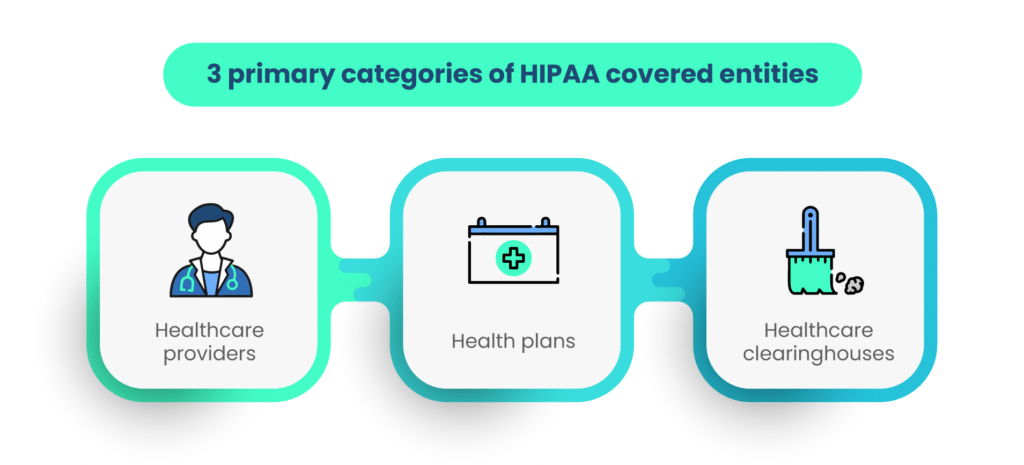
There are three primary categories of HIPAA covered entities:

  • Healthcare providers: Healthcare providers are organizations or individuals that deliver medical, dental, or other health-related services. They encompass a wide range of medical professionals and facilities.
  • Health plans: Health plans include insurance companies, government programs like Medicare and Medicaid, and employer-sponsored health plans. They are responsible for processing and paying insurance claims and often have access to PHI.
  • Healthcare clearinghouses: Healthcare clearinghouses are entities that process non-standard health information into a standardized format. They act as intermediaries between healthcare providers and health plans, facilitating the electronic exchange of health information.

Clarification on what constitutes a healthcare provider, health plan, and clearinghouse

  • Healthcare provider: Healthcare providers include hospitals, physicians, nurses, dentists, chiropractors, psychologists, pharmacists, and any other individual or organization that provides medical or healthcare services. This category also extends to healthcare facilities such as clinics, nursing homes, and pharmacies.

Examples of healthcare providers include family doctors, hospitals, dentists, surgeons, mental health clinics, physical therapists, and nursing homes.

  • Health plan: Health plans encompass a wide range of entities that provide or pay for healthcare services. This includes private health insurance companies, government programs like Medicaid and Medicare, employer-sponsored health plans, and even health maintenance organizations (HMOs) or preferred provider organizations (PPOs).

Examples of health plans include private health insurance companies like Blue Cross Blue Shield, government programs like Medicaid and Medicare, employer-provided health plans, and managed care organizations like Aetna.

  • Healthcare clearinghouse: A healthcare clearinghouse acts as an intermediary in the healthcare data exchange process. These entities typically translate non-standard healthcare information formats into standardized formats that can be used by both healthcare providers and health plans for billing and administrative purposes.

Some examples of healthcare clearinghouses include Emdeon (now Change Healthcare), Availity, and RelayHealth.

HIPAA covered entities have a critical responsibility for HIPAA compliance because they directly handle PHI in their daily operations. This includes implementing administrative, physical, and technical safeguards to protect PHI, training their employees on HIPAA regulations, and maintaining policies and procedures to ensure compliance. Non-compliance can lead to significant penalties and legal consequences, making it imperative for these entities to prioritize HIPAA compliance to protect patient privacy and maintain the trust of their patients and partners.

Who is a HIPAA business associate? What role do they play?

Business associates are individuals or entities that provide services or perform functions on behalf of HIPAA covered entities in the healthcare industry and, in the process, have access to PHI. These entities play a crucial role in supporting the operations of HIPAA covered entities but are not directly involved in patient care. Under HIPAA, business associates are legally obligated to safeguard PHI and comply with HIPAA regulations to protect patient privacy and security.

The critical role business associates play in the healthcare industry

HIPAA business associates play several critical roles in the healthcare industry:

  • Support services: They provide essential support services that help HIPAA covered entities operate efficiently. These services can range from IT support and billing to legal and consulting services.
  • Data management: Business associates often handle and process large volumes of PHI, making them instrumental in managing electronic health records, insurance claims, and other healthcare data.
  • Interoperability: They help facilitate the exchange of healthcare information between different entities within the healthcare ecosystem, improving communication and coordination of care.
  • Specialized expertise: Many business associates offer specialized expertise that allows healthcare providers to focus on patient care while outsourcing specific administrative functions.

Examples of HIPAA business associates

  • IT service providers: IT companies that provide services such as electronic health record (EHR) management, data storage, and network security fall into this category. They often have access to PHI to ensure the integrity and security of healthcare systems.
  • Medical billing companies: These entities handle the processing and submission of insurance claims, patient billing, and revenue cycle management for healthcare providers. They may access PHI for billing purposes.
  • Legal counsel: Law firms and legal professionals who advise healthcare providers on compliance issues, contract negotiations, and regulatory matters may have access to PHI when providing legal services.

Responsibilities and obligations of HIPAA business associates regarding HIPAA compliance

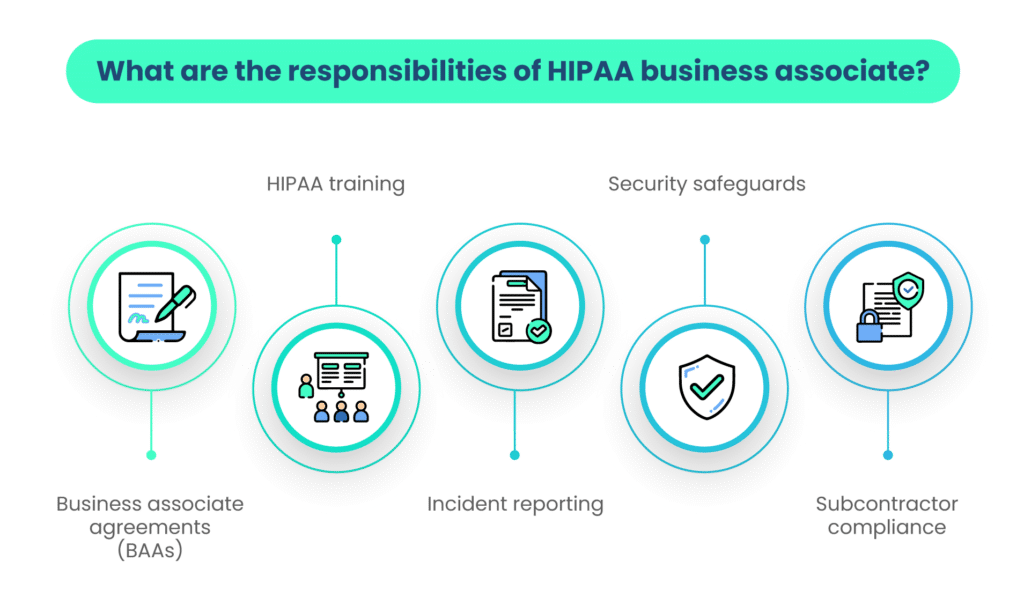
HIPAA business associates have specific responsibilities and obligations under HIPAA:

  • Business associate agreements (BAAs): They must enter into BAAs with HIPAA covered entities before handling PHI. These agreements outline the terms and conditions for safeguarding PHI and complying with HIPAA regulations.
  • Security safeguards: HIPAA business associates are required to implement appropriate administrative, physical, and technical safeguards to protect PHI. This includes measures to prevent unauthorized access, disclosure, and breaches.
  • HIPAA training: Employees of HIPAA business associates should receive training on HIPAA regulations to ensure they understand their responsibilities and the importance of PHI protection.
  • Incident reporting: HIPAA business associates must report any breaches or security incidents involving PHI to the covered entity promptly.
  • Subcontractor compliance: If HIPAA business associates use subcontractors (sub-business associates) who will have access to PHI, they must ensure that these subcontractors also comply with HIPAA regulations.

Failure to comply with HIPAA obligations can lead to legal consequences, including HIPAA violation fines and penalties. Therefore, business associates must take their HIPAA responsibilities seriously to maintain the trust of HIPAA covered entities and protect patient information.

Definition and explanation of HIPAA subcontractors

Subcontractors, in the context of HIPAA, are third-party entities or individuals hired by HIPAA business associates (BAs) to perform specific tasks or services that involve access to PHI. These subcontractors are not directly engaged by covered entities (CEs) but work on behalf of BAs. HIPAA subcontractors play a critical role in supporting BAs in fulfilling their obligations under HIPAA and ensuring the protection of PHI.

The relationship between HIPAA business associates and subcontractors

The relationship between HIPAA business associates and subcontractors is hierarchical. HIPAA business associates are entities that have a direct contractual relationship with HIPAA covered entities and handle PHI on behalf of those CEs. When HIPAA business associates engage subcontractors to perform certain functions or services that involve PHI, they extend their responsibility for PHI protection to these subcontractors.

HIPAA business associates are required to have written agreements, often referred to as business associate subcontractor agreements (BASA), with subcontractors. These agreements outline the responsibilities and obligations of subcontractors concerning the safeguarding of PHI and compliance with HIPAA regulations. Subcontractors, in turn, must ensure that they comply with the terms of the BASA and HIPAA requirements.

Examples of HIPAA subcontractors

Following are some examples of HIPAA subcontractors:

  • Data storage companies: Businesses that provide data storage services, whether physical or cloud-based, may be subcontractors. They are responsible for securely storing electronic health records (EHRs) and other PHI on behalf of BAs and CEs.
  • Document shredding services: Companies that handle the secure destruction and disposal of physical documents containing PHI fall into this category. They ensure that paper records are properly destroyed to prevent unauthorized access.
  • Cloud service providers: Providers of cloud computing services, which store and manage digital data, can be subcontractors when they host PHI for BAs or CEs. Examples include Amazon Web Services (AWS) and Microsoft Azure.

How subcontractors’ obligations are intertwined with HIPAA business associates and HIPAA covered entities

The obligations of subcontractors are closely intertwined with those of business associates and HIPAA covered entities:

  • Business Associate Subcontractor Agreements (BASA): Subcontractors must enter into BASAs with the business associates that engage them. These agreements stipulate the subcontractors’ responsibilities for PHI protection and HIPAA compliance.
  • Compliance chain: The subcontractor’s obligations flow down from the business associate, which, in turn, derives its responsibilities from the covered entity. This creates a chain of compliance where all entities involved in handling PHI must adhere to HIPAA regulations.
  • Enforcement and liability: Business associates remain ultimately responsible for ensuring that subcontractors comply with HIPAA. If a subcontractor violates HIPAA regulations, the business associate could be held liable for those violations. Similarly, HIPAA covered entities may hold business associates accountable for any breaches or non-compliance by subcontractors.

Subcontractors are expected to understand and adhere to the terms of the BASA, maintain the security and privacy of PHI, and cooperate with business associates and HIPAA covered entities to ensure full HIPAA compliance. This interconnected approach helps protect the confidentiality and integrity of patient information throughout the healthcare ecosystem.

Conclusion

In the complex world of healthcare, HIPAA is a vital safeguard for patient information and the integrity of the healthcare system. Compliance with HIPAA regulations is crucial for patient privacy, data security, interoperability, and avoiding penalties.

HIPAA is enforced by various government agencies, and it applies to healthcare providers, health plans, and healthcare clearinghouses. These entities must take HIPAA compliance seriously to protect patient information.

Business associates support HIPAA covered entities but must also comply with HIPAA. They handle various healthcare functions and play a vital role in PHI protection.

Subcontractors assist business associates and are bound by HIPAA through business associate subcontractor agreements, ensuring the protection of patient information.

In essence, HIPAA is the linchpin that secures patient trust, data, and the integrity of the healthcare system. Compliance is not an option but a fundamental requirement for the healthcare industry.

Don’t risk costly violations and data breaches. Scrut is your trusted partner for maintaining HIPAA compliance. Get started today to safeguard your patients’ privacy and your organization’s reputation. Request a demo now!

FAQs

1. What is HIPAA, and why is it important for healthcare organizations?

HIPAA, the Health Insurance Portability and Accountability Act, is crucial for healthcare organizations because it establishes rules to protect patient privacy and secure sensitive health information. Compliance ensures patients’ trust and data security while promoting efficient healthcare operations.

2. Who enforces HIPAA regulations, and what are their roles?

HIPAA regulations are enforced by various government agencies, including:
– the Office for Civil Rights (OCR), 
– Centers for Medicare & Medicaid Services (CMS), 
– Department of Justice (DOJ), State Attorneys General, and 
– HHS Office of Inspector General (OIG). 
They oversee different aspects of HIPAA compliance, investigating complaints, conducting audits, and prosecuting violations.

3. What are HIPAA covered entities, and why are they essential to compliance?

HIPAA covered entities encompass healthcare providers, health plans, and healthcare clearinghouses. They are crucial to compliance because they directly handle protected health information (PHI) and are responsible for implementing safeguards, training employees, and maintaining policies to protect patient data.

Authored by

Aayush Ghosh Choudhary
Co-founder & CEO at Scrut

Risk management techniques: avoid, mitigate, transfer, or accept

In business, there are essentially infinite sources of risk:

  • Technology
  • Operational
  • Competitive
  • Legal
  • HR

and so on.

Of course, you are probably here because you are focused on cyber risk, which is one of the many you need to worry about. While we’ve talked a fair amount about it previously, in this post, we are going to focus on what to actually do about it.

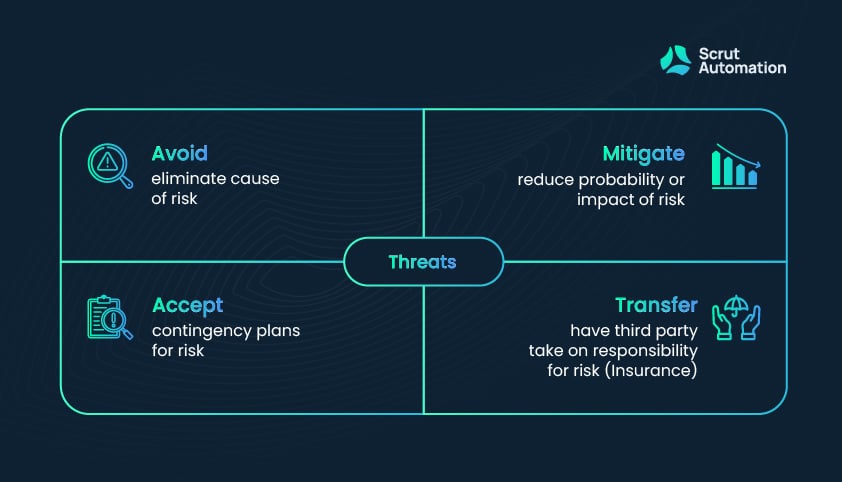
At its core, whenever you’ve identified a cyber risk, you only have four options to address it: avoid, mitigate, transfer, and accept.

Staying on top of cyber risk – and figuring out how to balance it against other business challenges – is what separates the top performing organizations from those who get left behind. So having an effective program and toolset is key.

But in the end, you’ll only be able to pick from four possible actions:

Avoid

Risk avoidance is the most effective, but most rarely used option. It means terminating a risky product, service, customer, contract, or even employee to eliminate cybersecurity vulnerabilities, regulatory concerns, or potential insider threats.

Many companies are reluctant to do this, however, because they fear losing revenue or incurring other associated costs. While it might seem counterintuitive, though, not all revenue is equally desirable.

Some customers or products may be outside your ideal market, require more resources to maintain, and push you off your development roadmap. Certain vendors may pose higher cybersecurity risks due to their architecture, use case, or compliance implications.

In some cases, the revenue from such sources may be less than the cost of addressing the risk in the first place.

This is when you might consider cutting the risk loose and avoiding it altogether.

It may be a tough decision, and one the business must drive. If an asset or contract owner disagrees with a recommendation to avoid a risk because of the non-cybersecurity implications, they should find another way to address it.

Mitigate

Risk mitigation is a common way to deal with risk and often the first one security teams focus on. It involves applying technical controls such as patches and firewalls as well as administrative ones like policies and procedures. 

Some tips to remember when mitigating risks are:

  • Use the cheapest control, all other things being equal. Some vulnerabilities can be patched easily and don’t require detailed analysis to fix. This can often be easier than implementing an intrusion detection system rule to detect attempted exploitations of them.
  • Consider the whole risk picture when choosing controls. Conversely to the above scenario, a software flaw might be low risk if you can block it with a firewall rule. In that case, you might be able to avoid completely overhauling your product or rebuilding your network to fix it.
  • Mitigate the most urgent risks first. A critical vulnerability like log4shell or heartbleed might require immediate action and attention. In that case, it’s best to focus on stopping the potential damage from this emerging issue and temporarily pause other risk mitigation efforts. Ensure your policies and procedures account for these crisis situations so that you aren’t trying to rewrite them on the fly in an emergency.

Transfer

Risk transfer is a way of shifting the cost of a potential loss to another person or organization. It can be done by buying cyber insurance but also by other methods, such as:

  • Negotiating contractual terms with a vendor. Service Level Agreements (SLA) that guarantee a certain level of data availability, confidentiality, or integrity represent a common way to implement this. If the vendor fails to meet the SLA, they have to pay you a penalty fee.
  • Stipulating contractual terms with a customer. You can agree with your product’s users on a shared security model that clarifies who is responsible for what aspects of security. If the customer fails to meet their obligations, they agree to bear the consequences.
  • Lobbying the government or the public. Finally, you can advocate for laws or policies that protect you from certain types of liability or litigation. If the government or the public agrees to support you, they absorb some of the risk.

Key pieces to remember when transferring risk are:

  • Doing it explicitly and in writing. It will be very challenging to recover damages from a vendor if you only have informal agreements with them that aren’t clearly delineated.
  • Conducting appropriate diligence to ensure that, if the worst happens, you will actually be compensated appropriately. Cyber insurance contracts are extremely complex and often have many exemptions. Don’t get surprised after a loss event when an insurer denies your claim due to a technicality.
  • Ensuring the cost of the transfer (not just direct monetary costs but also legal fees and staff time) doesn’t outweigh the risk being addressed.

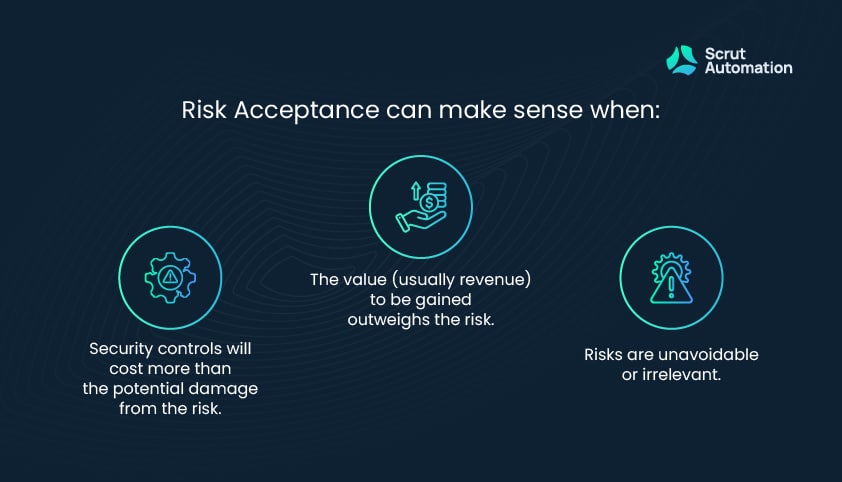
Accept

Risk acceptance means proceeding despite the possible harm. Although it seems scary, people and businesses accept risk all the time and must do so in order to get through the day.

A very dangerous version of risk acceptance, which is unfortunately far too common, is risk ignorance. Merely pretending a risk doesn’t exist or hoping it will never manifest can come back to bite you badly if it ultimately does.

To avoid this, a best practice is to ensure the risk owner documents acceptance in your risk register. And periodically reviews this decision to determine if circumstances have changed warranting a re-evaluation.

Conclusion

Combining the four methods of avoid, mitigate, transfer, or accept will allow you to manage your risk in the most cost-effective manner possible. Oftentimes situations will require deploying all four techniques against various aspects of a problem.

Having an effective way to track these efforts, assign stakeholders, and ensure follow-up of relevant tasks will be key to ensuring your program succeeds. In all but the most basic systems and organizations, email- and spreadsheet-driven processes will quickly become overwhelming.

So If you want to learn how Scrut Automation can help automate your risk management, please reach out today!

Authored by

Aayush Ghosh Choudhary
Co-founder & CEO at Scrut

Mastering the art of cybersecurity policy management

“Cybersecurity policies are exciting!”

Says almost no one ever.

While they might seem boring and burdensome, they are in fact a cornerstone of an effective security and compliance program. And they require continuous attention, maintenance, and enforcement if they are to remain effective. Previously, we have written a lot about how to:

In this post, however, we’ll look at higher-level best practices and explore how to manage a complicated patchwork of these documents.

There are several steps you can take to make the process substantially easier, starting with:

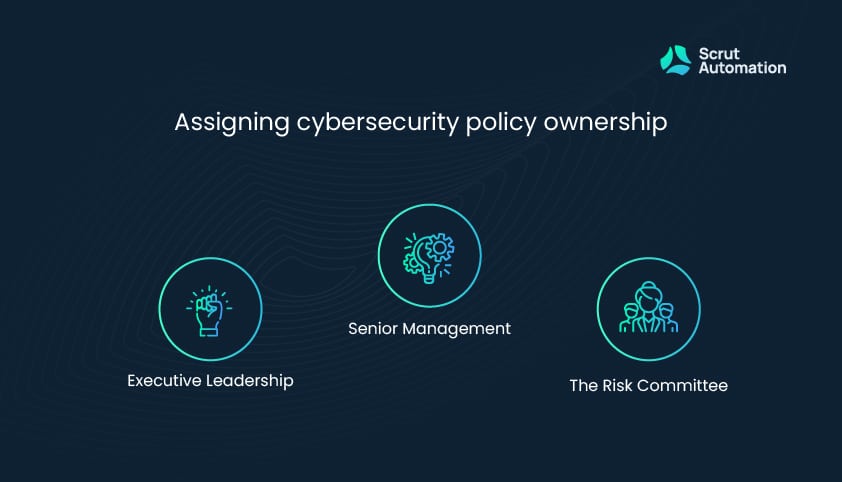
Assigning cybersecurity policy ownership

One of the most common policy challenges is identifying a single owner for each. We have often seen policies that assign responsibility or ownership to a broad group of people that is not always well-defined, such as: the executive leader, senior management, and the risk committee. 

Even if you do identify a clear makeup for these groups, a single person should have a tie-breaking vote in the end. While oftentimes many stakeholders – including cybersecurity, legal, IT, engineering, and operations teams – will contribute to a policy, having a single accountable individual is crucial. This person should be a business leader responsible for overall accomplishment of the organization’s or business unit’s mission.

And will be best equipped to balance the various risks the team faces.

Finally, if there is ever an incidence of non-compliance with a policy, you will be able to address it with a single individual rather than attempting to hold a disparate group accountable.

Enforcing cybersecurity policies consistently and effectively

While policies might seem perfectly reasonable on paper, ensuring adherence to them in the real world can often be challenging. People are imperfect, inconsistent, and will make mistakes. Thus, having a way to automate policy enforcement whenever possible is a best practice.

Some examples include:

  • Multi-factor authentication (MFA). If your policies mandate the use of MFA whenever it is available (which we strongly recommend!), your technical infrastructure should implement this requirement for you whenever possible. Leading identity and access management tools and cloud providers allow you to force the configuration of MFA when users first log in. This can greatly reduce the burden of following up with individuals to implement this important control.
  • Account deactivation. Removing permissions and deleting employee accounts at the end of their tenure is another key compliance practice often required by cybersecurity policies. “Orphaned” accounts are a potential vector for cyber criminals or even former employees themselves to enter your networks. Thus, automatically integrating permission and account cleanup with human resources off-boarding processes can greatly increase the success of these efforts.
  • Vulnerability management. Because organizations often face a wide array of known security flaws in their networks, manually remediating each one can often be a difficult and overwhelming process. Automatically pushing software updates to low-risk devices, such as individual endpoints, can greatly reduce the need to continuously triage and manually patch hosts. Be aware, however, that such automated approaches can cause outages if not handled with the utmost care.

Weaving together various compliance frameworks

For organizations that need to adhere to various standards, regulations, and other requirements, having a set of policies that allows doing so seamlessly can be a huge help. Common techniques involve:

  • Ensuring individual policies cover the required actions for all frameworks. If you are trying to achieve ISO 27001 compliance while also undergoing a SOC 2 audit, for example, you will find minor differences between the standards. Creating a single access management, auditing, or vulnerability management policy that covers both sets of requirements, rather than two separate ones, is a best practice.
  • Creating a compliance framework-specific “view” or “index” of all of your policies. While ensuring policies adhere to all frameworks as much as possible, sometimes you will need to custom-develop ones for a specific standard. To help manage the complexity, having a purpose-built platform to organize them can be incredibly helpful. At a minimum, having a single page for each framework that hyperlinks to the relevant policies can greatly streamline audits and other reviews.

Maintaining cybersecurity policies over time

Like anything in cybersecurity, you are never “done” with policy development, maintenance, and management. The relevant owner should establish a regular cadence – annually at a minimum – to trigger a thorough review of each policy. Other conditions – such as multiple instances of non-compliance – should also trigger these types of reviews.

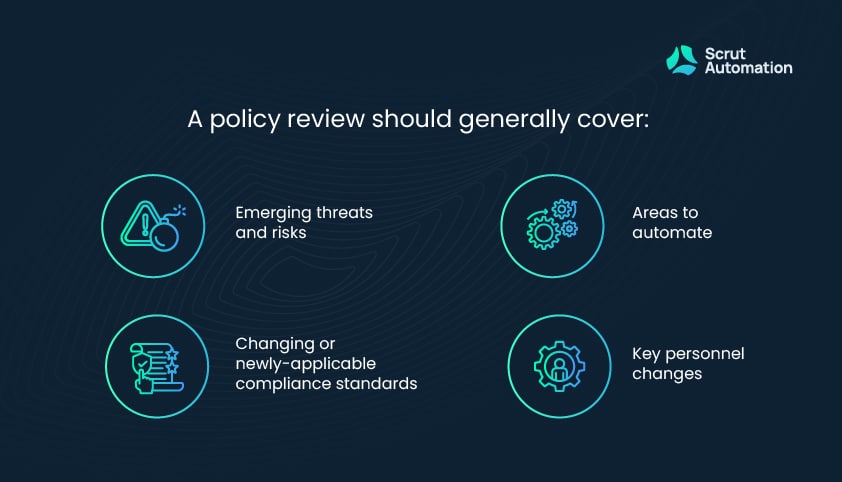
A policy review should generally cover:

By regularly reviewing your cybersecurity policies – and soliciting the feedback of key stakeholders – you can help to prevent them from becoming “stale” and losing relevance and effectiveness.

Continuously training your team

Unless enforcement of them is 100% automated – which is very difficult to achieve – your employees will need to be aware of your policies in order to comply with them. This means regularly training them on your policies, especially any changes.

While traditionally this takes the form of an annual refresher with the security team presenting a slide deck, there are alternative methods that can achieve better results, such as:

  • Administering required short quizzes on your policies. To add an incentive to those taking them, you can reduce the frequency of these quizzes the higher the employee scores.
  • Asking employees to summarize policies on their own and present them in their own words to their peers. You’ll want to review these summaries for accuracy first, but this technique can improve buy-in.
  • Using different forms of media such as video to help liven up the presentation and capture attention.

However you do it, make sure to capture evidence of the training for your next audit.

Conclusion

While often one of the less glamorous aspects of maintaining a well-functioning cybersecurity program, policy management is an art and science of its own. By assigning ownership, automating implementation, weaving together compliance requirements, continually revisiting them, and regularly training your team, you can make security policies an effective foundation for your program.

Doing all of this with generic tools like spreadsheets, however, is basically impossible to accomplish. So if you want to learn how Scrut Automation can supercharge your policy management efforts, please reach out!

Authored by

Aayush Ghosh Choudhary
Co-founder & CEO at Scrut

Data privacy regulations: best practices for compliance

Privacy regulations continue to multiply.

In previous articles, we’ve written quite a bit about frameworks such as the:

  • European Union (EU) General Data Protection Regulation (GDPR)
  • California Consumer Privacy Act (CCPA) and Privacy Rights Act (CPRA)
  • Health Insurance Portability and Accountability Act (HIPAA)

And the complex web of requirements with which businesses need to comply is still expanding.

Ensuring you can meet the demands of every applicable law is no doubt critical to minimizing compliance risk. But there are also more general principles you can apply to reduce your exposure, irrespective of the specific rule in question. So in this post we are going to look at practices across your business that can help to comply with all of them at once.

Minimizing data collection to master GDPR, CCPA, HIPAA and more

You can’t steal or corrupt data that doesn’t exist.

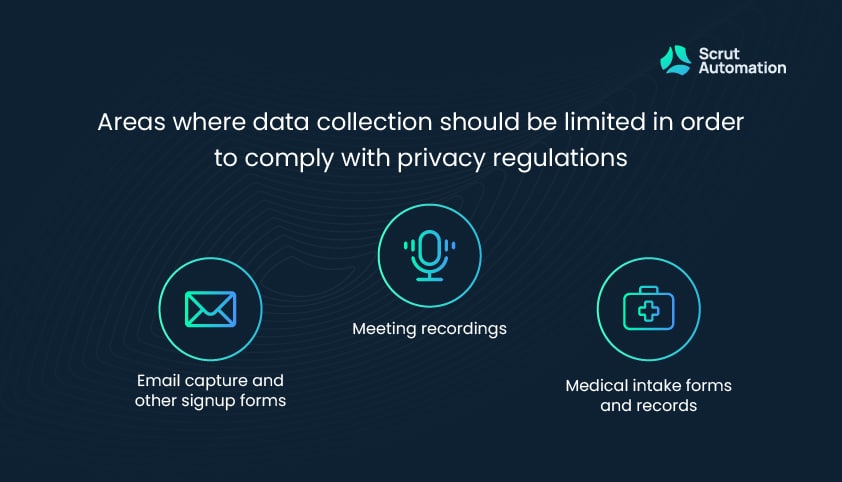
And simply not collecting certain types of data in the first place is an easy step organizations can take to reduce their exposure. While the GDPR and other rules require affirmative justification for data collection in the first place, there is some room for judgment in terms of what you gather. Some examples of where you might limit collection are:

  • Email capture and other signup forms. Are you just collecting email addresses to which you’ll send a newsletter? If so, is there a need to collect someone’s name, phone number, and state or country of residence? Many marketing applications have fields to capture this by default, but it might not be in your best interest to do so unless you have a specific business requirement.
  • Meeting recordings. Do you frequently record internal and external video meetings, and then use the recordings to identify people for follow-ups and action items using artificial intelligence (AI) tools? This likely constitutes processing biometric data according to the GDPR. Biometric information requires enhanced protection measures under the regulation, so make sure the productivity boosts you get from these AI apps is worth the additional risk. If the recordings are just sitting there unwatched, consider not creating them in the first place.
  • Medical intake forms and records. Oftentimes patients must complete elaborate and detailed medical history forms when seeing a certain doctor or practice, despite the fact much of this information is already captured by the organization in question. Especially due to the sensitivity of protected health information (PHI), it makes sense to rigorously review the types you are collecting. If the data isn’t vital to delivering care – or is never going to be reviewed to begin with – then don’t capture it in the first place.

Enforcing data retention, destruction, and cryptoshredding to maintain privacy

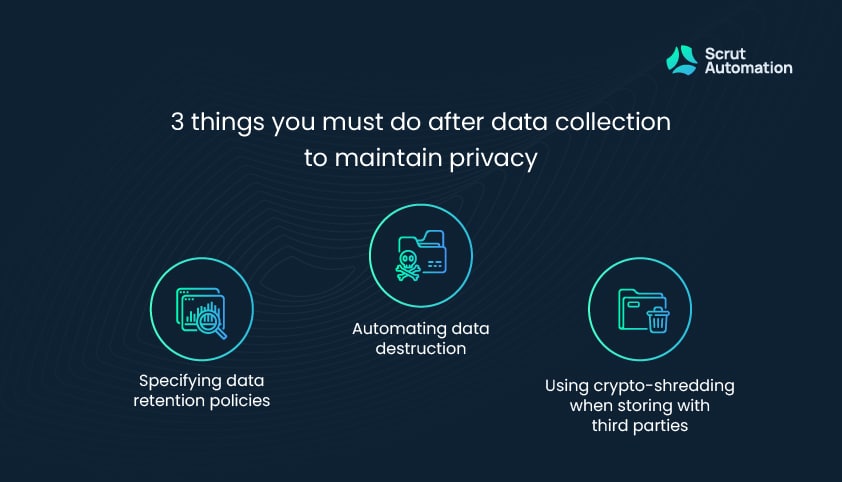
Once you have decided you need to collect certain information, the next step is to determine for how long you need to keep it. While the collapsing costs of cloud storage have made it economical for many businesses to indefinitely retain every piece of information they have ever captured, this might not be the best move from a privacy or security perspective. Some steps you can take include:

List out all 3 headings with icons

  • Specifying data retention policies. Understanding how long you need to keep records for both business and regulatory purposes should drive your decision-making here. Consult with legal counsel and business leaders to determine your requirements. These can help you to draft a policy based on type of record and source of information.
  • Automating data destruction. Automatically enforcing your retention timelines is a best practice. Instead of relying on manual efforts to destroy information – especially of the personal kind – the easiest and most secure option is to set auto-deletion timers using enterprise software tools. Google Workspace, for example, allows setting customized retention timelines.
  • Using cryptoshredding when storing with third parties. Whenever you provide data to another organization, you can never be sure as to how it is handled or whether all copies will be deleted per your requirements. An effective way to mitigate this risk is called cryptoshredding. If you are able to manage the encryption keys for the data stored with another provider, simply deleting these keys at the end of the retention period can greatly reduce the likelihood of anyone accessing this data in the future (although see the note below about quantum decryption).

Data encryption, masking, and access control as a final line of defense

While you are still storing and using personal data, there is a final set of controls you can apply to ensure its security and the privacy of your customers, employees, and other stakeholders. These include:

  • Encryption. Using a widely accepted encryption standard like AES-256 to protect data-at-rest is essentially table stakes in this day and age. While most hyperscale cloud providers and enterprise applications will already do this on your behalf, having redundant methods of protection is never a bad idea. Additionally, be aware that some threat actors are reportedly stealing encrypted data so that they might one day decrypt it using quantum computing. So even modern encryption algorithms are by no means a surefire way to protect information.
  • Role-based access control (RBAC) and masking. Even authorized users in your organizations likely have differing levels of “need-to-know” about sensitive personal data. The human resources department might need access to employees’ full social security numbers (SSN) and salary data to administer benefits and withhold taxes. A direct manager, however, might need to see only salary information while the SSN should be fully or partially obscured. Having an architecture that provides different levels of access based on role is thus a critical privacy architecture step.

Conclusion

While data is often your greatest asset, it can also be your greatest liability. Establishing effective policies and procedures to limit collection, destroy data when no longer needed, and protect it when in use are key privacy and security measures. You’ll also want to audit all of the above regularly for compliance with your policies as well as to identify areas of potential optimization.

With these best practices in place, you’ll be much better equipped to tackle a range of privacy standards like GDPR, CCPA, and HIPAA. If you want to learn how Scrut Automation can help, please reach out today!

Authored by

Aayush Ghosh Choudhary
Co-founder & CEO at Scrut

NIST CSF 2.0: A look at the proposed revisions

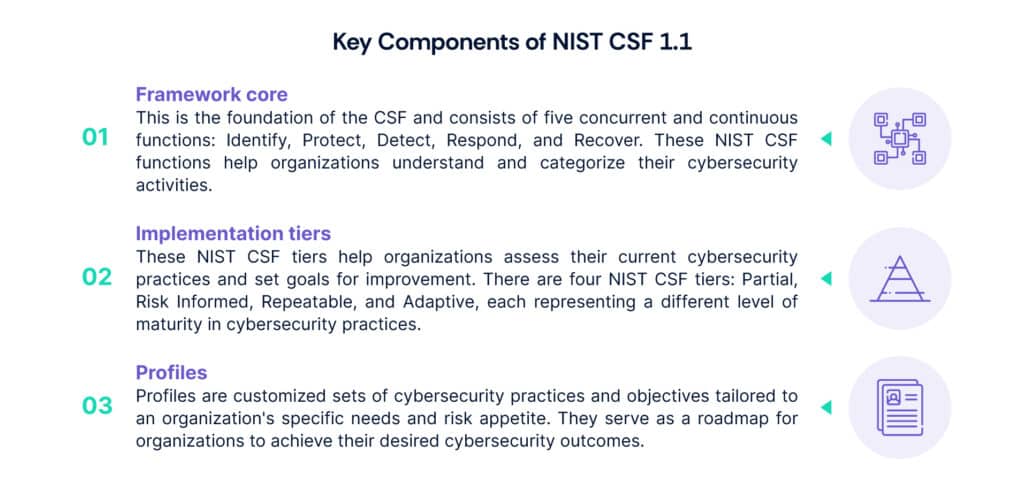
The National Institute of Standards and Technology Cybersecurity Framework (NIST CSF) is a cornerstone of NIST’s cybersecurity initiatives, which plays a crucial role in developing and maintaining cybersecurity standards and guidelines. The CSF provides a structured approach to managing and mitigating cybersecurity risks and offers a flexible framework that can be tailored to suit the unique needs of various organizations, making it an invaluable tool in guiding them toward effective cybersecurity practices.

NIST has recognized the evolving nature of cybersecurity threats and technology trends, and as a result, it has periodically updated the CSF to ensure its relevance and effectiveness. 

The proposed revisions in NIST CSF 2.0 represent a major update to the framework, aligning it with current cybersecurity challenges and providing organizations with updated guidance on safeguarding their digital assets. 

In this blog, we will delve into the key changes and enhancements introduced in CSF 2.0, shedding light on how these revisions can benefit organizations in their cybersecurity efforts.

Background information

The NIST CSF version 1.1 is a comprehensive guideline that provides organizations with a structured approach to managing and improving their cybersecurity posture. It was initially released in 2014 and received an update in version 1.1 in April 2018.

Scope of NIST CSF 2.0

The expansion of the scope in NIST CSF 2.0 signifies a significant evolution of the framework compared to its previous version. 

Here’s an elaboration of how the expanded scope aims to address a wider range of cybersecurity challenges and risks faced by organizations:

Expanded scopeDescription
Comprehensive coverageCSF 2.0 broadens its coverage to encompass a more comprehensive set of cybersecurity challenges. It recognizes the evolving threat landscape, ensuring relevance in addressing modern threats.
Inclusion of diverse sectorsThe framework is designed for various sectors such as government, critical infrastructure, healthcare, finance, academia, etc., making its guidance beneficial across different industries.
Flexibility for customizationThe expanded scope allows organizations to customize their cybersecurity approaches to meet their unique needs, acknowledging diverse risk profiles and requirements.
Emphasis on governanceWith the addition of the “Govern” function, CSF 2.0 emphasizes cybersecurity governance and leadership, crucial for mitigating risks and ensuring a holistic approach to cybersecurity.
Enhanced resilienceCSF 2.0 contributes to enhancing an organization’s overall cybersecurity resilience by addressing a wider array of cybersecurity challenges, aiding in effective response and recovery from incidents.

NIST CSF 2.0 functions

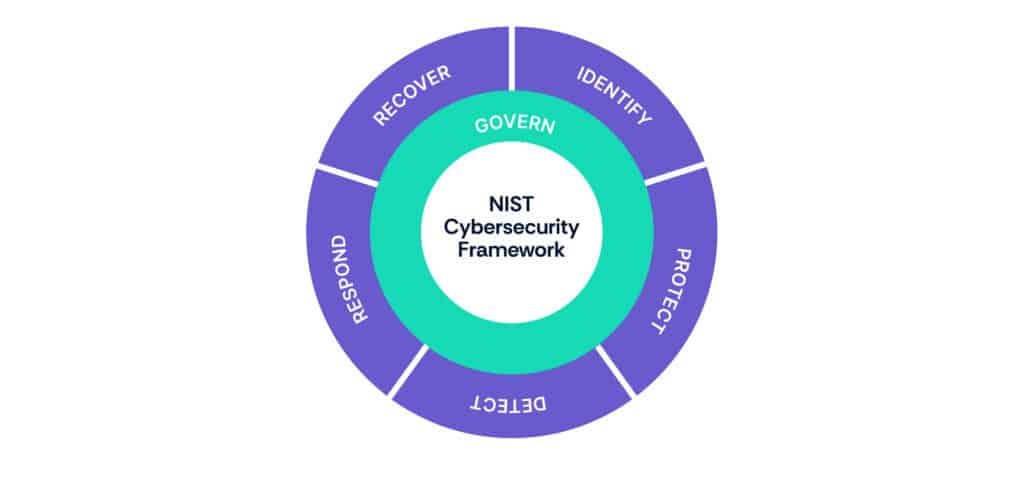
NIST CSF 2.0 continues with the five original functions, namely Identify, Protect, Detect, Respond, and Recover. And introduces a new function that serves as the core component of the framework – Govern. These functions provide a structured approach to managing and improving an organization’s cybersecurity posture. Here are the NIST CSF 2.0 functions:

1. Identify

This NIST CSF function involves understanding and managing cybersecurity risks. Organizations must identify the assets they need to protect, the potential threats they face, and the vulnerabilities in their systems. It sets the foundation for effective risk management.

2. Protect 

The Protect function focuses on implementing safeguards to protect against cybersecurity threats. This includes measures such as access control, data encryption, and security training for personnel. It aims to ensure the security of critical assets.

3. Detect

Detecting cybersecurity events and incidents is crucial. This NIST CSF function involves continuous monitoring and timely detection of security breaches or anomalies. Early detection allows for a rapid response to mitigate the impact.

4. Respond 

In the event of a cybersecurity incident, the Respond function guides organizations in responding effectively. It includes activities like incident response planning, communication, and containment of the incident to minimize damage.

5. Recover 

The Recover function addresses the restoration of normal operations after a cybersecurity incident. It involves recovery planning, system restoration, and the analysis of the incident to prevent future occurrences.

6. Govern

NIST CSF 2.0 introduces a new function called “Govern.” This NIST CSF function emphasizes the importance of cybersecurity governance and management. It involves establishing leadership, policies, and procedures to ensure the organization’s cybersecurity efforts are well-managed and aligned with business objectives. 

Two new appendices for NIST CSF 2.0

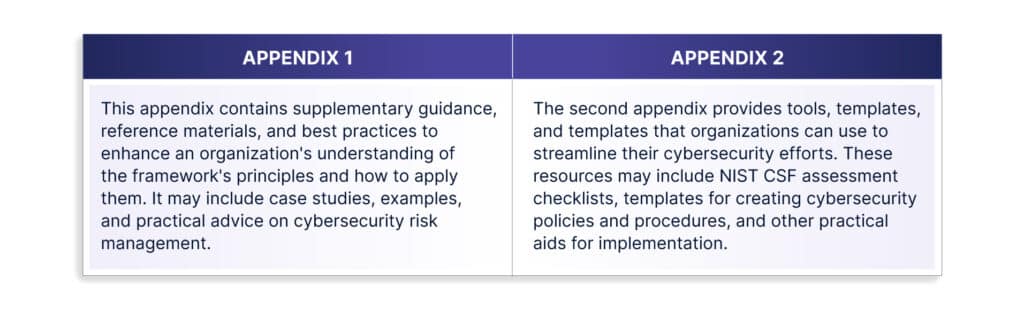
The NIST Cybersecurity Framework 2.0 introduces two new appendices, which are intended to offer additional resources and information to assist organizations in effectively implementing the framework:

These new appendices are valuable additions to the NIST Cybersecurity Framework as they aim to provide organizations with comprehensive support in their cybersecurity endeavors. By offering both guidance and practical tools, the framework becomes a more versatile and accessible resource for organizations looking to enhance their cybersecurity practices and manage risks effectively.

These appendices reflect NIST’s commitment to continuously improving the framework to address evolving cybersecurity challenges and provide organizations with the necessary tools and guidance to protect their information and assets.

CSF 2.0’s focus on enhancing cybersecurity supply chain risk management

Managing the supply chain has been a widespread challenge for cybersecurity experts. If your company collaborates with supply chain partners or outsources services, you need to be vigilant about third-party risks. 

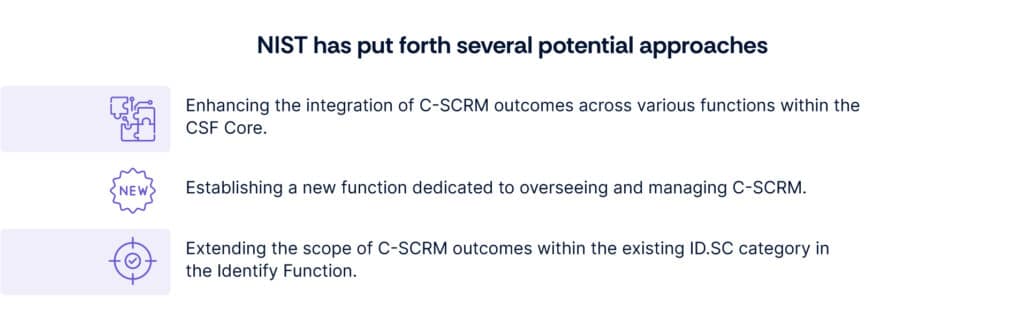
CSF 2.0 aims to address the growing need to minimize third-party risks by broadening its coverage of the supply chain. 

NIST CSF 2.0 is set to incorporate more specific outcomes related to Cybersecurity Supply Chain Risk Management (C-SCRM) to assist organizations in tackling third-party risks. 

Improved and enhanced features of NIST CSF 2.0

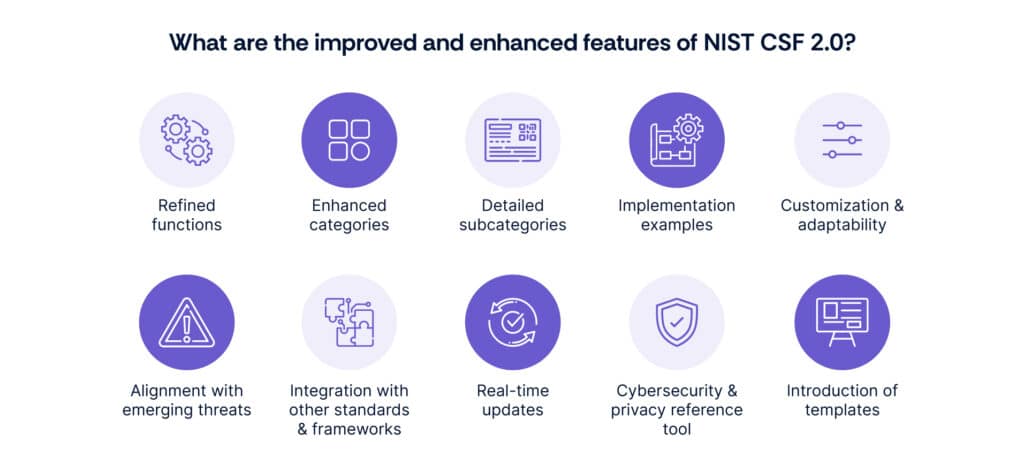
The NIST CSF 2.0 is anticipated to introduce several improved and enhanced features to offer better support to organizations in their cybersecurity efforts. These enhancements aim to provide organizations with more comprehensive and adaptable tools for managing cybersecurity risks effectively:

1. Refined functions

CSF 2.0 refines the core NIST CSF functions that guide organizations in structuring their cybersecurity practices. These functions serve as the foundation for building a robust cybersecurity strategy.

2. Enhanced categories 

The framework includes updated and expanded categories that help organizations categorize and prioritize their cybersecurity activities. This enhancement will enable organizations to address a wider range of cybersecurity challenges.

3. Detailed subcategories

CSF 2.0  introduces more detailed subcategories, providing organizations with specific guidance on how to implement cybersecurity measures effectively. These subcategories offer actionable recommendations for enhancing security.

4. Implementation examples

The updated framework includes a wealth of implementation examples that illustrate how different organizations have successfully implemented cybersecurity practices. These real-world cases can serve as valuable references for organizations looking to improve their cybersecurity posture.

5. Customization and adaptability

CSF 2.0 emphasizes the importance of customization and adaptability, allowing organizations to tailor the framework to their specific needs and environments. This flexibility ensures that the framework remains practical for a wide range of organizations.

6. Alignment with emerging threats 

The updated framework takes into account emerging cybersecurity threats and challenges, ensuring that organizations can address current and future risks effectively.

7. Integration with other standards and frameworks

CSF 2.0 provides guidance on integrating with other cybersecurity standards and frameworks, making it easier for organizations to harmonize their cybersecurity efforts. It will continue collaborating with the International Organization for Standardization (ISO), as numerous ISO documents make references to the CSF, in order to maintain the integration of documentation.

NIST has several cybersecurity and privacy-related frameworks, such as the Risk Management Framework, Privacy Framework, National Initiative for Cybersecurity Education (NICE) Workforce Framework for Cybersecurity, and Secure Software Development Framework. These frameworks currently have connections with the CSF. These frameworks continue to exist separately but will be cited as guidance in CSF 2.0 and related materials like mappings. This change is suggested because CSF 1.1 was released before the Privacy Framework.

8. Real-time updates

Over time, some CSF resources became outdated because updates weren’t reflected in the documentation. NIST is moving to online updatable references in CPRT to address this and is seeking community input for CSF mappings, including for CSF 2.0.

9. Cybersecurity and privacy reference tool

CSF 2.0 was presented using the NIST Cybersecurity and Privacy Reference Tool (CPRT). CPRT offers an enhanced digital interface to access NIST cybersecurity references and a more adaptable way to grasp the connections among standards, guidelines, frameworks, and technologies.

10. Introduction of templates

NIST wants to create a simple template for CSF Profiles, offering a format and key areas to include. Organizations can still use their own formats but can use these templates to simplify Profile development. NIST encourages both public and private sectors to share or create example profiles for various sectors, threats, and use cases.

Winding up

In summary, the proposed revisions in NIST CSF 2.0 mark a significant advancement in cybersecurity frameworks. With an expanded scope, enhanced features, and a focus on emerging challenges like supply chain risks, CSF 2.0 equips organizations with updated guidance to navigate today’s cyber threats.

As cybersecurity threats evolve, NIST’s commitment to continuous improvement ensures CSF 2.0 remains a valuable resource for organizations, helping them mitigate risks and safeguard their digital assets effectively.

Ready to elevate your cybersecurity posture with the latest advancements in NIST CSF? Explore the power of Scrut’s cutting-edge solutions – Click here to schedule a demo and fortify your defenses today!

FAQs

1. How does NIST CSF 2.0 differ from its previous version?

CSF 2.0 introduces new functions, expanded appendices, and enhanced features to provide more comprehensive and adaptable tools for managing cybersecurity risks effectively. It also focuses on cybersecurity supply chain risk management and introduces improvements like refined functions and enhanced categories.

2. What are the key changes introduced in NIST CSF 2.0?

NIST CSF 2.0 expands its scope to encompass a wider range of cybersecurity challenges, introduces a new “Govern” function emphasizing cybersecurity governance, and enhances features such as implementation examples and customizable templates.

3. How does NIST CSF 2.0 address supply chain risks?

NIST CSF 2.0 incorporates specific outcomes related to Cybersecurity Supply Chain Risk Management (C-SCRM), helping organizations minimize third-party risks by integrating C-SCRM across various functions within the framework core and extending the scope of C-SCRM outcomes within existing categories.

Authored by

Aayush Ghosh Choudhary
Co-founder & CEO at Scrut

Achieving compliance excellence with trusted IT service providers

Compliance in IT service management involves adhering to standards, ensuring secure service delivery, and upholding industry-specific regulations. It fosters transparency, accountability, and operational efficiency.

However, as technology has become increasingly intertwined with our daily lives, the significance of compliance has taken on new dimensions.

Consequently, many businesses find it difficult to navigate the complicated regulatory environment and multiple frameworks while maintaining strong cybersecurity. 

Fortunately, a new synergy is carving its mark—one that blends the prowess of IT service providers with the diligence of compliance experts—offering a shield against cyber threats and guiding ethical digital growth.

In this blog, we discuss how this synergy can elevate your security framework and help you achieve compliance excellence.

Strategic benefits of outsourcing compliance

Managed Service Providers (MSPs) integrate compliance with IT infrastructure, ensuring security and compliance go hand-in-hand. Leveraging MSPs with in-house teams optimizes compliance by leveraging their IT familiarity

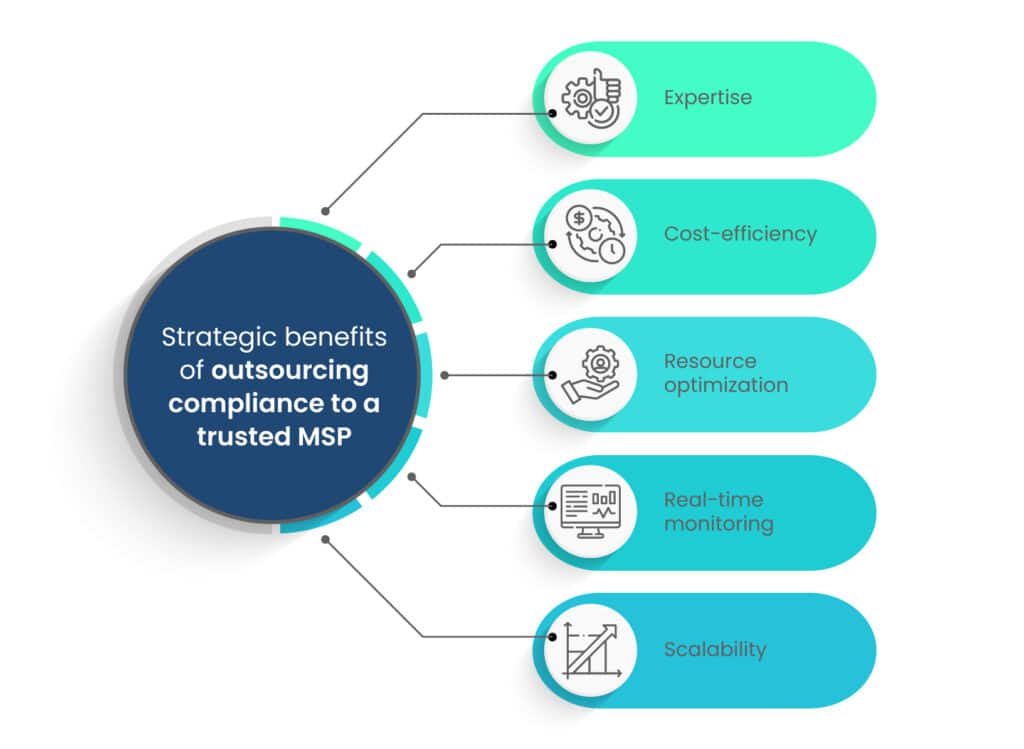
Here are some strategic benefits of outsourcing compliance to a trusted MSP:

1. Expertise

Compliance excellence hinges on the expertise of a trusted Managed Service Provider (MSP) that combines IT proficiency with compliance know-how. MSPs employ compliance specialists who understand industry-specific standards and emerging trends. 

Their proactive approach identifies potential risks before they escalate, fostering a culture of continuous improvement. This expertise ensures organizations meet regulatory requirements while bolstering security and staying ahead of compliance challenges.

2. Cost-efficiency

Achieving compliance excellence is linked to cost-efficiency. Outsourcing compliance to an MSP cuts the need for extensive in-house teams and lowers overhead expenses. MSPs offer streamlined processes, allowing businesses to allocate resources strategically. 

This results in a leaner, more agile organization that can respond swiftly to compliance changes, contributing to compliance excellence and financial stability.

3. Resource optimization

Compliance excellence relies on resource optimization. Outsourcing compliance to an MSP frees internal teams to focus on core competencies and strategic initiatives. This resource optimization enhances productivity, ensuring the right people work on the right tasks and maximizing the organization’s potential.

4. Real-time monitoring

Real-time monitoring is crucial for compliance excellence. MSPs equipped with monitoring tools track data security and compliance adherence in real-time. Immediate responses to threats reduce the risk of compliance violations, enhancing compliance excellence and data protection.

5. Scalability

Compliance excellence requires adaptability. MSPs offer scalability, adjusting compliance strategies to business growth and changing regulations. This ensures long-term compliance excellence by keeping measures effective, relevant, and aligned with the organization’s evolving needs.

Why are MSPs switching to GRC automation to streamline compliance?

MSPs utilize GRC automation to simplify compliance for their clients, enhance security, and meet evolving regulatory expectations effectively. 

As an MSP using compliance automation, you gain real-time insight into clients’ compliance status through an intuitive dashboard. This eliminates data duplication and streamlines audits.

Compliance automation boosts efficiency in certifications like SOC2, ISO 27001, or PCI, making the process manageable. It provides granular insights to identify gaps and helps you develop mitigation plans.

But what happens when MSPs use manual processes for compliance? 

Manual processes: Yea or nay?

MSPs deal with substantial data, documentation, and reporting requirements, all of which must be accurate to ensure robust GRC programs for their clients. 

Manual processes, while time-consuming, are also prone to errors that can result in compliance gaps or inconsistencies. 

Leveraging trusted IT service providers takes compliance to the next level by eliminating the risk of human error associated with manual processes.

For MSPs looking to expand into comprehensive managed GRC services, the challenge lies in acquiring expertise in GRC domains, establishing essential processes, and seamlessly integrating GRC into their existing service portfolio.

So why not pick an external vendor?

External vendors who lack insight into your IT infrastructure may struggle to provide solutions that adequately address your specific compliance needs. 

This misalignment can lead to inefficiencies, compliance gaps, and potential vulnerabilities that pose a significant risk to your business.

The convergence of IT and compliance services through a trusted MSP empowers businesses to enhance cybersecurity and ensure regulatory compliance. This approach offers an adaptable, efficient, and tailored solution for their unique needs.

Here’s what you should do instead.

Take compliance to the next level with a trusted MSP

Businesses can reap several benefits by partnering with a trusted MSP that possesses a deep understanding of their IT infrastructure and industry-specific regulations,. 

Such an MSP can help implement tailored compliance solutions that align seamlessly with your existing systems and processes. This enhances security, streamlines compliance efforts, and reduces the risk of costly non-compliance penalties.

MSPs can proactively identify and mitigate security risks, leveraging cutting-edge technology and expertise to fortify defenses against cyber threats. They also ensure that the organization remains compliant with evolving regulatory requirements.

This synergy offers a more efficient and cost-effective solution compared to handling compliance in-house or outsourcing to a generic vendor. 

How to harness trusted IT service providers for compliance excellence:

  • Select a Reputable Partner: Choose an MSP with a proven track record in compliance management and a deep understanding of your industry’s regulations.
  • Define Clear Objectives: Clearly outline your compliance goals and expectations, ensuring alignment with your organization’s specific needs.
  • Leverage Technology: Utilize cutting-edge compliance automation tools and solutions provided by the MSP to streamline processes and ensure real-time monitoring.
  • Collaborate Actively: Foster open communication and collaboration with the MSP to ensure they are well-informed about your compliance requirements and can tailor their services accordingly.
  • Continuous Improvement: Regularly assess and review your compliance strategy with the MSP to adapt to evolving regulations and enhance your overall compliance posture.

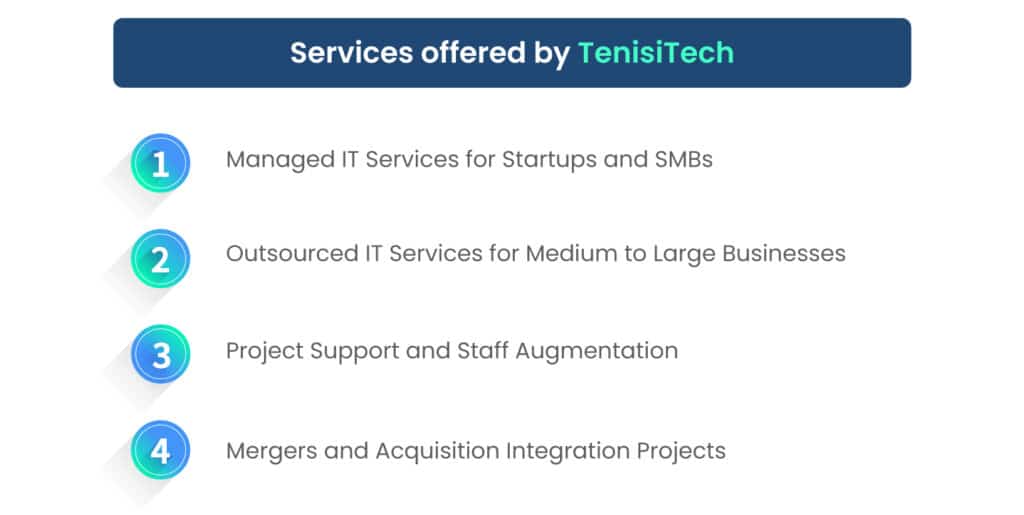
Join hands with TenisiTech: Compliance with confidence

Enter TenisiTech, a globally trusted Managed Service Provider (MSP), that offers specialized Compliance-as-a-Service solutions designed to shield organizations from compliance pitfalls.

 Its services include risk analysis, policy development and implementation, documentation management, third-party risk management, security training, and incident management. 

TenisiTech understands that compliance is not one-size-fits-all and provides bespoke solutions tailored to fast-growing organizations. Their experts offer valuable guidance, leveraging their industry knowledge and global experience for effective compliance strategies.

Through its partnership with Scrut, TenisiTech expands its reach and offers clients access to a diverse pool of compliance specialists in various industries and jurisdictions. This  allows you to craft compliance strategies that align seamlessly with your business operations and objectives.

Outsourcing compliance to TenisiTech enhances operational efficiency and performance, allowing organizations to focus on core activities.

Leverage the expertise of TenisiTech’s team and Scrut to embark on a journey towards streamlined, tailored, and successful compliance management. 

Authored by

Aayush Ghosh Choudhary
Co-founder & CEO at Scrut

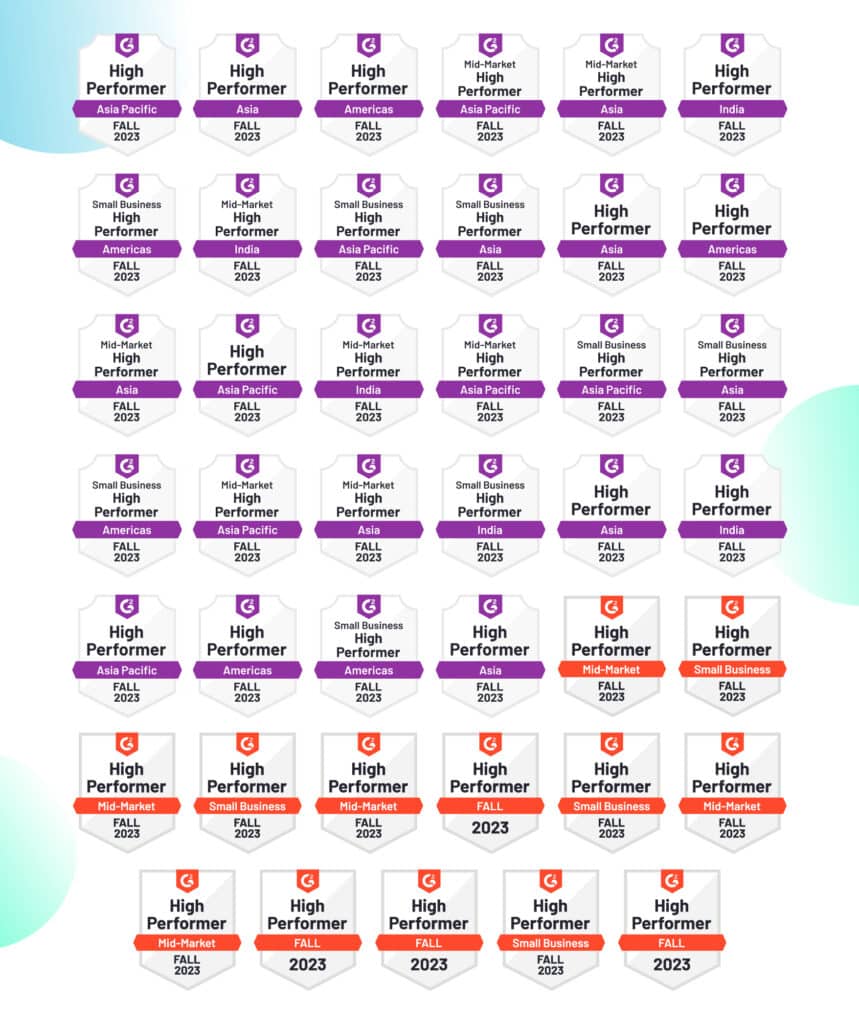
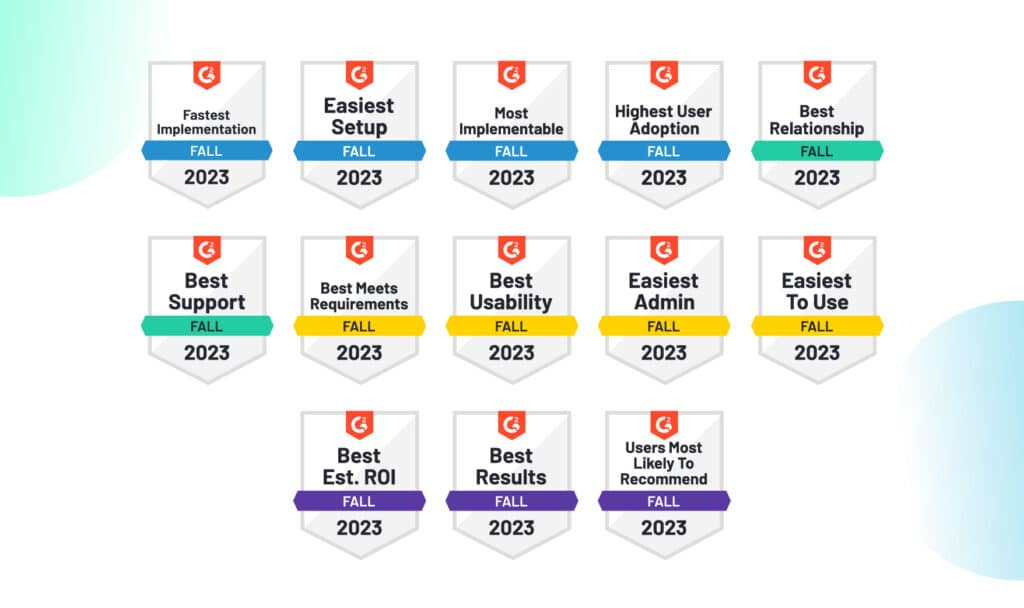
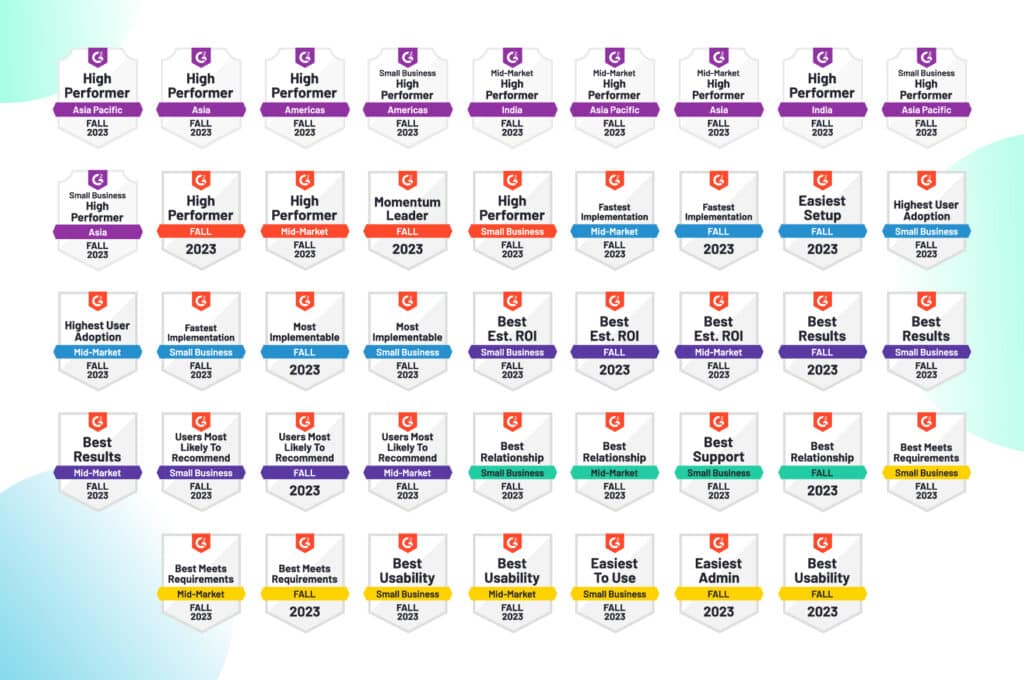
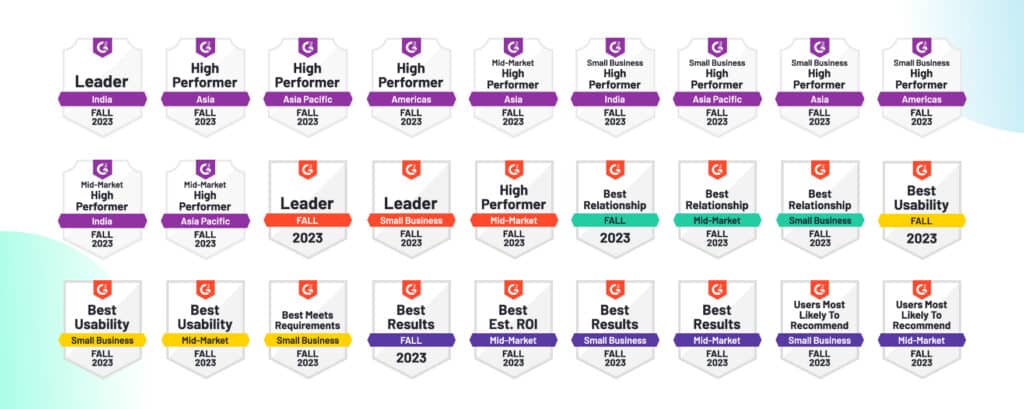
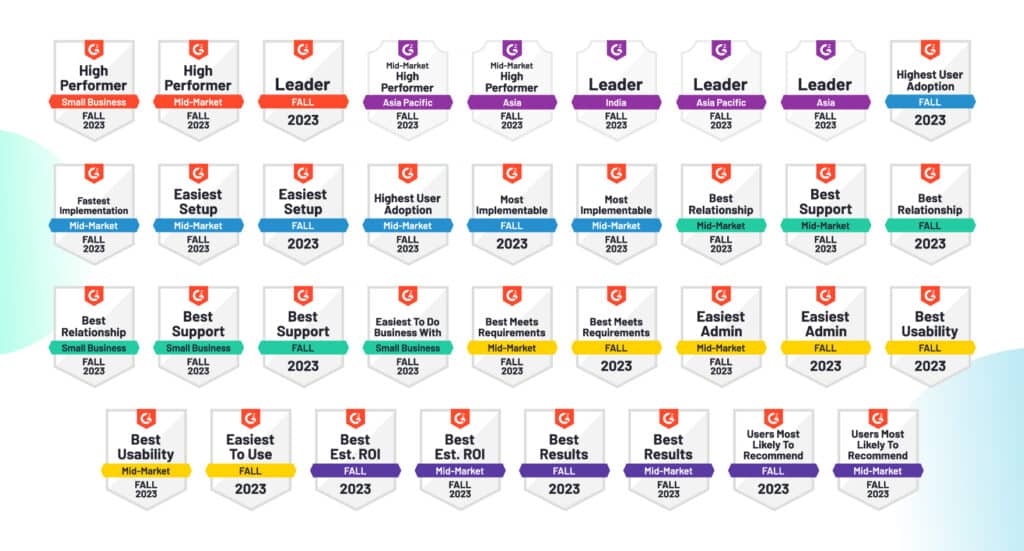
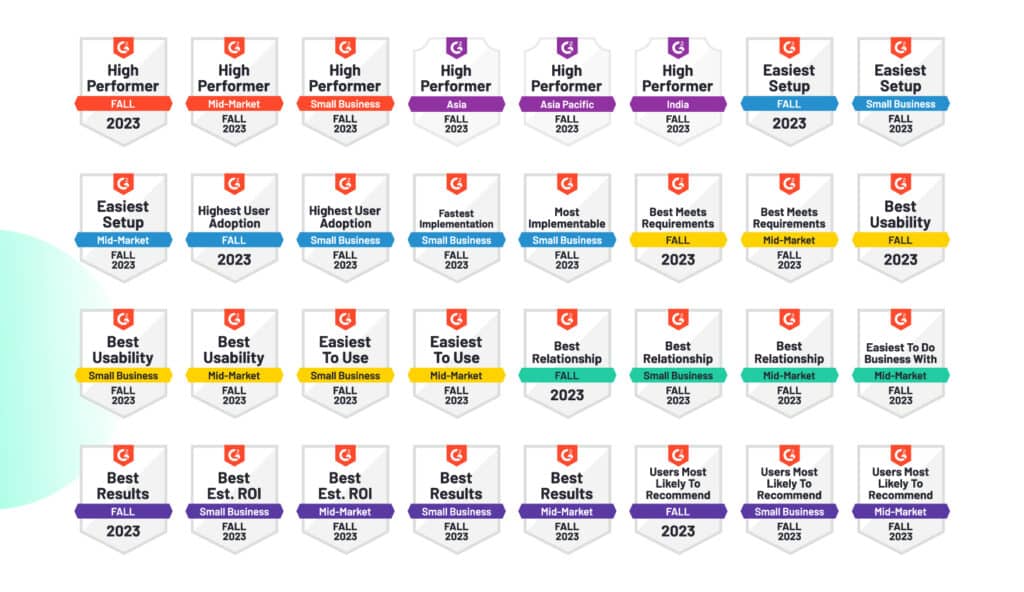
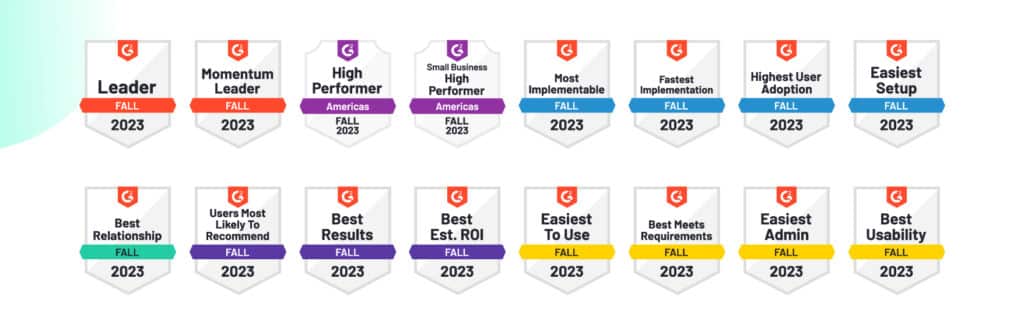
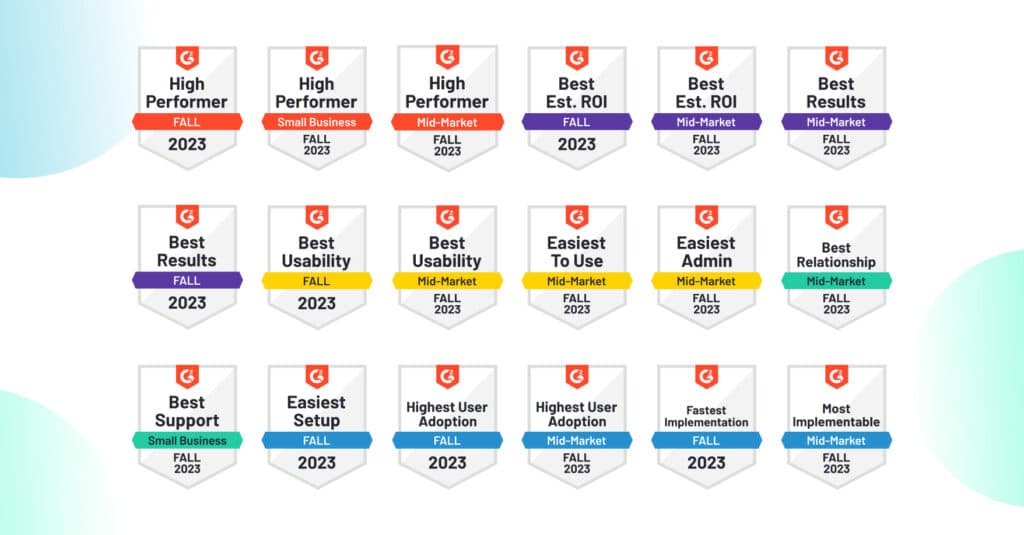
Scrut Triumphs in G2’s Fall 2023 Report with 185 Badges, 2 Momentum Leader Awards, and 4 Leader Badges!

We are beyond excited to announce that Scrut has won 185 badges in the recently released G2 Fall 2023 Report! These badges are a reflection of our customers’ continued faith in us, and we cannot thank them enough for helping us be recognized as the Momentum Leader in two categories and the Leader in four categories.

G2 is the go-to marketplace for IT and software companies, providing both consumers and businesses with a valuable platform for discovering, comparing, and reviewing tech solutions tailored to their needs.

G2’s quarterly reports are a reflection of our ongoing commitment to excellence, as they highlight the top players in the tech industry based on unbiased user reviews. It’s truly an honor to once again be acknowledged as a high performer in our field through this esteemed platform.

We want to emphasize that these badges represent the trust our customers place in us. We’re deeply grateful for this trust and fully recognize that our achievements are made possible by their unwavering support. We extend our heartfelt thanks to our customers for believing in us, and we’re motivated more than ever to continue leveling up their infosec and compliance game!

Here is a run-through of all the badges we were awarded in G2’s Fall 2023 Report.

Scrut shines as the Momentum Leader in Security Compliance and Cloud Compliance

We are super excited to be hailed as the Momentum Leader in not one but two categories that we specialize in! We can now proudly declare to be one of the top products in security compliance and cloud compliance.

Ensuring security and cloud compliance is a cornerstone of our service. Being acknowledged as Momentum Leaders in this category reassures us that we are headed in the right direction and serves as a powerful motivator for us to raise the bar even higher.

On top of the game with 4 Leader badges 

We are thrilled to be recognized as leaders in four important categories – security compliance, cloud security, cloud security in the small business segment, and cloud security posture management. 

We take security compliance and cloud security seriously, and these leader badges stand testament to our endeavors.

Standing proud with 5 Leader badges from Around the World

At Scrut, we do our best to help as many organizations as we can, and we are glad to be appreciated by our growing clientele. 

We received five Regional Leader badges including Cloud Security Leader – India, Cloud Security Posture Management – Asia, Cloud Security Posture Management – Asia Pacific, Cloud Security Posture Management – India, and Vendor Security and Privacy Assessment – Asia Pacific.

Soaring high with 41 High Performer badges 

We’ve outdone ourselves and how! We won a whopping 41 high performer badges this season, and we are besides ourselves with joy! We are extremely grateful to our customers for recognizing our hard work. 

To be hailed as a high performer across seven categories (Cloud Compliance, Cloud Security, Cloud Security Posture Management, IT Asset Management, Third Party and Supplier Risk Management, and Vendor Security and Privacy Assessment)  fills us with pride and drives us to continue being on top of our game. We’ve also been recognized as a High Performer in 6 categories in the Americas section, and we couldn’t be happier!

Notable badges won at G2 Fall Awards 2023

The performance and user-friendliness of our product is something that this report highlighted with Scrut earning eight Fastest Implementation badges, seven Best Usability badges, seven Best Results badges, six Easiest Setup badges, five Best Estimated ROI badges, four Best Meets Requirements badges, four Most Implementable badges, three Easiest Admin badges, and three Easiest to Use badges.

We also continue to be a crowd pleaser, taking home six Best Relationship badges, five Highest User Adoption badges, four Users Most Likely to Recommend badges, and one Best Support badge.

Mastering Cloud Compliance with 43 badges

We once again top the charts in cloud compliance with 43 badges, beating our own previous records. Our cutting-edge compliance automation and management platform is the perfect solution for maintaining the compliance of your cloud architecture, and we are ecstatic to be recognized as a leader in this category.

Various businesses, from small startups to mid-market enterprises, have experienced the advantages of our cloud compliance services. We are also overjoyed to have received high performer badges across several regions in this category including Americas, Asia Pacific, and Asia. 

Strengthening Cloud Security with 27 badges

We are ecstatic to be declared a leader in Cloud Security! Honing the security of organizations that use multicloud solutions is an important part of our expertise, and winning 27 badges shows that our customers appreciate our efforts.

Being recognized as a leader across regions in this category lets us know that we are on the right track when it comes to securing the cloud architecture of our valued customers.

Leading Cloud Security Posture Management with 35 badges

Receiving the Leader badge in Cloud Security Posture Management further cements our platform’s reputation as a hawk-eyed system that doesn’t allow any misconfiguration to slip its notice. We are proud to have been recognized as a leader across regions in this category and promise to hone our performance even more in the coming quarter.

Mastering IT Asset Management with 32 badges

It is no secret that we are thrifty when it comes to managing IT assets, and this has been certified by the 32 badges we received in the IT Asset Management category. We received High Performer badges across market sizes and regions demonstrating that we know how to make the best use of IT assets.

Fortifying Security Compliance with 16 badges

We are on a roll! We’ve once again bagged the title of Leader in Security Compliance.  This would not have been possible without the continued support of our dedicated customers who go out of their way to show their appreciation for our services. 

We promise to continue providing the best security compliance services, and we are driven by your enthusiastic reviews.

Enhancing Third Party and Supplier Risk Management with 18 badges

We are patting ourselves on the back for being honored as a High Performer in Third Party and Supplier Risk Management! Helping our customers manage vendor risks is something we prioritize, and we are happy to see our customers recognize the hard work that we put in.

Rest assured, we will continue to keep our clients’ third party associations risk-free, so they can focus on scaling their business.

Redefining Vendor Security and Privacy Assessment with 14 badges

Being recognized as a High Performer in Vendor Security and Privacy Assessment is an honor we don’t take lightly. Vendor security and privacy are major players in ensuring the security of a company. We’re super excited to see that our platform is making it easy for our customers to handle risks from third-party vendors.

The Scrut Manifesto

It is always thrilling to read what you have to say about our services. We not only treasure your kind words but also take your feedback seriously, using it as a compass to navigate towards even better service.

If you’d like to dive deeper into our performance and services, check out more reviews by clicking here.
With our intuitive platform, we’re here to address all your security and compliance requirements. Schedule a demo  with us today to discover how we can better serve your needs.

Authored by

Aayush Ghosh Choudhary
Co-founder & CEO at Scrut

Risk Grustlers EP 8 | A scoop of risk, squishy not crunchy!

Get ready to explore the crunchy and soft side of GRC in the eighth episode of our podcast Risk Grustlers, with Jason Leuenberger, a Leadership and Team Coach, who specializes in GRC.

With over twenty years of experience in the industry, Jason is the perfect guide to help you master the often overlooked softer side of GRC. He emphasizes the importance of skills like communication and relationship-building in strengthening risk management.

Jason also offers insights into how GRC professionals dealing with a crunchy mindset can transition to softer tasks requiring behavior changes across teams. 

The insightful conversation ends with him discussing his unique practice called Kinkou and its benefits for GRC leaders with our CEO Aayush Ghosh Choudhury. 

Watch the complete podcast here

Here are some highlights from the engaging episode.

Aayush: Could you discuss some insights you gained during your long GRC journey? 

Jason: I’ve been chewing on this idea for about a decade now – that risk management isn’t all crunchy and rigid. It’s not just about frameworks, tools, and giving directives. What’s been largely overlooked is the softer, more human side of risk.

You know, how company culture, teams, and systems within an organization play into risk management. Especially if you’re approaching it from a very crunchy perspective. I’ve been quite immersed in that crunchy approach for the past 20 years, deep into technical domains. I’m really into the technical aspects, the nitty-gritty of GRC. I find the innovative ways to simplify things intriguing, trying to make it less crunchy, more people-friendly. But even though I’ve been in that crunchy mindset, I’ve been wondering, how can we make risk management more data-driven?

How can we quantify everything, back it up with numbers? How can we use data to clearly show when we’re in a crunchy situation and need to step back? But you know what? In the process of all this technical focus, I realized I was missing a crucial piece – understanding people’s perspectives. Those teams and individuals dealing with difficulties, fears, and uncertainties that impact their risk decisions.

Aayush: Can you let us in on what the soft and squishy side of GRC entails?

Jason: The human side of risk is what I like to call the softer side. You’ve probably heard of “soft skills,” but honestly, that term doesn’t do them justice. These skills are anything but soft – they’re pretty tough.

You know, when it comes to these so-called “soft skills,” many struggle because they involve our human aspects. We often assume that people are either naturally born with talents like communication and relationship-building or they’re not. But the truth is, these are skills that we can learn, understand, and actually develop over time.

And regarding your question about the key components of this softer side and the patterns I’ve observed, well, there are definitely some strong trends. I’ve even given presentations on this topic, and I’m in the process of crafting a manifesto that covers several of these key ideas.

I also touch on these concepts in my work with GRC assessments. While I don’t do a ton of that these days, I still occasionally get involved in more substantial GRC assessments, depending on the specific situation, project, and client. So, when we find ourselves favoring a sense of knowing over learning, it’s often a signal that we might be leaning too heavily toward the rigid side of things.

Aayush: What would be some examples of situations where there was a trade-off between knowing and learning and what were the interventions that you made?

Jason: I’ve run into CISOs and risk pros at the executive level who are just plain frustrated. They’re like, “Why is no one listening? Why do I have to keep saying the same thing over and over?”

So, diving into this, when we really unpack it, a big part of this frustration comes from our personal fears. As risk professionals, we often fear not being right. People look to us for solutions to those potential risks, those worst-case scenarios we’re trying to prevent.

Sometimes, we come in thinking we’ve got it all figured out. We have a framework, analysis methods, the whole shebang. We’re confident that we know the controls to tell people, where the failures are, the problems, everything. But what we miss is asking questions to truly understand the deeper issues. Like, why is this a challenge for that team? Or how does the company culture play into certain risk decisions?

You know, they might be facing common or ongoing risks that they just can’t seem to tackle, despite staring them in the face for years. It’s about getting under the surface and understanding what’s holding them back.

Aayush: Risk management often doesn’t get a dedicated team until companies reach a certain size and scale. The CISO or VP of Information Security ends up handling it as a side task and when an incident happens, they end up taking the fall. It’s also tough for them to drive change across the organization because they need buy-ins from different teams. What are your thoughts on this?

Jason: Totally get what you’re saying – it’s the defender’s dilemma. CISOs and risk folks carry this concern with them every day. They’re haunted by the thought that attackers just need to be right once, while they feel they have to be right all the time.

I hear this often too – the term “buy-in.” It’s like, “I just need these people to buy in. Why won’t they?” But here’s the twist, what does buy-in really mean? Do you want them to just nod along or robotically follow your instructions?

Here’s the thing: buy-in usually sounds like an ultimatum. It’s like, “Agree or else.” But there’s a difference between buy-in and weigh-in. Weigh-in should always come before buy-in. See, if we don’t take the time to ask questions, understand their viewpoint, and give them the chance to weigh in, they feel like they’re being told what to do, without any say.

So, when we skip the weigh-in part and leap straight to “achieved buy-in,” they feel sidelined in deciding their risk journey. This contributes to the rigid side – we’re not letting them have a voice in their risk choices.

And this mismatch can lead to defensive behavior, signals that they’re disinterested or shut down. They don’t feel heard or involved. They might even resist by going completely against what we’re suggesting. It’s a dynamic that adds to that crunchy side.

Aayush: What happens when GRC professionals on the crunchy side have to carry out softer tasks that require things like behavior changes across teams? What steps have you taken to help such people bridge this gap?

Jason: It’s all about their choice – the clients decide which intervention works best for them. It boils down to what’s personally tough for them. I mean, what’s challenging specifically for them, not for someone else. Changing people and teams? Well, that’s quite the task, you know, we can’t reshape them as much as we wish we could.

It just doesn’t work that way. So, here’s the deal: how are you playing into this scenario? How’s the difficulty or challenge showing up for you? Often, leaders are looking for some common shifts in themselves. Like, they’re becoming more at ease with asking questions to grasp viewpoints from the other side. You know, from across the table or different teams or audiences.

Maybe it’s about talking to someone who’s just not vibing with the risk management program as it’s been pitched so far. Or perhaps they don’t quite get their role in risk management as a whole. It’s about being open to learning about people rather than already having all the answers on what they need to do. Because thinking you’ve got it all figured out can really narrow your path and isolate others.

So, one change leaders often strive for is transitioning from a rigid control mindset to a more open, adaptable one. And then they wonder, what small practices can help them shift from rigid to flexible, from fixed to expansive? You know, from being all about control to collaborating intelligently with diverse people and teams.

Aayush: Can you talk about the three most common interventions that you see yourself having to do over and over again to promote the softer side of risk management?

Jason: So, if I had to pick three key changes, the first one that immediately pops up is starting small. This applies not just to us getting a better grip on ourselves through increased self-awareness – which is a superpower for leaders – but also to any change we want to make, whether it’s personal or for our organization’s culture. I often advocate aiming for 1% gains – tiny improvements that can add up big.

Next up, there’s the balance between listening and talking. It’s kind of like the earlier point about learning versus knowing. How often are we really listening, grasping the reality of control owners or performers? What’s their day-to-day like? Their struggles, their exceptions – really diving into their world. It’s crucial to shift from control exercises to meaningful engagement.

And last but not least, there’s the dance between empathy and collusion. It’s essential to understand someone’s shoes without actually wearing them. Building rapport and understanding doesn’t mean we’re compromising integrity; after all, risk management is about assistance, not cheating. With empathy, we’re tapping into the human side, recognizing that everyone’s job is tough and they’re just trying to do their best. So, embracing empathy paves the way for meaningful change in the long run.

Aayush: Can you tell us about your practice?

Jason: I started a practice called Kinkou. I’m all about partnering with leaders who are up for the challenge of change. Change isn’t a walk in the park, but it’s where the real growth happens. It’s the game-changer that can make a leader or any professional step up and make a meaningful impact, unlike the traditional crunchy approach that’s been around for years in this industry.

We’ve been sticking to the crunchy side for far too long, overlooking the human and emotional aspect of our work. And let’s face it, risk and fear aren’t anyone’s favorite topics. So, how can we adjust ourselves to create a warmer, more productive collaboration where we can make real progress together? That’s what I explore in my sessions.

You can learn more about Jason’s practice at kinkou.org. Feel free to contact him at jason@kinkou.org.

Authored by

Aayush Ghosh Choudhary
Co-founder & CEO at Scrut

Risk Grustlers EP 7 | The Process of Setting Up A Process To Set Up A Process

Welcome back to another exciting episode of Risk Grustlers! We’re here once again to uncover the captivating journeys of individuals who’ve carved their niche in risk management and are excelling beyond expectations.

Today, we delve into the remarkable story of Renae, who embarked on a unique and unconventional route into the realm of information security. 

From her beginnings in journalism to navigating the world of risk forensics and ultimately landing in the dynamic field of information security, Renae’s journey is an inspiring tale of evolution and adaptation.

Join us as we explore the twists and turns that led Renae to where she is today.  

Catch the full podcast here.

Aayush: Could you share your journey through journalism, risk forensics, and information security? What motivated and guided you along this path?

Renae: I transitioned from journalism to technology, drawn by the excitement of the early 2000s tech landscape. Joining Expedia provided my first exposure to security through fraud prevention. The motivation behind malicious activities intrigued me, and I found satisfaction in proactive prevention.

While at Expedia, I explored roles in business continuity and crisis communications before finding my way to information security. Protecting people’s information and well-being resonated with me, making the move feel right. 
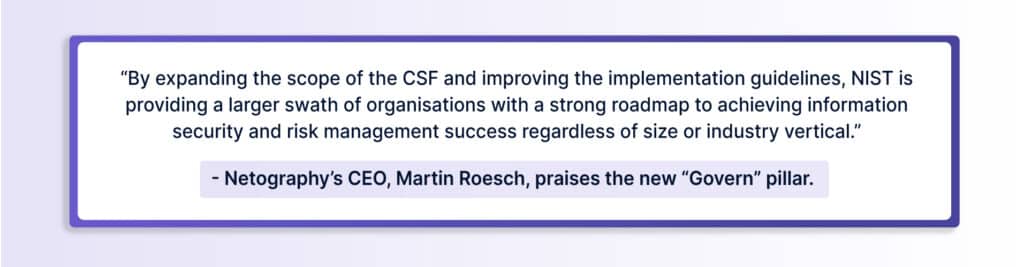
My background in communication proved useful, and upon entering the field, I realized I had found a community with shared interests and goals. The skills I had developed over time aligned seamlessly with information security, solidifying my path.

Aayush: Did the transition to information security, which was quite distinct from your previous experience, ever feel intimidating? If so, how did you navigate and start building your foundation in this new field? Did you start with GRC?

Renae: Initially, I wasn’t intimidated, as I lacked full awareness of the tools and vendors used in the field. My previous experience helped me transition, especially in training and vetting. I began with GRC and communication tasks, gradually moving into project management and ability management. 

My business background and Expedia experience enabled me to collaborate with various teams and work on policies, KPIs, and metrics for the security team, focusing on broader aspects rather than deep technical dives.

Aayush: GRC serves as the foundational step in developing a robust information security program, yet it’s often seen as less glamorous within the field. Have you encountered this perception, and if so, what strategies do you think could shift the perspective and make GRC more appreciated?

Renae: GRC often faces perceptions of being unexciting and undervalued compared to development teams. It’s crucial for teams to recognize that GRC professionals possess the technical expertise needed for effective work. 

While checklist-based approaches can be dull, the real value lies in understanding optimal 

solutions and collaborating closely with teams to innovate. This dynamic approach not only brings excitement to the role but also enables the nuanced application of compliance to enhance security and meet goals.

Aayush: As a GRC leader, how do you balance collaboration and assertiveness with teams executing activities like risk management and compliance, especially when lacking direct authority? How do you effectively manage this situation while maintaining the needed balance between being accommodating and firm?

Renae: Striking the right balance between collaboration and assertiveness is essential for long-term success in GRC. While being a hard ass may yield short-term results, it’s not a sustainable approach. Long-term success lies in building relationships, educating stakeholders, and making compliance processes easy for them. 

Holding people accountable in a respectful manner is key, ensuring deadlines are met and responsibilities are fulfilled. While some situations may require assertiveness, maintaining positive relationships ultimately contributes to effective GRC outcomes.

Aayush: One might expect professionals to stay longer within a company, especially after building a security program and overseeing GRC. However, the industry often experiences significant employee turnover. What factors contribute to this swift churn in the information security field?

Renae: Some individuals are placed in these roles without the required background or interest, assuming success will follow. The perception of the role’s value can also affect retention. If positions focusing on compliance and oversight aren’t as valued as other roles like development, it becomes challenging to sustain engagement and stay in such roles.

Aayush: For startups transitioning to a robust information security program, what’s the worst advice you could provide? In other words, what would be the absolute worst course of action for a company seeking to establish a minimum viable risk management program by hiring a head of information security or a fractional CISO?

Ignoring everything is not a viable approach. In startups or situations where one person manages the role, focusing on documenting risks, listing them out, and understanding the environment’s dynamics is essential. This preparation allows for proactive responses to changes and the prioritization of necessary actions, especially when assessments arise.

Aayush:  Many of our viewers are growing startups that have reached the point of having a security budget for establishing a minimum viable risk program. What’s the absolute worst advice you could offer them? In other words, what would be the most disastrous suggestion for companies at this stage seeking to set up their risk program?

Renae: I’ve learned from past experiences that when flashy tools were brought in without the necessary structure and support, it often led to issues. There’s no magic solution in a tool alone; it requires knowledge and effort to work effectively. Establishing a strong foundational risk program comes first. 

Once you have that foundation, you might have a basic system in place. Then, you can consider integrating tools, but you must be prepared for the onboarding, management, and ongoing work they require. Tools can help, but they’re not a cure-all. Even the best tools need to be managed and integrated into your existing program. So, when considering new tools, it’s essential to focus on the amount of work needed to implement and maintain them effectively.

Aayush: With tighter budgets and smaller GRC teams, how do you handle the increasing compliance demands, especially with new regulations like the SEC’s incident reporting guidelines? How can companies manage a more challenging compliance landscape with limited resources?

Renae: Relying on foundational elements is crucial to navigating challenges. For instance, when we lost a tool, we went back to basics and found alternative solutions. Compliance demands are growing, affecting both small and large companies. Even with growth, effort remains consistent due to compliance requirements. Some companies might take calculated risks to sustain operations. However, cutting teams and tools could lead to increased workloads and knowledge loss.

Aayush: Can forced frugality drive a focus on essentials, yet excessive measures might hinder GRC and infosec progress? Is striking a balanced approach crucial for companies?

Renae:  Yes, and it’s evident in large organizations where processes become convoluted and time-consuming due to excessive layers of process building. For effective progress, especially in large companies, streamlining processes is crucial. Emphasizing compliance with a focus on actual requirements and interpretations rather than creating additional rules is key. Striking the right balance between adherence and pragmatism is essential to avoiding unnecessary complexity in compliance efforts.