Authored by

Aayush Ghosh Choudhary
Co-founder & CEO at Scrut

Communicating your security posture: A comprehensive guide

Cutting-edge technology and groundbreaking new innovations are what most SaaS companies work towards to draw more customers. But what is not given enough credit for not only drawing customers but retaining them is good old-fashioned trustworthiness and reliability.

This is where demonstrating a robust security posture plays a crucial role. In this day and age where data breaches and cyber attacks repel customers, enforcing strong security practices will project your company as an organization worthy of doing business with.

In this blog, we will discuss the importance of communicating your organization’s security posture with customers and stakeholders and guide you on best practices to demonstrate trust to various parties.

What does security posture mean?

Security posture refers to an organization’s overall approach to managing and safeguarding its information assets, technology infrastructure, and sensitive data. It encompasses a comprehensive set of strategies, policies, and practices designed to protect against various security threats and vulnerabilities. 

A robust security posture is crucial for ensuring the confidentiality, integrity, and availability of information, as well as maintaining the trust of stakeholders and clients.

Who needs to be informed about your security posture?

The communication of security posture is a multifaceted process that requires tailoring the message to different stakeholders within and outside the organization. The primary target audience includes:

Internal stakeholders

  • Employees: Educating and informing employees about the organization’s security posture is essential for fostering a culture of compliance and cybersecurity awareness. This ensures that individuals understand their roles in safeguarding sensitive information and following security protocols.
  • Management and leadership: Executives and decision-makers need a comprehensive understanding of the security posture to make informed strategic decisions. Clear communication with leadership helps align security initiatives with overall business objectives.

External stakeholders

  • Customers: Building trust with clients is critical for maintaining business relationships. Communicating the security measures in place assures clients that their data is handled with the utmost care and security.
  • Partners and suppliers: Collaborative efforts often involve sharing sensitive information. Communicating security posture to partners and suppliers establishes a baseline of expectations and fosters a secure collaborative environment.
  • Regulatory bodies: Compliance with industry regulations is imperative. Clearly articulating the security posture aids in demonstrating adherence to regulatory requirements and standards.

Why is it important to communicate your company’s security posture?
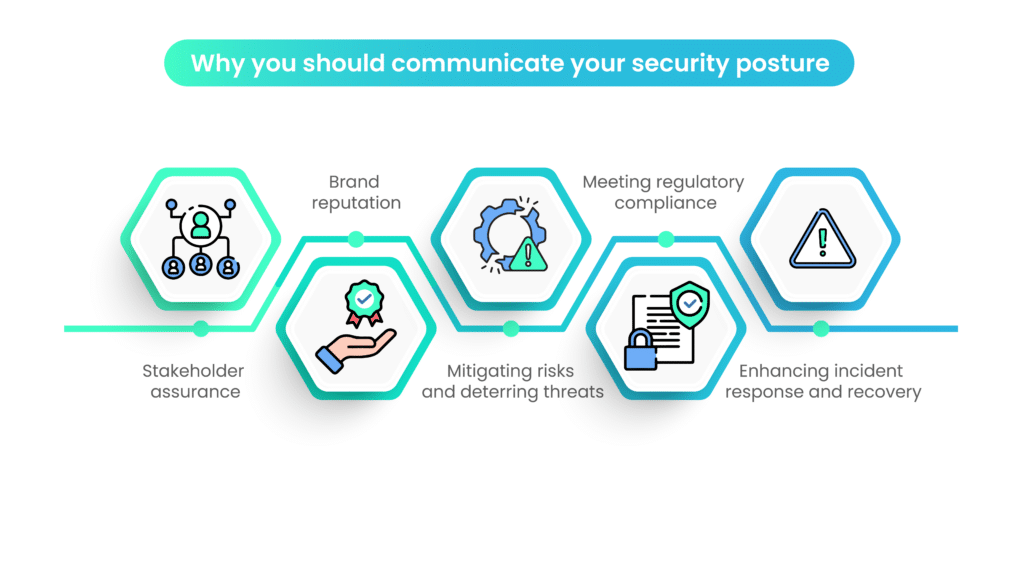
In an era dominated by digital connectivity and an ever-evolving threat landscape, the importance of transparently communicating your company’s security posture cannot be overstated. This section explores the critical reasons why organizations should actively articulate and share details about their security stance.

Stakeholder assurance

Communicating your company’s security posture is a proactive measure to assure stakeholders—both internal and external—that the organization takes cybersecurity seriously. This assurance is important for building and maintaining trust with employees, clients, partners, and investors.

Brand reputation

In an age where data breaches and cyber incidents are headline news, a strong security posture contributes significantly to a positive brand image. Openly communicating security measures signals a commitment to safeguarding sensitive information, enhancing the organization’s credibility in the eyes of customers and the public.

Mitigating risk and deterring threats

Publicizing your security measures acts as a deterrent to potential cyber threats. When attackers perceive a robust security posture, they are less likely to target the organization, opting for easier and less fortified targets. This proactive deterrence can be a crucial element in the overall cybersecurity strategy.

By clearly communicating security protocols and practices, your company also equips stakeholders with the knowledge to identify and mitigate potential risks. This empowers employees to make informed decisions that contribute to the overall security resilience of the organization.

Meeting regulatory compliance

Numerous industries are subject to stringent data protection regulations. For instance, the healthcare industry has to adhere to HIPAA (Health Insurance Portability and Accountability Act) guidelines. 

Effectively communicating your company’s security posture is essential for demonstrating compliance with these regulations. This not only helps avoid legal ramifications but also showcases a commitment to ethical business practices.

Regular communication of security practices also aids in creating a compliance culture of continuous improvement and readiness for audits. When regulatory bodies or external auditors assess your company’s adherence to standards, transparent communication facilitates a smoother and more favorable audit process.

Enhancing incident response and recovery

In the event of a security incident, clear communication channels established beforehand enable a more rapid and coordinated response. Employees, clients, and other stakeholders can be promptly informed of the situation, mitigating potential damage and demonstrating the organization’s commitment to transparency.

Should a security incident occur, a history of transparent communication about security posture can contribute to a quicker recovery of reputation. Stakeholders are more likely to trust an organization that openly acknowledges and addresses security challenges. 

This was not the case in Equifax’s 2017 data breach. The company faced criticism for its delayed public disclosure of the breach, which was discovered in July 2017 but only announced in September 2017.

Aligning security with business objectives

Transparent communication of security posture ensures that cybersecurity is integrated into the broader business strategy. This alignment helps leaders make informed decisions that balance security requirements with organizational goals, promoting a holistic approach to risk management.

Shareholders and investors increasingly consider cybersecurity a critical aspect of due diligence. Communicating a strong security posture enhances investor confidence, contributing to a positive perception of the organization’s long-term viability.

The growing need for a defensible security program

According to IBM’s Cost of a Data Breach 2023 Report, the worldwide average cost of a data breach in 2023 reached USD 4.45 million, marking a 15% escalation over the preceding three years.

Simultaneously, the global regulatory landscape is tightening, mandating the appointment of a singular individual accountable for an organization’s security program.

 The Digital Operational Resilience Act (DORA) in the EU goes a step further, introducing provisions for potential criminal prosecution of the person in charge. 

The Chief Resilience Officer must heed the insights derived from compliance peers and cultivate a culture of compliance to these requirements within their organizational framework.

The responsibilities regarding reporting and information sharing are expanding, with evolving guidance and legislation incorporating additional clauses for incident management and breach notification. 

Professionals in risk and compliance can no longer afford to keep such information confidential. Responding to incidents that disrupt business operations or compromise consumer safety has become more critical than ever, and regulators are emphasizing the heightened importance of organizational trust.

The United States Securities & Exchange Commission (SEC) has adopted measures to hold executives accountable for misconduct during their tenure. 

By utilizing existing provisions in the Sarbanes-Oxley Act, the SEC has indicated its intent to reclaim specific compensation bonuses and stock sale profits from Chief Executive Officers and Chief Financial Officers when companies need to reissue an accounting statement due to misconduct. 

Notably, the Act is not applicable if the executives were directly involved in the misconduct leading to the restatement; rather, it applies when they presided over a company where the misconduct occurred.

As reporting obligations to the SEC expand to encompass cybersecurity and ESG (environmental, social, and governance), executives must acknowledge that it is now more crucial than ever for their organization’s success to have effective risk mitigation and preventive monitoring controls across these domains. 

This is vital to ensure that third parties provide accurate information substantiating statements made in SEC reports.

Defense costs associated with an SEC investigation can surpass $1 million, necessary for defending individuals, directors, and officers – and indemnification insurance may not invariably cover these costs.

All these factors contribute to the growing need for organizations to enforce a strong security program. Cultivating a culture of compliance, proactive risk mitigation and vigilant monitoring across various domains is not just a mandate for resilience but a strategic imperative for sustained success in an ever-changing digital environment.

Conducting a security posture assessment

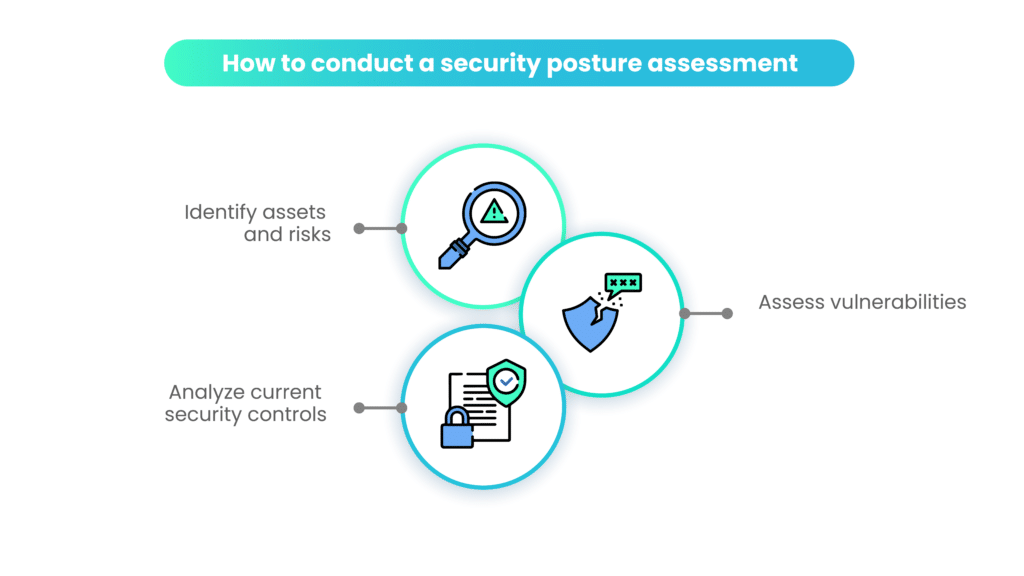
Conducting a security posture assessment is the cornerstone of a resilient cybersecurity strategy. It involves a meticulous exploration of an organization’s digital landscape to identify critical elements. Here are important steps to take while assessing your security posture.
Identifying assets and risks

To comprehensively evaluate your security posture, begin by conducting a thorough assessment to identify all assets within your organizational framework. This encompasses not only tangible assets but also intangible ones such as sensitive data and intellectual property. 

Simultaneously, recognize potential risks associated with these assets, considering both internal and external threats. A meticulous identification process forms the foundation for building a resilient security strategy.

Assessing vulnerabilities

Once assets and risks are identified, proceed to assess vulnerabilities within your system. Pinpoint potential weaknesses, whether they lie in hardware, software, personnel, or processes. 

This step involves a systematic examination to uncover points of susceptibility that could be exploited by malicious actors. A granular understanding of vulnerabilities is essential for crafting targeted security measures to fortify your overall defense.

Analyzing current security controls

Evaluate the effectiveness of your existing security controls. This involves a critical analysis of the tools, policies, and procedures in place to safeguard your assets and mitigate vulnerabilities. 

Identify strengths and weaknesses in your current security framework, considering aspects such as access controls, encryption protocols, and incident response mechanisms. This analysis serves as a benchmark for refining and enhancing your security controls to align with the evolving threat landscape.

Tailoring communication for different stakeholders

Effectively communicating security information requires a tailored approach to cater to the diverse needs and perspectives of different stakeholders.

This ensures that each stakeholder group receives information relevant to their roles and responsibilities, fostering a shared understanding of the importance of security measures. Here’s how to customize your communication strategies based on the type of stakeholder:

Executives and leadership

For executives and leadership, a high-level overview is paramount. Communicate the security landscape in a strategic context, highlighting key threats and vulnerabilities without delving into technical minutiae. 

Emphasize the relevance of security measures in achieving business objectives and maintaining organizational resilience.

Tailor the message to address business impact and risk mitigation strategies. Outline how security initiatives align with broader business goals, emphasizing the potential financial and reputational consequences of security lapses.

Provide a clear roadmap for risk mitigation to instill confidence in decision-makers.

IT and security teams

Catering to IT and security teams involves delving into technical specifics. Provide in-depth information on security protocols, tools, and technologies. 

Clearly articulate the implementation plan, detailing how these measures contribute to overall security. Addressing technical nuances is crucial for the effective execution of security strategies.

Ensure clarity on incident response procedures for IT and security teams. Outline specific protocols, roles, and responsibilities during security incidents. 

Foster a compliance-based culture of preparedness by detailing the step-by-step procedures to follow in the event of a security breach, empowering the teams to respond effectively.

Non-technical employees

Tailor communication for non-technical employees by emphasizing the importance of security awareness. 

Provide accessible and engaging security awareness training to educate employees on potential risks, common threats, and best practices. 

Promote a culture of vigilance and responsibility to enhance the organization’s overall security posture.

Clearly define user responsibilities, focusing on everyday actions that contribute to a secure environment. Communicate simple yet effective security practices, such as password hygiene, data handling procedures, and recognizing phishing attempts. 

Empower non-technical employees to be active contributors to the organization’s security culture.

Customers
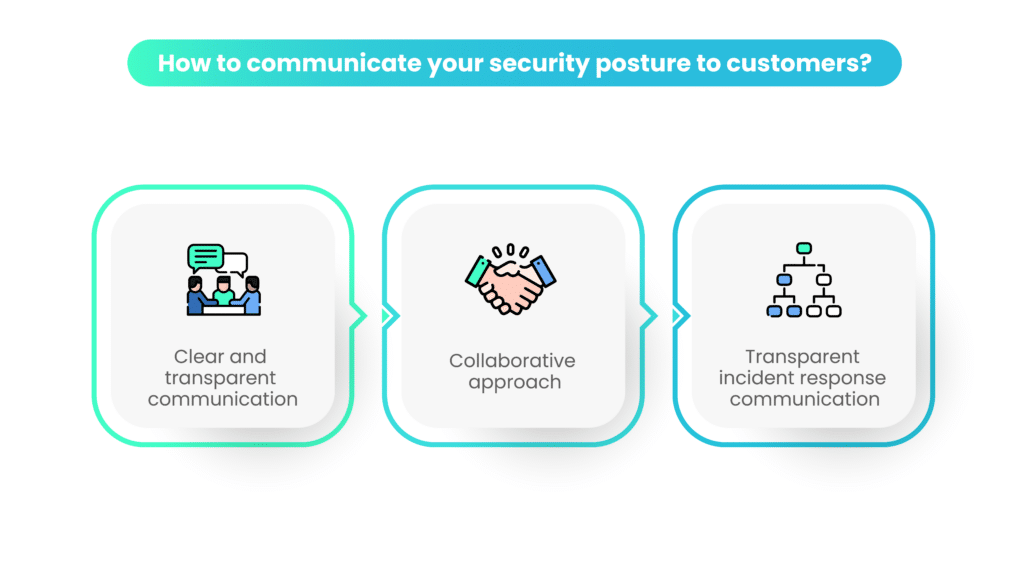
Tailor communication for customers by providing a clear and transparent overview of your security measures. Develop user-friendly documentation that emphasizes the importance of data protection. Communicate how their information is safeguarded, using language that is easily understandable and avoiding technical jargon.

Foster a collaborative approach with customers by regularly updating them on security enhancements and new features. Establish a dedicated customer support channel for security inquiries and concerns, ensuring that customers feel confident in the security measures in place. Provide educational content to empower customers to contribute actively to the organization’s security culture.

When communicating with customers, incorporate information about security certifications and compliance. Highlight your organization’s commitment to maintaining a strong security posture, aligning with industry standards, and ensuring that their data is handled with the utmost care.

In the event of a security incident, communicate promptly and transparently with customers. Provide clear and concise information about the nature of the incident, the steps being taken to address it, and any actions customers may need to take. This transparency contributes to a quicker recovery of customer trust.

Suppliers and partners

Foster a collaborative approach with suppliers and partners by sharing relevant security information. Establish secure channels for communication and collaboration, emphasizing the mutual commitment to maintaining a robust security posture. Encourage open dialogue to address concerns and ensure that security practices align seamlessly across the collaborative network.

Clearly outline security requirements and expectations in contractual agreements with suppliers and partners. Ensure that all parties involved understand and commit to maintaining strong security practices. Regularly review and update these clauses to adapt to evolving security needs within the collaborative ecosystem.

Share incident response plans with suppliers and partners to instill confidence in your organization’s ability to address security incidents effectively. Communicate the steps that will be taken in the event of a security breach, highlighting the collaborative measures in place to minimize the impact on all stakeholders.

Establish regular collaboration sessions with suppliers and partners to discuss and update security measures. This proactive approach ensures that all entities within the collaborative network are aligned with the latest security protocols and practices, contributing to a secure business environment for all parties involved.

Regulatory bodies

Tailor communication for regulatory bodies by clearly articulating your organization’s commitment to compliance with industry regulations and standards. Provide regular reports and updates to regulatory authorities, showcasing how your security posture aligns with specific guidelines and frameworks.

Establish transparent incident reporting protocols for regulatory bodies. In the unfortunate event of a security incident, communicate promptly and openly with relevant regulatory authorities. Provide detailed information about the nature of the incident, the steps being taken to address it, and the preventive measures in place to mitigate future risks.

Adopt a proactive and collaborative approach with regulatory bodies by actively participating in industry discussions and initiatives related to cybersecurity. This engagement demonstrates a commitment to shared objectives and contributes to the overall improvement of cybersecurity practices within the industry.

Ensure compliance with reporting obligations to regulatory bodies. Regularly update regulatory authorities on changes to your security measures, enhancements to your security posture, and any other pertinent information that aligns with industry standards and regulations.

Using technology to communicate your organization’s security posture
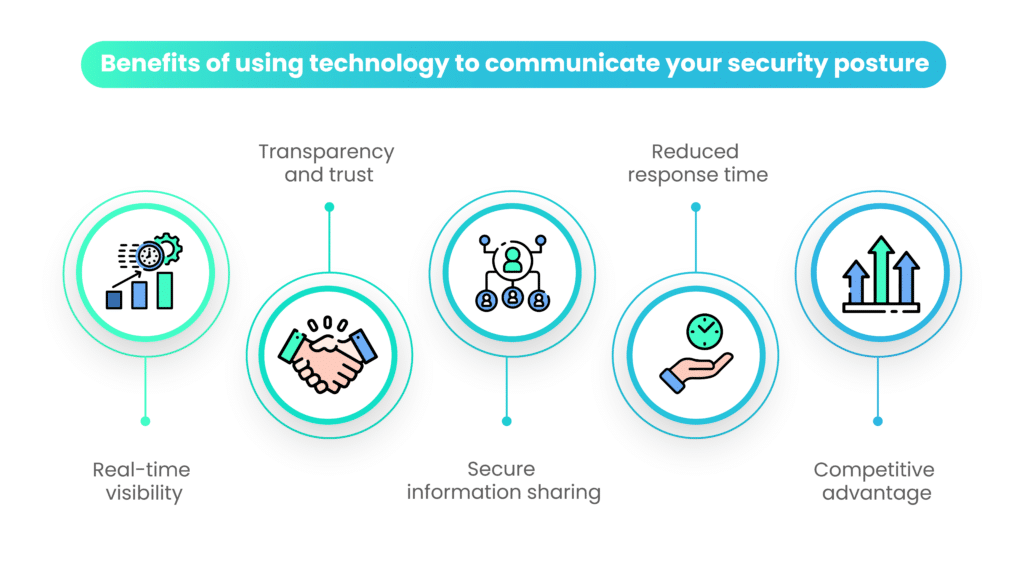
In this era of heightened cybersecurity concerns and evolving regulatory frameworks, how an organization conveys its commitment to data security significantly influences its credibility and trustworthiness. Leveraging advanced technological solutions emerges as a pivotal strategy in fortifying this communication process. Expanding on this, let’s delve into key facets that underscore the indispensable role of technology in the strategic communication of an organization’s security posture:

1. Real-time visibility

Technology allows for real-time visibility into your organization’s security posture. Tools like Scrut’s Trust Vault provide a dynamic and constantly updated view of certifications, compliance reports, and security controls. This real-time information instills confidence in customers and stakeholders, assuring them that your security measures are current and actively monitored.

2. Efficient information access

Technology streamlines the accessibility of crucial security information. Instead of traditional methods involving manual requests and document sharing, tools enable stakeholders to access the information they need quickly and conveniently. This efficiency is particularly valuable in fast-paced business environments where timely decision-making is essential.

3. Transparency and trust

Utilizing technology to communicate security posture promotes transparency. When customers and stakeholders can easily access detailed information about your security measures, it builds trust. Transparency is a key element in establishing and maintaining strong relationships, especially in industries where data security is a top priority.

4. Secure information sharing

Advanced technologies provide a secure means of sharing sensitive security information. Features like NDA-backed gated access, as seen in Trust Vault, add an extra layer of security to detailed reports. This secure sharing mechanism assures stakeholders that their access to sensitive data is carefully managed and controlled.

5. Reduced response time

Technology streamlines the communication process, reducing the time it takes to respond to security-related queries. Automated systems can update security controls in real-time, saving valuable resources and accelerating response times.

6. Adherence to compliance standards

Many tools are designed to adhere to and demonstrate compliance with industry standards. This is critical for organizations operating in regulated environments. Automated platforms can help ensure that the organization’s security posture aligns with established standards and frameworks.

7. Data-driven decision-making

Technology provides the means to collect and analyze data related to security posture. This data-driven approach allows organizations to identify trends, measure the effectiveness of security measures, and continuously improve their security protocols based on informed decision-making.

8. Ease of communication

Technology facilitates easy communication by consolidating security information into a single, accessible platform. This simplicity ensures that stakeholders, regardless of their role or department, can understand and engage with the organization’s security posture without unnecessary complexity.

9. Competitive advantage

Organizations that effectively use technology to communicate their security posture gain a competitive advantage. Demonstrating a robust security infrastructure can be a key differentiator in industries where customers prioritize data protection and compliance.

Wrapping up

Communicating your organization’s security posture effectively can make a substantial difference in the competitive landscape, especially in the realm of SaaS where trust and reliability are paramount. 

While cutting-edge technology and innovation are essential for attracting customers, the often-underestimated factors of trustworthiness and reliability play a crucial role in customer retention.

The importance of communicating security posture is further underscored by its impact on stakeholder assurance, brand reputation, risk mitigation, regulatory compliance, incident response, and the alignment of security with broader business objectives. 

In an era marked by escalating costs of data breaches and tightening regulatory landscapes, the need for a defensible security program has never been more apparent.

Using tools like Scrut’s Trust Vault can help you communicate your organization’s security posture effectively.  Schedule a demo today to learn more.

FAQs

1. What is a security posture assessment, and why is it important?

A security posture assessment involves a comprehensive evaluation of an organization’s approach to managing and safeguarding its information assets, technology infrastructure, and sensitive data. It is crucial for identifying vulnerabilities, assessing risks, and analyzing the effectiveness of existing security controls. This assessment lays the foundation for building a resilient cybersecurity strategy.

2. Who are the primary stakeholders for communicating an organization’s security posture?

The primary stakeholders include internal audiences such as employees, management, and leadership, as well as external audiences like clients, customers, partners, and regulatory bodies. Tailoring the communication to different stakeholder groups ensures a shared understanding of the importance of security measures and builds trust.

3. How does transparent communication of security posture contribute to brand reputation?

In an era where data breaches and cyber incidents are headline news, openly communicating security measures signals a commitment to safeguarding sensitive information. This commitment enhances the organization’s credibility in the eyes of customers and the public, contributing significantly to a positive brand image.

4. What role does technology play in communicating an organization’s security posture?

Technology plays a pivotal role in enhancing the communication of security posture. It provides real-time visibility into security measures, streamlines information access, ensures secure sharing of sensitive data, reduces response times, and facilitates data-driven decision-making. Leveraging technology not only enhances security but also provides a competitive advantage in industries where data protection is a top priority.

5. Why is it essential to communicate security posture to customers?

Communicating security posture to customers is crucial for building trust and demonstrating a commitment to safeguarding their data. Clear and transparent communication, along with the highlighting of compliance and certifications, helps assure customers that their information is handled with the utmost care. Regular updates and educational content further engage customers and empower them to be active contributors to the organization’s security culture.

Authored by

Aayush Ghosh Choudhary
Co-founder & CEO at Scrut

Embracing Zero Trust Security: A definitive guide

In an interconnected world where boundaries blur, and the digital landscape stretches far and wide, traditional security models find themselves outpaced by the relentless evolution of cyber threats. 

Enter the era of Zero Trust Security — a paradigm shift that challenges the age-old assumption that trust should be granted based on network location. It’s time to reframe our approach to cybersecurity and adopt a mindset that places skepticism at its core.

The Zero Trust Model challenges the traditional castle-and-moat mentality, ushering in an era of continuous verification, dynamic access controls, and heightened cybersecurity awareness. 

This blog aims to unravel the complexities of Zero Trust Security, shedding light on its principles, methodologies, and the transformative impact it can have on an organization’s cybersecurity posture.
What is Zero Trust?

Zero Trust is a cybersecurity concept and model that challenges the traditional security approach, which typically relies on the assumption that entities within a network can be trusted by default. In contrast, Zero Trust operates on the principle of “never trust, always verify.” The core tenet is to eliminate the notion of implicit trust based on a user’s location (inside or outside the corporate network) and instead requires continuous verification of identity and strict access controls.

In a Zero Trust Security model, trust is never assumed, and all users, devices, applications, and network components are treated as potentially untrusted, regardless of their location or previous access history. This approach recognizes that threats can come from both external and internal sources, and it seeks to minimize the potential damage that can occur when a network perimeter is breached.

What are the core principles of the Zero Trust Security model?

The Zero Trust Security model is built on several core principles that collectively contribute to its overarching philosophy of “never trust, always verify.” These principles guide organizations in redefining their approach to cybersecurity, emphasizing continuous verification, strict access controls, and adaptive security measures. 

The key principles of the Zero Trust Security model include:

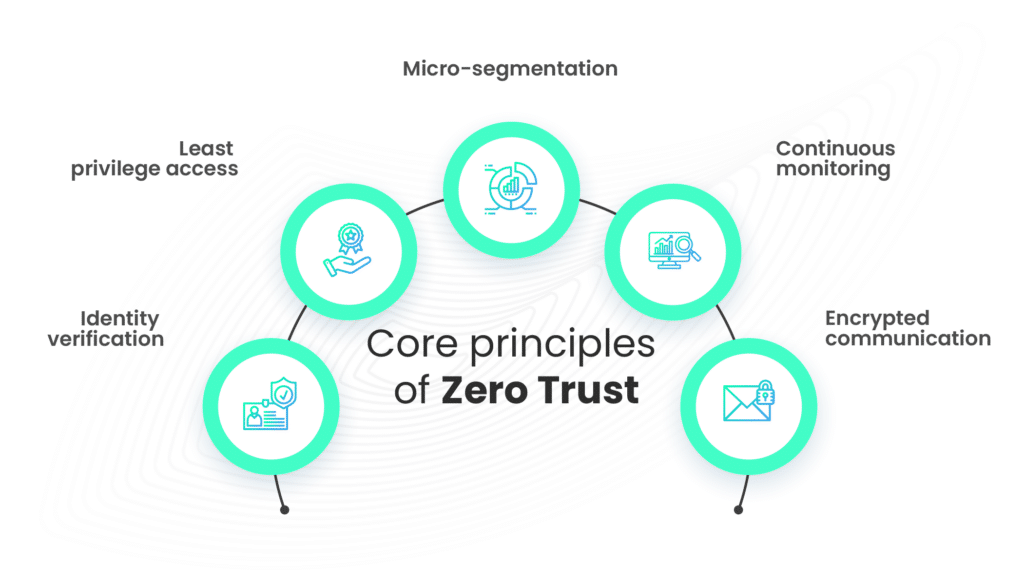
Identity verification

All users and devices attempting to access resources must be verified and authenticated.

Multi-factor authentication (MFA) is commonly employed to add an extra layer of identity verification beyond passwords.

Least privilege access

Users and devices are granted the minimum level of access required to perform their tasks.

Access permissions are tailored to specific roles and responsibilities to limit potential damage in case of a security compromise.

Micro-segmentation

Network segmentation is implemented at a granular level to create isolated zones within the network. This limits lateral movement within the network, making it more challenging for attackers to navigate and escalate privileges.

Instead of having a flat network where all devices can communicate freely, micro-segmentation divides the network into isolated segments. 

For instance, a finance department’s servers can be segmented from the marketing department’s servers, reducing the risk of lateral movement within the network if one segment is compromised.

Continuous monitoring

Continuous monitoring of users, devices, and network activities is essential.

Anomalies and potential security threats are detected in real-time, allowing for swift response and mitigation.

Adaptive security

The security posture dynamically adapts based on the changing threat landscape and contextual factors. This includes adjusting access controls, permissions, and security measures based on real-time assessments of user behavior, device health, and network conditions.

Breach assumption

Instead of relying on the belief that the network perimeter is impenetrable, Zero Trust assumes that breaches can and will occur. Security measures are designed with the understanding that threats can come from both external and internal sources.

Encrypted communication

Encrypted communication is prioritized to secure data in transit. This ensures that even if network traffic is intercepted, the information remains confidential.

Risk-based decision-making

Decisions regarding access and security measures are based on risk assessments.

Contextual information, such as the user’s location, behavior, and the device’s health, is considered to determine the level of risk.

Why is Zero Trust Security important?

Zero Trust security is crucial in today’s business landscape, marked by global digitization and the dissolution of traditional corporate boundaries. As organizations expand digitally, the challenge of securing a growing array of attack surfaces becomes monumental. 

The evolving threat landscape, characterized by sophisticated attackers leveraging automation and cutting-edge technology, has turned cybersecurity into a constant street fight where trust is a luxury no one can afford. Disturbingly, in the first quarter of 2023, over six million data records were exposed globally through data breaches. 

Furthermore, regulatory bodies have heightened security expectations, especially regarding customer data. 

The zero-trust approach is crucial in today’s complex and evolving threat landscape for the following reasons:

Changing perimeter

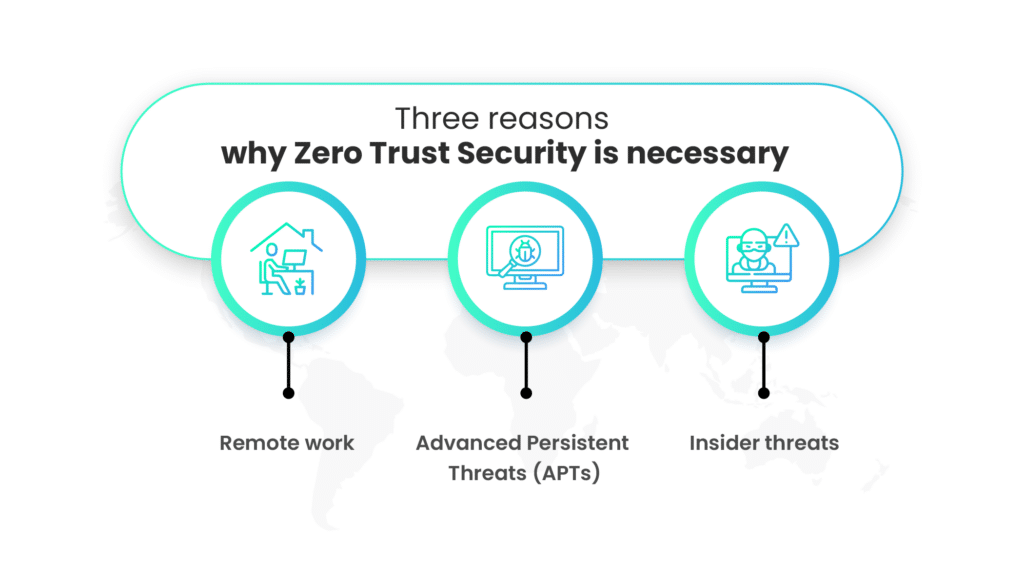
Traditional security models rely on the concept of a well-defined network perimeter. However, with the rise of cloud computing, mobile devices, and remote work, the traditional network perimeter has become increasingly porous and difficult to define. Zero Trust acknowledges that the network perimeter is no longer a reliable boundary for security.

Advanced Persistent Threats (APTs)

Cyber adversaries have become more sophisticated, often employing advanced techniques and tools to compromise systems. APTs can remain undetected for long periods, moving laterally within a network. Zero Trust data security helps mitigate the risk of APTs by requiring continuous verification and monitoring of all activities, making it more challenging for attackers to move undetected.

Insider threats

Insider threats, whether malicious or unintentional, pose a significant risk to organizations. Zero Trust recognizes that not all users or devices within the network can be trusted implicitly. It requires continuous monitoring and authentication, even for users with privileged access, reducing the risk of internal threats.

Remote work and Bring Your Own Device (BYOD)

The traditional security model assumes that all users are within the corporate network. However, the modern workforce is increasingly mobile, with employees working from various locations and using personal devices. Zero Trust ensures that regardless of the user’s location or device, proper authentication and authorization are required before accessing sensitive resources.

Microservices and cloud computing

With the adoption of microservices architecture and cloud-based services, applications are distributed across various environments. Zero Trust adapts to this distributed nature, focusing on securing individual components and transactions rather than relying on a centralized perimeter defense.

Data protection and privacy

Regulatory frameworks such as the General Data Protection Regulation (GDPR) in Europe and the California Consumer Privacy Act (CCPA) in the United States emphasize the need for organizations to protect the privacy and confidentiality of personal data. Zero Trust, by focusing on data-centric security and access controls, helps organizations comply with these requirements by reducing the risk of unauthorized access to sensitive information.

Access controls and authentication

Many regulations mandate the implementation of strong access controls and multi-factor authentication to ensure that only authorized individuals can access sensitive data. Zero Trust aligns with these requirements by enforcing the principle of least privilege, requiring continuous authentication, and ensuring that access is granted based on a user’s specific needs and roles.

Continuous monitoring and incident response

Regulations often require organizations to implement continuous monitoring and rapid incident response capabilities. Zero Trust’s emphasis on continuous monitoring of user activities and network behavior aligns with these requirements, enabling organizations to detect and respond to security incidents promptly, which is crucial for compliance.

Auditing and accountability

Compliance frameworks typically require organizations to maintain audit logs and demonstrate accountability for security events. Zero Trust facilitates auditing by providing detailed logs of user activities, access requests, and network transactions. This information is valuable for compliance audits and investigations into security incidents.

Customer trust

Zero Trust’s emphasis on data-centric security ensures that customer data is safeguarded with the highest level of protection. By implementing robust access controls, encryption, and continuous monitoring, organizations can demonstrate a strong commitment to protecting customer privacy. This assurance builds trust among customers, knowing that their sensitive information is handled with the utmost care and security.

Best practices for enforcing Zero Trust Security

Enforcing a Zero Trust Security model involves a set of best practices designed to ensure that trust is never assumed and that security measures are consistently applied across an organization’s network, systems, and data. Here are detailed best practices for enforcing Zero Trust:

Identify and classify assets

Begin by identifying and classifying all assets, including data, applications, and systems. Understanding what needs protection is foundational to implementing zero-trust data security. Categorize assets based on sensitivity and criticality to prioritize security efforts.

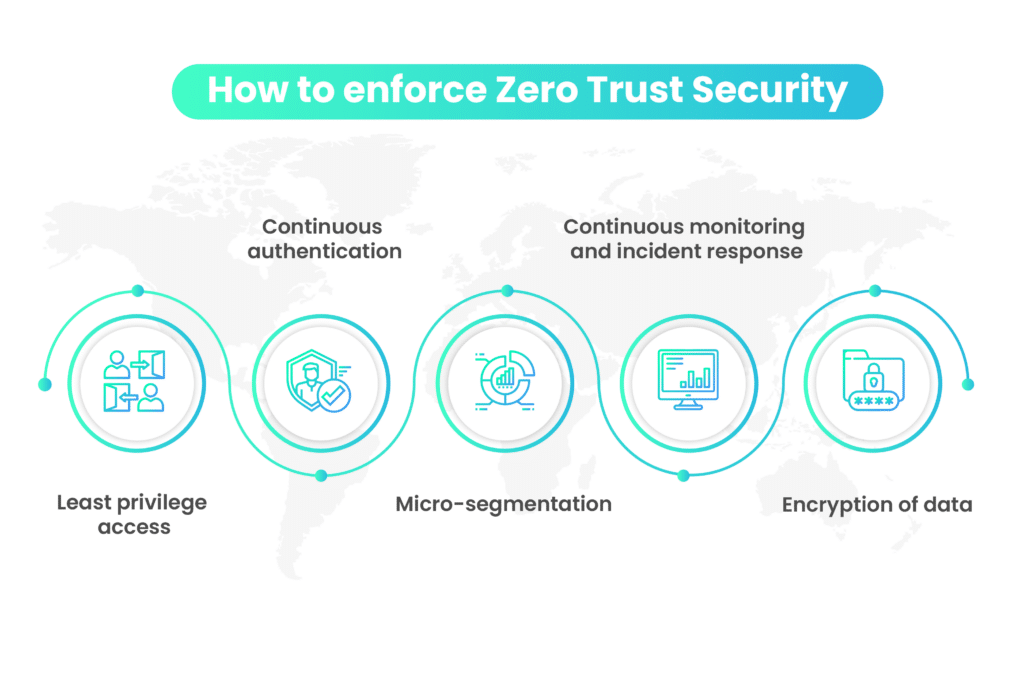
Least privilege access

Implement the principle of least privilege, ensuring that users and devices have the minimum level of access necessary to perform their specific tasks. Regularly review and update access permissions based on job roles and responsibilities to limit potential exposure.
Continuous authentication

Adopt continuous authentication mechanisms to verify the identity of users and devices throughout their session. This includes multi-factor authentication (MFA) and adaptive authentication that assesses risk factors in real-time to grant or deny access.

Micro-segmentation

Implement micro-segmentation to divide the network into smaller, isolated segments. This limits lateral movement in case of a breach, making it more difficult for attackers to navigate and access sensitive areas within the network.

Network visibility and monitoring

Enhance network visibility by implementing robust monitoring and logging systems. Continuously monitor network traffic, user activities, and system behavior to detect anomalies or suspicious activities promptly. Real-time monitoring allows for rapid response to potential security incidents.

Encryption of data in transit and at rest

Utilize encryption protocols to protect data both in transit and at rest. This safeguards sensitive information from unauthorized access, even if a breach occurs. Ensure that encryption keys are properly managed and secured.

Device trustworthiness assessment

Evaluate the trustworthiness of devices attempting to access the network. Implement device posture assessments to ensure that only devices with up-to-date security configurations and patches are allowed access.

Application-centric security

Adopt an application-centric security approach. Instead of relying solely on network-level security, focus on securing individual applications. Implement application-layer controls and policies to safeguard critical business applications.

Continuous monitoring and incident response

Establish a robust incident response plan that includes continuous monitoring of security events. Define procedures for identifying, containing, eradicating, recovering from, and analyzing security incidents. Regularly test and update the incident response plan.

User education and awareness

Educate users about security best practices and the principles of Zero Trust. Foster a security-aware culture within the organization, encouraging employees to report suspicious activities and adhere to security policies.

Secure remote access

Given the prevalence of remote work, secure remote access is crucial. Implement secure Virtual Private Network (VPN) solutions, secure web gateways, and ensure that remote users adhere to the same stringent security measures as on-site users.

Regular security audits and assessments

Conduct regular security audits and assessments to evaluate the effectiveness of Zero Trust controls. Identify weaknesses, address vulnerabilities, and continuously improve security measures based on emerging threats and evolving business requirements.

Vendor risk management

Extend Zero Trust principles to third-party vendors and partners. Evaluate the security practices of external entities that have access to your network or data and enforce the same level of security controls as for internal users.

Regular training and skill development

Invest in regular training and skill development for security teams. Keep them updated on the latest threats, technologies, and best practices to ensure they can effectively enforce and adapt Zero Trust security measures.

Technologies that can be used to enforce Zero Trust Security

Enforcing Zero Trust Security requires the implementation of various technologies that can provide robust authentication, authorization, monitoring, and protection mechanisms. Here are key technologies commonly used to enforce Zero Trust Security:

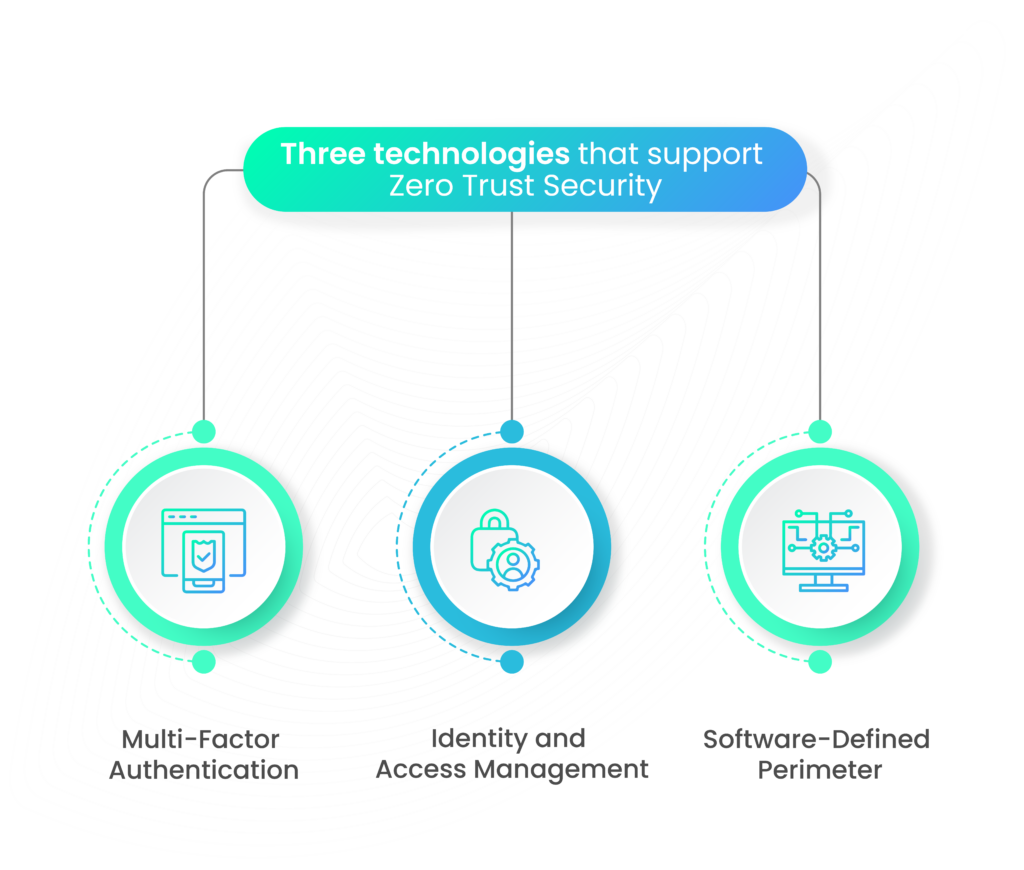
Multi-Factor Authentication (MFA)

MFA is one of the best Zero Trust security solutions. It adds an extra layer of security by requiring users to provide multiple forms of identification before gaining access. This typically involves something the user knows (password), something they have (smart card or token), or something they are (biometrics).

Identity and Access Management (IAM)

IAM solutions help manage user identities and control access to resources based on predefined policies. These systems ensure that users have the right permissions and access levels, aligning with the principle of least privilege.

Software-Defined Perimeter (SDP)

SDP solutions create a dynamic, “software-defined” perimeter around specific resources rather than relying on a traditional network perimeter. This limits visibility and access to authorized users, reducing the attack surface.

Network micro-segmentation

Network micro-segmentation divides the network into smaller, isolated segments, enhancing security by restricting lateral movement. This can be achieved through network virtualization technologies and firewalls that operate at the application or workload level.

Endpoint security solutions

Endpoint security tools, including next-generation antivirus, endpoint detection and response (EDR), and mobile device management (MDM) solutions, are excellent Zero Trust security solutions. They help secure devices (endpoints) that access the network, ensuring they meet security standards.

Zero Trust Network Access (ZTNA)

ZTNA solutions, also known as “perimeterless” network access, provide secure access to applications based on user identity and device trustworthiness. ZTNA replaces traditional VPNs with more granular, context-aware access controls.

Encryption technologies

Encryption is crucial for protecting data both in transit and at rest. Technologies such as Transport Layer Security (TLS) for communication and full-disk encryption for storage ensure that even if data is intercepted, it remains unreadable.

Security Information and Event Management (SIEM)

SIEM solutions collect, analyze, and correlate security event data from various sources within the IT infrastructure. They provide real-time insights into security incidents and support incident response efforts.

Endpoint Detection and Response (EDR)

EDR solutions focus on detecting and responding to advanced threats on endpoints. They provide visibility into endpoint activities, enabling security teams to investigate and respond to security incidents.

Threat intelligence platforms

Threat intelligence platforms collect and analyze data on emerging threats and vulnerabilities. By incorporating threat intelligence into security measures, organizations can proactively defend against known threats.

Compliance software

Compliance software assists risk, compliance, and security officers in continuously auditing internal security measures. It streamlines compliance workflows, making it easier to maintain a secure and compliant information system compared to manual processes. 

With the increasing demand for continuous auditing due to strict regulations and customer expectations, compliance operations software automates tasks such as gathering evidence of controls’ effectiveness and assigning remediation tasks. This automation eases the burden on security teams, allowing them to focus on proactively securing networks and mitigating threats.

Real-life examples of Zero Trust success

Zero Trust Security is a journey, and organizations may implement these principles at different paces and in varying ways based on their unique needs and environments. Companies often leverage a combination of technologies, policies, and cultural changes to transition to a zero-trust model successfully.

Here are a few examples of companies that have publicly embraced and discussed their commitment to Zero Trust Security:

Google

Google has been a proponent of Zero Trust Security and has openly shared insights into its implementation. The BeyondCorp model, developed by Google, is a notable example. It shifts the focus from network-based security to user and device-based security, irrespective of the network location.

Cisco

Cisco has been vocal about its adoption of Zero Trust principles. The company emphasizes the importance of continuous verification and segmentation to protect against lateral movement within the network. Cisco’s approach involves implementing a secure access service edge (SASE) architecture to support Zero Trust Security.

Rackspace Technology

Rackspace, a leading managed cloud service provider, has embraced Zero Trust Cloud Security to enhance its cybersecurity measures. The company emphasizes the importance of continuous monitoring, identity-centric security, and network segmentation.

Conclusion

In a world where digital boundaries are blurred and cyber threats evolve relentlessly, embracing the principles of Zero Trust Security becomes imperative. 

This paradigm shift challenges traditional security models by replacing implicit trust with continuous verification, dynamic access controls, and heightened cybersecurity awareness. 

This blog has navigated through the core tenets of Zero Trust Security, unraveling its complexities and showcasing its transformative impact on an organization’s cybersecurity posture. 

As businesses continue to digitize globally, the adoption of Zero Trust is not just a recommendation—it’s a necessity for building customer trust.

Using Scrut’s Trust Vault is another great way to build customer trust. Schedule a demo today to learn more.

FAQs

1. What is Zero Trust?

Zero Trust is a cybersecurity concept and model that challenges the traditional security approach, operating on the principle of “never trust, always verify.” It eliminates the notion of implicit trust based on a user’s location and requires continuous verification of identity and strict access controls.

2. Why is Zero Trust Security important?

Zero Trust is crucial due to the changing perimeter, advanced persistent threats (APTs), insider threats, remote work trends, microservices/cloud adoption, data protection regulations, and the need for robust access controls. It ensures a proactive and adaptive security posture.

3. What are the core principles of Zero Trust Security?

The core principles include identity verification, least privilege access, micro-segmentation, continuous monitoring, adaptive security, breach assumption, encrypted communication, and risk-based decision-making.

4. How can organizations enforce Zero Trust Security?

Enforcing Zero Trust involves identifying assets, implementing least privilege access, continuous authentication, micro-segmentation, network visibility, encryption, device trustworthiness assessment, application-centric security, continuous monitoring, user education, secure remote access, regular audits, vendor risk management, and training.

5. What technologies can be used to enforce Zero Trust Security?

Key technologies include Multi-Factor Authentication (MFA), Identity and Access Management (IAM), Software-Defined Perimeter (SDP), Network Micro-Segmentation, Endpoint Security Solutions, Zero Trust Network Access (ZTNA), Encryption Technologies, Security Information and Event Management (SIEM), Endpoint Detection and Response (EDR), Threat Intelligence Platforms, and Compliance Operations Software.

Authored by

Aayush Ghosh Choudhary
Co-founder & CEO at Scrut

Building Business Resilience: The Role of Integrated Risk Management (IRM)

In an ever-changing and unpredictable business landscape, resilience has become a key attribute for any successful organization. The ability to adapt, withstand, and recover from various challenges is paramount. One of the critical pillars supporting business resilience is Integrated Risk Management (IRM). 

Integrated risk management is not a new concept, but its significance has grown exponentially in recent years as businesses face an array of risks, from cybersecurity threats to global economic fluctuations. 

This comprehensive approach to risk management goes beyond traditional risk assessment and response strategies. It seamlessly integrates risk considerations into the broader business strategy, aligning objectives and enhancing decision-making processes.

In this blog, we will delve into the essential role of Integrated risk management in building business resilience and ensuring long-term sustainability. We will explore the core principles of Integrated risk management, its components, and practical strategies for implementation.

Definition and principles of integrated risk management

Integrated Risk Management (IRM) is a comprehensive approach that organizations adopt to identify, assess, manage, and mitigate risks across various facets of their operations. It involves integrating risk management procedures into the core of the organization’s decision-making processes, strategies, and activities.

integrated risk management encompasses several key principles and concepts:

  • Proactive risk management: IRM focuses on proactively identifying and addressing risks rather than reacting to them after they occur. It promotes a forward-thinking approach to risk mitigation.
  • Holistic approach: Integrated risk management considers all types of risks, including financial, operational, strategic, compliance, and cybersecurity risks. 
  • Risk awareness: Integrated risk management fosters a risk-aware culture within the organization. It encourages employees at all levels to understand and manage risks relevant to their roles.
  • Data-driven decision-making: IRM relies on data and analytics to assess and prioritize risks. It enables organizations to make informed decisions based on a deep understanding of their risk landscape.
  • Integration with business strategy: Integrated risk management aligns risk management with the organization’s broader business strategy. It ensures that risk considerations are integrated into strategic planning and execution.
  • Compliance and governance: Integrated risk management includes governance structures and compliance measures to ensure that risk management processes are well-defined, monitored, and adhered to.
  • Continuous improvement: Integrated risk management is an ongoing process. It involves continuous monitoring, assessment, and adjustment of risk management strategies in response to changing internal and external factors.

Overall, integrated risk management is a proactive and holistic approach that helps organizations navigate an increasingly complex and uncertain business environment while promoting resilience and sustainable growth.

Key components of integrated risk management

IRM is a comprehensive approach to managing risks across an organization. It involves various components and practices aimed at identifying, assessing, and mitigating risks while aligning with business objectives. Here are the key components of integrated risk management:

1. Risk identification and assessment

The foundation of integrated risk management is the identification of risks across all aspects of the organization, including operational, financial, strategic, and compliance risks. Risks are assessed for their potential impact on the organization and the likelihood of occurrence.

2. Risk governance and culture

Effective integrated risk management requires a risk-aware culture throughout the organization. Governance structures, including the oversight of risk management by the board of directors and senior management, are essential components.

3. Risk policies and procedures

Establishing clear risk policies and procedures ensures that risk management practices are standardized and consistent. These policies define risk appetite, risk tolerance, and risk limits.

4. Data and technology infrastructure

IRM relies on data analytics and technology tools to collect, analyze, and report on risk-related information. A robust data and technology infrastructure is essential for effective automated risk management.

5. Compliance and regulatory management

Ensuring compliance with relevant laws and regulations is a key component of integrated risk management. Organizations must stay informed about changing regulations and adapt their risk management practices accordingly.

6. Operational risk management

Managing operational risks related to processes, systems, and human factors is a crucial element of integrated risk management. This includes identifying vulnerabilities and implementing controls to mitigate operational risks.

7. Financial risk management

Managing financial risks, such as market, credit, and liquidity risks, is essential for financial stability. Integrated risk management includes strategies to monitor and mitigate these financial risks.

8. Strategic risk management

Assessing and managing risks related to strategic decisions and business objectives is a critical component. Organizations must align risk management with strategic planning.

9. Vendor and supply chain risk management

Managing risks associated with third-party vendors and the supply chain is becoming increasingly important. Integrated risk management includes evaluating and mitigating risks posed by external parties.

10. Business continuity and crisis management

Preparing for and responding to crises is a key aspect of IRM. Business continuity plans and crisis management strategies are part of the integrated risk management framework.

11. Performance measurement and reporting

IRM involves the establishment of key performance indicators (KPIs) to measure the effectiveness of risk management efforts. Regular reporting to stakeholders, including senior management and the board, is crucial.

12. Incident response

Organizations should have well-defined incident response plans to address and mitigate risks when they materialize. Prompt and effective responses can limit the impact of adverse events.

13. Continuous monitoring and adaptation

Integrated risk management is an ongoing process that requires continuous monitoring of risks and adjustments to risk management strategies. Organizations must adapt to changing business environments and emerging risks.

Benefits of implementing integrated risk management

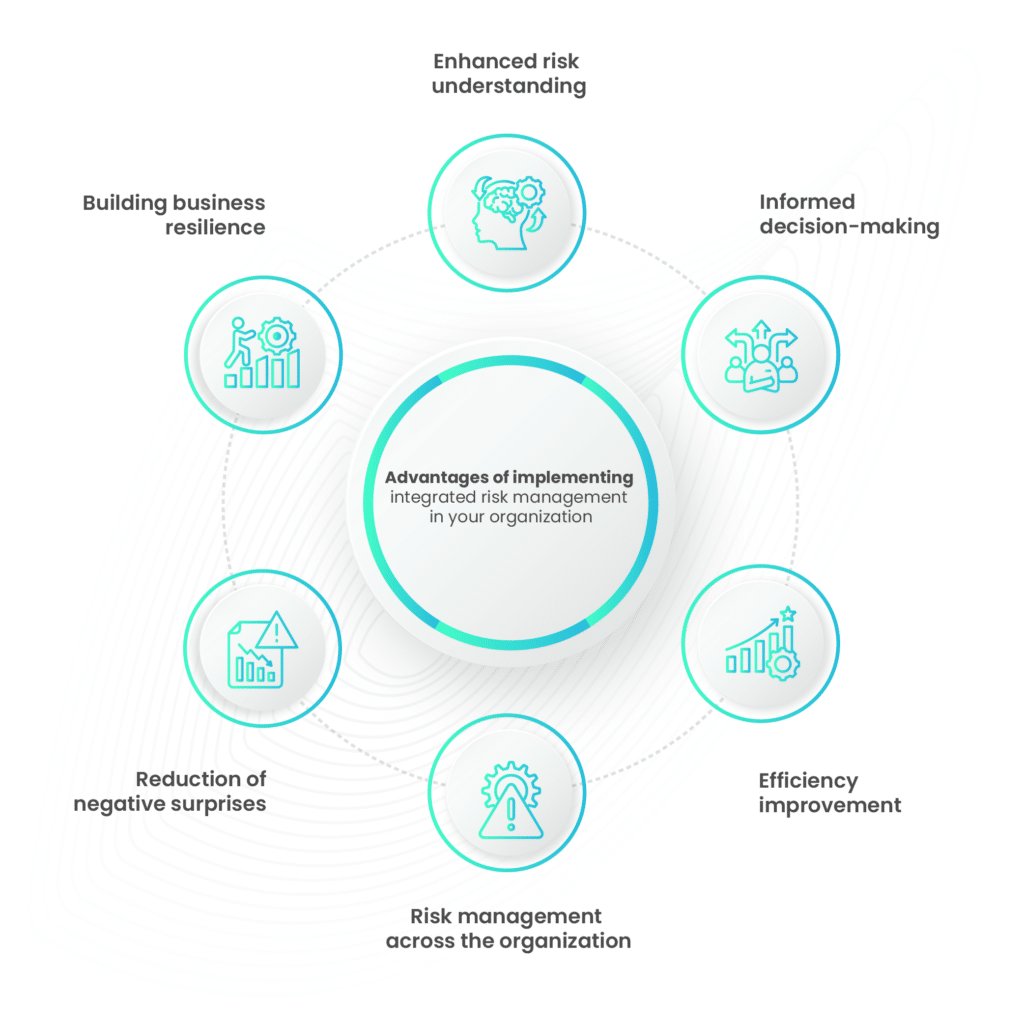
The implementation of IRM offers several significant benefits to organizations. Here are some of the key advantages:

1. Enhanced risk understanding

Integrated risk management provides organizations with a comprehensive view of their risks across various domains, including operational, financial, compliance, and strategic. This deeper understanding allows for more informed decision-making and risk mitigation.

2. Informed decision-making

With IRM, organizations can make data-driven decisions based on a holistic assessment of risks. This supports more effective risk-based decision-making, reducing the likelihood of costly errors.

3. Efficiency improvement

The integrated risk management process helps identify opportunities to increase efficiency during risk identification, analysis, and assessment. This can lead to streamlined processes and resource optimization.

4. Risk management across the organization

IRM allows for a more comprehensive and entity-wide approach to risk management. It ensures that risks are managed consistently across all departments and business units, reducing gaps in risk oversight.

5. Reduction of negative surprises 

By proactively identifying and managing risks, integrated risk management helps organizations reduce negative surprises. This minimizes the impact of unexpected events on business operations and performance.

6. Building business resilience

Business resilience is crucial for organizations in today’s dynamic business landscape. It involves adapting and thriving amid disruptions. Its significance lies in ensuring survival, building customer trust, gaining a competitive edge, and addressing various threats, including natural disasters, cyberattacks, supply chain issues, health crises, and regulatory changes. 

Risk management is key to bolstering business resilience, involving threat identification, impact assessment, risk mitigation, and continuous monitoring. Overall, business resilience is vital for navigating uncertainties effectively.

Implementing integrated risk management in your organization

Implementing Integrated Risk Management into your business involves a structured approach to effectively identify, assess, and mitigate risks while aligning with business objectives. Here are the key steps to integrate IRM into your organization:

Step 1: Ensure leadership buy-in and commitment

Secure support and commitment from top leadership to prioritize integrated risk management within the organization. Establish a dedicated risk management team or designate individuals responsible for IRM.

Step 2: Conduct risk assessment and identification

Conduct a comprehensive risk assessment to identify potential risks and vulnerabilities across all areas of the business. Categorize and prioritize risks based on their impact and likelihood.

Step 3: Set objectives and goals

Define clear objectives and goals for the integrated risk management program that align with the overall business strategy. Ensure that risk management objectives support business growth and sustainability.

Step 4: Introduce risk management framework

Establish a risk management framework that includes policies, procedures, and guidelines for risk identification, assessment, and mitigation. Define risk tolerance levels and thresholds for different types of risks.

Step 5: Implement risk mitigation strategies

Develop risk mitigation strategies and action plans for identified risks. Assign responsibilities for implementing and monitoring these strategies.

Step 6: Integrate with business processes

Embed risk management into day-to-day business processes and decision-making. Ensure that risk considerations are part of project management, product development, and operational activities.

Step 7: Invest in data and technology infrastructure

Invest in the necessary data and technology infrastructure to support integrated risk management efforts. Utilize integrated risk management software and tools for data analysis, reporting, and monitoring.

Step 8: Provide training and awareness

Provide training and awareness programs for employees at all levels to educate them about integrated risk management principles and their roles in risk management. Foster a risk-aware culture within the organization.

Step 9: Establish continuous monitoring and reporting

Implement continuous monitoring mechanisms to track risks and their status. Establish a reporting system that communicates risk-related information to relevant stakeholders.

Step 10: Review and Adapt

Regularly review and update the risk management framework and strategies to adapt to changing business conditions and emerging risks. Conduct periodic risk assessments to ensure that new risks are identified and addressed.

Step 11: Carry out compliance and governance

Ensure that the integrated risk management program complies with relevant industry regulations and standards. Incorporate governance principles into risk management to enhance transparency and accountability.

Step 12: Ensure communication and stakeholder engagement

Maintain open communication channels with internal and external stakeholders, including customers, suppliers, and regulatory authorities. Engage with stakeholders to gather insights and feedback on risk management practices.

Step 13: Maintain incident response and business continuity

Develop an incident response plan to address unforeseen events and crises. Implement business continuity measures to ensure that critical operations can continue in the event of a disruption.

Step 14: Carry out performance measurement

Establish KPIs to assess the effectiveness of the integrated risk management program. Regularly evaluate the performance of risk management activities and make improvements as needed.

Measuring the success of integrated risk management in business resilience

KPIs and metrics are essential for evaluating the effectiveness of integrated risk management within an organization. These metrics help you track progress, identify areas of improvement, and ensure that your IRM program is aligned with your business objectives and risk management goals. Here are some KPIs and metrics for evaluating IRM effectiveness:

The long-term impact of integrated risk management on business resilience

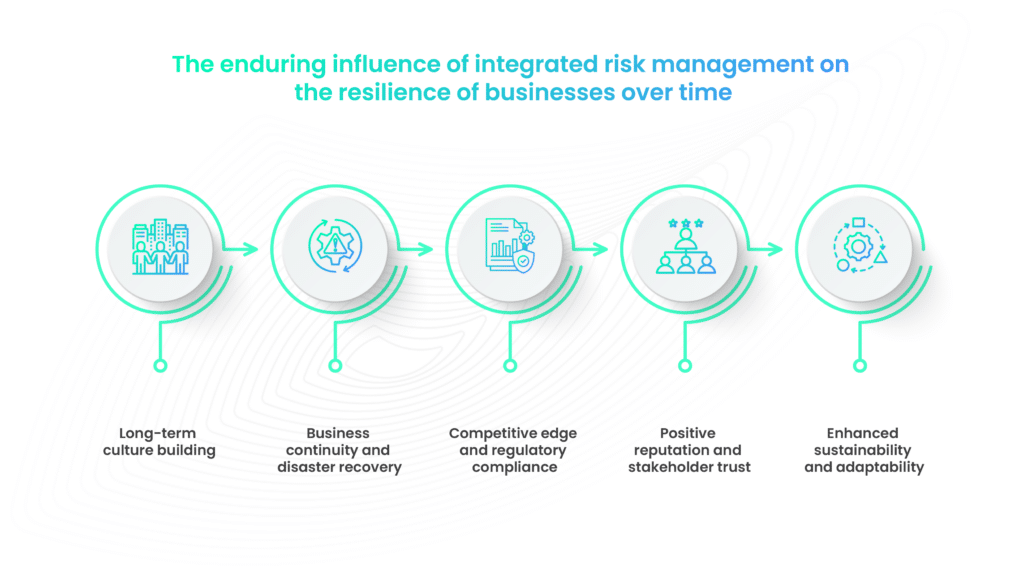
IRM has a profound and enduring impact on business resilience. Over time, it fosters a culture of risk awareness and proactive risk management within the organization, empowering employees to identify and mitigate risks effectively. This long-term commitment to integrated risk management leads to the development of robust risk mitigation strategies, continuously refined through experience and lessons learned.

Integrated risk management also ensures the creation of adaptable business continuity and disaster recovery plans, guaranteeing the uninterrupted continuation of critical operations during disruptions. These proactive measures result in cost savings and financial stability as the organization becomes better equipped to reduce the financial impact of incidents over time.

Furthermore, organizations with mature integrated risk management programs gain a competitive edge, as they are better positioned to handle risks and are favored among stakeholders. IRM also aids in sustaining regulatory compliance, reducing the risk of penalties and reputational damage.

Effective integrated risk management contributes to maintaining a positive reputation by minimizing the negative impact of disruptions on stakeholders’ trust and perception. This, in turn, builds trust and confidence among customers, investors, and employees. IRM encourages innovation and adaptability, allowing organizations to explore new opportunities and markets with confidence.

Moreover, integrated risk management enhances an organization’s sustainability by enabling it to better withstand economic downturns, natural disasters, and crises. It fosters a culture of continuous improvement, using past incidents to enhance risk management strategies. Lastly, it provides leaders with valuable insights into the risk landscape over time, enabling data-driven and informed strategic decisions.

In summary, the long-term impact of integrated risk management encompasses cultural shifts, improved risk management, cost savings, competitiveness, adaptability, and the ability to thrive in a dynamic business environment. It ensures an organization’s resilience in the face of uncertainties, making it a crucial component of long-term business success.

Conclusion: Embracing integrated risk management for a resilient future

In today’s dynamic business world, Integrated Risk Management (IRM) has emerged as a vital strategy for fostering resilience. By seamlessly incorporating risk management into an organization’s core operations, integrated risk management empowers proactive risk identification and mitigation.

IRM principles encompass a holistic view of risks, aligning them with business objectives and promoting data-driven decision-making. Robust governance structures, clear policies, and compliance measures ensure a solid risk management foundation.

Integrated risk management not only guards against disruptions like cyber threats and supply chain issues but also enhances efficiency and builds stakeholder trust. Its implementation involves leadership commitment, continuous monitoring, and adaptation to changing circumstances.

Ultimately, integrated risk management is the key to safeguarding assets, seizing opportunities, and ensuring long-term success in an unpredictable business landscape. It transforms businesses into resilient entities that can navigate challenges and thrive in a rapidly evolving environment.

Ready to fortify your business resilience with Integrated Risk Management (IRM)? Take the first step towards a more secure and adaptable future. Contact us now to learn how Scrut can help you implement IRM effectively!

FAQs

1. What is Integrated Risk Management (IRM)?

Integrated Risk Management (IRM) is a comprehensive approach that organizations adopt to identify, assess, manage, and mitigate risks across various facets of their operations. It involves integrating risk management procedures into the core of the organization’s decision-making processes, strategies, and activities.

2. Why is IRM important in today’s business landscape?

IRM is crucial because businesses face an array of risks, from cybersecurity threats to global economic fluctuations. IRM helps organizations navigate these uncertainties by proactively identifying and addressing risks, aligning risk management with business strategy, and promoting a culture of resilience.

3. How can I measure the success of IRM in my organization?

Success in IRM can be measured using key performance indicators (KPIs) and metrics. These may include reductions in risk exposure, incident response and recovery times, financial impact of risks, business continuity plan testing success rates, and more. Regular audits, internal assessments, and stakeholder feedback also provide insights into the effectiveness of IRM.

Authored by

Aayush Ghosh Choudhary
Co-founder & CEO at Scrut

Continuous risk management strategies for AI advancements

Artificial Intelligence (AI) technology has rapidly evolved over the past few years, becoming a cornerstone of modern businesses and industries. Its applications range from data analysis and automation to enhancing decision-making processes. This evolution has led to a dynamic AI landscape that continually introduces new challenges and opportunities.

As AI becomes more integrated into various aspects of organizations, the importance of continuous risk management has grown significantly. AI systems can be vulnerable to various threats, including data breaches and cyberattacks. Organizations must proactively address these risks to ensure the security and integrity of their AI-powered solutions.

In this context, as security and compliance experts, you play a crucial role in navigating the complex AI landscape. You are responsible for ensuring that AI systems adhere to regulatory requirements and industry standards, particularly in areas like data security and privacy. You help organizations establish robust security protocols, monitor compliance, and respond effectively to emerging threats.

Now, let’s delve into the role of AI in enhancing data security and compliance in the dynamic landscape, drawing insights from the provided search results.

Understanding the current AI risk landscape

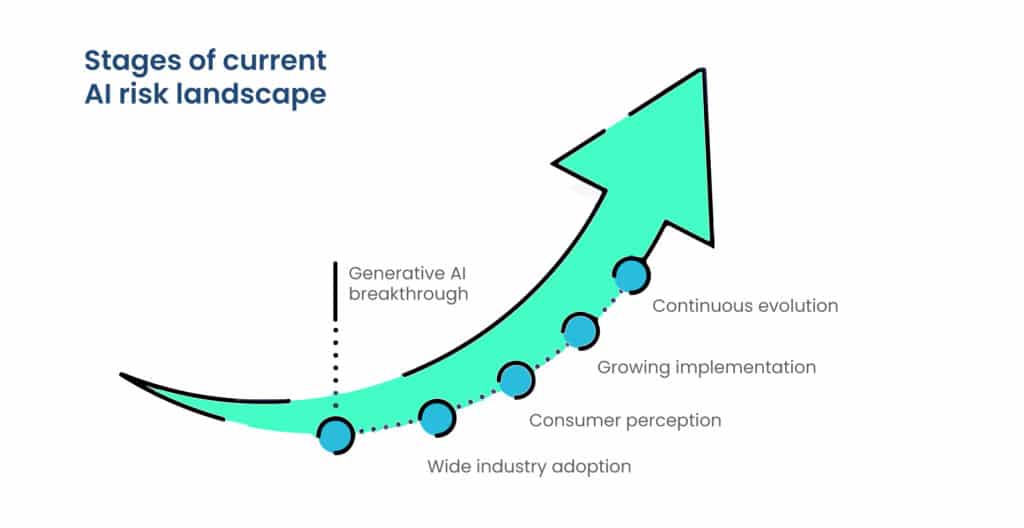
AI has reached a pivotal point in its development, with several notable trends and advancements characterizing its current state:

1. Generative AI breakthrough 

Generative AI has emerged as a key focus in 2023, reshaping industries. This technology allows AI systems to create content autonomously, leading to innovations in creative fields, content generation, and more.

2. Wide industry adoption 

Big companies are actively implementing AI strategies. It has become evident that AI is not limited to a specific sector; instead, it spans across various industries, including healthcare, finance, and manufacturing.

3. Consumer perception 

Most consumers believe in the potential of AI, recognizing its role in enhancing various aspects of life. This positive perception further fuels the integration of AI into everyday applications.

4. Growing implementation 

AI is no longer just a concept for the future. The global Artificial Intelligence market size was valued at USD 59732.12 million in 2022 and is expected to expand at a CAGR of 47.26% during the forecast period, reaching USD 609038.96 million by 2028. 

5. Continuous evolution

The AI and Data Science landscape remains dynamic, with new trends and technologies emerging every year. Staying updated with the latest developments is crucial for businesses and professionals in the field

What are the potential risks and vulnerabilities in AI systems?

Security risks and vulnerabilities in AI systems can vary depending on the specific application and implementation of the technology. However, here are some common types of security risks and vulnerabilities associated with AI systems:

Data privacy risks

Data breachesData poisoning
Unauthorized access to sensitive data used by AI systems can lead to data leaks and privacy violations.Attackers may manipulate training data to inject malicious patterns or biases into AI models, leading to biased decisions or compromised results.

Adversarial attacks

Adversarial examplesModel inversion
Attackers can craft inputs that appear normal to humans but can mislead AI systems into making incorrect predictions or decisions.Attackers may attempt to reverse-engineer AI models to gain insights into sensitive training data.

Model vulnerabilities

Model vulnerabilitiesBackdoor attacks
AI models can have inherent weaknesses that attackers exploit, leading to unexpected behaviors or reduced performance.Attackers can insert hidden backdoors into AI models during training, allowing them to manipulate the model’s behavior later.

Transfer learning risks

Model reuseModel fine-tuning
Reusing pre-trained models without proper evaluation can introduce vulnerabilities, as the model might inherit biases or limitations from its training data.Inadequate fine-tuning can lead to unintended behaviors or security issues when adapting pre-trained models to specific tasks.

Data poisoning

Poisoned training dataData skewing
Attackers can inject malicious data samples into training datasets to compromise the AI model’s performance and integrity.Biased or skewed training data can lead to discriminatory or unfair AI outcomes.

Explainability and interpretability

Lack of transparencyModel debugging
Black-box AI models may be vulnerable to attacks or manipulation, and their decision-making processes may be hard to explain or audit.Difficulty in identifying the root cause of AI system errors or biases can lead to security risks and vulnerabilities.

Infrastructure and deployment

Insecure APIsMisconfigured environments
Vulnerable application programming interfaces (APIs) can expose AI systems to attacks and unauthorized access.Improperly configured AI infrastructure can create security gaps that attackers can exploit.

Supply chain risks

Malicious code injectionCompromised hardware
Attackers can compromise AI development pipelines or third-party libraries, introducing vulnerabilities into the AI system.Vulnerabilities in hardware components used for AI processing can impact system security.

Insider threats

Insider misuseNegligence
Employees or individuals with access to AI systems may misuse their privileges to compromise data or manipulate AI outcomes.Inadvertent actions or neglect by insiders can lead to security incidents.

Ethical and regulatory risks

Non-complianceBias and fairness violations
Failure to adhere to ethical guidelines and regulatory requirements can result in legal and reputational risks.AI systems that exhibit bias or discrimination can lead to ethical and legal challenges.

To mitigate these security risks and vulnerabilities, organizations must adopt robust security practices, conduct thorough testing, implement proper access controls, and stay informed about emerging threats and best practices in AI security.

Real-world examples of AI-related security incidents

AI-related security incidents highlight the vulnerabilities associated with artificial intelligence systems. Here are some real-world examples:

1. Self-driving car vulnerabilities 

Autonomous vehicles rely heavily on AI for navigation and decision-making. Security researchers have demonstrated vulnerabilities that could allow malicious actors to manipulate self-driving car systems, potentially leading to accidents or unauthorized control of vehicles (BelferCenter).

2. AI-generated deep fakes 

AI-driven deepfake technology has been used to create convincing forged videos and audio recordings. These have been exploited for various malicious purposes, including spreading misinformation and impersonating individuals for fraud (BelferCenter).

3. AI-enhanced cyberattacks: 

Cybercriminals leverage AI to enhance the sophistication of their attacks. AI can be used for rapid data analysis, evasion of security measures, and targeting specific vulnerabilities. This has led to more potent and adaptive cyber threats (Malwarebytes).

4. AI-driven phishing

 AI-powered phishing attacks are becoming more convincing. Attackers use AI algorithms to craft highly personalized and convincing phishing emails, increasing the likelihood of successful attacks and data breaches (Malwarebytes).

5. Insider threat detection 

While AI can enhance insider threat detection, there have been instances where employees with privileged access have exploited their knowledge of AI systems to steal sensitive data or manipulate AI algorithms for malicious purposes. Such incidents highlight the need for robust access controls and monitoring.

6. AI-enhanced social engineering 

Attackers use AI to automate and enhance social engineering techniques, making it easier to trick individuals into divulging sensitive information or clicking on malicious links. AI can analyze vast amounts of data to craft convincing social engineering attacks (Malwarebytes).

Drawbacks of traditional risk management methods for AI systems

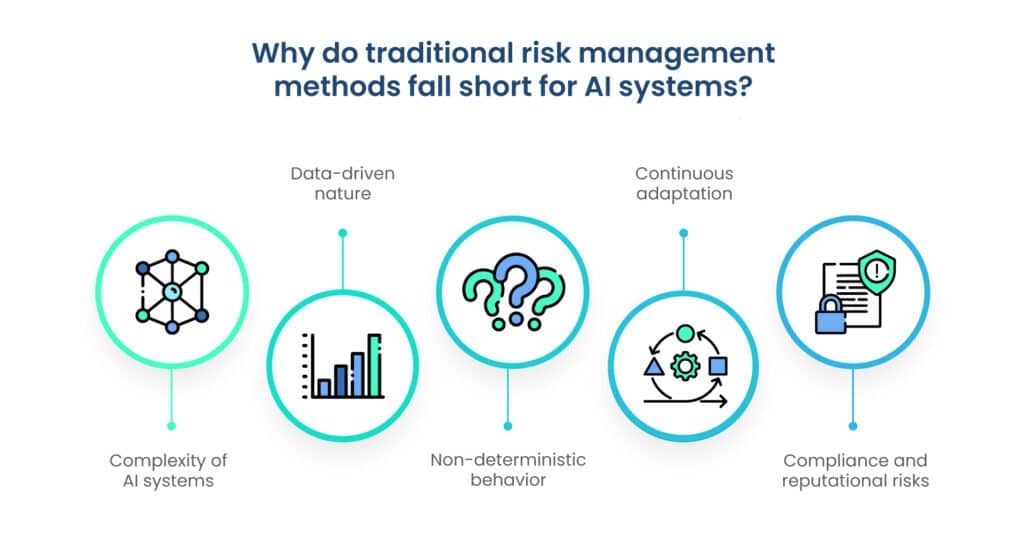
Traditional risk management approaches may fall short in the AI context due to several reasons:

1. Complexity of AI systems

AI systems are often highly complex and dynamic, making them challenging to assess and manage using traditional risk management methods. The rapid evolution of AI algorithms and technologies requires continuous monitoring and adaptation.

2. Data-driven nature 

AI heavily relies on data, and the quality of the data used can introduce significant risks. Traditional risk management may not adequately address data-related risks, such as bias in training data or data breaches.

3. Non-deterministic behavior 

AI systems can exhibit non-deterministic behavior, making it challenging to predict and mitigate risks. Traditional risk management is typically designed for deterministic systems and may not account for AI’s unpredictability.

4. Continuous adaptation 

AI models learn and adapt over time. Traditional risk management cannot often continuously monitor and adjust to the evolving nature of AI systems, leaving organizations vulnerable to emerging risks.

5. Compliance and reputational risks

AI systems can pose compliance and reputational risks. Traditional risk management functions may struggle to keep up with the regulatory landscape and the potential fallout from AI-related controversies.

The dynamic relationship between AI and integrated risk management

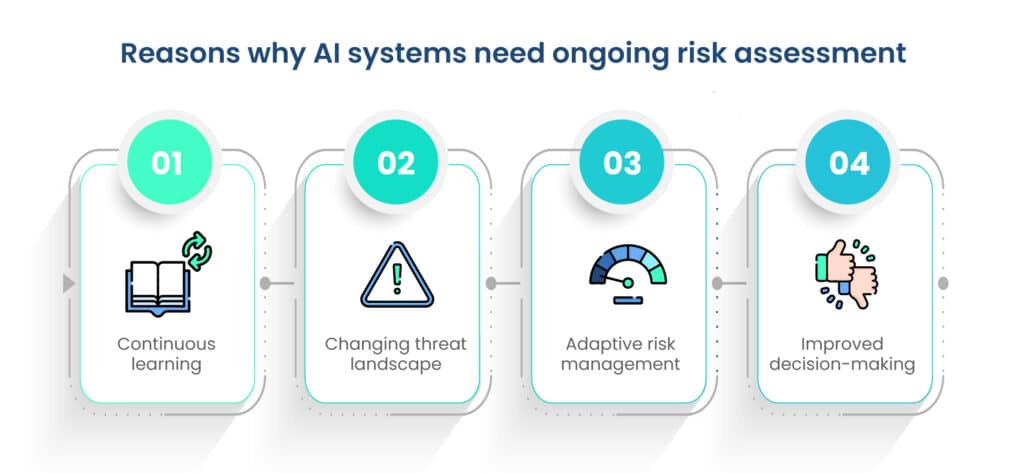
The dynamic nature of AI, characterized by the components given below, makes ongoing risk assessment a critical component of AI applications. It ensures that AI systems remain effective, secure, and aligned with organizational objectives in a constantly evolving environment.

1. Continuous learning

AI systems, such as machine learning models, continuously learn from new data. This ongoing learning introduces the risk of model drift, where the model’s performance may degrade over time. Regular AI risk assessments are essential to monitor and address model drift to maintain accurate predictions.

2. Changing threat landscape 

In cybersecurity, AI-driven risk assessments are vital because the threat landscape is constantly evolving. New cyber threats and vulnerabilities emerge regularly, and AI can help detect and respond to these threats in real-time. Continuous risk assessment allows organizations to adapt to these changing threats.

3. Adaptive risk management

AI can play a role in adaptive risk management, where risk assessments are updated dynamically based on real-time data and events. This approach enables organizations to respond quickly to emerging risks and make informed decisions to mitigate them.

4. Improved decision-making

AI can analyze vast amounts of data and identify patterns that may not be apparent through traditional methods. Continuous risk assessment powered by AI provides organizations with more accurate and timely insights, enhancing decision-making and risk mitigation strategies.

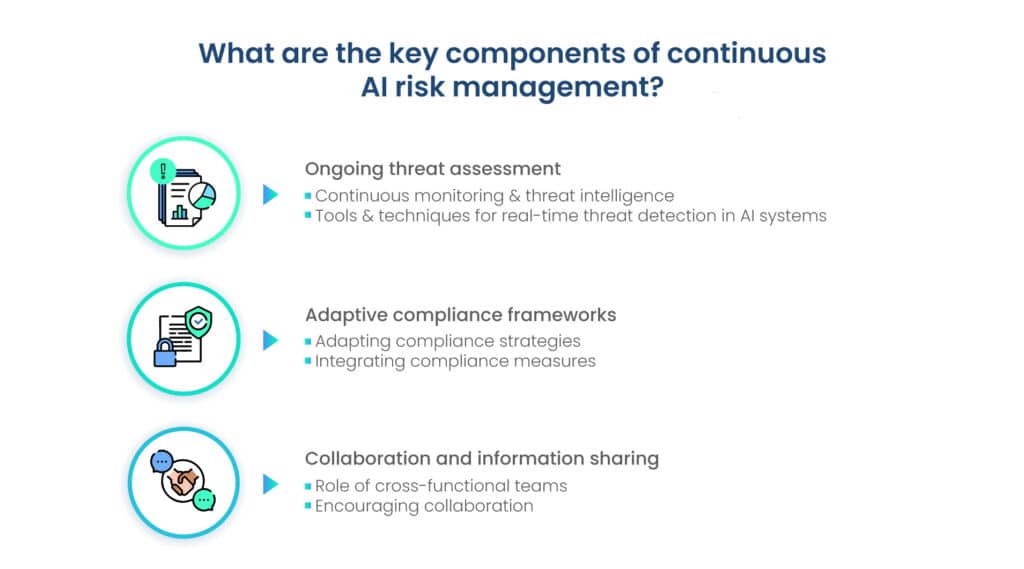
Key components of continuous AI risk management

Continuous AI risk management for AI systems involves several key components that help maintain security and compliance. Here’s a breakdown of these components:

1. Ongoing threat assessment

a. Continuous monitoring and threat intelligence

Continuous monitoring of AI systems is crucial to detect and respond to potential threats in real-time. Threat intelligence involves collecting and analyzing data to identify emerging threats and vulnerabilities. This helps in staying ahead of evolving risks.

b. Tools and techniques for real-time threat detection in AI systems

Utilizing advanced tools and techniques, such as machine learning algorithms and anomaly detection, to identify suspicious activities or deviations from normal behavior in AI systems. Real-time threat detection helps in immediate response to potential risks.

2. Adaptive compliance frameworks

a. Adapting compliance strategies

Compliance strategies must be flexible and adaptable to evolving AI standards and regulations. As AI technologies and regulations change, compliance measures should be updated accordingly to ensure adherence to legal requirements. Automated GRC solutions have been developed using AI and ML in modern times. 

b. Integrating compliance measures 

Compliance should be integrated into the entire AI development lifecycle. This includes compliance checks during the design, development, testing, and deployment phases. It ensures that AI systems are compliant from the beginning and throughout their lifecycle.

3. Collaboration and information sharing

a. Role of cross-functional teams 

Effective risk management in AI systems requires collaboration among cross-functional teams. Security, development, and compliance teams must work together to identify, assess, and mitigate risks. Each team brings unique expertise to the table, enhancing the overall security and compliance efforts.

b. Encouraging collaboration

Creating a culture of collaboration between these teams is essential. Encouraging open communication, sharing threat information, and fostering a sense of shared responsibility for security and compliance contribute to more effective risk management 

AI risk management framework

The AI Risk Management Framework, developed by the National Institute of Standards and Technology (NIST), is a comprehensive approach to guide organizations in managing the risks associated with AI systems. Here’s an overview:

1. Collaboration

NIST has collaborated with both the private and public sectors to create this framework, emphasizing a collective effort to better manage risks related to AI.

2. Flexibility

The NIST AI Risk Management Framework is designed to be flexible, allowing it to adapt to different organizations’ specific requirements and needs.

3. Lifecycle approach

It focuses on managing risks across the entire AI lifecycle, covering design, development, deployment, and ongoing monitoring and evaluation of AI systems.

4. Responsible AI 

The framework outlines characteristics for achieving responsible use of AI systems. These characteristics include ensuring AI systems are valid, reliable, accountable, and more.

5. Voluntary use

The NIST AI Risk Management Framework is designed for voluntary use by organizations and individuals, providing approaches to enhance AI risk management practices.

6. Adaptation

Organizations can adapt this framework to suit their unique AI projects and requirements, making it a versatile tool for managing AI-related risks.

7. Compliance

The framework is intended to help organizations comply with relevant regulations and standards, ensuring AI systems meet the necessary security and ethical criteria.

Best practices for security and compliance experts

Here are the best practices for security and compliance experts to stay ahead in the rapidly evolving landscape of AI:

1. Recommendations for staying informed about AI advancements

  • Continuous learning: Security and compliance experts should invest in ongoing education to keep up with AI advancements. This includes attending AI-related conferences, webinars, and workshops to stay updated on the latest trends and technologies.
  • Engage with AI communities: Join AI-focused online communities, forums, and social media groups where experts share insights, research, and news. This engagement can help professionals access real-time information and discussions about AI developments.
  • Monitor industry publications: Regularly follow reputable publications, research papers, and blogs dedicated to AI, cybersecurity, and compliance. Subscribing to newsletters and setting up alerts for relevant keywords can help professionals stay informed.

2. Developing skills and expertise in AI-related security and compliance

  • Specialized training: Enroll in AI-specific training programs and certifications related to cybersecurity and compliance. These programs provide in-depth knowledge and practical skills required for AI security and compliance roles.
  • Cross-disciplinary knowledge: AI intersects with various fields, including data science, ethics, and legal regulations. Security and compliance experts should acquire cross-disciplinary knowledge to address the multifaceted challenges of AI.
  • Hands-on experience: Gain practical experience by working on AI projects or simulations. This hands-on approach enhances expertise and the ability to apply security and compliance measures effectively.

3. Building a proactive and adaptive risk management strategy

  • Continuous risk assessment: Implement continuous risk assessments that consider AI system lifecycles. Regularly evaluate potential threats, vulnerabilities, and compliance requirements throughout AI development and deployment.
  • Adaptive compliance framework: Develop an adaptive compliance framework that can swiftly respond to changing regulations and standards. This framework should integrate compliance measures into AI development processes.
  • Collaboration: Foster collaboration between security, compliance, and AI development teams. Cross-functional teamwork ensures that security and compliance considerations are embedded in AI projects from the start.

Final thoughts

In conclusion, as Artificial Intelligence (AI) rapidly integrates into industries, continuous and adaptive risk management is essential. The dynamic AI landscape, marked by breakthroughs and widespread adoption, introduces vulnerabilities seen in incidents like self-driving car flaws and AI-driven cyberattacks.

Traditional risk management falls short of AI complexities. Ongoing threat assessment, real-time monitoring, adaptive compliance, and cross-functional collaboration are vital. Staying ahead of risks is key for AI security and compliance. Experts should prioritize continuous learning, engage with AI communities, and develop specialized skills.

In the evolving AI landscape, a proactive AI risk management strategy, coupled with professional expertise, is crucial for responsible and secure AI integration.

FAQs

1. Why is continuous risk management crucial for organizations integrating Artificial Intelligence (AI)?

Continuous risk management is vital for navigating the dynamic AI landscape, addressing vulnerabilities, and safeguarding against potential threats such as data breaches and cyberattacks.

2. How do security and compliance experts contribute to AI risk management?

Security and compliance experts play a crucial role in ensuring AI systems adhere to regulatory standards, establish robust security protocols, and monitor compliance to prevent security breaches and data compromises.

3. What are the key components of continuous risk management for AI systems?

Ongoing threat assessment, real-time monitoring, adaptive compliance frameworks, and cross-functional collaboration are key components of continuous risk management, ensuring AI systems remain secure and compliant in a rapidly evolving environment.

Authored by

Aayush Ghosh Choudhary
Co-founder & CEO at Scrut

Sustainable strategies: Environmental, social, and governance (ESG) risk management

ESG (Environmental, Social, and Governance) factors have gained significant importance in today’s business landscape. They represent a set of criteria used to evaluate a company’s impact on society and the environment, as well as its corporate governance practices. ESG considerations have become integral in assessing a company’s overall sustainability and ethical stance.

In the United States, the SEC is poised to introduce additional ESG regulations for investors, while the forthcoming UK Plastic Packaging Tax is anticipated to have a transformative impact on global supply chains across the globe.

IDC analysts expect that, in 2023, 25% of global organizations will boost their spending on sustainability-related digital technology by over 25% compared to 2022. Within three years, they project that 45% of G2000 organizations will incorporate sustainability into their supply chains, report impact data effectively, reduce waste by 10%, and enhance their competitive edge.

In this scenario, organizations must learn about what ESG and ESG risk management are. This blog will serve as a complete guide for ESG risk management.

What is ESG in cybersecurity?

ESG in cybersecurity refers to the integration of Environmental, Social, and Governance (ESG) principles and considerations into the practices and strategies of cybersecurity within an organization. Here’s what each aspect of ESG represents in the context of cybersecurity:

Environmental (E)

Environmental factors in ESG cybersecurity pertain to the environmental impact of cybersecurity practices. This may include reducing the carbon footprint associated with cybersecurity operations, optimizing energy use in data centers, and ensuring the responsible disposal of electronic waste generated from cybersecurity hardware and equipment.

Social (S)

The social aspect of ESG in cybersecurity focuses on the impact of cybersecurity practices on society and individuals. This includes safeguarding customer data and privacy, ensuring inclusivity and diversity in cybersecurity teams, and protecting against cyber threats that may harm individuals or communities.

Governance (G)

Governance in ESG cybersecurity involves the governance and management of cybersecurity policies and practices within an organization. It includes having robust cybersecurity governance structures, complying with relevant regulations and standards, and ensuring ethical and responsible cybersecurity decision-making at all levels of the organization.

How do ESG principles align with cybersecurity practices?

ESG principles and cybersecurity practices align in promoting responsible, ethical, and sustainable approaches to protecting digital assets and data. Integrating ESG considerations into cybersecurity not only enhances security but also demonstrates a commitment to societal and environmental well-being, which is increasingly important in today’s business landscape.

1. Environmental impact

A. Green computing

ESG encourages organizations to reduce their environmental footprint. In the context of cybersecurity, this can mean optimizing energy-efficient data centers and reducing the environmental impact of hardware and equipment used in cybersecurity operations.

B. Sustainable supply chains

Evaluating and securing the supply chain for cybersecurity tools and technologies is essential. ESG principles can drive organizations to choose suppliers and vendors with strong sustainability practices, reducing the environmental impact of the supply chain.

2. Social responsibility

A. Data Privacy

Protecting customer data and privacy is a fundamental aspect of ESG and cybersecurity. Organizations must implement robust data protection measures to uphold their social responsibility and ethical commitments.

B. Diversity and inclusion 

ESG promotes diversity and inclusion. In cybersecurity, having diverse teams can lead to more innovative solutions and better threat detection by considering a wider range of perspectives and experiences.

3. Governance and ethics

A. Cybersecurity governance

ESG governance principles align with strong cybersecurity governance. This involves establishing clear policies, procedures, and accountability mechanisms for cybersecurity within an organization.

B. Compliance 

Compliance with cybersecurity regulations and standards is crucial for ESG alignment. Meeting regulatory requirements demonstrates responsible governance in cybersecurity practices.

4. Resilience and ESG risk management

A. Resilience 

ESG encourages organizations to assess and mitigate risks. Cybersecurity is a critical aspect of ESG risk management, as cyber threats can have significant financial and reputational impacts.

B. Ethical risk 

ESG principles address ethical risks, and cybersecurity must also consider the ethical implications of data handling, including preventing data breaches and misuse.

5. Transparency and reporting

A. Impact reporting 

ESG requires organizations to report on their environmental and social impact. Similarly, organizations should transparently report on their cybersecurity practices, including incidents, response measures, and their commitment to data protection.

B. Stakeholder communication 

ESG practices often involve engaging with stakeholders. In cybersecurity, this can include communicating with customers, regulators, and shareholders about security measures and breach responses.

Benefits of aligning cybersecurity with ESG

1. Enhanced risk management through ESG alignment

Aligning cybersecurity with ESG principles enhances overall risk management in several ways:

  • Identifying emerging risks: ESG factors help organizations identify emerging risks related to data privacy, supply chain resilience, and regulatory compliance. This proactive approach enables better risk assessment and mitigation.
  • Comprehensive risk assessment: By incorporating ESG criteria, organizations conduct more comprehensive risk assessments that consider not only traditional cybersecurity threats but also factors like ethical and environmental vulnerabilities.
  • Compliance and regulations: ESG alignment ensures compliance with evolving regulations related to cybersecurity, data protection, and sustainability. It promotes a proactive approach to regulatory compliance, reducing legal and financial risks.

2. Positive impact on stakeholder trust and reputation

  • Trust and transparency: Embracing ESG principles in cybersecurity practices demonstrates a commitment to ethical and responsible conduct. This fosters trust among customers, investors, and other stakeholders, enhancing an organization’s reputation.
  • Stakeholder expectations: Stakeholders increasingly expect companies to address cybersecurity not only as a technical issue but also as an ethical and social responsibility. Meeting these expectations helps maintain stakeholder trust and confidence.

3. Financial benefits of sustainable cybersecurity strategies

  • Cost reduction: Sustainable cybersecurity practices often lead to reduced operational costs through more efficient resource utilization and lower incident response expenses.
  • Competitive advantage: Organizations that align cybersecurity with ESG principles can gain a competitive edge. They attract investors who prioritize ESG considerations, potentially lowering capital costs and accessing a broader pool of investors.
  • Resilience and business continuity: Sustainable cybersecurity measures enhance an organization’s resilience against cyber threats, reducing the financial impact of potential breaches and ensuring business continuity.

Challenges and considerations in implementing ESG in cybersecurity

Integrating Environmental, Social, and Governance (ESG) principles into cybersecurity practices presents organizations with unique challenges and considerations. Here are some of the key challenges and strategies to overcome them:

1. Lack of awareness and understanding:

Challenge: Many organizations may lack awareness and a deep understanding of ESG principles and how they relate to cybersecurity.

Solution: Conduct ESG education and training programs for cybersecurity teams and key stakeholders. Raise awareness about the broader impact of cybersecurity on sustainability and ethical practices.

2. Balancing ethical considerations and security:

Challenge: Striking the right balance between ethical considerations, such as data privacy and social responsibility, and robust cybersecurity practices can be challenging.

Solution: Develop clear policies and guidelines that define ethical boundaries within cybersecurity practices. Create cross-functional teams that include both cybersecurity and ESG experts to make informed decisions.

3. Complex regulatory landscape:

Challenge: Navigating the complex and evolving regulatory landscape related to both cybersecurity and ESG can be daunting.

Solution: Establish a dedicated team responsible for monitoring and ensuring compliance with relevant regulations in both domains. Leverage technology solutions for compliance tracking and reporting.

4. Resistance to change:

Challenge: Resistance to change within an organization can hinder the adoption of new ESG-centric cybersecurity practices.

Solution: Engage in change management efforts, including clear communication of the benefits of ESG integration and involving employees at all levels in the transition. Highlight how sustainable cybersecurity practices can lead to better risk management and stakeholder trust.

5. Resource allocation:

Challenge: Allocating resources for ESG integration in cybersecurity can be challenging, especially for smaller organizations.

Solution: Prioritize ESG initiatives based on their potential impact and significance to the organization. Seek external partnerships or collaborations to leverage resources and expertise.

6. Measurement and reporting:

Challenge: Measuring and reporting the impact of ESG integration in cybersecurity can be complex.

Solution: Implement key performance indicators (KPIs) and key risk indicators (KRIs) that specifically track ESG-related cybersecurity metrics. Utilize reporting ESG risk management frameworks and tools to streamline the measurement and reporting process.

ESG risk management certification

There are several ESG risk management certification programs available for professionals looking to enhance their expertise in this field. These certifications are designed to provide individuals with the knowledge and skills needed to assess and manage ESG risks effectively. Here are some ESG risk management certification options:

  • Cambridge Advance Online – ESG Risk Management: The Cambridge Advance Online offers a comprehensive ESG Risk Management course that provides managers from various sectors with an introduction to ESG risk management practices.
  • Moody’s Analytics – ESG Risk Assessment Fundamentals Course: Moody’s Analytics offers an ESG Risk Assessment Fundamentals Course that helps professionals recognize how to identify, manage, and minimize ESG risks when performing credit risk assessments.
  • The Institute of Risk Management (IRM) – ESG Fundamentals and Risk Quantification: IRM offers a 2-day intensive course called “ESG Fundamentals and Risk Quantification,” which aims to elevate ESG risk management skills, focusing on quantitative methods and modeling ESG factors.
  • CRISIL Certified ESG Risk Analyst: CRISIL offers the Certified ESG Risk Analyst program, which covers comprehensive concepts and applications related to Environmental, Social & Governance principles.
  • University of Pennsylvania on Coursera – ESG Risks and Opportunities Course: The University of Pennsylvania offers a free online course titled “ESG Risks and Opportunities” on Coursera, providing insights into modern ESG principles and their relevance in today’s markets.
  • Global Association of Risk Professionals (GARP) – Sustainability and Climate Risk (SCR) Certificate: GARP offers the Sustainability and Climate Risk (SCR) Certificate, designed for professionals interested in climate risk management and sustainability practices across industries.

Conclusion

In conclusion, integrating ESG principles into cybersecurity is essential in today’s business landscape. It enhances ESG risk management, builds trust, and offers financial benefits. However, challenges like awareness, ethics, regulations, resistance, and resource allocation must be addressed. It’s a fundamental step towards a sustainable, ethical, and resilient future.

Ready to take control of your risk management? Try Scrut today and empower your organization to proactively mitigate risks, ensure compliance, and achieve sustainable success. Get started now!

FAQs

1. What is ESG, and how does it relate to cybersecurity?

ESG stands for Environmental, Social, and Governance. It represents a set of criteria used to evaluate a company’s impact on society, the environment, and its corporate governance practices. In cybersecurity, ESG principles are integrated to ensure ethical, responsible, and sustainable cybersecurity practices.

2. Why is aligning cybersecurity with ESG principles important?

Aligning cybersecurity with ESG principles is crucial for promoting ethical and sustainable practices, enhancing ESG risk management, maintaining stakeholder trust, and meeting regulatory compliance in today’s business landscape.

3. How can organizations reduce their environmental impact in cybersecurity?

Organizations can reduce their environmental impact in cybersecurity by optimizing energy-efficient data centers, responsibly disposing of electronic waste, and evaluating the sustainability of cybersecurity hardware and equipment.

Authored by

Aayush Ghosh Choudhary
Co-founder & CEO at Scrut

Unraveling Common Misbeliefs in Risk Quantification

Did you know that Sonicwall reported there was a whopping 399% increase in cryptojacking attacks till mid-year 2023? Let’s look at trends of other types of attacks to understand the need for risk quantification in the organization.

Risk quantification in cybersecurity and compliance has become a critical aspect of an organization’s security strategy. Risk quantification involves assessing and measuring the potential risks and vulnerabilities that can impact the confidentiality, integrity, and availability of sensitive information and systems. 

Accurate cyber risk quantification helps organizations make informed decisions regarding their security investments, allocate resources effectively, and prioritize security measures based on their potential impact.

Despite its importance, cyber risk quantification often faces a barrage of myths and misconceptions that can hinder effective risk management. These myths can lead to misinformed decisions, inadequate resource allocation, and ineffective security measures. Dispelling these myths is crucial for fostering a better understanding of the role of risk quantification in cybersecurity and compliance.

The purpose of this blog is to address these prevalent myths and provide accurate, insightful information about risk quantification in cybersecurity and compliance.

Myth #1: Risk quantification is only for compliance

One common misconception surrounding cyber risk quantification is the belief that it is primarily a compliance-driven activity. Many individuals and organizations mistakenly think that the sole purpose of quantifying risks is to meet regulatory requirements and pass compliance audits. While compliance is undoubtedly an important aspect of risk management, limiting risk quantification to compliance oversimplifies its true value and potential.

Clarification: Risk quantification’s broader applications beyond compliance:

Risk quantification extends far beyond compliance and offers numerous benefits to organizations across various domains. Here’s a clarification of its broader applications:

  • Strategic decision-making: Risk quantification guides cybersecurity investments by assessing potential impacts and identifying critical areas.
  • Resource allocation: Risk quantification determines efficient budget and effort allocation for mitigating specific threats beyond compliance.
  • Security posture improvement: Quantifying risks enhances security by identifying vulnerabilities and enabling proactive risk reduction.
  • Communication and awareness: Risk quantification fosters a common security language and a culture of awareness.
  • Cyber insurance: Accurate cyber risk quantification informs insurance coverage and pricing for better terms.
  • Continuous improvement: Ongoing risk quantification helps organizations adapt to evolving threats.

Real-world examples of how risk quantification benefits organizations beyond regulatory requirements

Myth #2: Risk quantification is a one-size-fits-all approach

The belief that risk quantification methods are uniform is not accurate. Risk quantification methods can vary significantly depending on various factors, including the nature of the risk, the industry, the organization’s goals, and the available data. Different organizations may adopt distinct approaches to assess and quantify risks based on their unique circumstances. 

Uniformity in risk quantification methods is not feasible or desirable because what works for one organization may not be suitable for another. The key is to tailor the approach to align with an organization’s specific needs and risk landscape.

Clarification: Diversity of risk quantification approaches

There is a diverse range of risk quantification approaches due to the complexity and variability of risks in different contexts. Some common risk quantification methods include quantitative models, qualitative assessments, and semi-quantitative risk assessment methods.

The diversity in approaches allows organizations to choose the most appropriate method(s) based on the type of risk they are assessing, the available data, and their risk tolerance. It’s important to understand that the choice of risk quantification approach should align with an organization’s risk management goals and objectives.

Examples of tailored risk quantification strategies based on various factors

Apart from industry-specific risk quantification, there is also size-based risk quantification, threat-based risk quantification, and business-objective driven risk quantification to name a few.

Myth #3: Risk quantification is all about numbers

The misconception that risk quantification is solely a quantitative process involves the belief that risk assessment and management are exclusively driven by numbers and data. This view assumes that risks can only be understood and addressed through mathematical models, statistics, and quantitative metrics, neglecting the qualitative aspects of risk.

Clarification: Importance of qualitative factors in risk assessment

Qualitative factors play a crucial role in risk assessment because they provide context, insights, and a deeper understanding of risks that numbers alone cannot convey. Qualitative factors include elements such as the probability of a risk occurring, the potential impact on the organization, the relevance of the risk to strategic objectives, and the organization’s risk tolerance. These factors help in assessing the nature, significance, and relevance of risks to the organization.

How a balanced approach incorporating both quantitative and qualitative aspects is more effective

A balanced approach that incorporates both quantitative and qualitative aspects is more effective for several reasons:

  • Comprehensive understanding: Qualitative factors help in framing the risk landscape and understanding the nuances of risks. This understanding guides the selection of appropriate quantitative models and metrics.
  • Risk prioritization: Qualitative assessments help in prioritizing risks by considering their strategic importance, potential reputation damage, or regulatory implications, which may not be fully captured by quantitative metrics alone.
  • Risk mitigation: Qualitative insights inform the development of risk mitigation strategies and contingency plans. It guides organizations in addressing not only the most quantifiable risks but also those that are strategically significant.
  • Risk communication: Qualitative factors provide a narrative that aids in effective communication of risks to stakeholders. They help in conveying the implications and importance of risks in a way that resonates with decision-makers.
  • Flexibility: Combining quantitative and qualitative approaches allows organizations to adapt to changing risk environments. In dynamic situations where data may be limited or uncertain, qualitative assessments can fill gaps and provide timely insights.

Myth #4: Risk quantification can predict exact outcomes

One common misconception in risk management is the expectation that risk quantification can predict exact outcomes with precision. This misconception stems from a misunderstanding of the nature of risk and probabilistic modeling. In reality, risk quantification provides estimates or probabilities of different outcomes rather than certainties. 

Clarification: Risk quantification provides estimates, not guarantees

It’s important to understand that risk quantification is a tool for assessing and managing risks, not a crystal ball that can provide guarantees about future outcomes. When quantifying risks, professionals use various statistical methods, models, and historical data to estimate the likelihood and impact of different scenarios. These estimates help organizations make informed decisions and allocate resources effectively.

However, these estimates are subject to change as new information becomes available, and the actual outcomes may differ from the predicted ones. Risk quantification is a valuable process for making informed decisions and managing uncertainty, but it should not be mistaken for a surefire way to predict exact outcomes.

There are several reasons why expecting precision in risk quantification is unrealistic:

  • Complex and dynamic nature of risks: Risks, especially in fields like finance, cybersecurity, and project management, are often influenced by a multitude of variables and factors. These factors can change rapidly, making it challenging to predict the exact outcome with absolute certainty.
  • Uncertainty and incomplete information: In many cases, there is a lack of complete and reliable information, which introduces uncertainty into risk assessments. This uncertainty can lead to imprecise estimations.
  • Human behavior: Human behavior and decision-making play a significant role in risk outcomes, and these behaviors can be unpredictable and irrational at times. Predicting human actions precisely is difficult.
  • Black swan events: Certain rare and unpredictable events, known as “black swan events,” can have a profound impact on risk outcomes. These events are, by their nature, difficult to predict or quantify.

Myth #5: Risk quantification is static

One common myth in risk management is the belief that risk quantification is a one-time activity, often associated with the initial planning stages of a project or the assessment of a specific risk event. This misconception can be detrimental to an organization’s risk management efforts because it fails to recognize that risk is dynamic and constantly evolving.

Clarification: The need for continuous assessment

Risk is inherently dynamic and can change over time due to various factors. Here are some key reasons why risk is dynamic:

  • Environmental changes: External factors, such as market conditions, regulatory changes, and geopolitical events, can significantly impact an organization’s risk profile. These changes may lead to new risks emerging or existing risks becoming more or less significant.
  • Technological advances: Advances in technology can introduce new risks or alter the landscape of existing ones. For example, the adoption of new software or hardware may create cybersecurity vulnerabilities.
  • Internal changes: Within an organization, changes in leadership, business strategy, or operations can influence risk. Mergers and acquisitions, restructuring, or changes in supply chain partners can introduce new risk factors.
  • Risk interdependencies: Risks are interconnected, and the occurrence of one risk event can trigger or exacerbate others. These interdependencies make it essential to continually assess risks to understand their evolving relationships.

How risk quantification evolves to adapt to changing threats and vulnerabilities

Risk quantification is not a static process, and it must evolve to adapt to changing threats and vulnerabilities. In the following image, we depict some key mechanisms organizations can deploy as a part of risk quantification to keep up with evolving threats. 

Winding up

In conclusion, cybersecurity risk quantification is vital in the face of rising threats like cryptojacking and various cyberattacks. We’ve debunked five myths:

  1. It’s not just for compliance; it aids strategic decisions.
  2. There’s no one-size-fits-all approach; tailor it to your needs.
  3. It’s not just about numbers; qualitative factors matter.
  4. It provides estimates, not certainties, due to evolving risks.
  5. It’s not a one-time activity; it must adapt to changing threats.

Embrace these insights for a resilient cybersecurity strategy that safeguards your organization in our dynamic digital landscape. Take control of your organization’s risk management today with Scrut! Don’t leave your cybersecurity to chance—empower your team with accurate risk quantification and proactive risk mitigation. Get started now and safeguard your future.

FAQs

1. What is risk quantification in cybersecurity, and why is it important?

Risk quantification in cybersecurity is the process of assessing and measuring potential risks and vulnerabilities that can impact the confidentiality, integrity, and availability of sensitive information and systems. It’s crucial because it helps organizations make informed decisions, allocate resources effectively, and prioritize security measures based on potential impact.

2. What are the limitations of risk quantification in predicting cybersecurity risks accurately?

Several limitations include the rapidly evolving threat landscape, the lack of comprehensive data, human error, and behavior, the discovery of new vulnerabilities, and the influence of geopolitical and economic factors. These factors make precise predictions challenging.

3. What industries can benefit from implementing cyber risk quantification?

Virtually all industries can benefit from cyber risk quantification. Examples include financial services, healthcare, manufacturing, technology, critical infrastructure, retail, energy, cloud service providers, and more.

Authored by

Aayush Ghosh Choudhary
Co-founder & CEO at Scrut

Quantitative Risk Analysis: Uncovering Invisible Menaces

In an era defined by rapid technological advancements, global interconnectivity, and unprecedented volatility, the art and science of risk management have taken on an entirely new level of significance. Every day, individuals, businesses, and organizations are exposed to a wide array of risks, both seen and unseen, that can profoundly impact their operations, finances, and future prospects. 

While risk assessment is a crucial initial step in the risk management process, there exists a deeper and more intricate layer that often goes unnoticed—the quantification of risks.

Risk quantification goes beyond qualitative assessments and provides a quantitative perspective, enabling organizations to make informed decisions about risk mitigation strategies and resource allocation.

The blog aims to highlight the importance of quantifying risk in cybersecurity, explaining its significance in uncovering hidden threats, understanding its methodologies, and helping readers enhance their cybersecurity defenses.

What is risk quantification?

Risk quantification in cybersecurity is the process of systematically assessing and measuring the potential risks and vulnerabilities that an organization faces in its digital environment. This involves assigning quantitative values to various aspects of cybersecurity, such as the likelihood of a security breach, the potential impact of an incident, and the cost associated with mitigating risks. 

It also involves quantifying reputational risks, meaning quantifying the potential harm that can be inflicted on an organization’s reputation due to adverse events or negative publicity, including those related to cybersecurity breaches.

What is the need for a quantitative approach to assess cybersecurity risks?

A quantitative approach to assessing cybersecurity risks is essential for several compelling reasons:

1. Precision and clarity 

Quantitative methods provide precise measurements and numeric values to assess risks. This clarity helps organizations understand the magnitude of each risk, making it easier to prioritize and allocate resources efficiently.

2. Risk prioritization

Quantitative assessment allows for the prioritization of cybersecurity risks based on their potential impact and likelihood. High-priority risks can be addressed first, reducing the organization’s exposure to the most significant threats.

3. Resource allocation

By quantifying risks, organizations can allocate their resources more effectively. They can allocate budgets and manpower to areas where they will have the most significant impact on risk reduction.

4. Cost-benefit analysis

A quantitative approach enables organizations to conduct cost-benefit analyses. This means they can compare the cost of implementing security measures with the potential cost of a cybersecurity incident, helping them make informed investment decisions.

5. Data-driven decision-making

Quantitative risk assessments rely on data and metrics, allowing for data-driven decision-making. This approach is more objective and less reliant on subjective judgments, reducing biases and improving the accuracy of risk assessments.

6. Continuous improvement 

Quantitative assessments can be regularly updated with new data and evolving threat landscapes. This adaptability enables organizations to continuously improve their cybersecurity posture and stay resilient against emerging threats.

7. Communication

Quantitative data provides a common language for communicating cybersecurity risks within an organization and to external stakeholders. This enhances communication and collaboration among different departments and with partners, regulators, and insurers.

8. Compliance and reporting

Many regulatory frameworks and industry standards require organizations to demonstrate a quantitative understanding of their cybersecurity risks. A quantitative approach helps meet compliance requirements and facilitates reporting to regulatory authorities.

What is included in the process of quantifying risks? 

Risk quantification is a structured process within cybersecurity risk management that involves assessing and measuring the potential risks an organization faces in its digital environment. Here’s an overview of the process:

Step 1: Risk identification 

The first step is to identify all potential cybersecurity risks and vulnerabilities. This includes considering various aspects such as the organization’s assets, threats, vulnerabilities, and potential consequences of security incidents.

Step 2: Data collection 

Gather relevant data and information about the identified risks. This data may include historical cybersecurity incidents, system configurations, threat intelligence, and business impact assessments.

Step 3: Risk assessment

Quantify the risks by assessing their likelihood and potential impact. Likelihood refers to the probability of a risk event occurring, while impact measures the extent of the harm or damage it can cause. These assessments are typically assigned numerical values.

Step 4: Risk analysis 

Perform a quantitative analysis that combines the likelihood and impact assessments to calculate a risk score or rating. Various mathematical models for quantifying risks and other frameworks can be used for this purpose.

Step 5: Data modeling 

Create mathematical models or algorithms to represent the relationships between different risk factors. These models may consider factors like vulnerabilities, threat vectors, and control effectiveness to provide a more accurate risk assessment.

Step 6: Risk prioritization 

Prioritize risks based on their risk scores. High-priority risks, which have the potential for significant impact and high likelihood, should be addressed with urgency.

Step 7: Risk mitigation planning

Develop risk mitigation strategies and action plans for the identified high-priority risks. This may involve implementing security controls, enhancing monitoring, or investing in cybersecurity solutions.

Step 8: Resource allocation

Allocate resources, including budget and personnel, to implement the risk mitigation plans effectively. This step ensures that the organization focuses on addressing the most critical risks.

Step 9: Monitoring and review

Continuously monitor the effectiveness of the risk mitigation measures and review the quantifying risk process regularly. Cybersecurity risks evolve, so it’s essential to adapt to changing threat landscapes.

Step 10: Documentation and reporting 

Document the entire quantifying risk process, including the identified risks, assessments, and mitigation plans. This documentation is critical for compliance, reporting, and internal communication.

Step 11: Communication

Share the results of quantifying risk with relevant stakeholders, including executives, IT teams, and business units. Effective communication ensures that everyone is aware of the organization’s cybersecurity risks and mitigation efforts.

Step 12: Continuous improvement

Use the insights gained from the quantifying risk process to improve cybersecurity measures and strategies continuously. Regularly update risk assessments as new data and threats emerge.

Importance of data collection in quantitative risk assessment

Quantifying cyber risks involves the use of various methods and tools to assess and measure potential threats accurately. You can read more about the methods used in quantitative cyber risk assessment in our blog here

Data collection and analysis are fundamental to quantifying cyber risks, and their importance spans critical areas of cybersecurity risk management. Accurate risk assessment relies on reliable data, encompassing an organization’s assets, vulnerabilities, threats, and historical incidents. Without robust data, risk assessments may lead to inaccurate decisions.

Comprehensive data collection uncovers hidden threats through historical data and threat analysis, aiding in the identification of unnoticed risks. Data analysis helps prioritize risks by evaluating their likelihood and impact, ensuring resource allocation targets the most critical vulnerabilities, and reducing overall risk exposure.

Informed decision-making is facilitated by data-driven insights, guiding effective cybersecurity measures. Continual data updates and reviews ensure organizations stay informed about evolving threats, enabling ongoing cybersecurity enhancement.

Data collection and analysis are essential for compliance and reporting, fulfilling regulatory requirements. Data also serves as a common language for communication within an organization, fostering collaboration in addressing security concerns.

Analyzing data post-implementation validates the effectiveness of security controls, ensuring that chosen strategies work as intended.

In summary, data collection and analysis are integral to accurate risk assessment, proactive threat detection, informed decision-making, compliance, and validation of security measures. Prioritizing these practices is vital for effective cybersecurity risk management.

What are the benefits of quantifying risk?

Risk quantification offers numerous advantages in cybersecurity risk management:

  • Precision: Risk quantification provides precise and numeric measurements of cybersecurity risks, enhancing accuracy in risk assessment.
  • Prioritization: It helps prioritize risks based on their potential impact and likelihood, enabling organizations to allocate resources effectively.
  • Resource allocation: Organizations can allocate budget and personnel more efficiently by focusing on high-priority risks identified through quantification.
  • Cost-benefit analysis: Risk quantification enables cost-benefit analysis, aiding in evaluating the ROI of risk mitigation strategies.
  • Data-driven decision-making: It supports data-driven decision-making by providing objective information and reducing reliance on subjective judgments.
  • Early warning signs: Quantified risk assessments often include Key Risk Indicators (KRIs), serving as early warning signs of potential threats.
  • Compliance: Facilitates compliance with regulatory requirements that mandate a quantitative understanding of cybersecurity risks.
  • Continuous improvement: Allows organizations to update and refine risk assessments as threats evolve, enhancing their cybersecurity posture.
  • Communication: Quantitative data provides a common language for communicating cybersecurity risks, and improving collaboration.
  • Insurance and risk transfer: Assists in determining appropriate insurance coverage by quantifying potential financial losses from cyber incidents.
  • Mitigation effectiveness: Organizations can assess the effectiveness of security controls by quantifying risks before and after mitigation.
  • Scenario analysis: Enables modeling of various risk scenarios and their potential impacts, aiding in preparedness and response planning.
  • Demonstrating ROI: Helps organizations justify cybersecurity investments by quantifying the return on investment in risk reduction.

Best practices for implementing quantifying risk

Risk quantification is a crucial aspect of risk management, especially in the context of cybersecurity. Here are the best practices for implementing risk quantification:

1. Comprehensive risk profiles 

Create comprehensive risk profiles that encompass all potential threats and vulnerabilities relevant to your organization’s operations. This involves identifying and categorizing risks to ensure a comprehensive understanding of your risk landscape.

2. Objective risk assessment

Build an objective list of cybersecurity risks based on data and analysis. Avoid subjective assessments and instead rely on quantifiable metrics and evidence to evaluate risks accurately.

3. Communication

Effective communication of risks is essential. Ensure that risk information is communicated clearly and regularly throughout the organization. This fosters awareness and informed decision-making.

4. Prioritization

Prioritize risks by assigning criticality ratings. Not all risks are equal in terms of their potential impact on your organization. Focus on addressing high-priority risks first to allocate resources effectively.

5. Cybersecurity context

Align your cybersecurity efforts within the context of cyber risk quantification (CRQ). Ensure that your risk quantification efforts are integrated into your overall cybersecurity strategy.

Final words

In conclusion, as technology evolves, cybersecurity risks grow more complex. Risk quantification is essential, providing organizations with precision, resource allocation, and data-driven decision-making. It uncovers hidden threats, offers a structured process, and aligns cybersecurity with business goals. In this ever-changing landscape, quantifying risk is crucial for safeguarding digital assets and reputation, ensuring a resilient cybersecurity strategy.

Unlock the power of proactive risk management with Scrut. Take charge of your cybersecurity strategy today! Get started for a safer tomorrow.

FAQs

1. What is quantifying risk in cybersecurity?

Risk quantification in cybersecurity is the process of systematically assessing and measuring potential cybersecurity risks and vulnerabilities in an organization’s digital environment. It involves assigning quantitative values to aspects like the likelihood of a security breach, the potential impact of an incident, and the cost of risk mitigation.

2. Why is quantifying risk important in cybersecurity?

Risk quantification is crucial because it provides organizations with quantifiable data to make informed decisions regarding cybersecurity investments, resource allocation, and risk mitigation strategies. It helps identify hidden threats, prioritize risks, allocate resources effectively, and communicate risks across departments.

3. How does quantifying risk improve cybersecurity decision-making?

Risk quantification enhances decision-making by providing objective data and metrics. It helps organizations prioritize risks, allocate resources efficiently, conduct cost-benefit analyses, and align cybersecurity efforts with overall business goals.

Authored by

Aayush Ghosh Choudhary
Co-founder & CEO at Scrut

Vendor cybersecurity inquiry: Essential questions for risk management

In the complex tapestry of today’s digital age, as businesses increasingly rely on external vendors for specialized services, the intricacies of cyber security risk management become more pronounced. 

Amidst these technological advancements, organizations are confronted with an intricate web of cyber threats and potential vulnerabilities and risks associated with third-party collaborations, ranging from data breaches to malicious cyber attacks.  

The solution lies in meticulous vendor assessment underpinned by cyber security and risk management strategies specific to vendor relationships. These strategies encompass stringent vendor assessments, continuous monitoring, and clear protocols for incident response.

By intricately examining the cyber security posture of vendors and asking them the right questions, organizations can pinpoint potential weaknesses and enforce stringent security measures. This approach not only mitigates risks but also fosters a culture of shared responsibility between organizations and their vendors.

Collaboration and communication

Cybersecurity is a collective responsibility that extends beyond organizational boundaries. The concept of collaborative security is emphasized, encouraging active cooperation between organizations and their vendors. 

Collaboration extends beyond the transactional to the foundational alignment of cybersecurity standards.  By fostering a culture of collaborative security, organizations and vendors can work together to fortify defenses and create a unified front against cyber threats.

In a collaborative security framework, both parties work together to strengthen their defenses. This involves joint training initiatives, sharing relevant threat intelligence, and providing mutual support.

Clear and open channels of communication establish a foundation of understanding between organizations and their vendors. This transparency not only facilitates a shared commitment to cybersecurity but also allows for the open discussion of potential risks. 

By fostering an environment of openness and shared responsibility, organizations and vendors can collectively address and mitigate cybersecurity challenges.

Assessing vendor security posture: Key cyber risk management questions to ask vendors

Effective cyber risk management begins with a thorough assessment of a vendor’s cybersecurity measures. The goal is to discern whether a vendor aligns with the organization’s cyber risk management standards and practices.

Understanding the nuances of cyber risk management involves crafting incisive questions that delve into the heart of an organization’s cybersecurity posture. 

The challenge lies in formulating questions that go beyond surface-level inquiries and delve into the intricacies of a vendor’s cybersecurity practices. 

Crafting effective questions can help organizations unearth crucial insights, uncover vulnerabilities and strengths within their vendor relationships, ensuring a thorough assessment of potential risks. 

Here is a brief overview of questions that you can ask vendors on various aspects of cybersecurity risk management:

#QuestionConsiderations/Follow-up Questions
1Has the third-party developed a comprehensive cybersecurity risk management program that addresses and manages their own supplier ecosystem – including their partners and other providers?– Specific examples of addressing cybersecurity risks within their supplier ecosystem. 
– Certifications or standards they adhere to.
2Are third-party employees well educated on security awareness and kept up to date on phishing schemes and other security-related concerns?– Metrics or success stories related to security awareness programs. 
– Frequency and nature of security training provided to employees.
3How is the third-party vendor alerted in cases of potential unauthorized access to their own data?– Tools and technologies used for intrusion detection. 
– Incident response times and examples of successful incident detection and resolution.
4What plan does your third-party vendor have in place to notify your company in cases of breaches or other security-related incidents?– Detailed steps in their breach notification process. 
– Historical instances of successful communication and collaboration during security incidents.
5Does your third-party vendor continuously monitor cybersecurity performance?– Frequency and scope of cybersecurity assessments conducted. 
– Process for addressing vulnerabilities identified during monitoring.
6How well do your third-party vendors’ Business Continuity Management (BCM) plans support your own operational resilience?– Specific details about BCM plans, including recovery time objectives (RTO) and recovery point objectives (RPO). 
– Real-world scenarios where BCM plans were tested.

Questions on data protection and encryption protocols

The cornerstone of data protection is encryption protocols, which function as a fundamental safeguard for sensitive information. Encryption involves transforming data into a coded format, decipherable only with the appropriate decryption key. This process serves as a crucial defense mechanism against unauthorized access, creating a secure layer that shields sensitive information from exploitation by malicious actors.

Sensitive data, such as personally identifiable information (PII), financial records, and proprietary business information, necessitates special protection. Robust encryption methods guarantee that even if unauthorized parties gain access to the data, they cannot decipher its meaning without the proper cryptographic keys. This security applies to both data storage within databases and systems and its transmission across networks.

To ensure the efficacy of data security measures, organizations should examine vendors’ encryption practices. This involves understanding the encryption algorithms used, key management processes, and the strength of the encryption keys. Proactively assessing these aspects helps identify and address potential weaknesses, thereby reducing the risk of unauthorized access to sensitive data and potential data breaches.

Many data protection regulations and standards mandate the use of encryption to safeguard sensitive information. Ensuring vendors comply with these regulations not only helps organizations avoid legal penalties but also demonstrates a commitment to data security best practices.

Questions to Vendor: 

  • Can you outline your data access policies and controls?
  • What protocols are in place to safeguard against unauthorized data access?
  • Can you explain the encryption methods you employ to safeguard sensitive information? 
  • Why is encryption considered a fundamental part of your data protection strategy?
  • How do you ensure the use of robust encryption methods to secure sensitive data? 
  • Can you provide examples of the types of sensitive information that receive special protection?
  • In what ways does your encryption strategy serve a dual role in securing data both during storage and transmission, and how does it contribute to end-to-end security?How does your organization encrypt sensitive data during transmission and storage?
  • Can you provide details about your encryption practices, including the encryption algorithms you use, your key management processes, and the strength of your encryption keys?
  •  How does your encryption strategy contribute to mitigating the risk of unauthorized access to sensitive data, and in what ways does it proactively identify and address potential weaknesses?
  • In your view, how does robust encryption serve as a deterrent for preventing data breaches, and how does it make it more challenging for unauthorized entities to exploit stolen data?
  •  How do you ensure compliance with data protection regulations that mandate the use of encryption, and can you describe the measures in place to meet these regulatory requirements?

Questions on incident response plans 

The ability to respond swiftly to cybersecurity incidents is paramount. A well-defined and practiced incident response plan demonstrates a vendor’s commitment to minimizing the impact of cyber threats. Effective incident response not only aids in mitigating risks but also contributes to maintaining operational continuity.

Understanding the overall framework and organization of the incident response plan is crucial for assessing its effectiveness. Regular testing and updates ensure that the plan remains relevant and can effectively address evolving cybersecurity threats.

Ensuring that the incident response plan comprehensively addresses various types of cyber threats is essential for a robust defense mechanism. Clear procedures for identifying and categorizing incidents are fundamental for a swift and accurate response to potential threats.

Understanding the designated roles and responsibilities helps gauge the level of coordination and expertise in handling different aspects of incident response. Effective internal communication is crucial for a coordinated response, and understanding the communication channels and protocols is key.

Preserving evidence is vital for subsequent investigations, and having established measures ensures the integrity of the incident response process.

Transparent communication with external parties is important, and the incident response plan should outline protocols for managing external relations during an incident. Assessing the technological infrastructure supporting incident response provides insights into the efficiency and effectiveness of the overall response process.

Learning from past incidents and understanding the practical application of the response plan helps evaluate its real-world effectiveness. A commitment to continuous improvement ensures that the incident response plan evolves in line with emerging threats and lessons learned from previous incidents.

Keeping the incident response plan up-to-date requires staying informed about the latest threats, vulnerabilities, and best practices in cybersecurity.

These questions investigate the presence and effectiveness of a vendor’s incident response plans. 

Questions to vendors

  • What is the structure of your incident response plan?
  • How frequently is your incident response plan tested and updated?
  • What specific types of cyber threats does your incident response plan cover?
  • Can you describe the procedures for identifying and categorizing a cybersecurity incident?
  • What roles and responsibilities are defined within your incident response team?
  • How do you communicate internally during a cybersecurity incident?
  • What measures are in place for preserving evidence during an incident?
  • How does your incident response plan address communication with external stakeholders, such as customers and regulatory bodies?
  • What tools and technologies are integrated into your incident response capabilities?
  • Can you provide examples of past incidents and how your response plan was implemented?
  • What measures are in place to continuously improve the incident response process?
  • How do you stay informed about the latest cybersecurity threats and incorporate this information into your incident response plan?

Questions on continuous monitoring and proactive measures

In the ever-evolving landscape of cyber threats, continuous monitoring is a proactive measure to detect and address potential risks. By consistently assessing their systems for vulnerabilities and anomalies, vendors contribute to the ongoing resilience of the organizations they serve.

The focus of the questions below is on understanding the capabilities of vendors in delivering effective continuous monitoring solutions. From integration with existing systems to scalability considerations and the fostering of a cybersecurity-aware culture, these questions aim to empower organizations to make informed decisions when selecting vendors, fortifying their cybersecurity posture in the face of relentless cyber threats.

  • How does your product/service facilitate continuous monitoring for potential vulnerabilities and anomalies in real time?
  • Can you provide examples of how your solution adapts to the evolving landscape of cyber threats? 
  • How quickly does your solution detect and respond to potential cyber threats? Can you share any success stories or case studies demonstrating its effectiveness in real-world scenarios? 
  • How easily can your continuous monitoring solution be integrated into our existing cybersecurity framework?
  • What considerations should we take into account during the integration process to ensure a seamless implementation? 
  • How scalable is your solution, especially for organizations experiencing growth or changes in their IT infrastructure?
  • What resources are required for maintaining and optimizing continuous monitoring over time? 
  • How does your solution ensure compliance with industry regulations and standards related to cybersecurity?
  • Can you provide insights into how your continuous monitoring aligns with specific regulatory requirements in our industry?
  • Does your solution include features that promote a culture of cybersecurity awareness among our employees?
  • How can your product empower our staff to actively contribute to a more secure environment?
  • In what ways does your solution go beyond reactive measures and incorporate proactive elements to anticipate potential threats?
  • Can you explain how your product utilizes predictive analysis to identify emerging cybersecurity risks?
  • What kind of reporting and analytics does your solution provide to help us understand the effectiveness of our continuous monitoring efforts?
  • How customizable are these reports, and can they be tailored to meet specific organizational needs?
  • How does your solution foster collaboration with other security tools or vendors in our ecosystem?
  • Can you provide examples of successful collaborations your product has had with other security solutions?
  • What training and support services do you offer to ensure our team is proficient in utilizing your continuous monitoring solution?
  • How responsive is your support team in addressing issues and providing timely assistance?

Questions on security 

As businesses increasingly rely on external partners and technologies, it becomes imperative to scrutinize the security measures implemented by vendors. 

The following set of questions is designed to delve into the strategies and practices employed by vendors to evaluate and ensure the security of their systems, prioritize security in software development, and fortify network security protocols. 

By posing these questions, organizations can make informed decisions, ensuring that their collaborators meet stringent security standards and contribute effectively to a robust cybersecurity ecosystem.

  • Elaborate on the methods and processes your organization employs to continuously evaluate and ensure the security of its systems.
  • How frequently are security audits conducted, and what measures are in place to address vulnerabilities promptly? 
  • Provide insights into the security practices integrated into your organization’s software development lifecycle to enhance overall system security.
  • How does your organization prioritize and address security concerns during the various stages of software development? 
  • Could you detail the network security protocols implemented by your organization to safeguard against potential cyber threats?
  • How does your approach to network security adapt to emerging threats and technological advancements?

Questions on security team

A vigilant and proficient security team is the bedrock of a resilient cybersecurity infrastructure. When engaging with vendors, understanding the capabilities of their security teams becomes paramount. 

The following questions aim to shed light on the competence of the security team in handling potential cyber threats, the effectiveness of their incident response mechanisms, and the measures in place for continuous improvement. 

Additionally, insights into the training and awareness programs for employees regarding cybersecurity help assess the vendor’s commitment to maintaining a proactive and secure working environment. 

These questions collectively provide a comprehensive view of the vendor’s security team, ensuring alignment with the organization’s security expectations and standards.

  • How competent is your security team in proactively identifying and handling potential cyber threats?
  • Can you provide examples of successful incidents where your team effectively mitigated security risks?
  • Share details about the proficiency and effectiveness of your incident response team. How quickly can your team respond to and contain a security incident?
  • What measures are in place to continuously improve the capabilities of your incident response team?
  • What training and awareness programs are in place for your employees regarding cybersecurity?
  • How does your organization ensure that employees stay informed about evolving cyber threats and best practices for maintaining a secure work environment?

Wrapping up

Safeguarding against cyber threats requires a multifaceted and proactive approach. 

The fundamental principles that underscore effective cyber risk management include transparent communication, collaborative security efforts, proactive measures against emerging threats, and the importance of a robust incident response and business continuity plan.

Looking toward the future, organizations must remain vigilant and proactive in the face of evolving cyber threats. The road ahead involves continuous adaptation to emerging risks, regular assessments of cybersecurity measures, and the integration of lessons learned from past incidents. 

A cyber-risk management platform, like Scrut, can help you find a resilient and adaptive approach to safeguard against the dynamic nature of cyber threats. Schedule a demo today to find out more!

Frequently Asked Questions

1. What is cyber risk management, and why is it important for businesses?

Cyber risk management involves identifying, assessing, and mitigating potential threats to an organization’s digital assets. Businesses must protect sensitive data, maintain operational resilience, and safeguard against financial and reputational damage.

2. How can organizations effectively assess and mitigate cyber risks in their vendor relationships?

Organizations can assess and mitigate cyber risks in vendor relationships by thoroughly vetting vendors’ cybersecurity measures, conducting regular risk assessments, and ensuring contractual agreements include stringent security provisions.

3. What key cybersecurity measures should vendors have in place to ensure data protection and secure business operations?

Vendors should implement robust encryption methods, have secure data storage and transmission protocols, enforce secure software development practices, and conduct regular cybersecurity training for employees.

4. How frequently should organizations conduct cybersecurity assessments and update their risk management strategies?

Cybersecurity assessments should be conducted regularly, at least annually or whenever there are significant changes to the organization’s infrastructure. Risk management strategies should be continuously updated to address emerging threats.

5. In the event of a cyber incident, what steps can businesses take to ensure a swift response and minimize potential damage to their operations and reputation?

Businesses should have an incident response plan in place, including clear communication protocols, swift detection, and containment measures, and a thorough post-incident analysis to learn from the experience and enhance future cybersecurity measures.

Authored by

Aayush Ghosh Choudhary
Co-founder & CEO at Scrut

Audit evidence documentation and reporting: Ensuring compliance and accuracy

Auditing is a critical process that ensures the transparency and integrity of financial and operational activities within organizations. It provides stakeholders, both internal and external, with the confidence that business operations are conducted honestly and in compliance with applicable laws and regulations. 

At the heart of any audit lies the concept of “audit evidence.” This evidence forms the foundation upon which auditors make their judgments and draw conclusions.

In this blog, we will delve into the essential aspects of documenting and reporting audit evidence. We’ll explore why audit evidence is indispensable, the various types of evidence auditors collect, and the best practices for documenting and reporting it.

What is audit evidence?

Audit evidence serves as the foundation for informed decisions and conclusions, assuring stakeholders about the accuracy and compliance of financial statements and operational activities. 

There are several types of audit evidence, including documentary, oral, physical, analytical, and electronic evidence. Audit evidence needs to have two essential characteristics: reliability, which guarantees that it is dependable and verifiable, and relevance, which means it should directly relate to the audit objectives. Auditors consider these attributes to make well-informed judgments. 

Audit evidence examples

Examples of audit evidence include the following: 

  • Bank statements
  • Invoices and receipts
  • Physical inventory counts
  • Contracts and agreements
  • Email correspondence
  • Sales orders and purchase orders
  • Inspection reports
  • Bank confirmations
  • Analytical procedures
  • Witness statements
  • Audit workpapers
  • Digital forensic evidence

What is audit documentation?

Audit documentation serves as the primary record detailing the audit procedures conducted, the evidence collected, and the conclusions drawn during the engagement. The extent, nature, and substance of audit documentation are subject to the auditor’s professional discretion.

ISA, which stands for International Standards on Auditing, provides guidance to auditors regarding the documentation of their audit procedures. Traditionally, auditors have maintained their documentation in physical formats. However, many auditors have transitioned to digital processes to streamline documentation and reduce the time involved.  

Audit documentation checklist

Audit documentation should encompass the essential particulars, including:

  • A description of the data or information being compiled.
  • The identity of the auditor responsible for creating the audit working paper.
  • Adherence to audit procedures in accordance with ISA guidelines and relevant legal and regulatory obligations.
  • Noteworthy information pertaining to the company’s ethics, financial statements, and operational processes.
  • Auditor’s assessments concerning sampling or testing.
  • The timeframe for the audit.
  • A comprehensive account of the evidence acquired by the auditor, the testing methodologies employed, and the outcomes yielded.

Purpose of audit evidence documentation

Effective documentation of audit evidence is a fundamental step in ensuring the transparency and credibility of the audit process. It serves as a comprehensive record of the information gathered, the procedures performed, and the conclusions drawn by auditors. 

It facilitates the audit process and enhances its reliability and accountability.

Here are the objectives of audit documentation:

  • Supporting conclusions: It provides a basis for the conclusions and opinions reached during the audit.
  • Facilitating review: Allows for internal and external review of the audit work for quality control and compliance.
  • Ensuring accountability: Demonstrates that audit procedures were performed and that the auditor is accountable for their work.
  • Assisting future audits: Serves as a reference for future audits of the same entity, helping auditors understand past practices.
  • Compliance: Ensures adherence to auditing standards and regulatory requirements.
  • Resolving disputes: Provides a record of the audit process in case of disputes or legal issues.
  • Verification: Verifies that the audit was conducted in accordance with audit planning and procedures.
  • Communication: Supports effective communication within the audit team and with stakeholders.
  • Enhancing transparency: Demonstrates the transparency and integrity of the audit process.

Quality of audit evidence

The quality of audit evidence plays a pivotal role in the credibility of the audit process. Auditors are responsible for ensuring that the evidence they collect is of high quality, as this directly impacts the reliability of their conclusions.

High-quality evidence bolsters the credibility of the audit. When stakeholders, such as investors, regulators, and management, have confidence in the audit process, they are more likely to trust the audit findings and the financial statements. 

Conversely, low-quality or questionable evidence can cast doubt on the entire audit, potentially leading to disputes and skepticism.

Maintaining the quality of audit evidence involves various factors, including the competency and independence of the auditor, the reliability of the information sources, and the thoroughness of documentation. 

It’s imperative that auditors adhere to professional standards and best practices to ensure that the evidence collected is trustworthy and credible.

Audit sampling and sampling methods

Auditors often use audit sampling to evaluate entire populations of transactions, balances, or internal control procedures efficiently. This method involves examining a subset (sample) of items to draw conclusions about the entire population. 

Key aspects of audit sampling include:

1. Statistical sampling

Statistical sampling involves using random sampling techniques to select items for examination. It provides a higher level of confidence that the results from the sample can be extrapolated to the entire population. Statistical sampling is commonly used in substantive testing.

2. Non-statistical sampling

Non-statistical sampling, sometimes called judgmental or haphazard sampling, relies on the auditor’s judgment in selecting items for examination. While it lacks the statistical rigor of random sampling, it is appropriate for situations where statistical sampling is not feasible or cost-effective. Non-statistical sampling is often used in tests of controls.

Managing data and records

Auditors must consider the following when managing data and records:

Data security: Protecting sensitive and confidential information is vital. Implement robust data security measures to prevent unauthorized access or breaches.

Retention policies: Establish clear data retention policies in compliance with regulatory requirements. Determine how long audit evidence should be retained and when it can be securely disposed of.

Data backups: Regularly back up audit evidence to prevent data loss due to technical failures or unforeseen events. Backup strategies should be reliable and tested periodically.

Accessibility: Ensure that authorized individuals can access the documentation when needed. Digital storage systems and organization are essential for efficient retrieval.

Audit trail: Maintain an audit trail of changes made to audit documentation. This allows for transparency and accountability, especially when multiple individuals are involved in the audit process.

Real-world audit documentation examples
In December 2022, for the first time, the Public Company Accounting Oversight Board gained complete access to audit documents from public accounting firms based in Hong Kong and China. This was a significant step in resolving a long-standing issue regarding the auditing of Chinese companies listed on US stock exchanges. The announcement by the US regulatory body signifies a major advancement in the mutual understanding and oversight of auditing practices between the two nations.

Benefits of audit documentation

  • Documenting audit procedures, evidence, and findings aids in the training of junior auditors.
  • It enhances the efficiency, planning, supervision, and overall quality control of an audit engagement.
  • In case of accusations of negligence against the auditor, these records can be instrumental in resolving disputes.
  • It clarifies the roles and responsibilities of all participants in an audit assignment.

Best practices for audit evidence documentation

Once the audit is complete, auditors communicate their findings through the audit report. The audit report is a formal document that includes the auditor’s opinion on the financial statements and any significant issues or deficiencies identified during the audit. Auditors must ensure that their report is clear, concise, and in compliance with relevant auditing standards and regulations.

1. Document thoroughly

Comprehensive documentation is essential. Auditors must record all pertinent information, including the audit plan, procedures, findings, and any deviations from the plan. This ensures a clear and complete audit trail.

2. Document evidence promptly

Documenting evidence promptly is crucial to maintaining the accuracy and relevance of the information. Delayed documentation can lead to inconsistencies or the loss of critical details.

3. Ensure consistency and standardized documentation

Standardized documentation formats and procedures should be followed to ensure uniformity across audits. This consistency simplifies the review process and promotes efficiency.

4. Ensure documentation accuracy 

Precision in recording details is paramount. Errors or omissions in documentation can lead to misunderstandings and misinterpretations, potentially affecting the audit’s integrity.

5. Cross-reference findings to audit objectives and standards

 Auditors should cross-reference their findings to the audit objectives, assertions, and relevant standards. This practice helps auditors and stakeholders trace the evidence back to its source and purpose. 

Challenges in documentation and how to overcome them

While documentation is a vital aspect of the audit process, it comes with its own set of challenges that auditors must navigate. Understanding these challenges is essential to addressing them effectively and maintaining the integrity of the audit.  

1. Incomplete or inaccurate data

Auditors often encounter incomplete or inaccurate data during the audit process. This can be due to various reasons, including data entry errors or missing information. To address this, auditors must exercise diligence in data verification and seek additional sources to corroborate findings.

2. Data volume and complexity

Audits often involve large volumes of data, which can be overwhelming. Managing this data efficiently is crucial. Auditors can use data analytics tools and software to streamline the process, identify patterns, and focus on high-risk areas.

3. Lack of documentation standardization

Inconsistencies in documentation across audits can lead to confusion and inefficiency. To overcome this challenge, auditors should establish standardized documentation practices and provide training to ensure all team members follow the same procedures.

4. Data security concerns

With the increasing threat of data breaches and cybersecurity incidents, protecting audit evidence is paramount. Implementing robust data security measures, including encryption and access controls, can mitigate these risks.

5. Maintaining objectivity

Auditors must maintain objectivity and independence while documenting evidence. Bias or undue influence can compromise the integrity of the audit. Establishing a strong code of ethics and guidelines for maintaining objectivity is essential.

In December 2022, the Public Company Accounting Oversight Board (PCAOB) reported quality control violations by KPMG Colombia, KPMG UK, KPMG India, and individuals linked to KPMG International Limited. KPMG Colombia was fined $4 million for improper alterations in audit documentation, while KPMG India and KPMG UK received fines of $1 million and $2.6 million, respectively. The violations pointed to flaws in their quality control systems.

Difference between audit evidence documentation and reporting

AspectAudit Evidence DocumentationAudit Reporting
PurposeRecords audit procedures, evidence, and conclusions reached during the audit engagement.Communicates audit findings, conclusions, and recommendations to external stakeholders.
ContentDetailed internal records, including workpapers, notes, calculations, and supporting documents that show how the audit was conducted and the basis for findings.A formal document summarizing key audit findings, issues, the auditor’s opinion (if applicable), and recommendations.
AudienceInternal: Audit team members, supervisors, quality control reviewers.External: Stakeholders, such as board of directors, shareholders, regulatory bodies, and the public.
Primary purposeEnsuring the quality and transparency of the audit process and complying with auditing standards.Communicating audit results for stakeholders to assess financial health, compliance, and performance.

Reporting audit evidence

Effectively reporting audit evidence is the final, critical step in the audit process. It involves presenting the findings and conclusions in a clear, concise, and understandable manner to stakeholders, providing them with the information they need to make informed decisions.

Reporting should be a cohesive blend of evidence, analysis, and clarity. It’s the means through which auditors fulfill their responsibility to convey the results of their work accurately and transparently to stakeholders, contributing to the trust and accountability essential in the world of auditing.

Importance of clear reporting

Clear and transparent reporting is essential for several reasons. It enhances the communication of audit results, making it easier for stakeholders to grasp the audit’s findings, implications, and recommendations. Well-structured reports help stakeholders understand the context, significance, and potential risks associated with the audit.

Compliance with reporting guidelines

Different industries and regulatory bodies often have specific reporting requirements and guidelines that auditors must adhere to. Failure to comply with these guidelines can result in legal and financial consequences. Auditors need to stay up-to-date with the reporting standards relevant to their field and jurisdiction, ensuring that their reports meet the necessary criteria.

For audits of public companies in the United States, auditors must also assess and report on the effectiveness of the company’s internal controls over financial reporting. This additional reporting requirement is mandated by the Sarbanes-Oxley Act and is essential for ensuring the reliability of financial reporting.

Best practices for reporting

Reporting audit evidence effectively is a crucial part of the audit process. To ensure that audit reports are informative and trustworthy, auditors should follow best practices in their reporting procedures.

A well-structured audit report provides clarity and facilitates comprehension. Auditors can follow these best practices to structure their reports:

1. Provide an executive summary

Begin with an executive summary that provides a concise overview of the audit’s scope, objectives, major findings, and recommendations.

2. Present clear audit findings

Present the audit findings in a clear and organized manner, grouping them by area or risk. Use charts, graphs, and tables to enhance visual clarity.

3. Provide supporting evidence

Include references to the audit evidence that supports each finding. This helps stakeholders understand the basis of the conclusions.

4. Carry out risk assessment

Discuss any identified risks or control weaknesses, providing an assessment of their potential impact.

5. Offer practical recommendations 

Offer practical, actionable recommendations for addressing the identified issues. These should be specific and prioritized.

6. Include management response

If applicable, include management’s response to the findings and recommendations. This can provide insight into their commitment to addressing issues.

7. Engage Stakeholders

Effective communication with stakeholders is a key aspect of audit reporting. Engaging stakeholders involves:

8. Ensure clarity

Use plain language and avoid jargon to ensure that the report is understandable to a broad audience.

9. Request stakeholder feedback

Encourage stakeholders to provide feedback or ask questions. Address their concerns and clarify any ambiguities.

10. Deliver the report promptly

Deliver the audit report in a timely manner to ensure that stakeholders can use the information for decision-making.

11. Ensure the report is accessible

Make the report easily accessible, whether through secure digital platforms or hard copies, to those who need it.

Wrapping up

In the world of auditing, the documentation and reporting of audit evidence are cornerstones of trust and transparency. Properly documented evidence, maintained with precision and consistency, lays the foundation for reliable and credible audit findings. The quality and reliability of audit evidence, combined with clear and structured reporting practices, enable stakeholders to make informed decisions with confidence.

As auditors and organizations continue to navigate the complex landscape of financial and operational audits, these processes will remain pivotal. The adherence to best practices in documentation and reporting, along with the careful consideration of challenges and regulatory requirements, will ensure that audit evidence serves its role effectively, ultimately enhancing trust and accountability in the audit process.

Frequently Asked Questions

1. What is audit evidence, and why is it important to document and report it?

Audit evidence refers to the information and records that auditors gather to support their findings and conclusions. Documenting and reporting audit evidence is crucial to demonstrate the validity of audit results, ensure transparency, and meet regulatory requirements.

2. What are the key types of audit evidence, and how should they be documented?

Audit evidence can include physical documents, electronic records, oral statements, and more. Proper documentation methods may vary, but they often involve maintaining detailed files, capturing screenshots, recording interviews, and maintaining a clear audit trail.

3. What are the common challenges in audit evidence documentation and reporting?

Auditors often face challenges such as incomplete or unreliable data, ensuring confidentiality, and managing a vast amount of information. They must also address issues related to data security and maintaining the integrity of the evidence.

4. How does the quality of audit evidence impact the audit’s reliability and credibility?

High-quality, well-documented evidence enhances the credibility of the audit and its findings. It provides assurance to stakeholders that the audit was conducted thoroughly and objectively, increasing their trust in the process.

5. What are the best practices for reporting audit evidence to stakeholders and regulatory bodies?

Effective reporting involves presenting the evidence in a clear, concise, and easily understandable manner. It should include relevant findings, potential issues, and recommendations for action. Additionally, it’s essential to comply with regulatory guidelines for reporting, which can vary by industry and jurisdiction.

6. Why is it important to review audit documentation?

Reviewing the records is essential to ensure that the auditor’s work aligns with the conclusions and that the evidence collected adequately supports the auditor’s findings.

7. When is audit documentation expected to be finalized?

As per the Public Company Accounting Oversight Board (PCAOB) guidelines, the completed set of audit working papers should be compiled for retention within 45 days after the documentation completion or report release date.

8. What is the recommended duration for retaining audit documentation?

Auditors are advised to retain audit documentation for a period of seven years from the report release date, which is the date when the auditor permits the utilization of the auditor’s report regarding the organization’s financial statements.

Authored by

Aayush Ghosh Choudhary
Co-founder & CEO at Scrut

Navigating risk: Critical vs. high-risk vendor dynamics

In today’s complex business environment, effective vendor management is paramount for ensuring the smooth functioning of operations. 

As businesses increasingly rely on external partners to deliver goods and services, the distinction between critical and high-risk vendors becomes crucial. 

By understanding these distinctions, businesses can develop targeted strategies to navigate potential challenges and optimize their vendor ecosystems.

This blog aims to unravel the intricacies of vendor relationships, shedding light on the differences between vendors classified as critical and those deemed high-risk. 

Foundational elements of risk

Let’s begin by delving into the foundational elements of risk, focusing on two primary characteristics:

Criticality

Criticality centers on the business impact a vendor may have. This classification distinguishes vendors based on their potential to significantly affect your organization or its customers in the event of a business interruption or failure. 

Every vendor is categorized as critical or non-critical. Critical vendors demand inclusion in your business continuity and disaster recovery planning, mandating appropriate insurance coverage and a well-defined exit plan in case termination or replacement becomes necessary.

Inherent Risk

Inherent risk assesses the level of risk inherent in the relationship, gauging the types of risks associated with the provided product or service. 

Typically categorized as high, moderate, or low, inherent risk ratings measure risk before any risk mitigation tools, processes, or techniques are applied. These ratings aid in determining the extent of activities required for effective risk identification and management in the vendor relationship. 

Inherent risk evaluation encompasses various risk types, including compliance, financial, information security, privacy, reputational, and geopolitical risks, each contributing to an overall understanding of risk exposure.

Consider the following three questions to differentiate between critical and non-critical vendors:
Would the abrupt loss of this vendor result in a substantial disruption to our organization?
Would our customers experience adverse effects in the event of the sudden loss of this vendor?
Would there be a negative impact on operations if the time required to restore service exceeded 24 hours?
A positive response to any of these questions designates the vendor as critical. Conversely, if every answer is negative, the vendor is considered non-critical.

Defining critical vendors

Critical vendors are the backbone of a company’s daily operations, providing goods or services that are integral to its core functions. These vendors have a direct impact on the organization’s ability to meet its objectives and maintain operational efficiency. 

Examples of critical vendors may include key suppliers, technology providers, or service partners whose contributions are vital to the overall success of the business. 

Recognizing the significance of critical vendors lays the foundation for implementing specific risk management strategies tailored to their unique role in the business ecosystem.

Characteristics that categorize vendors as critical risk

Vendors categorized as critical risk possess specific characteristics that signify their potential to significantly impact an organization if their operations face disruptions. These characteristics include:

  1. Integral to core operations: Critical risk vendors play a fundamental role in an organization’s core operations, providing goods or services that are essential for daily functioning.
  2. High dependency: The organization has a high dependency on critical risk vendors, and any disruption in their services could lead to severe operational or financial consequences.
  3. Limited alternatives: There are limited or no readily available alternatives for the goods or services provided by critical risk vendors, making it challenging to replace them swiftly in case of disruptions.
  4. Complex supply chains: Critical risk vendors are often part of complex supply chains, and their failure could have cascading effects on various interconnected processes within the organization.
  5. Regulatory compliance impact: Non-compliance by critical risk vendors could lead to severe consequences, including legal and regulatory repercussions, affecting the organization’s overall compliance status.
  6. High financial impact: Financial stability is a critical factor. If a critical risk vendor faces financial instability or insolvency, it could result in significant financial losses for the organization.
  7. Data sensitivity: Vendors handling sensitive data or intellectual property are often categorized as critical risk, as any compromise in data security could have far-reaching consequences for the organization. 
  8. Strategic importance: Critical risk vendors align strategically with the organization’s objectives, and their uninterrupted performance is vital for achieving key business goals. 
  9. Geopolitical sensitivity: Vendors operating in geopolitically sensitive regions or countries may pose additional risks, especially if political or economic instability could impact their ability to deliver goods or services.
  10. Lack of vendor redundancy: Critical risk vendors may lack redundancy in their operations, meaning there are no backup plans or alternative vendors readily available to step in during disruptions.

Defining high-risk vendors

In contrast to critical vendors, high-risk vendors pose potential threats that may not manifest immediately but could lead to significant problems if not managed carefully. 

Vendors are often classified as high-risk based on a combination of characteristics and factors that signal potential challenges and vulnerabilities. 

Understanding these characteristics and contributing factors allows businesses to proactively assess and manage the risks associated with vendors, enabling effective vendor risk management strategies and mitigating potential disruptions. 

Characteristics that categorize vendors as high-risk

The high-risk definition in vendor management is designated for vendors whose characteristics are as follows:

  1. Financial instability: Vendors with uncertain financial health, including issues such as insolvency, bankruptcy, or unstable cash flow, are often deemed high-risk.
  1. Inadequate cybersecurity measures: Vendors lacking robust cybersecurity protocols, leading to vulnerabilities in data protection, are considered high-risk, especially in an era where cyber threats are prevalent.
  1. Compliance issues: Vendors failing to meet regulatory requirements or industry standards face a high-risk classification, as non-compliance can result in legal repercussions and operational disruptions.
  1. Unreliable performance history: Vendors with a track record of inconsistent or unreliable performance may be categorized as high-risk due to the potential impact on business operations.
  1. Geopolitical exposure: Vendors operating in regions with geopolitical instability may introduce higher risks due to factors such as political unrest, economic volatility, or legal uncertainties.
  1. Lack of risk mitigation measures: Failure to implement adequate risk mitigation measures, such as contingency plans or disaster recovery protocols, contributes to a vendor’s high-risk status.
  1. Insufficient insurance coverage: The inability to provide suitable types and amounts of insurance coverage may contribute to the vendor’s high-risk classification, especially in situations where insurance is crucial for risk transfer.
  1. Inability to meet Service Level Agreements (SLAs): Vendors consistently falling short of agreed-upon SLAs contribute to a perception of high risk, as it implies unreliability and potential disruptions to business operations.
  1. Poor information security and privacy practices: Vendors lacking robust information security and privacy practices expose businesses to heightened cybersecurity risks, contributing to their high-risk designation.
  1. Unstable supply chain: Vendors dependent on an unstable or unreliable supply chain may pose risks related to the timely delivery of goods or services, impacting the overall stability of operations.

Differences between critical vendors and high-risk vendors

CriteriaCritical VendorsHigh-Risk Vendors
Importance to operationsIntegral to core business functionsSignificant, but replaceable if needed
Data access and handlingAccess to sensitive and confidential dataAccess to important, but not critical, data
Dependency levelHigh dependency on their servicesDependency, but alternatives available
Compliance requirementsMust comply with strict regulationsNeed to adhere to specific standards
Contractual obligationsStringent contractual terms and agreementsContractual terms with risk mitigation measures
Security measuresRigorous security standards and protocolsRequire additional monitoring and scrutiny
Business continuityCritical for seamless business operationsImportant, but business can continue with some disruptions
Monitoring and oversightContinuous monitoring and oversightRegular monitoring and periodic evaluations
Risk mitigation strategiesRobust risk mitigation strategies in placeAdditional risk management measures needed

Risk mitigation strategies for critical and high-risk vendors

Effectively managing a diverse vendor ecosystem involves strategic prioritization to address the unique challenges posed by both critical and high-risk vendors. 

A risk-based assessment approach serves as the linchpin of this strategy, allowing organizations to categorize vendors based on their impact and potential risks.

The implementation of a robust high-risk liability vendor approval policy is paramount to safeguarding the organization against potential disruptions and ensuring that vendors adhere to stringent risk mitigation measures.

By adopting a tiered approach to vendor management, businesses can allocate resources judiciously. It allows for a nuanced and dynamic response to the distinct risks associated with each vendor category, enhancing overall resilience and fortifying the vendor ecosystem against potential disruptions. 

Risk mitigation strategies for critical vendors

Critical vendors, given their pivotal role in daily operations, require tailored risk mitigation strategies to safeguard the business against potential disruptions. 

  1. Thorough assessments: A fundamental aspect of managing critical vendors is conducting thorough assessments. This involves evaluating the financial stability of the vendor, analyzing their performance history, and assessing their ability to meet contractual obligations. 
  2. Contingency planning: Establishing contingency plans is crucial for mitigating unforeseen challenges, ensuring that the business can respond promptly to any disruptions caused by critical vendors. 
  3. Proactive communication: Transparent communication channels, both upstream and downstream, facilitate a proactive approach to problem-solving. 
  4. Continuous monitoring: Regular monitoring of critical vendor activities allows for early detection of issues, enabling businesses to address concerns before they escalate. 
  5. Contractual agreements: Robust contractual agreements, outlining expectations and responsibilities, serve as a legal framework to protect the interests of both parties.  
  6. Exit plans: Develop dynamic exit plans for critical vendors. These plans should be specific, actionable, and consider various scenarios. Having a well-defined exit strategy enhances the organization’s ability to terminate or replace a vendor if necessary without significant disruptions.

Risk mitigation strategies for high-risk vendors

Mitigating risks associated with high-risk vendors requires a multifaceted approach.

Proactive risk mitigation strategies are paramount, involving regular monitoring, stringent audits, and the establishment of contingency plans. The goal is to identify and address potential risks before they escalate, mitigating the likelihood of disruptions. 

Contingency planning ensures that the business has a roadmap to navigate challenges swiftly, reducing the impact of any unforeseen issues.

Here are key risk mitigation strategies for high-risk vendors:

  1. Enhanced due diligence: Conduct thorough due diligence to gain comprehensive insights into the vendor’s financial stability, operational capabilities, and compliance with industry standards. 
  2. Strategic contractual agreements: Implement detailed contractual agreements that clearly outline expectations, responsibilities, and stringent risk mitigation measures. Specify compliance standards, data protection protocols, and consequences for breaches. 
  3. Continuous monitoring: Establish ongoing monitoring mechanisms to track the vendor’s performance, adherence to contractual obligations, and changes in risk posture. Real-time monitoring facilitates proactive responses to emerging risks.
  4. Insurance requirements: Mandate suitable types and amounts of insurance coverage from high-risk vendors. This ensures financial protection for the organization in case of unforeseen events impacting the vendor’s ability to deliver.
  5. Contingency and exit planning: Develop robust contingency plans outlining procedures to follow in case of disruptions caused by high-risk vendors. Additionally, establish clear exit strategies for swift termination or replacement if necessary.
  6. Collaborative relationship building: Foster transparent communication and collaboration with high-risk vendors. An open dialogue allows for early identification and resolution of potential issues, reducing the likelihood of disruptions.
  7. Third-party security assessments: engage third-party experts to conduct security assessments of high-risk vendors, evaluating their cybersecurity practices and identifying vulnerabilities that need immediate attention.
  8. Performance metrics and KPIs: Define and track performance metrics and key performance indicators (KPIs) to measure the ongoing effectiveness of high-risk vendor relationships. Regular assessments ensure continuous alignment with organizational objectives. 
  9. Regular audits and reviews: Conduct regular audits and reviews of high-risk vendors’ operations, focusing on areas of concern identified during due diligence. Audits provide additional layers of assurance and can uncover potential risks.
  10. Employee training and awareness: Educate internal stakeholders involved in vendor management about the specific risks associated with high-risk vendors. Training enhances awareness and ensures that employees follow risk mitigation protocols.
  11. Technology solutions integration: Leverage technology solutions, such as automated risk management platforms, to streamline and enhance the efficiency of risk mitigation processes. Automation allows for real-time monitoring and quick response to potential threats.
  12. Continuous improvement strategies: Implement a culture of continuous improvement, regularly reviewing and updating risk mitigation strategies based on evolving risks, industry changes, and lessons learned from past incidents.

Critical components of vendor risk management

Critical components of Vendor Risk management (VRM) encompass a comprehensive set of strategies and processes aimed at identifying, assessing, and mitigating potential risks associated with third-party vendors. These components are essential for ensuring a resilient and secure vendor ecosystem. 

By integrating these critical components into their Vendor Risk Management framework, organizations can establish a proactive, adaptive, and comprehensive approach to mitigating the complexities and challenges associated with third-party vendor relationships.

ComponentDescription
Risk IdentificationProactively identify and categorize potential risks associated with each vendor. Consider factors such as financial stability, regulatory compliance, cybersecurity practices, and geopolitical considerations to comprehensively assess and understand potential threats.
Risk AssessmentConduct thorough assessments of identified risks, quantifying their potential impact and likelihood. Evaluate the criticality and inherent risk of each vendor, enabling the prioritization of risk management efforts based on their relative significance to the organization.
Due DiligencePerform comprehensive due diligence on vendors before engagement. This involves background checks, financial assessments, and evaluations of their operational processes. The aim is to select vendors aligned with the organization’s risk tolerance and strategic objectives, ensuring a solid foundation for the partnership.
Contractual Risk ManagementImplement robust contractual agreements outlining expectations, responsibilities, and risk mitigation measures. Specify compliance standards, data protection protocols, and mechanisms for addressing breaches or failures. These agreements provide a legal framework for managing and mitigating risks within the vendor relationship.
Continuous MonitoringEstablish mechanisms for ongoing monitoring of vendor activities, performance, and risk posture. Continuous monitoring ensures the timely detection of emerging risks, allowing for proactive interventions and adjustments to risk management strategies based on real-time insights.
Compliance ManagementEnsure vendors adhere to relevant regulatory requirements and industry standards. Compliance management is crucial for mitigating legal and regulatory risks associated with vendor relationships. Regular assessments and audits help maintain adherence to compliance standards and minimize associated risks.
Incident Response PlanningDevelop comprehensive incident response plans outlining procedures to be followed in the event of a vendor-related incident. These plans encompass strategies for communication, containment, resolution, and recovery, ensuring a structured and effective response to potential disruptions in vendor services.
Exit StrategiesEstablish clear and actionable exit strategies for terminating or replacing vendors when necessary. These strategies provide a roadmap for a smooth transition and minimize potential disruptions in case of unforeseen issues with a vendor, offering a proactive approach to managing the conclusion of a vendor relationship.
Training and AwarenessProvide training and awareness programs for internal stakeholders involved in vendor management. Educate employees about potential risks and the importance of adhering to risk management protocols. Enhancing awareness enhances the overall effectiveness of the Vendor Risk Management (VRM) program.
Technology IntegrationLeverage technology solutions, such as Vendor Risk Management platforms, to automate and streamline risk assessment processes. Enhance monitoring capabilities and facilitate data-driven decision-making. Technology integration ensures efficiency in managing vendor risks, offering a modernized approach to VRM practices.

Wrapping up

In conclusion, mastering the nuances between critical and high-risk vendors is pivotal for any organization aiming to fortify its business ecosystem. 

Critical vendors form the bedrock of daily operations, demanding meticulous assessments and proactive risk management strategies. Simultaneously, understanding and mitigating the potential threats posed by high-risk vendors are paramount to avoiding disruptions. 

By adopting a tiered approach to vendor management, businesses can strategically allocate resources, ensuring resilience and responsiveness. A well-crafted vendor management strategy is not just a risk mitigation measure but a catalyst for sustained success in a dynamic business arena. 

Scrut can help your organization automate the vendor management process. To know more, get in touch today!

Frequently Asked Questions

1. What defines a vendor as critical in a business ecosystem?

Critical vendors are those whose products or services are integral to a company’s operations, often having a direct impact on its core functions and success. These vendors are essential for maintaining the business’s day-to-day activities.

2. How do high-risk vendors differ from critical vendors, and what factors contribute to their classification?

High-risk vendors pose a potential threat due to factors like financial instability, cybersecurity vulnerabilities, or regulatory compliance issues. Unlike critical vendors, their impact may not be immediate but could lead to significant problems if not managed carefully.

3. What strategies can businesses employ to assess and mitigate risks associated with critical vendors?

To manage risks with critical vendors, businesses should conduct thorough assessments, establish contingency plans, and maintain transparent communication. Regular monitoring, contractual agreements, and diversification of critical vendors are also effective risk mitigation strategies.

4. Are there specific industries or sectors where the distinction between critical and high-risk vendors becomes more pronounced?

Yes, industries with stringent regulatory requirements, such as finance or healthcare, often have a more pronounced distinction between critical and high-risk vendors. The impact of vendor failure or security breaches can be more severe in these sectors.

5. In practical terms, how can organizations prioritize their focus on managing both critical and high-risk vendors concurrently?

Organizations can employ risk-based assessments to prioritize efforts. Critical vendors may undergo more frequent and comprehensive evaluations, while high-risk vendors require proactive risk mitigation strategies. Implementing a tiered approach ensures efficient resource allocation based on the level of risk each vendor presents.