Authored by

Aayush Ghosh Choudhary
Co-founder & CEO at Scrut

Using GRC to build customer trust

In the thrilling arena of business, trust isn’t just the key to success – it’s the rocket fuel that propels companies to greatness. Governance, risk management, and compliance (GRC) play an important role in building trust.

GRC encompasses a set of practices, policies, and systems that organizations adopt to ensure ethical operations, transparency, and compliance with legal and regulatory requirements. It goes beyond risk management and rule adherence—GRC represents a strategic approach to cultivating trust.

By establishing robust governance structures, implementing effective risk management strategies, and adhering to applicable laws and standards, businesses can showcase their dedication to integrity and responsible conduct. This, in turn, cultivates trust among stakeholders, positioning the company for enduring success and sustainability.

In this blog, we will delve into the intricate relationship between trust and business, with a primary focus on the pivotal role played by GRC.

Understanding customer trust in business

Customer trust, in the context of business, is the unwavering confidence that consumers place in a company. It signifies their belief that the company will consistently deliver on promises, provide value, and prioritize their best interests. Customer trust is not merely a virtue; it’s a strategic imperative that forms the foundation of successful customer relationships.

Customer trust wields incredible influence over behavior and loyalty. When customers trust a business, they are more likely to engage, make repeat purchases, and remain loyal in the long run. It serves as the catalyst for forging lasting connections, encouraging customers to choose a brand over competitors and become advocates. We’ll uncover the profound ways in which customer trust shapes buying decisions and loyalty.

In the fiercely competitive business landscape, brand reputation and credibility are priceless assets. Customer trust serves as the guardian of these assets. It’s the force that can elevate a brand’s reputation to new heights, making it synonymous with reliability and authenticity. We’ll explore how customer trust is the linchpin that bolsters brand reputation and enhances overall credibility, paving the way for sustained success in the marketplace.

What are the components of GRC?

GRC, or governance, risk management, and compliance, is the holistic framework that organizations employ to ensure ethical conduct, regulatory adherence, and sustainable operations.

  • Governance: Governance entails the establishment of effective leadership structures, decision-making processes, and ethical guidelines. It’s about defining roles, responsibilities, and accountabilities within an organization.
  • Risk management: Risk management involves identifying, assessing, and mitigating potential risks that could impact the organization’s objectives. It’s the proactive effort to protect the organization from adverse events.
  • Compliance: Compliance is the commitment to adhere to applicable laws, regulations, and industry standards. It ensures that the organization operates within legal boundaries and aligns with ethical norms.

The three GRC components – governance, risk management, and compliance – are intertwined in a delicate dance that fosters trust. Effective governance sets the ethical tone for the organization, ensuring that decisions and actions align with its values. Risk management identifies and mitigates potential threats to trust, safeguarding against reputational damage. 

Compliance ensures that the organization upholds its promises and adheres to the rules, reinforcing its trustworthiness. Together, these components form a formidable alliance, creating a culture of trust that permeates every facet of the organization.

The role of GRC leaders in driving trust within the organization

The GRC leader, often in the form of a Chief Governance Officer or Chief Compliance Officer, plays a pivotal role in nurturing trust within the organization. They are responsible for:

  • Establishing and promoting ethical governance practices.
  • Identifying and managing risks that could erode trust.
  • Ensuring the organization complies with all relevant regulations.
  • Communicating the importance of trust and GRC throughout the organization.
  • Building a robust trust GRC framework that reinforces trust as a strategic imperative.

In essence, the GRC leader is the guardian of trust, spearheading efforts to embed trustworthiness into the organization’s DNA and facilitating its long-term success.

Let’s discuss each component of GRC and its relationship to customer trust.

How do we establish strong governance?

A. The crucial role of governance in building customer trust

Governance serves as the North Star guiding organizations toward ethical and responsible conduct, which is paramount in building and maintaining customer trust. Customers want to engage with businesses that demonstrate integrity, accountability, and transparency in their operations. In this section, we’ll explore how robust governance is the cornerstone of customer trust.

B. Key principles and best practices for effective governance
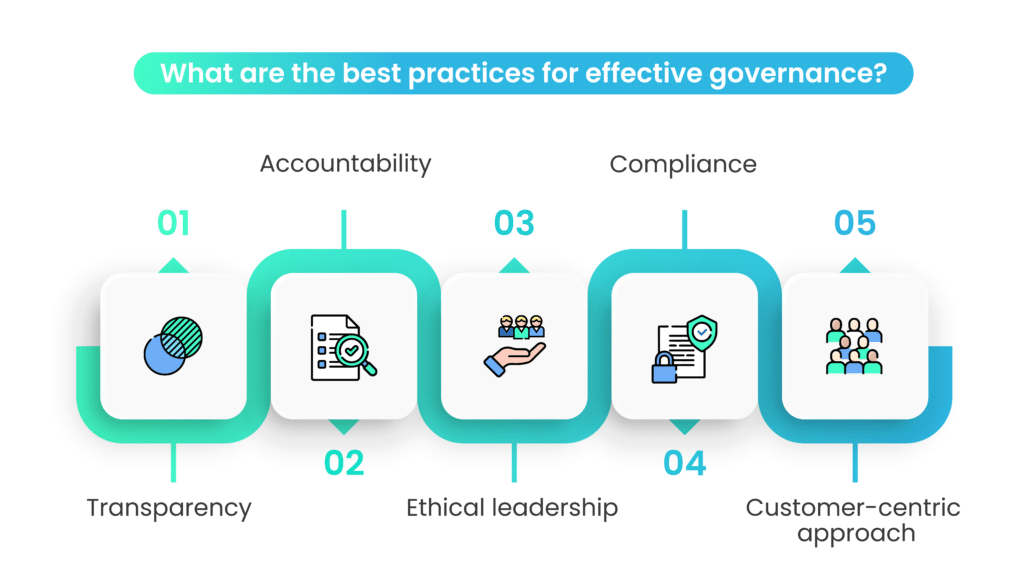
Effective governance is built on a foundation of key principles and best practices that are indispensable in earning and preserving customer trust. Let’s delve into these guiding principles.

  • Transparency: Transparency in decision-making and operations builds trust by allowing customers to see how an organization operates. Sharing information openly, especially about key policies and practices, is vital.
  • Accountability: Effective governance includes clear lines of accountability. When individuals within an organization are held responsible for their actions, customers have confidence that the company is committed to rectifying any missteps.
  • Ethical leadership: Ethical leadership sets the tone for the entire organization. Leaders who prioritize ethical behavior inspire trust and establish a culture of integrity.
  • Compliance: Ensuring adherence to laws, regulations, and industry standards is essential. Customers trust organizations that consistently comply with the rules, as it signals reliability.
  • Customer-centric approach: Governance should prioritize the best interests of customers. This means actively seeking customer feedback, addressing concerns promptly, and making decisions that enhance the customer experience.

C. Examples of organizations with successful governance structures

To gain insight into the real-world impact of strong governance, let’s explore a few noteworthy examples of organizations that have successfully implemented robust governance structures, earning the trust and admiration of their customers.

  • Microsoft: Microsoft’s governance structure is renowned for its transparency and commitment to compliance. The company publishes detailed reports on its ethical practices and compliance efforts, demonstrating a dedication to accountability and customer trust.
  • The Walt Disney Company: Disney’s governance practices prioritize both shareholders and customers. The company’s ethical guidelines and commitment to quality entertainment have fostered a loyal customer base that trusts Disney for family-friendly content and memorable experiences.
  • Procter & Gamble: P&G is recognized for its strong governance and ethical leadership. The company’s focus on sustainability and social responsibility aligns with customer values, enhancing trust in its products and practices.

These organizations exemplify how effective governance not only builds trust but also contributes to long-term success and customer loyalty. Their commitment to ethical principles and transparency has set them apart as leaders in their respective industries.

How to incorporate effective risk management?

A. The role of risk management in building trustworthiness

Risk management is the guardian of trust, as it ensures a company’s commitment to safeguarding its stakeholders from potential harm. In this section, we’ll explore how an effective risk management strategy is central to enhancing trustworthiness.

B. Steps involved in a robust risk management process
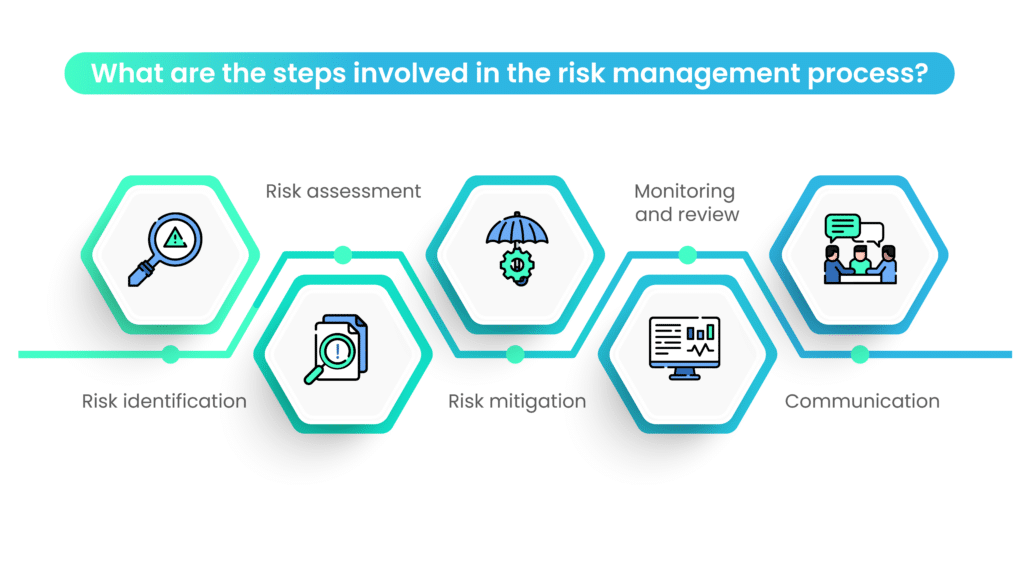
A robust risk management process involves a series of strategic steps that not only protect an organization from potential pitfalls but also play a vital role in bolstering trust by demonstrating foresight and responsibility.

  • Risk identification: The first step is identifying potential risks that could affect the organization, ranging from operational and financial risks to reputational and compliance risks.
  • Risk assessment: Assess the likelihood and impact of each identified risk. This step helps prioritize risks based on their significance.
  • Risk mitigation: Develop and implement strategies to mitigate identified risks. This might include process improvements, insurance, or contingency plans.
  • Monitoring and review: Continuously monitor the risk landscape, evaluating the effectiveness of risk mitigation measures. Adjust strategies as needed to adapt to changing circumstances.
  • Communication: Maintain transparent communication with stakeholders about the organization’s risk management efforts. This fosters trust by demonstrating a proactive approach to risk mitigation.

C. Showcase of real-world cases of effective risk management

To appreciate the tangible impact of effective risk management on trust, let’s examine real-world instances where companies have successfully navigated challenges, earning admiration and confidence from their stakeholders through proactive risk management practices.

  • JPMorgan Chase: After the 2008 financial crisis, JPMorgan Chase implemented a robust risk management framework. By focusing on risk identification and mitigation, the bank restored trust in its financial stability, which was critical in regaining customer and investor confidence.
  • Toyota: Toyota’s proactive approach to product recalls and quality control is a testament to effective risk management. By addressing potential safety concerns swiftly and transparently, Toyota has maintained trust in its commitment to customer safety and quality.
  • Johnson & Johnson: When faced with the Tylenol poisoning crisis in the 1980s, Johnson & Johnson’s swift response and product recall demonstrated their commitment to customer safety. This crisis management approach not only saved lives but also strengthened trust in the brand’s integrity.

These real-world examples showcase how effective risk management not only safeguards an organization but also reinforces trust among customers and stakeholders. A well-executed risk management strategy demonstrates an organization’s dedication to its responsibilities and its ability to navigate challenges with integrity.

How do we build customer trust with compliance?

Compliance is not just a legal necessity; it’s the linchpin of customer trust in the business world. In this section, we’ll delve into the symbiotic relationship between compliance and the trust customers place in an organization.

Strategies  to fostering customer trust while maintaining compliance
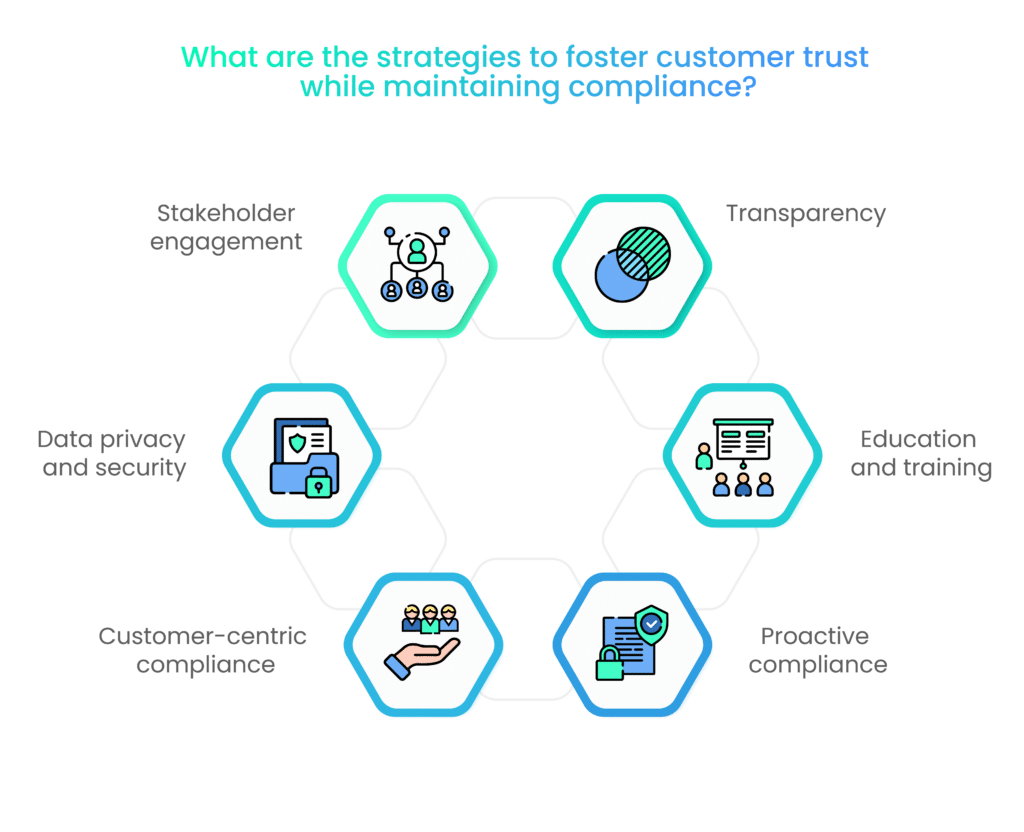
Balancing the demands of compliance with the imperative of fostering trust requires a thoughtful approach. Here, we’ll explore key strategies that organizations can employ to navigate this delicate equilibrium, ensuring both ethical integrity and customer confidence.

1. Transparency

Openly communicate your commitment to compliance and ethical conduct to customers. Transparency builds trust by assuring customers that your organization is accountable.

2. Education and training

Invest in ongoing education and training for employees to ensure they understand the importance of compliance and are equipped to meet ethical and regulatory standards.

3. Proactive compliance

Be proactive in identifying and addressing compliance issues before they escalate. Promptly rectifying any violations demonstrates a commitment to rectifying errors and upholding trust.

4. Customer-centric compliance

Align compliance efforts with customer interests. Ensure that compliance measures are designed to protect customers, fostering the perception that their well-being is a top priority.

5. Data privacy and security 

With the rise in data breaches, robust data privacy and security compliance are essential. Customers trust organizations that safeguard their personal information.

6. Stakeholder engagement 

Engage with stakeholders, including customers, in discussions about compliance and ethical practices. Their input can provide valuable insights and build trust in your commitment to transparency.

Incorporating these strategies into your compliance framework not only ensures regulatory adherence but also fosters a culture of trust. Customers are more likely to engage with and remain loyal to organizations that prioritize compliance and ethical conduct, ultimately leading to sustainable business success.

What is the role of technology in enhancing trust?
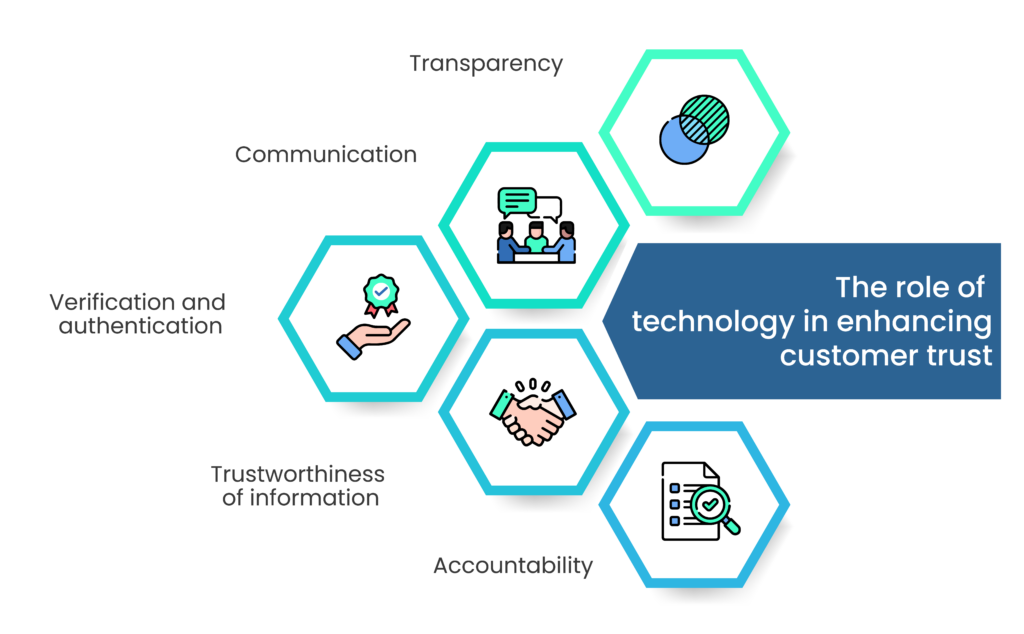
Technology plays a crucial role in enhancing trust in various aspects of our personal and professional lives. Here are some ways in which technology contributes to building and enhancing trust:

1. Transparency

Technology enables organizations to be more transparent in their operations. Through tools like blockchain, companies can provide transparent records of transactions and supply chains, which can help build trust with customers and partners.

2. Communication

Technology, particularly digital communication tools, allows for more efficient and instant communication. Timely and clear communication fosters trust between individuals and organizations.

3. Verification and authentication

Technologies such as biometrics (fingerprint, facial recognition) and multi-factor authentication (MFA) help verify the identity of users, reducing the risk of fraud and enhancing trust in online interactions.

4. Trustworthiness of information

With the advent of AI and machine learning, technology can help filter and verify information sources, reducing the spread of misinformation and enhancing trust in the information ecosystem.

5. Accountability

Through the use of data analytics and monitoring tools, technology can help organizations hold themselves accountable for their actions, leading to increased trust from stakeholders.

Cybersecurity and data privacy as trust-building factors

Cybersecurity and data privacy are foundational elements for building trust in the digital age. Strong cybersecurity practices protect against threats, while respect for data privacy assures individuals that their information is handled responsibly.

Cybersecurity 

Robust cybersecurity practices are essential for building trust in the digital age. Organizations must protect their systems and data from cyberattacks to ensure the trust of their customers and partners. Measures include:

  • Regular security audits and penetration testing.
  • Encryption of sensitive data.
  • Employee training on security best practices.
  • Incident response plans to address breaches promptly.

Data privacy 

Respecting data privacy is a key factor in building trust, as individuals want assurance that their personal information is handled responsibly. Steps to promote data privacy and trust include:

  • Complying with data protection regulations (e.g., GDPR, CCPA).
  • Clearly communicating privacy policies to users.
  • Obtaining explicit consent for data collection and processing.
  • Providing users with control over their data.

Tips on selecting and implementing trust-enabling technologies
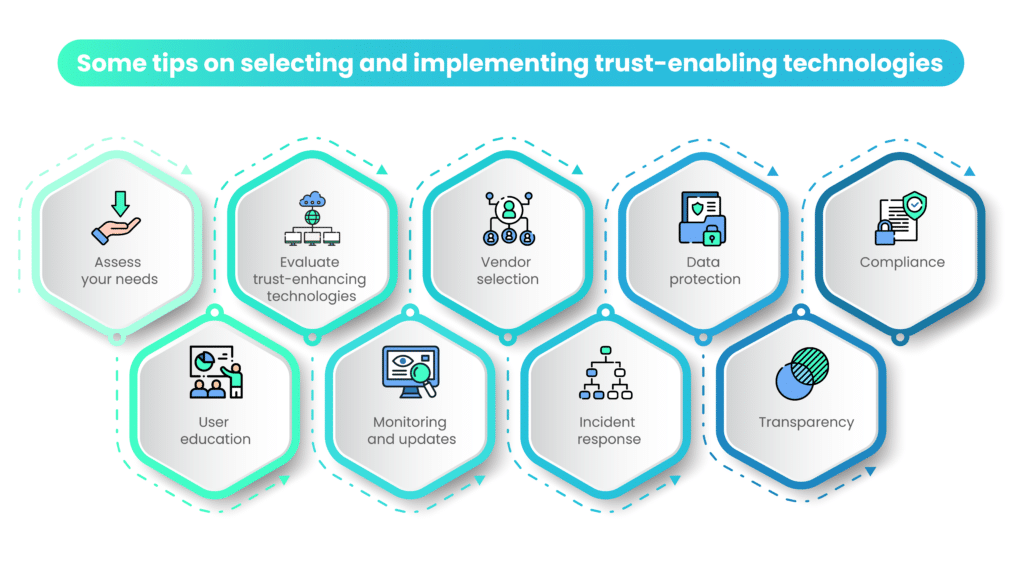
Selecting and implementing trust-enabling technologies involves a strategic approach that considers specific needs, evaluates technology options, and ensures compliance with security and privacy standards. Here are some key tips for success:

1. Assess your needs

Start by identifying the specific trust-related challenges or goals your organization faces. Understand what technologies are relevant to your industry and objectives.

2. Evaluate trust-enhancing technologies

Research and evaluate technologies that address your trust-related needs. Consider factors such as security, reliability, scalability, and cost-effectiveness.

3. Vendor selection

Choose reputable vendors with a track record of delivering trustworthy solutions. Look for customer reviews, case studies, and certifications to gauge their trustworthiness.

4. Data protection

Ensure that the technologies you select have robust data protection features. This includes encryption, access controls, and data backup strategies.

5. Compliance

Ensure that the technologies align with relevant regulatory requirements and industry standards related to trust and security.

6. User education

Train your employees and users on the proper use of trust-enabling technologies to minimize vulnerabilities and risks.

7. Monitoring and updates

Continuously monitor and update your trust-enabling technologies to stay ahead of emerging threats and vulnerabilities.

8. Incident response 

Develop a clear incident response plan to address any breaches or trust-related issues promptly and effectively.

9. Transparency 

Be transparent with your stakeholders about the technologies you use and the measures you take to enhance trust. Communication is key to building and maintaining trust.

In conclusion, technology is a powerful tool for enhancing trust in various aspects of our lives. Whether it’s through transparent operations, robust cybersecurity, or responsible data privacy practices, organizations can leverage technology to build and maintain trust with their stakeholders. However, this requires careful consideration of the technologies chosen and a commitment to ethical and responsible use.

How do we assess and measure the trustworthiness of an organization?
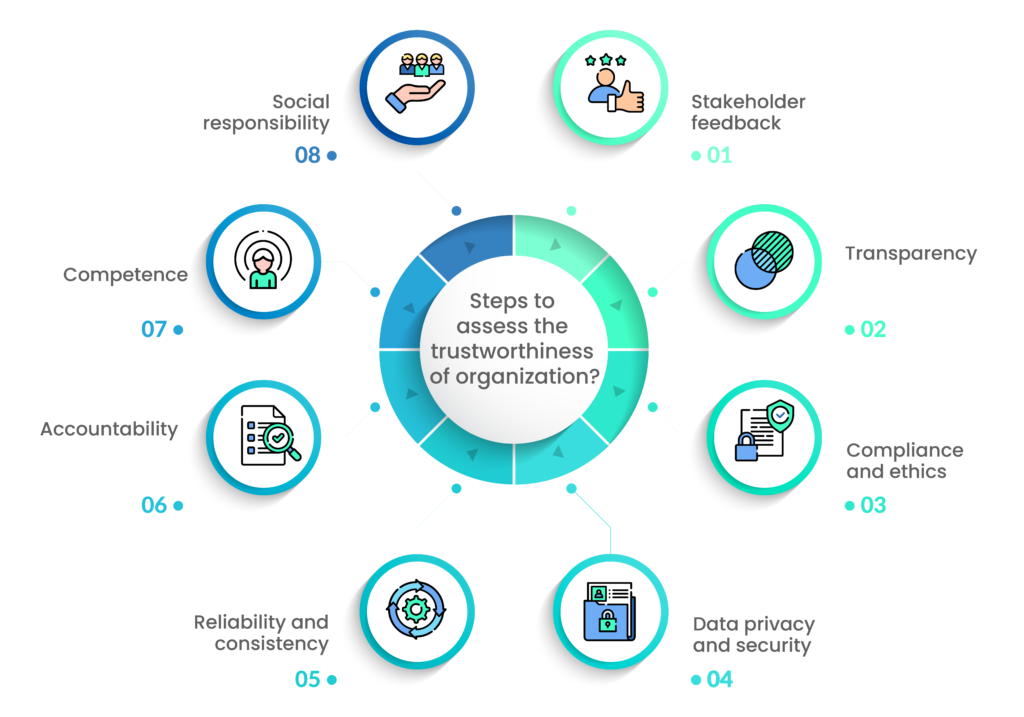
Assessing and measuring the trustworthiness of an organization is critical for maintaining and enhancing trust with stakeholders. Here’s how you can do it:

1. Stakeholder feedback

Gather feedback from customers, employees, partners, and other stakeholders through surveys, interviews, and reviews. Their perceptions can provide valuable insights into your organization’s trustworthiness.

2. Transparency 

Assess how transparent your organization is in its operations, communications, and decision-making processes. Transparency is a key indicator of trustworthiness.

3. Compliance and ethics

Evaluate your organization’s adherence to legal and ethical standards. Compliance with regulations and ethical principles is fundamental to trust.

4. Data privacy and security

Measure the effectiveness of your data privacy and cybersecurity measures. A breach of data can significantly erode trust.

5. Reliability and consistency 

Assess your organization’s ability to consistently deliver on promises and commitments. Reliability is a cornerstone of trust.

6. Accountability

Gauge how well your organization takes responsibility for its actions and addresses issues or mistakes. Accountability builds trust when handled appropriately.

7. Competence

Evaluate the competence of your team and the quality of products or services provided. Incompetence can lead to a loss of trust.

8. Social responsibility 

Consider your organization’s efforts toward social responsibility and sustainability. Ethical behavior and a commitment to social causes can enhance trustworthiness.

What are the key performance indicators (KPIs) for customer trust measurement?
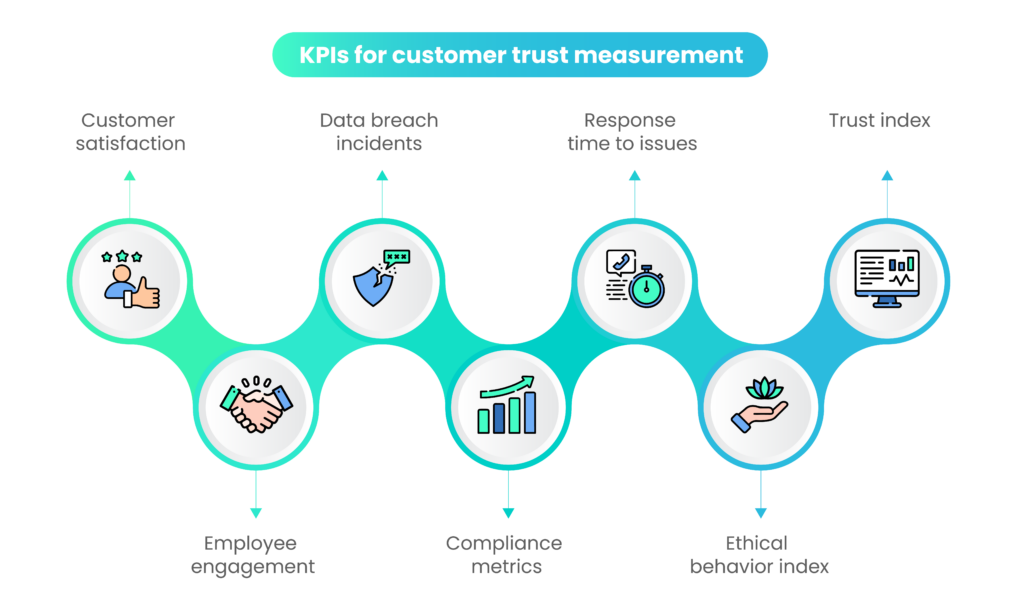
To quantitatively measure trust, you can establish KPIs tailored to your organization’s goals and context. Some KPIs for trust measurement include:

1. Customer satisfaction 

Measure customer satisfaction through surveys, Net promoter score (NPS), or Customer satisfaction score (CSAT). Satisfied customers are more likely to trust your organization.

2. Employee engagement

Assess employee engagement levels using employee surveys and turnover rates. Engaged employees often contribute to a more trustworthy organization.

3. Data breach incidents 

Track the number and severity of data breaches. Fewer incidents indicate a more trustworthy approach to data security.

4. Compliance metrics

Monitor compliance with relevant regulations and industry standards. Achieving and maintaining compliance can enhance trust.

5. Response time to issues

Measure the time it takes for your organization to respond to customer complaints or issues. Quick and effective responses demonstrate trustworthiness.

6. Ethical behavior index

Develop an index to measure ethical behavior within your organization, considering factors like ethical training completion rates and incident reports.

7. Trust index

Create a trust index based on stakeholder feedback, combining ratings related to transparency, reliability, accountability, and other trust-related factors.

How can you use trust metrics for ongoing development?
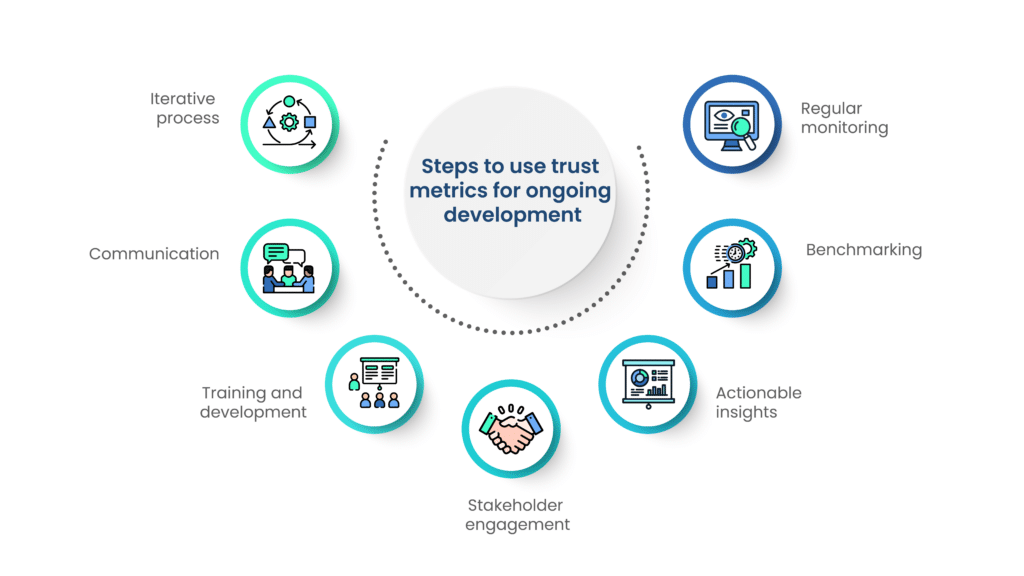
Continuous improvement is essential for maintaining and enhancing trust. Here’s how to use trust metrics to guide your organization’s ongoing development:

  • Regular monitoring: Continuously monitor the KPIs related to trust to detect trends and areas needing improvement.
  • Benchmarking: Compare your organization’s trust metrics to industry standards and best practices to identify areas where you may lag or excel.
  • Actionable insights: Use the data from trust metrics to identify specific actions that can be taken to improve trustworthiness. For example, if data breach incidents are high, invest in cybersecurity improvements.
  • Stakeholder engagement: Engage with stakeholders to discuss the trust metrics and involve them in the improvement process. Their insights can be invaluable.
  • Training and development: Invest in training and development programs to enhance competence and ethical behavior among employees.
  • Communication: Communicate your organization’s commitment to trustworthiness and the steps being taken to improve. Transparency in improvement efforts can build trust.
  • Iterative process: Understand that trust is built over time, and improvements should be an ongoing, iterative process. Regularly revisit your trust metrics to ensure progress.

In conclusion, assessing, measuring, and improving the trustworthiness of an organization requires a holistic approach that considers stakeholder feedback, transparent operations, ethical behavior, and data-driven KPIs. By continuously monitoring and acting on trust metrics, organizations can foster a culture of trust and strengthen their relationships with stakeholders.

Conclusion 

In the dynamic world of business, trust is the ultimate game-changer, propelling companies to greatness. We explored the vital link between trust and GRC,  recognizing that trust is not just a virtue but a strategic imperative.

Assessing trustworthiness is a continuous journey, relying on stakeholder feedback, transparency, compliance, and ethical conduct. Trust metrics guide ongoing development, ensuring trust remains paramount. 

Are you eager to strengthen trust, enhance compliance, and bolster security within your organization? Scrut offers a range of comprehensive GRC solutions designed to empower your business. 

Take the proactive step towards a more secure and trustworthy future – explore our GRC offerings with Scrut today!

FAQs

1. What is GRC, and why is it important for businesses?

Governance, Risk Management, and Compliance (GRC) is a holistic framework that organizations use to ensure ethical conduct, regulatory adherence, and sustainable operations. GRC is crucial because it establishes a foundation of trust, ethical behavior, and responsible business practices. It helps companies maintain a good reputation, adhere to laws and regulations, and mitigate risks effectively.

2. What is GRC, and why is it important for businesses?

GRC is a holistic framework that organizations use to ensure ethical conduct, regulatory adherence, and sustainable operations. GRC is crucial because it establishes a foundation of trust, ethical behavior, and responsible business practices. It helps companies maintain a good reputation, adhere to laws and regulations, and mitigate risks effectively.

3. How does GRC contribute to building customer trust?

GRC contributes to building customer trust by ensuring ethical conduct, transparent operations, and adherence to regulations. When customers see that a company is committed to responsible practices and protecting their interests, they are more likely to trust the brand. GRC helps in maintaining consistency, reliability, and accountability, which are essential for customer trust.

4. What role does technology play in Scrut’s GRC solutions?

Technology plays a significant role in Scrut’s GRC solutions. It enables automation of compliance processes, real-time risk monitoring, data analytics, and reporting. This technology-driven approach enhances efficiency, reduces human error, and provides organizations with the tools needed to adapt to evolving regulatory landscapes.

5. How can Scrut’s GRC solutions help organizations stay up-to-date with changing regulations?

Scrut’s GRC solutions include features that help organizations stay up-to-date with changing regulations. These solutions often include automated alerts, compliance monitoring, and access to resources that provide insights into evolving regulatory requirements, enabling organizations to adapt proactively.

Authored by

Aayush Ghosh Choudhary
Co-founder & CEO at Scrut

Increase customer trust with five easy steps

In the world of business, customer trust is an invaluable asset. It forms the foundation of successful and long-lasting relationships between businesses and their customers. When customers trust a company, they are more likely to make repeat purchases, provide positive reviews, and recommend the business to others. Trust also plays a crucial role in the decision-making process, as customers are more likely to choose a company they trust over competitors. Establishing and maintaining customer trust is thus essential for business growth and sustainability.

Security and compliance are key elements in building and maintaining customer trust. In an era marked by increasing concerns over data breaches, privacy violations, and cyber threats, customers are more vigilant than ever about the security of their personal information. 

Businesses must demonstrate their commitment to protecting customer data and complying with relevant regulations, such as GDPR or HIPAA, depending on their industry. Failure to do so can lead to reputational damage and legal consequences that erode trust.

5 steps to increase customer trust

Organizations often ask, “How to build customer trust?” Well, it’s important to emphasize that building and maintaining customer trust is a multifaceted endeavor that requires careful planning and consistent effort. In an increasingly digital and interconnected world, where information travels swiftly, and consumer choices abound, establishing trust has become both a strategic imperative and a competitive advantage for businesses of all sizes and industries.

In this section, we will outline five easy steps that businesses can take to increase customer trust, which will not only contribute to their reputation but also foster stronger and more enduring relationships with their clientele. By embracing these principles, businesses can build a foundation of trust that leads to customer loyalty and long-term success.

Step 1: Understand the regulatory landscape

Compliance with industry regulations is a fundamental pillar of building and maintaining customer trust. It demonstrates a commitment to ethical and responsible business practices. When businesses adhere to the rules and standards set forth by regulatory authorities, they not only mitigate legal risks but also signal to customers that their interests and data security are a top priority. Compliance helps foster an environment of transparency and accountability, reassuring customers that the business is operating with their best interests in mind.

Identifying and understanding the key regulatory bodies and standards relevant to your specific industry is crucial. Different sectors have unique sets of regulations designed to address industry-specific challenges and protect consumers. 

For instance, in the financial industry, organizations need to comply with regulations like the Sarbanes-Oxley Act (SOX) or the Payment Card Industry Data Security Standard (PCI DSS), whereas healthcare companies must adhere to the Health Insurance Portability and Accountability Act (HIPAA). Knowing these regulatory bodies and standards ensures that your business can tailor its compliance efforts accordingly, avoiding costly mistakes and ensuring customer data and interests are protected.

Non-compliance with industry regulations can have dire consequences for customer trust. It exposes customers to risks such as data breaches, privacy violations, and financial misconduct. When customers perceive that their personal information is not adequately protected or that a business is not operating within legal boundaries, their trust erodes rapidly. This erosion of trust can manifest as a loss of customers, negative publicity, legal penalties, and damage to the business’s reputation, all of which can be difficult to recover from.

In summary, understanding and adhering to industry regulations is a critical component of building and maintaining customer trust. It signals a commitment to ethical practices, protects customer interests, and mitigates the risks associated with non-compliance, ultimately strengthening the bond between a business and its clientele.

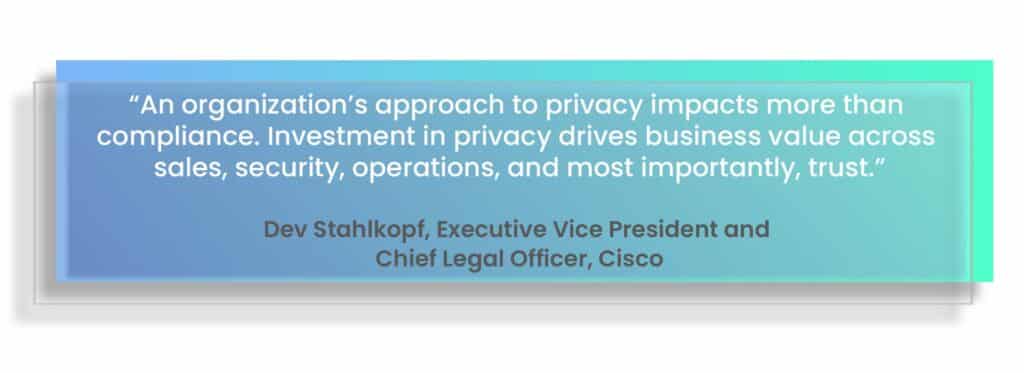
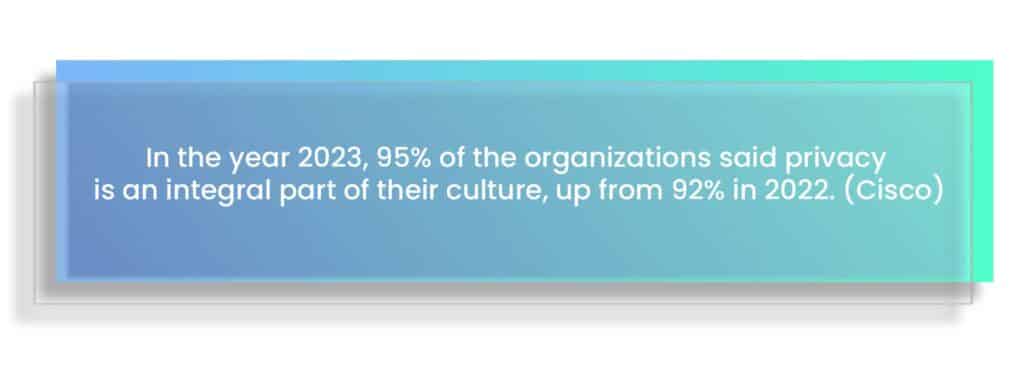
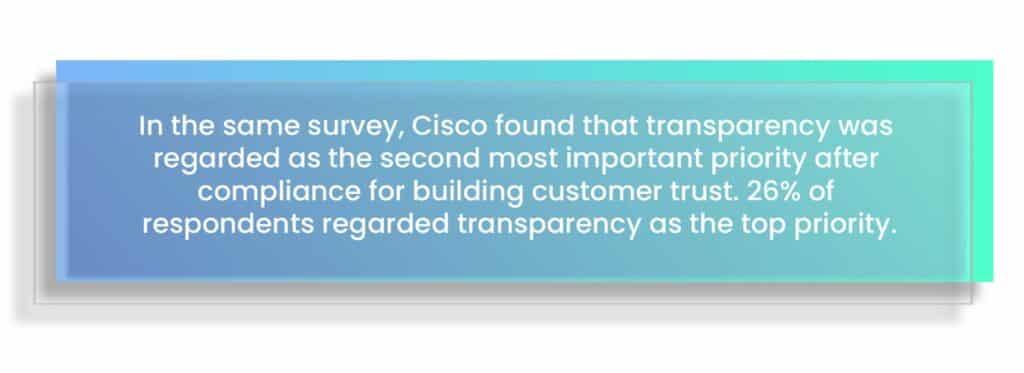
However, according to Harvey Jang, Vice President and Chief Privacy Officer Cisco, “When it comes to earning and building trust, compliance is not enough.”

Step 2: Implement robust data protection measures

Data security is the backbone of the process to increase customer trust. It underlines a business’s dedication to safeguarding sensitive information, and fostering an environment of confidence. When customers see that their personal data is handled with the utmost care and security, they are more likely to trust the business. Conversely, data breaches or lapses in security can severely erode trust, leading to reputational damage and loss of customer confidence.

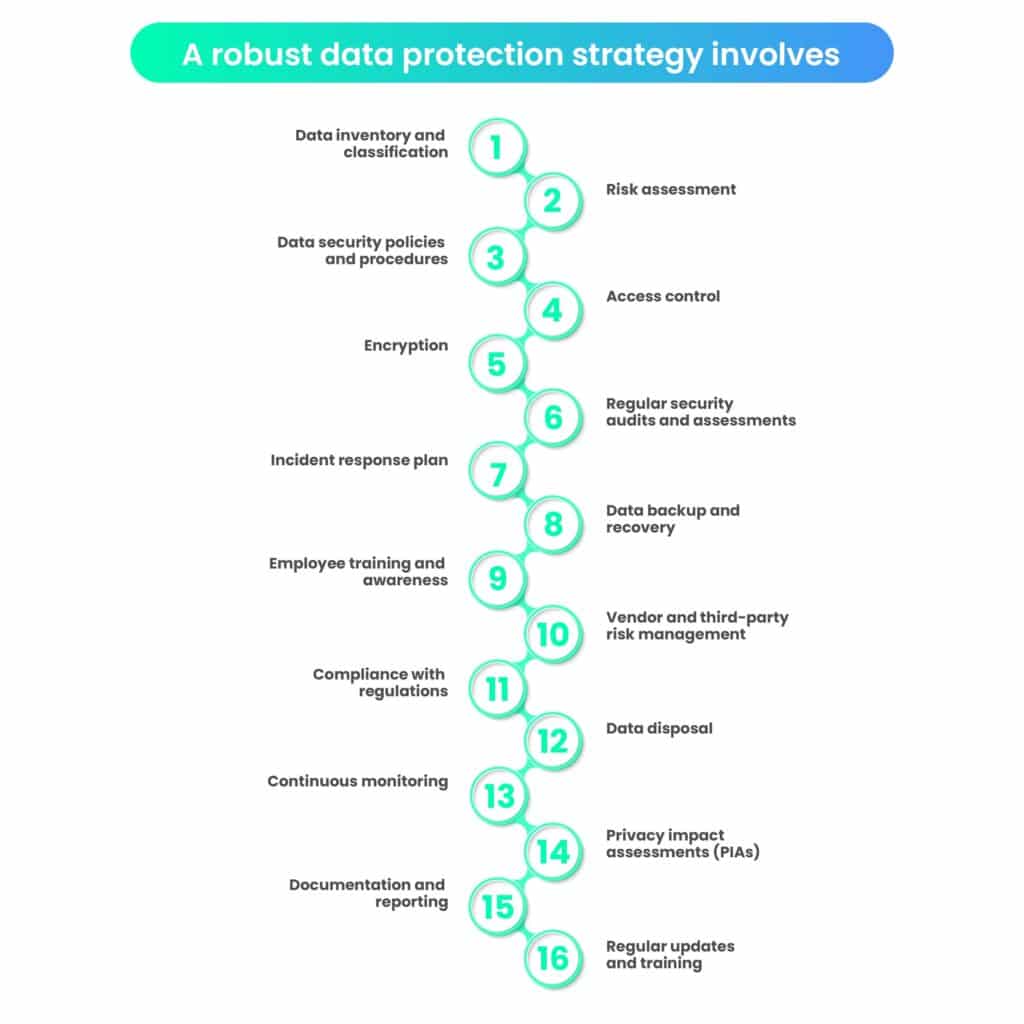
To ensure robust data protection, businesses must employ a comprehensive strategy that includes encryption, stringent access controls, and proactive data breach prevention measures. Encryption secures data both in transit and at rest, while access controls restrict data access to authorized personnel only. Implementing effective data breach prevention strategies involves constant monitoring, intrusion detection systems, and incident response plans. These measures collectively create a strong defense against data breaches and reinforce trust in the eyes of customers.

Equally important is the need for employee training and awareness programs. Employees are often the first line of defense against data breaches, and their actions play a critical role in maintaining data security. Comprehensive training ensures that employees understand data protection best practices, recognize potential security threats, and know how to respond to security incidents. By investing in employee education and awareness, businesses can further solidify their commitment to data security and, consequently, customer trust.

Step 3: Conduct regular security audits and assessments

Proactive security auditing offers numerous benefits for organizations aiming to maintain robust data protection and increase customer trust. Firstly, it provides a systematic and objective evaluation of your security measures, helping to identify potential vulnerabilities and weaknesses before they can be exploited by malicious actors. 

Additionally, regular audits demonstrate a commitment to security and compliance, reassuring customers and stakeholders that their data is being handled with care. Auditing also aids in the continuous improvement of security protocols, ensuring that your organization stays ahead of evolving threats and regulatory changes.

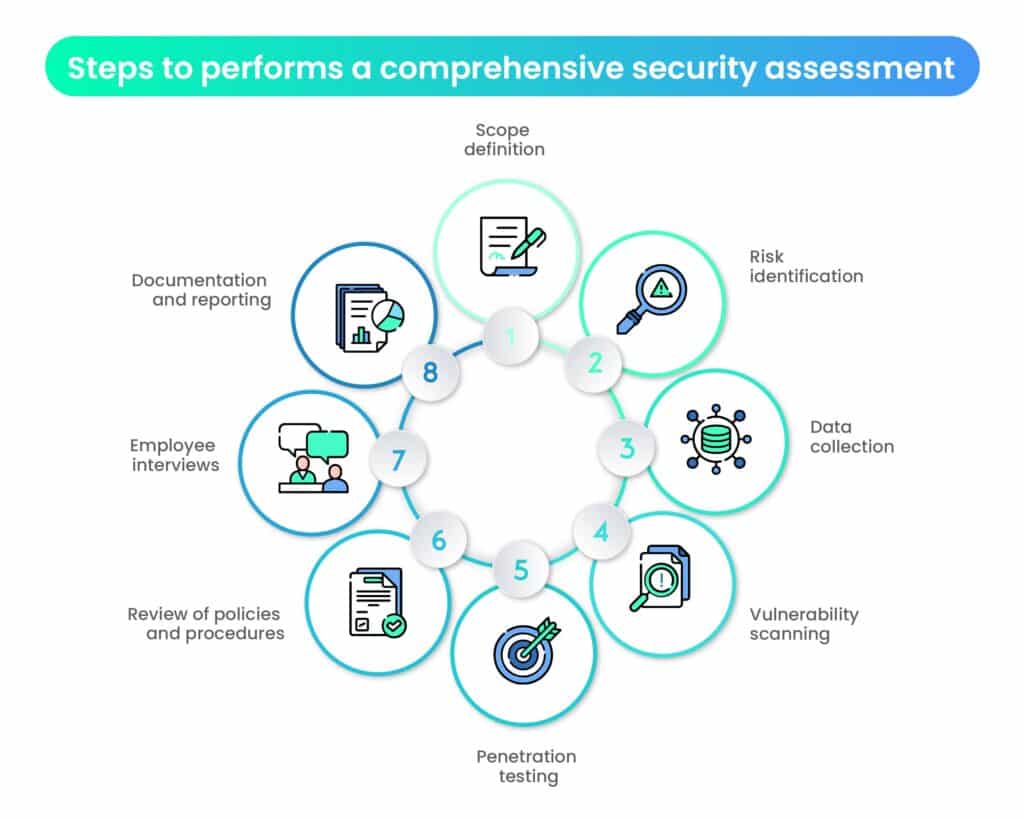
How to perform a comprehensive security assessment

Performing a comprehensive security assessment involves several key steps:

  • Scope definition: Clearly define the scope of the assessment, including the systems, processes, and data that will be evaluated. Consider the specific objectives and areas of concern.
  • Risk identification: Identify potential security risks and threats, both internal and external, that could impact your organization’s data and operations. This may include malware, phishing attacks, insider threats, and more.
  • Data collection: Gather relevant information, such as security policies, procedures, access logs, and configuration settings. This data will serve as the foundation for your assessment.
  • Vulnerability scanning: Use vulnerability scanning tools to identify known vulnerabilities in your systems and networks. Regularly update and patch software to address these vulnerabilities.
  • Penetration testing: Conduct penetration testing (ethical hacking) to simulate real-world attacks and assess your organization’s defenses. Identify weaknesses that could be exploited by malicious actors.
  • Review of policies and procedures: Examine existing security policies and procedures to ensure they align with best practices and compliance requirements. Make necessary updates or improvements.
  • Employee interviews: Interview employees to gauge their awareness of security protocols and their adherence to best practices. This can help identify areas where additional training may be required.
  • Documentation and reporting: Document your findings, including vulnerabilities, weaknesses, and recommendations for improvement. Create a detailed report that outlines the assessment’s results.

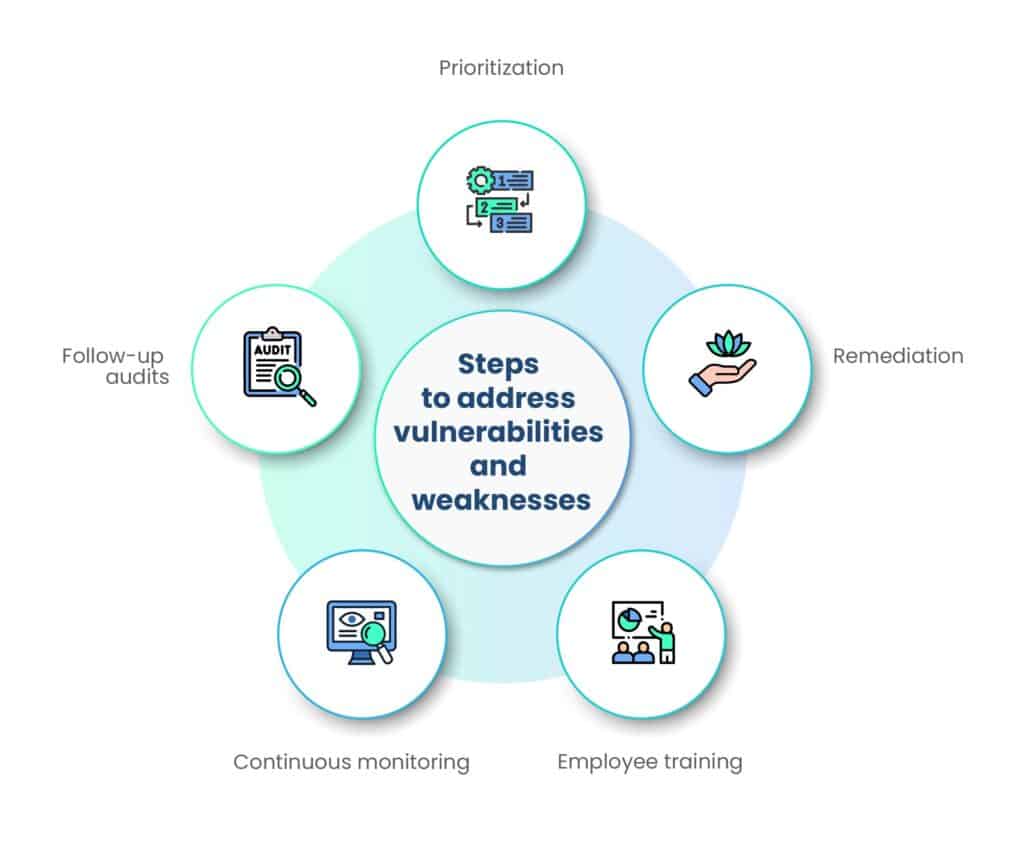
Addressing vulnerabilities and weaknesses

Once vulnerabilities and weaknesses are identified through the assessment, it’s essential to take prompt action to address them:

  • Prioritization: Prioritize vulnerabilities based on their severity and potential impact on your organization. Focus on addressing the most critical issues first.
  • Remediation: Develop and implement a plan to remediate identified vulnerabilities. This may involve software patching, configuration changes, or the implementation of additional security controls.
  • Employee training: Provide additional training and awareness programs for employees to mitigate human-related vulnerabilities, such as social engineering attacks.
  • Continuous monitoring: Implement continuous monitoring to detect and respond to emerging threats and vulnerabilities in real time.
  • Follow-up audits: Schedule follow-up security audits to assess the effectiveness of remediation efforts and ensure that security improvements are maintained over time.

By regularly conducting security audits and assessments, organizations can proactively identify and mitigate security risks, bolster their data protection measures, and reinforce customer trust in their commitment to security and compliance.

Step 4: Transparent privacy policies and practices

Crafting clear and concise privacy policies is essential to increase customer trust. Privacy policies should be written in plain language that is easy for the average person to understand. They should clearly outline what data is collected, how it is used, who it is shared with, and how it is protected. Avoid legalese and jargon, and make sure that the policy is easily accessible on your website or app.

Transparency is key in the customer trust theory when it comes to data collection, storage, and usage. Customers want to know what information is being collected from them, why it’s being collected, and how it will be used. Be explicit about the types of data you collect, whether it’s personal information, browsing behavior, or location data. Explain the purposes for which you collect this data, such as to improve user experience or to personalize content. Additionally, clarify how long you will retain the data and how it will be securely stored.

Obtaining customer consent and respecting their choices regarding data usage is crucial. Ensure that you obtain clear and informed consent from customers before collecting their data. This consent should be obtained through opt-in mechanisms that allow customers to make choices freely. Offer options for customers to opt out of certain data collection or marketing communications at any time. It’s essential to honor these choices promptly and make the process for doing so user-friendly.

In summary, transparent privacy policies and practices are integral to building trust with customers. By crafting clear policies, being transparent about data handling, and respecting customer choices, businesses can demonstrate their commitment to ethical data practices and ensure that customers feel in control of their personal information. This, in turn, fosters a sense of trust and confidence in the business.

Step 5: Establish a culture of compliance

A compliance-focused organizational culture is vital to build and increase customer trust. It signifies a commitment to ethical business practices and ensures that the organization operates within legal boundaries and industry regulations. Such a culture not only mitigates the risk of non-compliance but also demonstrates integrity and accountability to customers and stakeholders. It reinforces the message that data protection and ethical conduct are top priorities.

To establish a culture of compliance, organizations must invest in training and awareness programs for employees. These programs should educate employees about relevant regulations, industry standards, and internal policies. Employees should understand their roles and responsibilities in maintaining compliance. Regular training helps ensure that employees are up to date with the latest compliance requirements and data protection best practices. It also empowers them to identify and report potential compliance issues.

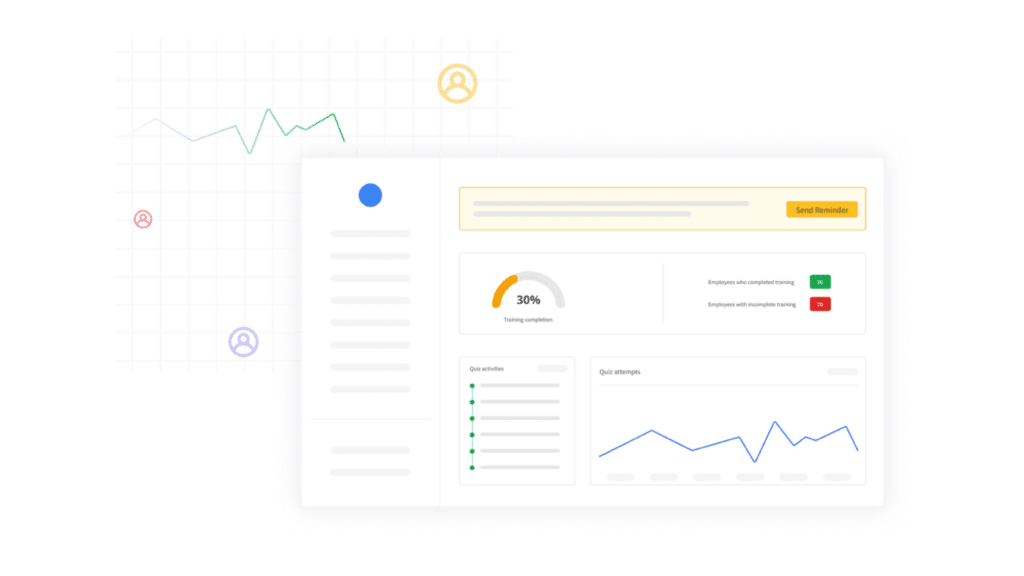
Scrut’s Employee Awareness module is designed to provide company-wide education on compliance and cybersecurity. It helps the organization to reduce cybersecurity risks and maintain regulatory compliance. Organizations can either use the programs offered by the company or customize their own modules. The managers can also keep an eye on the progress of each employee during the training. The module also assists the organization in testing the employees’ knowledge after they have completed the training to hold them accountable.

Following is an image of how the Scrut’s Employee Awareness module will look like:

Encouraging employees to report compliance concerns is essential for early detection and resolution of potential issues. Establish clear channels for employees to report compliance-related problems, whether it’s through anonymous reporting systems, designated compliance officers, or open communication channels with management. Ensure that employees feel safe and protected when reporting concerns, and emphasize that reporting violations or suspected violations is a responsible and commendable action.

In summary, fostering a culture of compliance within the organization is a critical component of building and maintaining customer trust. It demonstrates a commitment to ethical conduct, empowers employees to uphold compliance standards, and provides mechanisms for identifying and addressing compliance concerns promptly. This culture reinforces the organization’s reputation for integrity and responsible business practices, enhancing customer trust in the process.

Winding up

In conclusion, customer trust is the bedrock of successful businesses. It’s not just a nice-to-have; it’s a must-have in today’s world. To establish and sustain this trust, businesses must first understand and respect the regulatory landscape that governs their industry. Compliance isn’t merely a checkbox; it’s a commitment to ethical conduct that resonates with customers.

Next, robust data protection measures are essential. Customers want to know that their sensitive information is secure. Implement encryption, access controls, and proactive breach prevention to show that you take data security seriously. Don’t forget the importance of educating your employees about these measures.

Regular security audits keep you ahead of potential threats and reassure customers that you’re vigilant in protecting their data. Transparency is key in your privacy policies and practices. Customers appreciate knowing what data you collect, how it’s used, and having a say in the matter.

Lastly, cultivate a culture of compliance within your organization. It’s not just about following rules; it’s about embodying ethics and accountability. When you do all of this consistently, you’re on the path to earning and keeping the trust of your customers, which is invaluable in today’s business landscape.

Ready to showcase your commitment to trust and compliance in real-time? Discover Scrut’s Trust Vault and elevate your business’s reputation today!

FAQs

1. Why is customer trust so important for businesses?

Customer trust is crucial because it forms the foundation for long-lasting customer relationships. When customers trust a company, they are more likely to make repeat purchases, provide positive reviews, and recommend the business to others. Trust also influences decision-making, as customers prefer companies they trust over competitors.

2. How do security and compliance contribute to building trust with customers?

Security and compliance are essential because they demonstrate a commitment to protecting customer data and adhering to relevant regulations. In an era marked by data breaches and privacy concerns, customers are vigilant about their data. When businesses prioritize security and compliance, it reassures customers and helps maintain their trust.

3. What are the key steps to increase customer trust outlined in the blog?

The blog outlines five essential steps to enhance customer trust: understanding the regulatory landscape, implementing robust data protection measures, conducting regular security audits, transparent privacy policies and practices, and establishing a culture of compliance within the organization.

4. Can you provide more information about Scrut’s Trust Vault and its role in building customer trust?

Scrut’s Trust Vault is a platform designed to help businesses showcase their commitment to trust and compliance in real-time. It offers features like real-time compliance monitoring, data protection measures, and transparency tools to reinforce customer trust by demonstrating compliance efforts.

 5. What types of businesses can benefit from using Scrut’s Trust Vault?

Scrut’s Trust Vault is suitable for businesses of all sizes and industries that prioritize trust and compliance. Whether you’re in finance, healthcare, e-commerce, or any other sector, Trust Vault can help enhance your reputation and strengthen customer relationships.

Authored by

Aayush Ghosh Choudhary
Co-founder & CEO at Scrut

How customer trust benefits SMB sales

Imagine a bustling marketplace teeming with SMBs vying for attention, where every business is striving to outdo the other. This is the reality of today’s small and medium-sized business (SMB) market—a dynamic, ever-evolving battleground where only the fittest survive. 

In this fiercely competitive landscape, where innovation is the currency, one crucial element has emerged as the ultimate game-changer: customer trust. It’s the secret weapon that can propel SMBs to the forefront, accelerating sales processes and unlocking doors to new opportunities. 

Trust is the cornerstone upon which successful relationships, transactions, and partnerships are built. Customers are more likely to engage with businesses they trust, and trust can significantly reduce sales cycle times, leading to quicker conversions and improved revenue streams.

Join us on a journey as we uncover the extraordinary potential of customer trust in SMB sales and equip you with the strategies to harness its power.

What is customer trust in the context of SMB sales?

Customer trust, in the realm of SMB sales, is not just a mere transactional factor; it’s a multifaceted concept that encompasses confidence, reliability, and credibility. It’s the assurance customers seek when they engage with SMBs, knowing that their needs will be met and their expectations will be exceeded. Customer trust is the intangible glue that binds businesses and their clientele, fostering loyalty, repeat business, and positive word-of-mouth referrals.

Why is customer trust more critical for SMBs compared to larger enterprises?

Customer trust takes on an even more pivotal role for small and medium-sized businesses compared to their larger counterparts. SMBs often lack the extensive brand recognition and resources that larger enterprises enjoy, making customer trust a potent differentiator. 

In a market saturated with choices, it’s customer trust that can help SMBs stand out, attract customers, and secure a competitive edge. SMBs can leverage customer trust to form genuine, personalized connections with their clientele, delivering the kind of exceptional service that larger corporations struggle to provide.

What are the roles of security and compliance in building and maintaining customer trust?

In the digital age, customer trust goes hand in hand with security and compliance. Customers are increasingly cautious about the safety of their data and the integrity of their transactions. SMBs must prioritize robust security measures and stringent compliance standards to build and maintain customer trust. 

Demonstrating a commitment to protecting customer information, adhering to industry regulations, and implementing best practices in data security can be a game-changer. Customers are more likely to trust businesses that prioritize their privacy and safeguard their interests. In this section, we will explore how SMBs can establish trust through a strong emphasis on security and compliance.

What is the customer trust-building process for SMBs?

Before delving into the stages of customer trust-building in a sales context, it’s crucial to recognize that establishing customer trust is not a one-size-fits-all process. It requires a thoughtful and nuanced approach tailored to your specific business and industry. 

With that in mind, let’s explore the key stages of customer trust-building:

Stage 1: Initial contact and awareness

The journey begins when a potential customer becomes aware of your SMB. This stage involves making a positive first impression, often through marketing efforts, a professional online presence, or word-of-mouth referrals. At this point, customers are forming their initial perceptions of your business.

Stage 2: Establishing credibility

Once a potential customer is aware of your SMB, the next step is to establish credibility. This can be achieved through clear and transparent communication about your products or services, industry expertise, and showcasing relevant success stories or testimonials. Customers need to believe that you have the knowledge and capability to fulfill their needs.

Stage 3: Building rapport and personal connections 

As the sales process progresses, it’s crucial to build rapport with your customers. This involves active listening, empathy, and a genuine interest in understanding their specific needs and pain points. Personal connections go a long way in nurturing customer trust, as customers are more likely to engage with businesses they feel understand and care about them.

Stage 4: Consistency and reliability

Customer trust is reinforced when businesses consistently deliver on their promises. Be it meeting deadlines, providing quality products or services, or delivering exceptional customer support, maintaining a high level of consistency and reliability is essential. Even a single letdown can erode customer trust quickly.

Stage 5: Transparency and honesty

Open and honest communication is at the heart of trust-building. SMBs should be transparent about pricing, terms and conditions, and any potential limitations. Avoiding hidden fees or deceptive practices is crucial. If an issue arises, addressing it transparently and promptly can often enhance customer trust rather than diminish it.

Stage 6: Fulfillment of commitments 

Ultimately, customer trust solidifies when you consistently fulfill your commitments and exceed customer expectations. Whether it’s delivering products on time, resolving issues quickly, or providing exceptional after-sales service, consistently meeting or exceeding customer expectations is the key to long-term customer trust.

Stage 7: Post-sale relationship building

Customer trust-building doesn’t end with the sale; it extends into the post-sale phase. SMBs should focus on nurturing ongoing relationships with customers, seeking feedback, and addressing any concerns promptly. Happy customers can become brand advocates, further bolstering trust through word-of-mouth referrals.

All in all, understanding and actively managing these stages of customer trust-building is essential for SMBs aiming to create lasting, meaningful connections with their customers and differentiate themselves in the competitive market.

What are the factors that contribute to customer trust?

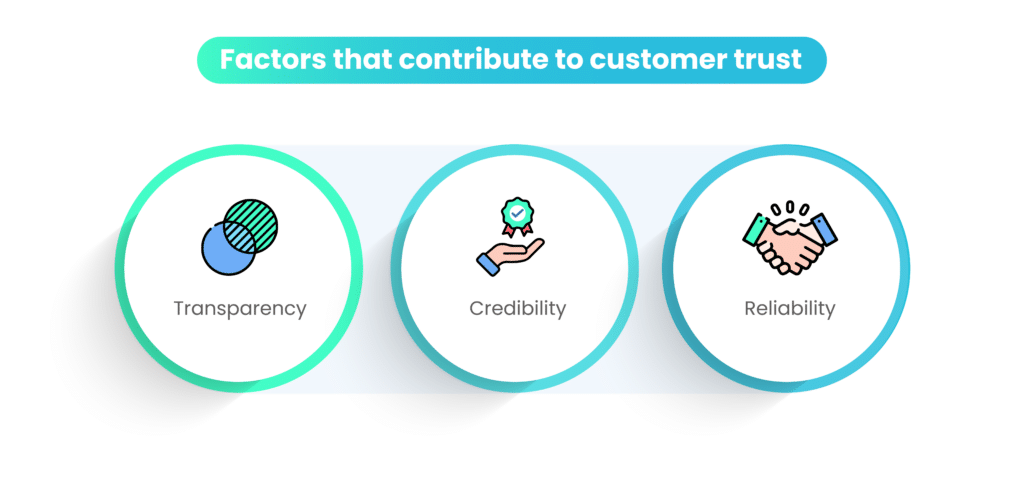
Before we delve into the specific factors that contribute to customer trust in a business context, it’s important to recognize that customer trust is the linchpin of successful relationships between SMBs and their customers. Building and maintaining customer trust requires a deliberate and sustained effort, and three critical factors play a central role: transparency, credibility, and reliability.

Let’s explore each of these elements in detail and understand how they contribute to the foundation of customer trust.

1. Transparency

Transparency is the cornerstone of customer trust-building. It involves being open, honest, and forthcoming in your business dealings. Here’s how transparency contributes to customer trust:

a. Clear communication

Effective communication that is open and straightforward builds customer trust. This includes being clear about your products or services, pricing, policies, and any potential limitations.

b. Sharing information

Providing relevant information and details about your business, processes, and products helps customers make informed decisions. This can include publishing comprehensive product descriptions, terms and conditions, and FAQs on your website.

c. Handling mistakes gracefully

Transparency also means admitting and rectifying mistakes when they occur. Customers appreciate businesses that take responsibility and make amends promptly.

2. Credibility

Credibility refers to the perception that your business is trustworthy, reliable, and capable of delivering on its promises. Building credibility takes time but is essential for long-term customer trust:

a. Consistency

Consistently delivering high-quality products or services, meeting deadlines, and providing exceptional customer service helps establish credibility.

b. Expertise

Demonstrating expertise in your industry through thought leadership, certifications, or case studies can boost your credibility.

c. Third-party validation 

Positive reviews, testimonials, and endorsements from satisfied customers or industry experts can enhance your business’s credibility.

3. Reliability

Reliability is closely tied to credibility and involves consistently meeting or exceeding customer expectations. Reliability builds customer trust by showing customers that they can count on your business:

a. Dependable products/services 

Delivering products or services that perform as promised, are of high quality, and meet customer needs is a fundamental aspect of reliability.

b. Consistent customer support

Providing responsive and consistent customer support, addressing issues promptly, and ensuring customer satisfaction contribute to reliability.

c. Meeting commitments

Meeting deadlines, honoring agreements, and following through on promises demonstrate reliability and reinforce customer trust.

In summary, customer trust in business is cultivated through a combination of transparency, credibility, and reliability. By consistently practicing these principles, SMBs can foster trust with their customers, differentiate themselves in the competitive market, and build lasting, meaningful relationships that lead to business success.

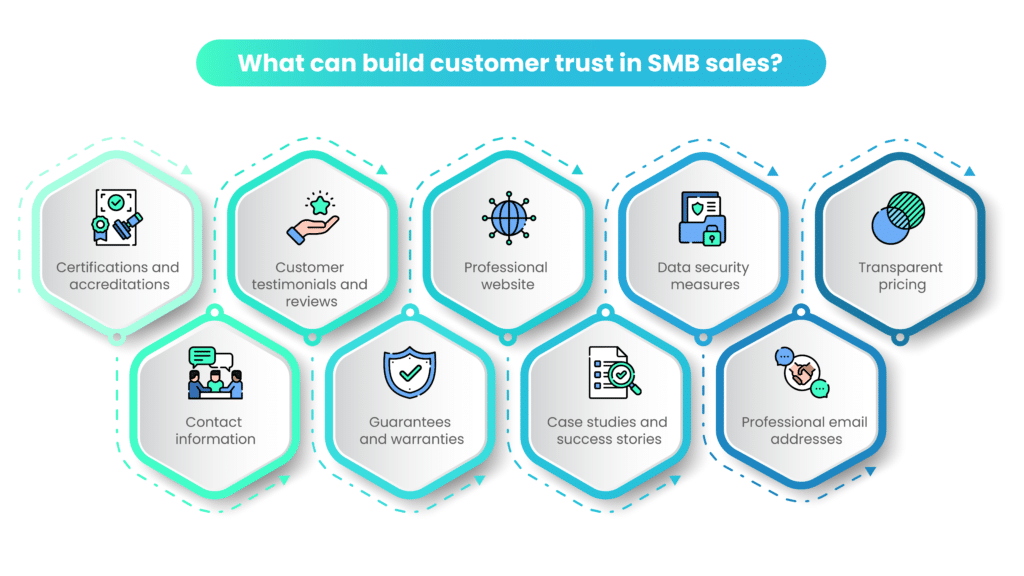
What are the key customer trust signals in SMB sales?

Customer trust signals are the tangible and intangible cues that businesses use to convey their trustworthiness to potential customers. 

In the context of SMB sales, here are some key customer trust signals:

1. Certifications and accreditations

Showcase industry-specific certifications or accreditations that demonstrate your expertise and commitment to quality. For example, an IT services SMB could highlight ISO 27001 certification for information security.

2. Customer testimonials and reviews

Genuine testimonials from satisfied customers and positive online reviews provide social proof of your product or service’s quality and reliability.

3. Professional website

A well-designed, easy-to-navigate website with up-to-date content and contact information reflects professionalism and credibility.

4. Data security measures

Clearly communicate your commitment to data security, especially if you handle sensitive customer information. Display customer trust badges or icons from security providers to reassure customers.

5. Transparent pricing

Clearly list pricing and terms on your website. Avoid hidden fees or surprises, as transparency in pricing builds customer trust.

6. Contact information

Provide easily accessible contact information, including a physical address, phone number, and email address. This helps customers feel that they can reach out if needed.

7. Guarantees and warranties

Offer strong guarantees or warranties that demonstrate your confidence in your product or service. This reduces the perceived risk for customers.

8. Case studies and success stories

Share real-world examples of how your products or services have benefited clients. Case studies provide evidence of your track record.

9. Professional email addresses 

Use professional email addresses (e.g., name@yourbusiness.com) rather than generic or free email providers (like Gmail or Yahoo). 

Consistency is paramount in conveying trustworthiness. Ensure that your trust signals align with your actions and values throughout the customer journey. Inconsistencies can erode customer trust. For example, if you promise excellent customer support but fail to respond to inquiries promptly, it can damage customer trust. Consistency in delivering quality products or services, adhering to ethical business practices, and maintaining transparency across all interactions reinforces your credibility and trustworthiness.

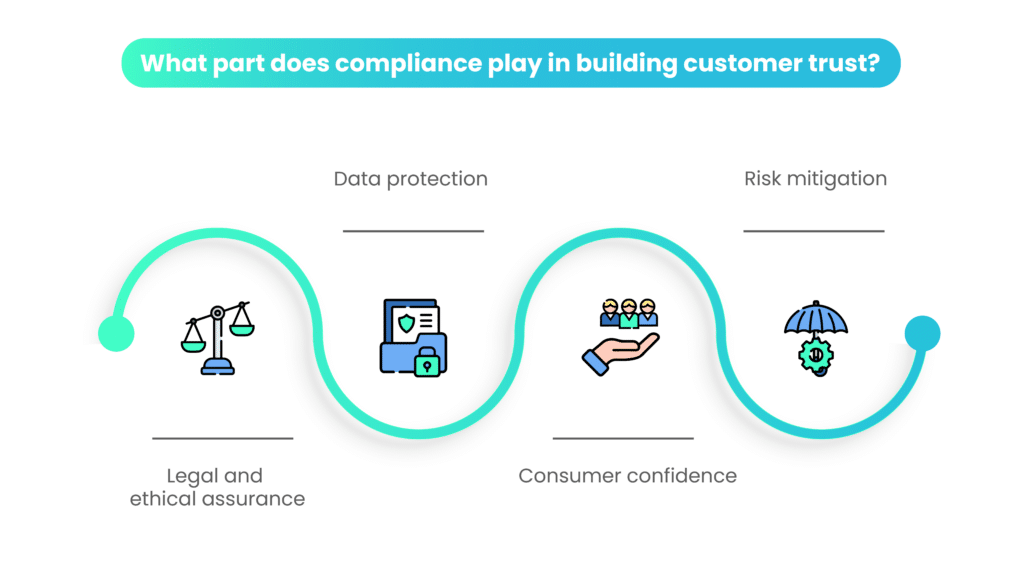
What is the role of compliance in building customer trust?

Compliance with industry regulations isn’t just a legal requirement; it’s a crucial element in the foundation of customer trust. Customers need to know that SMBs operate ethically, within the boundaries of the law, and with a commitment to protecting their interests.

1. Legal and ethical assurance

Compliance demonstrates that your SMB operates within the bounds of the law and adheres to ethical standards. This assurance is particularly important in industries with strict regulations, such as healthcare or finance, where customers need to trust that their sensitive information is handled responsibly.

2. Data protection

In an age where data breaches are a significant concern, complying with data protection regulations (e.g., GDPR, HIPAA) shows your commitment to safeguarding customer data. This, in turn, builds trust by assuring customers that their information is secure.

3. Consumer confidence

Compliance signals to consumers that your business cares about their rights and well-being. When customers see that you take regulatory requirements seriously, they are more likely to trust your brand.

4. Risk mitigation

Compliance helps mitigate legal and financial risks. By following industry regulations, SMBs reduce the likelihood of costly lawsuits or penalties, which can damage reputation and trust.

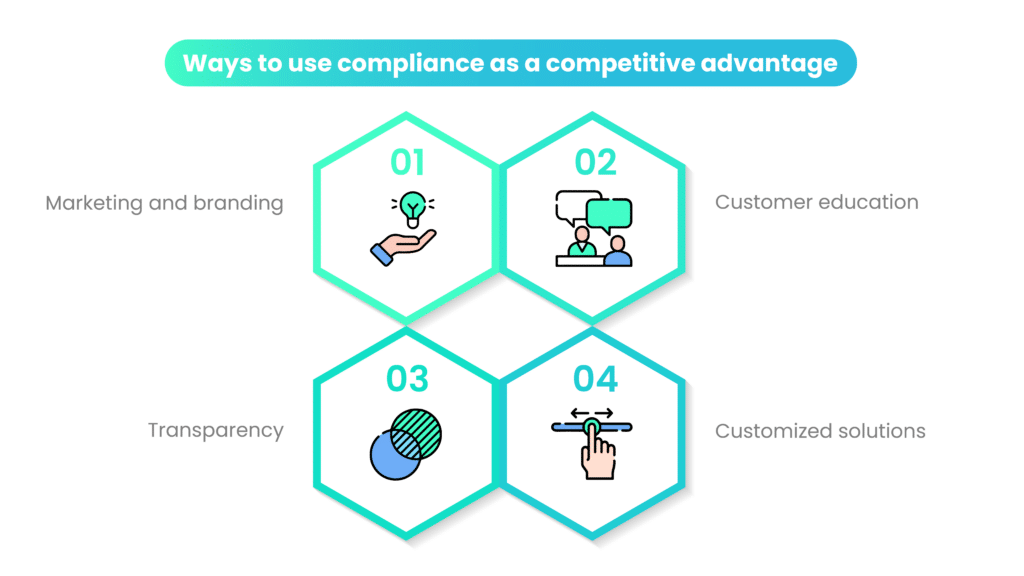
How can SMBs use compliance as a competitive advantage?

Compliance goes beyond mere adherence; it can be a powerful tool in sales and marketing. SMBs can use their commitment to compliance as a unique selling proposition, differentiating themselves from competitors and instilling confidence in potential customers.

1. Marketing and branding

Highlight your commitment to compliance in your marketing materials and branding. Use compliance certifications or badges to showcase your dedication to ethical business practices.

2. Customer education

Educate your customers about the importance of compliance in your industry. Show them how choosing a compliant SMB protects their interests, fostering customer trust in your brand.

3. Transparency

Use compliance as a basis for transparency in your sales processes. Clearly communicate how your business complies with regulations, especially regarding data protection and privacy.

4. Customized solutions 

Tailor your products or services to address compliance-related challenges that your customers may face. Providing compliance-oriented solutions can set you apart from competitors.

What role can Scrut play in building customer trust?

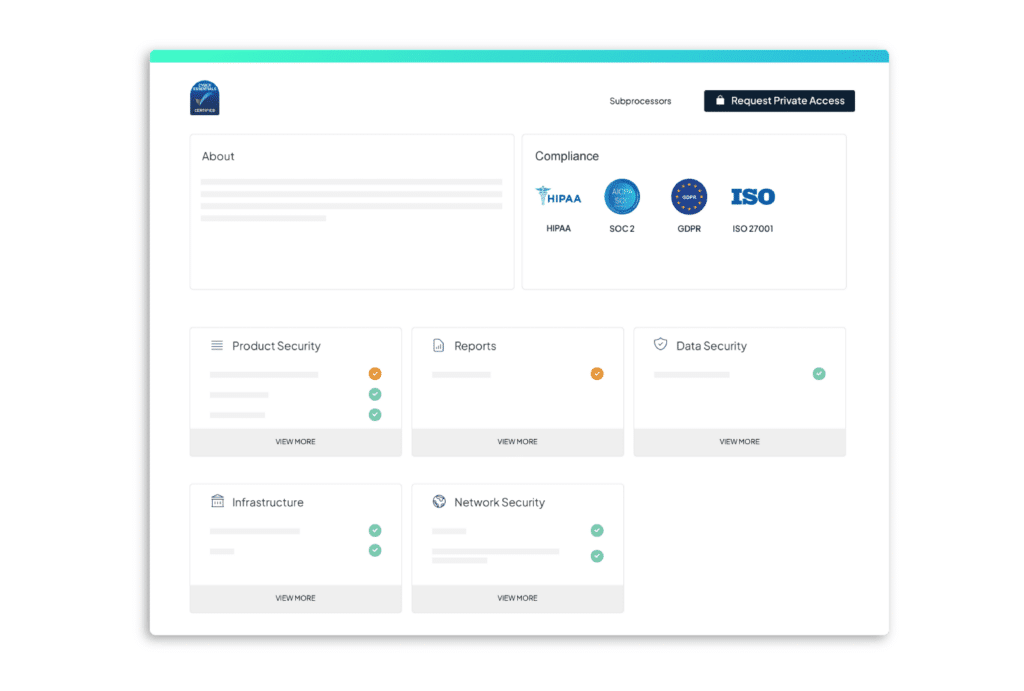
Scrut Trust Vault helps SMBs build customer trust by providing real-time visibility into their compliance posture. The customers can get rid of the manual requests for security questions, reports, and certificates. This helps SMBs accelerate the sales process and build brand identity.

An SMB can create and share a customizable branded security page using the Security Trust Vault to demonstrate its information security posture. The following screenshot shows the example of the page:

As the customer is able to see all the certificates, attestations, and reports in one location in real-time, they can place their trust and expedite the sales process. 

What is the importance of ongoing trust-building in customer relationships?

In customer relationships, trust is a dynamic and enduring element that requires continuous nurturing. We’ll explore why ongoing trust-building is vital for SMBs and the benefits it brings.

1. Long-term value

Trust is the foundation of long-lasting customer relationships. It fosters loyalty and encourages repeat business, which is often more profitable than acquiring new customers.

2. Adaptation to change

Markets, customer needs, and circumstances change over time. Ongoing trust-building allows businesses to adapt to these changes, ensuring they remain relevant and meet evolving customer expectations.

3. Positive reputation 

Consistently building customer trust contributes to a positive reputation in the industry. A strong reputation attracts new customers and solidifies relationships with existing ones.

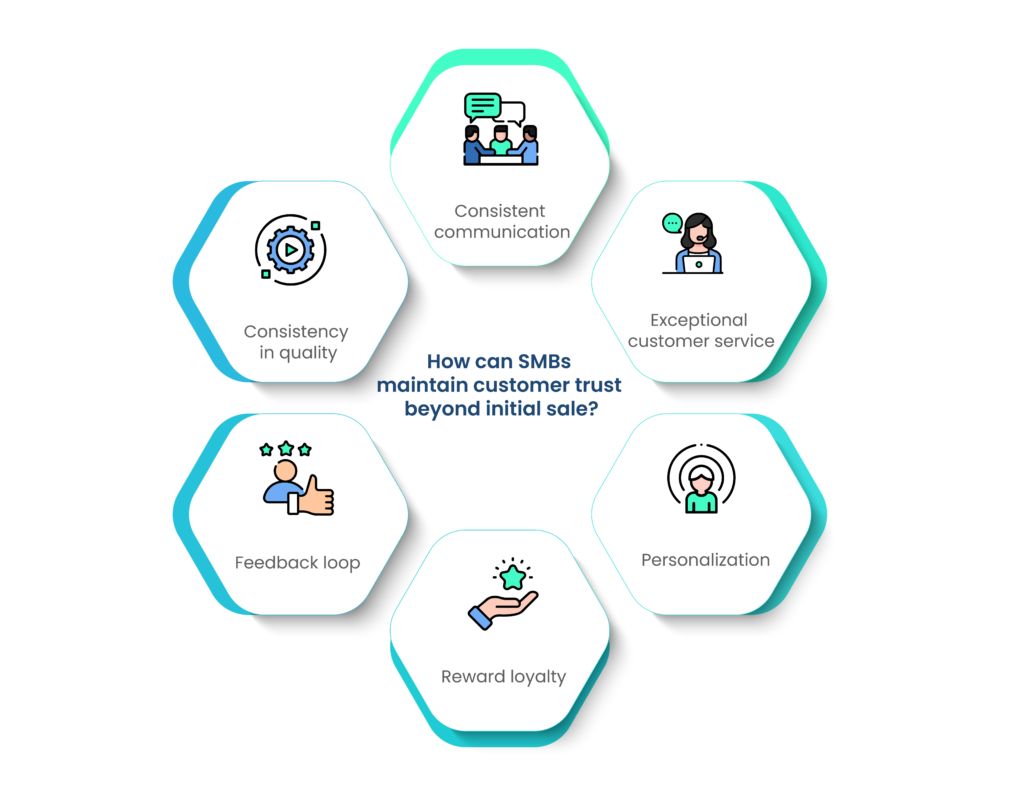
What are the strategies for maintaining customer trust beyond the initial sale?


After the initial transaction, maintaining trust becomes a crucial aspect of sustaining customer relationships. We’ll discuss effective strategies that SMBs can employ to ensure trust endures.

1. Consistent communication 

Stay in touch with customers through regular communication, such as newsletters, updates, and personalized messages. Keep them informed about new products, services, or industry trends.

2. Exceptional customer service

Continue to provide outstanding customer service after the sale. Address inquiries promptly, resolve issues with care, and make customers feel valued.

3. Personalization

Tailor your interactions to individual customer preferences. Remember their previous purchases, preferences, and specific needs to show that you understand and care about them.

4. Reward loyalty

Implement loyalty programs or special offers for returning customers. Recognize and appreciate their continued support with discounts or exclusive access to events or content.

5. Feedback loop 

Encourage feedback and actively seek suggestions for improvement. Customers appreciate knowing their opinions matter and that you’re committed to enhancing their experience.

6. Consistency in quality 

Maintain high standards for the quality of your products or services. Consistency reinforces trust, as customers know they can rely on you for a consistently positive experience.

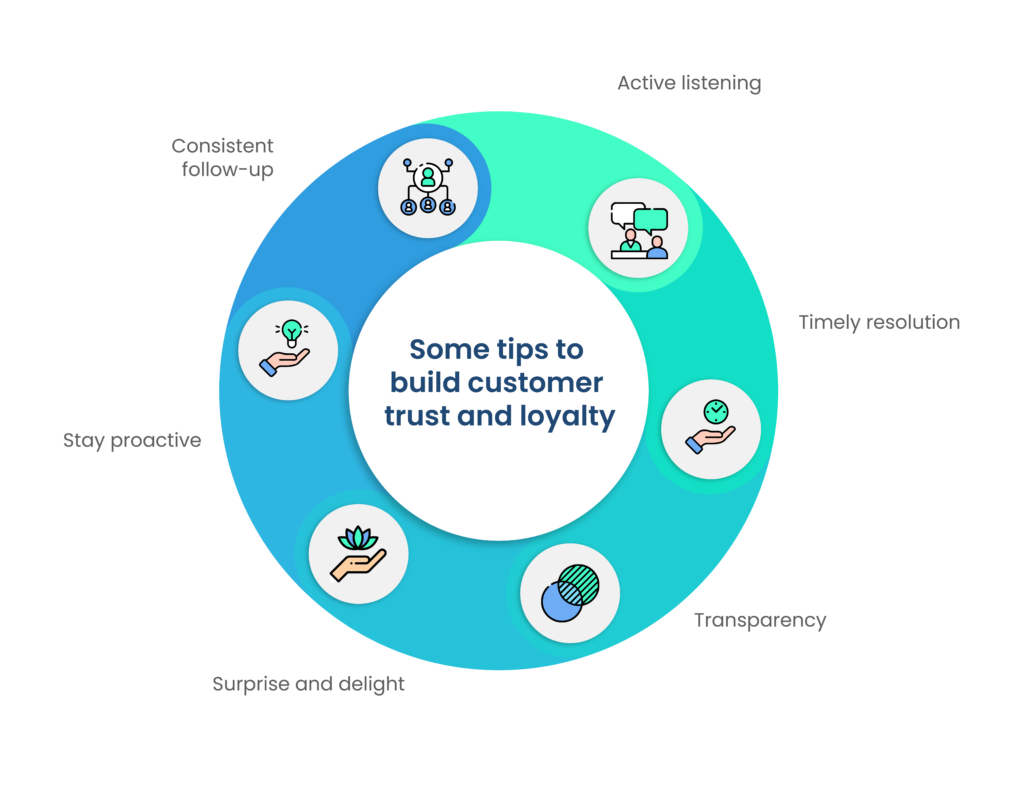
What are the tips for addressing customer concerns and building loyalty?

Addressing customer concerns and fostering loyalty are pivotal in trust-building. In this section, we’ll provide actionable tips on how SMBs can effectively manage concerns and cultivate lasting loyalty among their customer base.

1. Active listening

Pay close attention to customer feedback and concerns. Listen actively, empathize, and acknowledge their issues. This demonstrates your commitment to their satisfaction.

2. Timely resolution

Address customer issues promptly and efficiently. Delays can erode customer trust. Ensure your customer support team is well-trained and empowered to resolve problems effectively.
3. Transparency 

Be transparent about any challenges or issues your business faces. Honesty about setbacks and your efforts to overcome them can enhance trust.

4. Surprise and delight 

Occasionally exceed customer expectations. Surprise customers with unexpected perks, personalized thank-you notes, or exclusive offers to show appreciation.

5. Stay proactive

Anticipate customer needs and reach out before they have to ask for assistance. Proactive support and problem-solving can be powerful loyalty builders.

6. Consistent follow-up 

After resolving an issue, follow up with the customer to ensure they are satisfied with the resolution. This extra step can turn a negative experience into a positive one.

In summary, ongoing trust-building is integral to maintaining strong and enduring customer relationships. By employing strategies that focus on consistent communication, exceptional service, personalization, and responsiveness to customer concerns, SMBs can not only maintain customer trust but also foster loyalty and advocacy among their customer base.

Winding up

In the fierce SMB marketplace, customer trust is the ultimate game-changer. It’s the glue that binds businesses and customers, accelerating sales and unlocking opportunities.

We’ve explored customer trust’s multifaceted nature and its pivotal role for SMBs. Security, compliance, transparency, credibility, and reliability are its building blocks. Trust signals, like certifications and customer testimonials, reinforce it.

Compliance isn’t just a legal box to tick; it’s a trust-building weapon. Tools like Scrut Trust Vault bolster this by showcasing your security posture.

Ongoing trust-building is vital, fostering loyalty and adaptation to change. Consistent communication, exceptional service, personalization, and proactive support maintain customer trust beyond the first sale.

In the SMB world, customer trust isn’t a luxury; it’s a necessity. Embrace it, nurture it, and thrive in this competitive landscape. Customer trust is your currency for success.

Ready to supercharge your trust-building efforts? Experience the power of Scrut Trust Vault today and unlock the full potential of customer trust in your SMB sales journey. Get started now and take your business to the next level!

FAQs

1. What exactly is customer trust in SMB sales?

Customer trust in SMB sales is the level of confidence, credibility, and reliability that customers associate with a small or medium-sized business. It’s the assurance that their needs will be met and their expectations will be exceeded, leading to positive and long-lasting relationships.

2. Why is customer trust more critical for SMBs compared to larger enterprises?

Customer trust is often even more crucial for SMBs because they may lack the extensive brand recognition and resources that larger enterprises have. In a crowded market, customer trust helps SMBs stand out, attract customers, and compete effectively.
3. What are the key stages of trust-building in SMB sales?

Trust-building in SMB sales involves several stages:
Initial contact and awareness: Making a positive first impression.
Establishing credibility: Demonstrating industry expertise and success stories.
Building rapport: Nurturing personal connections with customers.
Consistency and reliability: Delivering on promises consistently.
Transparency and honesty: Open and honest communication.
Fulfillment of commitments: Consistently meeting or exceeding customer expectations.
Post-sale relationship building: Nurturing ongoing relationships and seeking feedback.

4. How can SMBs use compliance as a competitive advantage?

SMBs can use their commitment to compliance as a unique selling proposition by highlighting it in marketing materials, educating customers about its importance, practicing transparency, and tailoring solutions to address compliance-related challenges.

5. What are some strategies for maintaining customer trust beyond the initial sale?

Strategies for maintaining customer trust include consistent communication, exceptional customer service, personalization, rewarding loyalty, encouraging feedback, and ensuring consistency in the quality of products or services.

Authored by

Aayush Ghosh Choudhary
Co-founder & CEO at Scrut

Navigating PCI DSS compliance: A comprehensive checklist

Securing payment card data is paramount in the modern digital landscape. As financial transactions shift to digital platforms, ensuring the protection of payment card data becomes crucial to prevent fraud, maintain consumer trust, and mitigate the escalating threat of cyberattacks targeting sensitive financial information.

Between 2019 and 2021, the global circulation of payment cards witnessed a growth of more than two billion, with projections indicating a continued increase.

The Payment Card Industry Data Security Standard (PCI DSS) serves as the compass for organizations navigating this critical terrain. PCI DSS provides a standardized set of security measures and guidelines to protect cardholder data, ensuring secure transactions and reducing the risk of data breaches within the payment card industry.

In this blog, we present a comprehensive PCI DSS compliance checklist to guide businesses through the essential steps for ensuring the protection of sensitive cardholder information.

Understanding PCI DSS

The PCI DSS stands as a global framework designed to safeguard the integrity and confidentiality of payment card data. 

Enacted to counter the escalating threats to financial transactions in the digital age, PCI DSS outlines a comprehensive set of security requirements and best practices that organizations must adhere to when handling payment card information. 

Its significance lies in creating a standardized and robust security posture, ensuring that entities across the globe implement consistent measures to fortify their payment card environments against cyber threats.

PCI DSS holds universal applicability, transcending geographical boundaries to establish a common language for secure transactions worldwide. Its global adoption emphasizes the interconnected nature of the modern financial ecosystem, where seamless and secure transactions are paramount. By adhering to PCI DSS, organizations contribute to a collective effort to foster trust and confidence in the security of payment card transactions on a global scale. 

This standard not only serves as a shield against potential data breaches but also underscores the collaborative responsibility of the payment card industry to uphold the highest standards of security, ultimately fortifying the foundation of secure digital transactions across diverse regions and industries.

Failing to adhere to PCI requirements may lead to significant repercussions. In the event of a data breach and subsequent investigations revealing non-compliance, fines may extend from $5,000 to $10,000 per month until compliance is achieved. Additionally, the potential reputational harm resulting from a data breach due to neglecting PCI DSS-recommended precautions should not be overlooked.

PCI DSS compliance requirements step-by-step

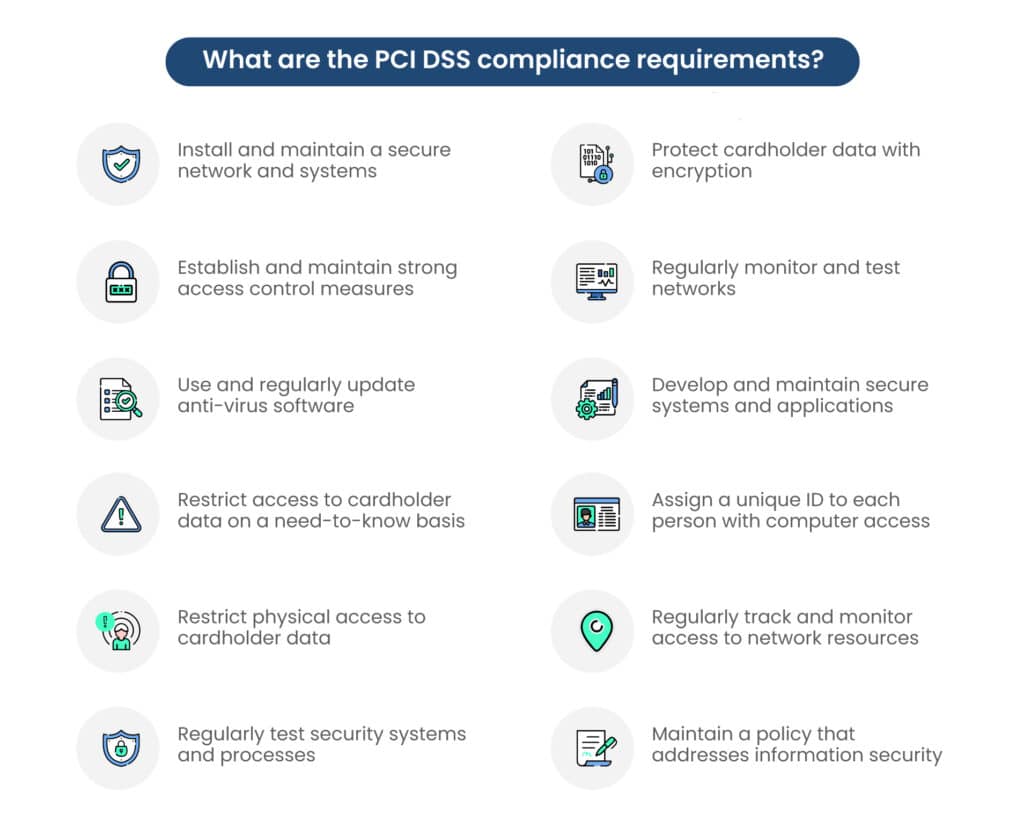
Here are the 12 requirements of PCI DSS:

1. Install and maintain a secure network and systems

  • Implement robust security measures for network infrastructure.
  • Regularly update and patch systems to address vulnerabilities.

2. Protect cardholder data with encryption

  • Encrypt sensitive information during transmission and storage.
  • Use strong encryption algorithms to safeguard cardholder data.

3. Establish and maintain strong access control measures

  • Implement strict access controls based on the principle of least privilege.
  • Authenticate and authorize individuals accessing cardholder data.

4. Regularly monitor and test networks

  • Implement continuous monitoring to detect and respond to security incidents.
  • Conduct regular penetration testing and vulnerability assessments.

5. Use and regularly update anti-virus software

  • Deploy and maintain anti-virus software on all systems.
  • Regularly update virus definitions to protect against new threats.

6. Develop and maintain secure systems and applications

  • Follow secure coding practices for software development.
  • Regularly update and patch applications to address security vulnerabilities.

7. Restrict access to cardholder data on a need-to-know basis

  • Limit access to cardholder data to individuals who require it for their job roles.
  • Implement strong authentication mechanisms for access.

8. Assign a unique ID to each person with computer access

  • Ensure that each user has a unique identifier for system access.
  • Maintain proper user account management and disable inactive accounts.

9. Restrict physical access to cardholder data

  • Implement physical security measures to prevent unauthorized access to systems and data.
  • Control and monitor physical access to data storage locations.

10. Regularly track and monitor access to network resources

  • Implement logging mechanisms to track user activities and access.
  • Regularly review and analyze logs to identify and respond to suspicious activities.

11. Regularly test security systems and processes

  • Conduct regular security testing, including penetration testing and vulnerability assessments.
  • Ensure that security measures and processes are effective and up-to-date.

12. Maintain a policy that addresses information security

  • Establish and maintain an information security policy.
  • Regularly review and update the policy to address emerging threats and changes in the business environment.

PCI DSS compliance checklist

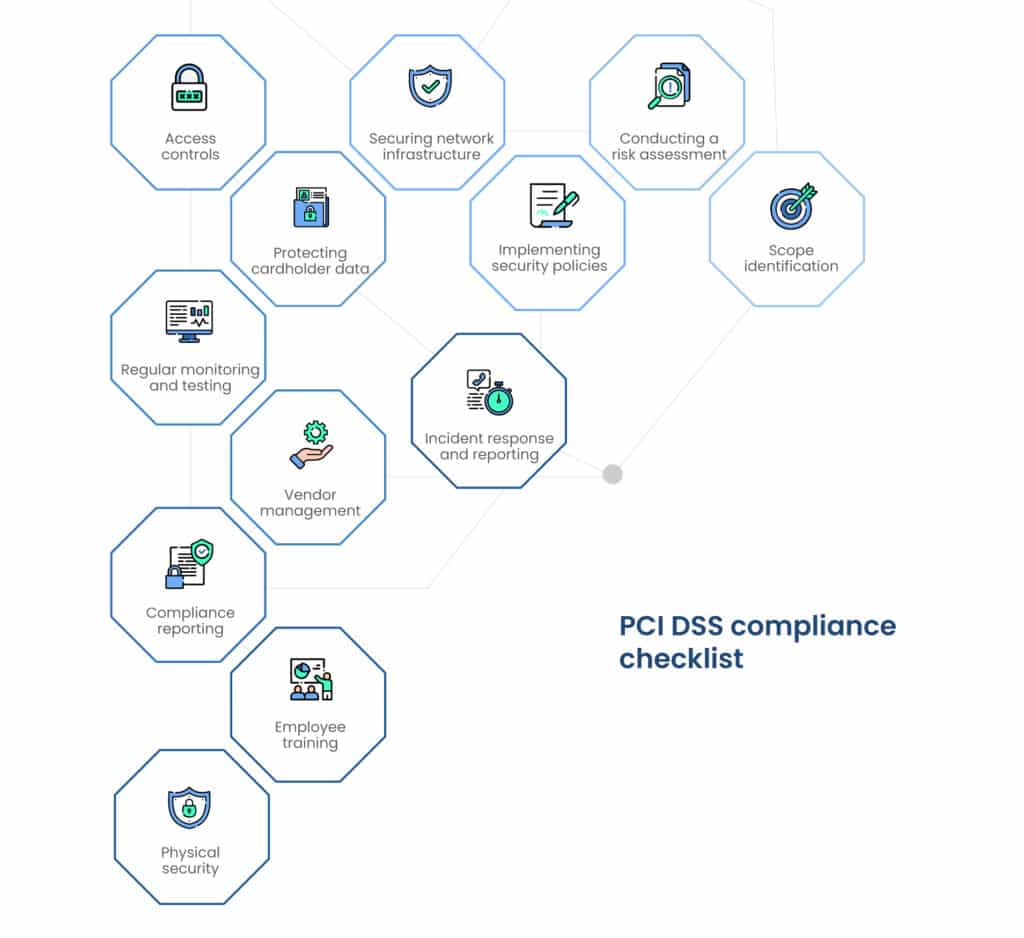
To ensure seamless adherence to PCI DSS compliance requirements, organizations often rely on a comprehensive PCI DSS checklist

This PCI DSS audit checklist serves as a systematic guide, encompassing key elements that businesses must assess and implement to meet the stringent security standards set by the PCI DSS. 

This checklist should be adapted to the specific requirements and nuances of individual business environments.

1. Scope identification

  • Define Cardholder Data Environment (CDE): Clearly outline and understand the boundaries of your Cardholder Data Environment, encompassing all systems, networks, and processes that store, process, or transmit cardholder data. This includes not only databases and applications but also any third-party systems connected to the cardholder data flow.
  • Segmentation and isolation: Implement network segmentation to isolate the CDE from other non-payment systems. This limits the scope of PCI DSS requirements, making compliance efforts more focused and efficient.
  • Identify data flows: Map the flow of cardholder data throughout your organization, from point of entry to storage and eventual disposal. Understand how data moves across different systems and ensure that all these touchpoints are included in the defined scope.
  • Third-party inclusion: If third-party service providers have access to cardholder data, ensure their systems and processes are also within the scope. This involves assessing and validating the security measures implemented by these external entities.
  • Regularly review and update: The CDE is dynamic, and changes in systems or processes can impact its scope. Regularly review and update the defined scope to accommodate any changes in the organization’s infrastructure or business processes. This ongoing assessment ensures that the scope remains accurate and reflective of the current environment.

2. Conducting a risk assessment

  • Identify and prioritize risks: Conduct a thorough risk assessment to identify potential vulnerabilities and threats to cardholder data within the defined scope. Prioritize risks based on their likelihood and potential impact on the security of payment card information.
  • Assess impact and likelihood: Evaluate the potential impact of identified risks on the confidentiality, integrity, and availability of cardholder data. Additionally, assess the likelihood of these risks materializing, taking into account current security controls and mitigation measures.
  • Document findings: Document the findings of the risk assessment, including identified vulnerabilities, potential threats, and their corresponding risk levels. This documentation serves as a foundation for developing risk mitigation strategies and informs decision-making throughout the compliance process.
  • Risk mitigation strategies: Develop and implement risk mitigation strategies to address identified vulnerabilities and threats. These strategies may include the enhancement of security controls, the implementation of new safeguards, or changes to existing processes to reduce the overall risk level.
  • Regular review and update: The risk landscape is dynamic, with new threats emerging and business environments evolving. Regularly review and update the risk assessment to ensure it remains aligned with the organization’s changing circumstances. This iterative process allows for ongoing risk management and enhances the organization’s ability to adapt to evolving security challenges.

3. Implementing security policies

  • Establish comprehensive security policies: Develop and document comprehensive security policies that align with PCI DSS requirements. These policies should provide clear guidelines and standards for protecting cardholder data and maintaining a secure environment.
  • Cover key security areas: Ensure that security policies cover key areas such as access controls, encryption, network security, and incident response. Address each requirement of PCI DSS in a detailed and specific manner to guide employees and stakeholders in complying with security standards.
  • Communicate policies across the organization: Disseminate security policies throughout the organization to ensure that all relevant personnel are aware of and understand the established security standards. This involves conducting training sessions, distributing written materials, and incorporating policies into the employee onboarding process.
  • Regularly review and update: Security threats and technologies evolve over time. Regularly review and update security policies to reflect changes in the threat landscape, the organization’s infrastructure, and the regulatory environment. This ensures that security measures remain effective and aligned with the latest industry best practices.
  • Enforce compliance: Establish mechanisms to enforce compliance with security policies. This includes monitoring and auditing processes to ensure that employees and stakeholders adhere to the defined security standards. Enforcing compliance contributes to the consistent application of security measures across the organization.

4. Securing network infrastructure

  • Implement strong network security measures: Strengthen your organization’s network security by implementing robust measures such as firewalls, intrusion detection/prevention systems, and secure configurations. These measures contribute to creating a resilient defense against unauthorized access and potential threats to cardholder data.
  • Network segmentation: Isolate the Cardholder Data Environment (CDE) through network segmentation. This ensures that systems storing or processing cardholder data are separate from non-payment systems, reducing the overall scope of PCI DSS compliance and enhancing the security of sensitive information.
  • Regularly monitor and update: Establish continuous monitoring mechanisms to track network activity, detect anomalies, and respond promptly to potential security incidents. Regularly update and patch systems to address vulnerabilities and adapt to emerging threats, maintaining a proactive approach to network security.
  • Access control measures: Implement stringent access controls for network resources, ensuring that only authorized individuals have access to sensitive information. Regularly review and update user access permissions to align with the principle of least privilege, limiting access to what is necessary for job functions.
  • Secure configuration management: Enforce secure configurations for network devices, servers, and applications. Follow industry best practices and vendor guidelines to ensure that systems are configured securely, reducing the risk of exploitation by malicious actors. Regularly assess and update configurations to maintain a robust security posture.

5. Protecting cardholder data

  • Utilize encryption and tokenization: Implement strong encryption and tokenization mechanisms to protect cardholder data throughout its lifecycle. Encryption ensures that sensitive information is transformed into unreadable formats, while tokenization replaces cardholder data with unique tokens, reducing the risk of exposure in the event of a breach.
  • Mask sensitive information: Employ data masking techniques to conceal sensitive information within the organization. This adds an additional layer of protection, particularly during processes where access to the full cardholder data is not essential for legitimate business functions.
  • Control access to stored data: Limit access to stored cardholder data to only those individuals who require it for their specific job roles. Enforce strict access controls, incorporating the principle of least privilege to minimize the risk of unauthorized access or internal threats.
  • Regularly review and update security measures: Periodically review and update encryption, tokenization, and data masking measures to align with evolving security standards and technological advancements. This proactive approach ensures that cardholder data remains protected against emerging threats.
  • Secure transmission of data: Implement secure methods for transmitting cardholder data, such as encrypted channels and secure protocols. This safeguards information during transit, preventing interception and unauthorized access by malicious entities attempting to exploit vulnerabilities in communication channels.

6. Access controls

  • Enforce strict access controls: Implement and enforce access controls to restrict access to cardholder data based on the principle of least privilege. This ensures that individuals have access only to the information necessary for their specific job responsibilities, minimizing the risk of unauthorized access.
  • Regularly review and update user access permissions: Conduct regular reviews of user access permissions to cardholder data. This includes removing access for individuals who no longer require it and updating permissions to reflect changes in job roles or responsibilities. Regular reviews contribute to maintaining a secure and well-regulated access environment.
  • Authentication measures: Implement strong authentication measures, such as multi-factor authentication, to enhance the verification process for individuals accessing cardholder data. Multi-factor authentication adds an additional layer of security, requiring users to provide multiple forms of identification before gaining access.
  • Access monitoring and logging: Implement robust monitoring and logging mechanisms to track access to cardholder data. Regularly review access logs to detect and respond to any suspicious activities or unauthorized access attempts promptly. Monitoring access contributes to maintaining a vigilant security posture.
  • Education and awareness: Provide education and awareness programs for employees regarding access controls and the importance of securing cardholder data. Ensure that employees understand their role in maintaining secure access and report any unusual activities promptly. Education fosters a culture of security awareness within the organization.

7. Regular monitoring and testing

  • Continuous monitoring: Establish continuous monitoring mechanisms to actively track security controls, network activities, and potential threats. This ongoing surveillance allows for the timely identification of anomalies or security incidents, enabling prompt response and mitigation.
  • Vulnerability assessments: Conduct regular vulnerability assessments to identify weaknesses in systems, applications, and processes that could be exploited by attackers. Addressing vulnerabilities promptly is crucial for maintaining a robust security posture and reducing the risk of unauthorized access.
  • Penetration testing: Periodically perform penetration testing to simulate real-world cyber-attacks and assess the effectiveness of security controls. This proactive testing helps identify potential weaknesses that might not be apparent through other means, allowing organizations to strengthen their defenses.
  • Access log monitoring: Regularly review access logs and security event logs to detect and investigate any unusual activities or signs of unauthorized access. Log monitoring provides insights into the security status of systems and aids in the identification of potential security incidents.
  • Incident response testing: Test the incident response plan through simulated exercises to ensure that the organization is well-prepared to handle security incidents. These tests should involve key personnel and assess the effectiveness of communication, coordination, and mitigation strategies during a simulated incident.

8. Incident response and reporting

  • Develop an incident response plan: Create a comprehensive incident response plan outlining the steps to be taken in the event of a security incident involving cardholder data. Clearly define roles and responsibilities, communication channels, and escalation procedures.
  • Personnel training: Train relevant personnel on the incident response plan to ensure a coordinated and effective response to security incidents. Regular training sessions help personnel understand their roles and responsibilities, fostering a proactive and well-prepared response.
  • Establish clear reporting channels: Define clear reporting channels for employees to quickly and efficiently report any suspicious activities or potential security incidents. Rapid reporting is essential for the swift identification and containment of security threats.
  • Incident investigation: Develop procedures for investigating security incidents, including the analysis of access logs, system alerts, and other relevant data. Thorough investigations help determine the scope of the incident, identify the root cause, and inform appropriate remediation measures.
  • Regular review and update: Periodically review and update the incident response plan to incorporate lessons learned from simulated exercises and real incidents. An agile and adaptive incident response plan ensures continual improvement and effectiveness in the face of evolving security challenges.

9. Vendor management

  • Assess third-party security practices: Evaluate the security practices of third-party vendors who have access to or handle cardholder data. Ensure that these vendors adhere to PCI DSS requirements and maintain robust security measures to protect sensitive information.
  • Include security requirements in contracts: Establish contractual agreements with third-party vendors that clearly outline security requirements and expectations. These contracts should emphasize the importance of maintaining the confidentiality and integrity of cardholder data.
  • Regularly monitor vendor compliance: Implement a regular monitoring process to ensure ongoing compliance with security requirements by third-party vendors. This involves conducting periodic assessments, audits, or reviews of their security practices.
  • Incident response coordination: Collaborate with third-party vendors on incident response planning. Ensure that vendors are prepared to respond effectively to security incidents involving cardholder data, aligning their incident response capabilities with the organization’s expectations.
  • Review and update vendor agreements: Regularly review and update vendor agreements to reflect changes in security standards, business relationships, or regulatory requirements. Keeping agreements current ensures that security expectations remain aligned with evolving circumstances.

10. Compliance reporting

  • Compile compliance reports: Regularly compile and submit compliance reports as required by PCI DSS. Ensure that these reports accurately reflect the organization’s adherence to the established security standards and provide evidence of compliance.
  • Maintain documentation: Keep comprehensive documentation of all compliance efforts, assessments, and validation results. Well-maintained documentation serves as a record of the organization’s commitment to maintaining a secure environment and facilitates the audit process.
  • Address non-compliance issues: Promptly address any identified non-compliance issues and take corrective actions. This involves implementing changes to security controls, policies, or processes to align with PCI DSS requirements and prevent recurrence of non-compliance.
  • Regular internal audits: Conduct regular internal audits to assess the organization’s ongoing compliance with PCI DSS. Internal audits help identify areas for improvement, validate the effectiveness of security measures, and ensure continuous alignment with the standard.
  • Prepare for external audits: Be prepared for external audits by maintaining up-to-date documentation, evidence of compliance, and a thorough understanding of the organization’s security posture. A proactive approach facilitates a smoother external audit process and demonstrates a commitment to maintaining PCI DSS compliance.

11. Employee training

  • Educate employees on PCI DSS requirements: Provide comprehensive training for employees to ensure a clear understanding of PCI DSS requirements and their role in maintaining compliance. This includes awareness of security policies, access controls, and the significance of protecting cardholder data.
  • Regular training sessions: Conduct regular training sessions to keep employees informed about evolving security threats, updates to PCI DSS standards, and changes in organizational policies. Ongoing education fosters a culture of security awareness and accountability among staff.
  • Phishing awareness programs: Implement phishing awareness programs to educate employees on recognizing and mitigating phishing attacks. Since social engineering is a common tactic used by cybercriminals, employees should be vigilant and equipped to identify potential threats.
  • Security incident reporting training: Train employees on the proper procedures for reporting security incidents promptly. This includes clear guidance on who to contact, what information to provide, and the importance of swift reporting to mitigate potential risks.
  • Assessment of training effectiveness: Periodically assess the effectiveness of employee training programs by conducting evaluations, quizzes, or simulated exercises. This ensures that employees retain crucial knowledge and are well-prepared to contribute to the organization’s overall security posture.

12. Physical security

  • Control physical access to facilities: Implement measures to control and restrict physical access to facilities where cardholder data is processed, stored, or transmitted. This includes secure entry points, access cards, and surveillance systems to prevent unauthorized individuals from gaining physical access.
  • Secure storage of physical assets: Safeguard physical assets such as servers, terminals, and devices that handle cardholder data. Ensure these assets are stored in secure locations with limited access, protecting them from theft, tampering, or unauthorized use.
  • Monitor physical access: Establish monitoring mechanisms, such as security cameras and access logs, to track and record physical access to sensitive areas. Regularly review these logs to detect and respond to any suspicious activities or unauthorized entry.
  • Employee awareness of physical security: Educate employees about the importance of physical security measures and their role in maintaining a secure environment. This includes promoting the awareness of badge protocols, reporting lost or stolen access cards, and recognizing and reporting unfamiliar individuals.
  • Regular security audits: Conduct regular security audits of physical security measures to assess their effectiveness and identify areas for improvement. Physical security audits help ensure that controls are consistently enforced and aligned with PCI DSS requirements.

Wrapping up

In the ever-evolving landscape of digital transactions, PCI DSS compliance stands as a linchpin in securing payment card data. By diligently following this comprehensive checklist, organizations can not only meet compliance requirements but also fortify their defenses, instilling confidence in customers and stakeholders alike. 

Get in touch with Scrut and embrace the commitment to safeguarding cardholder information, and navigate the path to PCI DSS compliance with confidence and precision.

Frequently Asked Questions

1. What is the primary purpose of PCI DSS compliance?

The primary purpose of PCI DSS compliance is to establish and maintain a secure environment for handling payment card information. It sets standards and requirements to ensure the confidentiality and integrity of cardholder data, ultimately reducing the risk of data breaches and securing electronic payment transactions.

2. How can organizations determine the scope of their Cardholder Data Environment (CDE)?

Organizations can determine the scope of their CDE by identifying all systems and processes that handle cardholder data. This involves understanding where payment card data is stored, processed, and transmitted within the organization. A clear understanding of the CDE is essential for effective compliance efforts.

3. What security measures should be implemented to protect cardholder data in accordance with PCI DSS?

PCI DSS requires the implementation of various security measures, including encryption, access controls, network security, and regular monitoring. These measures aim to protect cardholder data throughout its lifecycle, from collection to storage and transmission.

4. What steps are involved in conducting a PCI DSS risk assessment?

Conducting a PCI DSS risk assessment involves identifying potential vulnerabilities and threats to the cardholder data environment. Organizations must assess the potential impact of security incidents and prioritize risk mitigation strategies. This process helps in understanding and addressing security risks effectively.
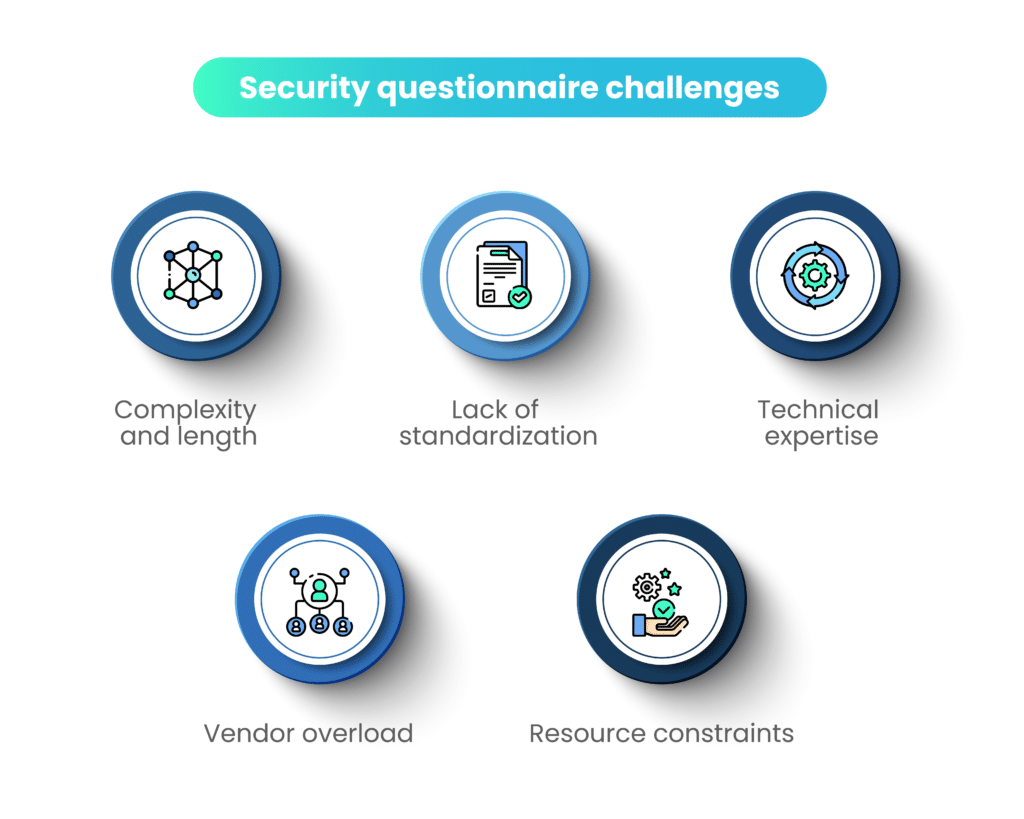
5. How does PCI DSS compliance impact third-party vendor relationships?

PCI DSS compliance extends to third-party vendors that have access to cardholder data. Organizations must assess the security practices of their vendors, ensure compliance with PCI DSS requirements, and establish contractual agreements that prioritize data security. The HIPAA Omnibus Rule holds business associates directly accountable for compliance, emphasizing the importance of understanding covered entities for overall adherence.

Authored by

Aayush Ghosh Choudhary
Co-founder & CEO at Scrut

Guardians of healthcare data: Mastering HIPAA audit trail requirements

In an era where healthcare data is increasingly digitized, the industry faces a pressing challenge—ensuring the security and privacy of patient information. 

Healthcare organizations grapple with the critical task of not only delivering quality care but also safeguarding patient information against malicious actors seeking unauthorized access. This conundrum necessitates a robust solution that not only addresses the current challenges but also anticipates and mitigates future threats to healthcare data.

Enter HIPAA Audit Trail requirements, a crucial component of the Health Insurance Portability and Accountability Act’s (HIPAA) Security Rule. By mandating the logging of various activities related to electronic protected health information (ePHI), user access, and system changes, HIPAA Audit Trail requirements offer a proactive approach to healthcare data security. This comprehensive audit trail enhances visibility into data interactions, facilitates the swift detection of unauthorized access, and enables organizations to respond promptly to mitigate risks.

In this blog, we will delve deeper into the key components of HIPAA Audit Trail requirements, understanding how they contribute to the overall security posture of healthcare organizations.  

Brief overview of HIPAA

The Health Insurance Portability and Accountability Act (HIPAA), enacted in 1996, is a landmark piece of legislation designed to safeguard sensitive patient information within the healthcare industry. 

HIPAA emerged in response to the evolving healthcare landscape, recognizing the need for standardized practices in handling electronic health information.  

Since then, it has evolved to address technological advancements, introducing the Health Information Technology for Economic and Clinical Health (HITECH) Act and the Omnibus Rule.

HIPAA’s core objectives include ensuring privacy rights, fostering transparency, and establishing comprehensive security standards for ePHI. The regulations apply to covered entities—healthcare providers, plans, and clearinghouses—and extends to business associates. The HIPAA Omnibus Rule holds business associates directly accountable for compliance, emphasizing the importance of understanding covered entities for overall adherence.

HIPAA enforcement includes civil and criminal penalties for non-compliance. The Office for Civil Rights (OCR) within the Department of Health and Human Services (HHS) plays a pivotal role in investigating violations and imposing penalties.

Non-compliance not only leads to legal consequences but can also tarnish the reputation of healthcare organizations. Trust is paramount in healthcare, and breaches of patient privacy erode that trust.

Key HIPAA rules and standards

HIPAA Rule/StandardDescription
Privacy Rule1. Patient rights: Ensures individuals have rights over their health information, including the right to access, request corrections, and control disclosure. 2. Notice of privacy practices: Requires covered entities to provide patients with a notice describing how their health information will be used and disclosed. 3. Minimum necessary standard: Mandates that covered entities disclose only the minimum necessary information for the intended purpose.
Security Rule1. Administrative safeguards: Specifies requirements for security management processes, workforce training, risk analysis, and contingency planning. 2. Physical safeguards: Outlines standards for protecting physical access to ePHI, including facility security and workstation use. 3. Technical safeguards: Addresses the use of technology to protect ePHI, including access controls, audit controls, and encryption.
Breach Notification Rule1. Definition of breach: Defines what constitutes a breach and mandates notification to affected individuals, the Secretary of Health and Human Services (HHS), and, in some cases, the media. 2. Timeliness of notification: Requires covered entities to notify affected individuals and HHS promptly following the discovery of a breach.
Enforcement Rule1. Penalties for non-compliance: Outlines the penalties for violations, ranging from civil monetary penalties to criminal penalties for willful neglect. 2. Investigations and audits: Grants HHS the authority to investigate complaints and conduct audits to ensure compliance.
HITECH Act1. Electronic Health Records (EHR) Incentive Program: Encourages the adoption of electronic health records through incentives while strengthening privacy and security provisions. 2. Accountability and enforcement: Strengthens HIPAA enforcement by introducing higher penalties and extending liability to business associates.
Omnibus Rule1. Modifications and clarifications: Consolidates several HIPAA provisions, including the modifications introduced by the HITECH Act, to provide a comprehensive and unified set of rules. 2. Business associate responsibilities: Extends HIPAA compliance requirements to business associates and their subcontractors.
Patient Access Rule1. Right of access: Reinforces patients’ right to access their health information in a timely manner, including the ability to obtain electronic copies. 2. Fees for access: Establishes limitations on fees that covered entities can charge for providing access to PHI.

Why audit trails matter in healthcare

1. Upholding patient trust

Audit trails play a pivotal role in safeguarding patient privacy, building and maintaining trust between healthcare providers and their patients. 

Patients entrust their sensitive health information to healthcare organizations, and robust audit trails ensure that this information remains confidential and secure.

2. Monitoring access to patient data

Audit trails enable healthcare organizations to monitor and track who accesses patient records, when, and for what purpose.

Unauthorized access or suspicious activities can be promptly detected, allowing for immediate investigation and mitigation.

3. Mitigating insider threats

Internal threats to patient privacy, whether intentional or unintentional, can be identified through audit trail data.

Monitoring user activities helps prevent insider threats and ensures that only authorized personnel have access to sensitive health information.

4. Compliance with HIPAA regulations

Audit trails are a fundamental component of compliance with the Health Insurance Portability and Accountability Act (HIPAA).

Failure to implement and maintain effective audit trails may result in legal consequences, including fines and penalties.

5. Demonstrating due diligence

Robust audit trails serve as a demonstration of due diligence in protecting patient information.

In the event of an audit or investigation, comprehensive audit trail data can provide evidence of compliance and adherence to regulatory requirements.

6. Legal defensibility

In case of legal disputes or allegations of data breaches, well-documented audit trails can be crucial for establishing a legal defense.

Accurate and detailed audit logs contribute to the organization’s ability to prove adherence to privacy and security standards.

7. Early detection of security incidents

Audit trails serve as a proactive security measure, facilitating the early detection of security incidents.

Timely identification allows healthcare organizations to respond swiftly, minimizing the potential impact of breaches.

8. Operational continuity

By monitoring access and system activities, audit trails contribute to the operational continuity of healthcare organizations.

Swift identification and resolution of security issues ensure uninterrupted healthcare services.

9. Reputation management

A strong commitment to patient privacy, supported by effective audit trails, contributes to a positive organizational reputation.

Trustworthy healthcare organizations are better positioned to attract and retain patients.

HIPAA audit trail requirements

Within the broader framework of HIPAA, the audit trail holds a critical role in ensuring accountability, transparency, and the ability to trace any unauthorized access or alterations to patient information.

HIPAA does not explicitly outline detailed technical specifications for audit trails for a HIPAA-compliant audit trail, but it does establish requirements and expectations for safeguarding PHI. 

The Security Rule, under HIPAA, is particularly relevant to audit trail requirements, emphasizing the need for covered entities to implement policies and procedures to protect ePHI. 

Here are key aspects related to audit trails as outlined by HIPAA:

1. Access controls

Covered entities must implement policies and procedures to restrict access to ePHI only to authorized individuals or software programs.

Unauthorized access to patient information poses a significant threat to privacy and security. Access controls, including user authentication and role-based access, help prevent unauthorized personnel from viewing or altering sensitive data.

Covered entities must implement procedures to verify that a person or entity seeking access to ePHI is the one claimed. 

Access to ePHI should be restricted based on job responsibilities and the principle of least privilege. This ensures that individuals only have access to the information necessary for their specific roles, reducing the risk of unauthorized disclosures.

2. Audit controls

Covered entities are required to implement hardware, software, and/or procedural mechanisms that record and examine activity in information systems that contain or use ePHI.

Audit controls are essential for monitoring and tracking user activities related to ePHI. This helps in identifying and responding to security incidents promptly, ensuring the integrity of patient information.

3. Integrity controls

Covered entities must implement policies and procedures to ensure the integrity of ePHI, protecting it from improper alteration or destruction.

Maintaining the integrity of patient data is crucial for accurate and reliable healthcare records. Integrity controls, such as the use of hashing algorithms, help detect and prevent unauthorized modifications to electronic health records.

Covered entities should implement mechanisms to ensure the integrity and, if applicable, encryption of ePHI. This helps safeguard against unauthorized alterations or access to patient data, enhancing data integrity and security.

4. Workforce training and management

Covered entities must provide training to their workforce regarding the policies and procedures they have in place to comply with the Security Rule.

Well-trained staff members are less likely to engage in actions that could compromise the security of ePHI. Training fosters awareness about the importance of maintaining privacy and complying with security policies.

5. Documentation and records

Covered entities must maintain documentation of their security policies and procedures and retain the required records for six years.

Documentation serves as evidence of compliance and provides a reference point for internal audits and external investigations. It also aids in the continuous improvement of security measures.

Covered entities must retain audit trail records for a specified period (at least six years).

Maintains a historical record of system activity, supporting internal audits, compliance assessments, and potential investigations. 

Regular reviews and analyses of audit trail information should be conducted. This helps identify patterns or anomalies in user activity, facilitating proactive responses to potential security threats or breaches.

Systems must generate accurate and synchronized timestamps for recorded events in the audit trail. This ensures the chronological accuracy of the audit trail, aiding in investigations and establishing a timeline of events.

6. Incident Response

Covered entities must have procedures in place to address security incidents, including a response and reporting mechanism.

Timely detection and response to security incidents are crucial for mitigating potential harm and preventing further unauthorized access. Incident response plans contribute to overall cybersecurity resilience.

How to implement a HIPAA-compliant audit trail system

By carefully selecting and integrating technology, ensuring staff training and awareness, and establishing continuous monitoring and review processes, healthcare organizations can strengthen their HIPAA-compliant audit trail systems, mitigating risks and safeguarding the privacy and security of patients’ electronic health information.

1. Select the right technology

A. Electronic Health Record (EHR) Integration

Electronic Health Records (EHRs) are the backbone of modern healthcare information systems. Integrating audit trail functionalities within EHR systems is a strategic approach to ensure seamless monitoring and recording of access to patient information.

Benefits:

  • Unified platform: Integration with EHRs provides a centralized system for monitoring and managing audit trail data alongside patient records.
  • Real-time tracking: Enables real-time tracking of user activities, facilitating prompt detection and response to potential security incidents.
  • Workflow integration: Incorporating audit trail features into EHR workflows ensures minimal disruption to healthcare processes.

Considerations:

  • Compatibility: Ensure that the selected EHR system supports the necessary audit trail functionalities as per HIPAA requirements.
  • Customization: Evaluate the system’s ability to tailor audit trail settings to the specific needs and policies of the healthcare organization.

B. Security Information and Event Management (SIEM) Systems

SIEM systems are specialized tools designed to aggregate and analyze security events across an organization’s IT infrastructure. Integrating an SIEM solution into the healthcare IT environment enhances the overall security posture and aids in maintaining HIPAA compliance.

Benefits:

  • Centralized logging: SIEM systems centralize logs from various sources, including network devices, servers, and applications, providing a comprehensive view of security events.
  • Threat detection: Advanced threat detection capabilities enable the identification of anomalous patterns or activities that may indicate a security incident.
  • Reporting and analysis: SIEM tools offer robust reporting and analysis features, aiding in compliance reporting and audits.

Considerations:

  • Scalability: Select an SIEM solution that can scale with the organization’s growing infrastructure and evolving security needs.
  • Integration capabilities: Ensure compatibility with existing security tools and systems to streamline implementation and maximize effectiveness.

2. Provide staff training and awareness programs

The effectiveness of a HIPAA-compliant audit trail system is significantly influenced by the awareness and proficiency of the healthcare workforce. Providing comprehensive training ensures that staff members understand the importance of audit trail compliance and their role in maintaining the security of patient information.

Training components:

  • HIPAA Regulations: Educate staff on the specific audit trail requirements outlined in the HIPAA Security Rule.
  • System Usage: Provide hands-on training on utilizing the selected technology for accessing and reviewing audit trail data.
  • Security Best Practices: Emphasize best practices for maintaining the confidentiality and integrity of patient information.

Ongoing awareness:

  • Regular updates: Keep staff informed about changes in policies, procedures, and technology related to audit trail compliance.
  • Simulated exercises: Conduct simulated exercises to test staff responses to security incidents and reinforce proper procedures.

3. Continuously monitor and review the system

Implementing a HIPAA-compliant audit trail system is not a one-time task; continuous monitoring and regular reviews are essential to ensure ongoing compliance and the effectiveness of security measures.

  • Automated alerts: Configure automated alerts for suspicious or unauthorized activities, allowing for immediate response and investigation.
  • Regular audits: Conduct regular audits of audit trail data to identify any patterns or anomalies that may indicate a breach or non-compliance.
  • Policy updates: Keep audit trail policies and procedures up-to-date, aligning them with changes in technology, regulations, and organizational structure.
  • Incident response exercises: Periodically conduct incident response exercises to test the organization’s ability to detect and respond to security incidents based on audit trail data.

Best practices for HIPAA audit trail compliance

By integrating best practices into their audit trail compliance efforts, healthcare organizations can establish a proactive approach to risk management, maintain the effectiveness of audit systems, and foster a culture of collaboration that strengthens overall HIPAA compliance.

1. Conduct regular risk assessments

Regular risk assessments are a cornerstone of effective HIPAA audit trail compliance. Conducting comprehensive risk assessments helps healthcare organizations identify, assess, and prioritize potential risks to the confidentiality, integrity, and availability of ePHI.

  • Perform risk assessments on a regular basis, with a schedule that aligns with organizational changes, technology updates, or regulatory modifications.
  • Initiate risk assessments whenever there are significant changes to the IT infrastructure, software systems, or organizational processes.
  • Evaluate the security posture of systems housing ePHI, including audit trail mechanisms.
  • Identify vulnerabilities, threats, and potential impacts on the confidentiality, integrity, and availability of patient information.
  • Develop strategies to mitigate identified risks, ensuring ongoing compliance with HIPAA requirements.
  • Treat risk assessments as an iterative process, incorporating lessons learned and adapting strategies based on evolving threats and technologies.
  • Establish a feedback loop that involves key stakeholders to foster continuous improvement in risk management practices.

2. Conduct periodic audits and reviews

Periodic audits and reviews of the HIPAA audit trail system are essential to verify its effectiveness and ensure ongoing compliance. These audits provide insights into user activities, system configurations, and potential vulnerabilities that may require attention.

  • Conduct periodic audits on a regular schedule, aligning with organizational policies and regulatory expectations.
  • Schedule additional audits in response to significant changes in personnel, system configurations, or after security incidents.
  • Examine user access logs, system activity, and security configurations to identify any deviations from established policies.
  • Verify that audit trail settings align with HIPAA requirements, capturing relevant information without compromising system performance.
  • Review incident response logs to assess the organization’s ability to detect and respond to security incidents.

3. Address issues with corrective actions

Promptly address any identified issues or non-compliance through corrective actions.

Establish a process for documenting and reporting the outcomes of audits, including actions taken to address any deficiencies.

4. Collaborate with IT and security teams

 Effective collaboration between IT, security teams, and other relevant stakeholders is critical for maintaining a robust HIPAA-compliant audit trail system. This collaboration ensures a holistic approach to security and compliance.

  • Establish open lines of communication between IT, security, and compliance teams to facilitate the sharing of information and insights.
  • Hold regular meetings to discuss changes in technology, organizational processes, and regulatory requirements that may impact audit trail compliance.
  • Conduct joint training sessions for IT and security teams to enhance their understanding of HIPAA audit trail requirements and the role each team plays in compliance.
  • Foster a culture of shared responsibility for maintaining the security and privacy of patient information.
  • Collaborate on incident response planning to ensure a coordinated and effective response to security incidents detected through audit trail data.
  • Define clear roles and responsibilities for IT and security teams during incident response activities.

Challenges and common pitfalls associated with HIPAA audit trails

Challenges and common pitfallsDescriptionMitigation strategies
Inadequate staff trainingLack of awareness and understanding among healthcare staff regarding the importance of audit trails and their role in compliance.– Implement comprehensive training programs covering HIPAA requirements and audit trail best practices. – Regularly update training materials to reflect changes in technology and regulations.
Insufficient logging practicesPoorly configured or insufficient logging practices result in incomplete audit trail data, hindering the ability to detect and respond to security incidents.– Ensure logging configurations capture relevant information, including user access, system activities, and security events. – Regularly review and update logging practices to align with industry standards and regulatory requirements.
Technology limitationsOver-reliance on outdated or inadequate technology solutions for audit trails that may lack the robust features needed to meet evolving privacy and security challenges.– Invest in modern, secure, and scalable technology solutions for audit trails. – Regularly assess and update technology infrastructure to stay ahead of emerging threats and comply with evolving regulations.
Lack of integration with EHR systemsFailure to integrate audit trail functionalities with Electronic Health Record (EHR) systems can lead to disjointed monitoring and response mechanisms.– Ensure seamless integration of audit trail features within EHR systems to provide a unified platform for monitoring and managing audit trail data. – Conduct regular assessments to verify the compatibility of audit trail systems with evolving EHR technologies.
Limited resources for continuous monitoringInadequate resources allocated for continuous monitoring and review of audit trail data, potentially resulting in delayed detection of security incidents.– Allocate sufficient resources, including personnel and technology, for ongoing monitoring and analysis of audit trail data. – Implement automated alerting systems to promptly notify relevant personnel of suspicious activities.
Lack of standardization in logging practicesInconsistent logging practices across different systems and departments can complicate the review process and impede the organization’s ability to maintain a unified audit trail.– Establish standardized logging practices across the organization, ensuring consistency in the format and content of audit trail data. – Provide clear guidelines and training to staff regarding the importance of adherence to standardized logging practices.
Resistance to change and adoptionResistance among staff and stakeholders to adopt new logging technologies or practices due to inertia or concerns about disruption.– Foster a culture of adaptability and openness to change through effective communication and engagement. – Provide training and support to address concerns and encourage the adoption of new technologies and practices.

Frequently Asked Questions

1. What are the key components of HIPAA Audit Trail requirements?

HIPAA Audit Trail requirements include logging various activities related to electronic protected health information (ePHI), user access, and system changes. Key components encompass user logins, logouts, data access and modifications, and security incidents.

2. How does maintaining a comprehensive audit trail enhance healthcare data security?

A comprehensive audit trail provides visibility into who accessed patient data, when, and what actions were taken. This transparency enhances security by enabling prompt detection of unauthorized access, potential breaches, and facilitating a swift response to mitigate risks.

3. What specific events and actions does HIPAA mandate organizations to log in their audit trails?

HIPAA requires logging a range of events, including user logins, unsuccessful login attempts, modification of ePHI, creation or deletion of user accounts, security incidents, and any alterations to the system’s configuration that could impact data security.

4. How can healthcare providers ensure compliance with HIPAA Audit Trail requirements during electronic health record (EHR) implementations or upgrades?

During EHR implementations or upgrades, providers should meticulously plan and document audit trail configurations. Regularly testing the audit trail functionality ensures that it captures all relevant events, maintaining compliance during system changes.

5. What steps should organizations take to address any identified issues or discrepancies in their HIPAA Audit Trails during compliance audits?

Organizations should promptly investigate and rectify any identified issues or discrepancies in their audit trails. This may involve implementing corrective measures, enhancing system configurations, and ensuring documentation aligns with HIPAA requirements to demonstrate ongoing compliance.

Authored by

Aayush Ghosh Choudhary
Co-founder & CEO at Scrut

Articulating the importance of compliance programs

In today’s dynamic business landscape, the increasing complexities of regulatory environments pose a significant challenge for organizations. Navigating legal requirements, mitigating risks, and building trust with stakeholders have become intricate tasks. 

A common problem businesses face is the need to articulate the importance of compliance programs effectively. As organizations grapple with evolving regulations and heightened expectations, a lack of clear communication on the strategic value of compliance programs can lead to potential pitfalls. 

One can address this by exploring the fundamental role of compliance and gaining insights into how businesses can communicate and leverage the strategic benefits of robust compliance programs. 

Let’s delve into the challenges and discover actionable solutions to ensure that compliance becomes an asset rather than a burden for organizations.

The fundamental role of compliance programs

In the complex and ever-evolving landscape of business operations, compliance programs stand as crucial pillars supporting the foundation of organizations. 

Why is a compliance program important? At their core, these programs serve a multifaceted role that extends far beyond mere adherence to legal requirements. 

The fundamental challenge many businesses face is the failure to recognize the depth of this role and, consequently, the inability to harness the true potential of compliance programs.

1. Legal adherence

Compliance programs form the backbone of a company’s commitment to legal adherence. By systematically aligning business operations with local, national, and international regulations, organizations not only meet statutory requirements but also establish a solid framework for ethical business conduct. 

This legal foundation becomes the first line of defense against potential legal disputes, safeguarding the business from regulatory penalties and legal consequences.

2. Risk mitigation and structured frameworks

A critical aspect of compliance programs is their integral role in risk mitigation. These programs provide a structured framework for identifying, assessing, and mitigating risks across various facets of the business. 

Whether it be financial, operational, or reputational risks, a well-designed compliance program acts as a proactive shield, helping organizations anticipate challenges and navigate through potential pitfalls.

3. Organizational resilience

Beyond immediate risk mitigation, compliance programs contribute significantly to the resilience of an organization. By fostering a culture of adherence to ethical standards and regulatory guidelines, businesses create a robust and sustainable operational environment.

This resilience becomes particularly crucial during times of crisis, allowing organizations to weather storms and emerge stronger on the other side.

4. Strategic imperative for longevity

Recognizing compliance as a strategic imperative is pivotal for the longevity of any business. When viewed not merely as a set of rules but as a fundamental element of the company’s strategy, compliance programs become powerful tools for sustainable growth. 

This perspective shift enables organizations to proactively address challenges, adapt to changing regulatory landscapes, and align their operations with broader business goals.

5. Building trust and safeguarding reputation

Trust is the bedrock upon which successful business relationships are built. Compliance programs play a pivotal role in establishing and maintaining this trust. When stakeholders—from customers to investors and employees—see a commitment to ethical and legal standards, it creates a positive perception of the organization.

The challenge of connecting compliance efforts with the intangible elements of trust and reputation is met through transparent communication, education, alignment with values, engagement in Corporate Social Responsibility (CSR), proactive issue resolution, and stakeholder collaboration. 

6. Structured avenue for transparency and communication

Effective communication is central to building trust. Compliance programs provide a structured avenue for transparent communication about a company’s commitment to legal and ethical standards. 

By clearly articulating compliance efforts, businesses not only enhance transparency but also demonstrate accountability to stakeholders. This transparent communication builds a narrative of integrity, which is essential for garnering and retaining trust.

For instance, Johnson & Johnson faced a compliance crisis related to product recalls and safety concerns. The company took a transparent and swift approach to communicate the issues, recall affected products, and implement corrective measures. By openly addressing the compliance challenges, Johnson & Johnson not only mitigated potential legal consequences but also demonstrated a commitment to consumer safety and ethical business conduct.

Implement transparent communication strategies that detail the organization’s commitment to compliance. 
Regularly share updates, reports, and success stories related to compliance initiatives. 
Use various communication channels, such as websites, newsletters, and social media, to ensure that stakeholders are informed and engaged.

Communicating the strategic value of compliance programs

Communication is central to the success of compliance programs. By understanding the critical role communication plays in fostering a culture of compliance, businesses can effectively convey the significance of these programs to stakeholders and align them with broader business goals.

1. Craft a narrative of integrity 

In the complex business landscape, a strong narrative is essential. Organizations should communicate compliance efforts as integral components of their commitment to integrity and ethical business conduct. 

By framing compliance as a value rather than a mere requirement, businesses can instill a sense of purpose and responsibility across the organization.

2. Align compliance with business goals

Successful communication involves aligning compliance initiatives with broader business objectives. By illustrating how compliance programs contribute to the achievement of strategic goals, organizations can garner support from leadership and employees alike. 

This alignment ensures that compliance is perceived not as a standalone function but as a core element driving overall organizational success.


Wells Fargo faced significant compliance challenges related to fraudulent accounts and inadequate internal controls. The company implemented a comprehensive overhaul of its internal control systems, incorporating advanced analytics and monitoring tools to detect unusual account activities. This proactive approach not only addressed compliance gaps but also enhanced overall risk management and customer trust.

3. Ensure transparent reporting and accountability

Transparency is a cornerstone of effective communication. Businesses should adopt transparent reporting practices, providing stakeholders with clear insights into compliance activities and outcomes. 

Accountability is equally crucial; organizations should openly acknowledge challenges, outline corrective actions, and demonstrate a commitment to continuous improvement in compliance processes.

4. Engage stakeholders in the process

Stakeholder engagement goes beyond reporting. Actively involving stakeholders in the compliance process fosters a sense of ownership and accountability. Regular communication channels, such as feedback sessions, collaborative initiatives, and updates, create an environment where stakeholders feel connected to and supportive of the organization’s compliance endeavors.

5. Educate employees on the why and how

Internal communication is fundamental. Employees should understand not only the importance of compliance but also how their actions contribute to the overall compliance culture. 

Educational campaigns, workshops, and ongoing communication efforts ensure that employees are well-informed, motivated, and actively participate in maintaining a culture of compliance.

Develop educational materials that explain the significance of compliance programs. These could include infographics, FAQs, or even short video content. 
By providing accessible information, organizations empower customers to make informed decisions and appreciate the value of a compliant business.

6. Tailor communication to different audiences

Not all stakeholders have the same level of familiarity with compliance matters. Tailoring communication to different audiences, be they regulatory bodies, customers, or employees, ensures that the message resonates effectively. 

Customized communication strategies demonstrate an organization’s adaptability and commitment to transparency with diverse stakeholders.

7. Showcase success stories

Highlighting success stories is a powerful communication tool. Organizations should share instances where compliance efforts have positively impacted the business, mitigated risks, or contributed to ethical business practices. These stories serve as tangible examples, reinforcing the strategic value of compliance and inspiring confidence among stakeholders.

8. Emphasize continuous improvement

Communication should convey that compliance is a dynamic and evolving process. Emphasizing a commitment to continuous improvement signals to stakeholders that the organization is proactive in adapting to changing regulatory landscapes, technological advancements, and emerging risks. This commitment reinforces the strategic importance of compliance as an ongoing journey rather than a static requirement.

Accelerate your compliance journey with Scrut

Scrut offers an integrated GRC platform, streamlining governance, risk management, and compliance. With Scrut’s all-in-one solution, discover and manage cyber assets, establish infosec programs, and monitor controls for 24X7 compliance—all through a single window. 

Seamlessly handle multiple audits, collaborate with automated workflows, and simplify task management. Monitor risks in real-time across infrastructure and applications, staying compliant with 20+ frameworks effortlessly. 

The platform integrates with 70+ applications, providing intuitive dashboards for data-driven security decisions. Scrut doesn’t just offer a tool; its solutions team actively assists with gap and risk remediation, ensuring compliance with multiple frameworks is a streamlined process.

Conclusion: Navigating success through compliance excellence

In the intricate landscape of contemporary business, the significance of compliance programs emerges as a linchpin for sustained success. As we peer into the future, the narrative emphasizes that compliance is dynamic—a force shaping organizational culture, fostering trust, and positioning businesses for enduring success. 

Organizations that grasp the nuanced importance of compliance not only meet legal requirements but also cultivate a resilient foundation for innovation, strategic growth, and unwavering stakeholder confidence. 

Articulating the importance of compliance is not just a conversation about rules; it’s a strategic dialogue about ensuring longevity, reputation, and prosperity in the ever-evolving world of business.

Scrut can help you navigate the world of compliance and articulate the importance of compliance programs. Schedule a demo to learn more.

Frequently Asked Questions

1. Why do businesses need compliance programs?

Compliance programs are essential for businesses to adhere to legal requirements, industry standards, and ethical practices. They mitigate risks, foster trust with stakeholders, and safeguard the organization’s reputation.

2. How often should compliance programs be reviewed and updated?

Regular reviews are crucial; ideally, compliance programs should be assessed annually or whenever there are significant regulatory changes. Updates should be made promptly to ensure continued effectiveness and alignment with evolving business needs.

3. What are the potential consequences of neglecting compliance in a business?

Neglecting compliance can lead to legal repercussions, financial penalties, damage to reputation, and loss of customer trust. Non-compliance may result in regulatory investigations and business disruptions, impacting long-term viability.

4. How can small businesses implement effective compliance programs on a limited budget?

Small businesses can prioritize critical compliance areas, leverage technology for cost-effective solutions, and engage in training programs. Collaborating with industry associations and utilizing free or low-cost resources can also enhance compliance without significant financial burdens.

5. What role do emerging technologies play in shaping the future of compliance programs?

Emerging technologies, such as artificial intelligence and blockchain, are revolutionizing compliance. They offer automation, real-time monitoring, and enhanced data security. Integrating these technologies can streamline processes, improve accuracy, and future-proof compliance programs.

Authored by

Aayush Ghosh Choudhary
Co-founder & CEO at Scrut

Elevating the operating effectiveness of your compliance program

In the dynamic landscape of business operations, compliance programs serve as the bedrock for organizational integrity, risk mitigation, and sustainable success. 

Today, organizations face a growing challenge: ensuring the effectiveness of their compliance programs. As regulations evolve and become more intricate, businesses are under constant pressure to adapt and mitigate risks. The lack of a robust compliance framework can expose companies to legal consequences, financial setbacks, and damage to their reputation. 

Discovering the path to a solution begins with understanding the pivotal role that operating effectiveness plays in the success of a compliance program. By acknowledging the challenges and recognizing the importance of a well-executed compliance strategy, organizations can proactively address issues.

Join us as we navigate the road to a more effective and resilient compliance program.

What is a compliance program?

A compliance program is a systematic and strategic framework implemented by organizations to ensure adherence to relevant laws, regulations, policies, and ethical standards governing their industry. Its primary goal is to mitigate legal and financial risks by promoting a culture of integrity, transparency, and ethical conduct within the organization. 

A well-structured compliance program typically includes clearly defined policies and procedures, comprehensive risk assessments, regular employee training, monitoring mechanisms, and a responsive system for addressing issues. 

For instance, a healthcare compliance program is essential in the medical industry, encompassing policies, training, and monitoring to ensure adherence to strict regulatory standards, protect patient privacy, and uphold ethical practices in healthcare delivery.

By fostering a commitment to compliance at all levels of the organization, compliance programs aim to safeguard against legal violations, protect the organization’s reputation, and contribute to the overall sustainability and success of the business in a complex and ever-evolving regulatory landscape.

Assessing current compliance effectiveness

Here is how to delve into the pivotal process of evaluating and enhancing the current effectiveness of your compliance program.

Conduct a comprehensive internal audit

Conducting a thorough internal audit is the cornerstone of assessing and enhancing the effectiveness of your compliance program. 

  • Step 1: Begin by establishing a detailed audit plan that outlines the scope, objectives, and methodologies. This plan should encompass a review of existing policies and procedures, an evaluation of their implementation across different departments, and an examination of data integrity and accuracy. 
  • Step 2: Utilize both internal and external resources, leveraging the expertise of compliance professionals and engaging independent auditors if necessary. 
  • Step 3: Interviews with key personnel, document reviews, and on-site assessments can provide valuable insights into the day-to-day operations of your compliance program. 
  • Step 4: Regularly update the audit process to stay aligned with evolving regulatory requirements.

Use Key Performance Indicators (KPIs) to measure compliance effectiveness

Identifying and tracking key performance indicators (KPIs) is essential for quantifying the success of your compliance program. 

  • Establish KPIs that align with your organization’s goals and regulatory requirements. Some critical KPIs include the timeliness of incident reporting and resolution, the percentage of employees completing mandatory training, and the accuracy of compliance documentation. 
  • Regularly analyze and interpret KPI data to gain actionable insights into the strengths and weaknesses of your compliance efforts. These metrics not only provide a snapshot of current performance but also serve as benchmarks for continuous improvement.

Gather feedback from stakeholders for a holistic assessment

Engaging with stakeholders is a vital component of a holistic assessment. Below are a couple of methods to do so. 

  • Solicit feedback from employees at all levels, as well as legal and compliance experts, to capture diverse perspectives on the effectiveness of your compliance program. 
  • Anonymous surveys, focus group discussions, and one-on-one interviews are effective tools for gathering candid insights. 
  • Consider external stakeholders such as customers, suppliers, and regulatory authorities to ensure a comprehensive evaluation. This feedback not only reveals potential blind spots in your program but also fosters a culture of transparency and collaboration. 
  • Act on constructive feedback to address specific concerns and continuously refine your compliance approach.

Components of a high-performing compliance program

Key compliance program elements encompass a multifaceted approach designed to ensure adherence to legal and regulatory requirements. 

Together, these elements form a comprehensive framework that promotes ethical behavior, minimizes risks, and upholds the integrity and reputation of the organization in an ever-changing regulatory landscape.

1. Clear policies and procedures

At the core of a high-performing compliance program are clear and well-documented policies and procedures. These documents serve as the foundation, outlining the ethical standards and guidelines that employees must adhere to. 

Policies should be easily accessible, written in a language understandable to all employees, and regularly updated to reflect changes in regulations. Clear communication of expectations fosters a shared understanding of compliance requirements throughout the organization.

2. Regular risk assessments

Effective risk management is integral to a high-performing compliance program. Regularly conducting comprehensive risk assessments allows organizations to identify, evaluate, and prioritize potential risks that could impact compliance. 

This proactive approach enables the allocation of resources to areas of higher risk and informs the development of targeted mitigation strategies. 

Risk assessments should consider changes in the regulatory landscape, industry trends, and internal operational factors, ensuring that the compliance program remains adaptive and resilient.

3. Effective employee training programs

A cornerstone of compliance success is investing in comprehensive and ongoing employee training programs. These initiatives educate employees about the organization’s policies, relevant regulations, and the importance of ethical conduct. 

Training should be tailored to specific roles and responsibilities, offering practical scenarios and real-world examples. Regular training sessions not only keep employees informed about compliance requirements but also cultivate a culture of awareness, responsibility, and ethical behavior throughout the organization.

Establishing this culture starts with leadership exemplifying and championing compliance values, setting the tone for the entire workforce.

Heightened employee awareness is a powerful tool in minimizing non-compliance risks. Well-informed employees, versed in compliance policies and potential consequences, make informed decisions, acting as a preventive measure against inadvertent violations. 

This heightened awareness encourages proactive issue reporting, fostering a culture of transparency and accountability. The impact extends beyond individual behaviors, significantly contributing to the organization’s overall risk mitigation efforts.

Scrut simplifies employee compliance training by seamlessly integrating it into the platform. This in-platform training feature eliminates the need for external modules, providing a hassle-free experience. 

Employees can access training materials, policy updates, and resources within Scrut, streamlining the learning process and promoting a culture of continuous education. This integrated approach enhances user engagement and awareness, contributing to a more informed and compliant workforce.

4. Monitoring and reporting mechanisms

High-performing compliance programs incorporate robust monitoring and reporting mechanisms to track adherence to policies and detect potential issues in real time. 

Utilizing technology, such as compliance management software, allows for continuous monitoring of key performance indicators and prompt identification of deviations. 

Reporting mechanisms should encourage open communication, enabling employees to report concerns without fear of retaliation. Regularly reviewing and analyzing monitoring data ensures that the organization remains proactive in addressing emerging compliance challenges.

5. Responsive issue resolution processes

No compliance program is foolproof, making responsive issue resolution processes critical for maintaining effectiveness. Establishing a clear and expedient system for addressing identified issues fosters a culture of accountability and continuous improvement. 

The issue resolution process should include thorough investigations, appropriate corrective actions, and preventive measures to mitigate the risk of recurrence. 

Transparent communication about the resolution process instills confidence among employees and stakeholders, reinforcing the organization’s commitment to ethical conduct and compliance excellence.

Explore Scrut’s MetaData enrichment feature in Scrut’s remediation guide, an innovative remediation feature for cloud security. It empowers organizations with swift and independent security without external dependencies.

Focusing on security, the feature provides additional context and metadata for all 300+ controls on the platform. Every finding is intricately linked to the right controls, guiding you precisely on addressing and securing failing controls. 

This feature revolutionizes the remediation of cloud misconfigurations, eliminating manual intervention for vanilla findings and offering supporting information for accelerated remediation.

Scaling operative effectiveness with Scrut

Organizations are increasingly turning to technology to enhance the efficiency and effectiveness of their compliance programs. 

Compliance management software provides a centralized platform for organizing, implementing, and monitoring compliance efforts. These tools often include features such as policy management, training tracking, and incident reporting. 

By offering a comprehensive overview of the entire compliance landscape, these platforms empower organizations to proactively manage and adapt to regulatory changes.

Here are three pivotal features that set Scrut apart:

1. Automation

Scrut’s automation capabilities revolutionize compliance management. By automating routine tasks, organizations can significantly enhance operational efficiency and reduce the likelihood of human error. 

From data collection to report generation, Scrut’s automation streamlines processes, allowing teams to focus on strategic aspects of compliance rather than getting bogged down by repetitive tasks.

2. Collaboration with compliance experts

In the realm of compliance, collaboration is key. Scrut facilitates seamless collaboration between internal teams and compliance experts. Whether it’s sharing insights, seeking guidance, or conducting virtual compliance audits, Scrut’s collaborative features empower organizations to leverage collective expertise. This collaborative approach ensures a holistic and well-informed compliance strategy.

3. Policy and procedure adjustments with AI

Scrut incorporates an advanced AI model that adapts to the evolving regulatory landscape. This model not only interprets compliance requirements but also suggests policy and procedure adjustments based on the latest industry standards. 

Organizations can stay ahead of the compliance curve with Scrut’s proactive AI, making adjustments swiftly and effectively to align with changing regulations.

In essence, Scrut goes beyond being a compliance tool; it’s a strategic ally in scaling operational effectiveness. Through automation, collaboration, and AI-driven policy adjustments, Scrut empowers organizations to navigate the complexities of compliance with agility and foresight.

Wrapping up

In the ever-evolving environment of regulatory requirements, the journey to improve the operating effectiveness of your compliance program is both a strategic imperative and a continuous pursuit of excellence. 

From assessing the current landscape to integrating technology, adapting to regulatory changes, and fostering a compliance-conscious culture, each component plays a crucial role in fortifying your organization against risks and promoting ethical conduct.

A robust compliance program is not a one-size-fits-all solution but a dynamic framework that requires ongoing attention and adaptation. Scrut can help you stay informed, leverage technology, and prioritize employee training and awareness to help your organization navigate the complexities of compliance and position itself as an ethical leader in your industry. Get in touch to learn more! 

Frequently Asked Questions

1. How can I assess the current operating effectiveness of my compliance program?

Conduct a comprehensive audit, assess internal processes, and gather feedback from stakeholders. Key performance indicators (KPIs) such as timely reporting, incident resolution, and policy adherence can provide valuable insights.

2. What are the key components that contribute to a high-performing compliance program?

A robust compliance program includes clear policies, regular risk assessments, effective training, strong monitoring and reporting mechanisms, and a responsive system for addressing issues promptly.

3. Are there specific technologies or tools that can streamline compliance operations effectively?

Yes, compliance management software, data analytics tools, and automation technologies can significantly streamline compliance processes. These tools help with data analysis, monitoring, reporting, and ensuring real-time compliance updates.

4. How can organizations adapt their compliance programs to evolving regulatory requirements?

Stay informed about regulatory changes through continuous monitoring. Establish a flexible framework that allows for prompt updates to policies and procedures. Regularly engage with legal and compliance experts to interpret and implement changes effectively.

5. What role does employee training and awareness play in improving compliance program effectiveness?

Employee training is crucial for creating a compliance-conscious culture. Regular training sessions ensure employees understand policies, procedures, and the importance of compliance. Increased awareness reduces the likelihood of non-compliance and strengthens the overall effectiveness of the program.

Authored by

Aayush Ghosh Choudhary
Co-founder & CEO at Scrut

Streamlining compliance with Scrut Automation

Compliance is a critical facet of contemporary business operations, impacting everything from legal obligations to reputation management. With an intricate web of laws and standards, maintaining compliance has become a strategic imperative for businesses aiming for sustainable growth and ethical operations.

However, in the rapidly evolving landscape of today’s business world, organizations face an increasing number of compliance challenges. Regulatory requirements are becoming more intricate, necessitating a sophisticated approach to ensure adherence. 

Failure to comply with regulations can result in severe consequences, such as financial penalties, legal action, and damage to a company’s brand image. 

In response to the growing complexity of compliance challenges, innovative solutions like Scrut Automation have emerged to streamline processes and enhance risk observability. But before we dwell on the possibilities of streamlining compliance, let’s take a look at the challenges organizations face adhering to compliance requirements.

Understanding compliance challenges

1. Complexity of regulatory requirements

Navigating the intricate web of regulatory requirements has become a formidable task for organizations of all sizes. Regulations can vary across industries and regions and even change rapidly, making it challenging to stay abreast of all relevant mandates. 

2. Time-consuming nature of compliance tasks

Manual compliance processes are often time-consuming, requiring significant human resources and attention to detail. The sheer volume of data and documentation needed for compliance can overwhelm traditional methods, leading to delays and increased operational costs. 

3. Risks associated with manual compliance processes

Relying on manual processes exposes organizations to a myriad of risks, including errors, inconsistencies, and oversight. Human factors such as fatigue or oversight can contribute to compliance lapses, potentially resulting in legal consequences or reputational damage. 

The complexity of these requirements demands a sophisticated approach to compliance management, prompting organizations to seek automated solutions that can adapt to the dynamic regulatory landscape. This is where Scrut comes into play!

Scrut Automation: Transforming compliance

Scrut Automation is a comprehensive compliance automation platform designed to alleviate the burden of manual compliance tasks. By leveraging advanced technologies, Scrut empowers organizations to automate compliance processes, mitigate risks, and ensure a proactive approach to regulatory adherence.

Intuitive features of Scrut’s advanced security platform.

Scrut Automation stands as a comprehensive solution, offering a suite of features designed to enhance organizational security and streamline risk management processes.

  • Comprehensive dashboards: Get real-time insights into your organization’s cybersecurity metrics, compliance status, and vulnerabilities with Scrut’s dashboards. With Scrut’s intuitive visuals, users can quickly assess their security posture, track compliance, and identify areas needing attention. You will receive actionable information for informed decision-making, through a centralized hub for efficient cybersecurity management.
  • Regular notifications: Integrate your preferred messaging services and/or email providers with Scrut to receive alerts and notifications, allowing you to stay informed about compliance issues that require attention. 
  • Pre-built policies: The platform’s features include pre-built policies vetted by industry experts and aligned with popular industry frameworks. Customize these policies using the built-in inline editor to tailor them to your unique business needs.
  • Fast-track audits with auditor collaboration: Simplify the audit process by inviting auditors to the platform. Manage the entire audit lifecycle in real time, eliminating the need for cumbersome email exchanges and file sharing. Scrut streamlines collaboration, ensuring a seamless and efficient audit experience.
  • 24×7 support: Scrut stands out with its 24/7 support, ensuring continuous assistance for organizations navigating the complexities of cybersecurity. Whether it’s troubleshooting technical issues, seeking advice on compliance challenges, or simply gaining insights into the platform’s functionalities, Scrut’s 24/7 support ensures that users have prompt access to knowledgeable professionals, contributing to a seamless and secure cybersecurity management experience.
  • Real-time risk monitoring: Scrut facilitates real-time monitoring of risks across your infrastructure and application landscape. Continuously stay compliant with 20+ compliance frameworks by creating controls aligned with your specific risks. Define custom controls to reflect your company’s unique needs and utilize pre-built control mapping to align them with necessary compliance frameworks.
  • Automate tasks, manage workflows, and send reminders: Scrut facilitates task automation, workflow management, and reminder notifications. Assign tasks to team members, track their progress, and collaborate seamlessly within Scrut. The platform ensures efficient internal team communication and task management.
  • Automate your audit readiness: SmartGRC™ streamlines and automates audit-related tasks, reducing manual effort by up to 75%. Increase accountability, accelerate infosec task completion, and enhance collaboration with auditors—all within a single window.
  • Reduce manual effort in collecting evidence artifacts: Scrut Automation minimizes manual effort in collecting evidence artifacts by automating the process across 70+ integrations and mapped controls. This significantly streamlines compliance efforts, ensuring efficiency and accuracy in evidence collection.

Now that we’ve taken a brief look at the platform’s features, let’s map these to the steps required to achieve compliance with security standards. 

Roadmap to compliance success with Scrut

Scrut has curated a suite of products applicable across various industries, bolstering security postures and elevating risk management practices. The platform’s automated procedures, including risk identification through the risk management module, policy implementation with smartGRC™, and continuous monitoring via the cloud diagnostics tool, enable organizations to maintain robust information security without impeding growth.

Step 1: Risk assessment

  • Vendor discovery: Effectively managing vendor risks begins with a comprehensive analysis of the vendor landscape. Scrut Automation’s Vendor Management (VM) module introduces the “Vendor Discovery” feature. This functionality automatically scans your multi-cloud infrastructure for third-party applications that may function as vendors. The platform then presents a detailed register of these applications, allowing users to identify and categorize vendors efficiently.
  • Risk score: Understanding the impact of each vendor during onboarding is crucial, but continuous monitoring is equally vital for proactive risk management. Scrut Automation calculates ongoing risk scores based on responses from questionnaires. These scores, both by domain and overall, are displayed in a clear overview, providing a real-time snapshot of each vendor’s compliance status.
  • Questionnaires: Creating, distributing, and managing questionnaires is streamlined through Scrut Automation. Users can choose from pre-built templates or create custom questionnaires, set submission and review dates, and send them to relevant Points of Contact (POC). The platform offers a unique portal for recipients to respond to objective questionnaires, and the results impact the overall risk score.
  • Mitigation tasks creation + tracking + POC: Identifying risks is just the beginning; effective collaboration is essential for remediation. Scrut Automation facilitates the creation and tracking of mitigation tasks directly from the platform. Stakeholders can communicate, add attachments, and monitor progress within each task. Audit logs and documentation ensure a comprehensive overview of mitigation efforts.

Step 2: Customized compliance workflows

One of Scrut Automation’s key strengths lies in its flexibility regarding compliance workflows. The platform acknowledges that each organization operates under its own set of circumstances, necessitating adaptable solutions. 

It provides a tailored approach to compliance workflows, allowing organizations to align seamlessly with specific industry regulations. Whether it’s healthcare, finance, or any other sector, Scrut understands the nuances of diverse compliance requirements. 

Scrut’s compliance workflows are designed to accommodate the dynamic nature of regulatory landscapes. Users can easily modify, expand, or streamline workflows based on evolving compliance needs, ensuring that the platform grows with the organization and remains a versatile tool for meeting regulatory challenges. 

This flexibility empowers organizations to stay agile, responsive, and continuously aligned with the ever-changing demands of compliance standards.

Step 3: Automation of routine tasks

  • Evidence collection: Scrut offers a seamless solution with over 70 pre-built integrations to collect evidence effortlessly. Leveraging these integrations, Scrut automates the evidence-gathering process, effectively addressing critical vulnerabilities. Simplify your compliance audits by consolidating rules, processes, controls, evidence, and documentation onto a unified platform with Scrut.
  • Policy creation: Scrut goes beyond automation by offering infosec expert assistance in policy creation. This ensures organizations not only manage policies efficiently but also receive guidance from cybersecurity experts, creating comprehensive, tailored policies aligned with industry best practices. SmartGRC™ offers pre-validated policies curated by industry experts and crafted to adhere to widely recognized industry frameworks. Utilize the integrated inline editor to customize these policies to meet your unique business needs.
  • Documentation and reporting: Scrut offers robust document management features to streamline your compliance documentation processes. From version control and access tracking to automated reminders for document updates, Scrut ensures that your documentation is always up-to-date and easily accessible.
  • Control mapping: Scrut provides seamless control mapping, enabling organizations to align security controls with industry standards and regulatory frameworks effortlessly. This feature streamlines compliance processes identifies and bridges security gaps, and enhances overall cybersecurity resilience. With Scrut, businesses confidently navigate regulatory adherence with precision.

Step 4: Real-time monitoring and alerts

Continuous monitoring is paramount in maintaining a robust cybersecurity posture, especially in dynamic industries like SaaS, Fintech, and health tech, where cyber asset footprints are intricate, and adherence to multiple standards such as ISO 27001, SOC 2, GDPR, and NIST is essential. 

Scrut Automation recognizes the significance of continuous monitoring as a proactive measure to identify and address emerging risks promptly.

Here’s how Scrut provides real-time alerts for potential issues

  • Deep integrations: Scrut simplifies continuous security compliance through 70+ integrations with commonly used applications. This allows for effortless monitoring and seamless integration with various tools, creating a comprehensive solution for real-time risk monitoring.
  • All-in-one GRC platform: Scrut serves as an all-in-one Governance, Risk, and Compliance (GRC) platform. The platform enables 24/7 compliance monitoring, allowing organizations to manage multiple compliance audits simultaneously through a unified interface.
  • Real-time risk monitoring: Scrut enables real-time risk monitoring across infrastructure and application landscapes, ensuring continuous compliance with 20+ frameworks. 
  • Continuous monitoring against CIS benchmarks: Scrut offers continuous monitoring against Center for Internet Security (CIS) benchmarks, ensuring adherence to industry best practices. 
  • Specific compliance strengthening: Scrut aids in strengthening specific compliance areas such as SOC 2, GDPR, and PCI DSS through pre-built controls and continuous compliance monitoring. 

Step 5: Conducting effective training and education

Effectively training and educating employees on compliance and information security is pivotal in building a resilient and secure organizational environment. Scrut Automation offers a comprehensive solution to streamline this process and enhance employee awareness. 

Here’s how Scrut facilitates compliance training:

  • Connect with your employee directory: Initiate your awareness training program seamlessly by connecting directly with your employee directory through the Scrut Automation dashboard. This integration ensures that all employees are included in the training initiative, promoting a comprehensive and inclusive approach.
  • Select training program: Tailor your compliance training program according to the specific needs of your organization. Scrut Automation provides the flexibility to use pre-built training programs or customize them directly from the dashboard, ensuring that the content aligns with your company’s unique compliance requirements.
  • Automate reminders for completion: Eliminate the manual effort involved in tracking and reminding employees to complete their training modules. Scrut Automation enables you to automate reminders, set alerts, and send personalized notifications to employees, ensuring timely and consistent participation in the training programs.
  • Track progress on awareness training: Ditch the traditional manual tracking methods. Scrut Automation offers an automated dashboard that allows you to monitor the progress of your employees in real-time. This feature provides insights into who has completed the training, making it easy to identify and address any gaps in participation.
  • Automate employee infosec training: Simplify the process of educating your employees on information security with Scrut Automation. The platform includes a prebuilt 30-minute course on information security, curated by industry experts. This comprehensive course equips employees with the knowledge to understand potential risks, avoid security lapses, and contribute to building a secure posture.
  • Employee Information Security Awareness Assessments: Remove guesswork from monitoring employee awareness. Scrut Automation enables routine evaluations through quizzes and tests to measure your company’s information security culture. Configurable minimum score thresholds ensure that employees are well-informed and prepared to handle potential threats, contributing to a proactive security posture.

Step 6: Conducting internal monitoring and auditing

Scrut Automation provides a comprehensive suite of features to facilitate internal monitoring and auditing processes, ensuring organizations maintain a proactive stance in compliance and risk management.

  • Internal audits: The system streamlines the audit process, allowing organizations to seamlessly define audit scopes, assign responsibilities, and generate reports. Automate the tracking of audit findings, corrective actions, and resolutions, ensuring a systematic approach to improving internal controls.
  • Compliance inspections: Easily design inspection checklists, assign inspection tasks to relevant stakeholders, and track compliance with defined standards. Real-time monitoring and reporting capabilities enhance visibility, enabling organizations to address compliance gaps promptly.
  • Peer reviews: Enhance collaboration and knowledge sharing within your organization through Scrut’s peer review functionality. Peer reviews can be conducted on policies, procedures, and other compliance-related documentation, fostering a collaborative and informed environment.
  • External audits, reviews, and inspections: The platform serves as a centralized repository for all compliance-related documentation, streamlining the retrieval of necessary information during external assessments. Scrut’s robust audit trail ensures transparency and traceability, aiding in a smooth and successful external evaluation process.

Wrapping up

Scrut Automation emerges as a pivotal solution for organizations seeking an efficient and streamlined approach to compliance management. The platform offers a range of benefits, including automated policy enforcement, real-time monitoring, and evidence capture, ensuring a proactive and resilient compliance posture. 

Whether you’re aiming to automate policy reviews, enhance employee training, or streamline internal audits, Scrut is the catalyst for a more efficient and effective compliance program.

Ready to experience the transformative power of Scrut Automation? Take the first step by booking a demo with our experts here

Frequently Asked Questions

1. How does Scrut Automation support risk management and security across industries?

Scrut offers a suite of products designed for various industries, enhancing security postures and elevating risk management practices. Through automated procedures like risk identification, policy implementation with smartGRC™, and continuous monitoring via the cloud diagnostics tool, organizations can maintain robust information security without hindering growth.

2. How does Scrut Automation simplify vendor risk management with its Vendor Discovery feature?

Scrut Automation’s Vendor Management (VM) module includes the “Vendor Discovery” feature, automatically scanning multi-cloud infrastructures for third-party applications acting as vendors. This streamlines the vendor analysis process, presenting a detailed register for efficient vendor identification and categorization.

3. How does Scrut Automation calculate ongoing risk scores for vendors?

Scrut Automation calculates ongoing risk scores based on responses from questionnaires, providing real-time snapshots of each vendor’s compliance status. These scores, both by domain and overall, offer a clear overview, ensuring proactive risk management during onboarding and continuous monitoring.

4. How flexible are Scrut Automation’s compliance workflows to meet industry-specific regulations?

Scrut Automation’s key strength lies in its flexible compliance workflows, allowing organizations to tailor solutions to specific industry regulations. This adaptability ensures seamless alignment with diverse compliance requirements, accommodating the dynamic nature of regulatory landscapes.

5. How does Scrut Automation simplify evidence collection for compliance audits?

Scrut simplifies evidence collection with over 70 pre-built integrations, automating the gathering process and addressing critical vulnerabilities. By consolidating rules, processes, controls, evidence, and documentation onto a unified platform, Scrut streamlines compliance audits for a more efficient and consolidated approach.

Authored by

Aayush Ghosh Choudhary
Co-founder & CEO at Scrut

Strong cybersecurity as a revenue enabler

Security is commonly perceived as a necessary expense, a safeguard against potential threats both in the physical and digital realms. The traditional view categorizes security measures as a cost center, essential for compliance and risk mitigation. 

However, this perspective overlooks the potential of strong cybersecurity practices as a strategic contributor to revenue generation.

When cybersecurity is overlooked from the revenue angle, organizations risk facing detrimental consequences, including potential revenue loss due to security breaches, damage to brand reputation, and loss of customer trust. 

In contrast, embracing robust cybersecurity practices becomes a proactive investment in safeguarding revenue streams and cost reduction. Cybersecurity acts as a foundation for building and maintaining customer trust, enhancing brand reputation, and ensuring uninterrupted business operations. 

By fostering a secure digital environment, organizations can create a competitive advantage, attract more customers, and ultimately contribute to revenue growth.

In this blog, we delve into the transformative shift in perspective that propels security from being perceived as a mere cost to a dynamic revenue generator, unpack the ways in which security can actively contribute to revenue growth, and suggest key best practices to empower your organization in reaping the substantial benefits of robust security measures.

 Security is seen as a necessary expense

Historically, security has been positioned in business books as a line item under “expenses.” Whether it’s investing in physical security measures like surveillance systems and access controls or cybersecurity protocols to fend off digital threats, these expenditures are typically viewed through a lens of compliance and risk avoidance. 

Organizations allocate budgets for security primarily to meet regulatory requirements, protect sensitive data, and avoid the potentially devastating consequences of security breaches. While this perspective is valid, it falls short of recognizing security’s broader impact on business success.

Cybersecurity is a must in a trust-driven economy

In today’s business environment, where trust is a currency in high demand, security transcends its traditional role. Customers, partners, and stakeholders now view security as an integral part of the overall brand value. 

With increasing incidents of data breaches and cyber-attacks, individuals and organizations are more cautious about where they place their trust. Consequently, businesses that demonstrate a commitment to robust security practices gain a competitive edge by fostering trust and credibility.

In addition to its role in fostering trust and credibility, security also plays a pivotal role in cost reduction. Robust security practices serve as a preventive measure against potential data breaches and cyber-attacks, mitigating the financial repercussions associated with such incidents. 

By investing in proactive security measures, businesses can avoid the exorbitant costs of incident response, legal actions, regulatory fines, and the extensive efforts required to rebuild customer confidence post-breach. 

Thus, security emerges not only as a guardian of trust but also as a strategic tool for minimizing financial risks and preserving the overall financial health of an organization.

The multi-faceted impact of data breaches on organizations

A data breach casts a wide-ranging shadow over an organization, profoundly affecting its financial stability, reputation, and operational efficiency. The immediate financial consequences are significant, encompassing costs associated with incident response, legal proceedings, regulatory fines, and potential settlements. 

Reputational damage is swift and severe, with trust eroding among customers, partners, and stakeholders. The fallout extends to customer trust erosion, leading to customer churn and a potential loss of lifetime value. Legal and regulatory ramifications further compound the challenges, with lawsuits and fines adding to the post-breach burden. 

Operationally, the disruption is palpable as incident response activities and corrective measures divert resources and attention, impacting productivity and customer service.

The long-term consequences are equally impactful. Increased security costs become an ongoing concern as organizations invest in fortifying their cybersecurity infrastructure.

Intellectual property loss, potential supply chain risks, and the compromised morale and productivity of employees contribute to a complex web of challenges. Rebuilding trust and restoring the organization’s standing in the marketplace become prolonged endeavors, impacting its ability to attract new customers, secure partnerships, and maintain a competitive edge.

The cautionary tale of the Equifax data breach

In 2017, Equifax, one of the largest credit reporting agencies globally, suffered a massive data breach that exposed the personal information of nearly 147 million individuals. The breach included sensitive details such as names, Social Security numbers, birth dates, addresses, and in some cases, even driver’s license numbers.

The fallout from the Equifax breach was swift and severe. Individuals who entrusted their financial information to Equifax faced the risk of identity theft and financial fraud. The incident not only eroded trust among consumers but also had far-reaching consequences for Equifax’s brand reputation.

In the aftermath of the breach, Equifax faced legal scrutiny, regulatory fines, and a significant loss of customer confidence. The incident served as a wake-up call for businesses, highlighting the real-world consequences of failing to prioritize and safeguard sensitive data.

Equifax delayed public notification of its data breach for six weeks, and its executives faced allegations of insider trading. It was disclosed that they had sold Equifax stock before informing the public about the breach.

The Financial Conduct Authority fined Equifax  £11,164,400  for jeopardizing the security of UK consumers’ data.

The Equifax breach exemplifies how a single security incident can reverberate through an entire industry, prompting customers and stakeholders to reevaluate where they place their trust and regulators to prosecute shoddy security practices.

Reframing security as a value-driven proposition

To unlock the full potential of security in contributing to revenue generation, organizations must shift their mindset. Rather than viewing security as a mere cost center, it should be recognized as a value-driven proposition. This shift involves acknowledging the following key aspects of security’s role in business success:

A. Customer trust and loyalty

In a trust-driven economy, customer trust is paramount. Security breaches not only compromise data but erode trust, often irreparably. On the flip side, robust security practices enhance an organization’s credibility. Customers are more likely to engage with businesses they trust, leading to increased loyalty and repeat business. Security, therefore, becomes a revenue enabler by solidifying customer relationships.

B. Brand reputation

Security incidents can tarnish a brand’s reputation, resulting in financial losses and customer churn. On the other hand, a strong security posture enhances brand reputation. Organizations that prioritize and communicate their commitment to security create a positive perception in the market. A reputable brand attracts more customers, partners, and investment opportunities, directly impacting revenue streams.

C. Competitive differentiation

In crowded markets, where products and services often seem interchangeable, security can be a powerful differentiator. Businesses that invest in and communicate their robust security measures stand out as reliable and trustworthy. This differentiation can sway customer decisions in favor of the more secure option, providing a competitive advantage that translates into increased market share and revenue.

D. Regulatory compliance as a business enabler

While regulatory compliance is often seen as a box to check, it can be leveraged as a business enabler. Meeting and exceeding compliance standards not only avoids penalties but also opens doors to new markets. Many industries require vendors and partners to adhere to specific security standards. By proactively aligning with these standards, organizations position themselves to access a broader customer base and secure lucrative partnerships, directly impacting revenue potential.

E. Innovation and product development

Security is not just about protecting existing assets but also about fostering innovation. A secure environment provides a stable foundation for research and development. When organizations are confident in their ability to protect intellectual property and sensitive information, they are more likely to invest in groundbreaking innovations. These innovations, in turn, can lead to the development of new revenue streams and market opportunities.

F. Operational efficiency

Security measures, when integrated into business processes, contribute to operational efficiency. The reduction in security incidents translates to uninterrupted operations, minimizing downtime and associated costs. An efficient business operation can respond more quickly to market demands, capitalize on emerging opportunities, and ultimately drive revenue growth.

Best practices for embracing strong cybersecurity as a revenue enabler

To fully harness the revenue-enabling potential of security, organizations can adopt best practices that go beyond compliance and risk avoidance. 

Here are key strategies to transform security into a strategic asset for revenue generation:

A. Integrate security into your business strategy

Security should be integrated into the core of the business strategy. Align security objectives with overall business goals, ensuring that security is not an afterthought but a fundamental component of decision-making processes.

Example

Microsoft has consistently integrated security into its business strategy. With the introduction of its cloud platform, Azure, Microsoft made security a foundational element. 

The company emphasizes security in its marketing materials, positioning Azure as a secure cloud solution. By aligning security with broader business goals, Microsoft has attracted enterprises seeking a secure and scalable cloud environment.

B. Invest in comprehensive security education

Educate employees at all levels about the importance of security. A well-informed workforce is more likely to adhere to security best practices, reducing the risk of human error that can lead to security incidents.

Example

Google invests significantly in comprehensive security education for its employees. The company provides extensive training on security best practices, including phishing awareness and data protection. 

Google’s security education programs contribute to creating a cybersecurity-aware workforce, reducing the risk of security incidents stemming from human error.

C. Leverage security as a marketing tool

Communicate security measures as part of the organization’s marketing strategy. Highlighting security certifications, compliance, and transparent practices can serve as a powerful marketing tool, attracting security-conscious customers.

Example

Salesforce, a leading customer relationship management (CRM) platform, leverages its robust security measures as a key marketing tool. The company highlights its adherence to industry standards and certifications, such as ISO 27001. 

Salesforce’s transparent approach to security serves as a competitive advantage, attracting businesses that prioritize data protection and compliance.

D. Align security with customer expectations

Understand customer expectations regarding security and tailor security practices to meet those expectations. By aligning security measures with customer priorities, organizations can enhance customer satisfaction and loyalty.

Example

Amazon, with its e-commerce and cloud services, aligns its security practices with customer expectations. The company places a strong emphasis on data privacy and security, especially in its Amazon Web Services (AWS) division. 

By consistently meeting and exceeding customer expectations for secure and reliable services, Amazon has built trust and loyalty, directly impacting its revenue.

E. Embrace innovation securely

Foster a culture of innovation within the organization while maintaining a secure environment. Security should be an enabler of innovation, providing the confidence to explore new ideas and technologies without compromising data integrity.

Example

Tesla, known for its innovative electric vehicles and energy solutions, embraces innovation securely. The company has implemented robust security measures to protect its intellectual property, including advanced encryption and access controls. 

Tesla’s commitment to security enables it to innovate confidently, knowing that sensitive information remains protected.

F. Regularly evaluate and update security measures

The threat landscape evolves continuously, and security measures must evolve in tandem. Regularly evaluate and update security protocols to address emerging threats and maintain a proactive security posture.

Example

Meta, the parent company of Facebook, regularly evaluates and updates its security measures in response to evolving threats. 

The company invests in advanced threat detection technologies and collaborates with the cybersecurity community to identify vulnerabilities. 

By staying proactive in the face of emerging threats, Meta ensures the security of user data and maintains user trust, crucial for its advertising-driven revenue model.

G. Collaborate with security solution providers

Engage with security solution providers that offer innovative tools and platforms that can help demonstrate your organization’s security posture. Solutions like Scrut’s Trust Vault can demonstrate your company’s commitment to security in a dynamic and effective manner, contributing to enhanced customer trust and potential revenue growth

Conclusion

In conclusion, security is not merely a necessary expense; it is a strategic asset with the potential to drive revenue growth and business success. 

As organizations navigate the complex landscape of modern business, reframing security as a value-driven proposition is essential. 

By building and maintaining trust through robust security practices, businesses can differentiate themselves, foster customer loyalty, and unlock new revenue streams. 

Solutions like Scrut’s Trust Vault exemplify the transformative potential of security, providing a dynamic platform that streamlines processes, enhances transparency, and positions security as a catalyst for revenue generation. Schedule a demo today to learn more about its benefits!

FAQs

1. Why is cybersecurity often perceived as a necessary expense?

Cybersecurity is traditionally seen as a cost center primarily focused on compliance and risk mitigation. Organizations allocate budgets to safeguard sensitive data and meet regulatory requirements, viewing security measures as an essential but unavoidable expense.

2. What consequences can organizations face when cybersecurity is overlooked from the revenue angle?

Neglecting cybersecurity from a revenue perspective can lead to detrimental consequences, including potential revenue loss due to security breaches, damage to brand reputation, and loss of customer trust. It limits the ability to capitalize on opportunities in the digital marketplace.

3. How does robust cybersecurity contribute to revenue generation?

Embracing robust cybersecurity practices becomes a proactive investment that safeguards revenue streams. It acts as a foundation for building and maintaining customer trust, enhancing brand reputation, and ensuring uninterrupted business operations. This, in turn, creates a competitive advantage, attracts more customers, and contributes to revenue growth.

4. Can overlooking cybersecurity impact cost reduction?

Yes, overlooking cybersecurity can result in significant costs related to incident response, legal actions, regulatory fines, and efforts to rebuild customer confidence post-breach. Robust security practices serve as a preventive measure, reducing financial risks and preserving the overall financial health of an organization.

5. How can security contribute to brand reputation and trust in a trust-driven economy?

In a trust-driven economy, security is integral to brand reputation. Demonstrating a commitment to robust security practices enhances credibility and fosters trust among customers, partners, and stakeholders. This positive perception attracts more customers, ultimately impacting revenue streams.

Authored by

Aayush Ghosh Choudhary
Co-founder & CEO at Scrut

Unburdening security questionnaires: A guide to streamlining third-party assessments

Security questionnaires have become an indispensable tool for organizations seeking to fortify their defenses against potential cyber threats. They also play a pivotal role in demonstrating an organization’s commitment to safeguarding sensitive information. 

These questionnaires, often utilized by customers and partners, serve as a crucial tool for assessing an organization’s security protocols, certifications, and compliance measures. 

However, with the growing importance of these questionnaires comes a set of challenges. Organizations often grapple with the sheer volume and complexity of these assessments, consuming valuable time and resources. The intricate nature of questionnaire responses, coupled with varying industry standards, can pose hurdles in achieving consistent and efficient compliance.

In this blog, we delve into the intricacies of security questionnaires, exploring their significance in establishing trust, the inherent challenges they present, and the pressing need for a more streamlined alternative. 

What are security questionnaires?

A security questionnaire is a set of written questions designed to assess and evaluate the security practices, policies, and measures implemented by an individual, organization, or third-party service provider. 

These questionnaires are commonly used in various contexts, including information security assessments, vendor risk management, compliance audits, and cybersecurity evaluations. The goal is to gather information about the entity’s security posture and identify potential vulnerabilities, risks, and areas for improvement.

What topics do security questionnaires cover?

The questions in a security questionnaire typically cover a wide range of topics related to information security, such as:

A. Access controls

Security questionnaires inquire about the measures an organization has in place to control access to its systems and sensitive information. 

This involves understanding the authentication methods (e.g., passwords, biometrics) and authorization mechanisms used to manage user access. 

It seeks to assess the effectiveness of these controls in preventing unauthorized access.

B. Data protection

In the realm of security questionnaires, data protection queries revolve around how sensitive information is handled. 

This includes questions about data classification practices, encryption methods employed for data at rest and in transit, and mechanisms to ensure data integrity. 

Security questionnaires aim to evaluate the organization’s commitment to safeguarding sensitive data throughout its lifecycle.

C. Incident response

Security questionnaires explore an organization’s incident response capabilities. This involves questions about the existence of an incident response plan, procedures for detecting and responding to security incidents, and recovery processes. 

The goal is to assess the organization’s preparedness to manage and mitigate the impact of security breaches.

D. Security policies

Questions related to security policies in vendor security questionnaires seek to understand the documentation and communication of security guidelines within the organization. 

They explore whether there are established policies and procedures, how these are communicated to employees, and the measures in place to ensure adherence to these policies.

E. Physical security

In the context of security questionnaires, physical security inquiries focus on how an organization controls physical access to its facilities and equipment. 

This includes questions about access control measures, surveillance systems, and visitor management. 

Security questionnaires aim to evaluate the effectiveness of physical security in preventing unauthorized access.

F. Network security

Security questionnaires delve into an organization’s network security practices. This involves questions about the measures in place to secure the network infrastructure, including firewalls, intrusion detection/prevention systems, and secure configurations. 

Security questionnaires assess the organization’s ability to protect against unauthorized access and cyber threats.

G. Security training and awareness

Queries about security training and awareness in a questionnaire aim to assess the organization’s efforts to educate employees about security best practices. 

This includes questions about training programs, awareness initiatives, and the integration of security education into onboarding processes.

H. Vendor security

Vendor security questionnaires focus on assessing the security measures implemented by third-party service providers. 

This includes inquiries about the evaluation of vendor security, contractual agreements specifying security requirements, and adherence to industry standards. 

Third-party security questionnaires aim to ensure that vendors align with the organization’s security standards.

I. Compliance

Security questionnaires explore an organization’s compliance with relevant regulatory requirements and industry standards. 

This involves questions about the measures in place to comply with laws and regulations, as well as adherence to established security standards. 

Security questionnaires aim to verify that the organization meets legal and industry-specific security obligations.

J. Security monitoring

Inquiries related to security monitoring in a questionnaire aim to understand how an organization continuously monitors for security events and potential threats. 

This includes questions about monitoring tools, intrusion detection systems, and processes for identifying and responding to security incidents. 

Security questionnaires assess the organization’s vigilance in safeguarding against evolving security threats.

The Crucial role of security Questionnaires

Security questionnaires serve as more than just a routine administrative task; they are a dynamic and essential aspect of modern cybersecurity practices. Let’s delve into the multifaceted role played by security questionnaires:

A. comprehensive evaluation by stakeholders

Customers and partners wield security questionnaires as a powerful tool for conducting a comprehensive evaluation of an organization’s cybersecurity infrastructure. 

These questionnaires are meticulously crafted to probe various facets of security, ranging from data protection measures to incident response plans. 

By seeking detailed information on security policies, data handling practices, and disaster recovery protocols, stakeholders aim to gauge the robustness of an organization’s defense mechanisms.

B. Validation of security protocols

Security questionnaires act as a validation mechanism for an organization’s declared security protocols. Customers and partners want assurance that the stated security measures align with industry best practices and regulatory standards.

 As such, these assessments delve into the specifics of encryption methods, access controls, and authentication procedures, providing stakeholders with insights into the organization’s commitment to maintaining a secure environment.

C. Verification of certifications and compliance

For many industries, adherence to specific certifications and compliance standards is non-negotiable. 

Security questionnaires become a means for stakeholders to verify the organization’s claims of certifications such as ISO 27001, SOC 2, PCI DSS, HIPAA, and others. 

This verification process is crucial in establishing trust and confidence in the organization’s ability to meet industry-specific security requirements.

D. Assessment of data handling practices

Given the increasing concerns regarding data privacy, customers and partners use security questionnaires to assess an organization’s data handling practices. 

These assessments delve into data storage procedures, data access controls, and the measures in place to mitigate the risk of unauthorized access or data breaches. 

The goal is to ensure that sensitive information is handled with the utmost care and in compliance with privacy regulations.

E. Demonstration of transparency and accountability

Perhaps most importantly, security questionnaires serve as a tangible representation of an organization’s commitment to transparency and accountability. 

By willingly providing detailed information about security practices, an organization signals its openness and dedication to maintaining a secure operational environment. 

This transparency is fundamental in building trust, as it allows stakeholders to make informed decisions based on a thorough understanding of the organization’s cybersecurity posture.

F. Establishment of trustworthy partnerships

In the modern interconnected business landscape, partnerships are forged on the foundation of trust. 

Security questionnaires become a crucial element in this trust-building process, enabling organizations to showcase their commitment to security and demonstrate their suitability as trustworthy partners. 

A robust response to these assessments not only satisfies the immediate inquiries of customers and partners but sets the stage for enduring and reliable collaborations.

Challenges organizations face when filling out security questionnaires

Responding to security questionnaires can be a burdensome process. Organizations often encounter several challenges when filling out security questionnaires. These challenges can vary based on the nature of the questionnaire, the industry, and the specific security requirements. Here are some common challenges faced by organizations:

A. Complexity and length

Security questionnaires can be lengthy and complex, requiring a significant amount of time and resources to complete. Organizations may find it challenging to allocate the necessary resources while managing their day-to-day operations.

B. Lack of standardization

There is often a lack of standardization in security questionnaires. Different organizations or clients may use different formats and questions, making it difficult for companies to streamline the process and maintain consistency in their responses.

C. Technical expertise

Answering technical security questions may require specialized knowledge and expertise. Some organizations may struggle to find the right personnel who can accurately address the technical aspects of security assessments.

D. Resource constraints

Small and medium-sized enterprises (SMEs) may face resource constraints, both in terms of personnel and budget. As a result, they may find it challenging to meet the security requirements outlined in questionnaires.

E. Changing threat landscape

The cybersecurity landscape is dynamic, with new threats emerging regularly. Organizations may find it challenging to keep up with evolving security requirements and may need to continuously update their security practices.

F. Vendor overload

For companies dealing with multiple clients or partners, each with its security questionnaire, there may be a sense of overload. Managing and responding to numerous questionnaires can be time-consuming and may divert attention from other critical security tasks.

G. Interpretation of questions

The wording of security questions may be ambiguous or open to interpretation. Organizations may struggle to understand the specific intent behind certain questions, leading to challenges in providing accurate and relevant information.

H. Third-party dependencies

Organizations often rely on third-party vendors for various services. Coordinating responses to security questionnaires with these vendors can be challenging, especially if they are not well-prepared or have different security practices.

I. Regulatory compliance

Meeting regulatory compliance requirements can be a significant challenge. Organizations operating in multiple jurisdictions may need to navigate a complex web of regulations, each with its own set of security standards and requirements.

J. Documenting security controls

Some questionnaires require organizations to provide detailed documentation of their security controls and processes. Ensuring that all relevant information is documented and up to date can be time-consuming and demanding.

Best practices for answering security questionnaires effectively

To overcome the challenges associated with answering security questionnaires, organizations can implement several strategies and best practices. Here are some recommendations:

A. Establish a comprehensive cybersecurity program

Organizations can overcome the challenges of security questionnaires by developing and implementing a robust cybersecurity program. This program should encompass policies, procedures, and controls that align with industry best practices and regulatory requirements. By laying a strong foundation for security practices, organizations can address questionnaire inquiries more effectively.

B. Assign a dedicated security team

Assigning a dedicated team or individuals with specific responsibilities for handling security questionnaires is crucial. This team should possess the necessary expertise to understand and respond to technical security inquiries. Having a focused and knowledgeable team streamlines the response process and ensures accuracy.

C. Invest in employee training and awareness

Regular training sessions for employees play a pivotal role in enhancing awareness of security practices and compliance requirements. Well-informed personnel responsible for completing questionnaires are better equipped to provide accurate and relevant information, reducing the likelihood of errors.

D. Develop standardized responses

To streamline the questionnaire response process, organizations should develop standardized responses to common security questions. This approach ensures consistency across different assessments and facilitates a more efficient and organized approach to addressing security inquiries.

E. Centralize documentation of security controls

Maintaining centralized documentation of security controls, policies, and procedures is essential. This repository should be regularly updated and easily accessible. Having a centralized source of information expedites the response process and ensures that the documentation is current and accurate.

F. Leverage automation tools

Implementing automation tools and solutions can significantly streamline the questionnaire response process. Automation helps reduce the time and effort required to gather and present information, especially for routine or recurring questionnaires. This approach enhances efficiency and accuracy.

G. Collaborate with third-party vendors and legal teams

Close collaboration with third-party vendors and partners is essential for a coordinated response to security questionnaires. Additionally, involving legal and compliance teams ensures that responses align with contractual obligations, legal requirements, and industry standards.

H. Adopt a risk-based approach

Prioritizing responses based on risk is a strategic approach. Identifying critical security controls and focusing on providing detailed information where it matters most allows organizations to allocate resources effectively and address high-priority security concerns.

I. Implement continuous monitoring and improvement

Continuous monitoring practices help organizations stay informed about changes in the threat landscape and regulatory requirements. Regular updates to security processes and controls based on emerging threats and industry best practices contribute to a more resilient security posture.

J. Foster open communication

Establishing open lines of communication with clients, partners, or regulatory bodies issuing security questionnaires is crucial. Proactive communication regarding the organization’s commitment to security and willingness to address concerns fosters stronger relationships and builds trust.

K. Leverage established security frameworks

Adopting established security frameworks, such as ISO 27001 or the NIST Cybersecurity Framework, provides a structured foundation for security practices. These frameworks guide organizations in developing robust security controls and processes, facilitating more comprehensive and informed questionnaire responses.

Best practices for creating a security questionnaire

Creating an effective security questionnaire involves careful planning, thoughtful design, and a focus on gathering relevant and actionable information. Here are the key steps to create an effective security questionnaire:

A. Define objectives

Clearly define the objectives of the security questionnaire. Understand the purpose, scope, and specific information you aim to gather. Align the questionnaire with your organization’s security policies, compliance requirements, and risk management goals.

B. Identify stakeholders

Determine the stakeholders who will be involved in or affected by the security questionnaire. This includes internal teams, third-party vendors, or partners. Tailor questions to the audience and ensure that the questionnaire addresses their specific concerns and responsibilities.

C. Customize for context

Customize the questionnaire based on the context of the assessment. Consider the industry, regulatory requirements, and the specific security concerns relevant to your organization. Tailoring questions to the context ensures that the collected information is meaningful and applicable.

D. Use a structured format

Organize the questionnaire in a structured format, grouping related questions together. Use clear headings, subheadings, and numbering to enhance readability. A well-organized format helps respondents understand the flow and structure of the questionnaire.

E. Focus on clear and specific questions

Craft questions that are clear, specific, and unambiguous. Avoid vague or open-ended language that can lead to misinterpretation. Clearly articulate the information you are seeking, making it easier for respondents to provide accurate and relevant answers.

F. Prioritize questions based on risk

Prioritize questions based on the risk they address. Identify critical security controls and focus on obtaining detailed information in those areas. This risk-based approach ensures that the questionnaire is efficient and targets high-priority security concerns.

G. Include a mix of question types

Use a mix of question types, including multiple-choice, yes/no, and open-ended questions. This variety allows for flexibility in responses and provides a comprehensive view of security practices. Open-ended questions can capture nuanced details and insights.

H. Avoid redundancy

Review the questionnaire to eliminate redundant or duplicate questions. Redundancy can lead to survey fatigue and may result in inconsistent responses. Streamline the questionnaire to focus on essential information without unnecessary repetition.

I. Incorporate legal and compliance considerations

Include questions that address legal and compliance considerations relevant to your organization. Ensure that the questionnaire aligns with contractual obligations, industry standards, and applicable regulations to support a comprehensive assessment.

J. Pilot test the questionnaire

Before widespread distribution, conduct a pilot test of the questionnaire with a small group of respondents. This helps identify any ambiguities, misunderstandings, or areas where improvements are needed. Use feedback from the pilot to refine and finalize the questionnaire.

K. Provide clear instructions

Include clear instructions at the beginning of the questionnaire to guide respondents on how to complete it. Clarify any specific terms or definitions and provide contact information for inquiries. Clear instructions contribute to the accuracy and efficiency of responses.

L. Review and update regularly

Security landscapes evolve, so regularly review and update the questionnaire to ensure it remains relevant and aligned with current security practices, threats, and compliance requirements. Periodic revisions help maintain the effectiveness of the questionnaire over time.

Are there alternatives to security questionnaires?

The traditional reliance on security questionnaires is increasingly criticized for its time-consuming nature, repetitiveness, and the toll it takes on engineering teams’ valuable time that could otherwise be dedicated to product development. 

The prolonged process of filling out repetitive security questionnaires not only hampers efficiency but also diverts essential engineering resources away from innovation and product advancement. 

In contrast, tools like Scrut’s Trust Vault emerge as a transformative solution, providing a singular platform to expedite certification and report requests. 

Trust Vault streamlines the demonstration of security protocols, offering real-time transparency into security and compliance postures. 

By efficiently managing subprocessors and ensuring up-to-date communication with customers, Trust Vault becomes a dynamic alternative that not only saves time but also enhances the overall productivity of engineering teams, enabling them to focus on building and improving products without the cumbersome burden of traditional security questionnaire processes.

Conclusion

As organizations increasingly rely on interconnected systems and data sharing, the importance of comprehensive security assessments cannot be overstated. 

By adopting a strategic approach to answering security questionnaires, businesses can not only streamline the process but also demonstrate their commitment to safeguarding sensitive information.

Efficiency in responding to security questionnaires involves understanding the unique requirements of each inquiry, leveraging existing security protocols, and maintaining a proactive stance toward continuous improvement. Through a well-defined and standardized approach, organizations can enhance their ability to convey their security posture accurately and efficiently.

Security questionnaires are not the only means to build trust with your customers and third parties. Discover the impactful capabilities of Scrut’s Trust Vault! Schedule a demo today!

FAQs

1. What is the purpose of security questionnaires?

Security questionnaires are designed to assess and evaluate the security practices, policies, and measures implemented by individuals, organizations, or third-party service providers. They are commonly used in various contexts such as information security assessments, vendor risk management, compliance audits, and cybersecurity evaluations to gather information about an entity’s security posture and identify potential vulnerabilities, risks, and areas for improvement.

2. What topics do security questionnaires typically cover?

Security questionnaires cover a broad range of topics related to information security, including access controls, data protection, incident response, security policies, physical security, network security, security training and awareness, vendor security, compliance, and security monitoring. These questions aim to assess the organization’s commitment to safeguarding sensitive information and its preparedness to manage and mitigate security risks.

3. How do security questionnaires contribute to building trust with stakeholders?

Security questionnaires play a crucial role in building trust by providing a comprehensive evaluation of an organization’s cybersecurity infrastructure. They validate an organization’s declared security protocols, verify certifications and compliance with industry standards, assess data handling practices, demonstrate transparency and accountability, and establish trustworthy partnerships through thorough and reliable collaborations.

4. What challenges do organizations face when filling out security questionnaires?

Organizations often encounter challenges such as the complexity and length of questionnaires, lack of standardization, technical expertise requirements, resource constraints, changes in the threat landscape, vendor overload, interpretation of questions, third-party dependencies, regulatory compliance, and the need for documenting security controls.

5. What are the best practices for answering security questionnaires?

Best practices for answering security questionnaires include establishing a comprehensive cybersecurity program, assigning a dedicated security team, investing in employee training and awareness, developing standardized responses, centralizing documentation of security controls, leveraging automation tools, collaborating with third-party vendors and legal teams, adopting a risk-based approach, implementing continuous monitoring and improvement, fostering open communication, and leveraging established security frameworks.