Authored by

Aayush Ghosh Choudhary
Co-founder & CEO at Scrut

Streamlining compliance: DORA’s path to cyber resilience

In today’s interconnected digital landscape, organizations across industries face an ever-growing array of cyber threats and operational disruptions. 

The financial sector, in particular, stands as a prime target for cybercriminals seeking to exploit vulnerabilities and wreak havoc on critical infrastructure. Financial institutions grapple with the imperative to fortify their defenses and ensure robust operational resilience.

Amidst this landscape of evolving risks and regulatory challenges, the European Union has introduced a groundbreaking solution: the Digital Operational Resilience Act (DORA).

DORA emerges as a pivotal solution to address these pressing challenges. 

It represents a transformative regulatory framework designed to equip financial entities with the tools and mechanisms necessary to withstand, respond to, and recover from cyber threats and ICT-related disruptions. 

Through its comprehensive approach to managing operational resilience, DORA heralds a new era of cybersecurity regulation, empowering financial institutions to navigate the complexities of the digital landscape with confidence and resilience.

Definition and scope of DORA

The Digital Operational Resilience Act (DORA) is a significant EU financial regulation aimed at bolstering the operational resilience of organizations operating within the financial sector. 

Indeed, DORA holds profound significance for financial institutions, including banks, investment firms, insurance companies, and crypto-asset service providers. It represents a paradigm shift in regulatory focus from solely managing financial risks to addressing operational resilience comprehensively. Compliance with DORA ensures that financial entities can effectively manage and mitigate cyber threats, safeguarding the stability and integrity of the financial system.

DORA mandates organizations to fortify their information and communication technology (ICT) capabilities to withstand, respond to, and recover from cyber threats and ICT-related disruptions. Its scope extends beyond traditional financial regulations, requiring comprehensive management of operational resilience across the entire ICT infrastructure.

This encompasses a wide range of organizations, including financial institutions such as banks, credit unions, insurance companies, investment firms, and stock exchanges. Additionally, critical infrastructure operators like energy providers, telecommunications companies, transportation systems, healthcare organizations, and government agencies fall under the purview of DORA. 

Service providers such as cloud service providers, managed security service providers (MSSPs), data centers, and payment processors are also covered. Regulatory bodies and supervisory authorities responsible for financial regulation, ICT oversight, and cybersecurity governance are included. Moreover, other entities, such as corporations with significant ICT infrastructure, organizations handling sensitive data, and those involved in e-commerce and digital transactions, must adhere to DORA’s requirements for operational resilience across their ICT infrastructure.

Understanding DORA

The Digital Operational Resilience Act (DORA) emerged as a response to the growing threats posed by cyberattacks and ICT-related disruptions in the financial sector. 

With the increasing reliance on digital technologies, regulators recognized the need for comprehensive legislation to safeguard financial institutions and their customers from potential harm.

DORA represents a significant evolution from previous financial regulations, which primarily focused on managing operational risks through capital allocation. Unlike its predecessors, DORA addresses the entire spectrum of operational resilience, emphasizing proactive measures to prevent, detect, contain, and recover from cyber threats and disruptions.

DORA establishes standardized security requirements for the network and information systems of companies and organizations within the financial sector, as well as critical third-party providers offering ICT services like cloud platforms or data analytics.

How do DORA and GDPR differ?
DORA emphasizes reporting ICT-related incidents, while GDPR focuses on reporting personal data breaches. While both entail reporting requirements, their application varies, reflecting their distinct regulatory scopes.

DORA timeline and implementation

The DORA compliance journey begins with a clear understanding of the regulatory timeline. The official start date for DORA compliance initiatives commenced on January 17, 2023. This marked the initiation of a two-year implementation period for affected entities to align their operations with the regulatory requirements outlined in DORA.

Implementation period details

During the implementation period, organizations subject to DORA regulations must undertake comprehensive efforts to ensure compliance. This involves assessing existing operational frameworks, identifying gaps in resilience capabilities, and developing strategies to address these deficiencies. Additionally, it provides an opportunity for organizations to establish robust compliance mechanisms and integrate them seamlessly into their operations.

Preparing for compliance milestones

As the compliance deadline approaches, organizations must prioritize key milestones to ensure timely and effective adherence to DORA regulations. This includes finalizing compliance strategies, conducting thorough risk assessments, implementing necessary infrastructure enhancements, and providing comprehensive training to employees. By proactively preparing for compliance milestones, organizations can minimize disruptions and position themselves for successful DORA compliance.

DORA compliance deadlines

Organizations subject to DORA compliance face critical deadlines for implementation and adherence to its regulatory framework. With a two-year implementation period starting in January 2023, organizations must diligently prepare to meet compliance requirements by the deadline of January 17, 2025

Understanding and adhering to these compliance deadlines is imperative for financial institutions to avoid penalties and ensure operational resilience in the face of evolving cyber threats.

DORA – Key components and objectives

At its core, DORA aims to enhance the operational resilience of financial institutions and other impacted organizations. By setting clear objectives and standards, DORA seeks to ensure the stability and security of the financial sector in the face of evolving cyber threats.

Its key components include: 

  • Provisions for third-party risk monitoring
  • Rules for ICT risk management, 
  • Incident reporting requirements, 
  • Operational resilience testing. 

The DORA legislation encompasses five key areas of focus: 
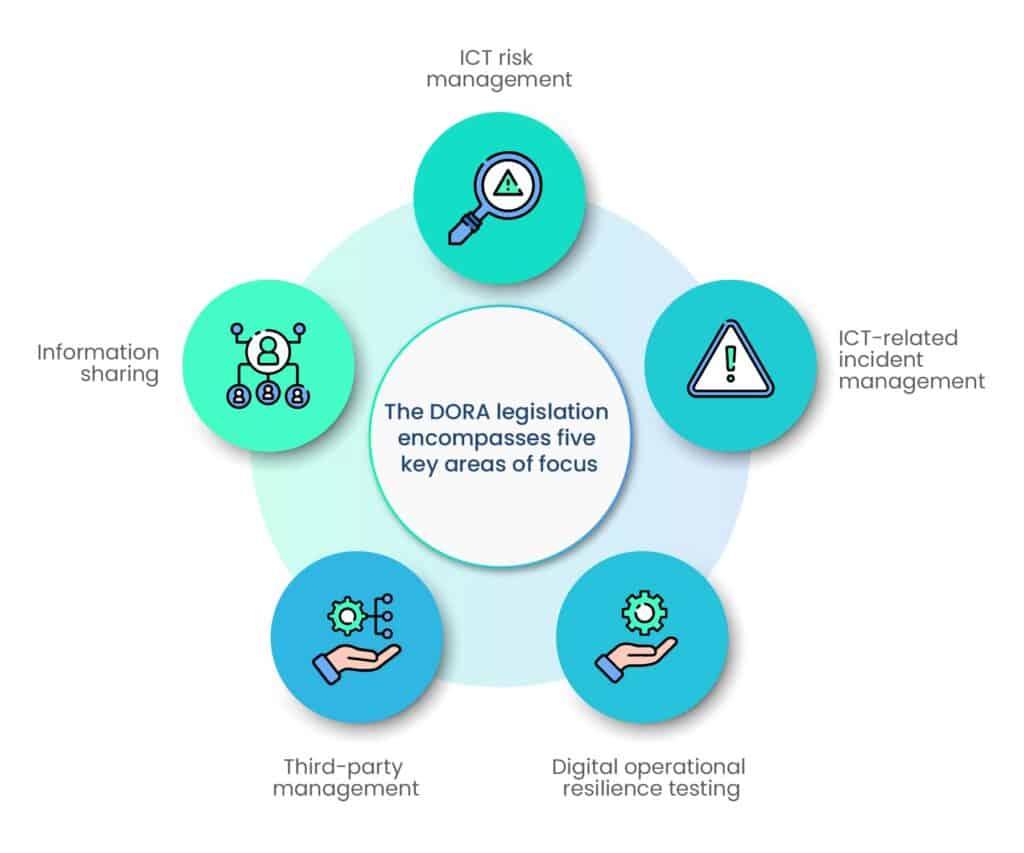
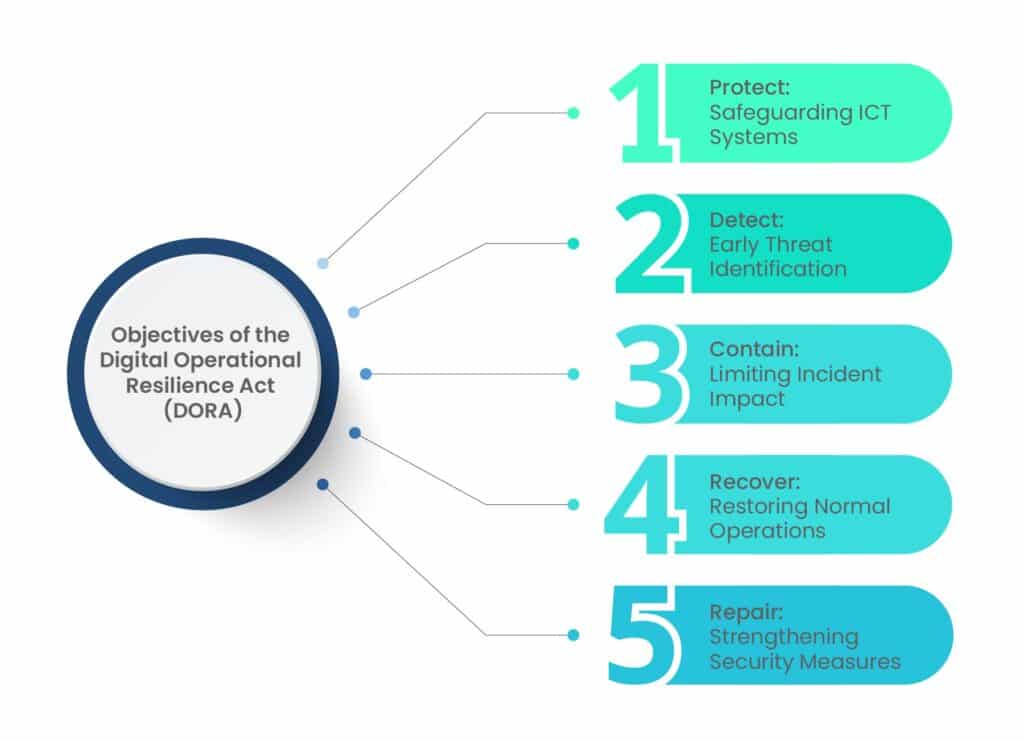
The objectives of DORA are to enhance the cyber resilience of financial entities, ensure the continuity of essential services, mitigate systemic risks, and promote collaboration among stakeholders to create a more secure and resilient financial ecosystem.

Here’s an elaboration on each of the objectives:
Exploring DORA’s regulatory framework

DORA’s regulatory framework is designed to establish comprehensive guidelines for operational resilience within the financial sector and other relevant industries. It outlines the necessary measures and procedures to protect against cyber threats and ICT-related disruptions, emphasizing proactive risk management and compliance.

DORA principles and requirements 
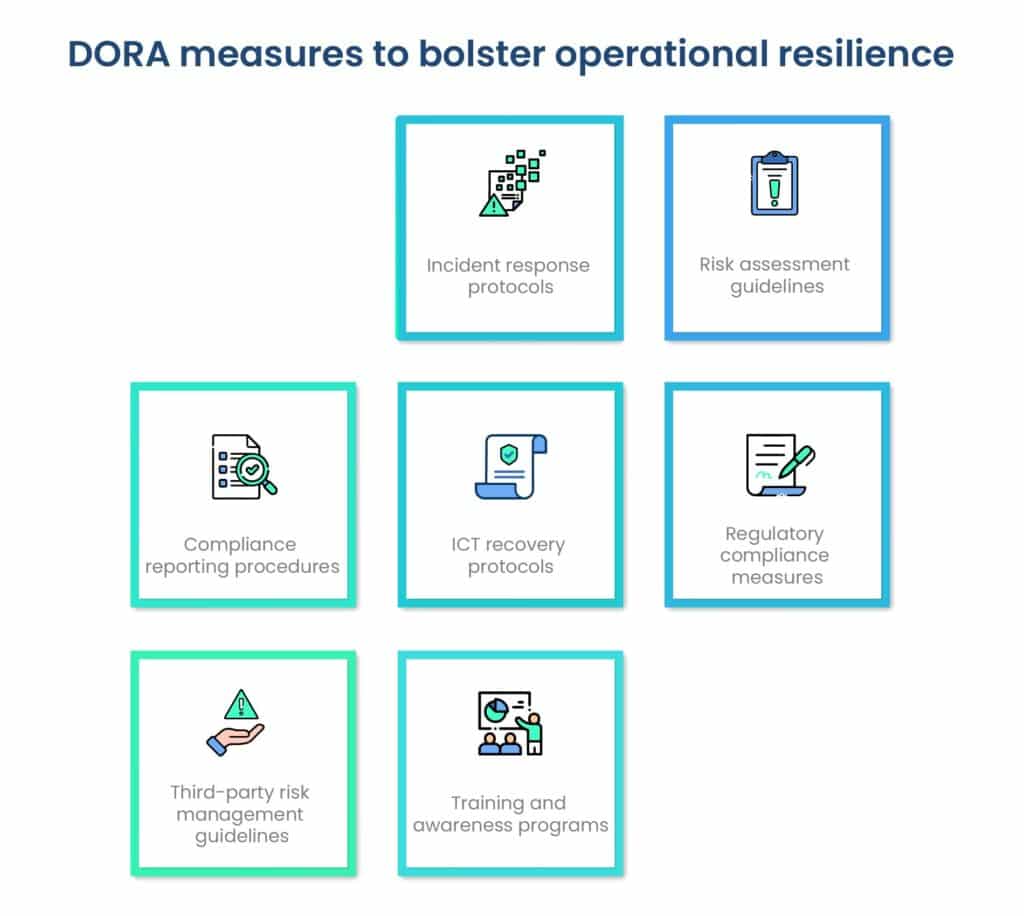
At the heart of DORA are core principles and requirements aimed at strengthening operational resilience. These include mandates for robust risk assessment and management practices, incident reporting protocols, and stringent compliance monitoring. 

By adhering to these principles, organizations can better safeguard their operations and mitigate potential risks. The protocols, guidelines, and procedures within DORA’s regulatory framework encompass a range of specific measures aimed at bolstering operational resilience:

  1. Incident response protocols: Detailed procedures for promptly identifying, reporting, and responding to cybersecurity incidents, including protocols for containment, eradication, and recovery.
  1. Risk assessment guidelines: Comprehensive guidelines for conducting thorough risk assessments to identify potential vulnerabilities and threats to ICT systems, ensuring organizations can proactively address emerging risks.
  1. Compliance reporting procedures: Clear procedures for compiling and submitting compliance reports to regulatory authorities, outlining the required documentation and reporting timelines to ensure transparency and accountability.
  1. ICT recovery protocols: Protocols for recovering and restoring ICT systems following a cyber incident or disruption, including steps for data recovery, system restoration, and post-incident analysis.
  1. Regulatory compliance measures: Specific measures for ensuring ongoing compliance with DORA requirements, including regular audits, internal controls, and governance structures to maintain adherence to regulatory standards.
  1. Third-party risk management guidelines: Guidelines for assessing and managing risks associated with third-party service providers, including due diligence procedures, contractual obligations, and monitoring mechanisms to mitigate potential risks.
  1. Training and awareness programs: Procedures for implementing training and awareness programs to educate employees on cybersecurity best practices, raise awareness of potential threats, and promote a culture of cybersecurity awareness within the organization.

Key Requirements for Financial Institutions under EU Regulation

  • Mapping and Testing: Financial institutions identify and manage operational risks through comprehensive mapping and testing of critical business services.
  • Outsourcing Measures: Financial institutions implement risk management measures to address risks associated with outsourcing critical functions or services.
  • Incident Reporting: Financial institutions report incidents impacting service continuity or posing threats to the financial system.
  • Cybersecurity Measures: Financial institutions adopt effective cybersecurity measures to prevent cyber threats and data breaches.
  • Risk Management Framework: Financial institutions establish integrated risk management frameworks aligned with business strategy.
  • Governance and Oversight: Clear lines of responsibility and oversight ensure operational resilience, with the board overseeing strategy.
  • Business Continuity Planning: Comprehensive plans ensure the continuity of critical services during disruptions.
  • Testing and Training: Regular testing and staff training enhance preparedness for operational disruptions.

DORA’s implications on operational resilience
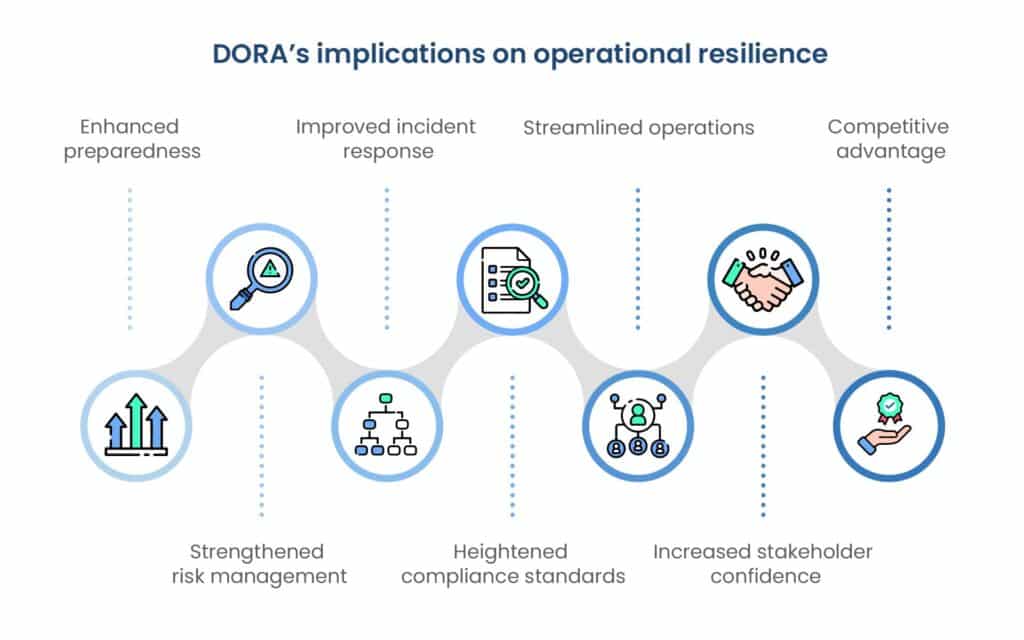
DORA’s implications for operational resilience are far-reaching, as they demand that organizations adopt a proactive and comprehensive approach to risk management. 

  • Enhanced preparedness: DORA mandates organizations to develop robust strategies and mechanisms to withstand, respond to, and recover from cyber threats and ICT-related disruptions effectively.
  • Strengthened risk management: By emphasizing proactive risk identification and mitigation, DORA encourages organizations to adopt comprehensive risk management practices, reducing vulnerabilities and enhancing operational resilience.
  • Improved incident response: DORA requires organizations to establish clear protocols and procedures for incident response, ensuring swift and effective actions to minimize the impact of cybersecurity incidents on operations.
  • Heightened compliance standards: Compliance with DORA necessitates adherence to stringent regulatory standards, fostering a culture of compliance and accountability within organizations.
  • Streamlined operations: Implementing DORA-compliant practices can lead to more efficient and streamlined operations, as organizations prioritize resilience and risk management in their day-to-day activities.
  • Increased stakeholder confidence: Demonstrating compliance with DORA signals to stakeholders, including customers, partners, and regulators, that an organization is committed to maintaining operational resilience and safeguarding sensitive information.
  • Competitive advantage: Organizations that successfully adhere to DORA’s requirements may gain a competitive edge by positioning themselves as reliable and resilient partners in the marketplace.

DORA and financial entities

DORA’s scope extends across various sectors within the financial industry, impacting a wide array of entities. From traditional banks and investment firms to insurance companies and crypto-asset service providers, DORA’s regulatory framework applies to a diverse range of financial institutions. Regardless of size or specialization, all entities operating within the financial sector are subject to the compliance requirements set forth by DORA.

The following is expressly mentioned in the standard:

“…The regulation covers a range of financial entities regulated at Union level namely credit institutions, payment institutions, electronic money institutions, investment firms, crypto-asset service providers, central securities depositories, central counterparties, trading venues, trade repositories, managers of alternative investment funds and management companies, data reporting service providers, insurance and reinsurance undertakings, insurance intermediaries, reinsurance intermediaries and ancillary insurance intermediaries, institutions for occupational retirement pensions, credit rating agencies, statutory auditors and audit firms, administrators of critical benchmarks and crowdfunding service providers”.

For banks, investment firms, insurance companies, and other financial entities, DORA represents a significant shift in regulatory focus. The Act imposes stringent requirements aimed at enhancing operational resilience and mitigating cyber threats across the financial sector. Institutions must adapt their existing practices to comply with DORA’s mandates, which encompass areas such as risk management, incident reporting, and third-party oversight.
DORA’s implications on financial institutions

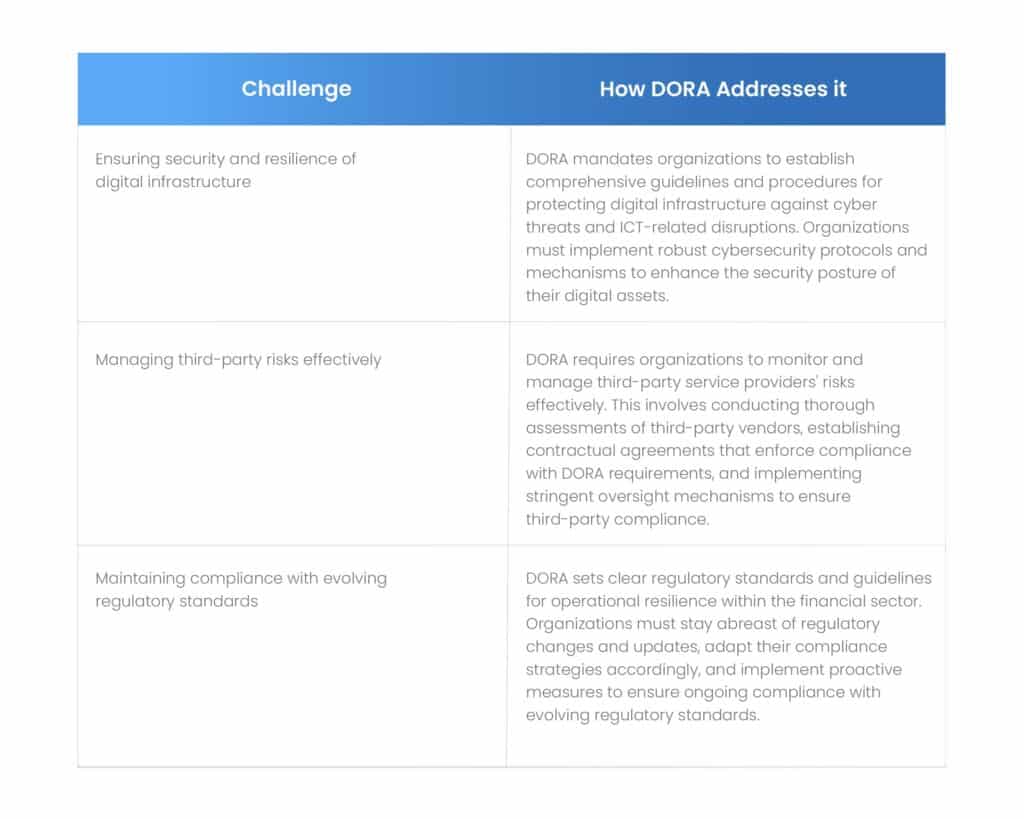
  • Increased compliance costs: Financial institutions will need to allocate additional resources to meet the new regulatory requirements, potentially resulting in higher compliance costs.
  • Enhanced regulatory oversight: Supervisory authorities will have expanded powers to monitor and evaluate financial institutions’ operational resilience, leading to increased regulatory scrutiny and more thorough examinations.
  • Changes in business practices: Financial institutions may need to adapt their business practices to align with the regulation, such as revising outsourcing agreements, strengthening cybersecurity measures, and enhancing business continuity plans.
  • Emphasis on risk management: The regulation places a greater emphasis on risk management, prompting financial institutions to establish more robust frameworks and procedures for identifying, assessing, and mitigating risks.
  • Improved operational resilience: Ultimately, the goal of the regulation is to enhance the operational resilience of financial institutions, enabling them to better withstand and respond to various threats and disruptions, including cyberattacks and IT failures.

DORA’s reach extending to third-party service providers

DORA’s impact extends beyond traditional financial institutions to encompass third-party service providers offering IT and cybersecurity services. These entities play a critical role in supporting the digital infrastructure of financial organizations, making them integral to the overall operational resilience of the sector.

As such, DORA’s regulatory framework extends its reach to ensure that third-party service providers adhere to the same standards of cybersecurity and operational resilience as their financial counterparts.

Regulations for third-party IT and cybersecurity services:

Under DORA, third-party IT and cybersecurity service providers are subject to specific regulations aimed at enhancing the security and resilience of financial systems. These regulations mandate:
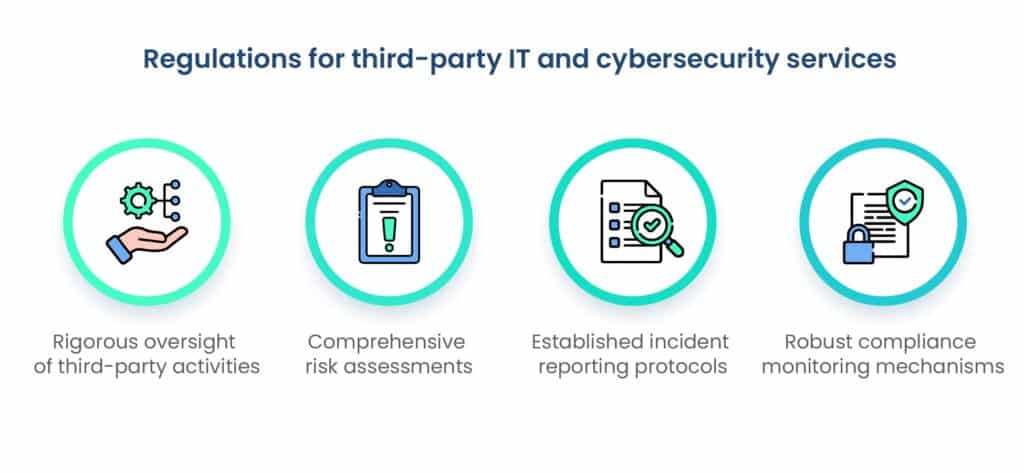
By holding third-party providers accountable for maintaining high standards of cybersecurity, DORA aims to mitigate the risks associated with outsourcing critical IT functions.

Which entities are excluded from DORA? 
Article 2(3) outlines exemptions, including Managers of Alternative Investment Funds under Article 3(2) of Directive 2011/61/EU (AIFMD), and Insurance and Reinsurance Undertakings as detailed in Article 4 of Directive 2009/138/EC (Solvency II).

Collaborative approaches for comprehensive compliance

To achieve comprehensive compliance with DORA, financial institutions and third-party service providers must adopt collaborative approaches to cybersecurity and operational resilience. 

This involves establishing clear communication channels, sharing relevant information, and aligning strategies to address common cybersecurity challenges. 

By fostering collaboration between financial institutions and their third-party partners, DORA promotes a unified approach to cybersecurity that strengthens the resilience of the entire financial ecosystem.

Consequences of non-compliance with DORA

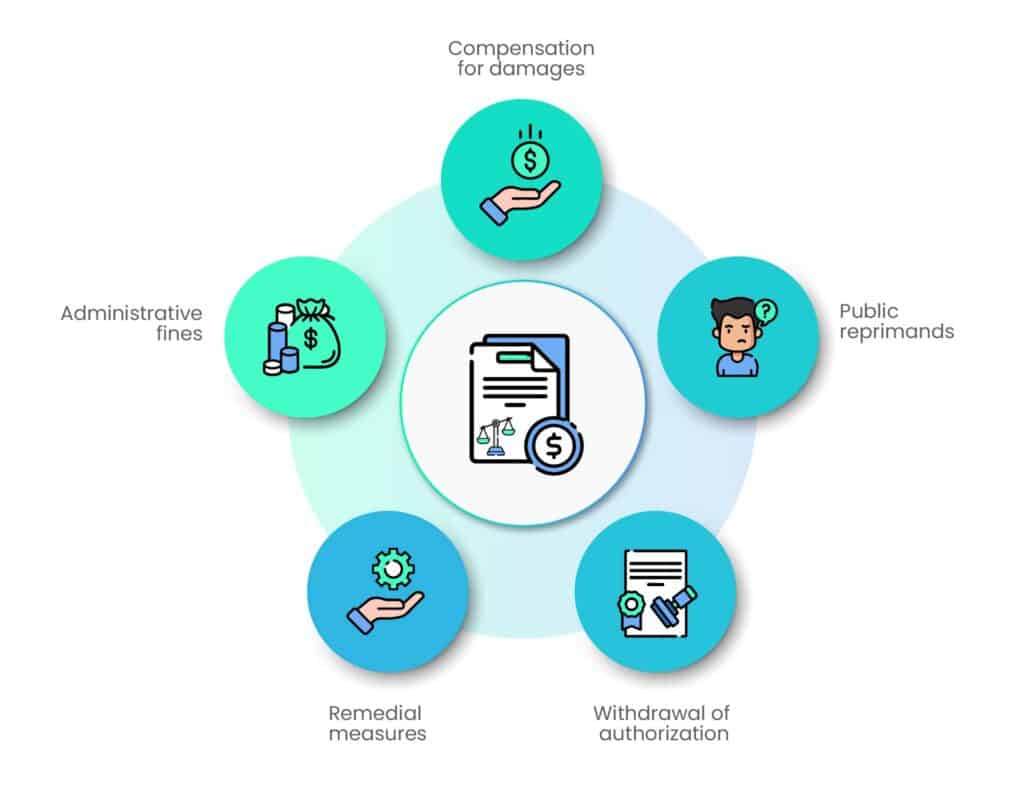
Penalties: Non-compliance with DORA regulations can result in a range of penalties, varying in severity depending on the nature and extent of the violation. These penalties may include fines, sanctions, or legal action imposed by regulatory authorities. 

Financial entities found in breach of DORA requirements may face financial penalties proportional to the severity of the violation, with fines potentially reaching significant amounts. Additionally, regulatory authorities may impose remedial measures or require compensation for damages incurred as a result of non-compliance.

Legal consequences: Financial entities failing to comply with DORA regulations may face legal consequences that extend beyond financial penalties. Depending on the severity of the violation and its impact on stakeholders, regulatory authorities may resort to legal action, including public reprimands, withdrawal of authorization, or criminal charges against responsible individuals or entities. 

Moreover, non-compliance with DORA requirements can damage the reputation of financial institutions, erode customer trust, and adversely affect business operations.

Costs associated with data breaches: The costs associated with data breaches have been steadily rising, posing significant financial risks to organizations that fail to comply with DORA regulations. Data breaches not only result in direct financial losses due to theft or misuse of sensitive information but also incur expenses related to incident response, remediation, and regulatory fines. Moreover, the long-term impact of reputational damage and loss of customer trust can further escalate the costs of data breaches for non-compliant organizations.

Financial implications for non-compliant organizations: Non-compliance with DORA regulations can have severe financial implications for organizations, including financial institutions and third-party service providers. Regulatory fines imposed for non-compliance can amount to substantial sums, potentially jeopardizing the financial stability and profitability of affected entities. Additionally, the costs associated with legal proceedings, remediation efforts, and operational disruptions further exacerbate the financial burden on non-compliant organizations, highlighting the importance of proactive compliance measures to mitigate financial risks.

Long-term reputational damage: One of the most significant costs of non-compliance with DORA regulations is the long-term reputational damage suffered by organizations. Incidents of non-compliance, data breaches, or cybersecurity incidents can tarnish the reputation of financial institutions and third-party service providers, eroding customer trust and loyalty. The negative publicity resulting from such incidents can have lasting effects on brand perception and market competitiveness, leading to reduced customer acquisition, retention, and revenue generation. Therefore, mitigating the risk of reputational damage through compliance with DORA regulations is essential for preserving the long-term viability and success of organizations operating in the financial sector.
Benefits of DORA compliance

Compliance with DORA regulations not only enhances operational resilience and customer trust but also contributes to long-term market stability and security in the financial sector.

Improving operational resilience

  • Compliance with DORA regulations establishes robust frameworks for managing and mitigating cyber risks and ICT-related disruptions.
  • Proactive measures to protect, detect, respond to, and recover from threats strengthen the organization’s ability to maintain critical business functions and services.
  • Enhanced operational resilience minimizes the impact of disruptions, improves organizational agility, competitiveness, and sustainability.

Enhancing customer trust and stakeholder confidence

  • DORA compliance demonstrates a commitment to cybersecurity, data protection, and operational excellence, enhancing customer trust and stakeholder confidence.
  • Safeguarding sensitive information, protecting customer assets, and ensuring the integrity of financial services fosters stronger relationships with customers, partners, investors, and regulatory authorities.
  • Building trust strengthens brand reputation, enhances market credibility, and facilitates business growth in competitive and regulated environments.

Long-term market stability and security

  • Compliance with DORA regulations promotes a culture of risk awareness, resilience, and accountability across the financial ecosystem.
  • Establishing consistent standards and practices for managing cyber risks reduces systemic vulnerabilities, mitigates systemic risks, and enhances overall market integrity and stability.
  • A more secure and resilient financial sector fosters investor confidence, promotes economic growth, and safeguards the interests of consumers, businesses, and society, ensuring sustainable financial development and prosperity.

Preparing for DORA compliance

Preparing for DORA compliance requires organizations to undertake several essential steps to ensure readiness and effectiveness in meeting regulatory requirements.  

Steps to prepare for DORA compliance:
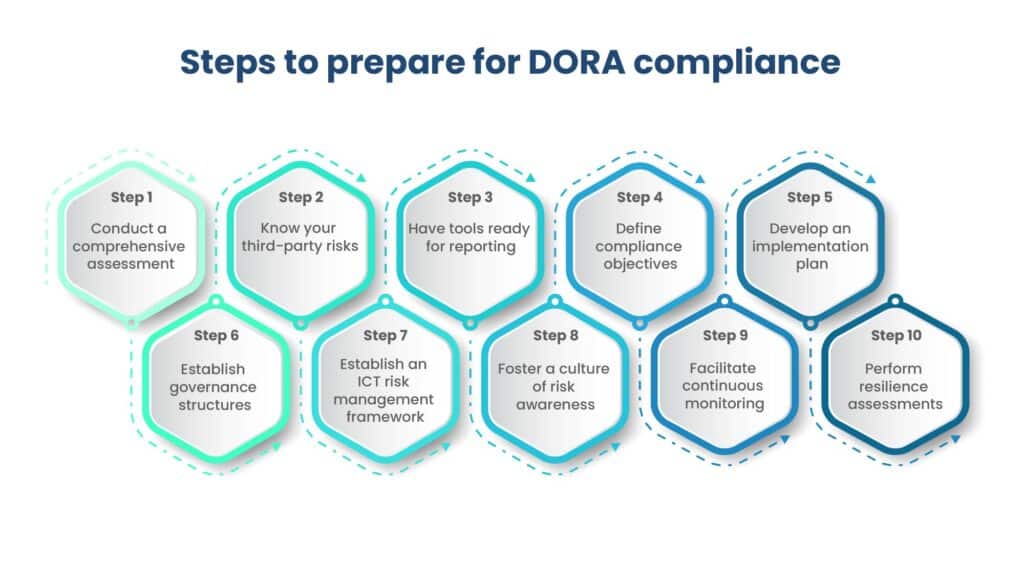
  1. Conduct a comprehensive assessment: Begin by assessing existing ICT capabilities, identifying vulnerabilities, and gaps in operational resilience. 
  2. Know your third-party risks: DORA will require third-party risk to be managed as a crucial part of overall ICT risk management, ensuring that providers assist your firm during cybersecurity incidents and adhere to stricter security standards. Consequently, organizations must consistently assess and monitor these relationships to promptly detect any issues and oversee providers critical to the supply chain.
  3. Have tools ready for reporting: Ensure readiness for reporting under DORA guidelines. Financial institutions must promptly report ICT-related incidents to regulators, including details such as the number of affected users, data loss, geographic impact, economic implications, and additional relevant information. A comprehensive plan should outline employee response procedures during a cyberattack and strategies for restoring operations post-breach.
  4. Define compliance objectives: Clearly define compliance objectives and priorities based on the assessment findings to guide the implementation process.
  5. Develop an implementation plan: Create a structured implementation plan with defined timelines, milestones, and responsibilities to ensure organized and effective execution.
  6. Establish governance structures: Set up robust governance structures, policies, and procedures for managing cyber risks, incident response, and business continuity.
  7. Establish an ICT risk management framework: Organizations should establish a robust ICT risk management framework within their broader risk management system. Utilizing a platform to develop, implement, and monitor this framework ensures compliance with regulations. Additionally, cybersecurity ratings offer a quantitative evaluation of your organization’s cybersecurity stance, enhancing regulatory adherence.
  8. Foster a culture of risk awareness: Promote a culture of risk awareness, accountability, and continuous improvement across the organization to enhance compliance efforts.
  9. Facilitate continuous monitoring: Facilitate ongoing monitoring to stay vigilant about cybersecurity threats. Regular assessment of your security posture enables swift action against emerging risks. This involves consistent scrutiny of third-party vendors to detect changes or vulnerabilities that could affect your organization’s risk landscape.
  10. Perform resilience assessments: Perform routine resilience assessments as mandated by DORA, involving vulnerability assessments, penetration testing, red team exercises, and tabletop drills. This proactive approach aids in identifying and mitigating risks, ensuring seamless business operations during cyber incidents.
Here are some additional tips for navigating DORA compliance:
1. Ensure board involvement: DORA places cybersecurity responsibility on the board, necessitating enforcement of protocols, policies, and tools. Board alignment is crucial to avoid fines or reputational harm, so ensure management is fully briefed and committed to DORA’s significance.
2. Engage multiple teams: Cybersecurity is now a multifaceted issue, so compliance with DORA should involve more than just the CISO. Involving legal, compliance, and risk management teams from the outset ensures a faster, more efficient DORA compliance process.
3. Start preparation early: Begin planning now to align with DORA regulations. While many firms may have existing policies, this is an opportunity to enhance cybersecurity and bolster resilience in preparation for DORA compliance.

Employee training programs and their importance

Employee training programs play a crucial role in preparing organizations for DORA compliance by raising awareness, building knowledge, and enhancing skills related to cybersecurity, data protection, and operational resilience. 

Training programs should cover a wide range of topics, including identifying cyber threats, adhering to security protocols, responding to incidents, and complying with regulatory requirements. 

By investing in comprehensive and ongoing training initiatives, organizations can empower employees to recognize and mitigate cyber risks, foster a security-conscious culture, and contribute to the overall resilience and effectiveness of the organization’s ICT capabilities.

Strategic collaboration across internal teams
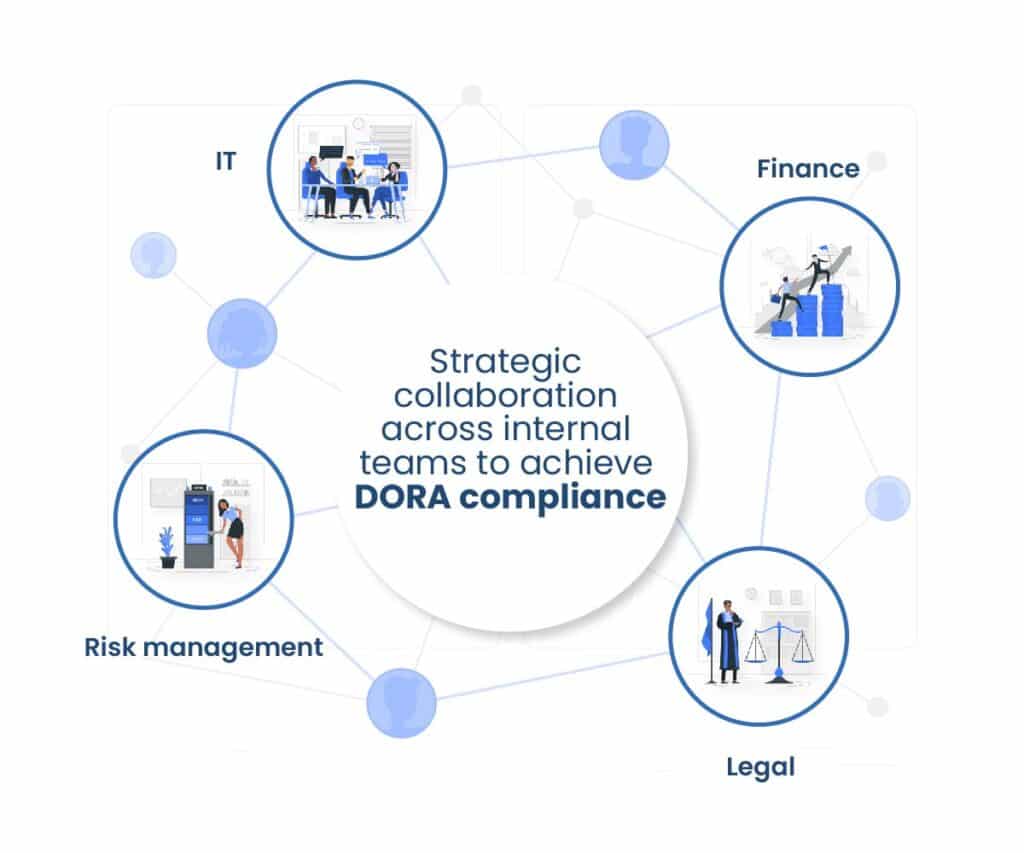
Achieving DORA compliance requires strategic collaboration and coordination across internal teams, departments, and functions within the organization. Cross-functional collaboration enables organizations to leverage diverse expertise, perspectives, and resources to address complex compliance challenges, identify innovative solutions, and drive meaningful change. 

By fostering communication, alignment, and synergy among compliance, IT, risk management, legal, finance, and other relevant teams, organizations can develop integrated strategies, implement coordinated initiatives, and overcome barriers to compliance more effectively. Strategic collaboration also promotes shared ownership, accountability, and success in achieving organizational goals and objectives related to DORA compliance.

DORA compliance checklist

Ensure compliance with DORA by considering the following essential areas:

  • Risk management: Conduct regular risk assessments and establish a comprehensive risk management framework to mitigate operational risks effectively.
  • Business continuity planning: Develop and maintain a detailed business continuity plan to address operational disruptions, including cyber threats and data breaches.
  • IT and security testing: Regularly test IT systems and security controls to enhance resilience against cyber threats through activities like penetration testing and vulnerability assessments.
  • Incident management: Establish an incident management plan to guide your organization’s response to operational incidents, with regular testing and updates.
  • Data protection: Protect customer data and comply with data protection regulations like GDPR by implementing appropriate measures and conducting regular audits.
  • Outsourcing: Ensure proper oversight of third-party service providers, incorporating contractual provisions for compliance with DORA requirements.
  • Reporting: Establish suitable reporting mechanisms to notify management and supervisory authorities of significant operational incidents and risks.
  • Compliance monitoring: Monitor compliance with DORA regularly through self-assessments, internal audits, and risk assessments.

Navigating challenges and solutions

Navigating the landscape of DORA compliance presents organizations with several common challenges that may be addressed with suitable solutions.

Common challenges in achieving DORA compliance
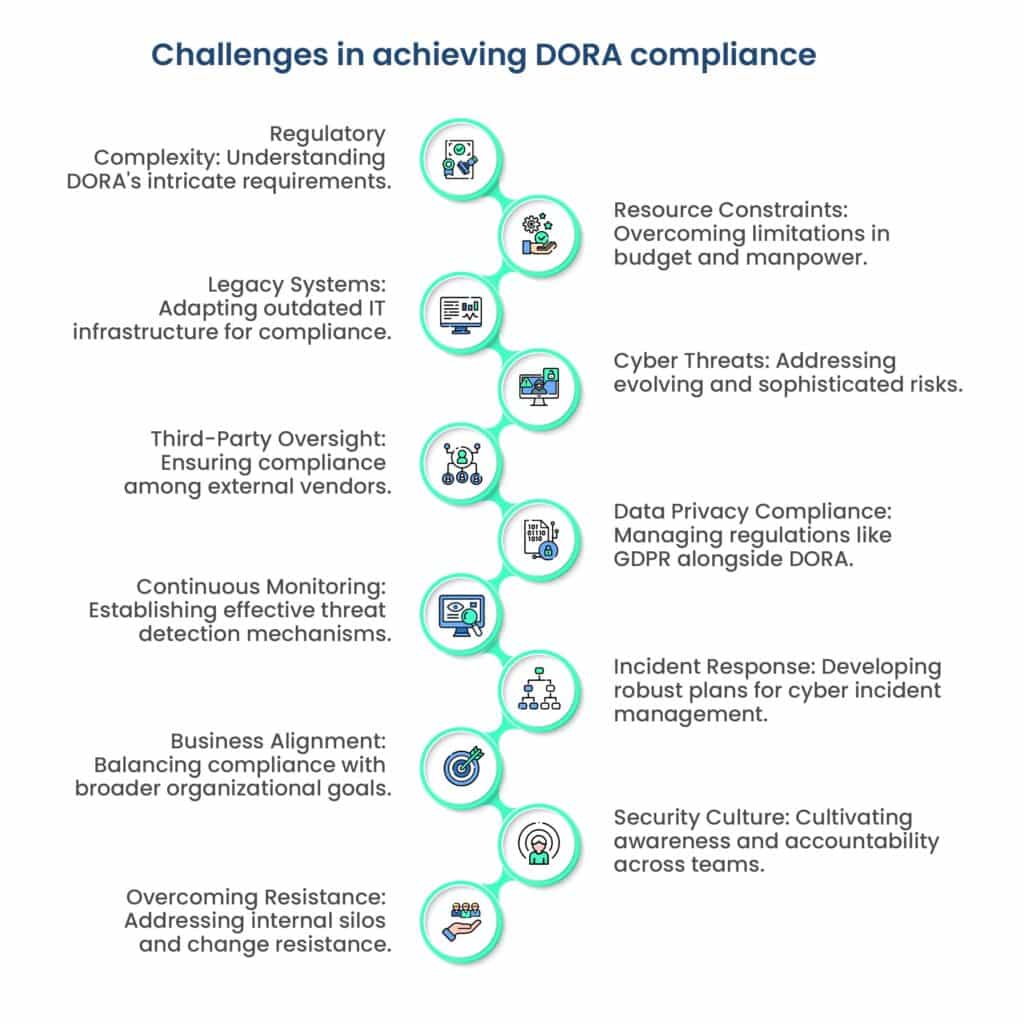
Navigating the landscape of DORA compliance presents organizations with several common challenges.

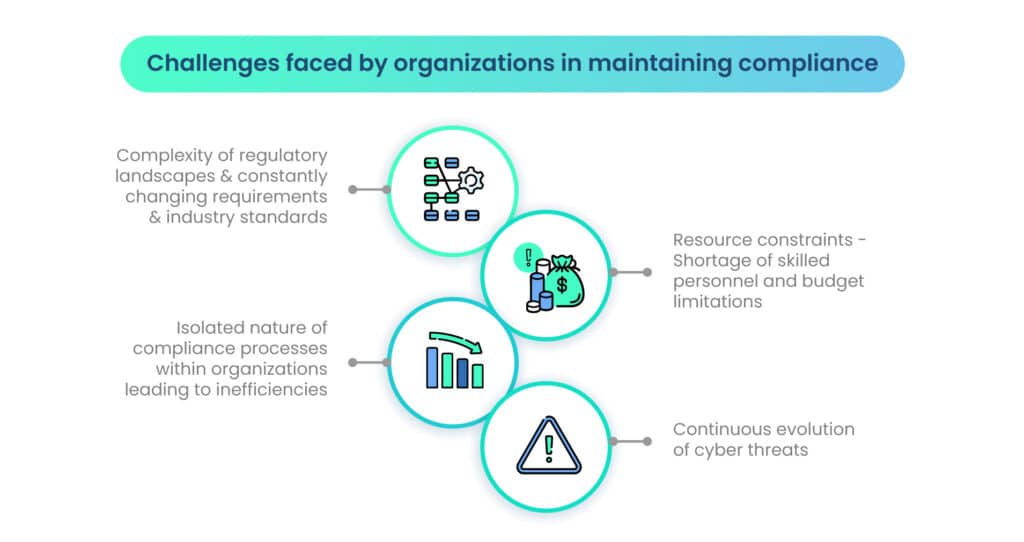
  1. Complexity of regulatory requirements: Understanding and interpreting the multifaceted DORA regulations can be challenging due to their intricate nature and evolving landscape, requiring organizations to invest time and resources in comprehensive compliance efforts.
  2. Resource constraints: Limited budget, manpower, and expertise may hinder organizations’ ability to implement robust compliance measures, conduct thorough risk assessments, and invest in advanced cybersecurity solutions necessary for DORA compliance.
  3. Legacy IT systems: Outdated infrastructure and legacy systems may lack the necessary capabilities and security measures to meet DORA compliance standards, necessitating costly upgrades or replacements to align with regulatory requirements.
  4. Evolving cyber threats: The dynamic and sophisticated nature of cyber threats presents a constant challenge for organizations striving to maintain resilience against cyberattacks, requiring continuous monitoring, adaptation, and investment in cybersecurity measures.
  5. Third-party dependencies: Organizations relying on third-party service providers for critical IT and cybersecurity functions face challenges in ensuring the compliance of these vendors with DORA regulations, necessitating robust oversight, contractual agreements, and risk management practices.
  6. Data privacy and protection: Compliance with data privacy regulations such as GDPR adds complexity to DORA compliance efforts, requiring organizations to implement stringent data protection measures and ensure compliance with privacy requirements.
  7. Continuous monitoring and detection: Establishing effective mechanisms for continuous monitoring, detection, and response to cyber risks is crucial for DORA compliance but can be challenging due to the volume and sophistication of cyber threats and the need for real-time threat intelligence.
  8. Incident response and recovery: Developing and testing robust incident response and recovery plans is essential for DORA compliance but can be challenging due to the complexity of cyber incidents, coordination across departments, and the need for timely and effective response actions.
  9. Alignment with business objectives: Maintaining alignment between compliance efforts and broader business objectives can be challenging, requiring organizations to balance regulatory requirements with operational efficiency, innovation, and growth initiatives.
  10. Culture of security awareness: Fostering a culture of security awareness, accountability, and proactive risk management throughout the organization is crucial for DORA compliance but may face resistance or lack of buy-in from employees, requiring ongoing education and awareness initiatives.
  11. Organizational silos and resistance to change: Overcoming organizational silos, resistance to change, and internal politics can pose significant challenges in achieving DORA compliance, requiring strong leadership, communication, and collaboration across departments and stakeholders.

Innovative solutions and best practices to address challenges

To address the challenges associated with DORA compliance, organizations can adopt innovative solutions and best practices tailored to their specific needs and circumstances. 

These solutions may include leveraging advanced technologies such as artificial intelligence, machine learning, and automation to enhance risk assessment, threat detection, and compliance monitoring capabilities. 

Organizations can also implement robust cybersecurity frameworks, policies, and controls aligned with industry standards and best practices to mitigate cyber risks effectively. Furthermore, investing in employee training and awareness programs, establishing strategic partnerships with cybersecurity experts and industry associations, and leveraging regulatory compliance tools and platforms can help organizations streamline compliance efforts and achieve DORA compliance more efficiently and effectively.

SolutionsChallenges Addressed
Leveraging advanced technologiesEnhancing risk assessment, threat detection, and compliance monitoring capabilities.
Implementing robust cybersecurity frameworksEffectively mitigating cyber risks aligned with industry standards and best practices.
Investing in employee training and awarenessStrengthening organizational readiness and responsiveness to cyber threats.
Establishing strategic partnershipsAccessing specialized expertise and resources to navigate complex compliance requirements.
Leveraging regulatory compliance toolsStreamlining compliance processes and ensuring adherence to regulatory standards.

DORA compliance – Role of audit and reporting 

Regular audits play a critical role in ensuring ongoing compliance with DORA requirements. By conducting periodic audits, organizations can assess their adherence to regulatory standards, identify areas of non-compliance or weakness, and implement corrective actions to address deficiencies. 

These audits may cover various aspects of operational resilience, including cybersecurity practices, incident response procedures, risk management frameworks, and third-party vendor management processes. 

By establishing a robust audit program, organizations can maintain a proactive approach to compliance and demonstrate their commitment to regulatory requirements.

Generating comprehensive compliance reports

Comprehensive compliance reports are essential for documenting adherence to DORA regulations and providing evidence of compliance to regulatory authorities and stakeholders. 

These reports should capture key compliance metrics, audit findings, remediation activities, and other relevant information necessary to assess the organization’s compliance posture. 

By generating comprehensive compliance reports, organizations can facilitate transparency, accountability, and effective communication with regulators, auditors, board members, and other stakeholders. These reports can also serve as valuable tools for internal decision-making, risk management, and strategic planning initiatives.

The role of scrutiny in audit preparedness

Scrutiny plays a crucial role in audit preparedness by enabling organizations to proactively assess their compliance readiness, identify potential gaps or deficiencies, and implement corrective measures as needed. 

By subjecting their operations to rigorous scrutiny, organizations can uncover hidden risks, improve internal controls, and enhance overall operational resilience. Scrutiny can take various forms, including internal audits, third-party assessments, compliance reviews, and self-assessments. 

By embracing scrutiny as a proactive tool for continuous improvement, organizations can strengthen their audit preparedness, mitigate compliance risks, and maintain confidence in their ability to meet regulatory obligations.

Role of supervisory authorities in enforcing DORA

Supervisory authorities play a crucial role in enforcing DORA regulations, including national competent authorities and the European Banking Authority (EBA). Their responsibilities include evaluating operational resilience by assessing plans, mapping critical services, and reviewing outsourcing. They conduct on-site inspections to confirm compliance, enforce penalties for non-compliance, provide guidance to institutions, and foster coordination among authorities to ensure consistent practices across the EU.

Future outlook

Anticipating and adapting to future changes in the regulatory landscape is essential for organizations striving to maintain compliance with evolving requirements like DORA. 

By staying informed about emerging regulations, industry standards, and geopolitical developments, organizations can proactively adjust their compliance strategies and frameworks. This proactive approach enables organizations to navigate regulatory changes smoothly, minimize compliance risks, and ensure ongoing alignment with regulatory expectations.

Implementing continuous improvement strategies is crucial for ensuring long-term compliance with DORA and other regulatory frameworks. Organizations must regularly assess their compliance programs, identify areas for enhancement, and implement targeted improvements to strengthen their resilience against emerging threats and regulatory changes. 

Technology plays a pivotal role in shaping the future of DORA compliance, offering innovative solutions to streamline compliance processes, enhance risk management capabilities, and improve operational resilience. 

Advancements in regulatory technology (RegTech), artificial intelligence, automation, and data analytics empower organizations to achieve greater efficiency, accuracy, and effectiveness in their compliance efforts. By leveraging cutting-edge technologies, organizations can stay ahead of regulatory challenges, mitigate compliance risks, and drive sustainable compliance outcomes in the digital age.

Conclusion

Throughout the DORA compliance journey, organizations have encountered various challenges, opportunities, and insights. From understanding the genesis of DORA to navigating its regulatory framework, organizations have gained valuable insights into enhancing operational resilience, mitigating risks, and ensuring compliance with evolving financial regulations.

As financial regulations continue to evolve, organizations must remain proactive in their compliance efforts. By taking proactive measures to understand and adapt to regulatory changes, organizations can strengthen their compliance programs, enhance risk management practices, and safeguard their operations against emerging threats and vulnerabilities.

Through proactive compliance measures and strategic investments in operational resilience, organizations can thrive in an increasingly complex and dynamic business environment.

For tailored guidance and support in meeting compliance needs, reach out to Scrut to ensure readiness and resilience in navigating the evolving regulatory landscape like DORA.

Frequently Asked Questions

1. What is DORA compliance, and why is it essential for organizations?

DORA, or the Digital Operational Resilience Act, is an EU financial regulation aimed at ensuring organizations can withstand, respond to, and recover from cyber threats and ICT-related disruptions. It’s crucial for organizations as it enhances operational resilience, protects sensitive data, and helps prevent costly data breaches.

2. What are the key components of DORA, and how do they impact businesses?

DORA encompasses requirements for risk management, incident reporting, ICT risk management, and operational resilience testing. These components impact businesses by necessitating robust cybersecurity measures, proactive risk management strategies, and thorough incident response protocols.

3. How does DORA compliance contribute to enhancing cyber resilience?

 DORA compliance mandates that organizations implement measures to protect, detect, contain, recover, and repair their ICT capabilities. By adhering to these requirements, organizations enhance their cyber resilience, making them better equipped to withstand cyber threats and operational disruptions.

4. What steps can organizations take to ensure smooth DORA compliance implementation?

Organizations can ensure smooth DORA compliance implementation by conducting thorough risk assessments, establishing clear evaluation criteria for compliance solutions, conducting proof of concept tests, and providing comprehensive training for employees.

5. What are the potential penalties for non-compliance with DORA regulations?

Non-compliant organizations may face penalties such as public reprimands, withdrawal of authorization, remedial measures, compensation for damages, criminal charges, and administrative fines, as determined by the laws of each EU member country. It’s essential for organizations to prioritize DORA compliance to avoid these repercussions.


Authored by

Aayush Ghosh Choudhary
Co-founder & CEO at Scrut

Top cybersecurity threats and strategies in 2024

New year, new risks? Unfortunately, that’s the way things roll in the world of cyber crime where threat actors evolve strategically to gain access to sensitive information. From avoidable phishing emails to complicated zero-day attacks, there’s a lot to be wary of.

But fear not – the cybersecurity industry is armed with effective strategies to combat the most sinister of cyber criminals. Whether it’s leveraging artificial intelligence or enhancing the Internet of Things (IoT) security, there’s a variety of tools to bolster your information security toolkit.

Since it’s important to stay a step (or more) ahead in the landscape of potential threats, we bring to you cybersecurity trends and threats to watch out for in 2024, including cyber-attacks to beware of and security practices to adopt.

5 threats to steer clear of 

As technology continues to advance and open new doors, threat actors constantly innovate ways to gain entry, exploiting the expanding attack surface. 2023 was fraught with data breaches that targeted private organizations (like T-Mobile USA’s data breach) and even governments (eg: Bangladesh’s government website leaks). It’s highly likely that 2024 will follow a similar, if not worse, trajectory, so it’s best to be prepared. Here’s a look at five threats to watch out for this year.

1. Zero-Day Attacks

What are zero-day attacks?

A zero-day attack is a cyberattack that exploits undisclosed vulnerabilities in software or hardware for which no patches or fixes are available since the developers have had zero days to address and mitigate the newly discovered flaw.

In a zero-day attack, threat actors take advantage of the time gap between the discovery of the vulnerability and the release of a fix, aiming to compromise systems, steal data, or carry out malicious activities. 

These attacks are particularly challenging to defend against because there is no pre-existing defense or security patch available to protect against the specific exploit. Organizations often employ proactive security measures, such as regular updates, patch management, and threat intelligence, to minimize the risk associated with zero-day vulnerabilities.

What happened in 2023

Last year witnessed several zero-day attacks, the most notorious one being the MOVEit data breach. Microsoft Threat Intelligence Center attributed the exploitation of the MOVEit Transfer flaw to the threat actor Lace Tempest, associated with the Clop ransomware gang. 

Numerous victims, including government agencies, British Airways, Extreme Networks, and Siemens Energy, emerged through data breach disclosures and Clop’s data leak site. 

The attacks, focused on data theft rather than deploying ransomware, affected a staggering number, estimated at 2,095 organizations and over 62 million individuals by Emsisoft in September.

What’s likely to happen in 2024

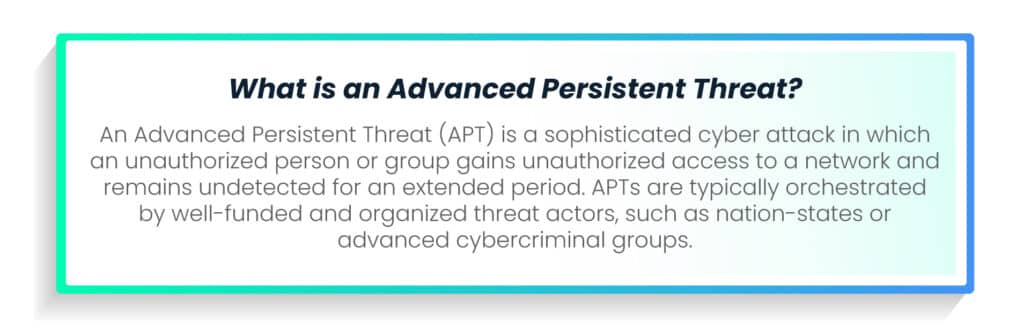
The likelihood of an increase in zero-day attacks remains a concern due to several factors. Advanced Persistent Threats (APTs) and sophisticated cybercriminal groups continually invest in discovering and exploiting zero-day vulnerabilities for targeted attacks. 

The expanding underground market for buying and selling such exploits, the complexity of modern software, and the potential for supply chain attacks contribute to the heightened risk. Additionally, state-sponsored cyber activities, geopolitical tensions, and the ongoing challenge of staying ahead in cybersecurity research and defense efforts further underscore the potential for a rise in zero-day attacks. 

Organizations should prioritize robust cybersecurity measures and proactive defense strategies to mitigate these evolving threats.

The very first month of 2024 saw two major companies – Apple and Google – patching their first zero-day flaws of the year. Enterprise firms are now preparing for another year of addressing security issues, with crucial fixes released by prominent companies such as Cisco and SAP.

2. Supply chain attacks

What is a supply chain attack?

A supply chain attack is a type of cyberattack that targets the vulnerabilities in a system’s supply chain – the network of organizations, people, activities, information, and resources involved in the production and delivery of a product or service. 

In the context of cybersecurity, a supply chain attack typically involves exploiting weaknesses in the supply chain to compromise the security of the end product.

What happened in 2023

Research from Gartner reveals that nearly 61% of U.S. businesses experienced direct impacts from software supply chain attacks from April 2022 to April 2023. 

The headline-stealing MOVEit breach was the biggest example of a supply chain attack that took place last year with its cost exceeding $9.9 billion, impacting over 1000 businesses and more than 60 million individuals. 

What’s likely to happen in 2024

The likelihood of an increase in supply chain attacks is a concern that cannot be ignored this year. Several factors contribute to this potential trend. 

The increasing interconnectedness and complexity of global supply chains provide more opportunities for attackers to exploit vulnerabilities. Additionally, the rising sophistication of cybercriminals, the use of advanced techniques, and the expanding underground market for cyber exploits contribute to the heightened risk of supply chain attacks.

Geopolitical tensions and nation-state activities are other challenges in the way of securing supply chains. However, efforts to enhance cybersecurity awareness, implement robust defense mechanisms, and promote collaboration between industry and security communities are crucial in mitigating the risk and impact of supply chain attacks. Organizations should remain vigilant and prioritize proactive measures to strengthen the security of their supply chains.

3. Ransomware

What is ransomware?

Ransomware is a type of malicious software designed to deny access to a computer system or files until a sum of money, or ransom, is paid to the attacker. 

It typically encrypts the victim’s files or entire system, rendering them inaccessible. The victim is then presented with a ransom demand and instructions on how to make the payment, often in cryptocurrency, like Bitcoins, Ethereum, Tether, or others. 

Ransomware attacks can target individuals, businesses, or even government organizations. 

The motives behind such attacks are usually financial, and the attackers seek to exploit the urgency and critical nature of the victim’s need to regain access to their data or systems.

What happened in 2023?

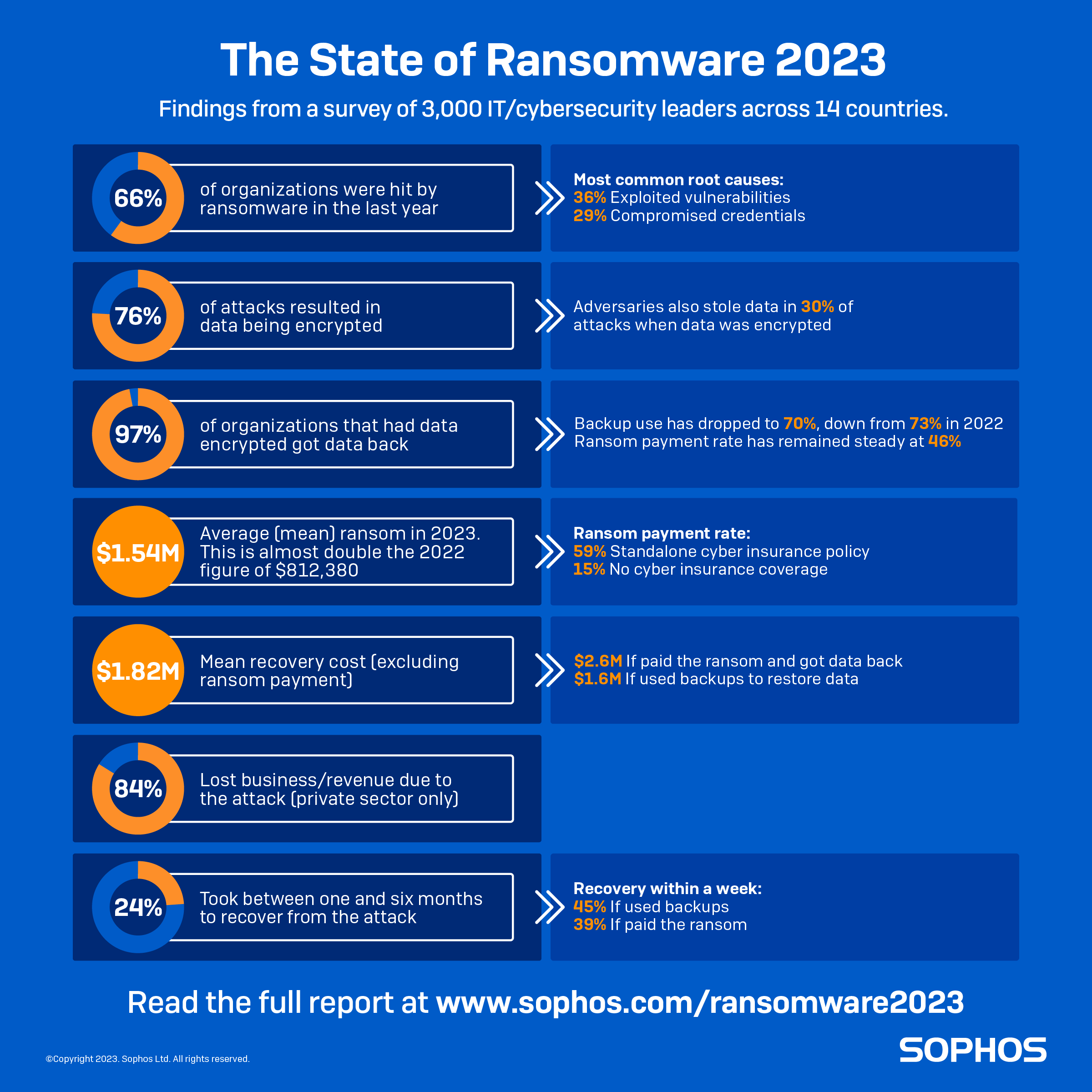
Over 72% of cybersecurity incidents in 2023 were attributed to ransomware. According to IBM, the share of breaches caused by ransomware increased by 41% in the past year, taking an average of 49 days longer to identify and contain.

The average ransom amount in 2023 surged to $1.54 million, nearly doubling the 2022 figure of $812,380. Alarmingly, more than 72% of businesses globally fell victim to ransomware attacks in 2023.

What’s likely to happen in 2024

Hong Kong’s Computer Emergency Response Team Coordination Centre suggests a potential shift by ransomware operators towards the APAC region.

APAC, housing some of the world’s fastest-growing economies, also presents opportunities due to the comparatively lower preparedness of many businesses, making it a greenfield investment for ransomware operators.

Additionally, APAC poses less risk to these operators compared to their traditional targets like the US, where increased scrutiny from government and law enforcement is observed. 

This combination of reduced risk and heightened potential rewards may lead ransomware operators to continue focusing on APAC into 2024.

4. Cloud attacks

What are cloud attacks?

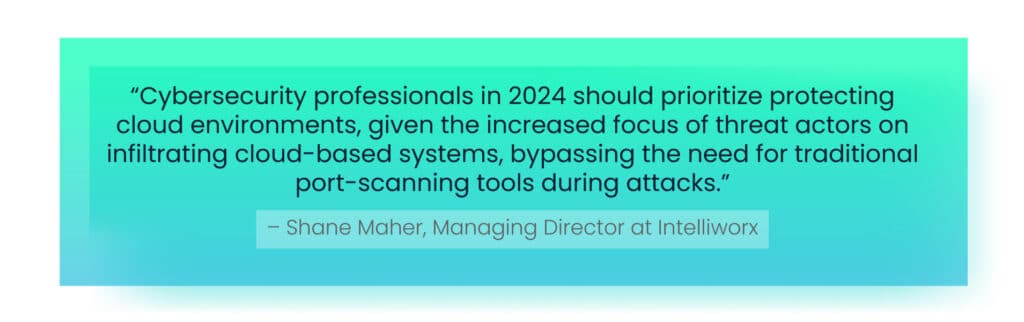
Cloud attacks have been on the rise as companies increasingly adopt cloud computing. These attacks refer to cybersecurity threats and exploits specifically aimed at cloud computing environments and services.

In cloud computing, data and applications are stored and accessed over the internet rather than on physical hardware. Cloud attacks can manifest in different forms, focusing on vulnerabilities within cloud infrastructure, applications, or the interactions between users and cloud services.

What happened in 2023?

According to Google Cloud’s Cybersecurity Forecast 2024, 2023 saw a notable increase in the use of zero-day vulnerabilities, with expectations of continued increase in 2024.

What’s likely to happen in 2024?

Based on Google’s report, in  2024, it is anticipated that cybercriminals and nation-state cyber operators will increasingly utilize serverless technologies in the cloud. 

This shift is driven by the scalability, flexibility, and automation capabilities that serverless platforms offer, aligning with the preferences of developers adopting serverless architectures. 

Edge devices and virtualization software will continue to be attractive to threat actors due to their challenging monitoring, while zero-day exploits are likely to increase the number of victims, enhancing the likelihood of high ransomware or extortion payments. 

With the U.S. presidential election approaching, cyber activities, including espionage, influence operations, and spear phishing, are anticipated to intensify, involving nations like China, Russia, and Iran, potentially leveraging gen AI tools for increased scale and operational tempo.

5. Ransomware as a Service (RaaS)

Ransomware as a Service (RaaS) is a cybercriminal business model that allows individuals with limited technical expertise to launch ransomware attacks.

In this model, experienced ransomware developers create and maintain the malicious software, while less skilled individuals, often referred to as “affiliates” or “customers,” can use or lease the ransomware to carry out attacks.

The affiliates typically receive a portion of the ransom payments collected from victims, and the RaaS provider retains a percentage as well.

What happened in 2023?

Ransomware as a Service really shook the world of cybersecurity in 2023, resulting in the White House classifying ransomware as a national security threat in its National Cybersecurity Strategy.

The past year witnessed RaaS providers, specialized in specific aspects of the attack process, offering kits that encompassed everything a potential attacker needed. 

What’s likely to happen in 2024?

According to insights from Cybersecurity Ventures, companies could potentially incur an annual cost of nearly $265 billion from ransomware by the end of 2031.

Meanwhile, threat actors are likely to find considerable value in Ransomware-as-a-Service, as subscriptions to RaaS kits can be as affordable as $40 per month.

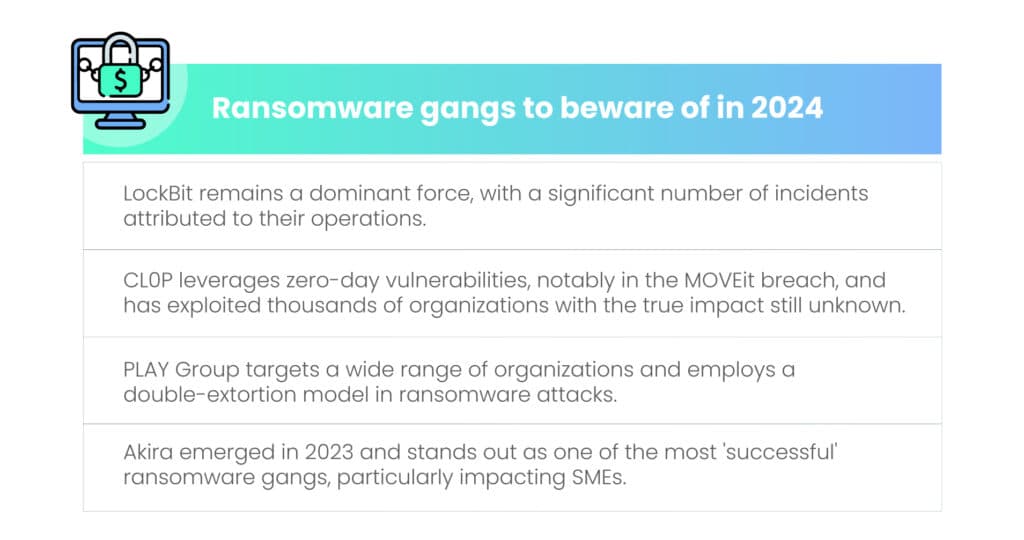
RaaS providers will continue to offer comprehensive tools like payment portals, specialized support services, and various ransomware variants like LockBit, Revil, and Dharma, allowing for the creation of customized ransomware attacks.

5 cybersecurity strategies to embrace

Now that we have the scary parts covered, let’s move on to some good news! By embracing the following 2024 cybersecurity trends, you can help keep your organization safe from threat actors and their evolving evil ploys.

1. AI and Machine Learning

Leveraging Artificial Intelligence (AI) and Machine Learning (ML) empowers security systems to analyze vast datasets, identify patterns, and detect anomalies in real time. 

By automating threat detection and response, organizations can enhance their ability to identify and neutralize potential security risks swiftly.

In 2024, AI and ML will play an increasingly crucial role in cybersecurity. AI’s advanced data analysis enhances early threat detection, with ML algorithms evolving to recognize and respond to new threats, improving defensive measures over time. 

Expect real-time threat analysis from AI algorithms for faster and more accurate responses. ML is likely to autonomously adapt and update cybersecurity protocols, reducing the need for manual interventions. 

2. Blockchain

Blockchain technology is gaining prominence as a cybersecurity asset. Its decentralized and immutable nature makes it a robust solution for securing sensitive data and transactions. 

By implementing blockchain, organizations can establish transparent and tamper-resistant systems, reducing the risk of unauthorized access and ensuring the integrity of critical information.

3. Cybersecurity insurance

As cyber threats become more sophisticated, the importance of cybersecurity insurance is on the rise. 

Having a solid cybersecurity insurance policy can provide financial protection in the event of a cyber incident. 

It covers costs related to data breaches, ransom payments, and recovery efforts, offering organizations a safety net against the potential financial fallout of a cyberattack.

4. IoT Security

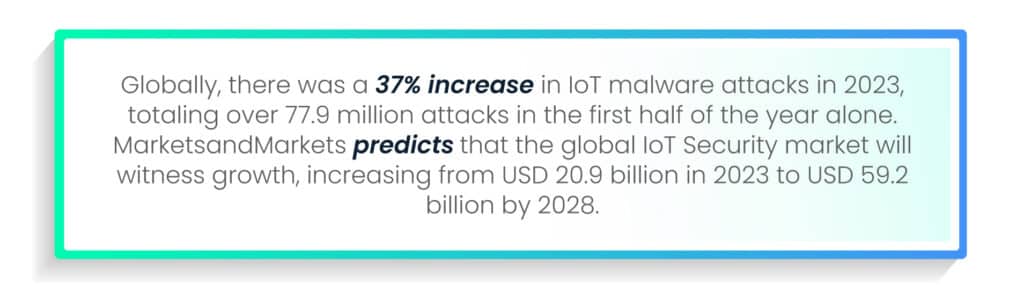
Internet of Things (IoT) security is gaining ground as one of the most viable cybersecurity industry trends in 2024.

It is a critical aspect of cybersecurity that focuses on safeguarding the interconnected devices and systems within the IoT ecosystem.

As the number of IoT devices continues to surge across various sectors, ranging from smart homes and healthcare to industrial settings, ensuring robust security measures is extremely important.

By mitigating vulnerabilities and exploits, IoT security contributes to the overall resilience of networks and systems, reducing the risk of cyberattacks and potential disruptions. 

5. Zero Trust

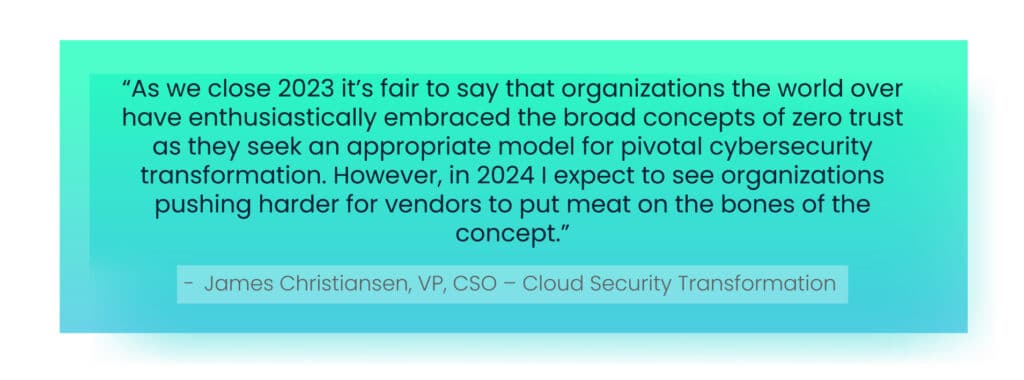
In 2024, the importance of adopting a Zero Trust security model has never been more critical. With the evolving cyber threat landscape and increasingly sophisticated attacks, the traditional perimeter-based security approach is no longer sufficient. 

Zero Trust challenges the notion that entities, whether inside or outside the organization, should be automatically trusted. By requiring continuous verification of the identity and security posture of users, devices, and applications, Zero Trust establishes a more resilient defense against both internal and external threats. 

This approach aligns with the dynamic nature of modern work environments, where remote access, cloud services, and mobile devices are prevalent. 

Embracing Zero Trust is essential to fortify cybersecurity postures and ensure that organizations stay ahead of the curve in mitigating potential security risks.

Wrapping up

As we wrap up our insights into the cybersecurity landscape for 2024, it’s clear that organizations will face a dynamic set of challenges in the realm of digital security. From the ongoing threat of zero-day attacks exploiting vulnerabilities to the growing risks associated with supply chain vulnerabilities, the importance of robust cybersecurity measures is clear as day.

The emergence of ransomware as a service (RaaS) adds a layer of complexity, highlighting the need for proactive defense strategies. Fortunately, there is encouraging news in the form of emerging cybersecurity trends.

Embracing AI and machine learning for real-time threat analysis, integrating blockchain technology for decentralized security, investing in cybersecurity insurance for financial protection, prioritizing IoT security in the face of increasing attacks, and adopting the Zero Trust security model are key strategies for building resilient defense mechanisms.

As we navigate the intricacies of 2024, organizations should focus on staying ahead of cyber threats, fostering collaboration within the industry and security communities, and continually enhancing cybersecurity awareness. A holistic and proactive approach is essential to safeguard sensitive data, maintain trust, and uphold the integrity of our digital ecosystems.

FAQs

1. What is a zero-day attack?

A zero-day attack is a cyberattack that exploits undisclosed vulnerabilities in software or hardware for which no patches or fixes are available. Threat actors take advantage of the time gap between the discovery of the vulnerability and the release of a fix, aiming to compromise systems, steal data, or carry out malicious activities.

2. What happened in the MOVEit data breach in 2023?

The MOVEit data breach in 2023 was a notable zero-day attack attributed to the threat actor Lace Tempest, associated with the Clop ransomware gang. The attackers focused on data theft rather than deploying ransomware, impacting a staggering number of victims, estimated at 2,095 organizations and over 62 million individuals.

3. What is a supply chain attack?

A supply chain attack is a type of cyberattack that targets vulnerabilities in a system’s supply chain – the network of organizations, people, activities, information, and resources involved in the production and delivery of a product or service. In cybersecurity, this attack typically involves exploiting weaknesses in the supply chain to compromise the security of the end product.

4. What is Ransomware as a Service (RaaS)?

Ransomware as a Service (RaaS) is a cybercriminal business model that allows individuals with limited technical expertise to launch ransomware attacks. Experienced ransomware developers create and maintain the malicious software, while less skilled individuals, referred to as “affiliates” or “customers,” can use or lease the ransomware to carry out attacks.

Authored by

Aayush Ghosh Choudhary
Co-founder & CEO at Scrut

Risk Grustlers Ep 11 | Security: Building a Business Within A Business

Hey there, everyone! Welcome to Season Two of Risk Grustlers, where we immerse ourselves in the fascinating narratives of individuals within the realm of risk and compliance. With a diverse array of guests hailing from various backgrounds, each conversation promises to be both exhilarating and profoundly enlightening.

Today, we’re in for a treat as we engage in a candid discussion with Aaron Worthman, the CIO and CISO at Spire One, to uncover his journey through the realm of risk management. Let’s explore his insights and experiences in navigating the complexities of cybersecurity.

You can listen to the complete podcast here.

Todd: Before we delve into the intricacies, I’m genuinely intrigued by your journey. What sparked your interest initially? Because, frankly, none of us started off in IT and security. It wasn’t even a prominent field back in the nineties, barely a blip on the radar. So, please, share your story. How did it all begin for you?

Aaron: Certainly. I was born and raised here in Silicon Valley. My father was a sys admin, working for companies like IBM and Texas Instruments. Computers were always present in our household, but I never saw it as a career path initially. My passion back then revolved around being a tagger and heavily indulging in street art, especially here in the valley. When it came time for higher education, I opted for graphic design. There was a local school offering specialized programs in either sys admin or graphic design, and I chose the latter.

During that period, I worked at a few startups. I believe my first stint was around ’96 or ’97. Initially, I started as a receptionist, then worked my way up to administrative roles like assistant and eventually office manager. Throughout these positions, I found myself tinkering with the startup’s computers due to my background. Tasks like setting up user accounts, managing DNS and static IP addresses, handling anti-accounts, and setting up exchange accounts became part of my routine as an office manager.

Then, one day, a recruiter approached me about a full-time IT position. My initial reaction was reluctance; after all, I enjoyed the autonomy and perks of my current role. However, when she mentioned the salary, which was double what I was making as an office manager, I reconsidered. Thus, my journey into the world of sys admin, SRE, and eventually leadership began, thanks to someone taking a chance on me.

Todd: Now, regarding the bread-making endeavor you mentioned, that’s quite a departure from IT! How did that come about?

Aaron: Well, during the pandemic, like many others, I missed the sourdough trend entirely. However, I received a pizza oven as a gift, which sparked my curiosity. I embarked on a quest to perfect pizza dough, researching the most flavorful options. That’s when I discovered Serrano as the ideal choice. From there, it evolved into a side hobby of sourdough-making, primarily for pizza.

But as anyone who’s ventured into sourdough territory knows, there’s a lot of discard involved. So, naturally, bread-making became the next logical step, followed by cakes, muffins, and even English muffins. It’s been a culinary journey inspired by a desire for the perfect pizza dough.

Todd: Great, that’s good some bread, although let’s get back on track discussing security! Even if we did have an enormous budget, there’s no way we would be able to protect a company from every single threat. So how do you establish a budgetary baseline for a security program? 

Aaron: So, I think it starts with the philosophy that IT and security functions should operate as businesses within a business. It’s about being mindful of our spend, understanding who our customers, investors, and partners are, essentially building a community around our security product. Imagine if security were a product – how would we run it?

After adopting this philosophy, the next step is to align with stakeholders and grasp the bigger picture of the company’s vision. As security and IT leaders, our role is to enable the company to succeed in achieving that vision. This deep involvement in the business helps us understand its risk appetite and tolerance, which forms the basis of our security strategy.

In practical terms, it’s akin to creating a business plan for security. We engage with various stakeholders, from customer support to marketing and sales, to understand their needs and concerns. By doing so, we can tailor our risk management approach to align with the company’s objectives.

For instance, we consider both the positive and negative impacts on the company. Positive outcomes might include pursuing a compliance certification that unlocks new revenue streams, while negative risks could involve potential breaches or failures to meet objectives.

Now, regarding budget allocation, the industry standard often suggests around 1% of revenue for security. However, for pre-revenue companies, this calculation can be challenging. In such cases, I propose linking security budget to potential revenue or the revenue targets for the year.

Communicating this risk to stakeholders, particularly the board of directors, is crucial. Even if they accept the risk, it’s essential to prepare contingency plans while being willing to let go if our advice isn’t followed.

When it comes to presenting security to the board, it’s about understanding the business impact of security incidents. We need to speak their language, aligning our discussions with their objectives and concerns. While precise numbers are ideal, establishing rapport and credibility through ongoing dialogue is equally important.

Transitioning from a tactical to a strategic mindset, especially for highly technical individuals, requires learning business speak and understanding investor language. It’s a skill set that can be developed with time and effort.

Ultimately, establishing a budgetary baseline for a security program involves aligning with stakeholders, understanding business objectives, and effectively communicating the impact of security incidents in business terms.

Todd: How do you find the right balance between allocating resources for immediate needs and investing in long-term resilience for your security program?

Aaron: It all comes down to a fundamental philosophy I adhere to, which emphasizes the value of diverse skill sets within the team. Rather than solely hiring experts in specific areas, I prefer individuals with varied experiences, like a senior risk analyst who has also worked as a network or security admin. This diversity enables us to maintain a balanced approach to budget and resource allocation.

To stay ahead of scaling challenges, I advocate for proactive measures such as establishing relationships with Managed Service Providers (MSPs) or considering outsourcing before the need arises. By doing so, we can access burst capacity when required without compromising the integrity of our internal team.

For those navigating the early stages of building a company’s IT and security infrastructure single-handedly, my advice varies based on company size and growth trajectory. Typically, once a company reaches around 100 employees, it’s time to consider focusing either on IT or security, depending on the business’s priorities and plans.

For instance, if security plays a significant role in the company’s objectives, such as achieving a SOC 2 type II certification for a SaaS business, investing in compliance expertise or suitable tools beforehand is essential. By strategically aligning resources with business goals, small companies can lay a robust foundation for future growth and security.

Todd: Since you mentioned it, do you ever try to sell compliance as a revenue advantage to the company?

Aaron: Absolutely. When discussing compliance with the business, I frame it as a cost of revenue. Just like we calculate the cost of goods sold, understanding the investment needed to obtain certifications like SOC 2 Type II or FedRAMP is crucial for unlocking potential revenue streams. This conversation is essential for security professionals to have with CFOs or board members to align security initiatives with business objectives.

Moreover, in smaller company scenarios, staying informed about industry breaches is paramount. Tools like Feedly help me curate cybersecurity news, allowing me to promptly address concerns raised by CEOs or stakeholders. Regardless of our role, whether a CISO or an individual contributor, it’s our responsibility to stay updated and provide confident responses when questions about the company’s security posture arise.

Todd: Okay. So since you touched on tools, we all learn from when we get breached or something happens. So when you start at a new company or consulting for a company, do you follow any specific frameworks that you like to measure by 

Aaron: Absolutely. There are foundational frameworks like CIS top 20 and various NIST standards that provide a solid starting point regardless of the company’s industry or size. However, before diving into specific certifications or compliance requirements, it’s crucial to understand the business stakeholders and align security initiatives with their objectives.

Todd: Understood, however with the proliferation of security tools, managing them effectively becomes a challenge. How do you navigate purchasing decisions amidst this vast landscape of security solutions?

Aaron: It’s essential to adopt an internal-first approach and evaluate if we can develop certain features or tools in-house before considering external purchases. For instance, if a company lacks visibility into its attack surface, building an internal tool to assess it may be more cost-effective than buying a commercial solution outright. However, it’s crucial not to overburden the budget with unnecessary purchases. Developing a clear strategy for in-house development and rigorous documentation ensures continuity and mitigates risks associated with personnel changes.

Todd: So based on all your experiences, have you ever encountered or heard of an organization that severely underspent on security, leading to a significant breach or cyber catastrophe? And if so, what were the lessons learned from that situation? Was it primarily a budgetary issue or a cultural issue, or perhaps something else?

Aaron: I’ve come across instances where organizations failed to allocate adequate resources to cybersecurity, leading to devastating consequences. While I haven’t directly experienced this, I’ve observed scenarios where there was a breakdown in communication between cybersecurity leadership and budget stakeholders, often the CFO. This breakdown can stem from either party being unwilling to engage honestly with the other. It’s crucial for cybersecurity leaders to strike a balance, ensuring they neither overspend nor underspend on security initiatives. Real leadership lies in transparent communication and the ability to reassess and reallocate resources as needed.

Todd: Hospitals, for example, often face budget constraints, yet ransomware attacks can have life-threatening consequences. How do we address this challenge, particularly in non-profit organizations where revenue isn’t the primary concern?

Aaron: That’s a critical issue. For non-profits like hospitals, the conversation needs to shift from revenue to other critical metrics, such as patient care and operational continuity. By quantifying the potential impact of cyber incidents on patient care and operational downtime, cybersecurity leaders can effectively convey the importance of investing in security measures. It’s about understanding the organization’s core objectives and aligning security initiatives accordingly, even if revenue isn’t the driving force.

Todd: As we wrap up, could you shed some light on how one begins their security journey within a company, and perhaps provide us with a top five checklist of key considerations?

Aaron: Absolutely, Todd. Firstly, it’s crucial to grasp the landscape of stakeholders, encompassing partners, superiors, and even potential board members. Next, delve into understanding the people aspect, acknowledging the significance of your team, peers, and reporting structure.

Following that, comprehending the company’s approach to cybersecurity is paramount. This entails grasping the overarching mission, tactical methodologies, and historical strategies. Then, delve into dissecting the spend. As a leader, it’s imperative to scrutinize past expenditures, particularly in personnel, and prepare for potentially tough decisions regarding compensation.

Lastly, but certainly not least, is technology. Assess the current tech infrastructure, including communication and collaboration tools, and correlate it with the overall expenditure. Remember, it’s all about aligning People, Approach, Spend, and Technology (PAST) for a comprehensive security strategy.

Todd: That’s fantastic. And I like how you’ve encapsulated it all into the PAST framework. It’s definitely a memorable way to approach it. 

Aaron, thank you so much for taking the time to join us today. Your insights into the realm of security and budgeting have been invaluable. 

Budgeting with all aspects of security in mind is truly a key requirement. To all our listeners, thank you for tuning in to this episode of Risk Grustlers, Season Two. If you haven’t caught Season One yet, remember to take a look at it here

Stay tuned for more exciting episodes ahead with some fantastic guests lined up. Until next time, stay informed and stay compliant.

Authored by

Aayush Ghosh Choudhary
Co-founder & CEO at Scrut

ISO 27001 Certification: A Comprehensive Guide

In today’s digital landscape, maintaining compliance with information security standards is essential due to evolving threats. ISO 27001, an internationally recognized framework, plays a crucial role. It provides a systematic approach to managing and protecting sensitive information, ensuring regulatory compliance, and building trust with stakeholders. 

In a world where cyber risks are ever-present, ISO 27001 is indispensable for organizations aiming to secure their data, reputation, and competitive edge.

What is ISO 27001?

ISO 27001, officially known as the International Organization for Standardization/International Electrotechnical Commission 27001 (ISO/IEC 27001), is an internationally recognized standard for Information Security Management Systems (ISMS). 

It provides a systematic approach to managing and protecting sensitive information within organizations. ISO 27001 outlines the requirements for establishing, implementing, maintaining, and continually improving an ISMS, which is a framework designed to ensure the confidentiality, integrity, and availability of an organization’s information assets.

By establishing a framework for comprehensive security controls and continuous improvement, ISO 27001 enhances an organization’s ability to protect data, comply with legal and regulatory requirements, and build a robust foundation for information security practices.

Understanding the basics of ISO 27001 standard

ISO 27001 is structured into different sections, including clauses and Annex A, to provide a comprehensive framework for information security management. This structure allows organizations to build a robust and tailored information security management system that aligns with their specific needs and risk profile, ensuring the protection of sensitive information in today’s digital landscape. 

Here’s an overview of its structure:

Clauses (0 to 10)

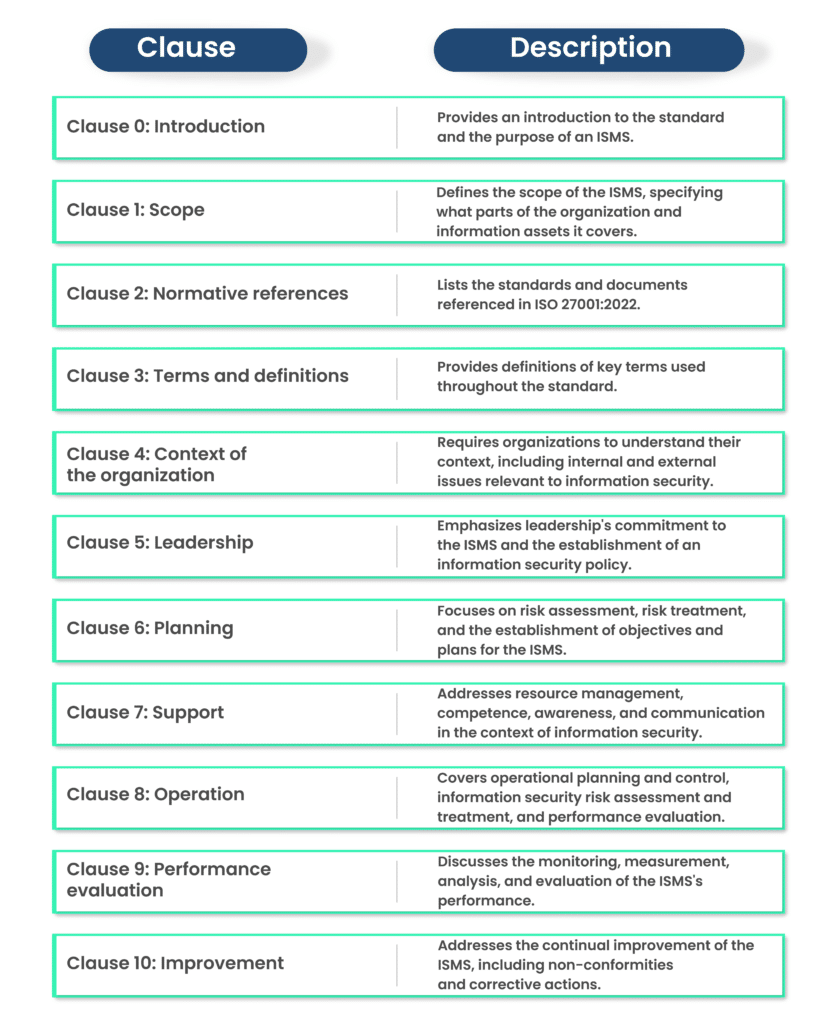
The core of ISO 27001 consists of 11 clauses, numbered from 0 to 10. These clauses are the fundamental components of the standard and lay out the essential requirements for establishing, implementing, maintaining, and continually improving an ISMS. 

They cover topics such as scope, leadership, planning, support, operation, performance evaluation, and improvement. These clauses provide the foundation for implementing effective information security practices within an organization.

Annex A 

The ISO 27001 standard is designed to accommodate organizations of varying sizes and types, enabling them to meet their requirements while emphasizing the essential principle of implementing and maintaining comprehensive information security measures.

Organizations have multiple options for achieving and maintaining compliance with ISO 27001, depending on their business nature and the extent of their data processing activities.

Annex A provides organizations with clear guidance to create a well-structured information security plan tailored to their specific commercial and operational requirements.

What has changed in Annex A 2022?

Annex A serves as a valuable tool for saving time and resources during the initial certification and ongoing compliance processes. It also serves as a foundation for conducting audits, process evaluations, and strategic planning. Additionally, organizations can use it as an internal governance document, such as a risk treatment plan, to establish a formal approach to information security.

Annex A within ISO 27001 is a component of the standard that outlines a categorized set of security controls used by organizations to demonstrate compliance with ISO 27001 6.1.3 (Information security risk treatment) and its associated Statement of Applicability.

Previously, Annex A contained 114 controls categorized into 14 sections, encompassing various aspects like access control, cryptography, physical security, and incident management.

With the introduction of ISO 27002:2022 (dealing with Information security, cybersecurity, and privacy protection controls) on February 15, 2022, ISO 27001:2022 has adjusted its Annex A controls.

The updated version of the standard now includes a streamlined set of 93 Annex A controls, incorporating 11 new controls.

Additionally, 24 controls have been consolidated, merging two or more security controls from the 2013 version, while 58 controls from ISO 27002:2013 have been revised to align with the current cybersecurity and information security landscape.

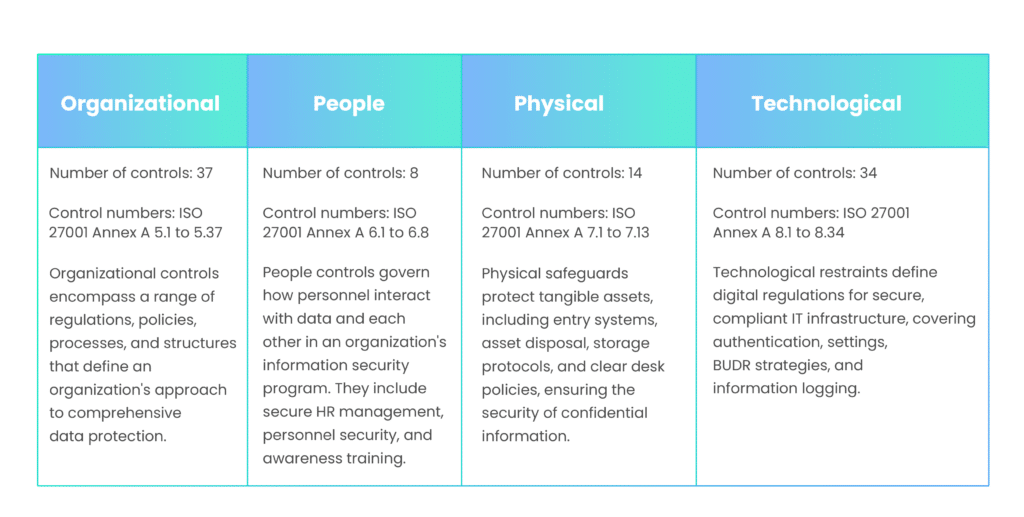
Annex A controls were grouped into four categories in 2022:

History of ISO 27001

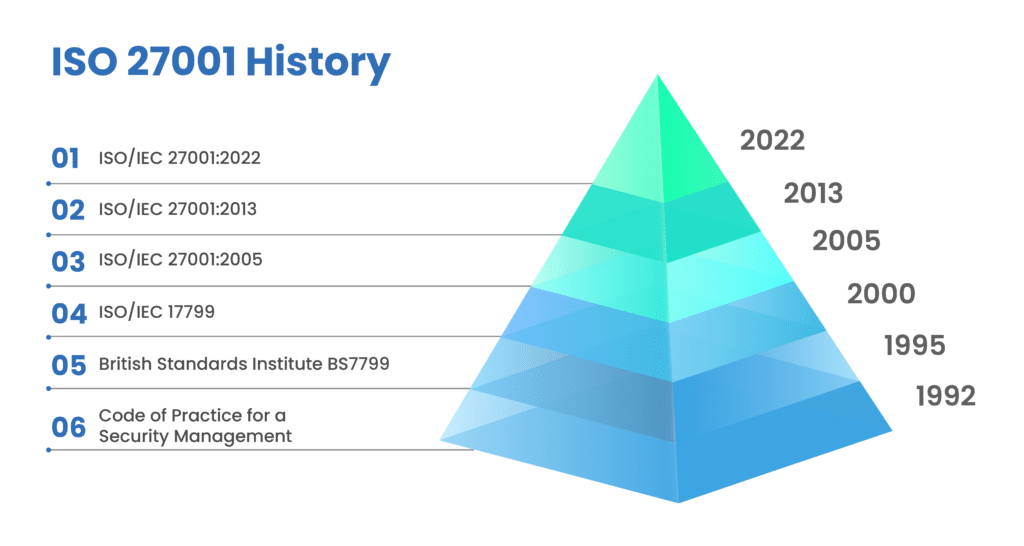
ISO 27001 has undergone several revisions and updates to stay relevant in the evolving landscape of information security. Notably, the standard was updated in 2013, and a more recent version, ISO/IEC 27001:2022, focuses on information security, cybersecurity, risk management, and operational excellence. 

The following structure shows the history of ISO 27001:

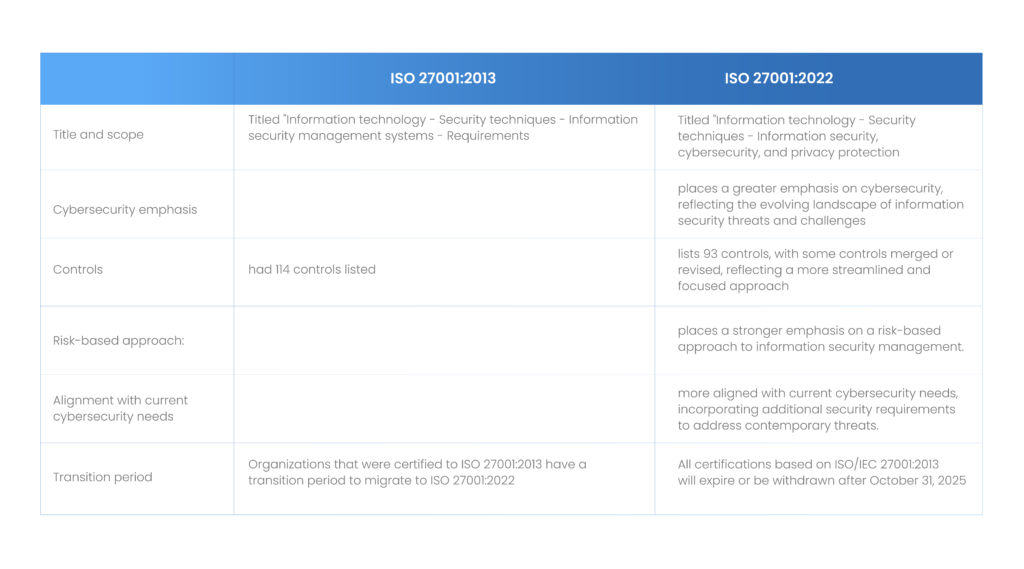
The following table shows the differences between ISO/IEC 27001:2013 and ISO/IEC 27001:2022, the latest applicable version of the standard. 

Applicability

ISO 27001 certification is adaptable and beneficial for a diverse range of organizations. In any organization where people and IT processes work in harmony, ISO 27001 can help build the trust of its stakeholders.

 It helps protect sensitive data, manage risks, comply with regulations, and enhance overall information security, regardless of the industry or size of the organization. Below are a few examples of industries that are applicable under ISO 27001. 

1. Large enterprises

Large organizations that handle substantial volumes of sensitive data, operate globally, and have complex IT infrastructures can significantly benefit from ISO 27001 certification. It helps protect their reputation, ensures regulatory compliance, and enhances overall information security management.

2. Small and medium-sized enterprises (SMEs)

SMEs with limited resources can also benefit from ISO 27001 certification. It provides a cost-effective framework to implement security measures tailored to their needs, reducing the risk of data breaches and improving competitiveness.

3. Government agencies

Government bodies handle sensitive citizen data and national security information. ISO 27001 certification helps ensure the confidentiality, integrity, and availability of critical government data, enhancing trust and transparency.

4. Financial institutions

Banks and financial institutions are prime targets for cyberattacks. ISO 27001 helps these organizations establish robust information security controls to protect customers’ financial data and comply with financial regulations.

5. Healthcare providers

Healthcare organizations store sensitive patient records and medical information. ISO 27001 certification ensures the security of patient data, compliance with healthcare regulations (e.g., HIPAA), and the protection of patients’ privacy.

6. Technology companies

Technology firms rely on cutting-edge software and hardware solutions. ISO 27001 helps them secure intellectual property, prevent data breaches, and build trust with customers and partners.

7. Manufacturing industries

Manufacturers can use ISO 27001 to implement quality assurance processes during product development and manufacturing, ensuring the security of their production systems and safeguarding proprietary information.

8. Service providers

Companies offering cloud services, managed IT services, or data center services can demonstrate their commitment to information security by obtaining ISO 27001 certification, instilling confidence in their clients.

Therefore, it is clear that for all companies that have IT processes operated by people, ISO 27001 is applicable.  As far as the cost of the ISO 27001 certification is concerned, you can refer to our article here

Challenges and Pitfalls in Implementing ISO 27001

Implementing ISO 27001 with Scrut: Planning and Phases

Implementing ISO 27001, the international standard for ISMS, involves several key phases, including planning, implementation, and auditing. The timeline for this process can vary depending on the organization’s size and complexity. 

Scrut is dedicated to delivering ISO 27001:2022 certification for your organization swiftly and efficiently, with a timeline of just 6-8 weeks. We prioritize both speed and quality, ensuring that the certification process is streamlined while maintaining the highest standards of information security compliance. 

Here’s a general outline of what is involved in the phases we follow at Scrut to help our customers get certified. 

Phase 1: Initiation and planning

Start with defining the scope of your Information Security Management System (ISMS).

  1. Scrut will conduct an induction meeting where you will be required to appoint the ISMS team and assign responsibilities.
  2. Onboard with Scrut and develop a project plan with timelines, tasks, and resources.
  3. Establish objectives and priorities for information security that you want Scrut to follow.

Phase 2: Gap analysis

If you don’t have a Vulnerability Assessment and Penetration Testing (VAPT) assessment report, conduct one with Scrut to identify and assess information security risks.

  1. Following this assessment, Scrut compares your existing information security practices with ISO 27001 requirements and highlights areas of non-compliance. 
  2. Scrut has an exhaustive team of experts with a cumulative experience of 50+ years and 30000 assessments. 
  3. They provide support in identifying the missing links in your security program in alignment with ISO 27001.

Phase 3: Remediation of gaps

Develop an action plan to address the gaps identified in the analysis. 

  1. The Scrut platform provides you with a centralized view of your data. The experts we mentioned above plan the steps you need to take to fill in the gaps. 
  2. Implement security controls and measures to mitigate risks and close gaps. The Scrut platform provides you with an easy way to follow through the remediation steps.
  3. Scrut offers MetaData Remediation – an AI-powered detection of cloud testing issues, which includes instructions for resolving them and relevant code for implementation.

Phase 4: Drafting policies and procedures

In this stage, you must develop and document information security policies, procedures, and guidelines aligned with ISO 27001 requirements.

  1. Scrut has a set of 45+ templates to help you draft policies, procedures, and guidelines on its platform. 
  2. You can use these templates as they are or make changes to them as required. 
  3. You have an entire team of experts at your disposal to review and customize the policies.

Phase 5: Collection of evidence

Now, you must gather evidence of the implementation and effectiveness of your security controls.

  1. At Scrut, we have automated software to collect evidence from various sources, so there is little to no human involvement in this process.
  2. Furthermore, Scrut has a central repository of evidence collection. Therefore, documents collected as evidence for one framework can be used for all other relevant frameworks.

Phase 6: ISMS documentation

In this stage, you must create and maintain documentation related to your ISMS, including the Statement of Applicability (SoA) and risk assessment reports.

  1. Scrut has 28 inbuilt frameworks and offers expert support to help you create custom frameworks.
  2. The team of experts at Scrut helps you create custom controls for your specific needs. You can also link all risks and artifacts mapped to the controls.

Phase 7: Employee training

The next stage of the ISO 27001 implementation process is employee training

  1. Scrut helps you monitor and manage compliance amongst employees to improve your internal security posture.
  2. With Scrut, you can govern each employee’s system/device compliance with a technical overview. 
  3. You can monitor and increase policy acceptance rates with a thorough organization-wide view and 1-click reminders.
  4. You can also create and deploy security awareness campaigns covering multiple quizzes for all or select employees. Track completion rates, statuses, and more info from interactive dashboards.
  5. Additionally, you can manage employee lifecycle by connecting your human resources information system (HRIS) and offboarding them right from the platform.

Phase 8: Internal auditing

Conducting an internal audit is essential to assess compliance with ISO 27001 requirements before external assessment. 

  1. Scrut acts as an extension of your security team when conducting internal audits
  2. The Scrut team will help you analyze the effectiveness of your ISMS, identify areas for improvement, and take corrective actions.

Phase 9: Management review and improvement (ongoing)

The next phase is to regularly review the performance and effectiveness of your ISMS.

  1. You must use the results of audits and assessments to drive continual improvement.
  2. You should also update policies, procedures, and controls as needed to adapt to changes in the organization and the threat landscape.

Phase 10: Certification audit

In this stage, you must engage a certification body to conduct an external audit of your ISMS. 

  1. Scrut has a network of auditors you can choose from. 
  2. The certification audit assesses whether your ISMS complies with ISO 27001 requirements.
  3. Scrut not only helps you get in touch with the auditors but also handholds you throughout the audit process. We also manage Service Level Agreements (SLAs) for you to get the best outputs. The audit logs and documentation help you keep track of the audit progress. 

Phase 11: Demonstrate Certification

Your ISO 27001 is an asset that you can display to win the trust of your stakeholders, including customers, suppliers, and shareholders. 

  1. Scrut provides a service called the Trust Vault, where you can display relevant compliances and control-level documentation.
  2. It also helps you protect sensitive info with NDA-based and time-gated access.
  3. You can expedite security reviews with effective monitoring of requests from the dashboard.

ISO 27001 certification monitoring & renewal

ISO 27001 certification is initially valid for three years, followed by a renewal process that includes a recertification audit akin to the initial certification audit. However, organizations must also undergo surveillance audits for two years between certification and recertification audits. 

During the recertification audit, the organization’s ISMS is thoroughly assessed for compliance with ISO 27001 standards, including a review of documentation and overall management system effectiveness.

To maintain ISO 27001 certification, organizations must prioritize continuous compliance and improvement in their information security practices. A part of this continuous monitoring is the Plan-Do-Check-Act cycle -which is crucial for organizations’ security as they grow. 

The PDCA cycle, or Deming Cycle is fundamental in ISO 27001 for adapting to security changes and maintaining ISMS effectiveness. Regular reviews and adjustments are key for robust security practices and continuous improvement.

This proactive approach is crucial not only for passing the recertification audit but also for enhancing information security and demonstrating a commitment to maintaining the highest standards of data protection and risk management.

Benefits of choosing Scrut for ISO 27001 certification

ISO 27001 positions organizations as security-conscious entities and helps them thrive in an increasingly digital and interconnected business landscape. The following are the benefits of ISO 27001 certification and the advantages of choosing Scruct as your ISO partner:

1. Improved security posture 

ISO 27001 provides a structured framework for organizations to identify, assess, and mitigate information security risks. By implementing its controls and best practices, organizations strengthen their security posture, reducing the likelihood of data breaches and cyberattacks.

Scrut can continuously monitor security controls, providing real-time insights into compliance status and potential issues. This enables proactive remediation.

2. Regulatory compliance

ISO 27001 aligns with various data protection and privacy regulations globally, such as GDPR and HIPAA. Achieving certification ensures that an organization complies with these regulations, helping avoid regulatory fines and legal consequences.

Scrut can streamline the collection of evidence required for ISO 27001 and other compliance standards. This includes documentation, logs, and reports, making it easier to demonstrate compliance during audits.

3. Enhanced trustworthiness

ISO 27001 certification demonstrates an organization’s commitment to safeguarding sensitive information. This commitment fosters trust among customers, partners, and stakeholders. Being ISO 27001 certified can be a differentiator in a competitive market, attracting clients who prioritize security.

Scrut follows automated processes and predefined rules consistently, reducing the likelihood of human errors. This ensures that security measures are applied uniformly across the organization.

4. Risk management

The standard promotes a risk-based approach to information security. It enables organizations to identify vulnerabilities and threats, allowing proactive risk mitigation. This reduces the likelihood of security incidents and their associated costs.

Scrut aids in identifying and mitigating risks promptly. It allows organizations to respond to security threats and vulnerabilities in a timely manner.

5. Cost savings

ISO 27001 helps organizations optimize security processes and resource allocation. Efficient security measures and incident management can lead to cost savings in the long run.

While there is an initial investment in Scrut, the long-term benefits include cost savings due to reduced labor, increased productivity, and improved resource allocation.  It also ensures that all necessary data is available for audit purposes.

6. Business continuity

ISO 27001 encourages business continuity planning. Organizations are better prepared to respond to disruptions and maintain operations, ensuring business resilience.

Scrut can integrate with various systems and applications, facilitating data gathering and reporting. This helps in consolidating information from different sources for compliance purposes.

7. Competitive advantage

ISO 27001 certification can be a competitive advantage. It can open doors to new markets and partnerships, as many clients prefer to work with certified vendors who prioritize information security.

Scrut automates the tasks to reduce manual effort, allowing organizations to complete tasks faster. This is particularly beneficial when dealing with repetitive compliance activities.

8. Customer confidence

ISO 27001 reassures customers that their data is handled securely. This can lead to increased customer confidence and loyalty.

9. Continuous improvement 

The certification process encourages a culture of continuous improvement in information security. Organizations regularly review and enhance their security practices to adapt to evolving threats.

Scrut can support continuous improvement by providing data-driven insights. Organizations can identify areas of weakness and implement corrective actions more effectively.

10. Global recognition 

ISO 27001 is internationally recognized. Certification can enhance an organization’s global reputation, making it easier to expand internationally.

As organizations grow, Scrut can adapt to increased compliance requirements without a proportional increase in manual effort. Scrut provides scalability and flexibility.

Conclusion

In summary, ISO 27001 is a vital framework for securing sensitive information in organizations. It provides a structured approach, outlined through its structure and the PDCA cycle, to enhance security and compliance.

ISO 27001 benefits organizations of all sizes and industries by improving security, ensuring regulatory compliance and fostering trust among stakeholders. While challenges exist, automated tools like Scrut can streamline the process and offer long-term advantages.

In a digital age with evolving threats, ISO 27001 certification is a commitment to data protection and a competitive edge. Consider the journey to ISO 27001 for enhanced information security and a more secure future.

Ready to streamline your ISO 27001 compliance journey? Choose Scrut, your trusted partner in achieving and maintaining ISO 27001 certification. With our automated tools and expert guidance, you can simplify compliance, enhance security, and boost your organization’s reputation. Take the first step towards ISO 27001 success – get in touch with us today to schedule a consultation!

FAQs

1. What is ISO 27001?

ISO 27001 is an internationally recognized standard for Information Security Management Systems (ISMS). It provides a framework for organizations to manage and protect sensitive information effectively.

2. Who can benefit from ISO 27001 certification?

ISO 27001 is adaptable and beneficial for organizations of all sizes and across various industries. It is relevant to large enterprises, SMEs, government agencies, financial institutions, healthcare providers, technology companies, and more.

3. What are the main benefits of ISO 27001 certification?

ISO 27001 certification offers benefits such as improved security, regulatory compliance, enhanced trustworthiness, efficient risk management, cost savings, and competitive advantage.

Authored by

Aayush Ghosh Choudhary
Co-founder & CEO at Scrut

The human element in compliance: How Scrut Automation’s expert guidance makes a difference

In the realm of compliance and ethical standards, the human touch remains paramount.

Indeed, while automation aids efficiency, the human element remains indispensable, offering contextual judgment, ethical decision-making, and adaptability. 

However, the reliance on the human element also underscores the need for expert guidance in navigating the complexities of compliance. As regulations evolve and become more intricate, the importance of seasoned professionals equipped with comprehensive knowledge becomes apparent. The human element, if not properly aided by expertise, can inadvertently become a potential drawback, leading to misinterpretations, oversights, or even unintentional violations. 

This exploration focuses on the synergy between human expertise and automation at Scrut, emphasizing the pivotal role of expert guidance in optimizing compliance processes.

The current landscape of compliance

In the contemporary landscape of compliance, organizations grapple with a dynamic and ever-evolving regulatory environment. While many have embraced technological advancements to streamline their compliance processes, some firms continue to adhere to traditional methods. 

Despite the availability of cutting-edge solutions, these companies persist in relying on manual processes and outdated systems, underscoring the diversity of approaches within the compliance sphere. 

Manual processes often lead to inefficiencies, an increased likelihood of human errors, hampered agility, and a slower response to dynamic regulatory changes. Reliance on outdated systems may result in incomplete or inaccurate data, compromising the integrity of compliance efforts. 

As the business world continues to advance, the persistence of traditional methods impedes organizations from achieving optimal efficiency, accuracy, and responsiveness in navigating the intricate terrain of regulatory compliance.

To address the challenges posed by traditional methods in compliance, the imperative for expert guidance becomes evident. Seasoned professionals equipped with comprehensive knowledge can provide invaluable insights to navigate complex regulatory landscapes. Their expertise ensures a more accurate interpretation of regulations, facilitates the adoption of modern compliance technologies, and aids in the development of agile frameworks. 

Expert guidance becomes a strategic solution, enabling organizations to overcome the pitfalls associated with traditional methods and fostering a proactive approach towards compliance in an ever-changing business environment.

Automation emerges as the go-to market solution for streamlining compliance processes by reducing manual efforts, minimizing the risk of human errors, and enhancing operational efficiency. It empowers organizations to stay agile in adapting to evolving regulatory landscapes while ensuring accuracy and responsiveness in meeting compliance requirements.

Challenges faced by organizations in maintaining compliance

One prevalent issue is the complexity of regulatory landscapes, characterized by ever-changing requirements and industry-specific standards. Using manual methods proves to be a substantial hurdle in this dynamic environment, as the sheer volume of updates becomes overwhelming, making it increasingly difficult to stay abreast of the evolving compliance landscape. 

Resource constraints, including the shortage of skilled personnel and budget limitations, pose significant hurdles. The acquisition and retention of security talent emerge as the most critical challenge within this constraint, especially when budget limitations restrict the formation of larger compliance teams. 

In such scenarios, presenting the importance of bolstering security resources to the board and communicating your organization’s security posture becomes a pivotal endeavor, highlighting the indispensable role of skilled professionals in navigating the complex terrain of compliance.

Additionally, the siloed nature of many compliance processes within organizations often leads to inefficiencies and difficulties in achieving a holistic view of compliance. Traditional methods such as spreadsheets and email threads prove suboptimal for cross-team collaboration, underscoring the challenges arising from the lack of a centralized solution.

The continuous evolution of cyber threats further compounds the challenge, necessitating proactive measures to stay ahead. This challenge is exacerbated by the continuous monitoring problem with human errors, emphasizing the critical need for automated and vigilant cybersecurity solutions to adeptly navigate the dynamic cyber threat landscape.

Mastering compliance: Navigating the maze with expert guidance

In the complex realm of compliance management, expert guidance emerges as the compass steering organizations through the intricate maze of regulatory landscapes. The evolving nature of regulations and the intricacies of compliance processes necessitate the expertise of seasoned professionals.

One impactful solution to the myriad challenges is to onboard compliance experts, and a strategic partnership with a specialized firm like Scrut proves instrumental. Collaborating with Scrut not only provides access to a wealth of compliance knowledge but also ensures a tailored approach to address specific organizational needs. In this symbiotic alliance, organizations can harness the power of expert guidance to not only navigate current compliance challenges but also fortify themselves against future uncertainties.

Introducing Scrut Automation

Scrut Automation stands as a cutting-edge solution designed to revolutionize compliance management and cybersecurity. As an all-encompassing Governance, Risk, and Compliance  (GRC) platform, Scrut offers a comprehensive suite of tools tailored to meet the dynamic needs of modern businesses. 

Scrut’s sophisticated automation capabilities, coupled with human expertise, position Scrut as a pivotal asset for organizations striving to navigate the complexities of compliance and cybersecurity landscapes seamlessly. The platform’s user-friendly interface enhances accessibility, ensuring that decision-makers have a clear overview of compliance status, potential risks, and ongoing mitigation efforts. It is designed to facilitate seamless collaboration between automated processes and human decision-makers. 

Whether in the creation of policies, interpretation of compliance nuances, or the development of customized workflows, Scrut recognizes the irreplaceable value of human expertise in navigating the intricacies of compliance and cybersecurity. In fact, in our automated policy creation, user engagement is key. Users can review and edit the final results, fostering collaboration and customization to address any discrepancies and align compliance frameworks with organizational nuances.

The platform acts as a facilitator, empowering human experts to focus on strategic initiatives, innovation, and the dynamic aspects of compliance management, while automation handles routine, repetitive tasks with precision and efficiency.

How Scrut Automation bridges the gap between technology and human decision-making

Beyond the conventional approach of automated processes, Scrut stands out with its unique emphasis on expert guidance, offering a distinctive “white glove service” that significantly elevates the compliance experience.

A. Advanced compliance automation

Scrut’s Automation is the backbone of its compliance prowess. It streamlines complex and routine tasks, ranging from risk assessments to evidence collection, ensuring precision, consistency, and efficiency. 

This automation not only accelerates compliance processes but also minimizes the likelihood of errors, providing organizations with a robust foundation for their compliance efforts.

B. White glove service – Expert guidance

What sets Scrut apart is its commitment to providing a “white glove service” that goes beyond mere automation. Recognizing the intricate nature of compliance, Scrut offers expert guidance throughout the compliance journey. 

This human touch ensures that organizations not only navigate the complexities of compliance seamlessly but also gain valuable insights from seasoned professionals.

Navigating complexities

Scrut’s experts act as navigators, guiding organizations through the intricacies of compliance landscapes. Whether interpreting regulatory nuances or addressing industry-specific challenges, these experts offer personalized assistance, ensuring a tailored approach that aligns with the unique needs of each organization.

Proactive decision-making

Beyond automated processes, Scrut’s experts empower organizations with proactive decision-making. They provide strategic insights, interpret evolving compliance requirements, and offer recommendations that extend beyond the capabilities of pure automation. This collaborative approach ensures that organizations are well-prepared for current and future compliance challenges.

Continuous support

Scrut’s white glove service extends to continuous support throughout the compliance process. Whether it’s clarifying doubts, addressing issues, or offering strategic advice, Scrut’s experts are available to assist organizations 24/7. This ongoing support ensures that organizations not only meet compliance standards but also cultivate a culture of continuous improvement and resilience.

C. The marketplace of auditors

Choosing the right auditors in today’s dynamic marketplace presents significant challenges for organizations. The diversity of auditing services, coupled with varying levels of expertise and qualifications, makes the selection process complex. 

Transparency issues in auditor qualifications and the lack of a standardized approach further complicate decision-making. Organizations often grapple with deciphering auditor capabilities, understanding their industry-specific experience, and ensuring alignment with their unique compliance needs. 

Enter Scrut Automation, a game-changer in the auditor selection process. Through its innovative platform, Scrut provides a solution to the challenges organizations face when choosing auditors. 

The Scrut Auditor Network serves as a convenient pathway for customers to access and collaborate with a global network of auditors. Empaneled with PCAOB and CERT-IN, Scrut’s network boasts over 500 customers, offering a vast pool of auditors with diverse expertise.

D. The Scrut partner network 

Behind Scrut Automation’s success is a dedicated and expert team committed to revolutionizing compliance management and auditing. 

The team collaborates with a spectrum of partners, including technology companies, managed services, consultants, auditors, and guided services, to offer customers a comprehensive range of offerings tailored to meet their unique requirements.

The Scrut Automation team ensures seamless integration of technology and expertise, driving growth, strengthening customer relationships, and enriching the marketplace for both auditors and businesses seeking auditing services.

In this collaborative network, Scrut is proud to partner with esteemed organizations across various domains. 


Scrut’s technology partners include optiq.ai and Springworks, both contributing cutting-edge solutions and technological advancements. 
Service partners, such as Scybers, Cansol Consulting, and Redington, play a vital role in providing exceptional services and support to clients. 
For audit expertise, Scrut collaborates with distinguished audit partners, namely Connor Consulting, Accorp, 360 Advanced, and Sensiba

These partnerships reflect the organization’s commitment to delivering a comprehensive suite of offerings, combining technological innovation, top-notch services, and expert audit capabilities to meet the unique needs of our clients and ensure a seamless experience in compliance management and auditing processes.

E. Scrut’s expertise and clientele 

Trusted by hundreds of high-growth companies worldwide, Scrut has established itself as a go-to solution for managing risk, automating information security programs, and continuous control monitoring. 

The diverse clientele spans from startups to enterprises, with notable customers including Defiant, SignDesk, Qapita, Creditas, Cashfree Payments, and Gameskraft. 

One such success story comes from Joe Forrester, SVP Engineering & Product at Choozle, who attests to the efficacy of Scrut in facilitating processes, supplying documentation, and showcasing policies and procedures, ultimately leading to increased business opportunities.

Pain-free integration and greater visibility

Choozle’s experience exemplifies Scrut’s commitment to seamless integration and enhanced compliance visibility. The collaborative efforts of professional services and customer success teams were pivotal in documenting Choozle’s entire SOC 2 journey. The Policy module’s tracing capabilities strengthened audit posture, and swift onboarding, within an hour, enabled immediate cloud tests for a comprehensive overview. Risk assessment features simplified open risk tracking, while the built-in Third-Party Risk Management efficiently handled compliance tracking for sub-vendors.

Another testament to Scrut’s impact comes from Freight Tiger, a pioneer in end-to-end freight management systems in India. Facilitating logistics for established shippers and SMEs alike, Freight Tiger operates as a neutral SaaS platform connecting over 60+ shippers. In navigating the challenges of securing a complex, high-velocity cloud infrastructure, Freight Tiger opted for Scrut’s automated cloud monitoring.

Automated cloud monitoring for Freight Tiger

Freight Tiger, with 90K+ connected locations, relied on Scrut’s cloud security to monitor its intricate infrastructure across 200+ controls. Misconfigurations were promptly flagged and communicated to the DevOps team, seamlessly integrated through Jira. Scrut’s continuous monitoring ensured compliance with SOC 2, GDPR, ISO 27001, ISO 27017, and ISO 27018, establishing Freight Tiger as continuously audit-ready. This showcases Scrut’s effectiveness in complex, high-stakes environments.

With Scrut’s integrations, CEDCOSS automates tests and evidence collections for 70% of controls, facilitating compliance with SOC 2, ISO 27001, and GDPR. The result is an efficient, secure, and compliant e-commerce landscape, reducing the time for annual audits from months to a swift 72 hours.

Vamsi Y, Co-founder of Uptime AI, emphasized the critical need for a robust information security posture with automation at its core to match the scale of the data handled by their AI. 

24/7 support: A pillar of Scrut’s compliance excellence

Scrut’s transformative impact on compliance management is rooted in its dedicated team of experienced compliance specialists, who serve as the backbone of Scrut’s commitment to excellence. 

Hailing from diverse backgrounds, these experts possess in-depth knowledge of regulatory landscapes, industry-specific challenges, and compliance frameworks. Their collective proficiency allows them to guide organizations through complexities, offering tailored solutions aligned with industry best practices. 

The 24/7 support, a cornerstone of Scrut’s client success commitment, ensures continuous access to assistance, addressing real-time challenges and fostering a culture of continuous improvement in compliance management. This unwavering support positions Scrut as a reliable partner in organizations’ journeys towards robust and adaptive compliance.

Where manual tasks take precedence over automation at Scrut

At Scrut, manual tasks take precedence in several key roles that involve intricate decision-making and nuanced understanding of specific organizational contexts. These roles often require a personalized touch and the expertise of human professionals to navigate complex scenarios.  

  1. Policy creation and customization: While Scrut’s automation streamlines policy management, the creation and customization of policies often involve collaboration with information security experts. Crafting policies tailored to unique business needs and ensuring alignment with industry best practices requires human input.
  1. Vendor risk assessments: Assessing and mitigating risks associated with third-party vendors often involves nuanced judgments. Scrut may automate certain aspects like the creation of questionnaires and gathering responses, but the comprehensive evaluation of vendor risks, especially in diverse business landscapes, benefits from the expertise of manual assessments.
  1. Compliance workflows design: Though Scrut offers flexible compliance workflows, designing workflows tailored to specific industry regulations and organizational structures requires human insights. Adapting to dynamic regulatory landscapes and evolving compliance needs often involves manual adjustments.
  1. Internal monitoring and auditing: While Scrut automates aspects of internal monitoring and auditing, the interpretation of audit findings, collaboration during peer reviews, and resolution of complex compliance challenges demand human expertise.
  1. Client onboarding and support: Providing white-glove service to clients during onboarding and offering expert support involves interpersonal skills and tailored communication that automation may lack. Understanding unique client requirements and addressing specific concerns requires a human touch.

Wrapping up

As we’ve explored the diverse facets of compliance challenges, solutions, and innovations, it’s evident that human expertise, experience, and decision-making play a crucial role. The understanding, interpretation, and application of compliance standards require a human touch to ensure nuanced and context-specific adherence.

Scrut Automation emerges as a game-changer, seamlessly intertwining the human element with cutting-edge technology. The platform’s unique value proposition lies in its ability to not just automate routine tasks but to serve as a guiding force, offering expert assistance in policy creation, control mapping, and comprehensive compliance workflows. 

Whether you are grappling with the intricacies of policy creation, control mapping, or real-time compliance monitoring, Scrut is here to guide you. Schedule a demo or reach out to Scrut today. 

Frequently Asked Questions

1. How does Scrut Automation revolutionize regulatory compliance?

Scrut Automation transforms regulatory compliance by seamlessly integrating advanced technology with expert human guidance. This synergy not only streamlines but elevates the compliance process, offering organizations a resilient strategy to navigate dynamic regulatory landscapes.

2. What sets Scrut Automation apart in the marketplace of compliance solutions?

Scrut Automation distinguishes itself by providing a unique blend of cutting-edge technology and the expertise of a dedicated team of compliance specialists. This combination ensures a holistic and dynamic approach to compliance management, addressing the challenges faced by organizations in maintaining adherence to evolving regulatory standards.

3. How does Scrut Automation support organizations in choosing the right auditors?

Scrut Automation streamlines the auditor selection process by offering insights into the current marketplace of auditors. Through its expert guidance, organizations can make informed decisions, ensuring they collaborate with auditors who align with their specific compliance needs.

4. Can you elaborate on the role of the Scrut Automation team and their 24/7 support?

The Scrut Automation team comprises seasoned compliance specialists who provide expertise and support round the clock. Their 24/7 availability ensures that organizations receive timely assistance, resolving compliance challenges and offering real-time solutions for comprehensive compliance management.

5. How does Scrut Automation navigate the evolving landscape of compliance trends and emerging technologies?

Scrut Automation is designed to adapt to the ever-changing compliance landscape. By integrating emerging technologies and staying abreast of compliance trends, Scrut ensures that organizations are well-prepared for future challenges, providing a forward-thinking approach to regulatory adherence.

Authored by

Aayush Ghosh Choudhary
Co-founder & CEO at Scrut

Deciphering the Digital Personal Data Protection Act (DPDPA) 2023 in India: A comprehensive guide

The DPDP Bill 2022 officially became the Digital Personal Data Protection Act after receiving the President’s assent on August 11, 2023 (official Gazette notification by the Government of India—DPDP Act). The DPDPA, in conjunction with the Digital India Bill and the draft Indian Telecommunication Bill 2022, will serve as a strong foothold to address the governance of personal data in India.

This Act is responsible for regulating the processing of digital personal data in India, regardless of whether the data was initially collected in digital or non-digital form and later digitized. 

Additionally, it’s important to mention that the DPDP Act will have an impact on India’s trade negotiations with other nations. It is at par with the international laws for data protection, such as the Global Data Protection Regulation (GDPR) of the European Union.

Applicability of the DPDP Act 2023

At its core, the DPDP Act has a fundamental goal of establishing a heightened level of accountability and responsibility for entities operating within India, which includes internet companies, mobile apps, and businesses engaged in collecting, storing, and processing citizens’ data. 

Emphasizing the importance of the “Right to Privacy,” this legislation aims to ensure that these entities operate with transparency and are held accountable for their actions in handling personal data, thereby prioritizing the privacy and data protection rights of Indian citizens.

The DPDP Act’s reach extends beyond India’s borders, encompassing digital personal data processing activities conducted abroad pertaining to individuals in India.

Data fiduciary

“Data Fiduciary” means any person who, alone or in conjunction with other persons, determines the purpose and means of processing personal data.

The data fiduciary is responsible for managing and processing the data, while the data principal is the individual whose data is being collected and protected.

Obligations of a data fiduciary

  1. A person can only use a Data Principal’s personal data in accordance with this Act and for a lawful reason, either:
    • With the Data Principal’s consent, or
    • For specific legitimate purposes.
  1. In this context, “lawful purpose” means any purpose that is not explicitly prohibited by law.
  1. Whenever a Data Fiduciary requests consent from a Data Principal, they must provide the Data Principal with a notice that:
    • Explains the personal data being collected and the purpose of its use,
    • Describes how the Data Principal can exercise their rights, and
    • Informs the Data Principal of the procedure for making a complaint to the Board, following the prescribed guidelines.
  1. A significant Data Fiduciary must appoint a Data Protection Officer (DPO) based in India, who is responsible to the Board of Directors or similar governing body of the Significant Data Fiduciary.

Who is a Significant Data Fiduciary?

The three main obligations of a Significant Data Fiduciary are:

  • Appoint a Data Protection Officer (DPO) based in India and is directly answerable to the Board of Directors or a similar governing body. 
  • Appoint an Independent Data Auditor to evaluate compliance
  • Conduct Data Protection Impact Assessment (DPIA) & periodic audits

Data Principal

“Data Principal” means the individual to whom the personal data relates and where such individual is—

(i) a child, includes the parents or lawful guardian of such a child;

(ii) a person with a disability, including her lawful guardian, acting on her behalf.

Rights of a Data Principal

The Data Principal has the following rights:

  1. A Data Principal has the right to request certain information from a Data Fiduciary to whom they have previously given consent. To do so, they can make a request following the prescribed procedure. The information they can request includes:
    • A summary of their personal data being processed by the Data Fiduciary and the activities related to processing that data.
    • The names of all other Data Fiduciaries and Data Processors with whom the personal data has been shared by the Data Fiduciary, along with a description of the shared personal data.
    • Any other information related to their personal data and its processing, as prescribed by law.
  1. Clauses (b) and (c) of subsection (1) do not apply to the sharing of personal data by the Data Fiduciary with another Data Fiduciary authorized by law to obtain such data. This sharing can occur when the other Data Fiduciary requests it in writing for purposes such as preventing or investigating offenses or cyber incidents or for prosecuting or punishing offenses.
  1. A Data Principal also has the right to request corrections, completions, updates, or erasure of their personal data for which they have given consent. This should be done following the procedures and requirements of applicable laws.
  1. When a Data Principal requests correction, completion, or updating of their personal data, the Data Fiduciary should:
    • Correct any inaccurate or misleading personal data.
    • Complete any incomplete personal data.
    • Update the personal data.
  1. A Data Principal can request the erasure of their personal data following the prescribed procedure. Upon receiving such a request, the Data Fiduciary should erase the personal data unless it is necessary to retain it for the specified purpose or to comply with applicable laws.
  1. A Data Principal has the right to access grievance redressal mechanisms provided by a Data Fiduciary or Consent Manager for any actions or omissions related to the handling of their personal data or the exercise of their rights under this Act and its rules.
  1. The Data Fiduciary or Consent Manager must provide readily available means for grievance redressal regarding their obligations in relation to the Data Principal’s personal data and the exercise of the Data Principal’s rights under this Act and its rules.

Duties of Data Principal

The rights of a Data Principal don’t come without the balancing share of duties, A Data Principal must do the following:

  1. Follow all current applicable laws when exercising rights under this Act.
  2. Do not pretend to be someone else when providing personal data for a specific purpose.
  3. Not withhold important information when providing personal data for official documents like IDs or proof of address issued by the government.
  4. Not file false or frivolous complaints with a Data Fiduciary or the Board.
  5. Provide only information that can be proven as genuine when exercising the right to correction or erasure under this Act or its rules.

What are the rules for notice under DPDPA 2023?

Under the Data Protection and Privacy Regulations (DPDPA), “notice” refers to the obligation of a data fiduciary to provide clear and transparent information to the data principal about how their data will be used, the purposes of processing, the categories of data collected, the retention period, and the rights of the data principal, among other things. 

This notice is typically conveyed through privacy policies, consent forms, or other means to ensure that individuals are informed about the handling of their personal data, enabling them to make informed decisions about their data privacy.

Notice should be:

  1. Clear: Notices should be clear and easy to understand.
  2. Specific: Information should be itemized for clarity.
  3. Simple: Use plain language that is easily comprehensible.
  4. With apt language choice: Data subjects should have the option to access information in either English or any of the 22 languages mentioned in the Eighth Schedule of the Indian Constitution.

The notice should contain:

  1. Clarity of information: The notice accompanying a consent request should provide the data subject with details about the personal data that will be processed and the specific purpose for which it will be processed.
  2. Rights awareness: The notice should also explain how the data subject can exercise their rights as outlined in the DPDPA.
  3. Complaint procedure: Additionally, it should describe the procedure for the data subject to lodge a complaint with the Board.

What are the rules regarding consent under DPDPA 2023?

Consent under DPDPA refers to the voluntary, informed, specific, and revocable agreement given by individuals for their personal data to be collected and processed by an entity or organization. It must be freely given, and data fiduciaries must maintain records of consent.

Consent should have:

  1. Freedom: Consent should be freely given, devoid of any coercion or pressure.
  2. No conditions: It should not be contingent upon any other factors, such as receiving a product or service.
  3. Clarity: Consent should be clear and leave no room for ambiguity regarding its purpose.
  4. Specificity: The consent should specify the exact reason for data collection and processing.
  5. Informed decision: Data subjects should receive sufficient information about data usage to make an informed choice regarding consent.
  6. Understandable: Consent should be presented in plain, official Indian language, ensuring it is easy for individuals to comprehend.

What are the duties and responsibilities of a consent manager?

“Consent Manager” means a person registered with the Board who acts as

a single point of contact to enable a Data Principal to give, manage, review, and

withdraw her consent through an accessible, transparent, and interoperable platform.

The decision to appoint a consent manager for a company depends on the company’s specific situation and the type of data processing it engages in. However, as a general guideline, it is advisable for companies to designate a consent manager to ensure adherence to India’s DPDPA.

Some common questions for organizations wanting to comply with DPDP Act 2023

1. Can you transfer data across borders? 

Instead of whitelisting the countries or territories where the data can be transferred, the DPDPA provides that the Central Government of India can blacklist or restrict the transfer of data to the specified countries or territories. 

2. What should you do in case of a data breach?

If a Personal Data Breach occurs, the Data Fiduciary must notify both the Board and every impacted Data Principal about the breach. The Act prescribes the form in which the Data Fiduciaries must inform about the breach. However, the DPDPA does not specify a timeline within which the breach must be reported. 

3. What are the penalties for non-compliance with the DPDPA?

The Data Protection Board (DPB) is responsible for the enforcement of the DPDPA, including non-compliance, levying penalties, and issuing directions and mediations (to resolve disputes between parties) to ensure compliance with the law. The DPB is appointed by the Central Government and consists of a chairperson and other members.

Take proactive steps to ensure DPDPA compliance with Scrut. Review your data practices, update privacy policies, and train your team. Safeguard your business and customer data today.

Authored by

Aayush Ghosh Choudhary
Co-founder & CEO at Scrut

The importance of internal penetration testing in the face of AI-powered threats

In the ever-evolving realm of cybersecurity, the emergence of AI-powered threats poses unprecedented challenges to organizations worldwide. These sophisticated entities leverage machine learning and other advanced techniques to circumvent conventional security measures.

The need for organizations to stay abreast of emerging threats is imperative. From ransomware to data breaches, understanding the evolving nature of cyber threats is crucial to developing effective defense strategies. 

Internal penetration testing is a proactive and strategic measure for safeguarding against the specific challenges posed by AI-powered threats. 

This blog will provide a foundational understanding of these threats, setting the stage for a comprehensive exploration of the importance of internal penetration testing in mitigating the associated risks.

AI’s impact on cybersecurity vulnerabilities

The integration of artificial intelligence (AI) into cybersecurity has transformed the threat landscape, introducing both innovative solutions and new vulnerabilities. 

Here is an overview of the impact of AI on cybersecurity vulnerabilities and the challenges organizations face in securing AI-driven systems.

1. Adversarial attacks

AI systems, including those used in cybersecurity, are susceptible to adversarial attacks. Adversaries manipulate input data to deceive AI algorithms, leading to incorrect or compromised outcomes. This emphasizes the need for robust defenses against adversarial manipulation to maintain the integrity of AI-driven security mechanisms.

2. Bias and fairness concerns

AI models used in cybersecurity processes may inadvertently perpetuate biases present in training data, leading to unfair or discriminatory outcomes. Addressing bias in AI algorithms is crucial for ensuring that security decisions are equitable and unbiased, aligning with ethical and legal standards.

3. Phishing and deceptive techniques

AI is increasingly employed in phishing detection, but cybercriminals are also leveraging AI to enhance the sophistication of their attacks. AI-driven phishing campaigns can craft more convincing and personalized messages, challenging traditional detection methods and requiring cybersecurity professionals to adapt their strategies.

4. Sophisticated threat detection

While AI enhances threat detection capabilities, it also presents challenges in identifying sophisticated attacks. AI-powered attacks, such as those using generative adversarial networks (GANs) to create realistic fake content, require advanced defenses that can differentiate between genuine and manipulated data.

5. Lack of explainability

The inherent complexity of some AI models results in a lack of explainability, making it challenging for cybersecurity professionals to understand and interpret the decision-making process of AI systems. This opacity can hinder effective threat analysis and response.

Nature of AI-powered Threats in Cybersecurity

The advent of artificial intelligence has brought forth a new era of cyber threats, characterized by adaptive and intelligent adversaries.

The nature of AI-powered threats represents a paradigm shift in the world of cybersecurity, introducing adversaries that are not only dynamic and adaptive but also capable of learning and evolving their tactics over time. 

At the core of these threats is the integration of machine learning (ML) and other advanced techniques, enabling malicious actors to circumvent conventional security measures with unprecedented sophistication.

1. They leverage machine learning as a weapon

AI-powered threats leverage machine learning algorithms to autonomously analyze vast amounts of data, identify patterns, and refine their attack strategies. This ability allows them to dynamically adjust their tactics in response to changes in the cybersecurity landscape, making traditional, static defenses less effective. The use of machine learning also empowers these threats to launch more targeted and personalized attacks, increasing the likelihood of success.

2. They evade detection by adapting to security measures

One hallmark of AI-powered threats is their capacity to evade detection by learning from and adapting to security measures. These threats can continuously analyze the responses of security systems, identify weaknesses, and adjust their behaviors to avoid detection. This constant evolution makes it challenging for static security protocols to keep pace, as AI adversaries can exploit vulnerabilities faster than they can be patched.

IBM recently announced an AI-powered threat detection and response service that uses AI models that continually gain insight from real-world client information.

3. They excel in automation and exhibit high speed and scale

AI-powered threats excel in automation, allowing them to carry out attacks on a massive scale without direct human intervention. From crafting sophisticated phishing emails to executing complex social engineering schemes, these threats can operate tirelessly and efficiently. The scale and speed at which AI adversaries can operate amplify the challenges faced by security teams, necessitating proactive measures to detect and counteract them.

4. They employ sophisticated deception techniques

To enhance their effectiveness, AI-powered threats often employ sophisticated deception techniques. This includes mimicking legitimate user behavior, generating convincing deepfake content, or even impersonating trusted entities. By blending into the normal flow of network activities, these threats can operate surreptitiously, increasing the difficulty of detection.

5. They circumvent conventional security measures

Conventional security measures, such as signature-based antivirus software or rule-based intrusion detection systems, are often ill-equipped to handle the dynamic and unpredictable nature of AI-powered threats. 

These threats can learn to manipulate vulnerabilities, bypass access controls, and exploit weaknesses in real-time, requiring a more adaptive and proactive approach to cybersecurity.

Unique vulnerabilities within internal systems

Internal systems pose distinctive vulnerabilities that demand targeted assessment to fortify an organization’s cybersecurity defenses. These vulnerabilities often include insider threats, misconfigurations, and insufficient access controls. 

Insider threats may arise from disgruntled employees or inadvertent actions, while misconfigurations and lax access controls can expose critical assets to unauthorized access. Addressing these unique vulnerabilities requires a comprehensive understanding of internal network architecture and user behaviors.

Distinctive features of internal penetration testing

By exploring the distinctive features of internal penetration testing and its intersection with AI security, organizations can enhance their overall cybersecurity resilience in the face of evolving threats and technologies.

Key features include:

1. Testing AI models

Internal penetration testing extends to AI systems, evaluating their security from both a functional and adversarial perspective. This involves assessing the robustness of AI models against potential attacks.

2. Securing AI training data

Internal testing addresses the security of AI training datasets, ensuring that they are free from biases, manipulation, or malicious inputs that could compromise the integrity of AI models.

3. AI-driven threat detection

Leveraging AI for internal penetration testing enhances the detection of sophisticated threats within the organization’s network, providing a proactive defense against AI-specific vulnerabilities.

4. Integration with incident response

Internal testing helps organizations refine their incident response plans to effectively address security incidents involving AI systems, ensuring a swift and well-coordinated response to emerging threats.

A comprehensive internal penetration testing checklist is essential for ensuring a systematic examination of internal systems. This checklist may include assessing user access controls, evaluating network segmentation, testing for misconfigurations, scrutinizing the effectiveness of intrusion detection systems, and simulating insider threats. 

By incorporating both internal and external penetration testing into an organization’s cybersecurity strategy and adhering to a thorough checklist, businesses can identify and address vulnerabilities from multiple perspectives, enhancing their overall resilience against a diverse range of cyber threats.

Internal vs external penetration testing

While internal and external penetration testing shares the common goal of identifying and mitigating vulnerabilities, they adopt different perspectives to offer a comprehensive assessment of an organization’s overall cybersecurity posture.

AspectInternal Penetration TestingExternal Penetration Testing
ScopeFocuses on vulnerabilities within the internal network, simulating insider threats and compromised systems.Targets vulnerabilities from an external perspective, assessing perimeter defenses, web applications, and public-facing systems.
ObjectivesEvaluates internal controls, access privileges, network segmentation, and the overall security of internal systems.Identifies weaknesses in external-facing components, such as firewalls, web servers, and web applications, to prevent unauthorized access.
Simulated ThreatsMimics potential threats from compromised insiders, malware, or unauthorized internal entities.Simulates attacks from external sources, including hackers, to assess the organization’s external-facing security measures.
Testing EnvironmentConducted within the organization’s internal network, typically requiring access credentials for a thorough assessment.Performed externally, simulating how an attacker might attempt to breach the organization’s defenses from the internet.
Focus AreasEmphasizes user access controls, network segmentation, misconfigurations, and insider threats.Concentrates on perimeter security, web application vulnerabilities, open ports, and potential entry points accessible from the internet.
BenefitsIdentifies vulnerabilities that may go unnoticed, provides insights into insider threats, and strengthens internal security measures.Highlights weaknesses in external-facing systems, enhances perimeter defenses, and helps prevent unauthorized access from external entities.

How Internal Penetration Testing Addresses Traditional Threats

As technology advances, so too do the tactics employed by cyber adversaries. Organizations must continually reassess and fortify their defenses to keep pace with the evolving nature of cyber threats.

Internal penetration testing plays a crucial role in addressing traditional threats by simulating real-world attack scenarios within an organization’s network and infrastructure. 

Traditional threats include

  1. Malware: Malicious software is constantly evolving, with new variants and techniques to evade detection.
  2. Ransomware: This subset of malware has become particularly concerning, with attackers encrypting data and demanding ransom payments.
  3. Spear phishing: Targeted attacks against specific individuals or organizations, often using personalized information.
  4. Business Email Compromise (BEC): Phishing attacks that target employees with access to financial or sensitive information.
  5. Denial of Service (DoS) Attacks: Coordinated attacks from multiple sources overwhelm a system, making it inaccessible.

By emulating the tactics used by malicious actors, internal penetration testing helps identify vulnerabilities in systems, applications, and network configurations that could be exploited by common traditional threats such as malware and phishing. 

This proactive testing approach enables security teams to assess the effectiveness of existing security measures, detect potential weaknesses in employee practices, and uncover overlooked entry points that adversaries might exploit. 

Additionally, internal penetration testing provides valuable insights into the overall security posture of an organization, allowing for the implementation of targeted remediation strategies to fortify defenses against traditional cyber threats, ultimately enhancing the resilience of the entire cybersecurity infrastructure.

How internal penetration testing addresses emerging concerns 

Internal penetration testing proves instrumental in addressing emerging concerns within the cybersecurity landscape by mimicking advanced attack scenarios and uncovering vulnerabilities that may be exploited by evolving threats. 

Emerging threats include:

A. Supply chain attacks

  1. Attackers compromise the software supply chain: This is done to distribute malware, affecting numerous organizations downstream.
  2. Hardware supply chain: Concerns about compromised hardware components being inserted during manufacturing.

B. Zero-day vulnerabilities

  1. Unknown exploits: Attacks that target vulnerabilities unknown to the software vendor, leaving little time for patching.
  2. Exploit Marketplaces: A thriving underground market where hackers buy and sell zero-day exploits.

C. AI and machine learning threats

  1. Adversarial attacks: Manipulating AI systems by inputting carefully crafted data to deceive or mislead.
  2. Automated threats: Malicious use of AI for tasks like generating convincing deepfake content or automating attacks.

D. Internet of Things (IoT) Security

  1. Device vulnerabilities: Many IoT devices lack robust security measures, making them susceptible to exploitation.
  2. Massive attack surface: The proliferation of connected devices increases the overall attack surface.

E. Cloud security

  1. Misconfigurations: Improperly configured cloud services can expose sensitive data.
  2. Shared responsibility model: Understanding the division of security responsibilities between cloud service providers and users.

F. Cybersecurity skills gap

  1. Shortage of experts: The demand for cybersecurity professionals exceeds the available talent.
  2. Continuous training: The need for ongoing education due to rapidly evolving threats and technologies.

G. Legal and compliance challenges

  1. Data protection laws: Complying with various regulations such as GDPR, CCPA, and others.
  2. Incident reporting: Legal requirements for reporting security incidents and breaches.

Mitigation strategies used after internal penetration testing

Internal penetration testing is a critical component of a comprehensive cybersecurity strategy, providing organizations with valuable insights into potential vulnerabilities and weaknesses within their internal networks. Once vulnerabilities are identified through the testing process, the next crucial step involves implementing robust mitigation strategies. 

This involves the following measures:

  1. Patch management: Regularly update software and systems to address known vulnerabilities.
  2. User education: Train users to recognize and avoid phishing attempts and other social engineering tactics.
  3. Multi-factor authentication (MFA): Enhance access control with an additional layer of authentication.
  4. Continuous monitoring: Implement tools for real-time threat detection and response. 
  5. Zero trust architecture: Assume that no user or system is inherently trustworthy and verify everything.
  6. Collaboration and information sharing: Share threat intelligence within the industry to enhance collective defense.
  7. Incident response planning: Develop and regularly test incident response plans to minimize damage in case of a security incident.
  8. Vendor risk management: Assess and monitor the security practices of third-party vendors.
  9. Advanced security technologies: Implement next-generation firewalls, endpoint protection, and intrusion detection/prevention systems.

Organizations can leverage the findings from internal penetration testing to improve employee awareness and training programs, reducing the risk of falling victim to social engineering tactics. 

Additionally, the insights gained from these tests enable organizations to fine-tune incident response plans, ensuring a swift and effective response in the event of a security incident. 

By combining internal penetration testing with proactive mitigation strategies, organizations can significantly enhance their cybersecurity resilience and create a more secure internal environment that can withstand both traditional and emerging cyber threats.

The significance of internal testing in AI security

Internal testing plays a pivotal role in securing AI systems within an organization’s cybersecurity framework.

1. Testing AI models

Internal testing involves evaluating the security of AI models from both functional and adversarial perspectives. This includes assessing the robustness of AI algorithms against various attack vectors to identify and mitigate potential vulnerabilities.

2. Securing AI training data

Internal testing extends to securing the training data used to train AI models. Ensuring the integrity and reliability of training datasets is crucial to prevent biases, manipulations, or poisoned data that could compromise the effectiveness of AI-driven security systems.

3. AI-driven threat detection

Leveraging AI in internal testing enhances the detection of sophisticated threats within the organization’s network. This proactive approach enables the identification of potential vulnerabilities and the development of effective countermeasures against AI-specific attacks.

4. Integration with incident response

Internal testing helps organizations integrate AI-specific incident response measures into their cybersecurity protocols. This ensures a coordinated and swift response to security incidents involving AI systems, minimizing potential damage and ensuring a resilient security posture.

5. Continuous adaptation of defense strategies and enhancement of overall security

Given the evolving nature of AI and cybersecurity threats, internal testing facilitates continuous adaptation. Regular assessments allow organizations to stay ahead of emerging vulnerabilities, update defense strategies, and enhance the overall security of AI-driven systems.

Internal penetration testing tools in AI context

  1. Automated vulnerability scanners: Automated vulnerability scanners play a pivotal role in internal penetration testing by efficiently identifying known vulnerabilities across AI systems. These tools streamline the detection process, enabling organizations to rapidly assess potential risks and prioritize remediation efforts.
  1. Manual testing approaches: Manual testing remains indispensable for uncovering nuanced vulnerabilities that automated scanners might overlook. Skilled penetration testers simulate sophisticated attack scenarios, leveraging their expertise to identify weaknesses in AI models, algorithms, and data handling processes.
  1. Specialized tools for AI-related vulnerabilities: Addressing the unique challenges posed by AI-driven systems requires specialized tools. These tools assess adversarial robustness, analyze biases in AI algorithms, and scrutinize the resilience of AI models against emerging threats.

Frequency and integration of internal penetration into cybersecurity strategy

  1. Determining testing frequency: The frequency of internal penetration testing should align with the dynamic nature of both internal systems and AI advancements. Regular assessments, conducted at least annually, are essential to adapt to evolving threats and ensure the ongoing efficacy of security measures.
  1. Integrating internal penetration testing into overall security strategies: Internal penetration testing should be seamlessly integrated into an organization’s overarching cybersecurity strategy. By aligning testing activities with risk management initiatives, organizations can effectively prioritize and address vulnerabilities within their internal systems.

Best practices for effective internal penetration testing

  1. Establishing testing protocols: Define clear testing protocols to ensure consistency and comprehensiveness in internal penetration testing. Standardized procedures help teams systematically evaluate internal systems, fostering a proactive security posture.
  1. Collaboration with AI security measures: Collaboration between internal penetration testing teams and AI security measures is essential. This synergistic approach ensures that AI-specific vulnerabilities are systematically assessed and addressed, optimizing the overall effectiveness of cybersecurity defenses.
  1. Adapting internal testing to AI advancements: As AI continues to advance, internal penetration testing must evolve accordingly. Future trends involve incorporating AI-driven tools in testing methodologies, assessing the security of AI training datasets, and staying abreast of emerging AI-related threats.

Wrapping up: The crucial role of internal penetration testing

Internal penetration testing is indispensable for identifying and mitigating unique vulnerabilities within an organization’s internal systems. By employing a combination of automated scanners, manual testing approaches, and specialized tools, and integrating testing into overall cybersecurity strategies, organizations can proactively strengthen their defenses against evolving threats.

As organizations navigate the complex intersection of internal systems and AI, a robust call to action is necessary. By taking decisive action, organizations can fortify their cybersecurity defenses against the evolving landscape of AI-related threats. Scrut can help you strengthen your cybersecurity defenses against AI threats. To learn more, schedule a demo today. 

Frequently Asked Questions

1. What is internal penetration testing, and how does it differ from external testing in the context of AI threats?

Internal penetration testing focuses on evaluating vulnerabilities within an organization’s internal systems. Unlike external testing, it simulates an attack from within the network, providing insights into potential risks and weaknesses that external threats may exploit.

2. Why is internal penetration testing particularly important in the current landscape of AI-driven cyber threats?

Internal penetration testing is crucial in the face of AI threats as it helps identify vulnerabilities specific to internal systems. AI-powered adversaries may exploit these internal weaknesses, making it essential to assess and fortify defenses from within.

3. How frequently should organizations conduct internal penetration testing to effectively combat AI threats?

The frequency of internal penetration testing depends on the organization’s risk profile, industry regulations, and the evolving threat landscape. Regular assessments, at least annually or more frequently for high-risk environments, are recommended to ensure ongoing resilience against AI threats.

4. What methodologies and tools are employed in internal penetration testing to detect and address AI-related vulnerabilities?

Various methodologies and tools, such as automated vulnerability scanners, manual testing, and threat modeling, are employed in internal penetration testing. Additionally, specialized tools may be used to assess AI-related vulnerabilities, ensuring a comprehensive evaluation.

5. Can internal penetration testing be integrated into an organization’s overall cybersecurity strategy, and how does it contribute to long-term resilience against AI threats?

Yes, internal penetration testing should be an integral part of an organization’s cybersecurity strategy. By identifying and addressing vulnerabilities from within, it contributes to the long-term resilience against AI threats, helping organizations stay ahead of evolving cybersecurity challenges.

Authored by

Aayush Ghosh Choudhary
Co-founder & CEO at Scrut

What is cybersecurity architecture and why is it important?

In the ever-expanding digital arena, cybersecurity architecture—the strategic design and implementation of security measures addressing vulnerabilities at the system level—emerges as a critical framework for securing sensitive data and fortifying digital systems against a myriad of threats. 

As technology advances, so do the capabilities of cyber adversaries. The digital era has brought about a surge in sophisticated cyber threats, including malware, ransomware, and advanced persistent threats (APTs). 

These threats pose a serious risk to the confidentiality, integrity, and availability of sensitive information. A breach in one system can have cascading effects, affecting the targeted organization, interconnected entities, and users.

Cybersecurity architecture provides a proactive defense against escalating cyber threats. It can help organizations identify and mitigate potential risks before they manifest.

Cybersecurity architecture vs. traditional cybersecurity approach

To appreciate the value of cybersecurity architecture, it’s essential to recognize its distinctions from traditional cybersecurity approaches.

AspectTraditional cybersecurity measuresCybersecurity architecture
ScopeOften focused on specific tools or reactive measures.Takes a holistic and strategic approach beyond individual components.
EmphasisReactive, responding to incidents after they occur.Proactive, emphasizing strategic planning, continuous monitoring, and threat anticipation.
ComponentsRelies on isolated tools like antivirus and firewalls.Involves planning, integration, and management of various security elements for a cohesive defense strategy.
ApproachPiecemeal, addressing individual vulnerabilities.Comprehensive, covering the entire system and implementing a proactive defense strategy.
AdaptabilityMay struggle to adapt to evolving and dynamic threats.Designed to adapt to the evolving threat landscape, allowing organizations to update defenses as needed.
FocusOften on specific types of threats or vulnerabilities.Encompasses a broader perspective, considering the entire digital ecosystem.
MonitoringLimited continuous monitoring capabilities.Emphasizes continuous monitoring for real-time threat detection and response.
IntegrationMay face challenges in integrating diverse tools.Aims for seamless integration of various security measures into a cohesive architecture.
ScalabilityMay lack scalability, especially for growing businesses.Designed to scale and accommodate the needs of businesses of all sizes.
Regulatory complianceCompliance may be addressed on a case-by-case basis.Integrated approach to meet and adapt to regulatory standards.
Communication and collaborationLimited collaboration between individual security tools.Promotes collaboration and communication among various security components for a unified defense.
Incident responseReactive incident response strategies.Formalized incident response plans for proactive and coordinated responses.
User training and awarenessMay lack comprehensive training programs.Emphasizes regular employee training and awareness programs to reduce human-related risks.
Long-term effectivenessMay struggle to adapt to long-term security needs.Built to ensure long-term effectiveness by aligning with business objectives and evolving with emerging threats.

Why is cybersecurity architecture important?

Cybersecurity architecture is critically important in the contemporary digital arena due to the ever-growing sophistication and diversity of cyber threats. It serves as the bedrock for safeguarding sensitive information, crucial business operations, and the overall integrity of digital ecosystems. 

By adopting a comprehensive and strategic approach, cybersecurity architecture transcends traditional, reactive measures and proactively fortifies organizations against an array of threats. It not only defends against known vulnerabilities but also anticipates and adapts to emerging risks, ensuring a resilient defense posture. 

Moreover, in an era marked by the continuous evolution of cyber threats, a well-designed cybersecurity architecture is essential for maintaining business continuity, protecting critical assets, and preserving stakeholder trust. It aligns security measures with the overarching goals of the organization, thereby becoming an integral component of effective risk management.

Beyond its defensive role, cybersecurity architecture is crucial for compliance with regulatory standards and industry-specific requirements. Many sectors face stringent regulations regarding data protection and information security. 

A robust cybersecurity architecture provides the necessary framework to implement and adhere to these standards, mitigating legal and financial risks associated with non-compliance. 

Additionally, as organizations increasingly embrace digital transformation, cybersecurity architecture becomes instrumental in facilitating innovation by ensuring that security measures are seamlessly integrated into new technologies and processes.

A robust cybersecurity architecture is not merely a security measure but a strategic imperative.

Cybersecurity dynamics: Mesh, reference, diagram insights

The evolving landscape of cybersecurity is witnessing the emergence of innovative frameworks, with cybersecurity mesh architecture and cybersecurity reference architecture playing pivotal roles. 

Cybersecurity mesh architecture represents a dynamic approach that extends security controls beyond traditional perimeters, allowing for a more flexible and distributed defense strategy. It emphasizes the protection of individuals and devices regardless of their location, reflecting the modern reality of decentralized work environments. 

Complementing this, a cybersecurity reference architecture provides a standardized and comprehensive blueprint for designing robust security measures. It serves as a guide for organizations to structure their security frameworks, aligning them with industry best practices and regulatory standards. 

Visualizing the intricacies of these architectures is made tangible through a cybersecurity architecture diagram, a graphical representation that maps out the various components, connections, and interactions within a cybersecurity framework. 

Such diagrams facilitate a holistic understanding, aiding organizations in the implementation of effective security measures and ensuring a resilient defense against a myriad of cyber threats.

Key components of cybersecurity architecture

Let’s delve into the core components that constitute cybersecurity architecture and understand how they contribute to a resilient defense strategy.

1. Firewalls

Firewalls act as the first line of defense, monitoring and controlling incoming and outgoing network traffic. In cybersecurity architecture, firewalls are strategically placed to filter and block unauthorized access, preventing malicious entities from compromising the integrity of the network.

2. Intrusion Detection/Prevention Systems (IDPS)

Intrusion Detection Systems (IDS) and Intrusion Prevention Systems (IPS) play a crucial role in identifying and responding to potential threats. IDS monitors network or system activities for malicious actions or security policy violations, while IPS actively prevents or blocks such activities.

3. Antivirus and Antimalware Software

These programs are designed to detect, prevent, and remove malicious software, including viruses, worms, and other types of malware.

4. Virtual Private Networks (VPNs)

VPNs securely connect remote users or networks to the organization’s internal network over the internet, ensuring encrypted communication.

5. Access controls

Access controls are the gatekeepers of digital systems, determining who can enter, access, or modify specific resources. In the context of cybersecurity architecture, effective access controls are essential for maintaining the integrity of a system. Here’s an exploration of their significance:

  • Principle of least privilege: Access controls adhere to the principle of least privilege, ensuring that individuals or systems only have access to the resources necessary for their function. This minimizes the potential damage caused by unauthorized access and restricts the lateral movement of attackers within a network.
  • Authentication and authorization: Authentication verifies the identity of users, ensuring they are who they claim to be. Authorization then determines the level of access granted to authenticated entities. Together, these access control measures prevent unauthorized individuals from infiltrating secure systems.
  • Continuous monitoring for anomalies: Modern access controls incorporate continuous monitoring mechanisms that detect anomalies or suspicious activities. By dynamically adjusting access privileges based on real-time behavior analysis, organizations can respond promptly to potential security threats.

6. Identity and Access Management (IAM)

These solutions manage and secure user identities, authentication, and authorization processes.

7. Encryption

Encryption ensures the confidentiality of data by making it indecipherable to unauthorized entities. Even if an intruder gains access to encrypted data, they will be unable to comprehend its meaning without the proper decryption key.

Cybersecurity architecture employs encryption to protect data both in transit and at rest. During transmission over networks, protocols like SSL/TLS encrypt data, preventing eavesdropping. At rest, stored data remains secure, guarding against unauthorized access or theft.

Many industries are subject to stringent data protection regulations. Encryption protocols not only fortify cybersecurity but also contribute to regulatory compliance. 

8. Security Information and Event Management (SIEM)

These systems collect, analyze, and correlate log and event data from various sources across an organization’s IT infrastructure to identify and respond to security incidents.

9. Security Policies and Procedures 

These documented guidelines and rules define the organization’s approach to cybersecurity, including acceptable use policies, incident response plans, and data protection policies.

10. Endpoint security

These solutions protect individual devices (e.g., computers, mobile devices) from cybersecurity threats, including antivirus software, firewalls, and device management tools.

11. Network segmentation

This involves dividing a network into smaller segments to limit the impact of a security breach and prevent lateral movement of attackers.

12. Incident response plans and mechanisms

Incident response mechanisms are the emergency protocols embedded within the cybersecurity architecture to swiftly identify, mitigate, and recover from security incidents. 

These mechanisms are crucial for minimizing the impact of cyber threats and ensuring business continuity:

  • Early detection through monitoring: Incident response begins with proactive monitoring of networks and systems. Early detection allows organizations to identify anomalies or potential threats, triggering a rapid response before an incident escalates.
  • Formalized incident response plans: Cybersecurity architecture includes formalized incident response plans, outlining predefined steps to be taken in the event of a security incident. These plans involve coordinated efforts from IT teams, legal departments, and relevant stakeholders to ensure a unified and effective response.
  • Continuous improvement through post-incident analysis: After an incident is resolved, cybersecurity architecture incorporates post-incident analysis. This involves assessing the effectiveness of the response, identifying areas for improvement, and refining incident response plans. Continuous improvement ensures that organizations are better prepared for future incidents.

13. Security Awareness Training

Security awareness training is a crucial component of cybersecurity aimed at educating employees and users about best practices in cybersecurity, potential risks, and the importance of adhering to established security policies. 

The training typically covers various aspects, including secure online behavior, password management, identification of common cyber threats like phishing attacks and malware, and the significance of promptly reporting security incidents. 

Delivery methods often include a combination of online courses, workshops, and simulated exercises to ensure that employees remain informed about evolving cybersecurity threats.

14. Patch management

Patch management is a systematic approach to maintaining the security of an organization’s software, operating systems, and applications. The primary goal is to ensure that all systems are regularly updated with the latest security patches to address known vulnerabilities. This involves a comprehensive process, including vulnerability assessments, testing of patches in controlled environments, and the timely deployment of patches to eliminate potential entry points for cyber threats. 

Effective patch management is critical for preventing the exploitation of known vulnerabilities, reducing the attack surface, and enhancing the overall security posture of the organization.

15. Vulnerability management

Vulnerability management is a proactive strategy focused on identifying, assessing, and prioritizing vulnerabilities in an organization’s systems and networks. The process involves regular vulnerability scanning, risk assessment to evaluate potential impacts and likelihood of exploitation, prioritization based on assessed risks, and the implementation of mitigation strategies. This lifecycle approach ensures that the organization adapts to evolving threats and changes in its IT landscape, maintaining a robust defense against potential security breaches.

16. Data Loss Prevention (DLP)

Data Loss Prevention (DLP) encompasses technologies and strategies designed to prevent unauthorized access, use, and sharing of sensitive data within an organization. 

Components of DLP include content discovery to identify sensitive data, real-time monitoring and enforcement of policies to prevent data leakage, encryption of sensitive information, and user education on handling confidential data responsibly. 

DLP is essential for maintaining data confidentiality, complying with privacy regulations, and preventing data breaches that could lead to significant financial and reputational consequences.

17. Physical security measures

Physical security measures are implemented to protect the physical access to critical infrastructure components, such as data centers and server rooms, safeguarding against unauthorized entry and potential security breaches. 

These measures include access controls, such as card readers and biometric scanners, video surveillance systems to monitor access points, environmental controls like climate control and fire suppression, and the establishment and enforcement of security policies regarding visitor access. 

Integrating physical security measures with overall cybersecurity strategies creates a comprehensive security posture for the organization.

18. Wireless security

Wireless security is dedicated to implementing measures that secure wireless networks, including encryption, access controls, and monitoring. 

This involves configuring access points with strong encryption protocols to protect data in transit, restricting connections to authorized devices through robust authentication mechanisms, deploying Wireless Intrusion Detection Systems (WIDS) to detect unauthorized access or malicious activities, and conducting regular audits to identify and address vulnerabilities. 

Given the susceptibility of wireless networks to unauthorized access, robust wireless security measures are essential in today’s interconnected environment.

19. Mobile Device Management (MDM)

Mobile Device Management (MDM) focuses on ensuring the security of mobile devices, including smartphones and tablets, used within the organization. 

MDM capabilities include device enrollment, policy enforcement for security measures such as password requirements and encryption, remote wipe functionalities for lost or stolen devices, and control over the installation and usage of applications. 

MDM helps organizations maintain compliance with security policies, reducing the risk of data breaches and unauthorized access through mobile devices.

20. Compliance with standards and frameworks

Compliance with industry-specific regulations, standards, and cybersecurity frameworks is a foundational aspect of maintaining a baseline level of security and regulatory adherence. Examples include ISO 27001 for information security management systems, the NIST Cybersecurity Framework for overall cybersecurity improvement, and GDPR for data protection and privacy.

Adhering to these standards helps organizations demonstrate their commitment to security, build trust with customers, and avoid legal and financial consequences associated with non-compliance. Incorporating these compliance measures into the broader cybersecurity strategy provides a structured and standardized approach to security governance.

Business resilience through cybersecurity architecture

In the intricate dance between technology and security, the role of cybersecurity architecture extends beyond protection; it becomes a catalyst for business resilience. 

1. Maintaining business continuity

a. Proactive defense against disruptions

Cybersecurity architecture, with its proactive approach, serves as a shield against disruptions that could otherwise cripple business operations. By identifying and addressing vulnerabilities, organizations can thwart potential cyber threats and ensure the seamless continuation of essential functions.

b. Reducing downtime and financial losses

In the event of a cyber incident, swift response mechanisms embedded in cybersecurity architecture minimize downtime. The ability to recover quickly reduces financial losses associated with business interruptions, reinforcing the overall resilience of the organization.

c. Disaster recovery integration

Business continuity within the cybersecurity architecture extends to disaster recovery planning. By integrating robust disaster recovery protocols, organizations can swiftly recover data and systems, further fortifying their ability to navigate unforeseen challenges. 

2. Protecting critical assets

Cybersecurity architecture involves a meticulous assessment of critical assets within an organization. By identifying and prioritizing these assets, businesses can focus their protective measures where they matter most, ensuring the resilience of their core operations.

a. Safeguarding intellectual property

For many organizations, intellectual property is a cornerstone of competitiveness. Cybersecurity architecture employs encryption, access controls, and other measures to safeguard intellectual property, preventing unauthorized access or theft that could compromise the organization’s competitive edge.

b. Regulatory compliance and data protection

Protecting critical assets also involves compliance with regulatory standards. Cybersecurity architecture aligns with data protection regulations, ensuring that organizations meet legal requirements for the secure handling of sensitive information. This not only protects critical assets but also shields the organization from legal repercussions.
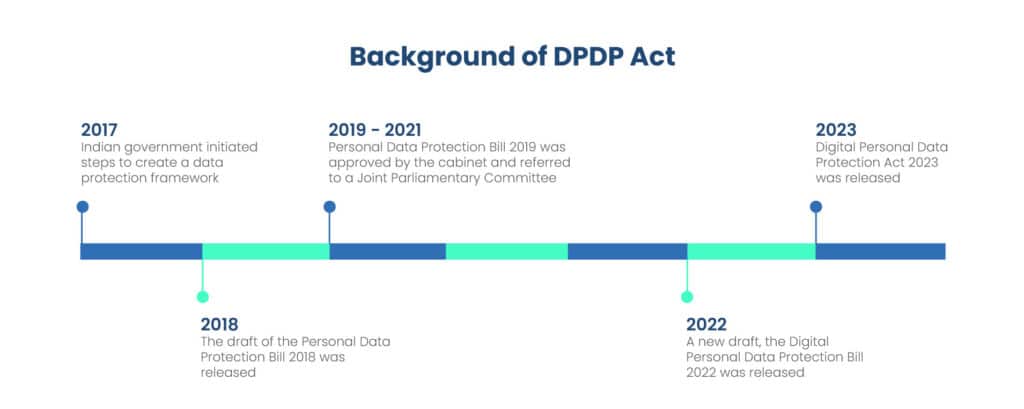
3. Preserving stakeholder trust

a. Building and maintaining trust

Stakeholder trust is a delicate yet invaluable asset. Cybersecurity architecture plays a pivotal role in building and maintaining trust by assuring stakeholders that their data and interactions with the organization are secure. This trust, once established, contributes to the resilience of the business in the face of challenges.

b. Transparent communication during incidents

In the unfortunate event of a security incident, transparent communication is key to preserving stakeholder trust. Cybersecurity architecture incorporates communication protocols that keep stakeholders informed, demonstrating the organization’s commitment to addressing issues responsibly.

c. Reputation management

Cybersecurity incidents can impact an organization’s reputation. Cybersecurity architecture includes measures for reputation management, helping organizations recover trust through transparent communication, swift resolution, and ongoing efforts to enhance security measures.

Implementing cybersecurity architecture

From strategic planning to continuous monitoring and scalability, the successful implementation of cybersecurity architecture is critical for organizations aiming to secure their digital assets effectively.

1. Strategic planning for effective defense

a. Assessing organizational needs and risks

Before implementing cybersecurity architecture, organizations must conduct a comprehensive assessment of their needs and risks. This involves understanding the unique aspects of their operations, the types of data they handle, and the potential threats they face. By identifying specific vulnerabilities, organizations can tailor their cybersecurity architecture to address their most pressing concerns.

b. Defining clear objectives and goals

Strategic planning necessitates the definition of clear cybersecurity objectives and goals. These objectives should align with the organization’s overall business strategy. Whether the focus is on protecting customer data, intellectual property, or ensuring compliance with industry regulations, well-defined goals guide the implementation of effective cybersecurity measures.

c. Budgeting and resource allocation

Implementing cybersecurity architecture requires financial investment and resource allocation. Organizations must allocate sufficient budget and resources to ensure the successful execution of their strategic plan. Balancing the cost of cybersecurity with the potential consequences of a security breach is crucial for making informed budgetary decisions.

2. Continuous monitoring and adaptation

a. Real-time threat detection

Continuous monitoring involves the real-time observation of network and system activities to detect anomalies or potential security threats. Implementing tools and technologies that provide visibility into the organization’s digital environment enables proactive responses to emerging risks.

b. Incident response protocols

Cybersecurity architecture incorporates incident response protocols that dictate the steps to be taken in the event of a security incident. Continuous monitoring allows organizations to detect incidents promptly, triggering the activation of predefined response plans. This proactive approach minimizes the impact of security breaches and accelerates recovery efforts.

c. Regular security audits and assessments

To ensure the ongoing effectiveness of cybersecurity architecture, organizations conduct regular security audits and assessments. These evaluations identify areas for improvement, verify compliance with security policies, and assess the resilience of existing defense mechanisms. Continuous monitoring and adaptation involve a commitment to refining security measures based on the insights gained from these assessments.

Microsoft Corporation employs a comprehensive cybersecurity architecture that focuses on threat intelligence, continuous monitoring, and advanced analytics.
They use a defense-in-depth strategy, combining various security layers, including encryption, access controls, and identity management.
Microsoft regularly updates its security measures to address emerging threats and vulnerabilities.

3. Scalability for businesses

a. Tailoring solutions to organizational size

One of the strengths of cybersecurity architecture lies in its scalability. Implementing a scalable architecture involves tailoring solutions to the specific size and needs of the organization. Whether a small business or a large enterprise, the principles of cybersecurity architecture can be adapted to provide effective defense without unnecessary complexity.

b. Modular and flexible design

A scalable cybersecurity architecture is characterized by a modular and flexible design. This allows organizations to add or adjust security measures as their needs evolve. Whether scaling up due to business growth or adapting to new threats, a well-designed architecture accommodates changes without major disruptions to operations.

c. Considerations for resource-constrained environments

Smaller organizations may operate with resource constraints, making it crucial to prioritize security measures based on risk. Cybersecurity architecture offers flexibility in choosing solutions that align with the organization’s budget and resource limitations, ensuring that even businesses with fewer resources can implement effective defense strategies.

Common challenges in implementing cybersecurity architecture

Implementing cybersecurity architecture comes with its share of challenges. Understanding and addressing these hurdles are crucial for organizations striving to establish a resilient defense. Let’s explore these common challenges:

1. Lack of understanding and awareness

  • Inadequate cybersecurity education: Organizations may lack a clear understanding of cybersecurity architecture, necessitating investment in cybersecurity education.
  • Limited awareness of emerging threats: Staying informed about evolving threats can be challenging, requiring regular training programs and community engagement.

2. Resource constraints

  • Limited budget: Many organizations, especially smaller ones, struggle with budget constraints for cybersecurity initiatives.
  • Skilled workforce shortage: The shortage of skilled cybersecurity professionals hampers effective implementation and management.

3. Complexity of integration

  • Integration with existing systems: Integrating cybersecurity with existing systems can be complex, requiring careful planning and testing.
  • Balancing security and usability: Striking the right balance between security and usability is an ongoing challenge.

4. Evolving threat landscape

  • Rapidly changing threats: Adapting to the rapidly changing threat landscape requires continuous monitoring and threat intelligence integration.
  • Zero-day vulnerabilities: Zero-day vulnerabilities pose a significant challenge, demanding proactive measures such as threat hunting and timely patch management.

5. Regulatory compliance

  • Navigating regulatory requirements: Navigating complex regulatory requirements is time-consuming, requiring dedicated efforts.
  • Keeping up with changes: Staying updated with regulatory changes is essential to ensure ongoing compliance.

6. Insider threats

  • Balancing trust and security: Balancing trust and security is delicate, requiring the implementation of user behavior analytics and robust access controls.
  • Identifying and responding: Timely identification and response to insider threats demand comprehensive monitoring systems and incident response plans.

7. Lack of standardization

  • Diverse security frameworks: Diverse security frameworks make standardization challenging, requiring organizations to navigate varying standards.
  • Vendor-specific technologies: The presence of vendor-specific technologies complicates integration, emphasizing the need for industry standardization efforts.

Factors to consider for long-term effectiveness of cybersecurity architecture

As organizations invest in cybersecurity architecture, ensuring its long-term effectiveness is paramount. Let’s delve into the key factors that contribute to the enduring effectiveness of cybersecurity architecture: 

1. Alignment with business objectives

  • Strategic alignment: Cybersecurity architecture should align with the overarching business objectives of the organization. A cohesive strategy ensures that security measures complement rather than hinder business operations.
  • Continuous review: Regularly reviewing and adjusting cybersecurity measures in response to changes in business objectives, operations, or industry landscape is crucial for maintaining alignment.

2. Comprehensive risk assessment

  • Regular risk assessments: Periodic risk assessments help organizations identify new threats, vulnerabilities, and potential impacts. Continuous monitoring ensures that the cybersecurity architecture evolves in response to emerging risks.
  • Prioritization of risks: Understanding and prioritizing risks based on their potential impact on the organization allows for targeted and effective mitigation strategies.

3. Robust incident response planning

  • Scenario-based planning: Developing incident response plans based on realistic scenarios enhances preparedness. Regularly testing these plans ensures that the organization can respond effectively to various cyber threats.
  • Continuous improvement: Post-incident analysis and continuous refinement of incident response plans contribute to a more resilient cybersecurity posture.
JPMorgan Chase & Co. is known for its strategic planning in cybersecurity architecture, aligning security measures with business objectives. 
The organization has a robust incident response plan, enabling them to promptly address and recover from security incidents.
JPMorgan Chase emphasizes collaboration between various security components for a unified and effective defense.

4. Integration of emerging technologies

  • Adopting innovative solutions: Cybersecurity architecture should be adaptable to integrate emerging technologies. Keeping abreast of technological advancements helps organizations stay ahead of evolving cyber threats.
  • Scalability: Ensuring that the architecture can scale with the adoption of new technologies accommodates the growth and changing needs of the organization.

5. Employee training and awareness

  • Continuous training programs: Regularly educating employees about cybersecurity best practices is essential. Building a security-aware culture reduces the risk of human error and strengthens the overall defense.
  • Phishing simulations: Conducting phishing simulations helps employees recognize and resist social engineering attacks, contributing to a more resilient security posture.

6. Regulatory compliance

  • Adherence to regulations: Ensuring ongoing compliance with industry-specific and regional regulations is vital. Regular audits and assessments help identify and address any compliance gaps.
  • Proactive compliance monitoring: Proactively monitoring regulatory changes ensures that the cybersecurity architecture remains aligned with evolving legal requirements.
AWS employs continuous monitoring and advanced threat detection mechanisms to ensure the security of its cloud infrastructure. AWS’s cybersecurity architecture is designed to scale with the growing demands of its cloud services, catering to businesses of all sizes. AWS adheres to strict regulatory standards, providing customers with tools and features to achieve compliance within their own applications.

7. Vendor management

  • Continuous vendor assessment: Regularly evaluating and assessing the security practices of third-party vendors is crucial. Ensuring that vendors adhere to security standards contributes to the overall resilience of the organization.
  • Secure integration: Verifying the security of integrated third-party solutions prevents potential vulnerabilities introduced through external systems.

8. Data lifecycle management

  • Data classification: Classifying and categorizing data based on sensitivity allows for targeted security measures. Protecting sensitive data throughout its lifecycle is critical for maintaining trust and compliance.
  • Secure data disposal: Establishing secure procedures for data disposal ensures that sensitive information is not inadvertently exposed at the end of its lifecycle.

9. Regular security audits

  • Independent audits: Conducting regular independent security audits provides an unbiased assessment of the effectiveness of cybersecurity measures.
  • Continuous improvement: Using audit findings to drive continuous improvement in security measures enhances the long-term resilience of the cybersecurity architecture.

10. Executive leadership involvement

  • Top-down commitment: Executive leadership should demonstrate a commitment to cybersecurity by actively participating in decision-making and resource allocation.
  • Cybersecurity culture: Fostering a cybersecurity-aware culture from the top down reinforces the importance of security throughout the organization.

Wrapping up

In the dynamic digital world, robust cybersecurity architecture is a strategic imperative, serving as a proactive defense against a range of cyber threats. It ensures business resilience, protects critical assets, and preserves stakeholder trust. 

Continuous improvement through regular assessments, incident response testing, training, and audits is crucial for a resilient cybersecurity posture that evolves with the changing threat landscape. As organizations navigate the digital frontier, cybersecurity architecture becomes a vital strategic compass in an era defined by technological dynamism.

Scrut invites you to experience firsthand how its innovative solutions can elevate your security posture. Contact Scrut today to schedule a demo tailored to your organization’s needs. Secure your digital future with Scrut, your trusted partner in cybersecurity.

Frequently Asked Questions

1. What is cybersecurity architecture, and how does it differ from traditional cybersecurity measures?

Cybersecurity architecture refers to the strategic design and implementation of security measures within a digital environment. Unlike traditional cybersecurity, which may focus on individual components, architecture encompasses a comprehensive, structured approach to safeguarding an entire system or network.

2. Why is cybersecurity architecture important in today’s rapidly evolving digital landscape?

The digital landscape is constantly evolving, and cyber threats are becoming more sophisticated. Cybersecurity architecture is crucial as it provides a proactive and strategic defense, anticipating and mitigating potential risks before they manifest. It ensures a robust framework for protecting sensitive data and maintaining the integrity of digital systems.

3. What are the key components of an effective cybersecurity architecture?

An effective cybersecurity architecture typically includes elements such as firewalls, intrusion detection/prevention systems, encryption protocols, access controls, and incident response mechanisms. Additionally, it involves strategic planning, risk assessment, and continuous monitoring to adapt to emerging threats.

4. How does cybersecurity architecture contribute to overall business resilience?

Cybersecurity architecture is integral to business resilience by preventing and minimizing the impact of cyberattacks. It helps maintain business continuity, protects critical assets, and preserves the trust of customers and stakeholders. A well-designed architecture ensures that a business can withstand and recover from cyber incidents efficiently.

5. Can small businesses benefit from implementing cybersecurity architecture, or is it primarily for larger enterprises?

Cybersecurity architecture is beneficial for businesses of all sizes. While larger enterprises may have more complex infrastructures to protect, small businesses are equally susceptible to cyber threats. Implementing a tailored cybersecurity architecture ensures that security measures are proportionate to the size and needs of the business, providing a scalable and cost-effective defense against potential cyber risks.

Authored by

Aayush Ghosh Choudhary
Co-founder & CEO at Scrut

Reducing compliance expenses with AI

Navigating the complex compliance arena has long been a formidable challenge for organizations across industries. 

The stringent regulatory requirements, coupled with the potential financial implications of non-compliance, pose a continuous hurdle and demand significant resources, both in terms of time and finances. 

Artificial Intelligence (AI) serves as a catalyst for change, offering innovative solutions to reduce compliance costs.  By automating processes, enhancing efficiency, and providing predictive insights, AI alleviates financial burdens and streamlines operations. Strategic AI integration can lead to substantial cost reductions in compliance processes.

In this blog, we’ll explore how your organization can go about reducing compliance expenses with AI.

Fundamental principles of AI that help with compliance costs

AI refers to the development of computer systems that can perform tasks that typically require human intelligence, thereby reducing compliance costs. 

In the context of compliance, AI integration involves incorporating these intelligent systems into various aspects of regulatory adherence. 

1. Machine Learning (ML)

Machine Learning is a subset of AI that focuses on enabling computers to learn from data and improve their performance without being explicitly programmed.

ML algorithms can analyze historical compliance data to identify patterns and trends, allowing systems to make predictions and decisions without explicit programming. 

In compliance, ML can be utilized for predictive analytics in risk assessments, anomaly detection, and decision-making processes. This not only enhances the accuracy and efficiency of compliance processes but also contributes to a significant reduction in associated costs.

2. Natural Language Processing (NLP)

Natural Language Processing is a branch of AI that enables computers to understand, interpret, and generate human language in a way that is both meaningful and contextually relevant.

NLP is crucial for processing and understanding the vast amounts of unstructured data present in compliance documents, regulations, and legal texts. It allows AI systems to extract insights, identify key compliance requirements, and facilitate more efficient document review processes, contributing to a notable reduction in compliance costs.

3. Deep Learning

Deep Learning is a subset of ML that involves neural networks with multiple layers (deep neural networks) to model and process complex patterns in large datasets.

Deep Learning enhances pattern recognition and can be applied to analyze intricate compliance-related data. It’s particularly effective in tasks such as fraud detection, where it can identify subtle anomalies in data that may indicate potential compliance issues.

By enhancing the efficiency of identifying potential compliance issues, Deep Learning ultimately contributes to cost reduction in the compliance process.

4. Predictive Analytics

Predictive analytics involves using statistical algorithms and machine learning techniques to identify the likelihood of future outcomes based on historical data.

Predictive analytics in AI can forecast potential compliance risks by analyzing past patterns. For instance, it can predict the likelihood of non-compliance based on historical data, helping organizations proactively address and mitigate risks. 

This proactive approach not only enhances compliance effectiveness but also contributes to a reduction in overall compliance costs.

Siemens utilized AI in its manufacturing processes to optimize production efficiency. AI-driven predictive maintenance reduced downtime and equipment failures, resulting in substantial cost savings by avoiding unplanned maintenance and optimizing resource utilization.

5. Automation

Automation involves using AI to perform tasks without direct human intervention. Automation can streamline routine compliance tasks, such as data entry, monitoring, and reporting. 

By automating these processes, organizations can reduce manual effort, minimize errors, reduce costs, and ensure that compliance tasks are consistently executed.

Applications of AI in compliance and its impact on costs

Utilizing AI in compliance offers a multifaceted and impactful approach that not only improves processes but also achieves cost reduction. From automating mundane tasks to scrutinizing extensive datasets for patterns and anomalies, AI has become an invaluable tool in bolstering the efficiency of compliance operations.

1. Risk assessments

AI plays a pivotal role in automating and enhancing risk assessments within compliance. Machine learning algorithms can analyze historical data to identify patterns and predict potential risks. 

This enables organizations to conduct more thorough and precise risk assessments, evaluating both internal and external factors that may impact compliance. By streamlining these assessments, AI contributes directly to cost reductions in the overall compliance framework.

JPMorgan Chase utilizes AI-driven risk assessment tools to analyze vast datasets and identify potential compliance risks. The system helps in predicting emerging risks, allowing the company to implement proactive measures and enhance its overall risk management strategy.

2. Monitoring

AI in compliance delivers cost-effective solutions through continuous real-time monitoring. Automated systems swiftly analyze transactions and data to detect anomalies, providing immediate insights into potential compliance issues. This proactive approach streamlines processes, contributing directly to cost reductions in compliance operations.

HSBC employs AI-powered monitoring systems to scrutinize financial transactions and detect unusual patterns indicative of potential money laundering or fraud. This proactive monitoring helps HSBC maintain compliance with stringent regulations in the financial sector.

3. Reporting

AI facilitates the automation of reporting processes by extracting, analyzing, and summarizing relevant data. This not only saves time and costs but also ensures accuracy and consistency in compliance reporting. Natural Language Processing (NLP) can be employed to generate human-readable reports from complex datasets.

Microsoft utilizes AI algorithms to automate the generation of compliance reports. These systems analyze data from various sources, extract key information, and generate comprehensive reports that assist Microsoft in meeting regulatory reporting requirements efficiently.

Benefits of AI in compliance from a cost-reduction perspective

One of the primary goals of AI integration in compliance is to enhance overall efficiency. By automating repetitive tasks, reducing manual effort, and improving the accuracy of processes, AI becomes a powerful ally in achieving efficiency gains and cost savings.

1. Optimizes time-consuming compliance tasks

  • Automating manual processes: AI streamlines manual and repetitive compliance tasks like data entry and document review, reducing the time and effort required for routine activities. This optimization allows resources to be used more strategically, contributing to cost-effective operations.
  • Accelerates data analysis and extraction: AI-powered tools swiftly analyze large datasets, expediting the data review process while ensuring accuracy. This not only saves time but also mitigates risks associated with manual data handling.

2. Identifies compliance risks

AI proactively identifies potential compliance risks using predictive analytics. By analyzing historical data patterns, AI systems predict and highlight areas that may pose compliance challenges in the future. This early identification helps in addressing issues before they escalate, reducing the potential costs associated with non-compliance.

3. Enables continuous monitoring

AI facilitates continuous monitoring of data sources, transactions, and communications, swiftly detecting anomalies or deviations in real time. This proactive approach reduces the likelihood of non-compliance, minimizing associated risks and potential costs.

4. Facilitates risk simulations

AI supports the creation of risk scenarios and simulations, allowing organizations to assess the potential impact of various compliance risks. By modeling different scenarios, organizations can develop proactive strategies to mitigate risks, enhancing overall risk management capabilities and reducing potential costs associated with unforeseen compliance challenges.

Cost-effective transformation: incorporating AI into risk assessments

Traditional risk assessment methodologies are being transformed by the integration of AI in risk and compliance. They mark a significant shift toward more efficient and cost-effective risk and compliance practices.

AI’s capabilities in processing vast amounts of data, identifying patterns, and predicting potential risks bring a new level of efficiency and accuracy to risk assessment processes.

1. Predictive risk modeling

AI algorithms excel in predictive analytics, analyzing historical data to identify patterns and trends. This allows organizations to create predictive risk models, foreseeing potential compliance risks before they materialize. 

The proactive nature of AI-driven risk assessments enables organizations to allocate resources strategically and implement preventive measures, contributing directly to cost reduction by addressing potential risks at an early stage.

JPMorgan Chase utilizes AI for predictive risk modeling. The AI system analyzes historical data to identify patterns indicative of potential compliance risks, enabling the bank to proactively address emerging challenges and enhance its overall risk management strategy.

2. Automation of risk scenarios for cost-efficiency

AI enables the automation of risk scenario modeling, allowing organizations to simulate various risk scenarios. This not only enhances the accuracy of risk assessments but also provides a dynamic view of potential compliance risks under different circumstances. 

The ability to automate and iterate risk scenarios not only enhances risk management strategies but also contributes directly to cost reduction. By streamlining the modeling process, organizations can achieve greater efficiency in their risk management practices, optimizing resource allocation.

3. Continuous monitoring and anomaly detection for immediate cost savings

AI systems provide continuous monitoring of data, transactions, and communications. Through real-time analysis, anomalies or deviations from expected patterns are swiftly identified. 

This real-time monitoring capability is crucial for detecting emerging risks promptly, allowing organizations to take immediate action and prevent potential compliance issues from escalating. This minimizes the potential financial impact of non-compliance.

HSBC employs AI for continuous monitoring and anomaly detection. The AI-powered system scrutinizes financial transactions to detect unusual patterns, aiding in the early identification of potential money laundering or fraud risks. This proactive monitoring contributes to HSBC’s robust compliance measures.

AI for cost-efficient regulatory compliance

The dynamic nature of regulatory landscapes demands a proactive approach to compliance, and AI emerges as a strategic ally in navigating and adapting to regulatory changes, providing significant cost-reduction benefits.

IBM Watson is widely used for regulatory compliance across industries. Its AI capabilities enable organizations to analyze and interpret complex regulatory texts, ensuring a comprehensive understanding of compliance requirements and facilitating more accurate risk assessments.

1. Real-time monitoring of regulatory updates

AI enables organizations to stay abreast of regulatory changes in real time. By continuously monitoring official channels, regulatory websites, and industry publications, AI systems can swiftly identify and analyze updates. 

This real-time awareness ensures that organizations are well informed about changes that may impact their compliance obligations, reducing the likelihood of non-compliance and associated costs. 

UBS, a global financial services company, utilizes AI for regulatory reporting. The system automates the extraction and analysis of relevant data from diverse sources, ensuring accurate and timely reporting to regulatory authorities. By leveraging AI in regulatory reporting, UBS has improved the efficiency of its compliance processes, reduced manual errors, and enhanced overall reporting accuracy.

2. Automated impact assessments

When regulatory changes occur, AI can conduct automated impact assessments. By analyzing the implications of new regulations on existing policies and procedures, organizations can efficiently identify areas that require adjustment. 

This proactive analysis streamlines the adaptation process, reducing the time and effort needed to align with updated compliance requirements. The efficiency gained translates directly into cost savings for organizations.

3. Predictive analytics for future compliance trends

AI’s predictive analytics capabilities extend beyond current regulatory changes. By analyzing historical data and industry trends, AI systems can predict future compliance trends. 

This foresight allows organizations to proactively prepare for upcoming regulatory shifts, positioning them ahead of the curve in compliance readiness. By strategically planning for future compliance requirements, organizations can reduce the financial impact associated with abrupt changes and avoid reactive, costly adjustments.

How AI systems ensure ongoing compliance while reducing costs

The integration of AI extends beyond regulatory adaptation, focusing on ongoing compliance with continuous support and monitoring, leading to significant cost reduction.

1. Continuous compliance monitoring for timely risk mitigation

AI systems offer continuous monitoring of compliance-related activities. By analyzing transactions, communications, and other relevant data in real time, AI identifies potential compliance risks as they emerge. 

This continuous monitoring is instrumental in preventing non-compliance issues from escalating and ensuring ongoing adherence to regulatory requirements. By addressing issues promptly, organizations minimize potential financial impacts and reduce the overall cost of compliance.

2. Automated compliance reporting for efficient resource utilization

AI streamlines the process of compliance reporting. Automated systems can extract, analyze, and summarize relevant data for reporting purposes. Efficient reporting processes contribute directly to cost reduction by allowing organizations to meet deadlines with increased efficiency.

3. Adaptive policy and procedure management

AI contributes to adaptive policy and procedure management. As regulatory requirements evolve, AI can automatically update and adjust organizational policies and procedures. 

This adaptability ensures that organizations maintain compliance not just in response to current regulations but also in anticipation of future changes. By staying ahead of regulatory shifts, organizations reduce the need for reactive, costly adjustments, thereby achieving long-term cost reduction in compliance management.

AI-driven cost-reduction strategies for success

1. Data-driven decision-making

Successful companies leverage AI for data-driven decision-making. By analyzing vast datasets, organizations gain insights that inform strategic decisions, leading to more efficient resource allocation and cost-effective operations.

2. Process automation

Automation of routine tasks is a key AI-driven strategy. Companies achieve cost reductions by deploying AI to automate manual and repetitive processes, freeing up human resources for more strategic and value-added activities.

3. Predictive analytics for cost forecasting

AI-driven predictive analytics enables companies to forecast costs accurately. By analyzing historical data and identifying patterns, organizations can predict future costs, allowing for proactive budgeting and resource allocation.

4. Supply chain optimization

AI plays a crucial role in optimizing supply chain processes. Companies use AI to enhance demand forecasting, inventory management, and logistics, resulting in streamlined operations and reduced costs associated with excess inventory or disruptions in the supply chain.

Walmart deployed AI for demand forecasting and inventory management. By accurately predicting customer demand and optimizing inventory levels, Walmart achieved notable cost reductions through reduced overstock, minimized stockouts, and improved overall supply chain efficiency.

5. Customer service enhancement

AI-driven improvements in customer service lead to cost reductions. Chatbots and virtual assistants powered by AI handle routine customer inquiries, reducing the need for extensive human customer support, and improving overall customer service efficiency.

Bank of America implemented AI for customer service and support, automating routine inquiries and streamlining communication processes. This not only improved customer satisfaction but also led to significant cost savings by reducing the need for extensive human intervention in customer interactions.

Considerations for successful AI integration to reduce compliance costs

Successfully integrating AI to reduce compliance costs requires a strategic approach that addresses data security, privacy concerns, and ensures ongoing regulatory compliance. 

These considerations play a crucial role in fostering trust among stakeholders and effectively mitigating legal and operational risks.

1. Prioritize data encryption and secure storage protocols

When integrating AI, organizations must prioritize data security. Implementing robust encryption methods and secure storage protocols ensures that sensitive information is protected from unauthorized access. This is especially crucial in compliance-heavy industries like finance and healthcare.

2. Ensure stringent access controls and authentication

Limiting access to AI systems through stringent access controls and authentication mechanisms enhances data security. By assigning access privileges based on roles and responsibilities, organizations can mitigate the risk of unauthorized individuals gaining access to sensitive data.

3. Adhere to privacy by design

Adhering to the principle of privacy by design involves incorporating privacy considerations throughout the AI integration process. This proactive approach ensures that privacy is not an afterthought but an integral part of the system, from data collection to processing and storage.

4. Conduct regular security audits

Conducting regular security audits and assessments helps organizations identify vulnerabilities and weaknesses in their AI systems. By staying proactive in identifying and addressing potential security threats, organizations can maintain a robust defense against evolving cybersecurity risks.

5. Understand applicable regulations

Different industries and regions have specific regulations governing data and AI usage. It’s crucial for organizations to have a thorough understanding of the applicable regulatory landscape, including data protection laws, industry standards, and any specific requirements related to AI systems.

6. Ensure transparent data processing

Ensuring transparency in data processing is essential for regulatory compliance. Organizations should clearly communicate how data is collected, processed, and utilized by AI systems. This transparency builds trust with stakeholders and helps meet regulatory expectations regarding data handling.

7. Maintain documentation and record-keeping

Maintaining comprehensive documentation of AI processes and activities is vital for compliance. This includes records of data processing activities, security measures, and any changes made to the AI system. Such documentation serves as evidence of compliance during regulatory audits.

8. Adapt to regulatory changes

The regulatory landscape is dynamic, and AI systems must be adaptable to changes. Organizations should have mechanisms in place to monitor regulatory updates and swiftly adapt their AI systems to ensure ongoing compliance with evolving requirements.

  1. Explainable AI (XAI): Ensuring transparency in AI decision-making, XAI is pivotal for compliance, fostering trust and accountability by allowing professionals to interpret and explain AI-driven decisions.
  2. AI-enabled regulatory sandboxes: These controlled testing environments integrate AI, enabling organizations to experiment with compliance-focused AI applications within supportive regulatory frameworks, promoting innovation.
  3. Blockchain and smart contracts in compliance: The convergence of AI and blockchain automates and enforces compliance-related agreements through AI-powered smart contracts, enhancing efficiency and security, especially in sectors dependent on contractual obligations.
  4. AI-driven regulatory intelligence platforms: Future AI systems may evolve into autonomous regulatory intelligence platforms, providing real-time updates and actionable insights by scanning, interpreting, and adapting to global regulatory changes for continuous compliance.
  5. Enhanced Natural Language Processing (NLP): Advancements in NLP could revolutionize how compliance professionals interact with AI, enabling nuanced communication and a deeper understanding of complex regulatory language.
  6. Cross-industry collaboration: Future AI developments may encourage increased collaboration among industries, leveraging AI systems to facilitate secure cross-industry information exchange for improved compliance strategies.
  7. AI for predictive regulatory compliance: AI’s predictive capabilities may expand to foresee regulatory changes through advanced analytics and machine learning, allowing organizations to proactively adapt compliance strategies by analyzing global trends, political landscapes, and emerging technologies.

Wrapping up

In the dynamic realm of compliance, AI emerges as a transformative ally, revolutionizing how organizations navigate regulations. From robust data security to ongoing compliance assurance, successful AI integration is pivotal. 

Industry success stories underscore tangible benefits, showcasing cost reductions and strategic wins. Looking ahead, emerging trends like Explainable AI and regulatory sandboxes hint at a future where transparency and innovation prevail. 

As organizations embrace these advancements, the synergy of AI and compliance not only streamlines processes but fortifies trust, efficiency, and future readiness.

Find out how Scrut can help you reduce compliance costs with AI. Schedule a demo today to learn more. 

Frequently Asked Questions

1. How can AI technologies specifically help in reducing compliance costs?

AI technologies automate routine tasks, analyze large datasets for patterns, and provide predictive insights, significantly reducing the manual effort and time required for compliance processes. This efficiency translates into cost savings by streamlining operations.

2. What are some key areas within compliance processes where AI implementations offer the most significant cost savings?

AI excels in automating data analysis, risk assessments, monitoring, and reporting. These areas, when optimized through AI, not only enhance accuracy and effectiveness but also lead to substantial reductions in operational costs associated with compliance tasks.

3. Are there specific industries that have seen notable success in reducing compliance expenses through AI integration?

Industries such as finance, healthcare, and manufacturing have experienced notable success in reducing compliance expenses with AI. These sectors deal with complex regulations and large volumes of data, making AI particularly effective in enhancing efficiency and reducing costs.

4. How does the use of AI in compliance align with regulatory requirements and standards?

AI in compliance ensures a proactive approach to meeting regulatory requirements. By continuously monitoring and adapting to changes in regulations, AI systems help organizations maintain compliance more effectively, thereby avoiding costly penalties and legal issues.

5. What considerations should organizations keep in mind when adopting AI solutions to ensure cost reduction without compromising compliance effectiveness?

Organizations should prioritize AI solutions that align with their specific compliance needs, ensure data security and privacy, and facilitate transparency. Regular audits and assessments are crucial to guaranteeing that AI systems remain compliant with evolving regulations, mitigating any risks associated with non-compliance.

Authored by

Aayush Ghosh Choudhary
Co-founder & CEO at Scrut

A guide to IAM compliance

In the constantly changing field of cybersecurity, organizations face a growing need to fortify their defenses against unauthorized access to sensitive information.

As technology advances, so do the tactics employed by cyber threats. The complexity of modern IT environments, coupled with the dynamic nature of user access, poses a considerable challenge for organizations striving to ensure the confidentiality, availability, and integrity of their data.

Identity and Access Management (IAM) compliance emerges as a critical linchpin in this endeavor, offering a robust framework to safeguard digital assets and maintain the integrity of organizational data.

Join us as we delve into IAM compliance, unraveling its components and showcasing how it acts as a strategic solution to the intricate challenges faced by organizations today.

What is IAM compliance and why is it important?

Compliance ensures that organizations not only protect their sensitive information but also meet the regulatory requirements stipulated by industry standards and laws.

IAM compliance refers to the adherence to a set of regulations, standards, and best practices that govern the secure management of user identities and their access rights. 

IAM is the linchpin of cybersecurity, serving as the gatekeeper to an organization’s digital assets. It encompasses a set of processes, policies, and technologies designed to manage and secure digital identities and their access to systems and data. 

IAM security is foundational to protecting organizational assets and ensuring compliance with regulatory standards.

Understanding the nuances of IAM compliance is vital for organizations aiming to create a robust security posture. This involves implementing measures to authenticate and authorize users effectively, managing user lifecycle changes, and providing visibility into user activities.

By ensuring that only authorized individuals have the right level of access, IAM acts as a crucial layer of defense against unauthorized entry, data breaches, and other cyber threats.

Defining IAM compliance and its components

IAM compliance is a structured approach to managing and securing digital identities, encompassing policies, processes, and technologies to ensure that users have appropriate access to organizational resources. 

Compliance goes beyond mere security measures; it involves aligning with industry regulations, standards, and best practices.

The core components of IAM compliance include:

  • Authentication: Verifying the identity of users through credentials such as passwords, biometrics, or multi-factor authentication.
  • Authorization: Granting appropriate access rights based on a user’s role, responsibilities, and permissions.
  • User lifecycle management: Effectively managing user accounts from creation to de-provisioning, ensuring timely updates and revocations.
  • Audit and monitoring: Implementing systems for continuous monitoring, logging, and auditing user activities to detect and respond to potential security incidents.

The role of IAM in data security

IAM serves as the gatekeeper to an organization’s data kingdom, playing a pivotal role in maintaining the confidentiality, availability, and integrity of sensitive information. 

By enforcing access controls, IAM ensures that only authorized users can access specific resources, reducing the risk of unauthorized access and potential data breaches. 

IAM also facilitates granular control over user permissions, helping organizations adhere to the principle of least privilege and limiting potential damage in the event of a security incident.

Common challenges in achieving IAM compliance

While IAM compliance is indispensable, organizations often face common challenges in its implementation. These challenges include:

  • Complexity of IT environments: Integrating IAM across diverse systems and platforms.
  • User lifecycle management: Ensuring accurate and timely management of user access throughout their journey within the organization.
  • Integration of diverse systems: Coordinating IAM across different applications and platforms seamlessly.
  • Balancing security and user convenience: Striking the right balance to ensure security without hindering user productivity.

By understanding these challenges, organizations can better navigate the path to IAM compliance and fortify their defenses against the evolving landscape of cyber threats.

Key components of IAM compliance

Crucial aspects of IAM compliance revolve around enforcing stringent access controls, ensuring visibility into user activities, and navigating the best practices for authentication and authorization.

1. Enforcing access controls

IAM’s primary objective is to regulate user access to digital resources. The various facets of enforcing access controls include:

  • Role-Based Access Control (RBAC): Implementing a granular approach to assigning permissions based on users’ roles within the organization.
  • Least privilege principle: Limiting user access to the minimum level necessary for their job responsibilities to mitigate potential risks.
  • Continuous monitoring: Employing real-time monitoring to swiftly detect and respond to any unauthorized access or suspicious activities.

By establishing stringent access controls, organizations can bolster their defense against unauthorized access, data breaches, and other cyber threats.

2. Visibility and monitoring of user activities:

IAM compliance hinges on the ability to proactively address potential threats through vigilant observation of user activities. It is important to maintain visibility into user actions and continuously monitor user activities. 

Through effective monitoring, organizations can detect anomalies, prevent unauthorized access, and enhance their overall security posture. This will allow organizations to take  proactive measures to identify and respond to suspicious activities promptly. 

  • Audit Logs: Creating and analyzing detailed audit logs to track user interactions with systems and data.
  • Real-Time Visibility: Implementing tools and processes for real-time monitoring to promptly identify and respond to security incidents.

3. Authentication and authorization best practices

IAM’s efficacy is closely tied to authentication and authorization practices. By adhering to best practices in authentication and authorization, organizations can fortify their IAM framework and reduce the risk of unauthorized access.  It involves:

  • Multi-Factor Authentication (MFA): Implementing robust authentication methods beyond passwords to enhance security.
  • Fine-grained authorization: Establishing precise access control policies to regulate user permissions.

4. Streamlining identity governance

IAM compliance is not just about access management; it involves the overarching concept of identity governance.

A well-structured identity governance framework ensures that organizations have a clear understanding of who has access to what and why, fostering compliance and minimizing risks.

The broader concept of identity governance emphasizes:

  • Identity lifecycle management: Efficiently managing user identities from creation to de-provisioning.
  • Access reviews: Conduct regular reviews to ensure ongoing appropriateness of user access.
  • Policy enforcement: Establishing and enforcing policies to govern identity-related processes.

A well-structured identity governance framework ensures clarity in user access, reducing the risk of compliance breaches and unauthorized actions.

Regulations governing IAM

IAM compliance is not only a best practice but is often mandated by various regulations. Key regulations such as GDPR, HIPAA, SOX, and PCI DSS directly impact IAM practices. 

Understanding these regulations is vital for organizations to tailor their IAM strategies to meet compliance requirements and avoid legal repercussions.
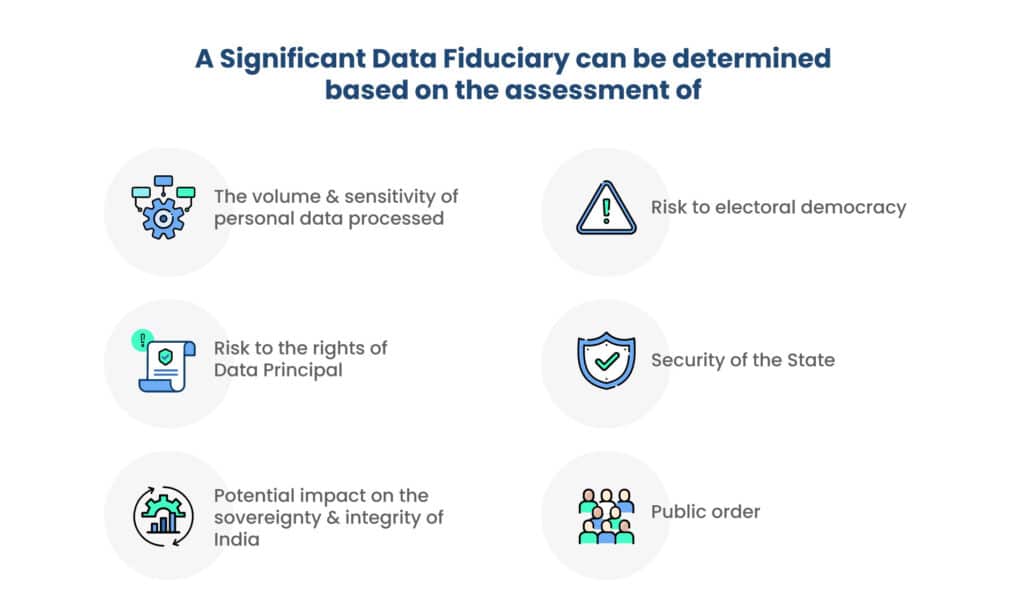
IAM compliance is not merely a best practice; it often aligns with industry regulations. 

GDPR (General Data Protection Regulation)

The General Data Protection Regulation (GDPR) stands as a beacon for safeguarding the privacy and rights of European Union (EU) citizens’ personal data. IAM compliance under GDPR is paramount, as it ensures that organizations handle personal data responsibly and transparently. Key aspects include:

  • Data protection by design: Integrating data protection measures into IAM processes.
  • Right to access: Allowing individuals control over their personal data and access permissions.
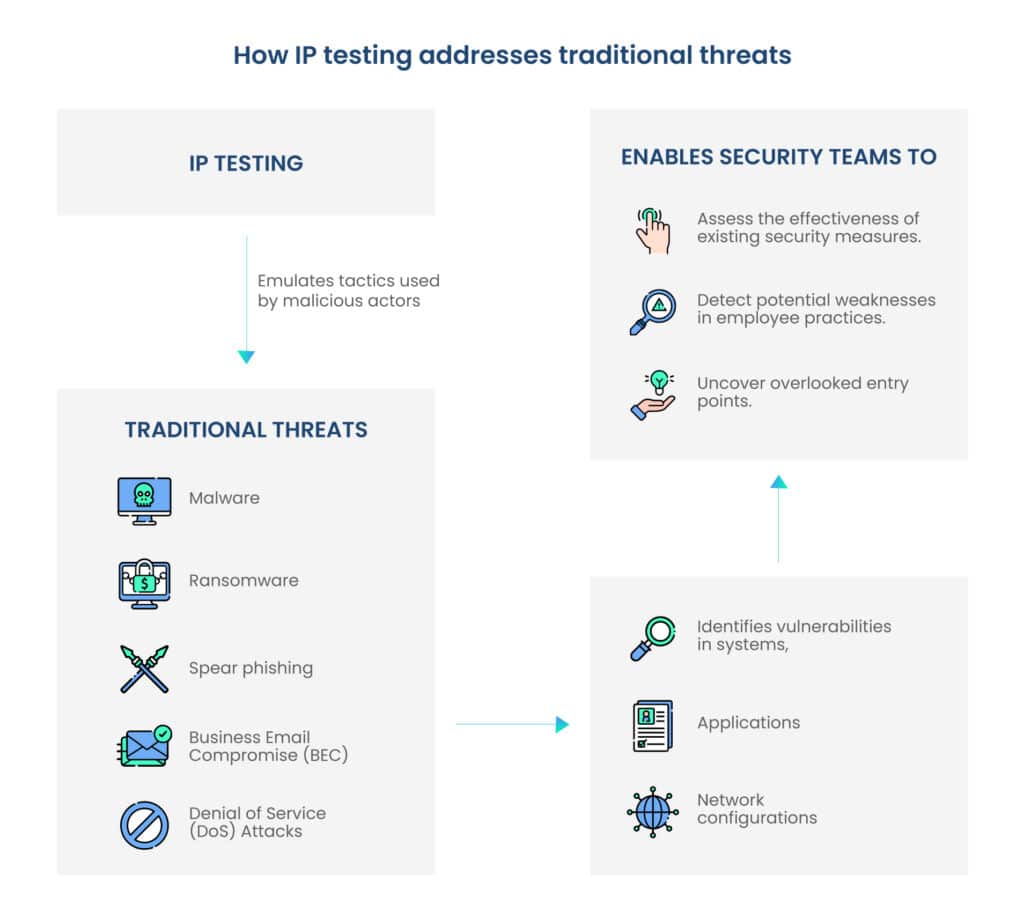
IAM practices aligned with GDPR not only fortify data protection but also uphold individual privacy rights.

HIPAA (Health Insurance Portability and Accountability Act):

In the healthcare sector, HIPAA establishes stringent standards for safeguarding patient information. IAM compliance under HIPAA is critical to maintaining the confidentiality and integrity of healthcare data. Key considerations include:

  • Secure access controls: Ensuring that only authorized personnel access patient records.
  • Audit trails: Maintaining detailed records of who accessed patient data and when.

IAM practices within healthcare organizations must align with HIPAA to prevent unauthorized access to sensitive patient information.

SOX (Sarbanes-Oxley Act)

SOX focuses on financial accountability and transparency within publicly traded companies. IAM compliance under SOX is integral to ensuring the security and accuracy of financial data. 

IAM practices aligned with SOX contribute to maintaining the integrity of financial reporting and preventing fraudulent activities. Noteworthy components include:

  • Segregation of Duties (SoD): Preventing conflicts of interest by segregating key financial responsibilities.
  • Audit trails for financial systems: Providing a clear record of financial transactions and system access.

PCI DSS (Payment Card Industry Data Security Standard):

For organizations handling payment card data, compliance with PCI DSS is non-negotiable. IAM practices under PCI DSS focus on securing access to cardholder data and preventing unauthorized transactions. Key considerations involve:
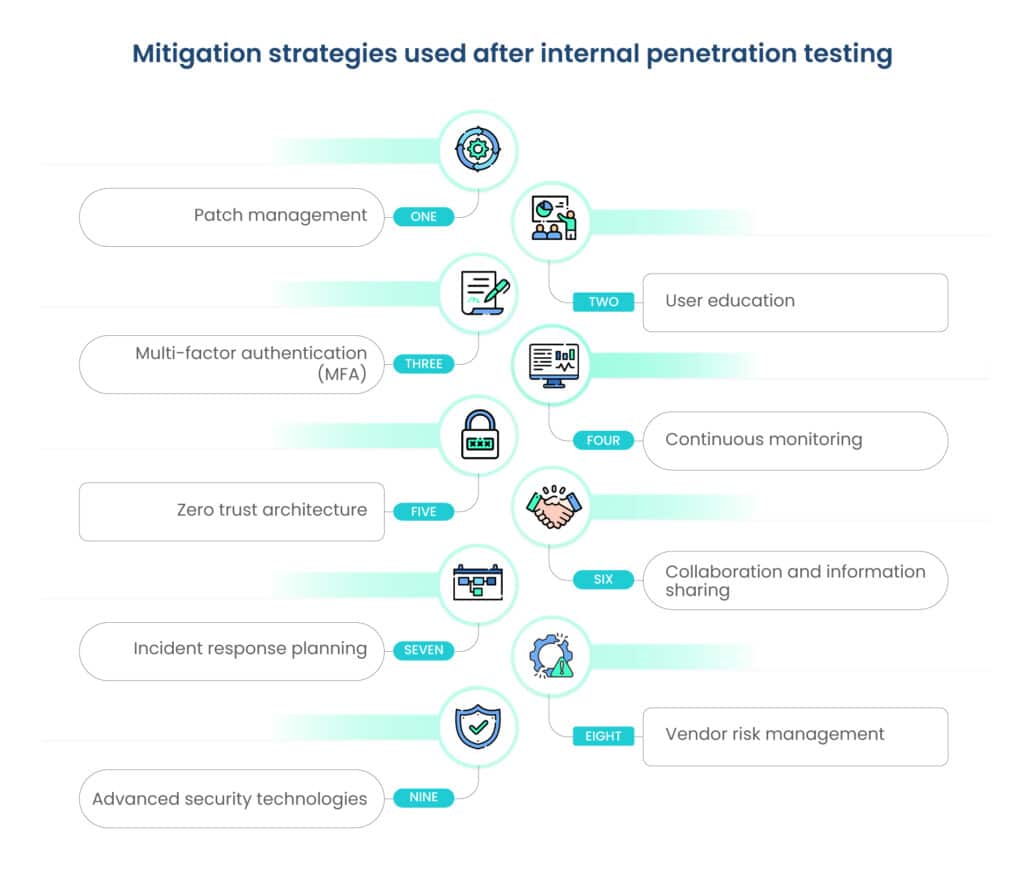
  • Secure authentication: Implementing robust authentication methods for users handling payment card data.
  • Access controls for cardholder data: Limiting access to individuals based on job responsibilities.

IAM compliance within payment card environments is crucial for protecting financial transactions and maintaining the trust of customers.

Impact of non-compliance

Failing to adhere to Identity and Access Management (IAM) compliance not only jeopardizes the security of an organization’s digital assets but also exposes it to myriad consequences that extend across legal, financial, and reputational domains. 

Understanding the gravity of non-compliance is essential for organizations striving to maintain a resilient and secure digital posture.

1. Legal consequences

Non-compliance with IAM regulations often carries significant legal ramifications. Regulatory bodies, such as those overseeing GDPR, HIPAA, SOX, and PCI DSS, impose strict requirements for safeguarding user data. 
Failure to meet these standards can lead to legal actions, investigations, and potential litigation. Organizations may find themselves entangled in legal proceedings that not only drain resources but also tarnish their standing in the eyes of regulatory authorities.

2. Financial penalties

Regulatory bodies have the authority to impose substantial fines on organizations found in breach of IAM compliance. These financial penalties are not inconsequential and can result in severe financial setbacks. 

The magnitude of fines varies depending on the nature and scale of the non-compliance. For some regulations, fines may accrue on a per-incident or per-day basis, amplifying the financial impact.

3. Reputational damage

The trust of customers, partners, and stakeholders is a fragile commodity. Non-compliance with IAM regulations can erode this trust, leading to severe reputational damage. News of a data breach or regulatory violation spreads swiftly in the age of instant communication, and the resulting negative publicity can have lasting effects. 

A tarnished reputation may deter potential customers, partners, and even employees, making it challenging for the organization to rebuild trust.

4. Data breach risks

IAM non-compliance significantly increases the risk of data breaches. Inadequate access controls and authentication mechanisms create vulnerabilities that malicious actors can exploit. 

The consequences of a data breach extend beyond regulatory fines and legal actions; organizations may face the loss of sensitive information, intellectual property, and proprietary data. Moreover, the impact on customer trust and loyalty can be irreversible.

Strategies for streamlining IAM compliance processes

Achieving and maintaining Identity and Access Management (IAM) compliance can be a complex undertaking, but organizations can navigate this terrain effectively by implementing streamlined processes and best practices. Here are key strategies to streamline IAM compliance, ensuring efficiency, accuracy, and adherence to regulatory requirements.

1. Automating identity provisioning and de-provisioning

Automating the process of granting and revoking user access rights is a cornerstone of efficient IAM compliance. Automated identity provisioning ensures that users receive the appropriate access promptly when entering the organization and that access is promptly revoked when they leave or change roles. This not only reduces the risk of human error but also enhances the organization’s ability to respond swiftly to personnel changes.

2. Regular access reviews and audits

Regularly reviewing and auditing user access rights is essential for maintaining the principle of least privilege and ensuring ongoing compliance. By conducting periodic access reviews, organizations can identify and rectify discrepancies, unauthorized access, and potential security risks. Automation can play a role in facilitating these reviews, ensuring they are conducted systematically and comprehensively.

3. Comprehensive identity governance

Establishing a comprehensive identity governance framework is critical for effective IAM compliance. This involves creating and enforcing policies related to user identity management, access controls, and data protection. A well-structured identity governance system provides clarity on who has access to what resources and under what conditions, streamlining the overall IAM compliance process.

4. Training on IAM policies and procedures

Human error is a common factor in IAM compliance challenges. Providing regular training on IAM policies and procedures to employees, IT staff, and relevant stakeholders is crucial. Ensuring that individuals understand the importance of compliance, how to follow established procedures, and the consequences of non-compliance contributes significantly to the success of IAM initiatives.

5. Multi-factor authentication best practices

Enhancing authentication practices with Multi-Factor Authentication (MFA) adds an extra layer of security to user access. Best practices in MFA include the use of biometrics, smart cards, or one-time passcodes. By incorporating MFA, organizations significantly strengthen access controls, mitigating the risk of unauthorized access and aligning with IAM compliance requirements.

6. Collaborative IAM strategies across departments

IAM compliance is not solely an IT concern—it requires collaboration across departments. Establishing communication channels between IT, HR, legal, and other relevant departments ensures a holistic approach to IAM. Collaborative strategies help in aligning IAM processes with business needs, regulatory requirements, and the organization’s overall security objectives.

Choosing the right IAM solutions

Selecting the appropriate Identity and Access Management (IAM) solution is a pivotal decision for organizations aiming to fortify their cybersecurity posture and achieve compliance.  

1. Aligning with industry best practices

Before diving into the plethora of IAM solutions available, organizations should align their selection process with industry best practices. 

By aligning with industry best practices, organizations lay a strong foundation for selecting IAM solutions that meet their unique requirements and set the stage for effective implementation. This involves:

  • Understanding organizational needs: Identifying specific IAM requirements based on the organization’s structure, size, industry, and regulatory environment.
  • Scalability: Choosing solutions that can scale with the organization’s growth and evolving IAM needs.
  • User-friendly interfaces: Prioritizing solutions with intuitive interfaces to enhance user experience and minimize training requirements.
  • Interoperability: Ensuring that the chosen IAM solution can seamlessly integrate with existing systems, applications, and third-party tools.

2. Evaluating IAM solutions for compliance

IAM compliance is non-negotiable, and organizations must carefully evaluate potential solutions to ensure they align with regulatory requirements. Key considerations include:

  • Regulatory Alignment: Verifying that the IAM solution complies with relevant regulations such as GDPR, HIPAA, SOX, and others applicable to the organization.
  • Audit and Reporting Capabilities: Assessing the solution’s ability to generate detailed audit logs and reports for compliance audits.
  • Access Control Mechanisms: Ensuring the solution provides robust access controls and authorization features to meet regulatory standards.
  • Data Encryption: Verifying that the IAM solution employs strong encryption methods to protect sensitive data.

By prioritizing compliance features during the evaluation process, organizations mitigate the risk of non-compliance and lay the groundwork for a secure IAM environment.

3. Implementation tips and considerations

Successful implementation is as crucial as selecting the right IAM solution. Implementation tips and considerations include:

  • Phased rollouts: Implementing IAM solutions in phases to manage complexity, minimize disruptions, and ensure smooth user transitions.
  • User training: Conducting comprehensive training sessions to educate users on the new IAM processes, policies, and features.
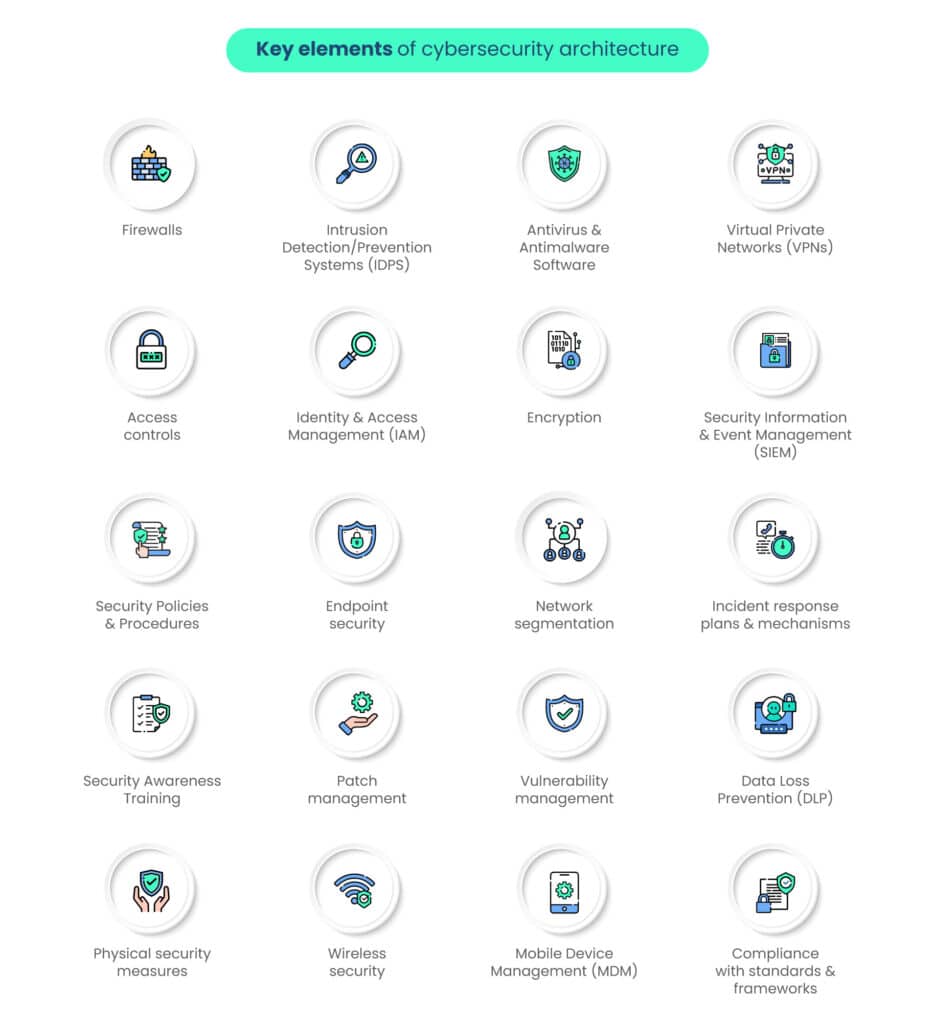
  • Continuous monitoring: Implementing tools and processes for continuous monitoring of IAM activities to detect and respond to anomalies promptly.
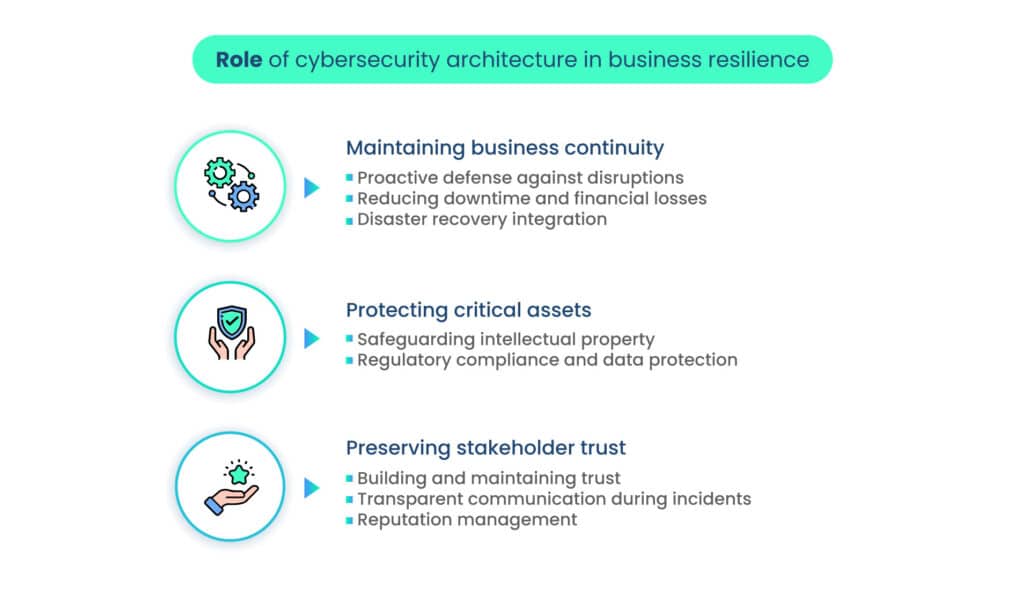
  • Vendor support and updates: Choosing vendors that provide robust support and regular updates to address emerging security threats and vulnerabilities.

Wrapping up

The impact of non-compliance, spanning legal, financial, and reputational risks, highlights the critical importance of prioritizing IAM strategies. Indeed, IAM compliance emerges as a pivotal element in modern cybersecurity, providing a robust framework for safeguarding digital assets and ensuring regulatory adherence. 

Through the enforcement of access controls, heightened visibility, and strategic alignment with industry best practices, organizations can fortify their defenses against unauthorized access and potential legal consequences. 

The careful selection and implementation of IAM solutions contribute to an organization’s security posture, emphasizing regulatory alignment, phased rollouts, and continuous monitoring paving the way for a secure and resilient digital future.

Scrut can help you improve your compliance and security posture. Find out how today

Frequently Asked Questions

1. What is Identity and Access Management (IAM) compliance, and why is it crucial for organizations?

Identity and Access Management (IAM) compliance refers to adhering to a set of policies, procedures, and regulations that govern the secure management of user identities and their access to organizational resources. It is crucial for organizations because it ensures that only authorized individuals have the right level of access to specific systems, applications, and data. IAM compliance helps protect sensitive information, prevent unauthorized access, and maintain the overall security posture of an organization.

2. What are the common challenges organizations face in achieving and maintaining IAM compliance?

Common challenges in achieving and maintaining IAM compliance include:
– Complexity of IT environments.
– User lifecycle management.
– Integration of diverse systems.
– Balancing security with user convenience.
– Keeping pace with evolving regulations.
– Inadequate resources and expertise.
– Ensuring continuous monitoring and auditing.

3. How does IAM compliance contribute to overall cybersecurity resilience?

IAM compliance contributes to cybersecurity resilience by:
– Enforcing strict access controls, reducing the risk of unauthorized access.
– Providing visibility into user activities for monitoring and early threat detection.
– Ensuring proper authentication and authorization processes.
– Streamlining identity governance to prevent identity-related risks.
– Facilitating timely revocation of access for terminated or changed roles.

4. What key regulations govern Identity and Access Management, and how does non-compliance impact businesses?

Key regulations governing IAM include:
– GDPR (General Data Protection Regulation)
– HIPAA (Health Insurance Portability and Accountability Act)
– SOX (Sarbanes-Oxley Act)
– PCI DSS (Payment Card Industry Data Security Standard)
Non-compliance can lead to legal consequences, financial penalties, damage to reputation, and loss of customer trust. It may also result in data breaches and compromise the confidentiality and integrity of sensitive information.

5. What strategies and best practices can organizations adopt to streamline IAM compliance processes?

Organizations can streamline IAM compliance processes by:
– Implementing automated identity provisioning and de-provisioning.
– Conducting regular access reviews and audits.
– Establishing a comprehensive identity governance framework.
– Providing regular training on IAM policies and procedures.
– Implementing multi-factor authentication for enhanced security.
– Collaborating across departments for a unified IAM strategy.
– Staying informed about evolving regulatory requirements.
– Utilizing IAM solutions that align with industry best practices.