Authored by

Aayush Ghosh Choudhary
Co-founder & CEO at Scrut

Top 9 compliance automation software in 2024

Navigating through complex regulatory frameworks while ensuring adherence to industry standards can be a daunting task for organizations of all sizes. As the stakes continue to rise, the role of compliance automation software becomes indispensable in empowering businesses to maintain integrity and operational excellence.

To assist businesses in their compliance journey, we have curated a comprehensive list of the 9 best compliance automation software solutions that stand out in the market. These tools are designed to automate, streamline, and enhance various aspects of compliance management, allowing organizations to stay ahead of the curve and mitigate risks effectively.

How does a compliance automation platform help you? 

As the number of cloud and people resources grows in your company, your cloud complexity grows as well—making it harder to stay compliant. A compliance automation software will not only help you find security issues but will also help you with auto-remediation. 

Continuous compliance (not at a point in time)

Many tasks related to getting compliant can be automated with the help of a compliance automation software. Additionally, the right platform continuously monitors your controls to help you stay compliant. 

Get compliant faster with less effort

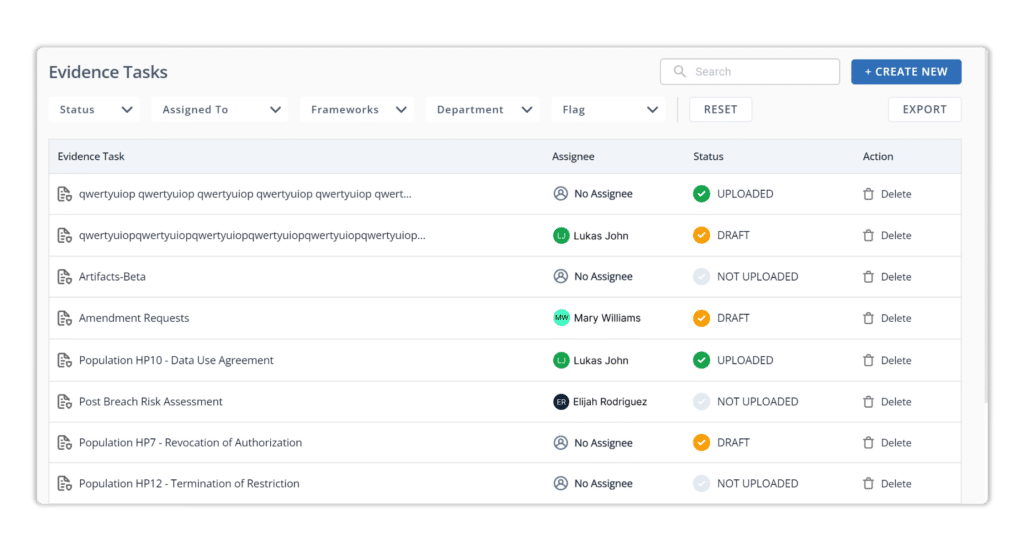
Compliance automation software can help you get compliant in a much shorter time frame. For example, they can help you get ready for the SOC 2 compliance audit in 2-3 weeks as opposed to 1-2 months when done traditionally. Similarly, the manual effort required to get ready for the SOC 2 audit from your end can be reduced to 10-12 hours (based on the gap assessment) compared to 150 hours via the traditional solution.

All these benefits translate into peace of mind for you and high trust among your employees, partners, customers, vendors, and auditors. This makes you not just a supporting role in the company but a business enabler. You can focus on more strategic work and help the organization grow.

Top 9 compliance automation software

1. Scrut Automation

Scrut Automation is a risk-first smart governance, risk, and compliance (GRC) platform. With Scrut, you can say goodbye to the tedious process of getting compliant manually.

Scrut simplifies the compliance landscape, cutting down approximately 70% of the effort typically needed to meet the standards of over 20 frameworks. Whether it’s SOC 2, HIPAA, PCI DSS, ISO 27001, GDPR, CCPA, HITRUST, or others, Scrut streamlines compliance across a range of industry-leading standards.

With Scrut Automation, put your InfoSec compliance on auto-pilot. The platform automates tedious compliance tasks, like cloud evidence collection, automatically checking against 150+ controls on a daily basis. Enjoy a more hands-free approach to risk management, as Scrut handles the heavy lifting, freeing up your time for strategic security considerations.

How Scrut helps:

A. Gap Analysis

Identifying gaps in your security program is crucial, and Scrut steps in as your trusted partner to streamline the gap analysis process.

a. Extensive handholding

We understand that navigating the intricacies of compliance frameworks can be daunting. That’s why Scrut offers extensive handholding to guide you through the identification of missing elements in your security program concerning specific frameworks. Our experts bring over 50 years of cumulative experience, having conducted over 3000 assessments. This wealth of knowledge ensures a meticulous examination of your security landscape.

b. Cost & requirements estimation

Scrut’s seasoned experts don’t just identify gaps; they help you estimate the costs and requirements associated with achieving compliance. This strategic insight is invaluable in planning your compliance journey effectively, ensuring that you are well-prepared for the road ahead.

c. Centralized data view

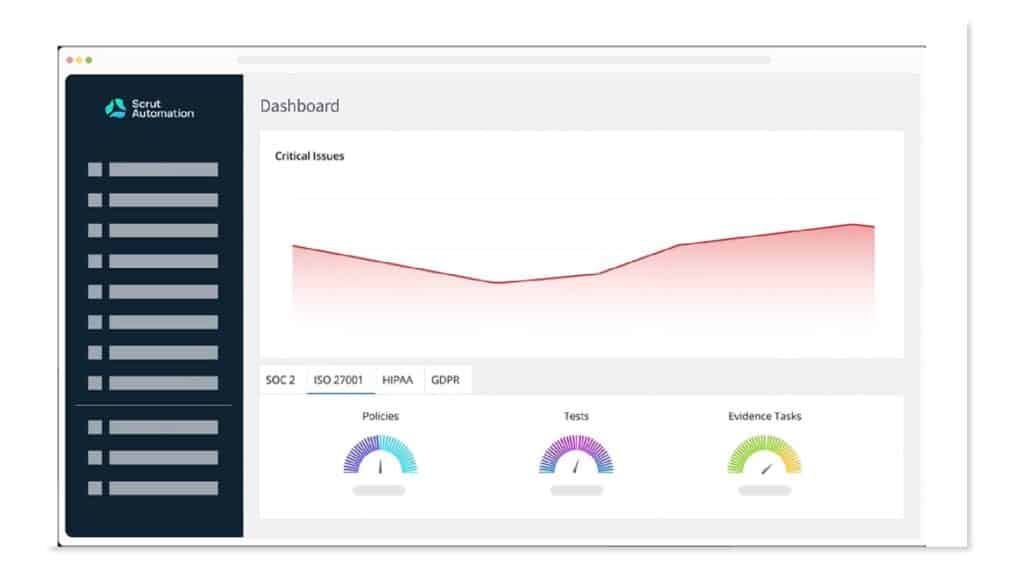
The Scrut platform provides a centralized view of all your data, offering a comprehensive snapshot of your current security posture. This centralized view acts as a foundation for our experts to plan the next steps in your compliance roadmap.
d. Expertly guided process management

With Scrut, it’s not just about identifying gaps – our experts plan the next steps based on the centralized data view, providing you with a clear roadmap for compliance. The platform empowers you to manage the entire process seamlessly, ensuring that every action aligns with your organization’s compliance objectives.

B. Policy creation

When it comes to policy creation, Scrut goes the extra mile to ensure that your organization’s security policies are not just compliant but perfectly aligned with your unique business needs.

a. Pre-built templates

Access a treasure trove of 45+ pre-built policy templates that serve as a solid foundation for your security policies. These templates cover a spectrum of compliance requirements, allowing you to kickstart your policy creation process with confidence.

b. Customizable to your needs

Recognizing that one size does not fit all, Scrut’s policy templates are fully customizable to cater to your specific business needs. Tailor the pre-built templates to align seamlessly with the nuances and intricacies of your organization, ensuring that your policies are not just compliant but also reflective of your unique operational environment.

c. Complete InfoSec team support

Crafting effective security policies requires expertise, and with Scrut, you’re not alone in this endeavor. Our complete InfoSec team stands ready to support you in reviewing and customizing policies. Benefit from the collective knowledge and experience of seasoned information security professionals who ensure that your policies are not only robust but also strategically tailored to address your organization’s specific challenges.
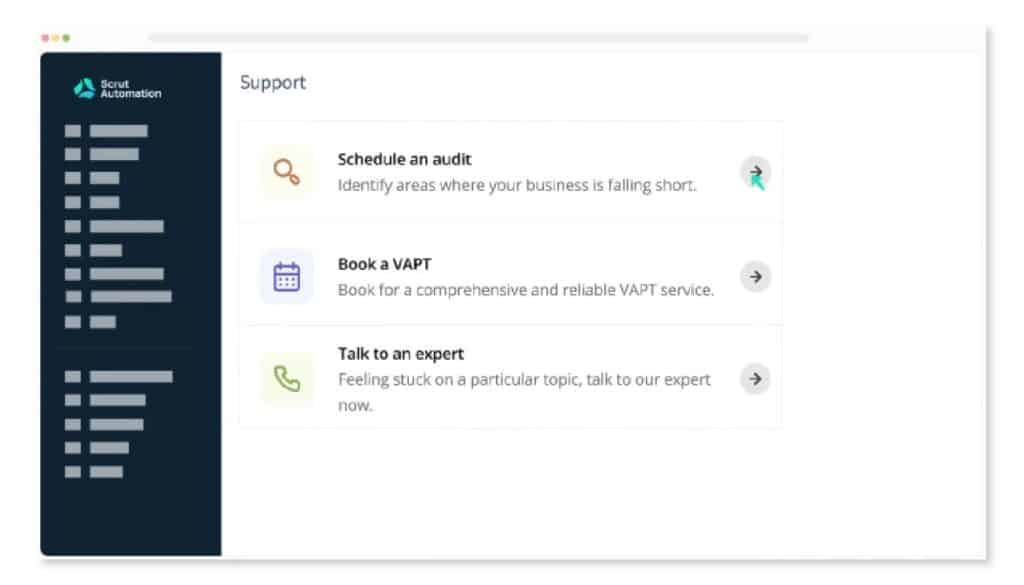
C. Framework mapping

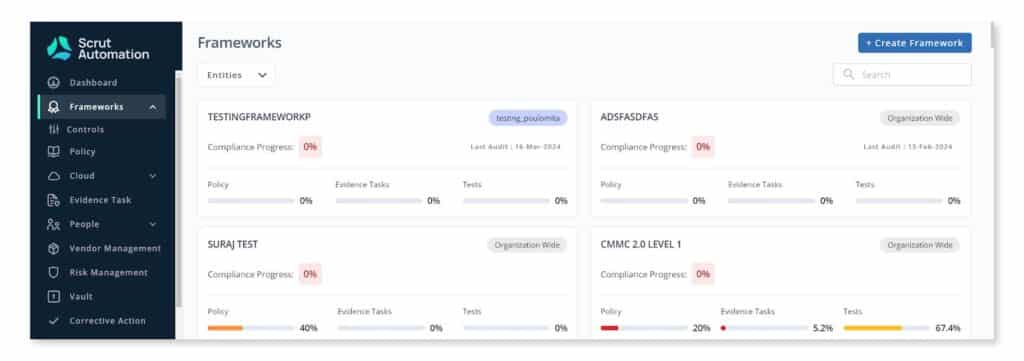
Scrut simplifies the complex landscape of compliance frameworks, offering a seamless framework mapping experience tailored to your organizational needs.

a. Inbuilt frameworks

Explore and leverage 28 inbuilt frameworks directly within Scrut. These frameworks cover a diverse range of compliance standards, providing you with a comprehensive toolkit to align your security practices with industry requirements effortlessly.

b. Custom frameworks with expert support

Should your organization require a more tailored approach, Scrut offers the flexibility of creating custom frameworks. What sets us apart is the dedicated support of our InfoSec experts, ready to assist you in developing new frameworks – all without the hassle of starting from scratch. This service comes at no additional cost, ensuring that your compliance journey remains both efficient and cost-effective.
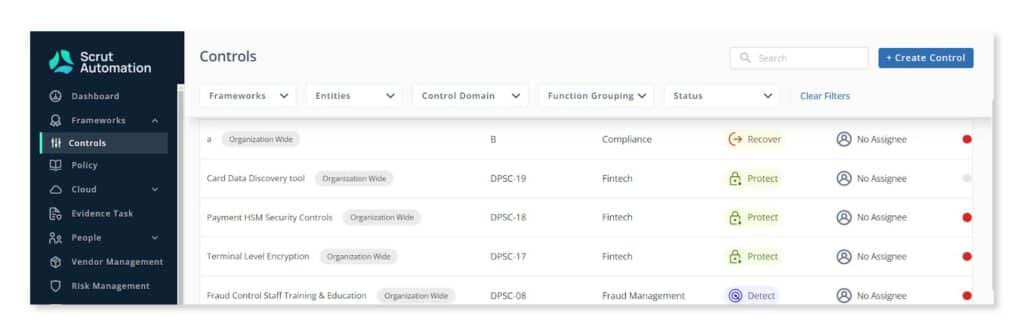
D. Custom controls

Scrut empowers you with the ability to craft custom controls that align precisely with your organization’s unique security requirements. 

a. Expert guidance for custom controls

Tap into the expertise of our seasoned professionals as they guide you through the process of creating custom controls tailored to your specific needs. Whether it’s addressing industry-specific challenges or aligning controls with your unique operational landscape, our experts ensure that your security measures are not just compliant but strategically aligned.

b. Utilize existing controls via UCF

Alternatively, leverage the Unified Compliance Framework (UCF) within Scrut to access a repository of existing controls across frameworks. This functionality allows you to streamline and unify your approach to compliance, reducing duplicacy in controls and ensuring a more cohesive and scalable compliance strategy.

c. Mapping risks and artifacts

Scrut’s comprehensive platform allows for the meticulous mapping of all risks and artifacts to the controls. This holistic approach ensures that every aspect of your security landscape is accounted for, providing a clear and detailed picture of your compliance posture.

d. Reduced duplicacy and simplified scalability

The integration of custom controls and the use of UCF significantly reduce duplicacy in controls. This not only streamlines your compliance efforts but also simplifies scalability. Easily extend your compliance initiatives to embrace new and even less-known standards with ease, ensuring that your organization stays ahead of evolving industry requirements.
E. Cloud monitoring

When it comes to cloud security, Scrut brings a robust solution to the table with automated cloud monitoring that goes beyond the ordinary.

a. Automated checks across 200+ cloud controls

Scrut’s cloud monitoring feature conducts automated checks across a comprehensive array of 200+ cloud controls. This meticulous scrutiny ensures that your cloud infrastructure aligns with the highest standards of security, covering a spectrum of critical aspects to fortify your digital assets.
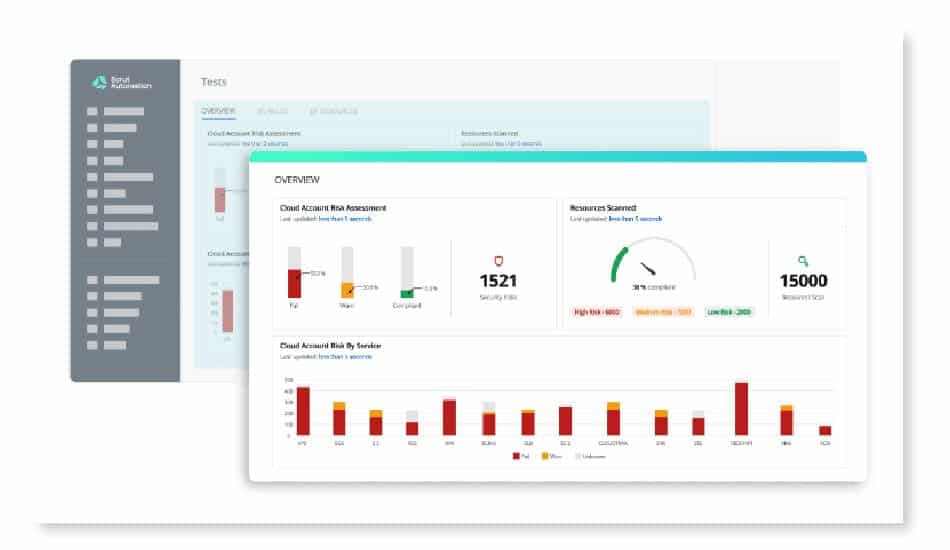
b. Testing against CIS benchmarks

Scrut sets the gold standard for cloud security by rigorously testing your cloud infrastructure against the CIS benchmarks. These benchmarks, recognized as the industry’s gold standard, provide a thorough evaluation of your cloud environment, ensuring that it meets the most stringent security requirements.

F. Automated remediation

Scrut introduces a game-changing feature—automated remediation designed to keep your cloud infrastructure in optimal condition.

a. Daily automated tests

Scrut conducts thorough tests across your cloud environment every 24 hours, providing a proactive approach to identifying potential issues. These tests cover a broad spectrum, ensuring a comprehensive examination of your cloud resources.

b. Comprehensive issue reports

Receive detailed reports highlighting resources that have issues within your cloud infrastructure. Scrut goes beyond mere identification, offering an insightful breakdown of the problems detected.

c. Step-by-step remediation guidance

For every identified issue, Scrut provides clear and concise steps for remediation. This guidance is not just about flagging problems; it’s about empowering you with actionable insights to address and resolve issues promptly.

d. Integrated project management workflows

Seamlessly integrate remediation into your project management workflows. Scrut ensures that the remediation process aligns with your overall project strategy, facilitating a cohesive and efficient approach to cloud security.

e. Automated code generation

In cases where specific code is required to address issues, Scrut takes the hassle out of coding. The system generates the necessary code for you, streamlining the implementation of remediation steps and saving you valuable time and resources.

G. Risk management

In the realm of risk management, Scrut presents a dynamic and flexible solution that not only identifies risks but empowers organizations to respond proactively, ensuring resilience across departments and applications.

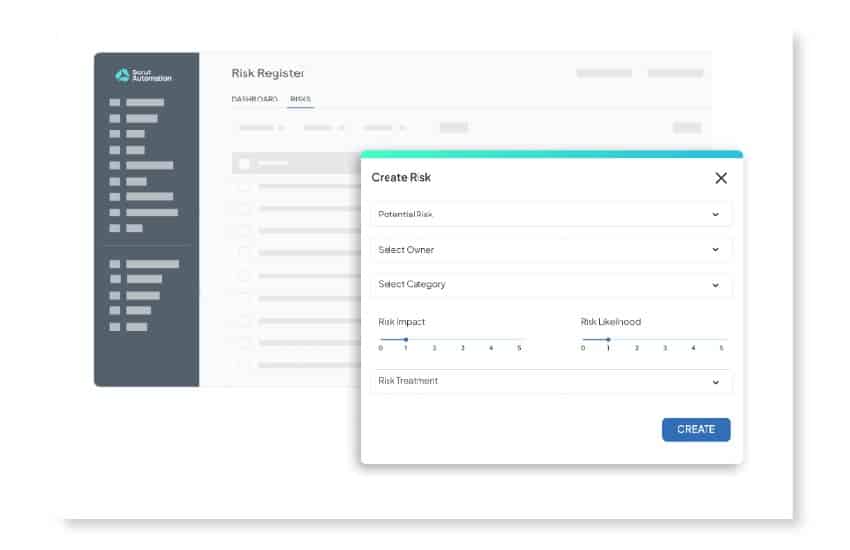
a. Flexible risk register

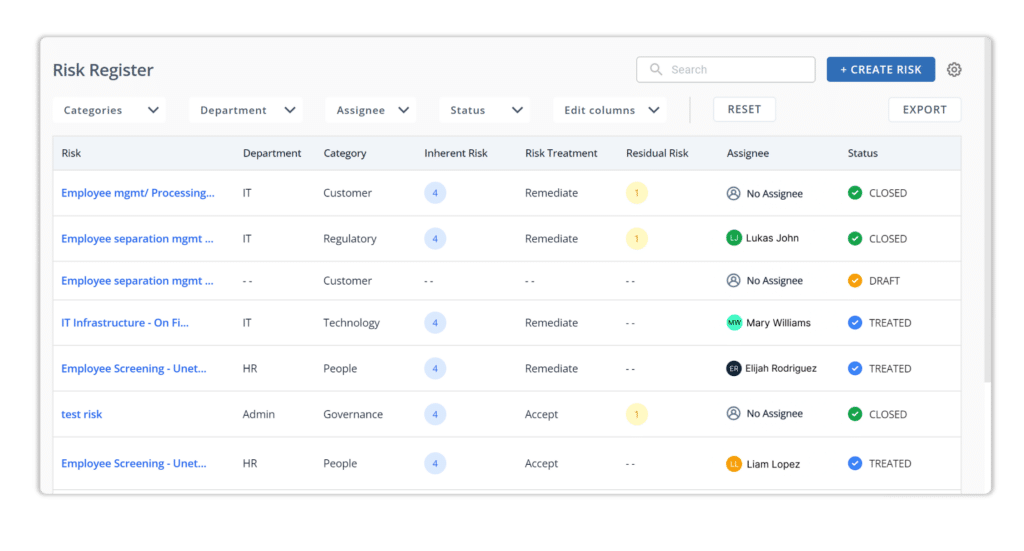
Scrut’s risk management begins with a flexible risk register, enabling you to log and monitor risks across various dimensions, including departments, applications, and impact. This comprehensive view ensures that no aspect of your organizational landscape is left unmonitored.

b. Configurable scoring criteria

Tailor risk identification and response with configurable scoring criteria. Scrut allows you to set up configurations and add scoring criteria, providing a robust framework to identify, assess, and respond to risks with precision.

c. Templates & customization

Access Scrut’s extensive risk library or create your own risks manually, either individually or by importing spreadsheets. Custom field availability allows you to map additional values, ensuring that risk management aligns seamlessly with regulatory requirements and the unique needs of your organization.

d. Assessments & treatment strategies

For each identified risk, Scrut facilitates the setting of scores and the subsequent definition of treatment strategies. Efficient workflows allow you to select relevant controls or requirements to mitigate risks, ensuring a systematic and strategic approach to risk management.

e. Mitigation beyond the basics

Scrut goes beyond one-size-fits-all mitigation tasks, providing a structured approach for addressing risks comprehensively. The platform allows you to add residual risks after mitigation, officially closing risks while acknowledging any remaining concerns. In response to new information, you can also reset risks for a fresh evaluation, ensuring a dynamic and adaptive risk management process.
H. Vendor risk management

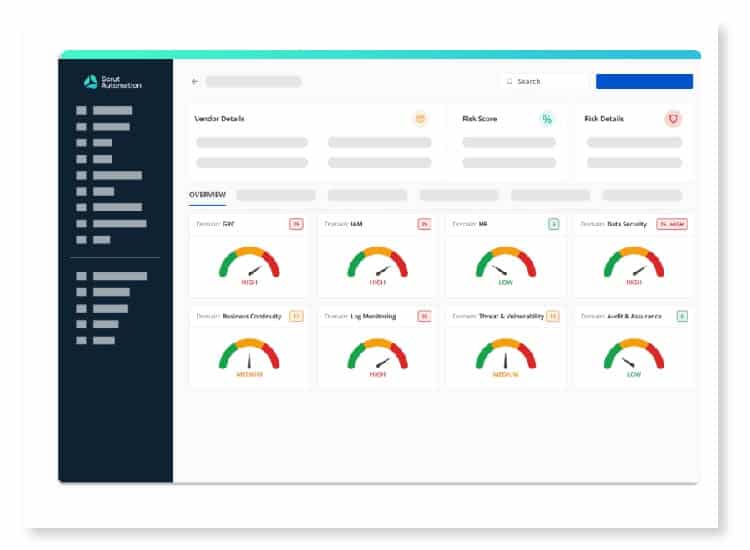
Scrut extends its capabilities to vendor risk management, offering a seamless and comprehensive approach from onboarding to actionable reporting.

a. Onboarding – Vendor discovery

Scrut simplifies the onboarding process with efficient vendor discovery. Seamlessly integrate vendors into your risk management landscape, ensuring a comprehensive view of potential risks associated with third-party relationships.

b. Assessment – Comprehensive questionnaires

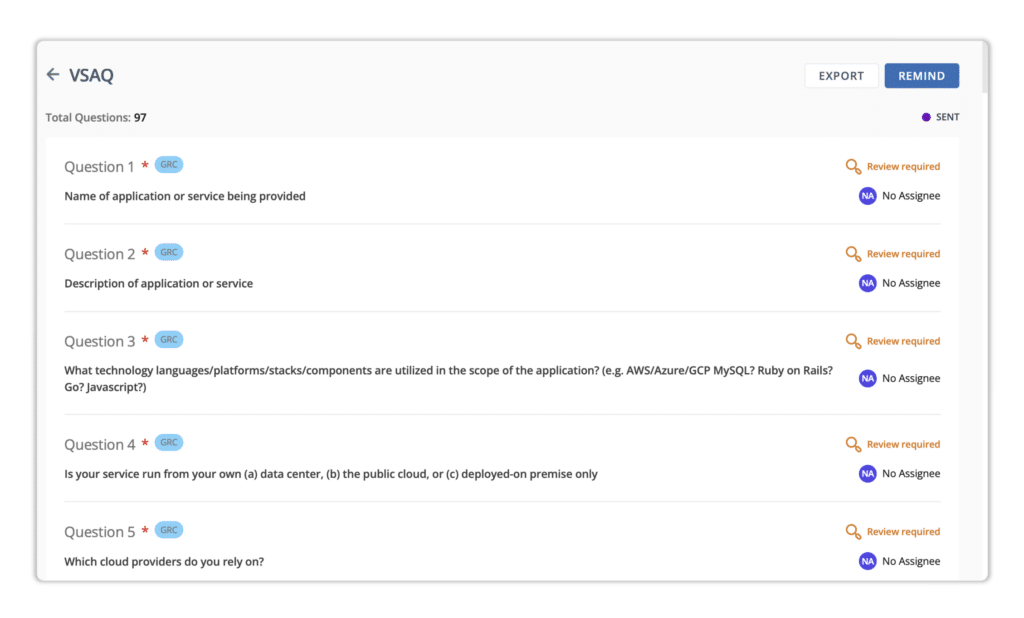
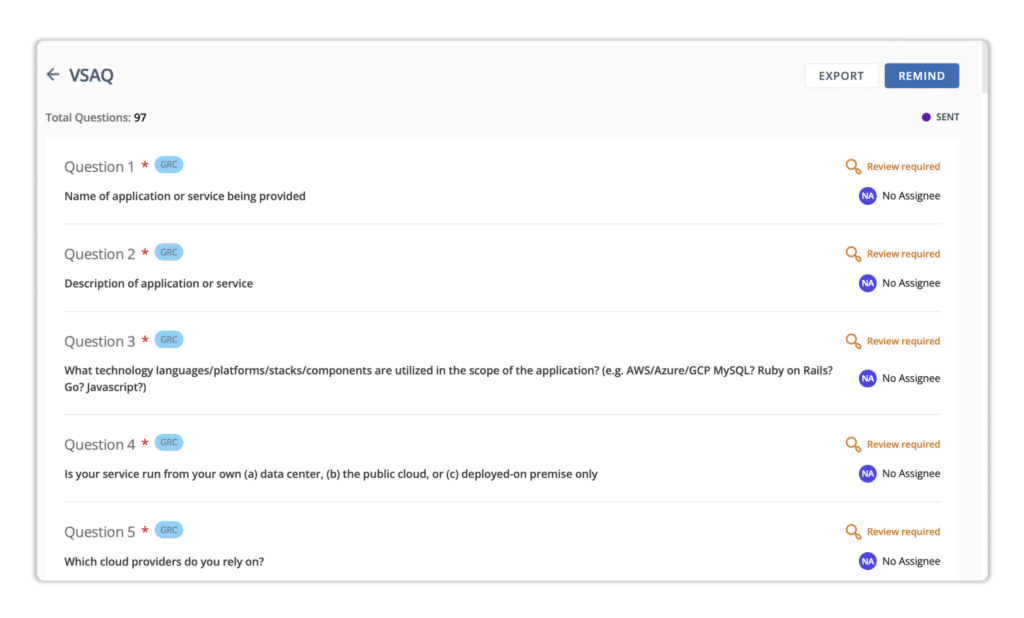
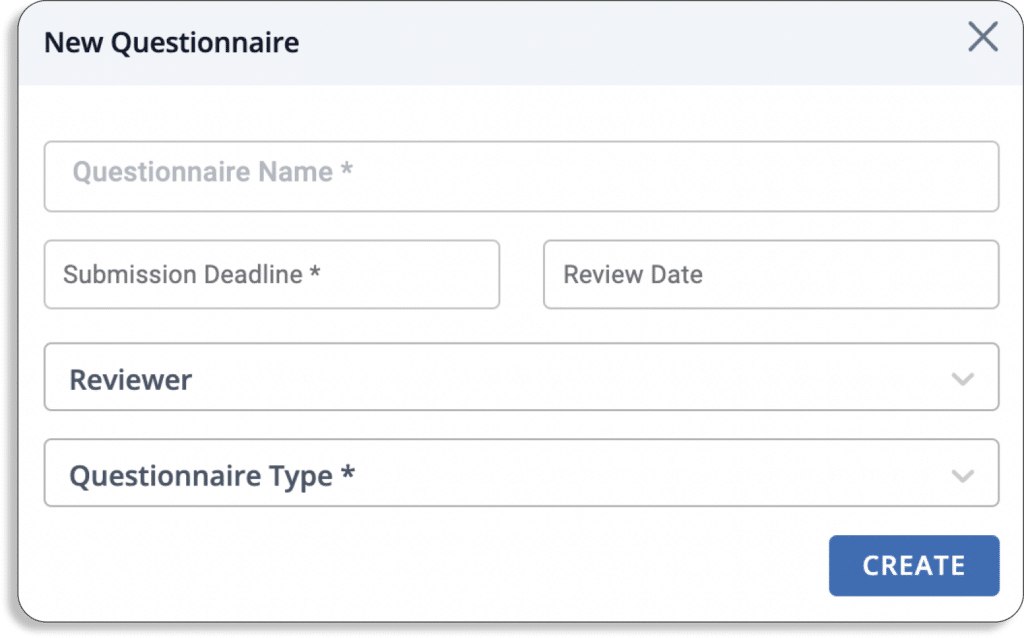
The assessment phase is enhanced through Scrut’s robust questionnaire creation tools. Craft comprehensive questionnaires tailored to your specific needs, utilizing a response portal for vendors to provide detailed information. Custom fields offer flexibility in capturing additional information critical for a thorough evaluation.

c. Evaluation & scoring

Scrut facilitates a structured evaluation and scoring process. Assess vendor responses against predefined criteria, ensuring a standardized approach to evaluating and scoring potential risks associated with vendor relationships.

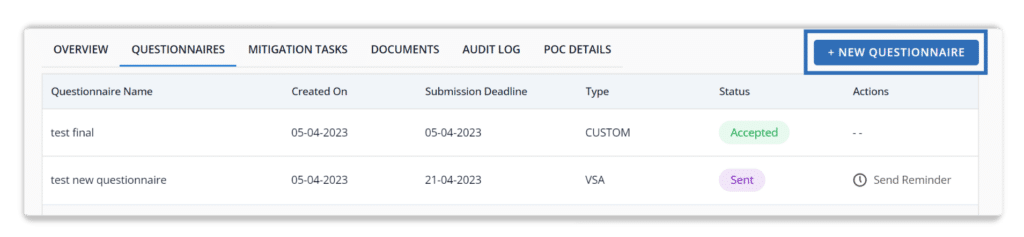
d. Questionnaire reminders + mitigation tasks

Keep the process on track with Scrut’s automated questionnaire reminders. Timely notifications ensure that vendors provide necessary information promptly. Additionally, the platform enables the assignment and tracking of mitigation tasks, ensuring a proactive stance in addressing identified risks.

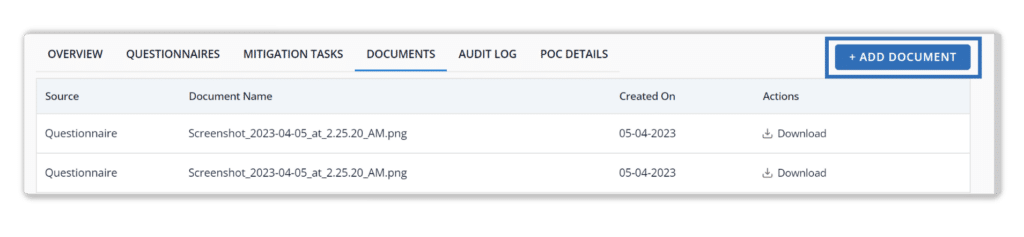
e. Document repository

Centralize all vendor-related documentation with Scrut’s document repository. This feature ensures that all relevant information, agreements, and communication are easily accessible, providing a centralized hub for efficient vendor risk management.

f. Actionable reporting

Scrut doesn’t just provide data; it translates information into actionable insights. Leverage Scrut’s reporting capabilities to gain a comprehensive understanding of vendor risk landscapes. These actionable reports empower informed decision-making and strategic risk mitigation.
I. Trust module

Scrut’s Trust Module is your strategic ally, empowering you to proactively showcase your information security posture, fostering trust, and expediting deal closures with prospective partners.

a. Trust Vault

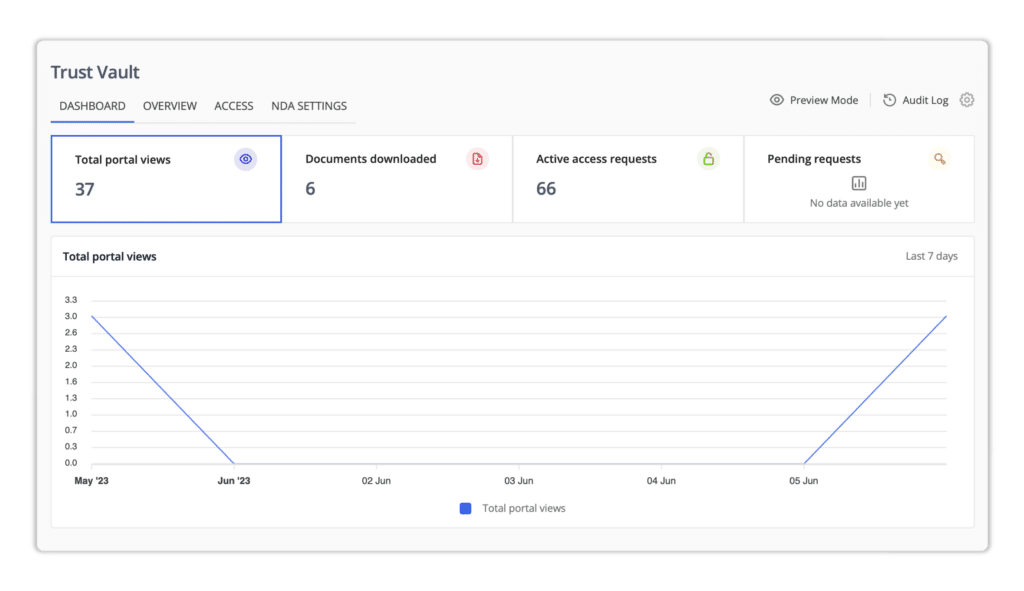
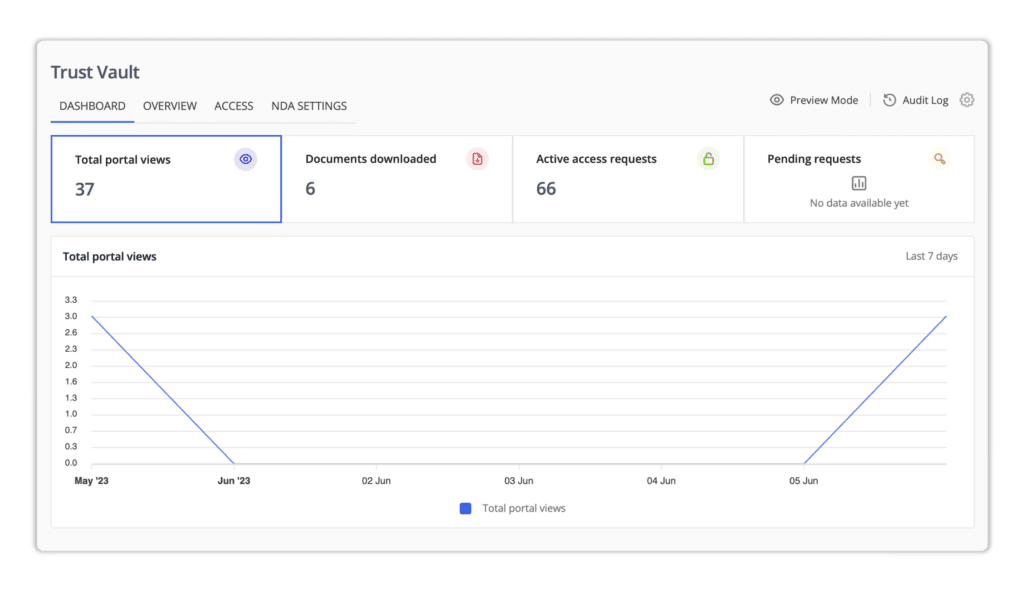
The Trust Vault within Scrut brings transparency to your compliances and control-level documentation, ensuring your commitment to information security standards is readily apparent.

It safeguards sensitive information, allowing access based on Non-Disclosure Agreements (NDAs) and implementing time-gated access. This dual-layer protection ensures confidentiality and secure information sharing.

Trust Vault streamlines security reviews with effective monitoring of requests through the dashboard, expediting the entire process and contributing to swift decision-making.

b. KAI

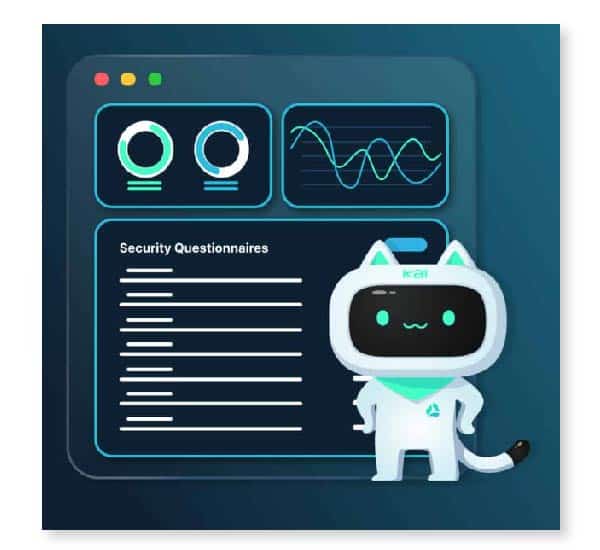
Scrut’s KAI, armed with artificial intelligence, transforms the security questionnaire response process. By scanning controls and documentation, KAI generates responses that are not just generic but uniquely tailored to your organization’s specifics.

Bid farewell to unnecessary communication loops between teams. KAI minimizes back-and-forth by providing accurate and comprehensive responses, saving valuable time and optimizing resource utilization.
J. People Module

Scrut’s People Module is your comprehensive solution for monitoring and managing compliance among employees, enhancing your internal security posture, and fostering a culture of security awareness.

a. Comprehensive compliance oversight

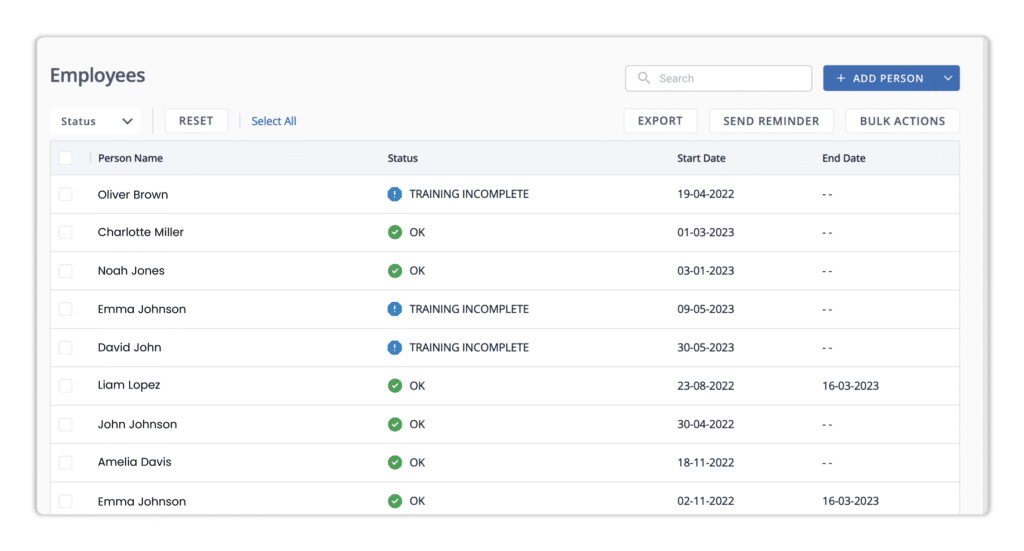
Scrut allows you to govern each employee’s system and device compliance with a detailed technical overview. Gain insights into the compliance status of individual devices, ensuring a proactive approach to internal security.

b. Policy acceptance monitoring

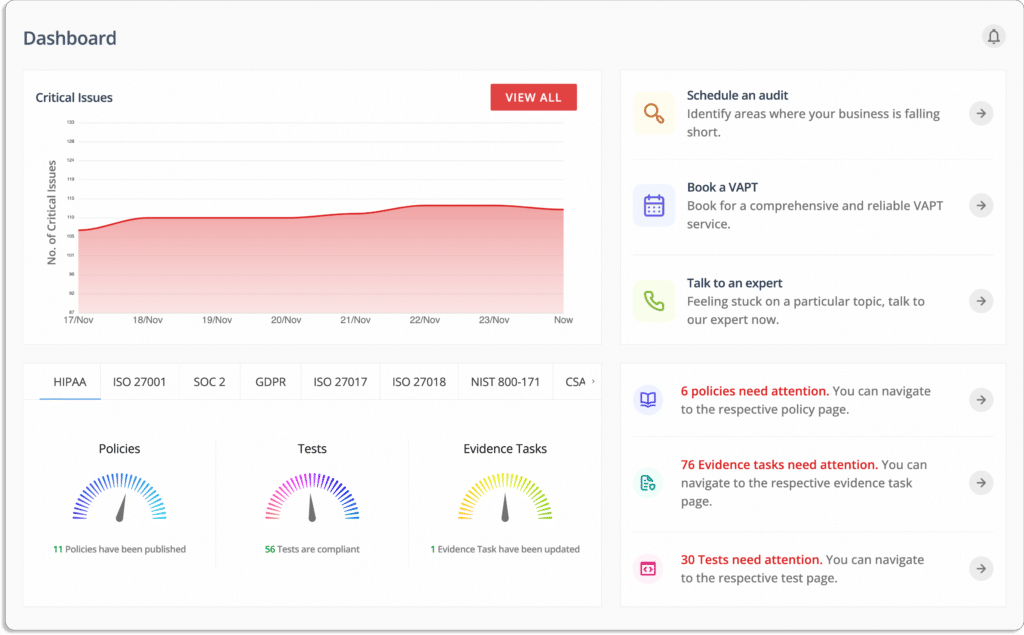
Scrut provides a thorough organizational view to monitor and increase policy acceptance rates. Utilize interactive dashboards to assess the policy compliance landscape across your entire organization.

Facilitate policy adherence with ease using 1-click reminders, ensuring that employees stay informed and compliant with organizational policies.

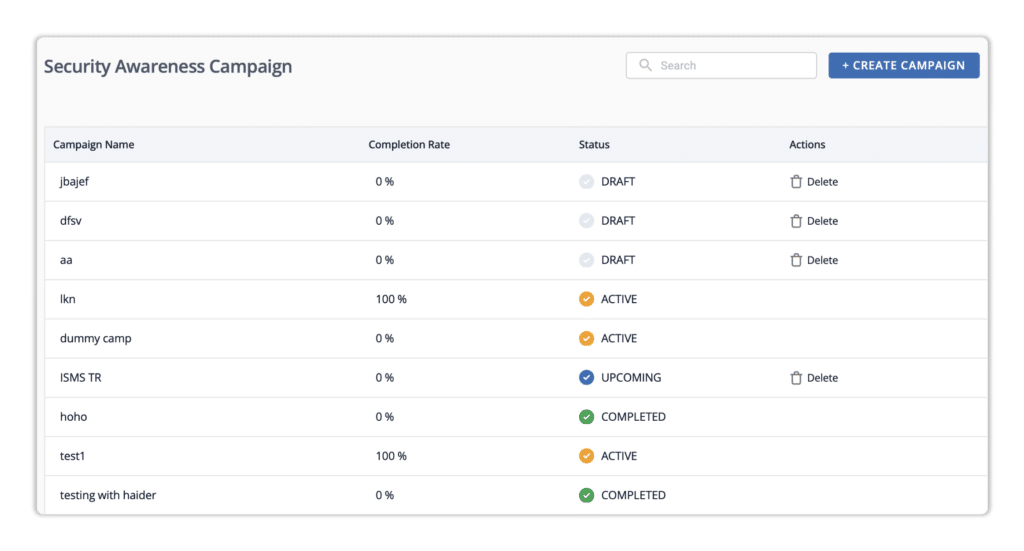
c. Security awareness campaigns

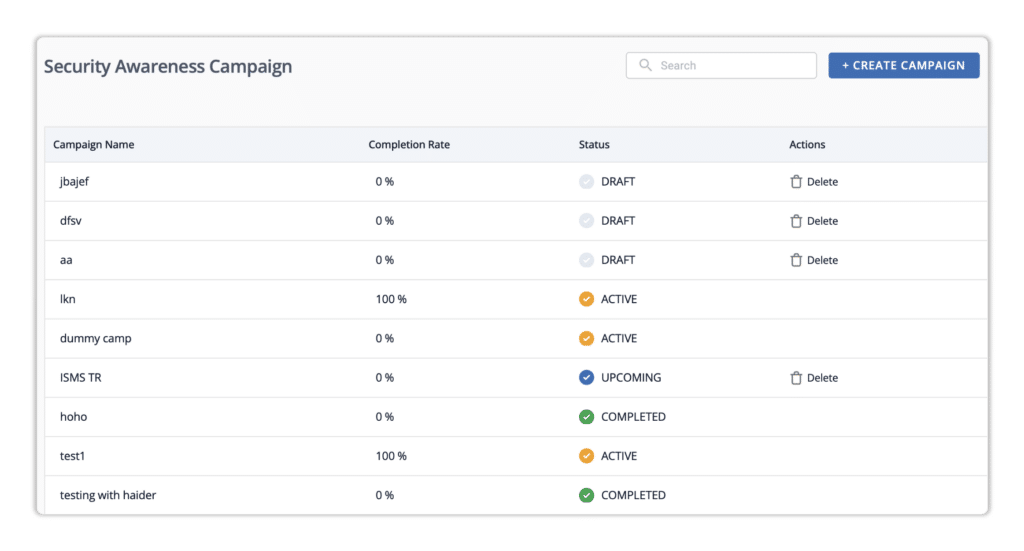
Create and deploy security awareness campaigns tailored to your organizational needs. These campaigns may include multiple quizzes to engage and educate employees on crucial security practices.

Scrut’s interactive dashboards offer a real-time view of completion rates, statuses, and other pertinent information. Track the effectiveness of campaigns and identify areas for improvement.

d. Employee lifecycle management

Seamlessly manage the employee lifecycle by integrating with your Human Resource Information System (HRIS). Scrut allows you to connect with your HRIS to streamline onboarding and offboarding processes.

Offboard employees directly from the platform, ensuring a smooth transition and minimizing security risks associated with employee departures.

K. Custom Requirements

Scrut understands that one size doesn’t fit all in the realm of compliance. That’s why we empower you with a suite of tools under Custom Requirements, allowing you to mold your compliance initiatives according to your organization’s distinct needs.

a. UCF integration

Scrut features UCF, a centralized repository of controls. This integration enables you to map various compliance requirements effortlessly across different standards. Experience a holistic understanding of controls, reducing the complexity associated with diverse compliance landscapes.
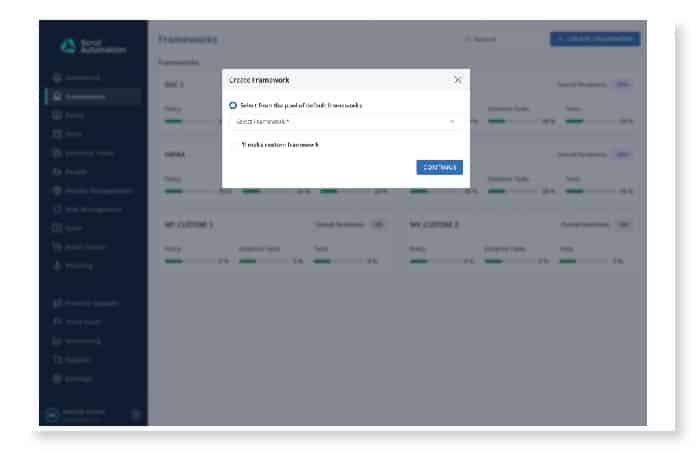
b. Custom frameworks

Craft bespoke compliance frameworks with Scrut’s custom framework capabilities. Draw from existing policies and evidences to create frameworks that align precisely with your internal requirements. This flexibility ensures that your compliance efforts are not just efficient but also tailored to your business objectives.
c. Policy creation

Rely on Scrut for expert guidance in policy creation. Access Infosec experts who can assist you in crafting policies that align with the latest industry standards, tailoring them to your organization’s unique needs. Scrut simplifies the policy creation process, ensuring alignment with regulatory requirements.

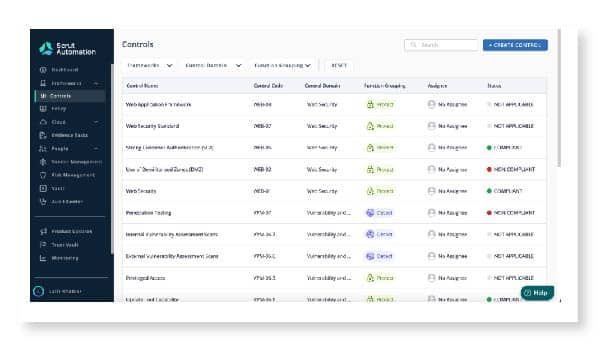
d. Controls creation

With Scrut, you have the ability to define your controls based on your specific security and compliance needs. This granular control creation ensures that your organization’s unique requirements are met, providing a tailored approach to safeguarding your digital assets.

e. Integrations

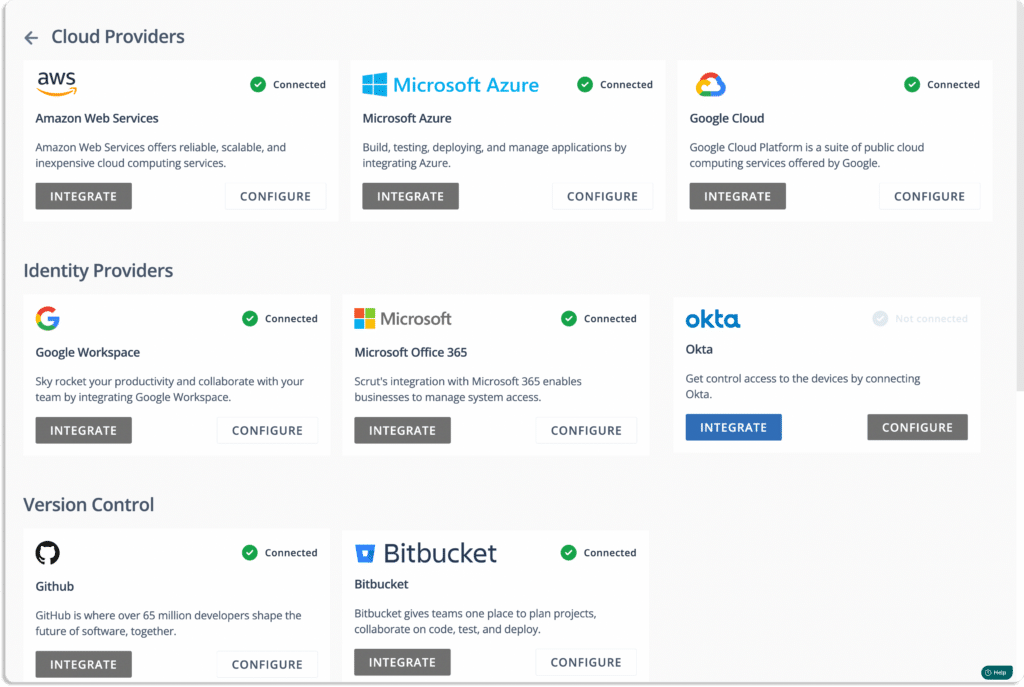
Recognizing the importance of collaboration, Scrut seamlessly integrates with various tools and applications. Ensure that compliance is seamlessly woven into your existing workflows by integrating Scrut with project management tools and other applications, creating a cohesive work environment.

L. Additional support

Scrut goes beyond the standard offerings to provide additional support, ensuring a comprehensive and fortified compliance journey for your organization. This includes specialized assistance in Vulnerability Assessment and Penetration Testing (VAPT) and managed support throughout audits.

a. Vulnerability Assessment and Penetration Testing (VAPT)

Scrut offers a proactive approach to security with specialized VAPT services. Conduct thorough examinations of your systems to identify vulnerabilities and potential exploits. This ensures a robust defense against emerging threats and vulnerabilities, fortifying your overall security posture.

b. Managed support in audits

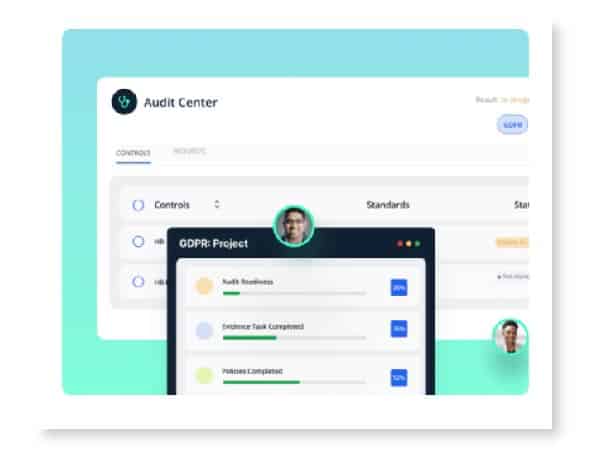
Navigating audits becomes a seamless experience with Scrut’s user-friendly interface and intuitive tools. The platform simplifies the audit process, ensuring that your organization not only meets but exceeds compliance standards effortlessly.

Scrut provides hands-on assistance throughout the audit process. Our dedicated support includes expert guidance, ensuring that your organization remains in full compliance with industry standards and regulations. Rely on our expertise to navigate the complexities of compliance requirements successfully.
2. Drata
Drata offers a comprehensive security and compliance automation software that efficiently monitors and gathers evidence of security controls. It simplifies compliance processes through automated monitoring, evidence collection, and asset tracking.

Supported frameworks by Drata encompass SOC 2, ISO 27001, HIPAA, GDPR, PCI DSS, CCPA, ISO 27701, NIST CSF, and more.

With Drata, you gain insight into your organization’s security posture, compliance status, and control. Additionally, it seamlessly integrates with your SaaS applications, consolidating compliance status into a single platform for ease of management.

Pros

  • Almost effortless setup
  • Comprehensive documentation that helps to get familiar with various topics
  • Centralized visibility of all your personnel and assets 
  • Gives you insights into what compliance requirements need your attention

Cons

  • Lacks some custom integrations with other systems
  • Some integrations (Checkr, GCP) don’t work properly
  • The inability to customize what to monitor poses challenges for the engineering team
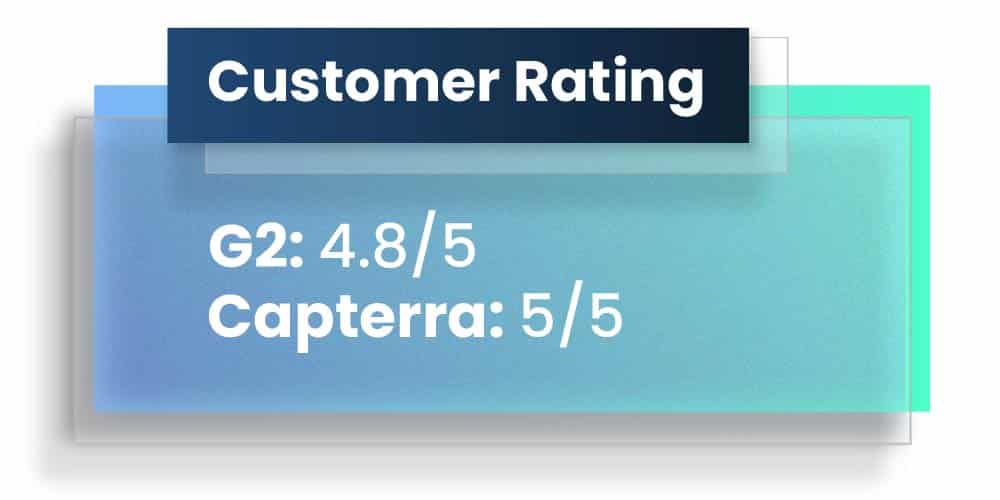
3. Hyperproof
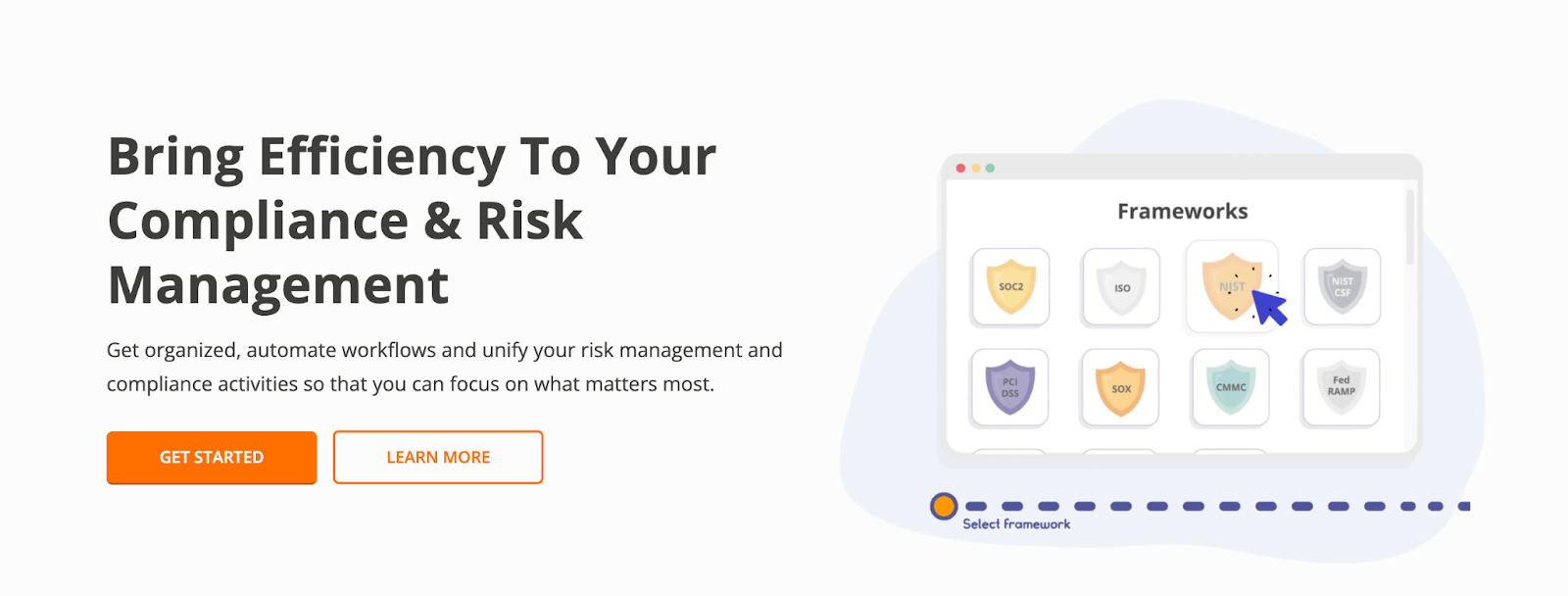
Hyperproof is a robust security assurance and compliance operations platform designed to assist organizations in meeting regulatory requirements effectively. It enhances compliance and risk management by streamlining processes and automating tasks.

This platform provides a comprehensive solution for comprehending compliance needs, overseeing internal controls, and establishing audit processes and workflows. With Hyperproof, you can seamlessly adapt to any compliance framework based on your business needs, reducing manual efforts associated with control mapping, testing, and evidence collection.

Hyperproof supports various compliance frameworks including SOC 2, ISO 27001, NIST 800-53, NIST CSF, NIST privacy, PCI, SOX, and more. Moreover, it enables users to upload custom frameworks and manage them within the platform for added flexibility and convenience.

Pros

  • Role-based access management ensures users have access to only their tasks and are focused on what they should be
  • Easily integrates with numerous tools, and automates evidence collection
  • Easy tasks management: Tasks can be viewed on either a Kanban board or a simple grid

Cons

  • Inability to configure and customize notifications
  • Occasionally, the system stops functioning and has to be refreshed to work again

4. AuditBoard
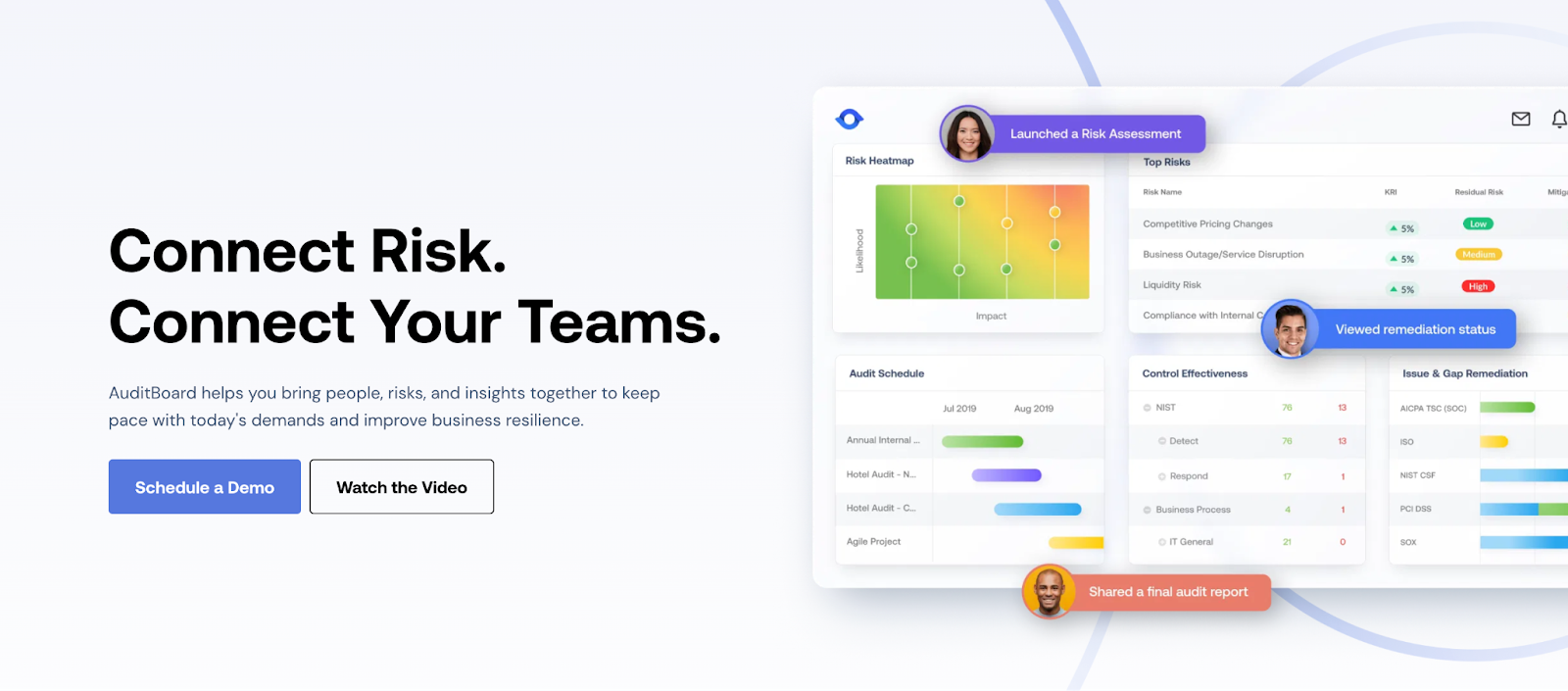
AuditBoard is a cloud-based audit, risk, and compliance management platform that helps comply with SOC 2, ISO 2700x, NIST, CMMC, PCI DSS, and more.

The platform centralizes all your compliance frameworks in a single location and helps you manage efficiently. It reduces manual tasks, avoids duplicative assessments, and streamlines reporting with automation. The tool eliminates manual follow-ups with automated alerts and reminders to stakeholders. 

AuditBoard identifies the compliance gaps between your organization and industry standards and ensures that your organization stays compliant with the changing requirements. 

Pros

  • Single hub for all risks and controls
  • Easy implementation and customizable as per your needs

Cons

  • Incapable of third-party risk management
  • Confusing to set up new controls, processes, etc.
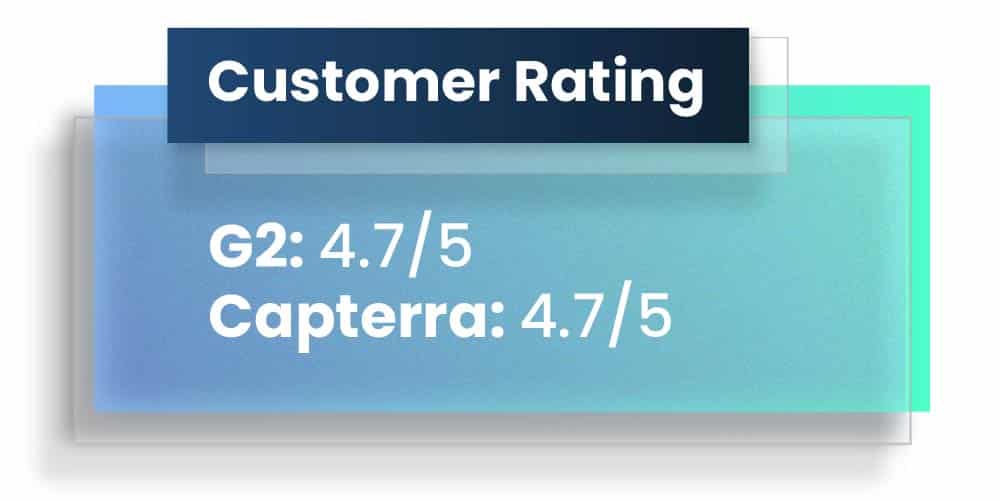
5. LogicGate

With LogicGate’s Risk Cloud platform, you can manage and improve your governance, risk, and compliance (GRC) program with ease. LogicGate proactively tracks and responds to issues and provides insights. 

The platform helps you with the entire compliance lifecycle— from identifying the right rules to keeping tabs on the effectiveness of your compliance programs. LogicGate helps you communicate processes to remain compliant, assess and manage risks across the organization, and protect your business from threats.

Pros

  • Highly customizable platform that doesn’t require technical knowledge to make changes
  • In-depth training on using the platform and getting complaint for administrators

Cons

  • Options for bulk changes are not available
  • Steep learning curve; you have to spend good time training employees
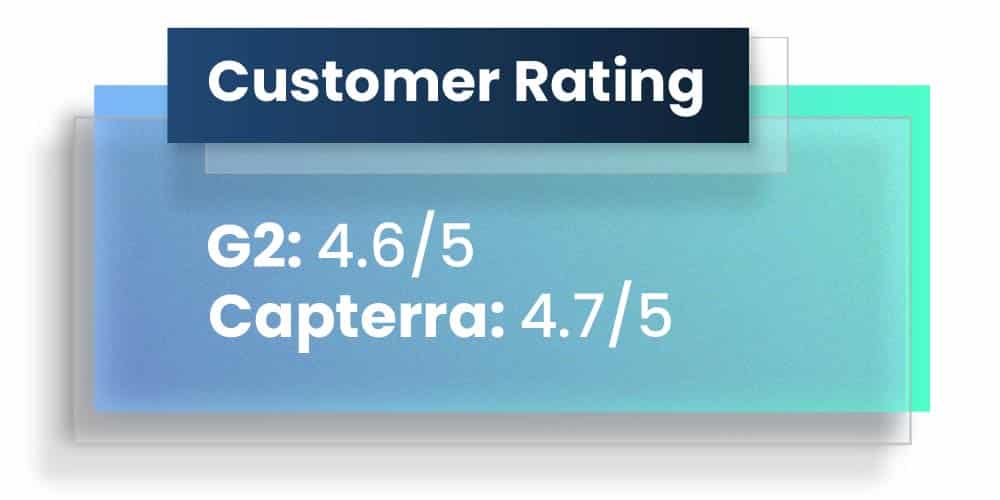
5. Sprinto
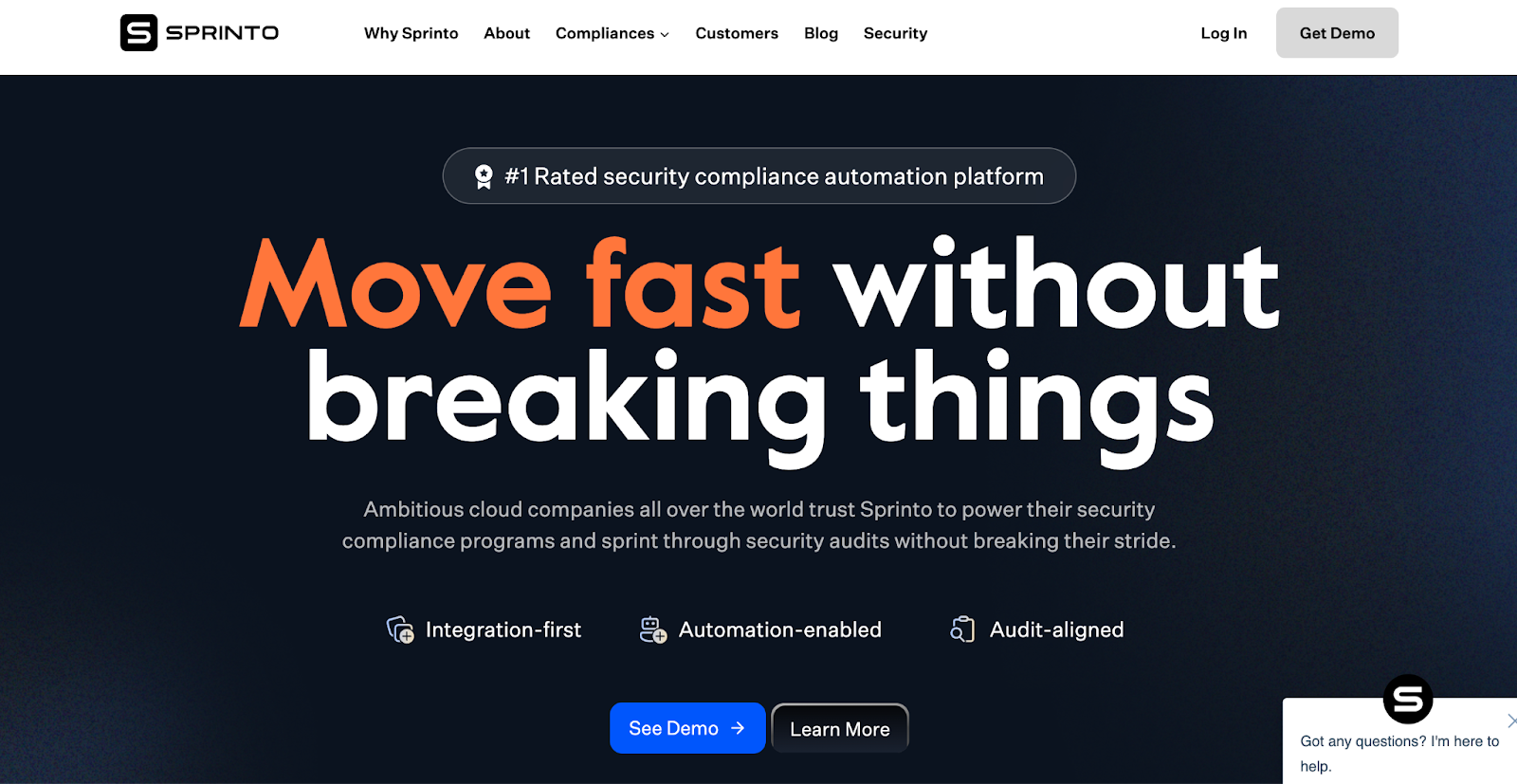
Sprinto is a compliance automation software that helps companies automate information security compliances and privacy laws, including SOC 2, ISO 27001, HIPAA, GDPR, and PCI DSS. It automatically creates security documents and enables real-time centralized monitoring.

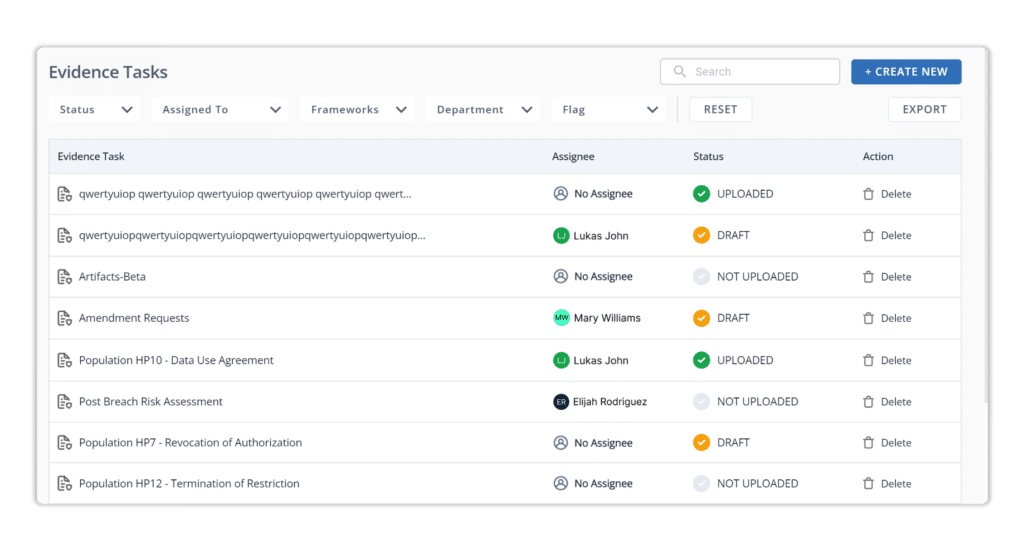
It automatically maps your work to audit requirements and collects evidence. Sprinto detects new joiners and triggers onboarding workflows. It generates downstream tasks around background checks, security training, policy acknowledgments, access control, etc., and tracks them to completion. 

Pros

  • Provides real-time evidence-tracking
  • The interface is clean and easy to understand and navigate

Cons

  • You need to reach out to their support team due to missing information in the knowledge base 
  • Sync delay: Consumes time in monitoring and fetching data
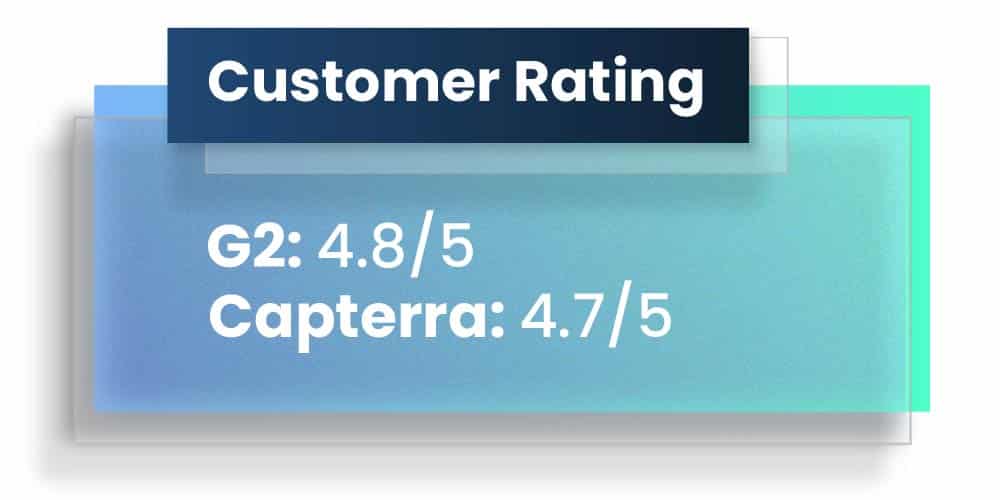
6. Vanta
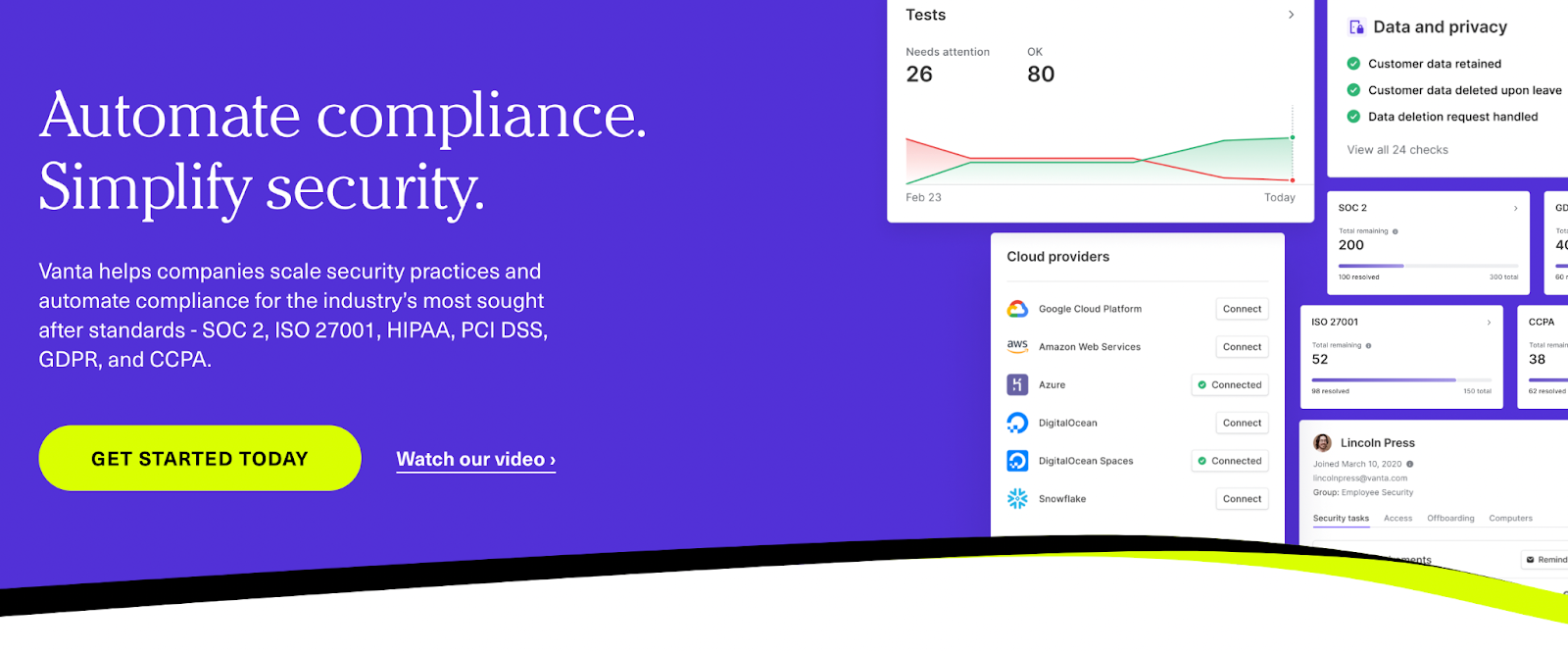
Vanta is an automated security and compliance management platform. It helps your organization remain compliant by monitoring, improving your security posture, and meeting requirements for standards like SOC 2, HIPAA, ISO 27001, PCI DSS, etc.

Vanta trust reports allow you to avoid repetitive tasks and provide customized reports. It gives you insights on compliance violations and helps you avoid hefty audit fines.

It has integrations with cloud service providers, identity providers, task trackers, and many more to automatically collect evidence. Additionally, it helps you manage vendor risks.

Pros

  • Provides a large library for pre-built policies and process templates
  • Enables sharing audit access to auditors directly on the platform

Cons

  • The built-in risk assessments are not too in-depth, 
  • Checkr International is not supported resulting in fail tests for international employees
  • Setup is tedious and takes a lot of time
7. Secureframe
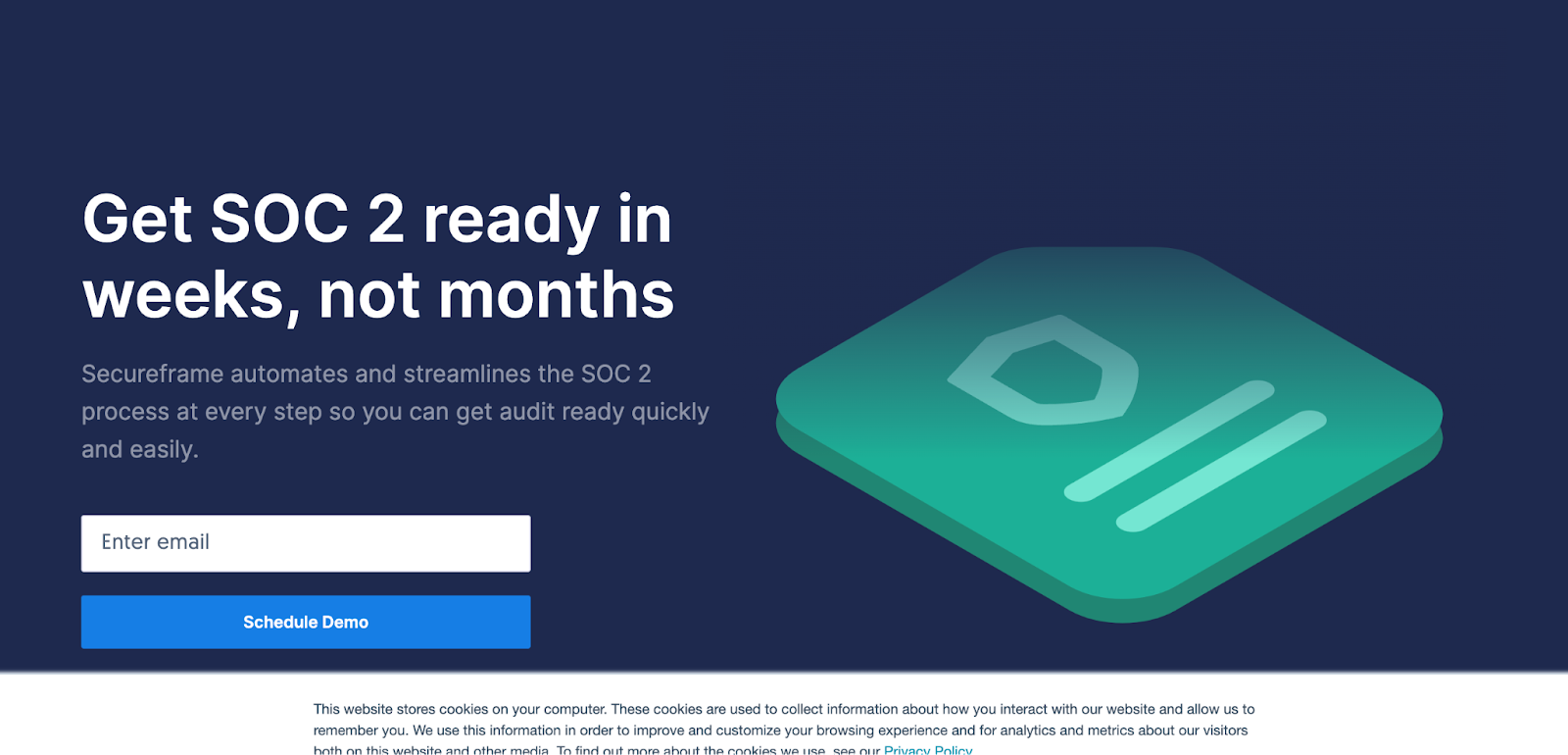
Secureframe helps companies comply with compliance frameworks like SOC 2, ISO 27001, PCI DSS, CCPA, GDPR, and HIPAA. As compliance is a continuous process, it helps you always remain compliant and sends alerts and reports on any deviation. 

With a streamlined workflow, Secureframe automates most of the compliance process as per your business requirements. In addition, it integrates with several service providers to help you stay compliant and make you audit-ready.

Pros

  • Policy builder saves a lot of time
  • Good number of integrations 

Cons

  • Sends false notifications sometimes
  • Many processes require a lot of manual work that could be automated

8. Carbide

Carbide identifies gaps, automates the compliance process, and accelerates your compliance programs. It provides a hassle-free way to compliance, starting from mapping your security and privacy policies to various frameworks and regulatory controls to managing audits.

This compliance automation software makes you aware of shortcomings in your audits and guides you to overcome them. It reduces manual time and effort by integrating with your systems and automatically collecting evidence for audits. 

Pros

  • User interface is simple
  • Easy to add and edit content

Cons

  • Takes time to load

9. Strike Graph

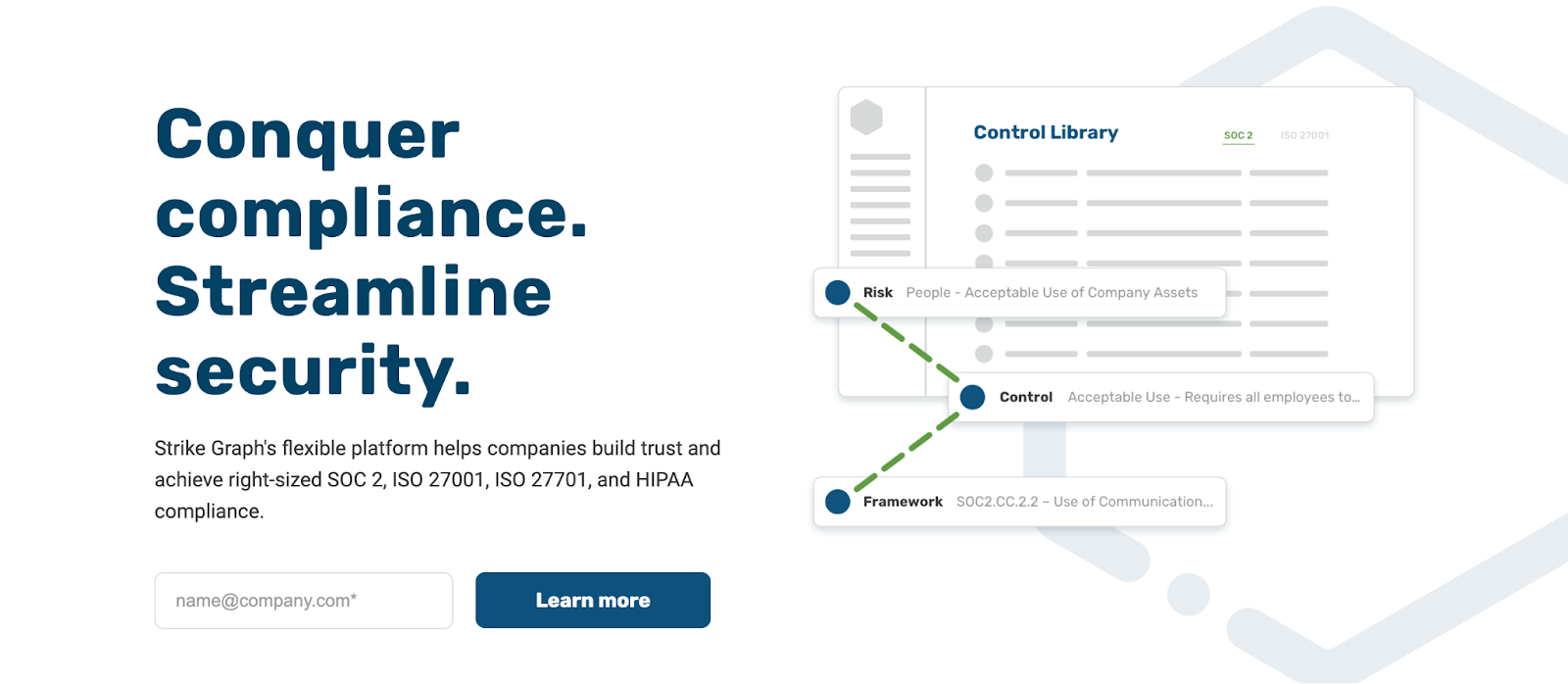
Strike Graph is a compliance automation software that simplifies security certifications for SOC 2, ISO 27001, HIPAA, and more. It assesses risk and assigns controls to create a cybersecurity program that matches your business requirements.

Moreover, it brings your auditor on the same platform and helps to pass your audit and get certified. Strike Graph maintains a state of compliance with automated tracking and evidence collection. The compliance automation platform tracks and manages all your evidence requirements from one location. 

Pros

  • Provides a straightforward evidence package
  • Good customer support

Cons

  • Lacks in automation and integrations
  • There are a few UI errors

Wrapping up

Navigating the complexities of regulatory frameworks and industry standards is a significant challenge for organizations of all sizes. As these challenges continue to evolve, the importance of compliance software cannot be overstated.

Our list of the top 9 compliance automation software solutions available in 2024 offers streamlined approaches to compliance management, empowering organizations to stay ahead of the curve and mitigate risks effectively.

From automating tedious compliance tasks to providing comprehensive risk management and vendor oversight, these platforms offer a wide range of features tailored to meet the unique needs of modern businesses.

If you’re interested in exploring Scrut’s incredible compliance automation and risk monitoring capabilities, make sure you schedule a demo with us today!
Authored by

Aayush Ghosh Choudhary
Co-founder & CEO at Scrut

How To Choose A CAASM Software

As organizations deal with larger and more complex environments, they often face challenges in gaining a comprehensive view of their entire infrastructure, especially when transitioning to cloud-based systems. This is where cyber asset attack surface management (CAASM) becomes crucial. CAASM solutions utilize API integrations to connect with existing data sources and effectively identify and address security vulnerabilities automatically.

With numerous CAASM tools available in the market, it can be overwhelming to determine where to start. This article aims to assist you in evaluating CAASM platforms by outlining key factors to consider.

Cyber Asset Attack Surface Management: An Overview

Cyber asset attack surface management involves a range of activities to constantly assess and improve your digital infrastructure’s security. This includes the ongoing identification, classification, mapping, and analysis of all components within your network, devices, data, and systems.

Whether they are located on-premises or in the cloud, every asset is taken into consideration. The process involves categorizing these assets, giving priority to high-risk areas, and addressing any vulnerabilities identified. Additionally, continuous monitoring of the attack surface is implemented to ensure a proactive approach to security

Cyber asset attack surface management serves as the initial phase in establishing an asset-centric approach for an organization’s attack surface management strategy. This emerging technology aids security teams in addressing challenges related to asset visibility and vulnerability exposure. By utilizing API connections with current tools, it allows organizations to gain comprehensive visibility into their assets. Through querying aggregated data, they can identify vulnerabilities and security gaps, ultimately enabling them to address and resolve these issues effectively.

CAASM solutions integrate data from various tools and sources to provide a comprehensive and continuous understanding of an organization’s entire attack surface. By eliminating blind spots, it enables security operations teams to implement cybersecurity measures and manage risks effectively quickly.

CAASM gathers assets from solutions focusing on specific areas such as endpoints, servers, devices, and applications. Through searches, users can identify any gaps in security tool coverage, such as vulnerability assessment and endpoint detection and response (EDR) solutions, by combining internal and external cyber assets.

Questions You Need To Ask While Selecting A CAASM Software

To ensure comprehensive coverage of your organization’s attack surface, it is important to find software that can effectively handle various aspects. This includes discovering, monitoring, and managing all relevant assets, such as networks, applications, and cloud services. Look for software that offers features like automated asset discovery, vulnerability scanning, and integration.

The following questions will assist users in choosing a cyber asset attack surface management software that meets their organization’s security goals and requirements, making the decision-making process more clear and informed.

An effective CAASM system should be capable of automation and scalability features. Determine how much automation the software offers. Scalability is critical for large organisations or those with complicated infrastructures, as the software must handle a huge number of assets while also providing efficient scanning and analysis.

1. Is the CAASM software compatible with your existing tools for integration?

When selecting a CAASM software, it is important to ensure that it can seamlessly integrate with your current tools, such as vulnerability management systems, security information and event management (SIEM) solutions, and other relevant security technologies. This integration capability allows for discovering assets across your distributed system, regardless of location. 

Additionally, verifying that the software is compatible with your company’s operating systems, databases, network architecture, and other essential components is crucial

One notable CAASM tool that fulfils these integration requirements is Scrut. Scrut simplifies the evidence-collection process by providing a comprehensive solution with over 70 integrations. It effectively connects with various application environments, including HRMS and endpoint management systems, as well as other technologies, streamlining the automation of human evidence collection. 

Scrut seamlessly integrates with SIEM technologies like Datadog and Splunk and XDR solutions such as Crowdstrike. Furthermore, it integrates with vulnerability management tools like Qualys, AWS Inspector, and Tenable

2. Can the CAASM tool help with risk identification and prioritization?

When selecting a CAASM tool, it is crucial to ensure that it can effectively identify and prioritize critical hazards. Look for a software solution that offers risk prioritization capabilities, allowing you to detect and evaluate vulnerabilities in your assets. Consider the extent and depth of vulnerability coverage, as well as the quality and timeliness of vulnerability updates

The Scrut CAASM solution assists security teams in identifying and prioritizing key risks. The platform monitors the cyber asset environment for issues affecting business-critical assets and the broader infrastructure. The platform identifies highly significant and risky assets, aids users in prioritizing these risks, and provides recommendations for remediation.

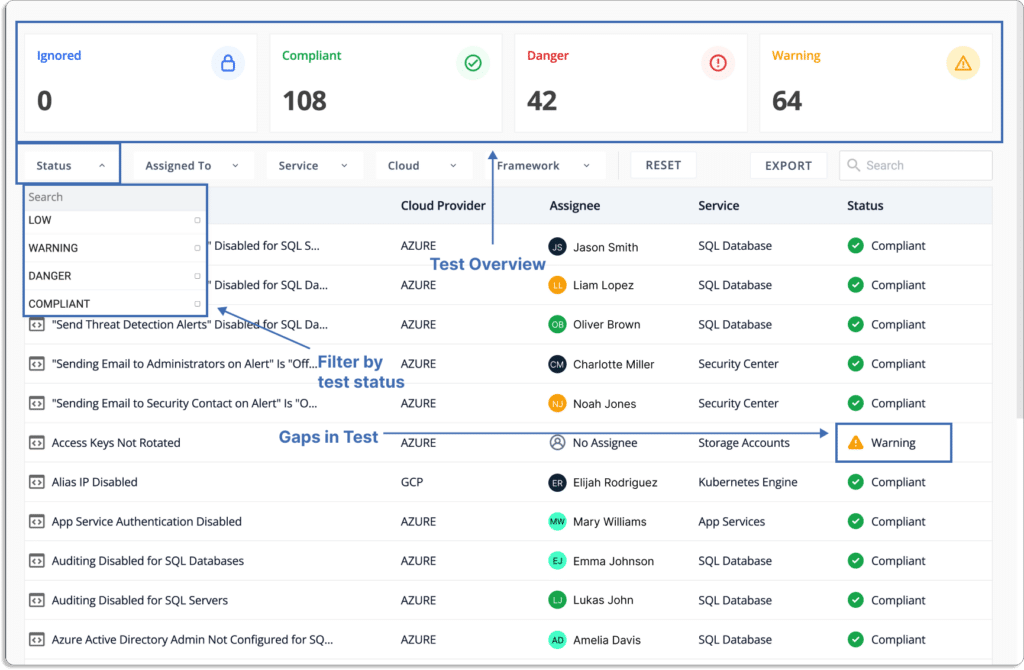
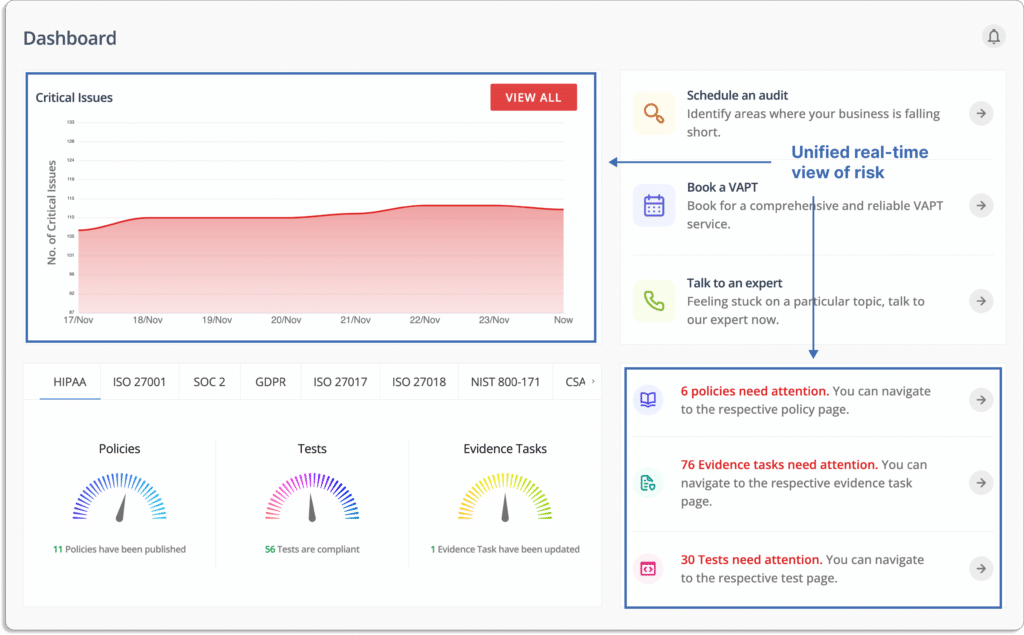
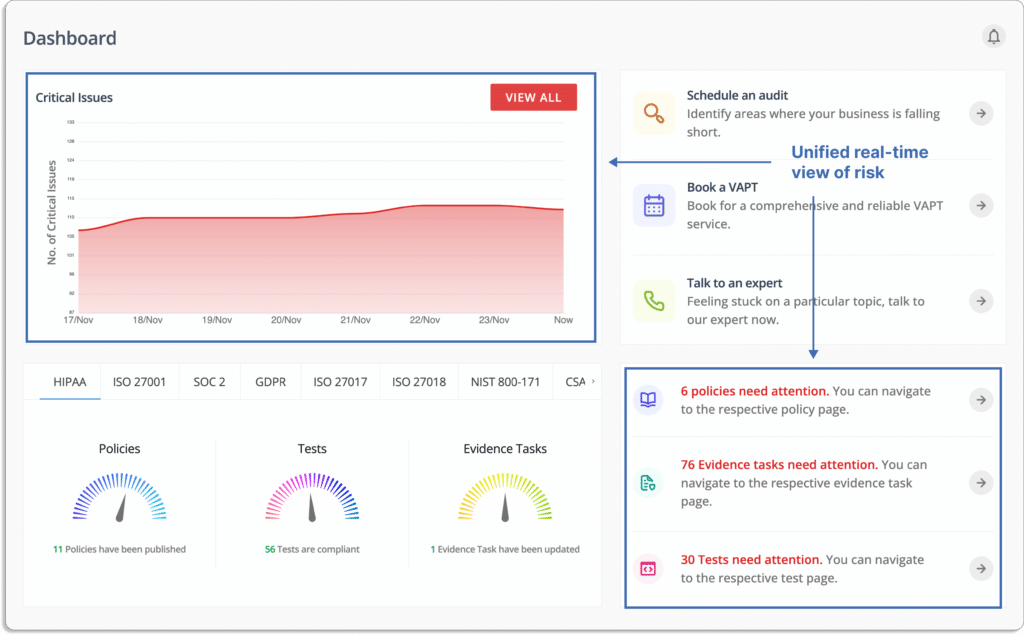
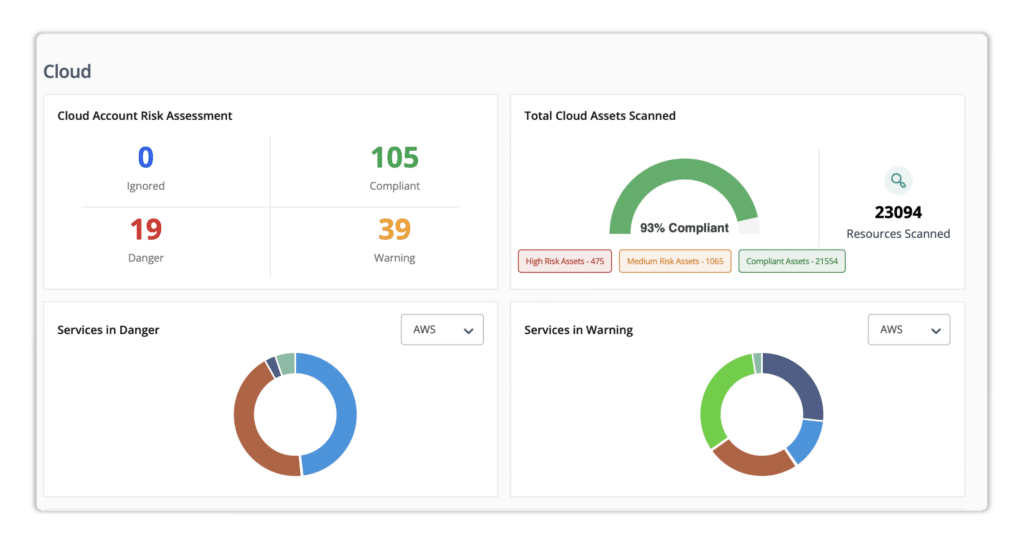
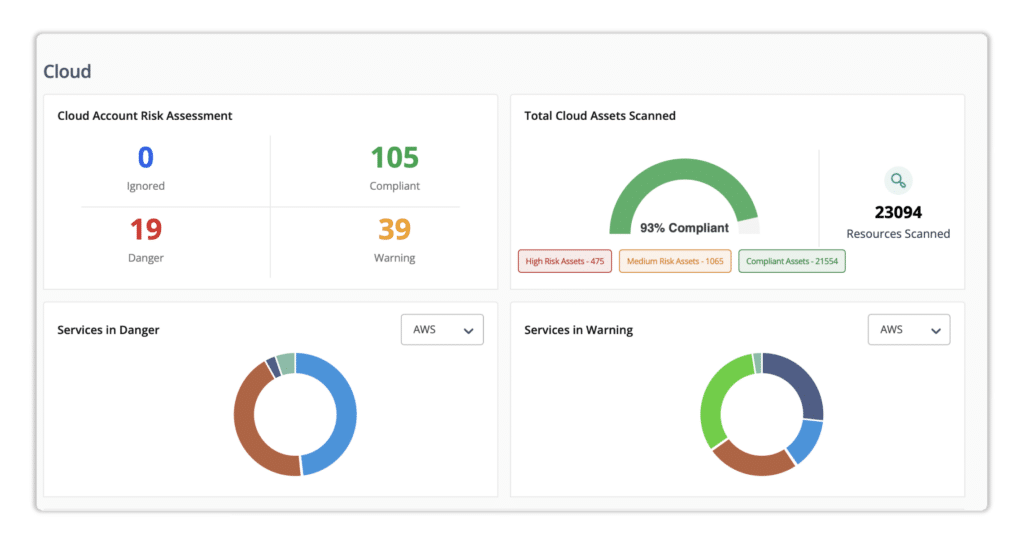
It enables you to focus on the important problems, as shown in the screenshot below.

With Scrut, you can concentrate on addressing the most important problems at hand. The tool presents data in a graphical format for easy visualization, allowing you to quickly identify specific security vulnerabilities in your environment and address any security and compliance concerns. 

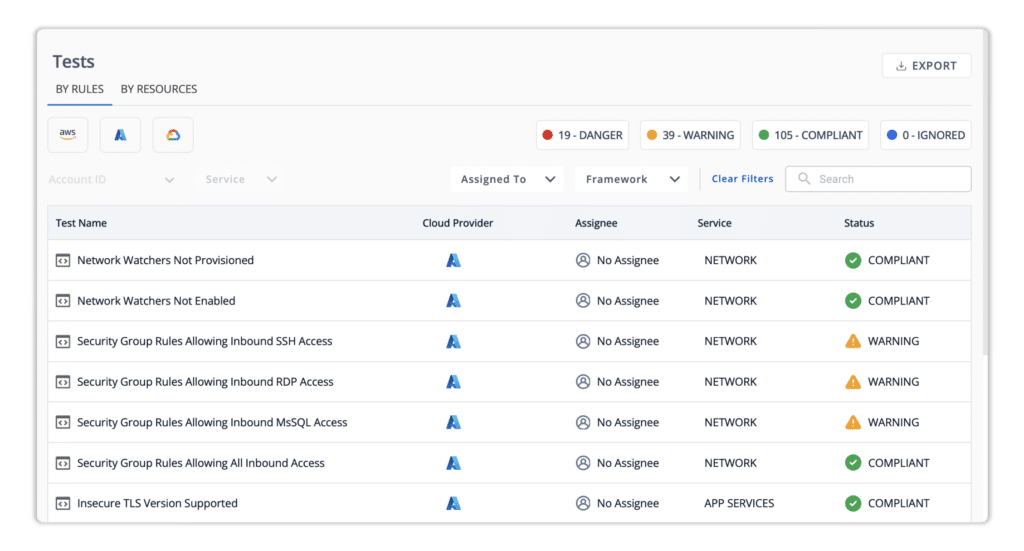
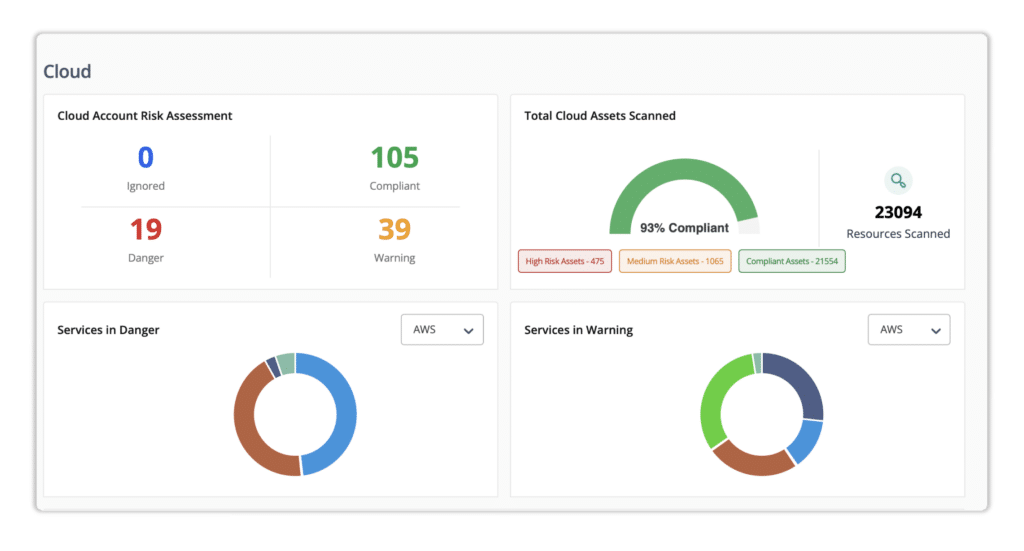
Moreover, Scrut offers a unified view of all risks, categorizing them based on their status (Ignored, Compliant, Danger, Warning), helping you determine which issues should be addressed first.

3. Can It Facilitate Asset Data Discovery?

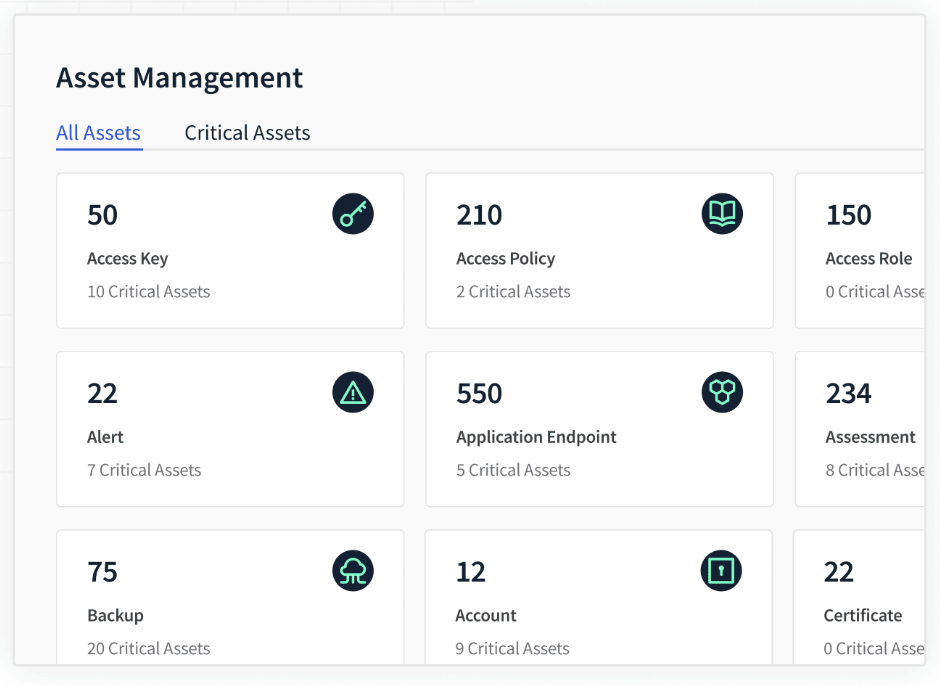
The software should provide complete visibility into your organization’s asset universe and should discover all asset data. The solution should assist users in managing all internal and external assets efficiently and serve as a single source of truth for asset data. CAASM automatically develops a complete and up-to-date asset inventory by continuously detecting and combining all of your cyber assets.

Scrut platform brings together and standardizes asset data from various cloud systems. The solution offers a unified view of all cloud entities, allowing users to identify essential business assets and prioritize risks across your public, private, hybrid, and multi-cloud settings.

4. Does The Tool Provide Continuous Compliance Support?

Consider whether the solution meets your industry’s regulatory needs. Look for capabilities that can assist you in remaining in compliance with regulatory regulations, such as the General Data Protection Regulation (GDPR), the Payment Card Industry Data Security Standard (PCI DSS), or the Health Insurance Portability and Accountability Act (HIPAA), etc. 

Scrut CAASM ensures the necessary security and compliance controls are implemented once essential assets are identified. Scrut provides a unified experience for ensuring compliance with numerous information security frameworks. The Scrut platform supports various frameworks, including: SOC 2, SOC 3, ISO 27001, ISO 27701, ISO 27017, ISO 27018, ISO 22301, ISO 20000-1, GDPR, HIPAA, HiTrust, FedRamp, CMMC, CCPA, PCI DSS, CSA Star, CMMI – DEV, CMMI – SVC, GLB, NIST 800 171.

5. Does The Tool Provide Cloud Security Monitoring?

One of the important features of the CAASM platform is continuous cloud security monitoring. A CAASM platform should continuously monitor your assets for newly identified security vulnerabilities, flaws, misconfiguration, and compliance concerns. Continuous security monitoring is crucial as it enables organizations to review their overall security architecture and ensure compliance with internal information security policies. 

Additionally, the solution should also offer the ongoing Centre for Internet Security (CIS) Foundations Benchmarking, which covers logging, access control, monitoring, identity management, networking, and other areas.

Let’s explore the functionality of Scrut Cloud Security.

Scrut is designed to provide ongoing monitoring of cloud security and identify any misconfigurations to help users maintain compliance and protect their data proactively. By leveraging the tool, you can ensure that your cloud accounts meet the required compliance standards. 

Scrut evaluates your cloud configurations against 200+ cloud control across CIS benchmarks to maintain a robust information security posture. The platform supports all key service types, such as serverless, containers, and Kubernetes, enabling you to implement full-stack security for all your cloud-native deployments.

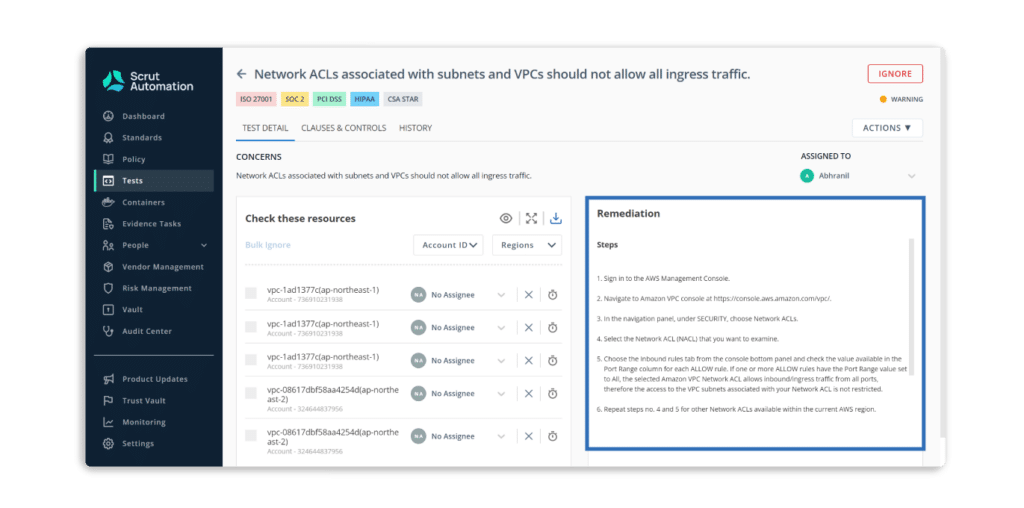
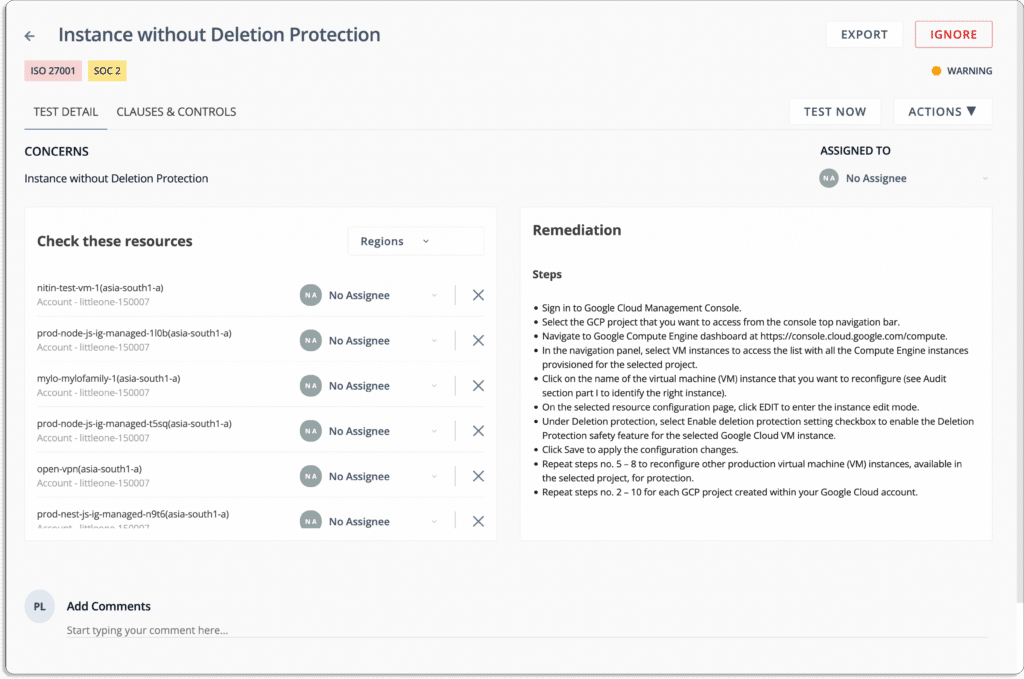
The tool provides actionable items for solving problems to assist users in resolving difficulties quickly, as shown in the screenshot below.

Scrut CAASM helps users effectively identify and gather all their cyber assets, no matter where they are stored. It enhances security control coverage and enables customized, automated responses by providing complete visibility into both external and internal attack areas. Click here to learn more about Scrut CAASM software.

Authored by

Aayush Ghosh Choudhary
Co-founder & CEO at Scrut

The Fundamentals of a Risk Management Plan

Risk refers to any unpredictable event that could disrupt operations or cause financial or reputational harm to the company. It can take many forms, from financial to cyber-attacks. Understanding the threats your organization faces is important, but so is understanding how risk treatment plans can mitigate the effects of those threats.

What Is A Risk Treatment Plan?

A risk treatment plan, also known as a risk mitigation plan, is a document that outlines the strategies and actions to be taken to address and manage risks identified in a project, organization, or any other context.

Before you implement any risk treatment action, you must first understand what risks you are facing. There are two kinds of risks:

  1. Inherent risk: The amount of risk in the absence of controls is inherent. It is based on probability and impact. 
  2. Unavoidable risk: It is the kind of risk that remains even after a safeguard or control has been implemented.

A risk treatment plan aims to minimize the potential negative impact of risks on objectives and increase the likelihood of achieving desired outcomes. It involves analyzing risks, evaluating their potential consequences and likelihood of occurrence, and developing appropriate responses to handle them effectively.

Here are the key components typically included in Risk Treatment Plan:

  1. Risk Identification: Determine and document the specific risks that have been identified through a risk assessment process. Each risk should be described in detail, including its potential impact and probability.
  2. Risk Analysis: Evaluate the identified risks to determine their significance and prioritize them based on their potential impact on the project or organizational objectives. This analysis helps understand which risks require immediate attention and which can be addressed later.
  3. Risk Response Strategies: Define strategies to address each identified risk. There are four primary risk response strategies:
  • Avoidance: Implement measures to eliminate the risk or its causes.
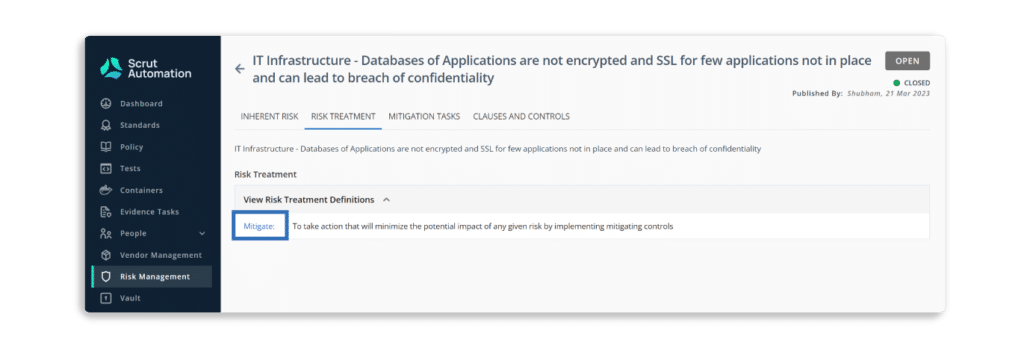
  • Mitigation: Take actions to reduce the likelihood or impact of the risk.
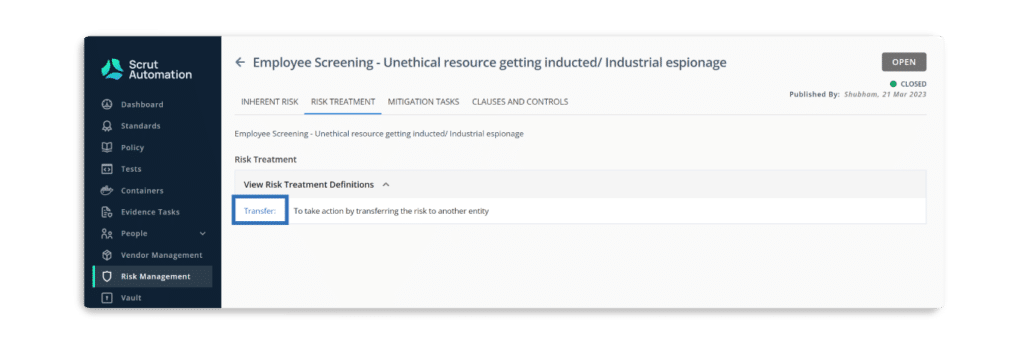
  • Transfer: Transfer the risk to a third party, such as insurance or outsourcing.
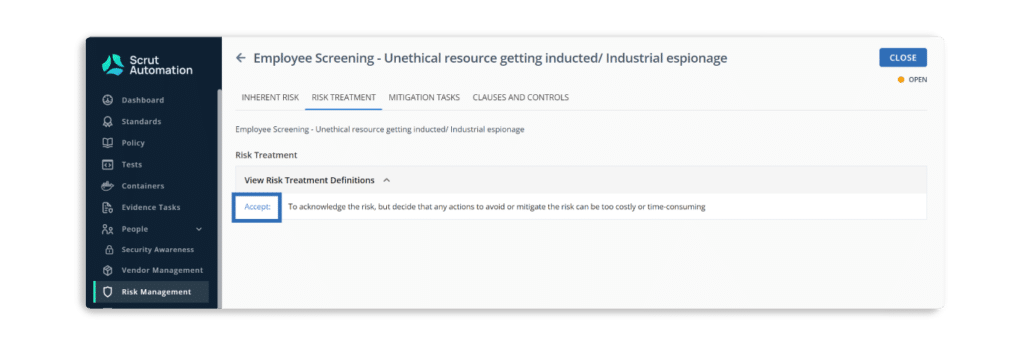
  • Acceptance: Acknowledge the risk and its potential consequences without taking specific action.
  1. Risk Response Actions: Specify the actions that will be taken to implement each risk response strategy. These actions should be detailed and actionable, with assigned responsibilities and timelines.
  2. Risk Monitoring and Review: Outline the process for monitoring and reviewing the effectiveness of the risk treatment plan. This includes defining key performance indicators or metrics to track progress, establishing reporting mechanisms, and conducting regular reviews to ensure ongoing risk management effectiveness.
  3. Communication and Reporting: Identify the stakeholders who need to be informed about the risks, their treatment strategies, and the progress in implementing the plan. Determine the frequency and method of communication to keep relevant parties informed.

Risk Treatment Options

Risk treatment options are actions to manage or mitigate risks identified in a particular context. There are four risk treatment options:

  1. Accept

Risk must be accepted when there is no way to avoid, mitigate, or transfer it. Accepting the risk is the best option when the risk is unlikely to occur, or the impact is minor. This option is typically chosen when the cost to treat the risk outweighs the potential impact. 

  1. Transfer

Sometimes, you or your team cannot avoid, accept, or mitigate issues. One effective risk management strategy is passing a portion of the threat to another party to reduce its likelihood or impact on the organization. For example, purchasing an insurance policy transfers the financial risk of a potential loss to the insurance company. You can also outsource the process that contains the risk to another provider, transferring the risk to the outsourced provider. This type of risk management could be done by entering into a contract with a service provider or purchasing error insurance.

  1. Mitigate

Risk mitigation is a control process that stops a risk from becoming a problem and reduces it to an acceptable level. This means taking action that will result in as little damage to your project as possible. This includes identifying the risk, evaluating all potential solutions, developing a plan, acting, and monitoring the results. For example, installing fire sprinkler systems in buildings mitigates the potential damage from a fire.

  1. Avoid

Avoidance is a strategy that eliminates the possibility of a risk becoming a reality. For example, if there is a high risk of financial investment, you may avoid investing in it. Risk avoidance begins with identifying the risks. The ones that tend to arise at the start of a project are then examined. Finally, a course of action is determined after considering the relative importance of the risks.

Steps In Developing A Risk Treatment Plan?

The steps of risk treatment plan development are as below:

Step 1- Risk treatment: The first step in creating a treatment plan is deciding which treatment option you will choose based on the requirement: acceptance, transfer, sharing, or something else.

Step 2- Assign accountability for tasks: Determine what needs to happen in the event of a disaster and who is responsible for each action. Clear directions are one of the most basic and effective tools for a quick recovery. Ensure the treatment plan’s owner can specify how implementation will be tracked, including critical indicators that indicate rising or falling risk levels.

Step 3- Document: You’ll need to create a treatment plan document that outlines your strategy.

Step 4- Create backup plans: Prepare plans for continuing or resuming operations during a crisis. Your detailed plans will be determined by the following factors: the type, style, and size of your business and the extent of the damage.

Step 5- Set a resolution date: This is the deadline by which the situation should be resolved.

Step 6- Keep an eye out for new risks: Continuous risk monitoring will assist you in developing realistic and effective strategies for dealing with issues as they arise.

How Does Scrut Help?

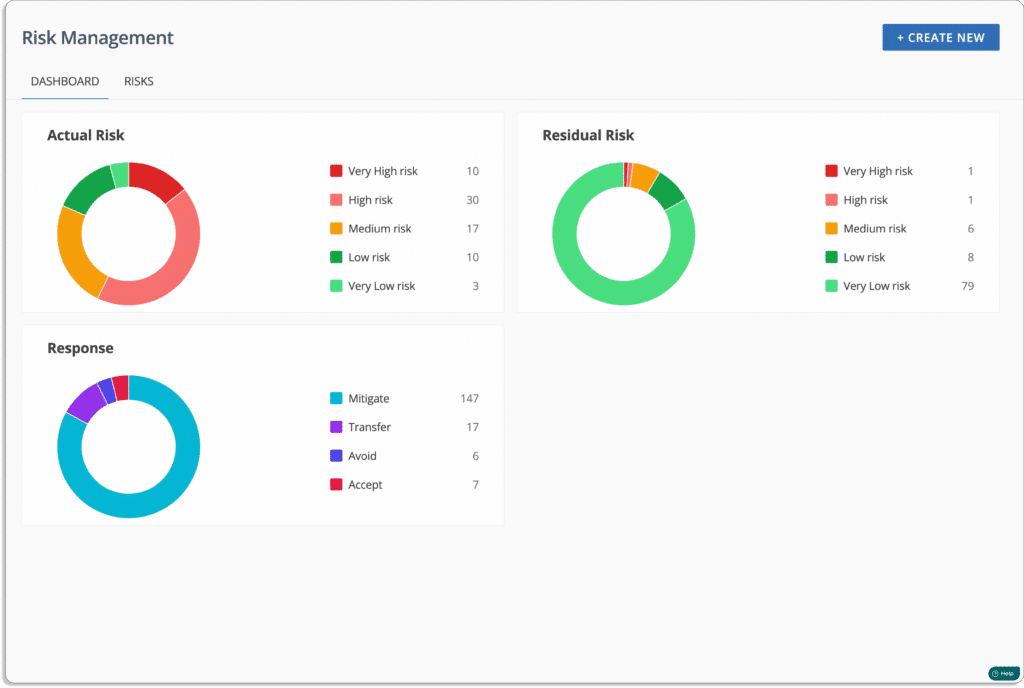
Scrut risk management is more than just an assessment tool; it also functions as a dashboard in a single window for managing your organization’s risk status. The tool provides the visibility required to avoid threats and effectively communicate the impact of risk on critical business activities.

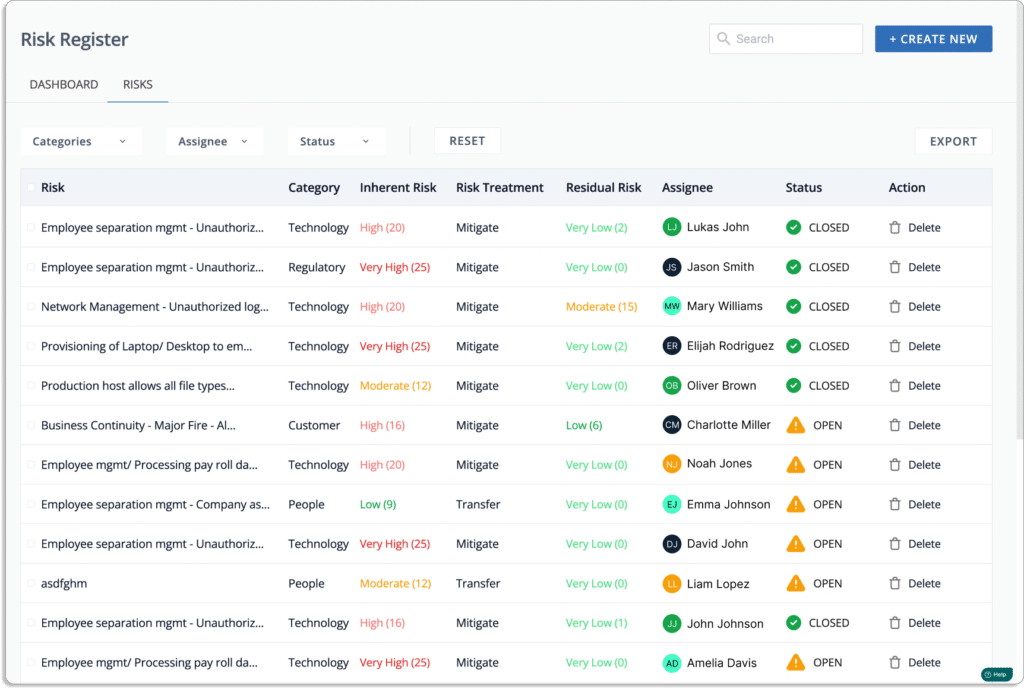
As shown in the screenshot below, it provides complete visibility into your risk posture.

The platform detects risks throughout your landscape. It scans your ecosystem for risks across the code base, infrastructure, applications, vendors, employees, and access to automate risk identification.

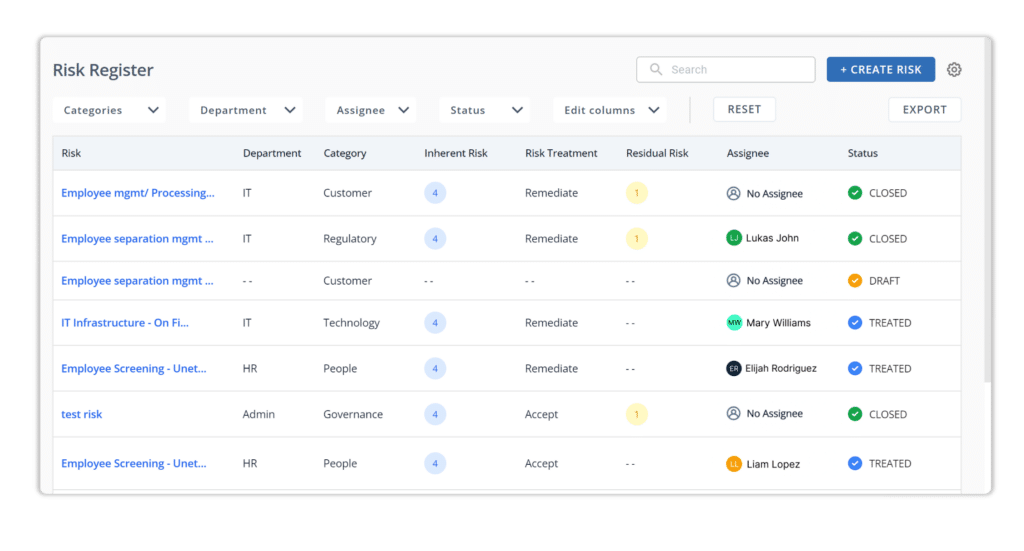
With Scrut, you can build your risk register in minutes with scoring methodologies, expert-provided inherent risk scores, and automated workflows. Choose from Scrut’s library of most common risks across seven categories (Governance, People, Customer, Regulatory, Resilience, Technology, and Vendor management).

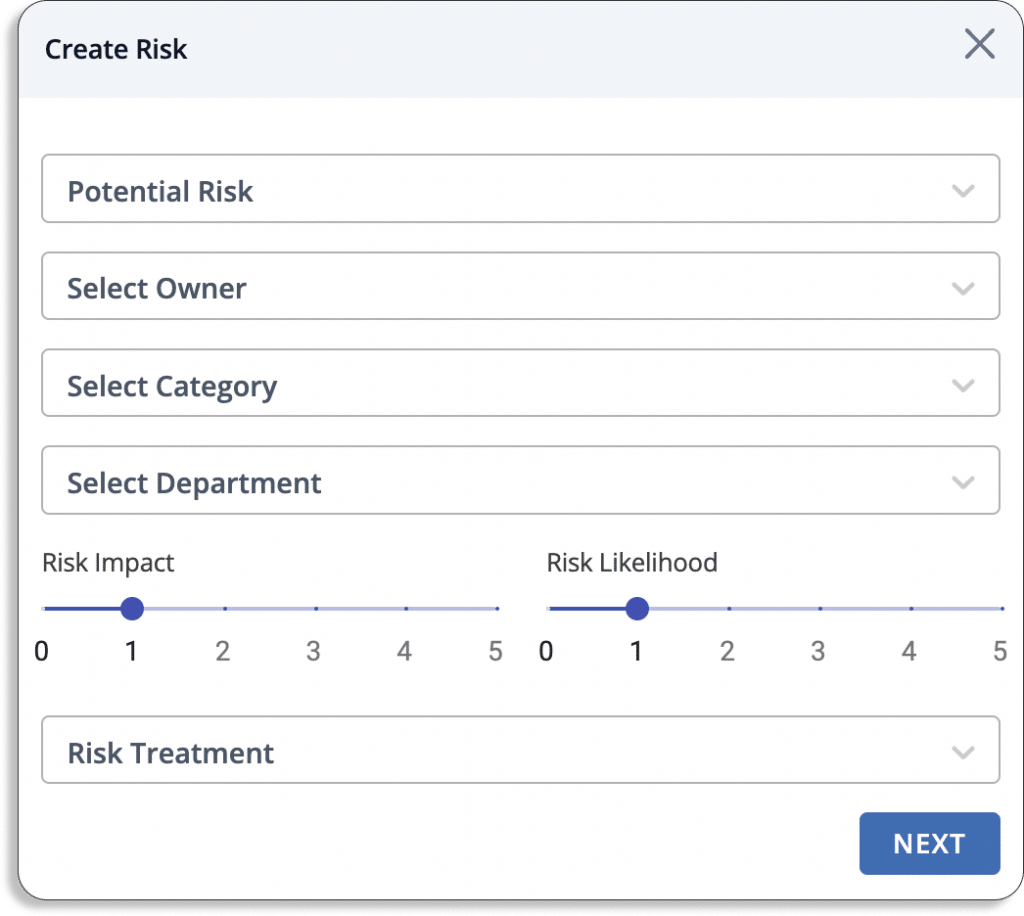
To build your risk library, click on Create New button.

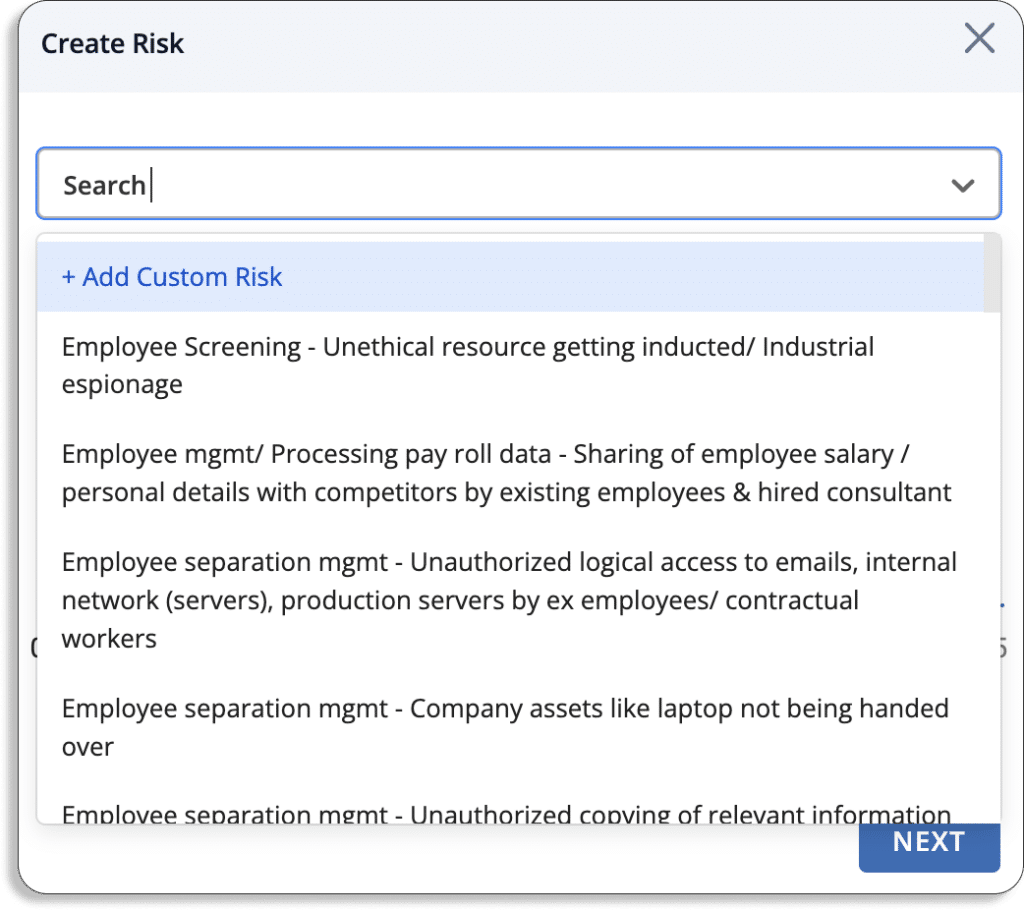
A dialogue box will appear, as shown in the screenshot below:

You can select any risk from our risk library or develop custom risks.

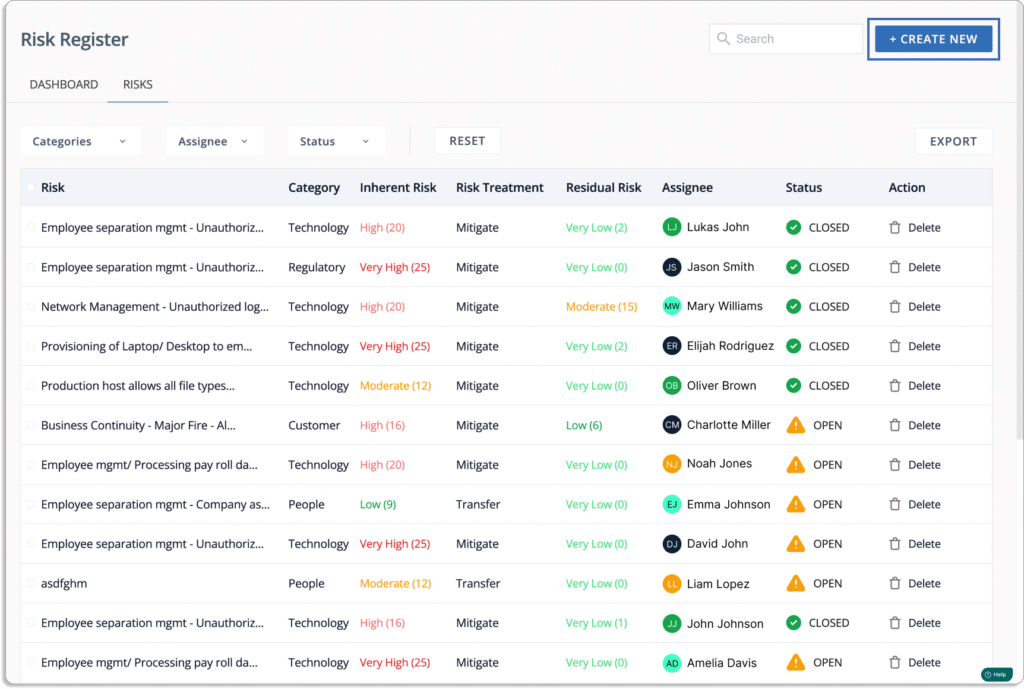
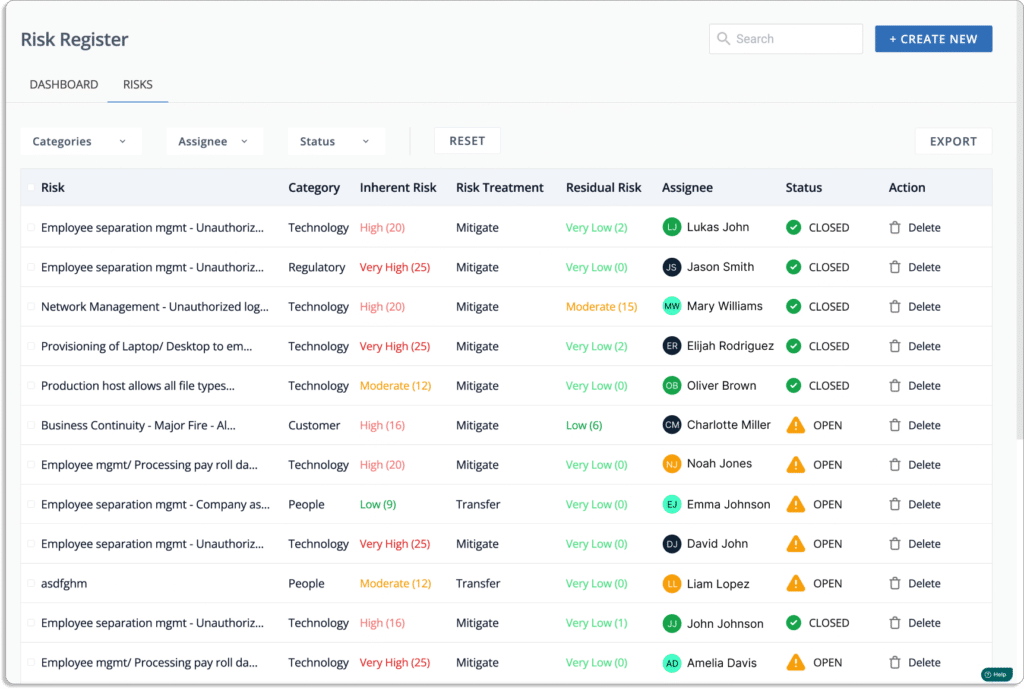
At the end of this procedure, you will get a list of all the risks linked to your organization, as shown in the screenshot below.

A robust, pre-loaded risk library enables you to select the appropriate controls, risks, and threats to assess the risk of your business process or initiative.

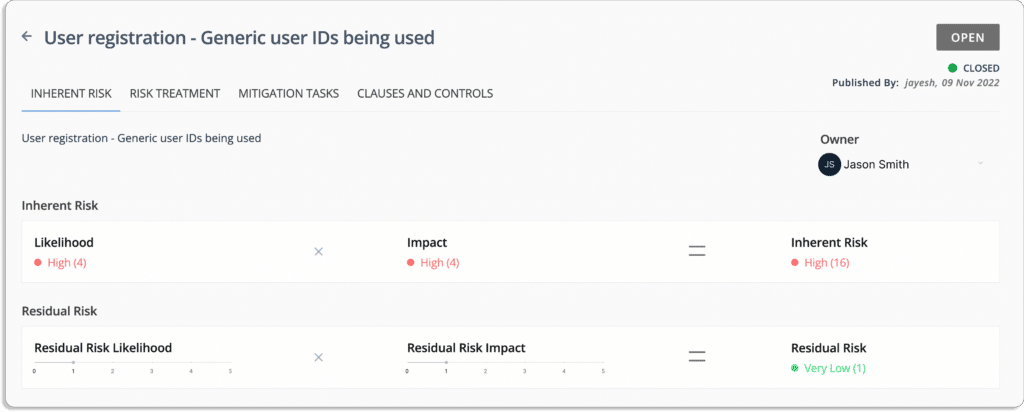
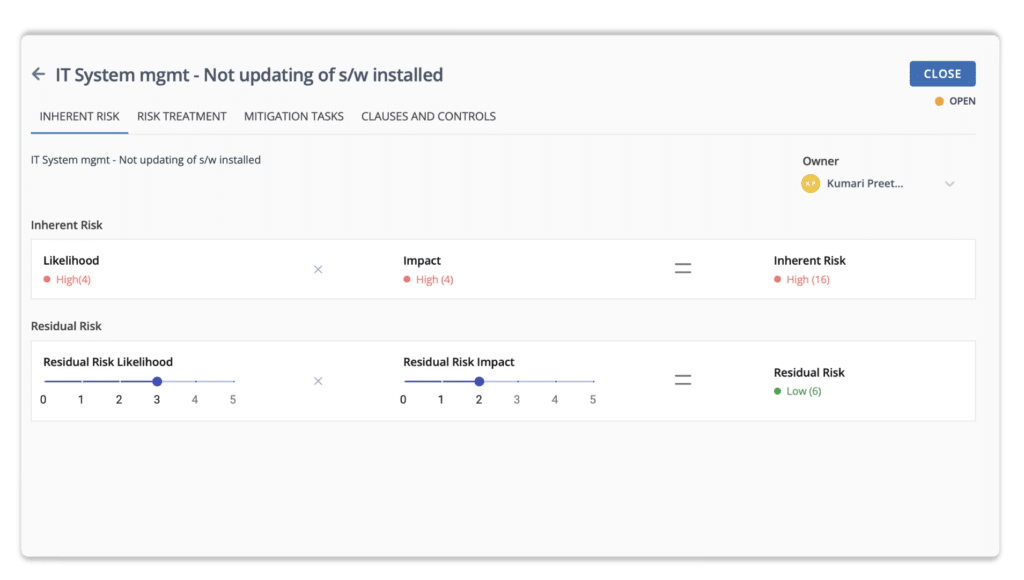
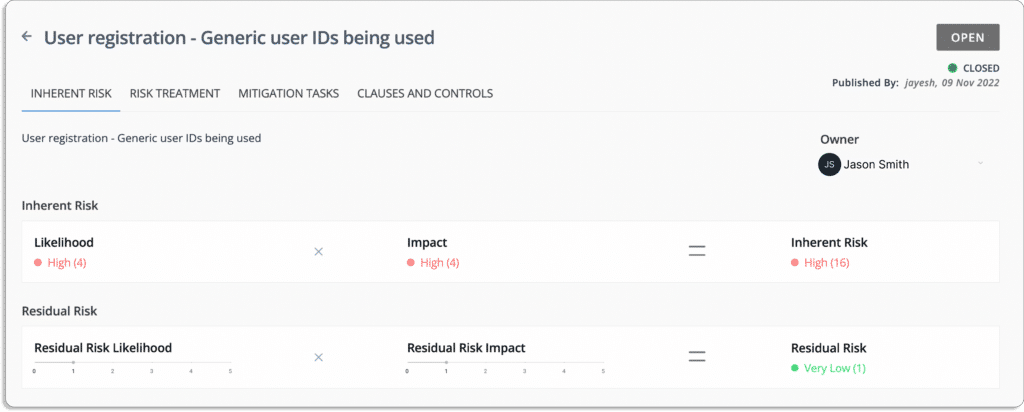
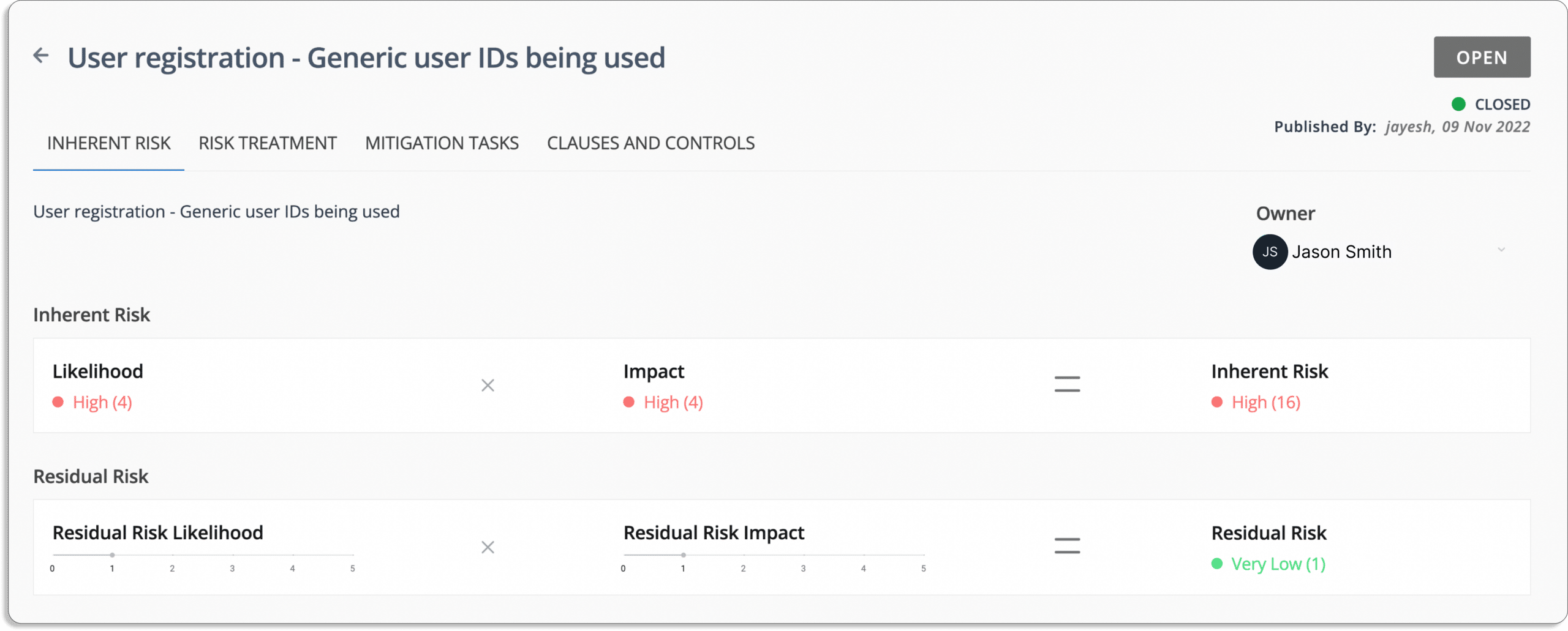
Scrut simplifies your risk exposure by identifying and mitigating major risk areas. The tool allows you to evaluate your risk profile using automated risk scoring. It generates risk scores based on the likelihood and impact of events.

Risk = Likelihood * Impact

The likelihood of this event = 5

The impact in case the event occurs = 4

Thus, the inherent risk associated with this event is also high = 20

Likelihood (5) * Impact (4) = 20

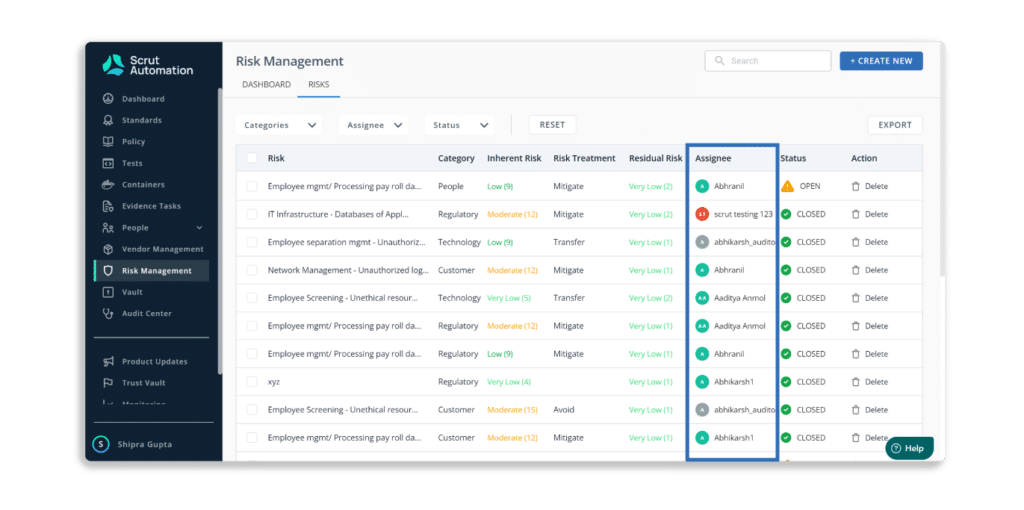
The screenshot below shows that risks can also be assigned to team members for treatment.

Scrut’s expert-vetted scoring methodologies allow you to quantify your risk profile and evaluate the impact of your treatment plans using inherent and residual scores.

Using the Scrut risk management tool, you can free your teams from time-consuming manual work and optimize their talent by selecting your treatment plan — accepting, transferring, or mitigating each risk. 

  • Risk Remediation – eliminates the risk.
  • Risk Mitigation – minimizes the impact or likelihood of the risk.
  • Risk Transfer – transfers the risk to another party. For example, an insurance company.
  • Risk Acceptance – accepts the risk.

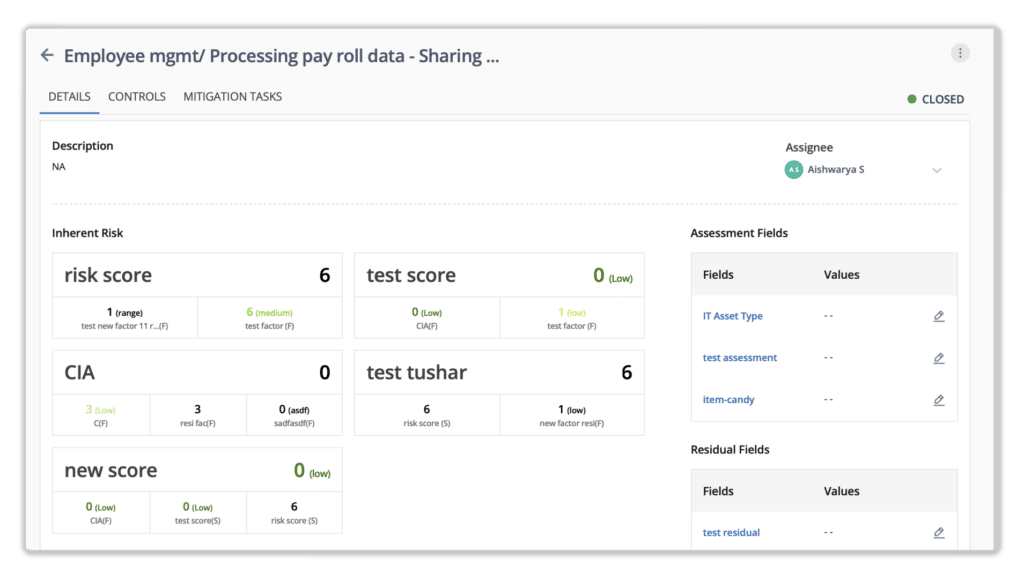
You get an overall view of your risk posture with all the details close at your disposal by providing a quantified summary of risks by status and residual risk score and the details for each risk, its related threats, and controls. As a result, risk can be effectively avoided, mitigated, and communicated to justify investments and strategic decision-making.

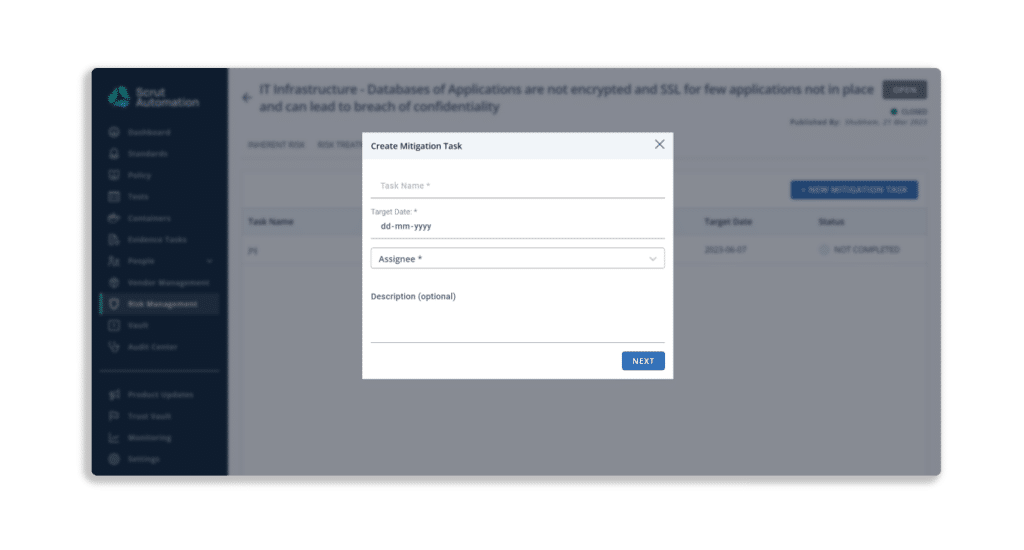
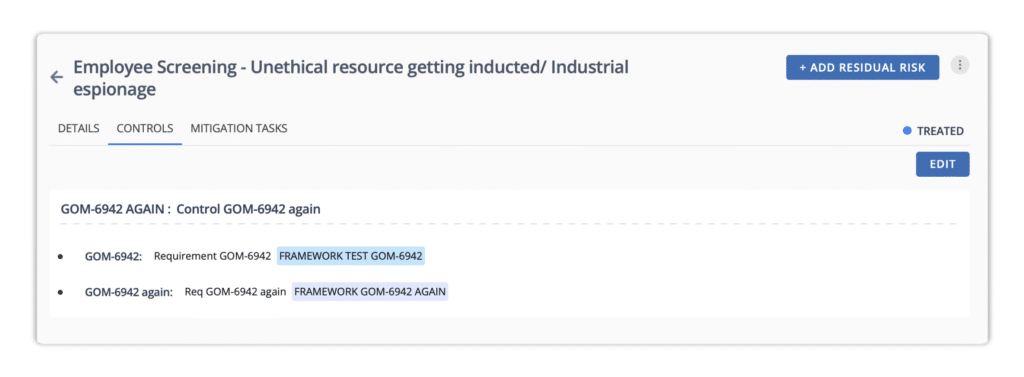
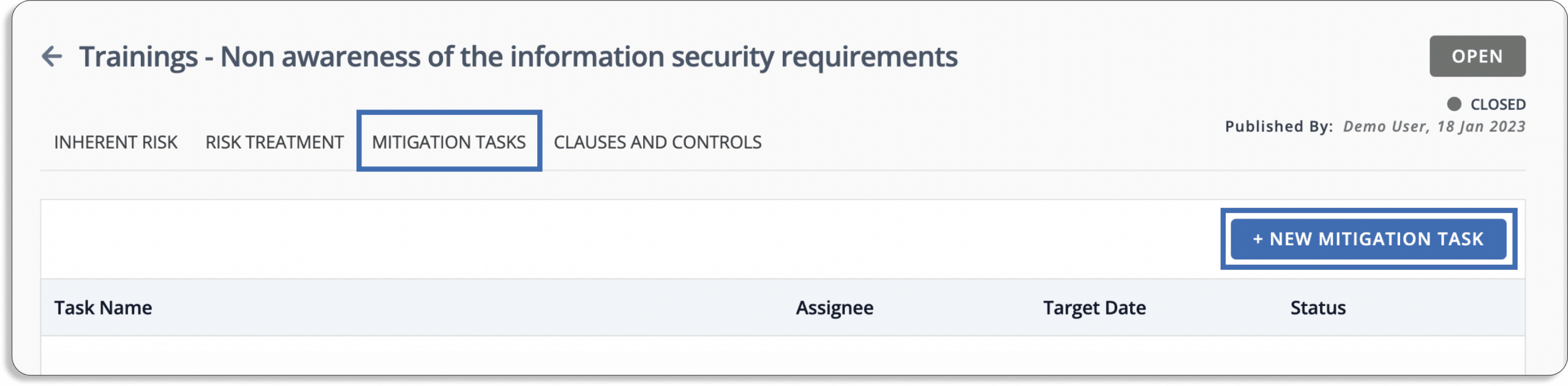
As shown in the screenshot below, you can also create mitigation tasks.

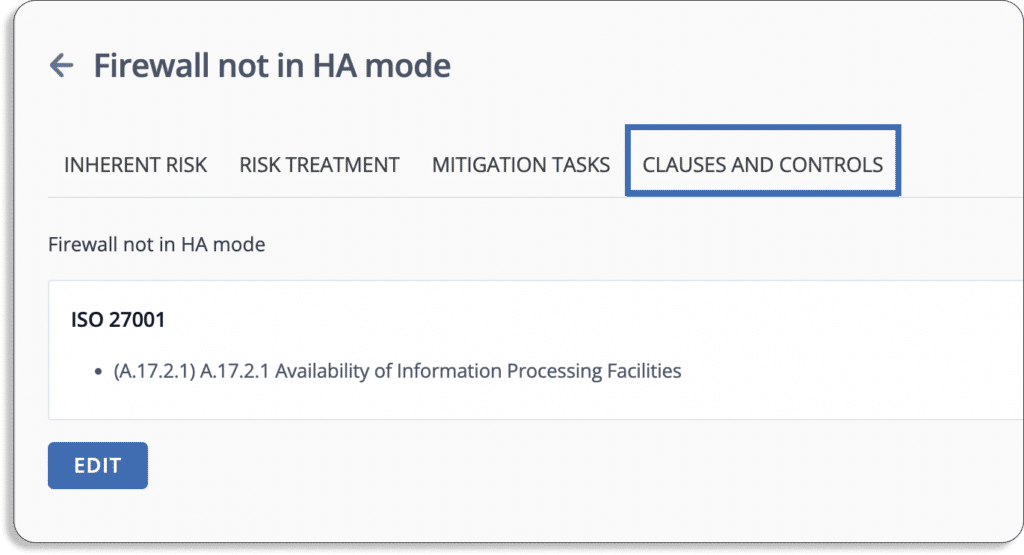
Scrut Risk Management automatically maps all risks to compliance frameworks. It maps risks to controls in popular frameworks such as ISO 27001, HIPPA, SOC 2, etc. You don’t have to go through thousands of risk sources to stay compliant.

Read how Apty implements automated risk monitoring for compliance with ISO 27001, SOC 2, HIPAA, GDPR, ISO 27017, and ISO 27018.

Scrut Risk Management provides a centralized interface for identifying, assessing, and mitigating IT and cyber risk. It gives organizations the awareness they need to avoid risks and communicates the risk implications on high-priority strategic targets. With built-in scoring techniques, expert-provided inherent risk scores, and automated workflows, it’s quick and easy to establish new IT risk programs to better avoid, control, and mitigate risk. Click here for more details on how Scrut helps in risk treatment.

Authored by

Aayush Ghosh Choudhary
Co-founder & CEO at Scrut

ZenGRC vs RSA Archer Vs Scrut

ZenGRC is a GRC software that assists businesses with risk and compliance management. The software automates information security programs and facilitates compliance with several standards like SOC 2, ISO 27001, GDPR, and HIPAA. On the other hand, RSA Archer GRC assists businesses in managing policies, controls, risks, assessments, and defects across their entire organization. It assists organizations in remaining compliant with industry compliance laws such as HIPAA, SOC 2, GDPR, etc.

Scrut smartGRC is a single platform for compliance-related tasks. With the library of 50+ policies, users can start building compliance program in minutes. It integrates across the landscape to automate evidence collection and to create, assign, and monitor compliance tasks.

Wondering which of these software is most suited to your company? Let us discuss  ZenGRC, RSA Archer, and Scrut to find out. 

What Is ZenGRC?

Ken Lynch started RiskOptics (formerly known as Reciprocity) in 2009 with the objective to assist businesses in achieving societal goals such as improving customer privacy or protecting the environment. 

ZenGRC by Reciprocity is an enterprise-class security solution for compliance and risk management. It includes a system-of-record for compliance, risk assessment, centralized dashboards, improved workflow, and unified control management. In addition to automating and simplifying compliance and risk management, ZenGRC tackles critical obstacles at scale and can be adapted to match your company’s specific needs. The platform provides an overview of all the components of your compliance and risk programs, such as objectives, assets, controls, and history.

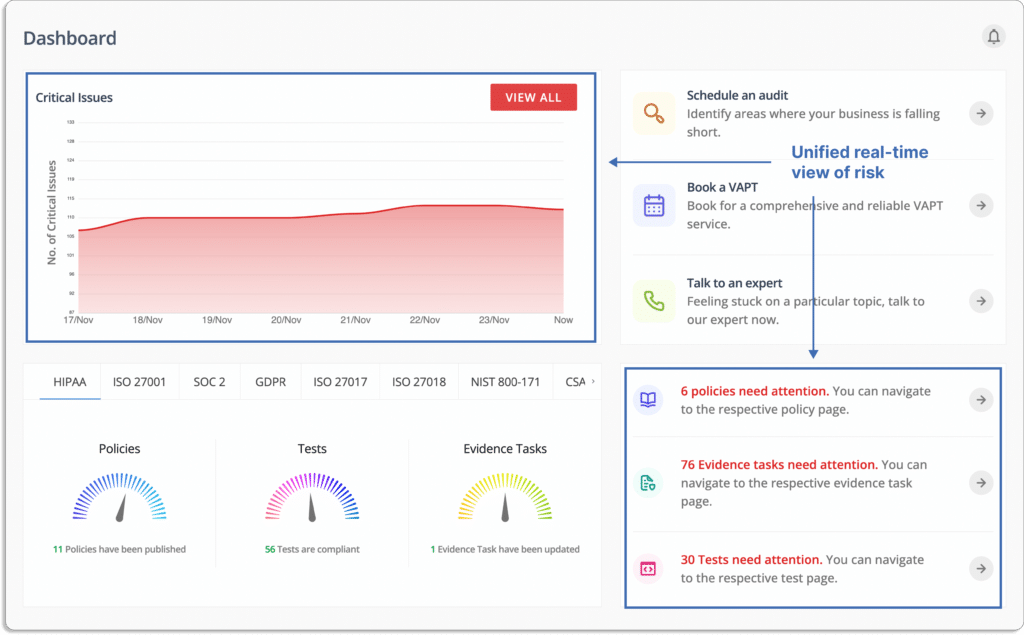
With a unified, real-time view of risk and compliance that is framed around your business priorities, you will have the contextual insight needed to communicate the impact to key stakeholders and make strategic, risk-informed decisions to protect your organization as well as earn the trust of your customers, partners, and employees.

ZenGRC generates real-time risk scores that are dynamically updated to reflect risk changes. The platform communicates the financial impact of risk, the amount mitigated, and the remaining risk exposure. Furthermore, users can take proactive steps to minimize risk to acceptable levels by prioritizing essential risks. It reduces audit fatigue by reusing controls and evidence across frameworks and continuously monitoring control efficacy to guarantee the organization is always audit-ready.

Users can reuse controls and evidence across frameworks and interface with the systems on which their firm relies. With connectors to cloud providers, code repositories, HR and CRM systems, and other systems, they can avoid manual work, reduce audit fatigue, and constantly be on top of the compliance posture and audit-ready.

ZenGRC offers a free trial. The pricing details are as follows:

  • For a start-up, there is a monthly fee of $2500.
  • For professionals, the monthly fee is $3500.
  • For an enterprise, the monthly fee is $6000.

 What Is RSA Archer?

RSA Archer Insight is a set of enterprise-wide risk quantification tools designed to provide risk and business leaders with a comprehensive perspective of company risks to improve resilience and ensure that the strategic goals are met. The platform offers company leaders a consolidated view of hazards, allowing them to safeguard their businesses against disruption and handle risks associated with new opportunities. 

The tool allows users to create, maintain, and distribute company and regulatory policies, standards, and procedures in a single governance system of record. It eliminates manual, non-scalable compliance activities by providing a uniform, repeatable procedure for managing new and changing requirements.

RSA Archer will help you create a scalable, adaptable governance framework to manage IT and security policies and guarantee compliance obligations are met. Archer IT & Security Policy Program Management facilitates the documentation of policies and standards, as well as the assignment of ownership and the mapping of policies to important business sectors and objectives. Users can obtain visibility into critical risks and underperforming controls through aggregated data and analytics and access to information, resources, and outcomes from risk and compliance teams.

A GRC software, Scrut, is a better option for growing business. Scrut is a global service provider that does not limit its services to organizations from a particular country. With the platform, organizations can build a robust information security system and comply with the standards most applicable to their business needs. Here’s a quick overview of Scrut.

Scrut – A Better Option

Now, let’s discuss our platform, Scrut.

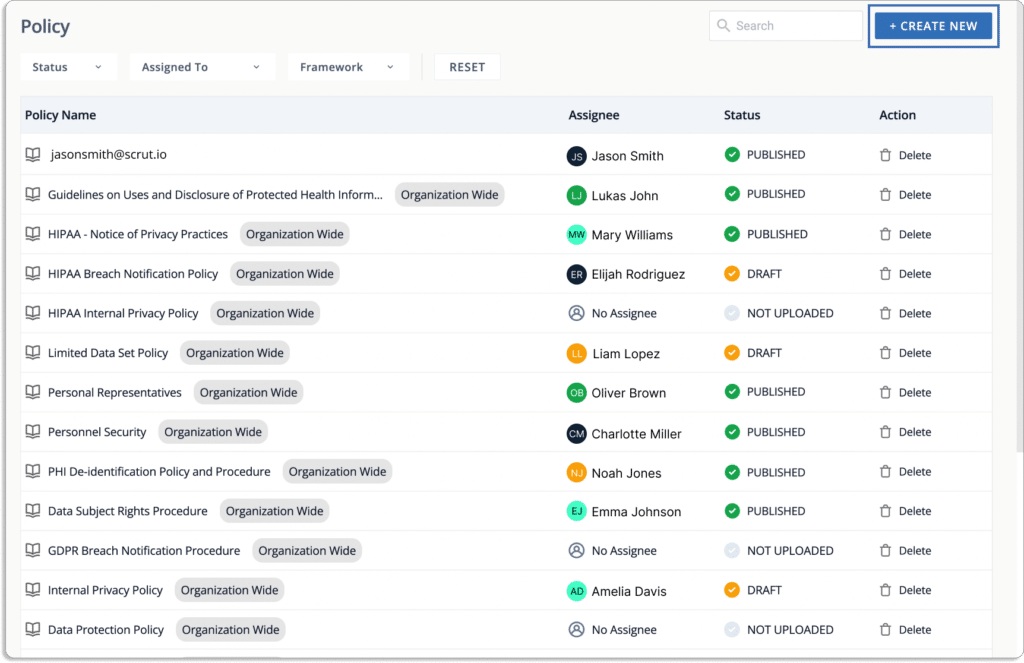
Scrut smartGRC includes pre-built policies that are aligned with popular security and privacy frameworks. Users can start constructing their compliance program in minutes with a library of 50+ policies established and vetted by in-house infosec specialists.

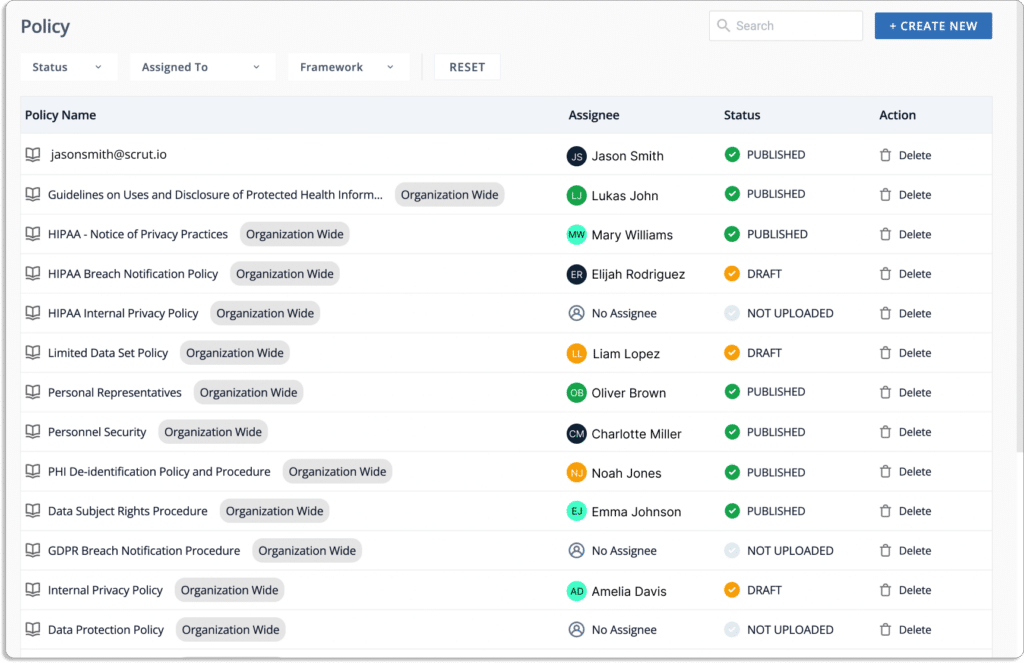
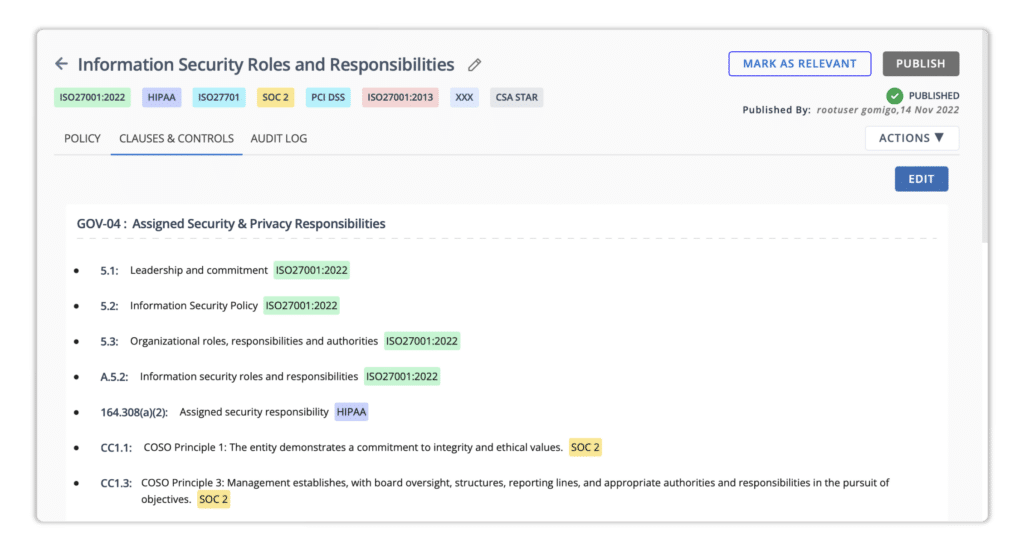
These policies are mapped to different compliance frameworks for your understanding.

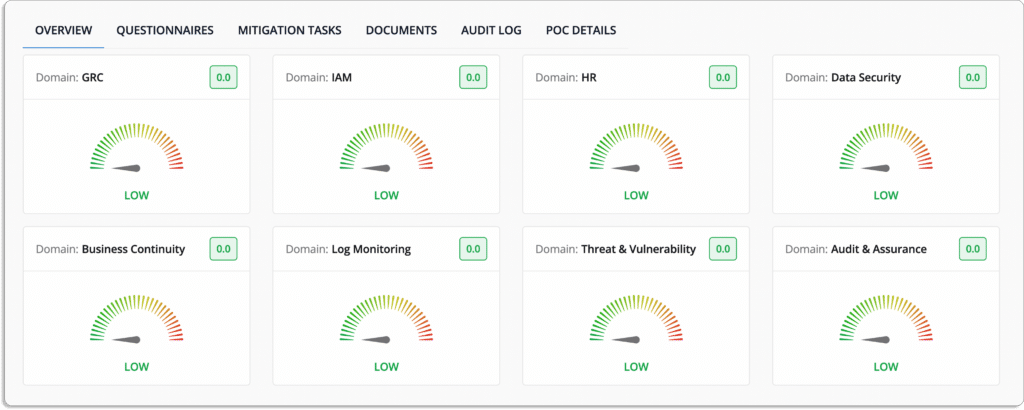
The platform informs users about the overall status of the GRC program, as shown in the screenshot below. 

Users can obtain a unified, real-time view of risk and compliance with seamless integrations throughout the application landscape. The tool delivers the contextual data needed to make strategic decisions that keeps organization secure and earn the trust of customers, partners, and workers.

Let’s discuss in detail why Scrut platform is a better option.

Scrut Cloud SecurityScrut offers continuous cloud security monitoring to assist users in remaining compliant and proactively securing their data. The platform automatically compares your cloud configurations to 200+ cloud control across CIS benchmarks to ensure a strong information security posture.

It ensures full-stack security for all cloud-native deployments, including virtual machines (VMs), and containers. The platform keeps track of your cloud misconfigurations via centralized dashboards. It gives automated classification for danger, warning, and safe configurations to keep users up-to-date on vulnerabilities.

  • Danger – The most serious issue. 
  • Warning – After completing the issues indicated as dangerous, you can go on to these. 
  • Low – These threats should be addressed last.
  • Ignored – You can choose to ignore.
  • Compliant – Everything is fine if you are compliant.

Scrut Cloud Security ensures that your public cloud accounts are always compliant. When misconfigurations occur, it sends you alerts with actionable recommendations for correcting them.

Scrut Risk ManagementScrut Risk Management gives actionable insights into your business operations to detect, assess, and treat IT and cyber threats. The platform scans your ecosystem for risks across the code base, infrastructure, applications, vendors, employees, and access to automate risk identification. It enables users to explore through a pre-built library of controls to identify company risks. Users can identify high-risk areas by integrating data with built-in industry-standard scoring techniques and expert-recommended rankings. The software automatically maps your risks to various controls across standards such as ISO 27001, SOC 2, GDPR, and HIPAA.

Scrut’s risk management will assist users in building the risk register, as shown in the screenshot below.

Users can start risk assessment in a few minutes instead of spending hours in developing and mapping risks, threats, controls, etc. 

Consider the following example of change management risk.

Likelihood = 5 and Impact = 4

Thus, the inherent risk associated with this event = 20

Risk = Likelihood * Impact = 5 * 4 = 20

The final score lies between 0 & 25, as shown in the table below. 

0-5Very Low
6-10Low
11-15Moderate
16-20High
21-25Very High

With Scrut, risk can be treated in four ways: remediation, mitigation, transference, and acceptance.

  • Risk remediation is the process of eliminating a risk.
  • Risk mitigation is the process of reducing the risk’s impact or likelihood.
  • Risk transfer involves transferring the risk to another party.
  • Risk acceptance involves accepting the risk. 

Scrut divides risk into seven categories: governance, people, customers, regulatory, resilience, technology, and vendor management. The platform automatically maps these risks against various compliance frameworks and controls, as demonstrated in the screenshot below.

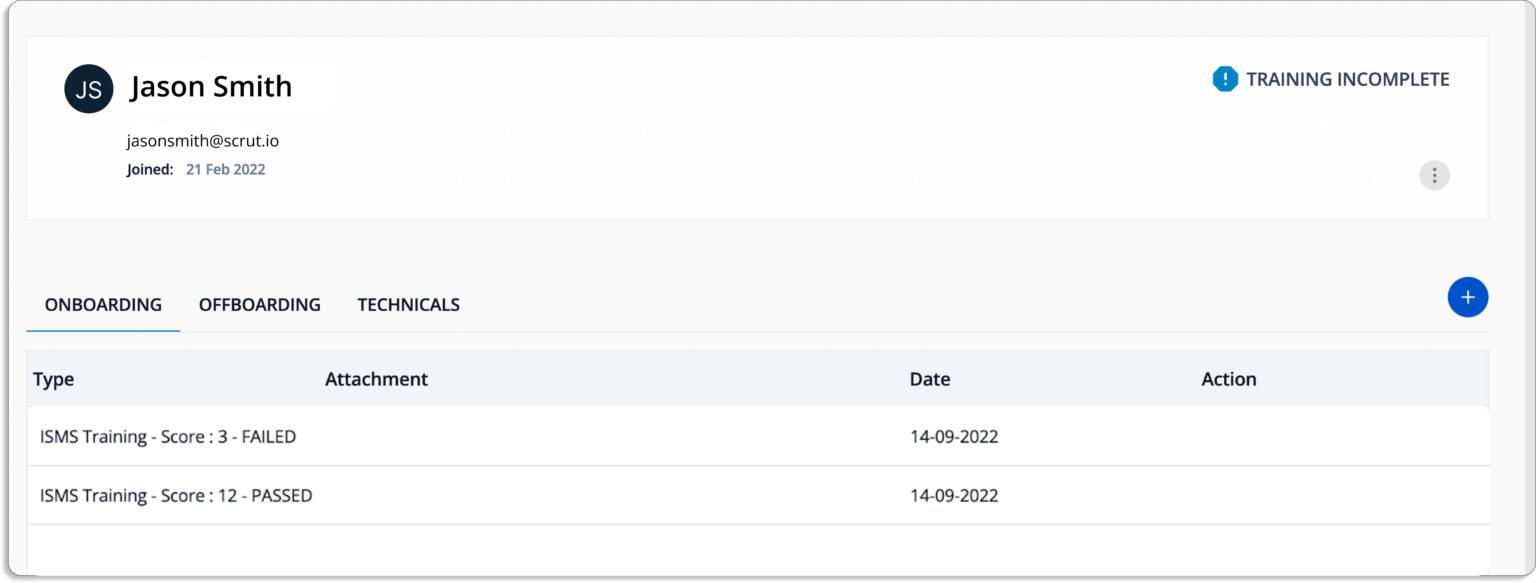
Security Awareness Training For Employees Scrut automates employee’s security awareness training with pre-built courses. It provides up-to-date data on the general status of the training programs, as shown in the screenshot below.

As an administrator, users are continually aware of the overall features of their employees’ training programs. They can connect HRM or identity provider to Scrut to import all employee data. It also allows users to generate alerts, set reminders, and send personalized messages to staff for them to complete the training.

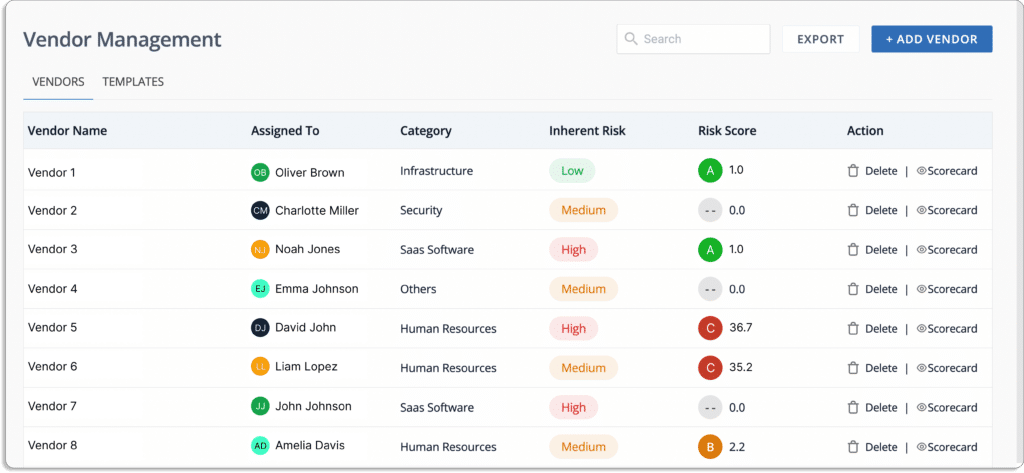
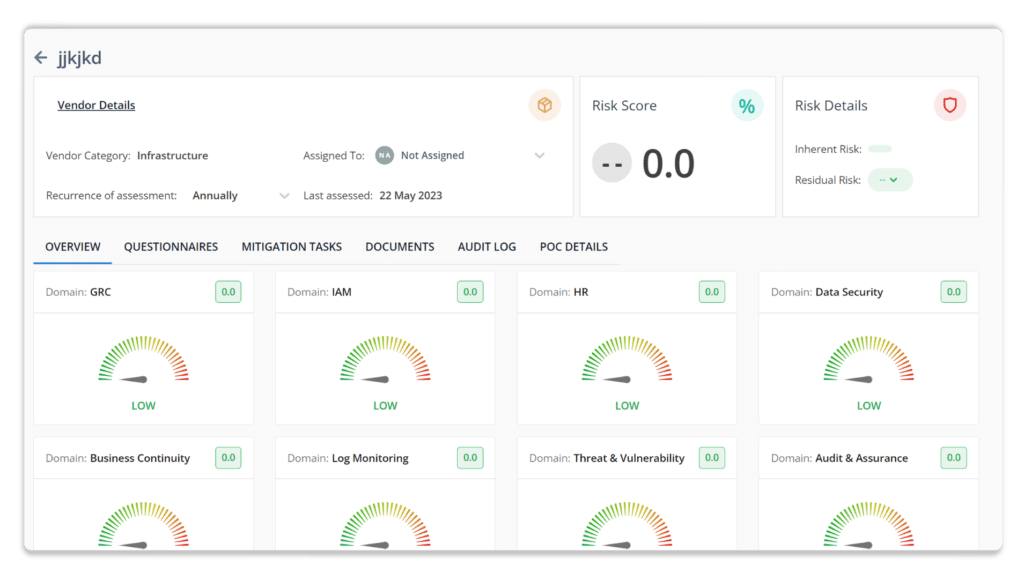
Vendor Risk ManagementThe tool assists users in assessing, monitoring, and managing risks linked with vendors. With Scrut, users can gain insight into their providers’ security posture. 

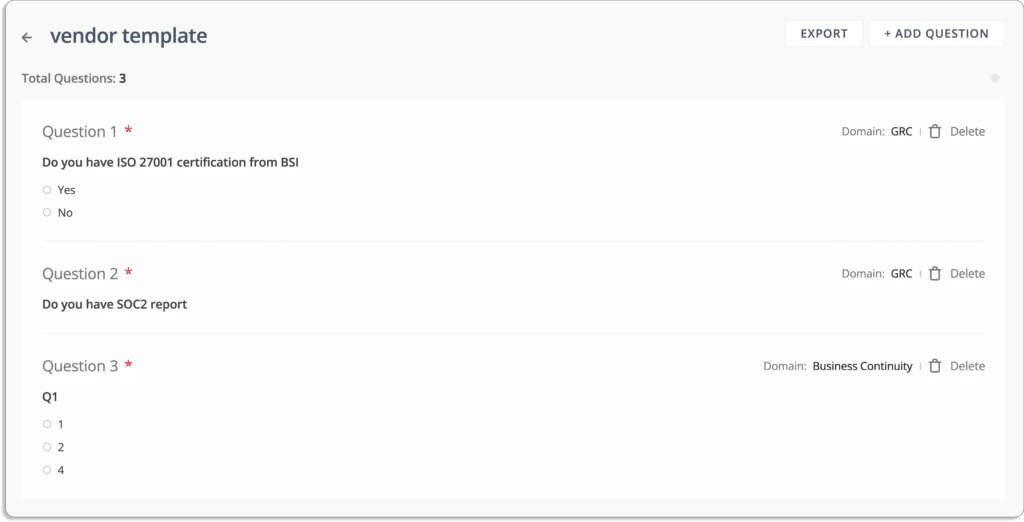
This enables users to determine whether a provider meets their compliance requirements or not. It streamlines your vendor compliance check with security questions. Users can construct custom questionnaire or can use pre-built questions. Furthermore, users can also invite vendors to the tool to complete the security questionnaires. 

Automate Evidence Collection The platform interacts with over 70 tools (AWS, GCP, Okta, Datadog, JAMF, GitLab, and others). It allows users to automate over 70% of evidence-collection activities while reducing manual work. Scrut keeps all evidence-related tasks in one location, allowing the auditor to go through them easily. This also reduces the need to manage many sheets or documents for evidence. The tool collects reports and evidence using pre-built cloud-based connectors across your cloud, HRMS, DevOps, and other systems.

Scrut’s Trust Vault With Scrut’s trust vault, users can demonstrate security and compliance posture in real time to partners, customers, and others. 

The Trust Vault lets users publicly and transparently demonstrate their security and compliance posture. Users can create a security page on their website that is tailored to the company’s identity. It automates demands for security and compliance practices through the public display of information security-related certifications, reports, and attestations, as well as gated NDA-backed access to in-depth reports. Furthermore, it helps to demonstrate your daily compliance management and security actions to internal and external stakeholders.

The Trust Vault page is simple to add to your website and can be customized to fit your brand’s personality. Users can change their company description, add colors, logo, and favicon, select which controls to emphasize and upload relevant documents to share with their customers. Scrut GRC solution, once enabled, automatically pulls all controls, records, and sub-processors in a real-time.

Comparison Table

The following are the 3 parameters we have used to compare ZenGRC, RSA Archer, and Scrut:

RSA ArcherZenGRCScrut
Risk AnalysisNoNoYes
StandardsSupports standards like HIPAA, SOC 2, GDPR, etc.Supports standards like, ISO, PCI, SOC, COSO, SSAE 18, CCPA, GDPR, HIPAA, NIST, FedRAMP, CMMC, COBIT. The Scrut smartGRC platform supports the following frameworks, among others: SOC 2, SOC 3, ISO 27001, ISO 27701, ISO 27017, ISO 27018, ISO 22301, ISO 20000-1, GDPR, HIPAA, FERPA, HiTrust, FedRamp, CMMC, CCPA, PCI DSS, CSA Star, CMMI – DEV, CMMI – SVC, GLB, NIST 800 171.
Suitable forSmall and midsize businessesBusinesses of all sizes Startups and mid and large enterprises

Scrut allows efficient collaboration with your auditors. You and your auditor can communicate directly through the platform, avoiding unnecessary delays by providing the auditor access to your account. Users have complete control when it comes to granting access to essential parties. The auditor can approach the platform and go through each control individually. They have access to policies, exams, and proof. Collaborating with your auditors and performing audits is easier when rules, processes, controls, and evidence are all stored in one location. Click here to book Scrut demo.

Authored by

Aayush Ghosh Choudhary
Co-founder & CEO at Scrut

The Unified Compliance Framework Vs. The Secure Controls Framework: What’s Right For Your Organization?

The Unified Compliance Framework is a comprehensive framework that consolidates multiple regulatory requirements into a single set of controls. It provides a harmonized approach to compliance and simplifies the management of multiple compliance obligations. On the other hand, the Secure Controls Framework is a security-focused framework that provides a structured approach to implementing security controls. It offers a comprehensive set of controls organized into domains and guides security risk management. 

So, which of these frameworks is suitable for your organization? Here’s a basic overview of both frameworks. 

What is Unified Compliance Framework?

A Unified Compliance Framework (UCF) is a large database of interconnected controls that enables compliance with multiple regulations and frameworks without duplicating control and test efforts. The UCF was created to streamline certification processes and reduce the time necessary for compliance rules. It is a fully automated process that handles end-to-end security, compliance, auditing, and risk management requirements management. A UCF is a complete way to manage a company’s compliance requirements. It provides a framework for integrating different regulatory requirements into a single system, improving compliance management, and avoiding duplication of effort. Using a UCF, organizations may manage their compliance requirements more efficiently and effectively while ensuring they meet their legal and regulatory duties. The UCF covers various industries, including financial, healthcare, and technology, and encompasses GDPR, HIPAA, and PCI DSS regulations. The UCF implementation process entails mapping an organization’s existing controls to the framework, detecting gaps, and adding additional controls as needed.

What is the Secure Controls Framework?

The Secure Controls Framework (SCF) is a collection of best practices controls encompassing various frameworks, rules, and standards, including the NIST CSF, ISO 27001, GDPR, and others. The SCF’s purpose is to give a free solution to enterprises that addresses cybersecurity and privacy control recommendations to satisfy the operational demands of organizations of any size, industry, or country of origin. The SCF includes a risk-based approach to security, enabling organizations to prioritize and address their most critical security risks. It emphasizes identifying, assessing, and managing risks to protect sensitive data and ensure systems and information confidentiality, integrity, and availability. While the SCF focuses largely on security controls, it also considers relevant legal requirements, assisting organizations in mapping security controls to compliance obligations and ensuring that security measures are in accordance with applicable rules.

Choosing the Right Framework

Consider the following aspects when deciding which framework is best for your organization:

  • Compliance requirements: The UCF encompasses many regulations, standards, and best practices, including international, federal, state, and industry-specific requirements. If your organization is required to comply with several rules or industry-specific criteria, the UCF’s comprehensive coverage and control consolidation may be beneficial.
  • Security focus: If strengthening your organization’s security posture and managing security risks is your primary focus, the SCF’s comprehensive security controls and risk management approach may be a better fit. It provides detailed guidelines for implementing security controls and managing security risks.
  • Regulatory alignment: Both frameworks can assist your organization in aligning with relevant requirements, but the UCF is specifically built for compliance management and mapping controls across different frameworks.
  • Customization needs: Determine whether you require a framework for greater flexibility in customizing controls based on your organization’s specific needs and risk profile. The SCF is a free tool that organisations can use immediately to solve their cybersecurity and privacy control advice needs. This enables you to manage your demands immediately rather than waiting months to secure a budget. It provides a flexible framework for tailoring controls based on your security objectives and regulatory requirements.

The UCF can provide a comprehensive approach to compliance management, whereas the SCF can provide detailed security controls and risk management assistance. If your company is large and has other compliance responsibilities besides cybersecurity and data privacy, then the UCF is probably a better option. If your organization does not require extra compliance framework criteria, then the SCF provides everything you need to integrate governance, risk, and compliance in a consistent set of controls. 

Implement SCF with Scrut

Scrut’s platform allows organizations of all sizes to implement the SCF more efficiently with control mappings, automated evidence collection, third-party risk management workflows, etc. 

Scrut smartGRC simplifies compliance by removing time-consuming manual procedures and keeping you updated on the development of your GRC program.

Scrut smartGRC platform assists users in compiling the documents required to pass the audit and gain certification by providing users with prebuilt policies and controls suited to various frameworks. With a library of 50+ policies designed and vetted by our in-house information security specialists, you can build your compliance program in minutes.

You can use an inline editor to customize and update these rules to meet your organization’s needs. 

The software provides continuous cloud security monitoring to help users stay compliant while proactively securing their data. It constantly monitors over 200 cloud controls. This allows users to address issues before malicious agents can exploit vulnerabilities. 

Scrut risk management allows users to identify company hazards by navigating through a pre-built library of controls. You may discover high-risk areas and better understand your risk posture by combining data with built-in, industry-standard scoring algorithms and expert-recommended ranks.

The solution interacts with your landscape to automate evidence collecting and lets users create, assign, and manage compliance assignments. The built-in mapping to all information security frameworks allows you to manage your compliance posture quickly. It delivers a single-window experience for checking compliance with numerous information security frameworks. The Scrut platform supports the following frameworks, among others: SOC 2, SOC 3, ISO 27001, ISO 27701, ISO 27017, ISO 27018, ISO 22301, ISO 20000-1, GDPR, HIPAA, FedRamp, CMMC, CCPA, PCI DSS, CSA Star, CMMI – DEV, GLB, and NIST 800 171.

Scrut uses pre-built modules to automate employee security awareness training. This equips staff with all they need to identify potential security dangers and avoid blunders like clicking on phishing emails. It keeps you informed of the general state of the training programs. As an administrator, you are always aware of the general characteristics of your employees’ training programs. To check that they have read the policies, you can give quizzes. 

The platform assists users in identifying, monitoring, and managing risks associated with vendors. This allows users to determine whether a provider fits their compliance needs. It simplifies your vendor compliance check with security questions. You can create your custom questionnaire or use pre-built questions. You can also invite your vendors to the site to complete the security surveys. 

Scrut interacts with over 70 tools (AWS, GCP, Okta, Datadog, JAMF, Jira, and others). It enables you to automate more than 70% of evidence-collection tasks while decreasing manual tasks. The tool puts all evidence-related activities in one place, making it easy for the auditor to sift through them. This also lowers the need to manage many evidence sheets or documents. 

Scrut provides consumers with specific communication channels (such as Slack, Call, Whatsapp, and so on). The customer success team would collaborate with you to identify and resolve outstanding issues. Schedule a demo with Scrut to learn how our solution assists you in monitoring your controls for SOC 2, GDPR, CCPA, HIPAA, and other regulations in one location.

Authored by

Aayush Ghosh Choudhary
Co-founder & CEO at Scrut

A Complete Guide to Regulatory Compliance in Healthcare

Regulatory compliance in healthcare standards are designed to protect patients from potential harm and ensure the delivery of high-quality healthcare services. Compliance with regulations helps healthcare providers maintain and improve patient safety protocols, including proper medication management, infection control, equipment sterilization, and accurate record-keeping.

This article will delve into the intricacies of regulatory compliance in healthcare, emphasizing its significance within the healthcare industry and how Scrut can effectively ensure that your organization complies with all applicable rules and regulations.

What is regulatory compliance in healthcare?

Regulatory compliance in healthcare refers to the process of healthcare organizations, professionals, and entities adhering to the various laws, rules, standards, and guidelines established by government agencies and regulatory bodies to ensure the delivery of safe, high-quality, and ethical healthcare services. 

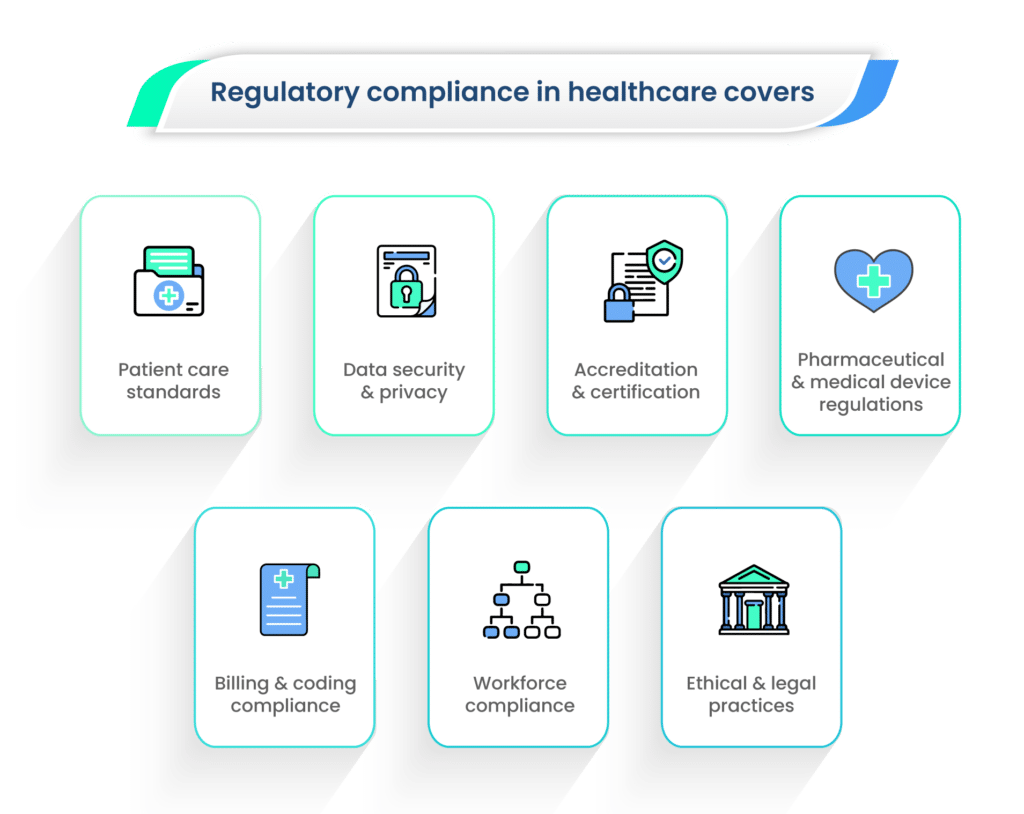
These regulations are in place to protect patients, maintain the integrity of the healthcare industry, and safeguard public health. Healthcare regulatory compliance covers a wide range of areas within the healthcare sector, including but not limited to:

  • Patient care standards: Regulations set specific standards of care that healthcare providers must follow to ensure the well-being of patients. These standards encompass everything from diagnosis and treatment to patient rights and informed consent.
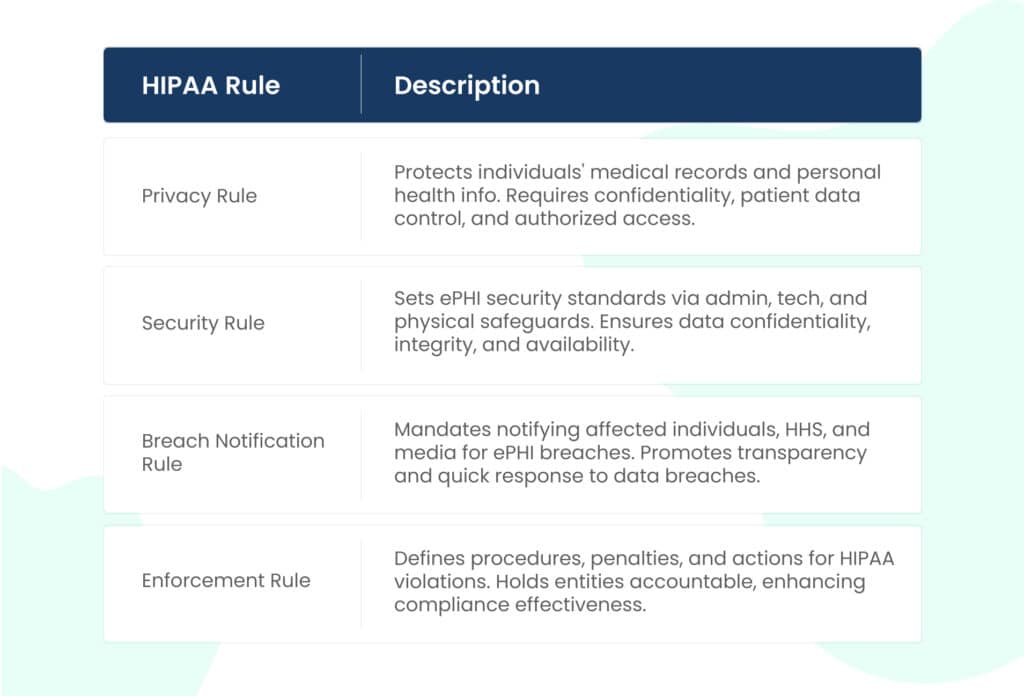
  • Data security and privacy: Laws such as the Health Insurance Portability and Accountability Act (HIPAA) in the United States mandate the protection of patient information and require healthcare organizations to implement strict data security and privacy measures.
  • Accreditation and certification: Many healthcare facilities pursue accreditation from organizations like The Joint Commission to demonstrate their commitment to meeting high-quality care standards. Compliance with accreditation requirements is crucial.
  • Pharmaceutical and medical device regulations: Regulatory agencies like the Food and Drug Administration (FDA) oversee the approval, marketing, and safety of drugs and medical devices to ensure they meet established standards.
  • Billing and coding compliance: Healthcare organizations must accurately and ethically bill and code for services to prevent fraud, overbilling, or other financial misconduct.
  • Workforce compliance: Healthcare providers must adhere to regulations related to the qualifications, training, and licensure of healthcare professionals.
  • Ethical and legal practices: Compliance also extends to maintaining ethical and legal practices within healthcare, including issues related to conflicts of interest, research ethics, and anti-kickback statutes.

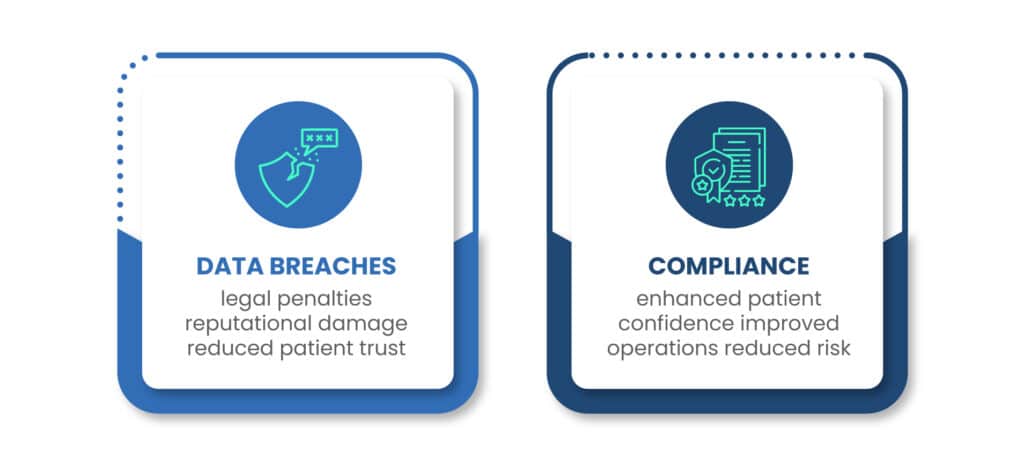
The importance of regulatory compliance in healthcare cannot be overstated. Non-compliance can lead to severe consequences, including legal actions, fines, loss of licensure, damage to reputation, and compromised patient safety. Conversely, adhering to healthcare regulations ensures the consistent delivery of high-quality care, protects patient rights and privacy, and upholds the integrity of the healthcare system.

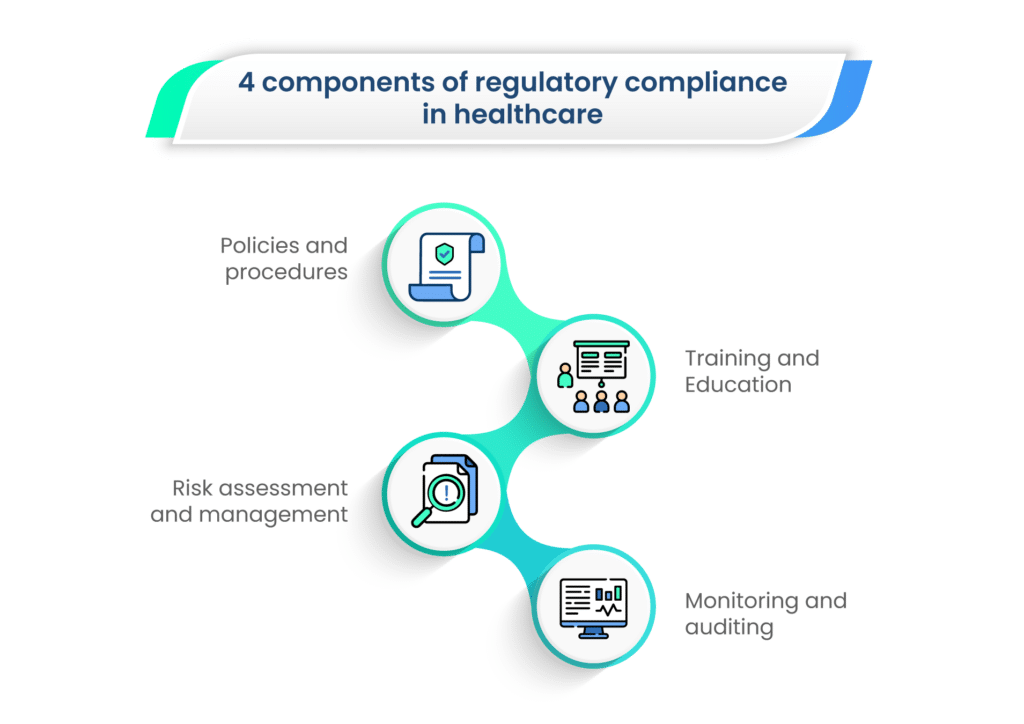
To maintain compliance, healthcare organizations often establish compliance programs, appoint compliance officers, conduct regular audits and assessments, and provide ongoing training and education to their staff. Staying up-to-date with evolving regulations and adapting to changes in the healthcare landscape is essential for maintaining regulatory compliance in this complex and highly regulated industry.

How is the regulatory landscape in healthcare at present?

The regulatory healthcare in the US is one of the strictest in the world. It consists of checks at various levels to ensure public health information (PHI) is secure and shared only with accredited parties. The regulatory landscape also helps the patient in relying on the quality of healthcare they receive. Let’s look at some of the provisions that form the regulatory framework of the US healthcare system.

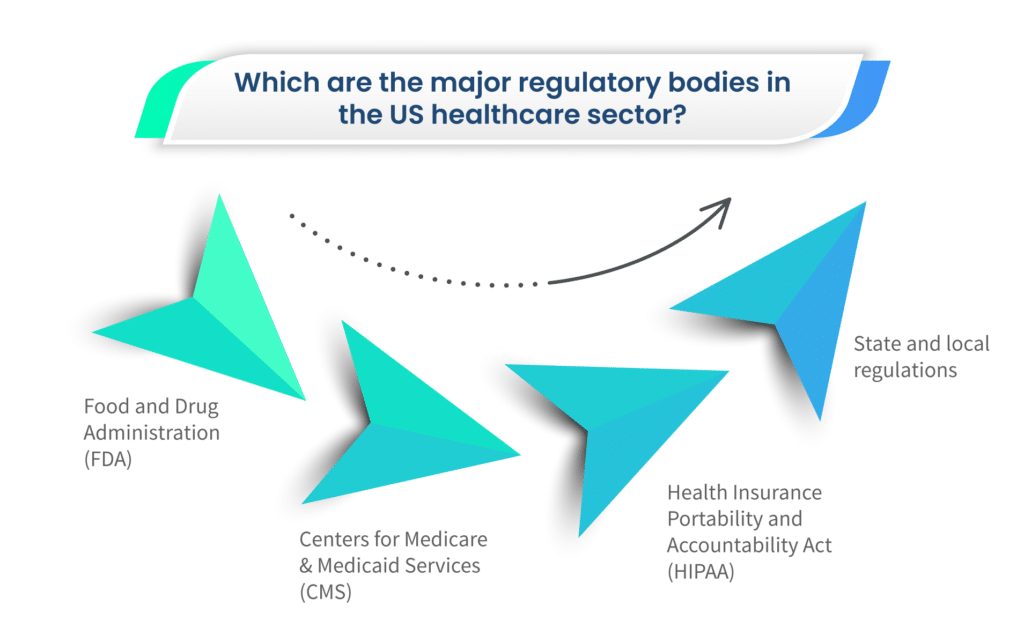
A. Key regulatory bodies in healthcare

The following regulations guide the healthcare industry in the US at present.

1. Food and Drug Administration (FDA)

The FDA is a prominent regulatory agency in the United States responsible for safeguarding public health by ensuring the safety and efficacy of drugs, medical devices, food, and cosmetics. It reviews and approves new medications and medical technologies, monitors product recalls, and enforces regulations to prevent contamination and fraudulent marketing practices.

2. Centers for Medicare & Medicaid Services (CMS)

CMS oversees the Medicare and Medicaid programs in the United States, which provide healthcare coverage for millions of Americans. It sets standards for healthcare providers participating in these programs, manages reimbursement rates, and monitors compliance with billing and coding rules.

3. Health Insurance Portability and Accountability Act (HIPAA)

HIPAA is a federal law in the United States that focuses on safeguarding patient health information. It establishes standards for the privacy and security of electronic health records (EHRs) and requires healthcare organizations and their business associates to protect patient data from unauthorized access and disclosure.

4. State and local regulations

In addition to federal regulations, healthcare providers must comply with state and local regulations, which can vary widely. These regulations cover areas such as licensure, scope of practice, and healthcare facility requirements. States often have their own health departments or regulatory bodies.

B. Evolving regulatory trends in healthcare

As healthcare evolves and technology advances, the regulatory landscape will continue to change. Staying informed about these evolving regulations and trends is essential for healthcare organizations and professionals to ensure compliance, provide high-quality care, and adapt to the shifting healthcare environment.

1. Telehealth and virtual care compliance

The rise of telehealth and virtual care services has introduced new regulatory challenges and opportunities. Healthcare providers must navigate licensure issues, reimbursement policies, and privacy concerns when delivering care remotely. Regulatory bodies are continually adapting to accommodate the growth of telehealth while maintaining patient safety and quality of care.

2. Data privacy and security

Data breaches and cyberattacks pose significant threats to patient information. Regulatory authorities are strengthening data privacy laws and security requirements to address these concerns. Complying with regulations such as the General Data Protection Regulation (GDPR) in Europe and the Health Information Trust Alliance (HITRUST) in the United States is crucial for protecting patient data.

3. Value-based care initiatives

The shift from fee-for-service to value-based care models is changing the way healthcare is delivered and reimbursed. Regulatory bodies are developing new frameworks to incentivize providers to focus on outcomes and cost-effective care. Compliance with these initiatives involves quality reporting, care coordination, and performance measurement.

Core components of regulatory compliance in healthcare

Regulatory healthcare compliance is divided into four main categories, which are further divided into sub-categories. Let us have a look at all the categories and subcategories of regulatory healthcare compliance.

A. Policies and procedures

There are two sub-categories for policies and procedures

1. Developing effective policies

Effective policies and procedures are the foundation of regulatory compliance in healthcare. Healthcare organizations must develop clear, comprehensive, and up-to-date policies that align with regulatory requirements. This includes defining processes for patient care, data security, billing, and other critical aspects of healthcare operations.

2. Ensuring proper documentation

Proper documentation of policies and procedures is essential. Healthcare providers should maintain records of policy creation, revisions, and distribution. Documentation helps demonstrate compliance efforts and provides a reference for staff members to follow.

B. Training and Education

Training and education of the employees is an integral part of regulatory compliance in healthcare. It is an ongoing process rather than a one-time exercise. 

1. Employee training

Healthcare organizations should provide comprehensive compliance training for all employees, including clinical staff, administrative personnel, and support staff. Training should cover relevant regulations, policies, and procedures to ensure that everyone understands their compliance responsibilities.

2. Ongoing education

Compliance is an evolving field, and regulations change over time. Ongoing education is crucial to keep staff informed about the latest compliance requirements and best practices. Regular training sessions, workshops, and updates help maintain a culture of compliance.

C. Risk assessment and management

Every activity brings risks. There were 11 reported healthcare data breaches of more than 1 million records in 2022 and a further 14 data breaches of over 500,000 records (HIPAA Journal). This makes risk assessments and management paramount.

1. Identifying compliance risks

Healthcare organizations should conduct regular risk assessments to identify potential compliance vulnerabilities. This involves evaluating processes, practices, and external factors that could pose compliance risks. Risk assessments help prioritize areas for improvement.

2. Mitigation strategies

Once compliance risks are identified, healthcare organizations should implement mitigation strategies. This may involve process improvements, policy revisions, or additional training to address specific risks. Mitigation strategies aim to reduce the likelihood of non-compliance.

D. Monitoring and auditing

Monitoring and auditing regularly is a step that cannot be missed. It consists of two sub-steps.

1. Regular audits and self-assessments

Healthcare organizations should conduct regular internal audits and self-assessments to evaluate compliance with policies and regulations. Audits may be conducted by dedicated compliance officers or teams. These assessments help identify compliance gaps and areas needing improvement.

2. Corrective action plans

When non-compliance is identified, healthcare organizations should develop corrective action plans to address deficiencies. These plans outline steps to remediate issues, prevent recurrence, and ensure ongoing compliance. Corrective actions may involve policy revisions, additional training, or process changes.

Effective regulatory compliance in healthcare requires a proactive approach that encompasses policies, education, risk management, and ongoing monitoring. By focusing on these core components, healthcare organizations can create a culture of compliance, reduce the risk of regulatory violations, and ultimately provide better care to patients while maintaining the trust of regulators and the public.

Technological solutions for regulatory compliance in healthcare 

There are many solutions for regulatory compliance in healthcare. Here are some of them:

A. Electronic Health Records (EHR) and compliance

EHR plays a crucial role in healthcare compliance by facilitating the secure and organized storage of patient health information. Here’s how EHR systems contribute to compliance:

  • Data privacy and security: EHRs are designed to meet data privacy and security standards, such as HIPAA in the United States. They offer features like user authentication, audit trails, and access controls to protect patient information from unauthorized access and breaches.
  • Documentation compliance: EHRs enable healthcare providers to maintain accurate and complete patient records, including medical histories, treatment plans, and progress notes. This documentation is essential for compliance with regulations related to patient care and billing.
  • Automated compliance checks: Many modern EHR systems incorporate compliance checks and alerts to help providers adhere to clinical guidelines and billing rules. These systems can flag potential issues, such as drug interactions or missing documentation, in real-time.
  • Interoperability: EHRs support the exchange of patient data among healthcare providers and systems, improving care coordination and patient outcomes while ensuring compliance with data-sharing regulations.

B. Data encryption and security measures

Data encryption and security measures are critical components of healthcare compliance, particularly in safeguarding patient information:

  • Data encryption: Encrypting sensitive patient data, both at rest and in transit, helps protect it from unauthorized access or interception. Strong encryption methods, such as Advanced Encryption Standard (AES), are commonly used.
  • Access controls: Implementing access controls ensures that only authorized personnel can access patient records and other sensitive data. Role-based access control (RBAC) systems help limit access to what is necessary for each individual’s job responsibilities.
  • Regular security audits: Healthcare organizations should conduct regular security audits to identify vulnerabilities and assess the effectiveness of security measures. Penetration testing and vulnerability assessments can help uncover weaknesses.
  • Data backup and recovery: Data backup and disaster recovery plans are essential for compliance. Regularly backing up patient data and having a robust plan in place to recover data in case of incidents or breaches are crucial aspects of compliance.
  • Security awareness training: Employees should receive training on security best practices to reduce the risk of security breaches due to human error. This includes recognizing phishing attempts and practicing good password hygiene.

C. Healthcare compliance software

Healthcare compliance software is specifically designed to help organizations manage and track compliance efforts. Key features and benefits include:

  • Policy management: These tools assist in creating, disseminating, and updating policies and procedures. They often include version control and document management features.
  • Training and certification tracking: Healthcare compliance software helps organizations track employee training, certifications, and continuing education requirements, ensuring staff remain compliant and up-to-date.
  • Audit and reporting: These tools simplify the process of conducting internal audits, self-assessments, and compliance reporting. They can generate reports that highlight areas of non-compliance and track corrective actions.
  • Risk assessment: Some compliance software includes risk assessment modules to identify and prioritize compliance risks, helping organizations proactively address potential issues.
  • Incident reporting: Healthcare compliance software often includes incident reporting features, allowing employees to report compliance violations, privacy breaches, or other incidents securely and confidentially.

Scrut is an excellent regulatory compliance management software. In the coming section, we will check out how can Scrut help you in healthcare compliance. But first, let’s look at the challenges one might face while developing a robust healthcare compliance system.

Challenges and solutions to healthcare compliance

Here are some of the challenges, the impact those challenges can have on the organization, and how you can deal with them.

A. Compliance fatigue

Challenge: Compliance fatigue refers to the weariness and reduced diligence that healthcare professionals and organizations may experience due to the constant need to adhere to numerous regulations and guidelines.

Impact: When individuals and organizations experience compliance fatigue, they may become less vigilant, leading to lapses in adherence to crucial compliance measures. This can result in an increased risk of violations, compromised patient safety, and potential legal and financial repercussions.

Mitigation: To combat compliance fatigue, healthcare organizations should implement strategies such as regular staff training and awareness programs, clear communication about the importance of compliance, and the use of technology to automate and streamline compliance processes.

How can Scrut help? Scrut offers automated employee infosec training with a pre-built 30-minute information security course created by industry professionals. This training equips staff members with everything they need to understand possible hazards, eliminate slippages, and develop a secure posture. The platform also allows employees to examine policies effortlessly, evaluate notifications, and recognize security processes in one place.

Upon completion of the training, employees are required to take a quiz to evaluate their understanding and knowledge.

B. Keeping up with regulatory changes

Challenge: Healthcare regulations are dynamic, and they frequently change at the federal, state, and local levels. Staying up-to-date with these changes is a continuous challenge.

Impact: Failing to keep pace with regulatory changes can lead to non-compliance. Healthcare organizations may inadvertently operate under outdated policies and procedures, exposing themselves to legal risks.

Mitigation: Healthcare organizations should designate individuals or teams responsible for monitoring regulatory updates. This can include subscribing to regulatory newsletters, attending industry conferences, and leveraging compliance software that offers real-time updates. Regularly scheduled compliance audits can also help identify areas that need adjustment due to regulatory changes.

How can Scrut help? You can invite your auditors and communicate with them directly through the platform. With all the necessary policies, controls, and evidence centralized in one place, audits can be completed quickly, saving time and effort. 

The Scrut platform integrates throughout your landscape to automate evidence collection and allows you to design, assign, and monitor assignments for compliance requirements. It connects with a variety of application environments, including HRMS, endpoint management, and other technologies, to automate the human evidence collection process. The tool gathers evidence automatically across 70+ integrations and addresses the most concerning vulnerabilities. 

With all your rules, processes, controls, evidence, and documentation stored in one centralized platform, Scrut facilitates compliance audits and ensures easy access to all necessary information.

C. Data security and privacy concerns

Challenge: Healthcare organizations handle vast amounts of sensitive patient data, making them attractive targets for cyberattacks and data breaches. Maintaining robust data security and privacy measures is a constant challenge.

Impact: Data breaches can have severe consequences, including financial losses, reputational damage, legal penalties, and patient mistrust. Healthcare organizations must prioritize data protection to avoid these risks.

Mitigation: Implement comprehensive data security measures, including encryption, access controls, regular security assessments, and employee training on cybersecurity best practices. Compliance with data privacy regulations, like HIPAA, is essential in safeguarding patient information.

How can Scrut help? 

Scrut Risk Management: The platform provides a single interface for identifying, assessing, and mitigating IT and cyber risk.

It provides organizations with the awareness they need to stay ahead of risks and communicates risk implications on high-priority strategic targets. By utilizing scoring techniques, expert-provided risk scores, and automated workflows, the platform enables the quick and easy establishment of new IT risk programs to prevent, control, and mitigate risks.

One key feature of Scrut is the ability to create and maintain a risk register. A risk register is a repository of all the risks that your organization faces, including a description of the risk, the likelihood of its occurrence, and the impact of the risk.

Scrut Risk Management allows you to leverage the pre-loaded risk library or create custom risks, establish the treatment approach, develop mitigation workflows, and assign responsibilities all in one location.

D. Balancing compliance with patient care

Challenge: Healthcare providers face the delicate task of balancing strict compliance requirements with the primary goal of providing high-quality patient care. An overemphasis on compliance can sometimes hinder efficiency and patient-provider relationships.

Impact: Focusing too much on compliance at the expense of patient care can lead to patient dissatisfaction, decreased quality of care, and staff burnout.

Mitigation: Achieving the right balance involves clear communication of compliance expectations, streamlining compliance processes to minimize disruption to care delivery, and fostering a culture of compliance throughout the organization. Involving clinicians in compliance decisions and emphasizing the alignment of compliance with patient safety and quality can help strike this balance effectively.

How Scrut can help? Scrut revolutionizes the compliance process, saving 75% of manual effort while enhancing accountability and the speed of completing InfoSec tasks. This platform offers a more efficient way to achieve compliance by eliminating time-consuming manual procedures and keeping you updated on the progress and effectiveness of your programs.

With Scrut smartGRC, you stay informed about the overall status of your GRC program, as depicted in the accompanying screenshot:

Scrut is a single point of contact for all compliance-related responsibilities. With a library of 50+ policies established and vetted by our in-house infosec specialists, you can start preparing your compliance program in minutes.

Additionally, you can also use a built-in inline editor to modify policies to your business needs.

Scrut provides a seamless and unified experience for achieving compliance with various information security frameworks. You can easily align your custom controls with prebuilt controls mapped to globally recognized frameworks. The Scrut smartGRC platform covers the following standards: SOC 2, SOC 3, ISO 27001, ISO 27701, ISO 27017, ISO 27018, ISO 22301, ISO 20000-1, GDPR, HIPAA, FERPA, CCPA, PCI DSS, etc.

Conclusion

In summary, healthcare regulatory compliance is a cornerstone of the healthcare industry, safeguarding patient well-being, ethical practices, and industry integrity. Compliance is not just a legal obligation but a commitment to providing safe, high-quality care.

The complexity of the healthcare regulatory landscape, especially in the United States, demands continuous vigilance and adaptation. Staying well-informed about evolving regulations and swiftly responding to industry changes is imperative for healthcare organizations and professionals alike. It’s not merely about following the rules but also about embracing a culture of responsibility and accountability.

In the contemporary healthcare landscape, where data security and privacy are paramount, advanced technological solutions like Scrut play a pivotal role. Scrut offers a comprehensive platform that streamlines and automates compliance processes, making them more efficient and effective. From policy management to risk assessment, Scrut provides the necessary tools and features to protect sensitive patient information.

FAQs

1. What is healthcare regulatory compliance?

Healthcare regulatory compliance refers to the adherence to various laws, rules, standards, and guidelines established by government agencies and regulatory bodies to ensure the delivery of safe, high-quality, and ethical healthcare services.

2. Why is healthcare regulatory compliance important?

Healthcare regulatory compliance is crucial because it helps protect patient safety, maintain ethical standards, and uphold the integrity of healthcare services. Non-compliance can lead to legal actions, financial penalties, and compromised patient well-being.

3. How can healthcare organizations stay compliant with evolving regulations?

Healthcare organizations can stay compliant by establishing robust compliance programs, appointing compliance officers, conducting regular audits, and providing ongoing staff training. Staying informed about regulatory changes and adapting to them is essential.

Authored by

Aayush Ghosh Choudhary
Co-founder & CEO at Scrut

Vendor Risk Management Maturity Model

The vendor risk management maturity model (VRMMM) evaluates how organizations manage vendor risks through a set of metrics. It offers a roadmap for organizations to enhance their vendor risk management capabilities and improve their ability to mitigate risks associated with vendors. This model assesses a company’s capabilities, sets goals, and tracks progress.

This article will discuss the vendor risk management maturity model in detail. 

What is Vendor Risk Management?

Vendor risk management (VRM) is the process of identifying, evaluating, and managing risks associated with an organization’s relationships with vendors. Throughout the entire vendor lifecycle, from initial engagement to termination, VRM aims to ensure that the organization understands the risks involved and takes appropriate measures to mitigate them.

VRM gives enterprises visibility into the vendors they work with, how they work, and which vendors have adequate security procedures. The VRM process requires implementing policies, procedures, and protocols to ensure compliance with all contractual requirements. It includes frequent evaluations and audits of the vendor’s performance to ensure they meet the organization’s standards.

Given that, organizations heavily rely on vendors to deliver goods, services, and technology solutions that are essential for their operations. Any disruption or failure on the part of a vendor can significantly impact the business’s continuity. VRM helps proactively identify and address vulnerabilities within the vendor’s operations, enabling the business to effectively prepare for and mitigate potential disruptions.

One approach to conducting a vendor risk assessment is by using questionnaires. A questionnaire can be used to conduct vendor risk assessments. The vendor assessment aims to evaluate and research both the current and potential vendors. By examining a vendor’s security controls, objectives, policies, practices, and other critical factors, organizations can make informed decisions about vendor selection and determine the level of risk associated with each vendor. 

Some of the questions you should ask your vendors are given below:

  • Do you utilize tools to monitor your network and your organization’s software?
  • Can you list the software and tools used in your organization?
  • Do you have a team to manage vendor risk?
  • Are employees allowed to download free or open-source software, or is permission required beforehand? 

Some of the types of vendor risks are explained below:

  • Compliance risk – This risk arises from the potential violations of laws, regulations, and internal processes that your organization must adhere to in order to conduct business. The laws that apply to each firm will vary with different industries. However, some common requirements, such as GDPR and PCI DSS, apply to all industries.  
  • Operational risk – Operational risk occurs when vendor procedures are disrupted. Vendor operations are closely linked to organizational processes, so when vendors fail to fulfil their obligations, it can impede the smooth execution of daily operations within the organization. 
  • Strategic risk – Strategic risk is the likelihood that an organization does not make decisions that support its long-term aims. This can occur when risks are not correctly assessed, there is insufficient due diligence into new goods, business lines, or activities, or when the company takes actions inconsistent with its objectives or fails to generate the expected return on investment.
  • Reputational risk – Reputational risk arises when a third-party vendor’s actions or behaviour negatively impacts your brand or reputation, directly or indirectly. You must maintain a positive relationship with your vendor so that any personal issues can not cause business interruption and resource loss.

Vendor Management Lifecycle

Vendor management refers to the process of managing vendors and coordinating with vendors throughout their entire lifecycle, from initial identification and selection to ongoing monitoring and performance evaluation. It enables your organization to recognize the value of its vendors and integrate them into your procurement plans.

The vendor management lifecycle includes multiple stages – vendor identification, vendor selection, contract negotiation, onboarding of vendors, vendor performance management, and vendor offboarding.

  • Vendor Identification: This is the stage where you list down possible providers who meet your organization’s specific requirements at a certain level. This includes investigating and evaluating vendors based on their expertise, capabilities, reputation, and adherence to industry standards.
  • Vendor Selection: After identifying possible vendors, you will assess them further to determine the suitable fit for your needs. It includes sending requests for proposals or conducting interviews to analyze suppliers’ credentials, pricing, and alignment with the organization’s goals.
  • Contract Negotiation: Once you select the vendor who qualifies for the above stage, you will engage with them to find out and set the terms and circumstances of the agreement. This includes developing service level agreements, pricing structures, delivery timelines, and other related contractual parameters.
  • Vendor Onboarding: The vendor onboarding process begins once both parties sign the contract. This stage includes exchanging pertinent information, establishing communication channels, and providing training to ensure the vendor understands your organization’s operations.
  • Vendor Performance Management: This includes monitoring key performance metrics to verify whether the vendor meets contractual responsibilities. You will conduct performance review sessions and meetings with the vendor to address any difficulties, provide feedback, and explore areas for development.
  • Vendor Offboarding: Vendor offboarding is the last stage when your organization cancels their contract or migrates to a new vendor. This entails handing over duties, knowledge, and applicable data or assets to the new vendor or internal teams for a smooth transition.

Vendor Risk Management Maturity Model

A vendor risk management maturity model (VRMMM) measures the maturity of a company’s third-party risk management program.

The two vital components that every VRMMM must have for determining and evaluating requirements and hazards are:

  • A technique to determine how each department manages risks and where resources should be shifted or backed up.
  • A technique to evaluate the development of maturity in components of your current risk management framework.

The model can help organizations better understand their present risk landscape and suggest opportunities for improvement.

The six levels of vendor risk management maturity are listed below:

  1. Startup: It includes newly formed firms or organizations with no established vendor risk management operations. An organization at this maturity level does not have a vendor risk assessment in place.
  2. Initial Vision And Ad Hoc Activity: Vendor risk management processes are ad hoc or informal during this stage with no standard process. Hence, each case is handled independently.
  3. Route Approval And Ad Hoc Activity: During this stage, the management has authorized a standard plan for organizing activities as part of a comprehensive implementation effort.
  4. Clearly Defined And Established Plans: This is the stage where policies, procedures, and guidelines are developed and documented. Vendor management roles and responsibilities are clearly defined, and there is some level of training and awareness. 
  5. Implementation And Functioning: At this stage, the vendor risk management program within the organization is well-managed and integrated. There is a centralized repository or system for storing vendor-related information and risk assessments. It includes ongoing monitoring and reporting of vendor risks and regular collaboration with vendors to address and mitigate risks.
  6. Continuous Revision And Improvement: Organizations regularly assess vendor risk to optimize strategy and management after establishing the vendor risk management program. They actively look for opportunities to enhance their vendor risk management processes and stay abreast of emerging risks.

How Can Scrut Help You Manage Your Vendor Risks?

Scrut provides an efficient way of assessing, monitoring and controlling vendor risks. The tool shows insight into how your vendors perform and whether their security posture suits your organization.

You can quickly assess how your vendors are performing in terms of compliance and information security, as shown in the screenshot below:

You can verify your vendor’s adherence to information security standards. You can also send security surveys and detect deviations from a single dashboard with detailed monitoring and feedback.

Scrut allows you to identify, evaluate, and track vendor risks in a single window. It speeds up reviewing your vendors’ security posture by 70% and determines whether they meet your compliance guidelines.

The tool supports you in streamlining your vendor compliance check with security questions. You can create your questionnaire or use one of our pre-made forms, as illustrated in the screenshot below.

Upload A Security Questionnaire – The Scrut vendor risk management tool allows users to upload a security questionnaire or use a pre-built template. It puts an end to traditional vendor security evaluation methodologies. Users can invite suppliers to respond via an easy-to-use web-based portal. 

Share Review Data – Users can instantly share vendor review data for compliance and audit needs. The tool keeps all vendor security certifications, software vendor audits, and documents in one place. It allows users to share vendor responses with customers and auditors.

Invite Vendors – Users can invite vendors to complete the security audit questionnaires on the platform. It assists users in comparing suppliers to select the lowest-risk business partner or develop a risk security strategy suited to vendor risk categories.

Scrut provides a single window for identifying, assessing, and tracking vendor risks. It facilitates the evaluation of your vendors’ security posture by 70% and evaluates whether they are in compliance with your compliance standards. To learn more about Scrut Automation, schedule a demo.

Authored by

Aayush Ghosh Choudhary
Co-founder & CEO at Scrut

Difference between Penetration Tests and Vulnerability Scans

Vulnerability scanning and penetration testing are frequently confused but serve distinct purposes. 

Penetration testing provides a detailed report of potential vulnerabilities and the damage they could cause, allowing you to prioritize fixes based on risk level. Vulnerability scanning, however, can provide general information on what should be fixed and what needs to be addressed.

In this article, we’ll review the two most common security testing methods businesses use for compliance initiatives: penetration testing and vulnerability scanning.

What is the Penetration Test?

A penetration test is a detailed examination that includes a live person nudging into the complexities of your network to exploit weaknesses in your systems. During a penetration test, a pentester imitates the activities of a real-world black-hat hacker and uses manual tests to find potential vulnerabilities and misconfigurations, exploit weaknesses, and infiltrate business assets.

A penetration tester’s work cannot be automated. They use manual vulnerability assessments and penetration testing to conduct attacks. Through hands-on research and exploiting vulnerabilities, a penetration test simulates a hacker breaking into a business system. Penetration testing aims to verify all your security controls, such as authentication, authorization, integrity, confidentiality, and comply with industry standards.

Why do you need Penetration Testing?

Penetration testing allows you to understand the risk a specific vulnerability poses. Because manual pen-testers confirm each vulnerability, you get detailed instructions on reproducing it without worrying about false positives.

Benefits of Penetration Testing?

The benefits of penetration testing are as follows:

  • A penetration test will reveal the vulnerabilities in the target environment and the associated risks. A high-order risk assessment classifies the vulnerabilities as high/medium/low-risk issues.
  • It provides an independent assessment of the effectiveness of existing security processes, ensuring that configuration management practices have been followed correctly.
  • Penetration testing investigates existing flaws in your system or application configurations as well as your network infrastructure. A report informs you of your security vulnerabilities so you can decide what software and hardware improvements to make.
  • IT departments address the compliance and auditing aspects of procedures such as PCI DSS, HIPAA, GLBA, SARBANES – OXLEY, and report penetration testing requirements identified in PCI DSS or NIST/FISMA directives. Complete records of your penetration tests can help you avoid significant penalties for noncompliance.

What is Vulnerability Scan?

A vulnerability scan is an activity carried out by an automated tool with minimal human intervention. Identifying potential vulnerabilities in network devices, such as firewalls, routers, switches, servers, and applications, is known as vulnerability scanning. 

A vulnerability scanner determines the structure of the scanned asset and then performs a series of automated tests on each element of that structure. Vulnerability scanning searches your assets for known vulnerabilities and generates a report, often highlighting the aspects which pose the greatest risk to your organization. It is mostly automated and is usually used on many assets on a corporate network.

Why do you need Vulnerability Scanning?

Cyber criminals are constantly looking for unpatched systems to exploit. Even if a patch for a specific vulnerability already exists, criminals can exploit the time lag between the vulnerability becoming known and a patch being published to a given system being patched. Vulnerability scanning is necessary because internet-connected systems are constantly scanned and attacked. This is why timely patching of systems is critical, and running a vulnerability scan will help identify missing patches that need to be applied.

Benefits of Vulnerability Scanning?

The benefits of penetration testing are as follows:

  • Many vulnerabilities are difficult to find and are not noticeable until they are identified. Vulnerability scanning identifies these flaws, allowing you to correct them.
  • It’s difficult to keep track of all the components, which range from on-premise to public and private clouds and everything in between. Regular vulnerability scans can keep you updated on new vulnerabilities and attack vectors, allowing you to change configurations more effectively.
  • Automated scans are simple and will save you money in the long run. This is because vulnerability scanning reduces the risks of a data breach, which will incur various costs, including remediation and customer loss due to reputational damage.
  • A vulnerability assessment can help protect assets if malicious code is hidden in any of the said assets. It also assists in achieving and maintaining compliance with any applicable federal and international security regulations.

Penetration Testing vs. Vulnerability Scanning

The following table shows the difference between a penetration test and a vulnerability scan:

Penetration TestVulnerability Scan
Penetration testing encompasses exploiting vulnerabilities to gain knowledge about them.A vulnerability scan is designed to detect and classify vulnerabilities in a system.
Penetration testing necessitates manual intervention in addition to automated scanning.It is an automated process that employs vulnerability scanning tools.
It determines the extent of an attack.It creates a directory of a system’s assets and resources.
It cleans the system and generates the final report.It aims to reduce or eliminate potential vulnerabilities and invaluable resources.
Penetration testing is a time-consuming and costly procedure.Automated vulnerability assessment consumes less time and money than penetration testing.
The primary goal is identifying previously unknown and exploitable flaws in standard business processes.The primary goal is to compile a list of known software vulnerabilities that may be exploited.
It only identifies security flaws that can be exploited.It detects, categorizes, and quantifies security flaws.
The tester must be highly skilled in hacking and testing to overcome attackers during penetration testing.A vulnerability scan does not require a thorough understanding of the tools or the application being tested.
Penetration testing methods include black box testing, white box testing, and gray box testing.Techniques for vulnerability scanning include authenticated and unauthenticated testing.
Regular penetration testing will build your client’s trust and ensure the durability of your company.Regular vulnerability testing ensures your application meets the General Data Protection Regulation requirements.
Regulatory compliance frameworks such as NIST, PCI, FFIEC, and NYDFS require regular penetration testing to be compliant.ISO 27001, PCI DSS, and NIST are frameworks requiring periodic vulnerability scans.

Both tests have unique features and approaches. Vulnerability scans provide valuable insight into your network security on a weekly, monthly, or quarterly basis, whereas penetration tests are a thorough way to examine your network security thoroughly. A vulnerability assessment aims to improve the security system and create a more mature, integrated security program. Penetration testing, on the other hand, only provides a snapshot of the effectiveness of your security program.

How Does Scrut Help?

Scrut Risk Management software assists organizations in managing penetration tests and vulnerability assessments as part of a security assessment plan. It provides a centralized interface for identifying, assessing, and mitigating IT and cyber risk. The platform gives organizations the awareness they require to stay ahead of risks and conveys the consequences of risk on high-priority strategic targets.

Risk Identification

The tool enables organizations to create and maintain their risk registers. It allows you to use the pre-loaded risk library or create custom risks, establish the treatment method, define mitigation workflows, and assign tasks in one place. 

Scrut’s risk register dashboard displays detailed information about each risk to your business, such as the nature of the risk, mitigation measures to address it, and more.

The tool automatically maps these risks against various compliance frameworks and controls, as shown in the screenshot below.

Risk Assessment

Scrut provides automated workflows for performing risk assessments and implementing risk remediation, acceptance, transference, or avoidance treatment plans. It generates risk scores based on the likelihood and impact of events.

Risk = Likelihood * Impact

Likelihood (5) * Impact (4) = 20 (high) 

This frees up your team’s time and optimizes their bandwidth. It improves visibility into an organization’s risk posture by automatically rescoring risks in response to updates in related risks and mitigation tasks. With built-in scoring methodologies, expert-provided inherent risk scores, and automated workflows, creating new IT risk programs to avoid, control, and mitigate risk is quick and easy.

The table below can help you interpret the final score:

ScoreRisk
0-5Very Low
6-10Low
11-15Moderate
16-20High
21-25Very High

Risk Treatment Plan

Scrut makes it simple for you to understand your risk exposure by identifying and mitigating major risk areas. The tool provides four ways to treat a risk:

  • Avoid: To remove the possibility of risk by correcting an error.
  • Transfer: Transferring the risk to another entity is a form of action.
  • Mitigate: To act to reduce the potential impact of a risk by putting in place mitigating controls.
  • Accept: Sometimes, you have to accept the risk because the cost of treatment is greater than the damage caused by the risk.

The platform also allows you to create and document mitigation tasks, as shown in the screenshot below.

Case study – Find out how BarRaiser used Scrut Automation to automatically monitor its cloud environment for risks and misconfigurations. By automating GRC, they have simplified the process of maintaining continuous compliance with ISO 27001, SOC 2, and GDPR.

You can schedule a demo to learn more about our product, Scrut.

Authored by

Aayush Ghosh Choudhary
Co-founder & CEO at Scrut

HIPAA Compliance Checklist: Safeguarding Data Privacy Made Easy

In today’s rapidly evolving healthcare scenario, patient privacy and data security have become paramount concerns. HIPAA, the Health Insurance Portability and Accountability Act, stands as a cornerstone of the healthcare industry’s commitment to safeguarding patient information and maintaining data integrity. 

This comprehensive federal law serves as a shield against potential risks that could compromise patient privacy and data security. Understanding the intricacies of HIPAA compliance is not just a legal obligation but also a critical step in building and maintaining patient trust.

In an era where data breaches and privacy concerns are on the rise, compliance with HIPAA regulations is paramount. It not only mitigates financial and reputational risks but also helps healthcare organizations build a robust foundation of ethical and responsible data handling practices. By adhering to the principles laid out by HIPAA, healthcare entities demonstrate their commitment to prioritizing patient well-being and data protection.

This article delves into a comprehensive HIPAA compliance checklist, covering various facets that collectively contribute to maintaining a secure and compliant healthcare environment. 

What is HIPAA Compliance: Understanding its importance  

HIPAA, enacted in 1996, was designed to address the growing need for standardized patient data security practices in the healthcare industry. 

Compliance with HIPAA is not just a matter of ticking boxes; it’s about fostering a culture of data security and respect for patient privacy. The stakes are high—data breaches can lead to legal penalties, reputational damage, and erosion of patient trust. However, compliance leads to enhanced patient confidence, improved operations, and reduced risk.

From risk assessments to patient rights, each element plays a crucial role in upholding the tenets of HIPAA and ensuring the sanctity of patient information. Through the understanding and implementation of these checklist components, healthcare organizations can navigate the complex landscape of healthcare data management while fostering trust and integrity.

HIPAA Basics: An overview of the health insurance portability and accountability act

HIPAA represents pivotal legislation designed to safeguard patient privacy and the security of healthcare data. 

It aims to ensure the secure transfer and handling of health information while granting patients greater control over their personal data. Its significance extends beyond legal requirements, as HIPAA fosters trust between patients and healthcare providers by maintaining the confidentiality of sensitive medical information.

Building patient trust through data security

At the core of HIPAA compliance lies the protection of patient trust. When patients seek medical treatment, they entrust healthcare providers with their most private and sensitive information. 

This trust forms the foundation of the patient-provider relationship and contributes to the overall quality of care. By adhering to HIPAA regulations, healthcare organizations demonstrate their commitment to safeguarding this trust.

By ensuring that patient data is securely handled, stored, and shared, healthcare providers signal that their patients’ well-being goes beyond medical treatment. It extends to ensuring that personal health information remains confidential and that only authorized personnel can access it for legitimate purposes. 

This level of commitment resonates with patients and enhances their confidence in the healthcare system.

Key HIPAA regulations: Exploring HIPAA privacy, security, and breach notification rules

Within the framework of HIPAA, four primary regulations hold paramount importance: the Privacy Rule, the Security Rule, the Breach Notification Rule, and the Enforcement Rule.

  • Privacy rule: This rule establishes guidelines for protecting individuals’ medical records and other personal health information. It mandates that healthcare providers and their business associates maintain the confidentiality of patient data, granting patients control over their health information and ensuring that only authorized individuals have access to this sensitive data.
  • Security rule: The Security Rule sets standards for the security of ePHI. It outlines administrative, technical, and physical safeguards that healthcare entities must implement to protect patient data from unauthorized access, breaches, and cyber threats. These safeguards ensure the confidentiality, integrity, and availability of ePHI.
  • Breach notification rule: The Breach Notification Rule mandates that covered entities and their business associates must notify affected individuals, the Department of Health and Human Services (HHS), and, in some cases, the media, in the event of a breach of unsecured ePHI. This ensures transparency and enables swift action in response to data breaches.
  • Enforcement rule: This is another crucial component of HIPAA. It outlines the procedures and penalties for investigations, enforcement actions, and civil monetary penalties for violations of HIPAA regulations. It establishes a framework for holding covered entities and business associates accountable for non-compliance with HIPAA rules, thereby ensuring the effectiveness of the overall regulatory framework.

Understanding and adhering to these key regulations is vital for healthcare organizations to achieve and maintain HIPAA compliance. Together, these regulations create a robust foundation for protecting patient privacy, enhancing data security, and building trust within the healthcare ecosystem.

Administrative safeguards

Administrative safeguards form the core of HIPAA compliance, defining the essential rules and structure that ensure patient data remains secure. They are fundamental for protecting patient privacy effectively. 

Here’s what it entails:

1. Establishing policies and procedures

A solid foundation of policies and procedures is essential for HIPAA compliance. Develop clear and comprehensive documentation that outlines how patient information is handled, accessed, and shared. These policies should cover everything from data access and disclosure to employee training and incident response.

2. Designating privacy and security officers

Designate individuals within your organization to take charge of HIPAA compliance. A Privacy Officer ensures that patient information remains private and is accessed only when necessary, while a Security Officer oversees the implementation of technical safeguards to protect electronic patient data.

3. Employee training and education

Your staff is your first line of defense against data breaches. Regularly train employees on HIPAA rules, policies, and procedures. Ensure they understand their roles in maintaining patient privacy and the consequences of non-compliance.

4. Sanctions for non-compliance

Establish a clear framework of sanctions for employees who violate HIPAA policies. This helps reinforce the seriousness of compliance and encourages employees to take their responsibilities seriously.

5. Contingency planning and emergency response

Develop and maintain contingency plans to ensure business continuity in the event of data breaches, natural disasters, or other emergencies. Having a well-defined plan in place reduces the impact of incidents and speeds up the recovery process.

Technical safeguards

Technical safeguards are the digital locks that keep electronic patient information safe under HIPAA compliance. These safeguards employ technology to fortify data security and maintain the confidentiality, integrity, and availability of sensitive health records.

Let’s take a look at what they are:

1. Access controls and authorization

Implement access controls that restrict employees’ access to patient information based on their job roles. Only authorized personnel should be able to access ePHI, and their access should be limited to what’s necessary for their tasks.

2. Encryption and decryption of ePHI

Protect electronic patient information by using encryption and decryption technologies. This ensures that even if data is intercepted, it remains unreadable without the proper decryption key.

3. System activity monitoring and auditing

Regularly monitor system activity to detect any unusual or unauthorized access attempts. Conduct routine audits of access logs to ensure compliance and identify potential security breaches.

4. User authentication mechanisms

Implement strong user authentication methods such as unique usernames and passwords, biometric authentication, or two-factor authentication. This helps ensure that only authorized individuals can access patient data.

5. Change control and audit trails

Implement change control processes to track and document any changes made to systems and applications that handle patient data. Maintain detailed audit trails that provide a history of who accessed, modified, or deleted ePHI.

Physical safeguards

Physical safeguards encompass the tangible defenses and measures implemented to secure physical assets, facilities, and information, ensuring their protection against unauthorized access, theft, and damage. These safeguards play a pivotal role in maintaining the overall security and integrity of both digital and physical environments.

1. Controlling physical access 

Limit physical access to areas where patient information is stored. Use locks, access cards, and other security measures to prevent unauthorized entry.

2. Identity verification procedures 

Establish procedures to verify the identity of individuals requesting access to patient data. This helps prevent unauthorized personnel from accessing sensitive information.

3. Hardware security and monitoring

Ensure that computers, servers, and other hardware containing patient data are physically secure and monitored. Implement measures like alarms and surveillance to prevent theft or unauthorized access.

4. Disposal of physical media

Develop protocols for the secure disposal of physical media that may contain patient information, such as hard drives, paper records, and backup tapes. Improper disposal can lead to data breaches. 

Risk assessments

Risk assessments and evaluations identify vulnerabilities, enabling strategic defenses and safeguarding sensitive information.

1. Importance of regular risk assessments

Conducting regular risk assessments is the cornerstone of effective HIPAA compliance. These assessments help identify vulnerabilities in your systems and processes that could potentially lead to data breaches or unauthorized access to patient information.

2. Mitigating identified risks

Once vulnerabilities are identified, it’s crucial to develop and implement measures to mitigate those risks. This could involve technological solutions, process changes, or additional training for staff.

3. Continuous monitoring and adaptation

Risk assessments aren’t a one-time endeavor. The healthcare landscape evolves, and new risks can emerge. Continuously monitor your systems and reassess risks regularly to ensure that your safeguards remain effective.

Business associate agreements

Let’s navigate the crucial realm of partnerships in healthcare with insights into business associate agreements. These agreements establish accountability and ensure data protection when collaborating with external entities.

1. Defining vendor responsibilities

If your organization works with third-party vendors or business associates who handle patient data, it’s essential to establish clear agreements outlining their responsibilities for safeguarding that data. These agreements ensure that your partners are also compliant with HIPAA regulations.

2. Ensuring vendor compliance with HIPAA

Ensure that any business associates you work with are also HIPAA compliant. This may involve conducting audits of their practices or requesting evidence of their compliance efforts.

3. Protecting ePHI throughout the supply chain

A chain is only as strong as its weakest link. By extending your commitment to HIPAA compliance to your business associates, you create a more comprehensive and robust security framework.

Breach response and reporting

Explore the swift and strategic actions necessary when data security falters in our examination of breach response and reporting. Understand how these protocols mitigate damage, uphold trust, and align with regulatory obligations.

1. Developing a comprehensive breach response plan

No matter how diligent your efforts are, breaches can still occur. Having a well-defined breach response plan is essential. This plan outlines the steps to take in the event of a data breach, ensuring a swift and organized response.

2. Notification requirements for individuals and authorities

HIPAA mandates that breaches of unsecured ePHI are reported to affected individuals, the U.S. HHS Department, and, in some cases, the media. Adhering to these requirements ensures transparency and accountability.

3. Handling media and public relations

In the event of a breach, your organization’s reputation is at stake. Establish protocols for interacting with the media and public to maintain trust and control over the narrative.

Handling data breaches according to HIPAA guidelines

Adhering to HIPAA guidelines and effective management of data breaches is paramount in safeguarding sensitive health information. This involves swift identification, mitigation, and communication to ensure compliance and protect patient privacy.

1. Immediate steps to take when a breach occurs 

The moment a breach is detected, swift action is critical. Isolate the affected systems, contain the breach, and assemble your breach response team.

2. Reporting breaches and notifying affected parties 

HIPAA guidelines require that individuals affected by a breach be notified without unreasonable delay. Communicate the breach clearly and provide guidance on steps individuals can take to protect themselves.

3. Responding to different types of breaches 

Breaches can vary in nature and scale. Whether it’s a lost laptop, a cyberattack, or an accidental disclosure, your response should be tailored to the specific circumstances.

HIPAA compliance audits

Proactive measures ensure adherence to HIPAA regulations through comprehensive audits. These assessments not only validate compliance but also bolster data security and patient trust.

1. Preparing for audits, documentation and evidence 

HIPAA compliance audits are an essential part of maintaining data security and privacy. To ensure a smooth audit process, maintain thorough and organized documentation of your compliance efforts. This includes policies, procedures, training records, risk assessments, breach response plans, and any other relevant documentation.

2. Navigating audits and interacting with auditors

When faced with an audit, cooperation is key. Be prepared to answer auditors’ questions and provide evidence of compliance. Educate your staff about the audit process to ensure everyone is on the same page.

3. Ensuring continued compliance post-audit 

After the audit is complete, use the insights gained to enhance your compliance efforts. Address any identified weaknesses or areas for improvement to strengthen your data security posture.

Ongoing compliance and updates

Continual vigilance is paramount in the realm of compliance, as regulations evolve and threats adapt. Staying updated and proactive ensures a strong and enduring compliance posture.

1. Importance of regular reviews and updates

HIPAA compliance is not a one-time task; it requires ongoing vigilance. Regularly review and update your policies, procedures, and training materials to reflect changes in regulations, technology, and best practices.

2. Adapting policies to changing regulations

The healthcare regulatory landscape is dynamic. Stay informed about updates to HIPAA regulations and related laws to ensure your compliance efforts remain aligned with current requirements.

3. Staying informed about healthcare security trends

Cyber threats and data breaches are constantly evolving. Stay abreast of emerging cybersecurity threats and vulnerabilities to proactively adapt your safeguards.

HIPAA compliance tools and resources

Explore the toolbox for HIPAA compliance—a range of essential tools and resources designed to streamline adherence to regulations and fortify patient data protection.

1. Recommended tools for assessing compliance

Numerous tools are available to assist in assessing and maintaining HIPAA compliance. These tools include risk assessment software for identifying vulnerabilities, encryption solutions for data security, and training resources to educate staff on HIPAA requirements, collectively bolstering effective compliance efforts.

2. Access to templates and guidelines

Utilize templates and guidelines provided by reputable sources to streamline your compliance efforts. These resources can help you create policies, procedures, and other essential documentation.

3. Further reading for deepening understanding

Dive deeper into the world of HIPAA compliance by exploring additional resources, articles, and publications. This can enhance your knowledge and provide valuable insights into best practices. 

How Scrut Can Help You Simplify HIPAA Compliance?

Let’s go over how Scrut can assist users in achieving HIPAA compliance.

Scrut SmartGRC – Scrut smartGRC offers pre-built policies linked with major security and privacy frameworks. Users can build their compliance program in minutes with a library of 50+ policies created and approved by in-house infosec specialists. 

Scrut supports the following frameworks, among others: SOC 2, SOC 3, ISO 27001, ISO 27701, ISO 27017, ISO 27018, ISO 22301, ISO 20000-1, GDPR, HIPAA, FedRamp, CMMC, CCPA, PCI DSS, CSA Star, CMMI – DEV, GLB, and NIST 800 171.

Scrut provides a consolidated picture of all your assets, controls, policies, and history that comprise your risk or compliance program. You can quickly explore files, navigate to different rules or controls, and take action as needed. 

The platform reduces the need to keep track of documents, emails, and other evidence by providing the auditor with a single platform to analyze all records. Auditors can also use the tool to raise inquiries about specific documents. It saves time and reduces the headache of managing multiple documents. 

Scrut Risk Management – Scrut Risk Management provides actionable insights into your business processes for detecting, assessing, and responding to IT and cyber threats. It provides seven categories of risks. Governance, People, Customer, Regulatory, Resilience, Technology, and Vendor Management are Scrut’s risk categories.

To automate risk identification, the platform examines your ecosystem for vulnerabilities across the code base, infrastructure, applications, vendors, personnel, and access. It allows users to search a pre-built controls library to discover organizational hazards. Users can discover high-risk locations by combining data with built-in industry-standard scoring algorithms and expert-recommended ranks. 

Vendor Risk Management – The tool assists users in effectively identifying, monitoring, and managing vendor risks. It allows users to acquire insight into the security posture of their suppliers. Through a comprehensive evaluation, users can determine whether a vendor aligns with their compliance requirements, ensuring a robust and secure business ecosystem. 

Scrut Cloud Security – With Scrut, users can stay compliant while proactively protecting their data to establish a solid information security posture. The platform automatically evaluates your cloud setups against 200+ cloud control across CIS benchmarks to maintain a strong InfoSec posture. It identifies gaps and critical issues in real-time by automatically monitoring controls.

Security Awareness Training For Employees – Train your staff on compliance standards, conduct periodic tests, launch anti-phishing programs, and establish policy attestations to ensure that your employees are your first line of defense.

Scrut uses pre-built modules to automate employee security awareness training. As demonstrated in the screenshot below, it gives up-to-date statistics on the general state of the training programs. As an administrator, you are continually aware of the overall features of your employees’ training programs.

Scrut Trust Vault – Scrut Trust Vault enables customers to show their security and compliance posture openly and transparently. Users can customize a security page for their website based on the company’s identity. The tool automates security and compliance practices by demonstrating information security-related certifications, reports, and attestations.

It also aids in demonstrating to internal and external stakeholders your daily compliance management and security efforts.

Automate evidence collection – With over 70 integrations across widely used programs, evidence collection is no longer a tedious, repetitive manual process. Scrut automates over 65% of the evidence-collecting process across your application and infrastructure landscapes against pre-mapped controls.

Scrut offers a streamlined approach to HIPAA compliance, covering the entire compliance lifecycle. From conducting cloud risk assessments to performing control reviews, managing employee policy attestations, and assessing vendor risk, Scrut handles it all. 

Wrapping up

HIPAA compliance is not just a regulatory obligation; it’s a commitment to safeguarding patient trust, data security, and the integrity of healthcare systems.

As healthcare evolves and technology advances, so do the challenges and risks. Regularly revisit your compliance strategies, update your practices, and stay informed about industry trends. 

Scrut offers a streamlined approach to HIPAA compliance, covering the entire compliance lifecycle. From conducting cloud risk assessments to performing control reviews, managing employee policy attestations, and assessing vendor risk, Scrut handles it all. Click here to schedule a demo with Scrut.

Frequently Asked Questions

1. What is a HIPAA compliance checklist?

A HIPAA compliance checklist is a comprehensive tool used by healthcare organizations, covered entities, and business associates to ensure they are adhering to the regulations outlined in the Health Insurance Portability and Accountability Act (HIPAA). It outlines key requirements and best practices that help organizations protect patients’ sensitive health information and maintain data security and privacy.

2. Why is a HIPAA compliance checklist important?

The checklist serves as a guide to help healthcare entities and related businesses establish and maintain proper security measures, administrative practices, and technical safeguards to protect patient information. Non-compliance with HIPAA can result in severe penalties, legal actions, and reputational damage. The checklist helps organizations minimize risks and demonstrates their commitment to safeguarding patient data.

3. What are some common items on a HIPAA compliance checklist?

A holistic HIPAA compliance checklist covers essential aspects such as regular risk assessments to identify vulnerabilities, implementing diverse safeguards for ePHI security, and providing workforce training on HIPAA regulations. It emphasizes maintaining policies for data breaches and establishing business associate agreements with third-party vendors. Additionally, respecting patient rights, including access to and control over health information, forms a fundamental part of this comprehensive approach.

4. Who needs to use a HIPAA compliance checklist?

Any organization or individual that deals with protected health information (PHI) or electronic protected health information (ePHI) is required to comply with HIPAA regulations. This includes healthcare providers, health plans, healthcare clearinghouses, and their business associates. The checklist is beneficial for covered entities and business associates alike to ensure they meet the necessary compliance standards.

5. Is using a HIPAA compliance checklist enough to ensure full compliance?

While a HIPAA compliance checklist is a valuable tool, it’s important to note that compliance with HIPAA is an ongoing process. The checklist provides a structured approach to meeting the requirements, but it’s not a one-time fix. Organizations should regularly review and update their practices, conduct risk assessments, address emerging threats, and adapt to changes in technology and regulations to maintain a high level of compliance and data security.

Authored by

Aayush Ghosh Choudhary
Co-founder & CEO at Scrut

Noetic Alternatives

Noetic is a continuous cyber asset management and control platform that provides full-stack visibility into your organization’s assets. The tool takes a proactive approach to manage cyber assets and controls, enabling security teams to see, understand, and optimize their cybersecurity posture. 

It is not the only CAASM tool available; other CAASM tools will meet your requirements better. If you’re looking for Noetic alternatives, this article will be useful. To help you save time, we’ve compiled a list of the top 7 Noetic alternatives.

Noetic combines top-down visibility into an organization’s business applications and processes with bottom-up visibility, then automates security monitoring and improvement across the entire cyber environment. With pre-built agent-less connectors, the platform breaks down the silos of existing security tools, resulting in a unified view of all assets and their current state across cloud and on-premises, highlighting coverage gaps and policy violations. The platform maps the cyber relationship between the assets of the organizations in order to identify security coverage gaps. The tool improves vulnerability management capabilities by providing a consistent view of your constantly changing security environment, allowing you to make decisions based on comprehensive and real-time data.

Key features

The key features of Noetic are listed below:

  • Noetic easily integrates with and enhances existing endpoint security tools, providing enterprises with next-generation visibility into their security posture.
  • Noetic enhances vulnerability management capabilities by providing a consistent view of your ever-changing security environment.
  • The platform imports results from existing tools such as Rapid7, Tenable, and Qualys, allowing security teams to identify gaps, prioritize work based on a thorough understanding of asset ownership and context, and automate scanning and remediation.
  • It integrates with identity and access management (IAM) systems such as Okta, AWS IAM, and others to create a consolidated graph that describes people, accounts, roles, permissions, and user activity about the assets and resources that you are safeguarding.
  • Noetic’s dashboards enable teams to see the big picture by identifying and prioritizing critical security issues across endpoints, users, cloud systems, and others.
  • Through Noetic’s orchestration and automation engine, teams can continuously find and fix unsecured or misconfigured assets, restoring them to a pre-approved state based on internal security policy or external control frameworks such as NIST or CIS.

Drawbacks

The drawbacks of Noetic are as below:

  • The platform does not include pre-built dashboards or queries that output to business intelligence tools.
  • The tool lacks automated prompts for security chaos engineering experiments.

Best 7 Alternatives

Now, let’s discuss the best 7 Noetic alternatives, starting with our platform, Scrut.

1. Scrut

Scrut CAASM enables you to gain visibility into your cyber assets, empowering IT and security teams to overcome cyber asset vulnerability challenges and establish a solid foundation for all security activities.

Scrut’s interactive visual asset map allows you to drill into asset details, identify threat areas, and significantly reduce your cyber attack surface. Keep both asset and relationship data for deeper security insights based on context. Scrut assists you in consolidating and standardizing asset data across distributed, multi-cloud environments. You can execute queries to find information from various cloud providers, applications, and services.

The platform generates a complete and up-to-date asset inventory automatically. It gives you a unified view of all cloud entities, allowing you to identify critical business assets and prioritize risks across your hybrid and multi-cloud environments. The tool provides complete visibility into your external and internal attack surfaces, allowing you to improve security control coverage and initiate custom and automated response actions.

Scrut supports the following frameworks: SOC 2, SOC 3, ISO 27001, ISO 27701, ISO 22301, ISO 20000-1, GDPR, CMMC, CCPA, PCI DSS, CSA Star, CMMI – DEV, CMMI – SVC, HIPAA, GLB, NIST 800 171, and others.

With seamless integrations across your application landscape, you gain a unified, real-time view of risk and compliance, providing the contextual insight required to make strategic decisions that keep your organization secure and earn the trust of your customers, partners, and employees.

Pros

  • Scrut assists you in discovering and consolidating all of your cyber assets, regardless of where they are located. Get a centralized view of your cyber assets and prioritize risk by identifying business-critical assets. 
  • Monitor your cyber asset landscape continuously to identify issues affecting business-critical assets and the overall infrastructure.
  • Users can gain complete visibility into external and internal attack surfaces, allowing them to improve security control coverage and initiate custom, automated response actions.
  • Scrut assists you in consolidating and normalising asset data across scattered, multi-cloud setups. Run queries to find information from a variety of cloud providers, applications, and services.
  • You can visualize the complex relationships between your cyber assets to identify security issues in your environment quickly. 
  • With Scrut’s interactive visual asset map, you can drill down into asset details, identify threats, and drastically reduce your cyber attack surface
  • The platform provides the visibility required to understand your information security activities’ status, efficacy, and impact on your compliance posture. It provides a centralized repository for all information security tasks and artefacts, allowing you to close compliance gaps in real time and stay compliant 24*7.
  • You can invite your auditor to participate in various audit tasks on the platform. Auditors can easily find all audit-related artefacts on the platform, allowing them to complete audits more quickly.

Customer Rating

  • G2 – 5/5

Book a Demo

2. JupiterOne

JupiterOne CAASM empowers your security teams to create a comprehensive asset inventory, gain a centralized view of all cloud entities, identify critical business assets, and prioritize risk across hybrid and multi-cloud environments. It assists businesses in consolidating cyber asset data from all of their tools into a unified view that serves as the foundation for all security activities. The platform provides your team with complete visibility into all cyber assets. The tool integrates with your cloud infrastructure, DevOps pipeline, and security tooling to collect reliable asset data in a single location. This comprehensive, unified view enables you to manage cyber assets across hybrid and multi-cloud environments properly.

Pros

  • The platform can quickly visualize relationships in a digital environment by offering automated reports and evidence collection.
  • It supports JSON, making it simple to create queries and run them quickly.
  • It offers security categories to maintain secure environment and provides efficient observability of IT assets in your organization to control the attack surface.

Cons

  • The graphical mapping does not appear to be the actual data result.
  • Users cannot modify controls on the compliance page.
  • Some desirable data elements are not pulled into JupiterOne.

Customer Rating

  • G2 – 5/5

3. Axonius

Axonius CAASM provides full visibility into the external and internal attack surface to improve security control coverage and trigger custom, automated response actions by aggregating, normalizing, and deduplicating data from IT and security solutions. The platform’s asset inventory is constantly updated based on information from hundreds of previously deployed sources. The Axonius query wizard lets you quickly detect surface coverage gaps, validate policies and controls, and conduct investigations. It provides automated trigger customized actions whenever an asset deviates from policies.

Pros

  • Axonius allows users to aggregate csv reports while also making API calls to a variety of data sources. For instance, a user can obtain records from antivirus, active directory, and vulnerability in a single report.
  • The tool generates dashboards with all required data metrics, sends alerts about all security issues, and efficiently identifies security controls on endpoints.

Cons

  • Sometimes the connectors don’t sync up properly.
  • There is no way to organize the metric cards because they are sorted by creation date.

Customer Rating

  • Capterra- 5/5

4. Sevco

Sevco is a cloud-native CAASM platform that improves your security posture and IT processes by automatically aggregating your inventory sources to provide a comprehensive, accurate, and real-time view of your asset ecosystem. The platform automatically aggregates inventory data from various sources to provide a unified and continuous view of your inventory. Sevco’s cloud-native platform auto-scales automatically and instantly, whether you’re adding new data sources or acquiring an entire organization. The tool identifies gaps and vulnerabilities in the deployment and coverage of security tools and provides appropriate risk mitigation strategies to protect your system from hackers.

Pros

  • The tool provides feedback on ways to improve your organization’s overall security.
  • Users can easily locate all assets and determine whether or not all security software is installed and operational.

Cons

  • The tool needs to catch up on data sources and reporting features.
  • The platform doesn’t provide customizable reporting.

Customer Rating

  • Gartner- 4.9/5

5. Brinqa

Brinqa is a cyber risk management platform that comprehensively views your IT and security ecosystem. Through a unified asset inventory that consolidates and enriches profiles per asset, Cyber Risk Graph improves security control coverage and establishes definitive ownership. Strengthen your security posture by regularly evaluating cyber hygiene across your attack surface to identify security control coverage gaps and report on security program effectiveness. It provides a single platform for establishing a single source of truth for assets and their vulnerabilities, enabling multiple use cases to reduce your attack surface.

Pros

  • The platform provides in-depth information on cyber security risks.
  • Brinqa lets you quickly aggregate scan results and add contextual data to create visually appealing VM dashboards.

Cons

  • The features are costly compared to others software.

Customer Rating

  • G2- 4.6/5

6. Panaseer

Panaseer CAASM platform integrates data from your vulnerability, endpoint, and other security tools to provide complete visibility of your asset inventory and identify vulnerability control gaps. The platform allows you to efficiently prioritize remediation campaigns, allowing you to focus on fixing the vulnerabilities that pose the greatest risk to your business.

Pros

  • The platform includes advanced risk management capabilities that assist users in identifying and blocking risks before they occur.
  • It provides real-time visibility into our systems and security controls, ensuring they are properly deployed and operating.

Cons

  • The platform stores data about systems, users, and their accounts on third-party, public clouds, which can cause data security and legal compliance problems.
  • Limited integration capabilities and public cloud storage cause issues with large amounts of data, causing the product to be slow.

Customer Rating

  • Gartner- 4.2/5

7. Lansweeper

Lansweeper organizes and contextualizes technology asset data so that it can be used in a variety of business scenarios. The platform’s pre-built and customizable dashboards assist you in understanding patch status, vulnerability exposure, security compliance, software licencing, hardware warranty information, and more.

Pros

  • You can view a detailed history of public and private messages sent to customers and technicians.
  • The tool allows users to track user support requests, inventory and report on our devices, and even remotely run scripts and commands.

Cons

  • It requires administrative privileges to collect data, which raises security concerns.
  • There is no support for Apple/Mac.

Customer Rating

  • G2- 4.5/5