Becoming SOC 2 audit ready with SOC 2 readiness assessments
Completing a SOC 2 compliance audit for the first time can be overwhelming. SOC 2 audits are expensive. So make sure your organization prepares for them in advance.
Have you wondered what all controls you need in place to be SOC 2 compliant? A SOC 2 readiness assessment will help you identify gaps in controls and provide advice on closing them before starting the SOC 2 audit. Readiness assessment will save both your time, effort, and money.
In a nutshell, SOC 2 readiness assessment is a warm-up for your final SOC 2 audit.
Steps for getting SOC 2 audit-ready
No matter how ready your organization may appear on paper, it is essential to conduct a readiness assessment to ensure the controls work as intended. SOC 2 readiness assessments reduce the risk, close the gaps, and help you get your organization final audit-ready. A few companies conduct self-readiness assessments internally, while few hire a consultant for the same. Whether you DIY or hire a consultant, a SOC 2 readiness assessment is done in the following way:
Scope
First things first! Determine the scope of your organization. Include your organization’s systems and controls by including all the 5 Trust Service Principles (TSPs).
Security
Availability
Processing integrity
Confidentiality
Privacy
Check if your organization needs a SOC 2 Type 1 or SOC 2 Type 2 report during this process. If you are new to SOC 2 controls and have significant time and budget restrictions, it’s ideal to start with SOC 2 Type 1 audit.
However, sometimes a SOC 2 report is a critical requirement of a vendor assessment. In this case, it is recommended to get a SOC 2 Type 2 audit. It is worth spending the additional time and effort to get audited for SOC 2 Type 2 because it will lend fortified credibility to your infosec practices and build trust with the customers.
Assessment
Once the scope is defined, evaluate the 5 Trust Service Principles (TSPs). The assessment should include the following:
Map existing controls
Review the control documentation that already exists, and that’s relevant to the control objectives and map them.
Document gaps and future state controls
Analyze your existing processes to identify gaps and avoid them in future controls.
Build remediation plans
Develop a remediation plan for every gap that exists. A remediation plan must include gaps that need to be addressed, the target state, and deliverables for meeting the control standard. Establish a project team responsible for driving this remediation plan to closure – with clear accountability and timelines of these deliverables across the team.
Execute the remediation plan
A remediation plan by itself is worthless without proper execution. Identify a project lead who will drive the remediation plan to closure. The Project lead should track the remediation plan closely and coordinate with different team members to close the gaps on time and adequately. Weekly or fortnightly executive oversight will help the project lead resolve roadblocks that result in delays.
A SOC 2 readiness assessment helps you understand:
If your organization is ready for a SOC 2 examination
If your current controls are enough to prove compliance
If there are any gaps that you need to fix before starting the actual SOC 2 examination
How to remediate these gaps
How much does a SOC 2 compliance readiness assessment cost?
On the whole, it depends on the size of your organization and the scope of your audit. But roughly, it would cost around $10,000-$17,000.
Tools that will manage your SOC 2 readiness assessment
It’s always good to choose the right SOC 2 compliance software that makes readiness assessment easier. Tools like Scrut will help your organization prepare for the SOC 2 audit by gathering reports before the final audit. Scrut Automation has unique features that include:
User-friendly design
Easy internal audit capabilities
Vendor assessment tools
Continuous controls monitoring
Integration with your software and services stack
Make sure to conduct your readiness assessment well in advance of your final audit to save time and money.
Start your compliance process with us!
Scrut Automation is an innovative and radically simple governance, risk, and compliance automation platform for growing startups and mid-market enterprises. With Scrut, Compliance teams can reduce ~70% of their manual effort in continuously maintaining compliance towards SOC 2, ISO 27001, GDPR, PCI DSS, HIPAA, and CCPA.Schedule your demo today to see how it works.
15 Oct 2022
5minutes
Authored by
Aayush Ghosh Choudhary
Co-founder & CEO at Scrut
The SOC 2 audit process
Is your organization planning to get a SOC 2 report for the first time? Or has your organization performed SOC 2 audits but the results didn’t reflect your business’s overall quality? In either of these cases; what your organization primarily needs is to follow a well-structured SOC 2 certification process. In order to have a seamless SOC 2 audit process, here are the steps that every organization must follow.
Step 1: Choose your SOC 2 report type
Before selecting a CPA or an independent auditor, be clear about what type of SOC 2 report your organization needs.
SOC 2 Type I reports address the company’s security design at a specific time and enable the potential customers and partners to assess if the organization can meet specific trust principles.
It helps in knowing if the company’s security measures are in place, and it comes in handy when companies need a report as soon as possible. Type 1 audit is less expensive as it significantly requires fewer data and audit hours to assess the data to determine the compliance posture of a service organization.
SOC 2 Type 2 is a Type I report on steroids, which means that it has all the stuff covered under a Type I report and more. The Type II audit report also provides a clear description of the evidence for the efficacy of the organization’s policies, controls, and opinions with respect to the effectiveness of these controls for a specified period of time.
The Type II audit report provides a higher level of assurance of the organization’s data security and control systems. This report is based on the company’s chosen Trust Service Criteria (TSC). A Type 2 audit is more time-consuming than a Type I audit. But with no doubt and surprise, Type 2 is considered the best as it’s a significant investment in terms of money.
In a nutshell, A Type 1 report typically describes if the system controls are designed correctly, whereas a Type 2 report describes if those controls function as intended.
Step 2: Define the scope of the audit
Plan and strategize to define the scope of the audit. People, location, policies, and procedures, as well as the technology stack you use, can impact the security of sensitive data. Determine which of the 5 Trust Service Criteria (TSC) – Security, Availability, Processing integrity, Confidentiality, and Privacy to include.
Here are a few questions you can ask yourself while defining the scope of the SOC 2 audit:
Do I need a SOC 2 report for the entire organization or only specific services?
Does the organization need all the 5 TSCs or only specific criteria?
Which report type to choose: SOC 2 Type 1 or SOC 2 Type 2?
Which systems and processes support the selected TSC?
Will the auditor assess the TSC selected?
Which contractors will not affect the customer data security?
Step 3: Conduct a Gap assessment
Once all your systems, controls, and documents like spreadsheets and screenshots are in place, compare them with SOC 2 standard requirements.
A SOC 2 gap analysis is an excellent way of uncovering shortcomings you may have missed while defining the scope of the audit. A gap assessment will help you tackle your implementation task list more efficiently, quickly prepare for the audit, and ensure the highest quality of control implementation.
Step 4: Readiness assessment
Imagine the feeling of failing the final audit after spending months and thousands of dollars. That ought to be tough, right? Luckily you can prevent it with a readiness assessment. This assessment helps your organization in ensuring the controls work as intended. It reduces the risk, closes the gaps, and helps you get your organization final audit-ready.
A few organizations conduct self-readiness assessments internally, while others hire a consultant for the same. During the readiness assessment, the CPA will perform its own gap analysis and give you recommendations. The CPA will also help you understand the Trust Service Criteria (TSC) and help you answer your clients’ questions like:
How is my system protected against attacks? (Security TSC)
How will I know when to make sensitive information/IT infrastructure from the system available? (Availability TSC)
Will the system work the way it needs to? (Processing integrity TSC)
How do you assure if the system keeps private information safe? (Privacy TSC)
When information is shared across, what keeps the exchange secure? (Confidentiality TSC)
Step 5: Select the right auditor
The most challenging but equally critical step is finding the right auditor. Select an auditor or an auditing firm with experience in conducting audits in a similar business to yours for a smooth process.
Here are a few qualities you should look for while choosing an auditor:
Reputation
Experience
Knowledge of your tech stack
Communication style
Price
Approach
Team availability and escalation SLA
Step 6: Begin the formal audit
Before the start of the final audit, the auditor will walk your team through the audit process. The auditor can also spend a few weeks to a few months with your team to understand your systems controls, procedures, and policies before producing a final SOC 2 report.
Below is the process the auditor will follow before starting the final audit process:
1. Asks security questions
The auditor will question the organization’s policies, processes, IT infrastructure, and controls. It will be helpful to involve employees with expert knowledge about your organization’s infosec posture in the questioning.
2. Gathers evidence
Following the security questionnaire, the auditor will gather evidence and documentation about your SOC 2 controls. The organization must be ready with all the proofs of the security policies and internal controls to submit to the auditor to understand how your system’s controls should work.
3. Evaluate
The next step is getting in touch with the owners of each process to walk through the business processes and security practices. The auditor does this to understand them for evaluation better and to get a certain level of confidence if employees are aware of the security-related controls implemented.
4. Follow up
Despite the readiness assessment done before, the auditor might find areas where they need more evidence on processes or controls that may require additional documentation. During this process, if the auditor finds any gaps, it’s time to remediate them.
5. Completed SOC 2 report
At the end of the audit, you will receive a SOC 2 audit report outlining the results. It includes a description of the audit scope, test results, remediation requirements, and a list of any security issues uncovered during the audit, along with management assertion, which allows your organization to make claims about their systems and controls.
An unqualified report means that you cleared your audit. That means the controls your auditor tested were designed and operating exactly as they should be.
In comparison, a qualified report means that you failed your audit. That means the controls your auditor tested weren’t designed or operating as required.
How often are SOC 2 audits performed?
A SOC 2 report is valid for 6-12 months from its issued date. For instance:
If the audit period is 1 Jan 2021 – 30 June 2021, the organization must prepare to renew it after these 6 months.
If the audit period is 1 July 2020 – 30 June 2021, the organization must prepare to renew it after these 12 months.
Any SOC 2 report older than 6-12 months becomes less valuable to potential prospects and customers. That’s simply because customers want to know how your organization’s security controls are performing in the present moment, not a year or two ago. Choosing to conduct a SOC 2 audit every 12 months allows your organization to:
Have operational annual controls
Finish employee performance
Increase customer trust and boost sales
Start your compliance process with us!
Scrut Automation is an innovative and radically simple governance, risk, and compliance automation platform for growing startups and mid-market enterprises. With Scrut, Compliance teams can reduce ~70% of their manual effort in continuously maintaining compliance towards SOC 2, ISO 27001, GDPR, PCI DSS, HIPAA, and CCPA.Schedule your demo today to see how it works.
15 Oct 2022
13minutes
Authored by
Aayush Ghosh Choudhary
Co-founder & CEO at Scrut
How long does it take for SOC 2 compliance to be complete?
SOC 2 compliance is, no doubt, vital for safeguarding information and building customer loyalty, but it can be burdensome. The process demands meticulous planning, rigorous assessments, and ongoing efforts to align internal controls with the stringent trust services criteria. If your organization handles sensitive data, achieving SOC 2 compliance is vital to safeguarding information and building customer trust.
In this blog, we’ll delve into the factors that influence the duration of SOC 2 compliance, provide a typical timeline for the process, and share valuable strategies to expedite your journey.
But first, let’s take a look at what SOC 2 compliance is.
Understanding SOC 2 Compliance
Data drives most of today’s cloud-based organizations. If your company stores, manages, or handles sensitive customer data, you need a system of security controls. These security controls will help handle data breaches, human error, and other types of damage stemming from unauthorized access.
A Service Organization Controls (SOC) 2 report verifies that an organization follows specific best practices to protect its clients’ data before assigning a business function to that organization.
A SOC 2 report is a form of security compliance that many US-based technology firms have standardized. SOC 2 reports are built on five trust criteria: Security, Availability, Processing Integrity, Confidentiality, and Privacy.
SOC 2 compliance ensures that your organization meets the five core principles of security, availability, processing integrity, confidentiality, and privacy. This framework is essential for service businesses that handle customer data or offer cloud-based services.
Your dedication to data protection will be demonstrated by your compliance with SOC 2 requirements. This, in turn, establishes credibility with clients and partners.
Factors Influencing SOC 2 Compliance Duration
Organization Size, Complexity, and Readiness
Larger and more complex organizations may require additional time to implement controls and gather evidence. Your organization’s readiness level at the start of the process also influences the timeline.
Internal Resources and Budget
Adequate resources and budget allocation is essential for a smooth compliance journey. A committed team and funding help speed up the process.
Third-Party Vendors’ Willingness To Cooperate
If your organization relies on third-party vendors, their compliance status and willingness to collaborate impacts the overall duration.
Overview of Typical SOC 2 Phases
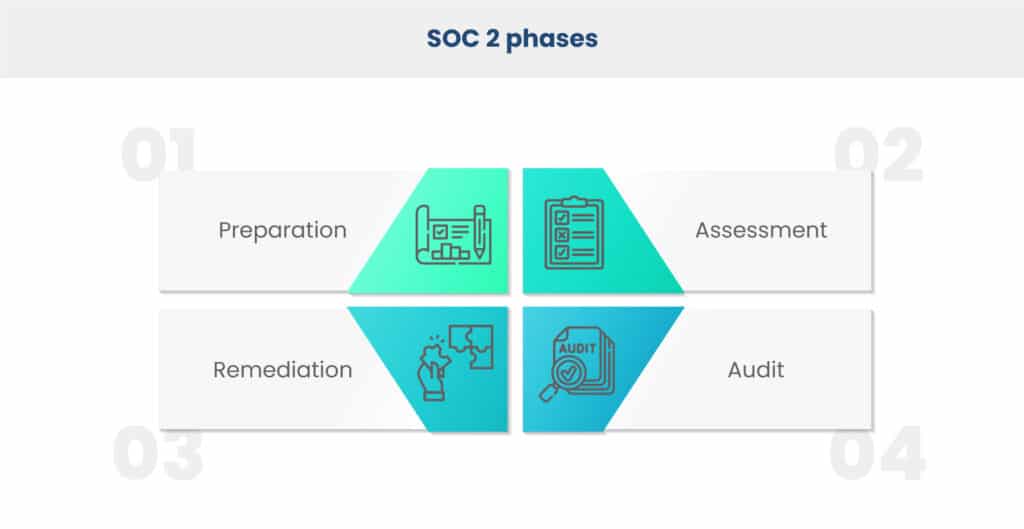
The compliance process involves several key phases, such as preparation, assessment, remediation, and the final audit.
While timelines for each stage can vary, the entire process usually takes between six and twelve months to complete.
SOC 2 Compliance: Steps And Timeline
Let’s take a look at the steps involved in a SOC 2 compliance process and the time each step takes in a little more detail.
The timelines provided are approximate and may vary based on your organization’s size, complexity, and readiness level.
Step 1: Assess Your Organization’s Needs and Scope (Timeline: 1-2 weeks)
Identify the scope of the SOC 2 compliance assessment, including the systems, processes, and data to be evaluated.
Determine which of the five core principles (security, availability, processing integrity, confidentiality, and privacy) are relevant to your organization.
This initial phase sets the foundation for the entire compliance process and involves several crucial activities.
Let’s take a look at some of them:
Define Compliance Objectives: Clearly articulate the objectives you aim to achieve through SOC 2 compliance. Understand the specific reasons behind seeking compliance and how it aligns with your organization’s overall goals and values.
Identify Systems and Data: Take stock of the systems, applications, and data that are subject to the SOC 2 assessment. This includes both internal and external-facing systems that handle customer data or support critical operations.
Select Relevant SOC 2 Principles: Determine which of the five core SOC 2 principles (security, availability, processing integrity, confidentiality, and privacy) are applicable to your organization’s business operations and customer data.
Assess Compliance Readiness: Evaluate your organization’s current state of compliance readiness. Identify existing controls and practices that align with SOC 2 principles and pinpoint potential gaps that require attention.
Establish Compliance Scope: Define the scope of the SOC 2 assessment to focus efforts and resources effectively. This involves deciding which business units, departments, or processes fall under the compliance evaluation.
Engage Key Stakeholders: Collaboration among key stakeholders is vital during this step. Engage leaders from IT, legal, security, and relevant departments to gain a comprehensive understanding of compliance requirements and potential challenges.
Review Legal and Regulatory Requirements: Familiarize yourself with the legal and regulatory obligations your organization must meet in addition to SOC 2. This ensures that compliance efforts address all relevant standards.
Plan the Compliance Journey: Based on the assessment results, create a detailed SOC 2 project plan outlining the timeline, resource allocation, and responsibilities for each phase of the compliance process.
By conducting a thorough assessment, you gain a clear understanding of your organization’s compliance needs and set realistic expectations for the entire SOC 2 compliance journey.
This foundational step provides crucial insights that guide subsequent actions. This helps ensure that your organization is well-prepared to embark on a successful SOC 2 compliance endeavor.
Step 2: Conduct a Risk Assessment (Timeline: 2-4 weeks)
After defining the scope and objectives in Step 1, the next crucial phase in the SOC 2 compliance journey is conducting a thorough risk assessment.
The risk assessment process helps identify potential vulnerabilities, threats, and risks that could impact your organization’s ability to achieve SOC 2 compliance.
Here’s a detailed look at the activities involved:
Identify Data and Asset Inventory: Begin by cataloging all critical data assets, systems, applications, and IT infrastructure that play a role in processing or storing customer data. This inventory serves as a foundation for risk identification.
Analyze Threat Sources: Assess potential threat sources, such as cyberattacks, data breaches, internal security incidents, natural disasters, and operational disruptions. Understanding these threat vectors helps prioritize risk management efforts.
Evaluate Vulnerabilities: Identify weaknesses and vulnerabilities within your organization’s IT infrastructure, processes, and controls. These vulnerabilities can expose sensitive data to potential threats and call for prompt mitigation.
Assess Impact and Likelihood: Evaluate the potential impact and likelihood of risks occurring. Determine the potential consequences of a risk event, such as financial losses, reputational damage, or legal repercussions.
Assign Risk Levels: Assign risk levels to each identified risk based on its impact and likelihood. Categorize risks as high, medium, or low to prioritize subsequent risk mitigation efforts.
Develop Risk Mitigation Strategies: Develop risk mitigation strategies tailored to address each identified risk. These strategies may include implementing additional security controls, enhancing data encryption, or implementing redundancies in critical systems.
Prioritize Risk Remediation: Based on the risk levels and potential impact, prioritize risk remediation efforts. Focus on addressing high-risk areas first to minimize the organization’s exposure to significant threats.
Monitor and Review: Implement continuous monitoring and periodic reviews of the risk landscape to ensure that emerging threats are promptly addressed and that risk mitigation strategies remain effective.
By understanding vulnerabilities and assessing risks, you can develop targeted strategies to mitigate those risks, strengthen internal controls, and ensure a robust foundation for SOC 2 compliance.
This proactive approach reduces the likelihood of security incidents and enhances your organization’s overall risk management posture, bolstering your credibility and trust with clients and stakeholders.
Establishing robust internal controls is a critical step in achieving SOC 2 compliance.
Internal controls are the policies, procedures, and practices put in place to safeguard sensitive data, maintain operational integrity, and ensure compliance with SOC 2 principles.
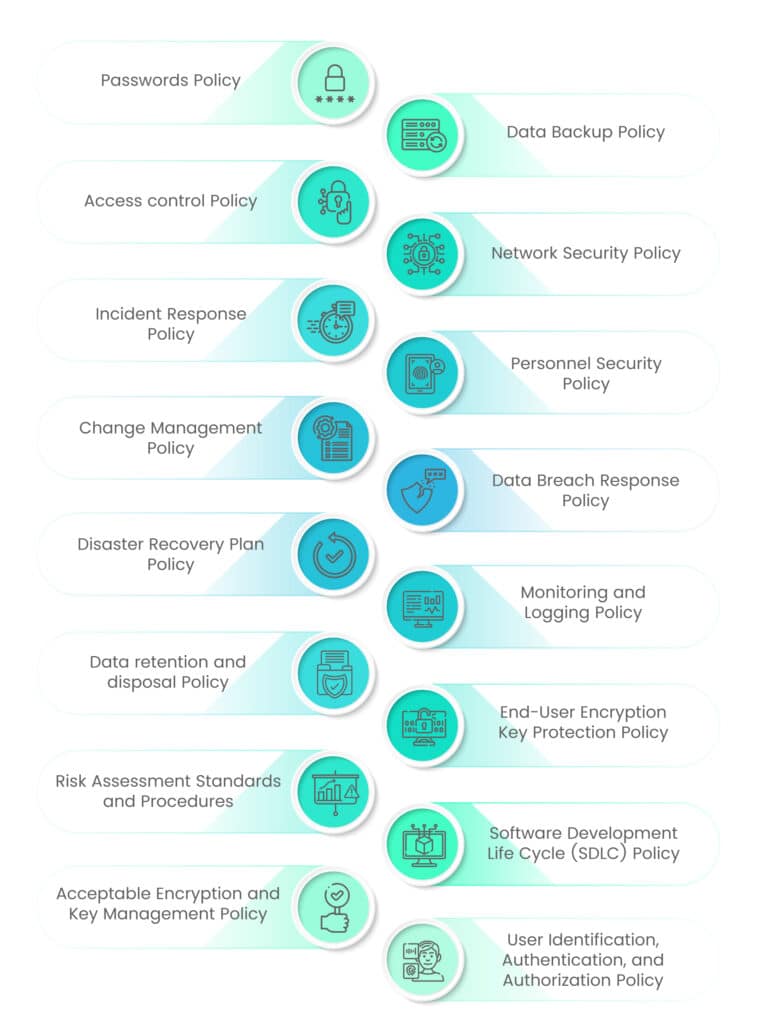
Ensure that you implement suitable controls and develop and document policies and procedures for each control. Update your policies, as it simplifies and streamlines the auditor’s work.
Identify Key Controls: Begin by identifying the key controls relevant to the selected SOC 2 principles. These controls will serve as the foundation for your organization’s data security and risk management efforts.
Develop Policies and Procedures: Once you have identified the key controls, develop clear and comprehensive policies and procedures outlining how these controls will be implemented and maintained. These documents will serve as a guide for employees and stakeholders, ensuring consistency and adherence to SOC 2 requirements.
Train Employees: Proper training is essential to ensure that all employees understand their roles and responsibilities in adhering to the established internal controls. Training sessions should cover data security best practices, incident response protocols, and the importance of maintaining compliance.
Implement Access Controls: Access controls limit access to sensitive data only to authorized personnel. Implementing access controls ensures that information is accessible to the right people while safeguarding it from unauthorized users.
Data Encryption: Encrypting data both in transit and at rest adds an extra layer of security to protect sensitive information from unauthorized access. Implement encryption measures based on industry best practices and compliance requirements.
Incident Response Planning: Develop a comprehensive incident response plan to address potential security incidents effectively. The plan should include steps for identifying, containing, and mitigating security breaches to minimize their impact on the organization.
Regular Monitoring and Auditing: Regularly monitor and audit internal controls to ensure they remain effective and compliant. Audits help identify any deviations from established controls, allowing for prompt corrective action.
Continuous Improvement: Internal controls should be subject to continuous improvement based on emerging threats, technological advancements, and changes in business processes. Regularly review and update controls to address new risks and challenges.
By establishing robust internal controls, your organization can proactively protect sensitive data, demonstrate compliance with SOC 2 principles, and foster a culture of security and accountability.
These controls form the backbone of your SOC 2 compliance journey, setting the stage for a successful SOC audit and providing assurance of data protection to clients and stakeholders.
If controls are insufficient or not present to demonstrate compliance with a selected Trust Service Criteria (TSC), you will have to take remedial actions to demonstrate compliance.
Conducting readiness assessments is a pivotal step in preparing your organization for the official SOC 2 audit.
These assessments involve conducting mock SOC audits or evaluations of your internal controls, processes, and documentation. The goal is to identify any gaps or deficiencies that you need to address before the official audit.
Here’s a more detailed explanation of this critical step:
Engage Internal and External Auditors: Collaborate with internal audit teams or engage external auditors to conduct readiness assessments. These auditors will play a crucial role in objectively evaluating your organization’s compliance readiness.
Evaluate Internal Controls: Assess the effectiveness of your organization’s internal controls in meeting the selected SOC 2 principles. The evaluation should cover areas such as data security, access controls, change management, incident response, and data privacy.
Identify Compliance Gaps: Through the assessment process, identify any gaps or weaknesses in your current controls and practices that could hinder SOC 2 compliance. Pinpoint areas that require improvement or additional measures.
Review Policies and Procedures: Evaluate the adequacy and comprehensiveness of your organization’s policies and procedures related to data security and compliance. Ensure that they align with SOC 2 requirements and industry best practices.
Conduct Interviews and Testing: Conduct interviews with key personnel and perform testing of selected controls to validate their effectiveness. This process helps uncover potential compliance issues and provides valuable insights for improvement.
This step builds confidence in your organization’s commitment to data security and compliance. This sets the stage for a successful SOC 2 audit and reinforces trust with clients and stakeholders.
Step 5: Remediate and Improve (Timeline: Ongoing)
Use the results of the readiness assessments to drive continuous improvement in your organization’s compliance efforts. Regularly review and update internal controls, policies, and procedures to align with emerging risks and industry standards.
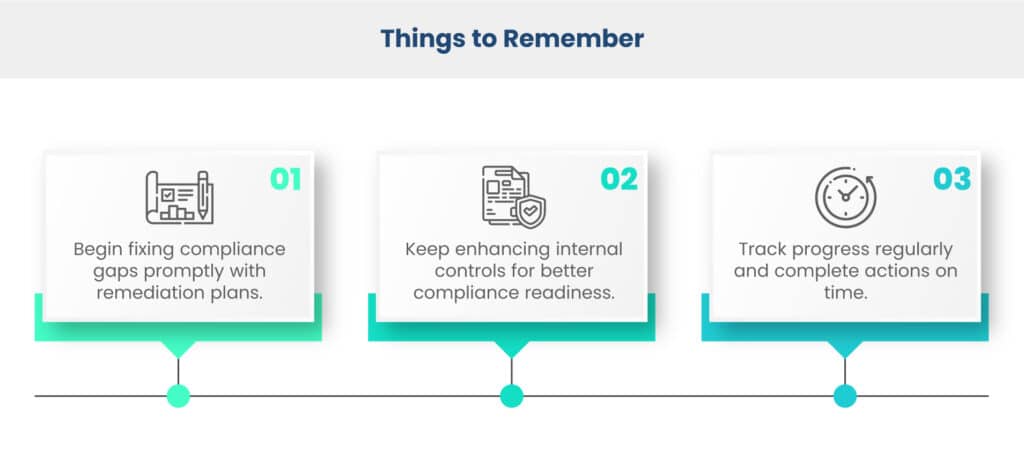
Based on the assessment findings, develop remediation plans to address identified gaps and deficiencies. Each plan should outline specific action items, responsibilities, and target completion dates.
Step 6: Engage a Third-Party Auditor (Timeline: 4-6 weeks)
Discuss the audit objectives, scope, and timeline with the auditor.
Selecting an auditor is the most challenging and important step. While selecting an auditor, keep the following checklist in mind:
Auditing firm reputation
Experience
Communication style
Knowledge of tech stack
Price
The auditor should provide you with all the tools, such as the audit checklist and work schedule.
Scrut can help you identify the ‘best-fit’ auditor for your requirements within a couple of days. We have a vast network of auditors with in-depth experience conducting SOC 2 audits across geographies and industries.
Step 7: Conduct the SOC 2 Audit (Timeline: 6-12 weeks)
When the above checklist is done, the auditor starts the audit. The auditor will begin gathering and examining audit evidence for the SOC 2 report.
For the uninitiated, evidence is everything that you hand over to the auditor for evaluation to prove system controls are in place to protect the data. It includes documents like spreadsheets, emails, and screenshots of access control metrics. Collecting evidence for various artifact controls across TSCs can be overwhelming.
This is the most time-consuming step in the SOC 2 compliance audit process and usually takes 6-8 weeks. However, with Scrut, you can automate 85% of evidence collection and complete the process in 2-3 weeks.
Once you’ve handed in the evidence, the third-party auditor evaluates your organization’s compliance with the selected principles. The SOC audit includes testing controls, reviewing documentation, and conducting interviews with key personnel.
The audit process involves a substantial amount of work, often stretching over several months. However, there’s a more efficient option. With Scrut, you can complete the entire audit process in just 6-8 weeks. This means you can achieve compliance without the extended timeline that traditional methods often require.
The auditor provides a SOC 2 report, detailing the assessment’s results and your organization’s compliance status.
Depending on the type of report (Type I or Type II), the report may cover specific dates or a period of time.
Here’s a brief overview of this step:
Auditor’s Evaluation: The independent auditor evaluates your organization’s internal controls, processes, and practices based on the selected SOC 2 principles.
SOC 2 Report Types: Depending on the engagement, the auditor issues either a SOC 2 Type I or Type II report. The Type I report covers the design and implementation of controls as of a specific date, while the Type II report includes the operational effectiveness of controls over a defined period.
Compliance Assessment: The SOC 2 report outlines the auditor’s assessment of your organization’s compliance status, including any identified deficiencies or areas for improvement.
Audit Findings: The report highlights any non-compliance issues or control deficiencies discovered during the SOC audit. These findings are essential for your organization’s awareness and future remediation efforts.
Management Response: Your organization may provide a management response to address the audit findings, acknowledging corrective actions taken or explaining plans for remediation.
Distribution of the Report: Once the SOC 2 report is finalized, the auditor will distribute copies to your organization and other relevant parties, such as customers and business partners, as requested.
Utilization of the Report: The SOC 2 report serves as a valuable tool for your organization to demonstrate compliance with SOC 2 principles to clients and stakeholders. It enhances trust and confidence in your data security practices.
Continuous Improvement: Use the SOC 2 report findings as a roadmap for continuous improvement. Address any identified deficiencies promptly and proactively enhance your internal controls to strengthen data security and compliance.
Receiving the SOC 2 report is a significant milestone in the compliance journey. It provides valuable insights into your organization’s compliance status and helps drive ongoing efforts to maintain data security, improve controls, and meet the expectations of your clients and business partners.
Step 9: Address any Findings (Timeline: Ongoing)
Upon receiving the SOC 2 report and audit findings, the crucial next step is to address any identified deficiencies or non-compliance issues.
This ongoing process involves promptly responding to the SOC audit findings and taking corrective actions to rectify any shortcomings.
As part of the remediation efforts, your organization should:
Prioritize Remediation: Prioritize addressing high-priority findings first to mitigate significant risks and enhance data security and compliance posture.
Develop Corrective Action Plans: Develop comprehensive corrective action plans for each finding, outlining specific steps, responsibilities, and timelines for implementation.
Collaborate with Stakeholders: Engage relevant stakeholders, including IT, legal, and compliance teams, to ensure a collaborative and coordinated approach to remediation.
Monitor Progress: Regularly monitor the progress of corrective actions to track their implementation and ensure timely completion.
Document Remediation Efforts: Thoroughly document all remediation efforts, including the steps taken and evidence of their effectiveness.
Validate Effectiveness: Verify the effectiveness of remediation efforts through testing and validation processes.
This ongoing process of addressing SOC audit findings reinforces compliance excellence, fosters a culture of accountability, and instills confidence in clients and stakeholders that their data is being protected and managed in accordance with SOC 2 principles.
Step 10: Renewal and Ongoing Compliance (Timeline: Annually)
SOC 2 compliance is a dynamic process that requires continuous attention to ensure data security and privacy are well maintained. Plan for regular SOC 2 audits and renew your compliance annually.
Also, make sure you continuously monitor and update internal controls to adapt to changing risks and requirements. Constant monitoring will help you assess any loopholes you may have in your security controls.
SOC 2 Type 2
SOC 2 Type 2 takes longer than SOC 2 Type 1. You will need to complete all the above steps mentioned in SOC 2 Type 1.
A few auditors will let you start the process from scratch, while Scrut helps you continue the process from SOC 2 Type 1 to achieve SOC 2 Type 2. This way, the process becomes much easier and less expensive.
SOC 2 Compliance Challenges and How to Overcome Them
Navigating SOC 2 compliance can be challenging. Common hurdles include resource constraints, complex IT infrastructure, and adapting to evolving regulations.
Resource constraints: To overcome resource constraints, collaborate closely with leadership to prioritize compliance efforts and secure adequate resources. This ensures that the necessary support and commitment are available to achieve compliance objectives effectively.
Complex infrastructure: Streamlining processes, centralizing controls, and ensuring uniformity across all locations are crucial steps to navigate the complexities of diverse IT setups and multiple operational sites.
Evolving Regulations: Remaining proactive in monitoring regulatory updates and promptly implementing necessary changes is essential to staying compliant with evolving requirements.
You may also learn from successful SOC 2 compliance stories where organizations achieved timely compliance through effective planning, collaboration, and a proactive approach. By examining real-life examples, you can gain valuable insights into best practices and potential pitfalls to avoid.
How Long Does It Take To Get A SOC 2 Certification?
In a nutshell, a SOC 2 Type 1 audit will take 3 to 4 months, and a SOC 2 Type 2 audit will take 7-8 months.
SOC 2 Type 2 controls are described and evaluated for a minimum of 6 months to check if the controls are functioning as defined by management. And that’s why SOC 2 Type 2 reports consume more time than SOC 2 Type 1 reports.
With Scrut, you can get SOC 2 certification quickly and cost-effectively.
Wrapping Up
Planning carefully, working together, and being aware of the timeframe are all necessary for navigating SOC 2 compliance.
By taking into account the factors that influence the timeline and implementing efficient strategies, your organization can successfully achieve SOC 2 compliance and build a strong foundation for data security and customer trust.
Frequently Asked Questions
1. What Is The Typical Duration For Achieving SOC 2 Compliance?
The typical duration for achieving SOC 2 compliance varies depending on the organization’s size, complexity, and readiness level. Generally, the process takes between 6 and 12 months. Smaller and less complex organizations may complete the compliance journey closer to the 6-month mark, while larger organizations might require the full 12 months or even longer.
2. What Factors Influence The SOC 2 Compliance Timeline?
Several factors influence the SOC 2 compliance timeline. Organization size plays a role, as larger organizations may have more systems and processes to assess, leading to a longer timeline. The organization’s readiness level also impacts the duration; those with well-established security practices might complete the process more quickly. Additionally, association with third-party vendors can affect the timeline, as their compliance status and cooperation can either expedite or slow down the overall process.
3. What Is The Estimated Timeline For Each SOC 2 Phase?
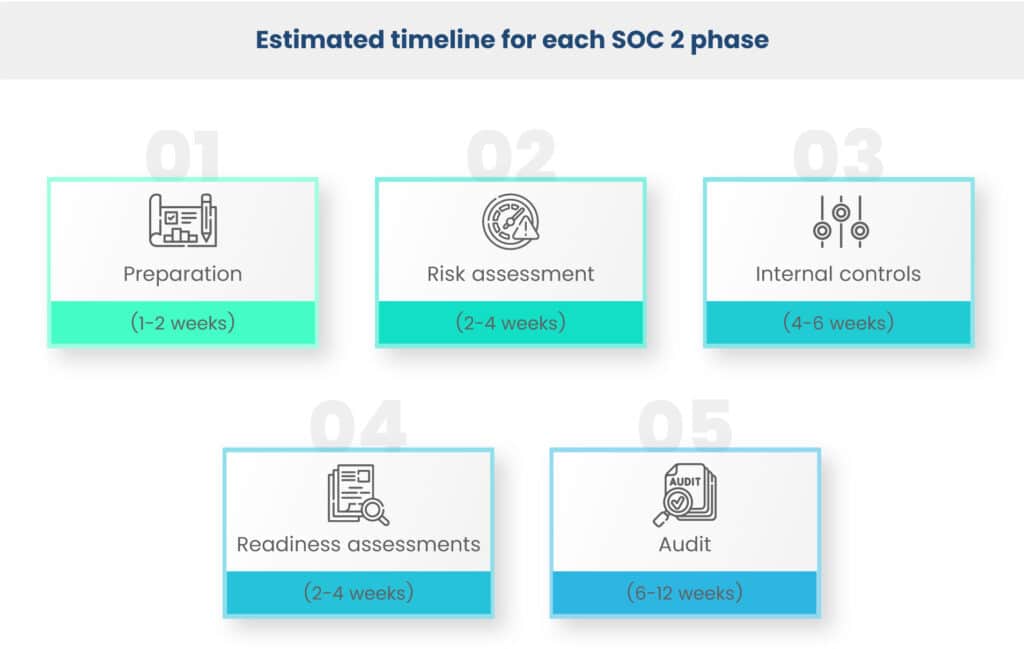
The estimated timeline for each SOC 2 phase can vary based on the organization’s preparedness and resource allocation. – The soc 2 audit preparation phase, which includes identifying the scope and objectives, typically takes around 1 to 2 weeks. – Conducting a comprehensive risk assessment may require 2 to 4 weeks, while establishing internal controls can take 4 to 6 weeks. – Readiness assessments, which involve mock audits to identify gaps, generally last 2 to 4 weeks. – The SOC 2 audit itself is the most time-consuming phase, often spanning 6 to 12 weeks, depending on the scope and complexity of the assessment.
4. What Strategies May Be Used To Expedite The SOC 2 Compliance Process?
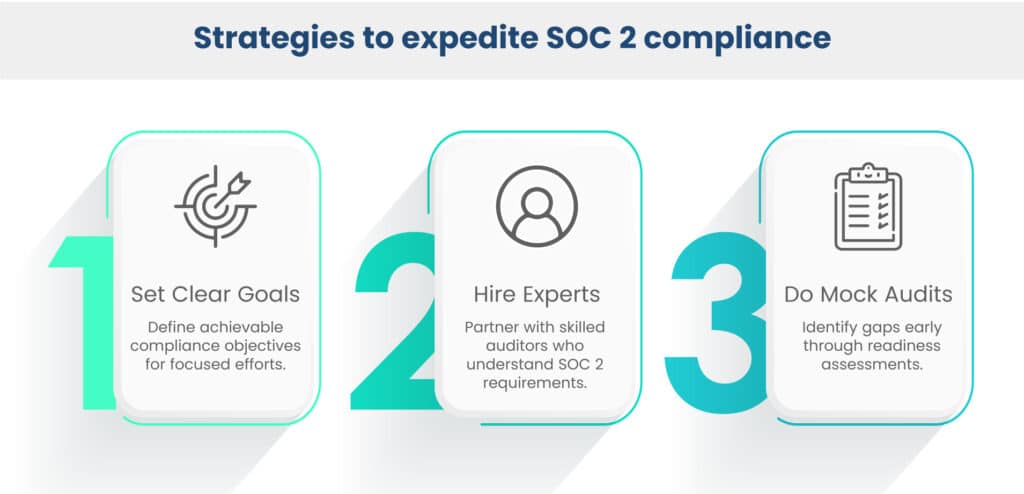
Organizations can use a number of strategies to speed up the SOC 2 compliance process. Establishing a structured plan early on and defining clear objectives ensures focused efforts. Hiring a capable audit team with knowledge of SOC 2 requirements and compliance can speed things up and prevent delays. Organizations can spot compliance gaps and address problems proactively by conducting readiness assessments or mock audits early on.
5. What Are The Common Challenges Encountered During Soc 2 Compliance?
Common challenges encountered during SOC 2 compliance include resource constraints, complex IT infrastructure, and adapting to evolving regulatory requirements. Organizations can overcome these challenges through careful planning and collaboration with leadership. Securing adequate resources and budget allocation is crucial to supporting the compliance journey effectively.
15 Oct 2022
4minutes
Authored by
Aayush Ghosh Choudhary
Co-founder & CEO at Scrut
GDPR brings about a global shift in privacy paradigm
In the past few decades, the conversation around privacy protection has significantly matured, ever since Edward Snowden blew the whistle on the USA government’s illegal information acquisition of the US and foreign citizens. Public anxiety surrounding privacy infringement quickly became a leading issue in the global geopolitical landscape.
General Data Protection Regulation (GDPR) came out as a possible solution to protect the privacy of EU residents. This legislation tightened the grip around the personal information of the European data subjects, such as medical records, race, religion, sexual orientation, and/or data concerning past criminal history sheets, etc.
Scope and penalties of GDPR
GDPR’s official document lays down the scope of the regulations and penalties for non-compliance. It takes utmost care to point out the necessary GDPR guidelines to adhere to. Here we provide a summary of all the guidelines and regulations for your better understanding.
GDPR does not discriminate between companies from the EU or outside.
GDPR covers an EU data subject, i.e., an identifiable natural person in the EU. For example, GDPR covers both an American Tourist and an EU citizen in any EU country.
GDPR applies to any entity that deals with user data of EU residents, irrespective of where the company location is.
Non-compliance, such as not having the consent of the data subjects to process data or violating GDPR’s Privacy by Design concepts, imposes hefty fines and penalties.
Non-compliance can lead to a company incurring up to 4% of annual global turnover from the preceding year or €20 Million, whichever is higher.
The cloud-based companies are also subject to GDPR articles, that is, the rules apply to controllers and processors.
Privacy: A new basic human right
A mere look through the official GDPR document is enough to state that it takes privacy very seriously. In the GDPR document Article 8, the legislation compared data privacy with basic human rights. It has never been done before and intends to lay the groundwork for data privacy in this century. This approach to privacy shows a paradigm shift that GDPR intends to bring, to provide more power to the users in deciding if a company should use their data and how to use it.
Business impact on organizations
Data is the new oil. It is the new precious resource that superpowers fight for. It is particularly true for SaaS companies, as the right data and the ability to use it effectively enables companies to capture more revenue, provide competitive services, and improve the overall user experience across the product. This is why GDPR seems notorious legislation hindering a company’s business. But after inspecting closely, one may see that this presents an opportunity to organizations.
No organization would want to violate Human Rights by accessing or using user data without consent. GDPR nudges companies to fortify their data processing structures to ensure that data does not get leaked. These shifts will push companies to train their staff on the principles of Privacy by Design and Privacy by Default (Art. 25) and require transparency between controllers and processors in handling data.
While this can come off as a liability, these investments will pay off in the long term. As per Cisco Consumer Privacy Survey 2021, 86% of the participants cared about their data privacy. Meanwhile, 79% said that they are willing to take measures to protect it. Thus, a company with a steadfast and active approach to the data privacy policy is bound to gain the trust of its stakeholders. Trust is key in trade. It will increase sales in the long term and elevate the brand value of the company.
Why GDPR?
GDPR is essential for companies looking to disrupt EU markets. Without the EU, even B2B companies operating in the EU won’t give you an audience as no company wants to associate with a third-party entity that’s data processing policies may be compromised. Thus, GDPR compliance is a certificate of assurance that boasts of your mature outlook toward privacy protection. This will also build a positive brand image of your company in the eyes of your target consumers. No other compliance standard positively impacts the company as GDPR; perhaps that is why it is the hardest to achieve.
Genesis of privacy-oriented industries
In a free market economy, regulatory changes are typically accompanied by solutions to navigate them actively. That is where infosec automation comes into the picture. Companies dedicated to ensuring that other companies meet the GDPR standards and become compliant will lead the way for the future of data privacy and information security. In contrast, there are several dozens of such companies that might pop up as a result of the GDPR rollout. There are a few factors that will help you determine their effectiveness.
The company policies should be properly aligned with the industry standards.
They must have key assessment tools, such as Privacy Impact Assessment (PIA), to adequately document data processing records using a risk assessment-based approach.
They must also adhere to IT compliance requirements. Data Mapping should be a key part of their services and other significant IT tools.
Consistent monitoring of internal controls to detect vulnerabilities will eventually lead to the prevention of data breaches or non-compliance.
Conclusion
These mistakes or exceptions can occur at any stage; the only way any organisation can aim to control them is by following the right security protocols and ensuring that all their employees are clinically trained with the right information. Constant monitoring will help you assess any loopholes you may have in your security controls.
Scrut Automation is an innovative and radically simple governance, risk, and compliance automation platform for growing startups and mid-market enterprises. With Scrut, compliance teams can reduce ~70% of their manual effort in continuously maintaining compliance towards SOC 2, ISO 27001, GDPR, PCI DSS, HIPAA, and CCPA.Schedule your demo today to see how it works.
14 Oct 2022
11minutes
Authored by
Aayush Ghosh Choudhary
Co-founder & CEO at Scrut
Demystifying SOC 2 audit exceptions: Challenges and solutions
When organizations undergo SOC 2 audits, they aim to demonstrate their commitment to security, availability, processing integrity, confidentiality, and privacy.
SOC 2 reports provide valuable insights into an organization’s control environment, assuring clients and partners that their data and information systems are in safe hands.
However, while SOC 2 audits strive to validate a company’s compliance, it’s not uncommon to encounter exceptions during the process. These exceptions are instances where the organization’s controls or practices don’t fully align with the established SOC 2 criteria. Understanding and addressing these exceptions is crucial to achieving a successful audit.
What are SOC 2 audit exceptions?
SOC 2 audit exceptions are essentially instances of non-compliance. They can arise when certain controls or practices within an organization’s information security framework don’t meet the defined criteria for security, availability, processing integrity, confidentiality, or privacy.
These SOC 2 exceptions can manifest in various ways, such as unmitigated vulnerabilities, incomplete documentation, or lapses in control implementation. They serve as indicators that specific aspects of the organization’s security posture need attention and improvement.
While audit exceptions might sound alarming, they’re not unusual. In fact, many organizations encounter exceptions during their first SOC 2 audit. The key is to address these exceptions effectively, demonstrating a commitment to continuous improvement in information security practices.
In this blog, we’ll delve into the world of SOC 2 audit exceptions, exploring their types, common causes, and best practices for addressing them.
Types of SOC 2 audit exceptions
During a SOC 2 audit, various exceptions or deviations from expected controls may surface. It’s essential to understand these exceptions in detail, as they help pinpoint vulnerabilities and compliance shortcomings. Common types of SOC 2 audit exceptions include:
Control gaps
A control gap occurs when there is a failure to implement a control that is necessary for meeting the selected trust service criteria. This could be due to oversight or a misunderstanding of the control’s requirements.
Operating ineffectiveness
Sometimes, a control may be in place, but it proves ineffective during the audit. This could be due to poor execution or a lack of documented evidence demonstrating control effectiveness.
Non-compliance with policies
Audit exceptions may arise when an organization fails to adhere to its internal policies, procedures, or standards related to information security or privacy.
Data breach incidents
The discovery of any data breach or security incident that affects the confidentiality, integrity, or availability of sensitive data can lead to exceptions. This is a severe exception that requires immediate attention.
Insufficient documentation
Incomplete or missing documentation is a common exception. Without proper records, it’s challenging to demonstrate the implementation and effectiveness of controls.
Third-party vendor non-compliance
If third-party vendors or service providers who play a role in the organization’s controls are not compliant with SOC 2 standards, this can result in exceptions for the audited entity.
Employee negligence
Sometimes, SOC 2 exceptions are tied to employee actions, such as mishandling data, violating policies, or neglecting their responsibilities related to security.
Understanding the specific type of exception encountered is crucial, as it guides the corrective actions needed for remediation. Organizations should address these exceptions systematically, with a focus on both short-term mitigation and long-term improvements in their control environment.
Common causes of SOC 2 audit exceptions
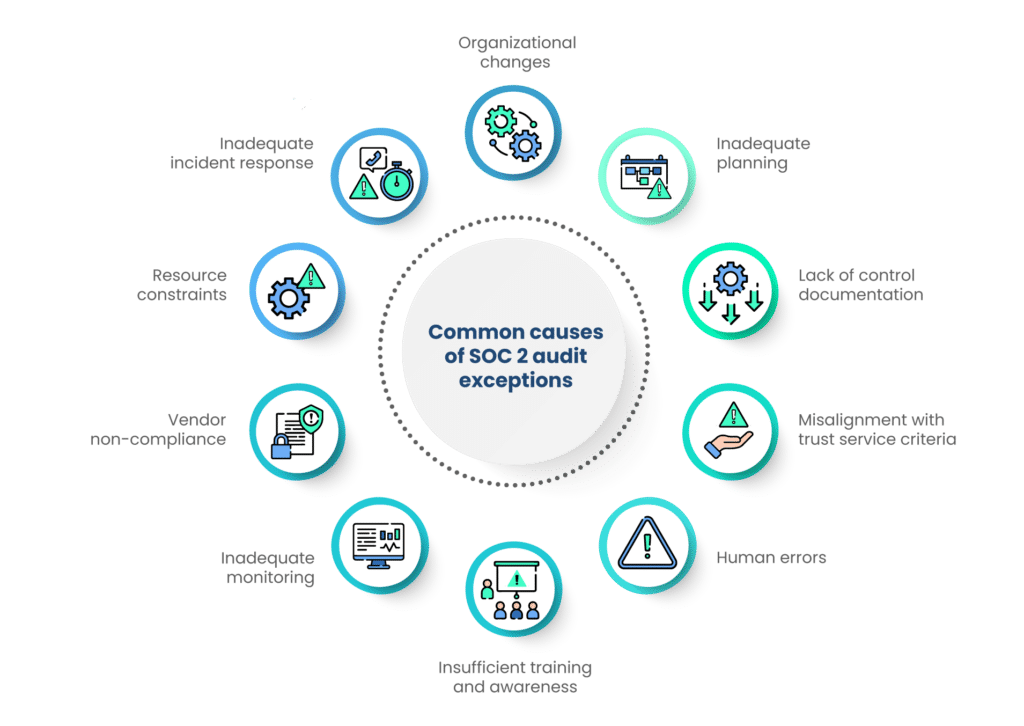
Despite best efforts, SOC 2 audit exceptions can arise due to various factors. Understanding the common causes of these exceptions is essential for organizations looking to improve their audit performance:
1. Inadequate planning
Failure to adequately plan for the SOC 2 audit is a frequent cause of exceptions. It includes issues like selecting the wrong trust service criteria, insufficiently preparing staff, or not establishing a well-defined audit timeline.
2. Lack of control documentation
Incomplete, outdated, or inaccurate documentation of controls is a significant cause of audit exceptions. Auditors rely on these documents to assess the effectiveness of controls, so any discrepancies can lead to exceptions.
3. Misalignment with trust service criteria
If an organization’s control measures don’t align with the selected trust service criteria, exceptions can occur. It’s essential to ensure that controls are tailored to address the specific criteria they are intended to cover.
4. Human errors
Human errors, such as data entry mistakes or policy violations, can trigger exceptions. These errors may be unintentional, but they still affect the audit outcome.
5. Insufficient training and awareness
Failure to train employees adequately or raise awareness about the importance of SOC 2 compliance can result in exceptions. Employees need to understand their roles in maintaining controls and complying with policies.
6. Inadequate monitoring
Proactive monitoring and continuous testing of controls are vital for SOC 2 compliance. Exceptions may result if organizations fail to monitor their controls effectively.
7. Vendor non-compliance
When third-party vendors or service providers integral to an organization’s controls do not meet SOC 2 compliance standards, exceptions can occur.
8. Resource constraints
Limited resources, whether financial or human, can impact the effectiveness of control measures, potentially leading to exceptions.
9. Inadequate incident response
Failing to respond promptly and effectively to security incidents or data breaches can result in SOC 2 exceptions, as it demonstrates an organization’s inability to manage risks effectively.
10. Organizational changes
If an organization undergoes significant changes, such as mergers, acquisitions, or restructuring, it can disrupt existing control measures and lead to exceptions.
By recognizing these common causes, organizations can take proactive measures to address them before an audit, thereby reducing the likelihood of exceptions during the SOC 2 audit process. Addressing these issues often involves enhancing internal processes, strengthening training, and ensuring continuous compliance with policies and standards.
How to prevent SOC 2 audit exceptions
While SOC 2 audits are meticulous, time-consuming processes, and some exceptions may be unavoidable, there are steps your organization can take to minimize the chances of encountering audit exceptions.
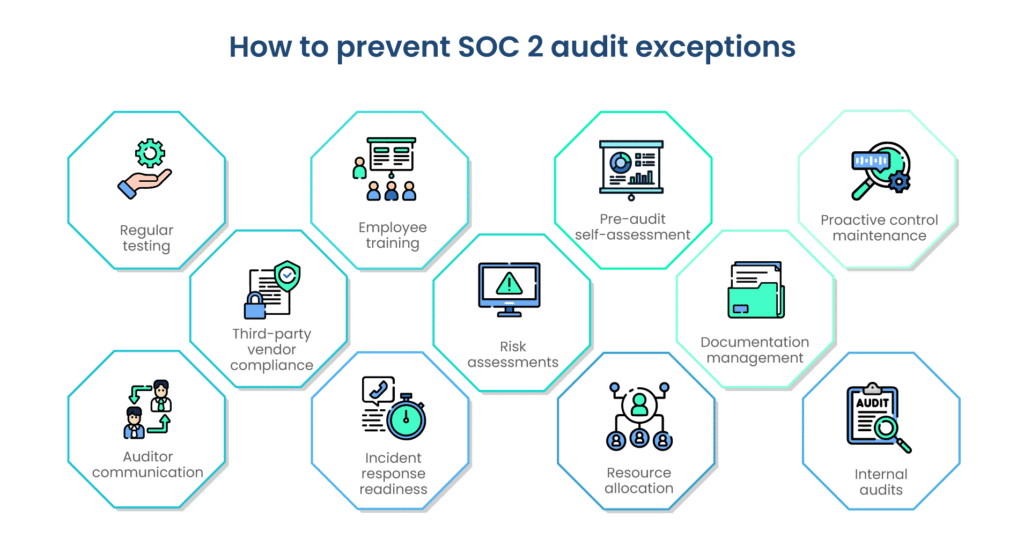
Here are key strategies to help you steer clear of common pitfalls:
1. Proactive control maintenance
Regularly assess and update your control environment. Make control maintenance an ongoing process rather than a last-minute scramble before the audit. This includes ensuring that your control objectives are up-to-date and aligned with trust service criteria.
2. Documentation management
Maintain comprehensive documentation for all your controls, policies, and procedures. Document the details of your control objectives, control activities, and control tests. Regularly review and update these documents to reflect your organization’s current state accurately.
3. Pre-audit self-assessment
Conduct pre-audit self-assessments to identify potential issues before the external audit. These assessments help you uncover weaknesses and areas of non-compliance, allowing you to address them proactively.
4. Risk assessments
Periodically perform risk assessments to identify potential vulnerabilities and threats. These assessments enable you to align your security controls with emerging risks and evolving business practices, reducing the likelihood of unforeseen exceptions during the audit.
5. Employee training
Invest in comprehensive employee training programs. Ensure that your staff is well-versed in your security policies and control procedures. Well-informed employees are better equipped to follow security protocols, reducing the risk of non-compliance due to human errors.
6. Regular testing
Continuously test your controls to verify their effectiveness. This involves both automated and manual testing procedures. Routine testing can identify control deviations, weaknesses, or failures before the external audit.
7. Third-party vendor compliance
If your organization relies on third-party vendors, make sure they adhere to the necessary trust service criteria. Collaborate with vendors to ensure that their services align with your security requirements. Non-compliance from third parties can lead to audit exceptions.
8. Auditor communication
Foster open communication with your audit team throughout the year, not just during audit periods. Keep them informed about changes in your control environment, and seek their guidance when making alterations to ensure they align with trust service criteria.
9. Incident response readiness
Maintain a well-defined incident response plan and ensure that it’s up-to-date. Regularly test the plan to guarantee that your team can respond effectively to security incidents or data breaches.
10. Internal audits
Conduct regular internal audits to evaluate control effectiveness and compliance. Internal audits help you identify and address non-conformities before the external audit, reducing the likelihood of exceptions.
11. Resource allocation
Allocate adequate resources, including budget, staff, and tools, to support your control environment and compliance initiatives. Adequate resources can help maintain a strong control environment and minimize audit exceptions.
By following these proactive strategies and integrating a culture of compliance within your organization, you can significantly reduce the risk of audit exceptions during your SOC 2 audit. Building a robust control environment, keeping records current, and involving employees at every level are key practices that will support a successful audit process.
Addressing SOC 2 audit exceptions
Handling SOC 2 audit exceptions is a crucial step toward ensuring your organization maintains compliance with trust service criteria.
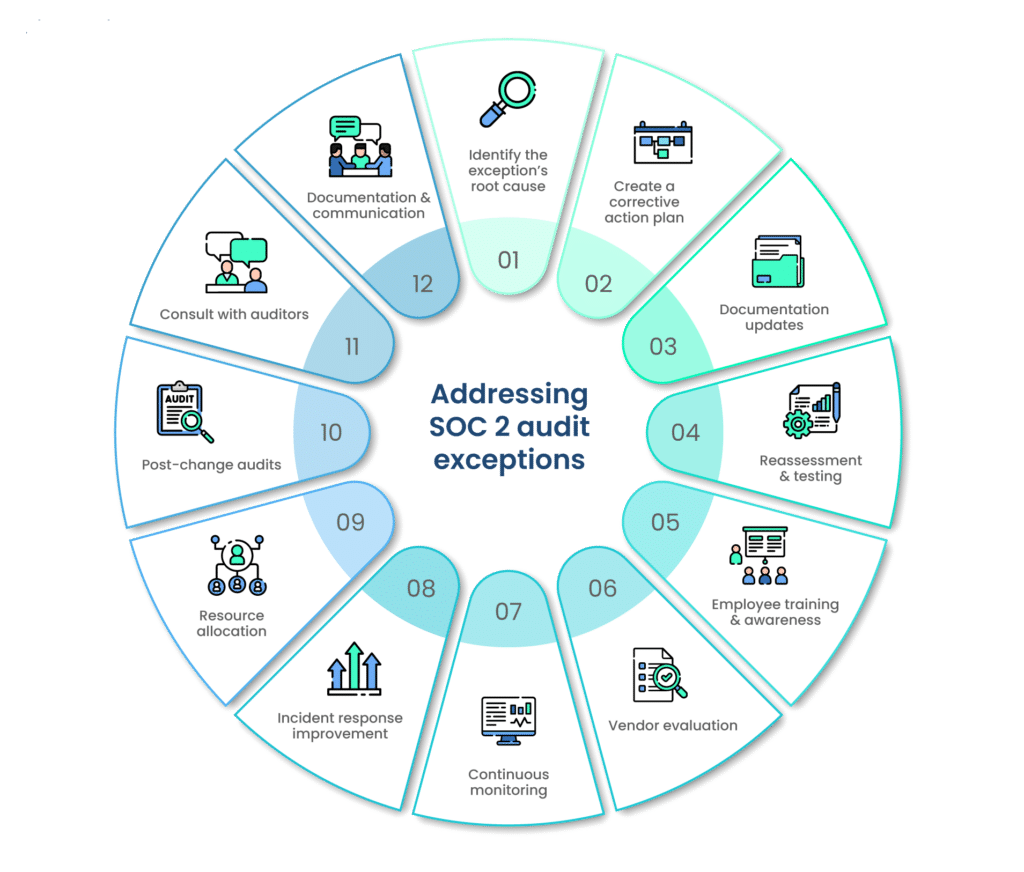
Here’s a more detailed exploration of how to address and resolve SOC 2 audit exceptions:
1. Identify the exception’s root cause
Before initiating any corrective action, it’s essential to pinpoint the root cause of the audit exception. This requires a thorough examination of the audit report and discussions with auditors to gain a comprehensive understanding of what led to the exception.
2. Create a corrective action plan
Once the root cause is identified, it’s time to create a corrective action plan. This plan should outline the specific steps your organization will take to address the exception and ensure compliance with the relevant trust service criteria.
3. Documentation updates
Update your control documentation to align with the trust service criteria and address the exceptions. Ensure that controls are properly documented and any discrepancies are rectified.
4. Reassessment and testing
Reassess the controls that led to the exceptions and conduct additional testing to ensure their effectiveness. This may involve conducting an internal audit of these controls or implementing a third-party audit to validate compliance.
5. Employee training and awareness
If exceptions were caused by employee errors or inadequate training, prioritize training programs and awareness initiatives. Educate your staff about their responsibilities in maintaining controls and complying with policies to prevent future exceptions.
6. Vendor evaluation
If vendor non-compliance contributed to exceptions, engage with your vendors to ensure they meet the necessary SOC 2 compliance standards. Collaborate with them to address compliance gaps and maintain robust control measures.
7. Continuous monitoring
Enhance your organization’s monitoring and testing procedures to ensure that controls remain effective. Implement real-time monitoring systems to promptly identify and address any issues that might lead to exceptions.
8. Incident response improvement
Strengthen your incident response plan and procedures to manage security incidents and data breaches more effectively. This will demonstrate your ability to handle risks adequately.
9. Resource allocation
Address any resource constraints by allocating the necessary funds and personnel to support compliance initiatives. This ensures that your control measures remain robust.
10. Post-change audits
After significant organizational changes, such as mergers or restructuring, conduct post-change audits to validate that control measures remain intact and effective.
11. Consult with auditors
Collaborate with your auditors to gain insights into corrective actions and verify that the exceptions are adequately resolved. Auditors can provide guidance to ensure compliance with trust service criteria.
12. Documentation and communication
Properly document all corrective actions and maintain clear communication with your audit team throughout the resolution process. Transparent communication demonstrates your commitment to resolving exceptions.
Addressing SOC 2 audit exceptions is not merely about rectifying the immediate issue but also involves a commitment to maintaining ongoing compliance. Through diligent effort, organizations can mitigate exceptions, enhance their control measures, and ensure long-term adherence to trust service criteria. This commitment strengthens their data security and boosts customer trust in their services.
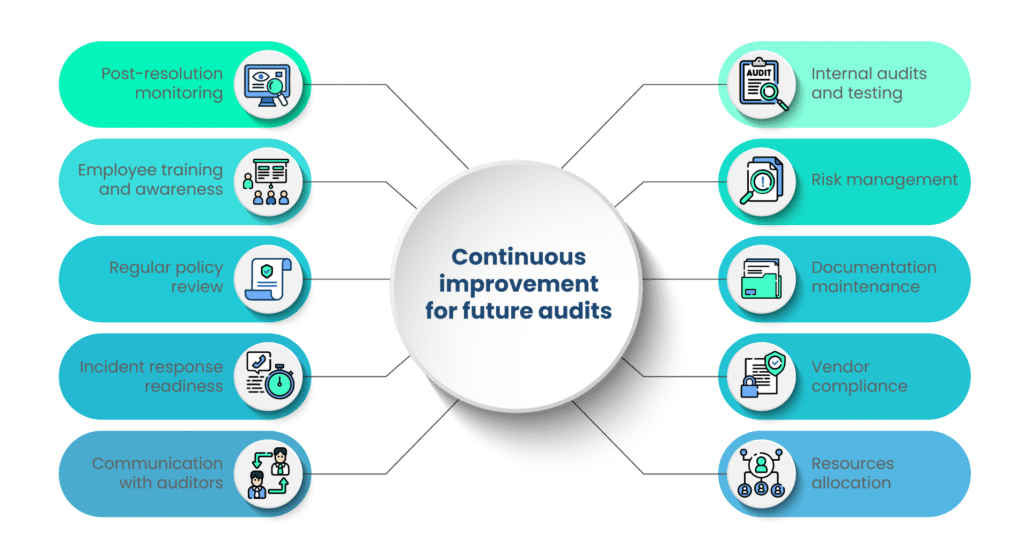
Continuous improvement for future audits
Continual improvement is a fundamental aspect of SOC 2 compliance. Addressing SOC 2 audit exceptions is not just about fixing the current issues; it’s also about fortifying your organization’s ability to meet future audits with ease.
Here’s how to adopt a proactive approach to ensure continuous improvement for upcoming SOC 2 audits:
1. Post-resolution monitoring
After addressing audit exceptions, it’s vital to maintain a robust post-resolution monitoring process. This entails keeping a close eye on the controls and procedures that were the source of exceptions. Regular monitoring helps ensure that these controls remain effective and compliant with trust service criteria.
2. Internal audits and testing
Conduct regular internal audits and testing of your controls and security policies. These audits serve as proactive assessments to identify vulnerabilities, weaknesses, or any deviations from compliance standards. By identifying issues before the external audit, you can rectify them promptly.
3. Employee training and awareness
Employee training and awareness programs play a critical role in maintaining the effectiveness of your controls. Periodic training sessions help keep your staff updated on security policies, ensuring that they are well-prepared to follow established procedures and prevent non-compliance issues.
4. Risk management
A key part of continuous improvement is enhancing your organization’s risk management strategy. This involves identifying and assessing new risks, especially in a rapidly evolving cybersecurity landscape. Adjust your security controls to address emerging threats and vulnerabilities effectively.
5. Regular policy review
Keep your security policies and procedures up to date. Regularly review and update these documents to reflect changes in technology, industry standards, and compliance requirements. Ensure that the policies align with trust service criteria and that employees have access to the latest versions.
6. Documentation maintenance
Documentation is a cornerstone of SOC 2 compliance. Continuously maintain your control documentation, including control descriptions, policies, and procedures. Keep these documents accurate and aligned with your actual practices. Ensure that they are readily accessible to employees and auditors.
7. Incident response readiness
Maintain and improve your incident response plan to effectively manage security incidents and data breaches. Regularly test this plan to ensure that your organization can respond swiftly and efficiently in case of a security breach.
8. Vendor compliance
If your business relies on third-party vendors, ensure that they remain compliant with the trust service criteria. Collaborate with vendors to address any non-compliance issues and mitigate risks related to their services.
9. Communication with auditors
Establish open lines of communication with your audit team. Regularly consult with them to discuss any changes, issues, or improvements related to compliance. Auditors can provide guidance to help your organization align with trust service criteria.
10. Resources allocation
Allocate the necessary resources for ongoing compliance initiatives. Ensure that your organization has the budget, staff, and tools needed to maintain a robust control environment.
By adopting a proactive and continuous improvement approach, your organization can stay ahead of the curve regarding SOC 2 compliance. This not only ensures a smoother audit process but also enhances your overall data security and builds trust with customers and partners.
Continuous improvement for future audits is an ongoing commitment to protecting sensitive information and demonstrating your dedication to maintaining strong control measures.
Wrapping Up
In the dynamic arena of information security and compliance, SOC 2 audit exceptions are common. They serve as valuable feedback mechanisms that help organizations improve their security practices and adhere to compliance standards.
By recognizing these exceptions, taking corrective actions, and committing to ongoing improvement, organizations can enhance their data security and build trust with clients, partners, and stakeholders.
SOC 2 audits are not just about compliance; they are an opportunity to strengthen your security posture, demonstrating your dedication to protecting sensitive information. Embrace the audit process as a means to refine your cybersecurity practices and foster a culture of vigilance. Ultimately, addressing SOC 2 audit exceptions proactively sets the stage for future success in an ever-evolving digital landscape.
With Scrut, compliance teams can minimize the manual work required to maintain compliance for SOC 2 audits. Schedule your demo today to see how it works.
Frequently Asked Questions
1. What are SOC 2 audit exceptions?
SOC 2 audit exceptions are instances where an organization’s controls and processes deviate from the criteria set by the American Institute of Certified Public Accountants (AICPA). These exceptions can occur due to various reasons, including misconfigured controls, lapses in documentation, or non-compliance with security policies.
2. How can organizations proactively identify potential SOC 2 audit exceptions?
To proactively identify potential audit exceptions, organizations should conduct internal assessments and readiness checks. This includes reviewing control frameworks, conducting mock audits, and continuously monitoring and improving their security practices. By addressing issues in advance, businesses can reduce the likelihood of encountering exceptions during the SOC 2 audit.
3. What steps should organizations take when they encounter SOC 2 audit exceptions?
When organizations encounter SOC 2 audit exceptions, they should immediately address the identified issues. This involves investigating the root causes, developing action plans to rectify the exceptions, and enhancing control implementations. Communication with the auditing firm is crucial to ensure that the exceptions are adequately resolved.
4. What are some common types of SOC 2 audit exceptions?
Common types of SOC 2 audit exceptions may include issues related to data protection, access controls, change management, and security incident response. These exceptions vary by industry and organization, but many share similarities in their root causes.
5. How can organizations minimize the impact of SOC 2 audit exceptions and maintain compliance with SOC 2 standards?
Organizations can minimize the impact of SOC 2 audit exceptions by promptly addressing and resolving identified issues. Transparency in communication with the auditing firm is essential. Furthermore, a proactive approach to security and compliance, continuous monitoring, and regular internal audits can help reduce the occurrence of exceptions, safeguard the organization’s reputation, and maintain compliance with SOC 2 standards.
14 Oct 2022
12minutes
Authored by
Aayush Ghosh Choudhary
Co-founder & CEO at Scrut
Debunking five common GDPR compliance myths
In an era defined by data, privacy, and digital transformation, the General Data Protection Regulation (GDPR) stands as a monumental piece of legislation that has fundamentally reshaped the way organizations handle personal data. Adopted by the European Union in 2018, GDPR is not just another set of regulations; it is a paradigm shift in the world of data protection and privacy.
GDPR policy’s significance cannot be overstated. It was designed to empower individuals by giving them greater control over their personal data, and it imposes strict obligations on businesses and organizations that process this data. Whether you’re a multinational corporation, a small business, or even a non-profit, GDPR policy applies if you handle the personal information of residents of the European Union (EU) and the European Economic Area (EEA).
Why does GDPR matter? Simply put, it’s about safeguarding privacy, fostering trust, and ensuring responsible data handling in a digital age where data breaches and misuse have become all too common. GDPR compliance is not just a legal requirement; it’s a reflection of an organization’s commitment to respecting the privacy and rights of individuals.
In this blog post, we will delve into the five common myths about GDPR compliance and the facts behind them that every responsible organization should know.
What is GDPR?
The General Data Protection Regulation (GDPR) is a comprehensive data protection and privacy regulation that was adopted by the European Union (EU) in April 2016 and became fully enforceable on May 25, 2018. GDPR was designed to strengthen and harmonize data protection laws across the EU member states while also addressing the export of personal data outside the EU and European Economic Area (EEA).
What are the rights of data subjects under GDPR?
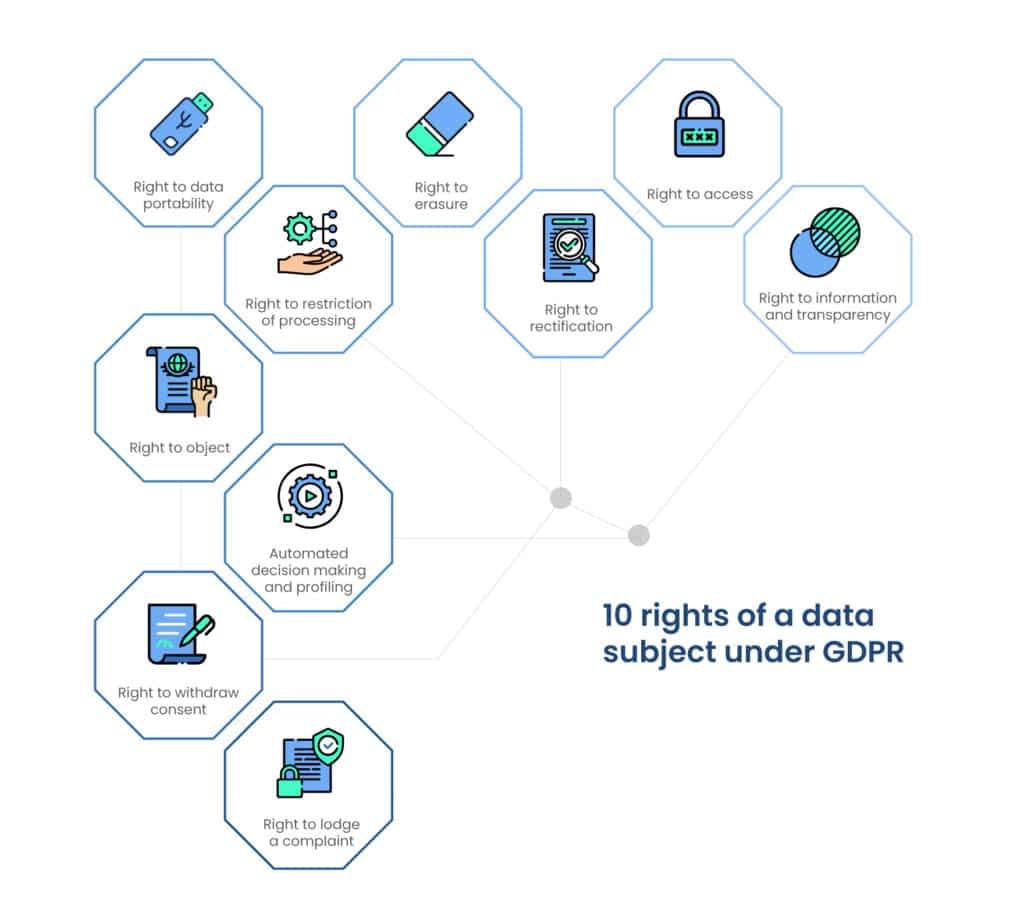
GDPR gives the following GDPR rights to the data subject:
Right to information and transparency: Data subjects have the GDPR right to be informed about how their data is being collected, processed, and for what purposes. Organizations must provide clear and concise privacy notices to explain these details.
Right to access: Data subjects have the GDPR right to request access to their personal data held by an organization. This allows individuals to verify the accuracy of their data and how it is being used.
Right to rectification: If the data subject’s personal data is inaccurate or incomplete, they have the right to request its correction or completion by the GDPR data controller.
Right to erasure (GDPR right to be forgotten): GDPR data subjects have the right to request the deletion of their personal data when certain conditions are met. This GDPR right is not absolute and may be subject to legal obligations or other legitimate reasons for data retention.
Right to restriction of processing: In some cases, GDPR data subjects can request the temporary suspension of data processing, especially when they contest the accuracy of the data or the lawfulness of the processing.
Right to data portability: GDPR data subjects have the right to receive their personal data in a structured, commonly used, and machine-readable format. They can also request the transfer of their data to another data controller where technically feasible.
Right to object: Data subjects can object to the processing of their personal data for specific purposes, such as direct marketing or legitimate interests of the GDPR data controller. The organization must cease processing unless it can demonstrate compelling, legitimate grounds for processing that override the interests, rights, and freedoms of the data subject.
Automated decision-making and profiling: Data subjects have the GDPR right not to be subject to solely automated decisions that significantly affect them unless there are safeguards in place, including the right to human intervention.
Right to withdraw consent: If processing is based on the data subject’s consent, they have the right to withdraw that consent at any time. The withdrawal should not affect the lawfulness of processing based on consent before its withdrawal.
Right to lodge a complaint: Data subjects have the right to lodge a complaint with a data protection authority if they believe their GDPR rights have been violated.
GDPR definition of personal data
The GDPR defines personal data as any information that relates to an identified or identifiable natural person, known as a “data subject.” An identifiable natural person is someone who can be directly or indirectly identified, particularly by reference to an identifier such as a name, an identification number, location data, an online identifier, or one or more factors specific to the physical, physiological, genetic, mental, economic, cultural, or social identity of that natural person.
In essence, personal data encompasses a wide range of information, including but not limited to:
Basic identity information: Names, addresses, identification numbers (e.g., social security or passport numbers), and photographs.
Contact information: Email addresses, phone numbers, and postal addresses.
Online identifiers: IP addresses, device IDs, and cookies when they can be linked to an individual.
Location data: GPS data, mobile tower data, and Wi-Fi access points that can pinpoint a person’s location.
Biometric data: Fingerprints, facial recognition data, and other biometric information.
Health and genetic data: Medical records, genetic information, and health-related data.
Cultural or social data: Information about an individual’s cultural background, religious beliefs, political affiliations, and social media activity.
Financial data: Bank account numbers, credit card information, and financial transactions.
Employment information: Employment history, job titles, and work-related contact information.
Behavioral data: Data related to an individual’s behavior, preferences, and interactions with websites, apps, and services.
It’s important to note that personal data can also include data that, when combined with other information, can lead to the identification of an individual. GDPR places significant emphasis on the protection of personal data and imposes various obligations on organizations that process such data, including obtaining consent, ensuring data security, and providing data subjects with GDPR rights to control their data.
Additionally, GDPR distinguishes between personal data and “special categories of personal data,” which includes sensitive information like racial or ethnic origin, religious beliefs, health data, and more. Processing special categories of personal data is subject to stricter regulations and requirements under GDPR.
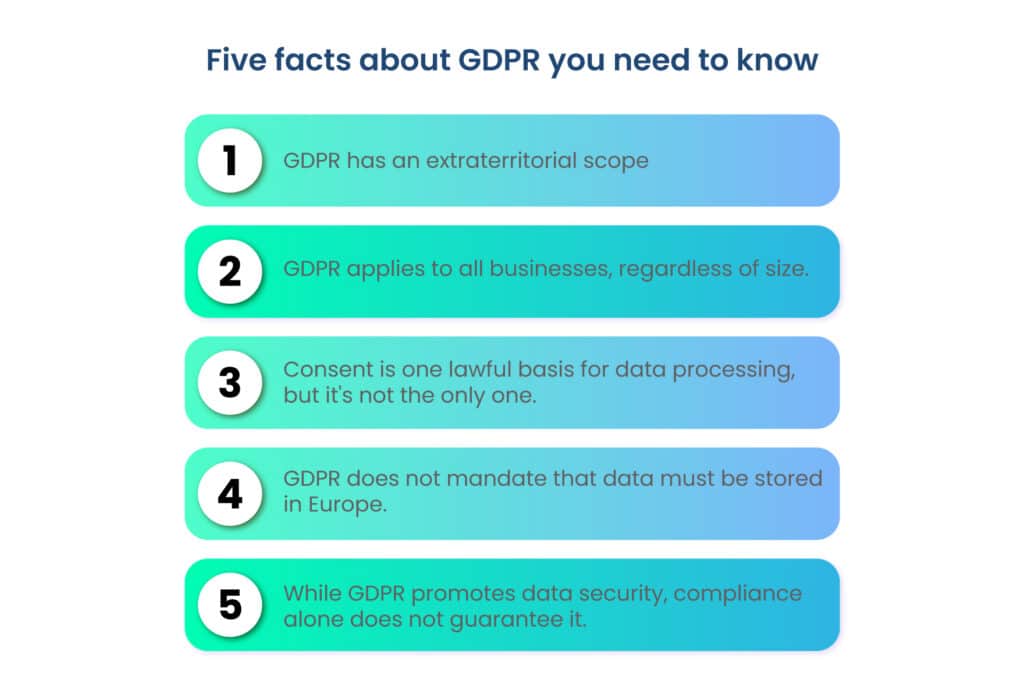
There are many misconceptions in the market about GDPR compliance. Let’s discuss the most common five myths and debunk them.
1. Myth: GDPR only applies to European companies
The myth that the GDPR policy applies exclusively to European companies is a common misconception. In reality, GDPR extends its reach far beyond the borders of the EU and applies to any organization worldwide that processes the personal data of EU residents. This extraterritorial scope is a fundamental aspect of GDPR policy and serves to protect the privacy and data rights of EU citizens, regardless of where their GDPR data is processed.
Here are some key points to debunk the myth and clarify GDPR’s global applicability:
Worldwide jurisdiction: GDPR policy is not confined to European soil; it reaches across continents and applies to organizations in any part of the world. If your organization handles the personal data of individuals residing within the EU, you are subject to GDPR regulations.
Protection of EU Residents: GDPR’s primary aim is to safeguard the personal data of EU residents. It ensures that their GDPR data is handled with care, transparency, and accountability, regardless of whether the data controller or processor is located within or outside the EU.
Compliance obligations: Organizations subject to GDPR must adhere to a set of strict compliance obligations, including obtaining explicit consent for data processing, implementing robust data protection measures, designating a Data Protection Officer (DPO), and promptly reporting data breaches. These obligations apply to both European and non-European entities.
Penalties for non-compliance: GDPR enforces significant penalties for non-compliance, and these penalties can be substantial for all organizations, regardless of their geographic location. Non-European companies can face severe financial consequences for failing to meet GDPR standards.
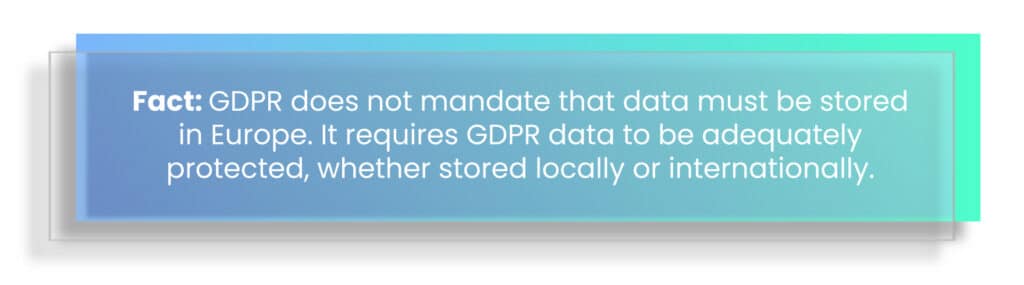
Cross-border data transfers: GDPR also regulates the international transfer of personal data outside the EU. Organizations must ensure that GDPR data transferred to countries outside the EU is adequately protected and complies with GDPR standards.
In summary, the myth that GDPR policy exclusively targets European companies is inaccurate. GDPR’s extraterritorial scope emphasizes the global nature of data processing and privacy concerns. Any organization, irrespective of its location, is bound by GDPR if it processes the personal data of EU residents. Compliance with GDPR is not merely a legal obligation; it reflects a commitment to respecting individuals’ privacy rights and maintaining the highest standards of GDPR data protection, regardless of borders.
2. Myth: Small businesses are exempt from GDPR
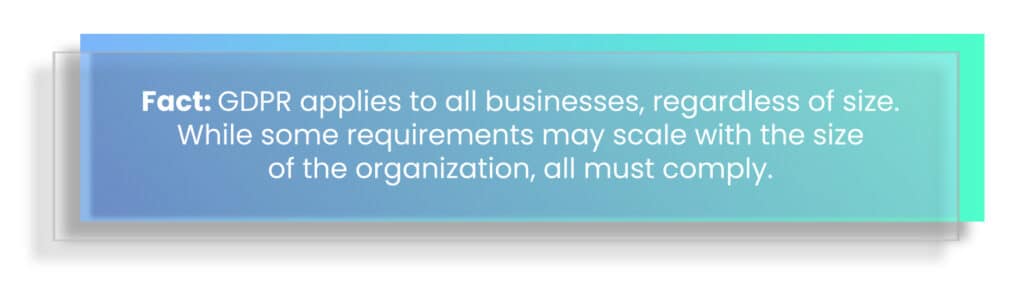
It is a common misconception that small businesses are exempt from the GDPR. However, the fact is that GDPR applies to all businesses, regardless of their size. The regulation does not provide exemptions based on the number of employees or the scale of operations. Instead, GDPR’s requirements may vary in complexity and implementation depending on the size and nature of the organization, but compliance is mandatory for all.
Here are some key points to clarify GDPR’s applicability to small businesses:
Universal application: GDPR policy is a comprehensive data protection framework that applies uniformly to all businesses, including small and medium-sized enterprises (SMEs). It is designed to protect the personal data of individuals within the EU, irrespective of the organization’s size.
Scalable requirements: While GDPR applies to all, some of its requirements are scalable. This means that certain obligations, such as appointing a Data Protection Officer (DPO) or conducting Data Protection Impact Assessments (DPIAs), may be more relevant to larger organizations with extensive GDPR data processing activities. Smaller businesses may have simpler compliance obligations, but they are still obliged to follow GDPR principles.
Data processing thresholds: GDPR policy does include some thresholds related to data processing. For example, organizations that process personal data on a large scale or engage in certain high-risk processing activities may have additional compliance requirements. However, these thresholds are based on the nature of GDPR data processing rather than business size.
Consistency in data protection: GDPR is committed to ensuring consistency in data protection standards across all businesses. Small businesses, like their larger counterparts, must take data protection seriously and implement measures to secure personal data, obtain proper consent, and respond to data subjects’ requests.
Penalties for non-compliance: Small businesses are not immune to the penalties for non-compliance with GDPR. Regulatory authorities can impose fines for violations, and these fines can have a significant impact on smaller organizations.
In conclusion, it is vital for small businesses to recognize that GDPR policy applies to them just as it does to larger enterprises. While some requirements may be tailored to the complexity of data processing activities, compliance with GDPR is mandatory for all businesses. Taking GDPR data protection seriously and adopting appropriate measures is not only a legal obligation but also a means of building trust with customers and protecting their GDPR rights.
3. Myth: Consent is always required for data processing
While it’s a common belief that consent is the only way to process personal data legally, this is indeed a myth. The reality is that consent is just one of several lawful bases for data processing, as outlined in data protection regulations like the GDPR. Organizations can rely on various legal bases to process personal data, depending on the specific circumstances and purposes of the data processing.
Here are some key facts to clarify the various lawful bases for GDPR data processing:
Consent: Consent is a lawful basis for data processing, and it requires individuals to provide clear, informed, and freely given permission for their GDPR data to be processed for specific purposes. However, consent is not always the most suitable or required basis, especially when there are other lawful reasons for processing the data.
Contractual necessity: Data processing that is necessary for the performance of a contract with an individual is another lawful basis. For example, if an individual enters into a contract with a company, the company can process their data as necessary to fulfill that contract, even without explicit consent.
Legitimate interests: Organizations can process personal data based on their legitimate interests, provided these interests are not overridden by the individual’s rights and interests. This allows businesses to use personal data for purposes such as marketing, fraud prevention, or internal administration without requiring explicit consent.
Legal obligations: When processing is required to comply with a legal obligation, such as tax or regulatory requirements, it is considered a lawful basis for GDPR data processing. Organizations are obligated to process data in these cases, regardless of consent.
Vital interests: Data processing may also be necessary to protect someone’s vital interests, such as in a medical emergency, without obtaining consent.
Public task or official authority: Public authorities may process personal data for tasks carried out in the public interest or in the exercise of official authority.
Consent as a choice: When organizations do rely on consent, it must be a genuine choice for individuals, and they must be able to withdraw their consent at any time without adverse consequences.
In summary, while consent is an important lawful basis for data processing, it is not always required or appropriate. Organizations must carefully consider the specific circumstances and purposes for which they are processing personal data and choose the appropriate legal basis in accordance with data protection regulations like GDPR. This ensures that individuals’ GDPR data rights are respected and that data processing activities are conducted in a lawful and ethical manner.
4. Myth: GDPR requires data to Be stored in Europe
A prevalent misconception is that the GDPR obliges organizations to store personal data exclusively within the borders of Europe. However, the fact is that GDPR does not impose such a restriction. Instead, GDPR prioritizes the protection and privacy of personal data, regardless of where it is stored or processed.
Here are some key points to debunk the myth and clarify GDPR’s stance on data storage location:
No geographic storage mandate: GDPR does not dictate that personal data must be stored in Europe. It recognizes that GDPR data processing and storage can occur globally due to the international nature of modern business and technology.
Data protection emphasis: GDPR places a strong emphasis on the protection and security of personal data. Organizations are required to implement appropriate safeguards, security measures, and contractual provisions when transferring data internationally to ensure that it remains adequately protected.
Adequate protection standards: GDPR requires that when personal data is transferred outside the European Economic Area (EEA) to countries that do not have an “adequate” level of data protection, organizations must take additional steps to ensure data protection. These steps may include using standard contractual clauses or other approved mechanisms to safeguard data during international transfers.
Accountability: Organizations are accountable for ensuring that any third parties or data processors they engage with, whether inside or outside Europe, comply with GDPR’s data protection standards.
Consent and transparency: GDPR mandates that organizations inform GDPR data subjects about international data transfers and the safeguards in place to protect their data. If necessary, organizations should obtain explicit consent for such transfers.
In summary, GDPR does not impose a geographical restriction on where personal data can be stored or processed. Instead, it focuses on the principles of data protection, security, and transparency. Organizations are required to take appropriate measures to protect personal data, whether it is stored locally within Europe or transferred internationally. This approach ensures that individuals’ privacy rights are upheld, regardless of the data’s physical location.
5. Myth: GDPR compliance guarantees data security
It is essential to recognize that while GDPR promotes data security and privacy, compliance with GDPR requirements does not automatically guarantee the complete and foolproof security of personal data. GDPR sets forth a framework of rules and guidelines for the responsible handling of personal data, but it is the responsibility of organizations to implement specific security measures and practices to adequately protect that GDPR data.
Here are some key points to clarify the relationship between GDPR compliance and data security:
Legal framework: GDPR establishes legal requirements and standards for how organizations must handle personal data, including the implementation of appropriate security measures. Compliance with these regulations is mandatory and ensures that organizations are following specific GDPR data protection practices.
Risk-based approach: GDPR policy emphasizes a risk-based approach to data protection. Organizations are expected to assess their own risks and vulnerabilities and implement security measures that are commensurate with the level of risk associated with their data processing activities.
Specific security measures: GDPR does provide guidelines on security measures, such as encryption, access controls, and data breach notification procedures. However, it does not prescribe a one-size-fits-all solution, as the security needs of each organization may vary.
Ongoing commitment: Achieving GDPR compliance is not a one-time event. It requires an ongoing commitment to monitoring, assessing, and improving data security practices. Organizations must adapt to evolving security threats and technology changes.
Accountability: GDPR policy places a strong emphasis on accountability. Organizations are accountable for demonstrating compliance and ensuring that the personal data they process is adequately protected. This includes conducting regular risk assessments, documenting security measures, and responding to data breaches promptly.
Cybersecurity challenges: Data security is a complex and evolving field, with cyber threats constantly evolving. Compliance with GDPR helps create a strong foundation for data protection, but organizations must also stay vigilant and adapt to emerging security threats.
In summary, while GDPR compliance is a critical step in promoting data security and privacy, it is not a guarantee of absolute security. Organizations must take proactive measures to assess and mitigate risks, implement appropriate security controls, and maintain a continuous focus on data security to protect personal data effectively. Compliance with GDPR policy is a part of the broader effort to safeguard personal data and respect individuals’ privacy rights.
Summing up
In today’s digital age, the General Data Protection Regulation (GDPR) is a critical law that shapes how personal information is handled. Since its introduction by the European Union in 2018, GDPR has revolutionized data protection.
GDPR is vital because it gives people more control over their personal information and sets strict rules for organizations that handle this data. It applies to all types of businesses, big or small, as long as they deal with the personal information of European residents.
GDPR is not just about following the law; it’s a way for organizations to show they respect people’s privacy and rights. In this blog, we’ve cleared up five common misunderstandings about GDPR, explaining what it is, what personal data means, and correcting misconceptions about its reach, business size, lawful data processing, data storage location, and the link between compliance and data security.
Ensure GDPR compliance with Scrut! Take the first step towards data protection and privacy. Get started now to safeguard your business and customer data. Click here to explore Scrut’s GDPR compliance solutions.
FAQs
1. Does GDPR apply to businesses outside of Europe?
Yes, GDPR has an extraterritorial scope, meaning it applies to any organization worldwide that processes the personal data of residents of EU and EEA. It’s not limited to European companies.
2. Do small businesses need to comply with GDPR?
Yes, GDPR applies to all businesses, regardless of their size. While some requirements may scale with the size of the organization, compliance is mandatory for all.
3. Is consent the only lawful basis for data processing under GDPR?
No, consent is one lawful basis for data processing, but it’s not the only one. Organizations can rely on other legal bases such as contractual necessity, legitimate interests, legal obligations, and more.
14 Oct 2022
4minutes
Authored by
Aayush Ghosh Choudhary
Co-founder & CEO at Scrut
Why do you need a SOC 2 compliance automation software?
Building trust is the key to gain and retain customers in the modern competitive era. If you are a SaaS organization and scaling up is your primary goal, developing relationships anchored in trust with prospects is almost mission-critical.
SOC 2 plays an important role in establishing and maintaining this trust with customers from an information security perspective. However, the path to getting compliant can be too expensive both in terms of time and capital, especially for startups.
However, compliance automation tools like Scrut can make this process seamless and hassle-free. This blog will cover several key questions like:
What is automated SOC 2 compliance?
A SOC 2 report is a critical asset for any organization, even more so for growing SaaS organizations. However, SOC 2 audits are cumbersome at best, and hard on the coffers.
Previously, to conduct a SOC 2 audit, the singular option was to find a CPA firm and embark upon an unwieldy audit process with significant data collection requirements — all done manually. This would require substantial time investment from the engineering and other teams, time better spent focussing on product development and business operations. SOC 2 audits typically involves countless hours with an auditor ahead of the audit; in-depth interviews between auditors and employees, and manual scraping of systems for relevant evidence collection. Post this pre-audit, organizations then have to spend significant time implementing recommended fixes to the security systems to prepare for the audit itself. And this, in turn, includes more interviews and evidence collection. Only after this, the auditor would document the lengthy process, and, provide the SOC 2 attestation report.
A SOC 2 automation reduces most of the hassle in the SOC 2 process, and eliminates hundred of hours required to prepare and undergo a SOC 2 audit. A good SOC 2 compliance automation software helps in identifying gaps that need to be fixed for compliance and automates monitoring and evidence collection against the SOC 2 compliance posture over time, instantly alerting you when the infosec posture is at risk.
A SOC 2 automation software streamlines the compliance process through:
One-stop control dashboard and risk posture across the organization
Instant visibility into your compliance activity
Automated real-time compliance audits across the cloud infrastructure for gap identification and correction
Automated collection of evidence artefacts
Single window for all compliance-related assets, including policies, evidence, and tasks
Traditionally, organizations had to update lengthy spreadsheets and attach a plethora of screenshots as proof during their audit. An automated SOC 2 compliance software can simply be plugged into your existing tech infrastructure to retrieve relevant information.
Why do you need a SOC 2 compliance automation software?
Beside assuring that you stay SOC 2 compliant 24*7, here’s why you should go for SOC 2 automation software:
You cannot invest the hours – Preparing sheets, analyzing data, organizing screenshots and evidence, and tracking vendors, assets, and exchanges will be too much to handle when done manually.
You need the report ‘yesterday’ – Any client or prospect can ask you for compliance reports anytime. Without a suitable compliance automation tool, the SOC 2 audit can take months to complete.
You cannot afford to distract resources from their core responsibilities – A dedicated team for SOC 2 compliance can be expensive, and almost unaffordable for a growing startup. At the same time, especially if you are an early-stage startup, you can’t afford to keep employees out of core work for so long.
Protecting customer data matters to you – A compliance automation tool helps establish and maintain a robust infosec posture with real-time monitoring of the cloud infrastructure.
You want to avoid human error – As goes with any automation, a SOC 2 compliance automation tool will automate all evidence collection, cloud gap assessments and potential risks.
What are the key considerations for choosing a SOC 2 compliance automation software?
In the last few years, we have witnessed immense growth in the automated compliance sector. Here are a few factors you should consider while evaluating the right SOC automation software for your enterprise:
Does the software have enough integrations to fulfill your requirements and save your and your team’s time?
Does the software support your relevant (current and expected future) frameworks?
How strong is the customer support provided by the SOC 2 automation software company? Do they also help you through the audit?
Are the pricing and packages entirely transparent and flexible? Do they have any policy for extra charges apart from the plan that you buy?
Scrut’s automated SOC 2 compliance platform is one of the fastest in the industry. Our platform makes it extremely convenient and easy for you to maintain all your compliance requirements at your fingertips. We help our customers get ready for SOC 2 in just two weeks.
Scrut Automation is an innovative and radically simple governance, risk, and compliance automation platform for growing startups and mid-market enterprises. With Scrut, Compliance teams can reduce ~70% of their manual effort in continuously maintaining compliance towards SOC 2, ISO 27001, GDPR, PCI DSS, HIPAA, and CCPA.Schedule your demo today to see how it works.
14 Oct 2022
10minutes
Authored by
Aayush Ghosh Choudhary
Co-founder & CEO at Scrut
What is SOC 2 automation software?
In an increasingly interconnected digital landscape, the security of sensitive data and the availability of critical services have become paramount concerns for organizations across industries. With cyber threats evolving at an alarming pace and regulatory requirements becoming more stringent, adhering to comprehensive security frameworks is no longer a choice but a necessity. One such framework that addresses these concerns is System and Organization Controls 2 (SOC 2).
SOC 2 compliance has emerged as a gold standard for demonstrating an organization’s commitment to maintaining the security, availability, processing integrity, confidentiality, and privacy of customer data. It provides a comprehensive framework that assesses an organization’s controls and processes, giving both customers and stakeholders the assurance that their data is being handled securely and with the utmost care.
With data breaches making headlines on a regular basis, customers are demanding higher levels of transparency and accountability from the organizations they entrust with their sensitive information. SOC 2 compliance not only helps organizations meet these demands but also instills a sense of trust that can be a significant competitive advantage in today’s data-driven economy.
As organizations strive to achieve and maintain SOC 2 compliance, the sheer complexity of managing controls, evidence, and reporting requirements can be overwhelming. This is where automation steps in as a game-changer. Automation technology offers the capability to streamline and enhance various aspects of the compliance process, from continuous monitoring to evidence collection and reporting. By automating routine tasks, organizations can free up valuable human resources to focus on more strategic security initiatives.
In this blog, we will delve into the realm of SOC 2 automation software and its pivotal role in simplifying and strengthening the compliance journey. We will explore the various facets of SOC 2 compliance, the challenges associated with manual processes, and the transformative impact of automation.
What are the challenges of manual compliance processes?
Historically, organizations have approached SOC 2 compliance through manual efforts involving spreadsheets, document repositories, and painstakingly tracked email chains. This approach often involves manual data collection, assessment, and reporting, leading to inefficiencies, potential errors, and limited visibility into the compliance landscape.
The shortcomings of manual processes in the context of SOC 2 compliance are numerous and significant. These limitations include:
Human Error: Manual data entry and calculations introduce the risk of errors, potentially leading to inaccurate compliance assessments and reporting.
Time-Consuming: Manually collecting evidence, updating documentation, and generating reports can be extremely time-consuming, diverting valuable resources from other critical tasks.
Lack of Scalability: As organizations grow and expand, the demands of compliance increase exponentially. Manual processes struggle to scale effectively, leading to bottlenecks and inconsistencies.
Limited Visibility: Manual systems often lack real-time visibility into compliance status, making it challenging to proactively identify and address issues.
Compliance Fatigue: The repetitive nature of manual compliance tasks can lead to burnout among compliance teams, reducing overall effectiveness.
What is SOC 2 automation software? What is its purpose?
SOC 2 automation software refers to a category of software designed to automate and streamline various aspects of SOC 2 compliance. This software encompasses a wide range of functionalities, from continuous monitoring and evidence collection to policy management and reporting.
The primary purpose of SOC 2 automation software is to replace or augment manual processes with technology-driven solutions, ultimately leading to improved efficiency, accuracy, and effectiveness in achieving SOC 2 compliance.
What are the features of the SOC 2 compliance software?
The features of the SOC 2 automation software are given below:
1. Single-tenant architecture
A single-tenant database architecture uses a software application and database for each client, which means the clients cannot share the databases and applications between them since they have their instances of database and applications. Single-tenant architecture has a specific design, making it unique since it allows only one instance per SaaS server. Thus, it mitigates risk, ensures confidentiality, and allows more customization options.
2. Automated evidence collection
One of the core features of SOC 2 automation software is eliminating complicated spreadsheets, folders full of screenshots, and other tedious and manual tasks. The best-fit software automates 85% of SOC 2 compliance as soon as you sign up.
3. Continuous monitoring
The best SOC 2 compliance software will continuously monitor your controls and alert you if your information security is at risk. For example, SOC 2 automation should alert you if an employee skips the onboarding or offboarding process or a new customer database created isn’t encrypted yet or the password policy is not as per security benchmarks. Good software will provide detailed guidance to correct gaps and issues.
4. One-stop-shop
The compliance automation software you choose should be able to scale as your organization grows. Look for software that can help you comply with multiple frameworks and regulations like SOC 2, GDPR, CCPA, HIPAA, PCI-DSS, and ISO 27001.
5. Vendor management
Checking vendor management risks is as important as checking the security of your internal control. The SOC 2 software you choose should help you manage all your vendor-related documents like vendor agreements and security certifications in one spot.
6. Employee onboarding and off-boarding
The ability to track and smoothly onboard and off-board employees is a crucial component of SOC 2 compliance. Select software that enables you to automate the processes, keep track of security training, let employees read and approve policies, and avert problems before they happen.
7. Auditor-approved policy library
Creating a library of internal security policies and keeping up with the latest security policies can be time-consuming. Choose SOC 2 software with a library of auditor-approved policy templates.
8. End-to-end expert support
Most automation software offers chat and call tech support, but only some software offers compliance expert support. Our team of SOC 2 experts will help you prepare for an audit and be with you throughout the audit process.
What are the benefits of the SOC 2 compliance software?
From time and cost-saving to improved and streamlined relationships with your auditors, SOC 2 automation software provides many benefits, and here are a few:
1. Saves time and money
Manually processing SOC 2 compliance is tedious and time-consuming. Collecting various spreadsheets and database tables, organizing screenshots and other evidence, and manually tracking incidents, assets, and vendors is time-consuming. All of this means the valuable resources of the company – employees – have less time for doing other high-priority, revenue-generating tasks. One of the major benefits of SOC 2 automation software is that it can automate all those tedious and time-consuming jobs.
The SOC 2 automation software handles evidence collection, employee onboarding and offboarding, tracking vendors and assets, risk assessment, control mapping, and a dashboard to check status. If your team is spending months in getting SOC 2 compliance, you are losing money and productivity. With SOC 2 automation software, you can eliminate costs that go into partners, consultants, or new tools.
2. Streamline the audit process
Instead of relying on spot checks, assuming continuous compliance, and collecting evidence from multiple sources, use automation software to streamline this process. As a result, there will be less back and forth between an auditor and the business, and both parties will benefit from a quicker and more affordable process.
3. Automate reports
Using a manual process to answer prospective customers’ questions takes a lot of time. With good SOC 2 automation software, real-life reports are generated to answer infosec posture questions, and the auditors can download available control evidence only with a few clicks. Scrut’s SOC 2 automation software shares continuous, real-time control monitoring, reports, certifications, policies, and more on your personalized dashboard.
4. Maintains security
SOC 2 isn’t just about demonstrating security; it’s about being secure. Having the right controls for customer data, confidential information, and system availability will make your business run smoothly and save you from potential legal issues and customer churn. A good SOC 2 automation software ensures your security program is running smoothly-not only for audits but maintaining a solid security posture.
5. Reduces the risk of human error
25% of unplanned downtime is caused by human error. A good SOC 2 automation software mitigates human risk by offloading repetitive tasks and similarly automates them every time and alerts you to change human behavior to mitigate risks.
6. Provides key insights
SOC 2 automation software helps you get insights into how your security posture is operating at any given point and insights on improvement.
How to select the right SOC 2 compliance software for your organization?
The journey toward SOC 2 compliance automation is a critical decision that requires careful consideration. The selection of the right SOC 2 compliance software can significantly impact the effectiveness and success of your compliance efforts. In this section, we will delve into the key factors to consider when choosing the most suitable software solution for your organization.
1. Customizability for your organization
Every organization has unique processes, workflows, and compliance requirements. When evaluating SOC 2 automation software, prioritize solutions that offer a high degree of customizability. The software should allow you to tailor the compliance framework, controls, and reporting to align with your specific business operations and industry needs.
2. Integration capabilities with existing tools
Seamless integration with your existing technology ecosystem is crucial. Your organization likely uses various tools for security, IT management, and communication. Look for SOC 2 software that can integrate with these tools, enabling data exchange and reducing redundancy. This integration enhances efficiency and provides a holistic view of your compliance landscape.
3. Scalability for future growth
Your organization’s compliance requirements will evolve as your business expands. Therefore, choose a SOC 2 compliance software that can scale alongside your growth. The software should accommodate additional controls, users, and data volumes without compromising performance. This scalability ensures that your compliance efforts remain robust and effective over time.
4. Vendor reputation and support
The reputation and support of the software vendor are critical considerations. Research the vendor’s track record in the compliance and security space. Look for customer reviews, references, and case studies to assess their credibility. Additionally, evaluate the level of customer support, training resources, and ongoing assistance the vendor provides to ensure a smooth implementation and efficient usage.
5. Security and data privacy
Given the nature of SOC 2 compliance, security and data privacy should be paramount. Ensure that the automation software adheres to rigorous security standards, including encryption, access controls, and data protection measures. An audited security certification, such as SOC 2 Type II, can offer additional assurance of the software’s security practices.
6. Reporting and analytics capabilities
Effective reporting and analytics capabilities are essential for monitoring and demonstrating compliance. The automation software should offer robust reporting features, including customizable compliance reports, audit trails, and real-time analytics. These capabilities empower your organization to gain insights into compliance status and performance metrics.
7. User-friendly interface
The usability of the automation software directly affects its adoption and effectiveness. Prioritize solutions with an intuitive and user-friendly interface. A well-designed interface streamlines navigation, reduces training time, and ensures that your compliance team can efficiently leverage the software’s capabilities.
For a complete buyer’s guide to SOC 2 compliance software, refer to our blog here.
How to implement SOC 2 compliance software in your organization?
The successful implementation of SOC 2 compliance software is a pivotal step toward revolutionizing your organization’s compliance efforts. In this section, we will guide you through the essential steps of implementing the software, from assessing readiness to overcoming potential challenges.
1. Gap assessment and readiness
Begin by conducting a thorough gap assessment to understand your organization’s current compliance posture. Identify areas where automation can enhance efficiency and effectiveness. Assess the readiness of your internal teams for the changes that automation will bring.
2. Software selection
Based on your assessment, choose the SOC 2 compliance software that aligns best with your organization’s needs. Consider the factors outlined in the previous sections, such as customizability, integration capabilities, scalability, and vendor support.
3. Configuration and customization
Once selected, configure and customize the software to reflect your compliance requirements and processes. Tailor the workflows, controls, and reporting to match your organization’s unique operations.
4. Data migration and integration
Migrate existing compliance data to the automation software and integrate it with your existing tools and systems. This step ensures a seamless transition and consistent data flow between platforms.
5. Training and adoption
Provide comprehensive training to your compliance team and relevant stakeholders on how to effectively use the new automation software. Encourage adoption and address any concerns to ensure a smooth transition.
How can an organization ensure compliance with SOC 2 compliance software?
Implementing SOC 2 automation software is just the beginning of your compliance journey. In this section, we will explore how to ensure ongoing compliance using automation software, adapt to changing requirements, and leverage automation for audits and assessments.
1. Ongoing monitoring and maintenance
Continuous monitoring: One of the primary advantages of automation software is its ability to provide continuous monitoring of your compliance controls and processes. Regularly review automated reports and alerts to promptly address any anomalies or deviations from the expected compliance standards.
Data accuracy and updates: Regularly update and validate the data within the SOC 2 software. Outdated or inaccurate data can lead to incorrect compliance assessments. Schedule routine data audits to maintain data integrity.
2. Adjustments to changing compliance requirements
Stay informed: Keep up-to-date with changes in SOC 2 compliance requirements, industry standards, and regulatory frameworks. Automation software should allow you to easily adapt your controls and workflows to address evolving compliance demands.
Flexibility and customization: Leverage the customization capabilities of your SOC 2 software to adjust controls, policies, and processes as compliance requirements evolve. Regularly review and modify your configurations to ensure alignment with the latest standards.
3. Leveraging automation for audits and assessments
Streamline audits: During audits and assessments, SOC 2 software can be a game-changer. Generate comprehensive audit reports and evidence documentation with ease. Automation ensures accuracy and significantly reduces the time and effort required for audits.
Demonstrate continuous compliance: The automation software’s continuous monitoring capabilities enable you to demonstrate ongoing compliance rather than just point-in-time compliance during audits. This can bolster your organization’s reputation and build trust with stakeholders.
Auditing the software: Perform periodic audits of the SOC 2 compliance software to ensure that it is functioning as intended. This includes validating data integrity, audit trails, and security measures within the software.
Winding up
In today’s interconnected digital landscape, SOC 2 compliance stands as a vital shield against cyber threats and a beacon of trust for customers. Manual compliance processes have shown their limitations, from errors to inefficiencies. Enter SOC 2 compliance software, offering efficiency, accuracy, and adaptability. It saves time and money, streamlines audits, and maintains security. Selecting the right software involves considering factors like customizability, integration, and scalability.
Yet, implementation is just the start. Ongoing compliance demands continuous monitoring, adapting to changing requirements, and leveraging automation for audits. This software isn’t just a tool; it’s a transformative force for organizations navigating the complexities of data security and regulatory adherence. Embracing SOC 2 compliance software is a strategic step toward a safer and more trustworthy digital landscape.
FAQs
1. What is SOC 2 compliance and why is it important?
SOC 2 compliance is a framework that addresses security, availability, processing integrity, confidentiality, and privacy concerns for organizations handling sensitive data. It’s crucial due to evolving cyber threats and stricter regulations, to ensure customer data is secure and handled with care.
2. What are the benefits of SOC 2 compliance software?
The following are the advantages of SOC 2 compliance software: – Time and cost savings – Streamlined audit process – Automated reports – Improved security – Reduced risk of human error – Key insights into the security posture
3. What is the significance of SOC 2 compliance software for organizations?
SOC 2 compliance software represents a transformative force in data security and regulatory adherence. It saves time, enhances security, streamlines audits, and fosters trust in the digital landscape.
14 Oct 2022
3minutes
Authored by
Aayush Ghosh Choudhary
Co-founder & CEO at Scrut
7 compliance trends of 2022
The compliance world is a highly dynamic world. Every day, rules and regulations are added, amended, enforced, and removed to keep them updated as per the latest requirements.
With aspirational new technologies like 5G and the Metaverse coming up, the need for privacy and data protection laws that keep up with times has also become important.
In such a world, the need for companies to look more proactively towards Infosec Compliance has become a priority.
Nowadays, companies face new challenges that are not privy to just business processes but are instead more in line with complying with rules and regulations.
In 2021, many new changes came to the ever-growing field of infosec compliance. However, in 2022 things are poised to take a dramatic turn with many new trends. Let’s check out 7 infosec compliance trends that will change the world as we know it.
Data management
Many compliance policies like GDPR have thoroughly stressed the importance of data consolidation to optimize compliance. In 2022, we look forward to stricter enforcement of this. Data stored in different spreadsheets and docs is a huge pain point for DPOs and CISOs as it makes access to the data and reports generation that much more cumbersome. Thus, a centralized data management system will result in efficient data processing and relatively faster adherence to many compliance policies.
Environmental, social, and corporate governance (ESG)
ESG is the consolidation of three different dimensions in which a company operates to ensure sustainable existence and growth. Many companies like Vodafone and Mitsubishi already comply with ESG as part of an ethical way of conducting business. We see this becoming a dominant trend wherein many companies must adhere to it to comply with infosec guidelines.
AI chatbots
As per a study by Drift, AI chatbots are the fastest-growing communication channel used to interact with clients and customers. Thus, it is imperative for the companies to integrate them into their infosec compliance strategy. Other than using it to notify consumers regarding data and privacy policy, chatbots can also be used by compliance executives and managers to assess better and generate reports for compliance-related activities.
Privacy policy
Ever since the passing of the GDPR (General Data Protection Regulation) in 2018, privacy compliance has become one of the center-stage conditions for infosec compliance. This has started a wave of reforms worldwide wherein more stringent privacy protection policies are coming. Thus, it is apparent that in the near future, privacy will become as much a service as the companies must deliver customer assistance.
Robotic process automation (RPA)
Efficiency is what ensures timely response to data breaches, which thereby also indicates adherence to compliance policies. Automated processes significantly increase an organization’s efficiency. AI chatbots that have already been discussed are a great example of an RPA contributing to inefficient communication with users. In the near future, more RPA tools will be used and can even be made compulsory for infosec compliance.
Remote audits
Auditing is not just necessary to ensure that your compliance measures are working. They also provide to maintain your compliance requirements over the long term. However, due to the safety constraints imposed due to the COVID-19 pandemic, on-site auditing work by expert auditors has become challenging. Thus, in such a condition, remote auditing will become a more integral part of the infosec market, with many auditing firms providing this particular service as an option.
Complete GRC solutions
Malware attacks and Cyber-threats are becoming more sophisticated every minute. Thus, risk management becomes imperative for all businesses who want to continue conducting their operations. To ensure such risk management Governance, Risk, and Compliance, (GRC) tools are being deployed by the organizations. These tools will become more prominent and indispensable to organizations in the coming year.
Infosec Compliance is Just a Click Away with Scrut.
Scrut Automation is an innovative and radically simple governance, risk, and compliance automation platform for growing startups and mid-market enterprises. With Scrut, compliance teams can reduce ~70% of their manual effort in continuously maintaining compliance towards SOC 2, ISO 27001, GDPR, PCI DSS, HIPAA, and CCPA.Schedule your demo today to see how it works.
14 Oct 2022
10minutes
Authored by
Aayush Ghosh Choudhary
Co-founder & CEO at Scrut
GDPR Data Mapping 101: how to comply with it?
In an era dominated by digital transactions and interconnectedness, safeguarding personal data has become an imperative concern. The General Data Protection Regulation (GDPR) stands as a monumental step forward in the realm of data protection, empowering individuals with control over their personal information and demanding heightened accountability from organizations that handle such data.
At the heart of GDPR’s framework lies the concept of data mapping, an essential process that plays a pivotal role in ensuring compliance with the regulation.
This article dives into the intricacies of GDPR data mapping, shedding light on its significance and providing valuable insights into how organizations can navigate its complexities.
Section 1: Understanding GDPR data mapping
The European Union (EU) introduced GDPR in May 2018 to fortify the rights of individuals with regard to their personal data. It applies to any organization that processes the personal data of EU citizens, regardless of their geographic location. The regulation aims to strike a balance between technological advancement and data protection, requiring organizations to be transparent, accountable, and respectful in their data processing activities. GDPR data mapping is not merely a procedural step; it’s a strategic approach to achieving GDPR compliance.
In this section, we will delve into the definition, purpose, and outcomes of GDPR data mapping.
What is GDPR data mapping?
GDPR data mapping is a systematic and detailed process through which organizations identify, categorize, and visualize the flow of personal data within their operations. It is a fundamental step in achieving compliance with GDPR.
At its core, GDPR data mapping involves organizations creating a comprehensive overview of how they collect, process, store, transfer, and eventually delete or archive personal data. It provides a clear picture of how personal data moves across various departments, systems, and even geographical boundaries.
What is the purpose of data mapping in the context of GDPR compliance?
Data mapping plays a pivotal role in achieving compliance with the GDPR, which sets forth stringent requirements for organizations handling personal data. The purpose of data mapping in the context of GDPR compliance extends beyond mere documentation; it serves as a strategic tool to enhance data protection practices and uphold the rights and privacy of individuals.
Here’s a closer look at its crucial purposes:
1. Transparency and accountability
Purpose: GDPR emphasizes transparency in data processing activities. Within an organization, data mapping offers a clear and comprehensive overview of how the organization collects, processes, and utilizes personal data.
Outcome: Organizations can foster trust and accountability by understanding the entire data journey and providing individuals with transparent information about how their data is used. This mindset extends to employees at all levels, encouraging them to prioritize data protection and security in their day-to-day activities.
2. Identifying data processing activities
Purpose: GDPR requires organizations to have a lawful basis for processing personal data. Data mapping helps organizations identify and categorize all data processing activities, ensuring that each activity has a valid legal basis.
Outcome: Organizations can accurately determine whether they have the right to process personal data and can easily justify their processing activities if questioned by regulatory authorities or data subjects.
3. Minimizing risks and vulnerabilities
Purpose: GDPR mandates that organizations implement appropriate security measures to protect personal data from breaches and unauthorized access. Data mapping reveals potential points of vulnerability in data flows.
Outcome: By identifying these vulnerabilities, organizations can implement targeted security measures and safeguards to minimize the risk of data breaches and unauthorized data processing.
4. Responding to data subject rights
Purpose: GDPR grants individuals rights such as the right to access, rectify, and erase their personal data. Effective data mapping ensures that organizations can locate and retrieve the necessary data promptly when responding to data subject requests.
Outcome: Organizations can efficiently fulfill data subject rights, thereby demonstrating their commitment to respecting individuals’ privacy rights and complying with GDPR obligations.
5. Data protection impact assessments (DPIAs)
Purpose: In situations involving high risks to individuals’ rights and freedoms, GDPR mandates the conduction of DPIAs. Data mapping for GDPR provides essential insights into the processing activities and potential risks associated with them.
Outcome: Organizations can perform thorough risk assessments and implement mitigating measures to ensure that data processing activities are conducted in a manner that aligns with GDPR requirements.
6. Third-party risk management
Purpose: Many organizations share personal data with third-party vendors or partners. Data mapping helps identify these relationships and assess whether these third parties adhere to GDPR requirements.
Outcome: Organizations can evaluate the compliance practices of third parties and ensure that personal data is being processed responsibly and in accordance with GDPR standards.
7. Continuous compliance
Purpose: GDPR compliance is an ongoing effort. Data mapping for GDPR facilitates continuous monitoring and assessment of data processing activities, allowing organizations to adapt to changes in data flows, technologies, and regulations.
Outcome: By maintaining an up-to-date data map, organizations can proactively address compliance gaps and ensure that their data protection practices remain aligned with evolving GDPR requirements.
Section 2: Key Components of GDPR Data Mapping
Now that we know the meaning and purpose of data mapping for GDPR let’s look at its components.
1. Data Collection and Inventory: Identifying personal data
Under GDPR, “personal data” refers to any information relating to identified or identifiable natural person. This includes any data that can directly or indirectly identify an individual. Examples of personal data include names, email addresses, phone numbers, identification numbers, location data, and online identifiers.
2. Categories of personal data
GDPR distinguishes between different categories of personal data:
Personal data: Standard personal information that can be used to identify an individual.
Sensitive data: Also known as “special categories” of data, this includes information like racial or ethnic origin, political opinions, religious or philosophical beliefs, trade union membership, genetic data, biometric data, health data, and sexual orientation. Processing sensitive data is subject to stricter conditions.
Criminal conviction data: Information about criminal convictions and offenses fall into a separate category, with additional safeguards in place for their processing.
3. Data processing activities
Organizations must have a clear understanding of how and why personal data is processed. This involves:
Purpose specification: Defining the specific purposes for which personal data is collected and processed.
Legal basis: Identifying the legal grounds for processing data, such as consent, contract fulfillment, legal obligation, vital interests, public task, or legitimate interests.
Data minimization: Ensuring that only necessary data is collected and used for the defined purposes.
Retention period: Determining how long the data will be retained and when it will be deleted.
4. Data flow Visualization
Data mapping involves tracking the movement of personal data within the organization. This includes:
Data collection points: Identifying where and how personal data is collected, whether it’s through websites, forms, or other means.
Data storage locations: Documenting where the data is stored, whether it’s on local servers, cloud services, or third-party platforms.
Data processing steps: Describing the various processes the data undergoes, such as analysis, sharing, or aggregation.
Data sharing: Understanding how data is shared with internal teams, third-party vendors, or other external entities.
Cross-border transfers: Identifying instances where personal data is transferred outside the European Economic Area (EEA) and ensuring appropriate safeguards are in place.
5. Mapping data flows
Mapping data flows involves visually representing how data moves within the organization. This can be done using diagrams or flowcharts, helping to illustrate the journey of personal data from collection to processing to storage and potentially onward to sharing or deletion.
Section 3: Steps to Implement GDPR Data Mapping
This step-by-step approach ensures that organizations can effectively identify, assess, and manage their data processing activities in compliance with GDPR.
Let’s break down each step for a better understanding:
Step 1: Initiation
Building a cross-functional team: Assembling a team with representatives from various departments, including legal, IT, data protection, and relevant business units, ensures a holistic approach to data mapping for GDPR.
Defining scope and objectives: Clearly outlining the scope of the data mapping project and its objectives helps set the direction for the entire process and ensures alignment with organizational goals.
Step 2: Data inventory
Creating a comprehensive inventory: Listing all data processing activities and systems involved in collecting, processing, and storing personal data provides a clear overview of the organization’s data landscape.
Identifying data stakeholders: Determining who controls and processes the data, as well as identifying third-party recipients, helps establish accountability and responsibilities.
Step 3: Data categorization
Distinguishing data categories: Separating personal data into different categories (personal, sensitive, etc.) ensures that appropriate protection measures are applied based on the level of sensitivity.
Applying safeguards: Implementing security controls, privacy measures, and risk mitigation strategies based on the data categories enhances data protection and minimizes risks.
Step 4: Data mapping and flows
Visual representation: Creating visual representations of data flows and processing activities through diagrams or flowcharts provides a clear understanding of how data moves within the organization.
Mapping cross-border transfers: Identifying instances where data is transferred across borders and establishing proper safeguards ensures compliance with cross-border data transfer regulations.
Step 5: Gap analysis
Identifying gaps: Comparing current data processing practices against GDPR requirements highlights areas where adjustments or enhancements are needed to ensure compliance.
Assessing risks: Evaluating potential risks and vulnerabilities stemming from identified gaps helps prioritize corrective actions.
Step 6: Risk assessment and mitigation
Evaluating impact: Assessing the potential impact of data processing on individuals’ rights and freedoms helps determine the severity of identified risks.
Implementing measures: Developing and implementing risk mitigation measures and privacy-enhancing solutions minimizes the likelihood and impact of data breaches.
Step 7: Documentation and record-keeping
Maintaining records: Creating and maintaining a detailed record of data processing activities, including purposes, legal bases, retention periods, and security measures, is essential for accountability and regulatory compliance.
Meeting GDPR obligations: Ensuring that documentation aligns with GDPR’s record-keeping requirements allows organizations to readily demonstrate their compliance to authorities and individuals.
Step 8: Updating privacy documentation
Data mapping findings should be integrated into privacy policies and notices to ensure GDPR compliance and transparency with data subjects:
Privacy policies
Clearly state types of collected data and their sources.
Explain the purposes of data processing and the legal basis.
Detail data retention periods and sharing practices.
Outline data subject rights and security measures.
Address cross-border data transfers if applicable.
Notices
Provide concise data collection notices.
Use explicit consent language.
Link to the full privacy policy for more details.
Emphasizing transparency
Use plain language and ensure accessibility.
Communicate updates and changes clearly.
Provide contact information for inquiries.
Offer educational resources for better understanding.
By following these steps, organizations can maintain transparency, empower data subjects, and align with GDPR principles.
Section 4: Tools and Technologies for GDPR Data Mapping
Software tools designed for data mapping play a crucial role in helping organizations efficiently manage their data processing activities in accordance with GDPR requirements. These tools provide features and functionalities that streamline the data mapping process, aid in visualizing data flows, ensure compliance and facilitate effective risk management.
Benefits of using specialized technologies for efficient data mapping
Utilizing specialized software tools for GDPR data mapping offers numerous benefits. These tools empower organizations to meet the challenges of GDPR data mapping effectively and ensure the protection of personal data in a rapidly evolving regulatory landscape.
1. Efficiency and automation
GDPR data mapping software or tool automate various aspects of the process, reducing the manual effort required. They can automatically discover data flows, extract metadata, and generate visual representations, saving time and resources.
2. Data visualization
This software offers graphical representations of data flows, making it easier to understand complex relationships between data sources, processing activities, and destinations. Visualizations enhance communication and collaboration among cross-functional teams.
3. Compliance and documentation
GDPR data mapping software enable organizations to document and track data processing activities comprehensively. This documentation is essential for demonstrating compliance with regulatory authorities and stakeholders.
4. Data lineage
Specialized tools can trace the lineage of data, showing how data moves from its source to its destination. This transparency is crucial for ensuring data accuracy and accountability and demonstrating adherence to GDPR principles.
5. Impact analysis
Many tools offer the capability to assess the impact of data processing changes on privacy and compliance. This aids in identifying potential risks and taking proactive measures to address them.
6. Risk management
GDPR data mapping software often includes features to assess and manage risks associated with data processing. By identifying vulnerabilities and recommending mitigation strategies, they enhance data protection efforts.
7. Collaboration
Data mapping tools promote collaboration among teams working on data compliance and privacy efforts. Multiple team members can access and contribute to data mapping projects, facilitating cross-functional communication.
8. Security
Many tools incorporate security features that help protect sensitive data during the data mapping process. This ensures that the data itself remains secure and compliant with GDPR requirements.
9. Auditing and reporting
GDPR data mapping software provides the capability to generate audit trails and reports, aiding in accountability and transparency. These reports can be useful during regulatory audits and assessments.
10. Scalability
As organizations grow and their data landscapes become more complex, specialized data mapping tools can scale to accommodate larger volumes of data and more intricate processing activities.
11. Integration
Some GDPR data mapping software can integrate with other software systems, such as data governance platforms, to create a unified environment for managing data compliance and privacy efforts.
12. Continuous monitoring
Many tools offer monitoring capabilities that allow organizations to track changes in data flows and processing activities over time. This continuous monitoring helps maintain compliance as the organization evolves.
Conclusion
In an era where safeguarding personal data is paramount, the General Data Protection Regulation (GDPR) and its strategic approach to data mapping have become pivotal. This article has explored GDPR data mapping’s significance, offering actionable insights for organizations navigating its complexities.
GDPR data mapping isn’t just procedural; it’s a proactive strategy empowering organizations to comprehend and secure personal data flows. By visualizing data journeys, organizations enhance transparency, accountability, and trust, aligning with GDPR’s core principles.
Following the outlined approach, organizations can implement GDPR data mapping effectively. Creating cross-functional teams, categorizing data, and utilizing specialized tools streamline compliance efforts and promote ethical data handling.
In an evolving technological landscape, GDPR data mapping remains invaluable for fostering data protection and respecting individuals’ rights. It’s a tool that not only ensures compliance but also upholds transparency and data security.
FAQs
1. What is GDPR data mapping, and why is it important?
GDPR data mapping is a systematic process where organizations identify and visualize the flow of personal data within their operations. It’s crucial for compliance with the General Data Protection Regulation (GDPR) and enhances transparency and accountability in data handling.
2. What benefits do specialized tools bring to GDPR data mapping?
Specialized tools automate data discovery, enhance data visualization, aid compliance documentation, trace data lineage, assess impact, manage risks, and promote collaboration among teams. They streamline the mapping process and ensure effective data protection.
3. What role does data categorization play in GDPR data mapping?
Data categorization separates personal data into different categories, such as standard personal data, sensitive data, and criminal conviction data. This ensures that appropriate protection measures are applied based on data sensitivity.