Authored by

Aayush Ghosh Choudhary
Co-founder & CEO at Scrut

Navigating NYDFS Cybersecurity Regulations: A 7-Step Encryption Compliance Guide

The New York Department of Financial Services (NYDFS) enforced cybersecurity regulations for the financial sector effective March 1, 2017, granting covered entities a 180-day compliance period. 

These regulations extend to banks, insurance companies, consumer lenders, and money transmitters, mandating encryption of data at rest, defined under 23 NYCRR 500

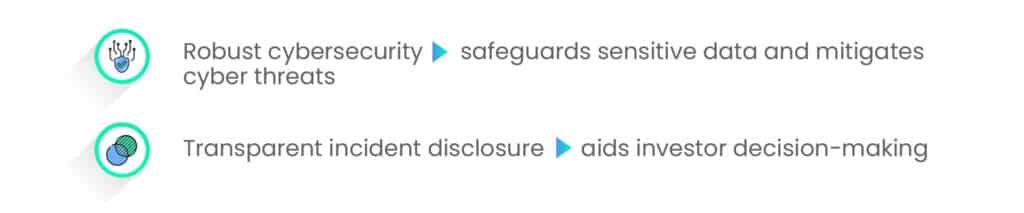
In addition to the NYDFS regulations, financial institutions must also adhere to the SEC’s new guidelines for cybersecurity management and incident disclosure, further emphasizing the critical importance of robust cybersecurity measures in the financial sector.

Compliance with this directive necessitates careful attention to detail and adherence to specific steps outlined below:
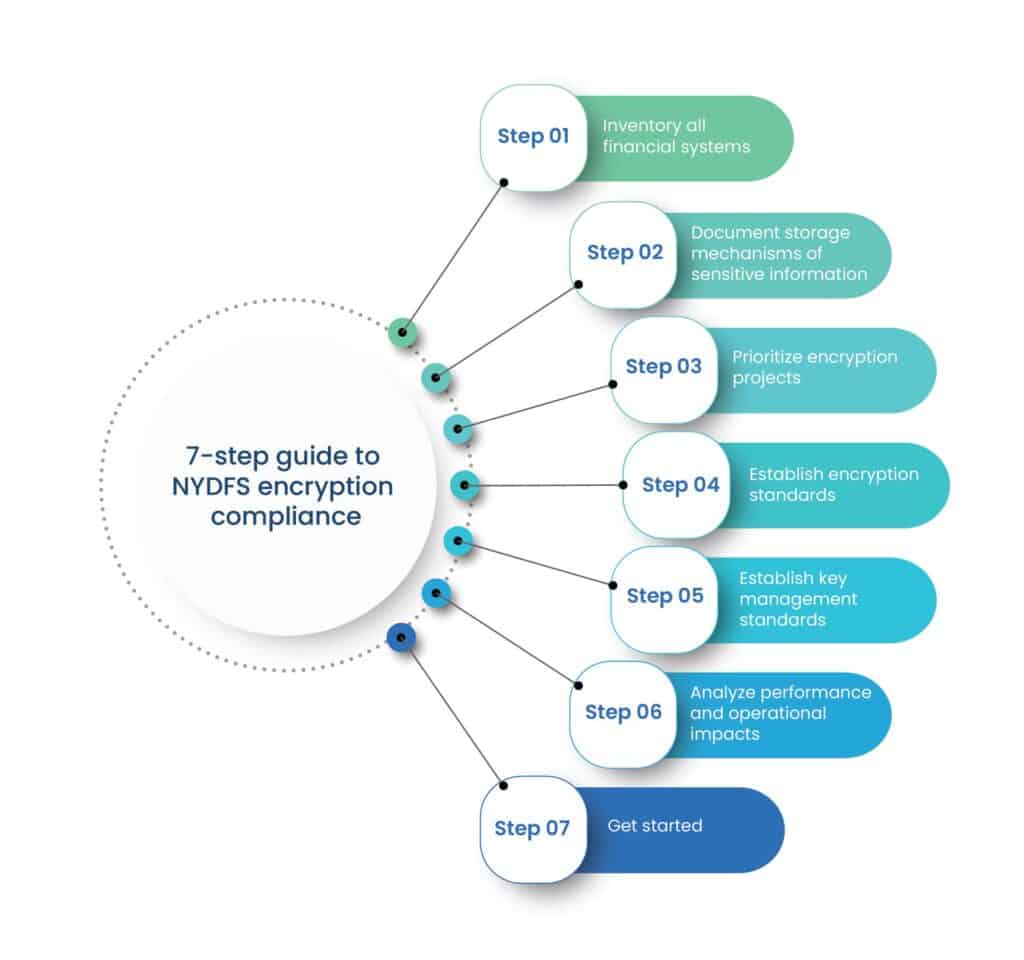
1. Inventory all financial systems

Conduct a thorough audit of all IT systems within the organization that handle financial data. This includes databases, applications, servers, and any other systems where financial information may be stored or processed. The goal is to ensure complete visibility into all systems that need to be secured and made compliant with encryption requirements.

2. Document storage mechanisms of sensitive information

Document the specific storage mechanisms used for Non-Public Information (NPI) within each system identified in the inventory. 

This documentation should include details such as:

  • The types of data stored, 
  • The locations of the data within the system, and 
  • The encryption status (if any). 

This step is crucial for regulatory compliance and for planning the implementation of encryption measures.

3. Prioritize encryption projects

Prioritize systems and applications for encryption based on a risk-based approach. 

Consider factors such as:

  • The sensitivity of the data stored, 
  • The volume of data, 
  • The risk of exposure, 
  • Compliance obligations (such as NYDFS requirements), and 
  • The potential operational impact of implementing encryption measures. 

This helps allocate resources effectively and focus on securing the most critical assets first.

4. Establish encryption standards

Adopt robust encryption standards to safeguard data at rest. NIST-compliant, 256-bit AES encryption is widely recognized as a secure and defensible encryption strategy. 

Ensure that encryption measures are implemented consistently across major operating systems used within the organization.

5. Establish key management standards

Proper key management is essential for maintaining the integrity and confidentiality of encrypted data.

6. Analyze performance and operational impacts

Conduct a thorough analysis of the performance and operational impacts of implementing encryption measures. 

To anticipate any potential challenges or bottlenecks, assess factors such as: 

  • CPU usage, 
  • backup procedures, 
  • storage requirements, and 
  • overall system performance

This analysis helps in optimizing encryption implementation and minimizing disruptions to business operations.

7. Get started

Overcome potential barriers and initiate encryption projects. Secure commitment from senior management, allocate adequate IT resources, and ensure alignment with organizational objectives. 

Begin implementation with a clear plan and timeline, focusing on achieving compliance with NYDFS encryption requirements and enhancing the organization’s cybersecurity posture.

NYDFS cybersecurity regulation compliance challenges 
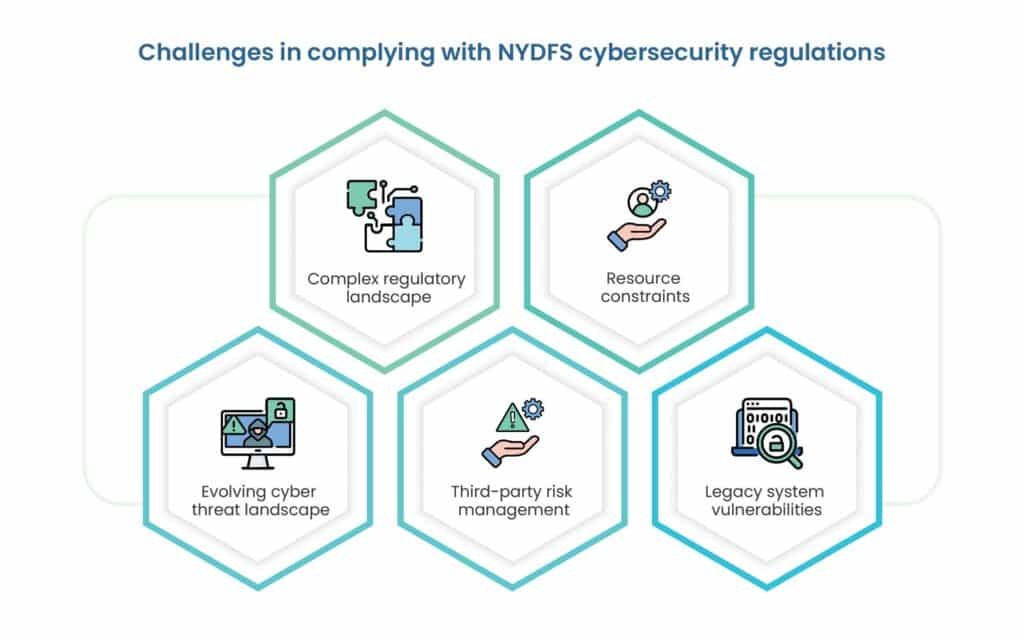
Complying with NYDFS cybersecurity regulation can pose challenges for financial institutions, including resource constraints, technology limitations, and evolving cyber threats. 

1. Complex regulatory landscape

Financial institutions operating in New York State encounter a complex regulatory landscape characterized by overlapping cybersecurity regulations and compliance requirements. Navigating these regulations while maintaining compliance with NYDFS cybersecurity regulations poses a significant challenge for organizations.

This necessitates:

  • Thorough understanding of regulatory obligations
  • Diligent compliance efforts

2. Resource constraints

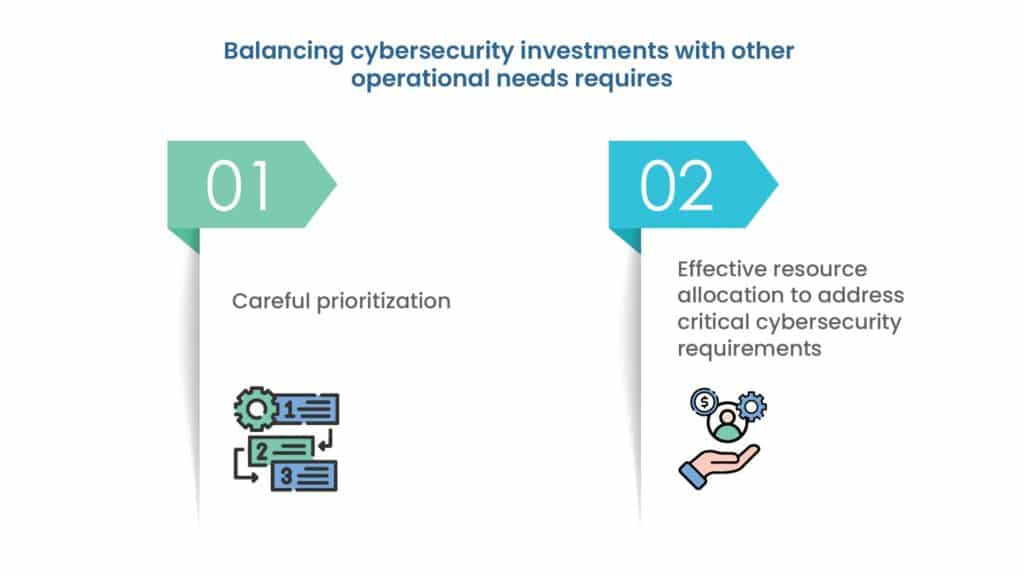
Resource constraints, including limited budgets, personnel shortages, and competing priorities, present formidable challenges for financial institutions striving to achieve compliance with NYDFS cybersecurity regulation. 
3. Evolving cyber threat landscape

The dynamic and evolving nature of the cyber threat landscape poses ongoing challenges for financial institutions in mitigating cyber risks and maintaining compliance with NYDFS cybersecurity regulations. 

Adversarial tactics continue to evolve, with cybercriminals employing increasingly sophisticated techniques to exploit vulnerabilities and evade detection. 
4. Third-party risk management

Managing third-party risks presents a significant compliance challenge for financial institutions subject to NYDFS cybersecurity regulation. The interconnected nature of the financial services industry exposes organizations to cybersecurity risks associated with third-party vendors and service providers. 

To mitigate third-party risks and maintain compliance, organizations must:

  • Establish robust vendor risk management programs, 
  • Conduct thorough due diligence, and 
  • Implement contractual safeguards

5. Legacy system vulnerabilities

Legacy IT systems and infrastructure pose inherent cybersecurity vulnerabilities for financial institutions, complicating compliance efforts with NYDFS cybersecurity regulations. 

Outdated software, unsupported hardware, and legacy applications may lack essential security features and receive limited or no vendor support, increasing the risk of cyber threats and regulatory non-compliance. Implementing strategies to modernize legacy systems, such as phased upgrades, virtualization, and cloud migration, can help address these vulnerabilities and enhance cybersecurity posture.

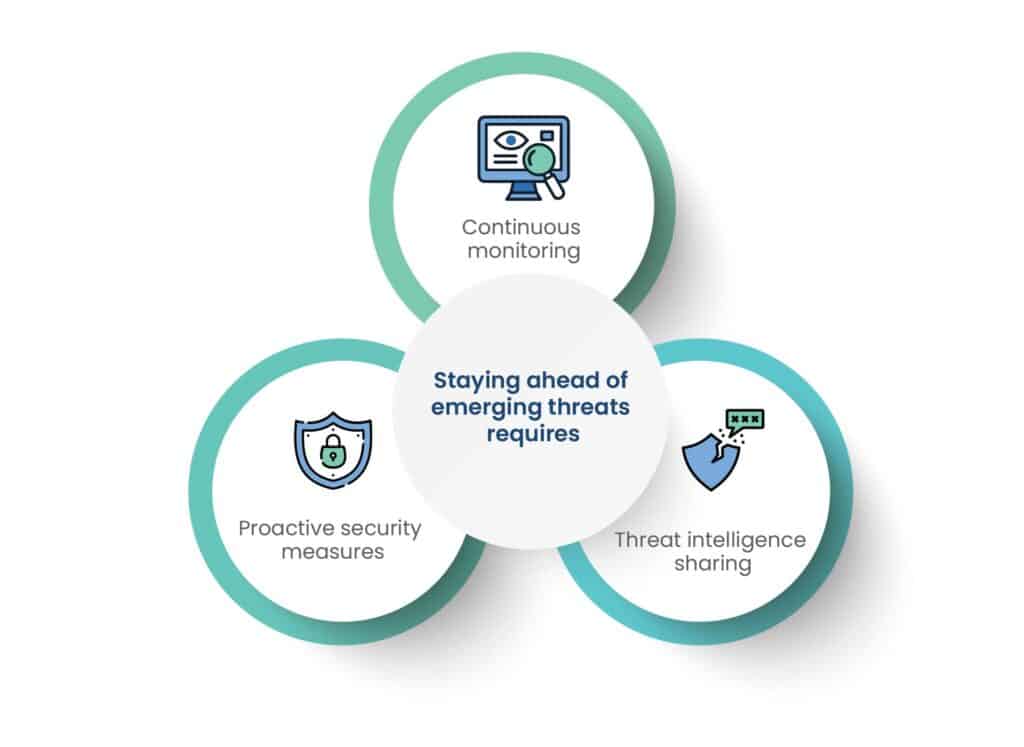
To overcome these challenges, organizations should consider implementing best practices such as:Investing in advanced cybersecurity technologies and threat intelligence capabilities.Enhancing employee training and awareness programs to promote a culture of cybersecurity awareness.Collaborating with industry peers and third-party service providers to share cybersecurity best practices and threat intelligence.Engaging with regulators and industry associations to stay informed about emerging cybersecurity risks and regulatory developments.

Strategies for effective compliance implementation
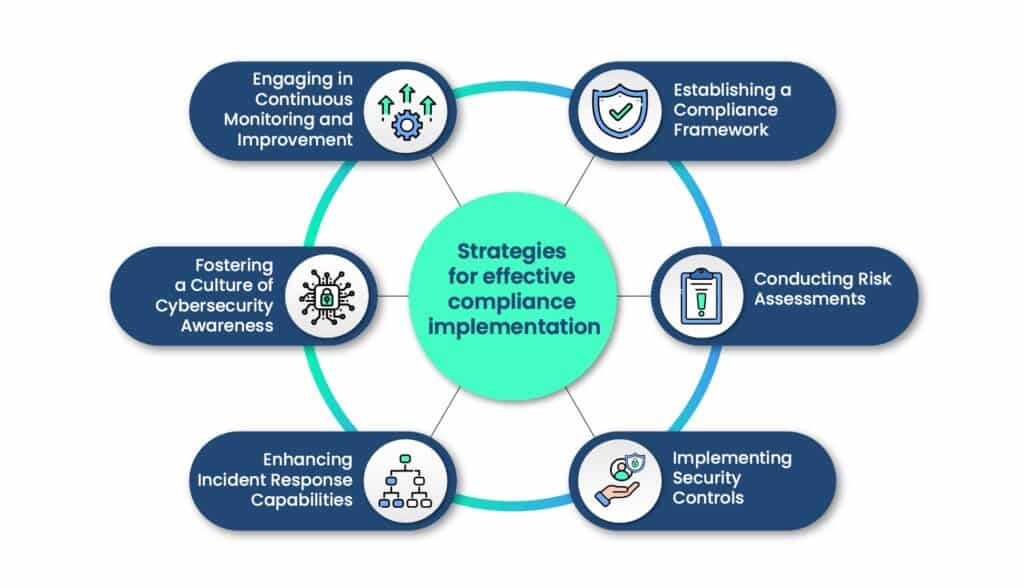
  • Establishing a Compliance Framework
    • Develop a comprehensive framework aligning policies, procedures, and controls with industry best practices and regulatory guidelines.
    • Ensure systematic coverage of cybersecurity measures to meet NYDFS regulation requirements effectively.
  • Conducting Risk Assessments
    • Identify, evaluate, and prioritize cybersecurity risks through regular risk assessments.
    • Gain insights into vulnerabilities and areas for improvement to inform decision-making and resource allocation.
  • Implementing Security Controls
    • Deploy technical, administrative, and physical controls such as access controls, encryption protocols, and intrusion detection systems.
    • Create multiple layers of security to prevent unauthorized access and protect against cyber threats.
  • Enhancing Incident Response Capabilities
    • Develop and test incident response plans for detection, notification, containment, eradication, and recovery.
    • Regularly review, update, and communicate plans to ensure readiness to address cybersecurity incidents effectively.
  • Fostering a Culture of Cybersecurity Awareness
    • Invest in employee training, awareness programs, and security awareness campaigns.
    • Educate staff about cybersecurity best practices, policies, and procedures to promote vigilance and accountability.
  • Engaging in Continuous Monitoring and Improvement
    • Implement robust monitoring mechanisms, security controls, and performance metrics.
    • Analyze security events, incident reports, and compliance metrics to identify areas for enhancement and drive continuous improvement.

For expert assistance in compliance with cybersecurity regulations such as 23 NYCRR 500 and fortifying IBM i security, Scrut offers comprehensive solutions and resources. 

Best practices for compliance

Despite the challenges associated with NYDFS cybersecurity regulation, financial institutions can adopt several best practices to facilitate compliance and strengthen their cybersecurity posture:

  • Conduct comprehensive risk assessments to identify and prioritize cybersecurity risks.
  • Implement robust access controls, encryption protocols, and data protection measures.
  • Develop and test incident response plans to ensure readiness to detect, respond to, and recover from cybersecurity incidents.
  • Enhance employee training and awareness programs to promote a culture of cybersecurity awareness and vigilance.
  • Establish effective vendor risk management processes to assess, monitor, and mitigate third-party risks.
  • Invest in modernizing legacy systems and infrastructure to address security vulnerabilities and improve resilience against cyber threats.

Wrapping up

In conclusion, achieving compliance with NYDFS encryption regulations is not just about meeting legal requirements; it’s about safeguarding sensitive financial data and bolstering cybersecurity measures. 

By following the 7-step approach outlined in this guide, financial institutions can establish a robust encryption framework that protects against data breaches and ensures regulatory adherence.

Act now to safeguard sensitive financial data and bolster cybersecurity. Evaluate, prioritize, and implement encryption measures today with Scrut to protect your organization from potential threats. Secure your data. Protect your business. Choose Scrut.

Frequently Asked Questions

1. What is NYDFS encryption compliance, and why is it important for financial institutions?

NYDFS encryption compliance refers to adhering to the encryption requirements outlined by the New York Department of Financial Services (NYDFS) to protect sensitive financial data. It is crucial for financial institutions to comply with these regulations to mitigate the risk of data breaches, safeguard customer information, and maintain trust and integrity in the financial system.

2. What types of data are subject to NYDFS encryption requirements?

NYDFS encryption requirements typically apply to sensitive financial data, including personally identifiable information (PII), account numbers, social security numbers, and other confidential information that could be exploited if exposed.

3. What are the key components of a NYDFS encryption compliance program?

 A comprehensive NYDFS encryption compliance program typically includes encryption of data at rest and in transit, implementation of strong access controls, regular security assessments and audits, employee training on data security best practices, incident response protocols, and documentation of encryption policies and procedures.

4. What are the consequences of non-compliance with NYDFS encryption regulations?

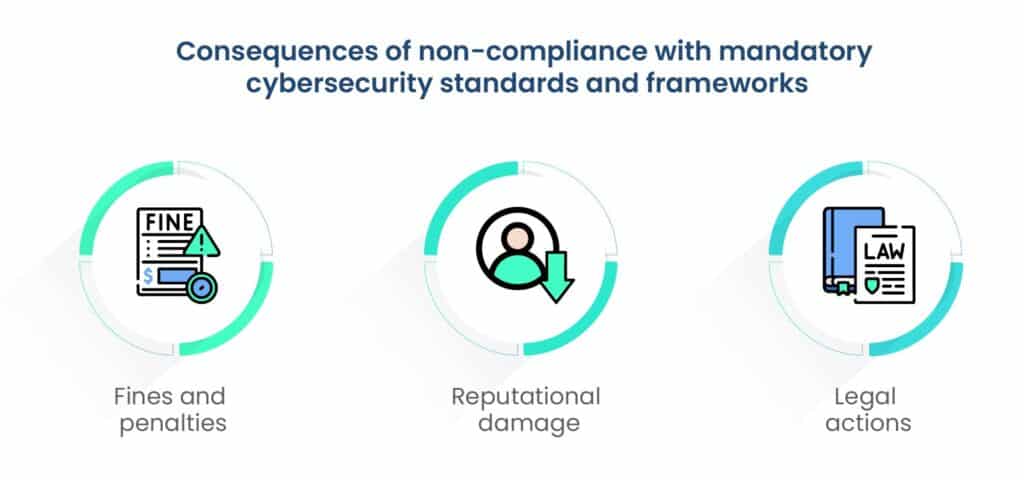
Non-compliance with NYDFS encryption regulations can result in severe penalties, including fines and sanctions imposed by the NYDFS. Additionally, data breaches resulting from inadequate encryption measures can lead to reputational damage, loss of customer trust, and legal liabilities for financial institutions.

5. How can financial institutions ensure compliance with NYDFS encryption requirements?

Financial institutions can ensure compliance with NYDFS encryption requirements by conducting a comprehensive risk assessment to identify sensitive data, implementing robust encryption solutions to protect data both at rest and in transit, regularly monitoring and auditing encryption controls, maintaining documentation of encryption policies and procedures, and staying updated with evolving regulatory requirements through ongoing training and compliance initiatives.

Authored by

Aayush Ghosh Choudhary
Co-founder & CEO at Scrut

Understanding NYDFS: New York Department of Financial Services

The New York Department of Financial Services (NYDFS) is the state regulatory agency responsible for supervising and regulating financial services and products in New York State. It was established in 2011 through the merger of the New York State Banking Department and the New York State Insurance Department.

NYDFS plays a crucial role in safeguarding the integrity of New York’s financial markets and protecting consumers from financial fraud and abuse

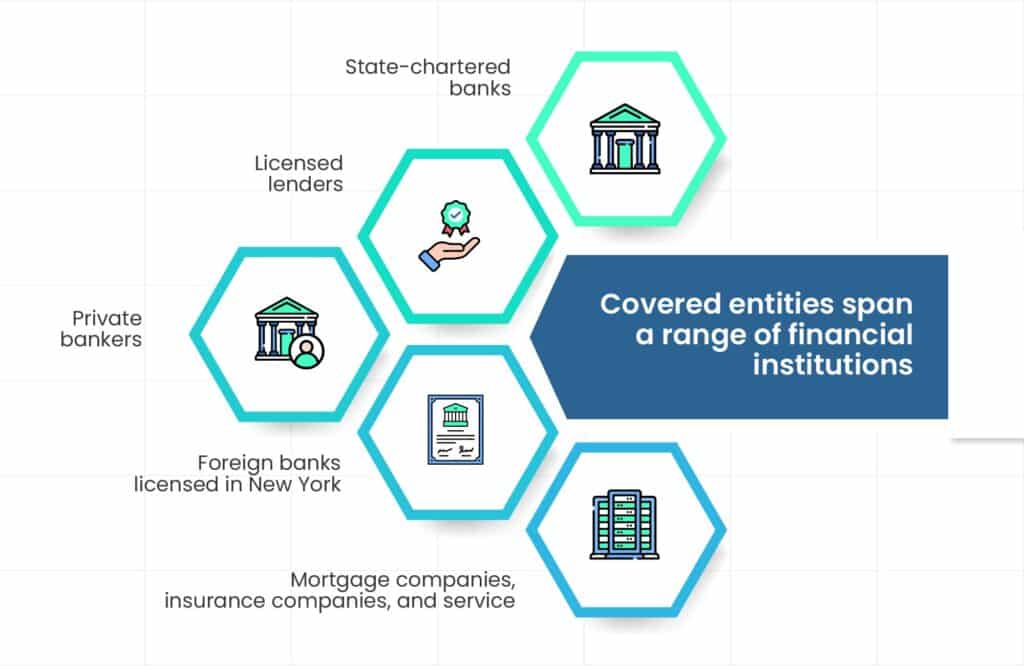
The department oversees a wide range of financial institutions, including banks, insurance companies, mortgage lenders, and other financial services providers.

NYDFS regulates various aspects of the financial services industry, including licensing, supervision, enforcement, and consumer protection. Its regulatory authority extends to both traditional financial institutions and emerging financial technologies, reflecting the evolving nature of the financial services landscape.

What is the NYDFS Cybersecurity Regulation?

The New York State Department of Financial Services (NYDFS) introduced its cybersecurity regulation in response to the increasing frequency and sophistication of cyber threats targeting financial institutions. 

The regulation aims to protect consumers’ sensitive data and ensure the stability and integrity of the financial services industry within the state. 

These elements comprise various sub-regulations and prerequisites. Failure to comply with NYDFS regulations can result in severe penalties, including fines, sanctions, and even loss of licensure, which can significantly impact a company’s reputation and bottom line.

Who falls under the scope of the NYDFS cybersecurity regulation?

The NYDFS Cybersecurity Regulation encompasses entities operating under or mandated to operate under DFS licensure, registration, or charter, including DFS-regulated entities and unregulated third-party service providers to regulated entities. 

Covered institutions are mandated to tackle emerging cybersecurity challenges as outlined in the NYDFS Cybersecurity Regulation, which exceeds industry standards in several aspects. 

Key requirements include data encryption, annual certification for compliance verification, implementation of enhanced multi-factor authentication for inbound network connections, and mandatory documentation and reporting of all cybersecurity events.

While there are exemptions to certain provisions of the Regulation, they apply to organizations with fewer than 10 employees, generating less than $5 million in gross annual revenue from New York operations over the past three years, or holding less than $10 million in year-end total assets.

A cybersecurity initiative in accordance with the NYDFS Cybersecurity Framework will conform to several essential mandates, following the framework established by the NIST Cybersecurity Framework:

  • Identification of all cybersecurity threats, whether internal or external.
  • Implementation of defense mechanisms to safeguard against these threats.
  • Utilization of systems to detect cybersecurity incidents promptly.
  • Prompt response to all identified cybersecurity incidents.
  • Undertaking measures for recovery following each cybersecurity event.
  • Compliance with diverse obligations for regulatory reporting.

Phased implementation of NYDFS

The NYDFS Cybersecurity Regulation (23 NYCRR 500) mandates cybersecurity standards for financial institutions under the jurisdiction of the New York Department of Financial Services (NYDFS). 

Introduced on February 16th, 2017, following feedback from both industry stakeholders and the public, these regulations consist of 23 sections detailing the criteria for establishing and executing a robust cybersecurity framework. 

Covered institutions are obliged to evaluate their cybersecurity vulnerabilities and formulate strategies to preemptively mitigate these risks. 

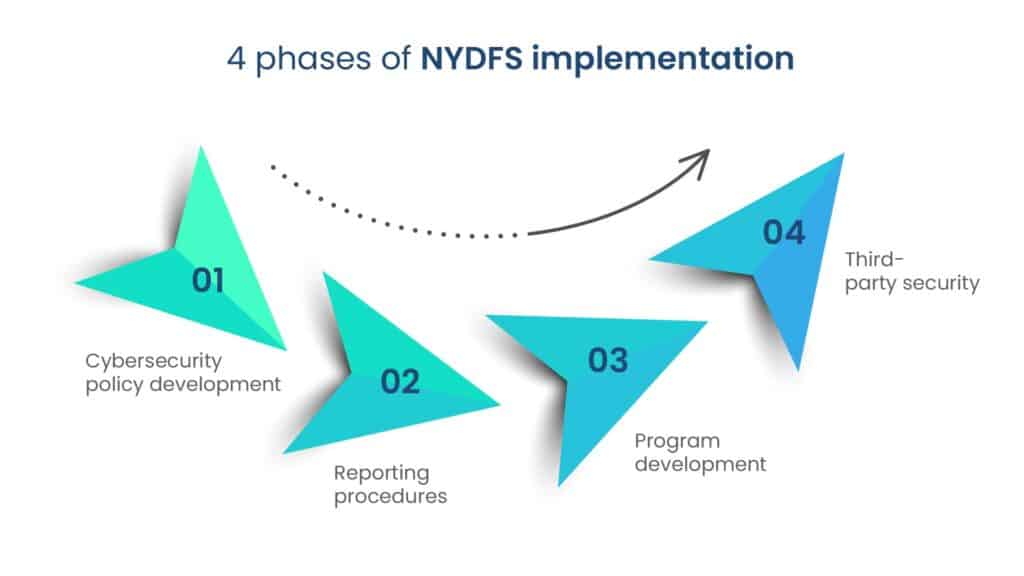
The regulation incorporates a phased implementation approach comprising four phases, affording organizations the opportunity to progressively enhance their cybersecurity protocols and safeguards.

Phase 1: Cybersecurity policy development

The commencement of the NYDFS Cybersecurity Regulation on February 15, 2018, ushered in a series of requirements for covered organizations, including the establishment of a comprehensive cybersecurity policy. 

This policy mandate encompasses the formulation of an incident response plan, necessitating data breach notifications within 72 hours of detection. 

Aligned with industry best practices and ISO 27001 standards, the policy must cover critical areas such as:

  • Information security, 
  • Access controls, 
  • Disaster recovery planning, 
  • Systems and network security, and 
  • Customer data privacy. 

Moreover, organizations must conduct regular risk assessments to inform their cybersecurity posture and ensure ongoing compliance with the regulation.

Phase 2: Reporting procedures

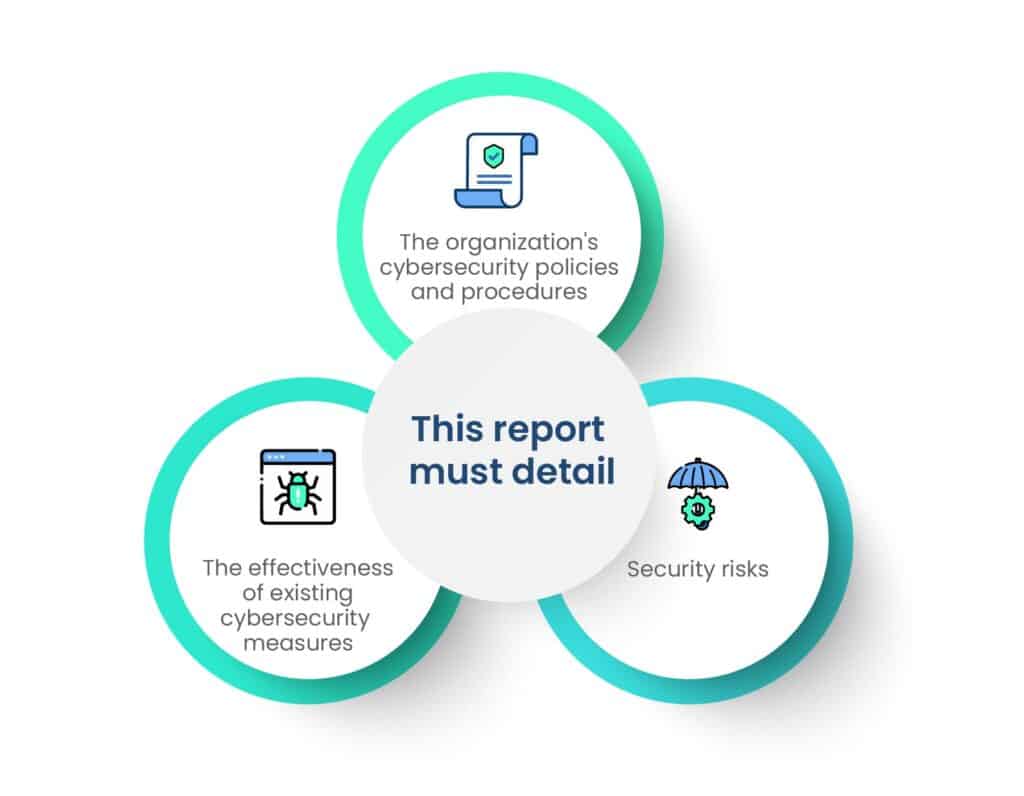
Under phase two of the NYDFS Cybersecurity Regulation, which took effect on March 1, 2018, Chief Information Security Officers (CISOs) are tasked with preparing an annual report. 

Additionally, covered institutions must develop and implement a cybersecurity program that continuously evaluates vulnerabilities, enabling proactive responses to emerging threats and compliance with regulatory mandates.

Phase 3: Program development

Phase three of the regulation, effective as of September 3, 2018, mandates covered institutions to establish a comprehensive cybersecurity program. 

Financial institutions subject to NYDFS regulation must develop comprehensive cybersecurity programs tailored to their specific risks and operational requirements. 

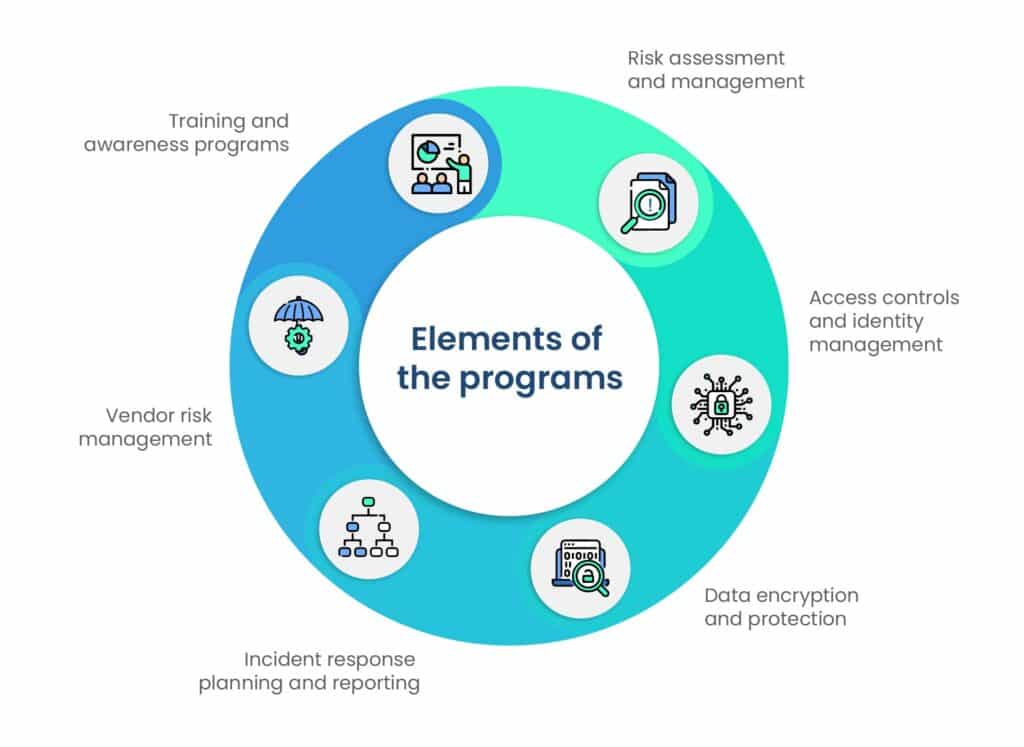
These programs typically include elements such as:

This program encompasses various key elements, including:

  • Maintenance of an audit trail reflecting threat detection and response activities.
  • Written documentation of procedures for in-house and third-party applications.
  • Detailed data retention policies, and robust security control measures such as encryption.

The program aims to ensure that organizations have effective mechanisms in place to safeguard sensitive data and systems from cyber threats.

Phase 4: Third-party security

The final phase, effective since March 1, 2019, requires covered institutions to finalize policies regarding third-party access to systems and files covered by the regulation. 

These policies must cover:

  • A risk assessment of third-party service providers
  • Security requirements for conducting business with such entities
  • Processes for evaluating the effectiveness of third-party security practices
  • Periodic assessments of third-party policies and controls

Additional requirements

  • Covered entities must employ qualified and continuously trained cybersecurity personnel to manage evolving threats effectively.
  • They are required to notify the NYDFS about all cybersecurity events that carry a “reasonable likelihood” of causing material harm, enabling regulatory oversight and intervention.
  • Access privileges must be monitored and limited to prevent unauthorized access to sensitive data and systems.
  • Compliance with data encryption, multi-factor authentication, incident reporting, and annual certification requirements is mandatory to enhance cybersecurity resilience and regulatory compliance.

Consequences and penalties for violations

While details regarding fines for violations remain undisclosed, penalties for violations will be determined, with potential ramifications for covered entities. 

As the regulation becomes fully enforced, violations may be alleged and founded, potentially leading to public disclosure of fees and other consequences.

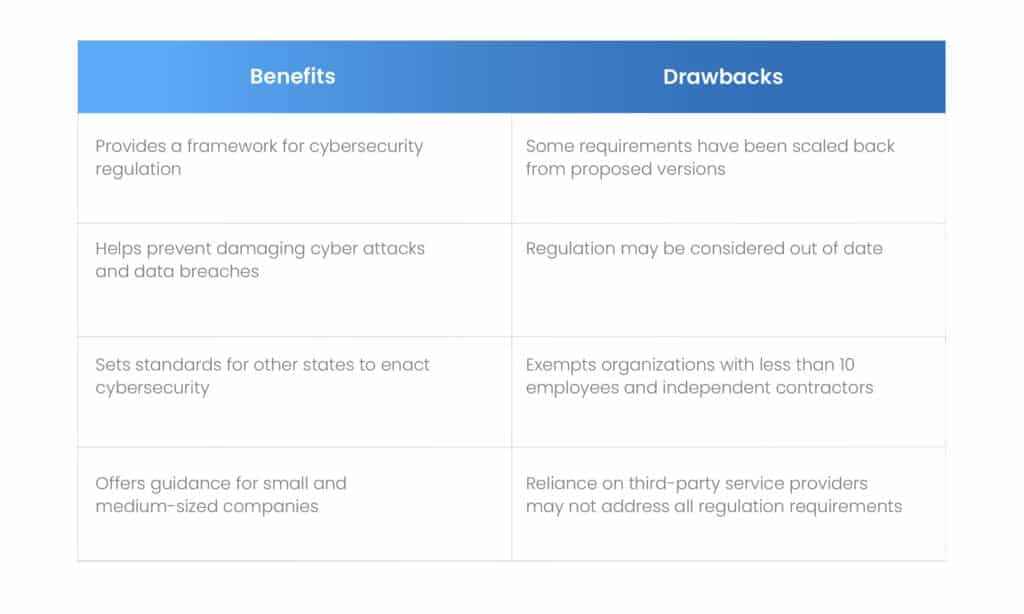
NYDFS Regulation: Benefits and drawbacks 

Guidelines for adhering to NYDFS cybersecurity regulation

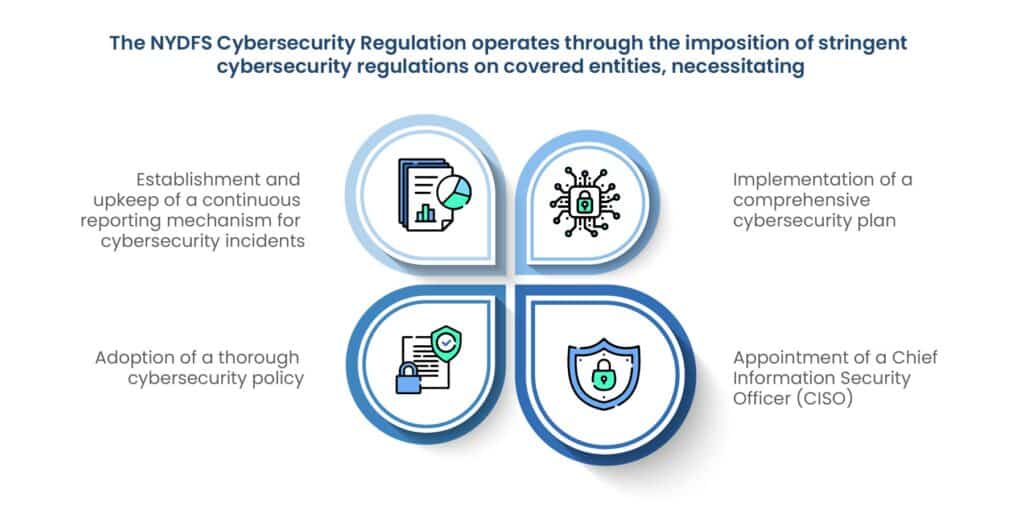
Navigating the demands of the new NYDFS Cybersecurity Regulation poses a pressing challenge for financial institutions. Key practices involve timely compliance with all stipulations, careful attention to deadlines, and the appointment of a proficient Chief Information Security Officer (CISO) to orchestrate an effective response. 

To prepare for compliance with the NYDFS Cybersecurity Regulation, it is imperative to:

  1. Evaluate whether your institution falls under the “covered” category. While exemptions exist, exempt organizations must officially file within 30 days after the end of the latest fiscal year. For clarification on your organization’s status, consult the NYDFS website’s “Who We Supervise” page.
  1. Formulate a regulatory compliance team within your organization. Every covered, non-exempt financial institution should designate a CISO. While the CISO bears ultimate responsibility for compliance, achieving and sustaining compliance typically necessitates a collaborative effort, given the enterprise-wide implications of the new regulations.
  1. Assess your organization’s risk profile comprehensively. Although the required Risk Assessment was due by March 1, 2018, ongoing, periodic risk assessments are crucial for identifying vulnerabilities and proactively addressing emerging threats.
  1. Adhere strictly to all prescribed deadlines. The final provisions of the new regulation came into effect on March 1, 2019. Refer to the complete regulation document for further clarity on compliance requirements.

Wrapping up

In conclusion, the New York Department of Financial Services (NYDFS) plays a crucial role in regulating the financial services industry and safeguarding against cyber threats. By enforcing cybersecurity regulations and standards, NYDFS aims to protect sensitive data, mitigate risks, and enhance the resilience of financial institutions. 

As the financial landscape continues to evolve and cyber threats become more sophisticated, compliance with NYDFS regulations is paramount for organizations operating in the financial sector. 

To ensure compliance and bolster cybersecurity measures, organizations should leverage tools like Scrut, which provides comprehensive cybersecurity solutions tailored to NYDFS requirements. With Scrut, organizations can strengthen their security posture, achieve regulatory compliance, and safeguard their reputation and assets in an increasingly digital world. Book a demo today to learn more.

Frequently Asked Questions

1. What is the New York Department of Financial Services (NYDFS)?

The NYDFS is a regulatory agency responsible for supervising financial services and products, ensuring the safety and soundness of financial institutions, and protecting consumers and markets in New York State.

2. What types of financial institutions does NYDFS regulate?

NYDFS regulates a wide range of financial institutions, including banks, insurance companies, mortgage lenders, and other financial services providers operating in New York State.

3. What are the main responsibilities of NYDFS?

The main responsibilities of NYDFS include licensing and supervising financial institutions, enforcing laws and regulations related to financial services, conducting investigations and examinations, and promoting financial stability and consumer protection.

4. How does NYDFS enforce compliance with regulations?

NYDFS enforces compliance with regulations through examinations, investigations, and enforcement actions. It conducts on-site examinations to assess the financial condition and compliance with the laws and regulations of regulated entities. Non-compliance may result in fines, penalties, or license revocations.

5. What impact does NYDFS have on cybersecurity standards in the financial services industry?

NYDFS has introduced cybersecurity regulations, such as the Cybersecurity Requirements for Financial Services Companies (23 NYCRR 500), which establish minimum cybersecurity standards for covered entities. These regulations require entities to implement robust cybersecurity programs, conduct risk assessments, and report cybersecurity incidents to NYDFS.

Authored by

Aayush Ghosh Choudhary
Co-founder & CEO at Scrut

Scrut Automation has raised $10 million in growth capital

We are entering the Spring of 2024 with fresh new capital – to aid us in our vision of making GRC processes frictionless. 


We came across the problem of security compliance when Jayesh (my Co-founder) and I  were selling a SaaS product for large enterprises. As a small team of less than five, we had to work hard to demonstrate our security, compliance, and risk posture so that our prospects would take us seriously. 

We built a few low-fidelity automations to help us get through this, and in the process, uncovered a pain point that we could relate to and were excited by.  When we dug deeper and spoke to other companies to see how they dealt with the problem, we realized a gaping hole in the market. And that’s when Scrut Automation was born.

Two years in, what started as a passion project, has become a full-stack GRC platform. 

Untangling the compliance and risk complexities

While the burden on small and mid-market companies to comply with multiple regulations and standards has increased many times over in recent years, most companies are still dealing with spreadsheets, drive folders, and shared documents, to manage their compliance and risk programs. The broken and manual processes often yield risk registers that are static, point-in-time, and seldom reviewed before the next audit cycle. 

Compliance and risk management is a team sport – and GRC teams have to work with several different internal (such as IT, DevOps, HR, or Engineering) and external stakeholders (such as pentesters, auditors, or customer audit teams) to get the job done on a continuous basis. 

But nobody likes chasing or getting chased. And nobody likes logging into ten different tools everyday to manage the same information. 

And Yet Another Framework (YAF) Alert! Nobody likes to do the same thing again and again

The processes are manual and error-prone, and GRC teams are constantly fighting a thousand fires almost all the time. The fatigue is real, almost palpable. 

While there is a clear need for centralizing GRC artifacts, automating evidence collection workflows, and tracking compliance tasks, legacy GRC tools are cumbersome, hard to deploy, and, quite frankly – an overkill.

The idea behind Scrut is quite simple – make GRC frictionless and delightful. 

So we built the Scrut Platform to solve this problem. The platform blends into users’ existing workflows and tech stack, quietly tracking compliance tasks, collecting evidence artifacts, and intimating people when tasks are due. And does so without stakeholders needing to switch from the platform they use daily, irrespective of their function. 

Additionally, it eliminates the YAF fatigue by cross-mapping common controls to multiple frameworks, so users never have to repeat the same task.

What’s Next for Scrut?

In the last two years, we have gathered believers – folks who share our obsession to make a relatively unsexy, and somewhat intimidating software category delightful and pragmatic for small and mid-market companies. 

  • We’ve grown from 3 founders obsessing over a problem to 120+ colleagues across three continents. 
  • We have launched 5 new modules, built in over 30 frameworks out of the box, added over 70 integrations to a growing library, and developed deeper process reconfigurability across the platform.
  • We’ve grown to 800+ customers across the globe, growing over 350% year on year. 
  • We got recognized as a momentum leader in Security Compliance in G2, and identified as a key player in the GRC segment by Gartner. 
  • We’ve added a clutch of angels and advisors like Sandeep Johri (Checkmarx), Sachin Lawande (Visteon), Shreesha Ramdas (Lumber), Davis Hake (Resilience), Vetri Vellore (Microsoft), Naresh Agarwal (Traceable) who share our vision. 

We’ve learned a few hard lessons, and our customers and advisors have been kind enough to help us navigate them. Our customers have continued to show faith in us and the problems we solve, and we continued to accelerate even as the markets turned difficult for software sales in the last few months.  

That is why I couldn’t be more excited to announce that Scrut has officially raised $10 million in growth capital, led by Lightspeed and MassMutual Ventures, to fuel our R&D efforts and accelerate our US go-to-market motion. This round brings our total raise to ~USD 21M since inception, with all our investors increasing their stake across each round. 

While funding rounds are not milestones alone, we acknowledge the continued (and strengthening) confidence our investors have shown in us.

I, and the Scrut team, are incredibly grateful for all the support our community – our customers, partners, auditors, advisors, investors, have shown us.

We really look forward to the next phase of our journey. We’ll keep our heads down, work hard, and continue to listen to our customers. 

Here’s to celebrating how much we’ve achieved together in such a short time, and to the incredible journey ahead! Cheers!

PS: If this topic interests you, please reach out to me; I would love to chat and exchange notes! 

Authored by

Aayush Ghosh Choudhary
Co-founder & CEO at Scrut

6 reasons why businesses should prioritize IT and cyber risk assessment

Cyber threats are rising by leaps and bounds. Threat actors are using artificial intelligence and machine learning to their advantage to carry out more sophisticated attacks.

Despite rising cyber threats, many organizations overlook cybersecurity, driven by factors like limited awareness, resource constraints, and complacency from a lack of past incidents. The complexity of cyber threats further complicates prioritization amidst competing business needs. 

Yet, prioritizing IT and cyber risk assessment is crucial for effective cybersecurity. Understanding threats, assessing impacts, and implementing countermeasures are fundamental steps in mitigating risks.

The following are the six reasons organizations should consider IT and cyber risk assessment as their top priority.

1. Compliance and Regulatory Requirements

Compliance is crucial for organizations as it ensures adherence to legal, regulatory, and ethical standards, safeguarding their reputation and mitigating risks of penalties or legal action. 

By fostering a culture of ethical conduct and accountability, compliance also enhances trust among stakeholders, improves operational efficiency, and fosters a positive work environment. 

There are many compliance standards and frameworks according to the business, location, and type of your organization. These standards include GDPR, HIPAA, FISMA, SOC 2, CCPA, and more.

IT and cyber risk assessments are instrumental in helping businesses meet compliance standards and regulatory requirements in several ways:

  • Identification of Risks: Risk assessments allow businesses to identify potential cybersecurity risks and vulnerabilities within their IT systems and infrastructure. This proactive approach enables organizations to address these risks before they lead to compliance breaches.
  • Adherence to Standards: By performing risk assessments, businesses can ensure they adhere to cybersecurity compliance standards and regulations. This includes assessing and documenting cybersecurity policies and procedures, which are often required for compliance.
  • Implementation of Best Practices: Cyber security risk assessments help organizations adopt and implement cybersecurity best practices, which are often aligned with regulatory requirements. This ensures that businesses not only meet the minimum compliance standards but also enhance their overall cybersecurity posture.
  • Continuous Monitoring and Improvement: Regular risk assessments allow businesses to continuously monitor their cybersecurity posture and identify areas for improvement. This iterative process ensures ongoing compliance with evolving regulatory requirements and industry standards.

2. Protection Against Cyber Threats

According to recent statistics, cyberattacks have been increasing in frequency and sophistication. In 2023, Kaspersky detected almost 125 million malicious files in total, a 3% increase from the previous year. 
Additionally, ransomware attacks surged by 55.5%, highlighting the evolving nature of cyber threats. These statistics emphasize the urgent need for organizations to assess and address vulnerabilities in their digital environments to mitigate the risk of falling victim to cyberattacks.

Risk assessments play a critical role in identifying vulnerabilities and mitigating the risk of various cyber threats, including phishing schemes, ransomware attacks, and data breaches. Here’s how they achieve this:

  • Identification of Vulnerabilities: Risk assessments systematically analyze an organization’s systems, networks, and processes to pinpoint weaknesses and vulnerabilities that could be exploited by cyber threats.
  • Prioritization of Threats: By assessing the likelihood and potential impact of different cyber threats, risk assessments help prioritize mitigation efforts, focusing on the most significant risks first.
  • Implementation of Controls: Based on the identified vulnerabilities and prioritized threats, organizations can implement appropriate security controls and measures to mitigate the risk of cyber threats, such as deploying email filtering systems to counter phishing attempts, installing anti-malware software to defend against ransomware attacks, and enforcing access controls to protect against unauthorized data breaches.

3. Prioritization of Critical Assets

The prioritization of critical assets involves identifying and ranking the most important components of an organization’s infrastructure, data, and systems based on their significance to the business operations and potential impact if compromised. 

This process allows organizations to allocate resources effectively, focus on protecting essential assets first, and mitigate risks more efficiently. 

Prioritization of assets serves as a strategic approach to bolstering cybersecurity defenses and safeguarding against potential threats, thereby enabling organizations to operate securely and resiliently in an increasingly complex digital environment. It is crucial for several reasons:

  • Risk Mitigation: By identifying and prioritizing critical assets, organizations can focus their resources on securing the most important components of their infrastructure. This targeted approach helps mitigate risks associated with potential cyber threats and vulnerabilities.
  • Business Continuity: Protecting critical assets ensures the continuity of essential business functions. By prioritizing their security, organizations minimize the impact of potential cyberattacks or disruptions, maintaining operational resilience even in the face of security incidents.
  • Resource Allocation: Effective allocation of resources is essential for optimizing cybersecurity efforts. By prioritizing critical assets, organizations can allocate resources more efficiently, focusing on areas that are most vulnerable or prone to cyber threats.

4. Enhanced Security Measures

Risk assessments serve as a foundation for implementing robust security measures by identifying vulnerabilities and threats within an organization’s systems and processes. Through comprehensive evaluation, organizations can pinpoint areas susceptible to cyber threats, prompting the implementation of targeted security controls. 

These measures may include encryption protocols to safeguard sensitive data, access controls to restrict unauthorized access, and employee training programs to enhance cybersecurity awareness and promote best practices. 

By aligning security measures with identified risks, organizations can bolster their overall cybersecurity posture and mitigate potential security breaches and data compromises effectively.

5. Informed Decision-Making

Assessing IT and cyber risks offers crucial insights that drive informed decision-making in resource allocation and cybersecurity investments. By understanding the organization’s risk landscape, decision-makers can prioritize areas of vulnerability and allocate resources effectively to mitigate potential threats. 

This proactive approach enables organizations to make strategic investments in cybersecurity measures tailored to address identified risks, thereby enhancing resilience against cyber threats and minimizing the likelihood of costly security incidents.

6. Cyber Insurance

By leveraging IT and cyber risk assessments, insurers can offer tailored cyber insurance solutions that accurately reflect an organization’s risk profile, ultimately enhancing cyber resilience and mitigating financial losses associated with cyber incidents.

  • Risk Evaluation: IT and cyber risk assessments provide insurers with a comprehensive understanding of an organization’s cybersecurity posture.
  • Underwriting Process: Insurers use risk assessments to evaluate cyber risks accurately before issuing a policy.
  • Premium Determination: The results of risk assessments influence premium rates, helping insurers tailor pricing to the level of risk exposure.
  • Policy Coverage: Assessments aid in determining the scope of coverage needed, ensuring that policies adequately protect against potential cyber threats.
  • Risk Mitigation: By identifying vulnerabilities and weaknesses, risk assessments enable organizations to implement measures that reduce the likelihood of cyber incidents, which may lead to fewer claims and lower premiums over time.
  • Enhanced Defenses: Insurers may provide incentives or discounts for organizations that demonstrate robust cybersecurity measures through risk assessments, encouraging proactive cyber security and risk management.
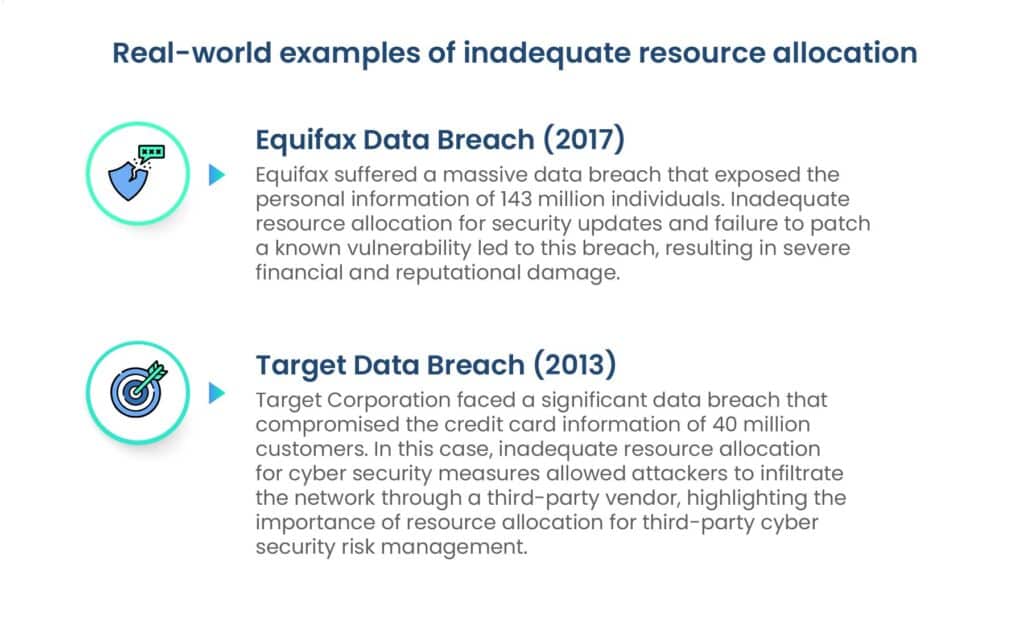
Target CorporationAfter suffering a massive data breach in 2013, Target invested heavily in cyber security and obtained cyber insurance. Their proactive risk management efforts helped them recover faster and mitigate financial losses.

Conclusion

By identifying vulnerabilities, prioritizing critical assets, and implementing robust security measures, businesses can mitigate the risk of cyber threats and enhance their resilience. Moreover, IT and cyber risk assessment not only help meet compliance requirements but also inform strategic decision-making and facilitate the procurement of tailored cyber insurance solutions.

Investing in IT and cyber security risk assessment is not just proactive—it’s a strategic imperative for organizations to safeguard their operations, protect their assets, and maintain stakeholder trust in an evolving digital landscape.

Protect Your Digital Future Today! Schedule Your Cyber security Risk Management with Scrut and Safeguard Your Business.

FAQs

1. Why is IT and cyber risk assessment important for organizations?

IT and cyber security risk assessment is crucial for identifying vulnerabilities in systems and processes, prioritizing critical assets, and implementing robust security measures. It helps organizations mitigate the risk of cyber threats and enhances overall resilience in the face of evolving cybersecurity challenges.

2. How can IT and cyber risk assessment protect organizations against cyber threats?

IT and cyber risk assessment identify vulnerabilities and prioritize threats, allowing organizations to focus on mitigating the most significant risks. By implementing appropriate security controls and measures, such as encryption protocols and access controls, businesses can effectively defend against various cyber threats, including phishing schemes, ransomware attacks, and data breaches.

3. What role does cyber insurance play in mitigating cyber risks?

Cyber insurance solutions tailored to an organization’s risk profile can mitigate financial losses associated with cyber incidents. IT and cyber risk assessment aid in evaluating cyber risks accurately, determining premium rates, defining policy coverage, and incentivizing proactive risk management efforts, ultimately enhancing cyber resilience and reducing financial exposure.

Authored by

Aayush Ghosh Choudhary
Co-founder & CEO at Scrut

Spanning the rift: Conventional risk management to cyber risk quantification

Traditional risk management is primarily focused on identifying, assessing, and mitigating risks associated with the financial, operational, and strategic aspects of an organization. It typically involves methods such as risk registers, qualitative assessments, and financial modeling to manage uncertainties in these areas. 

While this approach has proven effective for many years, the emergence of the digital age and increasing reliance on technology have introduced a new dimension of risk: cyber risk.

Cyber threats have become a pervasive and highly dynamic risk that organizations must confront. Traditional risk management methods often fall short when it comes to addressing cyber risks due to their evolving nature and potentially catastrophic consequences.

 As a result, there is a growing need for a shift towards cyber risk quantification, which involves the precise measurement and assessment of cyber risks in a quantifiable manner.

In this article, we will see how your organization can transition from traditional risk management methods to a more modern cyber risk quantification.

II. So, what does traditional risk management mean?

Traditional risk management is typically guided by the following principles:

  • Risk identification: The process begins with the identification of potential risks, which can include financial risks, operational risks, strategic risks, and compliance risks. Organizations aim to create a comprehensive list of potential threats and vulnerabilities.
  • Risk assessment: Once risks are identified, they are assessed in terms of their likelihood and potential impact on the organization. This assessment is often conducted using qualitative methods, such as risk matrices, and quantitative methods, such as financial modeling.
  • Risk mitigation: Organizations develop strategies and action plans to mitigate identified risks. These strategies may involve risk avoidance, risk reduction, risk transfer (e.g., through insurance), or risk acceptance.
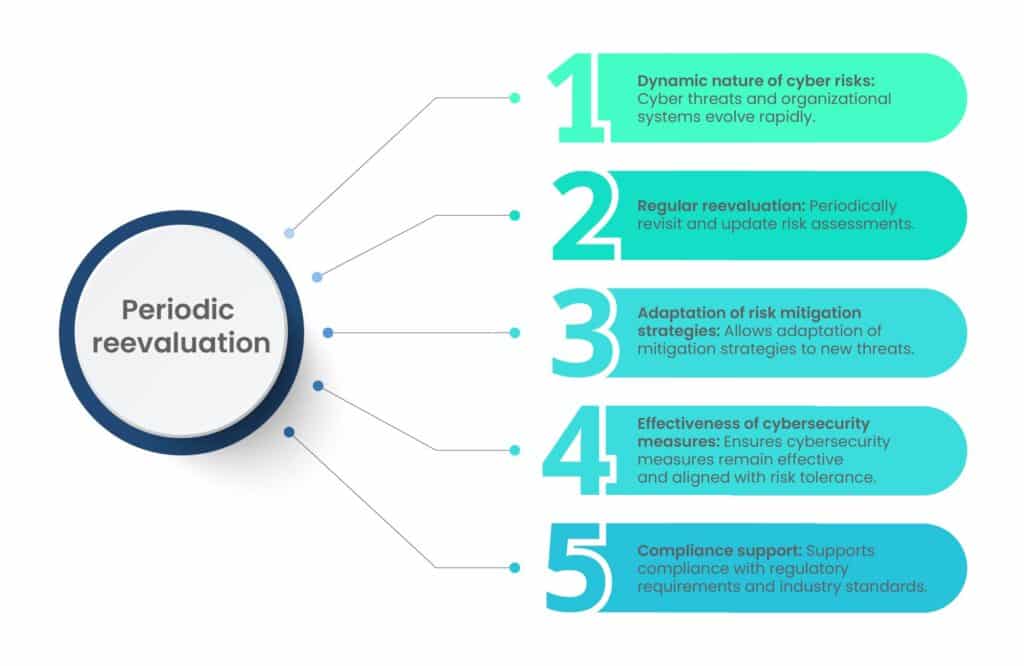
  • Monitoring and review: Continuous monitoring and periodic review of risk management strategies are essential to adapt to changing circumstances and evolving risks.

Limitations and challenges in traditional risk management

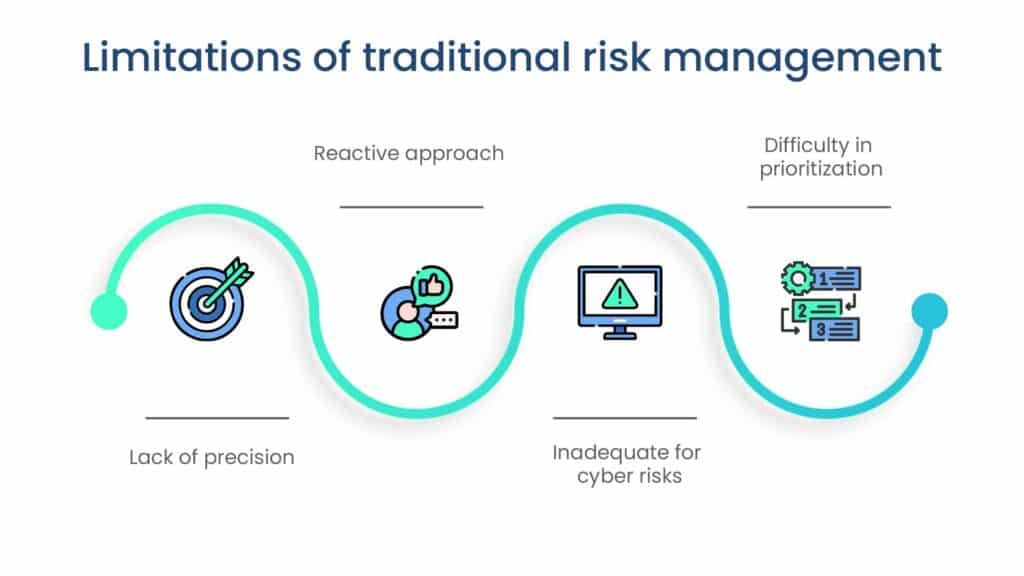
Traditional risk management, while effective for many types of risks, has several limitations and challenges:

  • Lack of precision: Qualitative assessments used in traditional risk management are subjective and lack precision, making it challenging to quantify and compare risks accurately.
  • Reactive approach: Traditional risk management is often reactive, addressing risks after they have materialized. This can lead to delayed responses and increased damage in case of unforeseen events.
  • Inadequate for cyber risks: Traditional methods are ill-suited to the rapidly evolving and highly technical nature of cyber risks. They often fail to provide real-time or predictive insights into cybersecurity threats.
  • Difficulty in prioritization: Traditional risk management may not effectively prioritize risks, leaving organizations uncertain about where to allocate resources most efficiently.

How traditional risk management falls short in addressing cyber risks

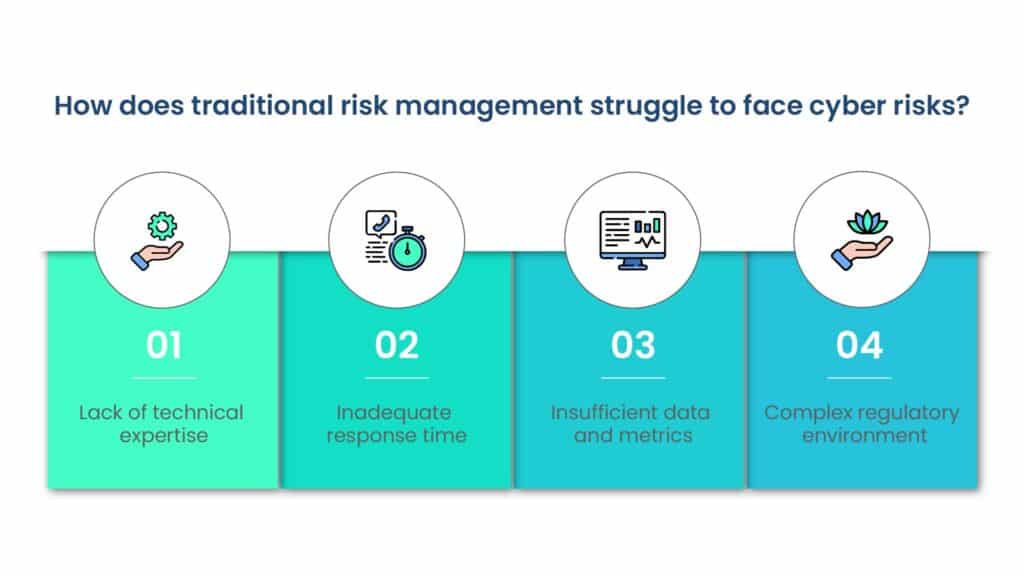
Traditional risk management faces significant challenges when it comes to addressing cyber risks. 

  • Lack of technical expertise: Traditional risk management practitioners often lack the technical expertise required to understand the complexities of cyber threats, vulnerabilities, and attack vectors. This knowledge gap can hinder accurate risk assessment and mitigation.
  • Inadequate response time: Cyber threats can escalate rapidly, and traditional risk management’s reactive approach may not provide organizations with the agility needed to respond in real-time, leaving them vulnerable to cyberattacks.
  • Insufficient data and metrics: Traditional risk management relies on historical data and may not have access to the real-time threat intelligence needed to assess cyber risks effectively. This can lead to underestimating the evolving cyber threat landscape.
  • Complex regulatory environment: Cybersecurity regulations and compliance requirements are continuously evolving. Traditional risk management may struggle to keep up with the ever-changing legal and regulatory landscape, potentially leading to non-compliance and legal issues.

III. The concept of cyber risk quantification

Unlike traditional risk management, which relies on subjective assessments and qualitative methods, cyber risk quantification leverages quantitative models and metrics to provide a more accurate and objective understanding of an organization’s cyber risk exposure.

Benefits of adopting a quantified approach to cyber risk

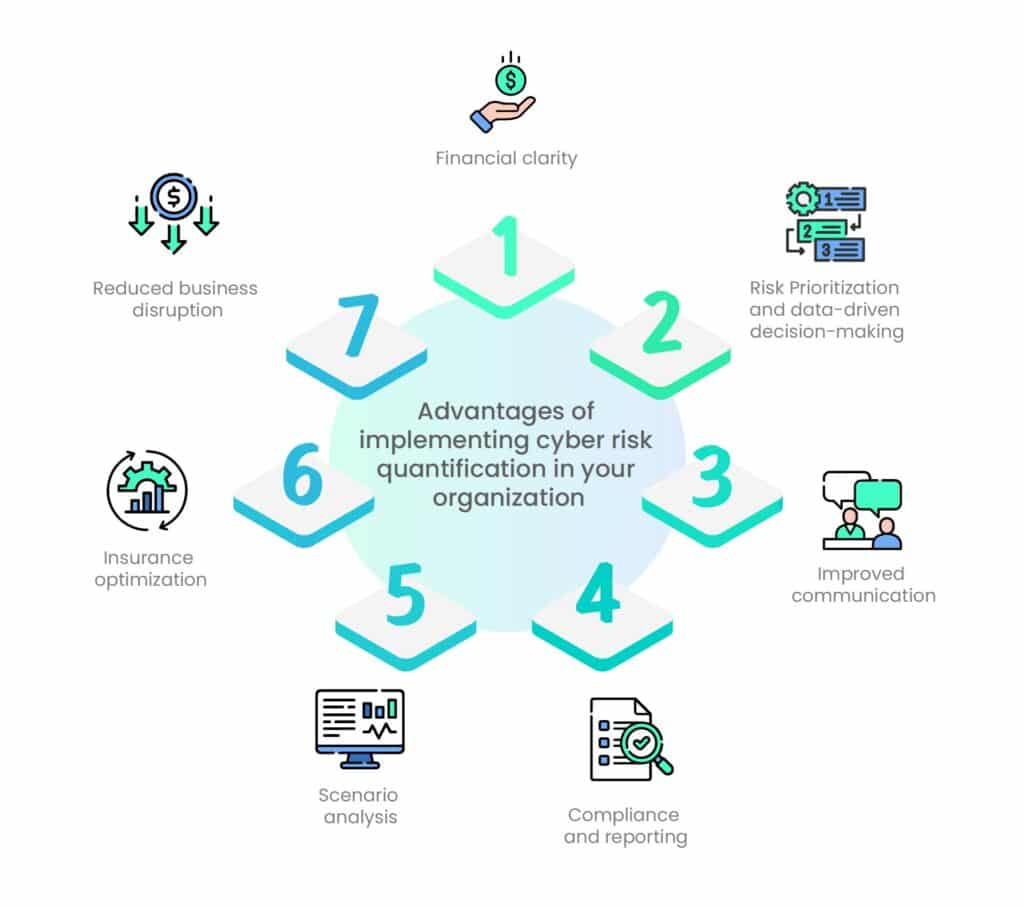
Adopting a quantified approach to cyber risk offers several advantages for organizations:

  • Improved decision-making: Cyber risk quantification provides decision-makers with objective data and metrics to prioritize cybersecurity efforts effectively. This enables informed decision-making regarding resource allocation and risk mitigation strategies.
  • Resource efficiency: Organizations can allocate resources more efficiently by focusing on addressing high-impact, high-probability cyber risks, thereby optimizing cybersecurity investments.
  • Strategic stakeholder communication: Quantified cyber risk data is easier to communicate to stakeholders, including executive leadership, boards of directors, insurers, and regulatory bodies. It enhances transparency and facilitates meaningful discussions about cybersecurity priorities.
  • Enhanced cyber resilience: By identifying and quantifying cyber risks proactively, organizations can strengthen their cybersecurity posture and resilience against potential threats.

IV. Key steps in transitioning to cyber risk quantification

A. Assess current risk management practices

Transitioning to cyber risk quantification involves several key steps, starting with assessing current risk management practices. This includes evaluating traditional methods like qualitative risk assessments, identifying gaps such as lack of focus on cyber threats, and reviewing cybersecurity policies. 

Organizations must engage stakeholders, benchmark against standards like ISO 27001 or NIST Cybersecurity Framework, and document findings. This lays the foundation for effective transition and enhancement of cyber risk management strategies.

B. Develop a cyber risk management strategy

Developing a strong cyber risk management strategy is vital for organizations moving towards cyber risk quantification. This involves defining clear objectives, prioritizing efforts based on organizational priorities, and creating a comprehensive strategy aligned with broader business continuity plans. 

Emphasizing communication, ongoing monitoring, and fostering a culture of continuous improvement are also crucial. By doing so, organizations can effectively transition to cyber risk quantification while adapting to evolving threats and organizational changes.

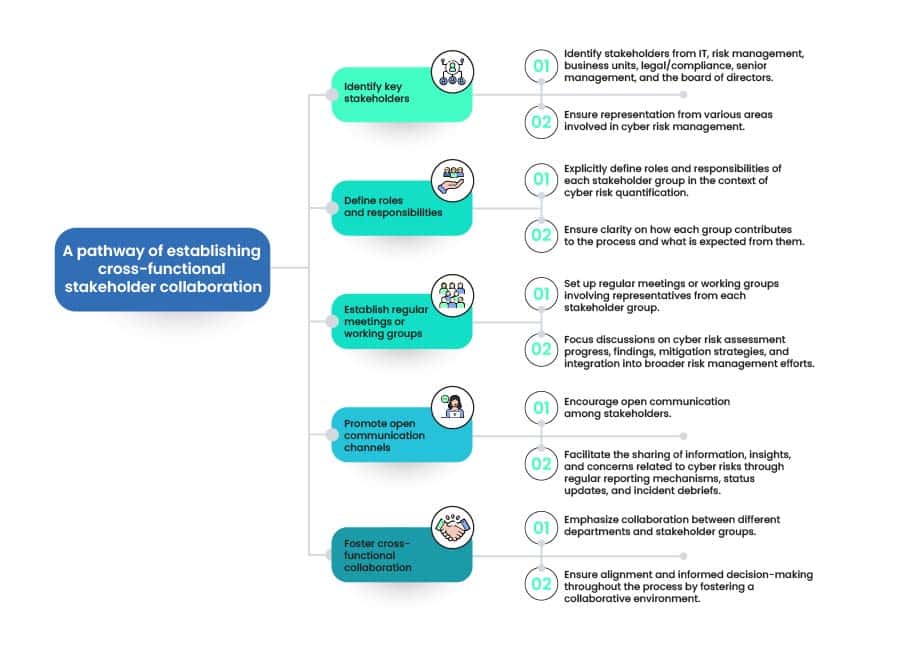
C. Establish cross-functional stakeholder collaboration

Establishing cross-functional stakeholder collaboration is crucial in transitioning from conventional risk management to cyber risk quantification because it facilitates communication, enables better risk mitigation strategies, and increases the likelihood of a sustainable transition.

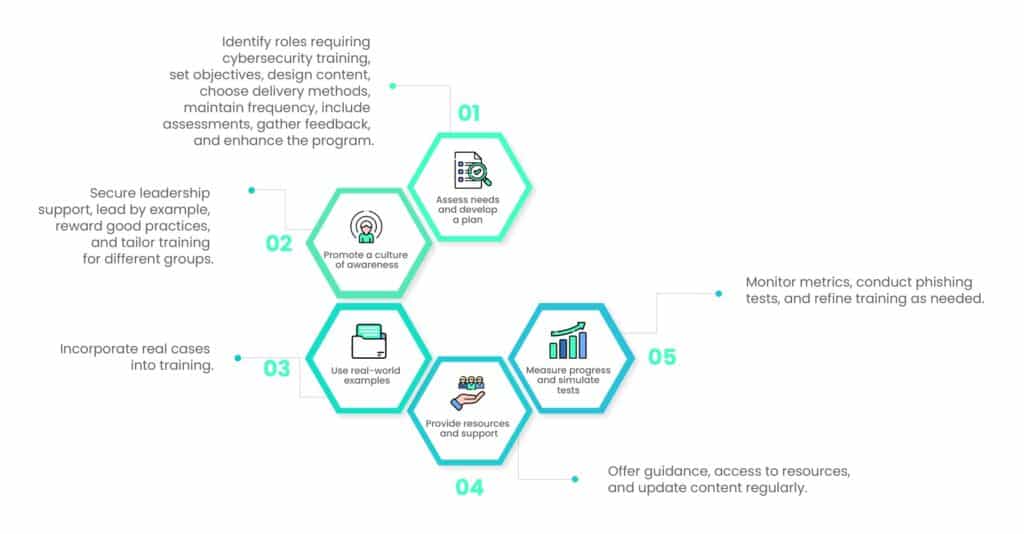
D. Educate and train employees

Educating and training employees is a crucial aspect of effective cyber risk management. It helps create a cybersecurity-conscious culture and empowers individuals within the organization to contribute to the overall security efforts. 

Here are the key steps to educate and train employees effectively:

E. Select appropriate cyber risk quantification framework

Selecting an appropriate cyber risk quantification framework is a critical step in enhancing your organization’s cybersecurity efforts. The process involves two key steps. 

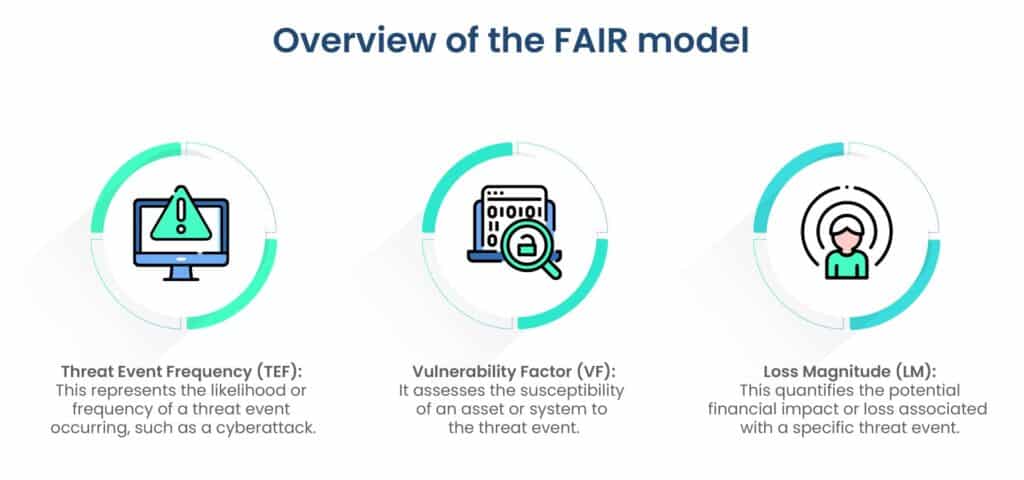
Firstly, you need to conduct thorough research and choose a framework that aligns with your organization’s goals and requirements. Options to consider include FAIR (Factor Analysis of Information Risk) or OCTAVE (Operationally Critical Threat, Asset, and Vulnerability Evaluation).

Secondly, after selecting a framework, it’s crucial to customize it to suit your organization’s specific needs and risk landscape. This customization should take into account factors such as industry-specific risks, the unique structure of your organization, and compliance requirements. 

By tailoring the chosen framework, you can ensure that it effectively addresses your organization’s cybersecurity challenges and provides valuable insights for risk management.

F. Conduct a cyber risk assessment

Conducting a thorough cyber risk assessment is imperative for organizations to grasp and address cyber risks effectively. The process involves several key steps, beginning with the identification and prioritization of cyber risks. 

After selecting an appropriate cyber risk quantification framework, such as FAIR or OCTAVE, and proceed with data collection, risk modeling, scenario analysis, sensitivity analysis, and factoring in mitigation costs. Generating comprehensive reports detailing quantified cyber risks, including monetary values, is crucial for informing key stakeholders and facilitating informed decision-making and resource allocation.

By systematically identifying, prioritizing, and quantifying cyber risks through a structured assessment process, organizations can better understand their cyber risk landscape and make informed decisions regarding risk mitigation strategies. Adhering to established frameworks and methodologies ensures consistency and reliability in risk quantification, enabling organizations to effectively allocate resources and prioritize risk management efforts to safeguard against potential cyber threats.

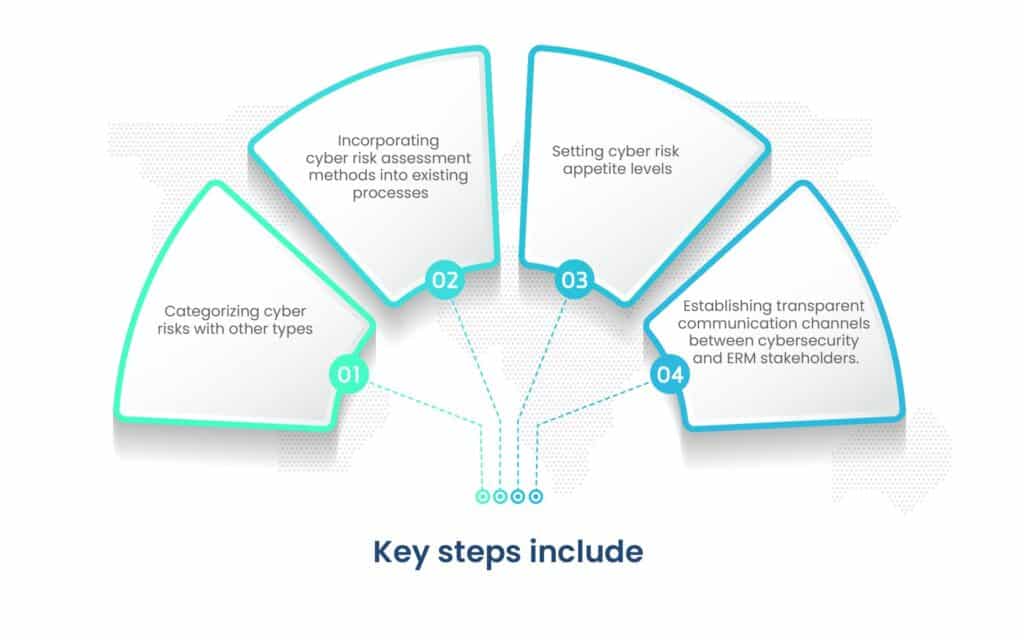
G. Integrate cyber risk quantification into the ERM framework

Integrating cyber risk quantification into Enterprise Risk Management (ERM) involves evaluating the current framework, identifying overlaps between cyber risks and other categories, and seamlessly integrating cyber risk management into the overarching strategy.

Efficient resource allocation ensures cybersecurity initiatives are well-funded and aligned with broader risk mitigation efforts. Continuous monitoring, scenario analysis, and regular updates maintain the integration’s effectiveness against evolving threats.

Ongoing assessment and collaboration between cybersecurity teams and ERM stakeholders are essential for accurate risk evaluations. This iterative approach ensures adaptability to emerging threats and changes in the risk landscape, ultimately strengthening overall risk management strategies.

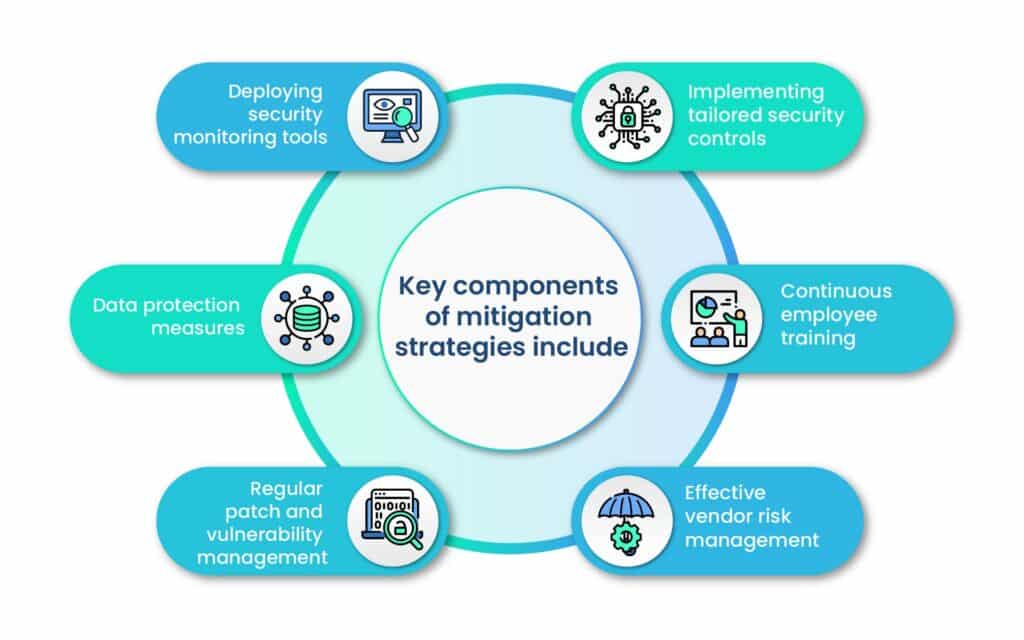
H. Develop response and mitigation strategies

Developing robust response and mitigation strategies for cyber risks is imperative for organizations to minimize the potential impact of threats effectively. 

Firstly, establishing response plans involves creating a comprehensive incident response plan with clearly defined roles, a communication plan for both internal and external stakeholders, and ensuring compliance with legal and regulatory requirements. 

Moving on to mitigation strategies, prioritization based on cyber risk assessments is key, focusing on addressing high-impact risks first. 

Additionally, testing and evaluation through penetration testing, tabletop exercises, and continuous improvement initiatives are crucial for refining response and mitigation strategies over time. Adequate resource allocation, including budget and skilled personnel, is essential to support the implementation and maintenance of these strategies effectively.

I. Monitor, review, and update

Continuous monitoring is a foundational aspect of effective cybersecurity management, involving real-time tracking of cybersecurity metrics, detection of threats, and adherence to security controls. 

By promptly identifying anomalies and staying informed about emerging cyber threats through monitoring various intelligence sources, organizations can adapt their strategies effectively. 

Additionally, maintaining detailed incident logs enables organizations to learn from past experiences, refine incident response plans, and continuously enhance their cybersecurity posture.

Furthermore, reviewing the performance of cybersecurity controls and response processes helps identify strengths and weaknesses, facilitating enhancements and adjustments to strengthen overall cybersecurity defenses.

Conclusion

In conclusion, the benefits of cyber risk quantification are significant and compelling. This approach offers organizations a more precise and data-driven means of understanding their cyber risk landscape, enabling them to make informed decisions and allocate resources effectively. By transitioning to cyber risk quantification, organizations can reap the benefits of cyber risk quantification. 

In this era of escalating cyber threats, organizations must adapt and evolve their risk management practices. Cyber risk quantification provides the tools and insights needed to navigate the complex and ever-changing landscape of cyber threats effectively. By embracing this approach and leveraging the expertise of cybersecurity and compliance professionals, organizations can fortify their defenses and safeguard their future in an increasingly digital world.

FAQs

1. How can I develop response and mitigation strategies for cyber risks?

Prioritize risks, implement security controls, conduct employee training, and regularly test and refine your strategies to minimize cyber threats.

2. How do I communicate cyber risk quantification results to stakeholders?

Prepare clear and concise reports, translate technical details into business terms, and maintain open communication channels with stakeholders.

3. What’s the ultimate goal of cyber risk quantification?

The goal is to enhance your organization’s cybersecurity posture by measuring, managing, and mitigating cyber risks effectively, ultimately reducing the financial impact of cyber incidents.

Authored by

Aayush Ghosh Choudhary
Co-founder & CEO at Scrut

Understanding the costs of compliance: Beyond the price tag

Compliance is a multifaceted concept that holds paramount importance in today’s ever-evolving business landscape. 

It serves as a guiding principle to ensure that organizations operate ethically, transparently, and responsibly. Whether in finance, healthcare, manufacturing, or technology, adherence to regulatory frameworks is not just a legal obligation but a strategic imperative. 

In the financial sector, for instance, compliance ensures the integrity of transactions, protects consumers, and maintains the stability of the financial system. Meanwhile, in healthcare, compliance safeguards patient privacy, data security, and the overall quality of care. With the rise of AI, we are even seeing companies deploy LLMs to reduce compliance expenses

But it doesn’t come without a cost. Even though many organizations choose to put compliance on the backburner due to its costly procedure – what they fail to understand is that the repercussions of non-compliance are more to bear. 

Let’s do a deep dive into the compliance cost and discuss the best measures to balance the same. 

Traditional understanding of compliance costs and the need for a comprehensive approach

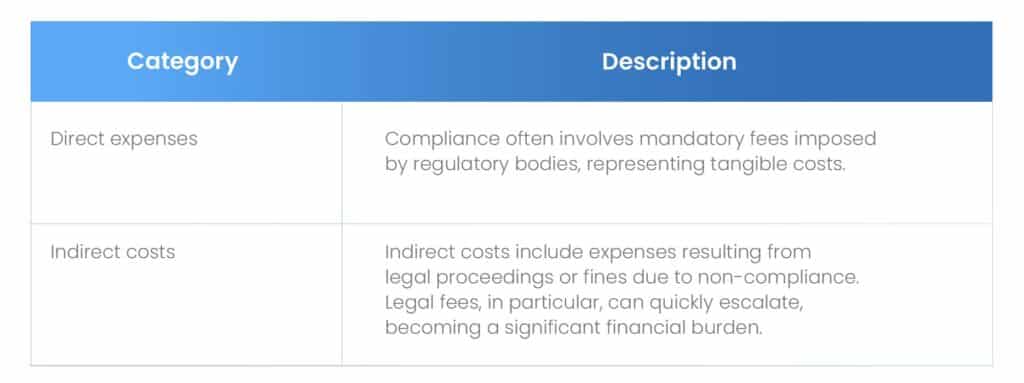
Traditionally, the focus on compliance costs has been primarily financial, involving direct expenses such as regulatory fees and indirect costs like legal fees and potential fines. 

However, the traditional understanding falls short of addressing the complete spectrum of compliance-related expenditures. These extend beyond monetary considerations to encompass operational impacts and the investments required in areas like security and technology.

As businesses grapple with an increasingly complex regulatory environment, a comprehensive approach to compliance is becoming imperative. The interconnectedness of global markets, the rise of digital technologies, and the evolving nature of threats necessitate a more nuanced understanding of compliance costs.

This insight lays the groundwork for innovative solutions like Scrut, going beyond conventional approaches to both manage compliance effectively and optimize associated costs.

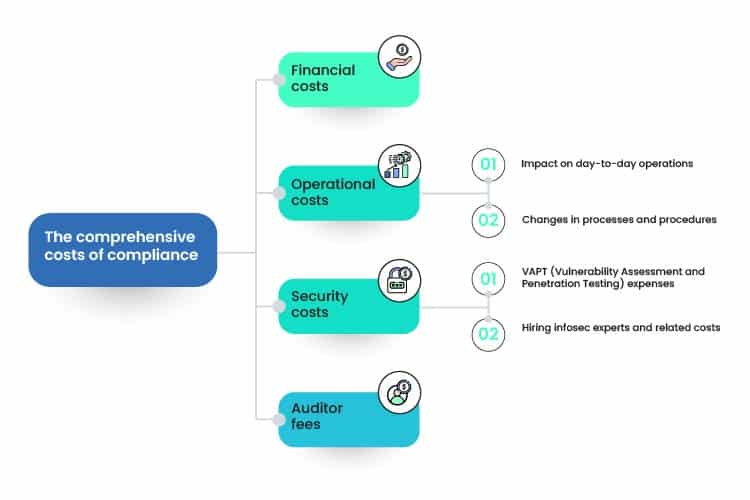
The comprehensive costs of compliance

Understanding compliance requires a nuanced examination of its comprehensive costs, extending beyond the financial realm into operational and security dimensions.

A. Financial costs

Financial costs represent the monetary investments businesses make to ensure adherence to regulatory standards. These costs can be categorized into direct and indirect expenses.

B. Operational costs

Compliance significantly influences day-to-day operations, necessitating adjustments in processes and procedures to meet regulatory requirements.

1. Impact on day-to-day operations

Compliance requirements can disrupt regular business operations, leading to delays, process reconfigurations, and additional administrative tasks. The impact on daily workflows is a crucial aspect of the overall compliance cost landscape.

2. Changes in processes and procedures

Adapting to compliance standards often requires organizations to modify existing processes and implement new procedures. These changes, while essential for compliance, may incur additional operational costs.

C. Security costs

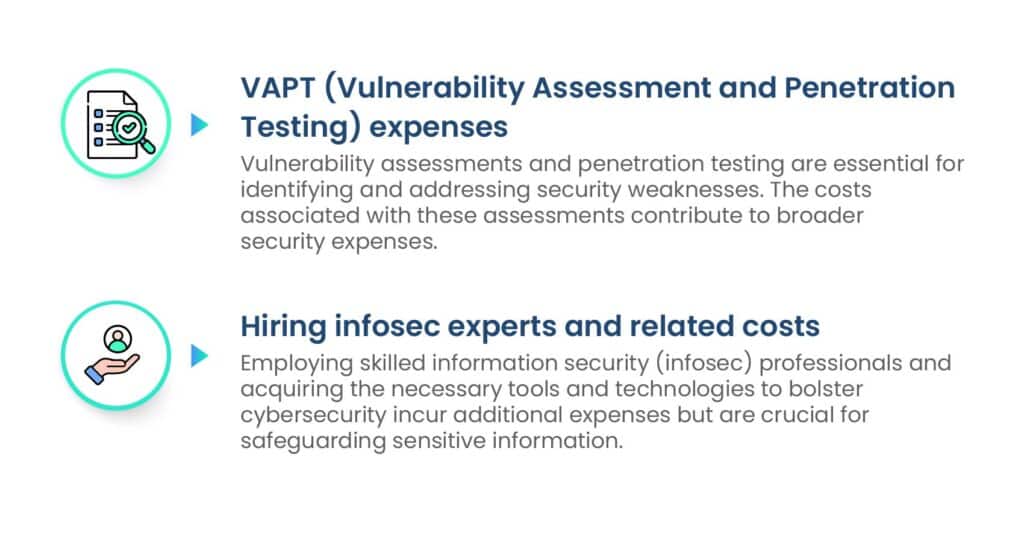
Security is a fundamental aspect of compliance, and organizations are required to invest in various measures to ensure the confidentiality and integrity of their systems and data. Some such expenses are as follows: 

D. Auditor fees

The role of auditors in compliance is pivotal, and businesses often engage external auditors to assess their adherence to regulatory standards.

Auditors play a critical role in independently evaluating an organization’s compliance posture. Their assessments provide assurance to stakeholders and regulatory bodies.

Engaging auditors comes with its own set of costs. Traditional fees for compliance audits include expenses related to the auditor’s time, resources, and expertise.

Scrutinizing compliance costs with Scrut

It is no surprise that businesses are seeking innovative solutions to manage and optimize the diverse costs associated with regulatory adherence. 

In the middle of all this chaos, Scrut emerges as a comprehensive compliance management tool, offering a paradigm shift in addressing and reducing various compliance expenditures.

Scrut is not merely a compliance and risk management platform; it’s a dynamic solution that revolutionizes the way businesses approach compliance. A one-stop destination for all compliance needs, Scrut integrates advanced features to streamline processes, enhance security, and ensure adherence to evolving regulatory standards.

How does Scrut address and reduce various compliance costs?

From financial to operational and security expenses, Scrut is designed to identify inefficiencies, streamline workflows, and ultimately reduce the overall financial burden associated with regulatory compliance.

Below are some of Scrut’s features that help organizations streamline their compliance process on a single platform. 

1. Real-time monitoring for reduced financial costs

Traditional compliance management often falls short due to delayed tracking and response mechanisms. It also requires a team of assigned individuals to track every detail. 

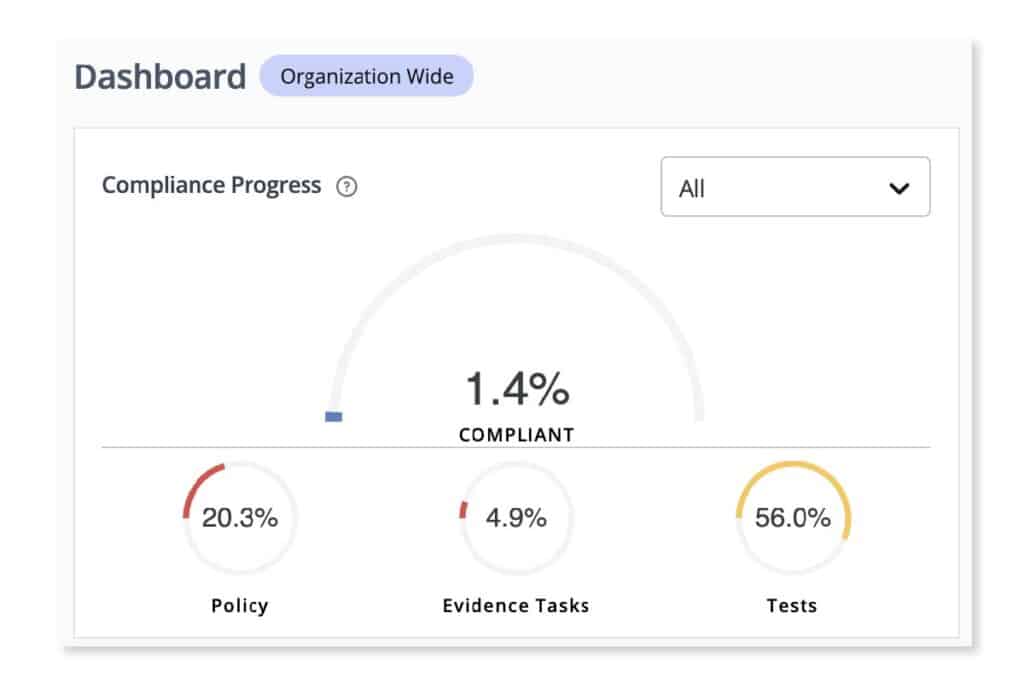
With Scrut, real-time monitoring is a breeze, ensuring that businesses stay abreast of compliance status instantly, minimizing the risk of oversights and non-compliance. 

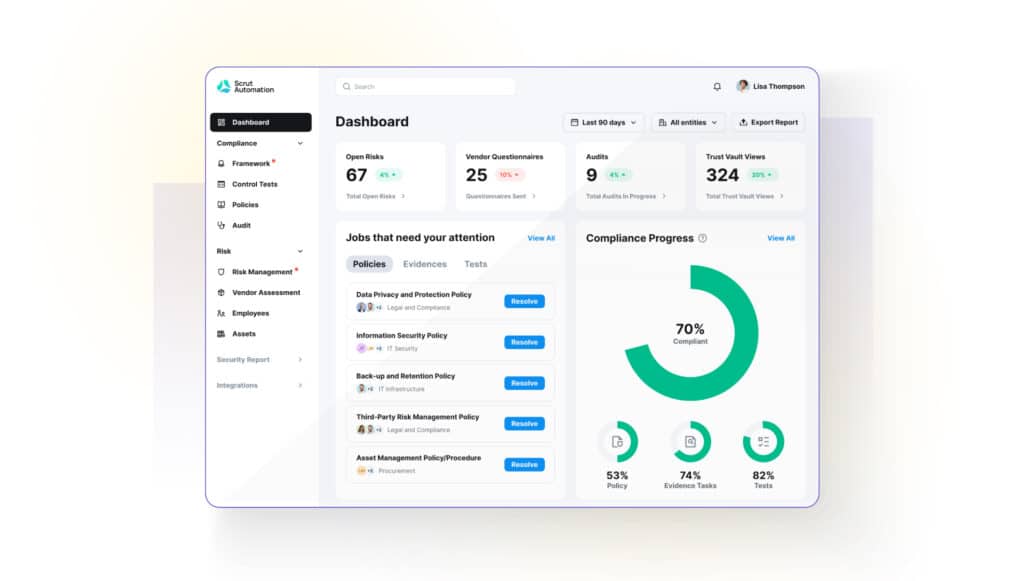
The platform supports innovative dashboards that help you stay on track of your completed policies, assigned evidence, and tests. 

Scrut helps you stay on top of your compliance game and avoid direct and indirect expenses resulting from legal proceedings or fines due to non-compliance. 

2. Automated evidence collection for reduced financial costs

At Scrut, our automated software gathers evidence from diverse sources, minimizing human intervention in the process. Additionally, Scrut maintains a centralized repository for evidence collection, allowing documents gathered for one framework to be utilized for all pertinent frameworks seamlessly. This feature streamlines the process, reducing the time and resources spent on compliance activities.

3. Multiple integrations for reduced operational costs

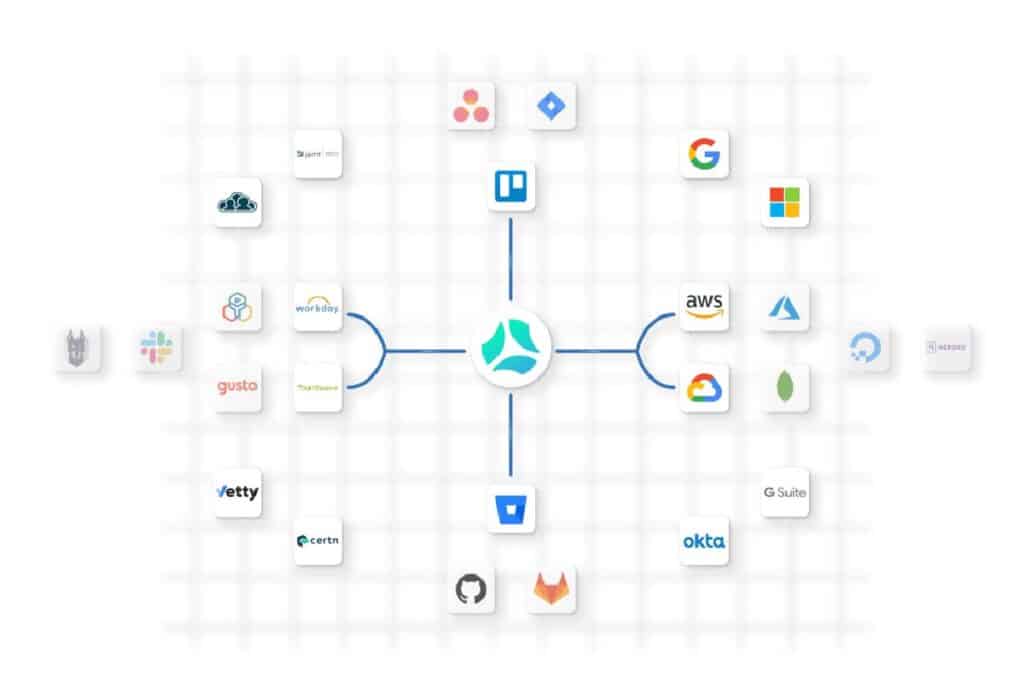
Scrut’s multiple integrations with 70+ popularly used applications allow for seamless data collection and analysis. This integration minimizes disruptions to daily workflows, as compliance-related tasks can be performed within existing operational processes. Needless to say, it has an impact on day-to-day operations. 

4. One-stop risk management platform for reduced financial and security costs

Scrut’s one-stop risk management platform provides real-time monitoring and alerts, helping organizations identify and address compliance issues promptly. By detecting potential non-compliance early on, Scrut helps mitigate the risk of legal proceedings and fines, thus reducing indirect costs.

The platform offers customizable workflows and templates, enabling organizations to adapt their processes and procedures to meet compliance requirements efficiently. This flexibility reduces the time and effort required to implement and maintain compliance-related changes.

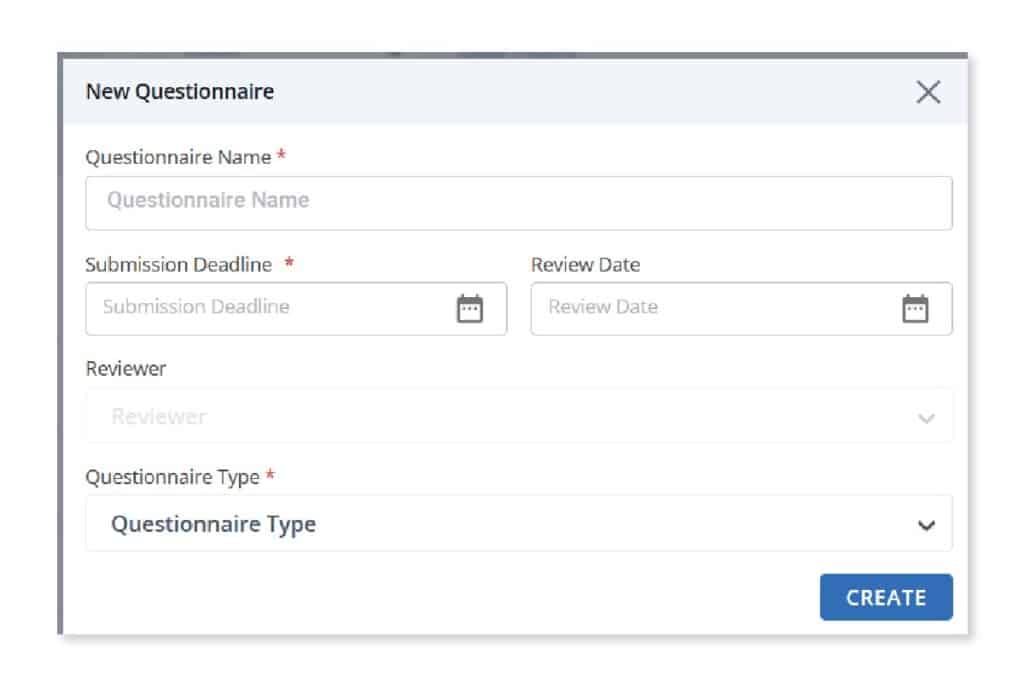
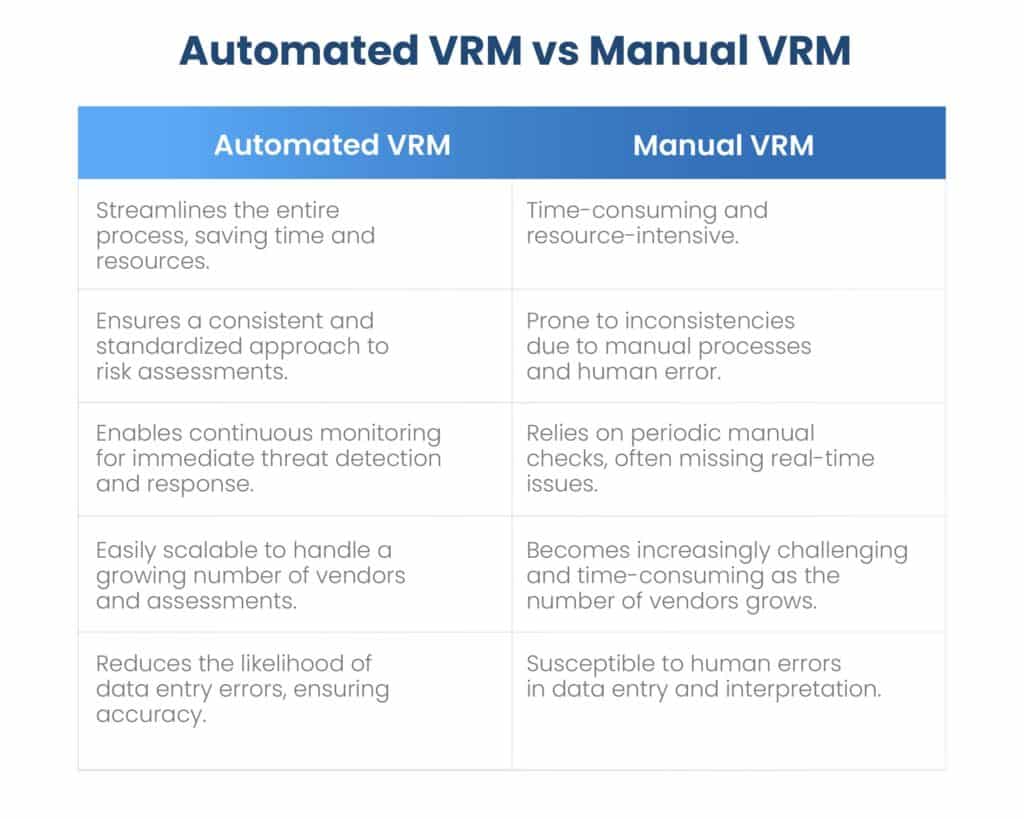
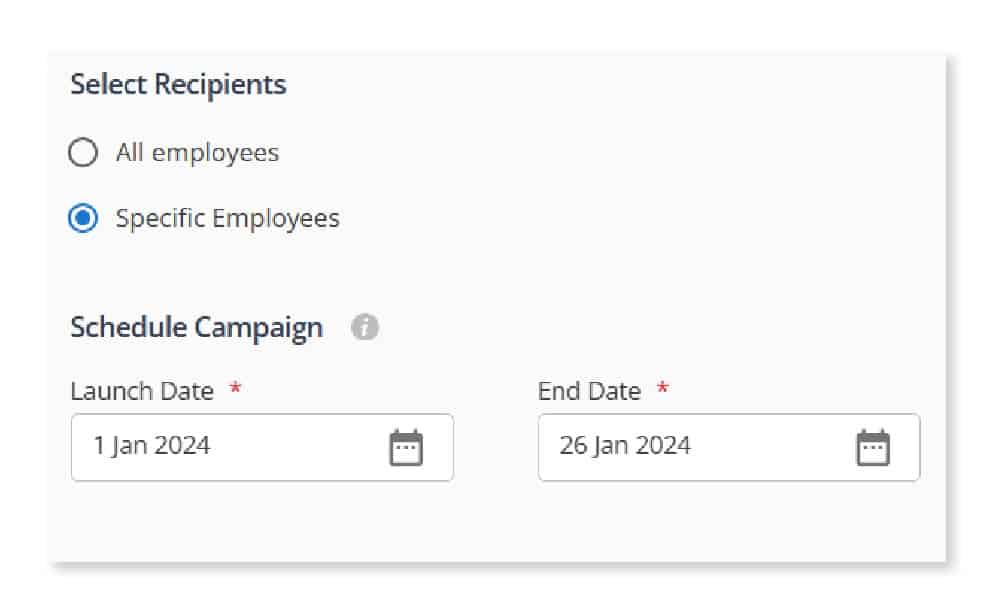
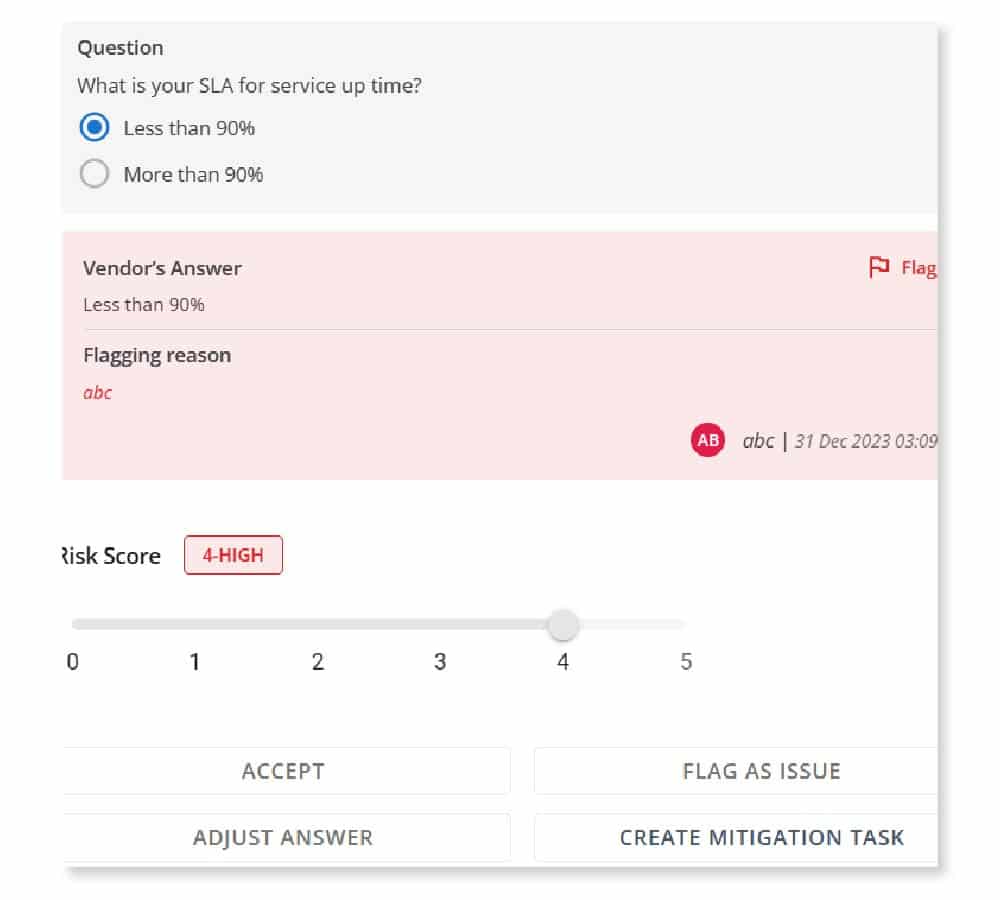
In the realm of vendor risk assessment, Scrut simplifies the questionnaire creation process, offering the flexibility to use pre-built templates or tailor custom ones. Users can set submission and review dates, as well as designate specific reviewers.

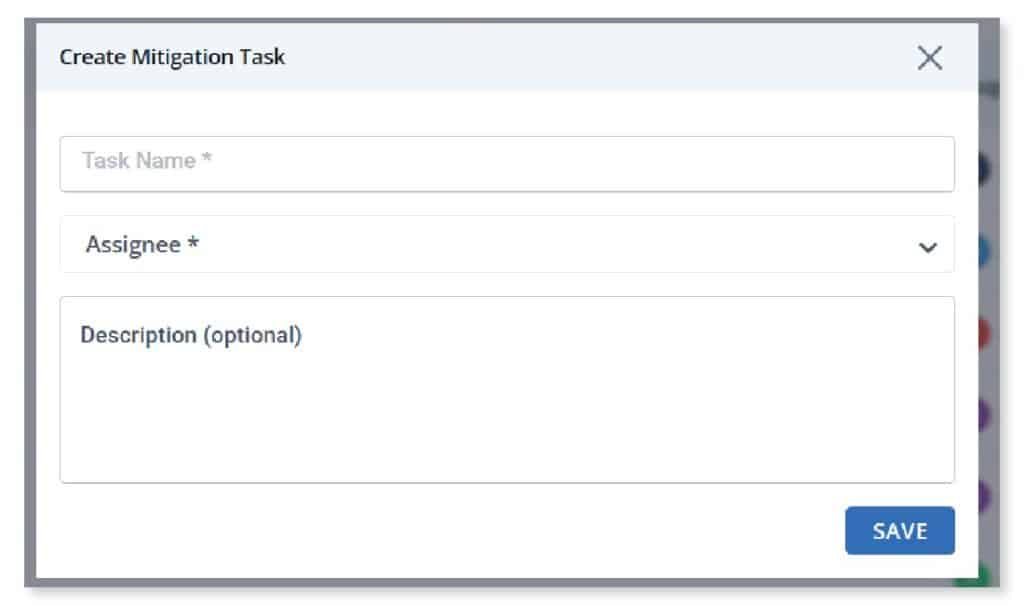
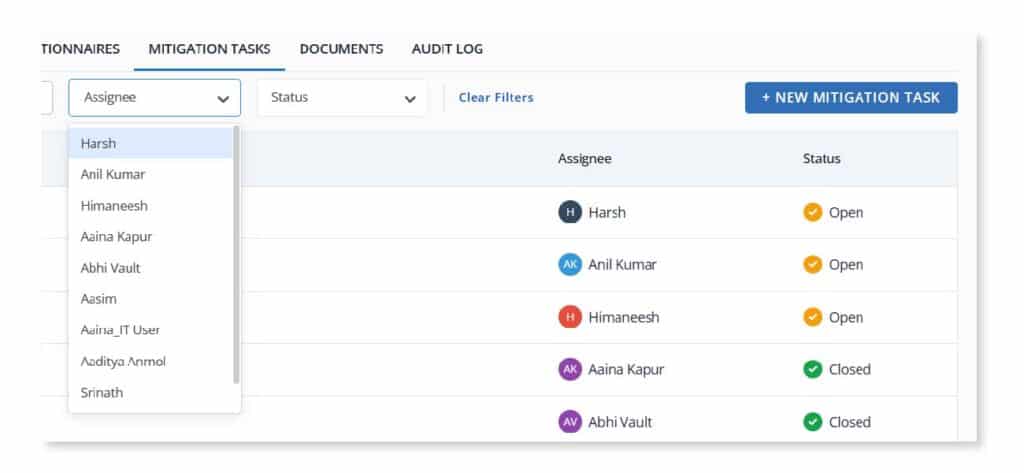
Once risks are identified, Scrut’s platform offers the opportunity to create mitigation tasks to remediate them and allows for collaboration with other team members as well.

5. Audit assistance for reduced auditor costs

Scrut’s platform streamlines the audit process by providing auditors with access to real-time compliance data and evidence. This feature reduces the time and effort required for audits, ultimately lowering auditor fees for organizations.

6. VAPT and security management for reduced security costs

Scrut facilitates automated VAPT (Vulnerability Assessment and Penetration Testing), providing organizations with insights into their security posture. This feature helps identify and remediate vulnerabilities proactively, reducing the risk of security breaches and associated costs.

By offering a centralized platform for security monitoring and management, Scrut minimizes the need for additional infosec resources. Organizations can leverage Scrut’s tools and technologies to strengthen their cybersecurity posture without incurring significant hiring and training expenses.

The ROI of Scrut’s pricing model: Case studies

Successful implementation of Scrut in reducing compliance costs

CargoFL, a key player in logistics, achieved significant success through the implementation of Scrut. Facing the challenge of extensive time commitments and potential data security issues, CargoFL leveraged Scrut’s comprehensive solution. 

Deepesh Kuruppath CEO, CargoFLThe beauty of your product is the convenience of automation combined with the unmatched human expert support. This ensures full clarity from the bottom to the top level, which is crucial for us to display the mark of quality and enhance customer trust.

Scrut’s platform streamlined their compliance processes, saving them 75% of time with pre-built templates and reducing enterprise outreach effort by 2/3rd. This successful implementation not only ensured compliance but also optimized time and resources, demonstrating Scrut’s efficacy in reducing overall compliance costs.

Comparison of total compliance costs before and after adopting Scrut

Examining the compliance journey of Xeno, an AI-powered CRM working with global brands, reveals a compelling story of cost reduction. Before adopting Scrut, Xeno grappled with manual processes, cloud risk monitoring challenges, and complex compliance frameworks. 

After implementing Scrut, they experienced streamlined compliance efforts, reduced cloud infrastructure risks, and automated vendor risk assessments. The before-and-after scenario indicates a stark contrast in total compliance costs, with Scrut significantly contributing to cost reduction through its efficient platform.

Calculating the return on investment with Scrut’s pricing

Clark Van Oye, CEO of Cortico, underscores the transformative impact of Scrut’s pricing model on their business operations. Seeking a turnkey solution, Cortico turned to Scrut, recognizing the substantial benefits it would offer in terms of expense reduction while ensuring alignment with market access needs. 

In the intricate landscape of compliance, where identifying and prioritizing the right certifications is paramount, Scrut’s platform proved invaluable for Cortico. 

Leveraging Scrut’s automations and workflows, Cortico achieved significant efficiency gains, saving approximately 800 hours in the compliance attainment process. The streamlined and automated approach not only enhanced Cortico’s security posture but also facilitated the acquisition of larger customers and entry into new markets.

The time and resource optimization facilitated by Scrut’s pricing model contributed to a measurable return on investment for CargoFL as well, showcasing the financial benefits realized through the adoption of Scrut.

The future of cost-effective compliance management

The regulatory landscape is in a state of constant flux, with new standards and requirements emerging regularly. This evolution directly impacts the costs associated with compliance. 

Scrut recognizes the dynamic nature of these changes and positions itself as a solution that can adapt seamlessly to evolving regulatory environments. By staying ahead of compliance requirements and automating processes, Scrut becomes an essential ally in mitigating the potential cost impacts of regulatory shifts.

Sustained cost-effectiveness in compliance management requires a commitment to continuous improvement and adaptation. Scrut, as a dynamic platform, embodies this principle by offering regular updates, incorporating feedback, and staying attuned to emerging trends. 

Do you want to go beyond the costs of compliance and partner with a solution that helps you optimize your security program without burning a hole in your pocket? Book a demo and talk to our experts. 

Frequently Asked Questions

1. How does Scrut’s pricing model differ from traditional compliance solutions?

Scrut’s pricing model is unique in its approach, focusing on efficiency gains and overall cost reduction. Traditional solutions often involve fixed fees or complex pricing structures that may not align with a business’s actual compliance needs.

2. Can Scrut handle the compliance requirements of different industries?

Yes, Scrut is designed to be versatile and adaptable to various industries. Its comprehensive compliance management tool can be tailored to meet the specific regulatory standards of different sectors, ensuring a customized and effective solution.

3. What are the key features that contribute to Scrut’s cost-effectiveness in compliance management?

Scrut’s cost-effectiveness is driven by features such as real-time monitoring, predictive analytics, and a unique pricing model. The use of pre-built templates, automation, and streamlined workflows significantly reduces the time and effort required for compliance tasks.

4. How does Scrut ensure data security while managing compliance processes?

Scrut prioritizes data security by implementing robust measures on its platform. The system adheres to industry standards and best practices, safeguarding sensitive information throughout the compliance management process.

5. Is Scrut suitable for both small startups and large enterprises?

Yes, Scrut is designed to cater to businesses of all sizes. Whether you’re a startup looking to establish compliance practices efficiently or a large enterprise aiming to optimize costs at scale, Scrut’s flexibility and scalability make it a suitable solution for a diverse range of organizations.

Authored by

Aayush Ghosh Choudhary
Co-founder & CEO at Scrut

SEC’s new guidelines for cybersecurity management and incident disclosure

The Securities and Exchange Commission (SEC) has recently introduced new guidelines aimed at enhancing cybersecurity management and incident disclosure practices among publicly traded companies. These guidelines represent a significant shift in regulatory focus, reflecting the growing importance of cybersecurity in safeguarding sensitive information and maintaining market integrity.

Cybersecurity management and incident disclosure are vital aspects of corporate governance and risk management.  Proactive measures and transparent disclosure are crucial for sustaining investor confidence and market stability.

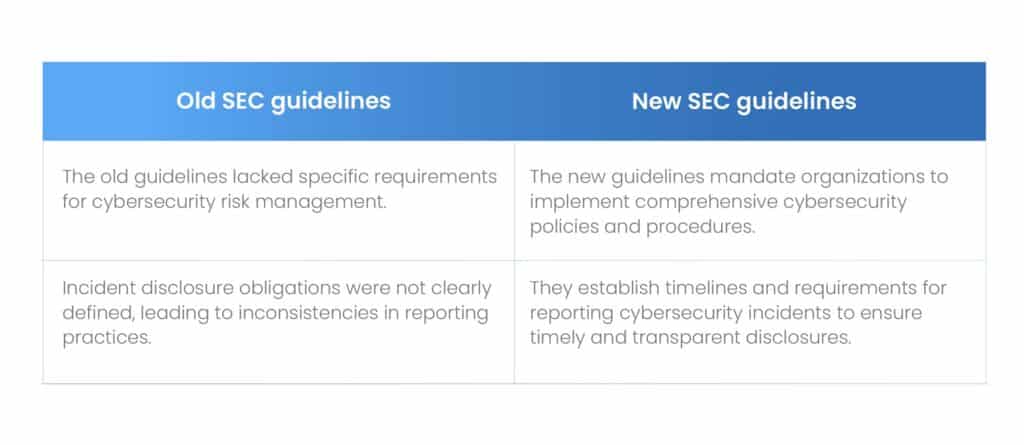
The SEC’s new guidelines aim to address the problem of inadequate cybersecurity management and incident disclosure practices among publicly traded companies. For instance, this mandate requires public reporting of incidents within four business days

Failing to do so may lead to liability, regulatory penalties, and potential class action lawsuits for companies.

By introducing comprehensive requirements and standards, the guidelines seek to improve transparency, enhance risk mitigation efforts, and strengthen investor confidence in the face of evolving cyber threats.

We shall explore these new guidelines in this blog.

Understanding the SEC’s role

The Securities and Exchange Commission (SEC) is a federal agency responsible for regulating securities markets and enforcing federal securities laws in the United States. 

Established in 1934 by the Securities Exchange Act, the SEC’s primary mandate is to: 

  • Protect investors
  • Maintain fair and efficient markets, and 
  • Facilitate capital formation.

The SEC’s involvement in cybersecurity regulation stems from its mandate to protect investors and maintain market integrity. As cyber threats pose significant risks to the securities industry and the broader economy, the SEC has recognized the need to address cybersecurity challenges through regulatory oversight. 

By issuing guidelines and enforcement actions related to cybersecurity management and incident disclosure, the SEC aims to enhance the resilience of market participants against cyber threats and promote investor confidence in the digital age.

Key components of SEC guidelines

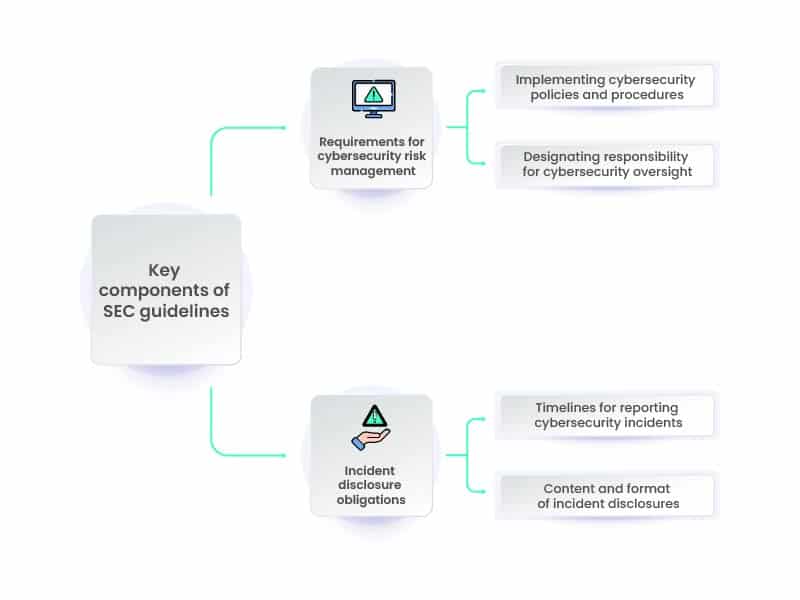
The SEC Guidelines outline essential requirements for cybersecurity risk management and incident disclosure obligations, aiming to bolster organizations’ resilience against cyber threats and enhance transparency in addressing cybersecurity incidents.

1. Cybersecurity risk management

Implementing cybersecurity policies and procedures

  1. Organizations are mandated to establish and enforce robust cybersecurity policies and procedures to safeguard sensitive data and systems from cyber threats.
  1. These policies should encompass measures such as access controls, encryption protocols, and regular security assessments to ensure comprehensive protection.

Designating responsibility for cybersecurity oversight

  1. The guidelines necessitate the appointment of individuals or teams responsible for overseeing cybersecurity measures within organizations.
  1. Clear lines of accountability and authority are crucial to ensure the effective implementation and enforcement of cybersecurity policies and procedures.

2. Incident disclosure obligations

Timelines for reporting cybersecurity incidents

  1. Organizations are required to adhere to specific timelines for reporting cybersecurity incidents to regulatory authorities and stakeholders.
  1. Prompt reporting enables timely response measures and facilitates transparency in addressing cyber threats and breaches.

Content and format of incident disclosures

  1. The guidelines outline the information that organizations must include in their incident disclosures, such as details of the incident, impact assessment, and remediation efforts.
  1. Standardized formats for incident disclosures ensure consistency and clarity in communicating cybersecurity incidents to stakeholders, fostering trust and transparency.

The new SEC guidelines

In March 2022, the U.S. Securities and Exchange Commission (SEC) proposed regulations requiring public companies to disclose cybersecurity risk management, governance, and material incidents. These rules took effect on September 5, 2023. 

Starting December 18, 2023, companies must report material cybersecurity incidents within four days under the Cybersecurity Incident Disclosure Rule (Form 8-K Item 1.05). 

Further, they must disclose cybersecurity risk management details in Regulation S-K Item 106 starting with annual reports for fiscal years ending on or after December 15, 2023. 

While the rules encompass all public companies subject to the Securities Exchange Act of 1934, smaller reporting companies have until June 15, 2024, to comply with the Cybersecurity Incident Disclosure Rule. 

Foreign private issuers (FPIs) must adhere to similar reporting requirements, disclosing incidents on Form 6-K and periodic risk management updates on Form 20-F.

The SEC’s amendments mandate specific disclosures:

  1. Timely reporting of material cybersecurity incidents.
  2. Periodic disclosures on risk assessment, identification, and management processes, management’s role, and board oversight, presented in Inline XBRL.
  3. Regulation S-K Item 106(b) requires disclosure of risk management processes and effects on business strategy, results, and financial condition, with Inline XBRL tagging by December 15, 2024.
  4. Regulation S-K Item 106(c) mandates disclosure of board oversight and management’s role in cybersecurity risks, also with Inline XBRL tagging by December 15, 2024.
  5. Form 8-K Item 1.05 necessitates disclosure of material cybersecurity incidents within four business days, effective December 18, 2023 (or June 15, 2024, for smaller reporting entities), with Inline XBRL tagging by December 18, 2024.
  6. Form 6-K requires foreign private issuers to disclose material cybersecurity incidents reported in foreign jurisdictions or to stock exchanges.
  7. Form 20-F mandates disclosure of board oversight and management’s role for foreign private issuers.
  8. Inline XBRL tagging is required for all disclosures, enabling automated extraction, analysis, and comparison across registrants, with deadlines varying based on the disclosure type.

How the guidelines impact publicly traded companies

  • Publicly traded companies are subject to heightened scrutiny and regulatory obligations under the SEC’s new guidelines for cybersecurity management and incident disclosure.
  • Compliance with these guidelines requires companies to strengthen their cybersecurity frameworks, enhance incident response capabilities, and ensure transparent communication with investors and regulatory authorities.
  • Companies may face significant compliance challenges in aligning their existing cybersecurity practices with the requirements outlined in the SEC guidelines.
  • Non-compliance with the guidelines can result in severe penalties, including fines, reputational damage, and legal repercussions, which may adversely impact shareholder value and market perception.

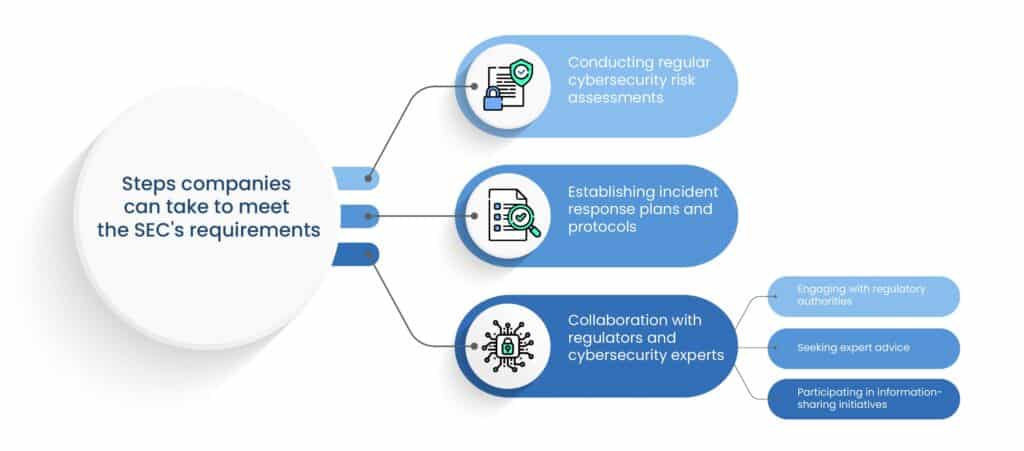
Steps companies can take to meet the SEC’s requirements

  • Conducting regular cybersecurity risk assessments: Companies should regularly assess their cybersecurity risks to identify vulnerabilities and threats. This involves evaluating the organization’s systems, networks, and data assets to determine potential risks and prioritize mitigation efforts
  • Establishing incident response plans and protocols: It’s crucial for companies to have well-defined incident response plans in place to effectively manage and mitigate cybersecurity incidents. These plans should outline the steps to be taken in the event of a breach or incident, including communication protocols, escalation procedures, and recovery strategies.
  • Collaboration with regulators and cybersecurity experts: Collaborating with regulators and cybersecurity experts can provide valuable insights and guidance for companies striving to meet the SEC’s requirements. 

This collaboration may involve:

  • Engaging with regulatory authorities: Companies should proactively engage with regulatory authorities to stay informed about evolving cybersecurity regulations and expectations. This may include participating in industry forums, attending regulatory briefings, and seeking clarification on compliance requirements.
  • Seeking expert advice: Companies can benefit from seeking advice and guidance from cybersecurity experts and consultants. These professionals can offer specialized knowledge and expertise to help organizations strengthen their cybersecurity practices and compliance efforts.
  • Participating in information-sharing initiatives: Collaboration with industry peers through information-sharing initiatives and forums can provide valuable insights into emerging threats and best practices. By sharing information and experiences, companies can enhance their cybersecurity posture and better prepare for potential risks.

By adopting these best practices and fostering collaboration with regulators and cybersecurity experts, companies can enhance their cybersecurity resilience and ensure compliance with the SEC’s guidelines.

One of the most notable cybersecurity incidents in recent years, the Equifax data breach of 2017 exposed the personal information of over 147 million individuals. Following the breach, Equifax faced intense scrutiny and legal repercussions, highlighting the importance of robust cybersecurity measures and transparent incident disclosure.
Yahoo experienced multiple data breaches between 2013 and 2016, affecting billions of user accounts. The incidents resulted in significant financial losses, reputational damage, and regulatory fines for Yahoo. The company’s handling of the breaches underscored the importance of timely and transparent incident disclosure to stakeholders.

Wrapping up

The SEC’s new guidelines represent a significant step towards enhancing cybersecurity management and incident disclosure practices among publicly traded companies. These guidelines emphasize the importance of proactive risk management and transparent communication in safeguarding sensitive information and maintaining market integrity.

Companies must prioritize cybersecurity to protect sensitive data, mitigate cyber threats, and maintain investor confidence. By adhering to regulatory guidelines and implementing best practices, organizations can enhance their cybersecurity resilience and ensure compliance with regulatory requirements.

For further information or assistance with cybersecurity management and compliance, contact Scrut’s team of experts. We’re here to support your organization in navigating the complexities of cybersecurity and regulatory compliance.

Frequently Asked Questions

1. What are the key objectives of the SEC’s new guidelines for cybersecurity management?

The SEC’s guidelines aim to enhance cybersecurity practices among companies, improve incident disclosure procedures, and mitigate the risks associated with cyber threats.

2. How do the SEC guidelines impact companies’ incident disclosure procedures?

The guidelines require companies to promptly disclose cybersecurity incidents that could have a material impact on their business, providing investors with timely and accurate information about potential risks.

3. What specific measures does the SEC recommend for enhancing cybersecurity resilience?

The SEC recommends implementing robust cybersecurity policies and procedures, conducting regular risk assessments, enhancing employee training on cybersecurity awareness, and establishing incident response plans.

4. How do the SEC guidelines align with existing cybersecurity regulations and standards?

The guidelines complement existing cybersecurity regulations and standards by providing additional guidance on incident disclosure and management, ensuring consistency and transparency in cybersecurity practices across industries.

5. What are the potential consequences for companies that fail to comply with the SEC’s cybersecurity guidelines?

Companies that fail to comply with the SEC’s guidelines may face regulatory scrutiny, financial penalties, reputational damage, and increased legal liabilities, highlighting the importance of prioritizing cybersecurity governance and compliance efforts.

Authored by

Aayush Ghosh Choudhary
Co-founder & CEO at Scrut

How to select the right cyber risk quantification method

Cybersecurity and risk management are paramount for new-age businesses. Cyber risk quantification is a crucial step in understanding and mitigating cybersecurity risks like ransomware, malware, zero-day attacks, DDoS, etc.

But with various models and approaches available, selecting the best one for your organization can be challenging. In this blog, we’ll delve into the key considerations for choosing the right cyber risk quantification approach to safeguard your digital assets effectively.

Understanding cyber risk quantification

Cyber Risk Quantification (CRQ) is the process of calculating risk exposure and its potential financial impact on an organization in business-relevant terms. It involves attributing numerical values to the impact of cyber events on an organization’s operations, finances, and reputation. This has several benefits, such as:

  • Financial clarity: It offers security leaders a clear understanding of the financial impacts of successful cybersecurity attacks, enabling organizations to assess potential losses.
  • Resource allocation: CRQ helps organizations allocate resources more efficiently by focusing on addressing the most critical risks, preventing them from focusing on every risk and spreading resources thin.
  • Targeted response: It strengthens an organization’s cyber maturity and resilience by providing insights into specific cyber threats. This allows for a more targeted and effective response to mitigate risks.
  • Informed decision-making: Quantifying cyber risks empowers decision-makers with data-driven insights, enabling them to make informed decisions regarding cybersecurity investments, risk mitigation strategies, and cyber insurance coverage.

Exploring cyber risk quantification models

Quantitative methods of cyber risk quantification involve numerical data and measurable metrics, providing objective assessments of potential financial loss or impact from cyber threats. In contrast, qualitative methods rely on subjective judgments and descriptive evaluations to assess risk factors based on the analyst’s experience and expertise.

Cyber risk quantification methods are crucial tools for organizations to assess and measure their cyber risk. These models help express cyber risk in quantitative terms, allowing organizations to make informed decisions regarding cybersecurity investments, risk mitigation strategies, and cyber insurance coverage. Here are some notable cyber risk quantification methods:

1. FAIR model

The FAIR Model, which stands for Factor Analysis of Information Risk, is a framework used for analyzing, measuring, and understanding cybersecurity and operational risk in financial terms. It provides a structured approach to assess and quantify risk factors associated with information assets and processes.

FAIR provides a standard taxonomy for defining risk factors and attributes, which helps organizations consistently identify and assess risks. It assesses risk by considering the probability of an event occurring and its potential financial impact on an organization. Many cyber risk quantification solutions use the FAIR method to calculate risk.

How to calculate risk under the FAIR model

The FAIR method calculates cyber risk by considering two main components: Loss Event Frequency (LEF) and Loss Magnitude (LM). The formula for calculating risk in FAIR can be expressed as:

Risk = LEF x LM

By multiplying the LEF by the LM, FAIR provides a quantitative measure of the overall risk associated with a particular threat event. This approach allows organizations to assess and prioritize cybersecurity risks based on both their likelihood and potential impact in financial terms.

It’s important to note that the FAIR method employs a structured approach to gather data, assess risk factors, and assign values to LEF and LM. Monte Carlo simulations and other quantitative methods may also be used to refine the risk calculation.

Advantages of implementing the FAIR model:

  • Quantitative analysis: FAIR focuses on quantitative analysis, allowing organizations to express risk in monetary terms. This helps in prioritizing risks and making informed decisions regarding risk mitigation strategies and resource allocation.
  • Consistency: It provides a standardized taxonomy and methodology, ensuring consistency in risk assessments. This consistency aids in the effective communication of risk information within and across organizations.
  • Objective assessment: FAIR offers an objective and systematic way to assess risk, reducing subjectivity in risk evaluations and leading to more accurate results.
  • Risk prioritization: By quantifying risk, FAIR helps organizations prioritize risks based on their potential financial impact. This assists in directing resources to address the most critical risks.

Drawbacks of implementing the FAIR model:

  • Complexity: FAIR can be complex to implement, requiring a deep understanding of risk factors, data sources, and probability distributions. This complexity may limit its adoption by smaller organizations or those with limited resources.
  • Resource-intensive: Implementing FAIR often demands substantial time and resources, including access to relevant data, expertise in risk modeling, and specialized software tools.
  • Data availability: The accuracy of FAIR assessments heavily depends on the availability of reliable data. In some cases, organizations may struggle to obtain accurate data for quantitative analysis.
  • Subjectivity in inputs: While FAIR aims for objectivity, the quality of inputs and assumptions made during the modeling process can introduce subjectivity and bias into the results.

2. OCTAVE (Operationally critical threat, asset, and vulnerability evaluation)

OCTAVE, which stands for Operationally Critical Threat, Asset, and Vulnerability Evaluation, is a risk assessment methodology developed by the CERT Coordination Center at Carnegie Mellon University. It is designed to help organizations assess and manage their information security risks effectively. 

Key benefits of using OCTAVE

  1. Comprehensive risk assessment: Provides a structured framework for conducting a comprehensive assessment of information security risks within the organization.
  1. Cross-functional collaboration: Encourages collaboration among different departments and stakeholders, fostering a holistic approach to risk management.
  1. Mitigation planning: Facilitates the development of targeted risk mitigation strategies based on identified threats and vulnerabilities.
  1. Customizable approach: Allows organizations to adapt the methodology to their unique risk landscape and organizational structure.
  1. Continuous improvement: OCTAVE encourages a mindset of continuous improvement in managing information security risks, promoting ongoing assessments and updates to risk mitigation strategies.

Limitations of OCTAVE cyber risk quantification method 

The OCTAVE method is a well-regarded approach for assessing and managing information security risks, but like any methodology, it has its limitations. Here are some of the key limitations associated with the OCTAVE method:

  1. Resource-intensive: OCTAVE can be resource-intensive, both in terms of time and personnel. It requires a significant commitment from the organization, which may be challenging for smaller organizations with limited resources.
  1. Complex: The OCTAVE method can be complex to implement, especially for organizations with little experience in risk assessment and management. It involves a structured process with multiple stages and can be overwhelming for those unfamiliar with the methodology.
  1. Not a one-size-fits-all: OCTAVE may not be suitable for all organizations or industries. It was initially developed with large, critical infrastructure organizations in mind, and adapting it to smaller organizations or different industries may require significant modifications.
  1. Dependent on expertise: Effective implementation of OCTAVE relies on having individuals with the necessary expertise in risk management and cybersecurity. Smaller organizations may struggle to find or afford such experts.
  1. Limited focus: OCTAVE primarily focuses on information security risks and may not fully address broader enterprise risk management concerns. Organizations looking for a more comprehensive risk assessment may need to supplement OCTAVE with other methodologies.
  1. Lack of automation: OCTAVE is a manual process that relies heavily on interviews, workshops, and documentation review. This lack of automation can make it time-consuming and potentially error-prone.
  1. Subjective assessments: Like many qualitative risk assessment methods, OCTAVE’s results can be influenced by subjectivity and biases introduced by the assessors. This subjectivity can lead to varying results when different teams or individuals conduct the assessment.
  1. Limited coverage of emerging threats: OCTAVE may not adequately address rapidly evolving cyber threats and emerging risks, as its focus is on existing assets and vulnerabilities. Organizations need to complement OCTAVE with ongoing threat intelligence and risk monitoring.
  1. Long implementation times: The OCTAVE method can take a significant amount of time to complete, which may not align with the need for quick decision-making in rapidly changing cybersecurity environments.

3. NIST 800-30

NIST Special Publication 800-30 is a comprehensive guide provided by the National Institute of Standards and Technology (NIST) for conducting risk assessments of information systems, particularly within federal agencies. It outlines a systematic approach to identifying, analyzing, and managing risk in the context of information security. 

How to quantify cyber risk under NIST 800-30 

Calculating risk under the NIST 800-30 model involves a structured process that considers the likelihood and impact of risks to information systems. These steps can be automated using cyber risk quantification tools. 

Advantages of implementing NIST 800-30:

  • Structured framework: NIST SP 800-30 provides a structured and systematic approach to conducting technical risk assessments. It outlines a clear methodology for identifying, evaluating, and mitigating risks.
  • Comprehensive guidance: It offers comprehensive guidance for assessing vulnerabilities and threats within defined system boundaries. This thoroughness ensures that potential risks are not overlooked.
  • Mapping capability: NIST SP 800-30 allows for the mapping of vulnerabilities, threats, and risks, making it easier to understand the relationships between different elements of the risk assessment process.
  • Risk communication: It assists in communicating technical risks effectively to stakeholders, enabling informed decision-making regarding risk mitigation strategies.

Drawbacks of implementing NIST 800-30:

  • Complexity: The comprehensive nature of NIST SP 800-30 can make it complex and time-consuming to implement. Smaller organizations or those with limited resources may find it challenging to conduct assessments using this framework.
  • Resource intensive: Conducting a technical risk assessment following NIST SP 800-30 may require significant resources, including expertise in cybersecurity, access to relevant data, and specialized tools.
  • Focus on technical aspects: While it excels in addressing technical risks, NIST SP 800-30 may not provide a holistic view of an organization’s overall risk landscape. It primarily concentrates on technical vulnerabilities and threats.
  • Updates and evolving threats: The document may not always reflect the most current cybersecurity threats and technologies. Organizations need to stay updated and adapt their assessments accordingly.

CyberInsight

CyberInsight is a cyber risk quantification method that involves measuring and analyzing the potential financial impact of a cyberattack on an organization. It focuses on evaluating cyber risks in a structured and data-driven manner, allowing organizations to make informed decisions regarding their cybersecurity strategies and investments.

How do we quantify cyber risk under the CyberInsight model?

The CyberInsight model is designed to help organizations quantify and manage their cyber risks effectively. 

Advantages of Implementing CyberInsight:

  • Objective assessment: CyberInsight provides an unbiased assessment of cyber risks, reducing the potential for subjective judgments.
  • Continuous monitoring: Organizations can proactively manage cyber risks by continuously monitoring their risk posture.
  • Data-driven decision-making: The method relies on data, enabling informed decisions on cybersecurity investments and strategies.
  • Comparison to benchmarks: Users of CyberInsight can compare their cyber risk posture to industry benchmarks, such as the NIST Cybersecurity Framework (CSF). This benchmarking helps organizations understand how they stack up against recognized standards.

Drawbacks of Implementing CyberInsight:

  • Complexity: Implementing CyberInsight may require expertise in data analysis and cybersecurity.
  • Resource intensive: Gathering and analyzing data for real-time risk assessments can be resource-intensive.
  • Dependence on data quality: Accurate results depend on the quality and completeness of data used for analysis.

Monte Carlo method

The Monte Carlo method is a mathematical cyber risk quantification method to assess and analyze the potential financial impact of cyber threats and vulnerabilities. It is named after the Monte Carlo Casino in Monaco because of the element of chance and randomness it involves.

How it works:

  • Simulation: The Monte Carlo method constructs multiple possible outcomes (scenarios) based on various input parameters and probabilities. In the context of cyber risk, these scenarios represent different cyberattack events.
  • Random sampling: It employs random sampling from probability distributions to create these scenarios. For example, it considers factors such as the likelihood of a cyberattack, the type of attack, and its potential impact.
  • Analysis: Each scenario is then analyzed to calculate the associated financial loss. By running a large number of simulations (thousands or more), it provides a range of possible financial outcomes.
  • Risk assessment: The method helps organizations understand the range of potential financial losses due to cyber incidents, allowing for better risk assessment and decision-making.

Advantages of implementing the Monte Carlo Method:

  • Comprehensive: It considers a wide range of potential cyberattack scenarios and their financial implications, providing a holistic view of cyber risk.
  • Flexibility: Can be adapted to different cyber risk assessment models and customized based on an organization’s specific needs.
  • Quantitative results: Provides quantitative results, making it easier to prioritize cybersecurity investments and measure risk exposure.

Drawbacks of implementing the Monte Carlo Method:

  • Data requirements: Requires accurate data on cyber threats, vulnerabilities, and their probabilities, which can be challenging to obtain.
  • Complexity: Implementing Monte Carlo simulations can be complex and may require specialized expertise.
  • Resource-intensive: Running a large number of simulations can be computationally intensive and time-consuming.

Custom Models in Cyber Risk Quantification (CRQ)

Custom models in cyber risk quantification are indispensable tools that organizations employ to assess and manage their cybersecurity risks effectively. These models are tailored to the specific needs, risk profiles, and circumstances of each organization, ensuring a customized approach to risk management. 

Advantages of Custom CRQ Models

  • Tailored solutions: Custom CRQ models address specific organizational needs, ensuring accurate risk assessment.
  • Industry relevance: They consider industry-specific threats, aligning risk assessments with sector challenges.
  • Regulatory compliance: Custom models integrate regulatory requirements, ensuring legal adherence.
  • Asset focus: Prioritize assets effectively, optimizing resource allocation for protection.
  • Risk prioritization: Enable focusing on critical risks based on organizational objectives.
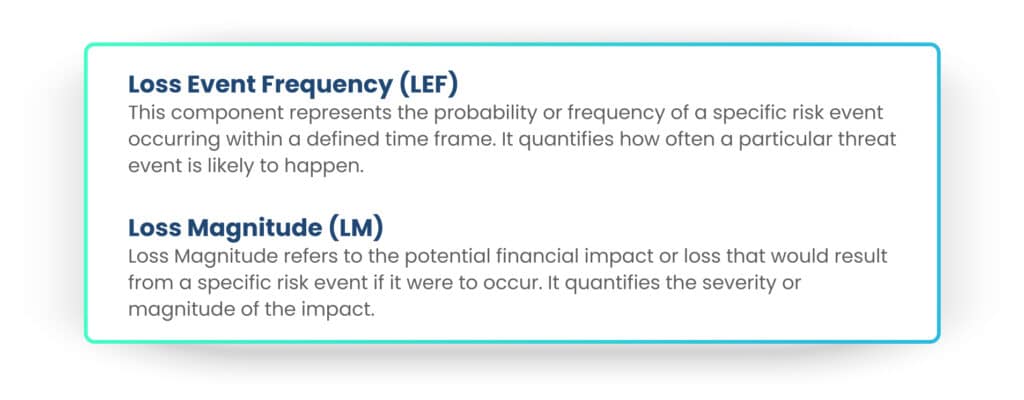
  • Flexibility: Adapt to evolving threats and business changes for continued relevance and effectiveness.

Limitations of Custom CRQ models

  • Complexity and cost: Developing custom CRQ models can be time-consuming and expensive compared to off-the-shelf solutions.
  • Expertise requirement: Custom models may require specialized expertise for development and maintenance, posing a challenge for organizations lacking in-house skills.
  • Potential bias: Custom models may reflect the biases or assumptions of the developers, leading to less objective risk assessments.
  • Limited scalability: Custom models may have limited scalability, making it difficult to adapt to organizational growth or changes in the risk landscape.
  • Dependency on data quality: They rely heavily on accurate and comprehensive data, which can be challenging to obtain and maintain.
  • Risk of overfitting: There’s a risk of overfitting the model to past data, which may not accurately represent future risks or scenarios.

Factors to consider while choosing the right cyber risk quantification method

When selecting a cyber risk quantification method, organizations should carefully consider several factors to ensure they align with their unique needs and context. Here are key factors to emphasize:

  1. Regulatory compliance: Compliance with cybersecurity regulations and standards is paramount. The selected approach should help the organization meet its legal and regulatory obligations, such as GDPR, HIPAA, or industry-specific guidelines.
  1. Data sensitivity: The nature of the organization’s data, including sensitive customer information, intellectual property, or financial data, impacts the level of risk. The chosen approach should assess and prioritize risks related to data sensitivity.
  1. Technology infrastructure: The organization’s existing technology stack and cybersecurity tools should integrate smoothly with the chosen quantification approach. Compatibility is crucial for efficient risk assessment and management.
  1. Risk complexity: The complexity of the organization’s risk landscape should be considered. Some organizations face multifaceted risks, such as supply chain vulnerabilities or advanced persistent threats, which require a more sophisticated quantification approach.
  1. Scalability: The chosen approach should be scalable to accommodate the organization’s growth and evolving cybersecurity needs. It should adapt as the organization expands or changes its technology landscape.
  1. Integration with existing processes: The chosen approach should seamlessly integrate with existing risk management and cybersecurity processes to avoid disruption and streamline risk mitigation efforts.
  1. Cost-benefit analysis: Finally, conduct a cost-benefit analysis to determine whether the chosen quantification approach delivers sufficient value relative to its cost.

Making the right decision

In making an informed decision for the best cyber risk quantification approach, it’s essential to tailor the choice to your organization’s unique needs, risk profile, and objectives. Ensure that the approach is customizable and aligns with industry-specific threats, regulatory demands, and organizational assets.
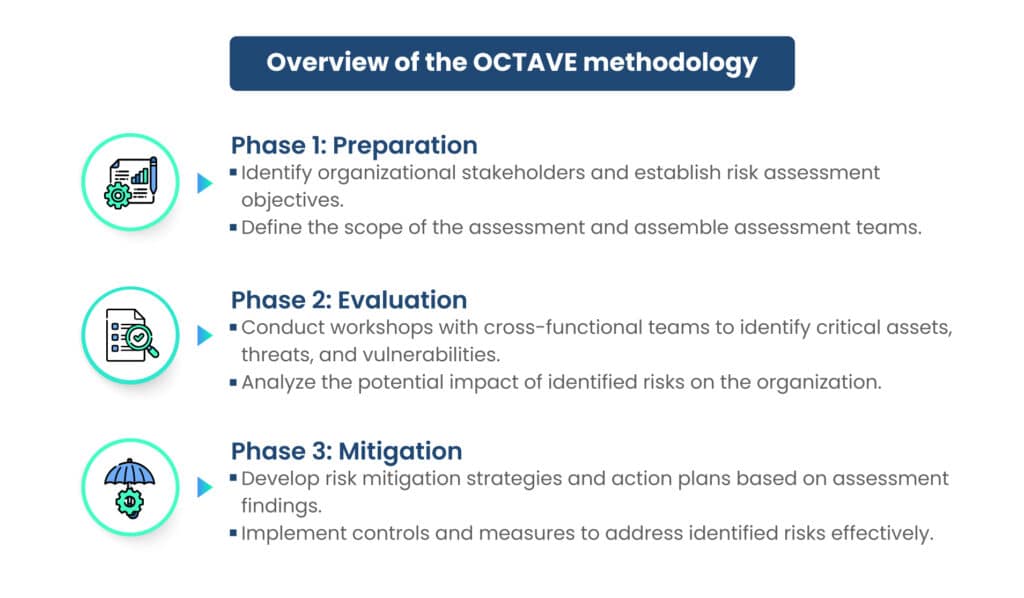
Additionally, you must emphasize the significance of ongoing evaluation and adaptation to stay resilient in the face of ever-evolving cyber threats. Cybersecurity is a dynamic field, and your quantification approach should reflect this by continuously monitoring, assessing, and adjusting to emerging risks. By staying agile and proactive, your organization can effectively manage cyber risks over the long term.

Take proactive steps to strengthen your risk management strategy today. Start by evaluating your current risk assessment processes and consider implementing a comprehensive cyber risk quantification approach tailored to your organization’s specific needs.

Engage with Scrut experts in the field, stay updated on evolving cyber threats, and regularly assess and adapt your risk management practices. By prioritizing risk management, you can safeguard your organization against potential cyber threats and enhance its overall resilience.

FAQs

1. What are the notable models for cyber risk quantification, and how do they work?

Notable CRQ models include FAIR, NIST 800-30, CyberInsight, Monte Carlo, and custom models. They each provide structured approaches to assess and measure cyber risk in financial terms, helping organizations make informed decisions.

2. What are the notable models for cyber risk quantification, and how do they work?

Notable CRQ models include FAIR, NIST 800-30, CyberInsight, Monte Carlo, and custom models. They each provide structured approaches to assess and measure cyber risk in financial terms, helping organizations make informed decisions.

3. How does the Monte Carlo method work in cyber risk quantification, and what are its strengths and weaknesses?

The Monte Carlo method uses simulations to assess the potential financial impacts of cyber threats. Strengths include comprehensiveness, flexibility, and quantitative results. Weaknesses include data requirements, complexity, and resource intensity.

Authored by

Aayush Ghosh Choudhary
Co-founder & CEO at Scrut

Getting started with cyber risk quantification: Key concepts

The Cost of a Data Breach Report 2023 by the IT giant IBM stated that the average cost of a data breach had reached an all-time high of USD 4.45 million in 2023. This represents a 2.3% increase from 2022. However, the average cost of a data breach for organizations with high levels of security skill shortages has risen to USD 5.36 million. 

This is an example of cyber risk quantification. 

Cyber risk quantification has gained significant importance in today’s cybersecurity landscape due to the escalating frequency and sophistication of cyberattacks, making it crucial for organizations to understand the financial implications of potential breaches.

The objective of this article is to delve deeper into the concept of cyber risk quantification, exploring its benefits, modules, and best practices. 

What is cyber risk quantification?

Cyber risk quantification is the process of evaluating and measuring the potential financial impact of cyber threats and vulnerabilities on an organization. It means putting a price tag on cyber risks to understand how much a potential cyberattack could cost financially.

Cyber risk quantification holds significant significance in assessing cyber threats. 

1. Risk Prioritization

One of its key roles is to aid in prioritizing risks effectively. By assigning monetary values to various risks, organizations can identify and focus their efforts on addressing the most critical vulnerabilities first. This approach enhances overall cybersecurity readiness and resource allocation. 

For e.g., cyber risks such as malware infections, phishing attacks, and insider threats can impact the supply of goods in an industry.

2. Decision Making

Furthermore, cyber risk quantification facilitates informed decision-making within organizations. Decision-makers are provided with the necessary insights to make choices regarding cybersecurity investments. This allows for the effective allocation of resources, ensuring that investments are channeled into areas where they will have the most significant impact.

Carrying on the above example, the decision-makers will then provide a decision on how much should be invested in cybersecurity. They will prioritize the above risks and place a monetary value on each risk to make the decision. 

3. Risk Mitigation

Cyber risk quantification also plays a pivotal role in risk mitigation. It helps organizations develop and implement strategies to mitigate risks effectively. By assessing the cost-effectiveness of various security measures, organizations can determine which ones will provide the best return on investment in terms of risk reduction.

Considering the return on investment (ROI) of cybersecurity is imperative as every organization doesn’t necessarily need Z-level security. You should consider the risk tolerance of your organization before investing heavily in cybersecurity.

How does cyber risk quantification work? 

The process of cyber risk quantification involves several steps, including:

  • asset valuation, 
  • risk assessment, and 
  • financial estimation. 

Each asset within an organization is assigned a value based on its importance to the business operations. Risk assessment takes into account factors such as vulnerabilities and potential threat actors. By combining asset valuation and risk assessment, cyber risk quantification quantifies the financial impact of potential cyberattacks. It calculates the potential monetary losses an organization could face in the event of a cyber incident.

The very basic formula for the calculation of cyber risk quantification is:

Cyber risk = Threat x Vulnerability x Asset value

In essence, cyber risk quantification expresses cyber risks in financial terms, enabling organizations to make well-informed decisions, prioritize their cybersecurity efforts, and effectively manage their risk exposure. It provides a common language that resonates with business leaders, facilitating better communication and understanding of cybersecurity risks and their potential financial consequences.

In cyber risk quantification, key concepts include financial analysis, threat likelihood assessment, vulnerability identification, and regular reevaluation. These ensure effective management of cyber threats, enabling informed decision-making amid evolving cybersecurity landscapes.

Factors to consider when quantifying cyber risks:

1. Risk assessment

Risk assessment in cyber risk quantification involves the systematic process of identifying, analyzing, and evaluating cyber risks that an organization faces. 

2. Financial impact analysis

Cyber risk quantification evaluates the potential financial consequences of cyber threats through a financial impact analysis. This analysis quantifies the monetary losses an organization could incur due to cyber incidents. 

Financial models play a crucial role in this process, as they help estimate the direct and indirect costs associated with data breaches, downtime, legal liabilities, and reputation damage. By quantifying these impacts, organizations can make informed decisions about cybersecurity investments, insurance coverage, and risk mitigation strategies.

3. Threat likelihood

In cyber risk quantification, the likelihood of specific cyber threats occurring is a fundamental consideration. It takes into account various factors, such as historical threat data, threat intelligence, and the organization’s industry and geographic location. Threat likelihood assessments help organizations prioritize their defenses and allocate resources effectively. Factors influencing threat likelihood include the sophistication of threat actors, the organization’s security posture, and emerging threat trends.

4. Vulnerability assessment

Vulnerability assessments are a critical component of cyber risk quantification, as they involve identifying security vulnerabilities within an organization’s systems, processes, and assets. Vulnerability assessments are closely tied to cyber risk quantification because identifying vulnerabilities is essential for quantifying the potential risks and financial impacts associated with cyber threats. Effective vulnerability management is key to reducing risk.

5. Periodic reevaluation

Cyber risk quantification models

Cyber risk can be quantified using various models. Each of these CRQ models provides valuable tools and methodologies for organizations to assess, quantify, and manage cyber risks effectively. The choice of model may depend on an organization’s specific needs, resources, and risk management objectives.
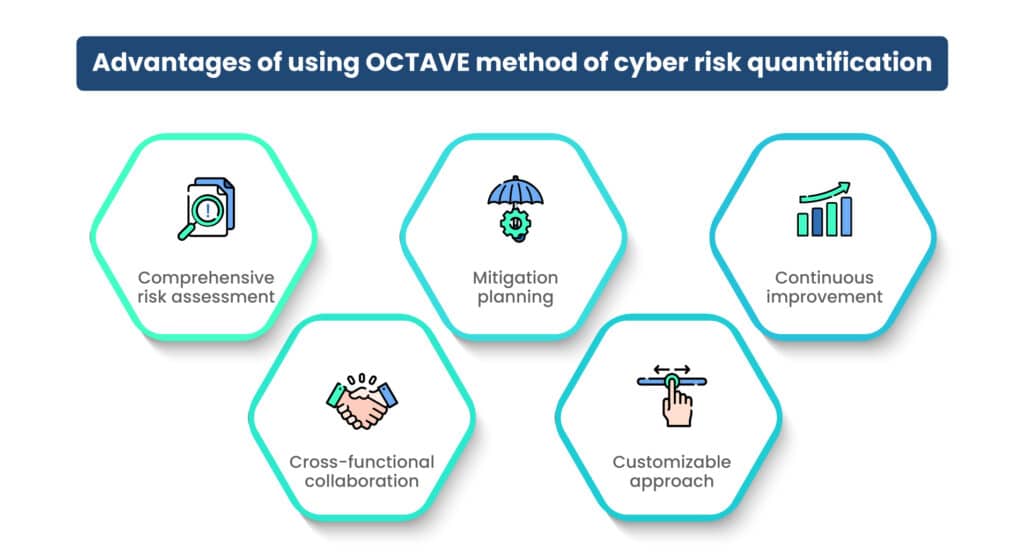
1. FAIR Model

The Factor Analysis of Information Risk (FAIR) model is a quantitative framework used to assess and quantify cyber risks based on financial loss probabilities. It is designed to provide a structured approach to understanding and managing information security and cyber risk in financial terms. 
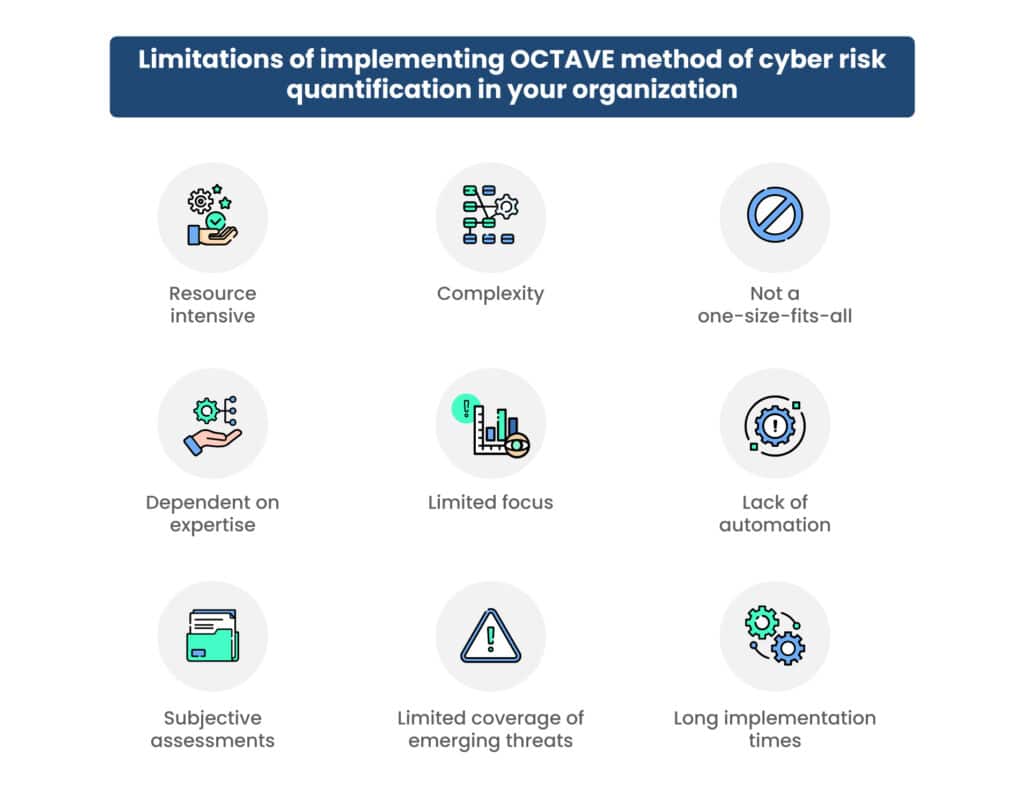
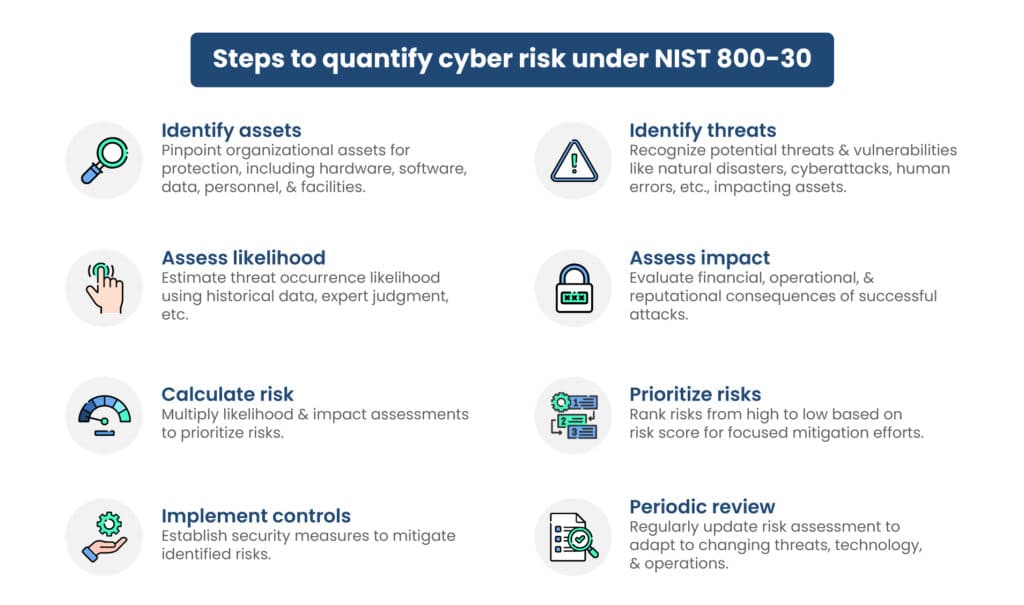
Risk = TEF x VF x LM

The FAIR model often employs a five-point scale for each component, ranging from “Very Low” to “Very High” to assign values to TEF, VF, and LM. 
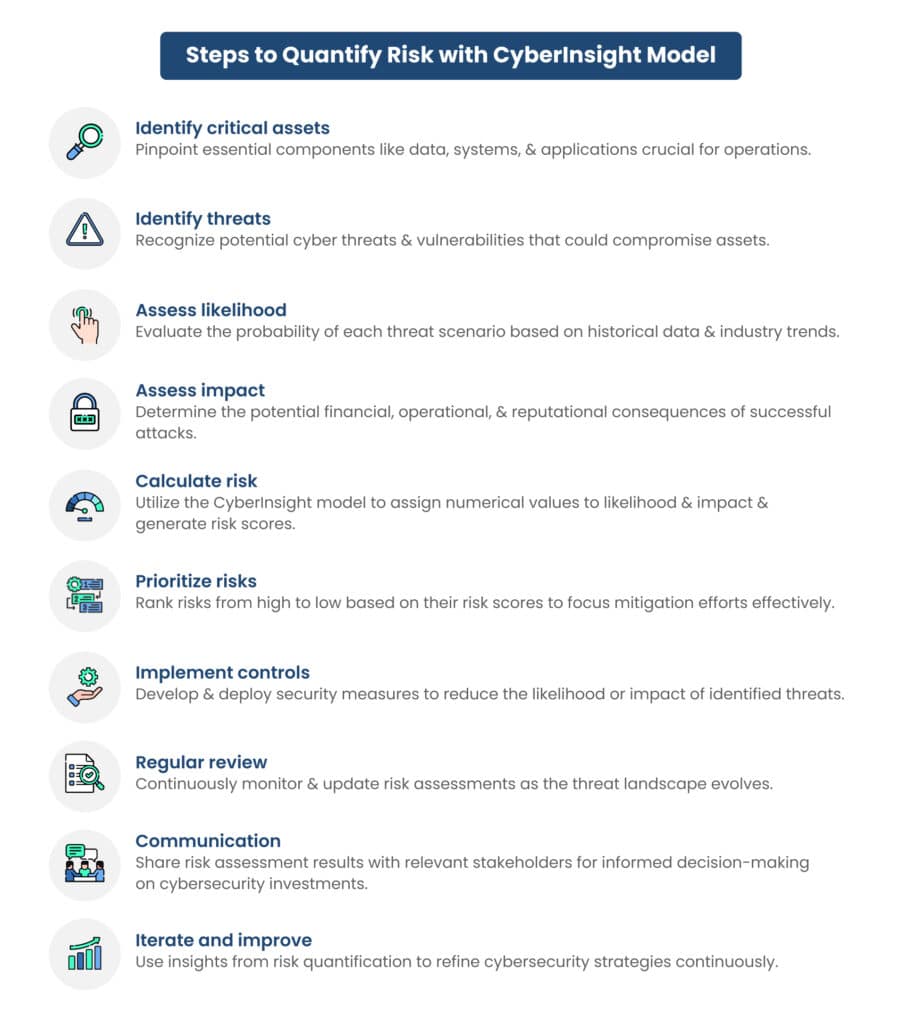
The output of the FAIR model is typically expressed in financial terms, such as dollars, and provides a clear understanding of the expected loss or risk exposure associated with specific cyber threats.

2. Monte Carlo simulations

Monte Carlo simulations are a statistical technique employed within cyber risk quantification models to estimate metrics like Value at Risk (VaR) or expected loss. These simulations entail the execution of numerous model iterations, each incorporating randomly generated input variables falling within predefined ranges. 

In the realm of cyber risk quantification, these input variables encompass elements such as threat event frequencies, vulnerability factors, and loss magnitudes.

Through the execution of thousands or even millions of such simulations, Monte Carlo simulations yield a probability distribution that outlines potential outcomes. This distribution is instrumental in enabling organizations to gain a comprehensive understanding of the spectrum of conceivable financial losses, along with their associated probabilities. 

Ultimately, Monte Carlo simulations equip decision-makers with valuable insights, facilitating a more informed approach to evaluating the potential financial impact of cyber risks, thereby aiding in risk mitigation strategies and budget allocation.

3. NIST 800-30

NIST 800-30 is a comprehensive framework developed by NIST for conducting risk assessments in information security and cyber risk management.

a. Structured risk assessment process:

Core of NIST 800-30 involves a structured risk assessment process covering stages such as risk identification, analysis, evaluation, and formulation of mitigation strategies. This systematic approach aids organizations in addressing cyber threats effectively.

b. Guidance on Risk Management Framework (RMF):

Provides guidance on integrating risk management principles into an organization’s cybersecurity program through the establishment of a Risk Management Framework (RMF). This ensures continuous and integral risk assessment within an organization’s security posture.

c. Emphasis on vulnerability assessments:

Places a strong emphasis on conducting Vulnerability Assessments to identify weaknesses and susceptibilities in an organization’s systems, processes, and assets. This aids in mitigating potential cyber threats effectively.

d. Asset valuation for financial impact assessment:

Assists organizations in quantifying the potential financial impact of cyber incidents by aiding in the valuation of assets. This step is crucial for understanding the financial implications of cyberattacks and data breaches, enabling informed decision-making and resource allocation.

4. CyberInsight:

CyberInsight adopts a structured and systematic approach, allowing organizations to methodically evaluate cyber threats and vulnerabilities, ensuring a comprehensive assessment of their cybersecurity landscape.

a. Financial perspective

Similar to the FAIR model, CyberInsight often utilizes a financial perspective for assessing cyber risks, enabling organizations to understand potential monetary losses from cyber incidents and devise effective risk management strategies.

b. Risk prioritization

CyberInsight assists in identifying and prioritizing high-risk areas with significant financial impact, allowing organizations to allocate cybersecurity resources efficiently and address critical vulnerabilities promptly [3].

c. Data-driven decision-making

It relies on data and rigorous analysis, empowering organizations to base their cybersecurity strategies on empirical evidence and insights, fostering a proactive and informed approach to cybersecurity and risk management.

Benefits of implementing cyber risk quantification

Implementing cyber risk quantification within an organization offers numerous benefits, which can help enhance cybersecurity efforts, improve risk management, and support informed decision-making. Some of the key advantages include:

1. Financial clarity

Cyber risk quantification provides a structured framework for quantifying cyber risks in financial terms. This enables organizations to understand the potential financial impact of cyber incidents, aiding in risk mitigation and budgeting. It helps in aligning cybersecurity investments with the organization’s risk tolerance and financial capabilities.

2. Risk Prioritization and data-driven decision-making

Cyber risk quantification enables organizations to prioritize cybersecurity efforts based on the financial impact of various threats and vulnerabilities, enhancing the overall security posture. Additionally, it relies on data and analysis to provide decision-makers with empirical insights into cyber risks, enabling informed choices regarding risk mitigation strategies, insurance coverage, and security investments.

3. Improved communication

By using a common risk language and presenting risk assessments in financial terms, cyber risk quantification facilitates better communication among various stakeholders, including executives, IT teams, and board members. This alignment of understanding enhances cooperation and collaboration in addressing cyber risks.

4. Compliance and reporting

Many regulatory frameworks and industry standards require organizations to assess and manage cyber risks effectively. Cyber risk quantification helps organizations meet these compliance requirements by providing a structured approach to risk assessment and reporting.

5. Scenario analysis

Cyber risk quantification models often allow organizations to conduct scenario analysis, simulating the potential impact of different cyber incidents. This helps organizations prepare for various threat scenarios and develop effective incident response plans.

6. Insurance optimization

Cyber risk quantification can aid organizations in optimizing their cyber insurance coverage. By quantifying potential financial losses, organizations can better determine the appropriate level of coverage and negotiate insurance premiums more effectively.

7. Reduced business disruption

By identifying and mitigating high-impact risks, cyber risk quantification can help prevent or minimize business disruptions caused by cyber incidents. This, in turn, can lead to cost savings and the preservation of the organization’s reputation.

Winding up

In conclusion, Cyber Risk Quantification (CRQ) is an essential tool in today’s cybersecurity landscape, helping organizations understand the financial implications of cyber threats. With data breach costs at an all-time high, cyber risk quantification plays a crucial role in risk prioritization, informed decision-making, and effective risk mitigation.

As cyber threats evolve, organizations embracing cyber risk quantification not only enhance their cybersecurity but also position themselves to proactively manage risks, make informed decisions, and safeguard their assets in an increasingly interconnected digital world.

Ready to take control of your organization’s cybersecurity and financial resilience? Start implementing Cyber Risk Quantification (CRQ) today to understand and manage your cyber risks effectively. 

Reach out to our team of experts at Scrut for personalized guidance and solutions tailored to your organization’s needs. Don’t wait until the next data breach—secure your digital assets and financial stability now!

FAQs

1.  What is Cyber Risk Quantification (CRQ)?

Cyber Risk Quantification is the process of evaluating and measuring the potential financial impact of cyber threats and vulnerabilities on an organization. It involves assigning monetary values to these risks to provide a clear understanding of their financial implications. CRQ is crucial because it helps organizations understand the financial consequences of potential cyberattacks. It enables informed decision-making, resource allocation, and prioritization of cybersecurity efforts.

2. How does cyber risk quantification aid in risk prioritization?

Cyber risk quantification assigns monetary values to risks, allowing organizations to focus on addressing the most critical vulnerabilities first. This approach enhances overall cybersecurity readiness.

3. Can cyber risk quantification help in optimizing cyber insurance coverage?

Yes, cyber risk quantification assists organizations in determining the appropriate level of cyber insurance coverage by quantifying potential financial losses, making negotiations with insurers more effective.

Authored by

Aayush Ghosh Choudhary
Co-founder & CEO at Scrut

How to automate vendor risk management with Scrut Automation

Digital connections and partnerships are the bedrock of growth for most businesses today. However, as organizations increasingly rely on third-party vendors to achieve their goals, they also expose themselves to potential risks that could jeopardize their security, reputation, and compliance standing. 

In this intricate dance between progress and vulnerability, the need for a robust and efficient vendor risk management strategy has never been more critical.

Vendor risk management goes beyond mere due diligence; it involves a comprehensive assessment of the potential risks associated with your vendor relationships. From cybersecurity breaches to regulatory non-compliance, the spectrum of risks is vast and intricate. 

However, manual processes for managing these risks are no longer sufficient to address the complexities and pace of modern business operations. This is where the power of automation steps in to revolutionize the way we safeguard our enterprises.

This blog delves into why automating vendor risk management is better than doing it manually and explores how Scrut’s solutions can be utilized to automate the vendor risk management process.

What is vendor risk management?

Vendor risk management (VRM) is a structured approach that organizations employ to assess, manage, and mitigate the risks that emerge from their interactions with vendors and other third-party entities. 

These risks encompass a wide spectrum, ranging from data breaches and cybersecurity vulnerabilities to regulatory non-compliance and financial instability. The primary goal of VRM is to identify potential risks, implement strategies to minimize their impact, and maintain a robust line of defense against any adverse consequences that might arise from these risks.

Automated VRM vs Manual VRM

How can you automate vendor risk management with Scrut?

Scrut’s robust VRM capabilities are designed to empower your organization in confidently navigating the intricacies of vendor relationships. By harnessing the efficiency of automation, Scrut enhances your VRM strategies and streamlines the entire process, elevating vendor risk management for your organization.

Here’s a look at its power-packed features:

Vendor onboarding and due diligence

Vendor onboarding and due diligence involve several crucial steps to ensure the security and efficiency of your business processes. In terms of due diligence, Scrut’s experts can assist you in formulating pertinent policies for this purpose.

To facilitate automated vendor discovery, Scrut employs a comprehensive approach by scanning your cloud infrastructure. This process helps identify third-party providers seamlessly integrated with your system, allowing you to categorize them effectively and manage associated risks more efficiently.

Risk assessment & scoring frameworks

Risk assessment and scoring frameworks are integral components of vendor management. Scrut offers the flexibility to define custom fields for each vendor’s universal security rating. However, it’s essential to note that this approach may not be universally applicable. For a more standardized and direct evaluation, Scrut provides the option to utilize security questionnaires. These can be created, sent, evaluated, and scored directly on the platform.

In the realm of scoring frameworks, our experts are available to assist in defining or adopting suitable models to enhance your risk assessment capabilities.

Employee training & change management

Employee training and change management are critical aspects of maintaining a secure business environment. Use Scrut to define relevant policies that ensure that all employees, or specific ones dealing with specific vendors, accept and adhere to the necessary guidelines.

For targeted employee segments, it is possible to create mandatory training sessions. These sessions are designed to ensure that employees possess the required knowledge and skills for safe interaction and seamless operations with specific vendors, contributing to overall operational security and efficiency.

Continuous monitoring and alerts

With Scrut, your organization has the flexibility to tailor the assessment frequency for each vendor. This means you can customize how often you assess each vendor, keeping you on top of emerging risks specific to their profile. It’s a game-changer, allowing your organization to maintain constant vigilance and address potential threats promptly.

Scrut provides a robust audit log for every vendor in your network. This feature is like a backstage pass to all activities related to your vendor interactions. It’s a fantastic tool for tracking changes, reviewing historical performance, and ensuring transparency in your vendor relationships. Having this detailed record at your fingertips enhances your oversight, compliance, and accountability measures.

Adding to the efficiency, Scrut simplifies the vendor risk assessment process with a nifty ‘Send Reminder’ option for questionnaires. This feature is designed to fast-track the submission, evaluation, and scoring of assessments. The automated reminder system ensures that everyone stays on top of their game, completing questionnaires within the defined timelines. 

This not only saves time but also brings a new level of organization and efficiency to your vendor risk management workflow. With Scrut, you’re equipped to proactively manage risks, maintain meticulous records, and streamline your assessment processes effortlessly.

Compliance management & documentation

Scrut takes compliance management and documentation to the next level, offering a seamless solution to keep all your documents compiled and organized in one centralized place. This not only streamlines your auditing processes but also ensures robust compliance practices.

Manage compliance documentation effortlessly for each vendor within their dedicated window. This targeted approach ensures that all necessary documents are accessible, up-to-date, and specific to the requirements of each vendor relationship. It’s a tailored system that enhances precision in compliance management.

Secondly, Scrut introduces the VAULT, a centralized location designed to be your go-to platform for all compliance-related documentation. Within the VAULT, you have the power to create folders, facilitating a structured organization of your documents. 

The ability to filter documents by type and uploader adds an extra layer of convenience, allowing you to swiftly locate and retrieve the information you need. This centralized repository not only simplifies your compliance documentation but also provides a comprehensive and organized overview, making audits smoother and more efficient.

Workflow automation & collaboration

Our approach to workflow automation and collaboration is designed to enhance efficiency and streamline processes for vendor assessment. By setting up relevant Points of Contact (POCs) for different stages, such as vendor assessment, questionnaires, and mitigation tasks, Scrut facilitates better collaboration and ensures that the right individuals are involved at the right time.

Our platform goes beyond standard automation, introducing thoughtful and useful features to simplify your workflow. For instance, one-click reminders for questionnaire submissions provide a quick and hassle-free way to prompt stakeholders to complete their tasks within specified timelines. This feature not only saves time but also fosters a more organized and timely completion of assessments.

In addition, Scrut introduces instant mitigation task creation based on specific responses to issues identified during the assessment. This capability is seamlessly integrated into the assessment window, allowing for swift and targeted action. 

By automating the creation of mitigation tasks, Scrut ensures that potential issues are promptly addressed, reducing response times and improving overall risk management effectiveness.

Risk mitigation strategies & remediation plans

With Scrut’s VRM capabilities, users can take a proactive stance by creating additional security questionnaires tailored to the specific needs of their vendor relationships.

The VRM functionality within Scrut allows for the seamless generation of targeted security questionnaires, ensuring that assessments are comprehensive and aligned with the unique risk landscape of each vendor. This customization capability enhances the depth of risk analysis and enables organizations to address specific security concerns effectively.

In tandem with security questionnaires, Scrut facilitates the creation of mitigation tasks, forming a critical component of the risk mitigation process. By identifying vulnerabilities or areas of concern through the assessment process, users can initiate remediation plans through the generation of actionable tasks.

These tasks are not only easily created within the platform but can also be tracked effortlessly, providing visibility into the progress of mitigation efforts.

Reporting & analytics

Scrut empowers your organization with insightful tools that help it stay ahead of vendor risks and communicate crucial developments to stakeholders seamlessly. Our platform’s user-friendly dashboards provide a holistic view of key statistics and metrics, allowing users to make informed decisions and proactively manage vendor relationships.

Key stats

Scrut’s dashboards include key statistics such as inherent risk, overall risk score, and vendor risk scores categorized by domain. These stats offer a comprehensive snapshot of the risk landscape, enabling users to quickly assess the critical aspects of their vendor portfolio.

Category-wise analysis

Our platform facilitates a detailed category-wise analysis, providing a breakdown of risks associated with specific categories. This granularity allows organizations to identify and prioritize areas that require immediate attention, ensuring a targeted and efficient risk management approach.

Inherent risk and risk score

Scrut’s reporting includes insights into the inherent risk associated with vendors and their overall risk scores. This dual perspective aids in understanding the baseline risk as well as the impact of various factors on the overall risk profile, facilitating informed decision-making.

Vendor risk score by domain

The breakdown of vendor risk scores by domain offers a nuanced understanding of risks associated with different aspects of vendor relationships. This segmentation provides valuable insights into specific areas that may require focused attention or improvement.

Questionnaire and mitigation task status

Scrut’s reporting dashboards also offer visibility into the status of questionnaires and mitigation tasks. This feature allows users to track the progress of assessments and remediation efforts, ensuring that tasks are completed in a timely manner and contributing to a proactive risk management approach.

Final words

Automation is the answer to the challenges faced by manual processes in vendor risk management. It offers efficiency, accuracy, and real-time monitoring, comprehensively revolutionizing risk management. From onboarding to continuous monitoring, automation streamlines workflows, reduces errors, and enhances collaboration.

Scrut emerges as a game-changer in the realm of automating vendor risk management, seamlessly addressing the limitations of manual processes. Its sophisticated features not only provide efficiency and accuracy but also introduce a new era of real-time monitoring, crucial for staying ahead in the ever-evolving landscape of vendor risks. Schedule a demo with us today to learn more!

FAQs

1. What is vendor risk management (VRM)?

Vendor risk management is a structured approach organizations use to assess, manage, and mitigate risks arising from interactions with vendors and third-party entities. These risks encompass data breaches, cybersecurity vulnerabilities, regulatory non-compliance, and financial instability. VRM aims to identify potential risks, implement strategies to minimize their impact, and maintain a robust defense against adverse consequences.

2. Why is automated VRM better than manual VRM?

Automated vendor risk management provides a strategic upgrade over manual approaches by optimizing the risk assessment process. It brings efficiency and precision to the forefront, with real-time monitoring capabilities for immediate threat detection. Automation is scalable, reduces data entry errors, offers comprehensive risk analysis, and provides detailed audit trails. In contrast, manual processes are time-consuming, prone to errors, lack real-time monitoring, and struggle with scalability.

3. How can Scrut Automation enhance vendor risk management?

Scrut empowers your organization’s VRM bty skillfully automating it. The platform aids in vendor onboarding and due diligence, offers customizable risk assessment and scoring frameworks, facilitates employee training and change management, and ensures continuous monitoring and alerts. Scrut also excels in compliance management and documentation, workflow automation, risk mitigation strategies, and detailed reporting and analytics.