Authored by

Aayush Ghosh Choudhary
Co-founder & CEO at Scrut

GDPR cookie consent: Requirements & how to comply?

In today’s digital age, cookies have become an integral part of online user experiences, allowing websites to remember user preferences, track activities, and provide personalized content. However, with the growing concerns over data privacy and protection, the General Data Protection Regulation (GDPR) was introduced to safeguard individuals’ personal data within the European Union (EU) and the European Economic Area (EEA).

Obtaining valid and compliant cookie consent is of utmost importance to protect users’ privacy and uphold their data protection rights. With the implementation of the GDPR, individuals have greater control over their personal data. Cookie consent ensures transparency and empowers users to make informed choices about how their data is collected, processed, and used. Failing to obtain valid consent may lead to severe legal consequences, such as hefty fines and reputational damage, as well as erode users’ trust in a website or organization. 

By prioritizing valid and compliant cookie consent, businesses demonstrate their commitment to respecting user privacy, fostering trust, and maintaining a positive online reputation in an increasingly data-sensitive world.

In this blog, we will delve into the intricacies of GDPR cookie consent requirements and explore how websites can ensure compliance while respecting user privacy.

What are cookies and why are they important?

Cookies are small text files stored on a user’s device when they visit a website. They play a crucial role in enhancing user experiences by remembering preferences and facilitating personalized content delivery. However, some cookies are designed for online tracking purposes, enabling websites to collect and process user data, such as browsing behavior and preferences. This tracking aspect raises privacy concerns, making it essential to obtain proper consent from users before using cookies, especially those used for tracking.

What is consent and what are its implications on cookies?

Under the GDPR, “consent” is defined as a specific, informed, and unambiguous indication of a user’s agreement to the processing of their personal data. It must be freely given, revocable, and separate from other terms and conditions. This definition has significant implications for cookies, as they often involve the processing of personal data. 

Consent must be obtained before any non-essential cookies, including tracking cookies, are placed or accessed on a user’s device. Additionally, websites must ensure that consent mechanisms are clear, easily accessible, and require affirmative action from the user, demonstrating a proactive choice to consent to cookie usage.

What are the different types of cookies? And what is their impact on consent requirements?

There are various types of cookies, and each has a different impact on consent requirements. For example,

1. Strictly necessary cookies

These cookies are essential for the website’s basic functionality and do not require explicit GDPR cookie consent as they are exempt from GDPR requirements.

2. Functional cookies

These cookies enhance the user experience by remembering preferences, such as language settings. While GDPR cookie consent may not be necessary for the use of these cookies, transparent information about their purpose should still be provided to users.

3. Performance cookies

These cookies gather anonymous data to analyze website performance and traffic patterns. GDPR cookie consent may be required for their use, but as long as the data remains anonymized and is not used for individual profiling, obtaining consent can be less burdensome.

4. Targeting/advertising cookies

These cookies track users across websites to build profiles for targeted advertising. Given their potential impact on user privacy, explicit GDPR cookie consent is essential before deploying such cookies.

In summary, understanding the nature of cookies and their significance in online tracking is vital in light of the GDPR’s definition of consent. Different types of cookies have varying impacts on consent requirements, but regardless of the cookie type, obtaining valid and compliant consent is essential to respecting users’ data protection rights and fostering trust in the digital environment.

What is the legal basis in GDPR for processing cookies?

Typically, there are the following legal basis in GDPR for processing cookies:

1. Consent

Consent is the primary legal basis for processing cookies that involve the collection and processing of personal data. According to the GDPR, consent must be obtained before placing non-essential cookies, such as tracking and targeting cookies, on a user’s device. This GDPR cookie consent must be specific, informed, and freely given, with users being fully aware of the purposes and consequences of cookie usage. 

Websites must ensure that users have the option to provide or withdraw consent without facing any negative consequences. Additionally, GDPR cookie consent should be separate from other terms and conditions and obtained through affirmative action, such as clicking an “I agree” button.

2. Other potential legal bases for cookie processing

While consent is the primary legal basis for processing cookies under GDPR, there are other potential legal bases that might apply in certain circumstances. One such legal basis is “legitimate interest.” If the data processing is necessary for the legitimate interests pursued by the website operator or a third party, and those interests do not override the rights and freedoms of the user, legitimate interest may serve as a lawful basis for processing certain cookies. 

However, the use of legitimate interest as a legal basis for cookies is subject to careful assessment and requires a balancing test between the interests of the website operator and the individual’s privacy rights.

When relying on legitimate interest as a legal basis for cookie processing, the website must demonstrate a valid legitimate interest that is not overridden by the individual’s rights and freedoms. A Legitimate Interest Assessment (LIA) should be conducted to assess the necessity and proportionality of the processing.

What are the key principles for GDPR-compliant cookie consent?
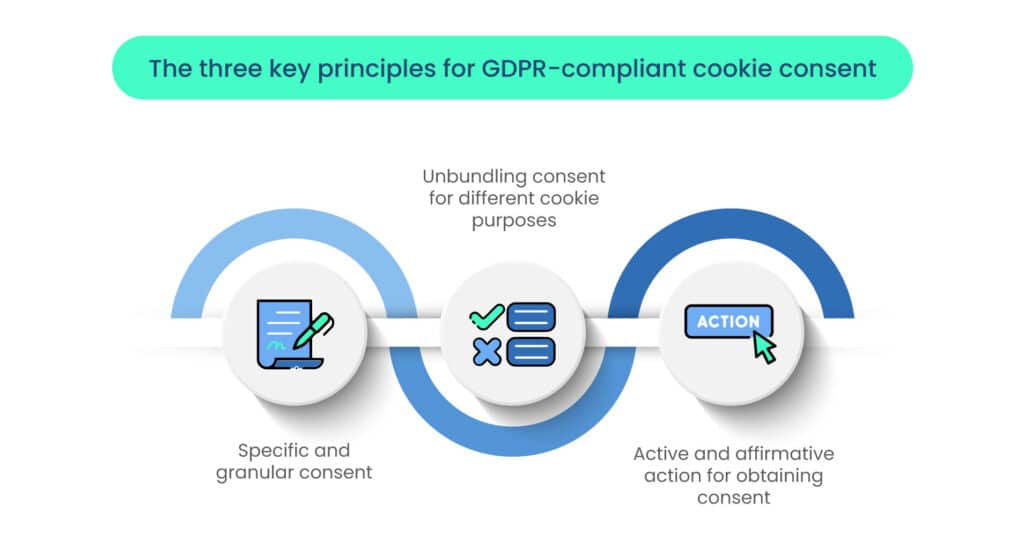
The following key principles should be considered for GDPR-compliant cookie consent:

1. Specific and granular consent

One of the fundamental principles of GDPR-compliant cookie consent is obtaining specific and granular consent from users. This means that users should have clear and detailed information about the different types of cookies used on the website and their respective purposes. Rather than using a blanket or generic consent approach, websites should provide users with a choice to consent or decline each specific category of cookies. This allows users to have more control over their data and ensures that they are fully informed about the implications of their consent.

2. Unbundling consent for different cookie purposes

To achieve transparency and compliance, GDPR cookie consent for different cookie purposes should be unbundled. This means that websites should not bundle consent for essential and non-essential cookies together or combine consent for various purposes like analytics, advertising, and social media tracking. Instead, each purpose should be presented separately, and users should be able to give or withhold consent for each purpose individually. Unbundling consent helps users make more informed decisions and avoids forcing them into accepting cookies they might not want or need.

3. Active and affirmative action for obtaining consent

GDPR-compliant cookie consent requires that users take active and affirmative actions to grant consent. This means that pre-ticked boxes or any form of passive consent (such as implied consent from continued use of the website) are not acceptable. Websites should use clear and user-friendly mechanisms, such as checkboxes or sliders, that require users to actively select their choices. Additionally, obtaining consent should be a separate and distinct step from other actions on the website, ensuring that users are not pressured into giving consent.

What are the requirements for cookie consent mechanisms?
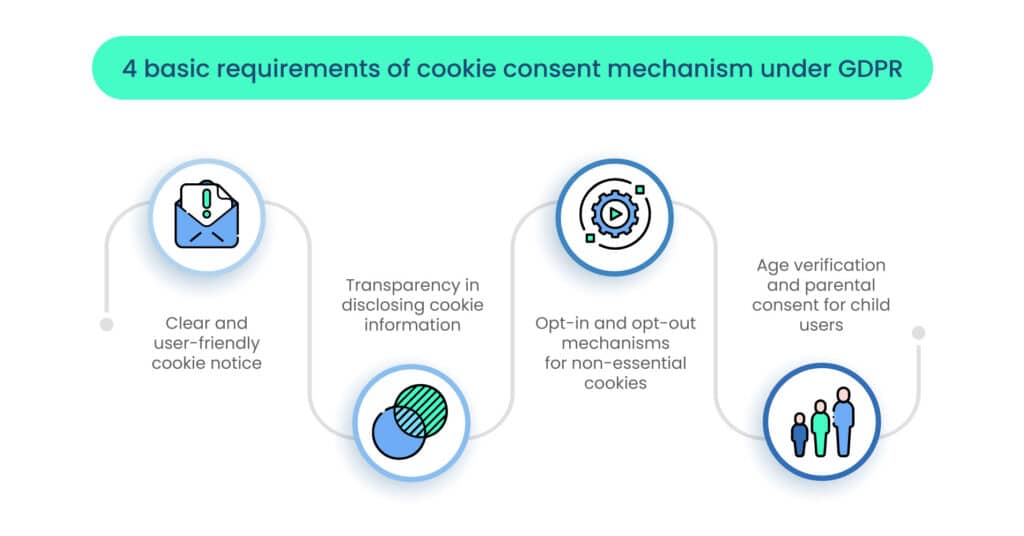
GDPR has certain requirements for cookie consent, as shown below:

1. Clear and user-friendly cookie notice

A GDPR-compliant cookie consent mechanism should include a clear and easily accessible cookie notice that informs users about the use of cookies on the website. The notice should be prominently displayed, either as a pop-up or a banner, and should provide concise yet comprehensive information about the types of cookies used, their purposes, and how long they will be stored on the user’s device. The language used in the notice should be plain and understandable to the average user, avoiding complex legal jargon.

2. Transparency in disclosing cookie information

Transparency is a fundamental aspect of obtaining valid GDPR cookie consent. Websites should disclose detailed information about each cookie’s purpose, the data it collects, and who it is shared with. This information should be provided in a cookie policy or a dedicated section within the privacy policy, easily accessible from the cookie notice. Users must be fully informed of the consequences of their consent or refusal, ensuring they can make well-informed decisions about their data.

3. Opt-in and opt-out mechanisms for non-essential cookies

For non-essential cookies, including those used for analytics, advertising, and social media tracking, websites must implement opt-in and opt-out mechanisms. By default, these cookies should be disabled until the user provides explicit consent. Opt-in mechanisms require affirmative action from the user to grant consent, such as checking a box or clicking an “I agree” button. Additionally, users should have the option to withdraw their consent and opt out of these cookies at any time, with an easy-to-use and accessible process for managing their preferences.

4. Age verification and parental consent for child users

If the website targets or knowingly collects personal data from users under the age of consent (usually 16 in most EU member states, but it can be as low as 13 in some countries), age verification and parental consent mechanisms are required. Websites must take reasonable steps to verify the user’s age and obtain verifiable parental consent before processing the personal data of children. This ensures that children’s data is handled with special care and protection in compliance with the GDPR’s specific requirements for child data privacy.

What are the requirements for consent lifespan and withdrawal?
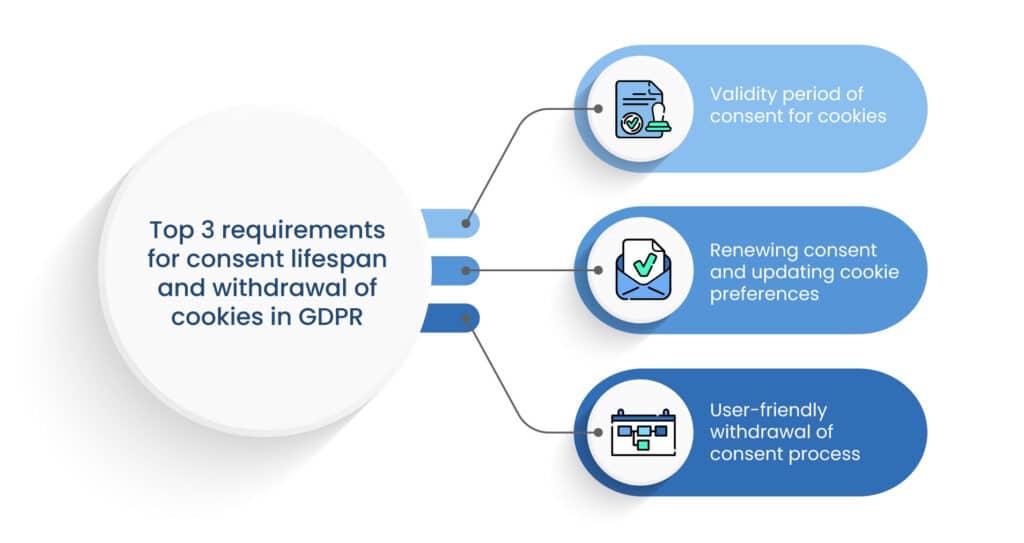
There are certain requirements for consent lifespan and withdrawal of the cookies in GDPR. These are as follows:

1. Validity period of consent for cookies

Under the GDPR, the validity period of consent for cookies should be limited and not  indefinite. The specific duration of the consent validity will depend on the context and the purpose for which the GDPR cookie consent was obtained. As a best practice, websites should regularly review and reassess the need for the cookies and their associated consent to ensure that it remains relevant and up-to-date. Consent for cookies should be regularly renewed to keep it valid and in compliance with the GDPR’s principle of accountability.

2. Renewing consent and updating cookie preferences

To maintain compliance with the GDPR, websites must give users the opportunity to renew their consent periodically. This means that after the consent’s validity period has expired, websites should prompt users to review and update their cookie preferences. Additionally, if there are any significant changes to the cookie usage or purposes, websites should seek renewed consent from users before implementing those changes. This updating process should be user-friendly, clear, and easily accessible, allowing users to modify their preferences easily.

3. User-friendly withdrawal of consent process

The GDPR emphasizes that users have the right to withdraw their consent as easily as they gave it. Websites must provide a straightforward and user-friendly process for users to withdraw their consent for cookies at any time. The withdrawal process should be clearly communicated in the cookie notice or cookie policy, and users should be informed about the consequences of withdrawing their consent. Once consent is withdrawn, websites must promptly stop processing cookies for which consent has been withdrawn and delete or anonymize any associated data.

How to handle cookie consent for third-party cookies?
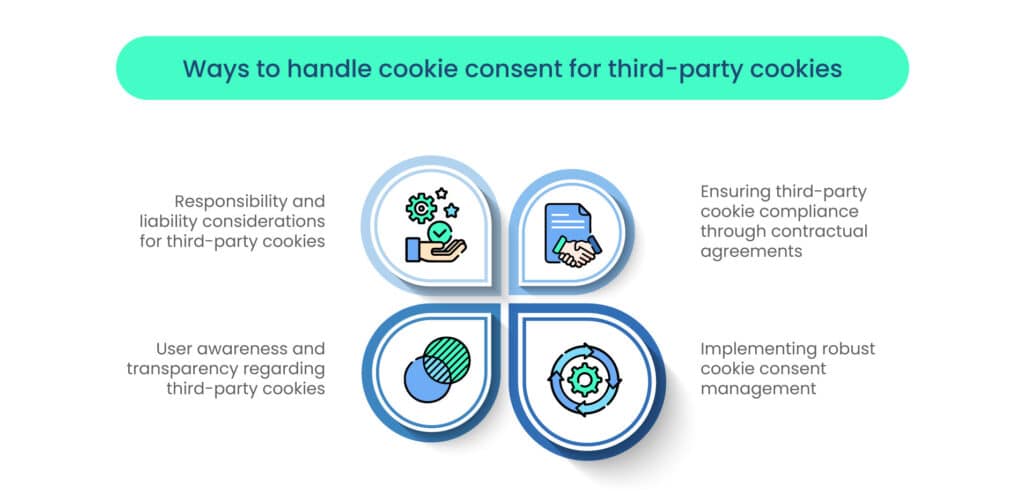
Third-party cookies are extremely important in today’s interwoven space. Let’s look at some of the essential features of handling third-party cookies.

1. Responsibility and liability considerations for third-party cookies

Websites that use third-party cookies should be aware that they share the responsibility and liability for the data collected through these cookies. As per the GDPR, both the website owner (first-party) and the third-party cookie provider are considered data controllers for the personal data collected by the cookies. It is essential for website owners to carefully select and vet their third-party vendors to ensure they comply with data protection regulations and handle user data responsibly. Even if the website does not directly control the third-party cookies, it is still responsible for obtaining valid consent from users for the use of those cookies.

2. Ensuring third-party cookie compliance through contractual agreements

To mitigate risks associated with third-party cookies, website owners should establish contractual agreements with third-party vendors. These agreements, commonly known as Data Processing Agreements (DPAs) or Data Sharing Agreements, should clearly outline the roles and responsibilities of each party regarding data processing and user consent. 

The agreement should also include provisions ensuring that the third-party vendor complies with the GDPR and other relevant data protection laws. Additionally, the DPA should specify that the third-party vendor will only process personal data in accordance with the website owner’s instructions and for agreed-upon purposes.

3. User awareness and transparency regarding third-party cookies

Transparency is crucial when it comes to third-party cookies. Website owners must inform users about the presence of third-party cookies on their site, the purposes for which these cookies are used, and the identity of the third-party vendors involved. 

This information should be provided in the cookie notice or cookie policy, along with links to the privacy policies of the third-party vendors. Users should be aware of how their data is shared and processed by these third parties and have the option to opt out if they choose.

4. Implementing robust cookie consent management

To ensure compliance with third-party cookie requirements, website owners should invest in a robust cookie consent management platform (CMP). A good CMP allows users to easily manage their consent preferences, including opting in or out of specific third-party cookies. 

The CMP should offer granular controls, allowing users to choose which third-party cookies they wish to accept or reject. It should also provide clear and concise information about each third-party cookie’s purpose and the data processing involved.

What are the benefits of using CMPs to streamline your compliance efforts?
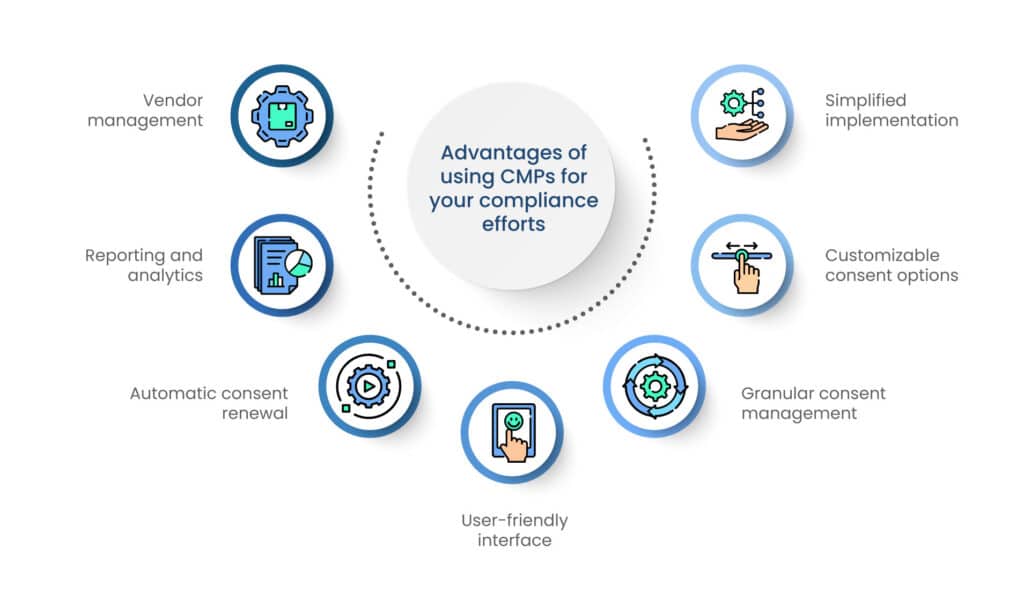
Following are the advantages of using a CMP to streamline your compliance efforts

1. Simplified implementation

CMPs offer pre-built solutions that simplify the process of integrating GDPR cookie consent mechanisms into websites. They provide ready-to-use templates and code snippets, reducing the technical burden on website owners.

2. Customizable consent options

CMPs allow website owners to customize the cookie consent banner or pop-up to align with their branding and design preferences. This ensures a seamless and consistent user experience.

3. Granular consent management

CMPs enable granular consent options, allowing users to choose which types of cookies they want to enable or disable. This level of control ensures compliance with GDPR’s requirements for specific and informed consent.

4. User-friendly interface

CMPs are designed with user-friendliness in mind, making it easy for visitors to understand and manage their cookie preferences. Clear language and intuitive interfaces enhance user trust and engagement.

5. Automatic consent renewal

Many CMPs offer consent renewal features, prompting users to review and update their preferences periodically. This helps websites maintain compliance by ensuring consent remains valid and up-to-date.

6. Reporting and analytics

CMPs often provide insights and analytics on user consent preferences, allowing website owners to track and monitor the effectiveness of their cookie consent strategy.

7. Vendor management 

CMPs assist in managing third-party vendors’ consent and ensure compliance with contractual agreements, minimizing the risk associated with third-party cookies.

How to evaluate the right CMP for your website?
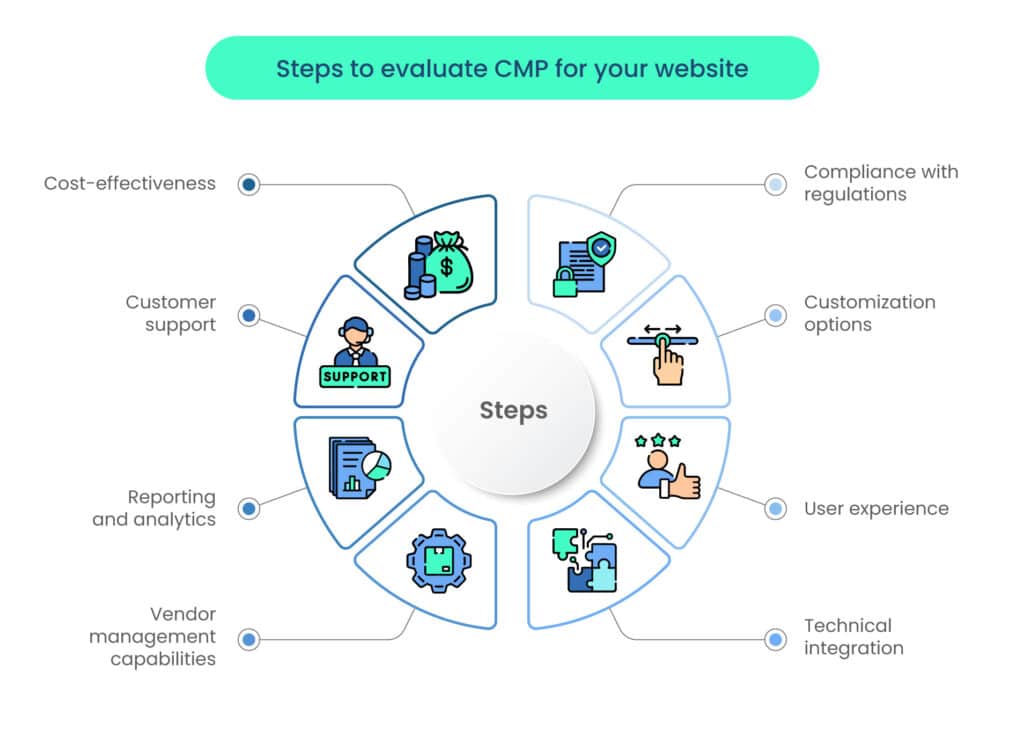
An organization should check the following before investing in CMP for their website:

1. Compliance with regulations 

Ensure that the CMP is designed to comply with relevant data protection regulations, such as the GDPR. It should allow for specific consent options and support user rights, including the right to withdraw consent.

2. Customization options 

Look for a CMP that provides flexibility in design and branding customization to align with your website’s look and feel.

3. User experience

Opt for a CMP that offers a user-friendly interface, clear language, and an intuitive consent management process to enhance user experience and engagement.

4. Technical integration

Choose a CMP that seamlessly integrates with your website’s existing infrastructure and is compatible with various Content Management Systems (CMS) and platforms.

5. Vendor management capabilities

If your website uses third-party cookies, ensure that the CMP supports proper vendor management and facilitates compliance with data processing agreements.

6. Reporting and analytics 

Consider a CMP that provides useful insights and analytics on user consent preferences, helping you assess the effectiveness of your GDPR cookie consent strategy.

7. Customer support

Evaluate the level of customer support provided by the CMP provider, as prompt assistance can be crucial during implementation and ongoing maintenance.

8. Cost-effectiveness

Compare the pricing and features of different CMPs to find a solution that meets your needs while fitting within your budget.

What are the best practices in cookie management for assuring compliance with GDPR?

Some of the best practices for assuring effective cookie management are as follows:

1. Conducting cookie audits and assessment of data processing activities:

Regularly conduct comprehensive cookie audits to identify all cookies used on your website and their specific purposes. Assess the legal basis for processing each type of cookie and ensure that valid GDPR cookie consent is obtained where necessary. Document the findings and maintain a record of the cookies in use. Additionally, conduct periodic assessments of your data processing activities to ensure that you are complying with the GDPR’s principles of data minimization, purpose limitation, and data accuracy.

2. Implementing technical measures for cookie consent management:

Invest in a robust and user-friendly cookie consent management platform (CMP) to effectively manage user consent and cookie preferences. The CMP should allow granular consent options, easy withdrawal of consent, and clear communication of the purposes of each cookie. 

Ensure that the CMP integrates seamlessly with your website and provides transparent information about cookie usage. Implement technical measures to block the placement of non-essential cookies until users have provided their consent, and regularly update the CMP to align with changes in cookie usage and legal requirements.

3. Training employees and staff on GDPR and cookie consent obligations:

Educate all employees and staff who handle personal data, including those involved in website development, marketing, and customer support, about the GDPR’s requirements and the importance of cookie GDPR consent compliance. 

Provide training on best practices for obtaining and managing cookie consent, ensuring that employees understand the significance of user privacy and data protection. Regularly update training materials to reflect changes in regulations or your organization’s data processing practices.

What are the consequences of non-compliance with GDPR?
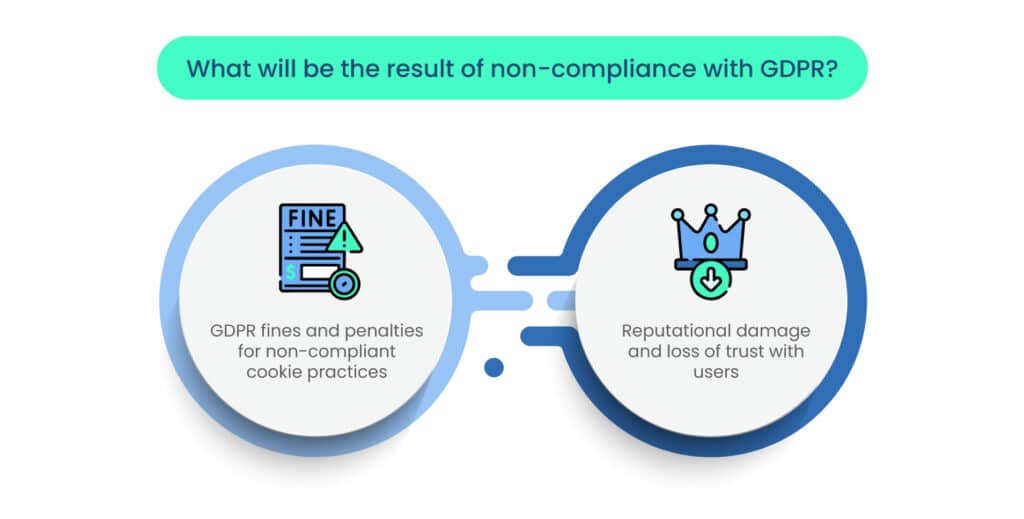
Non-compliance with GDPR can result in the following:

1. GDPR fines and penalties for non-compliant cookie practices

Non-compliance with the GDPR’s cookie consent requirements can lead to severe financial penalties. The GDPR empowers data protection authorities to impose fines of up to 4% of the organization’s global annual turnover or €20 million (whichever is higher) for serious violations. This includes instances where cookie consent is not appropriately obtained, recorded, or managed. Organizations must understand that neglecting cookie compliance can result in significant financial losses and reputational damage.

2. Reputational damage and loss of trust with users

Beyond financial penalties, non-compliance can have long-term repercussions on an organization’s reputation and user trust. News of non-compliant cookie practices and data mishandling can spread quickly, leading to public backlash, negative media coverage, and a loss of customer trust. Rebuilding trust and recovering from reputational damage can be time-consuming and costly. By prioritizing GDPR cookie consent compliance and demonstrating a commitment to user privacy, organizations can protect their reputation and foster a positive relationship with their users.

Conclusion

In today’s digital era, GDPR cookie consent is crucial for protecting user privacy and building trust. Obtaining valid and compliant consent empowers users to control their data, ensuring transparency in data processing. Non-compliance may lead to severe fines and reputational damage. Prioritizing cookie consent demonstrates a commitment to user privacy, fostering positive online relationships. Implementing a robust CMP, conducting audits, and providing employee training are essential for GDPR compliance. By respecting user privacy and adhering to GDPR requirements, businesses can navigate data protection responsibly.

FAQs

1. What is the legal basis in GDPR for processing cookies?

The primary legal basis is consent. Consent must be specific, informed, and freely given for non-essential cookies, especially tracking and targeting cookies. Legitimate interest might also serve as a basis in certain cases, but it requires careful assessment and a balance between interests and privacy rights.

2. What are the key principles for GDPR-compliant cookie consent?

GDPR-compliant cookie consent involves specific, granular consent; unbundling consent for different cookie purposes; and obtaining active and affirmative action for consent.

3. What are the requirements for consent lifespan and withdrawal?

Consent should have a limited validity period and must be renewed periodically. Users should have the option to update their preferences easily and withdraw consent at any time, with a user-friendly process.

Authored by

Aayush Ghosh Choudhary
Co-founder & CEO at Scrut

What is the cost of a SOC 2 audit?

In the fast-paced world of modern business, data security has become a top priority. As organizations handle vast amounts of sensitive information, stakeholders demand assurances that their data is protected. This is where SOC 2 compliance comes into play.

SOC 2 compliance is the gold standard for assessing an organization’s information security practices. It demonstrates a company’s commitment to safeguarding data privacy, security, availability, processing integrity, and confidentiality. Achieving SOC 2 compliance not only enhances an organization’s reputation but also opens doors to new business opportunities with security-conscious clients.

A SOC 2 audit evaluates the design and effectiveness of an organization’s controls based on industry standards. It helps businesses identify vulnerabilities and align their security practices with regulatory requirements.

We will uncover the factors that influence the overall expenses and provide a breakdown of the cost components involved. From pre-audit preparation to third-party audit firm fees and post-audit remediation, we will leave no stone unturned.

What is a SOC 2 audit?

Short for “Service Organization Control 2,” SOC 2 is a comprehensive compliance framework developed by the American Institute of Certified Public Accountants (AICPA) to evaluate the effectiveness of an organization’s internal controls related to information security, privacy, processing integrity, availability, and confidentiality.

The SOC 2 audit is not just another checkbox to tick; it’s a powerful tool for assessing how organizations protect and handle sensitive data.

In simpler terms, a SOC 2 audit digs deep into the company’s security practices, ensuring that the data guardians are vigilant in their watch, safeguarding the secrets entrusted to them by customers, partners, and regulators alike.

What are the key principles evaluated in a SOC 2 audit?

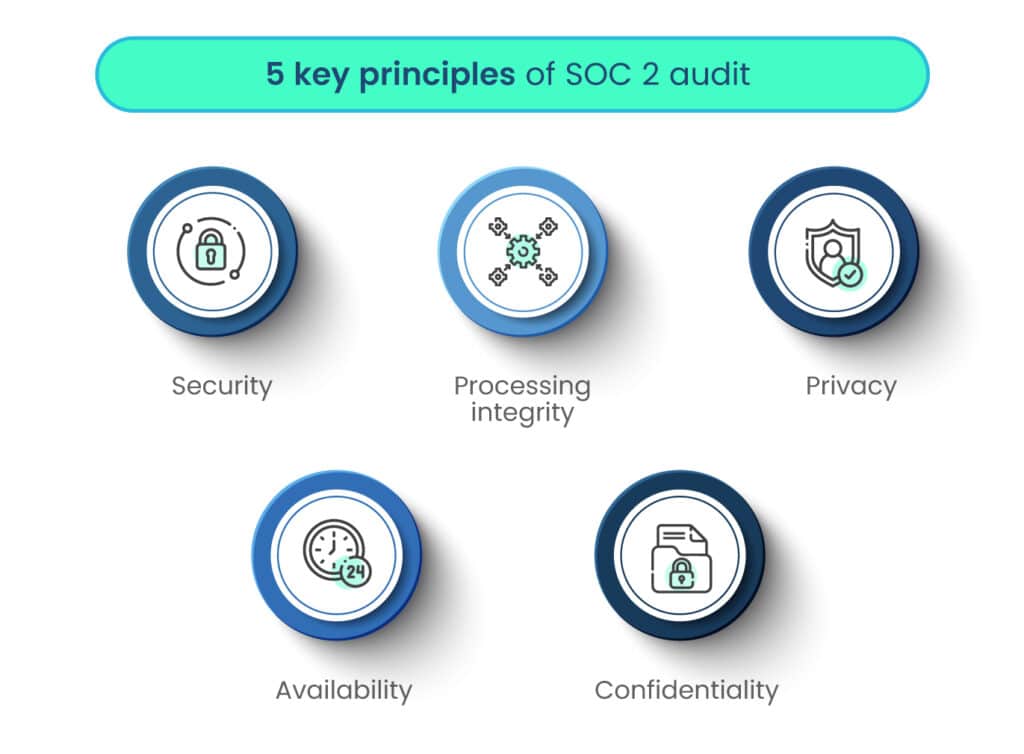
The SOC 2 audit revolves around the examination of five essential principles, each playing a pivotal role in ensuring the integrity and security of an organization’s systems and data:

1. Security

The security principle evaluates the effectiveness of controls implemented to protect against unauthorized access, data breaches, and other security threats. It assesses the measures in place to safeguard both physical and logical assets.

2. Availability

Ensuring the uninterrupted availability of services is the focus of the availability principle. Organizations are assessed on their ability to maintain a consistently operational infrastructure and minimize downtime to provide uninterrupted access to critical services.

3. Processing integrity

The processing integrity principle scrutinizes the accuracy, completeness, and validity of data processing. It verifies that the processing of data occurs accurately and efficiently throughout the entire data lifecycle.

4. Confidentiality

As the guardian of sensitive information, the confidentiality principle assesses the controls in place to prevent unauthorized disclosure of data. It evaluates the organization’s ability to protect confidential information from unauthorized access and disclosure.

5. Privacy

The privacy principle revolves around the protection of personal information. It scrutinizes the organization’s adherence to its privacy policies and relevant data protection regulations, ensuring the confidentiality and proper handling of personal data.

What are the factors affecting the SOC 2 certification cost?

As organizations embark on the path to SOC 2 compliance, they must navigate the various factors that influence SOC 2 certification costs. 

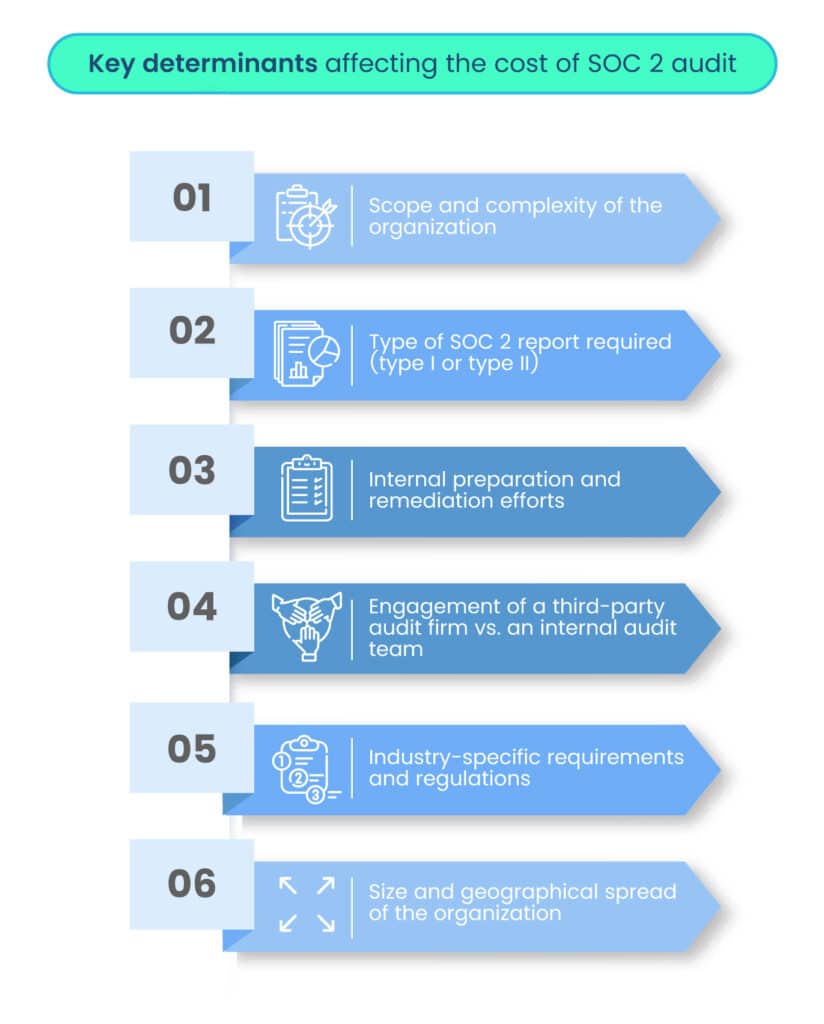
Let us explore the key determinants that shape the expenditure involved in achieving a successful SOC 2 audit.

1. Scope and complexity of the organization

The scope and complexity of an organization’s operations significantly impact the SOC 2 certification cost. Larger enterprises or those with multiple business lines and complex systems may require a more extensive assessment, leading to increased audit efforts and higher costs.

2. Type of SOC 2 report required (type I or type II)

The type of SOC 2 report chosen also plays a role in the cost. A Type I report assesses the design of controls at a specific point in time, while a Type II report evaluates the operating effectiveness of controls over a defined period. Type I audit costs around $10-20k. The latter generally demands more resources and time, thus increasing the overall cost to $30-60k on average.

3. Internal preparation and remediation efforts

Prior to undergoing a SOC 2 audit, organizations must invest in internal preparation to ensure alignment with the Trust Services Criteria. Identifying gaps and implementing necessary controls might require additional resources and impact the overall cost. An organization can expect to pay $25-80k, depending on the scope of systems for this service.

4. Engagement of a third-party audit firm vs. an internal audit team

Deciding between engaging a third-party audit firm or relying on an internal audit team can have cost implications. While using internal resources might seem cost-effective, engaging a reputable third-party firm brings expertise and impartiality but at a higher financial investment.

5. Industry-specific requirements and regulations

Certain industries and sectors have unique compliance requirements and regulations that influence the SOC 2 audit process. Organizations operating in such specialized domains may incur additional expenses to meet these specific mandates.

6. Size and geographical spread of the organization

The size and geographical spread of an organization impact the complexity of the audit process. A larger organization with multiple locations may require more extensive testing and documentation, leading to increased costs.

Navigating these factors requires a strategic approach to balance the costs against the desired level of compliance. By comprehending the elements that influence the expenses, organizations can chart a path to SOC 2 compliance that aligns with their budget and security objectives.

What is the breakdown of components in the SOC 2 certification cost?

As organizations embark on the journey toward SOC 2 compliance, it is essential to understand the various cost components involved in the audit process. 

CostApproximate amount
Pre-audit preparation costs$15-20k
Third-party audit firm fees$5-60k
Remediation and post-audit costs$25-80k
Ongoing compliance maintenance costs$10-60k
Total cost of SOC 2 audit$60-220k

Let’s delve into the key elements that contribute to the overall expenses:

1. Pre-audit preparation costs

The pre-audit preparations are divided into three categories:

A. Internal staff training and awareness

Preparing the organization for a SOC 2 audit begins with educating internal staff about the audit objectives, security best practices, and their role in compliance. Training programs and awareness initiatives incur costs but are vital in building a strong foundation for the audit.

B. Internal control review and gap analysis

Conducting a thorough review of existing internal controls is crucial to identify gaps in security practices. A comprehensive gap analysis helps organizations address weaknesses and implement necessary controls to align with the SOC 2 requirements.

C. Policy and procedure development and documentation

Creating and documenting robust policies and procedures tailored to the SOC 2 criteria requires time and resources. Organizations may need to invest in specialized expertise to ensure thorough and accurate documentation.

2. Third-party audit firm fees

When an organization engages a third-party audit firm to carry out the SOC 2 audit, their fees are based on

A. Fixed vs. variable fee structures

Engaging a third-party audit firm to conduct the SOC 2 assessment incurs specific fees. Some firms may offer fixed fee structures for specific audit services, while others may have variable fees based on the organization’s size and complexity.

B. Factors influencing third-party audit costs

The level of expertise and reputation of the audit firm, the complexity of the organization’s operations, the chosen SOC 2 report type (Type I or Type II), and the geographical spread of the organization are some factors influencing third-party audit costs.

3. Remediation and post-audit costs

The organization incurs the following costs after the said audit is completed.

A. Addressing audit findings and recommendations

Following the audit, organizations must address any findings or recommendations identified during the assessment. Rectifying deficiencies and implementing necessary improvements may incur additional expenses.

B. Necessary system upgrades and improvements

To meet SOC 2 requirements, organizations may need to invest in system upgrades and security enhancements. These improvements are vital for bolstering data protection measures and aligning with industry standards.

4. Ongoing compliance maintenance costs

The SOC 2 audit should be a continuous process.

A. Annual renewal expenses

SOC 2 compliance is not a one-time event; it requires annual renewal to maintain the certification. Organizations must allocate budgetary resources for this recurring cost.

B. Continuous monitoring and reporting

To uphold SOC 2 compliance, continuous monitoring of internal controls and security practices is essential. Implementing monitoring tools and systems incurs ongoing expenses.

By understanding the breakdown of these cost components, organizations can make informed decisions and allocate resources wisely throughout their SOC 2 compliance journey. Proper planning and prudent investments will pave the way for a secure and cost-effective path to SOC 2 compliance.

Tips for cost optimization and efficient SOC 2 audit preparation

As organizations embark on their quest for SOC 2 compliance, they must navigate the path with wisdom and prudence to optimize costs and ensure efficient preparation. 

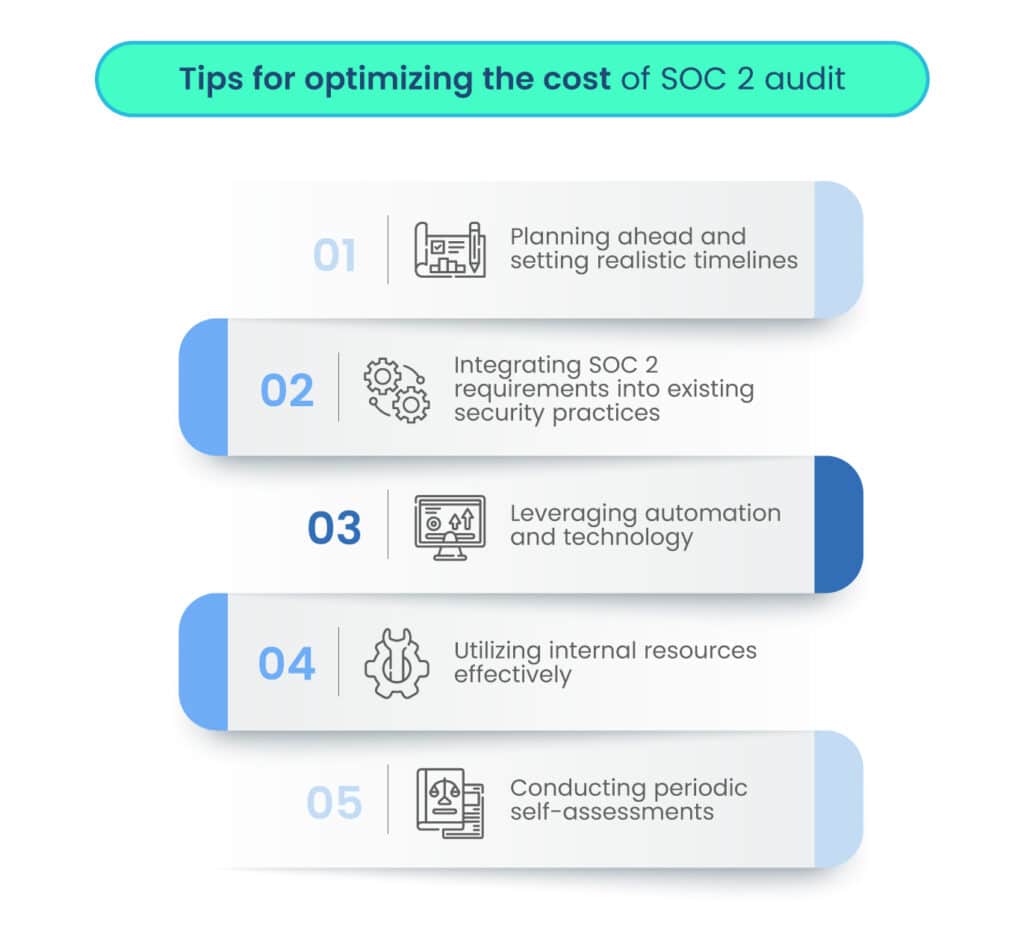
Here are essential tips to guide them on their journey:

1. Planning ahead and setting realistic timelines

  • Initiate the SOC 2 compliance journey early and establish a well-defined plan with clear objectives and timelines.
  • Engage all relevant stakeholders, including management, IT, and security teams, to ensure alignment and commitment to the compliance process.
  • Set realistic deadlines for each stage of the audit preparation to avoid last-minute rushes and potential cost escalations.

2. Integrating SOC 2 requirements into existing security practices

  • Integrate SOC 2 requirements seamlessly into the organization’s existing security practices and policies.
  • Identify overlaps between SOC 2 criteria and other compliance frameworks, such as ISO 27001 or HIPAA, to streamline efforts and reduce redundant tasks.

3. Leveraging automation and technology

  • Invest in automation tools and technologies that can streamline the audit process and reduce manual efforts.
  • Automated monitoring and reporting systems can help organizations maintain continuous compliance, thereby minimizing the need for manual interventions.

4. Utilizing internal resources effectively

  • Assess the skills and expertise within the organization to determine the extent of external assistance required.
  • Allocate tasks wisely among internal resources to maximize their efficiency and reduce dependence on external consultants.

5. Conducting periodic self-assessments

  • Conduct regular self-assessments to evaluate the organization’s readiness for a SOC 2 audit.
  • Identify gaps and address them proactively, reducing the need for costly remediation efforts later on.

By embracing these cost optimization strategies and efficient preparation techniques, organizations can embark on a successful SOC 2 compliance journey while ensuring prudent financial management. Remember, this quest is not merely about the destination but also about the valuable lessons learned and the lasting benefits gained in the process. May your path to SOC 2 compliance be prosperous and secure!

Final thoughts

In conclusion, SOC 2 compliance has become an essential aspect of modern business, ensuring data security and meeting stakeholders’ demands for protection. By demonstrating a commitment to safeguarding sensitive information, organizations can enhance their reputation and seize new business opportunities with security-conscious clients. While factors like scope, audit type, internal preparation, and geographical spread influence the overall expenses, prudent planning, and efficient resource utilization can optimize costs and pave the way for a successful SOC 2 compliance journey. Embracing the SOC 2 framework not only fortifies an organization’s data security but also instills trust among customers, partners, and regulators, making it a valuable investment in today’s fast-paced digital landscape.

FAQs

1. What factors affect the cost of SOC 2 certification?

Several factors influence the SOC 2 certification cost, including the scope and complexity of the organization, the type of SOC 2 report required, internal preparation and remediation efforts, the engagement of a third-party audit firm, industry-specific requirements, and the size and geographical spread of the organization.

How can organizations optimize costs and efficiently prepare for a SOC 2 audit?

Organizations can optimize costs and prepare efficiently for a SOC 2 audit by planning ahead, integrating SOC 2 requirements into existing practices, leveraging automation and technology, utilizing internal resources effectively, and conducting periodic self-assessments.

How does SOC 2 compliance benefit organizations?

SOC 2 compliance enhances data security, reputation, and business opportunities, instilling trust among stakeholders and safeguarding sensitive information in the evolving digital landscape.

Authored by

Aayush Ghosh Choudhary
Co-founder & CEO at Scrut

7 ways to accelerate the SOC 2 audit process

In today’s data-driven landscape, safeguarding sensitive information and upholding compliance standards are paramount. SOC 2 audits have emerged as a vital checkpoint for organizations seeking to demonstrate their commitment to data security, availability, processing integrity, confidentiality, and privacy. However, the road to SOC 2 compliance is not without its challenges, often accompanied by the constraints of time and resources.

As organizations recognize the significance of SOC 2 audits in fortifying their credibility and ensuring client trust, the need to streamline the audit process becomes increasingly apparent. The intricate nature of SOC 2 audits demands careful navigation, but the journey doesn’t have to be arduous. 

In this article, we delve into actionable strategies that empower security-conscious organizations to accelerate their SOC 2 audit process without compromising the integrity of their security posture.

7 ways to accelerate the SOC 2 audit process

So how long does a SOC 2 audit process take? You can refer to the whole SOC 2 process timeline in our blog here. For now, let’s discuss seven ways in which an organization can accelerate the SOC2 audit process. 

1. Pre-audit preparation: The foundation of a smooth SOC 2 journey

Before embarking on the SOC 2 audit journey, laying a strong foundation through meticulous pre-audit preparation is non-negotiable. This phase not only sets the tone for the entire process but also determines how effectively you can navigate the intricacies of the audit landscape.

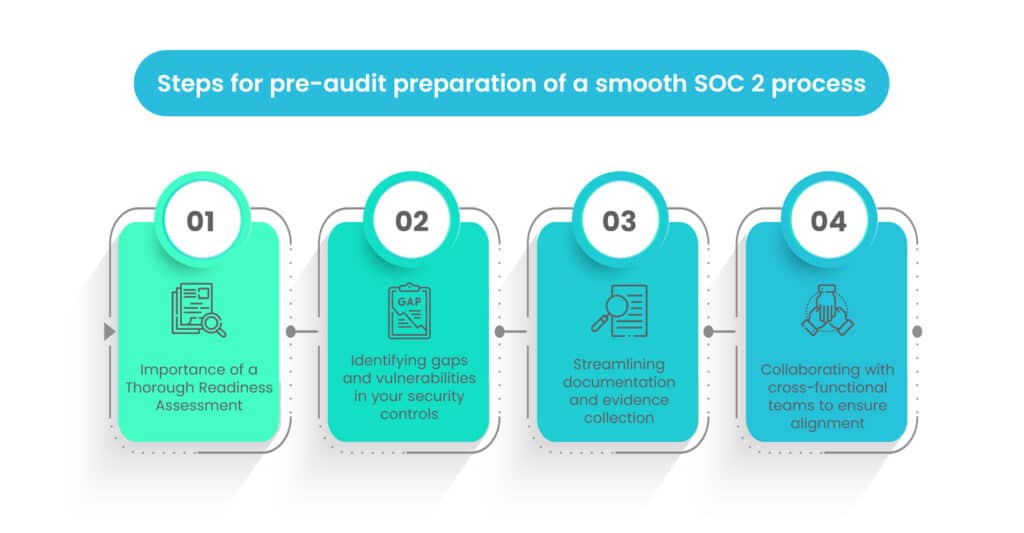
A. Importance of a Thorough Readiness Assessment

Imagine stepping onto a battlefield without assessing the terrain – a recipe for disaster, right? Similarly, commencing a SOC 2 audit process without conducting a comprehensive readiness assessment can lead to unnecessary pitfalls. A readiness assessment involves evaluating your current security controls, policies, and processes against the SOC 2 audit requirements of the chosen Trust Services Criteria (TSC).

B. Identifying gaps and vulnerabilities in your security controls

A readiness assessment serves as a spotlight that illuminates the cracks in your security fortress. Identifying gaps and vulnerabilities in your security controls before auditors do allows you to proactively address these issues. By plugging these gaps, you not only bolster your data protection measures but also create a solid groundwork for a successful audit.

C. Streamlining documentation and evidence collection

The age-old adage “document, document, document” holds true in the realm of SOC 2 audits. Organized and comprehensive documentation is the bridge that connects your security measures to the audit criteria. Streamline the process by centralizing documentation, including policies, procedures, and control descriptions. This simplifies auditors’ access to critical information and expedites the evaluation process.

D. Collaborating with cross-functional teams to ensure alignment

A SOC 2 audit isn’t confined to the IT department alone. It’s a collective effort that spans departments and teams, impacting everything from HR policies to data storage practices. Collaborate with cross-functional teams to ensure alignment and a shared understanding of security measures. This alignment minimizes confusion during the audit and demonstrates a cohesive commitment to data security and compliance.

In essence, the pre-audit preparation phase is your opportunity to shore up defenses, fill gaps, and gather the necessary armaments to face the audit with confidence. By conducting a thorough readiness assessment, identifying vulnerabilities, streamlining documentation, and fostering cross-functional collaboration, you lay the groundwork for a smoother SOC 2 audit journey.

In the next section, we’ll delve into the importance of clearly defining the scope and objectives of the audit, a critical step that can significantly impact the efficiency of the process.

2. Clearly define scope and objectives: Navigating the SOC 2 audit path

As you tread deeper into the SOC 2 audit process, a pivotal crossroads awaits – defining the scope and objectives of the audit. This strategic step serves as the compass that guides your audit journey, ensuring that you navigate with precision and purpose.

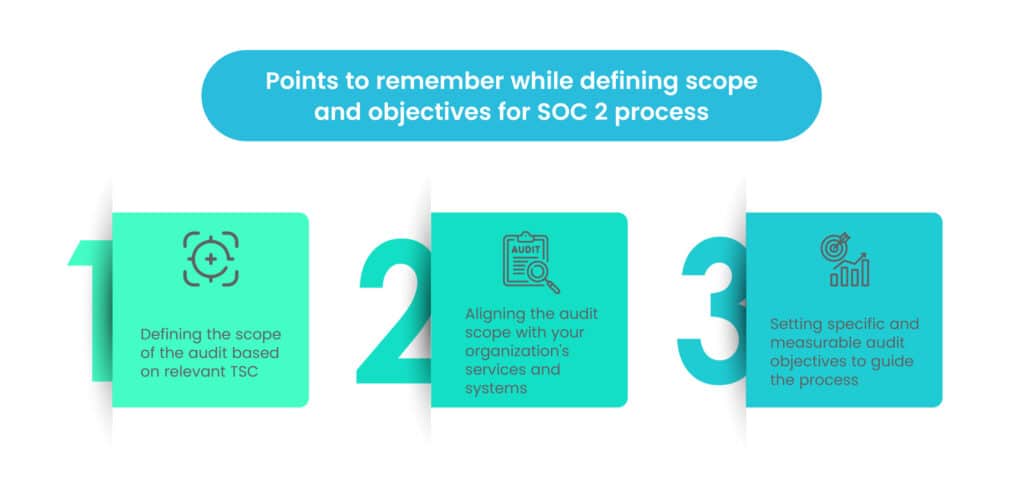
A. Defining the scope of the audit based on relevant TSC

The TSC forms the backbone of SOC 2 audits, outlining the principles against which your organization’s controls will be evaluated. To accelerate the audit process, carefully select the TSC that aligns with your business operations and customer expectations. Defining a tailored scope ensures that resources are focused where they matter most, streamlining the evaluation process.

B. Aligning the audit scope with your organization’s services and systems

A common misstep is attempting to encompass every facet of your organization under the audit’s umbrella. Rather than casting a wide net, align the audit scope with the specific services and systems that interact with customer data or impact their security. This precision not only accelerates the audit but also ensures that your clients’ concerns are directly addressed.

C. Setting specific and measurable audit objectives to guide the process

Goals without direction are like ships without a rudder – they drift aimlessly. To maintain momentum throughout the audit, establish clear and measurable objectives. These objectives not only guide your efforts but also provide auditors with a roadmap of what to expect. Think of them as milestones that help you track progress and measure success.

By strategically defining the scope and objectives of the audit, you not only steer clear of unnecessary detours but also pave a streamlined path for both your team and auditors. In the upcoming section, we’ll delve into the realm of automation and continuous monitoring, two potent tools that can significantly expedite the audit process.

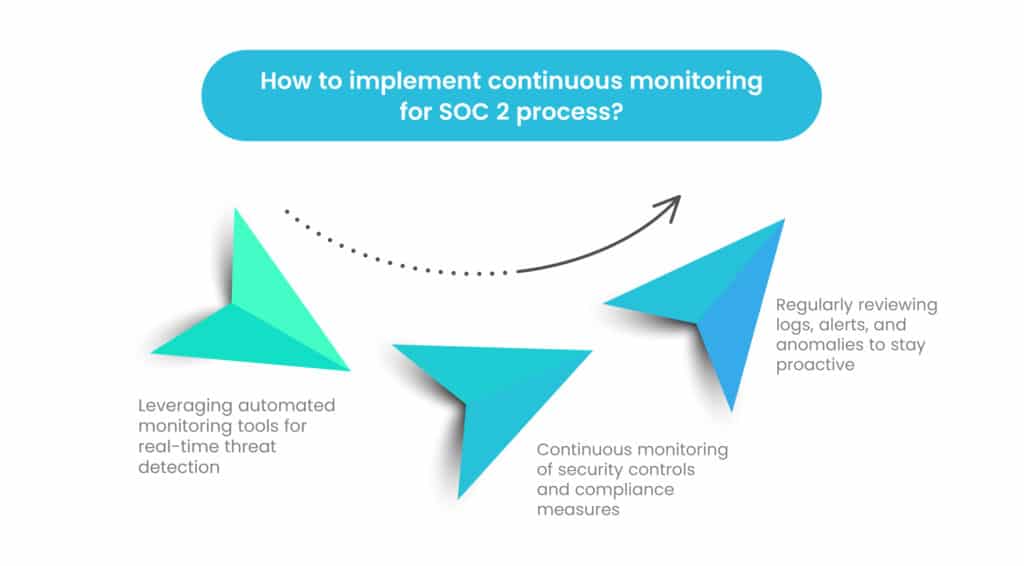
3. Implement continuous monitoring: The vigilance that fuels SOC 2 success

In a landscape where data threats evolve at breakneck speed, relying solely on periodic check-ins won’t suffice. Enter continuous monitoring – a dynamic approach that infuses your SOC 2 audit process with real-time vigilance and actionable insights.

A. Leveraging automated monitoring tools for real-time threat detection

Gone are the days when manual surveillance was the norm. Automated monitoring tools serve as your digital sentinels, tirelessly scanning your systems for anomalies, unauthorized activities, and potential breaches. These tools not only accelerate threat detection but also free up valuable resources that can be redirected toward refining security strategies.

B. Continuous monitoring of security controls and compliance measures

Compliance isn’t a one-time achievement; it’s an ongoing commitment. Continuous monitoring extends beyond threat detection and encompasses the consistent assessment of your security controls against the established criteria. This approach ensures that you remain compliant at all times, reducing the last-minute scramble to align with SOC 2 audit requirements.

C. Regularly reviewing logs, alerts, and anomalies to stay proactive

Automation isn’t a set-it-and-forget-it solution. Regular review of monitoring logs, alerts, and anomalies is the heartbeat of your continuous monitoring strategy. By promptly addressing identified issues, you preemptively mitigate potential risks, enhancing your security posture and bolstering your credibility during the audit.

Embracing continuous monitoring isn’t just a technological upgrade; it’s a mindset shift that aligns your organization with the fast-paced nature of security threats. As we venture forth, we’ll explore the realm of change management – a strategic approach that ensures your security measures evolve with the evolving threat landscape.

4. Establish robust change management

In a digital ecosystem defined by perpetual change, maintaining a proactive stance is non-negotiable. Robust change management emerges as a lighthouse, guiding your organization through the turbulent waters of evolving security landscapes.

A. Documenting and tracking all changes to systems, processes, and controls

Every alteration, regardless of its scale, has a ripple effect on your security landscape. Documenting and tracking these changes, be it in systems, processes, or controls, is your compass to navigate through the intricate web of your security infrastructure. This record not only serves as a historical reference but also provides auditors with a transparent view of your security evolution.

B. Implementing a structured change management process

Chaos has no place in change. Implementing a structured change management process is akin to laying tracks for a speeding train. Define clear roles, responsibilities, and procedures for proposing, reviewing, approving, and implementing changes. This structure not only minimizes confusion but also expedites the decision-making process, allowing your security measures to evolve swiftly and seamlessly.

C. Ensuring changes are reviewed for security impact before implementation

Change should be a guardian, not a gateway to vulnerabilities. Before any change sees the light of day, it’s imperative to assess its potential security impact. This pre-implementation review, involving security experts and stakeholders, acts as a safety net, preventing inadvertent security breaches or lapses.

As you establish a robust change management framework, you’re not just adapting to the shifting sands of security – you’re shaping your organization’s security destiny. In our next section, we’ll delve into the realm of meticulous documentation and evidence gathering, a practice that transforms the audit journey from a hunt to a seamless unveiling.

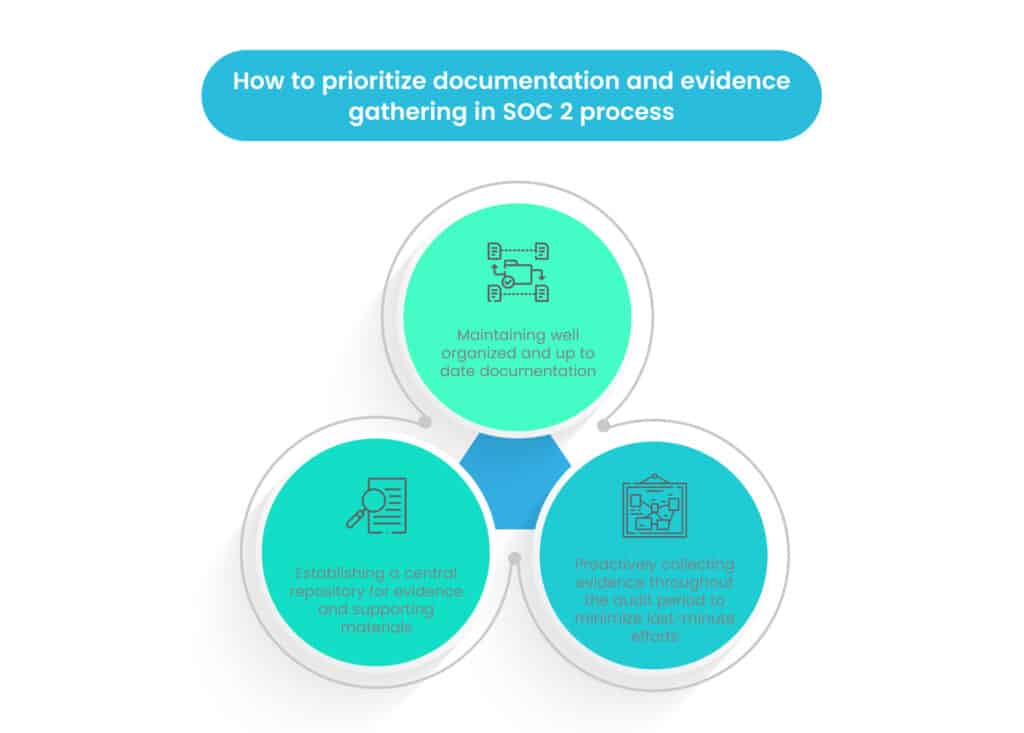
5. Prioritize documentation and evidence gathering: Weaving the tapestry of assurance

In the intricate dance of SOC 2 audits, documentation, and evidence stand as your partners in proving your commitment to security and compliance. Prioritizing these elements isn’t just about compliance – it’s about painting a vivid picture of your security landscape.

A. Maintaining well-organized and up-to-date documentation

Imagine trying to navigate a labyrinth without a map – chaotic and confusing. Your documentation acts as that map, guiding auditors through your security controls and processes. Keep your documentation well-organized and up-to-date to minimize ambiguity and expedite the audit process.

B. Establishing a central repository for evidence and supporting materials

A scattered trail of evidence is a recipe for frustration – both for auditors and your team. Create a centralized repository for evidence and supporting materials. This repository not only streamlines auditors’ access to essential information but also serves as your vault of proof, demonstrating your adherence to security controls.

C. Proactively collecting evidence throughout the audit period to minimize last-minute efforts

Last-minute scrambles are notorious for inducing stress and compromising quality. To avoid this, adopt a proactive approach by collecting evidence throughout the audit period. Regularly updating your repository with recent evidence not only lightens the load but also positions you as a prepared and conscientious organization.

As you prioritize documentation and evidence gathering, you’re essentially crafting a narrative of trust and reliability. This narrative not only propels your SOC 2 audit forward but also fosters a culture of accountability and transparency. In our next section, we’ll delve into the realm of internal assessments – the rehearsals that refine your performance on the audit stage.

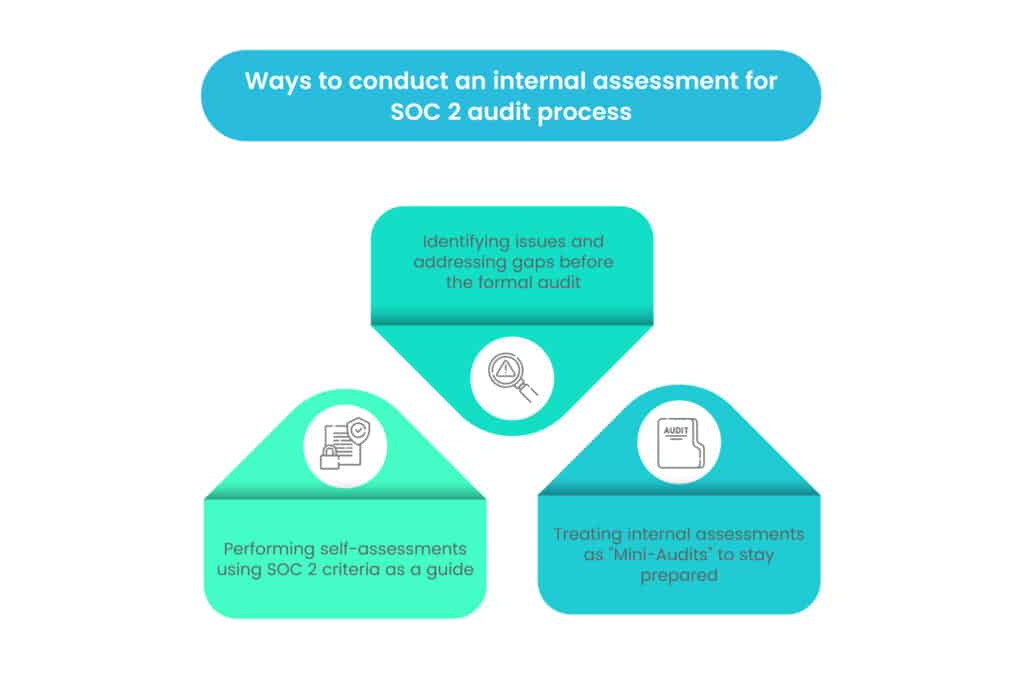
6. Conduct regular internal assessments: Polishing your armor through self-examination

Figure:

In the world of SOC 2 audits, preparation isn’t a one-time event; it’s an ongoing commitment. Regular internal assessments serve as your training ground, refining your security posture and fortifying your defenses against potential vulnerabilities.

A. Performing self-assessments using SOC 2 criteria as a guide

Think of self-assessments as your dress rehearsals for the grand performance. Use the SOC 2 criteria as your script, evaluating your security controls, policies, and procedures against these standards. This proactive approach not only identifies gaps but also familiarizes your team with the audit expectations.

B. Identifying issues and addressing gaps before the formal audit

Self-awareness is your most potent weapon against complacency. Use internal assessments to uncover issues and address gaps before auditors do. This preemptive action not only streamlines the audit process but also safeguards your organization’s reputation and client trust.

C. Treating internal assessments as “Mini-Audits” to stay prepared

Treat internal assessments as more than mere checklists – treat them as “mini-audits.” Emulate the rigor and thoroughness of an actual audit, including documentation review, evidence collection, and stakeholder involvement. This approach not only keeps you prepared but also instills a culture of continuous improvement.

Regular internal assessments transcend the role of mere practice; they’re the crucible in which your security measures are refined, and your response to potential challenges is honed. In our final section, we’ll explore the art of collaboration with auditors, a partnership that can illuminate your audit journey.

7. Collaborate effectively with auditors: Crafting a synchronized audit symphony

Figure:

As the SOC 2 audit draws nearer, the spotlight shifts to effective collaboration with the conductors of the audit, the auditors. This partnership isn’t just a formality; it’s a harmonious collaboration that can significantly impact the tempo and efficiency of the audit process.

A. Engaging auditors early in the process to align expectations

A harmonious performance begins with a shared understanding. Engage auditors early in the process to align expectations, discuss audit scope, and clarify any queries. This dialogue not only fosters transparency but also eliminates surprises as you progress through the audit.

B. Providing auditors with timely access to necessary information

Imagine trying to solve a puzzle without all the pieces—frustrating, right? Provide auditors with timely access to the necessary information, documentation, and evidence. This proactive approach accelerates their evaluation and demonstrates your commitment to a seamless audit experience.

C. Establishing open communication channels for addressing questions and concerns

Communication is the glue that binds collaboration. Establish open communication channels for auditors to address questions and concerns promptly. Your willingness to provide clarifications not only expedites the audit process but also fosters an atmosphere of mutual respect and cooperation.

The collaboration with auditors isn’t a hurdle to cross; it’s a partnership that amplifies your efforts, elevates your security posture, and showcases your commitment to compliance. By engaging early, providing timely access, and fostering open communication, you’re orchestrating a harmonious audit journey that concludes with a standing ovation.

Conclusion: Your SOC 2 Acceleration Journey

Navigating the intricate terrain of SOC 2 audits requires more than just technical prowess; it demands a strategic mindset, meticulous preparation, and effective collaboration. As we conclude this journey through seven expert strategies, remember that accelerating the SOC 2 audit process isn’t about cutting corners; it’s about optimizing your efforts and resources to ensure a seamless, efficient, and compliant audit journey.

By prioritizing pre-audit preparation, defining the scope, embracing continuous monitoring, establishing change management, valuing documentation, conducting internal assessments, and collaborating with auditors, you empower your organization to navigate the SOC 2 audit landscape with confidence. Embrace these strategies not as standalone solutions, but as interlocking pieces of a puzzle that, when assembled, create a picture of security, compliance, and trust.

So, as you embark on your SOC 2 audit journey, armed with these strategies, remember that success lies not just in the destination, but in the voyage itself. Secure, accelerate, and triumph.

FAQs

Why is the SOC 2 audit process important?

SOC 2 audits assess an organization’s commitment to data security, availability, processing integrity, confidentiality, and privacy. Successfully passing these audits enhances client trust and demonstrates compliance with rigorous industry standards.

What challenges are associated with SOC 2 audits?

SOC 2 audits can be time-consuming and resource-intensive. Navigating complex criteria, ensuring consistent compliance, and managing documentation can pose challenges for organizations.

How can I accelerate the SOC 2 audit process without compromising quality?

Our blog outlines seven expert strategies, including pre-audit preparation, clear scope definition, continuous monitoring, robust change management, prioritizing documentation, regular internal assessments, and effective collaboration with auditors.

Authored by

Aayush Ghosh Choudhary
Co-founder & CEO at Scrut

Does your business need to comply with GDPR?

User Information is the key to ensuring a better user experience. B2B and B2C companies require user data to generate leads and optimize the user experience. But due to varying political legislations worldwide on information security, it has become a hassle for many companies to penetrate a foreign market without violating their information security legislation.

Nowhere is this more apparent than in the European Union, where the prevalent information privacy legislation is General Data Protection Regulation (GDPR). GDPR is reputed for its stringent guidelines on the privacy of personal data, and so many information security companies and consultants vehemently advocate it for SaaS businesses.

What is GDPR?

GDPR is a European Union (EU) legislation on data privacy for all EU residents. The GDPR harmonizes European data privacy laws, protecting and empowering all EU residents’ data privacy and reshaping how regional organizations approach data privacy. GDPR came about on May 25, 2018. Also, check out more information on GDPR Compliance Guide.

Who is subject to GDPR?

The short answer version of the answer is any entity that wishes to conduct business with EU residents and ask for their sensitive personal data. For example, a medicine delivery app can receive direct information about the patient’s condition through the information on which medicines are being bought. The parent company of that app and any subsidiaries leveraging this data will need to comply with GDPR guidelines before it can be operational in the EU.

But the devil is in the details. Let’s deep dive into the questions you should be asking yourself that will culminate into the central question, ‘Do I need to comply with GDPR?’.

Do I need to be GDPR compliant if I am not based out of the EU?

This is a common question among many organizations. GDPR is made not for EU-based businesses but for EU-based users. You can be based out of anywhere in the world, but to cater to the EU residents, being GDPR compliant is imperative. For example, if you are an India-based app developer catering to EU residents and are not GDPR compliant; then you will be subject to heavy fines.

How does GDPR affect my website and app?

For both websites and apps, GDPR compliance will be necessary if the audience comprises EU residents.

Especially in the case of a website, even if it is not registering user data automatically through cookies if there is even a fillable form on the website which can be filled by an EU data subject, then you will need to comply with GDPR to have their data.

Mobile Apps are also covered under GDPR compliance. Apps must ask for permission to collect personal user data like library access, login credentials access, and user location.

What information is protected under GDPR?

GDPR covers a whole range of personal information, including really sensitive data of the person. GDPR makes the business liable for the protection of this data. Under article 9 in GDPR, the sensitive personal data that is subject to oversight includes basic user information name, age, and gender, along with ethnicity, religious and political inclinations, medical and biometric records, philosophical beliefs, trade union membership, sexual orientation, genetic data, geographic information, IP address, cookie identifiers, health data, payment information, etc.

What are the effects of Brexit on GDPR?

The United Kingdom (UK) still retains its own version of GDPR even after Brexit on February 1, 2020. It is retained under the name “UK GDPR” with almost the same guidelines as the EU’s GDPR. So GDPR compliance (EU Version) will not permit you as UK citizens, but due to the stark similarity, it won’t be hard for you to get UK GDPR as well. A UK Citizen’s data will only be protected under GDPR if they are within the EU borders. However, due to the sovereignty and independence of the UK, they have the authority to keep it under review as it sits alongside an amended 2018 DPA version. After Brexit, the EU now categorizes the UK as a “third country” under GDPR. Thus, any UK-based businesses looking for EU consumers will need to abide by the EU’s GDPR as is prescribed by them for a third country.

Conclusion

Perhaps this can seem like a daunting hurdle for you as a beginner, but every problem is an opportunity in disguise. People from all over the world are becoming more proactive about their data privacy. So the brand value of an organization that is GDPR compliant skyrockets in the eyes of the EU and global residents alike. This can lead to a positive public image, creating strong signals for more sales. As of February 2022, there have been around 1,000 fines for GDPR violations, with the highest fine going up to $56.6 Million, incurred by Google.

If you do not want to levy such a financial liability and want to break into the EU market, then we suggest opting for Scrut as your GDPR compliance guide. We take over all the compliance-related responsibilities from you and get your GDPR certification in no time.

Scrut Automation is an innovative and radically simple governance, risk, and compliance automation platform for growing startups and mid-market enterprises. With Scrut, compliance teams can reduce ~70% of their manual effort in continuously maintaining compliance towards SOC 2, ISO 27001, GDPR, PCI DSS, HIPAA, and CCPA. Schedule your demo today to see how it works.

Authored by

Aayush Ghosh Choudhary
Co-founder & CEO at Scrut

Setting your SOC 2 audit up for success

A SOC 2 compliance audit, however daunting and challenging, is necessary for many organizations. Most organizations benefit from completing their SOC 2 audit before engaging with prospective clients as it acts as a reputation enhancement tool. 

Once you provide the SOC 2 certification to your clients, they experience a sense of enhanced trust, transparency, and reliability for your organization. It also acts as insurance for several organizations when faced with data breaches. 

Even though there are plenty of benefits, let’s not forget that completing the SOC 2 audit is incredibly time-consuming and requires considerable resources, especially if your organization is pursuing a SOC 2 compliance audit for the first time. 

Which brings us to the question; how can your organization streamline the audit process? Simple, through the right technology and planning! In this article, we will list 8 key ways through which organizations can accelerate and complete their SOC 2 compliance audit process. 

8 tips to follow for a successful SOC 2 audit 

Having a solid SOC 2 audit checklist is definitely one of the most important steps your organization can take to ensure that the audit process is smooth and successful. It is also important to customize the SOC 2 audit checklist to fit your organization’s goals and objectives. Below are a few tips that we recommend following for a successful SOC 2 audit. 

1. Start with choosing the right ‘type of SOC 2 report.’ 

One of the most important decisions to make before jumping in for a SOC 2 audit is deciding which type of SOC 2 report – Type 1 or Type 2 – is fit for your organization, depending on the resources and time assigned to the project. 

The Type 1 audit provides an assessment report on the security process the organization has put in place at a specific point in time, while the Type 2 audit tests the effectiveness of those designs over 6 to 12 months. 

The reason for this long-term observation period is that the Type 2 auditor checks both; whether the company designed the proper security controls and if the company has operationalized those security controls

2. Find the right SOC 2 auditor for your organization

Once you’ve determined which type of SOC 2 audit is fit for your organization, the next key step is finding the right SOC 2 auditor. Thinking that finding an auditor for SOC 2 compliance audit is easy turns out to be one of the biggest mistakes organizations often make.  

As per the AICPA, your SOC 2 audit must be conducted by an independent Certified Public Accountant. Certified Information System Auditor (CISA) and Certified Information System Security Professional (CISSP) are some credentials you can check while selecting a CPA firm for your organization. 

A CPA firm with these licenses will better understand SOC 2 auditing framework. It can also help you with strategies regarding security risk management. 

3. Fasten the SOC 2 audit by selecting criteria beforehand 

SOC 2 is based on five trust service criteria: security, availability, processing integrity, confidentiality, and privacy. As a part of the guidelines underlying the SOC 2 audit, the selection of one of five TSCs is necessary. 

However, you do not have to address all five to be SOC 2 compliant. Except for security which must be mandatory in every SOC 2 audit, the rest are entirely optional. You can decide which of the remaining TSCs fit your organization’s objectives and pursue them accordingly. 

However, in order to expedite your first SOC 2 audit, you may decide to limit the number of criteria and then address them during subsequent audits.

4. Engage and communicate with departments throughout the organization

It is essential to ensure that all employees are involved in the SOC 2 compliance audit procedures. Even if leadership is required to drive SOC 2 compliance, the procedure shouldn’t be overly top-down or coercive.

The management must take the lead and ensure that all departments are aware of the controls implemented under SOC 2 compliance requirements, especially since it also impacts them. 

Human resources, IT, security, operations, DevOps, and C-suite, are some of the departments that participate at the time of the SOC 2 audit. 

5. Have thorough knowledge of security controls 

One of the biggest challenges or pain points while pursuing a SOC 2 audit is the implementation of security controls, which is exactly why your organization must prepare for it beforehand. 

With dozens of controls covering ten essential security dimensions, it’s easy for businesses to find themselves wasting a lot of time trying to decide which controls to pick and exactly what they should do to demonstrate their readiness. 

It doesn’t help that there is very little and limited guidance on which controls to focus on and why. Ensure that you are using expert guidance or streamlining the implementation of security controls with the help of a pre-built policy library. 

6. Work on a stipulated timeline 

Timelines are very critical for organizations, and this case is no different. Typically, a SOC 2 Type 1 audit takes one to three months, while an audit for SOC 2 Type 2 can take six to twelve months or more. 

The SOC 2 audit process doesn’t have built-in deadlines, so if you don’t create and follow a timeline on your own, it might take you forever to complete the report. You can divide the milestones into categories and create a stipulated timeline to ensure everyone involved follows the same. Here is a template you can take inspiration from;  

Weeks 1-2: Select an auditor and assess the software for audit workflow

Week 3: Complete a gap analysis

Weeks 4-5: Put your security controls into action

Week 6: Participate in a mock audit.

Weeks 7-8: Submit a report draft.

Week 9 – Complete audit

7. Don’t sideline the Vendors 

Vendors can sometimes play an important role in meeting SOC 2 security requirements. For instance, if your infrastructure is housed in a third-party data center, you would expect the third party to have the needed physical security controls in place to restrict access to your infrastructure.

To fulfill the physical security requirement for SOC 2 audit, you would rely on the third party’s controls to function properly. Understanding what is expected of your vendor and communicating what is expected of them will allow for a more efficient audit flow.

8. Be active even after the final assessment

The validity of SOC 2 Type 2 reports is 12 months from the date of issuance. Any report that is older than that has less value for prospective clients. 

In order to maintain the trust of clients and ensure your organization is at par with security standards in real time, you need continuous, ongoing compliance. 

Even though it is a demanding security standard, in the end, it’s very rewarding because it shows that your company upholds constant security and dependability standards. 

Simplify SOC 2 compliance audit using automation 

This article demonstrates how organizations can successfully achieve SOC 2 compliance by following the ‘key pointers for the SOC 2 audit’. It reiterates the importance of a well-structured auditing process and how it can either make or break the organization’s compliance procedure. 

Most organizations use technologically advanced platforms, like Scrut, that help streamline the compliance process and effectively reduce the resources required to complete the SOC 2 audit. 

Scrut is a smart and radically simple Governance, Risk, and Compliance automation platform for growing startups and mid-market enterprises. With Scrut, Compliance teams can reduce ~70% of their manual effort in continuously maintaining compliance towards SOC 2, ISO 27001, GDPR, PCI DSS, and privacy laws like HIPAA, GDPR, and CCPA. Schedule your demo today to see how it works.

Frequently answered questions (FAQs)

1. What is a SOC 2 audit?

The SOC 2 audit is a document that describes in detail the measures organizations have implemented in order to meet the SOC 2 standards. There are two types of SOC 2 audits you can pursue; SOC 2 Type 1 or SOC 2 Type 2 audit. 

2. How can organizations make SOC 2 audits cost-effective? 

Making SOC 2 compliance audit cost-effective is easier than it seems, especially if your organization uses a compliance automation platform like Scrut. These platforms implement their tools to reduce the resources required from your organization, thereby limiting the financial and organizational dependency significantly. 

3. What is the goal of the SOC 2 compliance audit? 

The goal of the SOC 2 audit process is to demonstrate your company’s capability to safeguard private information and customer data. Security, Availability, Confidentiality, Processing Reliability, and Privacy are the five Trust Services Criteria that are used to evaluate the objectives of your organization. A SOC 2 audit report is issued after the final audit is completed to reflect the findings of the process. 

4. How much does a SOC 2 audit cost? 

There are several factors that influence the cost of a SOC 2 audit, including the type of SOC 2 audit, the auditor selected by your organization, the size of your organization, etc. To gain an understanding of the same, you can go through this article on the cost of a SOC 2 audit. 

Authored by

Aayush Ghosh Choudhary
Co-founder & CEO at Scrut

SOC 2 Type 2- The ultimate guide for beginners

In our highly connected digital world, protecting sensitive data is more important than ever. SOC 2 Type 2 compliance helps organizations meet the growing demands for data security and privacy. It not only shows an organization’s dedication to safeguarding information but also proves that its systems and controls can handle thorough evaluations. SOC 2 Type 2 certification isn’t just about following rules; it’s about earning and keeping the trust of clients, partners, and stakeholders.

This guide is aimed at organizations and professionals who seek to understand and navigate the complexities of SOC 2 Type 2 compliance. Whether you are an IT manager, a compliance officer, a business owner, or a consultant, this comprehensive resource will help you grasp the fundamentals and implementation strategies of SOC 2 Type 2 compliance.

What is SOC 2 compliance? 

SOC 2, which stands for “Service Organization Control 2,” is a widely recognized framework for assessing and reporting on the security, availability, processing integrity, confidentiality, and privacy of data within service organizations. 

It is specifically designed for companies that provide services that involve the handling of sensitive customer data, such as data centers, cloud service providers, and SaaS (Software as a Service) companies.

Moreover, the significance of SOC 2 lies in its ability to provide assurance to clients, partners, and stakeholders that a service organization has established and adheres to rigorous controls and processes to protect sensitive information. 

What is the difference between SOC Type 1 and Type 2 compliance?

AspectSOC 2 Type 1SOC 2 Type 2
ObjectiveAssesses controls at a specific point in time to provide assurance about their design and implementation.Assesses controls over a period (typically 6-12 months) to provide assurance about their design, implementation, and effectiveness.
TimeframeSnapshot assessment, usually for a single date.Continuous assessment over a defined period, typically months.
SOC 2 Type 2 report contentProvides an opinion on the suitability of control design as of a specific date.Provides an opinion on the suitability of control design, implementation, and operating effectiveness over a specified period.
FocusEmphasizes control design and whether controls are in place.Emphasizes control design, implementation, and how controls operate over time.
Use casesTypically used for initial assessments or when a client or partner wants to evaluate control design.Often used when ongoing monitoring and assurance are required, especially for critical services or sensitive data handling.
FrequencyTypically conducted annually or as needed.Conducted at least annually but can cover a more extended period for a deeper evaluation.
Assurance levelLower level of assurance, as it doesn’t assess control effectiveness.Higher level of assurance, as it assesses control design, implementation, and effectiveness.
Cost and effortGenerally less costly and less time-consuming than Type 2.Requires more effort, resources, and time due to the continuous assessment.
Client confidenceProvides some level of assurance but may not be sufficient for clients with stringent security requirements.Provides a higher level of assurance and is often preferred by clients with strict security demands.
Continuous improvementLimited insights into ongoing control effectiveness.Provides valuable insights for continuous improvement by identifying control weaknesses and trends.

Both SOC 2 Type 1 and Type 2 reports serve important purposes, but the choice between them depends on the specific needs of the organization and its clients or partners. SOC 2 Type 2 certification is generally considered more comprehensive and valuable for organizations that handle sensitive data or offer critical services, as it assesses the effectiveness of controls over time.

For a deeper understanding of difference between SOC 2 Type 1 and Type 2 certificates, please refer to our blog “Choosing the right SOC 2 certification: Type I or Type II

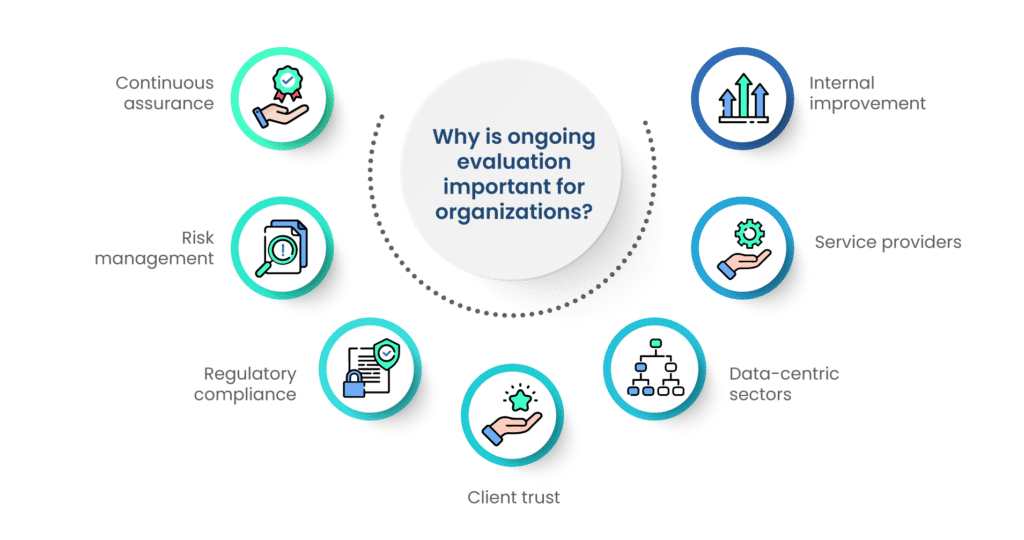
What is the relevance of SOC 2 Type 2 certification for ongoing monitoring?

SOC 2 Type 2 reports are highly relevant for ongoing monitoring because they provide a comprehensive assessment of an organization’s controls, focusing on their design, implementation, and effectiveness over an extended period. 

This ongoing evaluation is essential for several reasons:

1. Continuous assurance

Firstly, SOC 2 Type 2 audits offer continuous assurance to stakeholders, demonstrating that controls are not only in place but also operational and effective over time. This is particularly important in dynamic business environments.

2. Risk management

Secondly, ongoing monitoring helps identify and mitigate risks as they evolve. By regularly assessing control effectiveness, organizations can proactively address vulnerabilities and security threats.

3. Regulatory compliance

Many industries are subject to regulatory requirements that necessitate continuous monitoring of security and privacy controls. SOC 2 Type 2 report helps organizations demonstrate compliance with these regulations.

4. Client trust

Clients, customers, and partners often require ongoing assurance that their data is being handled securely. SOC 2 Type 2 reports provide this confidence by showing that controls are consistently maintained.

5. Data-centric sectors

Industries dealing with sensitive data, such as healthcare, finance, and technology, benefit from continuous monitoring. These sectors are more susceptible to data breaches and must demonstrate a sustained commitment to data protection.

6. Service providers

Service organizations, including cloud service providers, data centers, and managed IT service providers, benefit significantly from ongoing monitoring. They can showcase their dedication to delivering secure services to clients.

7. Internal improvement

Lastly, SOC 2 Type 2 audits help organizations internally. By identifying weaknesses or areas for improvement in controls over time, they can enhance their security posture and operational efficiency.

Which industries and organizations benefit from SOC 2 Type 2 audits?

Several industries and organizations benefit from SOC 2 Type 2 compliance due to their reliance on secure data handling and ongoing assurance. These include:

1. Healthcare

Healthcare providers, including hospitals and clinics, must safeguard patient health records and sensitive medical information.

2. Financial services

Banks, credit unions, insurance companies, and fintech firms require robust controls to protect financial data and transactions.

3. Technology

Software-as-a-Service (SaaS) providers, data centers, and IT managed service providers need to assure clients of their data security and operational reliability.

4. Cloud service providers

Organizations offering cloud computing services rely on SOC 2 Type 2 certification to demonstrate the security and availability of their cloud infrastructure.

5. E-commerce

Online retailers and payment processors handling customer payment information benefit from ongoing monitoring to prevent data breaches.

6. Legal services

Law firms handling sensitive client information require stringent controls to maintain confidentiality and data security.

7. Higher education

Universities and colleges need to protect student data and maintain the integrity of their academic systems.

8. Consulting firms

Consulting companies that advise clients on security and compliance often undergo SOC 2 Type 2 audits to demonstrate their expertise.

9. Government contractors

Organizations working with government agencies must meet specific security requirements and often benefit from SOC 2 Type 2 compliance.

10. Data-intensive startups

Emerging technology companies that collect and process large volumes of user data can build trust and credibility through SOC 2 Type 2 reports.

In summary, SOC 2 Type 2 compliance is relevant to a wide range of industries and organizations that rely on secure data handling and ongoing assurance of their controls. It helps them demonstrate commitment to data security, privacy, and compliance while addressing the evolving challenges of a dynamic digital landscape.

What are the criteria for SOC 2 compliance?

SOC 2 compliance is based on five trust service principles (TSPs). Let’s break them down for better understanding and see how each principle relates to SOC 2 Type 2 compliance:

1. Security

Security involves protecting against unauthorized access, both physical and logical, to an organization’s systems, data, and facilities. It encompasses measures such as access controls, encryption, and intrusion detection systems to prevent and detect security breaches.

Above all, SOC 2 Type 2 compliance requires organizations to establish and maintain effective security controls and practices over an extended period. This ensures that data and systems remain secure and protected from potential threats and vulnerabilities.

2. Availability

Availability focuses on ensuring that systems and services are available and operational when needed by authorized users. This principle addresses factors like system uptime, disaster recovery, and business continuity planning to minimize downtime and service interruptions.

Moreover, continuous monitoring of availability controls is essential to demonstrate that systems and services are consistently accessible. This is especially crucial for organizations offering critical services where downtime can have significant consequences.

3. Processing integrity 

Processing integrity pertains to the accuracy, completeness, and reliability of data processing. It ensures that data is processed correctly, without errors, omissions, or unauthorized alterations. Validation checks, data reconciliation, and error handling are crucial components.

Type 2 compliance assesses not only the design and implementation of processing controls but also their ongoing effectiveness. This helps guarantee the accuracy and reliability of data processing over time, reducing the risk of errors or fraud.

4. Confidentiality

Confidentiality centers on protecting sensitive information from unauthorized disclosure. This includes safeguarding sensitive data through encryption, access controls, data classification, and employee training to prevent data leaks or unauthorized access.

Ongoing control effectiveness assessments under Type 2 compliance confirm that confidential data remains protected from unauthorized access or disclosure. This is vital for maintaining client trust and regulatory compliance.

5. Privacy

Privacy relates to how personal information is collected, used, retained, disclosed, and disposed of in accordance with privacy policies and regulations. It involves obtaining consent, maintaining data subject rights, and ensuring compliance with privacy laws like GDPR or CCPA.

Type 2 compliance ensures that privacy controls are not only in place but also operational and effective. Besides, organizations handling personal data must continuously uphold data privacy standards and comply with relevant privacy regulations.

What is the importance of controls and criteria in SOC 2 compliance?

Controls and criteria are the foundation of SOC 2 Type 2 compliance for each of the TSPs. They serve several crucial purposes:

1. Risk mitigation

Controls mitigate risks associated with each trust service principle. By continually evaluating their effectiveness, organizations can proactively address emerging threats and vulnerabilities.

2. Regulatory compliance

Many industries are subject to regulations that require specific controls. SOC 2 Type 2 compliance helps organizations maintain compliance with these regulations by ensuring that controls are consistently in place and effective.

3. Client assurance

Clients and partners often require evidence of control effectiveness to trust that their data is secure and that services meet their needs. Type 2 compliance provides this assurance.

4. Continuous improvement

Regular assessments of controls and criteria enable organizations to identify weaknesses and opportunities for improvement. This leads to a stronger security posture and better overall performance.

In summary, controls and criteria are the backbone of SOC 2 Type 2 compliance, ensuring that organizations meet the trust service principles consistently over time. By emphasizing the ongoing effectiveness of controls, organizations can reduce risks, maintain compliance, build trust, and continuously improve their security and privacy practices.

How to prepare for SOC 2 Type 2 audit?

Take the following steps to prepare for the SOC 2 Type 2 audit.

1. Assess your organization’s readiness

Before embarking on the SOC 2 Type 2 compliance journey, it’s crucial to evaluate your organization’s readiness. This assessment involves:

  • Understanding your business processes: Identify the services, systems, and processes that will be subject to the SOC 2 Type 2 audit.
  • Existing controls: Evaluate your existing security and privacy controls to identify strengths and weaknesses.
  • Documentation: Determine the extent and quality of your documentation related to controls, policies, and procedures.
  • Resources: Assess whether you have the necessary human and financial resources to support the compliance effort.

2. Identify stakeholders and roles

Clearly define the key stakeholders and their roles in the SOC 2 Type 2 audit process:

  • Executive sponsor: A senior leader who champions the compliance effort and allocates necessary resources.
  • Project manager: Responsible for overseeing the compliance project, including planning, execution, and communication.
  • Compliance team: Identify individuals responsible for implementing and maintaining controls and documenting compliance efforts.
  • External auditor: If you engage an external auditor, establish a relationship and communication plan with them.

3. Establish a clear scope for your assessment

Define the scope of your SOC 2 Type 2 audit to ensure that it aligns with your business objectives and compliance needs. Consider the following:

  • In-scope services: Specify the services, systems, and processes that will be assessed for compliance.
  • Trust service principles (TSPs): Determine which of the five TSPs (security, availability, processing integrity, confidentiality, and privacy) are relevant to your scope.
  • Geographic locations: If your organization operates in multiple locations, clarify which sites or data centers are included.
  • Third-party relationships: Identify any third-party vendors or service providers that are part of your scope.

4. Determine the timeline and budget considerations

Establish a realistic timeline and budget for your SOC 2 Type 2 compliance project:

  • Timeline: Define key milestones, deadlines, and the expected duration of the assessment process. Consider the complexity of your organization and the availability of resources.
  • Budget: Estimate the costs associated with compliance, including auditing fees, technology investments, staff training, and documentation expenses.
  • Resource allocation: Allocate human and financial resources according to the established budget and timeline.
  • Risk management: Identify potential risks that could impact the project timeline or budget and develop contingency plans.

All in all, by addressing these key preparatory steps, your organization will be better equipped to embark on the SOC 2 Type 2 compliance journey with a clear understanding of its readiness, roles and responsibilities, scope, and resource requirements. This preparation lays the foundation for a successful compliance effort and ensures that you can meet the trust service principles effectively.

What is the SOC 2 Type 2 compliance process?

Steps involved in achieving SOC 2 Type 2 compliance, along with the best practices for each stage, are given below:

1. Planning and scoping

In the initial phase of SOC 2 Type 2 compliance, known as planning and scoping, several critical steps are taken to lay the foundation for a successful compliance journey:

  • Define scope: Clearly define the scope of your SOC 2 Type 2 compliance assessment, specifying the systems, services, and locations to be assessed.
  • Select TSPs: Determine which trust service principles (TSPs) are applicable to your organization’s services.
  • Engage stakeholders: Involve key stakeholders, including an executive sponsor, compliance team, and external auditor, if necessary.

Best practices:

  • Involve all relevant stakeholders early to ensure alignment on scope and objectives.
  • Document the scope and TSPs clearly for reference throughout the compliance process.

2. Risk assessment

In the Risk assessment phase of SOC 2 Type 2 compliance, the focus shifts towards identifying, prioritizing, and mitigating risks associated with the trust service principles within the defined scope, adhering to best practices to ensure robust security measures.

  • Identify risks: Conduct a thorough risk assessment to identify potential threats and vulnerabilities related to the TSPs in your scope.
  • Prioritize risks: Prioritize identified risks based on their potential impact and likelihood.
  • Risk mitigation: Develop strategies and controls to mitigate identified risks.

Best practices:

  • Utilize industry-standard risk assessment methodologies.
  • Consider both internal and external risks.
  • Regularly review and update your risk assessment to account for changes in your environment.

3. Control implementation

The control implementation phase of SOC 2 Type 2 compliance involves selecting, implementing, and training employees on controls and policies that are carefully chosen to address identified risks while adhering to best practices for customization, gradual implementation, and maintaining a comprehensive inventory.

  • Select controls: Choose appropriate controls and policies to address the identified risks and meet the TSPs’ SOC 2 Type 2 requirements.
  • Implement controls: Put in place the selected controls, ensuring that they are well-documented and consistently applied.
  • Employee training: Train employees on control procedures and security best practices.

Best practices:

  • Choose controls that are both relevant to your scope and tailored to your organization’s specific risks.
  • Implement controls gradually, ensuring that they align with business processes.
  • Maintain an updated inventory of all implemented controls.

4. Testing and evaluation

The testing and evaluation phase of SOC 2 Type 2 compliance involves control testing, documentation review, and internal audits to ensure effectiveness, with best practices emphasizing regular assessments and automated tools.

  • Control testing: Conduct testing and assessments of implemented controls to ensure their effectiveness.
  • Documentation review: Review and update the documentation to reflect control implementations accurately.
  • Internal audit: Perform internal audits or assessments to identify areas needing improvement.

Best practices:

  • Conduct regular testing and assessments of controls, not just during the audit phase.
  • Document testing procedures, results, and any deviations or exceptions.
  • Use automated tools where applicable to streamline testing processes.

5. Remediation

In the remediation phase of SOC 2 Type 2 compliance, we correct deficiencies promptly, update documentation, and foster a culture of continuous improvement, following best practices.

  • Correct deficiencies: Address any control deficiencies or issues identified during testing and internal audits.
  • Documentation updates: Update documentation to reflect improvements and changes.
  • Continuous improvement: Use this stage to continuously enhance control effectiveness.

Best practices:

  • Prioritize and address control deficiencies promptly.
  • Document corrective actions taken and their effectiveness.
  • Maintain a culture of continuous improvement to prevent future deficiencies.

6. Independent audit

In the independent audit phase of SOC 2 Type 2 compliance, organizations engage an experienced auditor, conduct a pre-audit review, undergo the audit process, and promptly address audit findings, following best practices for success.

  • Engage auditor: Select an independent auditor experienced in SOC 2 assessments if required.
  • Pre-audit review: Conduct a pre-audit review to ensure readiness for the official audit.
  • Audit execution: Undergo the SOC 2 Type 2 audit, which includes on-site visits, interviews, and document reviews.
  • Audit report: Receive the audit report detailing findings and compliance status.

Best practices:

  • Select an experienced and reputable auditor with expertise in your industry.
  • Be transparent and cooperative during the audit process.
  • Review and address any findings or recommendations in the audit report promptly.

How can organizations maintain SOC 2 Type 2 compliance?

The following steps must be followed by the organization for continuous SOC 2 Type 2 compliance:

1. The importance of ongoing monitoring and reporting

Ongoing monitoring and reporting are crucial to provide clients with confidence in the long-term security and reliability of our services.

  • Continuous assurance: Ongoing monitoring is vital for maintaining SOC 2 Type 2 compliance. It ensures that the controls and practices you’ve implemented remain effective over time.
  • Client trust: Consistent monitoring and reporting provide clients and partners with the assurance that their data and services continue to be secure and reliable.
  • Risk management: Regularly assessing control effectiveness helps identify and mitigate emerging risks, reducing the likelihood of security incidents or compliance breaches.

2. Continuous improvement and adapting to changes

Continuous improvement is essential as it allows us to adapt our controls to evolving threats and technological advancements, ensuring our compliance remains effective.

  • Evolving threat landscape: The cybersecurity landscape is dynamic. Continuous improvement allows you to adapt controls to new threats and vulnerabilities.
  • Technology changes: As technology evolves, your organization’s systems and processes may change. Regular assessments help ensure that controls remain aligned with these changes.
  • Regulatory updates: Privacy and security regulations can change. Ongoing monitoring helps you stay compliant with evolving legal SOC 2 Type 2 requirements.
  • Feedback loop: Create a feedback loop for lessons learned from incidents, audits, or control assessments. Use this feedback to refine and enhance your controls continuously.

3. Addressing common challenges and pitfalls

To maintain SOC 2 Type 2 compliance successfully, we must proactively tackle challenges such as resource constraints, compliance fatigue, and the risk of scope creep while also fostering clear communication among teams.

  • Resource constraints: Lack of resources, both human and financial, can hinder compliance efforts. Allocate adequate resources and consider automation to streamline processes.
  • Compliance fatigue: Compliance efforts can be taxing on employees. Maintain a culture of compliance and provide ongoing training and awareness programs.
  • Scope creep: Expanding services or systems without adjusting controls can lead to compliance gaps. Regularly review and update your scope to reflect changes.
  • Documentation neglect: Inadequate documentation can lead to compliance failures. Maintain up-to-date documentation for all controls, policies, and procedures.
  • Third-party risks: Third-party vendors may introduce security and compliance risks. Continuously assess and monitor third-party relationships to ensure they meet your standards.
  • Audit preparedness: Organizations often struggle with staying audit-ready at all times. Conduct periodic internal audits or assessments to identify and correct issues proactively.
  • Communication breakdown: Poor communication among teams can lead to control failures. Establish clear communication channels to ensure everyone is aware of their roles and responsibilities.

What are the benefits of SOC 2 Type 2 compliance?

There are three faceted advantages to SOC 2 Type 2 compliance:

1. The advantages for your organization

SOC 2 Type 2 compliance brings enhanced data security, operational efficiency, and client retention, safeguarding our reputation and bottom line.

  • Enhanced data security: SOC 2 Type 2 compliance ensures that our data security measures are robust and effective, reducing the risk of data breaches and their associated costs.
  • Operational efficiency: Compliance requires well-defined processes and controls, leading to increased operational efficiency and reduced downtime.
  • Client retention: SOC 2 Type 2 compliance reassures existing clients that their data is in safe hands, promoting client retention and loyalty.

2. Building trust with clients

By undergoing independent audits and transparently reporting control effectiveness, SOC 2 Type 2 compliance assures clients that their data is secure, fostering trust and long-term partnerships.

  • Third-party validation: SOC 2 Type 2 compliance demonstrates our commitment to security and privacy through an independent third-party audit, building trust with clients.
  • Transparency: Compliance involves transparent reporting on control effectiveness, giving clients insight into our commitment to maintaining high standards.
  • Data protection: Clients trust us with their sensitive data; SOC 2 Type 2 compliance assures them that we prioritize data protection and privacy.

3. Competitive advantages and marketability

Our SOC 2 Type 2 compliance not only gives us a competitive edge but also expands our client base and mitigates risks, positioning us as a reliable and trustworthy choice in the marketplace.

  • Competitive edge: Compliance sets us apart in the marketplace, as many clients prefer working with organizations that adhere to rigorous security and privacy standards.
  • Expanded client base: SOC 2 Type 2 compliance opens doors to new clients and partnerships, especially in industries where data security is paramount.
  • Risk mitigation: Compliance helps mitigate legal and financial risks associated with data breaches and regulatory non-compliance, reducing potential liabilities.

Scrut as an excellent SOC 2 Type 2 tool

Enhance your information security program by utilizing the platform to oversee various aspects such as cloud risk assessments, control evaluations, employee policy confirmations, and vendor risk management with Scrut. Identify areas of non-compliance to prioritize and address.

Create SOC 2 compliant policies swiftly by utilizing our policy library, offering over 50 pre-established policies or the option to upload your own. Set up your SOC 2 compliant information security program within minutes, tailor your policies using the built-in editor, and have them reviewed by our in-house SOC 2 compliance specialists.

Optimize compliance workflows efficiently using the Scrut platform. Simplify your compliance tasks, including task creation, delegation, and monitoring within your team, and effortlessly share necessary documents. Enhance collaboration with auditors through the platform, ensuring quicker and smoother audit processes.

Automate the collection of evidence effortlessly with over 70 integrations across widely used applications. Scrut eliminates the need for tedious, repetitive manual tasks, automating more than 65% of evidence collection, aligning with pre-defined SOC 2 controls across your application and infrastructure environment.

Continuously oversee controls with automated monitoring to instantly pinpoint gaps and critical issues. Stay vigilant about your compliance status through automated, customizable alerts and notifications to ensure ongoing daily compliance.

Speed up your SOC 2 audit process by facilitating seamless collaboration with auditors and consultants. Invite them directly to the platform to expedite your audit, enabling quick responses to requests, easy sharing of evidence artifacts, and direct monitoring of the audit’s progress.

Effortlessly oversee proof of compliance and provide a seamless demonstration to essential stakeholders. Display your SOC 2 and other security certifications, along with your security protocols, to establish real-time transparency regarding your security and compliance standings.

Gain access to SOC 2 compliance professionals through Scrut. We don’t just provide you with a tool; we offer the expertise of SOC 2 auditors, consultants, and our in-house compliance experts to ensure a smooth and comprehensive compliance journey.

Conclusion

In today’s digital landscape, safeguarding sensitive data is paramount. SOC 2 Type 2 compliance offers trust, assurance, and numerous benefits. It’s not just about rules; it’s about building trust.

We’ve explored its significance, the difference between Type 1 and Type 2, and its relevance across industries. The criteria and controls form the foundation, ensuring security, availability, processing integrity, confidentiality, and privacy.

Preparing for an audit is meticulous, involving planning, stakeholder involvement, scope definition, and resource allocation. The compliance process is a journey encompassing planning, risk assessment, control implementation, testing, remediation, and independent audit.

Maintaining compliance is ongoing, involving monitoring, adaptation, and addressing challenges. Scrut is a powerful tool to streamline compliance.

FAQs

1. How long is the SOC 2 Type II audit valid?

Both Type I and Type II soc reports are valid till 1 year from the date of issue. Beyond that, any report is considered ‘stale’ and is of limited validity. It is, therefore, suggested to schedule an audit renewal every 12 months.

2. How long does it take to get SOC 2 Type II compliant?

It generally takes 6 months to get your program compliance-ready and another 6 months of continuous day-to-day monitoring of systems to receive the SOC 2 Type II audit. The auditor will schedule regular visits and timely study of operations to analyse effectiveness against the set compliance standards.

3. What are the best practices to achieve SOC 2 certification?

Active management of company-wide security controls and continuous monitoring to analyse the operating effectiveness of security channels are two of the most important best practices you must go through to achieve SOC 2 compliance.

4. What is SOC 2 Type 2 compliance?

SOC 2 Type 2 compliance is a framework designed to assess and report on the security, availability, processing integrity, confidentiality, and privacy of data within service organizations. It focuses on evaluating not only the design but also the effectiveness of controls over an extended period.

5. What is the role of Scrut in SOC 2 Type 2 compliance?

Scrut is a comprehensive compliance tool that helps organizations streamline various compliance tasks, from policy creation to evidence collection and monitoring. It simplifies collaboration with auditors and offers real-time transparency into compliance status.

6. How does SOC 2 Type 2 compliance benefit client relationships?

SOC 2 compliance demonstrates a commitment to data security and privacy, building trust with clients, partners, and stakeholders. It reassures them that their data is protected and that services meet high standards.

Authored by

Aayush Ghosh Choudhary
Co-founder & CEO at Scrut

8 infosec compliance myths preventing you from closing that $100K ACV deal

Myths and misconceptions abound in the constantly evolving world of infosec compliance, but businesses must dispel them to be ready for today’s threat landscape.

It is an exciting time for digital startups, which face a rapidly growing demand for innovative software products and services. However, acquiring new business is certainly not without its challenges. When it comes to infosec compliance, clients are more demanding than ever, and it is up to you to convince them that you can protect their data. Dispelling some of the common myths around infosec compliance will help you assuage the concerns of your potential clients and win that latest deal.

Myth #1. Security is the IT department’s responsibility

Gone are the days when security was largely the domain of the IT department. Today, things are very different, not least because almost all data breaches involve a human element. Any employee is a potential target for a social engineering scam, which is why infosec compliance should be everyone’s responsibility.

Myth #2. Smaller businesses are not likely to be attacked

Many leaders of startups and small businesses incorrectly assume that they are not attractive enough targets for attackers. After all, it tends to be only the data breaches hitting huge global enterprises that make the headlines. In reality, however, small businesses are a favorite target as they present a sweet spot to attackers who often view them as easy pickings.

Myth #3. Automating infosec compliance increases risk

As the saying goes, if you want a job done properly, you have to do it yourself. This belief is often applied in the context of automation versus manual operation as well. However, while people will always play a central role in security, automating repeatable infosec compliance operations can work wonders in reducing human error and overcoming the challenge of scale.

Myth #4. You have already achieved complete cybersecurity

Many business leaders are overconfident about where they stand in infosec compliance. They might think that, just because they have never suffered an incident, they have achieved total cybersecurity. In reality, there is no such thing, since infosec compliance is more a journey of continuous improvement and optimization rather than a destination.

Myth #5. You will know immediately if your systems are breached

The unfortunate reality is that it usually takes months for businesses to discover a data breach, which is often long after irreparable damage has been done. The only way any business can learn about a breach immediately is if they have real-time monitoring of all their systems at all times, and that is easier said than done.

Myth #6. Antimalware will be enough to protect your network

Antimalware has always been an important part of infosec compliance, but it is only one small part of a broader strategy. The problem with overreliance on antimalware is that it is a reactive measure. As such, antivirus and antimalware software is more of a last line of defense, when your primary focus should in fact be on proactive measures.

Myth #7. You do not have enough data worth stealing

Perhaps one of the most harmful infosec compliance myths of all is the widespread believe in the startup world that they do not have enough data worth stealing. Nothing could be further from the truth, since every organization handles personal and payment data that can fetch a lot of money on the dark web marketplaces.

Myth #8. Infosec threats only come from outside the company

Even if most infosec threats might ultimately start from outside your company, insider threat is a growing problem. Furthermore, insider threat is not all about employees deliberately doing your business harm. Most insider threats come in the form of poorly trained, unprepared staff falling victim to a social engineering scam.

Scrut Automation is an innovative and radically simple governance, risk, and compliance automation platform for growing startups and mid-market enterprises. With Scrut, compliance teams can reduce ~70% of their manual effort in continuously maintaining compliance towards SOC 2, ISO 27001, GDPR, PCI DSS, HIPAA, and CCPA. Schedule your demo today to see how it works.

Authored by

Aayush Ghosh Choudhary
Co-founder & CEO at Scrut

Scrut receives 38 badges in the G2 Fall 2022 awards

It brings us immense pleasure to announce that Scrut has been awarded 38 badges in the recently released G2 Fall 2022 Awards – an outstanding achievement since our inception last year.

G2 has established itself as the world’s largest marketplace for IT and software companies, where consumers and businesses can discover, compare and review technological solutions as per their needs. As a real-time risk monitoring and compliance automation platform, Scrut is thrilled to have been recognized as a high performer in the industry by one of the most prestigious marketplaces.

These badges – which are awarded after undergoing a moderating process of unbiased user reviews – come as a testament to the relentless determination we at Scrut put to bringing our customers the most seamless experience in monitoring risk while complying with reputed industry information security standards.

We are incredibly proud and grateful to our customers to have been awarded in over four categories, including Cloud Security, Cloud Compliance, Security Compliance, and Data Subject Access Request.

Paving the way in cloud security with 22 badges

Scrut has left no stone unturned in establishing its Cloud Security product as a leader among industry competitors. Feedback from users demonstrates that our efforts have been monumental in helping them flag down misconfiguration issues across their cloud infrastructure. Our platform is easily accessible with no complicated installations, quick navigation, and out-of-the-box integrations for AWS, Azure, GCP, and other prominent cloud service providers.

  • Best Estimated Return On Investment (ROI)
  • Best Estimated Return On Investment (ROI) – Mid Market
  • Best Meets Requirements
  • Best Meets Requirements – Mid Market
  • Best Meets Requirements – Small Business
  • Best Results
  • Best Support – Mid Market
  • Best Quality Of Support
  • Best Support – Small Business
  • Best Usability
  • Best Usability – Mid Market
  • Easiest Admin – Mid Market
  • Easiest Set Up – Mid Market
  • Easiest Set Up – Small Business
  • Easiest To Do Business With – Mid Market
  • Fastest Implementation
  • Fastest Implementation – Mid Market
  • High Performer Fall 2022
  • High Performer – Mid Market
  • High Performer – Small Business
  • Users Most Likely To Recommend
  • Users Most Likely To Recommend – Mid Market

Putting the best foot forward with 7 security compliance badges

Following our positive recognition in Cloud Security, achieving 7 Security Compliance badges brings forth a sense of accomplishment for our infosec team, who has been tirelessly working with customers to establish the best security practices as part of the compliance procedure. Scrut provides organizations with an end-to-end management platform to comply with the best industry information security frameworks.

  • High Performer Fall 2022
  • Easiest Set Up
  • Best Estimated Return On Investment
  • Easiest Administration
  • Users Most Likely To Recommend
  • Fastest Implementation
  • Best Meets Requirements

7 data subject access request badges for making compliance easy

Data security has been a key element for organizations complying with leading industry security standards. Scrut has been extending support to organizations through our modern compliance tools to make managing data access requests easier. Receiving 7 badges in the category of Data Subject Access Request goes one step further in strengthening our resolve to put customers first.

  • Highest User Adoption
  • Best Support
  • Easiest Admin
  • Best Meets Requirements
  • Fastest Implementation
  • Easiest Set Up
  • High Performer Fall 2022

Committing to high performance with 2 cloud compliance badges

Summing up the G2 badges for the season of Fall 2022 are the following two valuable awards in the cloud compliance category, which reinforce our vision to provide an end-to-end compliance platform for cloud-native organizations aiming to achieve compliance with global information security frameworks.

  • High Performer Fall 2022
  • Best Support Overall

We would like to take this opportunity to thank all our customers for providing their invaluable reviews. Receiving awards across mid-market and small business sectors has enabled us to continue to empower our customers with automated risk monitoring tools that make compliance a seamless and painless process.

Authored by

Aayush Ghosh Choudhary
Co-founder & CEO at Scrut

Basics of a SOC 2 audit

As your organisation grows through the many phases of business, you’ll experience the need to have a SOC 2 Audit as a way to prove to other companies and prospective clients that your firm is well secure and follows the mandatory security practices.

The SOC 2 audit is surely the best way to do so; however, it can be a little bit confusing as to where you need to start, how much investment would be required, and what is the process for it. Lucky for you, we’re here with a guide on all the basics of SOC 2 Audit.

Understanding what a SOC 2 audit is

The SOC 2, also known as Systems and Organisations Controls 2, is an audit process that focuses on measuring and analysing if your company can successfully manage the client’s data and information.

Developed by the American Institute of Certified Public Accountants, SOC 2 is concentrated on studying information systems for security purposes. As a part of the process, you are required to hire a CPA who acts as an auditor to review your SOC 2 report.

SOC 2’s compliance requirement consists of five trust principles:

  • Security
  • Availability
  • Processing Integrity
  • Confidentiality
  • Privacy

Do you need to necessarily get yourself audited across all trust principles? That decision really depends on you, since AICPA allows you to identify what controls are most relevant to you. Your audit would only cover the trust principles that you choose to get yourself audited for, based on a thorough evaluation of your environment. In several cases, organisations cover three trust principles to begin with – Security, Availability and Confidentiality.

But what is in the report? The SOC 2 report is a document that carries all the information collected based on the trust service principles that apply to your company.

There are a few types of opinions the auditor may offer:

Unmodified opinion, without exceptions

No material inaccuracies or flaws in systems. This is your goal.

Unmodified opinion, with some exceptions

With such a report, you are still SOC 2 compliant, but there are items that need remediation. The company’s management will have the option of

Qualified opinion

There are material misstatements in system control descriptions, but they’re limited to specific areas.

Adverse opinion

There is sufficient evidence that there are material inaccuracies in your controls’ description and weaknesses in design and operational effectiveness.

Hence, all in all, the SOC 2 Audit is a way to prove you are following the security measures and handling customers’ data in a professional manner.

Difference between SOC 2 Type I and Type II

Before stepping into the SOC 2 compliance process, you must decide what type of SOC 2 audit you want for your company. There are two types:

Type 1 is a fast audit that can be completed within a day. It is a document that describes your understanding of security controls and that you are working on implementing them to become information security compliance. You can only receive the Type I audit once.

Type 2 is a more in-depth version of Type 1. It takes place over the course of 6-12 months and is required to be renewed every year once issued. Unlike Type 1, which only describes the security controls and their implementation, Type 2 is responsible for studying their operational effectiveness. Auditors generally gather evidence from your systems and measure them against the security principles to attest whether you are compliant or not.

As a company owner, you may want to consider getting a Type 2 report since it gives the message that you’re continually working on security and compliance to prospective clients and partners. It is also more long-term and sustainable.

Who is responsible for administering the SOC 2

Achieving SOC 2 Audit compliance means working with a set of people and engaging in multiple processes. This article will help you understand who you need to work with, both internally and externally, as a part of your process to become SOC 2 compliant.

An authorised CPA or certified public accountant must be the person responsible for reviewing your SOC 2 compliance report rather than any IT specialist because they have the required credentials to do so. It is mandatory that you delegate the procedure of checking for compliance to an independent external auditor or third-party CPA firm to ensure validity and certification.

What happens during the SOC 2 Compliance procedure?

To speed things up for you, we’re here to help you know what exactly happens once you start the SOC 2 Compliance audit procedure.

Firstly, the auditor you hire will want to set up a time frame with you to ensure that both of you are on the same page. Following this, they will relay to you the necessary information about what to expect and how the process will move forward.

Secondly, they will require information from you about the security applications already in place and other similar questions. Once you provide them with that information, the process will move forward and will include the following steps.

  1. Security questionnaire
    If you are hiring a reputed CPA firm for your compliance procedure, then they’d most likely begin by administering a security questionnaire to you and your employees. This security questionnaire will consist of questions regarding your company’s security, IT policy, infrastructure, and other controls. Ensuring your team answers the questions confidently is vital to get compliance. It is also one of the reasons why many firms engage in employee training while hiring new employees.
  2. Collecting evidence for security controls
    The next step following the questionnaire is collecting data and evidence. Your team will be required to provide information on the controls aforementioned in the data. Every policy and internal control systems need to be evidenced as a part of this process. The auditors use this information to compare if the functions are effective in comparison to the trust principles.
  3. Evaluation
    The third step is evaluation, within which the auditor might question every step of your SOC 2 audit scope to understand the operations.
  4. Follow up with security questions
    You must already know that getting SOC 2 audit compliance is intensive, and it will include an array of follow-up questions. Despite the preparations you undertake, the auditor will uncover serious security issues and will look to you to resolve the questions that follow. There could be either minimal compliance gaps that the auditor can ask you to fill in before proceeding for audit compliance or major compliance gaps that will delay your audit perusal. Every visit is also documented by the auditor as a way of evidence.
  5. SOC 2 report
    The last step that means you’re nearing the end of achieving SOC 2 compliance is the SOC 2 report. This is issued by the auditing firm and mainly consists of the auditor’s opinion regarding the effectiveness of your established internal controls. It is only considered effective if the auditor has reputable standing regarding compliance with CPA firms.

Cost and time taken in SOC 2 audit procedure

Trust Services Criteria you choose to be compliant for, and other such factors. That said, you can expect to spend somewhere between $30,000 to $70,000 on the entire SOC 2 audit compliance process.

Most of these costs will be spent getting a reputed auditor and consultant’s services to perform risk assessments, and audit readiness along with services like writing the report. You can reduce a lot of these amounts by choosing to automate the SOC 2 compliance process using automated compliance software.

The costs associated with an audit are usually not inclusive of the indirect costs like employee training, time, and efforts spent on the process. You can read more about the Cost of a SOC 2 Audit here. (add an internal link for blog)

You can determine an approximate cost of the SOC 2 Audit by going through the preparatory steps that we’ve mentioned in detail in the next part.

Important steps to prepare for and pass the SOC 2 audit process

Preparation for SOC 2 audit compliance is as important as the completion of the report if you want to save time and money. Going into the procedure unprepared can cost you more harm than good. So, these are the following steps you must follow!

  1. Set clear objectives after audit scope: Selecting the Type of Audit comes under the umbrella of audit scope along with setting clear objectives for data, people, processes, and risk management. You can either choose between SOC 2 Type I or Type II depending on the nature of the organization, along with the time and money you want to spend. If you want a detailed report that will bring in more business over time, go for Type II but if you want to save resources and only want a description stating you have security controls in place, go for Type I.
  2. Select the relevant Trust Service Criteria (TSC): Once the scope and objectives are set, you can move onto the next prep stage: se; acting trust service principles. For those of you who are unaware of what Trust Service Criteria is, know that these are the standards stated by the AICPA to assess the security controls of a company. If you’re not comfortable picking all five principles, select the ones that are most relevant to your organization and invest in them. You can go ahead with all five as well; just remember that the cost and investment increase with each added principle. The five service criteria that combine to make up the trust service principles are:
    1. Security: Protecting data against unauthorised access or disclosure/handling of information
    2. Availability: Information about available systems and their effectiveness.
    3. Processing integrity: Determining whether your systems are performing their functions validly and regularly to meet your organisational objectives.
    4. Confidentiality: Collecting, using, and disposing of non-personal data and information properly.
    5. Privacy: Collecting, using, and disposing of personal data and information properly.
  3. Perform readiness assessment: A readiness assessment is the preparation of the performance before the actual performance. So, in the case of a SOC 2 audit, it includes running a security check with an auditor to gain an idea and documenting all the systems, processes, and controls. Since these would also be in your official audit, the assessment produces some critical results that show you exactly where in your systems or controls you need to work. All in all, readiness assessment can help you know where the auditor will look at in the final SOC 2 audit process and how strong is your company’s management.
  4. Run a gap analysis: Just running an assessment would not take you anywhere if you don’t actually act on it before proceeding with the SOC 2 Audit. This is where the Gap analysis comes in. This involves comparing the notes you receive through the readiness assessment and then objectively aiming to fill the gaps by comparing them against the trust service principles. You can choose to conduct this analysis internally, but it may not provide you as objective and fruitful results as an external firm would. It may be another financial spend, but it will take you a step closer to SOC 2 audit. Here is what all you can do as a part of gap analysis before moving forward for an actual audit:
    1. Management training
    2. Implementation of security controls
    3. Interviewing management
    4. Better documentation of systems and processes
    5. Connecting company-wide workflow
  5. Conduct a final assessment of the report: Eliminating the weaknesses after the readiness assessment can mean only one thing: conducting a final assessment. Once you are sure that you’ve covered all areas necessary for SOC compliance and filled the gaps, then you can apply for a formal SOC 2 audit. Now we can just hope that you end up getting a SOC 2 report with an unmodified opinion of every relevant trust service principle! This brings us to an end on the basics of a SOC 2 audit. Everything from the procedure to preparation has been covered, and we hope you’re now equipped with the knowledge you need before pursuing audit compliance.

Start your compliance process with us!

Scrut Automation is an innovative and radically simple governance, risk, and compliance automation platform for growing startups and mid-market enterprises. With Scrut, compliance teams can reduce ~70% of their manual effort in continuously maintaining compliance towards SOC 2, ISO 27001, GDPR, PCI DSS, HIPAA, and CCPA. Schedule your demo today to see how it works.

Authored by

Aayush Ghosh Choudhary
Co-founder & CEO at Scrut

6 killer tips for SaaS companies to get ready faster for SOC 2 audit

If you are a SaaS provider, data security plays a crucial role in building the trust of clients and partners. In today’s day and age, a SOC 2 certification is a gold standard for proving that your company handles clients’ data safely. However, SOC 2 audits can be time-consuming, effort-intensive, and expensive, making them particularly challenging.

Our SOC 2 experts have seen companies get their SOC 2 reports in a couple of weeks and companies that struggle for almost a year to get a SOC 2 report. Our experts have interviewed 100+ companies to understand this disparity and identified a few best practices that can help crunch SOC 2 audit timelines.

The companies that got the SOC 2 report in a short period had one thing in common – They were all following 6 best practices:

1. Enforce multi-factor authentication (MFA)

Multi-Factor Authentication (MFA) is a security technology that uses multiple authentication methods to authorize access. MFA creates a layered defense that makes accessing the target (like a network, database, or computing device) challenging. No employee should share their passwords on message-sharing apps like Slack, Microsoft Teams, iMessage, or Email.

Multi-factor authentication is made much easier with tools like LastPass,

Duo Security, Authy, Ping Identity, and SecureAuth Identity Platform. It should be enforced everywhere it is available, especially on AWS, GitHub, etc.

MFA should also be used for employee-wide tools and non-engineering tools like Gsuite, Human Resource Management System (HRMS), Customer Relationship Managers (CRM), Supplier Relationship Manager (SRM), etc.

MFA makes stealing your organization or your customers’ information harder for a cyber-criminal.

2. Enforce best practices on code hosting platforms

Enforcing best practices on code hosting platforms such as GitHub, GitLab, BigBucket, LaunchPad, and CodePlane will help your organization benefit in multiple ways. One such benefit is being prepared for a SOC 2 audit.

Below are a few steps your software development team needs to follow while using a code hosting platform:

  • Enable the protection for your primary and deployment branches.
  • Set up a pull request template and place it in the root of your project.
  • Review the pull requests and restrict who can push code into the deployment branches.
  • Finally, set up continuous integration (CI) to run your tests to pass pull requests that must be merged into production.

Scrut OctopusTM monitors these controls across multiple root accounts continuously to notify the stakeholders about the gaps with relevant fixes – automating compliance and evidence collection.

3. Track & review third parties apps

As your company grows, you will be amazed at how many third-party apps you use daily. Track all the third-party apps, SaaS subscriptions, and browser extensions your company uses. List down what kind of data you are sharing with them. Irrespective of the impact type of vulnerability from the vendors, ask for their security documentation like SOC 2 report.

Using a spreadsheet or a google drive folder to track these apps is time-consuming. We suggest you use an automation tool like Scrut to keep track of such third-party apps from a compliance standpoint.

4. Conduct external PenTest

One of the key requirements of a SOC 2 audit is a pentest report. Conduct an annual Penetration test (PenTest) by an independent third party. PenTest is an authorized simulated attack performed by an ethical hacker on a system to evaluate its security. The Pentesters use the same tools and techniques as attackers to assess the system’s weakness.

Scrut can help you identify the ‘right fit’ Pentesters for your business through its extensive network of Pentesters.

5. Conduct background screening and security training for employees and track policy acceptance

When it comes to providing security of your customers’ data, your employees come the first line of defense against insider threats. And that’s why your employees play a crucial role in your SOC 2 certification process.

Pandemic 2020 has changed how employees work—most of the organization’s staff work from home. WFH has led to more threats adding to existing threats like phishing emails, the web, instant messaging, and network software.

To secure your data, conduct annual security awareness training for your employees to ensure that they are up to date with the current security threats and the ways to avoid them. Collecting and tracking this information can be a hassle if the data is stored in different places.

We recommend using a compliance management platform like Scrut to track the status of employees’ security awareness training.

6. Enforce best practices across your Infrastructure provider

There are a handful of best practices and measures to follow when configuring your infrastructure. Below are a few:

  • Enable Google Cloud Logs (GCP)/ CloudTrail (AWS).
  • Use Identity and Access Management (IAM) accounts with 2-factor authentication enabled.
  • Limit open ports for security groups (AWS) and firewall rules (GCP).
  • For cloud storage S3 on AWS: Enable logging, versioning, encryption, and disallow public access to S3.
  • For Remote Desktop Services (RDS) or cloudSQL: Enable encryption and automatic daily snapshots and limit access to inside the Virtual Private Cloud (VPC).

Here’s the high-level checklist:

  • Enable firewalls.
  • Keep IAM lean and mean.
  • Make sure your backups have backups.
  • Have logged in place – Even in native logging solution.
  • Isolate infrastructure through network boundaries

Conclusion

And there you go.

Now, you know the 6 pro tips to streamline your SOC 2 audit. However, staying audit-ready every year requires extensive evidence collection – often in silos, distributed across functions.

Using a compliance automation tool like Scrut helps automate compliance tasks and collect evidence artifacts seamlessly through customized workflows across functions. Scrut automates 85% of evidence collection, ensuring you are audit-ready every day.

Scrut Automation is an innovative and radically simple governance, risk, and compliance automation platform for growing startups and mid-market enterprises. With Scrut, compliance teams can reduce ~70% of their manual effort in continuously maintaining compliance towards SOC 2, ISO 27001, GDPR, PCI DSS, HIPAA, and CCPA. Schedule your demo today to see how it works.