Authored by

Aayush Ghosh Choudhary
Co-founder & CEO at Scrut

GDPR compliance – 101

In the digital age, where data flows freely and information is a valuable currency, safeguarding personal privacy has become paramount. This need gave rise to the General Data Protection Regulation (GDPR), a comprehensive legal framework designed to protect the fundamental rights and freedoms of individuals in relation to their personal data. Enforced on May 25, 2018, the GDPR revolutionized data protection practices globally and reshaped the way businesses handle personal data.

The GDPR is a regulation enacted by the European Union (EU) with the primary goal of harmonizing data protection laws across EU member states while granting individuals greater control over their personal data. Who does GDPR apply to? GDPR replaces the outdated Data Protection Directive of 1995 and introduces a unified set of rules applicable to all member states, eliminating the need for country-specific regulations.

Under the GDPR, personal data encompasses any information related to an identified or identifiable natural person. This includes names, email addresses, phone numbers, IP addresses, and even more sensitive data like health information or religious beliefs.

This GDPR Compliance 101 guide delves into core GDPR principles, compliance steps, and ongoing vigilance. Whether you’re a business owner, data officer, or individual, this guide equips you to navigate GDPR’s complexities effectively.

Understanding GDPR basics

The GDPR addresses the way organizations collect, process, store, and handle personal data. Its primary aim is to give individuals greater control over their personal information while harmonizing data protection laws across the EU. The regulation sets forth stringent requirements for businesses and organizations to ensure the lawful and responsible treatment of personal data.

Key components of GDPR
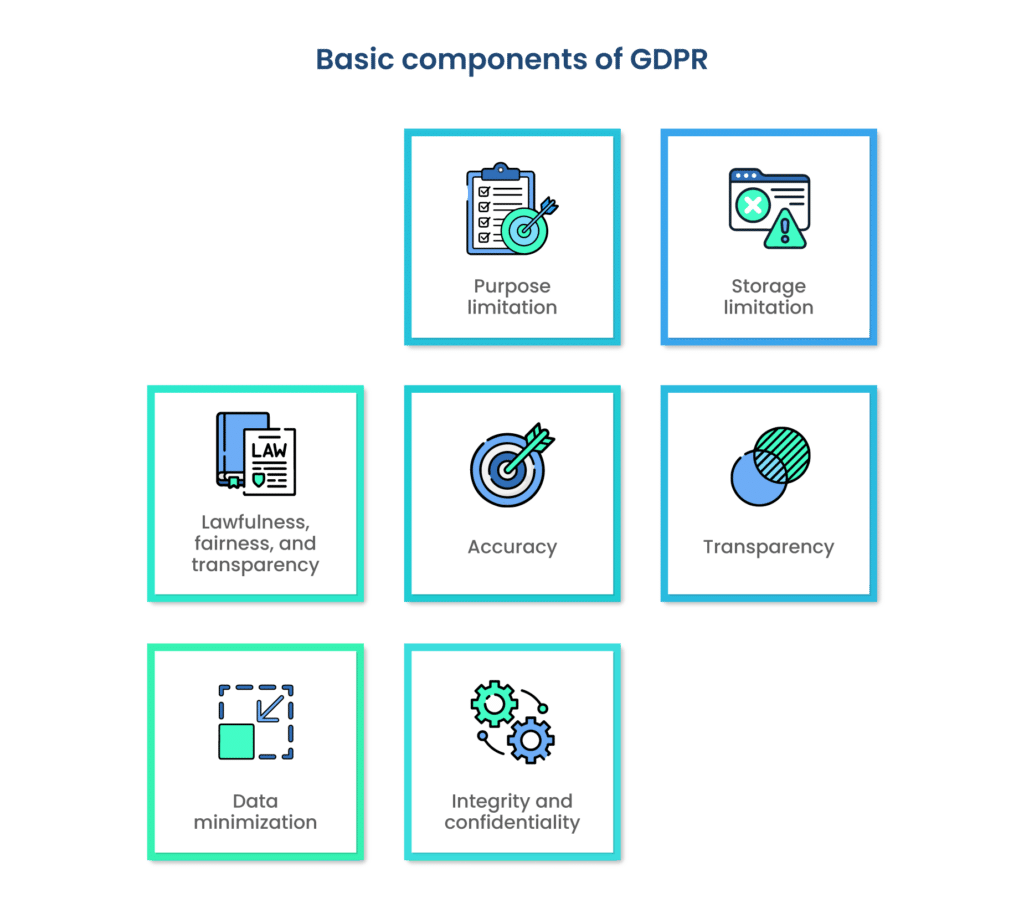
The GDPR act is based on the following key components:

1. Lawfulness, fairness, and transparency

Data processing must have a legal basis, be conducted fairly, and individuals must be informed about how their data is being processed.

2. Purpose limitation

Data can only be collected for specific, explicit, and legitimate purposes. It can’t be used for purposes that are incompatible with those originally stated.

3. Data minimization 

Organizations should only collect and retain the minimum amount of personal data necessary to achieve their specified purposes.

4. Accuracy

Data must be accurate and kept up to date. Inaccurate data should be corrected or erased without delay.

5. Storage limitation

Personal data should be kept in a form that allows identification for no longer than is necessary for the purposes of processing.

6. Integrity and confidentiality

Data must be processed securely and protected against unauthorized or unlawful processing, as well as against accidental loss, destruction, or damage.

7. Transparency 

Organizations must provide clear and easily understandable information to individuals about how their data will be used.

Definition of important terms

Data controller

An entity that determines the purposes and means of processing personal data. Controllers bear primary responsibility for ensuring GDPR compliance.

Data processor 

An entity that processes personal data on behalf of the data controller. Processors are subject to certain GDPR obligations and must follow the controller’s instructions.

Data subject

The individual to whom the personal data belongs.

Personal data 

Any information that relates to an identified or identifiable individual. This can include names, addresses, email IDs, IP addresses, etc.

Sensitive data

Special categories of personal data, such as racial or ethnic origin, political opinions, health information, religious beliefs, etc.

These foundational concepts, principles, and definitions underpin the GDPR’s framework. By adhering to these standards, organizations ensure the protection of individuals’ privacy and data rights in today’s interconnected digital landscape.

Principles of GDPR compliance
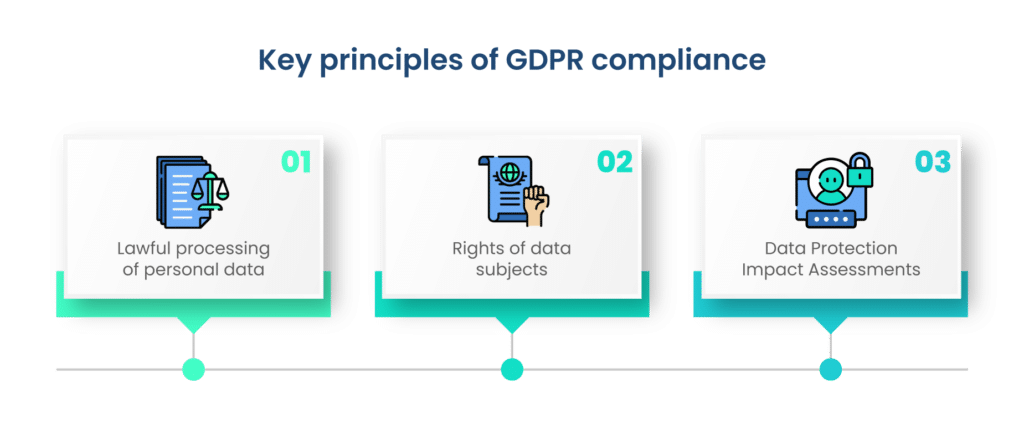
Complying with the General Data Protection Regulation (GDPR) involves adhering to a set of fundamental principles that ensure the lawful, fair, and responsible processing of personal data. These principles guide organizations in their efforts to protect individuals’ privacy rights and maintain data security.

A. Lawful processing of personal data

Processing personal data under the GDPR must have a legal basis. This means that data processing activities should fall under one of the following conditions:

  • Consent: Individuals give explicit permission for their data to be processed for specific purposes.
  • Contract performance: Processing is necessary to fulfill a contract with the data subject.
  • Legal obligation: Processing is required to comply with a legal obligation, such as tax or regulatory requirements.
  • Vital interests: Processing is necessary to protect someone’s life.
  • Public task: Processing is carried out in the public interest or official authority.
  • Legitimate interests: Organizations can process data if they have a legitimate interest, provided it doesn’t override the individual’s rights and interests.

B. Rights of data subjects

The GDPR grants data subjects a range of rights to ensure they have control over their personal data:

  • Right to access: Individuals can request access to their personal data held by an organization.
  • Right to rectification: Data subjects can request corrections to inaccurate or incomplete data.
  • Right to erasure: Also known as the “right to be forgotten,” individuals can request the deletion of their data under certain circumstances.
  • Right to restriction of processing: Individuals can request limitations on the processing of their data.
  • Right to data portability: Data subjects can receive their personal data in a commonly used format and transfer it to another organization.
  • Right to object: Individuals can object to processing, especially for direct marketing or legitimate interest purposes.
  • Rights related to automated decision-making: Individuals have the right to challenge decisions made solely by automated means.

C. Data Protection Impact Assessments (DPIAs)

A Data Protection Impact Assessment (DPIA) is a systematic process to assess and mitigate data protection risks associated with specific processing activities, particularly those involving high risks to individuals’ rights and freedoms. Organizations must conduct DPIAs for such activities and involve data protection authorities if necessary.

Adhering to these principles forms the bedrock of GDPR compliance. By ensuring the lawful processing of data, respecting data subjects’ rights, and conducting assessments to mitigate risks, organizations uphold the GDPR’s overarching goal of safeguarding personal data and privacy.

Implementing GDPR compliance
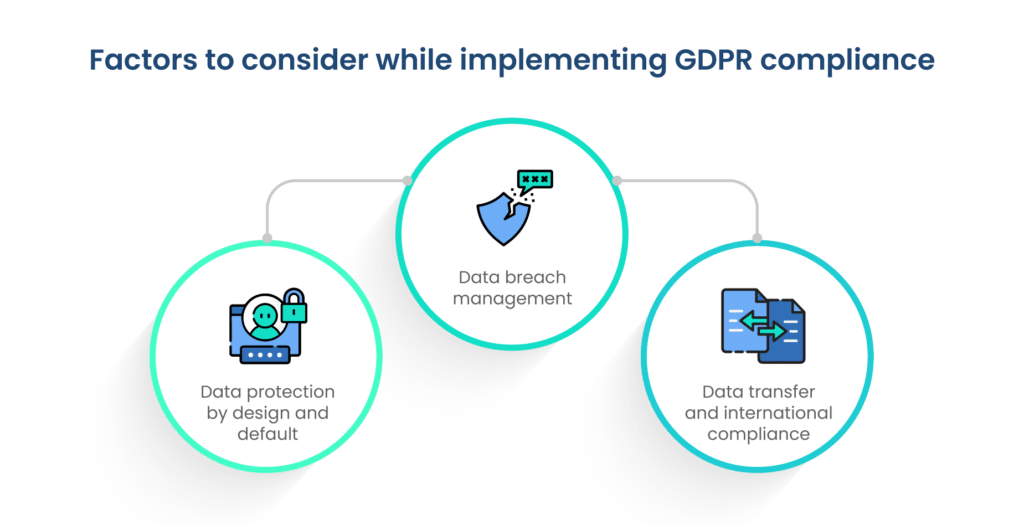
An organization can take the following steps to implement GDPR compliance.

1. Data protection by design and default

Integration of data protection into processes and systems

  • Incorporate data protection considerations from the outset when designing new processes, systems, and services.
  • Apply privacy-enhancing techniques to minimize data exposure and risks.

Minimizing data collection, retention, and processing

  • Collect only the necessary data for specified purposes, avoiding unnecessary data gathering.
  • Set clear data retention periods and delete data once its purpose has been fulfilled.

Ensuring data security and privacy through technical and organizational measures

  • Implement robust security measures to protect data against unauthorized access, breaches, and cyber threats.
  • Establish clear policies and procedures for data handling and train employees on best practices.

2. Data breach management

Definition of a data breach and its potential consequences

  • Define what constitutes a data breach (unauthorized access, disclosure, loss, alteration, destruction of personal data) and assess potential impacts.
  • Recognize that data breaches can lead to financial penalties, reputational damage, and legal actions.

Reporting obligations and timeline in case of a breach

  • Report breaches to the relevant supervisory authority within 72 hours of becoming aware of the breach, explaining the nature and scope of the incident.
  • Notify affected data subjects if the breach poses a high risk to their rights and freedoms.

Developing an effective data breach response plan

  • Establish a clear and structured plan for addressing data breaches, involving relevant stakeholders and communication channels.
  • Assign roles and responsibilities to handle breach detection, assessment, mitigation, and communication.

3. Data transfer and international compliance

Transferring data outside the EU/EEA: Requirements and safeguards

  • Prioritize data transfers within the EU/EEA to ensure compliance with GDPR.
  • If transferring data outside these regions, ensure it’s to countries with an adequate level of data protection or implement additional safeguards.

Adequacy decisions, standard contractual clauses, binding corporate rules

  • Check for EU Commission’s adequacy decisions that recognize certain countries as having adequate data protection laws.
  • Use standard contractual clauses approved by EU authorities when transferring data to countries without adequacy status.
  • For multinational corporations, consider implementing Binding Corporate Rules to ensure consistent data protection across the organization.

By following these implementation strategies, organizations can align their practices with GDPR requirements, thereby safeguarding individuals’ personal data, preparing for potential breaches, and ensuring compliant international data transfers. These efforts foster a culture of data protection and privacy that resonates with the GDPR’s core principles.

Steps to achieve GDPR compliance
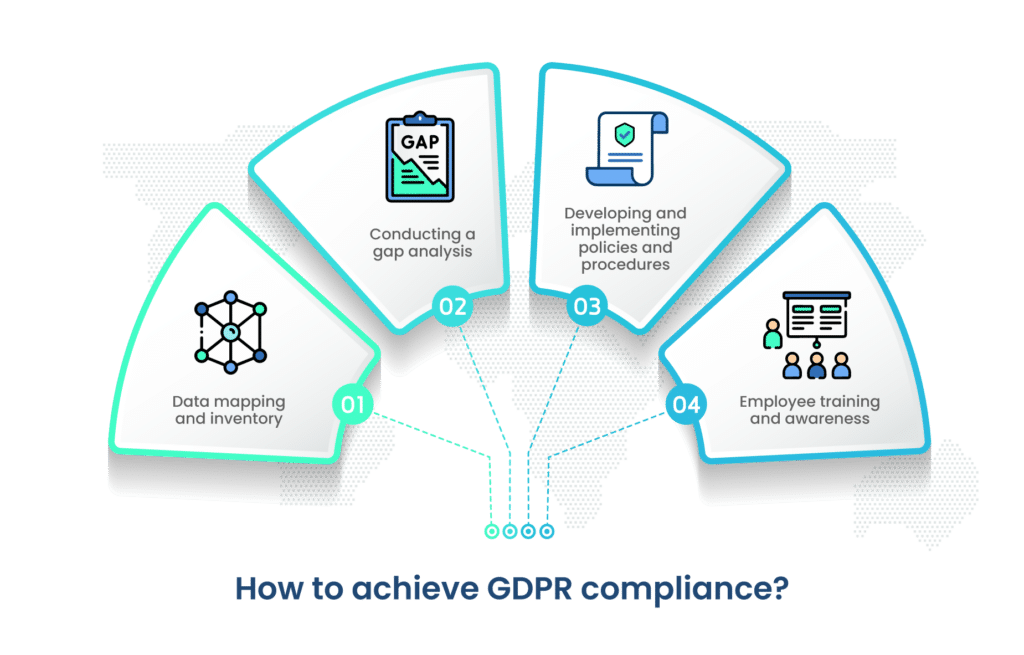
Follow the steps given below to achieve GDPR compliance

A. Data mapping and inventory

1. Identifying and categorizing personal data

  • Audit all data processing activities within your organization to identify personal data types and categories.
  • Categorize data based on its sensitivity and the purposes for which it’s processed.

2. Documenting data flows and storage locations

  • Create visual data flow diagrams illustrating how personal data moves within your organization.
  • Document where data is stored, whether in databases, cloud services, or other systems.

B. Conducting a gap analysis

1. Evaluating current practices against GDPR requirements

  • Compare your organization’s data processing activities with GDPR’s principles and requirements.
  • Assess if your processes adhere to lawful processing, data subject rights, security, and other obligations.

2. Identifying areas of non-compliance and potential risks

  • Identify gaps between current practices and GDPR standards, focusing on areas with the highest risks.
  • Pinpoint vulnerabilities that could lead to breaches or non-compliance.

C. Developing and implementing policies and procedures

1. Creating a comprehensive data protection policy

  • Craft a clear and concise data protection policy that outlines your organization’s commitment to GDPR compliance.
  • Include the principles, rights, responsibilities, and procedures that align with GDPR standards.

2. Establishing processes for handling data subject requests, breaches, and risk assessments

  • Develop processes for efficiently handling data subject access requests, rectification requests, and other rights.
  • Create a data breach response plan that outlines steps to take in the event of a breach, including notification procedures.
  • Implement a risk assessment process to proactively identify and mitigate potential data protection risks.

D. Employee training and awareness

1. Importance of educating employees about GDPR principles

  • Educate employees about the significance of GDPR compliance and how it protects individuals’ rights.
  • Highlight the potential consequences of non-compliance, including fines and reputational damage.

2. Providing training on data protection practices and compliance measures

  • Offer training sessions to employees on data protection best practices, including secure data handling, encryption, and access controls.
  • Ensure that employees understand their roles in GDPR compliance and know how to respond to data subjects’ requests.

By following these steps, organizations can systematically work towards GDPR compliance. Data mapping, gap analysis, policy development, and employee education collectively create a culture of data protection, enabling organizations to handle personal data responsibly and in accordance with GDPR’s principles. A GDPR software capable of all these functions should be employed for easier implementation.

Maintaining ongoing compliance

Getting a GDPR certification once is not enough. An organization needs to maintain ongoing compliance to meet GDPR requirements.

A. Regular auditing and review

1. Setting up a schedule for internal GDPR audits and reviews

  • Establish a timetable for conducting regular GDPR audits to assess ongoing compliance.
  • Assign responsibilities to designated individuals or teams to ensure comprehensive reviews.

2. Ensuring continued alignment with GDPR requirements

  • Evaluate data processing activities, policies, and procedures against any changes in the organization’s processes or the regulatory landscape.
  • Identify and address any areas of non-compliance or emerging risks.

B. Keeping up with regulatory changes

1. Staying informed about updates and amendments to GDPR

  • Stay connected to reliable sources of information such as official EU publications, industry associations, and legal experts.
  • Monitor regulatory updates to remain current on changes to GDPR provisions or interpretations.

2. Adapting compliance practices accordingly

  • Regularly assess how any updates or amendments to GDPR impact your organization’s data processing practices.
  • Modify policies, procedures, and practices to align with new requirements while maintaining effective data protection.

Maintaining GDPR compliance requires ongoing dedication and vigilance. By incorporating regular GDPR audits, staying abreast of regulatory developments, and adapting practices to evolving requirements, organizations can ensure that their data protection measures remain robust and responsive. This commitment not only safeguards individuals’ privacy rights but also supports the organization’s reputation and trustworthiness in the eyes of customers and stakeholders.

Conclusion

In an era dominated by digital interactions and data-driven operations, the General Data Protection Regulation (GDPR) stands as a cornerstone of modern data protection and privacy rights. As we’ve explored in this GDPR Compliance 101 guide, GDPR compliance is not merely a legal obligation but a fundamental commitment to ethical data handling and individual rights.

From understanding the core principles of lawful data processing, transparency, and security, to implementing comprehensive measures like data protection by design, breach management, and international data transfers, the journey to GDPR compliance demands dedication and meticulous attention. It’s about creating a culture within organizations that respects personal privacy, values responsible data practices, and prioritizes the security and trust of data subjects.

Yet, the story doesn’t end with achieving compliance. The true essence lies in maintaining ongoing vigilance through regular audits, adapting to regulatory changes, and fostering a continuous commitment to best practices. GDPR compliance is an ongoing journey of growth and evolution, one that reflects an organization’s dedication to protecting not only data but also its reputation and credibility.

As businesses, data controllers, processors, and individuals, embracing GDPR’s principles is a collective effort towards a safer, more secure, and privacy-respecting digital landscape. By understanding, implementing, and continuously enhancing GDPR compliance, we contribute to a world where personal data is treated with the respect and protection it deserves.

Frequently asked questions (FAQs)

1. Are there any GDPR fines for non-compliance?

GDPR enables each country’s data protection authorities to impose sanctions and fines on firms that break the law. The maximum GDPR fines can range up to €20 million or 4% of worldwide sales. Aside from fines, data protection authorities may also impose restrictions on data processing or public reprimands.

2. What sort of data processing does GDPR compliance provide protection from?

GDPR applies to the processing of personal data in the EU/EEA by controllers or businesses and processors which are the entities that process the data for the corporations, regardless of whether the processing takes place in the EU/EEA.

3. What does a Data Protection officer do under GDPR?

A Data Protection Officer (DPO) is a member of your organization who is in charge of comprehending the GDPR legislation and maintaining compliance with it. The primary point of contact for the data protection authorities is the DPO. The DPO must be someone who has an understanding of both information technology and law.

4. How is personal data different from sensitive information?

Personal data is any information relating to a recognized or identifiable living human being, while sensitive personal data is any distinct personal data that is more sensitive in nature and can cause harm to an individual if released involuntarily.

5. Which countries in the EU GDPR compliance apply to?

All 27 of the EU countries are subject to GDPR compliance. Iceland, Norway, and Liechtenstein, all nations that are a part of the EEA, are also considered to be GDPR countries.

6. What is GDPR?

The General Data Protection Regulation (GDPR) is a comprehensive data protection framework enacted by the European Union (EU) to safeguard individuals’ personal data rights. It governs how organizations collect, process, store, and handle personal data.

7. What is a data breach under GDPR?

A data breach is a security incident that leads to the accidental or unlawful destruction, loss, alteration, unauthorized disclosure, or access to personal data. GDPR requires organizations to report significant data breaches to relevant authorities and affected individuals.

8. How can organizations maintain ongoing GDPR compliance?

Organizations can maintain ongoing compliance by conducting regular internal audits and reviews, staying informed about regulatory changes, and adapting their practices to align with evolving GDPR requirements.

Scrut Automation is a smart and radically simple governance, risk, and compliance automation platform for growing startups and mid-market enterprises. With Scrut, compliance teams can reduce ~70% of their manual effort in continuously maintaining compliance towards SOC 2, ISO 27001, GDPR, PCI DSS, HIPAA, and CCPA. Schedule your demo today to see how it works.

Authored by

Aayush Ghosh Choudhary
Co-founder & CEO at Scrut

Remote SOC 2 Audits: A Comprehensive Guide

In today’s interconnected digital terrain, businesses must protect sensitive customer data. SOC (System and Organization Controls) 2 audits play a critical role in this endeavor. 

These audits assess an organization’s controls and processes related to security, availability, processing integrity, confidentiality, and privacy. SOC 2 compliance demonstrates a commitment to safeguarding customer information, building trust, and ensuring that systems and data are secure.  

Traditional SOC 2 audits often required on-site visits and in-person interactions. However, in recent years, the world has witnessed a significant shift towards remote work and virtual operations. This shift has also affected the auditing landscape.

The emergence of advanced technology and improved cybersecurity practices has made remote auditing a viable alternative. In this blog, we’ll discuss the reasons behind this shift to remote SOC 2 audits, highlighting the benefits and challenges involved.

Understanding SOC 2 Audits

SOC 2, short for Service Organization Control 2, is an auditing standard developed by the American Institute of CPAs (AICPA). It’s designed to assess the controls and processes of service organizations related to security, availability, processing integrity, confidentiality, and privacy. These audits provide a standardized way to evaluate and report on an organization’s commitment to protecting customer data.

The five trust service principles

The SOC 2 framework is based on five core principles, known as the Trust Service Principles (TSP). These principles are security, availability, processing integrity, confidentiality, and privacy. 

Understanding these principles is crucial, as they form the foundation of SOC 2 audits and compliance. We’ll delve into each principle, explaining what they entail and why they are important for organizations seeking SOC 2 compliance.

The need for a remote SOC 2 audit

As organizations embrace digital transformation and remote work environments, the traditional approach of on-site audits may no longer be practical or safe in certain circumstances. 

Remote SOC 2 audits offer a practical solution that aligns with the modern workplace. They allow businesses to undergo comprehensive evaluations of their security, availability, processing integrity, confidentiality, and privacy controls without the need for physical presence. 

This not only ensures the safety and well-being of both auditors and auditees but also promotes efficiency by reducing travel-related costs and disruptions. Furthermore, remote audits can be conducted with minimal interruption to an organization’s daily operations, making them a valuable tool for demonstrating trust and compliance in a world where data security and privacy are paramount.

Remote SOC 2 audits, therefore, address the imperative need for flexibility, adaptability, and efficiency in the auditing process while maintaining the high standards of security and compliance expected by clients, partners, and regulatory authorities. 

These audits are a testament to the resilience and responsiveness of organizations in an ever-changing world where safeguarding sensitive information is vital for business success and maintaining a competitive edge.

Preparing for a remote SOC 2 audit

As organizations increasingly rely on remote work environments, preparing for a remote SOC 2 audit has become a critical endeavor to demonstrate information security and compliance with the highest standards of trust and transparency.

A. Set audit objectives

Define your scope: Begin by defining the scope and boundaries of the audit. Determine which services, systems, and locations will be audited. This is critical for setting clear objectives and ensuring all relevant aspects are covered.

Understand regulatory requirements: A remote SOC 2 audit should be aligned with the specific regulatory requirements and trust principles your organization is focusing on. Ensure you are well-versed in the criteria that apply to your business.

B. Document controls

Identify control objectives: Clearly identify the objectives of your internal controls. Consider how these controls support your trust service criteria, depending on the chosen trust principles.

Create comprehensive documentation: Prepare well-organized and comprehensive documentation for each control. This documentation should detail the control’s purpose, design, implementation, and monitoring. Include relevant policies, procedures, process flows, and any evidence of the control’s effectiveness.

C. Staff training and awareness

Define roles and responsibilities: Clearly define the roles and responsibilities of employees during the audit process. Assign individuals or teams to liaise with auditors, gather evidence, and answer questions.

Training programs: Develop and implement training programs for staff involved in the audit process. Ensure they understand the significance of the audit, how to securely handle information, and their responsibilities.

Cultivate a security culture: Foster a culture of security and awareness within your organization. Ensure that all employees understand the importance of information security and their role in safeguarding sensitive data.

By rigorously addressing these aspects, your organization will be well-prepared for a remote SOC 2 audit. Setting clear objectives, documenting controls effectively, and ensuring staff training and awareness will not only enhance your chances of a successful audit but also contribute to improved security practices within your organization.

How to carry out the remote audit process

Conducting a remote audit is a modern approach that has gained significance, especially in the wake of changing work environments, and understanding the steps to effectively carry out the remote audit process is crucial for maintaining strong information security and compliance.

1. Select an audit firm

Assess expertise: Beyond just evaluating an audit firm’s expertise, it’s essential to look at their specific experience in remote auditing. Request references from clients who have undergone remote audits and inquire about their satisfaction with the process.

Evaluate technology and tools: Discuss the technology stack and tools the audit firm uses. Understand how they ensure the security and privacy of data during remote audits. Familiarize yourself with their video conferencing, file-sharing, and secure communication platforms.

Assess auditor qualifications: Get to know the lead auditor assigned to your audit. Assess their qualifications, certifications, and experience with remote auditing. A capable lead auditor will guide your organization effectively through the remote audit journey.

2. Audit planning and kickoff

Define audit scope, objectives, document controls, and conduct risk assessment: The scoping process should be rigorous. Define the scope clearly, identifying which systems, controls, and trust principles will be assessed. Create detailed documentation of your organization’s internal controls, outlining policies, procedures, and other measures that support information security and compliance. Conduct a thorough risk assessment to understand where vulnerabilities or challenges may arise during the remote audit. 

Technology dry run: Before the official kickoff, consider running a technology test. This can involve a virtual meeting with the audit firm to ensure that all parties can connect smoothly and that file-sharing and communication tools work as expected.

Train staff and raise awareness: Invest in staff training and awareness programs to ensure everyone understands their role in maintaining information security and compliance throughout the audit process.

3. Fieldwork and evidence gathering

Audit trail documentation: A critical aspect of remote auditing is creating an audit trail. Detailed records of evidence, data shared, and communication must be maintained. This audit trail provides transparency, and it’s essential for demonstrating your commitment to compliance.

Conduct audit testing: Auditors perform testing of controls and procedures to verify compliance with SOC 2 standards

Secure data transfer protocols: Beyond encryption, organizations should implement secure data transfer protocols. This includes ensuring auditors can access necessary systems securely and without creating vulnerabilities in the process.

4. Audit testing

Remote sample review: During audit testing, remote sampling may be applied. This means providing remote access to a representative sample of your systems and data. Discuss the methodology and procedures with the auditors to ensure you understand what they will be examining.

Evidence repository: Establish a shared, secure repository for audit evidence. This could be a cloud-based platform, a secure server, or another agreed-upon location. Keep a clear structure for documents and evidence, making it easy for auditors to locate the required information.

5. Reporting and compliance

Interim discussions: Consider regular interim discussions throughout the audit process. This provides an opportunity to address any preliminary findings and engage in discussions about recommended actions before the final report.

Validation and clarification: After receiving the preliminary findings, work closely with auditors to validate their assessments. Clarify any points of contention or misunderstanding to ensure the accuracy of the final report.

Long-term compliance: Don’t view the audit as a one-off event. Use the audit as an opportunity to improve long-term compliance and security. Take recommendations to heart, and incorporate them into your ongoing security and compliance strategy.

Ensure secure communication and collaboration tools: Utilize secure communication and collaboration tools to facilitate interaction between your organization and the audit firm while maintaining data security.

Review documentation and reports: Thoroughly review all audit documentation, reports, and evidence to ensure accuracy and completeness.

Share findings and conclusions: Discuss audit findings and conclusions with your audit firm to gain a comprehensive understanding of your organization’s compliance status.

Collaborate on action plans: Collaborate with the audit firm to create action plans and strategies for addressing any non-compliance issues identified during the audit.

Monitor ongoing compliance: Continue monitoring and improving your organization’s information security and compliance to ensure ongoing adherence to SOC 2 standards.

Expanding the details at each stage of the remote audit process provides a comprehensive overview of what to expect and how to prepare for a successful remote SOC 2 audit. 

By focusing on each of these areas, organizations can ensure a smooth audit experience, even in a remote environment.

Advantages of remote SOC 2 audits

Remote SOC 2 audits offer several benefits, including flexibility in scheduling, reduced travel costs, and minimal operational disruption. They are particularly beneficial for cloud-based companies and organizations with a geographically dispersed workforce.

Flexibility and convenience

Remote audits allow organizations to be more flexible in scheduling and execution. There is no need to align audit schedules with on-site visits, which reduces operational disruptions.

A. Cost savings 

Remote audits significantly reduce travel and accommodation expenses for auditors and the organization being audited. This makes SOC 2 compliance more cost-effective.

B. Geographic independence

For organizations with multiple locations, remote audits allow auditors to assess compliance across the organization without the need for on-site visits at each location.

C. Reduced environmental impact

Fewer auditors traveling to different locations result in a reduced carbon footprint, aligning with environmental sustainability goals.

D. Access to global talent

Organizations can choose from a wider pool of audit firms, finding experts that perfectly match their specific needs.

Potential challenges of remote SOC 2 audits and how to overcome them

While remote SOC 2 audits offer numerous advantages, they may present some challenges:

1. Data Security: Remote audits involve the transmission of sensitive data, which can be a concern. Implement robust encryption, secure file-sharing platforms, and detailed data handling policies to ensure secure transmission.

2. Communication barriers: Remote audits require more structured and consistent communication to ensure that auditors and the audited organization are on the same page. Clear communication channels and regular updates are essential.

3. Data accuracy verification: Auditors may find it challenging to verify data accuracy when not present on-site. Use automated monitoring tools, data analytics, and sampling techniques to ensure the validity of information.

4. Lack of physical verification: Some controls may involve physical processes or assets that auditors cannot inspect on-site. To overcome this, provide comprehensive documentation and visual evidence through video calls or pre-recorded walkthroughs.

5. Human interaction: The absence of personal interaction during remote audits can be a hurdle. Encourage open communication and use video conferencing tools for interviews and discussions to create a more engaging audit process.

6. Technological challenges: Technical issues, such as poor internet connections, can disrupt the audit. Have backup communication methods and contingency plans in place to address these technological hiccups.

To successfully overcome these challenges, auditors and the audited organization should maintain a cooperative and transparent approach, embracing technology and adapting to the unique demands of remote SOC 2 audits.

4 tips for smoother remote audits

Remote working is here to stay, and so are remote audits. There are four steps that every organization should take to ensure faster, hassle-free remote audits.

1. Establish a clearly defined audit plan

Define the scope, purpose, requirements, and timelines for each audit.

2. Streamline the flow of communication

It is important to have expectations aligned with each stakeholder from the beginning. Regular check-ins with the auditors to evaluate progress, resolve issues, and streamline the flow of communication will help keep the remote audit on track.

3. Assign a project manager

Assign a project manager who understands the organization, is great at influencing the right stakeholders to get the work done, and has tight project management skills should be appointed to drive SOC 2 remote audits to closure on time.

4. Leverage a compliance automation platform

The Scrut platform integrates with the cloud infrastructure to automate evidence collection across 150+ controls, facilitates infosec policy rollouts, backed by prebuilt policy templates, and manages evidence artifacts and workflows, all in one place. Auditors find all relevant policies and evidence artifacts in one place, enabling faster remote audits. Schedule your demo today to see how it works.

Wrapping up

Remote SOC 2 audits have proven their effectiveness, and their future looks promising. Technology advancements, paired with the lessons learned from the pandemic, suggest that remote auditing is here to stay. It offers a blend of convenience and compliance that organizations will continue to value.

As the importance of data security and privacy continues to grow, SOC 2 compliance is becoming more of a necessity. Remote audits offer an efficient path to compliance. To prepare your business for SOC 2 compliance, prioritize strong security practices, clear documentation, and collaboration with a reliable audit partner.

Frequently Asked Questions

1. What is a remote SOC 2 audit, and how does it differ from an on-site audit?

A remote SOC 2 audit, or virtual audit, assesses controls without on-site visits, relying on secure technology. It differs from an on-site audit in that it eliminates physical auditor presence by conducting readiness assessments through remote communication.

2. Can my cloud-based organization undergo a remote SOC 2 audit?

Absolutely. Remote audits suit cloud-based organizations well, focusing on security controls regardless of the data center or cloud environment. Auditors review controls remotely through documentation, interviews, and tech assessments.

3. What are the tech requirements and prep for a successful remote SOC 2 audit?

Ensure relevant documentation availability, provide secure remote access, and schedule personnel interviews and system access for audit validation.

4. How does remote auditing protect data confidentiality and security?

Secure channels, encryption, and close collaboration maintain data confidentiality during remote audits, prioritizing data security and privacy.

5. Which organizations benefit from remote SOC 2 audits, and what are the pros and cons?

Various industries, especially those with cloud-based systems, can benefit from remote audits. Advantages include flexibility, cost savings, and minimal operational disruption. Some may prefer on-site audits for specific requirements, often based on system complexity. Consult audit professionals for the best approach.

Authored by

Aayush Ghosh Choudhary
Co-founder & CEO at Scrut

5 best practices for a successful SOC 2 audit

Information security has been taken more seriously by organizations than ever. With stringent compliance requirements in place, it’s common to see organizations go back and forth to safeguard customers’ information. Organizations worldwide comply with standards like SOC 2 to establish a strong infosec posture to protect the organization’s data and customers’ information against breaches. 

What is a SOC 2 audit?

SOC 2 is a voluntary compliance standard developed by the American Institute of Certified Public Accountants  (AICPA), which specifies how organizations should manage customer data. The organization’s internal controls are evaluated against 5 Trust Services Criteria (TSC)- security, availability, processing integrity, confidentiality, and privacy. 

The service organizations receive and share SOC 2 report with customers, stakeholders, and investors to demonstrate that their IT controls are in place to secure the customer’s data.

Like SOC 1 report, there are two types of SOC 2 reports- SOC 2 Type 1 and SOC 2 Type 2. A SOC 2 Type 1 report addresses the organization’s security design at a specific time. In contrast, a SOC 2 Type 2 report addresses the operating effectiveness and consistency of internal controls over a period of around 6 to 12 months.

What are the five best practices for a successful SOC 2 audit?

Preparing for a SOC 2 audit is a complex, lengthy, and labor-intensive process. It gets even more difficult if you undergo a SOC 2 audit for the first time. This blog will look at five best practices to streamline and accelerate your SOC 2 audit process. 

1. Implement robust infosec policies

Organizations should implement administrative policies that match their structure, technologies, and everyday workflows. The policies should be written in simple English that your employees can understand.

Policies define how security controls across applications and infrastructure should be implemented. And it illustrates steps for managing security in the workplace. You can find more details on the foundational policies needed for a successful SOC 2 audit here.

2. Set technical security controls

Once administrative security policies are developed, the organization must work to ensure that the technical security controls are in place across the applications and infrastructure. Your organization should implement security controls to match the infosec policies laid out.

Develop security controls and implement solutions around:

  • Backup
  • Encryption
  • Audit logging
  • Access control
  • Vulnerability scanning
  • Firewall and networking
  • Intrusion detection systems

3. Set up anomaly alerts

In today’s day and age, it’s no longer a question of whether a security incident will occur but when.

Each time an incident occurs, the organizations must have sufficient alerting procedures to notify customers about unauthorized access to data. With all the analytics programs and various management software available on the internet, it’s now easier for companies to effectively measure every aspect of business activity.

To have a successful SOC 2 audit, you need to activate anomaly alerts to get notified about

  • Unauthorized exposure or modification of data
  • File transfer activities
  • Account or login access

You can customize the anomaly alerts and notifications according to your organization’s environment and risk profiles to avoid false alerts.

4. Perform audit trails

Organizations should develop detailed audit trails for data security incidents to know who, what, when, where, and how to determine an effective remediation plan.

Every minute detail is important – it will enable the team to draw insights on unauthorized exposure or modification of data and configurations, system component changes, and the incident’s source and depth.

5. Make forensic data actionable

Monitoring suspicious activity and receiving real-time alerts is crucial. But the organization should also be able to take corrective action on alerts before a system-wide situation occurs.

Detecting and remediating such alerts are key factors for complying with SOC 2. While doing this, the organization’s forensic data should provide visibility of the attack’s point of origin, travel path, and impact on various parts of the system.

Following the above best practices can help your organization be better equipped for SOC 2 audits and maintain SOC 2 compliance. 

Start your compliance process with us!

Scrut Automation is an innovative and radically simple governance, risk, and compliance automation platform for growing startups and mid-market enterprises. With Scrut, compliance teams can reduce ~70% of their manual effort in continuously maintaining compliance towards SOC 2, ISO 27001, GDPR, PCI DSS, HIPAA, and CCPA. Schedule your demo today to see how it works.

Frequently asked questions (FAQs)

1. How do I maintain SOC 2 compliance?

To ensure SOC 2 compliance, your organization must perform a SOC 2 audit before the current report is past its effective coverage period. Typically, organizations go through a SOC 2 audit once a year.

2. What sort of incidents should I prevent to safeguard my customers’ data?

Any incident that threatens the 5 Trust Services Criteria (TSCs) – security, processing integrity, availability, confidentiality, and privacy of customer data is a big no. SOC 2 report ensures your customers that you are monitoring for suspicious activity and can take corrective action quickly if an incident occurs.

3. How do I know if my organization is ready for a SOC 2 audit?

The only way to be sure you’re ready for a SOC 2 compliance audit is to review your systems. You can help self-assess your system using readiness assessment.

Authored by

Aayush Ghosh Choudhary
Co-founder & CEO at Scrut

Understanding SOC 2 Reports: A Comprehensive Guide

Data is the lifeblood of a business. In the modern digital age, where data breaches and security incidents seem to dominate headlines, the importance of data security and trust has never been more pronounced.

Organizations of all sizes and industries strive to safeguard their clients’ sensitive information, and one tool that plays a crucial role in demonstrating their commitment to data security is the SOC 2 report.

The American Institute of Certified Public Accountants (AICPA) developed the SOC 2 audit, along with the SOC 1 and SOC 3 audits, to assist service organizations that operate and provide information system services to other entities.

What is a SOC 2 report?

A SOC 2 report determines whether a service organization or cloud provider can securely manage customers’ data. 

The organizations share a SOC 2 report with stakeholders and prospective customers to demonstrate internal controls, policies, and procedures that directly relate to the security of a system at a service organization.

A SOC 2 report demonstrates an organization’s focus on trust and security.

The fundamental purpose of a SOC 2 report is to instill confidence in clients and customers by showcasing an organization’s dedication to safeguarding their data. 

These reports go beyond superficial compliance and instead delve deep into an organization’s internal controls, assessing its ability to protect sensitive information and provide secure services.

What Are The Trust Services Criteria?

SOC 2 reports are built around five trust services criteria (TSC): Security, Availability, Processing Integrity, Confidentiality, and Privacy. 

Each criterion addresses a specific aspect of data management and protection, collectively forming a comprehensive evaluation framework.

TSC is a framework for designing, implementing, and evaluating information system controls. 

Of the 5 TSCs, all the SOC 2 reports must include security trust service, while the other four are optional and added to the examination at the discretion of management.

The components of a SOC 2 report

A SOC 2 report provides all the details of a service organization’s internal controls. It typically includes:

1. Report from an auditor 

The SOC 2 final report briefly summarizes the entire SOC 2 examination, the time taken, and the auditor’s opinion on how effectively the organization’s controls are mapped with the chosen TSC. The report describes system design, service organization responsibilities, auditor’s responsibilities, inherent limitations, and auditor opinion.

The auditor uses terms such as unqualified, qualified, adverse, and disclaimer to describe their opinion on the SOC 2 audit. 

  • An unqualified opinion is issued when an organization clears the audit. That means the controls your auditor tested were designed and operating as they should be.
  • A qualified opinion is issued when an organization clears a SOC 2 audit, but some areas require attention. That means the controls your auditor tested weren’t designed or operating as needed.
  • An adverse opinion is issued when an organization fails the SOC 2 audit. That means the clients cannot rely on the organization’s systems. 
  • A disclaimer opinion is when the auditor doesn’t have the necessary evidence to establish an official opinion.

2. Management assertion 

Management assertion acts as a legal document between the organization and the auditor. It’s a declaration by the service organization about the system designs and operations necessary to accomplish their business objectives. 

It includes whether system designs and controls comply with the AICPA’s 5 TSC, timeframe, and audit scope.

3. System description 

System description gives a high-level overview of the technologies used, like virtualization software, networking hardware, database types, backup configuration, and system redundancy. It also provides information about system scope and requirements, control frameworks, system incidents, system components, and complementary information.

4. Auditors’ test of controls

Test of controls describes how every test is performed during the audit. It provides information about the operating effectiveness of controls and details about the controls that may affect the organization’s operations while delivering products to its customers or providing services. 

Most of the SOC 2 test of controls reports include Common Criteria (CC), TSC, control number, control description from the company, the auditor’s test description, and test results on operating effectiveness.

5. Other information

Sometimes, a service organization provides additional information on a business continuity program, an incident response program, or any practices an organization wants to know.

Types of SOC 2 Reports

There are two main types of SOC 2 reports: Type 1 and Type 2. 

SOC 2 Type 1 Report

A SOC 2 Type 1 report evaluates the design of security controls at a specific time.

SOC 2 Type 2 Report

A SOC 2 Type 2 report assesses both the design and operational effectiveness of controls over a designated period, typically six to twelve months.

So which one is ideal for your organization? Let’s take a look at the differences in the SOC 2 type 1 vs SOC 2 type 2 report. 

Do you need a SOC 2 Type 1 or SOC 2 type 2 report? 

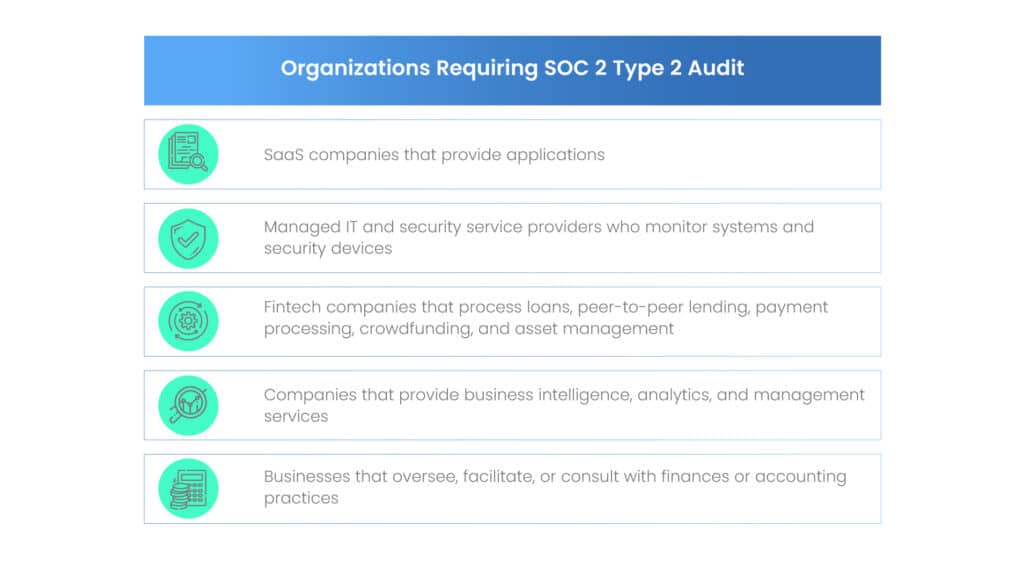
If you are a service organization or a service provider that stores, processes, or transmits customer data and want to be competitive in the market, you need a SOC 2 report. 

If you are new to SOC 2, and the primary goal is to build compliance as a capability or have budget and time constraints, it is ideal to start with a SOC 2 Type 1 audit. This will help you adapt to the controls and identify information security gaps you can address over the next 6-12 months.

During this period, you can build the required processes against the failed controls and collect evidence to show the operating effectiveness of your controls and procedures, accelerating the timelines for a SOC 2 Type 2 audit. 

However, the SOC 2 report is often an essential requirement of a vendor assessment of the organization you are trying to serve. In such instances, it is worth spending the additional time and effort on a SOC 2 Type 2 report. This is because it will secure the credibility of your infosec practices and build instant trust with customers.

How to get a SOC 2 report?

Collection of Evidence: This step involves gathering relevant documentation and information that demonstrate your organization’s implementation of controls aligned with the TSC. Documents may include policies, procedures, access logs, and more. Evidence should provide a clear picture of how your organization safeguards data, maintains availability, ensures processing integrity, protects confidentiality, and upholds privacy.

Engagement with an Auditor: Organizations seeking a SOC 2 report typically engage with a certified public accountant (CPA) or a specialized auditing firm. The auditor assesses the organization’s controls against the chosen trust services criteria, examining policies, procedures, and security measures.

Assessment and Evaluation: The assessment process involves collecting evidence, performing tests, and evaluating the organization’s controls. This comprehensive evaluation helps determine the effectiveness of the controls in place and their alignment with the trust services criteria.

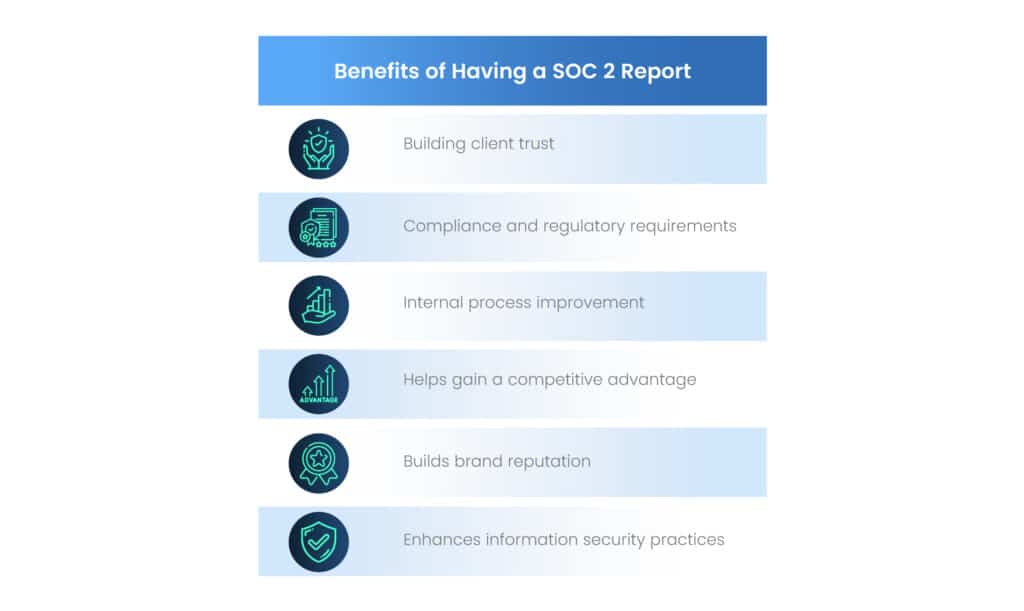
Benefits of having a SOC 2 report

1. Building client trust

A SOC 2 report serves as a powerful trust-building tool. It assures clients that the organization takes data security and privacy seriously, increasing their confidence in the organization’s ability to protect their sensitive information.

2. Compliance and regulatory requirements

Many industries have data protection regulations that organizations must adhere to. A SOC 2 report helps organizations meet compliance obligations by demonstrating their commitment to industry standards and best practices.

3. Internal process improvement

The assessment process itself can drive improvements in internal controls and security practices. As organizations work to meet the trust services criteria, they often uncover areas where enhancements are needed, leading to strengthened data security measures.

4. Helps gain a competitive advantage 

Having a SOC 2 report ready gives your business an edge over your competitors. Businesses only seek to collaborate with vendors who securely protect their data in light of the numerous new businesses that are starting up. 

5. Builds brand reputation 

SOC 2 report provides evidence that the organization has taken all the critical measures to prevent a data breach. This, in turn, helps build a brand’s reputation in the market. 

6. Enhances information security practices

One of the primary objectives of the SOC 2 report is to ensure that organizations are following industry best practices and implementing the right protocols to protect systems and data from unauthorized access by assisting organizations in improving information security practices. 

7. Streamlines compliance mapping 

A SOC 2 report offers great value in facilitating various regulatory compliance across other frameworks and standards. AICPA has developed CC mapping guides to track any overlap between SOC 2 TSC requirements and other compliance frameworks. 

For example, if your organization accepts credit card details, you must comply with Payment Card Industry Data Security Standards (PCIDSS). 

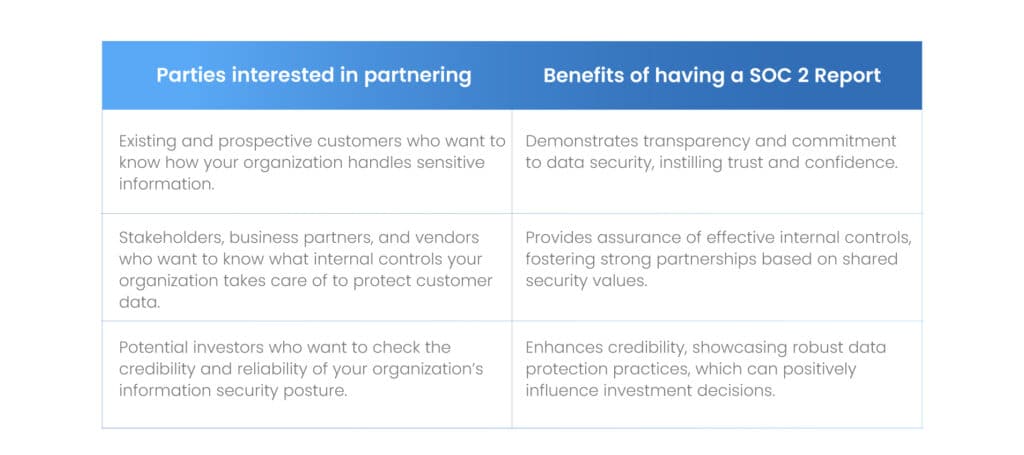
Who checks a SOC 2 report?

A SOC 2 report plays a crucial role in attracting prospective clients. 

Partnering with your company will be easier for these parties if you have a SOC 2 report available:

Interpreting and Using SOC 2 Reports

Understanding the Report: SOC 2 reports are structured documents that provide detailed insights into an organization’s controls and practices. Readers can interpret the sections to understand the evaluated criteria, the effectiveness of controls, and potential areas for improvement.

Making Informed Decisions: Clients and customers can use SOC 2 reports to make informed decisions when selecting service providers. By reviewing the report’s findings, they can assess the organization’s commitment to data security and compliance, which aids in making confident choices.

Wrapping up

In the digital world, trust and data security matter a lot. SOC 2 reports are like strong signs of assurance. They show that a company takes data protection seriously and keeps things private. Using these reports shows that a company is trustworthy and cares about keeping things safe.

As professionals in compliance, we know the hassle of obtaining a SOC 2 report. That’s why we recommend organizations collaborate with compliance automation companies like Scrut to get a SOC 2 report in just 4-6 weeks. Scrut is a smart and radically simple governance, risk, and compliance automation platform for growing startups and mid-market enterprises. With Scrut, you can reduce manual effort and maintain SOC 2 compliance with ease. Schedule your demo today to see how it works.

FAQs

1. How do I meet SOC 2 requirements in the cloud?

To become SOC 2 compliant in the cloud, your security experts should evaluate the current cloud security controls to determine security gaps. Ensure to follow the below steps to achieve SOC 2 compliance in a public cloud platform:
– Establish administrative policies and procedures
– Set security controls to meet policy standards
– Enforce and maintain security controls across your cloud

2. Is my business required to address all Trust Services Criteria (TSC) in the SOC 2 audit?

Frankly speaking, it depends on your organization’s services. Few organizations choose confidentiality and privacy TSC, while others choose confidentiality and availability or all the 4 TSCs.
Of the 5 TSCs, all the SOC 2 reports must include security trust service, while the other four are optional – added to the examination at the discretion of management.

3. How do I maintain SOC 2 compliance?

To ensure SOC 2 compliance, your organization must perform a SOC 2 audit before the current report is past its effective coverage period. Typically, organizations go through a SOC 2 audit once a year.

4. What are SOC reports, and what is their purpose?

SOC reports are auditing standards developed by the AICPA to assess the internal controls of service organizations handling sensitive data for their clients. Their main purpose is to provide assurance to clients and stakeholders regarding the effectiveness and adequacy of the controls implemented by the service organization.

5.  What are the different types of SOC reports?

There are three main types of SOC reports: SOC 1, SOC 2, and SOC 3. SOC 1 reports focus on controls impacting financial reporting, SOC 2 reports center around the Trust Services Criteria (security, availability, processing integrity, confidentiality, and privacy), and SOC 3 reports provide a summarized version of SOC 2 and are intended for public distribution.

6. How can SOC reports help with regulatory compliance?

SOC reports can assist CISOs in achieving and demonstrating regulatory compliance by providing evidence of meeting specific security and data protection requirements, demonstrating due diligence in vendor selection, supporting auditing requirements, and verifying vendor compliance with relevant industry regulations.

7. What is a SOC-2 report? 

A SOC 2 report is a document that assesses an organization’s controls over its data-related services. It evaluates how well the organization safeguards data, ensures availability, maintains processing integrity, protects confidentiality, and upholds privacy standards. To ensure SOC 2 compliance, your organization must perform a SOC 2 audit before the current report is past its effective coverage period. Typically, organizations go through a SOC 2 audit once a year.

8. Why is a SOC 2 report important? 

A SOC 2 report is important because it demonstrates to clients and customers that an organization takes data security seriously. It assures them that their sensitive information is in safe hands and that the organization follows strict standards to protect their data.

9. What are Trust Services Criteria (TSC) and should my organization address all of them? 

Trust Services Criteria (TSC) are the five key principles that form the foundation of a SOC 2 report: Security, Availability, Processing Integrity, Confidentiality, and Privacy. These criteria define how well an organization’s controls align with data protection and privacy standards. 
Some organizations choose the confidentiality and privacy TSC, while others choose confidentiality and availability TSC. Of the 5 TSCs, all the SOC 2 reports must include security trust service, while the other four are optional – added to the examination at the discretion of management.

10. What’s the difference between SOC 2 Type 1 and SOC 2 Type 2 reports?

A Type I report assesses the design of controls at a specific point in time, while a Type II report goes a step further by evaluating both the design and operational effectiveness of controls over a period of time, usually six to twelve months.

11. How can a SOC 2 report benefit my business?

A SOC 2 report benefits your business by instilling trust in clients and customers, helping you meet industry compliance requirements, and improving your internal data protection measures. It can be a competitive advantage, showcasing your commitment to data security and privacy.

12. How do I meet SOC 2 requirements in the cloud?

To become SOC 2 compliant in the cloud, your security experts should evaluate the current cloud security controls to determine security gaps. Follow the below steps to achieve SOC 2 compliance on a public cloud platform:
– Establish administrative policies and procedures
– Set security controls to meet policy standards
– Enforce and maintain security controls across your cloud

Authored by

Aayush Ghosh Choudhary
Co-founder & CEO at Scrut

What are the SOC 2 Trust Services Criteria?

Data security plays a vital role in building the trust of clients and partners, especially if you are a SaaS provider. Thus, organizations use a SOC 2 report to prove to their clients, vendors and stakeholders that they can handle the data safely. 

During a SOC 2 audit, the organization’s internal controls are evaluated against 5 Trust Services Criteria (TSC), formerly called SOC 2 Trust Services Principles (TSP). Trust Services Criteria is established by the Assurance Services Executive Committee (ASEC) of the American Institute of Certified Public Accountants (AICPA). 

Trust Services Criteria are used to evaluate and report the design and operating effectiveness of controls concerned with Security, Processing Integrity, Availability, Confidentiality, and Privacy across an entire entity, operating unit level and within a function related to compliance objectives. 

Now, let’s go in-depth to understand which of the 5 Trust Services Criteria to include during your SOC 2 audit.

5 AICPA SOC 2 Trust Services Criteria

It is imperative to clearly understand each criterion that constitutes the SOC 2 report for two primary reasons. Firstly, the 5 TSCs focus on your infosec posture to become compliant. Secondly, it describes a group of compliance objectives your organization must adhere to. 

1. Security

The security trust criterion helps protect information throughout an organization’s lifecycle. According to SOC 2 guidelines, it is mandatory to include Security Trust Services Criteria in all SOC 2 reports.

Security provides specific guidelines to address the control environment, control activities, risk assessment, communication and information, and monitoring of controls concerned with the design and implementation of controls.

Moreover, security TSC helps in preventing or detecting system failure, incorrect processing, theft, unauthorized removal of information or system resources, and misuse of applications such as unauthorized alteration, destruction, or disclosure of information that could compromise the confidentiality, availability, integrity, and privacy of information or systems that affect the entity’s ability to achieve its objectives. 

2. Availability

The availability trust criterion addresses whether information and systems are available for operation and use to meet the entity’s objectives. It typically applies to organizations that provide data centers, Software as a Service (SaaS), or hosting services to their clients.

Consider including the availability Trust Services Criterion in your SOC 2 if

  • You have a platform that offers continuous delivery or deployment
  • Any electrical damage would prevent your clients from deploying changes into the cloud
  • Your customers have issues regarding downtime, including SLAs (Service Level Agreements)

3. Processing Integrity

The processing integrity trust criterion is focused on data accuracy. It oversees the completeness of the end-to-end process to ensure that applications function without delay, error, omission, or accidental data manipulation. Processing integrity is aided by Quality Assurance (QA) to ensure that the system achieves its purpose.

The processing integrity criterion requires you to describe precisely how data is processed within a system, as it can add much value to your SOC 2 report, giving the auditors, potential customers, and partners a good idea of how your system works. 

Consider including processing integrity criterion in your SOC 2 report if

  • Your organization performs transactions regularly
  • You process transactions on behalf of your clients
  • You are an e-commerce company

4. Confidentiality 

The confidentiality trust criterion evaluates how organizations protect confidential information – by limiting access, storage, and use. It ensures that only authorized individuals can view sensitive information like legal documents or Personally Identifiable Information (PII).

Consider including confidentiality criteria in your SOC 2 if your organization handles confidential data like Personal Information (PI), passwords, and financial reports.

Furthermore, the protections outlined in the security criterion and the confidentiality criterion provide direction for identifying, protecting, or destroying confidential information.

5. Privacy 

Confidentiality and privacy Trust Services Criteria share similarities in terms of functionality yet are subtly different. 

The confidentiality TSC assures clients that their confidential information is protected, whereas privacy evaluates how an organization protects its customer’s PII. Privacy assesses how, why, and when an organization shares that information. 

Privacy criterion addresses personal information like name, address, email, other identification info, and purchase history. Your organization must include the privacy Trust Services Criterion in the SOC 2 report if you hold customers’ personal information directly. 

Moreover, privacy criterion is not mandatory if you are compliant with GDPR or CCPA. 

Final Word

It’s important to note that your organization need not require addressing all five Trust Services Criteria in your SOC 2 report. However, select the TSC that are relevant to the services that you provide to your clients while keeping Security TSC as a mandatory requirement.  

Scrut Automation is a smart and radically simple governance, risk, and compliance automation platform for growing startups and mid-market enterprises. With Scrut, compliance teams can reduce ~70% of their manual effort in continuously maintaining compliance towards SOC 2, ISO 27001, GDPR, PCI DSS, HIPAA, and CCPA. Schedule your demo today to see how it works.

Frequently Asked Questions (FAQs)

1. Is my business required to address all Trust Services Criteria (TSC) in the SOC 2 audit?

Frankly speaking, it depends on your organization’s services. Few organizations choose confidentiality and privacy TSC, while others choose confidentiality and availability or all the 4 TSCs.
Of the 5 TSCs, all the SOC 2 reports must include security trust service, while the other four are optional – added to the examination at the discretion of management.

2. Are the Trust Services Principles (TSP) different from the Trust Services Criteria (TSC)?

No, Trust Services Criteria was formerly called Trust Services Principles. The concept and the five categories encompassed in the framework have remained the same. 

3. Why does my organization need SOC 2 compliance?

A SOC 2 report proves to their clients, vendors, stakeholders, and investors that they can handle the data safely. It also helps in increasing new sign-ups. 

Authored by

Aayush Ghosh Choudhary
Co-founder & CEO at Scrut

SOC 2 vs SOC 3: Key differences

If you’re running a SaaS business or providing cloud services, having a strong security posture is critical for increasing sign-ups. Along with applying infosec security measures to your system, you need compliance attestation, too, to prove to your clients, investors, and potential customers that security is your top priority. And one such compliance standard is SOC (Service Organization Controls). 

SOC is a set of standard compliances for service organizations developed by AICPA (American Institute of Certified Public Accountants). The various SOC audits – SOC 1, SOC 2, and SOC 3 define how organizations should manage customer data. 

However, choosing which SOC report you need for your organization can confuse you. In this blog, we will walk you through all the differences between SOC 2 and SOC 3 and help you decide which one to choose for your organization.

Overview: SOC 3 vs SOC 2 

SOC 2 and SOC 3 reports are determined by the same AICPA standards, and the audit performed by the CPA for these two reports is significantly similar. Both reports are designed to address Trust Services Criteria (TSCs) – security, availability, processing integrity, confidentiality, and privacy of the data. Therefore, the controls that the auditor identifies and evaluates are the same for both reports.

A SOC 2 examination is a restricted-to-use report, which means the report is restricted to the service organization’s management, customers, and prospective customers. It includes an auditor’s opinion, management’s assertion, system description, test of controls, and opinion of the auditor. 

A SOC 3 report, on the other hand, can be made available to the public. It includes the auditor’s opinion, management assertion, and the gist of the service organization. 

What is the difference between a SOC 2 and SOC 3 report?

Both SOC 2 and SOC 3 reports detail your system security controls. But how do you know which is the right fit for your organization? Beyond the overviews of each report above, let’s look at some of the details that separate SOC 2 and SOC 3 reports.

SOC 2 SOC 3
PurposeTo prove to customers, stakeholders and investors that security is a top priority Used as a marketing collateral. It is usually mentioned on the organization’s website
AudienceThe report is restricted to the service organization’s management, customers, and prospective customers.The report is intended for the general public
Report type SOC 2 report is further categorized into Type 1 and Type 2SOC 3 report is always a Type 2
Test of controls Auditor’s test of controls security, availability, processing integrity, privacy and confidentiality are defined in the reportAuditor’s test of controls is not defined in the report 

In short, a SOC 2 report is used to prove to customers, vendors, stakeholders, and investors that security is your top priority. The report details the security controls, methods used to test them, system description, and management assertion. Whereas a SOC 3 report is used as marketing collateral and is shared with the general public. 

Why do you need a SOC 2 report first?

Basically, SOC 3 report is an extraction of a SOC 2 report. The only difference between SOC 2 and SOC 3 reports is the way the reports are designed. Therefore, it’s ideal to get a SOC 2 report first and get a SOC 3 report if you intend to attract new customers. It acts as a marketing collateral.

A SOC 2 report ensures the system’s internal controls related to security, availability, processing integrity, confidentiality, and privacy. Along with this, it delivers numerous benefits outlined below: 

  1. Helps gain a competitive advantage 
  2. Builds brand reputation 
  3. Enhances information security practices
  4. Streamlines compliance mapping 

How to get started with SOC 2 and SOC 3?

Now that you clearly understand the similarities and differences between SOC 2 and SOC 3, it’s time to leverage these reports for your organization. If your organization has never undergone SOC audits, the steps below will help you get started. 

1. Prepare for the audit 

Choose the SOC audit: SOC 2 or SOC 3? And then define the scope of the audit. Talk to the auditor to get an initial understanding of what goes through the audit process. 

2. Update procedures and policies 

During a SOC 2 Type 2 audit, your organization must prove to the auditor that you are following the policies and processes you have created. It also helps people across the organization to follow the same standardized practices. 

Common components of policies and procedures include:

  • System access 
  • Security roles 
  • Security training 
  • Incident response 
  • Disaster recovery
  • Risk assessment and analysis 

3. Establish security controls

Once policies and procedures are established, it’s time to put technical controls across your infrastructure. In addition to following your internal data security protocols, your organization’s best practices should match the Trust Services Criteria (TSC) defined by the AICPA. 

Some security controls include access control, encryption, firewalls, backups, intrusion detection, and vulnerability scanning. 

4. Gather documentation 

To streamline the SOC 2 and SOC 3 audit process, you should have documentation and evidence, such as Service Level Agreements (SLAs), technical control documents, third-party contracts, vendor contracts, and risk assessment documents.

SOC 2 audit is a tedious and long-winded process and takes several months to complete. Therefore, having these documents ready will help the audit process go faster.

5. Schedule the SOC 2 audit

Once the policies, procedures, and documents are in place, it’s time to schedule your SOC audit officially. Now, choose the right auditing firm to conduct the SOC 2 audit. 

Read our blog on how to pick the right SOC 2 auditor here.

Closing thoughts

Getting SOC 2 compliant can be overwhelming if you run a fast-growing SaaS organization. Managing and performing repeated tasks manually can get tedious and diverts your focus from business and growth. Investing so extensively of your valuable time and workforce can be immensely expensive for your organization, and it can delay your growth journey too!

Scrut is a smart and radically simple governance, risk and compliance automation platform for growing startups and mid-market enterprises. With Scrut, compliance teams can reduce ~70% of their manual effort in continuously maintaining compliance towards SOC 2, ISO 27001, GDPR, PCI DSS, HIPAA and CCPA. Schedule your demo today to see how it works.

Frequently asked questions (FAQs)

1. Who performs a SOC 2 audit?

A SOC 2 audit is performed by a licensed CPA or equivalent, such as a professional accountant in public practice licensed in a jurisdiction outside the U.S.

2. Does a SOC 2 auditor’s opinion cover the service organization’s adherence to pertinent rules and regulations like GDPR, CCPA, or HIPAA?

No. A SOC 2 examination addresses only the design and the operating effectiveness of IT controls that support the service organization’s compliance with specified laws and regulations. In simple terms, the SOC 2 report does not provide an opinion on whether the service organization complied with relevant laws or regulations.

3. Who needs a SOC 3 report?

Organizations that provide cloud services, enterprise systems housing third-party data, IT systems management, and data centre colocation facilities go for SOC 3 audit. If you want to communicate that your organization’s controls are appropriately designed, implemented, and operating effectively, but want to keep the details of controls private, then the SOC 3 report may be right for you.

Authored by

Aayush Ghosh Choudhary
Co-founder & CEO at Scrut

What’s new in ISO 27001:2022?

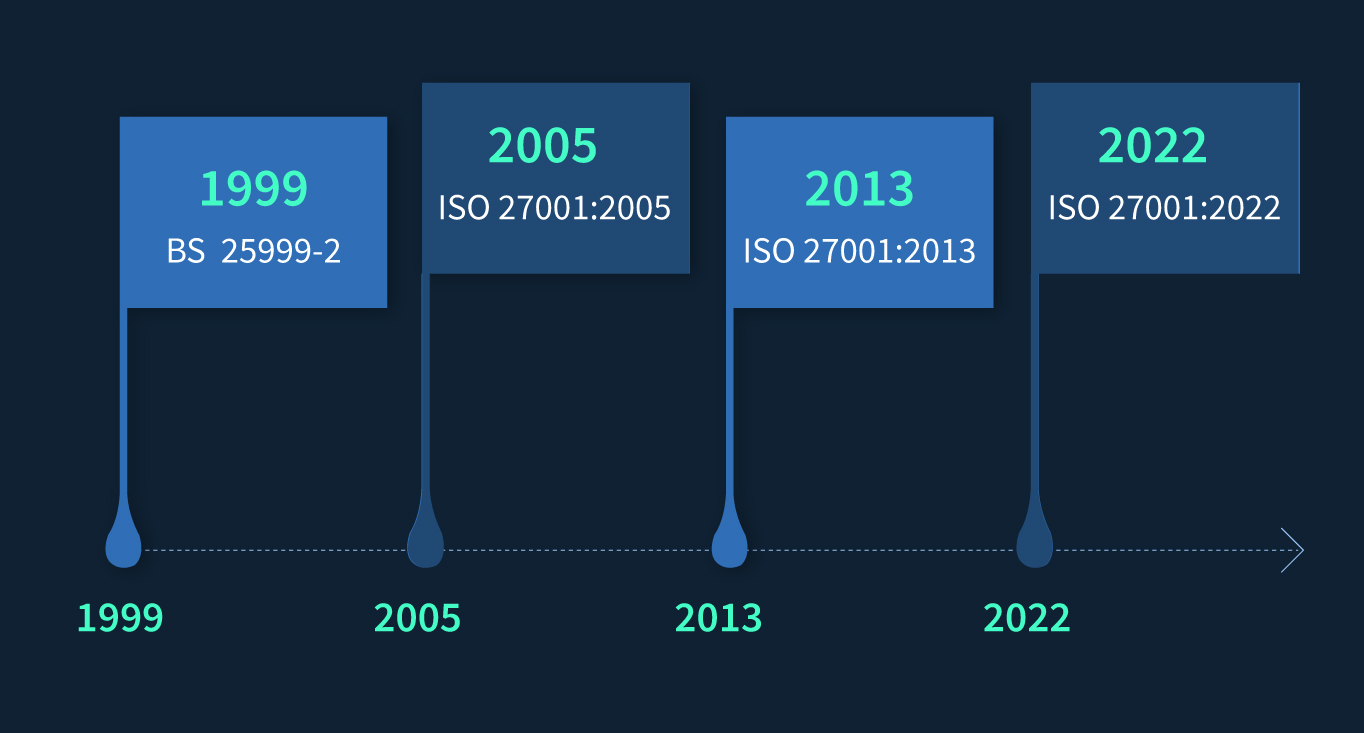
ISO 27001 was first published, in 1999 and it has gone through several changes since then. It has been nine years since ISO/IEC 27001 was last revised (in 2013). Even though ISO 27001:2013 was validated in 2019 — in other words, authorities confirmed that the standard required no changes in the Information Security Management System standard, ISO 27001 still needed improvement to align with current working models and evolving technology landscape.   

What was the need for the change?

These changes are being made in response to evolving business practices such as remote working models and “bring your own device” practices, an increased dependency on cloud services, and an increasing focus on data privacy. These changes are focused on improving the efficacy of your ISMS within your organization.

How much has changed?

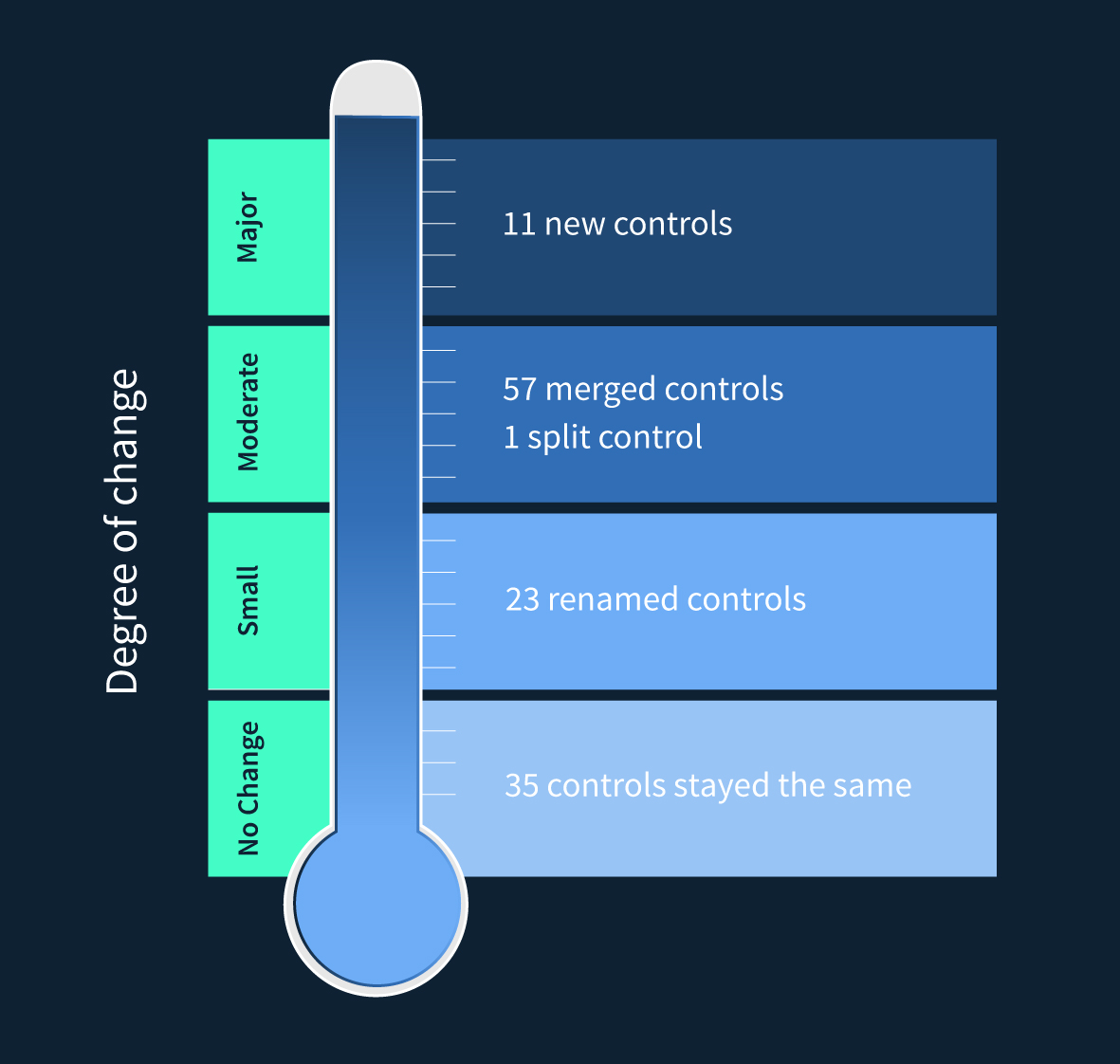
The changes in the ISO 27001:2022 revision are small to moderate. The main part of the standard, which deals with the Information Security Management System, continues to have 10 clauses. There are minor additions and deletions of requirements in some sub-clauses. However, no significant requirement has been deleted. Prima facie, the second part, or Annex A seems to have undergone a significant change – the number of controls has reduced to 93 from earlier 114, the sections have dropped to 4 from the earlier 14. However, these changes are primarily because of restructuring of controls, and addition of a few controls. 

Quick snapshot:

What are the major changes?

  • The name of the standard itself has changed to “Information security, cybersecurity and privacy protection – Information security management systems – Requirements” from the earlier version of “Information technology – Security techniques – Information security management systems – Requirements”. This indicates the increasing focus of the standard on cybersecurity and privacy.
  • The structure of the ISO 27001 guidelines has undergone moderate changes:

No significant requirements for the ISMS have been deleted from the earlier ISO 27001:2013. Slight modifications have been made to the mandatory clauses 4 to 10, to align with ISO 9001, ISO 14001, Annex SL, and other ISO management standards

  • There were 5 additional requirements in the management system:
  • Annex A has gone through major structural changes. The number of controls have been reduced from 114 to 93.
  • 11 new controls have been added to Annex A security controls.
  • The 93 controls have been restructured into four control groups.
    • Organizational controls –  Clause 5, contains 37 controls
    • People controls – Clause 6, contains 8 controls
    • Physical controls – Clause 7, contains 14 controls
    • Technological controls – Clause 8, contains 34 controls

Frequently Asked Questions (FAQs)

How do these changes impact my current ISO 27001 certification?

There is sufficient time given to all organizations by the certification and accreditation bodies to migrate to the updated standard. Organizations can choose to certify against the revised ISO 27001:2022 standard from Oct 25, 2022. Organizations that are already certified to ISO 27001:2013 will be given a migration window of 3 years and will need to migrate to the revised standard by Oct 31, 2025.

When should organizations start implementing the revised ISO 27001?

The changes expected are moderate, with no changes in technology. 
Organizations can, and should, start right away and train internal auditors on the revised standards. They can start conducting internal audits as per the new standard before surveillance or recertification audits to ease the transition to the new standard.
For example, they could start learning about the controls of ISO 27002:2022, update their risk treatment procedures to reflect the new controls, update their documents to match, update and improve their Statement of Applicability, and modify specific parts of their current policies and procedures as needed.

Do I need to get a new audit done according to the updated standard?

There is no need for a new audit for the updated ISO 27001 standard. The migration to the updated standard can be done during surveillance or recertification audits. The certification bodies might spend extra man-days to cover the new standard requirements as part of the migrations.

How does Scrut Automation help me in managing my compliance with the revised standard?

The control mapping on the platform will be updated in accordance with the revised standard by November 15, 2022. You will be able to check your compliance with the revised ISO 27001 standard without having to do anything. 

Our team of security and privacy experts can help you with answers to any questions you might have about the revised standards. Schedule a demo today to understand more about how you can implement the revised standards.

Authored by

Aayush Ghosh Choudhary
Co-founder & CEO at Scrut

SOC 2 audit: Keys to success

A SOC 2 compliance audit, however daunting and challenging, is necessary for many organizations. Once you provide the SOC 2 certification to your clients, they experience a sense of enhanced trust, transparency, and reliability in your organization. It also acts as insurance for several organizations when faced with data breaches. 

Even though there are plenty of benefits, let’s not forget that completing the SOC 2 audit is incredibly time-consuming and requires considerable resources. This holds true, especially if your organization is pursuing a SOC 2 compliance audit for the first time. 

That brings us to the question, how can your organization streamline the audit process? 

In this comprehensive guide, we will delve into the keys to successful SOC 2 audits, empowering you to navigate the intricacies of this vital process with finesse.

What Is SOC 2 Compliance?

Before we delve into the nuances, let us briefly review the essence of SOC 2 compliance. The main objective of SOC 2 audits is to assess an organization’s internal controls for data security, availability, processing integrity, confidentiality, and privacy. 

In contrast to SOC 1, which focuses on financial controls, SOC 2 offers an assurance framework for operational controls. Because of this, it is the preferred certification for businesses that handle sensitive customer data.

Fundamentals of SOC 2 Compliance

What is a SOC 2 audit based on? SOC 2 audits are based on the American Institute of CPAs (AICPA) Trust Services Criteria and focus on operational controls related to the five core principles: security, availability, processing integrity, confidentiality, and privacy.

Organizations seeking SOC 2 compliance aim to demonstrate to their clients and stakeholders that their systems and processes effectively safeguard sensitive data.

Why Is SOC 2 Compliance Important?

The value of SOC 2 compliance extends far beyond a mere seal of approval. Let us explore the compelling reasons why SOC 2 audits are indispensable:

Meeting Industry Standards and Regulatory Requirements

 SOC 2 compliance ensures that organizations meet industry-specific standards and adhere to relevant regulations, such as the General Data Protection Regulation (GDPR) and the California Consumer Privacy Act (CCPA).

Enhancing Customer Trust and Credibility

Successfully completing a SOC 2 audit provides assurance to clients and partners that their data is handled with the utmost care and meets the highest security standards.

Gaining a Competitive Advantage

SOC 2 compliance has become a crucial differentiator in the marketplace, as customers increasingly prioritize security and privacy in their decision-making processes.

Keys To A Successful SOC 2 Audit

What is a soc 2 audit’s success dependent on? Well, there are 8 key factors that influence the success of a SOC 2 audit.

1. Clearly Define Audit Objectives and Scope

The foundation of a successful SOC 2 audit lies in precisely defining the SOC 2 audit scope and objectives. Organizations must articulate the specific goals they wish to achieve through the audit and identify the systems, processes, and data that will be subject to evaluation. 

A clear and well-defined scope and a SOC 2 audit checklist will ensure that the audit remains focused, relevant, and aligned with the organization’s overall objectives.

During this stage, communication between the audit team and key stakeholders is critical. Understanding the organization’s business goals and customer expectations allows the audit team to tailor their assessment accordingly. 

Additionally, establishing a comprehensive scope helps prevent unnecessary deviations during the audit process, saving time and resources.

A. Choosing SOC 2 Report Type 

One of the most important decisions to make before jumping in for a SOC 2 audit is deciding which type of SOC 2 report—Type 1 or Type 2—is fit for your organization, depending on the resources and time assigned to the project. 

SOC 2 vs. SOC 1: Understanding the differences
SOC Type 1 Report

The Type 1 audit provides an assessment report on the security process the organization has put in place at a specific point in time.

SOC Type 2 Report

The Type 2 audit tests the effectiveness of those designs over 6 to 12 months. 

The reason for this long-term observation period is that the Type 2 auditor checks both whether the company designed the proper security controls and if the company has operationalized those security controls.

2. SOC 2 Guidelines

SOC 2 is based on five trust service criteria: security, availability, processing integrity, confidentiality, and privacy. As a part of the guidelines underlying the SOC 2 audit, the selection of one of the five TSCs is necessary. 

However, you do not have to address all five to be SOC 2 compliant. Except for security, which must be mandatory in every SOC 2 audit, the rest are entirely optional. You can decide which of the remaining TSCs fit your organization’s objectives and pursue them accordingly. 

However, in order to expedite your first SOC 2 audit, you may decide to limit the number of criteria and then address them during subsequent audits.

3. Setting A Timeline 

Timelines are very critical for organizations, and this case is no different. Typically, a SOC 2 Type 1 audit takes one to three months, while an audit for SOC 2 Type 2 can take six to twelve months or more. 

The SOC 2 audit process doesn’t have built-in deadlines, so if you don’t create and follow a timeline on your own, it might take you forever to complete the report. You can divide the milestones into categories and create a stipulated timeline to ensure everyone involved follows it. Here is a template you can take inspiration from:

2. Engage The Right SOC 2 Auditor

Once you’ve determined which type of SOC 2 audit is right for your organization, the next key step is finding the right SOC 2 auditor

Thinking that finding an auditor for a SOC 2 compliance audit is easy turns out to be one of the biggest mistakes organizations often make.  

As per the AICPA, your SOC 2 audit must be conducted by an independent Certified Public Accountant. Certified Information System Auditor (CISA) and Certified Information System Security Professional (CISSP) are some credentials you can check while selecting a CPA firm for your organization. 

A CPA firm with these licenses will better understand the SOC 2 auditing framework. It can also help you with strategies regarding security risk management.

The success of a SOC 2 audit hinges on assembling a competent and knowledgeable audit team. These professionals should possess expertise in information security, IT governance, risk management, and compliance. 

Ideally, the team should include certified information security experts, Certified Information Systems Auditors (CISAs), and Certified Public Accountants (CPAs) with experience in SOC 2 audits.

Assigning specific roles and responsibilities to team members ensures a coordinated effort throughout the audit. The team should work closely with key stakeholders, such as IT personnel, data custodians, and business leaders. This will help them gain a comprehensive understanding of the organization’s operations, IT infrastructure, and risk landscape.

3. Conduct a Comprehensive Risk Assessment

A robust risk assessment is at the core of SOC 2 compliance. During this phase, the audit team identifies potential risks and vulnerabilities that could impact the achievement of the audit objectives.

Risk assessment methodologies, such as the ISO 31000 standard, can be utilized to systematically identify, analyze, and evaluate risks.

By identifying and prioritizing risks, organizations can develop effective risk mitigation strategies. The risk assessment should consider both internal and external factors, such as system vulnerabilities, data breaches, natural disasters, and emerging cybersecurity threats. 

Understanding the significance of risks allows organizations to allocate resources more efficiently to mitigate the most critical risks first.

4. Establish Robust Internal Controls

SOC 2 compliance requires organizations to implement strong internal controls. These controls address the five core principles: security, availability, processing integrity, confidentiality, and privacy.

These controls serve as the backbone of an organization’s security and privacy framework. They are essential to protecting sensitive data and ensuring uninterrupted service availability.

Implementing internal controls involves designing and deploying policies, procedures, and technical measures to safeguard data and infrastructure. 

Examples of internal controls include access controls, data encryption, firewalls, intrusion detection systems, data classification, and personnel training programs.

One of the biggest challenges or pain points while pursuing a SOC 2 audit is the implementation of security controls. This is exactly why your organization must prepare for it beforehand. 

With dozens of controls covering ten essential security dimensions, it’s easy for businesses to find themselves wasting a lot of time trying to decide which controls to pick and exactly what they should do to demonstrate their readiness. 

It doesn’t help that there is very little guidance on which controls to focus on and why. Ensure that you are using expert guidance or streamlining the implementation of security controls with the help of a pre-built policy library

5. Document Policies and Procedures

Comprehensive documentation is fundamental in SOC 2 audits. Organizations must maintain clear and organized records of all relevant controls, policies, and procedures related to the five core principles. 

Well-documented policies and procedures demonstrate the organization’s commitment to data security and compliance and facilitate the audit process.

Documentation should include information on the design and implementation of internal controls, as well as evidence of their effectiveness. Auditors rely on this documentation to verify that controls are in place and operating effectively. 

Regularly updating documentation to reflect changes in the organization’s environment and operations is crucial to maintaining compliance.

6. Conduct Readiness Assessments

Readiness assessments, also known as mock audits, offer a proactive approach to preparing for the formal SOC 2 audit. 

These assessments involve conducting an internal audit, simulating the procedures and criteria that will be used during the actual audit. They provide organizations with an opportunity to identify compliance gaps and areas for improvement before the official audit begins.

During readiness assessments, the audit team can identify weaknesses in internal controls and evaluate the effectiveness of existing risk mitigation strategies. It allows organizations to fine-tune their controls, address deficiencies, and ensure alignment with SOC 2 requirements. 

Moreover, readiness assessments enable organizations to familiarize their personnel with the audit process, reducing the anxiety and uncertainties associated with the official audit.

7. Monitor Third-Party Vendor Compliance and Security

In today’s interconnected business landscape, organizations often rely on third-party vendors to provide essential services and support. However, third-party vendors can introduce security and compliance risks. This can directly impact an organization’s SOC 2 compliance efforts. This is why third-party risk management in SOC 2 compliance is vital.

Monitoring the security practices of third-party service providers is vital to maintaining SOC 2 compliance throughout the supply chain. Organizations must assess the compliance of vendors and establish clear contractual obligations related to data security and privacy. 

Regular assessments and monitoring of third-party risks ensure that the organization’s data remains protected and in compliance with SOC 2 requirements.

Vendors can sometimes play an important role in meeting SOC 2 security requirements. For instance, if your infrastructure is housed in a third-party data center, you would expect the third party to have the necessary physical security controls in place to restrict access to your infrastructure.

To fulfill the physical security requirement for the SOC 2 audit, you would rely on the third party’s controls to function properly. Understanding what is expected of your vendor and communicating what is expected of them will allow for a more efficient audit flow.

8. Demonstrate Continuous Improvement In SOC 2 Compliance

SOC 2 compliance is not a one-time achievement but an ongoing journey of continuous improvement. Organizations must foster a culture of continuous improvement, learning from audit findings, industry best practices, and past experiences to continuously strengthen their security posture.

By implementing corrective actions and enhancements based on lessons learned, organizations demonstrate their commitment to maintaining a robust security environment. 

Regularly reassessing and updating controls in response to emerging threats and challenges enables organizations to stay ahead of potential risks and vulnerabilities.

The validity of SOC 2 Type 2 reports is 12 months from the date of issuance. Any report that is older than that has less value for prospective clients. 

In order to maintain the trust of clients and ensure your organization is at par with security standards in real-time, you need continuous, ongoing compliance. 

Even though it is a demanding security standard, in the end, it’s very rewarding because it shows that your company upholds constant security and dependability standards. 

Common Challenges Encountered During SOC 2 Audits and How to Overcome Them

While we aspire to smooth sailing, the reality is that challenges may arise during SOC 2 audits. Overcoming challenges in SOC 2 assessments is possible with these strategies:

1. Resource Constraints and Budgetary Issues

The Information Security team may collaborate with the CFO and other executives to highlight the potential financial and reputational losses from data breaches. They can emphasize the cost-effectiveness of investing in SOC 2 compliance to mitigate such risks, convincing leadership to allocate sufficient resources for the audit process.

2. Complex IT Infrastructure and Multi-Location Operations

Leverage your expertise to streamline processes, centralize controls, and ensure uniformity across all locations. For instance, your organization’s IT team may work with the audit team to standardize security protocols and policies across different branches and subsidiaries. They may centralize controls by implementing a cloud-based security infrastructure, simplifying the monitoring and management of security measures across all locations.

3. Evolving Regulatory Requirements 

The compliance officer may proactively monitor regulatory updates and assess their impact on the organization’s SOC 2 controls. They promptly communicate relevant changes to the audit team and initiate necessary updates to policies and procedures to ensure continuous compliance.

4. Third-Party Risks and Vendor Compliance

To overcome possible third-party security threats,  the vendor management team may conduct regular assessments of third-party vendors, ensuring they meet SOC 2 compliance requirements. They review and update contracts to include specific clauses related to data security and privacy, holding vendors accountable for adhering to agreed-upon standards.

Benefits of Successful SOC 2 Audits

Achieving SOC 2 compliance not only safeguards sensitive data and enhances customer trust but also differentiates organizations as trustworthy and security-conscious service providers. 

With a comprehensive understanding of the core principles, a competent audit team, and proactive risk management practices, organizations can confidently navigate the complexities of SOC 2 audits and ensure data security and compliance excellence.

How does a successful SOC 2 audit help your organization?

1. Improved Data Security and Protection 

This helps mitigate data breaches and fortify your organization’s defense against cyber threats.

2. Enhanced Customer Confidence and Trust

A successful SOC 2 audit demonstrates your commitment to safeguarding customer data and fostering long-lasting relationships built on trust.

3. Competitive Advantage and Increased Business Opportunities

Stand out amidst the competition and unlock new horizons with clients and strategic partners with a successful SOC 2 audit.

Wrapping Up: Simplify SOC 2 Compliance Audits Using Automation 

A well-structured auditing process can either make or break an organization’s compliance procedures. 

Equipped with the keys to SOC 2 audit success, you are now well-prepared to navigate the intricate landscape of data security and compliance with steadfast resolve. 

By implementing the recommended strategies, your organization will thrive in an ever-changing world where data protection and customer trust reign supreme.

Most organizations use technologically advanced platforms, like Scrut, that help streamline the compliance process and effectively reduce the resources required to complete the SOC 2 auditScrut is a smart and radically simple governance, risk and compliance automation platform for growing startups and mid-market enterprises. With Scrut, compliance teams can reduce ~70% of their manual effort in continuously maintaining compliance towards SOC 2, ISO 27001, GDPR, PCI DSS, HIPAA, and CCPA. Schedule your demo today to see how it works.

Frequently answered questions (FAQs)

1. What is a SOC 2 audit?

The SOC 2 audit is a document that describes in detail the measures organizations have implemented in order to meet the SOC 2 standards. Depending on the success of the audit, a report is issued to reassure clients that the organization is committed and capable of safeguarding data. 

2. How can organizations make SOC 2 audits cost-effective? 

Making SOC 2 compliance audit cost-effective is easier than it seems, especially if your organization uses a compliance automation platform like Scrut. These platforms implement their tools to reduce the resources required from your organization, thereby limiting the financial and organizational dependency significantly. 

3. What is the goal of the SOC 2 compliance audit? 

The goal of the SOC 2 audit process is to demonstrate your company’s capability to safeguard private information and customer data. Security, Availability, Confidentiality, Processing Reliability, and Privacy are the five Trust Services Criteria that are used to evaluate the objectives of your organization. 

4. How much does a SOC 2 audit cost? 

There are several factors that influence the cost of a SOC 2 audit, including the type of SOC 2 audit, the auditor selected by your organization, the size of your organization, etc. To gain an understanding of the same, you can go through this article on the cost of a SOC 2 audit. 

5. What Is The Goal Of The SOC 2 Compliance Audit?

The goal of the SOC 2 audit process is to demonstrate your company’s capability to safeguard private information and customer data. Security, Availability, Confidentiality, Processing Reliability, and Privacy are the five Trust Services Criteria, or the key principles of SOC 2 compliance, that are used to evaluate the objectives of your organization.

6. How Much Does A Soc 2 Audit Cost?

There are several factors that influence the cost of a SOC 2 audit, including the type of SOC 2 audit, the auditor selected by your organization, the size of your organization, and other factors. If you’re looking for a SOC 2 free audit, you can look online for templates that startups can adopt for free.

7. What are the best practices for conducting SOC 2 audits?

The best practices for conducting successful SOC 2 audits involve defining audit objectives, engaging a competent team, and conducting a comprehensive risk assessment. Implementing robust internal controls, documenting policies, and conducting readiness assessments are vital. Monitoring third-party vendor security practices and pursuing continuous improvement further ensures compliance excellence.

8. What are the benefits of SOC 2 compliance for organizations?

SOC 2 compliance offers numerous benefits to organizations, extending beyond merely meeting industry standards. Some key benefits include meeting regulatory requirements, enhancing customer trust and credibility, gaining a competitive advantage, improving data security and protection, ensuring third-party vendor compliance, demonstrating responsibility to stakeholders, and achieving cost savings in the long run.

Authored by

Aayush Ghosh Choudhary
Co-founder & CEO at Scrut

GDPR vs HIPAA compliance: What’s the difference?

Classifying and comparing information security frameworks to understand which standard suits the nature of data handled by your organization is a necessary yet challenging task. 

Lately – with the rise of data breaches in prominent enterprises like Microsoft, Uber, Tata Power, and Twitter – there has been a surge in organizations looking to protect their client’s personal information, which has, in turn, resulted in bringing HIPAA and GDPR into the limelight. 

Both Health Insurance Portability and Accountability Act as well as General Data Protection Regulation, are two of the most popular data privacy regulations that organizations must adhere to. With their common aim to protect personal information and enhance confidentiality, it is sometimes difficult to underline their differences. 

This article attempts to explain the similarities and differences between HIPAA and GDPR. We will learn about their specific compliance requirements and provide you with the information required to make an objective choice.

What is GDPR? 

General Data Protection Regulation (GDPR) is one of the world’s most challenging privacy and security laws. GDPR was finally converted into law on 25 May 2018 after the European Union carefully implemented reforms for data protection and established the regulatory framework across Europe. 

Primarily, GDPR mandates businesses to protect the privacy of clients residing in the European Union, but it can also safeguard the privacy of personal data processed outside of areas such as the EU and EEA (European Economic Area). 

GDPR provides citizens control over the use of their personal information and requires businesses to implement data protection measures to protect personal information from theft, fraud, and misuse.

Other than protecting consumer data privacy, organizations aim to comply with GDPR since it helps avoid hefty noncompliance penalties, which can be as high as 4% of your global annual revenue. It also enhances your organization’s reputation and validates it as dedicated to enhancing consumer data privacy.

What is HIPAA?

Launched in 1996, the Health Insurance Portability and Accountability Act (HIPAA) is a data protection regulation. It provides healthcare providers, health insurers, third-party dealers, and employees handling personal health information with a set of adherence requirements for the privacy and confidentiality of clients.

The Office for Civil Rights of the United States Department of Health and Human Services enforces HIPAA. If your organization fails to comply with its requirements, you could face significant fines and irreversible damage to your reputation.

Under HIPAA, organizations dealing with PHI must implement the necessary security measures, such as data governance procedures, to protect the client’s personal data. The privacy, security, and breach notification rules are all part of the law. These three rules work in tandem to safeguard individuals’ privacy and give them access to their personal information.

GDPR vs HIPAA compliance – How do they differ? 

Does compliance with HIPAA make my organization automatically compliant with GDPR? What are the primary points to keep while pursuing GDPR and HIPAA compliance? Which privacy regulation outweighs the other – GDPR or HIPAA? 

Questions like these are rightfully being raised by organizations worldwide dealing with sensitive data. In order to differentiate between HIPAA and GDPR objectively, we have picked common fields like purpose, scope, etc., that will provide you with a comprehensive overview of each standard. 

Protected data

While GDPR is related to protecting Personal Information (PI), HIPAA concerns itself with protecting Personal Health Information (PHI). PI refers to the data that can lead to an individual’s personal identification, while PHI in addition to personal information, also includes information about the individual’s health status, care, or payment. 

Applicability 

GDPR applies to organizations dealing with personal information, while HIPAA applies to all business associates and covered entities, including healthcare providers and clearinghouses dealing with PHI. 

Scope 

In terms of scope, HIPAA applies to covered entities within the United States, while GDPR is globally applicable to organizations dealing with the personal information of EU citizens. 

Consent 

The GDPR regulation states that in order to process personal data, explicit consent of the client is necessary. However, HIPAA does not require consent before processing PHI for treatment purposes. 

Data security 

Both GDPR and HIPAA are highly classified regulations and require organizations to take the necessary steps in order to protect the security, integrity, and confidentiality of personal information. 

Consumer rights 

HIPAA does not provide exclusive individual rights, but GDPR does. It gives clients complete control over the use of their personal information. On request, clients can know where the data is being used as well as have their data deleted if needed.

Penalties

In case of a breach, GDPR and HIPAA have strict fines. The former has set a maximum fine of €20 million or 4% of annual global turnover, whichever is greater. In contrast, the latter has established penalties for noncompliance based on the level of negligence, with penalties ranging from $100 to $50,000 per violation.

Summarizing key differences between GDPR and HIPAA compliance 

Controlled access to sensitive information, providing organizational privacy, and detecting unauthorized changes to personal information, are a few similarities both HIPAA and GDPR share. However, their differences take a superior focus in the long run. 

Below are the three key differences that may help you reach a suitable conclusion on the debate of GDPR vs HIPAA compliance. 

1. Consent 

One of the primary points of difference between HIPAA and GDPR is that while the former allows for PHI disclosure without consent from the patient in certain circumstances, the latter doesn’t share and use any information without explicit consent from the concerned party. 

Under HIPAA, healthcare providers may share personal health information with other healthcare providers or even with other business associates for treatment purposes without patient consent. 

But as per GDPR guidelines, any personal data interaction that is not directly connected to the customer can proceed only with the explicit consent of the client. 

2. RBF – right to be forgotten 

Another key difference between these two frameworks comes with awarding their patients with the right to be forgotten. While GDPR provides the data subjects with the ‘right to be forgotten’, HIPAA has no such policy in place. 

3. Data breaches 

Healthcare providers who are trying to maintain patient care and abide by important frameworks and regulations are very concerned about data breaches – which is another key difference between HIPAA and GDPR. 

Under the HIPAA Breach Notification Rule, covered entities and business partners must alert individuals who may have been affected if unsecured PHI is compromised. It states that you must provide 60 days’ notice to each affected person and the Office for Civil Rights (OCR) if more than 500 people are involved. In case of minor breaches, you must notify the OCR and those affected by the annual reporting deadline.

However, With GDPR, this is not the case. An obligation to report a breach, despite its size or impact, within 72 hours is listed under Article 33 of the GDPR standard. Care providers must report a breach to their supervisory authority.

Conclusion 

Despite the key differences, there are certain areas where both frameworks overlap and share similarities, especially with reference to protecting the privacy of data subjects. If your organization is already HIPAA or GDPR-compliant, It is likely that you already have several safeguards in place to protect data. 

Understanding the difference between GDPR vs HIPAA compliance can be a challenging task, especially while focusing on business operations and growth. But simplifying compliance is also a possibility with Scrut. 

Frequently asked questions (FAQs)

1. Do GDPR and HIPAA overlap? 

In order to comply with GDPR, all personal data must meet certain criteria. Personal data is any information that may be used to directly or indirectly identify a person. The data that HIPAA regulates is considerably more specifically defined as protected health information (PHI), which includes information about health status and healthcare. 
The most striking overlapping factor for both these standards is that they have security at the core of their requirements, which creates several similarities between both standards. 

2. Can compliance with both GDPR and HIPAA be pursued at the same time? 

Yes, your organization can pursue multiple certifications at the same time. Even though it is a difficult task, it is possible, especially with the help of modern compliance platforms like Scrut. In fact, compliance with HIPAA actively aids in getting compliant with GDPR since both of them need to have several common technical safeguards.

3. Is HIPAA applicable to the same organizations as GDPR? 

GDPR is applicable to all multinational and international companies that deal with the personal data of EU citizens. GDPR establishes requirements for the entirety of the industries that interact with consumer data, unlike HIPAA, which only applies to the covered entities and business partners.

Scrut Automation is a smart and radically simple governance, risk, and compliance automation platform for growing startups and mid-market enterprises. With Scrut, compliance teams can reduce ~70% of their manual effort in continuously maintaining compliance towards SOC 2, ISO 27001, GDPR, PCI DSS, HIPAA, and CCPA. Schedule your demo today to see how it works.
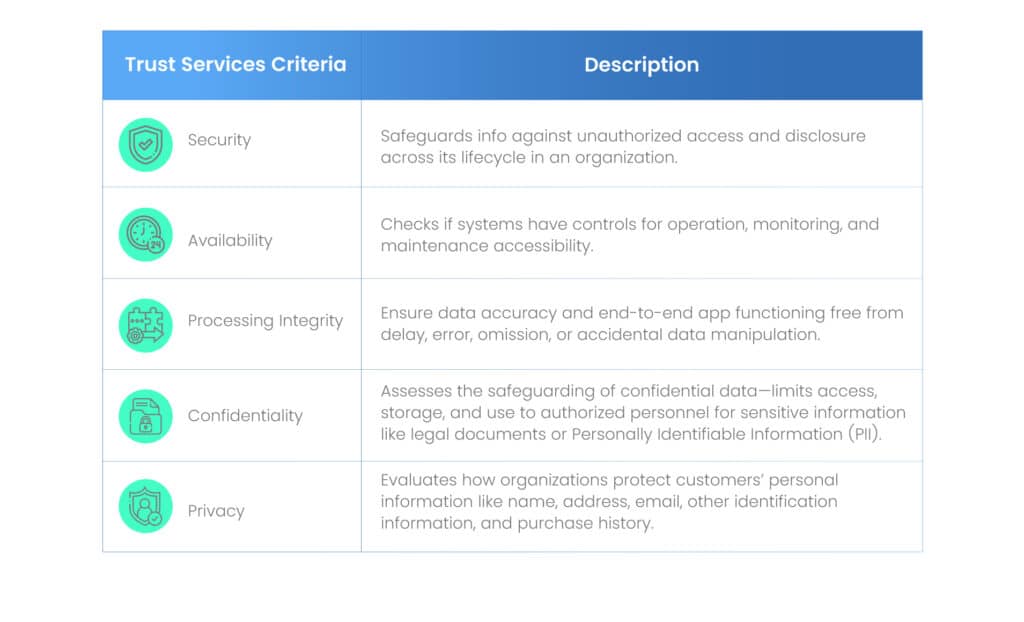
Authored by

Aayush Ghosh Choudhary
Co-founder & CEO at Scrut

Complete guide on how to conduct an ISO 27001 internal audit

ISO 27001 certification requires a substantial amount of time, energy, and money. Organizations that pursue this certification wish to ensure that their resources don’t go to waste, or perhaps, once after achieving compliance with ISO 27001, they need to maintain their compliance. In either of these cases, the first question which comes to the surface is – how?

The answer can be found in the form of internal audits. These audits are designed to evaluate your organization the same way an external auditor would, helping you determine whether your organization is ready to achieve certification and maintain compliance.

From preparing for the audit to compliance with industry standards, internal auditing requires organizations to go through several steps. This article provides you with a step-by-step guide that doubles as an ISO 27001 internal audit checklist to tick off all important steps before applying for the final certification.

What is an ISO 27001 internal audit?

An internal audit performs the same role as that of a mock test before appearing for the final examination. Before an external auditor performs the certification audit, organizations conduct an internal audit to evaluate whether the organization’s Information Security Management System (ISMS) is at par with the ISO standards.

In simpler terms, an internal audit is meant to help your organization identify gaps or deficiencies that can impact the ability of ISMS to meet its information security objectives. It does so by identifying areas requiring improvement and bringing it to your attention.

Internal audits are not a one-time occurrence. Organizations must conduct internal audits at predetermined intervals per ISO/IEC 27001 requirements. These requirements are specified under Clause 9.2 of the ISO/IEC 27001 standard. It describes that internal audits must be:

  • Planned to be conducted at regular intervals
  • Containing defined audit criteria along with a scope of each audit, recorded and documented formally
  • Performed by auditors selected after careful consideration so that the audit report is objective and impartial
  • Reported to the management with recorded observations
  • Included with proper documentation in the organization’s records

Who can perform an ISO 27001 internal audit?

One of the primary points of difference between internal and external audits is that internal audits can be performed by the organization’s employees, an independent third-party auditor, or a consulting firm, depending on the organization’s choice.

As opposed to the ISO 27001 certification audits, accredited external auditors are not mandatorily required to conduct internal audits. That said, Clause 9.2 of the ISO 27001 standard states that the auditor chosen to perform an internal audit must be objective and impartial to the organization.

This underlies that anyone involved in the ISMS development or operating the controls being audited must not be appointed as the auditor to avoid any conflict of interest. Apart from that, the auditor must have an in-depth understanding of the ISO standard as well as the auditing procedures required to conduct the ISO 27001 internal audit.

What is the objective of completing an internal ISMS audit?

As mentioned above, internal auditing is a preventive measure taken to identify gaps and remediate deficiencies to ensure that the certification audit process is smooth. It is one of the most proactive approaches an organization takes to confirm that its information security management system is aligned with the standard requirements of ISO 27001.

There are several benefits that organizations can reap after conducting an internal ISMS audit, and they are as follows;

  • Objective evaluation: Internal audits provide organizations with unbiased information and insights into the ISMS and its functions.
  • Identify non-conformities: Discovering gaps, lapses, and oversights in the policies, procedures, and documentation becomes relatively easier with the help of an internal audit.
  • Timely response: Organizations can remediate gaps and lapses in the ISMS before the final certification, saving time and resources.
  • Continuous improvement: Internal audits aid organizations in keeping a continuous eye on the functions of ISMS, thereby allowing them to maintain compliance with ISO standards.
  • Maintaining the security culture: Internal audits help organizations determine how to communicate with their employees about various procedures and processes.

Step-by-step guide on ISO 27001 internal audit process

Even though an internal audit is a preemptive step performed to test the readiness of ISMS for final certification, it holds significant value. Organizations conducting internal audits to maintain certification must also follow a step-by-step process to ensure that it holds credibility.

Unlike popular opinion, simply selecting an internal auditor and listing the purpose of the ISO 27001 internal audit report is not enough. Below is a step-by-step guide on conducting an ISO 27001 internal audit to help organizations navigate the entire process seamlessly.

Step 1: Create an audit plan

Making an audit plan is the first step in conducting an internal audit. Within this audit plan, information systems should be established clearly. You should also verify all of the ISO guidelines and Annex A requirements that apply to your certification to avoid any misstatements.

Step 2: Review the documentation

In this next section, the internal auditor will review all your documentation, including the scope statement, statement of applicability, policies for information security, risk assessment plan, and risk treatment plan to ensure that everything is aligned with the ISMS’s objectives.

Documentation review will also assist the internal auditor in determining whether your organization has properly implemented ISO standard controls or not – which are a critical component of the ISO 27001 internal audit checklist.

Step 3: Management review

As the name suggests, management review requires the entire audit plan to be reviewed and approved by the organization’s management. It is also imperative for the management to schedule review meetings to discuss the findings of the audit report and determine whether or not the organization is prepared for the certification audit.

Step 4: Begin the internal audit

Following a review of the documentation, the auditor will evaluate your ISMS by performing audit tests, documenting the results, and collecting evidence to demonstrate what is and isn’t working. The auditor may also conduct staff interviews to determine how well the ISMS is being implemented.

Step 5: Analysis and audit report

During analysis, the auditor will review the collected evidence and map it to the organization’s control objectives with the aim of highlighting the gaps needed to be addressed before the audit certification. All issues or nonconformities discovered during this step require tracking, documentation, and analysis.

Post analysis and identification of non-conformities, the auditor will present the audit report to the management. Aside from the key findings, the internal audit final report also includes

  • A summary explaining the key findings of the auditor.
  • Detailed information on who will review the report and whether it needs to be classified or not.
  • Any corrections, actions, or recommendations if required.
  • A statement explaining the audit scope’s limitations

Once the report is submitted, the management must review the report to decide whether the organization is ready to move on to the stage 2 certification audit.

Frequently asked questions (FAQs)

Conducting an ISO 27001 internal audit can lead to a lot of questions, some of which may not be discussed in the article above. To provide you with a complete guide on ISO 27001 internal audits, we have answered some of these questions below.

1. What are the common mistakes in ISO 27001 internal audit, and how can they be corrected?

The most efficient way to avoid making mistakes during the ISO 27001 internal audit is to follow the guidelines to the T. Below are a few things you should keep in mind before kickstarting the audit process;
• Make sure you’ve allotted enough time and resources to the internal audit; set a time limit.
• Communicate the audit schedule to management and staff ahead of time.
• Choose impartial and qualified auditors to conduct the internal audit.
• Avoid any potential areas of conflict between the auditor and the ISMS.
• Give internal audits the attention they deserve; this is not a ‘checkbox’ initiative.
• Audits should be performed on a regular and planned basis.
• Reduce your reliance on key personnel by designating backups.

2. How frequently should an organization conduct internal audits?

Like many other standards, ISO 27001 does not specify how frequently an organization must conduct internal audits. Experts recommend that an ISO 27001 internal audit be performed at least once a year. In cases where this isn’t possible, an audit must be conducted every three years at the very least.

3. How does the ISO 27001 internal audit checklist streamline the entire process?

Every business’s internal audit is unique since every organization has a different information security management system based on its organizational needs.
Based on this, an ISO 27001 internal audit checklist can be extremely helpful for organizations. The ISO 27001 internal audit checklist is one way for organizations to centralize the entire process. The ISO 27001 internal audit template comprises every clause and Annex A control streamlined in a spreadsheet to guide the internal auditor with the standard requirements.

You can streamline the ISO 27001 internal audit report process by partnering with Scrut Automation. Scrut Automation is a smart and radically simple governance, risk, and compliance automation platform for growing startups and mid-market enterprises. With Scrut, compliance teams can reduce ~70% of their manual effort in continuously maintaining compliance towards SOC 2, ISO 27001, GDPR, PCI DSS, HIPAA, and CCPA. Schedule your demo today to see how it works.