Cyber Asset Management Challenges & How to Overcome Them
Today, nearly all organizations depend on connected devices and cyber assets in almost all aspects of their business.
At the same time, most organizations also struggle to get accurate information related to their assets and mitigate cybersecurity risks mainly due to the lack of a CAASM (Cyber Asset Attack Surface Management) solution in place.
While the continuous invention of cyber assets has improved productivity, collaboration, and efficiency in organizations, it has led to more cybersecurity risks as well.
According to the latest ESG survey, 69% of organizations admit suffering at least one cyber attack because of unknown, unmanaged, or poorly managed cyber assets.
The reason behind this is simple — most organizations keep on adding new cyber assets, which makes the task of identifying and securing their ecosystem of devices, users, code repositories, cloud workloads, and other assets more difficult.
Currently, the management of all cyber assets is strewn across multiple cybersecurity solutions in most organizations.
To resolve this, organizations must consider proliferating all their cyber assets for better visibility, risk posture, and threat landscape. To accomplish this, what they need is a comprehensive cybersecurity asset management solution.
In this post, we have explained what is cyber asset management, its top challenges, and solutions to overcome them.
What is Cyber Asset Management?
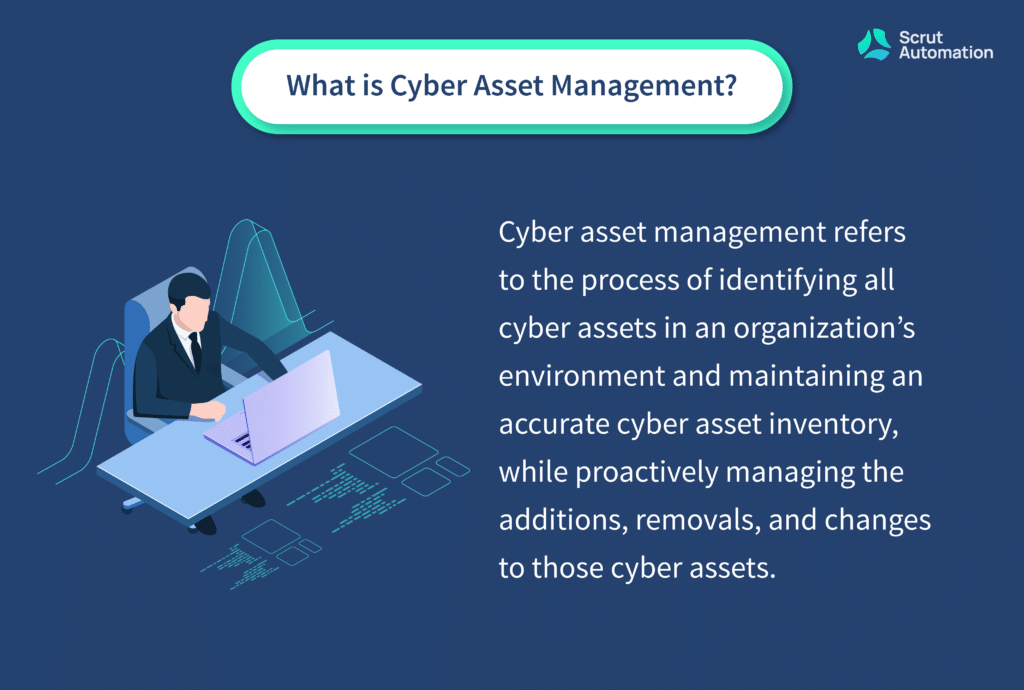
Cyber asset management refers to the process of identifying all cyber assets in an organization’s environment and maintaining an accurate cyber asset inventory, while proactively managing the additions, removals, and changes to those cyber assets.
A cyber asset can take multiple forms such as known assets, unknown assets, rogue assets, internal-facing assets, cloud assets, and external vendors.
Once you have a complete inventory of assets that need to be managed and secure, you can easily implement an effective cyber security program in your organization’s network.The main purpose of cyber asset management is to identify potential cybersecurity risks, threats, and vulnerability gaps that your cyber assets may possess and mitigate them before an incident occurs.
Cyber asset management helps to do this by —
Recording & updating an accurate cyber asset inventory in real-time
Continuously discovering cybersecurity gaps
Enforcing security compliance to address the identified gaps
Unfortunately, implementing this process comes with several challenges.
Top Cyber Asset Management Challenges
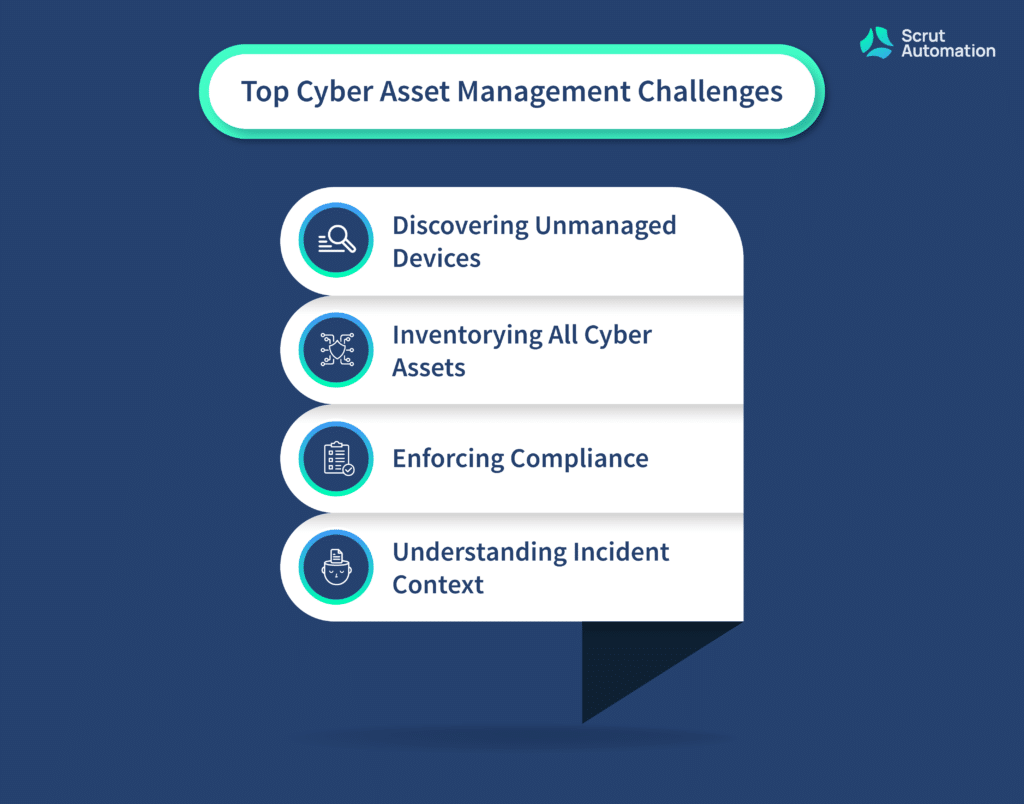
Here are the top 4 challenges every organization faces when implementing cyber asset management.
Discovering Unmanaged Devices
Organizations often need to discover unmanaged devices on their network in many scenarios.
For the uninitiated, unmanaged devices are endpoints (i.e. cloud servers, on-premise servers, desktops, laptops, IoT devices, etc.) that aren’t known to management systems yet.
These are the devices that are neither discovered nor managed by an organization’s cybersecurity asset management tools. So, even if an organization has a huge arsenal of cybersecurity tools, it is impossible to protect a device if it is unmanaged or not discovered yet.
Inventorying All Cyber Assets
As an organization grows, so do the cybersecurity challenges.
One of these challenges is the lack of a real-time & complete picture of all cyber assets in an organization’s environment.
Even in the modern era, many organizations still use a mixed variety of approaches that usually involve manually updating spreadsheets.
This process is not only outdated but also unreliable for making a complete inventory of all cyber assets within an organization’s environment.
In fact, following this process may even result in increased exposure to cyber threats across the organization’s entire network.
Enforcing Compliance
Nowadays, organizations use too many security tools to protect their cyber assets, but these tools rarely give them a complete picture of where the threats actually exist.
And without the complete cyber assets inventory, it is impossible to find out whether all assets adhere to compliance requirements or not.
As a result, it ultimately leads to creating vulnerability gaps in visibility and compliance enforcement.
Understanding Incident Context
Because of the expanding cyber asset network, organizations find it difficult to accurately identify and evaluate the dependencies and relationships between different assets.
This especially includes understanding the cyber asset context that are operating, their role in the organization, their vulnerabilities, and the potential impact of cybersecurity incidents.
This challenge mostly arises because of the dynamic nature of cyber assets, the amount of data generated by these assets, and the complexity of their relationships with each other.
Every organization must address this challenge to prioritize risk mitigation efforts and make data-driven decisions about the deployment as well as management of cyber assets.
What is Driving These Cyber Asset Management Challenges?
Now that you have learned about the top cyber asset management challenges, it’s important to find out the key reasons behind them before you can address these challenges.
In most cases, there are 3 primary factors that drive cyber asset management challenges.
More Connected Devices & Assets
The first thing responsible for driving cyber asset management challenges is the increasing number of connected devices & assets in an organization.
Every device that is added to an organization’s network creates blind spots in its environment, making it more complex and difficult to manage.
And as the number of devices grows, it becomes harder to track and manage all cyber assets, which makes it easier for vulnerabilities and security threats to go undetected.
Additionally, many connected devices have limited security capabilities, which makes them a prime target for hackers and cybercriminals.
In fact, one attack on your weak connected device can put the entire network at risk and compromise sensitive data.
The worst part? — The interconnectivity of devices also means that a security incident that occurred on one device can have a ripple effect throughout your entire network, which can be extremely difficult to contain and resolve.
This is why it is imperative to have a robust cyber asset management strategy in place to mitigate the security risks posed by the increasing number of connected devices.
More Security Tools
Several organizations are turning to security tools as a method of managing the risks associated with connected devices.
But the truth is, adding more security tools just increases the complexity and creates a fragmented security landscape.
In simple terms, when you add multiple security tools, it can become difficult to coordinate and integrate their efforts, which ultimately leads to inefficiencies and vulnerability gaps.
Plus, security tools generate a large number of alerts and data, which can make it difficult for an organization’s security teams to detect, prioritize, and respond to real threats in a timely manner.
Therefore, it is critical for organizations to implement a holistic approach to their cyber asset management strategy to overcome its challenges & make sure they’re working effectively in harmony with each other.
Lack of a Centralized Solution
Despite the increasing number of connected devices and security tools, most organizations still lack a centralized solution, which ultimately leads to difficulty in tracking and managing all assets accurately.
For the uninitiated, a centralized solution in an organization refers to a cybersecurity system in which all cyber assets & security-related functions and processes are controlled and managed from one place.
This centralized approach empowers organizations to monitor, control, and manage the security of the entire network, devices, and systems using a single platform.
The lack of such a centralized solution makes it difficult for organizations to identify potential risks and vulnerability gaps, which increases the time, effort, and resources required to manage all cyber assets and mitigate cybersecurity risks effectively.
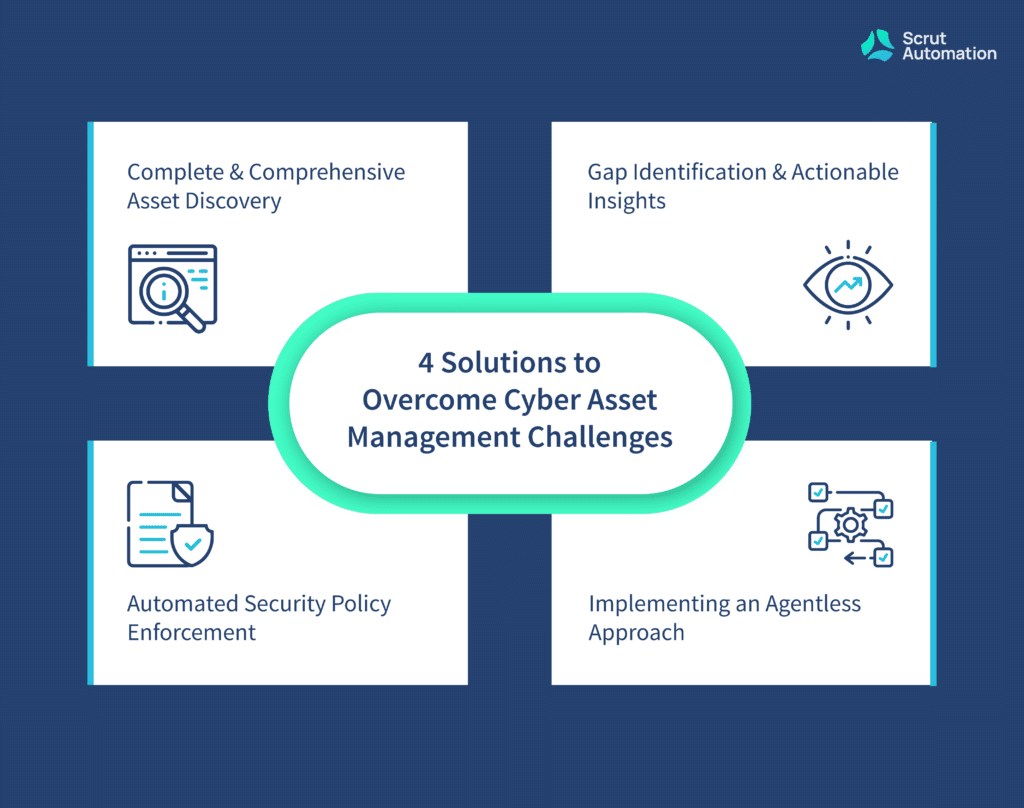
4 Solutions to Overcome Cyber Asset Management Challenges
To overcome the cyber asset management challenges, organizations must adopt a technology solution that can address all issues in one place.
The ideal solution should have the following capabilities:
Complete & Comprehensive Asset Discovery
Cyber assets and devices operate without being tied to a traditional parameter. So, the right solution must be able to identify all types of assets & devices, whether they’re on or off the organization’s network, on-premises, or in the cloud.
But in order to understand the security landscape in its entirety, the cybersecurity asset management solution must take into account everything that touches the organization’s environment including devices, applications, operating systems, code repositories, and services — on-premises and in the cloud.
This means the solution must have capabilities to use existing infrastructure, network connections, APIs, and other relevant protocols to connect all data sources in one place.
Gap Identification & Actionable Insights
Once organizations have complete knowledge and inventory of all cyber assets in their environment, they can begin identifying and assessing vulnerability gaps to actively manage any potential risks in their network.
But in addition to knowing which policies are and are not being enacted, it is vital to understand the cyber asset context including their users, roles, configurations, and posture to mitigate potential risks and compliance gaps.
To do this effectively, organizations must understand and analyze contextual data about each cyber asset in their network. While most security tools have the basic abilities, they’re not fully equipped to identify issues in the aggregate, especially when the issues are unique to devices and assets.
The right solution, however, should be able to help organizations identify all vulnerability gaps even when they’re unique to specific devices or assets, and provide actionable insights on how to mitigate those gaps.
Automated Security Policy Enforcement
After a vulnerability gap or potential security risk is identified, the right solution should be able to address it immediately.
Ideally, the solution must be equipped with real-time policy enforcement & automated security that can take the necessary actions such as —
Isolating affected devices
Initiating software updates
Triggering alerts to security teams
Scan for vulnerabilities in devices under threat
Implementing an Agentless Approach
The majority of cybersecurity asset management tools adopted by organizations usually operate by deploying agents into their environments. These agents monitor tools’ activities by correlating trends, which are then collected by the deployed agent.
But as the number of cybersecurity tools continues to rise in organizations’ environments, it is impossible to install agents across all cyber assets in the network.
This is why implementing an agentless approach is critical.
For the uninitiated, the agentless approach refers to the method of managing and monitoring cyber assets without the need to install software agents on each device.
It allows organizations to build a complete & comprehensive inventory of all cyber assets in real-time and make sure that every asset is accounted for.
This, in turn, eliminates the potential risks and vulnerability gaps that can arise from software agents and lower the administrative overhead of deploying and maintaining agents on every asset.
End Note
Solving cyber asset management challenges is extremely important for organizations. Neglecting to do so can result in dire consequences like a sensitive data breach, financial loss, damage to reputation, and many more.
To prevent this, it is critical to adopt a robust cyber asset management platform like Scrut Automation that can help to address and resolve these diverse challenges.
Scrut Automation is a leading technology solution designed to address the expanding threat landscape within organizations and handle any potential threats or cybersecurity risks immediately.
FAQs
What is asset management in cyber security?
Asset management in cybersecurity is about conducting and maintaining an accurate & real-time inventory of all cyber assets such as hardware, software, internet-facing, etc. of an organization.
Why is cyber asset management important?
Cyber asset management is important because it helps to detect risks & threats before an incident occurs that could affect an organization’s operational capabilities in achieving its missions.
What are cyber assets examples?
The most common cyber assets examples include on-premises devices, software & SaaS applications, code repositories, and cloud storage.
Which tools to use for cyber asset management?
There are plenty of tools you can use for cyber asset management but no tool can match the capabilities of CAASM by Scrut Automation because it provides a comprehensive and holistic view of all cyber assets in real-time with context.
17 Feb 2023
7minutes
Authored by
Aayush Ghosh Choudhary
Co-founder & CEO at Scrut
CISOs share top security predictions for 2023
Security, especially in the current digital environment, is ever-changing – primarily because of the rising threats and attacks taking place across the world. According to Flashpoint, there were 4146 reported data breaches globally in 2022. The United States was the most targeted country for data breaches. There was a significant increase in hacktivism resulting from the Russia-Ukraine war.
So, the question that arises is, ‘will 2023 be any different?’ Cybersecurity leaders and Chief Information Security Officers (CISOs) are arguably the most knowledgeable people to comment on the changing security landscape. So we thought, what better way to predict what to expect in the field of cyber threats and security risk management in 2023 than to ask some experts and CISOs?
Let’s take a look at the cybersecurity predictions for 2023, according to CISOs.
What are the security predictions for 2023?
Every year, certain cybersecurity trends largely influence the cybersecurity plan an organization tends to take. These can range from technological to people-centric, depending on the overall security landscape. However, it is the responsibility of a CISO to maintain and update the security landscape of the organization – according to these trends.
We were able to pinpoint several areas where CISOs believe enterprises’ main priorities will lie in 2023. The list of security predictions is as follows:
Security prediction no. 1: Greater focus on the basics of cybersecurity
While discussing the security predictions for 2023, Kevin Cross from Dell Technologies emphasized on the fundamentals of cybersecurity. It is commonly known that threat actors use basic vulnerabilities, including weak passwords, using open networks, or sharing unnecessary information, to breach the organization’s networks. Hence, cybersecurity hygiene is critical to the cybersecurity and information security of an organization.
The shortage of cybersecurity professionals in the industry accentuates the lack of cybersecurity hygiene. Organizations simply do not have enough people to overlook their security systems, resulting in an overall gap in the cybersecurity of the organization.
One way to reduce the threats is to strengthen your basic yet fundamental defenses and train your employees to protect the system against social engineering attacks. Creating a balance between basic learning and technical implementation is integral in 2023, according to CISOs.
Security prediction no. 2: Integrating technological and human aspects in cybersecurity
According to Verizon, 82% of the organizations that reported a security breach in 2022 insinuated that it was caused due to a human element. Considering these statistics, it can be concluded that the people aspect of cybersecurity is considerably overlooked.
But how? Let’s take the example of a phishing email. As reported by Verizon, 2.9% of the employees still fall for phishing emails, thereby compromising the data of millions of users. This enables cybercriminals to use the lack of employee training as a method to gain entry into the organization’s database. Cyberattacks on Okta, SolarWinds, and Mariott are some examples of using phishing emails as initial vectors.
The human aspect of cybersecurity is a little complicated as it is unpredictable. As the work landscape keeps changing from office to remote and hybrid, the security consciousness of the employee must change too.
Security prediction no. 3: Taking a risk-first approach to security
According to CISOs worldwide, one of the latest security trends organizations need to adopt is taking a proactive approach towards cybersecurity.
The goal of CISOs will be to give the board as well as all business units visibility into their assets that contribute to their attack surface and corresponding threats and vulnerabilities. CISOs will leverage these insights to understand their risk posture better, continuously rank threat likelihood and business effect to decide where to concentrate resources and build and manage controls that are pertinent to their organization.
Building an incident response plan to tackle the consequences of a data breach is integral but not necessarily the need of the hour. Organizations need to build their product and software with the assumption that, sooner or later, they are going to be breached. This not only instills advanced organizational security understanding but keeps organizations up-to-date on their security posture.
What are the best practices for security risk management for CISOs in 2023?
Now that we have discussed the key security predictions for 2023, let’s uncover the best ways to prepare for security risk management in 2023.
The following are some of the steps that security professionals have revealed they are taking to prepare their systems to protect against threats and limit damage in the event of a data breach.
1. Increasing investment in cybersecurity
The Deloitte survey found that 54% of organizations with US$5 billion or more in revenue are spending more than US$250 million annually on cybersecurity while 71% of the organizations with US$500 million to US$5 billion in revenue are spending less than US$250 million annually on security risk management.
Prices of most goods and services are rising, and so is the cost of cybersecurity. CISO and the board of directors are finally considering cybersecurity as an investment rather than as an expense.
It is important to remember that an organization’s security is hacked, it loses money not only on dealing with the attack but also on lost business. The CISO must ensure that the business is up and functioning in the least possible time after a cyberattack. A cybersecurity incident should not stop the organization’s development plans.
That said, are CISOs only thinking of increasing investment in cybersecurity as a by-product of ensuring compliance with frameworks? No, another trigger for increased investment is to create an advanced technological infrastructure to build secure products upfront.
Cyber organizations are focusing on developing products that are more in line with the higher security standards as it doesn’t look like the threat actors are going to slow down in 2023. As per Rick Holland, CISO at Digital Shadows, it is the duty of the CISOs to understand the company’s strategic objectives for next year and look for ways to minimize risk and enable business initiatives.
2. Creating a culture of security
It is no longer an option but a necessity for every organization to develop cybersecurity awareness among its employees to reduce vulnerabilities. By providing security training and conducting phishing tests, the organization can ensure that the employees are aware of the threats lurking on the internet and are well prepared to fight against them. They should be informed about the latest security threats in the industry to know the pitfalls if they come across one.
A security-first work culture ensures that every employee focuses on the security risk management aspect before taking any action. Even while using the company laptop or mobile phone for personal use, the employees should keep in mind the security protocols. Josh Yavor, Tessian rightly said, “Attackers don’t respect work-life boundaries.”
One of the most accepted practices these days for cybersecurity is implementing the zero-trust architecture. A zero-trust architecture takes the principle of least privilege to the next level, allowing granting access to data, networks, applications, and services only to authenticated users. If employees don’t need access to certain information to fulfill their responsibilities, they are denied access – which goes a long way in ensuring no one has unauthorized access to information.
3. Managing third-party risks
When multiple organizations share data, the risk inherited is also being shared. There should be a barrier between the two organizations to filter out any suspicious data/code. It is not always possible to monitor third-party risks at a micro level, but you should consider the threat exposure management before sharing your data/network with third parties.
Gartner predicts that “by 2025, 45% of organizations worldwide will have experienced attacks on their software supply chains, a three-fold increase from 2021.”
The security of these external networks is directly proportional to the security of your organization, meaning that a breach in any of the partners can lead to a breach in your firm.
Organizations can have minimum requirements before they share digital data with other organizations. For example, if the partner organization’s software is not updated, the sharing should be flagged/prohibited.
Conclusion
CISOs are best placed to understand the state of the markets now and in the future. Therefore, we combined some of the best practices that an organization should follow with the security predictions to stay protected. CISOs analyze the threats and prepare the systems for the upcoming year. A CISO cannot afford to lose the visibility of the organization’s digital systems. If you want to know more about cyber compliance for your organization, reach out to us here.
What is CAASM? — Everything You Need to Know in 2023
Cybersecurity is not just about protecting your cyber assets, it’s way beyond that.
To achieve the highest level of cyber security, organizations must understand it in the context of cyber assets as well as attack surface management.
Nowadays, organizations get hacked because of insecure entry points such as software, code repositories, applications, cloud assets, ephemeral devices, etc.
The rapid adoption of cloud platforms, APIs, and digital transformation have indeed accelerated new product innovations, the development of new business initiatives, and enhanced experiences for customers. Not to mention the rise of remote work that improves employee productivity & satisfaction, workforce flexibility, and business continuity.
But all these benefits came with a dire cost. To maintain the security of these cyber assets, security teams are now required to use a plethora of security tools such as endpoint security tools, CSPM tools, network security tools, and IAM tools to name just a few.
Furthermore, most of these security tools only solve a specific use case, forcing security teams to juggle between all security tools, which is not an efficient way at all.
To make things worse, none of these security tools can provide complete visibility of security issues in your organization. This is because these tools are not connected or synchronized with each other, which makes it difficult for security teams to prioritize which issue to remediate or mitigate.
Thankfully, CAASM can solve these issues by not just giving you complete visibility over your cyber assets but also helping in understanding the context in terms of cybersecurity so that you can prioritize what issues to work on first.
For the uninitiated, CAASM is short for Cyber Asset Attack Surface Management. It’s an all-in-one solution that enables organizations to strengthen their existing entry points for hackers & creating a unified view of your cyber assets universe.
According to Gartner, CAASM is an emerging technology that will disrupt the cybersecurity industry in the coming years by providing organizations with continuous cyber asset visibility and eliminating vulnerability issues.In the mega guide, we have shared everything there is to know about CAASM including
Definition
History
Benefits
Use cases
and much more…
…To help you understand its significance, and how to find the right CAASM security solution for your organization.
What is CAASM?
To fully understand CAASM, you’ll have to first understand the following:
What is Asset Management?
Asset management is generally defined as the cataloging, tracking, and monitoring of all assets (i.e. hardware, software, etc.) used by an organization and its employees. It helps to make sure all assets are deployed, maintained, upgraded, accounted for, and destroyed when necessary.
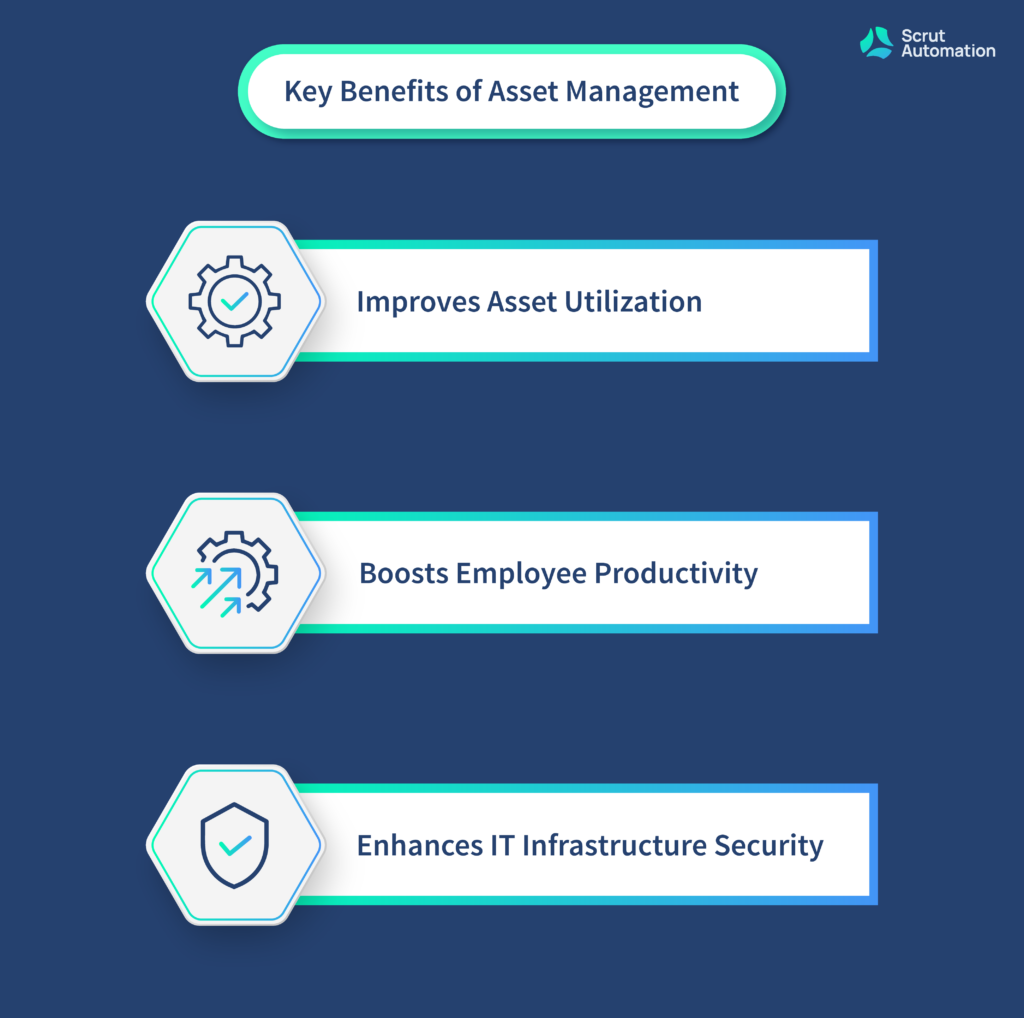
Asset management is critical for numerous reasons as it helps to improve asset utilization, boost employee productivity, and enhance overall IT infrastructure security.
What is the Problem with Traditional Asset Management?
Traditional asset management strategies have become outdated & are no longer effective for most organizations today because of distributed workforces, cloud data storage, and modern IT strategies.
This means that sensitive data storage is no longer confined to the four walls of an organization, which has resulted in a limitless attack surface. And without complete attack surface visibility, organizations are left with countless blind spots & more vulnerable to increasing cyber threats.
The crux of the matter is that asset management has changed. Today, for organizations to protect their assets & data completely, they must understand the importance of cyber asset attack surface management (CAASM). But even before that, they need to understand what is a cyber asset & cyber asset attack surface first.
What is a Cyber Asset?
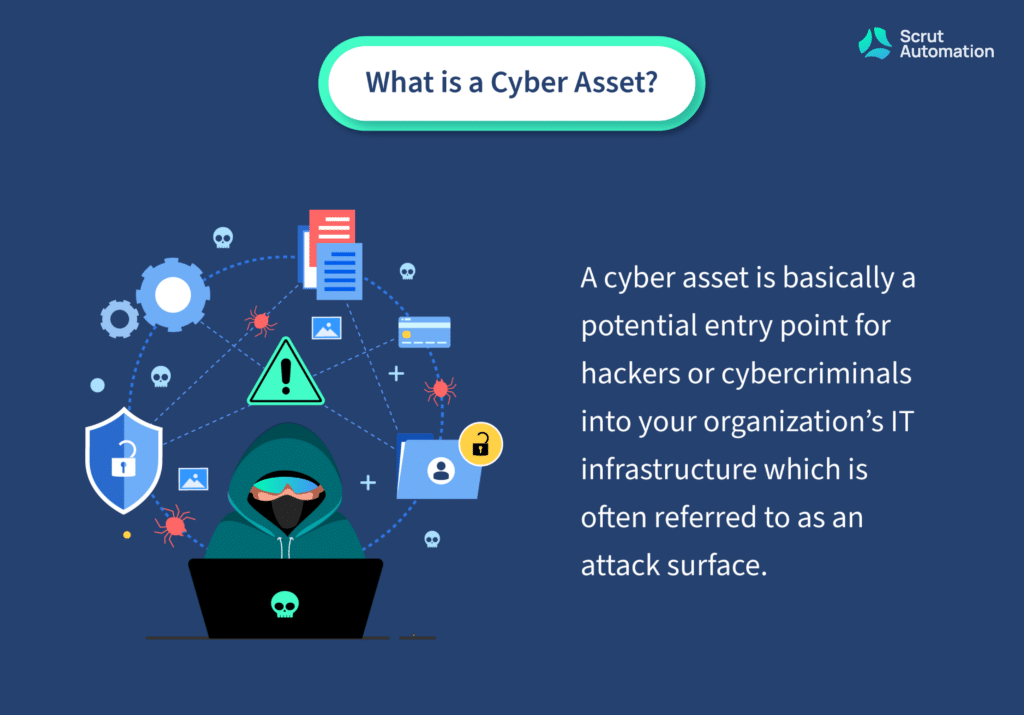
A cyber asset is basically a potential entry point for hackers or cybercriminals into your organization’s IT infrastructure which is often referred to as an attack surface.
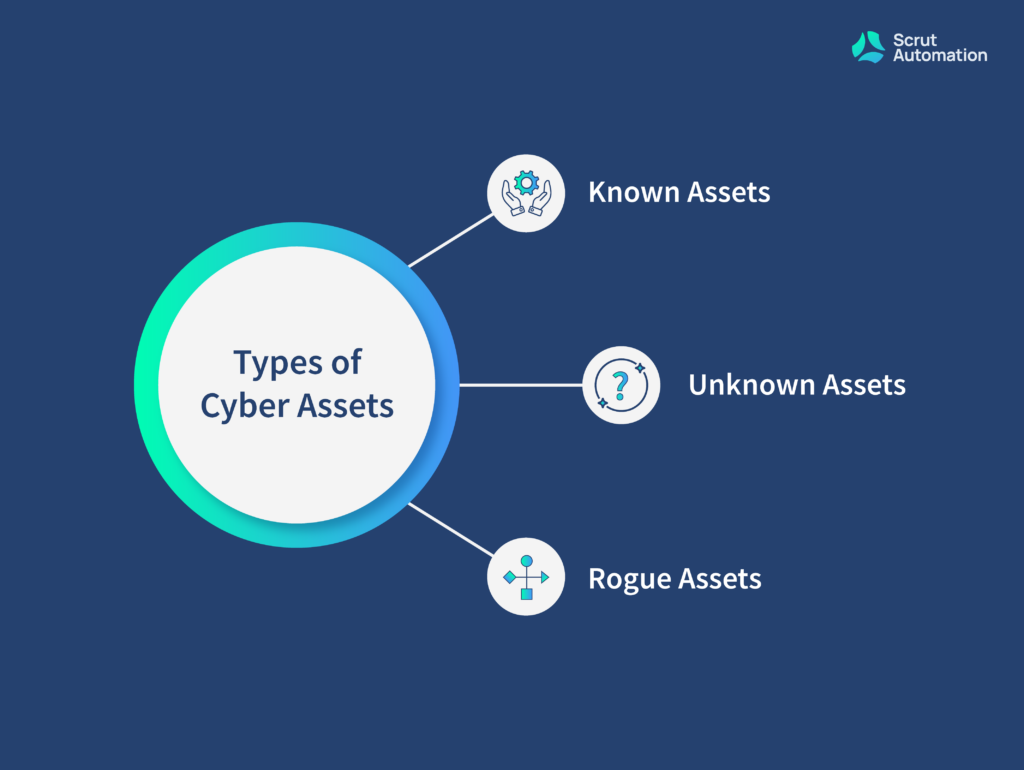
Depending on your organization, these cyber assets can include software, SaaS applications, mobile & IoT devices, code repositories, websites, operating systems, web servers, IAM policies, data centers, and all sorts of hardware equipment. Generally, all cyber assets can be classified into one of the following three categories:
Known Assets — Known assets are those cyber assets that are already visible to & managed by your security team. These types of assets mostly include websites, web servers, and all the dependent assets running on them.
Unknown Assets — Unknown assets are those cyber assets that are not visible to your security team and often introduce flaws into your attack surface. Some examples of unknown assets include shadow or abandoned IT infrastructure that was developed without informing your security team. It is nearly impossible to capture details of unknown assets without proper systems, processes, and tools.
Rogue Assets —Rogue assets mostly include malicious malware of infrastructure created by hackers or cybercriminals for their own benefit. URL hijacking, mirror websites, and mobile apps that impersonate your cyber assets are called rogue assets.
Additionally, risks to your cyber assets are not limited to just your internal sources. They can arise from an external source as well (i.e. cyber assets of your vendors, partners, etc.).
Equifax, a credit monitoring company, is a famous example of this.
In 2017, a vendor breach costed Equifax around $1.38 billion. The hackers discovered a vulnerability in Apache Struts and managed to gain access to sensitive data of approximately 147 million Equifax customers such as name, social security number, address, date of birth, driver’s license, and more.
The point is, traditional cybersecurity solutions can no longer protect your organization from cyber-attacks.What organizations truly need is an emerging technology like CAASM that is not limited to devices, servers, applications, users, and endpoints, but can cover the entire cyber asset attack surface.
What is a Cyber Asset Attack Surface?
In layman’s terms, a cyber asset attack surface refers to all entry points that can serve as potential attack vectors to gain access inside an organization’s system for the purpose of launching a cyber attack or stealing information.
Lately, the cyber asset attack surface has grown exponentially post-COVID-19 Pandemic that accelerated remote working, mobility, digitalization, and cloud computing.
This has forced organizations to now keep track of both, physical as well as digital assets along with their operational technology and Internet of Things (IoT) devices.
Unfortunately, the majority of organizations have no idea what and how many assets they have, making it impossible to protect them. However, it is now possible to not only keep track of all your cyber assets but also protect them from all kinds of cyber threats using CAASM.
What is Cyber Asset Attack Surface Management (CAASM)?
CAASM is an acronym for Cyber Asset Attack Surface Management.
As the name suggests, it is a process of understanding, managing, and protecting the expanding attack surface from potential threats & risks. In simple terms, CAASM is a technology solution that helps organizations to detect & recognize all cyber assets connected to their networks, and uncover vulnerabilities in those cyber assets that could be exploited for a cyber attack.
CAASM solutions provide complete visibility across the entire IT infrastructure, giving organizations better governance & control over their cyber assets, and information required to manage & protect the attack surface or act promptly to prevent the bleeding in case an attack occurs. But to realize the full power of CAASM, organizations must grant access to accurate & complete data of their cyber assets. Additionally, the cyber assets data must also be instantly accessible so that the security team can isolate cyber assets which pose a risk and take corrective action immediately.
A Brief History of CAASM
IT asset management (ITAM) has been around for over a decade.
The practice of IT asset management was originally born out of the need for keeping track of the software, hardware, licensing, and other IT assets of an organization.
But over the past couple of years, cybersecurity has gradually started becoming an important priority for organizations. And the traditional cyber asset management challenges that served well in the past can no longer protect the evolving cyber assets of modern organizations.
This ultimately led to the birth of CAASM for addressing the specialized cybersecurity use cases & vulnerabilities around cyber asset visibility and attack surface management.
How Does CAASM Work?
Maintaining an accurate IT asset inventory system is the foundation of setting up a cybersecurity program in every organization. But at the same time, it’s not an easy feat.
Nowadays, organization assets change more frequently than ever, with new attack surface management tools, platforms, and devices being added and retired, while stakeholders & employees also install and update software with & without approval.
All of these can disrupt cyber asset visibility and management within an organization. Additionally, it can incur countless vulnerabilities to cyberattacks.
To overcome this, most organizations are now turning to CAASM.
CAASM can help to provide complete visibility across your cyber assets, understand the context, and elevate cybersecurity in your organization.
CAASM does this by
Maintaining an accurate cyber assets inventory
Updating asset inventory in real-time
Making cyber assets instantly available
Taking both cloud & on-premises assets into account
Sharing information about each cyber asset is being used
Why is CAASM an Essential Cybersecurity Solution?
The reason is pretty simple — the world has moved onto modern & better technology solutions.
Digital transformation, cloud adoption, and API-first architecture have nearly changed everything when it comes to building, managing, and securing an organization’s network.
Furthermore, organizations use a plethora of specialized IT infrastructure and security tools, and most of the time, they don’t even know what assets they have across teams.
CAASM can help organizations in gathering a complete picture of all cyber assets and their relationships, providing the required context to build a comprehensive cybersecurity program within the organization.
This, in turn, can be tremendously beneficial to organizations in several ways.
What are the Benefits of CAASM?
CAASM is a powerful solution to gain complete visibility across cyber assets and expedite SecOps actions.
The right CAASM security solution can help organizations to obtain detailed context along with a unified & real-time view across all cyber assets as well as attack surface management tools for composing a highly-effective cybersecurity program.
A CAASM solution does this by empowering organizations to take inventory of all internal as well as external cyber assets using API integrations, group them, and remediate vulnerability gaps & security controls continuously.
In return, organizations get to avail the following benefits of CAASM after adoption & implementation within their network.
Today, most organizations have either incomplete or obsolete cyber assets inventory.
To remedy this, CAASM can create a single source of truth to gain complete visibility on all cyber assets. Plus, it can even provide helpful information about a system’s health-based patterns & emerging properties.
This, in turn, results in improved cyber asset security hygiene and posture management across your entire organization.
Bird’s Eye View into All Your Software & Hardware Assets
The definition of a cyber asset is no longer restricted to physical devices with IP addresses, it refers to all operational entities such as people, security controls, cloud data stores, code repositories, and more.
A CAASM solution can give you a bird’s eye view of all your software & hardware assets in one platform. CAASM does this by helping you discover & merge your cyber assets data across all your IT infrastructure & tools, saving your security team plenty of time and effort.
Adding Context: Understanding Relationships Between Assets
Understanding your cyber assets through their contextual relationships can be significantly helpful in building a rock-solid cybersecurity program. The best CAASM solutions not only allow organizations to track and monitor all their cyber assets but also investigate and tie all intra-asset relationships.
This, in turn, adds context to your organization’s IAM, cloud security, compliance, and vulnerability management processes.
Maintain Consistency Across Levels
The biggest benefit of having complete visibility over all your cyber assets and their contextual relationships is the ability to maintain consistency across all levels of your organization.
Advanced CAASM solutions allow organizations to create & maintain consistency in their entire asset universe and get quick answers to all queries. For example, organizations can ask what are all my cyber assets, which assets are currently in use and by whom, which SaaS tools are vulnerable and much more.
Instant Risk Detection & Response Across all Operations
The best CAASM solutions like Scrut Automation can help your security team instantly detect risks and the blast radius across your entire attack surface, accelerate investigation, and respond to them by visually exploring the IT security infrastructure for actionable context.
Automated Security Enforcement for Asset Compliance Monitoring
As organizations scale, automation becomes an essential requirement, and the same applies to security as well.
An effective CAASM security solution can automate the discovery & management of cyber assets and enforce them to align with the necessary security compliances.
Compliance Drift Monitoring Across All Cyber Assets
Whether your organization has no cybersecurity problem, a security team distributed across departments, or a mature cybersecurity model, CAASM can help to elevate and automate the collection, analysis, and rectification of cyber asset data to bridge any compliance gaps and security issues you may have.
What are the Different Use Cases of CAASM?
Now that you know about the main benefits of CAASM, let’s look at the different use cases where CAASM would be useful.
Cloud Security
CAASM enables organizations to gain a complete understanding of their cloud security environment including your GCP, AWS, Azure cloud asset inventory, and cloud security posture.
This, in turn, can help your cybersecurity team to discover misconfigurations and allow them to continuously monitor cloud assets for any possible compliance drift.
Put it simply, CAASM can provide answers to the following cloud security-related questions:
Are any of our organization’s cloud data stores exploitable?
Do we have any overprivileged users or workloads?
Can our cloud assets withstand general misconfigurations?
Are there any assets that are internet-facing which shouldn’t?
Cyber Asset Management
On top of cloud security, CAASM provides a complete view across your entire cyber asset inventory that helps to improve the security posture as well as overall cybersecurity hygiene.
Additionally, CAASM adds cyber asset context and maps relationships among all cyber assets to take necessary actions and expedite response times.
This, in turn, helps organizations answer the following questions:
How many assets do we have?
What are our most important cyber assets and problems?
Which discovery has the highest risk of serious consequences?
What is the approximate blast radius of a compromised asset?
Vulnerability & Incident Response Context
In addition to cloud security & cyber asset management, CAASM helps to supplement incidents & vulnerabilities with the required context for preliminary assessment and response.
An effective CAASM would elevate the SecOps response times by unraveling specific & highly-critical risks, and the blast radius linked with vulnerability discovery as well as incidents.
Ultimately, CAASM helps to find answers to the below questions:
What cyber attack instances would have the highest chances of impact & consequences of it?
What is the precise blast radius of a compromised cyber asset?
Which applications are currently at risk of getting compromised & where are they operating?
How can we lower noise from scanners & emphasize the most critical vulnerabilities?
Governance Access & Identification
CAASM comes with a built-in user identity inventory that automates user access reviews and examines permission as well as entitlement-related issues.
Because of this, organizations are able to answer the following questions through CAASM:
What are our external users?
Who & what can access a specific service, device, and even a data store?
Are all access rights completely revoked for the offboarded users?
Are there any users with surplus permissions currently?
Which users have been inactive for the past 90 days?
Compliance Testing & Evidence Collection
In any organization, automation is crucial, especially if the teams have limited time, budget, and resources.
In such situations, CAASM can help to automate testing and evidence collection for all cybersecurity policies as well as compliance frameworks such as SOC2 Security, CIS Benchmarks, HIPAA Compliance, NIST Cybersecurity, PCI DSS, and more.
Furthermore, CAASM can even help to map the relationship between all controls and frameworks.
Thanks to this, organizations can learn answers to the following questions:
What are our cybersecurity gaps?
Whose endpoint is not in compliance with baseline configurations & patch management?
What is our compliance status for custom SOC2 controls?
What is the proof that we’re compliant with a specific compliance framework?
How are our overall compliance gaps compared to frameworks?
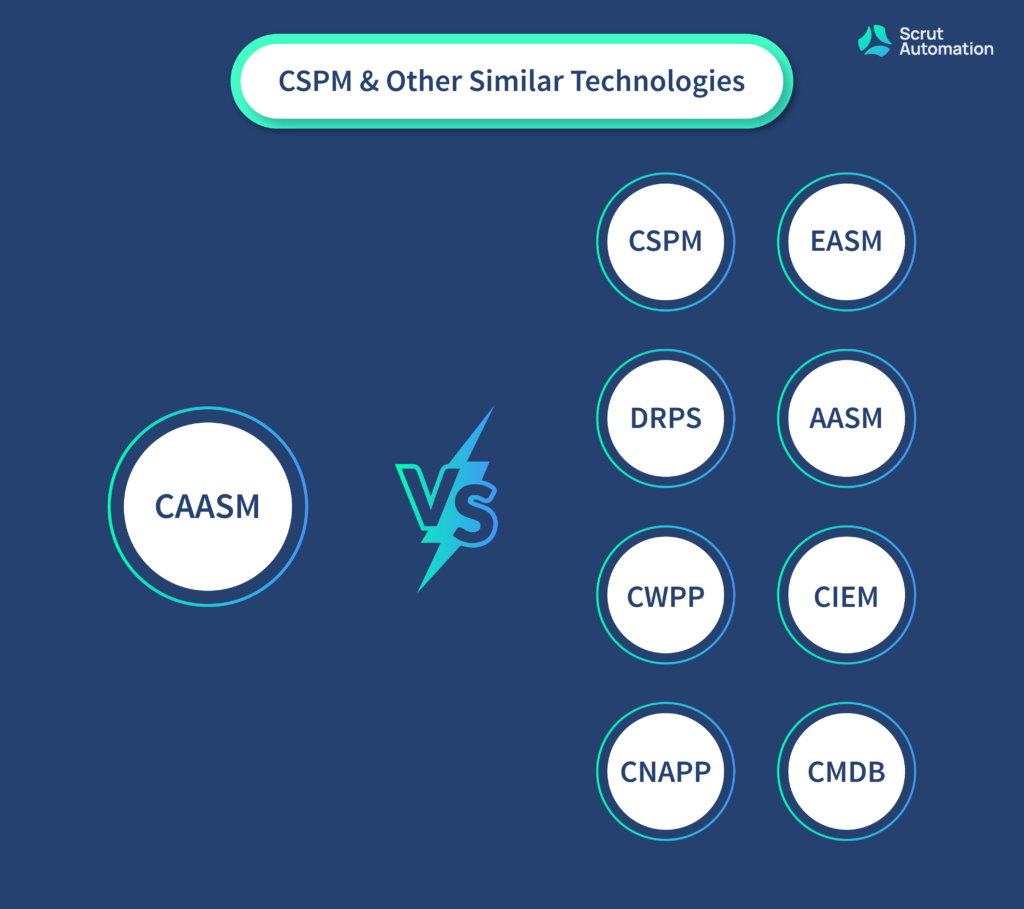
How is CAASM Different from CSPM & Other Similar Technologies?
Let’s face it — you cannot make a clear and well-informed decision until you have compared your desired item with its competition. And this applies to the CAASM solution as well.
So below, we have compared CAASM with its cybersecurity predecessors to help you get to the bottom with an easy-to-understand comparison.
CAASM Vs CSPM
CSPM stands for Cloud Security Posture Management. It’s a collection of IT security tools that are specially designed to identify misconfigurations & compliance risks across a diverse cloud infrastructure. CSPM does this by continuously monitoring the cloud environment for discovering gaps in security policy enforcement.
Unfortunately, CSPM has not evolved to keep pace with the advancing complex requirements of cloud-native organizations. At best, CSPM can offer a common set of misconfiguration checks but without any depth, visibility, or even flexibility for monitoring rules.
In a nutshell, CSPM has extremely limited capabilities to comprehend compliance requirements with configuration baselines.
CAASM, on the other hand, can do everything CSPM does and more. Unlike CSPM, CAASM is extensible, which goes way beyond the basic cloud configuration checks, and monitors custom configurations that are critical to the unique security architecture of your organization.
Furthermore, CAASM continuously monitors the entire attack surface including private & public clouds and beyond, uncovering toxic combinations of misconfigurations and relationships that a CSPM cannot comprehend.
CAASM Vs EASM
EASM stands for External Attack Surface Management. These types of solutions are largely used for identifying unknown external threats and toxic networks. An EASM solution does this by identifying environment-based vulnerabilities for the security operations program of an organization.
However, the main problem with EASM is that it cannot define what’s exactly inside your cloud environment.
CAASM solutions, on the other hand, mirror the common EASM tooling and current external asset data by merging all data to form complete visibility across all cyber assets through API integrations.
This merged structural data gives organizations the complete context they require to boost their cybersecurity operations.
CAASM Vs DRPS
DRPS stands for Digital Risk Protection Services. It is a managed service that provides visibility into open-source assets like the dark web, deep web, and social media.
The primary purpose of DRPS is to perform risk assessments and brand protection by providing contextual information about threats, their strategy & malicious activities for threat-intelligence analysis.
However, it is not capable of providing an inventory of cyber assets managed by your organization.
Conversely, CAASM provides a comprehensive view of your entire cyber assets infrastructure. While CAASM is not the source of record, it aggregates data from other sources. This helps organizations overcome cyber asset visibility & vulnerability challenges.
CAASM Vs AASM
AASM stands for API Attack Surface Management. Unlike CAASM, AASM focuses primarily on application software, rogue API discovery, and API vulnerability management.
CAASM has much better capabilities when it comes to prioritizing all risks in order of their impact on the organization. Overall, CAASM can provide a better level of visibility, inclusivity, and context, making it a better attack surface management tool.
CAASM Vs CWPP
CWPP stands for Cloud Workload Protection Platform. As the name suggests, it provides workload-focused security protection for all kinds of workloads such as physical servers, serverless workloads, containers, and virtual machines.
The primary purpose of CWPP is to scan cloud environments for misconfigured security settings and identify which of them are violating regulatory compliance requirements and corporate security policies.
Compared to CWPP, CAASM is better poised for identifying unknown risks across the entire cloud infrastructure of an organization, continuously monitoring for compliance misconfigurations, and drift prevention for checking the cloud environment against security & compliance violations.
CAASM Vs CIEM
CIEM stands for Cloud Infrastructure and Entitlement Management. Compared to other cloud security tools, CIEM is relatively new in the market.
For the uninitiated, CIEM is a cloud-based approach to managing access and entitlements to a company’s cloud infrastructure. This includes the management of user access, permissions, and roles, as well as the management of resources such as virtual machines and storage.
CIEM helps organizations to make sure that only authorized users have access to the company’s cloud infrastructure and that resources are used in a compliant and secure manner.
While CIEM provides a cloud-based approach to managing access and entitlements to a company’s cloud infrastructure. Without CAASM, an organization may have potential vulnerabilities that it is not aware of.
In a nutshell, CAASM focuses on identifying and mitigating potential vulnerabilities, while CIEM focuses on managing access and entitlements to the company’s cloud infrastructure.
CAASM Vs CNAPP
Cyber Asset Attack Surface Management (CAASM) and Cloud-Native Application Protection Platform (CNAPP) are two different approaches to securing a company’s digital assets.
CAASM is a proactive approach to identifying and mitigating potential vulnerabilities in a company’s digital assets. This includes identifying and analyzing the attack surface of an organization’s IT infrastructure, applications, and data.
The goal is to minimize the potential for successful cyber attacks by identifying and mitigating vulnerabilities before they can be exploited.
CNAPP, on the other hand, is a cloud-native approach to protecting a company’s applications and data. This includes using a range of security technologies such as firewalls, intrusion detection systems, and encryption to secure the infrastructure and data.
CNAPP also focuses on protecting the runtime environment of cloud-native applications, including containerized and serverless architectures.
CAASM Vs CMDB
Configuration Management Database (CMDB) centralized database for managing and securing a company’s digital assets.
It stores and manages information about an organization’s IT infrastructure and the relationships between the different components.
The goal of a CMDB is to provide a clear and accurate view of the organization’s IT assets, including hardware, software, and network devices.
This information is used to support IT operations and change management processes, such as incident management, problem management, and release management.
The goal of CAASM, on the other hand, is to identify and analyze the attack surface of an organization’s IT infrastructure, applications, and data. By doing so, it minimizes the potential for successful cyber attacks by identifying and mitigating vulnerabilities before they can be exploited.
In a nutshell, CAASM is focused on identifying potential attack vectors and securing them, while CMDB is primarily used for IT operations and change management.
Although, both CAASM & CMDB have some points of intersection. For example, the information stored in CMDB can be used to identify and mitigate vulnerabilities that might exist in the IT environment using CAASM.
How can CAASM Improve the Cybersecurity of your Organization?
Adopting a CAASM security solution helps to create a knowledge base for your entire security posture and automatically analyzes complex attack surfaces.
This, in turn, improves the overall security of your organization in many different ways.
Comprehensive Visibility
Before CAASM, IT and security teams in organizations had limited options for producing an accurate, up-to-date, and complete inventory of assets.
Excel – Exporting data into CSVs from multiple sources to create a master sheet with pivot tables.
CMDB – Creating Configuration Management Database for storing asset data and up-to-date information.
Scripts – Writing, updating, and maintaining scripts to pull data from tools; deconflicting and normalizing the outputs.
With the arrival of CAASM, all these methods for asset inventory management have become obsolete.
Unlike these manual options, CAASM can be connected to hundreds of security as well as management solutions that have an inventory of all your cyber assets.
Thanks to this, organizations can now form a single system of record of their entire asset infrastructure.
Identification of Critical Assets or Crown Jewels
Identifying the critical assets that need to be protected is one of the key aspects of CAASM.
There are several ways using which CAASM identifies critical assets including
Asset Inventory – CAASM creates a comprehensive inventory of all the assets within an organization, including hardware, software, and network devices. This is usually performed via automated tools.
Risk Assessment – Once the inventory of assets has been created, a risk assessment is performed to identify the critical assets that need to be protected. This assessment takes several factors into consideration such as the value of the asset to the organization, the potential impact of a successful attack, and the likelihood of an attack.
Vulnerability Scanning – Vulnerability scanning tools are used to identify known vulnerabilities in the organization’s IT environment. These tools can be used to scan hardware, software, and network devices, and identify vulnerabilities that need to be addressed.
Threat Intelligence – CAASM enables organizations to use threat intelligence feeds for identifying potential threats and the assets that are most likely to be targeted. This information is then used to prioritize the protection of critical assets.
Network Mapping – Network mapping tools allow organizations to create a visual representation of the organization’s network infrastructure. This, in turn, helps to discover potential attack vectors and the critical assets that need to be protected.
By using a combination of these strategies, CAASM identifies the critical assets that need to be protected and prioritizes the mitigation of vulnerabilities that have the highest risk to your critical assets.
Prioritize Security Measures
Another way CAASM improves the security of an organization is by prioritizing security measures. Below are the most important practices CAASM follows to prioritize security measures.
Compliance – CAASM makes sure that organizations are in compliance with the necessary set of regulations and standards, such as PCI-DSS, HIPAA, SOC2, etc. These regulations may require certain security measures to be implemented, and they can be used to prioritize the security measures that need to be taken.
Business Impact – CAASM The organization’s business continuity and recovery plan can be used to prioritize the security measures that need to be implemented. The security measures that are critical to the continuity of the business are given priority.
Resources – Since organizations have limited resources and budgets, CAASM prioritizes security measures based on the resources available, factoring in the cost-benefit ratio.
By using the above techniques, CAASM can effectively prioritize the security measures that need to be implemented for identifying vulnerabilities, mitigating the associated risks, and protecting the critical assets of an organization.
IMPORTANT NOTE — The prioritization of security measures is a continuous process that must be reviewed and updated regularly to adapt to the growing attack surface and the organization’s requirements.
Ability to Query Across All Sources
As stated earlier, a CAASM security solution can discover all your cyber assets, consolidate their data using different tools, and create a unified view of all assets. This enables organizations to query across all data sources on their cloud environment.
Furthermore, organizations can even ask questions that expand their data sources. This includes most basic questions as well as more in-depth and complex ones as below
How many devices do we have?
How many of our Mac devices are running a vulnerable Chrome version?
What are the riskiest cyber assets in my environment?
How many known and unknown cyber assets are there in my organization?
What is the potential blast radius for my vulnerable cyber assets?
On top of this, organizations can even plan how they can respond to a security breach incident by asking relevant questions.
Fewer Manual Audits & Compliance Reporting
With a complete picture of all cyber assets combined with the ability to query how assets either comply with or deviate from policy expectations, organizations can save plenty of effort by saving queries to automatically map to regulations and satisfy the audits.
In simple terms, CAASM achieves fewer manual audits and compliance reporting by automating many of the processes involved in identifying and mitigating vulnerabilities, and by providing a centralized system for storing and managing information about the organization’s IT assets and vulnerabilities.
One way that CAASM automates many of the processes involved in identifying and mitigating vulnerabilities is through the use of automated scanning tools and vulnerability management systems. These tools are configured to scan the organization’s IT environment for vulnerabilities regularly. And the moment new vulnerabilities are discovered, it immediately alerts the appropriate teams within an organization.
Apart from this, CAASM uses automated workflows and incident management systems to coordinate the work of different teams and ensure that all vulnerabilities are addressed in a timely manner.
Additionally, this system can also be configured to automatically generate compliance reports based on the information stored in the system, which eliminates the need for manual audits and compliance reporting.
Collaboration Via Single Source
CAASM allows different teams within the organization to work together to identify and mitigate potential vulnerabilities in a coordinated and efficient manner.
To do this, it creates a single source of truth by using a centralized system or platform that stores and manages information about the organization’s IT assets and vulnerabilities. This system can be accessed by different teams within the organization, such as IT operations, security, and compliance teams, allowing them to work together to identify and mitigate potential vulnerabilities.
Furthermore, the centralized system also provides a common set of metrics and reports that can be used to track the progress of the process and identify areas where collaboration is needed. As a result, it becomes easy for organizations to identify vulnerabilities on the attack surface, and collaborate to develop and implement necessary risk mitigation measures.
Additionally, the system also provides automated workflows and processes that can be used to coordinate the work of different teams and ensure that all vulnerabilities are addressed in a timely manner. This includes automated notifications, ticketing systems, and incident management workflows.
Allow Replacing Tools without Any Consequences
CAASM allows for the replacement of tools without any consequences by utilizing a modular and flexible architecture. This architecture enables the integration of different tools and technologies to be used in the organization, without affecting the overall functionality of the system.
One of the key aspects of a modular architecture is the use of APIs and integration points that allow different tools and technologies to be easily integrated into the organization.
Additionally, CAASM uses standard protocols and data formats. This helps to ensure that data can be easily exchanged between them.
So when a specific tool or technology is no longer needed or becomes obsolete, it can be easily replaced without affecting the overall functionality of the system.
Furthermore, the modular architecture even allows organizations to utilize a different set of tools and technologies for different parts of the CAASM process.
For example, one tool can be used for vulnerability scanning, another tool for network mapping, and another tool for threat intelligence. This makes it possible for organizations to use only the best solutions and to replace them when better tools & solutions become available.
Factors to Consider for Choosing a CAASM Solution
In addition to providing a complete asset inventory and eliminating vulnerability across cloud, security, and IT operations, a CAASM solution must be able to tackle difficult problems by understanding the context.
The best CAASM solutions provide actionable intelligence that helps to solve the most complicated problems.
However, you must know how to identify the right CAASM solution for your organization.
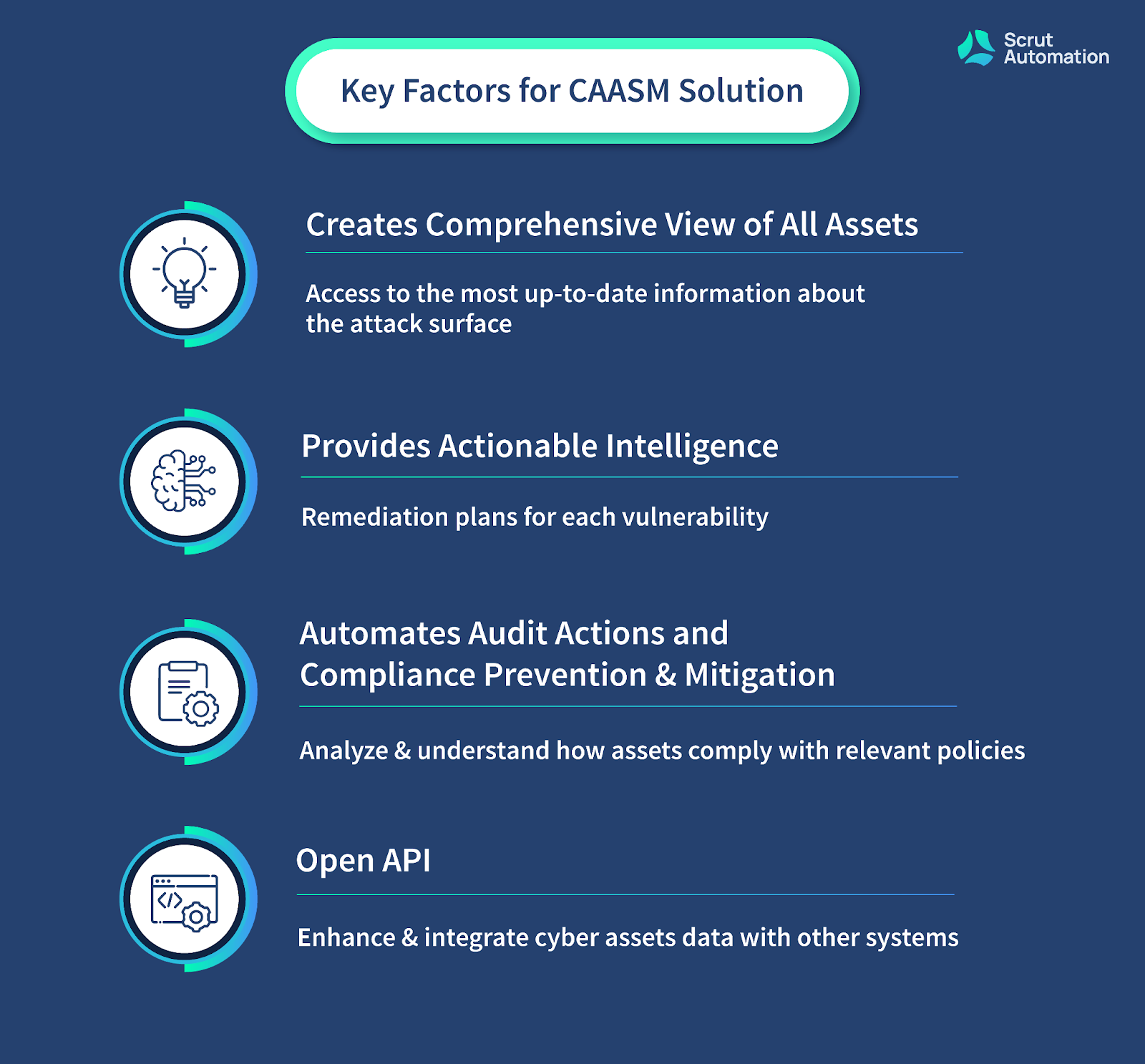
Specifically, you should consider the following four factors before making an investment decision.
Creates Comprehensive View of All Assets
A cyber asset attack surface management (CAASM) solution must be able to integrate with an organization’s all cyber assets, security infrastructure, and management solutions.
This especially includes authentication with all relevant systems, such as vulnerability detection systems and incident response platforms. This allows organizations to ensure that the solution has access to the most up-to-date information about their attack surface.
In addition to providing a comprehensive view of all cyber assets, the CAASM solution must also provide detailed information about the context, interactions, and access to files for each asset, including information about which files were accessed by whom and when.
This level of visibility is critical for identifying and prioritizing vulnerabilities, and for generating actionable remediation plans.
Additionally, the CAASM solution should be able to easily integrate with existing security infrastructure and management solutions to create a single view of the organization’s cyber assets.
Provides Actionable Intelligence
A CAASM solution must address the common use-case problems out-of-the-box. This means that the solution should be pre-configured to identify and prioritize vulnerabilities and generate actionable remediation plans without the need for extensive customization or tuning.
Furthermore, the solution should also provide the flexibility to refine the views into the respective environments, allowing organizations to tailor the solution to fit their specific needs. This, in turn, will help to minimize the amount of time and resources required to configure and maintain the solution.
Typically, an organization should only have to tune the last 5-10% of the solution. This way, organizations can quickly and easily identify and prioritize vulnerabilities, and implement effective remediation strategies without the need for technical expertise.
Automates Audit Actions and Compliance Prevention & Mitigation
The CAASM security solution must be equipped with a holistic view of all assets. Furthermore, it should be able to analyze and understand how assets align or deviate from policies and procedures through Machine Learning.
This helps organizations to eliminate the need to hire dedicated personnel to conduct manual audits and manage crisis situations. Besides, as workloads, assets, and users become increasingly dynamic, the use of Machine Learning becomes crucial for the success of a CAASM solution.
Open API
When choosing a CAASM solution for your organization, it is critical to make sure that the cyber assets data it collects is not locked in and can be used in other systems. Almost all CAASM solutions can gather, process, and link data from various sources, but it’s essential that the data is not restricted to the CAASM solution alone.
The value of a CAASM solution can only be realized if it allows enriching other operational tools in your organization such as configuration management databases (CMDBs), financial tools, and other day-to-day platforms.
In short, A CAASM solution that can tailor, refine and enhance cyber assets data, which can be later integrated with other systems to provide accurate and consistent information is a must-have.
Questions to Ask for Choosing the right CAASM Solution
Apart from the above factors, there are a few questions organizations must ask before deciding on a CAASM security solution.
The below questions will allow an organization to identify a CAASM security solution that is best suited to their individual needs.
What does my environment consist of? Does it contain cloud assets, on-promises devices, or is it a hybrid of both?
Where does my asset inventory data are currently stored?
How many security tools do I currently have? Which (if not all) do I want to ingest into the cyber asset attack surface management platform?
Which teams will be involved? And which stage of the asset lifecycle process each team is responsible for?
Which are trustable sources for understanding the context of overall business risk?
What method my incident response team currently uses to assess the blast radius in the event of an incident?
What cybersecurity outcomes are most critical to my organization?
As we said earlier, answering the above questions will give you a better idea about which CAASM solution will best fit your organization on different levels including scalability, complexity, and support of your infrastructure.
How to Get Started with CAASM? – Conclusion
As you have just learned extensively, CAASM is not just another security solution.
It’s an all-in-one cybersecurity platform that gives organizations a complete cyber assets inventory, unravels gaps, and validates as well as enforces compliance policies automatically.
To get started with CAASM, you need to figure out a CAASM solution that best fits the requirements of your organization.
Book a Demo to learn more about how Scrut can help your organization in risk monitoring and compliance automation.
Frequently Asked Questions (FAQs)
What is Attack Surface Management?
Attack surface management is a process of continuously detecting, examining, addressing, and monitoring potential entry points and vulnerabilities for cyber attacks that make up an organization’s attack surface.
What is External Attack Surface Management?
External attack surface management is a relatively new cybersecurity approach that discovers and addresses the potential risks, threats, and vulnerabilities of internet-facing cyber assets and systems.
What is CAASM?
CAASM (Cyber Asset Attack Surface Management) is an emerging technology solution that empowers organizations to solve persistent cyber assets visibility problems and cybersecurity vulnerability challenges.
How Does Scrut Automation Help in CAASM?
Scrut Automation CAASM solution is capable of integrating with hundreds of different data sources to control complexity by navigating risks, mitigating threats, lowering incidents, and automating response actions.
17 Jan 2023
5minutes
Authored by
Aayush Ghosh Choudhary
Co-founder & CEO at Scrut
Does Compliance equal Information Security?
If you’re familiar with the information security domain, chances are you have heard about the LastPass data breach that came to light in August 2022.
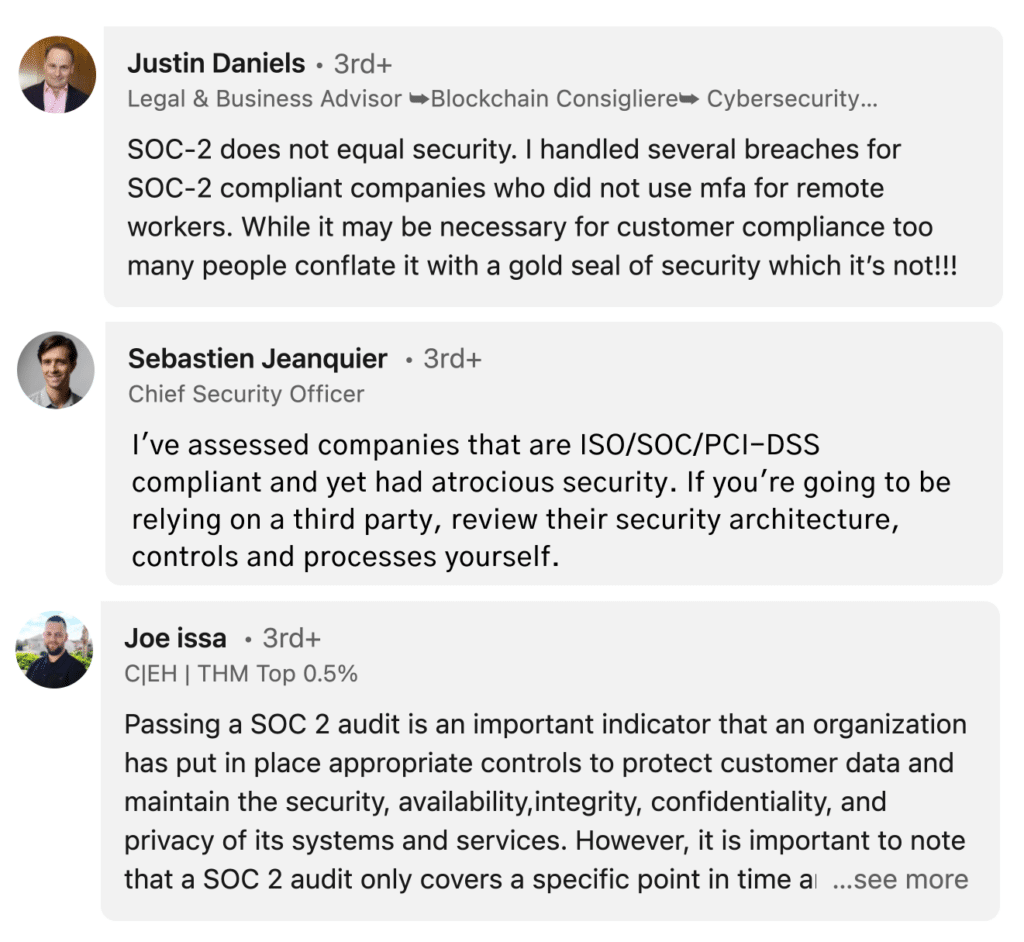
In December 2022, the organization admitted to the severity of the breach and revealed they were victims of a data breach when an intruder gained access to their internal development environment. Post this admission, several CISOs and cybersecurity leaders worldwide expressed their opinions on LastPass falling prey to a data breach despite having a ‘clean SOC 2 report.’
This led to comments about how compliance does not equal information security.
While this statement may hold significant truth, it is essential first to understand why. Let’s do a deep dive into the topic and draw our conclusions.
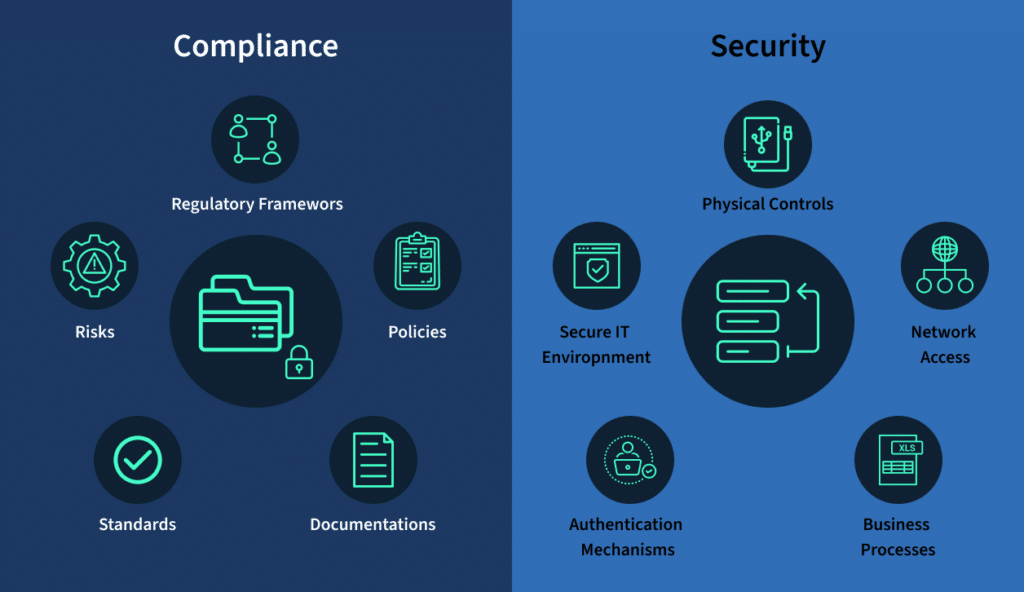
Why is compliance only the first step toward security?
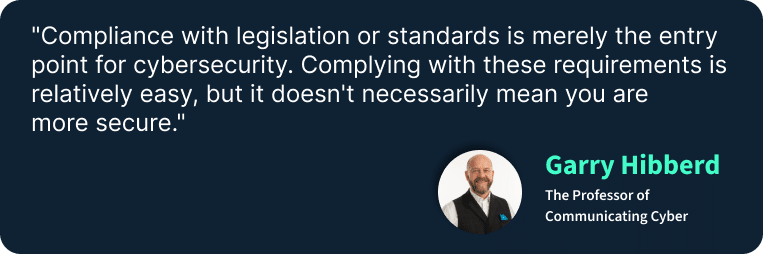
Compliance, as per definition, means your organization meets the minimum standards for security requirements. Organizations may have to stop their operations if they are not complying with specific frameworks and regulations – depending on their industry.
For instance, if a health provider is not compliant with HIPAA, they might not be able to store, share or access personal health information, bringing their business operations to an immediate halt.
The major reason organizations adhere to these frameworks is to safeguard themselves by implementing the policies and procedures required for a protected digital environment. As a result, achieving, proving, and maintaining compliance is critical.
However, because of this placed importance, many organizations adopt a compliance-first mindset, which instills that all decisions must focus on the frameworks and maintaining compliance.
Let’s learn more about how a compliance-first mindset can restrict information security.
What are the limitations of compliance in cybersecurity?
While compliance is critical for operations, a compliance-first approach can be exceedingly restricted, slow, and inflexible. It can force any other security initiatives on the back burner.
For instance, here are a few ways a compliance-first mindset can limit the organization’s security.
Organizations spend a lot of time and resources implementing compliance frameworks from the ground up. A major drawback of this approach is the repetitive ‘threat-compliance-framework’ cycle. It means by the time the framework is released; it is already out of context with the most recent threats. Until these threats are eventually covered with updated frameworks, new threats surface.
Regulatory frameworks are frequently viewed as tick boxes by organizations with a compliance-first approach. This framework-first approach ignores the fact that each organization has a unique user base and technological stack. They may operate in the same section but are fundamentally distinct and require additional protection when obtaining, proving, and maintaining compliance.
This is where a security-first mindset comes into play. A security-first approach is concerned with achieving the highest feasible security posture for a company while remaining within the constraints of its business operations and finances.
For instance, under SOC 2 compliance, organizations are required to implement access management. For a small company with 5-10 employees, a regular monthly review with fewer transitions might be sufficient. But against an organization with 500 employees, the same monthly review would no longer serve its purpose. In these cases, a security-first approach will require you to use tools like Zluri or Blissfully for access management.
This isn’t to imply that a compliance-first approach is derogatory. It simply lacks the steps that a security-first approach would necessitate, such as authenticating user credentials via identity management procedures that entail more than just a login and password.
How can you close the gap between cybersecurity and compliance?
As mentioned earlier, compliance is only the first step toward information security. It provides organizations with protection against regulatory risk.
However, organizations are duly exposed to other risks because of business continuity, operations, employees, and brand identity, each of which can directly translate into financial damage and is not covered by compliance frameworks.
Does that mean that organizations should stop focusing on maintaining compliance with frameworks?
Not quite.
Compliance frameworks and regulations will not stop holding importance; in fact, several new regulations are coming to fruition, such as Digital Personal Data Protection Bill, Personal Data Protection Law, and California Privacy Rights Act – which will redefine the way organizations protect customer’s data.
However, that also doesn’t imply our approach toward achieving compliance needs to stay the same.
You can begin to combine your organization’s security posture and compliance needs by including additional security considerations into your decision-making processes and not letting compliance take the rein. This results in a more organic method of obtaining compliance while also improving your security posture.
Moving forward with the three I’s – Implementation, Investigation, and Improvement
Bridging the gap between compliance and information security is not something organizations can do overnight. In order to take the right steps toward maintaining compliance and security, there are some practices that they will be required to follow.
We have streamlined these processes into three primary steps, and they are as follows;
Implementation
The first step toward bridging the gap between security and compliance is the implementation of regulations. Since technology evolves quickly, it is imperative that organizations rigorously maintain compliance with updated frameworks and increase the depth of compliance over time.
Investigation
A periodic investigation is the second stage in nudging companies toward a more security-first mindset. These investigations can be annual, quarterly, or monthly, depending upon the complexity of the cloud environment, the size of the organization, and the risk management modules the firm has in place.
In the event of an attack/breach, organizations must identify and investigate thoroughly. For example, senior leaders should be held accountable if they fail to comply with mandated regulations or promote security reforms.
Improvement
The final step is closely related to these annual investigation reports. Regular feedback is one of the most overlooked components of security. It generates useful intelligence for regulators, who can compile it and utilize it to inform evolving regulatory policy. As new dangers arise, organizations can discuss mitigation measures and work on continuously improving controls for a better security posture.
Final Thoughts
After considering these viable points, we may conclude that there are far more ways to hack users and systems than ever. If you are simply concerned with compliance, you will likely always clean up after breaches rather than hunting down and stopping invaders before they can cause damage.
A clean ‘SOC 2 report’ alone will not protect you from security breaches. The paradigm must shift from guarding the network to securing the users, assets, and resources. To learn more about risk management and security monitoring, visit us at www.scrut.io.
6 Jan 2023
10minutes
Authored by
Aayush Ghosh Choudhary
Co-founder & CEO at Scrut
CPRA Regulations: Unraveling the California Privacy Rights Act
In a world fueled by digital innovation, the need to safeguard personal information has taken center stage. Enter the California Privacy Rights Act (CPRA regulations), a pivotal response to the pressing need for robust data protection in an era of rapid technological advancement.
The California Consumer Privacy Act (CCPA) laid the groundwork for data privacy regulations in the state of California. Building upon the principles set by the CCPA, the CPRA embarks on an exciting journey to reinforce consumer rights, fortify data protection, and introduce novel provisions to ensure a secure digital landscape.
At its heart, CPRA is designed to empower individuals by providing them with greater control over their personal data. It introduces an enforcement agency dedicated to monitoring compliance and broadens its jurisdiction to encompass sensitive data categories.
Stay tuned as we dive into each facet of the California Privacy Rights Act, uncovering its far-reaching implications, the roadmap to compliance, and the transformative impact it promises to have on the landscape of data privacy.
The evolution from CCPA to CPRA regulations
The CCPA is the guardian of CPRA’s principles. Tasked with enforcing the CPRA and championing consumer privacy rights, the CPPA wields investigative and enforcement powers. Its emergence signifies a strong commitment to upholding the standards of data privacy.
The transition from CCPA to CPRA regulations signifies a pivotal shift in data privacy regulation. In terms of differences between CCPA vs CPRA, CPRA builds upon CCPA’s foundation to create a more comprehensive framework, extending rights and protections for consumers. It introduces new categories of personal information and expands the scope to include data sharing.
Stricter guidelines for children’s data and biometric information reflect evolving privacy concerns. CPRA’s enforcement agency enhances oversight, imposing stricter penalties for violations. This evolution showcases California’s commitment to adapting regulations in an ever-changing digital environment.
Revisions under the California Privacy Rights Act 2023: CPRA vs CCPA
CPRA takes consumer rights to new heights, granting individuals unprecedented control over their personal information. It offers the right to rectify inaccurate data, limits the use of sensitive data, and provides the ability to opt out of specific data-sharing practices. This shift places individuals firmly in charge of their valuable data assets.
CPRA regulations isn’t merely an extension of CCPA; it’s a leap forward. It introduces novel rights, including the fascinating “right to know” about automated decisions made using personal data and the empowering “right to limit” sharing of personal information.
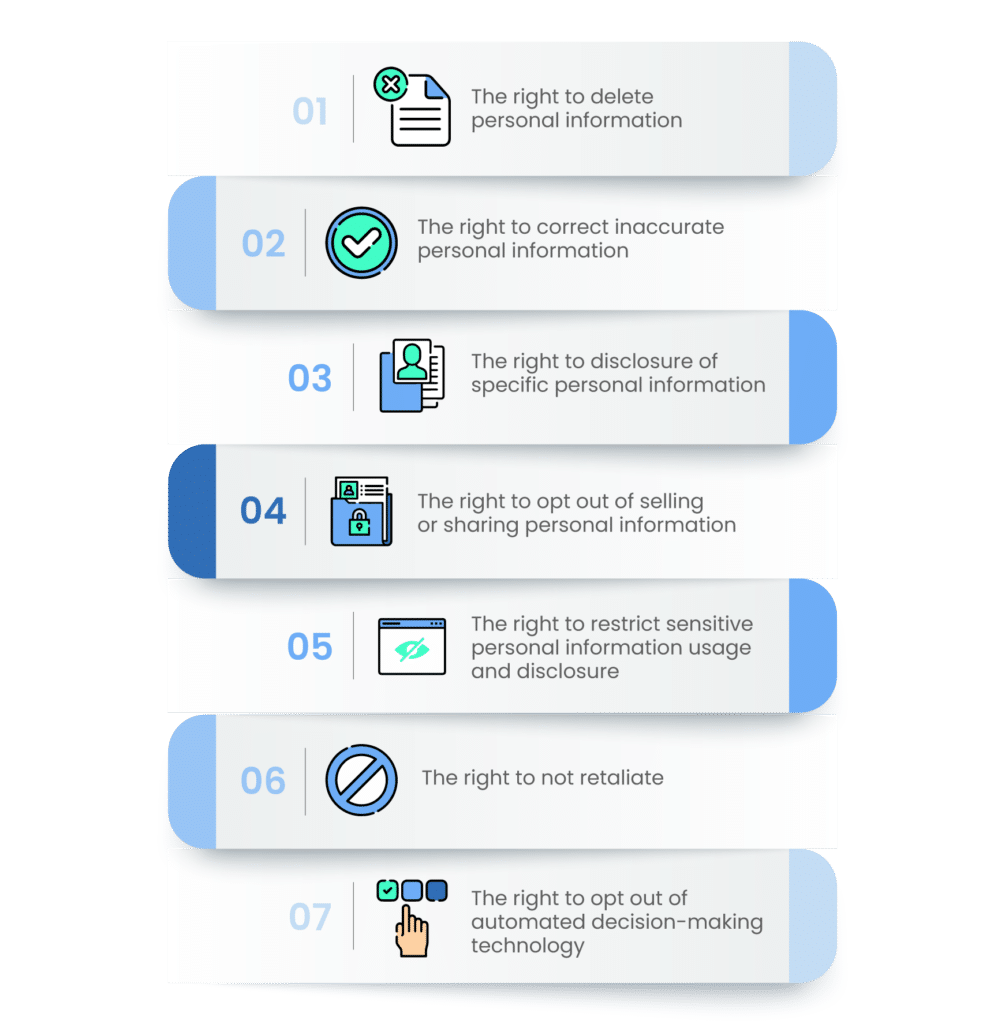
1. The right to delete personal information
Under the CCPA, customers can request the removal of their data from business systems, prompting companies to erase the data upon receiving valid requests.
CPRA mandates businesses to inform service providers, contractors, and third parties to whom consumer data has been sold or transferred—unless deemed impractical or excessively demanding.
Further, each service provider must cascade the request for consumer data deletion to downstream providers.
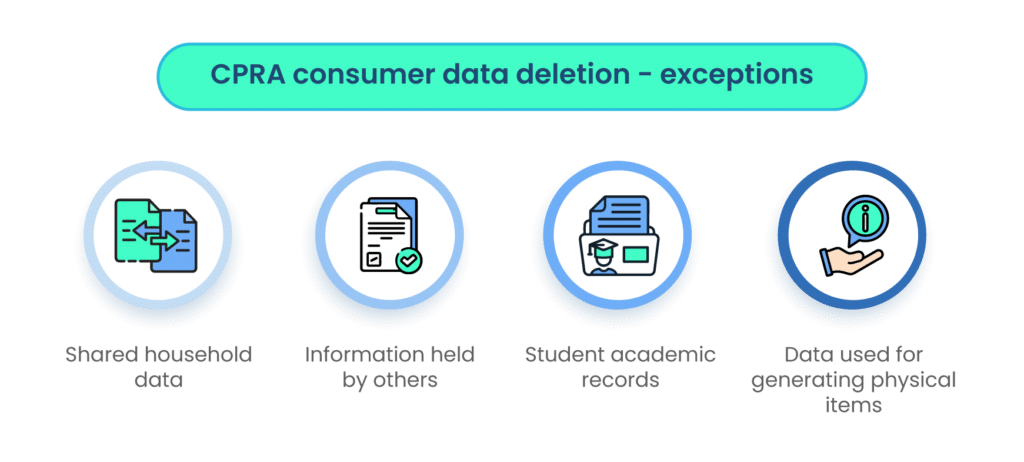
CPRA introduces exceptions to this requirement, relieving organizations from deleting:
Household data shared by individuals residing at the same address.
Personal information maintained by another person.
Student information like grades, test scores, or educational data held on behalf of a local education organization.
Specific information approved for generating physical items (e.g., yearbooks).
2. The right to correct inaccurate personal information
CPRA regulations introduces the consumer’s right to rectify incorrect personal information. Businesses must facilitate this correction, acknowledging the customer’s right as articulated in privacy notices.
Upon verified requests for correction, businesses must make ‘commercially reasonable efforts’ to rectify the inaccuracies according to consumer specifications and established regulations.
3. The right to disclosure of specific personal information
CCPA allows consumers to inquire about the treatment of collected personal information, including its categories, sources, purposes, and third-party sharing.
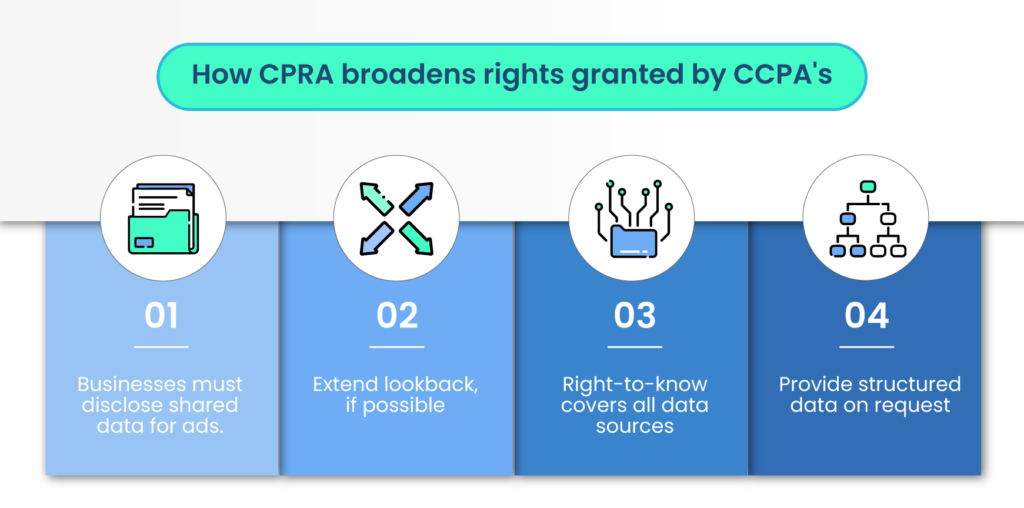
CPRA enhances and broadens these rights by:
Mandating businesses to divulge personal information shared with third parties for cross-contextual advertising.
Expanding the lookback period beyond 12 months if feasible.
Clarifying that the right-to-know covers data obtained directly/indirectly, including via service providers or contractors.
Ensuring the provision of specified personal information in a structured, machine-readable format upon consumer request.
4. The right to opt out of selling or sharing personal information
CPRA extends the existing opt-out provision to include both the sale and “sharing” of personal data. Sharing refers to the transfer of consumer data for cross-context advertising to third parties.
The CPRA broadens the existing opt-out provision to encompass the sale and “sharing” of personal information. The CPRA defines sharing as “the transfer or making available by the business of a consumer’s personal information to a third party for cross-context advertising.”
The business shall not sell or disclose a consumer’s personal information under the age of 16 unless the consumer (for consumers over the age of 13) or the consumer’s parent (for consumers under the age of 13) has expressly allowed the sale or sharing.
5. The right to restrict sensitive personal information usage and disclosure
CPRA regulations introduces a robust shield around sensitive personal information. Consumers now possess the right to restrict how businesses use and disclose their sensitive data.
In the realm of “sensitive personal data” under CPRA, information like Social Security numbers, driver’s license numbers, and biometric data takes center stage.
Recognizing the potential for greater harm if compromised, CPRA regulations devotes special attention to safeguarding this category of data.
This pivotal provision empowers individuals to exercise greater control over their most personal information, including data related to health, finances, race, and more.
By exercising this right, consumers can curtail the potential misuse of their sensitive data, enhancing privacy and data protection in the digital age.
6. The right to not retaliate
CPRA bolsters consumer protection by introducing the right to non-retaliation. This means businesses are prohibited from penalizing or retaliating against consumers who exercise their rights under CPRA regulations.
Whether a consumer requests data access, correction, deletion, or any other CPRA-mandated right, businesses must respect these choices without adverse consequences.
This provision ensures that individuals can confidently and fearlessly assert their data privacy rights, fostering a culture of trust and compliance.
7. The right to opt out of automated decision-making technology
Automated decisions, powered by algorithms and technology, are becoming increasingly common. However, CPRA acknowledges the potential risks of such decisions to individuals.
Consumers now possess the right to opt out of automated decision-making technology, which includes algorithms determining significant aspects of their lives, such as credit scores, job opportunities, and more.
This empowers consumers to retain control over decisions that impact them, striking a balance between technological advancement and personal autonomy.
Who does CPRA regulations apply to?
CPRA regulations applies to the following organizations:
Businesses that collect and process personal information of California residents and meet certain revenue or data sharing thresholds.
Entities that control or are controlled by such businesses and share common branding.
This expansive reach ensures that those involved in data processing uphold the same level of data protection standards.
Unpacking CPRA compliance requirements
Now, let’s delve into the key aspects of CPRA compliance that set it apart from CCPA.
We’ll explore the importance of regular risk assessments, the concept of data minimization, and the implications of data retention limits.
Understanding these nuances is essential for businesses seeking to navigate the evolving world of data privacy effectively.
1. How CPRA compliance differs from CCPA
CPRA isn’t just an encore of CCPA; it’s a revolution. While CCPA marked a significant step forward, CPRA elevates the game. CPRA amplifies consumer rights, introducing more intricate provisions and establishing the California Privacy Protection Agency (CPPA) to ensure rigorous enforcement. This dynamic shift means businesses must recalibrate their compliance strategies to stay in sync with CPRA’s heightened standards.
2. Regular risk assessments and data minimization
CPRA mandates a new normal: the routine assessment of risks lurking within data ecosystems.
Regular risk assessments are now the cornerstone of compliance, compelling businesses to scan for vulnerabilities, anticipate threats, and fortify defenses.
Simultaneously, CPRA advocates for data minimization—reducing data collection to essentials and safeguarding privacy by design.
3. Data retention limits and their implications
CPRA ushers in a new era of data retention. It mandates that businesses retain personal information only for as long as necessary.
This means streamlining data storage practices, bidding adieu to outdated records, and curbing the temptation to hoard data. By embracing data retention limits, businesses create leaner, more privacy-centric data landscapes.
Impact on business operations
The California Privacy Rights Act (CPRA) is reshaping business operations, requiring companies to prioritize data protection, transparency, and user consent to meet its stringent compliance standards.
Businesses are navigating a new terrain under the CPRA, where compliance demands heightened data security, transparency, and a privacy-centric approach in all aspects of their operations.
1. Addressing data security under CPRA regulations
Under CPRA’s watchful eye, data security becomes paramount. Businesses must implement robust security measures that align with industry standards.
Encryption, access controls, and employee training surge in significance as CPRA calls for airtight data protection. The goal is to shield personal data from prying eyes and potential breaches.
2. Navigating data handling practices for compliance
With CPRA’s stringent requirements, the tides of data handling practices are shifting. Consent mechanisms must be crystal clear, and data sharing practices must be transparent. Businesses must weave compliance into every thread of data interaction, from collection to deletion. This transformation ensures a privacy-first approach that respects user choices.
3. Building consumer trust amidst stricter regulations
Amidst the landscape reshaped by CPRA regulations, consumer trust reigns supreme. Businesses that embrace CPRA demonstrate their commitment to safeguarding personal data, fostering a transparent environment. By embodying CPRA’s principles, businesses can inspire trust, loyalty, and a sense of security among consumers.
Steps to prepare for CPRA regulations
As the CPRA ushers in a new era of data protection and privacy rights, businesses must proactively adapt to meet its stringent requirements.
To successfully navigate the CPRA landscape, organizations should embark on a journey that encompasses three critical steps:
1. Conducting thorough data practice assessments
Embarking on CPRA compliance demands a comprehensive self-evaluation. Scrutinize your data practices with a discerning eye. Identify what data you collect, how you use it, and where it flows.
Uncover vulnerabilities, assess risks, and pinpoint areas that need bolstering. This introspective journey lays the foundation for a resilient CPRA strategy.
2. Updating privacy policies and notices
Under CPRA’s spotlight, transparency is non-negotiable. Revamp your privacy policies and notices to align with CPRA’s intricate requirements. Craft clear, concise disclosures that empower users to make informed decisions.
Highlight data categories, sharing practices, and rights available to users. By elevating transparency, you build trust with users.
3. Establishing robust data breach response mechanisms
In a data-driven world, breaches can’t be ruled out entirely. But your response can define the aftermath. Establish airtight data breach response protocols.
Outline steps to swiftly contain breaches, notify affected parties, and liaise with the CPPA where necessary. A well-oiled response mechanism is your compass in the storm.
CPRA’s role in shaping data privacy
CPRA’s impact ripples across industries and affects the trajectory of data protection on a global scale.
A milestone in privacy legislation
CPRA’s emergence isn’t just another chapter; it’s a landmark in the narrative of data privacy. With its consumer-centric stance and stringent compliance measures, CPRA sets new benchmarks that echo beyond California’s borders. Its ripples impact the trajectory of data protection globally.
Implications for businesses and individuals
CPRA’s far-reaching implications extend to both businesses and individuals. For businesses, CPRA translates to recalibrating practices, fostering consumer trust, and embracing a culture of compliance. For individuals, it signifies enhanced control over personal data, greater transparency, and the assurance of robust privacy safeguards.
The path towards enhanced data security and transparency
CPRA’s journey is one of transformation. It paves the way for a future where data security and privacy aren’t just buzzwords; they’re fundamental values.
As businesses and individuals alike adapt to CPRA’s demands, a new norm emerges, one defined by responsible data handling, resilient privacy measures, and a shared commitment to securing data.
A new standard of data ethics
The California Privacy Rights Act (CPRA) has ignited a transformation in the way we approach data privacy.
With its groundbreaking provisions, CPRA reshapes the landscape, ushering in an era where personal data is treated with the utmost respect and protection. This isn’t just compliance; it’s a commitment to a new standard of data ethics.
An ongoing journey of data privacy protection
CPRA isn’t a destination; it’s a journey of continuous improvement. As information flows across borders and technologies evolve, safeguarding personal data remains an ever-evolving endeavor.
CPRA regulations acts as a sentinel, adapting and enhancing data privacy safeguards. It propels businesses to proactively align strategies with changing regulatory currents, shaping a future where personal information is revered, secured, and controlled.
This journey necessitates continual learning, collaboration, and innovation to build a resilient shield against cyber threats while empowering individuals with privacy rights.
Consequences of non-compliance with the CPRA regulations
Non-compliance with the CPRA can lead to significant consequences for businesses. These may include:
Penalties and fines: CPRA introduces increased fines for violations, potentially resulting in substantial financial penalties for non-compliant organizations.
Legal actions: Non-compliance may expose businesses to legal actions, including class-action lawsuits by affected individuals or groups.
Reputation damage: Violations of data privacy regulations can damage a company’s reputation and erode consumer trust, impacting long-term relationships and brand value.
Business disruption: Regulatory authorities may impose corrective actions that disrupt normal business operations, leading to operational challenges and additional costs.
Loss of business opportunities: Non-compliance might result in businesses losing partnerships, contracts, or opportunities with organizations that prioritize compliant data handling.
Limited market access: Some industries or markets may require strict compliance, limiting access for non-compliant businesses to certain sectors.
Data breach impact: Failure to implement adequate data protection measures increases the risk of data breaches, potentially causing further financial and reputational damage.
Regulatory scrutiny: Non-compliance can trigger regulatory investigations and audits, subjecting the organization to increased scrutiny.
Data subject requests: Non-compliance may lead to challenges in fulfilling data subject rights requests, potentially resulting in complaints and legal actions.
Continued liabilities: Even after non-compliance, businesses may still be held accountable for rectifying violations and addressing their consequences.
To avoid these consequences, businesses should prioritize understanding CPRA requirements, implementing necessary changes, and collaborating with compliance professionals, like Scrut, to ensure full adherence.
Wrapping up: Charting the course ahead
CPRA regulations isn’t just about checkboxes and regulations; it’s about redefining the relationship between individuals, businesses, and their data.
Embracing CPRA offers businesses a competitive advantage by building consumer trust while individuals regain ownership of their personal information
Learn more about CPRA and how it may affect your business by talking to industry leaders in compliance. Schedule a free demo with Scrut here.
FAQs
1. What is the California Privacy Rights Act (CPRA) and why was it introduced?
The California Privacy Rights Act (CPRA) is a data privacy law aimed at enhancing consumer privacy rights. It was introduced to strengthen data protection measures, give consumers more control over their personal information, and address gaps in the previous law, the CCPA.
2. What are the main differences between CPRA and CCPA?
CPRA builds upon the California Consumer Privacy Act (CCPA) by introducing new rights like the right to correct inaccurate personal information, the establishment of a dedicated enforcement agency, and provisions related to sensitive personal data.
3. Who does the CPRA apply to, and what kind of data does it protect?
CPRA applies to businesses that collect or process the personal information of California residents and meet certain criteria. It protects various categories of personal data, including sensitive information like Social Security numbers, financial account numbers, and health information.
4. How does CPRA impact businesses and their compliance efforts?
CPRA imposes stricter obligations on businesses, requiring them to implement additional security measures, conduct regular risk assessments, and adhere to new data retention limitations. Businesses need to reassess their data handling practices to ensure compliance.
5. What steps should businesses take to prepare for CPRA regulations compliance?
Businesses should begin by assessing their current data collection and processing practices. They need to implement robust security measures, update their privacy policies, and establish procedures to address consumer requests and data breaches. Seeking legal guidance and staying informed about CPRA updates is also crucial for successful compliance.
14 Dec 2022
5minutes
Authored by
Aayush Ghosh Choudhary
Co-founder & CEO at Scrut
Scrut Shines in the G2 Winter 2023 Report with 4 Leader awards and 83 badges
The G2 Winter 2023 awards are out, and we are ecstatic to announce that Scrut has been awarded 83 badges across several security and compliance categories.
In the past six months, our customers have shown us unprecedented support, and these badges come as a testament to their love for us. We have deep gratitude for each and every one of our customers and want to take this opportunity to thank them for the trust they have placed in us.
What importance do the G2 Awards hold?
G2 has made a name for itself as the biggest marketplace for software and IT companies in the globe, where consumers and businesses can find, contrast, and evaluate technology solutions based on their needs.
We at Scrut are incredibly proud and honored to have received recognition as an industry leader from one of the most respected marketplaces in the business.
Here is a quick recap of all the badges we’ve earned in the G2 Winter 2023 report.
G2 Leader across several Security and Compliance categories
It brings us immense pleasure to have been recognized as a leader in cloud security, cloud compliance, and security compliance.
These badges are awarded after G2’s independent evaluation of unbiased user reviews. They demonstrate our success in providing our clients with the most frictionless experience in risk monitoring while adhering to well-known industry information security standards.
G2 Crowd Grid Report
Scaling to a position of this degree in the G2 crowd grid has been enthralling, and we hope to continue this journey forward.
High Performer across Mid-Market Enterprises and Small Businesses
One of the highlights of the G2 Winter 2023 Awards was receiving the High Performer badge overall, as well as in mid-market and small businesses. This reinstates that our mission of simplifying compliance for cloud-native organizations is being received across sizes and industries.
Key G2 Winter Awards 2023
Our customers reviewed us for our products, their experience with using the product, and the support they received from our team – which led us to receive several badges that inspired us to put our heads down and work harder.
From Best Estimated ROI to Fastest Implementation to Users Most Likely to Recommend – each award comes as a humble appreciation for the efforts of all our team members.
Strengthening Cloud Compliance with 35 Badges
Our end-to-end compliance automation and management platform simplify cloud compliance for organizations. Receiving two stellar badges in this category makes us more determined to help our customers align themselves with global information security standards.
Leading the way in Cloud Security with 26 Badges
We are committed to helping our customers strengthen cloud security through our deep cloud security monitoring capabilities and are proud to see the product receive such wide recognition among users across customer segments.
According to the user feedback, our efforts have significantly aided them in identifying misconfigurations across their cloud architecture against CIS (treated as the gold standard for cloud security) benchmarks. Our platform is simple to use, with no lengthy installation processes, intuitive UX, and pre-built integrations for AWS, Azure, GCP, and other popular cloud service providers.
Here is a glance at all the badges we have received under this category –
11 Security Compliance Badges for Improving Security Posture
Security is an imminent part of compliance culture, be it adopting best security practices to strengthen your organization or using an end-to-end management platform like Scrut to comply with the leading security standards.
Earning 7 security compliance badges comes as a boost of recognition for us, especially our in-house information security team, who has put their best foot forward in enabling organizations to comply with the best security practices and standards.
Take a look at the badges we have received under this category –
8 Data Subject Access Request Badges for Simplifying Compliance
Scrut has always been an active advocate for data security, providing organizations with modern tools to simplify compliance and secure their data easily. Being recognized for our efforts in this category provides us with the determination to ensure our customers are always delighted.
Here are the awarding badges for this category –
Closing the day with 3 Privacy Impact Assessment Badges
After receiving the high performer badge in this category, along with the best support and best relationship, we are more determined to help organizations assess risks and manage their cloud environments.
Here are the awards we received in this category –
What are our users saying about us?
With the amount of support we have received, it is evident that our customers love us! We have worked tirelessly to ensure that our product is an enabler for organizations to pursue hassle-free security and compliance.
Take a look at what our users have to say about us on G2.
We are dedicated to growing and innovating, providing our customers with top-notch products and assistance that will help them stay ahead and stay compliant every day. Here are a few ways Scrut can help you in making compliance easy. Through Scrut’s single-window platform, you can
Draft Digital Personal Data Protection Bill 2022: Everything you need to know
The Ministry of Electronics and IT introduced a new data protection bill draft titled Draft Digital Personal Data Protection on November 18, 2022. ‘ With this bill, the Ministry of Electronics and IT, aims to secure an individual’s personal data.
The main objective of the Draft is to seek users’ consent and inform them about the data collection type. The Draft was first published in July 2018 and has now been officially reopened for public consultation till December 17, 2022.
But what is the Draft Digital Personal Data Protection Bill? How helpful will it be for the users? These are some of the questions we will address through this blog.
So, sit tight as we take you through all the nitty-gritties associated with the bill.
What is the applicability of the Draft Digital Personal Data Protection Act?
The Digital Personal Data Protection Bill represents the Indian Government’s stance on protecting the citizens’ personal data by describing the roles and responsibilities of individuals and organizations.
On the one hand, It lists out the rights and duties of the citizen who share personal data, and on the other hand, it frames the obligations of organizations using the collected data.
The Bill, when implemented, will introduce a comprehensive legal framework concerning personal data protection in India, putting the Indian subcontinent on the map with other leading nations with concrete privacy laws in place.
Organizations will be permitted to process digital personal data in a way that recognizes the right of individuals to secure their personal data, societal rights, and the necessity to process personal data for authorized reasons under the parameters of the Digital Personal Data Protection Act.
It is imperative to note that the Bill only applies to the ‘processing of digital personal data,’ which includes all the data collected online and offline data that has been digitized in the Indian subcontinent. However, this can also apply to data processed out of India but profiled and offered with services in India.
Benefits of the Draft Digital Personal Data Protection Bill
Appointing the Data Protection Board of India will direct Data Fiduciaries to respond urgently and effectively to Personal Data breaches. While sharing a similar rank with the civil court, the board’s power will be limited to compliance enforcement and issuing penalties. Data Fiduciary refers to the person(s) who decide on the purpose and method of processing Personal Data.
Data fiduciaries must obtain consent from data principals with an itemized notice assenting to processing their l data. t Request and consent should be in clear and plain terms. Data Principal is the person whose personal data is being processed, stored, and used.
Using deemed consent in cases where the data principal would approve processing their information. Deemed consent can be used for employment purposes and public interest, such as debt recovery and prevention of fraud.
The DPDP grants data principals the right to correction, the right to erasure, and the right to be forgotten. It also provides data principals the right to nominate any other individual to exercise their rights in the event of death or incapacity. Rights of data principals; right of correction, right of erasure, and right to be forgotten.
The proposal specifies that Consent Managers will be platforms registered with the Data Protection Board. Individuals can manage, review, and withdraw consent supplied by Data Fiduciaries through these platforms.
Seven principles of the Digital Personal Data Protection Bill 2022
The 2019 version of the bill was withdrawn because the government wanted to create a comprehensive legal framework that secured personal data and granted them protection rights simultaneously.
Below are a few changes/introductions we will see when the revised Draft Digital Personal Data Protection Bill comes into force.
1. Government control
A Data Protection Board, set up by the Union government, will now regulate the matters of personal data, with its role being primarily enforcing compliance and issuing penalties. The Government will have a say in the composition of the board and terms of service and will be responsible for implementing the law beyond the board’s jurisdiction.
2. Data localization
One of the changes introduced under the draft bill is about data storage. Unlike previous personal data laws, this law does not require local data storage, i.e., organizations no longer need to store sensitive and critical data exclusively in India. That said, it also does not permit the free flow of data across borders. Organizations can transfer data only to the countries notified by the Indian Government,
3. Only monetary penalties
Under schedule I of the Digital Personal Data Protection Bill, the government can only issue monetary penalties in case of breaches or non-compliance. It also mentions that these penalties are limited to data breaches that may have a significant impact. The range of penalties may vary from INR 50 crore to INR 250 crore, with the maximum penalty limited to INR 500 crore, as per schedule 25 of the Bill.
4. Data pertaining to individuals under the legal age
According to the revised version of the Bill, parental consent is mandatory for individuals under 18. While the underlining of this provision is yet to be discussed, some experts have mentioned that the Bill fails to recognize that a toddler’s consent differs from that of an adolescent.
Some critics have also expressed concern that parental approval may be detrimental to a child’s personal development. Some parents may not want their children exposed to opposing perspectives.
These restrictions also directly violate India’s stance on the Rights of the Child.
5. Collection of data
Specific data protection principles, such as limitations on the collection of data, have been removed from the Bill. The Bill permits the data fiduciaries to collect any personal data with the consent of the data principal.
However, it also enlists that the data principals should be provided with information about the kind of personal data that is relevant for a particular purpose. For instance, a photo filter app does not need access to location or contacts. But if it is asking for the said details, the user must know the relevant purpose for the same.
6. Government exemptions
According to the Bill’s provisions, government bodies may be exempted from the regulations in the interests of India’s sovereignty and integrity, security, foreign relations, public order, and other considerations. While the previous version of the Bill subjected government exemptions to a “just, fair, reasonable, and proportionate” mechanism, the latest revision puts no such bar on government bodies.
7. No unnecessary information requirements
It was mandated that significant information must be provided for the data principal in terms of their rights, grievance redressal mechanisms, information retention time, and source of information, but the current draft limits the scope of this information to two requirements; the personal data sought and the purpose of data processing.
Important provisions not included in the Draft
Even though the revised version of the Digital Personal Data Protection Bill grants several rights to data principals, it has been recorded that there are two important provisions that should be included in the Draft but aren’t as of yet. These are
The right to data portability: This right allows the data principals to receive and review their personal data in a structured way. It would allow data principals to make the choice of platforms they want their data to be shared on and will eliminate the need to provide all their personal data again while switching platforms.
The right to foregone information: The right to foregone information or to be forgotten is not included in the Draft. This confusion of the general right to erasure and the right to be forgotten jeopardizes other people’s freedom of speech and expression.
As a result, it can be said that the Draft Digital Personal Data Protection Bill is entirely focused on personal data and excludes the protection of non-personal data, which was a demand from both industry and civil society.
What are the next steps in the introduction of the Digital Personal Data Protection Bill?
As mentioned earlier, after multiple revisions, the Draft Digital Personal Data Protection Bill has been published for public review and is open for the same till December 17, 2022.
Even though the Draft has received praise from a number of experts for its improvements over previous iterations, there are still a few issues that the government should take into account.
There are speculations that more provisions, specifically important ones such as data portability and the right to forgone information, should be covered under this legislation. One of the next steps in moving forward with the DPDP Bill will be to create a plan to compensate individuals in cases of a data breach.
Additionally, commenters also contend that the Draft Bill needs to incorporate the tenets of the General Data Protection Regulation (GDPR), which governs privacy in the EU for the effective protection of personal data.
Frequently asked questions (FAQs)
How can organizations comply with the Digital Personal Data Protection Bill?
The law obliges data processors to implement adequate security measures to safeguard user information, notify users in the case of a data breach, and discontinue retaining user data if users choose to terminate their accounts. The proposal establishes new safeguards that businesses must use in addition to data minimization rules to stop the illegal collection or processing of personal data.
What are the consequences of non-compliance with the Digital Personal Data Protection Bill?
Besides the fines that can be imposed on organizations in case of non-compliance with the Digital Personal Data Protection Bill, failure to prevent data breaches can also incur companies a financial penalty of up to $30.6 million (₹250 crores). Additionally, a failure to notify users of the breach can ratchet the fines up to $61.3 million (₹500 crores).
What are SDFs or Significant Data Fiduciaries?
Significant Data Fiduciaries are people who handle private information. The central government decides who will qualify for SDF’s role. s Considering the sensitivity of this role, like the quantity of private information, processed, the amount of danger possessed, and any potential effects on India’s sovereignty and integrity. According to the Bill, such organizations must also appoint a designated “Data Protection Officer” to act as their representative and point of contact for complaints.
2 Dec 2022
6minutes
Authored by
Aayush Ghosh Choudhary
Co-founder & CEO at Scrut
The zero fluff guide to navigating enterprise information security assessments
Prologue
Hello! If you’ve stumbled upon this note, you are perhaps looking to sell SaaS to large enterprises. We’ve been in your shoes, and through our blunders, we’ve learned a few things about how young SaaS companies can present a strong case for their Infosec posturing. As part of this note, we shall also cover some basics of ISO 27001, SOC 2, and GDPR and how compliance with these standards could provide a competitive edge in the sales process.
The context
Let’s take the example of a hypothetical large pharma company called Skull Pharma Inc., with manufacturing in India and customers in multiple geographies, which includes India, the US, and parts of Europe. Also, the company works with vendors across several geographies, which again include India, the US, and maybe some parts of Europe.
Such an organization would have potentially sensitive data of the following types:
Confidential pricing information for their finished goods
Confidential cost information for key inputs
Personal Identifiable Information (PII) in the form of email IDs, phone numbers, and possibly the medical history of individuals
Results of clinical trials or bioequivalence studies of pipeline products
Given the size and sensitivity of data that such an organization would handle, it is imperative that they comply with the highest standards of information security, which would typically manifest in compliance with ISO 27001, SOC 2, GDPR, and some guidelines like ISO 27018.
How does the buyer’s compliance to Infosec standards impact the sales process?
When an organization is compliant with ISO 27001, SOC 2, or GDPR, it is necessary to ensure that their software vendors are equally compliant with these standards (even if they are not formally certified) and their sensitive data is in good hands. The recent spate of cybersecurity attacks and data breaches at Facebook, Scripps Health, JBS, Dr. Reddy’s, Astra Zeneca, and several others show that attackers are becoming savvier, and enterprises across the globe are increasing their Infosec budgets.
Consequently, there are three ways the sales process for Enterprise SaaS gets impacted.
Large enterprises asking for software to be deployed on-premise, which is a very expensive option but is perceived as more secure
Large enterprises are paying 4-5x higher subscription fees for ‘legacy’ tools or ‘established players,’ which are perceived to be ‘more secure.’
Large enterprises put very stringent checks and evaluation criteria for Infosec compliance for their software vendors.
Now, here is a typical situation during the enterprise sales process that we’ve seen several extremely promising SaaS companies find themselves in.
Jeremy, the business user:
Jeremy has done an extensive pilot with your product, and your product is loved not only by Jeremy’s colleagues but also by Jeremy’s suppliers. As a young and nimble SaaS start-up, you’ve absolutely nailed all aspects of the UX and have CSAT scores that have shot through the roof.
Jacinda, the Finance team member:
Jacinda has done an extensive cost-benefit assessment of your SaaS product and finds that you can potentially deliver an IRR of ~300-400% over a five-year period, even at conservative adoption levels.
Jacob, Head of IT procurement:
Jacob has made a quick pre-proposal comparison of your SaaS product’s subscription cost with your peers and legacy competitors. While Jacob doesn’t find you to be the cheapest, he also acknowledges that you are priced fairly for the value that Jacinda thinks you provide. Of course, Jacob is likely to negotiate with you in the end and stop only when you are on the verge of starting to weep.
Janice, the IT ERP team leader:
Janice is the gatekeeper for all things ERP. Janice has nurtured the company’s ERP systems with her hands, and she will not let any garbage flow in or flow out of it. You’ve somehow managed to ensure smooth integration with Skull Pharma’s ERP using Mulesoft or similar tools, and your initial system integration testing is successful. While Janice doesn’t like you yet, she doesn’t hate you either.
So now, Jeremy and Jacinda are filled with glee, Jacob broadly likes you, and Janice doesn’t hate you. Should you tag the account as ‘decision stage’ in your CRM yet?
Not yet; there’s another stakeholder.
Stonecold, the Chief Information Security Officer (CISO)
Stonecold has asked you ~30 questions about your Infosec practices and is not confident about how robust your Infosec posturing is. You’ve provided satisfactory responses to only half of Stonecold’s questions – and Stonecold has disqualified you.
Why did Jenn do that? Because if Skull Pharma’s data is handled irresponsibly, they lose a lot more to lose in terms of goodwill than they could save by opting for you against your ‘legacy’ competitor that is perceived to be more secure.
How could we avoid such a situation and make Stonecold our strongest supporter within the organisation?
We spoke to several SaaS companies in India and the US that have successfully closed $100K+ deals with large enterprises, operating in spaces where there are legacy players or on-prem alternatives. We’ve tried to distill the learnings below.
Role-based access
Stonecold would be happy to understand the various user roles and access controls associated with the various modules within your product.
An example of how role-based access can be explained could be (not exhaustive):
Settings Type
User
Media
Organisation settings
Super admin
Web only
Network settings
Super admin
Web only
User settings
Multiple users
Web only
Data manager
Designated data manager
Web only
Infra and Storage
Since there are multiple deployment models available, the CISO would be keen to understand the model that the SaaS vendor follows and the controls associated with it.
In which geography is the data hosted (for e.g., if there are multiple EC2 instances running in different geographies, mentioning all of them is important)
Does your SaaS platform have multiple tenants mapped to a single instance? Or is every account mapped to a separate instance?
How are the databases created in case of multi-tenancy? Do multiple tenants share a common database?
How frequently are the databases backed up? After what period is the data archived, and what is the retrieval policy?
Based on their comfort, the CISO could be OK with a multi-tenant architecture, could ask for complete on-prem deployment, or could settle for a middle ground by asking for the creation of a dedicated instance of the software on their private cloud. Each alternative will have a different time and cost implication for the SaaS vendor, but if the security posturing is established upfront, the SaaS vendor can negotiate like an equal.
Both ISO 27001 and SOC 2 clearly outline the best practices around how databases should be secured. We could share what we’ve learned, too, sign up for a free consultation.
Logging
A very important element of the SaaS vendors’ security posturing is managing unauthorized/suspicious attempts to access the platform. It helps to answer the following questions proactively.
Which users (or user groups) have access to client data?
Are there any third-party applications that would indirectly access the client’s data?
What tools do you use for logging (e.g., AWS Cloudwatch)?
How are suspicious or malicious login attempts identified (access control failures, server-side input validation failures)?
How will server logs be monitored and alerted (e.g., unexpected events such as SSH connections from a new IP address)?
Network and Communication Security
Any data for which access and disclosure are restricted to a limited (specified) set of users or user groups classify as confidential data. Examples of confidential data include internal price lists and other types of sensitive financial information. Encryption is an important control for protecting confidentiality during transmission.
Are network and application firewalls used to safeguard information being processed or stored on computer systems?
What version of SSL/TLS is being used? Are you using a version that is deprecated? Usually, the CISO would raise a red flag if the vendor is using a version older than TLS 1.2
Which is the certifying authority for the SSL/TLS certificate?
Are Virtual Private Clouds enabled on the Cloud Service Provider to ensure Network Security?
Session Management
Managing sessions is an important task. Large enterprises have strict policies around. SaaS vendors must exhibit flexibility around session management and align with the target organization’s policies. Some of the important questions are:
How are new sessions managed (e.g., using Tokens)?
Can clients configure rules to allow multiple sessions for a user/restrict to a single session?
What happens to existing sessions when an account is deleted, or the password is changed?
Can the client configure expiry rules for the JWT tokens?
Application Security
Most controls related to application security are laid down in the ISO 27001 and SOC 2 manuals. Broadly, most enterprise security assessment questionnaires would seek answers to the following questions:
Are Web Application Firewalls used to protect from common exploits?
What protocol is used to allow secure authorization through all applications (e.g., OAuth2.0)?
Does the application use API Rate limit to prevent brute force/DoS attacks?
How are cross-domain requests handled? Is CORS enabled?
We could share our experiences on how we’ve seen the best SaaS companies manage their application security practices, schedule a call with us (it’s free)
Other Miscellaneous Questions
Apart from the most commonly occurring pointers that we covered above, we’ve also seen some specific questions that certain enterprises like to ask SaaS vendors. We’ve tried to compile a list here (many of these would get covered as part of the ISO 27001 and SOC 2 compliance process):
How are MITM attacks prevented? Are all insecure HTTP requests redirected to secure HTTPS?
Are development, QA, staging, and production environments equally secured?
Are all environments configured to the Principle of Least Privilege (access granted only to those who have a legitimate need for the information)?
How frequently are Vulnerability Assessment tests carried out (the CISO could ask for a recent report)?
How frequently are external penetration tests carried out (the CISO could ask for a recent report)?
What is the Disaster Recovery plan followed by the SaaS vendor?
Hopefully, with most of the above questions answered, Stonecold will support us in the enterprise sales process. With 90% of the job done right, not being able to cross the CISO barrier due to inadequate/incorrect Infosec posturing could be a real heartbreak. It’s best to seek a meeting with Stonecold proactively and be transparent about your infosec posture upfront, even before the team asks for it.
We help SaaS companies of all sizes create their security posturing and automate tasks related to ISO 27001 and SOC 2 compliance. We won’t just provide a tool; we’ll ride with you till the end of the line.
How much does an ISO 27001 certification cost in 2023?
The ISO 27001 certification is a valuable asset for organizations looking to strengthen their information security posture and uphold their reputation in the market. Like every other valuable asset, it comes at a price.
Most organizations set aside a certification budget to ensure that their compliance procedure is smooth and successful. A huge part of this budget is driven toward fixed costs, including fees to be paid to external auditors and the signing authorities.
That said, gaining a definite idea of the cost of the ISO 27001 certification is challenging, primarily because there are various steps in the ISO 27001 certification process, with each step adding significantly to the overall ISO 27001 certification costs.
Through this article, we will learn its cost structure and options contributing to its cost-effectiveness.
Factors influencing the cost of ISO 27001 certification
Before we jump into the cost structure of ISO 27001 certification, let’s first go through the factors that influence these costs. These factors include the size of the organization, office locations, and the usage of external consultants and agencies.
Besides these factors, every organization also has various options, such as external consultation, internal testing, or automation, which also impact the overall certification cost.
Here is a brief description of each method and how it impacts the cost of ISO 27001 certification.
1. Using an internal team
If you’re looking for an option that allows your organization to spearhead the compliance process with minimal cost, then creating an internal team is the best bet. While you will need a certified auditor to complete the certification, the internal team will reduce other preparation and implementation costs, saving your organization some valuable resources.
The internal team will also come in handy for maintaining the certification once your organization has completed it. That said, it is important to note that while this option may seem like a zero-cost route, it can cost you in terms of employee hours.
2. Hiring an external consultant
The most common choice for ISO certification is hiring an external auditor since they are equipped with compliance knowledge to lead your organization’s ISO 27001 certification journey. They help with multiple audit tasks, such as policy creation, defining the scope of your ISMS, and preparing the SOA, which can be taxing when done internally.
3. Using compliance automation software
Last but not the least is the option of using compliance automation software, like Scrut. This is indeed one of the safest and smoothest ways to ensure that your compliance journey is successful.
It assists in defining the ISMS’ scope, establishing strong data security policies, implementing entity-level checks, and conducting employee infosec training programs. From carefully identifying and reducing risks to decomposing the entire procedure into straightforward, comprehensible processes, a compliance automation platform does it all.
Selecting either of these options to achieve compliance will significantly affect your organization’s ISO 27001 certification cost.
How much does ISO 27001 certification cost?
Naturally, you’ll pay less if your organization is smaller than those with a bigger organization. However, when assessing your own ISO 27001 compliance expenses, it might be helpful to have specific numbers in mind.
According to recent surveys, it is noted that companies should budget up to $40,000 for audit preparation, $15,000+ for the certification audit, and $10,000 per year for maintenance and surveillance audits.
The breakdown of the entire ISO 27001 certification cost is given in the following table:
Audit Preparation Costs (including gap analysis, pen testing, and standard requirements)
$3-40K
Implementation Costs (including security training, new tools, and productivity loss management)
Starting from $1K annually
Certification Audit Costs (including internal audit, certification, and surveillance)
$10-50K
Total ISO 27001 certification cost
$15-90K
Cost Structure of ISO 27001 Certification
As mentioned above, there are several stages in an ISO 27001 compliance procedure, each one contributing to the overall success as well as the cost of certification.
All three stages of certification, namely, preparation, implementation, and audit, have been explained in a detailed manner below to help you understand the division of ISO 27001 training and certification cost.
1. Preparation costs
The preparation stage includes mandated and variable costs. Mandatory costs include the fixed cost of buying a copy of the standard and a copy of the guide to implementation from the ISO website, which is estimated to be a total of $350.
Other costs handled by the organization during the preparation phase are as follows:
A. Consulting fees
External consultants handle the end-to-end audit tasks, oversee the process, and use their experience of having done the ISO 27001 certification multiple times.
This cost is optional and depends on the method chosen by the organization. It is estimated to be around $38k.
B. Gap assessment
Includes the cost of building an ISMS that meets the standards set by the ISO. It generally includes onboarding a consultant to precisely analyze and design the path from the present state of the ISMS to the one that would be required to fulfill the compliance regulations.
These costs are estimated to be approximately $5.7k.
These costs are estimated after hiring third parties to conduct penetration and vulnerability tests to assess a company’s security system. The costs of these tests depend on several factors, including the servers, IP addresses, and applications being used.
The range of these costs is between $2-8k.
2. Implementation Costs
Another element of the cost structure is the implementation cost which is estimated after implementing Annex A controls, which consists of security policies, managing various assets, access, training, and other features. Here are a few of the costs you can anticipate during the implementation phase.
A. Employee training
Employee training is primarily essential to fulfil two objectives. Firstly, training some key employees who are part of the core team so they can oversee the certification exercise. Secondly, employee training is also required for those whose day-to-day activities are impacted by implementing the ISO standards.
B. Security and other related software
Specific software will be required to address risks and strengthen information security. While this may result in additional costs, it will be helpful in cutting down several other expenses resulting from a breach of security.
C. Indirect costs
There may be indirect costs due to less productivity in various departments such as sales, marketing, engineering, strategy, etc. Your organization can mitigate this cost by having a seasoned team do the implementation.
3. Audit costs
Employing external auditors who are authorized to conduct the audit is one of the unavoidable ISO 27001 certification costs.
This is an audit that is required to assess the implementation of the various controls and match the documentation with the on-ground application.
C. Annual review
The ISO 27001 is valid for three years. Every year your organization must conduct an audit to show adequate compliance with the various rules.
The costs of this audit are also to be paid by the organization, which is why you must budget for the ongoing surveillance audit expenses. Certification audits range in price from $10,000 to $400,000, depending on the certified auditor you choose. The cost of periodic surveillance can range anywhere between $5000 and $20000.
The question is – how can you reduce the cost of ISO 27001 certification? Companies such as Scrut can save time and money for clients by using tried and tested technology in implementing ISO 27001 compliances.
Scrut is a smart and radically simple Governance, Risk, and Compliance automation platform for growing startups and mid-market enterprises. With Scrut, Compliance teams can reduce 70% of their manual effort in continuously maintaining compliance towards SOC 2, ISO 27001, GDPR, PCI DSS, and privacy laws like HIPAA, GDPR, and CCPA. Book a demo today to see how it works.
FAQs
What is ISO 27001 certification, and why is it valuable for organizations?
ISO 27001 certification is an internationally recognized standard that focuses on information security management systems (ISMS). It helps organizations strengthen their information security posture, protect sensitive data, and enhance their reputation in the market. Achieving ISO 27001 certification demonstrates a commitment to safeguarding information assets and ensuring compliance with global security standards.
What factors influence the cost of ISO 27001 certification?
Several factors impact the certification cost, such as the organization’s size, office locations, and the use of external consultants or automation software. The method chosen for compliance, whether using an internal team, hiring external consultants, or opting for automation solutions, also affects the overall expenses.
How can organizations reduce the cost of ISO 27001 certification?
To lower certification costs, organizations can consider using compliance automation platforms like Scrut, which streamline the compliance process and reduce manual efforts. These platforms help manage multiple compliance frameworks, such as ISO 27001, SOC 2, GDPR, PCI DSS, HIPAA, and CCPA, while ensuring effective and cost-efficient certification.
16 Nov 2022
5minutes
Authored by
Aayush Ghosh Choudhary
Co-founder & CEO at Scrut
7 steps to pick the right SOC 2 auditor
Choosing the correct type of SOC audit is a crucial decision for almost every organization, one that is taken after considering the alignment of requirements with audit types as well as the implementation of controls.
No matter which type of audit you select – SOC 2 Type I or SOC 2 Type 2 – picking the right auditor is one of the critical factors for conducting and completing the certification. Before we dwell on the points to consider while choosing the right auditor for your organization, let’s first understand the role of SOC 2 auditors in SOC attestation.
What role does an auditor play during SOC 2 compliance?
In order to comply with SOC 2, organizations must go through an audit that evaluates their controls in comparison to the applicable standard or Trust Services Criteria and achieve a SOC1 or SOC2 audit report.
This audit is performed by a SOC 2 auditor, who is responsible for providing a detailed report on how the organization has implemented security controls and whether or not the organization can achieve SOC 2 compliance based on the findings.
SOC 2 audit also acts as a tool for organizations to verify that a vendor follows specific best practices related to protecting their client’s data before outsourcing to them.
All in all, it can be summarized that to achieve compliance, SOC 2 reports are vital, and since these reports are based on the findings of the auditor, selecting the right SOC 2 auditor inadvertently becomes essential.
Criteria for selecting a SOC 2 auditor
Service organizations often find themselves in a dilemma when approaching auditors since there are several factors that must be considered. However, selecting the right SOC 2 auditor for your organization, albeit difficult, is an important step.
Here are a few criteria that can significantly simplify the process of choosing a SOC 2 auditor for your organization.
1. Affiliated with the AICPA
One of the first things to consider is whether the auditor is affiliated with AICPA or a certified CPA firm. It is imperative that to conduct an audit and receive a SOC2 attestation, you must only use an independent SOC 2 auditor or assessor.
2. Experience and reputation
Experience is a critical factor in the auditing industry for several reasons. One of them is the sound use of resources and a smooth journey for the organization. Determine whether the audit firm has performed similar SOC audits in your niche and for organizations of similar size. It will be significantly easier to work with an audit firm that has previously audited similar companies to yours.
3. Question their qualifications
Before hiring an AICPA-certified audit firm as a partner, you should investigate the individual qualifications and skills of the audit team. Below are three questions you must ask before taking the discussion forward:
What other assessments or certifications do you conduct?
It’s easy to get the certifications done from a single auditor. Switching auditors for each certification will cost you time and money.
From which industry do your customers come?
Every auditor cannot be an expert in every domain. Choose an auditor who has experience in your industry, particularly with companies of a similar scale.
Is your auditing firm aligned on the mechanics of the audit and evidence-sharing methods?
Ensure you work with an auditor who knows how to extract information from various repositories relevant to you. This will help you save time and effort and accelerate your audit process.
4. Style of communication
It’s always important to choose an auditing firm that matches your communication style. There are plenty of auditing firms that deliver excellent work and match your financial goals, but all of that goes in vain when there’s miscommunication. And this, in turn, fritters away your time, effort, and money.
5. Knowledge of tech stack
Test the auditor on their knowledge and understanding of your tech stack. If you start talking about your tech stack and they don’t seem to know what you’re talking about, it’s best to start looking at other options. An audit firm that aligns with the tools you use will be able to test the controls comprehensively and help you collect the right evidence with minimal effort.
6. SOC 2 audit cost
If you are tight on budget, you can choose a CPA firm that matches your financial goals. That being said, low costs often are accompanied by hidden, more often than not, substantial costs.
If the low-cost auditor can’t adhere to the timelines for the audit, it may lead to losing a critical customer sale. This, in turn, will exponentially increase the associated costs. Similarly, if it comes at the expense of the lack of handholding support that most startups need – the price difference will probably not be worth it.
You must also note that SOC 2 compliance is an ongoing process; hence instead of considering just the expense of the first year, plan ahead for at least two or three years. In cases like these, collaborating with the same audit firm will be much more efficient over time
7. Approach for SOC 2 auditing
Understanding the approach your auditor will take while executing the audit and how they will interpret the policies and controls is an important criterion to consider. Why? Because the complexity of a SOC 2 audit is almost entirely dependent on the execution process.
This includes, but is not limited to, how the auditor manages the audit progress, submits evidence requests, and collects them. Few auditors use spreadsheets and emails to manage the entire audit process, while others use automated tools like Scrut to manage the audit process.
SOC 2 audits, without a doubt, have complex controls and guidelines, particularly so for an engineering team not specializing in security. They are also descriptive rather than prescriptive in nature. As a result, no two auditors will interpret them the same way.
Hence, it’s better to ask your auditor how they would collect evidence from you to gauge the level of effort you would require your team to put in.
To round up the criteria, here are a few questions you can discuss with the shortlisted auditors in order to ensure that the selected auditor is competent and aligned with your requirements.
How are you different from other auditing firms?
How’s your auditing team’s quality of service and responsiveness?
How often does your team miss the timelines during an auditing process? What steps do you take to mitigate such delays?
Have you ever over-promised and under-delivered? If yes, why?
Best practices to follow while selecting a SOC 2 auditor
Now that you have a clear picture of how to pick and employ the right auditor for your organization, here are a few tips and tricks to help you navigate the auditor selection process without depleting resources:
Talk to at least four prospective auditors to get an idea of who best fits your needs.
Evaluate your auditors based on reputation, experience, communication, price, and approach.
It’s always good to have a few reference calls with customers your auditors have served, similar to you in terms of industry and size.
Speak with the dedicated account lead who will be driving the audit for your organization.
It is imperative to have the right auditor on board, not merely because of compliance but also to ensure the security of your organization is maintained. Automated platforms like Scrut assist you in selecting the auditor fit for your organization by providing you with a pre-negotiated marketplace of independent and affiliated auditors.
Scrut Automation is a smart and radically simple governance, risk, and compliance automation platform for growing startups and mid-market enterprises. With Scrut, compliance teams can reduce ~70% of their manual effort in continuously maintaining compliance towards SOC 2, ISO 27001, GDPR, PCI DSS, HIPAA, and CCPA. Schedule your demo today to see how it works.