Why is compliance more than just a tick box for Indian Fintech companies?
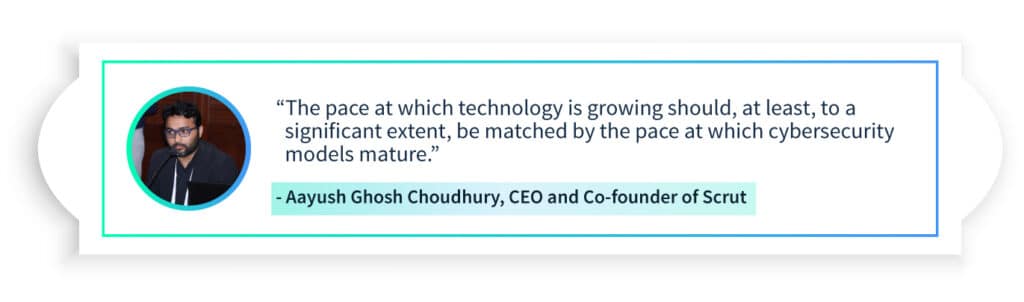
Scrut in association with Dataquest organized a conference that brought together some of the best cybersecurity experts in the country. The conference presented a panel discussion titled ‘Simplifying Compliance for the Indian Fintech Ecosystem’ wherein the experts talked at length about the various compliance and cybersecurity challenges faced by fintech organizations in the country.
They discussed the exponential growth of the Indian fintech sector and how it has led to the barrage of regulations being imposed on finance companies in the country.
The discussion also took a shift towards the increasing need for a unified approach that simplifies the process of compliance without hindering the productivity and efficiency of financial organizations.
In this article, we will discuss some key observations and ideas explored at the panel discussion.
Simplifying compliance is the need of the hour for fintech companies
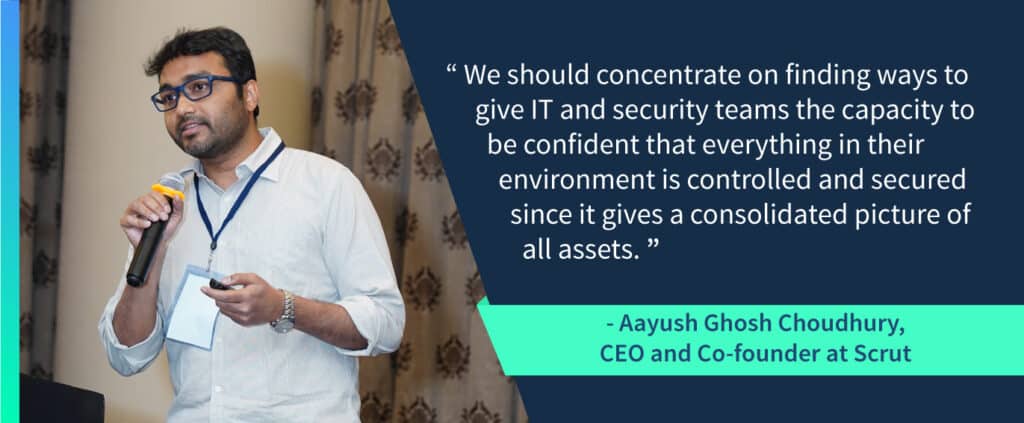
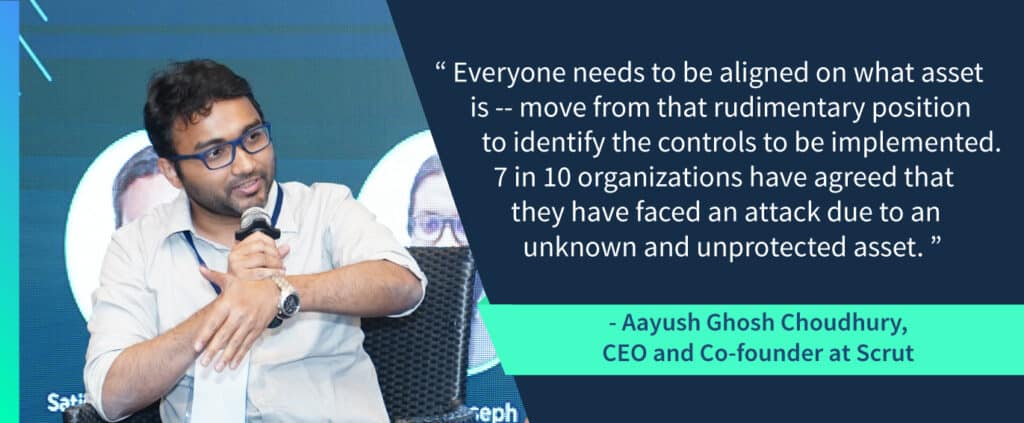
Aayush Ghosh Choudhury, CEO and Co-founder of Scrut, began the panel discussion by sharing that 30% of Scrut’s customers were from fintech and financial service industries. On speaking with his customers, he learned that the reason fintech companies were looking for a GRC platform was the imposition of very stringent regulations in comparison to other peer industries.
He went on to discuss how the Indian financial services ecosystem has witnessed a trajectory that has been seen by very few industries across the globe. He highlighted that it is not just fintech companies that have dedicated digitization teams but also traditional banks and financial services. “The government is also doing its best to enable digitization infrastructure to become democratized,” he added.
Aayush noted that fintech companies not only have to comply with the usual standards such as ISO 27001, but they also have to comply with more vertical-specific ones such as PCI DSS and SAR audits by RBI. This piling up of regulations by authorities results in an information asymmetry, which, Ayush stated, could be tackled by the coming together of experts in the community to arrive at a solution.
The need to stay current
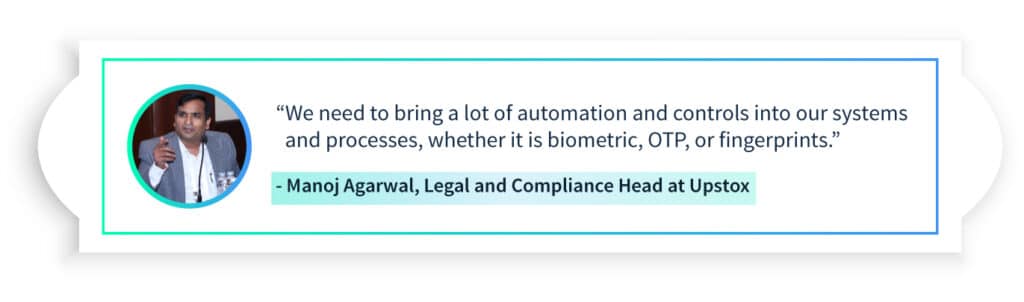
Manoj Agarwal, Legal and Compliance Head at Upstox, shared data from a Deloitte Report, which stated that India’s fintech adoption rate is 87%, while the global average rate is 64%.
He then went on to mention that India’s digital transactions have increased considerably since 2017 and while digital fintech companies help in the deduction of costs and enable seamless transactions, they also bring with them cybersecurity risks.
He opined that Indian financial organizations could reduce these risks by staying informed about the best practices used globally in order to stay compliant and secure while forging ahead with business advancements.
Manoj also added that good collaboration with regulators is necessary to ensure smooth compliance. Staying on top of compliance trends is crucial for fintech companies in the country to survive.
Innovating ways to make audits less tedious
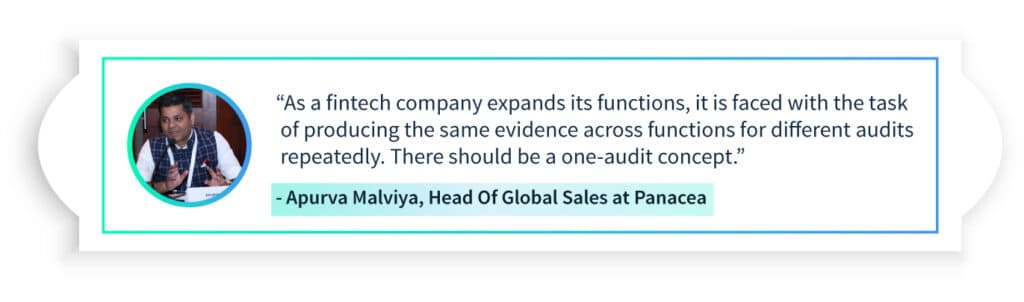
Frequent audits are a headache for any company to carry out. Since fintech organizations face more audits than other industries, there is a pressing need to expedite the constant slew of audits. Deepak Kalambakar, VP of Infosec and Infrastructure at Safex Pay, also pointed out the need for fintech companies to carry out regular internal audits to solve compliance requirements.
Kush Kaushik, Co-founder of Scrut, agreed with him and added that there is a need to innovate the auditing process to ensure that the compliance team is equipped with the right tools to face audits with less effort. “Innovation is very much required in this field so we can save time,” he stated.
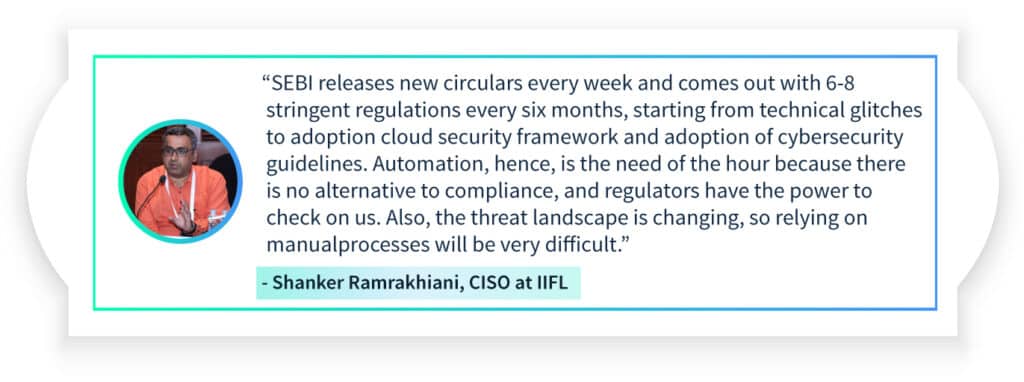
Shanker Ramrakhiani, CISO at IIFL, said that the gamut of compliance has changed a lot and technology is the only way forward.
Technology to break the monotony
When asked to comment on the expected shifts in trends in security compliance practices, Melwyn Rebeiro, Head of IT Security, AEON Credit Service, said, “It’s high time we adopt an approach, a framework, a technology that complements SecOps.”
Shankar Ramrakhiani, CISO from IIFL, added that since technology is growing at a rapid rate, security has to keep up with the constant change. He said a strong collaboration is required between both.
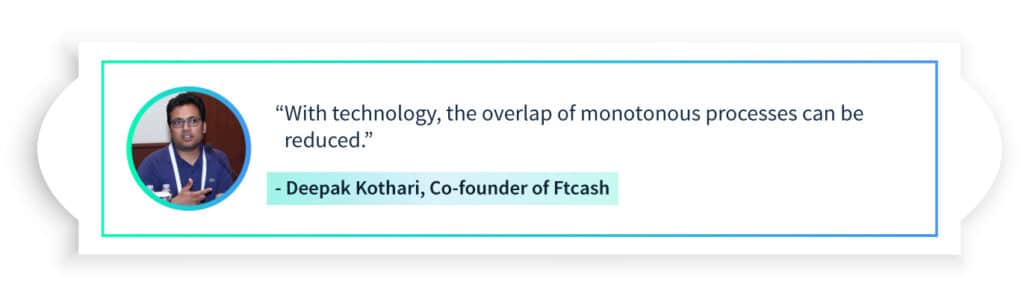
Deepak Kothari, Co-founder of Ftcash, pointed out that compliance today works to eliminate risks, and as a bank broker, it is a fiduciary duty to secure data. He feels technology can help ease the process of compliance.
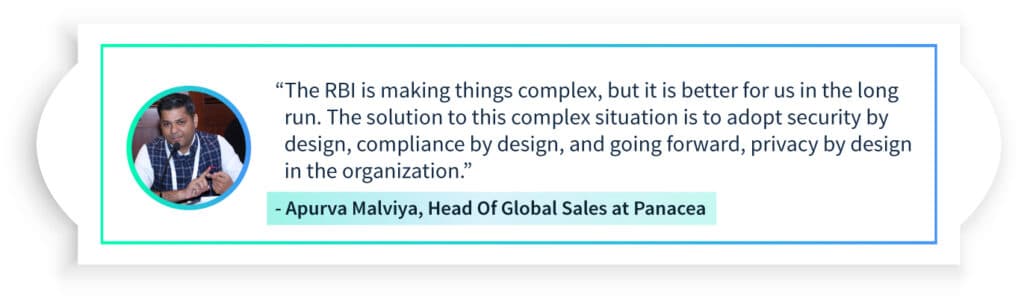
Apurva Malviya put a positive spin on things by saying that the RBI is actually making things better for fintech companies.
The solution proposed for compliance challenges in fintech
Throughout the panel discussion, the experts strongly advocated for the use of technology as a means to reduce compliance and security challenges. It was agreed that a unified approach that solves compliance issues in one window is the need of the hour.
To ensure that compliance does not come in the way of business advancement, there is a strong need for an automated tool that streamlines the process.
An automated compliance tool such as Scrut helps fintech companies stay on top of compliance issues and focus on business goals. Not only does it streamline the compliance process, but it also identifies potential risks and stops them in their tracks. If you are interested in learning more about Scrut, book a demo today by clicking here.
6 Apr 2023
5minutes
Authored by
Aayush Ghosh Choudhary
Co-founder & CEO at Scrut
Scrut earns 3 leader awards and 124 badges in the G2 Spring 2023 Report
We’ve done it again! After winning big in the G2 Winter 2023 awards, Scrut has won even bigger in the G2 Spring 2023 Report with 124 badges and 3 leader awards across 12 security and compliance categories.
This would not have been possible without the support of our valuable customers whose continued trust in us inspires us to work even harder. We thank all our customers for believing in us. Nothing motivates us more than your satisfaction.
What are the G2 Awards?
G2 is the largest global marketplace for software and IT companies. The platform allows customers to compare different technology solutions and determine which software best suits their needs.
Every quarter, G2 releases a report to recognize the effort of organizations based on unbiased user reviews. We at Scrut, are truly honored to have been named a G2 leader yet again.
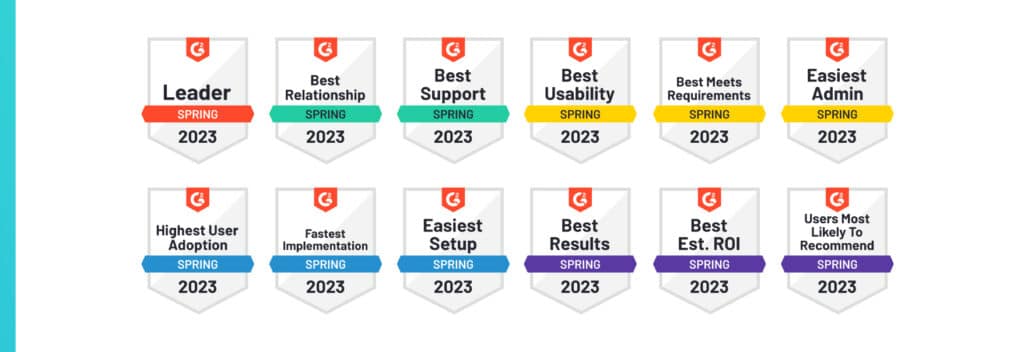
Here is a quick look at all the badges Scrut received in the G2 Spring 2023 Report.
Scrut stands as the Leader in 3 categories
G2 has recognized Scrut as a leader in cloud security, cloud security – small businesses and security compliance. This is a great honour, which spurs us to work even harder to keep our customers happy.
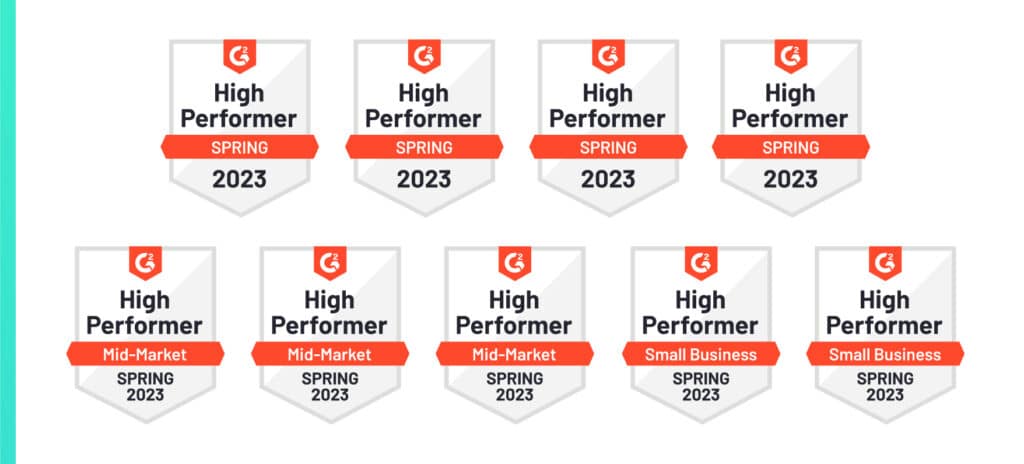
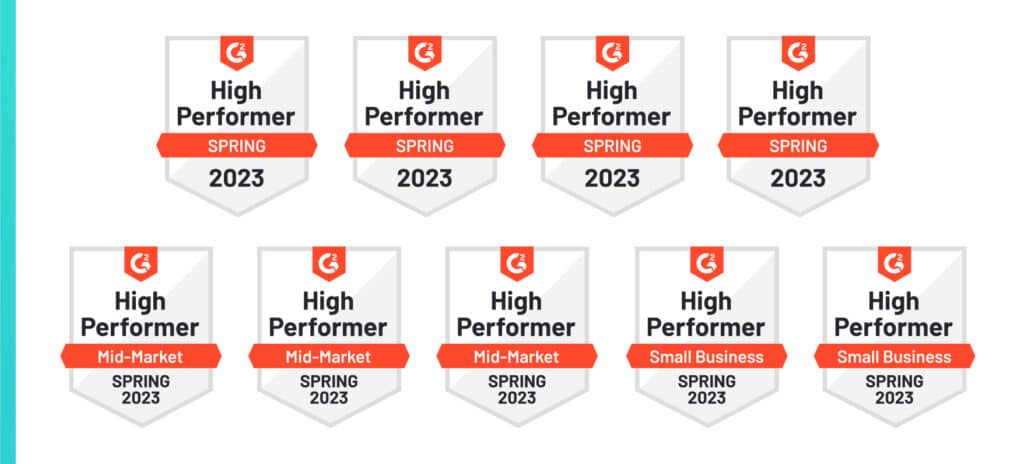
Soaring high with 9 High Performer badges
At Scrut, we take great pride in catering to cloud-native organizations of various sizes and it is thrilling to be awarded with the High Performer badge overall and in mid-market and small businesses. From cloud compliance to vendor security and privacy assessment, Scrut has shone as a high performer in every category across sizes and industries.
Prominent badges won at G2 Spring Awards 2023
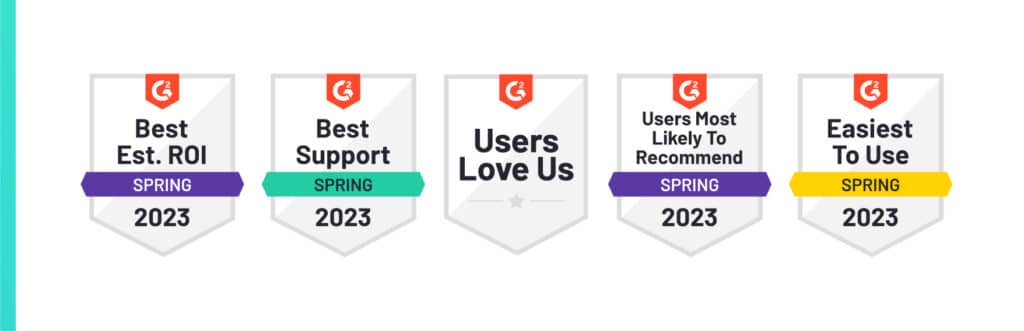
Our users love us and it is not just a statement we’re making in vain – we have received the ‘Users Love Us’ badge across six categories including Security Compliance, Cloud Compliance, Vendor Security and Privacy Assessment, IT Asset Management, Cloud Security Posture Management (CSPM), and Attack Surface Management.
In addition to this, Best Estimated ROI, Users Most Likely to Recommend and Best Support are a few more notable badges won by Scrut across categories.
Bolstering Cloud Compliance with 38 badges
We secured a staggering 38 badges for our efforts in simplifying cloud compliance for organizations with our end-to-end compliance automation and management platform. Our goal at Scrut is to ensure that our customers have covered all bases when it comes to compliance, and the badges we received for the same reassure us that we are on the right track.
Reinforcing Cloud Security with 25 badges
We are on cloud 9 for not only being declared a leader in cloud security and cloud security in small businesses but also for receiving 25 cloud security badges in total. Our hawkeye cloud security monitoring module ensures that our customers have a sound configuration that protects them against threats. Badges for Best Usability, Best Support and Best Results among others in cloud security reassure us that our customers are getting the best out of our services, further motivating us to keep upping our game.
Redefining Cloud Security Posture Management with 24 badges
Our devoted end-to-end compliance automation and management platform is always on its toes to ensure that our customers can rest easy knowing that they are secure. We received 24 badges in cloud security posture management, and we are heartened to have our customers acknowledge our efforts to keep their businesses safe.
Honing IT Assessment Management with 16 badges
Scrut is a strong advocate for the efficient use of resources. We ensure that businesses reap the maximum benefits from their IT assets and get their money’s worth. The 16 badges we earned for IT Assessment management bear testament to this.
Boosting Security Compliance with 12 badges
Our dedicated infosec team works around the clock to ensure that our customers comply with the best security practices. Being recognized as a Leader in Security Compliance as well as receiving 12 badges has been a great motivator to go above and beyond in our efforts.
On top of the game in Vendor Security and Privacy Assessment with 9 badges
We are proud to be the recipient of 9 vendor security and privacy assessment badges in G2’s Spring 2023 Report. Vendor security is one of the most critical aspects when it comes to creating a robust security posture for an organization and we’re thrilled to see that our platform is helping our customers navigate third-party vendor risks seamlessly.
Scrut’s glowing reviews on G2
We’ve had a fulfilling quarter at Scrut, and we owe it all to our customers’ support. G2’s spring awards have put a spring in our step, and we hope to serve our customers even better.
At Scrut, our customers’ security and compliance are our priorities, and we work hard every day to put their safety and credibility first. Don’t just take our word for it, check out what our customers have to say about us!
Click here to read more reviews based on our performance and services.
The Scrut Promise
At Scrut, we are committed to helping our customers stay ahead of the curve while dodging any curveball that may come in the way of achiveing their ideal security posture. We enable our customers to stay compliant and secure by using innovative products and dedicated assistance. Our platform is easy to use and is a one-stop shop for all your security and compliance needs. Schedule a demo with us today to learn more.
31 Mar 2023
12minutes
Authored by
Aayush Ghosh Choudhary
Co-founder & CEO at Scrut
How to evaluate incident response beyond basic security KPIs
In an era where digital threats loom large, and cyberattacks have become a ubiquitous reality, the significance of incident response has never been more pronounced. From stealthy data breaches to disruptive ransomware attacks, organizations of all sizes are continuously at risk of falling victim to a variety of malicious cyber activities.
It’s in this landscape that incident response emerges as the frontline defense, a well-coordinated strategy aimed at mitigating the impact of these security breaches.
A single data breach can cost organizations $4.35 million. System downtimes, on the other hand, cost an average of $100,000 in lost revenues, maintenance charges, and employee productivity.
What is incident response?
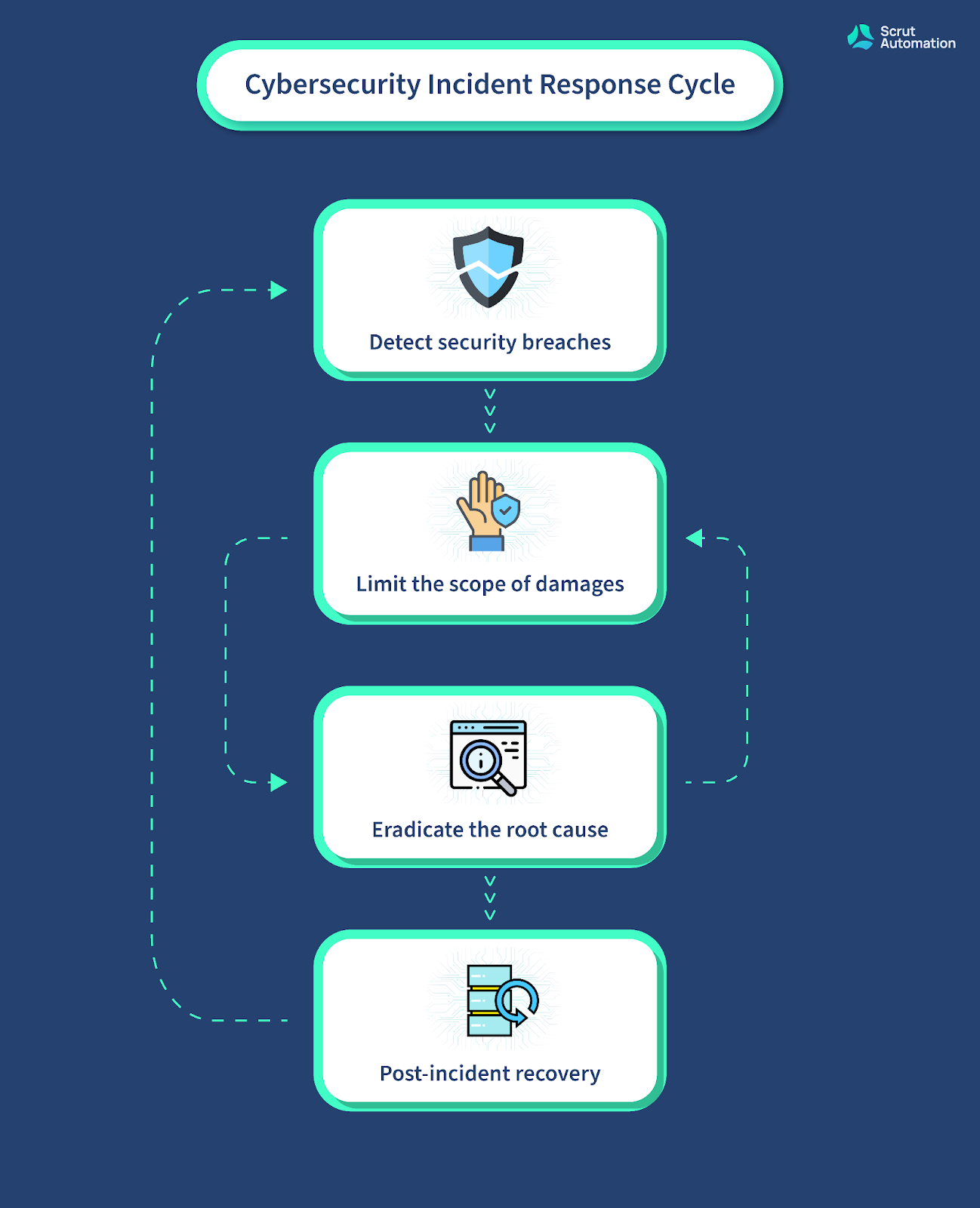
Incident response refers to the process of responding to cybersecurity breaches in a timely manner. The process usually involves helping an organization detect security breaches, limit the scope of damages and blast radius, eradicate the root cause, and perform post-incident recovery.
The cybersecurity incident response cycle starts by detecting data security breaches, then limiting the extent of the damage, eliminating the root cause, and generating post-incident recovery reports.
Cybersecurity tools like CAASM can help to spot, flag, investigate, remediate, and recover from such incidents that require an immediate response.
A cybersecurity incident can vary depending on the type of cyber attack, such as violations of regulations (i.e., PCI DSS, GDPR, HIPAA), policies and laws, or authorized access to an organization’s data and cyber assets.
If cybersecurity incidents are not contained and resolved effectively, they could cost your organization millions of dollars and a tarnished reputation.
That’s why it’s crucial for every organization to create a cybersecurity incident response plan to curb financial and reputational damages in the event of security breaches.
What are security KPIs?
Key Performance Indicators (KPIs) related to security are metrics used to measure the effectiveness, performance, and overall health of an organization’s security practices and systems.
These cybersecurity KPIs help organizations track their security posture, identify vulnerabilities, and make informed decisions to improve their security measures. Security KPIs can vary depending on the organization’s industry, size, and specific security goals.
There are plenty of incident response KPIs an organization can track and monitor to identify and diagnose security incidents and resolve them in a timely manner.
But first, an organization must figure out which incident response metrics it needs to prioritize to measure the success of its cybersecurity incident response plan.
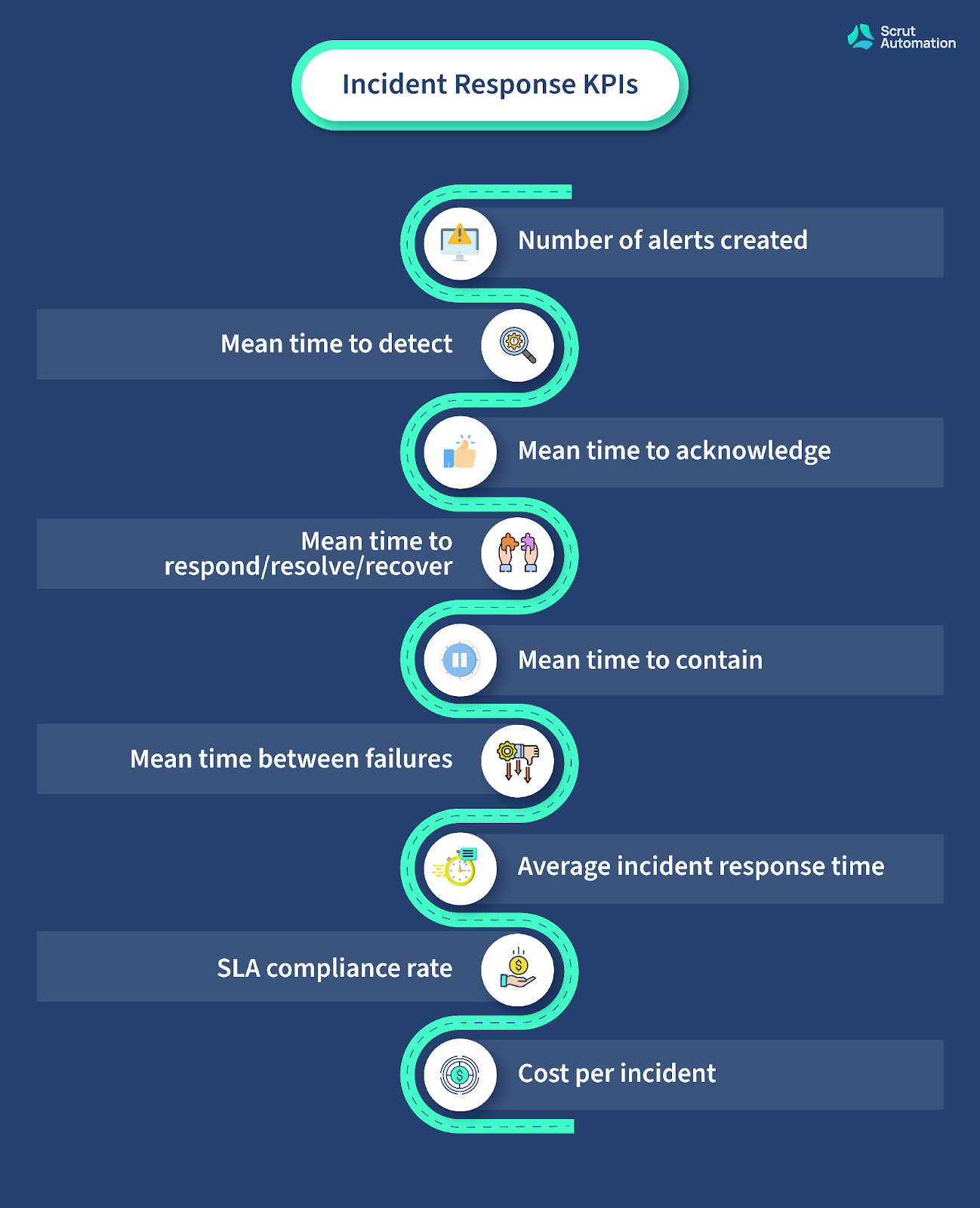
Below, we’ve outlined the 9 most important incident response KPIs to help you stay on top of problem identification and remediation efforts.
A. Number of alerts created
If you use an incident response tool, it’s a good idea to start tracking how many alerts are usually generated in a specific time period (i.e., weekly, bi-weekly, monthly, etc.).
Doing so will give you a baseline of how busy your incident response team is and also identify periods where there is a significant increase and decrease in alerts.
B. Mean time to detect
Mean time to detect (MTTD) is a crucial metric as it tells you the average amount of time your team takes to detect a security incident in your organization’s network.
To calculate MTTD, add the total amount of time your team takes to detect security incidents during a specific period and divide that by the number of total incidents.
C. Mean time to acknowledge
Mean time to acknowledge (MTTA) measures the amount of time a member of your incident response team takes to notice and start working on the problem after the system generates an alert.
The higher the MTTA, the longer it will take to start working on resolving the incident.
D. Mean time to respond/resolve/recover
Mean time to respond/resolve/recover (MTTR) is the amount of time your incident response team takes to diagnose and resolve the problem and get the affected assets back up and running again.
To calculate MTTR, take the total amount of downtime for a specific period and divide it by the number of incidents that occurred during the same period.
E. Mean time to contain
Mean time to contain (MTTC) combines MTTD, MTTA, and MTTR together to create a holistic view of how well your organization is currently responding to cybersecurity incidents.
Simply put, it tells you how long your incident response team takes to detect, acknowledge, and resolve a cybersecurity incident and prevent the same incident from occurring again in the future.
F. Mean time between failures
Mean time between failures (MTBF) helps organizations measure the time between repairable system failures of an application, product, or system.
Tracking these metrics is important because it helps to determine if systems are failing more regularly than expected so that they can analyze the root cause and prevent the same issue from repeating.
G. Average incident response time
The average incident response time indicates how quickly your incident response team allocates responsibilities to the designated professional and resolves the threat.
If you find the resolution times to be higher than they should be, organizations must examine the issue and figure out a solution to resolve it.
H. SLA compliance rate
This incident response KPI helps to measure the percentage of incidents that are handled as per the pre-defined service level agreement (SLA) timeframe.
Tracking your SLA compliance rate is crucial because it helps to ensure that your cybersecurity incident response plan is fulfilling its pre-defined objectives and delivering the promised results.
I. Cost per incident
Finally, the cost per incident measures the average cost incurred by your organization to resolve and recover from each security breach or incident.
Tracking this metric is important because it is helpful in assessing the financial impact of cybersecurity incidents, determining which methods are most effective, and prioritizing investments to minimize future incidents.
These are the main metrics an organization should be tracking to measure the performance of its incident response plan.
However, these metrics can vary significantly depending on your organization’s unique goals, data types, etc.
While these are all important metrics, sometimes they’re not enough to truly evaluate an incident response.
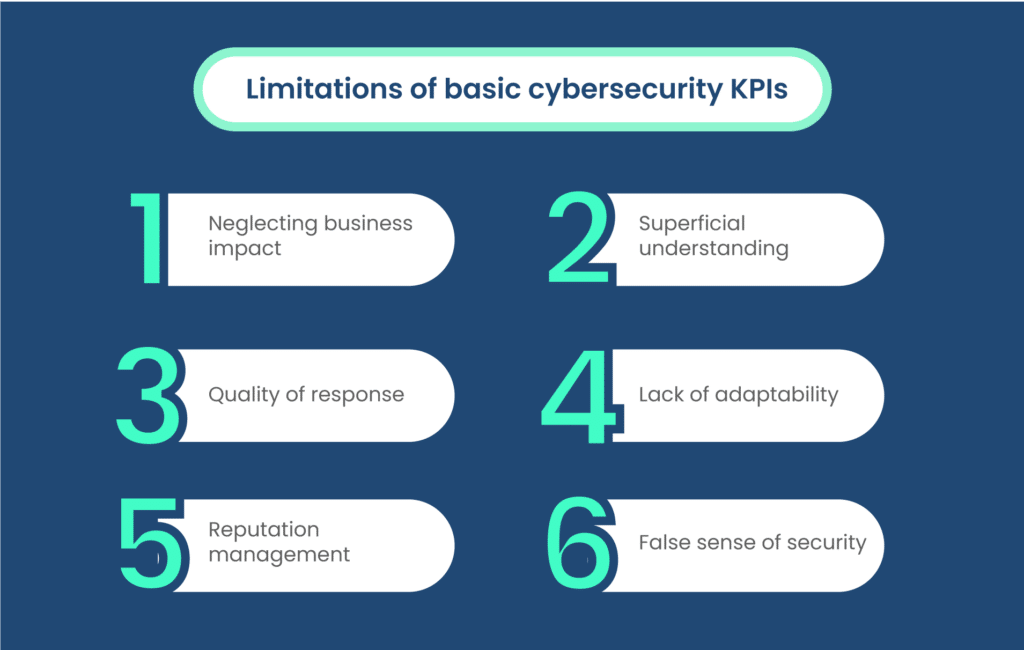
What are the limitations of basic security KPIs?
While traditional security KPIs like MTTD and MTTR are valuable for measuring incident response success, they have certain limitations that can hinder a comprehensive assessment of an organization’s security posture and incident response effectiveness.
Here are some of the limitations:
A. Neglecting business impact
MTTD and MTTR focus primarily on response times without considering the broader business impact of security incidents. Organizations may prioritize speedy resolution at the expense of thoroughly understanding the incident’s potential consequences on operations, customer trust, and reputation.
Example: A company experiences a data breach and quickly mitigates the issue but fails to adequately communicate with affected customers, leading to confusion and eroding customer trust.
B. Superficial understanding
Relying solely on MTTD and MTTR can result in a superficial understanding of the incident response process. These cybersecurity KPIs do not delve into the complexity of the incident, the depth of analysis, or the steps taken to prevent similar incidents in the future.
Example: An organization quickly identifies and removes malware from its network but doesn’t perform a thorough investigation to determine the source of the attack or the potential data exfiltrated.
C. Quality of response
Basic security KPIs do not assess the quality and effectiveness of the response itself. Focusing on time metrics alone might lead to hasty decisions or overlooking crucial details, resulting in recurring incidents.
Example: An organization responds promptly to a security incident by shutting down affected systems but fails to properly eradicate the underlying cause, leading to repeated breaches.
D. Lack of adaptability
Basic cybersecurity KPIs might not account for the evolving nature of security threats and the need for adaptive responses. Organizations need to consider the flexibility of their incident response strategies to address emerging threats effectively.
Example: A company’s incident response plan is tailored to a specific type of attack, but when faced with a novel attack vector, the predefined security KPIs fail to capture the organization’s ability to adapt and respond effectively.
E. Reputation management
While traditional cybersecurity KPIs focus on technical aspects of incident response, they may not adequately measure the organization’s ability to manage the fallout from a security incident in terms of public relations, brand reputation, and customer communication.
Example: A company experiences a major breach and successfully mitigates the incident within the defined MTTR, but the lack of transparency in communicating the incident to stakeholders results in negative media coverage and customer backlash.
F. False sense of security
Relying solely on basic cybersecurity KPIs can create a false sense of security if the organization perceives itself as well-prepared due to meeting time-based goals. This can lead to complacency and a failure to continuously improve security practices.
Example: An organization consistently meets its MTTD and MTTR targets, leading it to believe that its incident response capabilities are strong. However, a security audit reveals multiple gaps and vulnerabilities in its response procedures.
To overcome these limitations, organizations should complement traditional security KPIs with additional metrics that assess the business impact, depth of analysis, response quality, adaptability, and reputation management aspects of incident response. This holistic approach ensures a well-rounded evaluation of incident response effectiveness and helps organizations make informed decisions to enhance their security strategies.
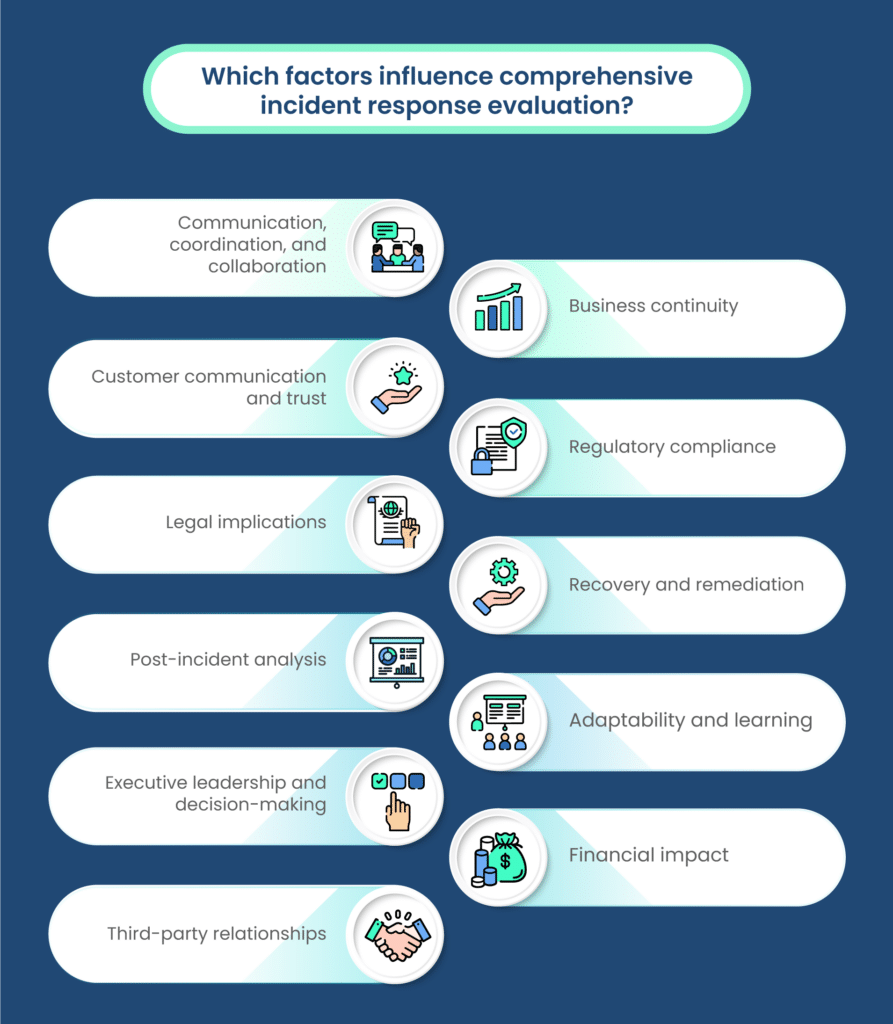
What are the factors influencing comprehensive incident response evaluation?
Comprehensive evaluation of incident response effectiveness requires taking into account various factors beyond just technical aspects. This holistic approach acknowledges the interconnectedness of technical, organizational, and regulatory elements. Here’s why considering these factors is crucial:
A. Communication, coordination, and collaboration
Effective incident response hinges on seamless communication, coordination, and collaboration among cross-functional teams. The ability of teams to share information, insights, and decisions in a timely manner significantly impacts response quality and speed.
B. Business continuity
Incident response should aim not only to contain and mitigate the immediate impact of an incident but also to ensure minimal disruption to business operations. Evaluating how well the organization managed to maintain critical functions during the incident is essential.
C. Customer communication and trust
Transparency and timely communication with customers about incidents are crucial to maintaining their trust. Evaluating how well the organization communicated with affected customers and stakeholders can have a long-term impact on reputation and customer loyalty.
D. Regulatory compliance
Many industries are subject to regulatory requirements regarding incident reporting, data protection, and breach notification. Failing to comply with these regulations can lead to legal consequences. Evaluating whether incident response adhered to relevant regulatory standards is vital.
E. Legal implications
Incident response may involve legal considerations such as preserving evidence for potential legal actions. Failing to handle these aspects appropriately can have legal ramifications down the line.
F. Recovery and remediation
Beyond containment, the effective incident response also involves thorough recovery and remediation efforts. Evaluating how well the organization restored affected systems, data, and services is crucial to overall resilience.
G. Post-incident analysis
Conducting post-incident analyses is essential for understanding the root causes of incidents and implementing preventive measures. An effective incident response evaluates the depth of analysis conducted after the incident to prevent future occurrences.
H. Adaptability and learning
Incident response effectiveness is not solely based on predefined plans but also on the organization’s ability to adapt to new and evolving threats. Evaluating the organization’s capacity to learn from incidents and continuously improve its response strategies is vital.
I. Executive leadership and decision-making
Senior leadership’s involvement in incident response decisions and support for necessary actions play a pivotal role. Evaluating their engagement and decision-making effectiveness is essential.
J. Financial impact
Incidents can have direct financial implications, including costs associated with remediation, legal actions, and potential revenue loss. Evaluating the financial impact of an incident helps quantify the effectiveness of the response.
K. Third-party relationships
Incidents can impact relationships with third-party vendors, partners, and customers. Evaluating how well the organization manages these relationships during and after an incident is important.
In summary, comprehensive incident response evaluation goes beyond technical metrics and considers the broader organizational, communication, regulatory, and business-related factors that influence the overall effectiveness of the response. A multidimensional assessment helps organizations understand not only how well they address technical issues but also how well they manage the operational, reputational, legal, and compliance aspects of security incidents.
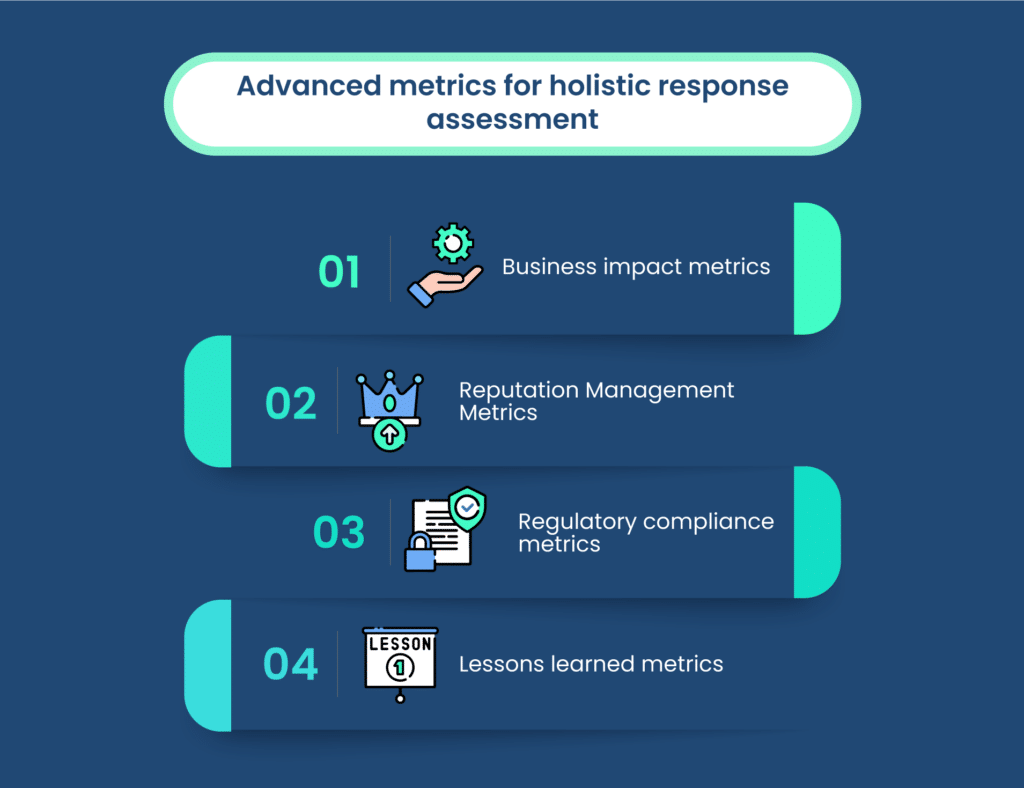
Which are the advanced metrics for holistic incident response assessment?
Let’s delve into advanced metrics that contribute to a more comprehensive assessment of incident response effectiveness:
A. Business impact metrics
These metrics assess the tangible effects of an incident on an organization’s bottom line and operations. They include
Revenue impact: Measuring the financial losses incurred due to downtime, reduced sales, or customer churn.
Productivity impact: Evaluating how the incident disrupts internal workflows, causing delays or inefficiencies.
Customer satisfaction impact: Gauging how the incident affects customer experience, loyalty, and retention.
Contribution: Business impact metrics shed light on the real-world consequences of security incidents, emphasizing the importance of swift and effective incident response to minimize financial losses and operational disruptions.
B. Reputation Management Metrics
These metrics focus on the perception of the organization among customers, stakeholders, and the public after an incident. They include
Media coverage: Measuring the extent of media attention and framing of the incident.
Social media sentiment: Analyzing social media mentions and sentiment to gauge public opinion.
Brand perception: Tracking changes in brand sentiment and reputation in the aftermath of the incident.
Contribution: Reputation management metrics highlight the significance of transparent communication, timely response, and proactive measures to mitigate the potential long-term damage to an organization’s image and trustworthiness.
C. Regulatory compliance metrics
These metrics assess the organization’s adherence to relevant legal and industry regulations during and after an incident. They include
Regulatory violations: Identifying instances where the incident response process deviated from regulatory requirements.
Breach notification timeliness: Measuring how well the organization adhered to mandatory breach notification timelines.
Data protection compliance: Evaluating whether personal and sensitive data were appropriately safeguarded during the incident.
Contribution: Regulatory compliance metrics emphasize the importance of aligning incident response activities with legal obligations and industry standards, reducing the risk of legal penalties and reputational damage.
D. Lessons learned metrics
These metrics focus on the organization’s ability to learn from incidents and improve its incident response capabilities over time. They include
Post-incident recommendations implemented: Measuring the percentage of post-incident recommendations that were effectively integrated into the organization’s security practices.
Incident recurrence rate: Tracking the frequency of similar incidents occurring after implementing lessons learned from previous incidents.
Incident response plan updates: Evaluating how frequently incident response plans are reviewed, updated, and tested.
Contribution: Lessons learned metrics emphasize the importance of continuous improvement by analyzing past incidents, identifying weaknesses, and implementing changes to enhance future incident response effectiveness.
By incorporating these advanced metrics into the assessment of incident response, organizations gain a more holistic understanding of their capabilities. This broader evaluation extends beyond technical aspects, encompassing business impact, reputation management, regulatory alignment, and ongoing improvement. Such a comprehensive approach ensures that incident response efforts are not only efficient from a technical standpoint but also aligned with the organization’s strategic goals and the expectations of customers, stakeholders, and regulators.
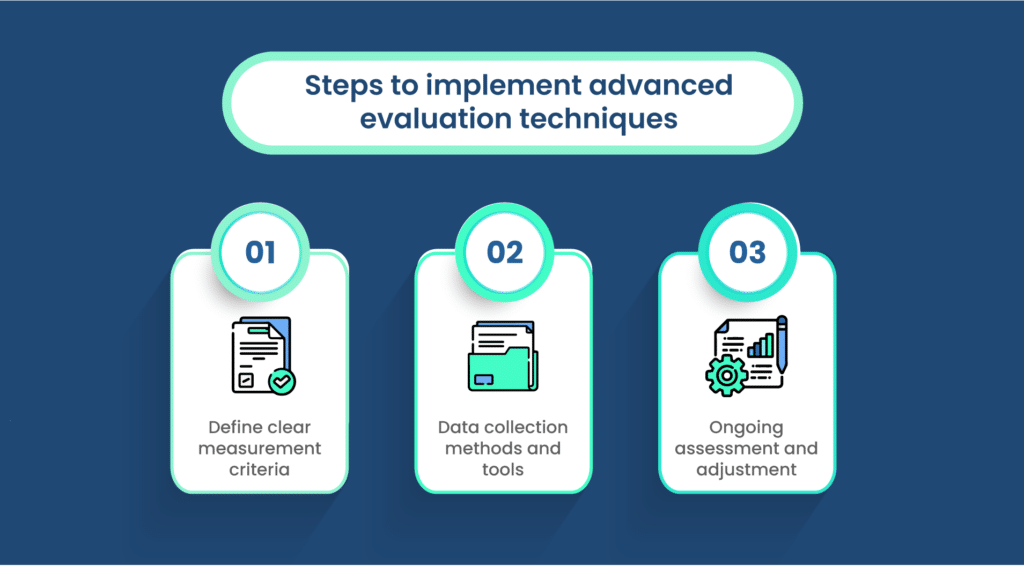
How to implement advanced evaluation techniques
Incorporating advanced metrics into your incident response evaluation strategy involves careful planning, defined measurement criteria, proper data collection methods, and a commitment to ongoing assessment and improvement. Here’s a step-by-step guide to help you implement these techniques:
A. Define clear measurement criteria
For each advanced metric (business impact, reputation, compliance, and lessons learned), establish clear and quantifiable criteria that align with your organization’s goals and objectives. These criteria should define what success looks like for each metric.
B. Data collection methods and tools
Determine how you will collect data to measure each metric. This may involve using a combination of automated tools, manual data collection, surveys, interviews, and data analytics. Consider the following approaches:
Business impact: Integrate incident response data with financial and operational metrics to assess revenue, productivity, and customer satisfaction impact.
Reputation management: Monitor social media sentiment, track media coverage, and conduct post-incident customer surveys to gauge public perception.
Regulatory compliance: Document incident response processes, breach notifications, and data protection measures to demonstrate compliance.
Lessons learned: Conduct post-incident reviews, gather feedback from stakeholders, and track the implementation of recommendations.
C. Ongoing assessment and adjustment
Regularly review and adjust your evaluation techniques based on the changing threat landscape, organizational goals, and stakeholder expectations. Continuously refine your measurement criteria and data collection methods to ensure accuracy and relevance.
The path forward: Achieving comprehensive incident response assessment
In the journey towards achieving comprehensive incident response assessment, several key points stand out:
A. Balancing technical metrics and broader considerations
While traditional technical metrics like MTTD and MTTR offer valuable insights, it’s essential to balance them with a broader perspective. Business impact, reputation, regulatory compliance, and lessons learned metrics provide a more complete understanding of incident response effectiveness.
B. Incorporating advanced metrics
Advanced metrics such as business impact, reputation management, regulatory compliance, and lessons learned contribute to a more holistic evaluation. These metrics provide insights into financial repercussions, customer trust, legal adherence, and the organization’s capacity to learn and adapt.
C. Data collection and measurement criteria
Implementing advanced metrics requires defined measurement criteria and well-thought-out data collection methods. Each metric should have clear, quantifiable goals that align with organizational objectives.
D. Ongoing assessment and evolution
Incident response evaluation strategies should be dynamic and adaptable. Regularly assess and adjust your techniques to account for changing threats, stakeholder expectations, and organizational shifts. Embrace a culture of continuous improvement.
Conclusion
In a rapidly evolving digital landscape, incident response effectiveness hinges on more than just technical proficiency. Organizations must embrace a multifaceted evaluation approach that encompasses business impact, reputation, compliance, and lessons learned. By combining traditional technical metrics with advanced evaluation techniques, organizations can make informed decisions, enhance their incident response capabilities, and safeguard their operations, reputation, and customer trust. As threats evolve, so should our strategies. It’s time to redefine incident response assessment and move towards a more holistic understanding of success.
FAQs
1. Why is traditional incident response assessment not enough?
Traditional assessment metrics like MTTD and MTTR provide valuable insights but focus solely on technical aspects. The comprehensive evaluation considers broader factors, such as financial losses, customer trust, legal compliance, and the organization’s capacity to learn from incidents.
2. What are advanced metrics in incident response evaluation?
Advanced metrics include business impact, reputation management, regulatory compliance, and lessons learned. These metrics provide a more holistic understanding of incident response effectiveness by considering financial consequences, public perception, legal adherence, and continuous improvement efforts.
3. How can organizations benefit from a comprehensive approach?
A comprehensive approach to incident response evaluation provides a clearer picture of the impact of incidents on business, reputation, compliance, and learning. This helps organizations make proactive improvements and better protect operations, reputation, and customer trust.
4. How can I balance technical and non-technical metrics?
While technical metrics like MTTD and MTTR are important, combining them with non-technical metrics offers a more well-rounded assessment. Balancing both perspectives ensures that incident response efforts align with organizational goals and stakeholder expectations.
27 Mar 2023
7minutes
Authored by
Aayush Ghosh Choudhary
Co-founder & CEO at Scrut
The expectations of Biden’s National Cybersecurity Strategy from the private sector
The new National Cybersecurity Strategy shows the comprehensive approach taken by the Biden administration to secure cyberspace and ensure the US is in the strongest possible position to realize all the benefits and potential of the digital future.
Moreover, one critical aspect of the Strategy is its shifting focus of cybersecurity responsibilities from the shoulders of the general public to the public sector and the affluent private sector. This means private sector organizations will need to sharpen their knowledge and align with the expectations of the new Strategy – especially if they want to be a part of the economic reforms.
And we’re here to help you understand exactly how to do that.
Let’s do a quick recap of the US National Cybersecurity Strategy.
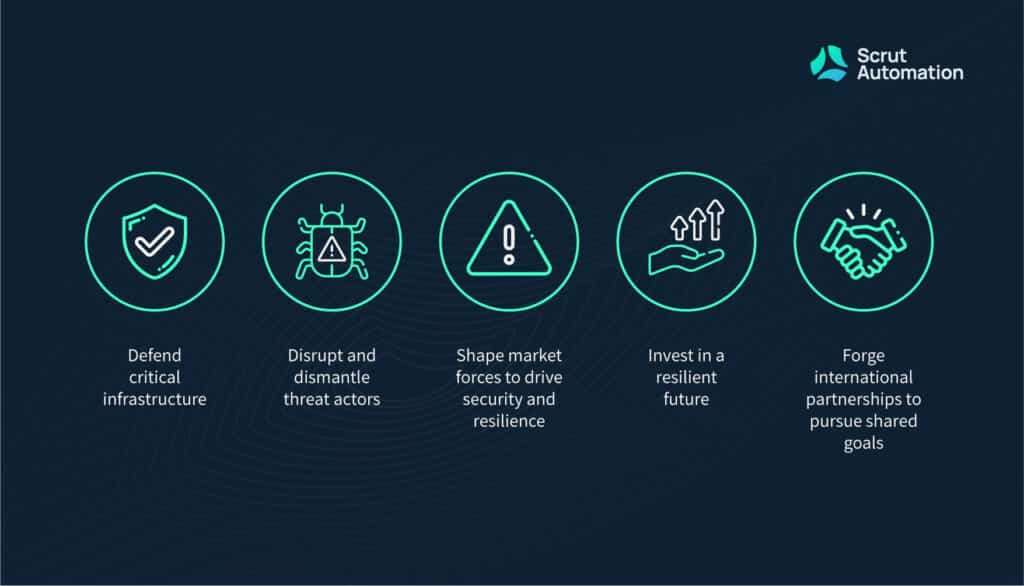
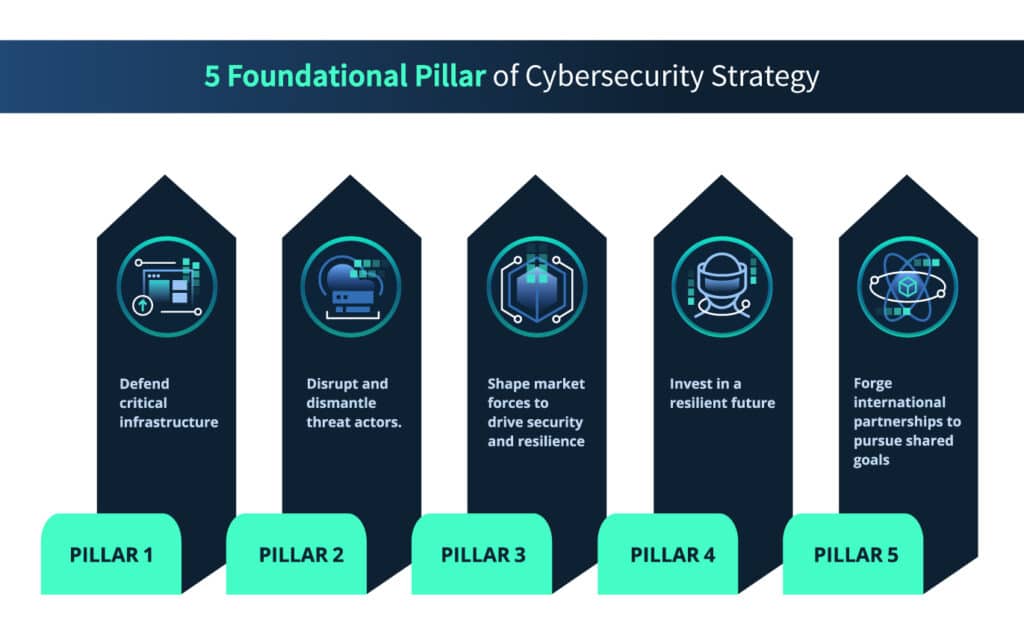
It is based on five fundamental principles or pillars, which aim to direct two fundamental changes, which include rebalancing the responsibility to defend cyberspace and realigning incentives to favor long-term investments. These pillars are as follows;
The expectations of Biden’s National Cybersecurity Strategy from the private sector
The role of the private sector, especially those holding resources, in security is increasing. Why? Because the government plans to invest in data protection through public organizations and will encourage the private sector to join hands, as well.
The Strategy plays a critical role in this as it divides the responsibility of cybersecurity between public and private agencies. Some of the actions that the Strategy will expect from the private sector industry are as follows.
1. Implement zero-trust architecture
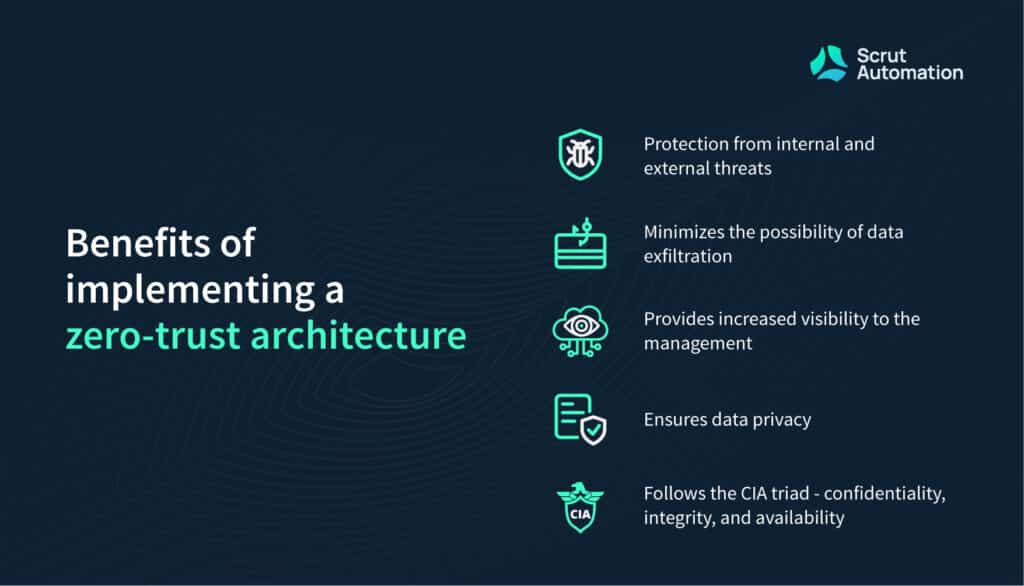
Zero-trust architecture is a strategy implemented by an organization that negates implicit trust and applies continuous validation of each stage of digital interaction. It is based on the principle of “never trust, always validate” when it comes to sharing information. A zero-trust model verifies the user’s identity, device, location, and role before sharing requested data.
As the Biden administration shifts to tighter defenses, it plans to adopt zero-trust in public sectors. Since it offers a fair amount of benefits, the private sector is also encouraged to follow in the footsteps of the public sector units.
Benefits of implementing a zero-trust architecture
2. Modernize IT, and OT structure
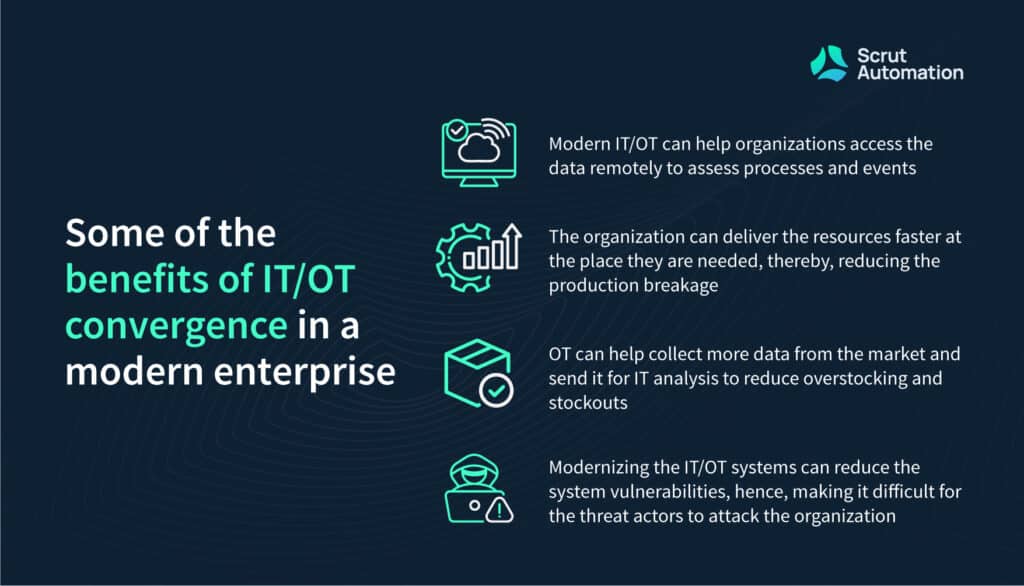
Information technology (IT) and operation technology (OT) were historically disconnected. However, in recent years one can see the convergence of IT and OT on every scale. The IT system is used for data-centric activities, while the OT systems are used to monitor physical assets, like computing devices, events, and processes, to make enterprise and industrial operations more efficient.
The US administration focuses on modernizing every organization’s IT and OT structures to make them more cyber-resilient. By strengthening the organization’s defenses, one can reduce the chances of cyber attacks.
Some of the benefits of IT/OT convergence in a modern enterprise are as follows:
The Federal government intends to shift the industry frameworks from optional to mandatory and introduce new frameworks for cybersecurity. These frameworks will be tailored to meet the cybersecurity needs of specific sectors and industries, keeping in mind the sector’s risk profile, harmonized to reduce duplication, complementary to public-private partnerships, and cognizant of the cost of implementation.
The private sector must follow the frameworks and compliance standards recommended by the government to contribute to the American dream of a cyber-resilient economy. In the long run, these frameworks can focus on achieving security outcomes and enabling the continuity of operations and functions while promoting collaboration and innovation.
The regulatory frameworks would be performance-based, leveraging the existing cybersecurity frameworks, voluntary consensus standards, and guidance, and flexible enough to adapt to any changes in technologies and tactics made by the threat actors. The frameworks and standards include the Cybersecurity and Infrastructure Security Agency (CISA)’s Cybersecurity Performance Goals and the National Institute of Standards and Technology (NIST) framework for Improving Critical Infrastructure Cybersecurity.
4. Develop cyber resilience in cloud computing
Cloud computing is the widely accepted method in the world right now and seems to be growing by leaps and bounds. Gartner forecasts public cloud end-user spending to reach $600 billion in 2023 vis-a-vis $500 billion in 2022.
Cyber resilience is the ability to foresee, resist, recover from, and respond to adverse conditions, including cyber attacks, data breaches, or any other cyber incident. Cyber resilience in cloud infrastructure is difficult to achieve as the data is stored with third parties. The importance of cloud security cannot be underestimated in these modern times.
Fortifying the cloud-based structure with more secure technology can improve the cybersecurity structure of the entire organization. Especially if you are working as a service provider to the government, your security posture should be top-notch.
5. Partner with other defenders
The strategy not only expects but promotes that the government/public institutions collaborate with private organizations to defend the country’s economy.
While it may seem like an unnecessary ask at first, both sectors can come together to play a significant role in this partnership. The private sector has the more technical knowledge to understand the techniques used by cybercriminals, while the government has more resources to follow through with the criminals.
Moreover, the Strategy recommends that the information be shared among all the defenders to present a united front to the cyber criminals. An open database might be helpful to all the parties involved in defending against cybercrime. It encourages all the defenders must openly share their learnings to help others from falling victim to similar attacks after every incident.
On their part, the government will also share relevant information directly with their private sector partners, i.e., you.
The following government bodies will provide opportunities to enable timely, actionable, and relevant information with their private partners:
The Department of Energy (DOE)’s Energy Threat Analysis Center (ETAC) pilot,
the Department of Defence (DoD)’s defense Industrial Base Collaborative Information Sharing Environment (DCISE), and
the National Security Agency (NSA)’s Cybersecurity Collaboration Center.
6. Review major cyber incidents
The government is relying on the private sector cybersecurity leaders to partner with their government counterparts to review any major incidents, conduct authoritative fact-finding, generate informative insights, guide industry remediations, and provide recommendations for improving the nation’s cybersecurity posture going forward.
7. Use and develop software with cyber protection
The administration realizes that the burden of cybercrime is falling on the shoulders of smaller players and customers in the market. To minimize this burden, the federal government plans to rate the cybersecurity features of the software and display them.
Today, only some software developers are taking precautions to make their products secure from cybercriminals. This policy is saving the cost for the developers who forego cybersecurity settings in their products, thereby making their products more affordable to consumers. Inadvertently, the market is supporting and promoting insecure software.
Software supply chain security is one of the topmost areas the Strategy focuses on. It recommends that software developers have their products rated by a third party to measure their security. When the cybersecurity ratings are displayed on the products, consumers will gravitate toward the secure software. Slowly, insecure products will disappear from the market. All software products will include cybersecurity in their development cycle.
If you are buying software for your organization, you must choose software that includes cybersecurity. On the other hand, if you are a software developer, start developing software that supports a robust cybersecurity posture. In time, this will increase your market share.
8. Protect critical infrastructure
COVID-19 showed how critical infrastructure is important for the country. The Ukraine-Russia war has also accentuated the need for a functioning critical infrastructure. The private sector should keep in mind that the US government is planning to be independent in the production of essential goods to reduce disruption in critical times.
The cybersecurity of critical infrastructure is paramount, and if you are connected to providing this critical infrastructure, you must follow robust cybersecurity policies.
9. Educate your employees
The federal government acknowledges that there is an acute shortage of cybersecurity professionals in the market. This is also why it encourages education and training on the subject.
The government is planning on strategic investment in innovation, R&D, and education. As a private sector owner, if you educate your employees about cybersecurity, it will make your organization much more resilient. A small mistake made by an employee can lead to a full-blown cyber attack on the organization. Therefore, the employees must be taught to use cybersecurity practices as a part of their duties rather than as an additional chore.
Tests and quizzes should follow the training to verify the knowledge of employees. If you find the results unsatisfactory, you must retrain the employees and check where the gap lies.
Final Thoughts
The new National Cybersecurity Strategy has defined all the specific areas in which it wants private sector contribution. We have shown you where the government would require your input and how.
Apart from this, the US government plans to lay down different cybersecurity frameworks for the private sector. The Strategy focuses on collaboration and information sharing with the private sector. It also promises simplified and stronger versions of security-related regulations. If you are from the private sector and wish to know more about the current industry frameworks and how complying with them will take you a step closer to alignment with the Strategy, reach out to us by clicking here.
23 Mar 2023
6minutes
Authored by
Aayush Ghosh Choudhary
Co-founder & CEO at Scrut
How to improve attack surface visibility using CAM?
As organizations increasingly move towards digital transformation, their attack surfaces have grown larger and more complex every passing day.
This, in turn, is creating new opportunities for cybercriminals to exploit vulnerabilities and gain access to sensitive data.
To stay ahead of these threats, organizations must take a proactive approach to their security posture and improve their attack surface visibility for attack surface reduction.
That’s where cyber asset management (CAM) comes in.
In this blog post, we’ll take a deep dive into CAM and explore how it can help you improve your organization’s attack surface visibility so that you can stay one step ahead of cybercriminals and protect your sensitive data from theft and exposure.
What is attack surface?
Attack surface refers to all the entry points a cybercriminal can exploit to gain unauthorized access to your organization’s network such as hardware, software, web applications, APIs, and any form of cyber assets.
The larger the attack surface of your organization’s network, the greater the risk of a successful cyber attack.
That’s why it’s critical for organizations to invest in modern security solutions like CAM or CAASM to gain a complete visibility over their attack surface so that they can take necessary steps to minimize attack surface area and remediate all vulnerabilities.
What is attack surface visibility?
Attack surface visibility is the ability of an organization to gain comprehensive insight into its attack surface and to identify all the potential vulnerabilities, entry points, and weak spots that a cybercriminal could exploit.
With attack surface visibility, organizations can proactively identify and address security vulnerabilities, implement effective attack surface management strategies, and reduce the likelihood of successful cyberattacks.
Attack surface visibility can be achieved through various cybersecurity tools and practices (i.e. Cybersecurity Asset Management).
If you’re not familiar with cyber asset management (CAM), let’s understand what is it and how does it work.
Afterwards, we will discuss how CAM can improve attack surface visibility and what steps you need to take to make it happen.
What is cyber asset management (CAM)?
Cyber asset management (CAM) is the process of identifying, tracking, and managing an organization’s cyber assets and associated risks & vulnerabilities to improve cybersecurity.
The goal of CAM is to provide a comprehensive view of an organization’s attack surface and to identify and prioritize vulnerabilities and risks associated with their digital assets.
This enables organizations to implement effective security controls and risk management strategies, gain complete attack surface visibility, minimize attack surface, reduce the likelihood of successful cyberattacks, and protect their sensitive data.
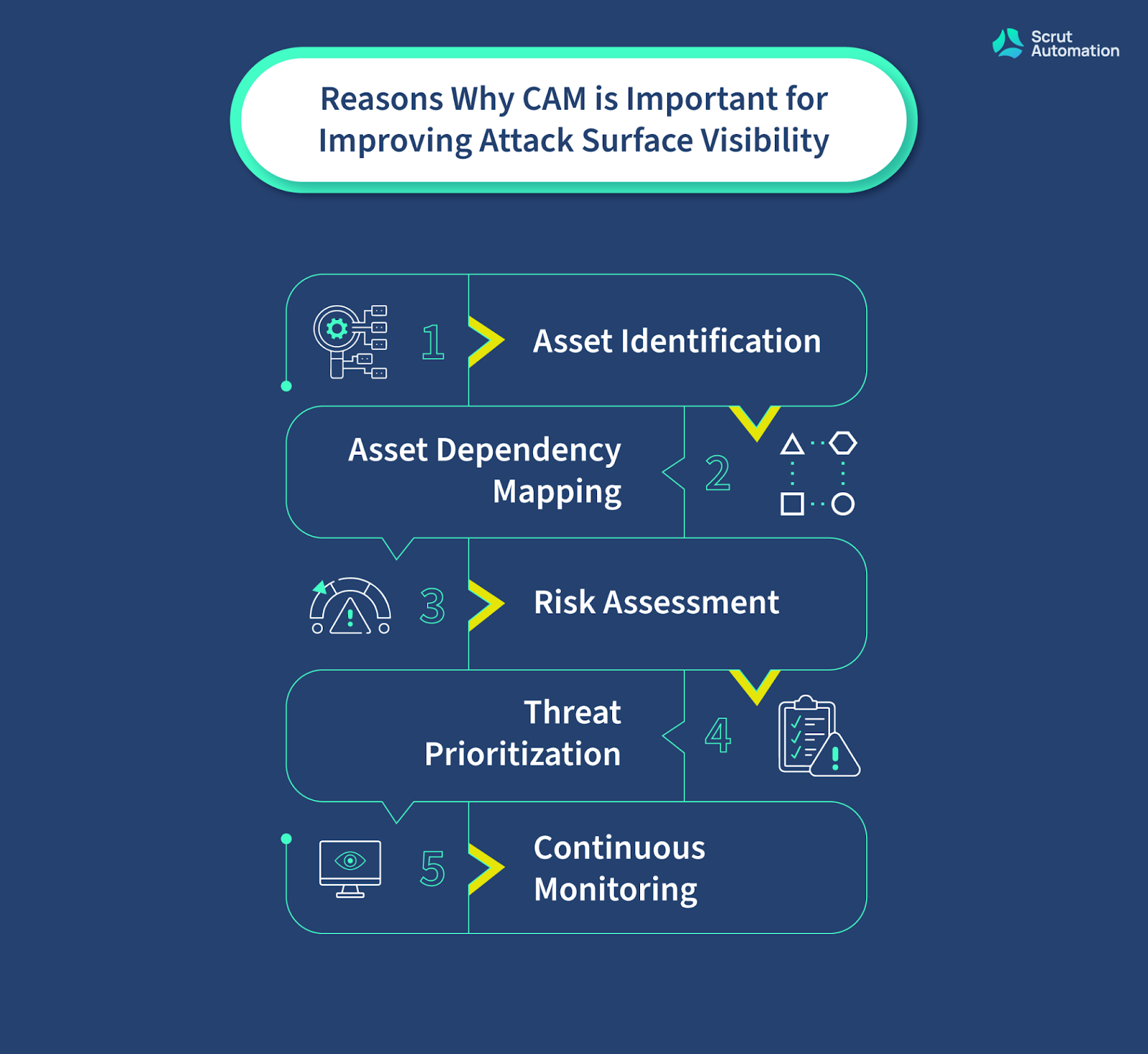
Why is CAM important in improving attack surface visibility?
As a critical component of any organization’s cybersecurity strategy, cyber asset management (CAM) is essential in improving attack surface visibility. By discovering, inventorying, and classifying all digital assets, CAM can provide organizations with a better understanding of their attack surface and the associated risks and vulnerabilities.
With these insights, organizations can prioritize their security efforts and focus on attack vectors reduction by mitigating the most critical risks.
Additionally, CAM can also provide ongoing monitoring and attack surface management of an organization’s digital assets to detect new vulnerabilities and potential risks as they arise and to ensure that security measures are continually updated and optimized.
So by implementing CAM effectively, organizations can improve their attack surface visibility, mitigate risks, and protect their sensitive data & information from cyber attacks.
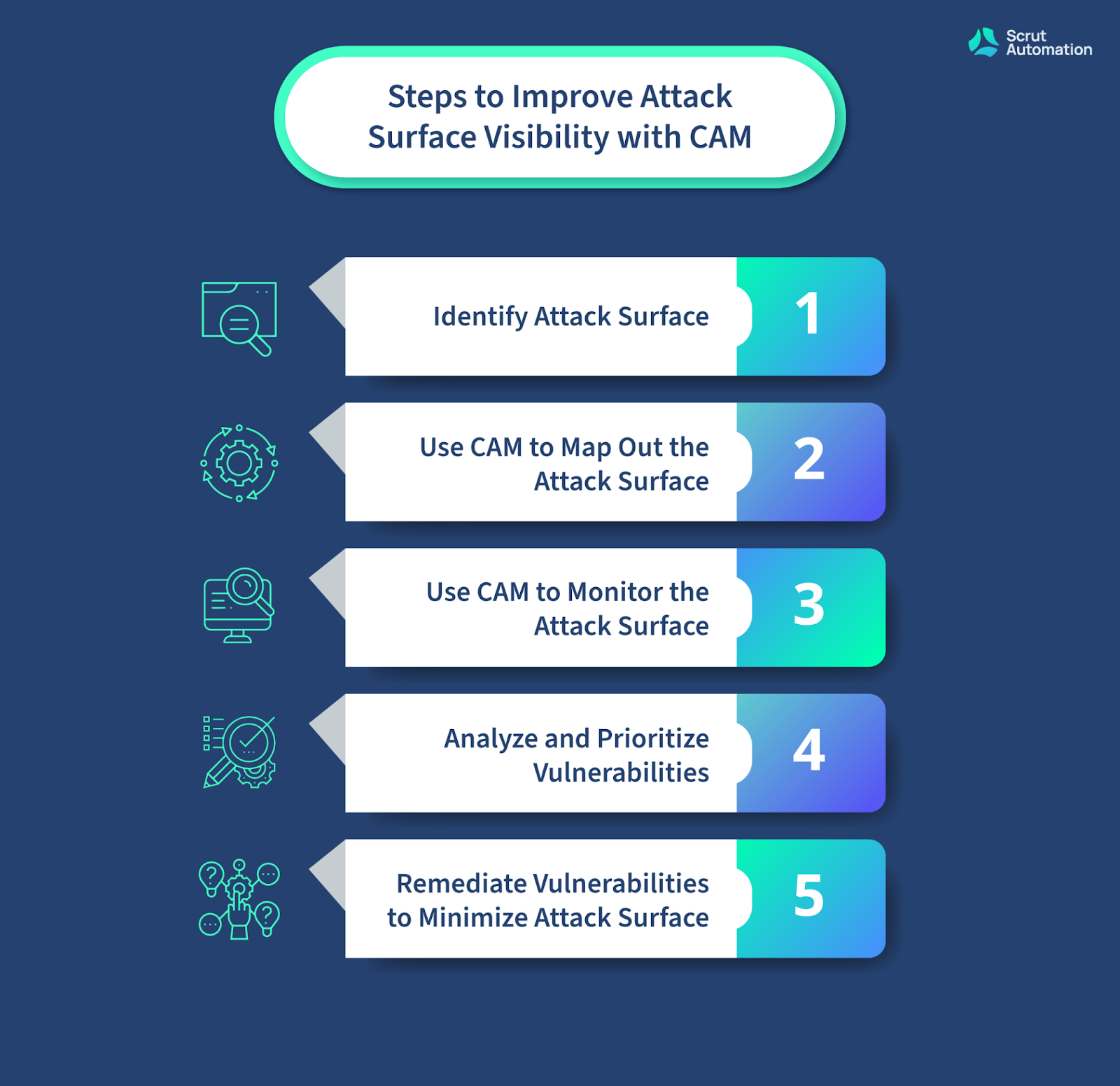
Steps to improve attack surface visibility with CAM
Now that you know why CAM is important in improving the attack surface visibility of an organization’s network, let’s talk about the steps you need to take for accomplishing this.
Step 1 – Identify attack surface
The first step in improving attack surface visibility is to identify all of the potential entry points that attackers could use to gain access to an organization’s systems and data.
This includes not just the obvious entry points, such as internet-facing servers and applications, but also less obvious areas, such as unsecured wireless access points, third-party vendors, and even physical access points.
For example, if your organization is making an inventory of all devices connected to its network such as IoT devices, servers, cloud storage, and other endpoints, make sure to consider the third-party vendors and assess their security posture as well.
Step 2 – Use CAM to map out the attack surface
Once you’ve identified the attack surface of your organization’s network, the next step is to use a CAM tool to map out the attack surface and gain a comprehensive view of all digital assets.
For example, if you want to identify all digital assets in your organization’s environment, a robust CAM tool can provide a complete view of all hardware devices, operating systems, software applications, and cloud services in use.
This, in turn, will enable your organization to understand the scope of their attack surface and identify any assets that may have been overlooked in the initial identification stage.
Step 3 – Use CAM to monitor the attack surface
After mapping out the attack surface, it’s critical to continually monitor the digital assets to detect new vulnerabilities and potential risks as they arise.
A CAM tool can help with ongoing monitoring and management of your organization’s digital assets to identify potential vulnerabilities and threats quickly.
Let’s assume that you want to scan your organization’s environment for vulnerabilities and misconfigurations.
Using a CAM tool, you can set up continuous monitoring and real-time alerts on any new vulnerabilities that are discovered, which will allow you to take quick actions to minimize attack surface area and remediate the issues.
Step 4 – Analyze and prioritize vulnerabilities
Once you’ve set up continuous monitoring to identify potential threats and vulnerabilities, the next thing you need to do is analyze and prioritize.
Most CAM tools always provide detailed information about each cyber asset such as location, configuration, operating system, threat level, severity of vulnerabilities, and other relevant information.
This, in turn, can be used to assess and prioritize based on their criticality and potential impact on your organization’s network.
Simply put, you can use a CAM tool to conduct a network-wide vulnerability assessment on all your cyber assets.
The tool will then provide you with a comprehensive report, highlighting the most critical vulnerabilities to help prioritize remediation efforts based mainly on the potential impact of each vulnerability on your organization’s environment.
Step 5 – Remediate vulnerabilities to minimize attack surface
In the final step, you need to mitigate all the identified threats and vulnerabilities for attack surface reduction and improve overall visibility.
To minimize attack surface area and gain better visibility, you need to patch or upgrade software, remove unnecessary or unused applications, improve your security policies & procedures, and implement additional security controls.
For example, if you’ve discovered a vulnerability in a particular software application, leverage a CAM tool to automate the patching process.
Additionally, you can also use the tool to scan your organization’s environment for any hardware devices that are running outdated software version that is highly vulnerable and deploy the latest patches to those devices.
Doing so will enable you to remediate the vulnerabilities and minimize attack surface to prevent successful cyber attacks.
Conclusion
As we have explained, improving attack surface visibility is critical for modern organizations to stay one step ahead of hackers and keep cyber assets secure.
By leveraging the powerful capabilities of a CAM tool, organizations can easily identify, prioritize, and mitigate any potential threats & vulnerabilities lying in their network before they can be exploited.
However, it’s important to know that CAM is only one piece of the puzzle when it comes to cybersecurity. While it’s certainly an essential tool, it’s not a silver bullet.
That’s why organizations must invest in other emerging cybersecurity solutions like CAASM (Cyber Asset Attack Surface Management) along with employee education, incident response planning, and so on for attack surface reduction & to build a holistic security program.
By combining CAM with other cybersecurity measures and solutions, organizations can remain vigilant against new threats and keep their sensitive information safe.
FAQs
How attack surface increases?
Attack surface increases when new assets are added to an organization’s network or when security configurations are poor, and third-party dependencies are not properly managed. Organizations should regularly assess their attack surface and implement strong security controls to minimize it.
How to reduce attack surface?
To reduce attack surface, you must minimize the number of potential entry points and attack vectors that could be exploited by cybercriminals in your organization’s network. Ideally, you should remove unnecessary or unused assets, limit access, ensure secure configurations, and monitor continuously for suspicious activity.
What is attack surface visibility?
Attack surface visibility refers to the ability to identify and understand all vulnerabilities and potential entry points in an organization’s environment that attackers can exploit. It helps organizations prioritize security measures and allocate resources effectively to address critical security risks.
How to improve attack surface visbility?
To improve attack surface visibility, conduct regular security assessments, map out and visualize the attack surface, implement a CAASM solution, and educate employees about security best practices.
21 Mar 2023
13minutes
Authored by
Aayush Ghosh Choudhary
Co-founder & CEO at Scrut
Biden’s National Cybersecurity Strategy – a roadmap to prosperity through secure cyberspace
On March 2, 2023, the Biden administration announced the National Cybersecurity Strategy to create a secure cyberspace that boosts the growth of every business environment. The US government plans to achieve its goals by reflecting its values of economic security and prosperity, responsive and rights-respecting democracy, and a vibrant and diverse society.
Due to the revolutionary capability of the Internet, the way the world innovates, communicates, and shares information has reformed. With the newer premise comes a higher sense of equality, freedom of speech, and true democracy. However, all is not well with this new world. Threat actors, including private individuals, groups, and nation-states, have used these powers maliciously.
Biden’s National Cybersecurity Strategy intends two paradigm shifts: rebalancing the responsibility to defend cyberspace and realigning incentives to favor long-term investments. This strategy shifts the responsibility of defending cyberspace to the biggest, most powerful, and best-placed players, including public and private sector organizations. Organizations are expected to invest their resources in long-term solutions rather than short-term ones.
National Cybersecurity Strategy at a glance
The National Cybersecurity Strategy or the Strategy is built on five foundational pillars. Each pillar has multiple strategic objectives to defend cyberspace, disrupt cyber threats, invest in a resilient future, and forge robust partnerships to pursue shared goals. Let us look at the Strategy in some detail.
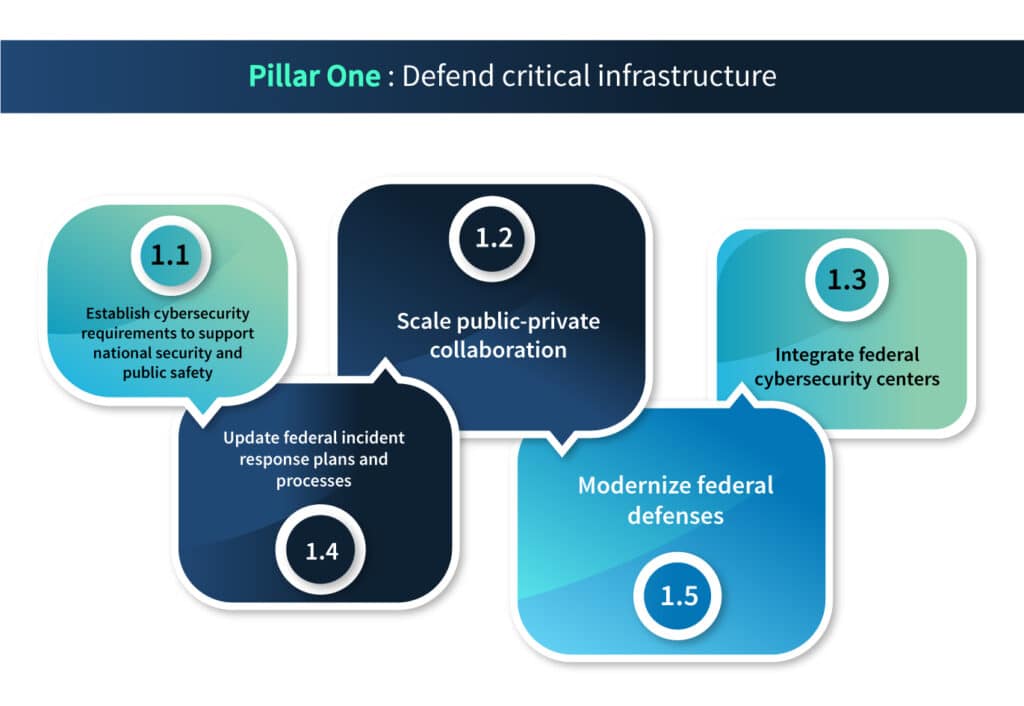
Pillar one: Defend critical infrastructure
The Strategy is designed to develop confidence among the American public regarding the availability and resilience of the essential services provided by the government. Defending the systems and assets connected to cyberspace is critical for national security, public safety, and economic stability.
The administration has established stringent regulations for certain sectors to protect critical infrastructure. In the others, new authorities will be required to set up regulations that can achieve better cybersecurity.
The administration is banking on the public-private partnership to make the systems cyber-resilient. The world saw one amazing partnership between the American public and private sectors during the ‘Shields Up’ campaign just before Russia attacked Ukraine in 2022.
The Strategy aims to build a secure and resilient Federal infrastructure that can further become a model for critical infrastructure across the United States. The Strategy focuses on long-term efforts and investment in creating and implementing cybersecurity strategies, like zero-trust architecture modernization.
The following points show the strategies designed to implement the first pillar of the National Cybersecurity Strategy – defending critical infrastructure.
Strategic objective 1.1: Establish cybersecurity requirements to support national security and public safety
Although the voluntary requirements have produced discernible results in past years, they are not as effective as the mandatory provisions and regulations. New regulations are expected to bring cybersecurity and resilience while promoting healthy competition in the market.
The four main considerations for robust regulation are
Customized for each sector considering their risk profiles
Harmonized to reduce duplication
Complimentary to both – public and private sector organizations
Affordable cost of implementation
The administration plans on streamlining the existing regulations, developing new ones to protect critical infrastructure, and making cybersecurity affordable to all.
Scaling public-private partnerships is imperative to bring the resilience level to its peak. The strategy of the administration is to realize a distributed, networked model by developing and strengthening collaboration between different organizations defending their systems through structured roles and responsibilities. The Strategy aims to increase connectivity and productivity through the automated exchange of data, information, and knowledge.
The Certified information systems auditor (CISA) is responsible for critical infrastructure security and resilience. CISA coordinates with Sector risk management agencies (SRMAs) to help the Federal Government to scale coordination. SRMAs are responsible for helping individual owners and operators to protect their systems. In short, the knowledge is passed on from the Federal Government to the private sector.
This strategy will allow data and information sharing in multiple directions. It will enable real-time and actionable information sharing to improve the cybersecurity posture of the public and private sectors.
Strategic objective 1.3: Integrate federal cybersecurity centers
There will be a gap in the capabilities where different Federal agencies, like homeland security, law enforcement, diplomatic, economic, and military missions, collaborate with each other to improve cybersecurity. This gap will be filled by the Federal Cybersecurity Centers. Intragovernmental collaboration is a prerequisite if the Federal Government wants to support non-Federal partners.
Among many other efforts, the establishment of the Joint Cyber Defense Collaborative (JCDC) at CISA is one step forward in achieving the administrative goals of intragovernmental collaboration and partnerships with private and international sectors.
Strategic objective 1.4: Update federal incident response plans and processes
When there are incidents in the private sector, the government should be able to help them navigate through the rough times. They should be aware of which government agencies to contact in case of an emergency. The Federal government should give clear instructions on how to contact the relevant agencies and which forms to fill out if there is a security incident.
CISA, through its subordinate National Cyber Incident Response Plan (NCIRP), will lead to strengthening the processes, procedures, and systems to fully realize the “a call to one is a call to all” policy.
Additionally, the Cyber Incident Reporting for Critical Infrastructure Act of 2022 (CIRCIA) is expected to raise awareness and the ability to respond effectively. The Cyber Safety Review Board (CSRB), via its cybersecurity leaders, will review big incidents and learn from mistakes made.
Strategic objective 1.5: Modernize federal defenses
The administration will carry out long-term efforts to defend and modernize the Federal systems by implementing the zero-trust principle. In time, the Federal Government will become a model to the private sector by following the policies and procedures to make the systems more resilient to cyber-attacks.
Moreover, the National Security Systems (NSS) store and process the most sensitive information of the Federal Government and is continually fighting against imminent cyber threats. Plans will be developed to enhance the cybersecurity posture of NSS.
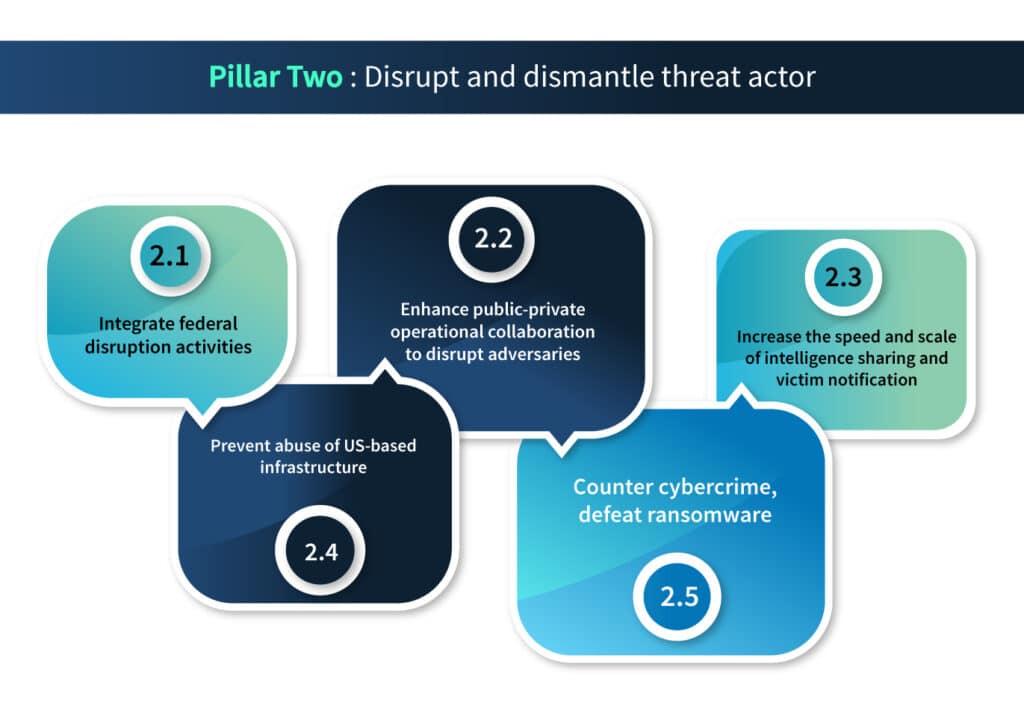
Pillar two: Disrupt and dismantle threat actors
In addition to raising our defenses, it is also important to disrupt and dismantle threat actors. The efforts to enhance national security and public safety in the US will collaborate the capabilities of diplomatic, information, military (physical and cyber), intelligence, law enforcement, and financial.
The Federal Government has taken stern actions, including arresting and prosecuting them, putting bans on their activities, disbarring them from accessing digital infrastructure and victim networks, on the cyber attackers to hold them accountable and recover ill-gotten gains.
In the future, the Federal Government plans to collaborate with the private sector to improve intelligence sharing, execute disruption campaigns at scale, deny adversaries’ use of US-based infrastructure, and thwart global ransomware campaigns.
Strategic objective 2.1: Integrate federal disruption activities
The goal of the Federal Government is to make cyber criminal activities unprofitable and ineffective for individual criminals as well as nation-states. They have integrated the efforts of various agencies, including the Department of Justice( DOJ) and other Federal law enforcement agencies, with their private counterparts to take down the criminal infrastructure and resources. Information gathered from incidents can help thwart other threats.
The Federal Government will now focus on the development of technological and organizational platforms that enable continuous, coordinated operations. The National Cyber Investigative Joint Task Force (NCIJTF) is a multi-agency focal point coordinating the efforts of all government agencies. The NCIJTF will increase its capacity to dismantle and disrupt cyber criminals with higher speed, frequency, and scale.
Strategic objective 2.2: Enhance public-private operational collaboration to disrupt adversaries
Quite often, the visibility into the adversary activities is higher in the private sector than in the Federal Government due to a rapid pace of technological innovations. On the other hand, the Federal Government has more resources at its disposal and the required authority to deal with adversaries than the private sector. A collaboration between the two can lead to miraculous results in the fight against cyber criminals.
Strategic objective 2.3: Increase the speed and scale of intelligence sharing and victim notification
After the collaboration with the private sector, the speed and efficiency of threat detection will increase drastically. The Federal Government can then pace up and scale the cyber threat intelligence to proactively warn the victims and alert the cyber defenders when it receives the information of a security compromise of a victim’s systems or the fact that it is being actively targeted.
The Federal Government will also review declassification policies and processes to determine the conditions under which additional precautions are necessary to access actionable information to owners and operators of critical infrastructure.
Strategic objective 2.4: Prevent abuse of US-based infrastructure
Malicious actors use US-based assets, including cloud infrastructure, domain registrars, and email providers, to launch cyber attacks against people living within and outside the US. Often, the US government is also a target for these malicious activities. The higher degree of separation of foreign resellers and US providers prevents the US authorities from taking action.
Biden’s National Cybersecurity Strategy will encourage the Federal government to communicate effectively with the cloud providers and other US-based providers to identify the use of US infrastructure. It will smoothen the path for the victims to report the abuse of the system. It will also make it more difficult for criminals to use the US infrastructure for malicious purposes.
Ransomware is on the rise in every corner of the world due to the high returns to criminals. It is a threat to national security, public safety, and economic prosperity. The disruption caused by ransomware in essential services, like hospitals, banks, and fuel pipelines, has shown dire results.
The US government will direct its efforts in curbing ransomware by putting in the following efforts to:
Leverage international cooperation to disrupt ransomware and isolate countries that provide safe haven to criminals
Investigate ransomware crimes and use authority to disrupt ransomware infrastructure and actors
Boost critical infrastructure resilience to withstand ransomware attacks
Address the use of virtual currency to launder ransomware payments
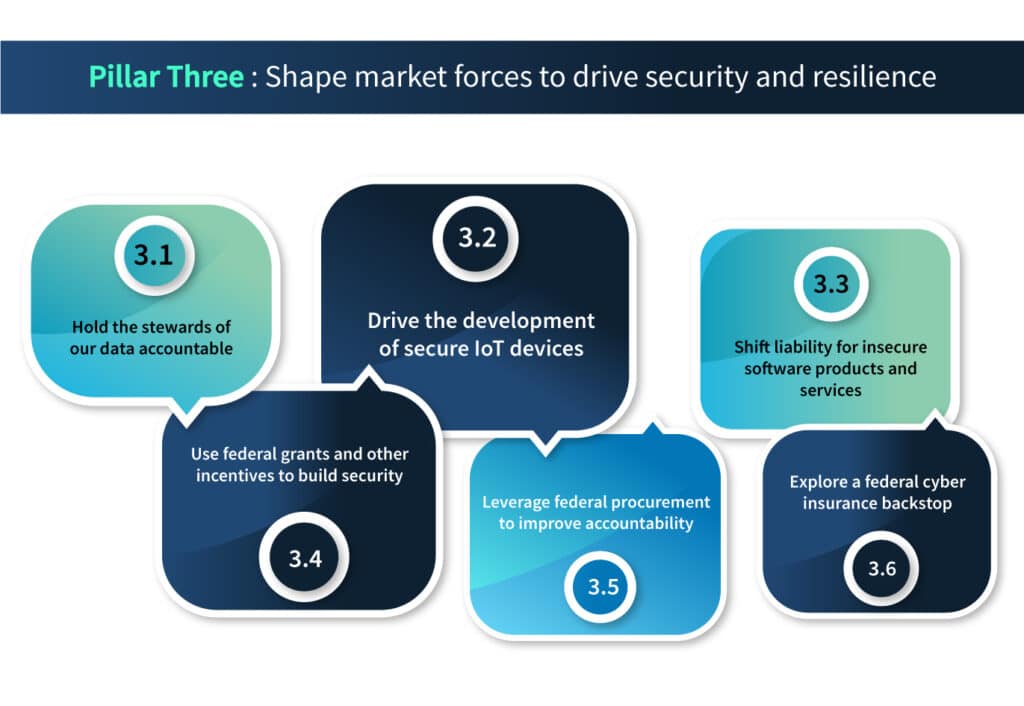
Pillar three: Shape market forces to drive security and resilience
The third way in which the US government plans to secure cyberspace is by shaping the market forces to drive security and resilience. The Federal Government aims to promote practices that improve the security and resilience of digital systems while preserving innovation and competition.
The organizations that don’t spend enough resources on cybersecurity bring down the effectiveness of those that do, as they are all connected through the market. Therefore, it is imperative to consider the market force in overcoming cyber threats for the nation. The Federal government will hold the steward of the data accountable for its protection. It will promote the development of more secure connected devices and reshape the data security laws.
Strategic objective 3.1: Hold the stewards of our data accountable
A data breach can prove pricey not only to the public but also to the government. If an organization is not spending on data protection, it is effectively transferring the cost to the American people.
The Biden administration supports legislative efforts to introduce clear limits on collecting, using, transferring, and maintaining personal data and provide strong protection for sensitive data like health information and geolocation.
Strategic objective 3.2: Drive the development of secure IoT devices
Internet of Things (IoT) devices are devices that can be connected to the Internet. Both consumer goods, like baby monitors and fitness trackers, and industrial goods, like thermometers and sensors, are IoT devices. However, more often the security of IoT devices is not as robust as other devices, thereby making them vulnerable to cyber-attacks. The initial vectors of many big cyber attacks are these IoT devices.
The Biden administration recognizes this predicament and is willing to improve the security of IoT devices through research and development, procurement, and risk management efforts. To promote the same from the private sector, the government will continue to advance the deployment of IoT security labeling programs. Consumers will choose secure devices when comparing secure and unsecured IoT devices. In the long run, it will push organizations to produce secured devices.
Strategic objective 3.3: Shift liability for insecure software products and services
To save cost and time, software developers often sell software with vulnerabilities. The product is harmful to the whole market in the long run. The administration will work with Congress and the private sector to develop legislation establishing software product and service liability. This legislation will promote higher security standards among software vendors.
The administration will drive the development of a safe harbor framework that will draw from current best practices for secure software development, like the NIST Secure Software Development Framework, to shield from liability those companies that maintain security in their software products. Additionally, the Biden Administration will encourage coordinated vulnerability disclosure across all technology types and sectors.
Strategic objective 3.4: Use federal grants and other incentives to build security
To invest in cybersecurity and resilience, the Federal Government will offer grants to critical infrastructure that are designed, developed, fielded, and maintained with cybersecurity in mind. It will also prioritize funding for cybersecurity research, development, and demonstration (RD&D) programs to strengthen critical infrastructure cybersecurity and resilience.
Strategic objective 3.5: Leverage federal procurement to improve accountability
The Federal Government plans to strengthen and standardize the contract requirements for cybersecurity across Federal agencies. If the contractual obligations are not followed the Civil Cyber-Fraus Initiative (CCFI) uses DOJ authorities under the False Claim Act to pursue civil actions against government grantees and contractors.
Strategic objective 3.6: Explore a federal cyber insurance backstop
In case of a catastrophic incident, the Federal Government can be called upon to stabilize the economy and aid recovery. The administration assesses the need for and establishes possible structures of a Federal insurance response to catastrophic cyber events. Congress, state regulators, and industry stakeholders will come together to work on such a standard response.
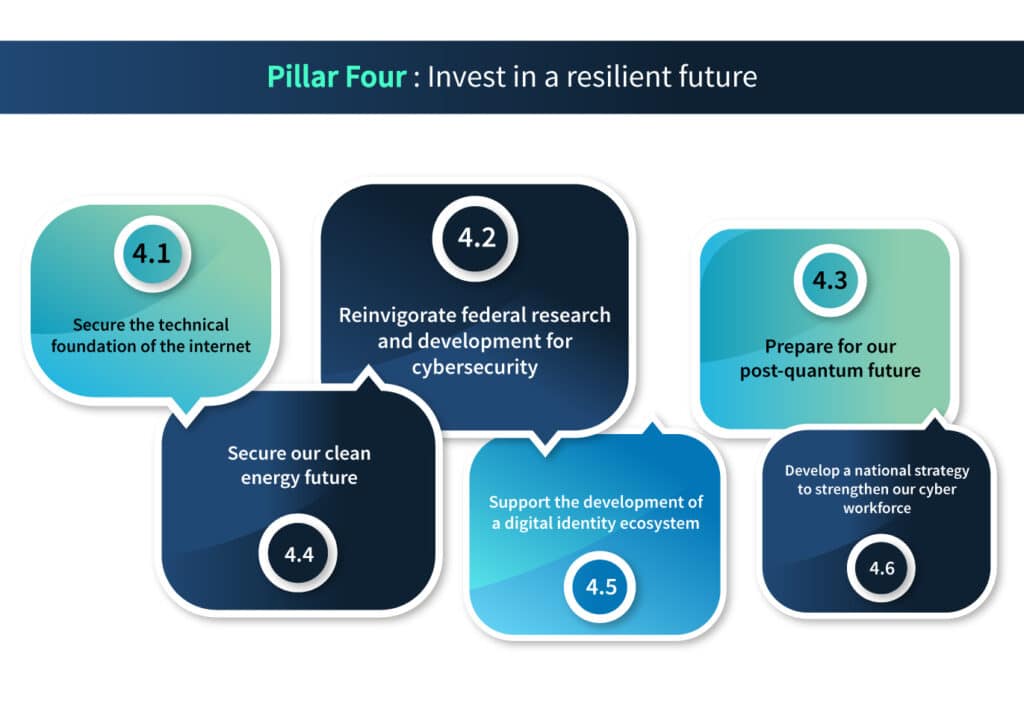
Pillar four: Invest in a resilient future
Long-term investments in the secure, resilient, privacy-preserving, and equitable digital ecosystem can bring a resilient and flourishing digital future. The United States will be a world leader in secure and resilient next-generation technologies and infrastructure.
The Federal Government is planning on leveraging National Science Foundation’s (NSF’s) Regional Innovation Engines Program, Secure and Trustworthy Cyberspace program, and more to drive innovations and sustainability in cybersecurity. The administration plans on making resilience a commercially viable element of innovation and deployment processes.
Strategic objective 4.1: Secure the technical foundation of the internet
Every new thing built and connected to the Internet just adds to the vulnerabilities. Some of the existing concerns include Border Gateway Protocol vulnerabilities, unencrypted Domain Name System requests, and slow adoption of IPv6. Identifying the most pressing security challenges and developing effective security measures needs private and public sector collaboration.
Standards are one way to bring on cyber resilience. The United States government will support non-governmental Standards Development Organizations (SDO) and partner with international allies, industry leaders, academic institutions, and more to promote security, resilience, and economic advancement.
Strategic objective 4.2: Reinvigorate federal research and development for cybersecurity
The Federal Government will update the Federal Cybersecurity Research and Development Cybersecurity Plan to identify, prioritize, and catalyze the RD&D community to prevent cyber security risk in current and future technologies. The Federal Government will collaborate with the efforts of all the sectors, including academia, manufacturing, and technology companies, to achieve its targets. The research will identify and mitigate the potential vulnerabilities.
The RD&D investment will focus on
Computer-related technologies – microelectronics, quantum information systems, and artificial intelligence
Biotechnologies and biomanufacturing
Clean energy technologies
Strategic objective 4.3: Prepare for our post-quantum future
If we want to develop global commerce, strong encryption is of paramount importance. The integrity and security of the data are at risk with quantum computing in play. Quantum computing can break into some of the most secure hardware, software, and firmware.
To future-proof the systems, the Federal Government will prioritize the transition of vulnerable Federal systems to quantum-resistant cryptography-based environments. The private sector is expected to follow the path set up by the government.
Strategic objective 4.4: Secure our clean energy future
The world is becoming more and more cautious about its carbon footprint and so is the United States Government. The US government plans to invest in new energy infrastructure. It will proactively implement the Congressionally-directed National Cyber-Informed Engineering Strategy rather than adding it as an afterthought.
The Federal Government will partner with industries, State, local, tribal, and territorial (SLTT) to deploy a secure, interoperable network of electric vehicles (EV) chargers, zero-emission fueling infrastructure, and zero-emission buses. The government is planning for generations, transportation, and storage of green energy which will require a robust cybersecurity resilience effort.
Strategic objective 4.5: Support the development of a digital identity ecosystem
There are considerable losses due to digital identity thefts and data breaches. The cost of these losses is ultimately on the shoulders of the general public. The private and public sectors must work hand-in-hand to solve the problem of digital data security.
The Federal Government will enable and encourage investment in strong, verifiable digital identity solutions. The efforts to strengthen the security of digital credentials, provide attributes and credential validation services, and update the standard guidelines will be led by the NIST-led digital identity research program authorized in the creating of helpful incentives to produce semiconductors (CHIPS) and Science Act.
Protection of the digital identity will
Protect and enhance individual privacy, civil rights, and civil liberties;
Guard against unintended consequences, bias, and potential abuse;
Enable vendor choice and voluntary use by individuals;
Increase security and interoperability;
Promote inclusivity and accessibility;
Improve transparency and accountability in using technology and individual’s data
Strategic objective 4.6: Develop a national strategy to strengthen our cyber workforce
Due to a huge knowledge gap, both private and public sector organizations face challenges in hiring professionals. United States will lead the development and implementation of a National Cyber Workforce and Education Strategy led by the Office of the National Cyber Direction (ONCD). By increasing cyber education and training pathways, the strategy will strengthen and diversify the cyber workspace.
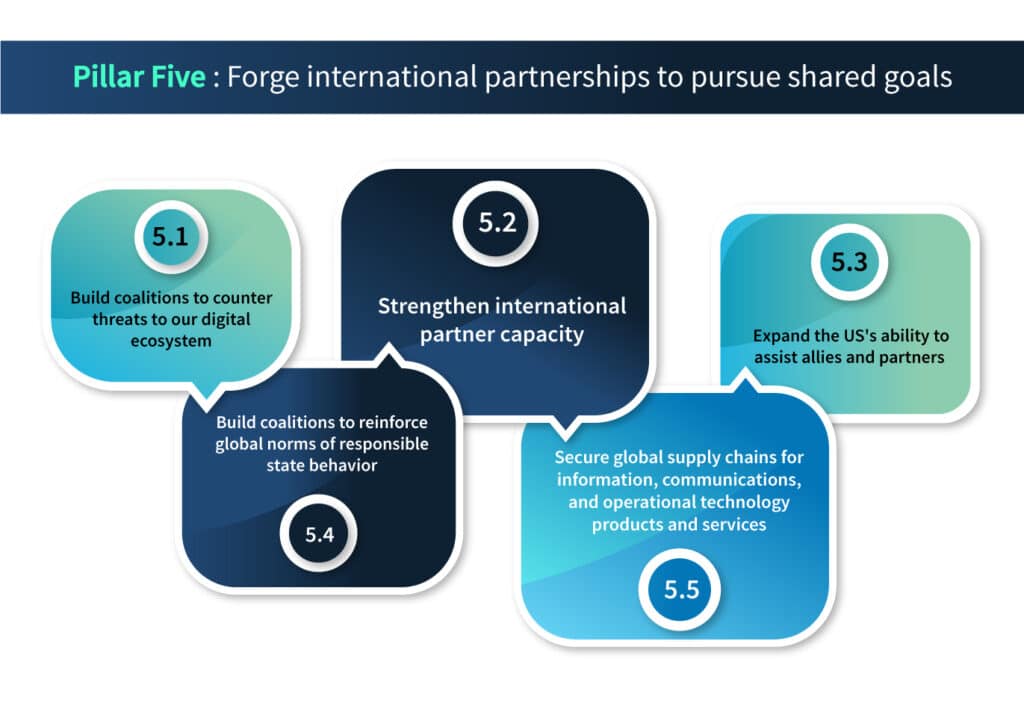
Pillar five: Forge international partnerships to pursue shared goals
The US promotes the expectation and rewarding of responsible state behavior and isolating and taxing irresponsible behavior. The US will collaborate with the international community to counter common threats, protect against transnational digital repression, preserve and reinforce global Internet freedom, and build toward a shared digital ecosystem.
Strategic objective 5.1: Build coalitions to counter threats to our digital ecosystem
In April 2022, the United States, along with 60 other countries, built Declaration for the Future of the Internet (DFI). This coalition is the largest of its kind in the world and supports the vision for an open, free, global, interoperable, reliable, and secure digital future. DFI, in addition to other coalitions such as the Quadrilateral Security Dialog (Quad), the Indo-Pacific Economic Framework for Prosperity (IPEF), and Americas Partnership for Economic Prosperity (APEP), shall work towards similar goals.
Strategic objective 5.2: Strengthen international partner capacity
International laws and norms for responsible state behavior are critical to implementing policies across the globe. To achieve this objective, the US will lead expertise across agencies, public and private sectors, and among advanced regional partners to pursue coordinated and effective international cyber capacity-building and operational collaboration efforts. The DoJ, the Department of State, and the Department of Defence (DoD) will align their goals with cybersecurity goals.
Strategic objective 5.3: Expand the US’s ability to assist allies and partners
Many countries, including Cost Rica, Albania, and Montenegro, have asked for US’s support to investigate, respond, and recover from significant cyberattacks. Supporting its allies will help the US in international relations and achieve cybersecurity goals.
The Biden Administration will devise policies to determine when it is in the national interest to provide support, develop mechanisms for identifying and deploying agency resources, and, if needed, remove any such financial and procedural barriers to provide operational support.
Strategic objective 5.4: Build coalitions to reinforce global norms of responsible state behavior
Every member of the United Nations (UN) must adhere to its political commitment to endorse peacetime norms of responsible state behavior in cyberspace. The commitments are not self-enforcing, and the US plans to hold irresponsible states accountable if they fail to uphold their commitments. To quash the adversaries without armed conflict, the US will work with its allies and partners to impose meaningful consequences.
Strategic objective 5.5: Secure global supply chains for information, communications, and operational technology products and services
Supply chains are getting larger and more complicated. It is not uncommon for a business to order raw materials from and sell finished products to foreign nations. With increasing supply chain complexity, the risk of cyber threats also increases. Protecting the supply chains from cyber attacks will require a long-term partnership between the public and private sectors, both within and outside the US.
Critical inputs must be developed in the US or in close cooperation with the allies. The effectiveness of the supply chains is relational to the effectiveness of the cybersecurity efforts put in. Therefore, the Strategy focuses on building a transparent, efficient, resilient, and trustworthy supply chain.
Winding up
We saw Biden’s National Cybersecurity Strategy briefly in this article. This Strategy clearly defines the US government’s plans to build a more secure and resilient future. It highlights the steps to be taken by the US government indigenously and in collaboration with international agencies to secure each and every aspect of cyberspace. It also accentuates the need for education and training in the cybersecurity field to boost the supply of personnel.
17 Mar 2023
7minutes
Authored by
Aayush Ghosh Choudhary
Co-founder & CEO at Scrut
What is the importance of context in cybersecurity?
Cybersecurity is a complex and constantly evolving field, with new threats emerging every day.
In such a rapidly changing environment, understanding the context in cybersecurity threats & incidents is critical for organizations of all sizes.
This is because gaining information about every cyber asset in an organization’s environment can generate an overwhelming amount of data.
From pen-testing and vulnerability management to cyber attack simulation and incident response exercises to data breaches, data generated on every aspect of cybersecurity can easily outpace humans’ ability to analyze such a flood of information and make proper decisions.
The point is, it is difficult to understand the context from an ocean of information without a centralized cybersecurity solution like CAASM.
It is a comprehensive technology solution that helps organizations in managing their attack surface proactively by identifying and mitigating potential cybersecurity risks throughcontext so that they can be remediated before cybercriminals can exploit them.
But what does context exactly mean in cybersecurity?
More importantly, what is its significance? And how does it help in identifying cybersecurity risks in your organization’s environment?
In this blog post, we’ll explore the importance of context in cybersecurity, how it can help you stay one step ahead of cybercriminals, and important factors that can help in understanding the context.
What is context in cybersecurity?
Context within cybersecurity refers to the circumstances or conditions surrounding a particular cybersecurity risk that may affect your organization’s security posture.
Context can be derived from various sources, such as logs, network traffic, system configurations, user behavior, and threat intelligence. Analyzing these sources together can provide a more comprehensive picture of the risk situation and enable your organization to make more effective decisions.
Importance of context in cybersecurity
Context is critically important from the cybersecurity standpoint.
This is because context provides critical information about specific circumstances in which a security threat or event is either occurring or has occured, in order to help better understand, respond, and mitigate the incident.
Although, the role of cybersecurity context goes way beyond just threat assessment and vulnerability management. Context has relevance in all areas of an organization’s network.
For example, in the context of a network intrusion, understanding the source, nature, and scope of the attack can help security analysts to determine the severity of the incident, identify the compromised systems, and take appropriate actions to contain the attack and prevent further damage.
Similarly, if there has been a security policy violation, understanding the context can help in knowing the user’s role, the system accessed, and the time of the violation. This, in turn, can help your organization in investigating the incident, enforcing policies, and mitigating the risks.
But in both cases, failing to understand context will invariably lead to delays in decision-making and allow security gaps to remain exposed to cyber threats for far too long.
As a result, they will continue struggling to identify and mitigate cybersecurity risks without context, leaving their IT infrastructure extremely vulnerable to cyberattacks.
In a nutshell, understanding the context is key to unlocking the full potential of your organization’s cybersecurity strategy.
Role of CAASM in understanding context in cybersecurity
CAASM can help your organization better understand the context by providing a comprehensive picture of the attack surface and the associated security risks.
A robust CAASM solution can take a complete inventory of all cyber assets within your organization’s IT infrastructure including software, hardware, applications, and cloud storage.
Afterward, it can map all the interdependencies between assets, which not only helps in understanding the context but also helps in identifying potential points of exposure and prioritize their security efforts based on the potential impact of a successful cyber attack.
For example, if there is a vulnerability in critical software in your organization’s network, CAASM will give it a higher priority for remediation than a vulnerability in less critical software or application.
Other than this, CAASM can even provide context for ensuring that your organization is in compliance with relevant regulations and standards such as PCI DSS, GDPR, and HIPAA to name a few.
All in all, CAASM plays a critical role in understanding the context of today’s rapidly evolving cyber threat landscape.
With real-time continuous monitoring and threat intelligence, CAASM solutions can help organizations identify & mitigate potential security risks in all areas of their infrastructure and protect their cyber assets and data before they can be exploited by hackers.
3 factors that help in understanding context
There are three important factors every organization must take into consideration to understand the context.
Prioritization
An organization can have several types of vulnerabilities in its environment. Some vulnerabilities must be dealt with first then the rest because they are more critical.
Simply put, a vulnerability can only be considered dangerous to an organization if it can be identified and exploited by hackers. Otherwise, even if it’s an active vulnerability, it’s not an exploitable vulnerability so it can take a back seat until other vulnerabilities, which can put an organization’s sensitive data into immediate jeopardy, are remediated first.
All in all, prioritization is a matter of importance from the cybersecurity perspective, and it should be confused with the second factor — urgency — for understanding the context.
Urgency
Once the high-priority vulnerabilities are identified, organizations still need to figure out which vulnerabilities to address first as there can be dozens or even hundreds of vulnerabilities that take higher priority than others.
In this case, the urgency of each vulnerability comes in the context equation.
In cybersecurity, urgency is about dealing with something that must be done regardless of how important it is to do that thing or its overall impact on the organization.
For example, a vulnerability that could allow hackers to exploit a front-end system doesn’t get the same level of priority as the one that could allow hackers to access a back-end system.
However, if the front-end system vulnerability cannot be defended by compensating controls, it is given more urgency to be addressed first. Meanwhile, the back-end system will automatically be defended by the front-end system & network segregation.
Simply put, the front-end vulnerability is more likely to get exploited by hackers in this case, which is why it is deemed more urgent to correct the front-end vulnerability first.
Achievability
The third factor that organizations need to consider for understanding context is determined by the ability to remediate the identified vulnerabilities with the available tools, time, and resources at your disposal.
For example, Let’s assume that an organization has two high-priority vulnerabilities to remediate, one that requires an operating system upgrade (less achievable), while the second only requires a quick patch and no reboot (highly achievable).
In this case, the organization must figure out if they have the in-house expertise to correct the highly achievable vulnerability. If not, then even if that vulnerability has higher priority, it is unlikely to be corrected first simply because it is less achievable.
Though this does not mean achievability removes the vulnerability from the list, it simply helps to separate them into two categories — Those that can be fixed with in-house expertise and those that require external resources to be fixed.
But when these three factors are taken into account together, it can help organizations put data into perspective and determine how important it is to remediate a specific vulnerability, how urgent it is, and if the remediation can be accomplished by in-house expertise.
Conclusion
As explained above, the importance of cybersecurity context cannot be overstated.
Without understanding the context in which an attack occurs, it is difficult to accurately identify the threat and respond appropriately. A context is not just a detail, but a fundamental element that informs decision-making in cybersecurity.
This is why organizations must realize the importance of context to better protect themselves from future cyber attacks.
FAQs
What is contextual security?
Contextual security is a modern cybersecurity approach that involves assessing and prioritizing cybersecurity risks based on their context. With contextual security, organizations have been able to better prioritize their resources and efforts more effective for managing the attack surface and improving overall security posture.
What is context in cybersecurity?
Context in cybersecurity helps to understand the situation or conditions surrounding a particular cybersecurity threat or vulnerability so that organizations can manage and mitigate them before they can be exploited by cybercriminals.
Why is context important in security?
Context is important in security because it provides critical information that can help organizations in identifying and assessing security risks, figure out appropriate security measures, and mitigate security threats before an incident occurs.
What are context-aware security examples?
Context aware security control is an approach to security that takes into account the specific context in which security threats and incidents occur. location-based access control is a popular example of context aware security with location-based access control, access to sensitive systems or information is restricted based on the user’s location. Another good example is behavior-based authentication. For instance, if a user usually logs in using a specific device, a login attempt from a different device will either trigger additional authentication requirements or simply deny the access altogether.
What is content vs context in security?
Content vs context awareness is an important concept in cybersecurity. Content in cybersecurity refers to the collection of data or information being secured (i.e. financial data, customer information, health records, etc.). On the other hand, context in cybersecurity refers to the circumstances or conditions in which security risks or incidents occur. Content-based security focuses solely on protecting specific data or information, while context-based security focuses on understanding the unique risks and threats of a particular environment and adapting security measures accordingly.
6 Mar 2023
9minutes
Authored by
Aayush Ghosh Choudhary
Co-founder & CEO at Scrut
Attack Surface Management: Importance, Types, and Solution
Cybersecurity is rapidly becoming a critical concern for organizations around the world.
With the rise in remote working, digital transformation, and cloud as well as SaaS adoption, the attack surfaces in most organizations are growing at a breakneck speed, making it increasingly difficult to define, let alone defend!
Because of this, virtually any cyber asset in an organization’s environment can now be used as an entry point for a cyber attack.
This is why it is now imperative for organizations to improve their attack surface visibility across all their cyber assets and manage it more effectively through a comprehensive solution like CAASM.
For the uninitiated, CAASM is an acronym for Cyber Asset Attack Surface Management. It allows you to gain complete & comprehensive visibility across the entire attack surface of your organization’s network.
But, in order to leverage CAASM to its full potential, you need to first understand everything about attack surface management.
In this post, we’ve explained everything there is to know about attack surface management, including its definition, importance, types, and solution.
But before we get to that, let’s briefly understand what an attack surface means.
What is Attack Surface?
The attack surface refers to all attack vectors that hackers can exploit to gain unauthorized access and manipulate an organization’s IT infrastructure.
In other words, the attack surface of an organization is generally made of up four different types of cyber assets including:
On-Premise Assets – These are on-site assets like devices, servers, and other hardware equipment.
Cloud Assets – These include cloud servers, SaaS applications, cloud storage & databases, and any other assets that leverage cloud technology.
Unknown Assets – These assets are often referred to as “shadow assets” and usually include any kind of assets that are not under attack surface security monitoring but are part of an organization’s IT infrastructure.
Rogue Assets – These are malicious assets that hackers target to exploit an organization’s network, gain unauthorized access, and steal company data.
Vendors – Vendors are assets that your organization has purchased from an external vendor or partner.
Note that your organization’s attack surface will grow as you add new devices, users, and assets to its network.
This is why it’s critical to continuously monitor and evaluate all cyber assets present in your organization’s environment to discover, identify, and remediate vulnerabilities before they are exploited by hackers.
And this is where the attack surface management enters the scene.
What is Attack Surface Management?
Attack surface management is a cybersecurity process that involves continuous discovery, identification, classification, prioritization, and monitoring of all cyber assets in an organization’s IT infrastructure.
Using ASM, organizations can mimic the mindset as well as the toolset of hackers and improve attack surface visibility across all potential entry points and strengthen the security posture of their network.
In simple words, ASM can easily identify vulnerabilities and assess risks based on the opportunities they would give to the hackers if exploited successfully.
Types of Attack Surface Management
There are two main types of attack surface management.
Internal Attack Surface Management
As the name suggests, internal attack surface management is a process of managing activities of cyber assets that are only reachable within the organization.
It focuses on improving the attack surface security posture of an organization’s internal assets by discovering & remediating vulnerabilities to reduce the overall attack surface.
This, in turn, helps to prevent hackers from discovering and exploiting weak attack vectors in an organization’s network.
External Attack Surface Management
External attack surface management focuses mostly on managing internet-facing assets such as web applications, outside vendors, and remote users in an organization’s network.
It narrows down every single attack vector that is vulnerable by systematically discovering, identifying, sorting, and allocating a risk score and then remediating the threat altogether.
The goal of external attack surface management is to mitigate risks from external sources and prevent cyberattacks through regular penetration testing, incident response planning, and threat remediation.
Why is Attack Surface Management Important?
Now that you know what attack surface management is and its types, it’s time to talk about why it is important for every organization to implement it.
Reducing Risk
Attack surface management helps organizations map all their cyber assets to identify and address potential threats before they can be exploited by hackers.
By leveraging ASM, organizations can continuously monitor their networks and environment for vulnerabilities and gain visibility into attack surface security gaps that are critical and need to be addressed.
This visibility enables organizations to respond to all threats and vulnerabilities proactively rather than wait for a breach or incident to occur before taking any action.
Complying with Regulatory Requirements
In many industries, there are certain regulatory requirements related to cybersecurity like PCI DSS, NIS, NIS2, DORA, and so on that must be complied with.
Attack surface management helps organizations comply with the applicable regulatory requirements by making sure that all systems are secure.
Organizations are even free to use automated tools or manual processes to assess their regulatory compliance status on a continuous basis with the help of attack surface management.
Protecting Sensitive Data
Another reason to adopt attack surface management is that it helps organizations to protect sensitive data by discovering potential threats associated with its storage as well as transmission.
For instance, if a system of an organization contains confidential information about its customers but does not have appropriate authentication measures in place, hackers could easily gain unauthorized access to this information.
But by implementing appropriate authentication measures through ASM, organizations mitigate the risk of unauthorized access to sensitive customer information and prevent any chances of a cyberattack.
Besides, protecting customers’ personal and sensitive data is also a regulatory requirement. GDPR, for example, imposes businesses to keep their customers’ data safe if they’re EU citizens or residents.
Maintain Customers’ Trust
Customers only conduct business with organizations that protect their personal or company information. In fact, customers will only continue doing business with your organization in the future if they feel confident that their information is safe and protected by your organization.
This is why it is essential for organizations to maintain their customers’ trust and protect their data from theft or misuse.
And in this case, attack surface management can help to protect the sensitive and personal data of your customers from any threats or vulnerabilities by mitigating the risk of data breaches and unauthorized access.
Protect Organization’s Reputation
Last but not least, attack surface management can play a vital role in protecting the reputation of your organization.
As you might already know, a single cyberattack can have severe consequences for an organization, and not just financial losses or confidential data theft, but it can ruin its reputation with customers, investors, partners, and other key stakeholders.
This is because a successful cyberattack on a large organization instantly makes headlines in the news and online media which can tarnish the reputation, diminish brand image, and cause customers to lose confidence.
Attack surface management can help to prevent such incidents from happening by remediating all vulnerabilities before they can be exploited by hackers.
This, in turn, ensures that your organization’s reputation remains intact and your customers continue to trust and have faith in your products and services.
How Does ASM Protect Organizations from Cyber Attacks?
As you have just learned, attack surface management puts organizations in a better position from a cybersecurity standpoint to strengthen weak attack surface areas and prevent cyberattacks.
But how exactly does ASM provide protection from cyberattacks to organizations?
Turns out, there are several phases involved in attack surface management that help organizations to attain effective protection against cyberattacks.
Discovering Assets
In this initial phase, organizations leverage ASM to discover, identify, and map all cyber assets across both internal & external attack surfaces.
Additionally, modern attack surface management solutions can even mimic the toolset leveraged by hackers to find potential vulnerabilities and weaknesses in your organization’s network.
This drastically enhances the overall visibility across the totality of the attack surface and ensures that all cyber assets have been mapped, which could have been used as a potential attack vector.
Continuous Testing
The attack surface continuously changes as new devices, assets, and users are added to the network. Because of this, it is imperative that your ASM solution can conduct continuous monitoring and testing of the attack surface.
An ideal attack surface management solution should be able to review and assess all assets 24/7 to prevent any attack surface security gaps, vulnerabilities, and threats while eliminating system misconfigurations and other similar risks.
Understanding Context
As you may already know, any cyber asset can serve as an attack vector for a cyber attack but not all assets carry the same level of risk to an organization.
A modern attack surface management solution can conduct a thorough analysis of the attack surface and provide relevant insights about exposed assets and their context within an organization’s network.
These insights include when, where, and how an exposed asset was used, who is the owner of the asset, its IP address, network connection points, and a few other factors that could potentially help in determining the seriousness of the risk posed to the organization.
Prioritizing Vulnerabilities
To protect your organization’s network against potential cyberattacks, discovering & mapping all cyber assets is not enough. Organizations must also have a way to prioritize which existing threats, weaknesses, and vulnerabilities to remediate first.
This is where the attack surface management comes into the picture. An effective ASM solution should provide actionable risk scoring based on certain factors like how visible & exploitable a vulnerability is, how complex it is to fix it, and the history of exploitation.
Unlike traditional vulnerability management methods like penetration testing or red teaming whose security ratings can be subjective, attack surface management scoring is based on calculated criteria.
In other words, ASM uses a preset system of data and parameters to determine the severity of vulnerabilities and prioritizes them accordingly.
Remediating Potential Threats
Based on the previous four phases of attack surface management, the IT & security teams of an organization will now be equipped with the necessary information to identify the highest severity risks and prioritize their remediation efforts.
Since the remediation efforts are usually led by IT professionals, it is critical to make sure that this information is shared with each team member and that they’re all aligned on security operations.
Typically, the remediation process often involves applying the latest operating system patches, implementing a stronger encryption method, debugging application code, eliminating rogue assets, and so on.
End Note
As organizations are rapidly embracing a digital transformation agenda, it has become nearly impossible for them to obtain & maintain visibility of the growing attack surface using legacy solutions.
The adoption of cloud workloads, microservices, SaaS applications, and other digital solutions has amplified the complexity of an organization’s IT environment, making it challenging to detect cyber threats, let alone respond to them.
To identify and remediate an evolving array of cyber threats and regain complete visibility over an organization’s attack surface, it is mandatory to continuously monitor, detect, identify, and prioritize vulnerabilities.
In this situation, Scrut’s CAASM solution can help you gain complete visibility of all your cyber assets, and empower your IT and security teams to identify & overcome all cybersecurity challenges.
FAQs
What is attack surface management?
Attack surface management is a process of constant discovery, monitoring, classification, prioritization, and remediation of weak attack vectors across an organization’s attack surface. To learn more about ASM, click here.
Why is attack surface management important?
Attack surface management is important because it protects organizations from cyber attacks that can cause financial loss, data leaks, and damage brand reputation. We have given detailed reasons why ASM is important here.
What are the types of attack surfaces?
There are three different types of attack surfaces in an organization’s network. These types include physical attack surface, digital attack surface, and social engineering attack surface.
What is external attack surface management?
External attack surface management is a cybersecurity process that helps to identify and manage the cyber threats posed by internet-facing assets within an organization’s IT environment.
What is the difference between attack surface vs attack vector?
An Attack vector is a potential entry point for hackers to gain unauthorized access to an organization’s network or specific asset. An attack surface, on the other hand, is referred to the total number of attack vectors that hackers can exploit to manipulate or steal data from an organization.
What is cyber asset attack surface management?
Cyber asset attack surface management is often referred to as CAASM and it’s an emerging technology solution that helps organizations solve cyber asset visibility and security challenges.
What is attack surface monitoring?
Attack surface monitoring is a cybersecurity approach that identifies and monitors all attack vectors that are observed by potential attackers.
What increases attack surface?
The constant adoption of new devices, tools, SaaS applications, cloud storage, and other digital assets increases the attack surface of an organization.
What is used to reduce attack surfaces?
The attack surface reduction is generally done by making a real-time inventory of all cyber assets and classifying weak assets based on their vulnerability level and remediating threats before a hacker can exploit them.
2 Mar 2023
5minutes
Authored by
Aayush Ghosh Choudhary
Co-founder & CEO at Scrut
Why is Cyber Asset Attack Surface Management an emerging need for organizations?
Scrut recently organized a conference with some of the brightest cyber minds in the country in attendance. The conference was centered around a panel discussion titled ‘The Emerging Need for Cyber Asset Attack Surface Management’ and discussed the various phenomena that makes CAASM a must for organizations in the present day.
For CISOs, this conference—which was put out in association with Dataquest India—was undoubtedly a high point. Security professionals took the platform to discuss asset management, surface security, and how cybersecurity affects our everyday life. They also discussed how a joint collaboration among the organizations could strengthen resistance against cyberattacks.
Let’s look at the conference’s core discussion points and what our speakers had to say about the emerging CAASM needs.
How does CAASM address Asset Vulnerability?
Cyber dangers remain a key concern for management and boards, as well as investors and other stakeholders in the organization. As more breaches, ransomware, malware, and other threats emerge, the risk curve keeps getting steeper.
In his introductory remarks, Dataquest Editor Sunil Rajguru provided a timeline of how connections, networks, and cybersecurity have evolved through time. He said the “last four years have felt like 20 years for cybersecurity.”
Due to factors like ubiquitous Internet access, the world has undergone a significant transformation recently. In a matter of decades, the Internet completely altered the global landscape. Yet, cyber threats and attacks also rise sharply as more individuals get linked.
Asset mapping is a universal challenge
Aayush Ghosh Choudhury, CEO and Co-founder of Scrut, took the stage next to bring the focus on some of the problems organizations in the industry are consistently facing. In his opening keynote address, Aayush provided a few examples of problems, such as “What is asset telemetry, and how do we maintain it? How do we keep this agentless and ensure fast time to value?”
He then implied that new resources get deployed day in and day out, making it extremely difficult for organizations to be aware of their asset surface at a given point in time. Even though every compliance framework and regulation has a requirement for managing assets, most organizations need more confidence to translate it into action points for mapping the asset surface.
Adopting the DevOps approach
In his speech on “Understanding the Importance of CAASM,” Arumugam Palani, Principal, Boston Consulting Group (BCG), highlighted the role of the pandemic in driving and accelerating digital transformation throughout traditional and non-traditional organizations.
He also rightfully mentioned that success is all about adopting a DevOps mindset that focuses on how things can function along with solving potential obstacles.
He emphasized that from the perspective of cybersecurity, a fundamental and cross-cutting horizontal pipe that guarantees every asset, and code, as well as inbound and outbound communication passes through numerous systems and equations is necessary.
After all, Implementing security most seamlessly is vital to building a secure organization. Not just CISOs, but every organization member should study the blueprint clearly, adopting a key position in identifying focus areas.
Before asset management comes asset visibility
The discussion further shifted from the DevOps approach to tackling real-time problems. Satish Kumar Dwibhashi, one of the panel members at the conference, mentioned that the tech world, as we know it, is evolving super fast, which significantly impacted how organizations manage their assets.
One of the major challenges organizations faces while safeguarding their assets is that of the unknown, which can only be rectified by identifying all assets.
When there are numerous complex clouds, finding the assets gets more challenging., As quoted by Satish, ‘Even large enterprises struggle with understanding their assets.’ But it is important to remember that security starts with assets, and this is where CAASM comes in. Identifying assets will directly help organizations identify their primary risks.
Asset classification is a second problem. You first identify your assets and then go into threats and vulnerabilities to understand how they can be exploited.
Businesses will continue to experience new attacks, says Satish. Consider your blind spots, he added, since at the time of an attack, keeping an eye on security dashboards and consoles becomes challenging. There should be absolute visibility because a quick response is essential.
Understanding the cruciality of CAASM
Jason Joseph, CISO at Signdesk, followed Satish’s statement by saying that asset management is essential in the given security scenario. The complexity of each block brought on by shifting data governance and geographic concerns is forcing CISOs to step back and take a fresh look at asset management.
He was also seen advising people in the room, saying, “Set up a perimeter, then defend it. Asset management is known as both traditional and non-traditional.”
Aayush also commented on the ongoing discussion saying, “I can attest to the difficulties of the CISO position in terms of asset upkeep and asset counting after witnessing various firms. We think that real-time visibility is a useful tool for mid-market businesses, especially since Assets are tangible objects that are fluid to the touch.”
Importance of mapping and CAASM as a tool
When asked about the importance of asset mapping, Jason Joseph commented saying, “we are no longer within our boundaries. There is a hybrid, and the attack surface is multiplying. When an endpoint is inadequately mapped, small and medium-sized networks cannot address it. CISOs concerned with security will be aware of the assets and alarms but may not know what to do. The future of CAASM lies in prioritizing the asset and mitigating vulnerability.”
This statement was further supported by Nitin Kotwal, Head of Security, MoEngage, and Pratyush Kukreja, Business Head—APAC, Scrut Automation, titled: Simplifying your Compliance Journey with CAASM during their fireside chat. Nitin pointed out that the first step towards mapping is to analyze the method or tool you use for it.
Organizations must question how viability is incorporated. How well can it combine IT and cloud solutions to collect all the assets and always verify them? Does it offer customization? Before selecting an asset management tool.
Concluding the conference with a resourceful solution
As we neared the end of the conference, it became clear that the end state is to proactively employ CAASM to contain the risk and be continuously compliant. All attending cybersecurity experts were in unanimous agreement that CAASM is not only the best solution but a necessary tool for organizations in the evolving digital landscape.
One such tool is Scrut’s CAASM which enables you to obtain visibility into all of your cyber assets, helping IT and security teams to tackle cyber asset vulnerability concerns and create a solid platform for all security efforts.
You can use Scrut CAASM to streamline your distributed cloud environment assets and identify potential risks, therein reducing your attack surface.
28 Feb 2023
7minutes
Authored by
Aayush Ghosh Choudhary
Co-founder & CEO at Scrut
Vulnerability Management vs Attack Surface Management
With the rise of digitization, organizations are rapidly shifting towards cloud-based software, SaaS applications, and remote working.
This massive shift is now forcing organizations to change how they approach the security of their cyber assets and overall risk management.
That’s because any cyber asset in an organization, whether it’s cloud-based or otherwise, is a potential entry point for a cyber attack.
Moreover, since organizations are adopting new cyber assets rapidly, it has broadened the attack surfaces significantly.
As a result, it has now become more difficult for organizations to prepare for and manage rising cyber threats in their environment.
More importantly, organizations must understand the difference between vulnerability management and attack surface management and figure out how to implement both correctly.
In this post, we have explained what is vulnerability management & attack surface management, the key differences between the two approaches, and which is better for organizations in 2023.
What is a Vulnerability?
A Vulnerability in cybersecurity space is referred to as a weak spot in a network’s surface that can be easily exploited.
In simple words, a vulnerability is a flaw or misconfiguration in a specific asset with an IP address that attackers can hack to breach an organization’s cybersecurity defenses.
Some of the most common examples of vulnerabilities include —
System or cloud misconfigurations
Weak or leaked user credentials
Unencrypted data or information
Outdated applications or software
If any of these vulnerabilities get exploited, it could allow an attacker to gain unauthorized access to customers’ sensitive data and jeopardize their confidentiality & integrity.
What is Vulnerability Management?
Vulnerability management is a cybersecurity practice that helps organizations discover and categorize vulnerabilities and attack points in their network devices, systems, applications, and other assets.
By utilizing cybersecurity vulnerability management, organizations can rate each vulnerability in their network so that their IT and security teams can realize the severity of the issue.
Compared to ASM, vulnerability management mainly focuses on internal cyber assets that may pose a potential risk to an organization. It doesn’t take into account how each potential threat connects to the other assets or the rest of the organization’s network.
In other words, cybersecurity vulnerability management neither communicates nor emphasizes the importance of solving an issue to the extent that attack surface management does.
What is Attack Surface?
The term “attack surface” refers to the collection of all potential attack entry points which could be easily exploited in case of a cyber attack.
The cyber security attack surface generally includes physical (hardware), digital (software), cloud-based, and internet-facing cyber assets in which sensitive data is usually either stored or processed.
Any organization’s attack surface can change dynamically depending on the addition of new cyber assets and the retirement of existing ones.
This is why every organization must monitor fluctuations in their cyber security attack surface continuously to keep their sensitive data intact & protected and prevent cyber attacks.
What is Attack Surface Management?
Attack surface management (ASM) is a modern cybersecurity approach in which organizations leverage various cybersecurity tools for continuous cyber asset discovery, identification, inventory, classification, monitoring, evaluation, prioritization, and remediation of potential attack entry points and vulnerabilities across their IT infrastructure.
Attack surface management provides better visibility into an organization’s attack surface by not only focusing on internal & external assets but understanding the relationships between them (i.e. how they are connected to each other), and their potential effect on the network in case of a cyber attack.
In short, the Attack Surface Management solution may provide information about cyber assets in your organization’s IT infrastructure. But if you want complete information about every cyber asset, you can only obtain them using a CAASM solution. This is because a CAASM solution can not only take inventory of all cyber assets but can also identify vulnerabilities & misconfigurations in all cyber assets.
Key Differences Between Vulnerability Management & ASM
Now that we have specified what vulnerability & attack surface management means, let’s explore the key differences between the two cybersecurity approaches.
Security Scope
The first key difference between vulnerability management and ASM is the scope of what these two approaches cover in the matter of cybersecurity risks.
For example, let’s assume that you’ve discovered a vulnerability in an exposed web application in your organization’s network. Now, the scope of enterprise vulnerability management covers everything from discovering such types of vulnerabilities to remediating them.
But ASM provides a more holistic view of things to your IT and cybersecurity teams by going beyond basic weaknesses to identify other possible attack vectors across the entire IT infrastructure, apps, devices, and data.
Asset Discovery Approach
The asset discovery approach in vulnerability management and ASM are quite different from one another. In vulnerability management, asset discovery (often regarded as detection) happens by using vulnerability scanners to find known vulnerabilities and pen testing results for difficult vulnerabilities.
In ASM, organizations are required to use a specialized solution to discover and map all their digital assets that pose risks of unauthorized access & intrusion in their IT environment such as code repositories, software, web applications, IoT devices, and so on.
Additionally, the attack surface discovery must be complete and account for all connections & relationships between different cyber assets.
This is better achieved through the attack surface management approach rather than vulnerability management.
Different Vulnerability Classification
Classifying vulnerabilities is an important stage in vulnerability management. It is equivalent to the classification stage in attack surface management. But compared to firmware vulnerability management, ASM goes more granular with its vulnerability classification process.
To elaborate, vulnerabilities in vulnerability management are generally classified according to types such as software, hardware, firmware, or root causes.
In ASM, the vulnerability classification process is done through a granular inventory that labels all cyber assets based on various different properties like owners, technical details, business importance, and compliance requirements.
Continuous Security Monitoring
IT vulnerability management does not have a continuous attack surface security monitoring process. Organizations leveraging vulnerability management often manage vulnerabilities on an ad hoc basis at best.
This is even when the Center for Internet Security specifically recommends using continuous IT vulnerability management as a standard practice.
Unlike vulnerability management, ASM has a built-in ability to continuously monitor an organization’s cyber assets for threats and vulnerabilities.
This continuous monitoring approach is essential, especially given the dynamic nature of attack surfaces and the need for visibility across all cyber assets.
Risk Scoring
In vulnerability management, the assessment stage usually involves prioritizing vulnerabilities for remediation based on their risks.
Without prioritization, the IT & security teams end up spending their valuable time resolving vulnerabilities with low risk or stand a minimal chance of being exploited by hackers, while more critical vulnerabilities remain unfixed and pose a greater threat.
Attack surface management, on the other hand, has a risk-scoring step that considers the fluctuating risks posed by different cyber assets in an organization’s environment.
For example, an organization might have thousands of cyber assets making up its attack surface. But irrespective of an organization’s resources, managing the attack surface must prioritize cyber assets based on the severity of risks they pose to the organization.
In simple words, ASM scores vulnerabilities based on their severity by following a standard called Common Vulnerability Scoring System (CVSS). The ASM factors CVSS into the risk scoring equation along with a few others such as asset discovery, the business purpose of each cyber asset, and the potential for damage in case the cyber asset gets compromised.
Vulnerability Management vs ASM — Which is Better?
Figuring out which approach is better between vulnerability management and attack surface management is not complicated. The answer lies in identifying what your organization needs.
A good way to decide is by checking if your organization is subject to regulatory requirements.
Sometimes, utilizing both vulnerability management and ASM can be mandatory and even required by law.
This is because the main purpose of vulnerability management and ASM is to build a strong security posture that can manage as well as mitigate any kind of cybersecurity threats and risks.
But when we compare both approaches, ASM provides greater attack surface coverage and gives a holistic view of the internet-facing cyber assets of an organization, which helps to build a comprehensive cyber risk management network.
Vulnerability management, on the other hand, is incapable of detecting third-party vulnerabilities. However, it does offer a laser-focused approach to detecting as well as resolving cybersecurity vulnerabilities.
So while organizations can decide to use either one based on their individual cybersecurity requirements, it’s recommended to use both in unison to develop a truly robust & complete cybersecurity program.
How can Scrut Automation Help with Attack Surface Management?
It’s critical to leave no stone unturned when it comes to protecting your organization & all its assets from cyber threats.
Complete CAASM solutions like Scrut can help to detect vulnerabilities instantly that are affecting your organization & its vendors with real-time risk scoring to give complete visibility over cyber assets and the entire attack surface.
Scrut’s CAASM solution provides context to vulnerability findings so that your IT and security teams can quickly & easily assess the blast radius of compromise and examine the severity of an incident to create more accurate threat models to prevent similar incidents from occurring again.
Furthermore, as your IT infrastructure and business processes grow & evolve, Scrut will instantly identify and address all cybersecurity gaps.
FAQs
What is vulnerability management?
Vulnerability management is a continuous process of discovering, assessing, managing, reporting, and remediating vulnerabilities across an organization’s environment.
Why vulnerability management is important?
Vulnerability management is important because it prevents unauthorized access and data exploitation by enhancing the overall cybersecurity posture of an organization.
What is risk-based vulnerability management?
Risk-based vulnerability is a special approach that prioritizes remediation based on the severity of the risks they pose to an organization.
What are the main elements of a vulnerability management process?
There are four main elements of a vulnerability management process. These elements are identification, prioritization, remediation, and reporting.
What is a vulnerability management tool?
A vulnerability management tool is software that is built to identify, prioritize, and remediate cybersecurity vulnerabilities in an organization’s IT infrastructure.
What is CVE in vulnerability management?
CVE in vulnerability management stands for Common Vulnerabilities and Exposures. It is a glossary that analyzes and classifies vulnerabilities. Afterwards, the CVSS (Common Vulnerability Scoring System) is used to evaluate the severity of a vulnerability.
What is the difference between patch management and vulnerability management?
The key difference between patch management and vulnerability management is that patch management is the operational process of implementing patches (remediations), while vulnerability management is a process of scanning, identifying, prioritizing, and reporting vulnerabilities for remediation.
What is a threat in vulnerability management?
A threat in vulnerability management is a malicious event or circumstance that has the potential to adversely affect an organization’s operations, assets, and sensitive information through unauthorized access.