Authored by

Aayush Ghosh Choudhary
Co-founder & CEO at Scrut

Ensuring Cybersecurity and Data Privacy through the Secure Controls Framework

Constant security threats, sensitive data, and never-ending compliance requirements—that’s a lot for an organization to handle! It can be overwhelming for companies to drive business outcomes while trying to fulfill security and compliance requirements.  

Enforcing cybersecurity and data privacy while also obeying regulatory requirements can be made easier by following a structured security framework

A security framework is like a handbook that guides an organization with a comprehensive approach to risk management and data protection. It consists of controls, policies, and procedures that help fortify an organization’s security posture.

There are several frameworks that help organizations design controls to prevent security risks and maintain compliance, one such framework being the Secure Controls Framework. 

The Secure Controls Framework is one of the most comprehensive guidelines using which a company can conceptualize and enforce an in-depth security program. In this blog, we will cover what the secure controls framework is, how it works, and why it is a good idea to use a common control framework for your organization’s security.

What is the secure controls framework?

Simply put, the Secure Controls Framework (SCF) is an open-source guide that consists of a set of controls that help an organization design and implement effective security. It offers strategic and operational guidance to manage cybersecurity and data privacy without hindering operational growth.

This security controls framework takes a proactive approach to security, but it also results in compliance. Very often, companies that put compliance first, use controls that only concern compliance requirements. 
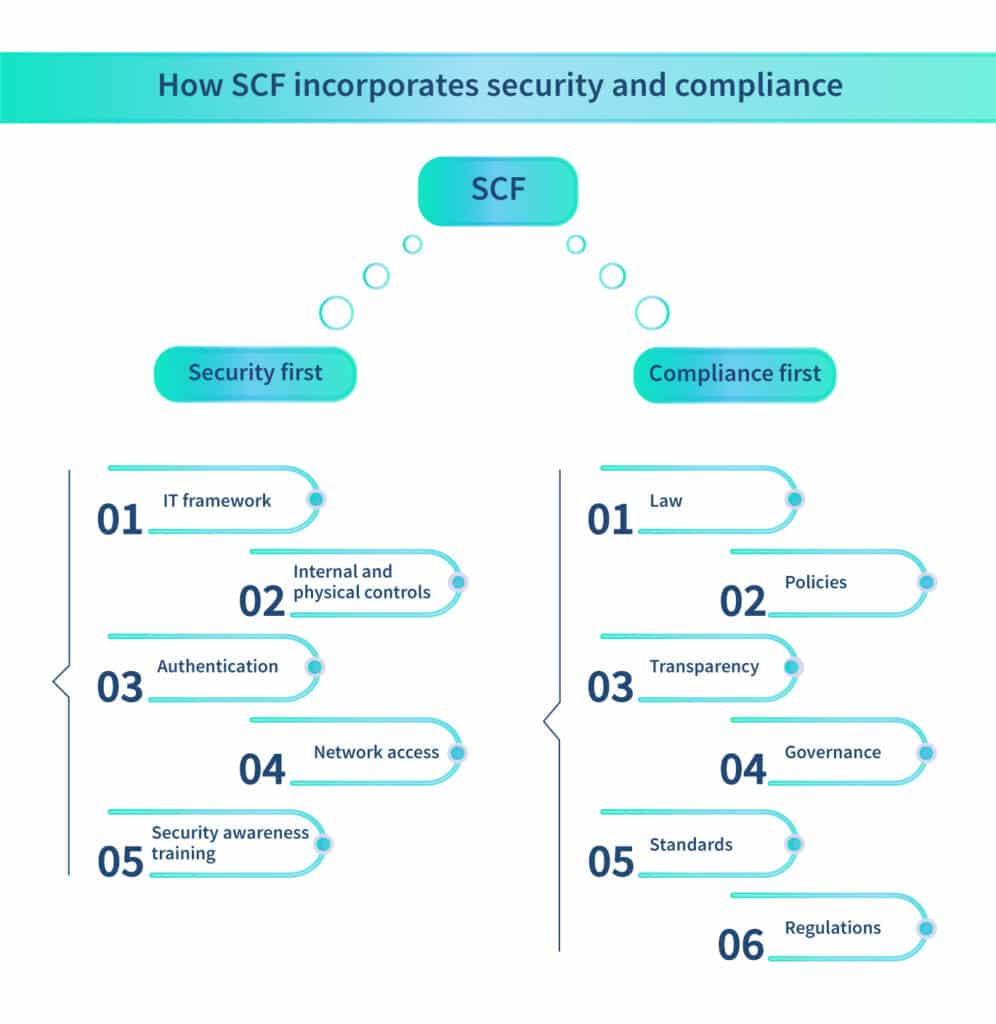
The SCF, on the other hand, takes into account principles of data and security that comply with both cybersecurity and data privacy law, making an organization both secure and compliant.

How does it work?

The SCF is a framework consisting of several applicable standards. It has over a thousand controls that adhere to over 150+ legislations and standards that are updated regularly by authorities.

It helps conceptualize, set up, and maintain a system that safeguards data, systems, applications, and operations of an organization.  

The unique features of the secure controls framework are described below.

Distills requirements

Every organization has different needs to address based on the industry it belongs to or the region it operates in. For instance, fintech companies follow PCI DSS, while organizations handling the data of EU residents adhere to GDPR.  

The SCF employs the process of “distilling expectations” to customize controls to address the unique requirements of an organization.  

The SCF tackles security concerns by focusing on cybersecurity and data privacy controls for statutory, regulatory, and contractual obligations as well as industry-recognized best practices.

By adhering to these standards, it ensures that an organization is both compliant and secure while it focuses on its business processes.

Uses a data-centric approach
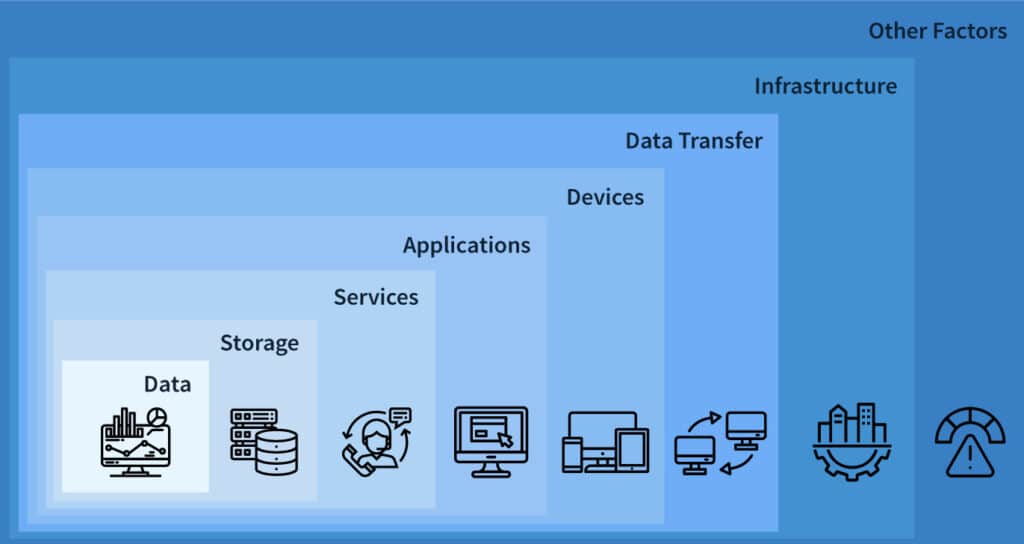
Uses a data-centric approach

The SCF has in place technical and physical security controls that protect an organization’s data. The physical controls include things like biometrics, access cards, and surveillance cameras to keep unauthorized people out. The technical controls include authentication tools, antivirus software, and firewalls, among other tools, to keep hackers away from data.

The SCF regards data as the most precious commodity of an organization. All assets of an organization, such as hardware, servers, and applications, can be replaced. However, an organization’s data is irreplaceable.  

This data-centric approach is kept at the center while setting up and maintaining a security program while following the SCF.

Follows the CIAS quadrant

The CIA (confidentiality, integrity, and availability) Triad does not cut it for the secure controls framework.

The SCF considers the CIA triad inadequate in its approach to cybersecurity and data privacy. This is because it lacks the significant component of safety. The SCF uses the confidentiality, integrity, availability, and safety quadrant to address the ever-evolving needs of organizations that use artificial intelligence (AI) and automated tools.

Since such organizations are prone to frequent security breaches, the SCF emphasizes safety to protect their data. These are the components of the CIAS Quadrant:

Confidentiality: It protects data and proprietary information by restricting its access to authorized users only. 

Integrity: It protects data from being altered or destroyed by unauthorized users.

Availability: It ensures that data is made available without any hassle or delay to authorized users. 

Safety: It works actively to prevent the risks associated with the use of technologies such as AI by obstructing security threats that could damage or destroy assets.

Safety focuses on preventing dangerous cyber crimes such as cyber stalking, cyber warfare, terrorism, and device tampering. 

Uses cybersecurity for privacy by design (C4P)
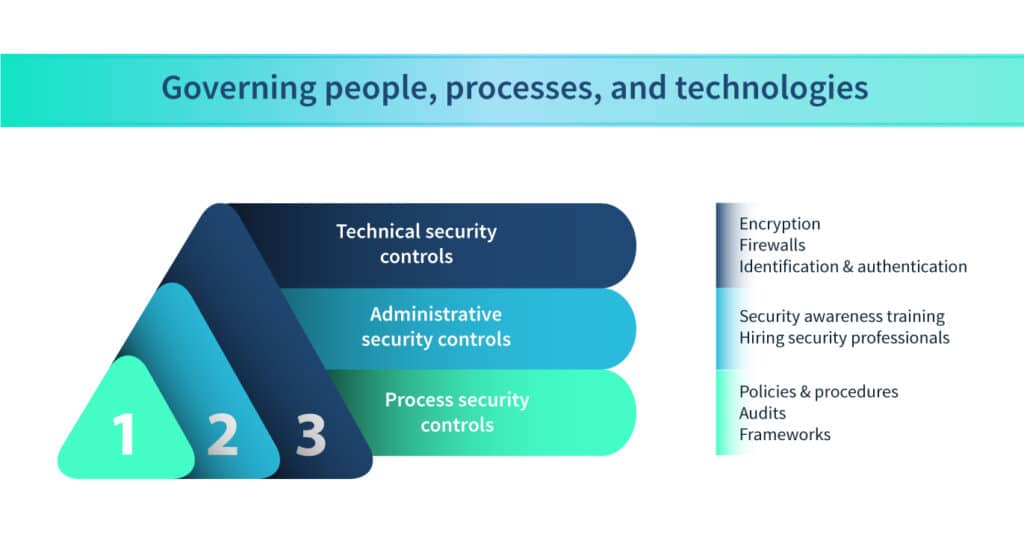
Uses cybersecurity for privacy by design (C4P)

The SCF follows the concept of cybersecurity for privacy by design (C4P), which addresses privacy concerns by governing people, processes, and technologies.

The objectives of C4P are as follows:

  • Enforce privacy using tools like virtual private networks and proxy servers
  • Make security configuration settings secure by default
  • Integrate security mechanisms into processes while implementing them
  • Keep security practices simple and consistent for all users to avoid confusion
  • Use methods such as zero trust to verify users
  • Security awareness training for all users

What is Scrut’s Unified Control Framework and how can it help your organization?

Scrut launched its very own version of the secure controls framework called the Unified Control Framework (UCF). It is a great feature that simplifies the process of meeting compliance requirements across multiple frameworks.
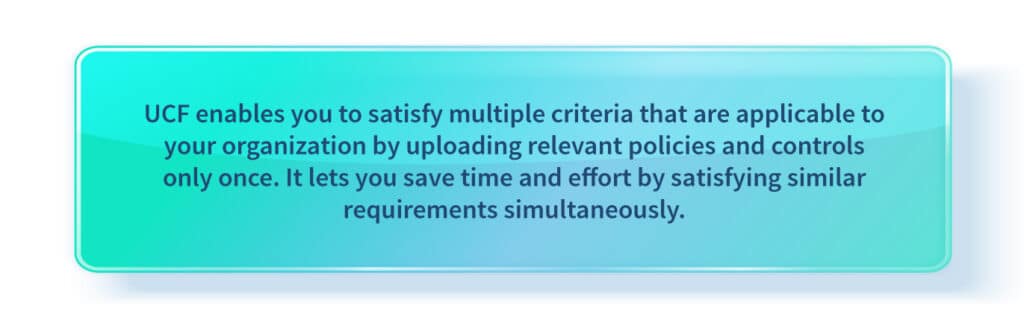
The controls are mapped to frameworks and requirements in your Scrut account, and all artifacts are linked to the controls, including policies, evidence, and tests. This means you are not required to migrate your evidence, controls, or policies when adopting a new standard. We have retained your existing policies and evidence, eliminating any need for additional effort.

Our user-friendly interface makes it easy to navigate and manage your frameworks and controls. You can create custom frameworks and controls, making compliance management even more effortless.

Final thoughts

Using a secure controls framework helps an organization in the conception, implementation, and maintenance of an effective security posture.

It keeps cybersecurity and data privacy at the forefront and embeds security measures into every process, policy, and operation of an organization.

Using Scrut’s Unified Control Framework is a great way to balance both security and compliance needs. It is a game-changer for compliance automation. It lets you save time and effort by mapping controls to frameworks that are applicable to your organization and by satisfying similar requirements at the same time.

Schedule a demo today to learn more.

Authored by

Aayush Ghosh Choudhary
Co-founder & CEO at Scrut

Automation in GDPR Compliance: Chasing Efficiency and Accuracy

Data is the new oil, and just like oil, it can be dangerous if not handled properly. 

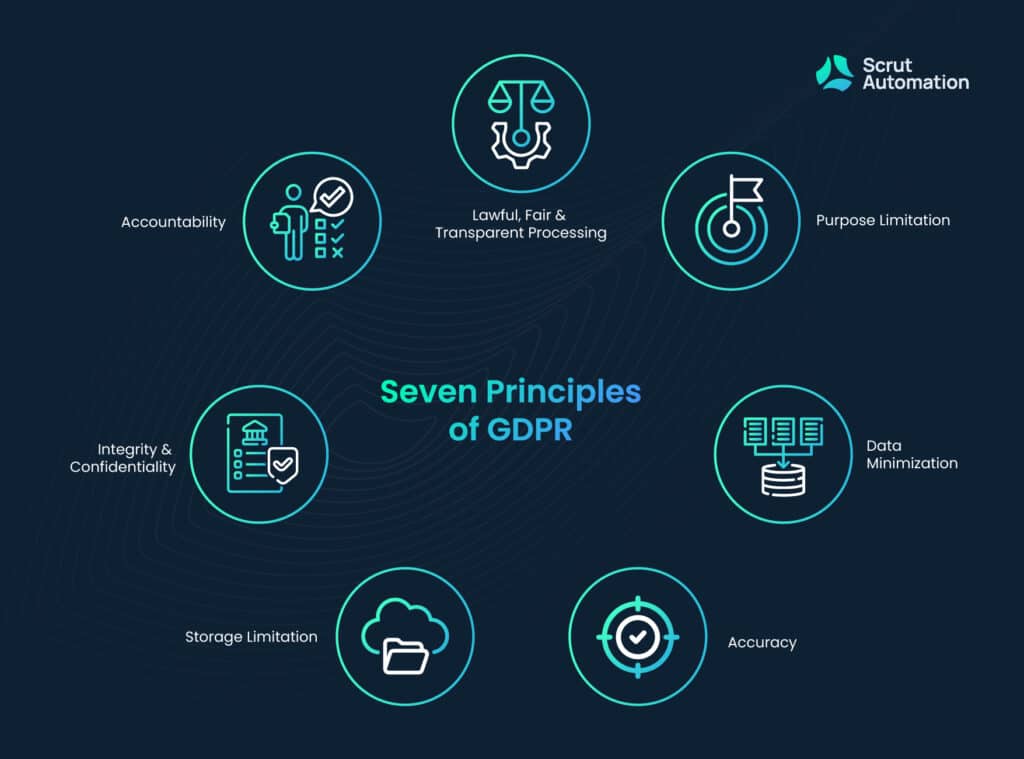
With the rise in data usage and exploitation, data privacy has become a crucial issue for businesses. The General Data Protection Regulation (GDPR) is a comprehensive data protection law introduced by the European Union (EU) on May 25, 2018. 

The primary aim of GDPR is to protect the personal data of EU residents, irrespective of where the data is processed, handled, stored, or transferred globally. The GDPR is applicable to any company, big or small, regardless of where it is based, that processes the personal data of EU citizens.

Benefits of automating GDPR compliance with GRC management software

The use of technology in streamlining governance, risk management, and compliance processes marks the difference between manual and automated security measures. By automating the compliance process, organisations can achieve compliance with leading industry standards like GDPR much more easily and effectively, with significantly less effort. 

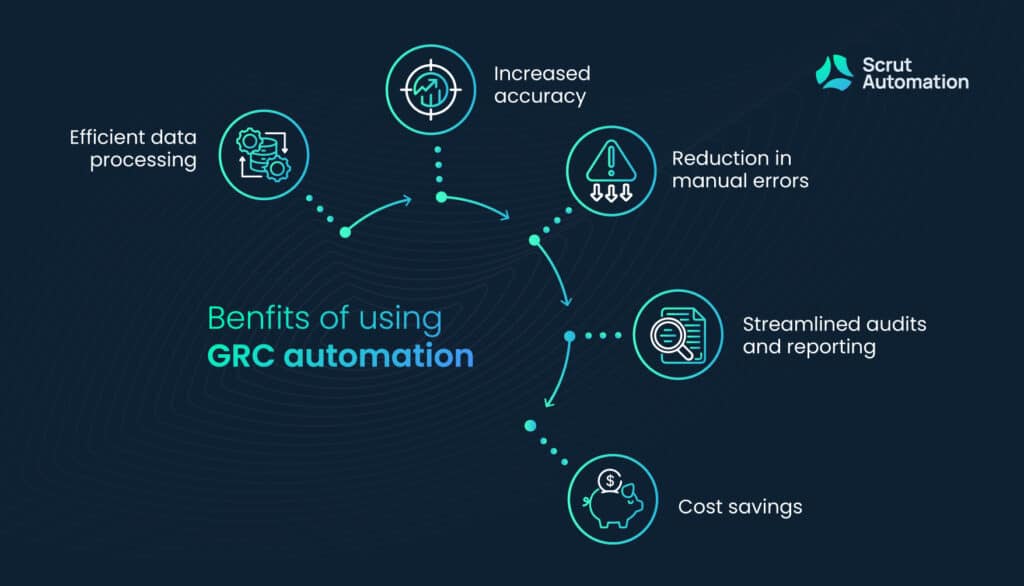
Efficient data processing, streamlining mandate tasks such as evidence collection, reducing manual intervention, and, consequently, manual errors are a few benefits of using GRC automation for GDPR compliance. 

Let’s take an elaborative look at these benefits and how GRC automation can change the compliance game for organisations. 

  1. Implementing the right GRC management software can reduce overlaps and duplication of efforts. It allocates resources more effectively, creates a single repository of artefacts, and automates the entire evidence-collection process. 
  1. It helps the organisation accelerate the auditing and reporting process by allowing them to share the space with the auditor on the dashboard itself so that the auditor can send the queries to the organisation and get them resolved quickly.
  1. Implementing GRC automation also increases transparency, and with clear processes and guidelines, employees become aware of their roles in the organisation and can function in harmony with each other and the organisation’s goals.
  1. GRC automation reduces manual errors. Humans are prone to errors, while computers are not. By reducing human interaction, errors automatically decrease. With fewer errors, organisations can rest assured that their GDPR compliance is on the right track.
  1. Last but not least, it can result in cost savings. Compliance automation reduces the need for manual processes, which can be expensive and time-consuming. By automating compliance processes, organisations can save money and use resources more effectively.

Tsaaro and Scrut join forces to streamline GDPR compliance with GRC automation

Tsaaro has been committed to helping organisations secure their client’s data by assisting them in meeting required data privacy and security standards. Their expertise, paired with Scrut’s mission to help organisations simplify their compliance journey by automating the processes and taking a security-first approach, will aid organisations in streamlining their cybersecurity processes. 

It will also help customers gain valuable insights into their compliance status and identify areas for improvement, proactively address compliance issues, and improve their overall security posture.

Tsaaro’s experienced team is committed to keeping their clients all across the world at the forefront of privacy and cybersecurity by devising strategic plans, identifying gaps, establishing and implementing strong measures, and consistently maintaining them to meet industry-specific compliance requirements globally. To learn more, click here

Authored by

Aayush Ghosh Choudhary
Co-founder & CEO at Scrut

GRC Management Platforms: How to Evaluate ROI and Maximize Your Investment

Businesses today have the responsibility of protecting the data of their stakeholders and protecting themselves from cyberattacks. One of the most effective ways to achieve this is to strengthen their GRC posture. 

Governance, risk management, and compliance, or GRC, is increasingly becoming unavoidable for a business organization. And as usual, technology in the form of automation has come to the rescue. GRC platforms are the automated way to design and implement GRC programs.

GRC management platforms, also called GRC platforms, or GRC software, or GRC tools, are automated software designed to form and implement policies, identify and mitigate risks, and fulfill the compliance requirements of an organization.  

The GRC platform can help an organization reduce manual tasks and improve efficiency. It also improves the compliance posture of the organization, that in turn can reduce the fines and penalties for non-compliance. But GRC platforms are not free. They cost money. Hence, it is quite natural to ask if it is worth investing in GRC platforms. 

To answer the question of whether investing in a particular asset, physical or digital, is worth its costs, financial wizards have come up with the calculation of return on investment (ROI). ROI compares the financial benefits of an investment with its cost. Higher ROI means the benefits of the asset outweigh its costs. On the contrary, a negative ROI indicates the benefits are not enough to cover its cost. 

Let’s first understand exactly what an ROI analysis is like.

Understanding ROI analysis

ROI analysis is a method used to evaluate the financial performance of a project, asset, or business to the cost of investment. ROI is usually expressed as a percentage of the initial investment. It takes into account the cost of assets and their benefits – both short-term and long-term. The benefits of calculating ROI are shown below.

  • Determining whether the investment is worthwhile. A higher percentage of ROI indicates a higher return on investment.
  • Identifying the most profitable investment. You can compare the ROIs of two or more products to calculate which one is worth your investment.
  • Evaluating the success of an investment. After an organization has invested in a platform, it needs to evaluate whether it is worth investing in. It helps the organization in its future endeavors.

ROI is calculated by dividing the financial return by the initial investment cost.

Where,

ROI = Return on investment

Financial returns = All the benefits the investment is expected to generate, including increased productivity, reduced costs, increased revenue, and other financial benefits. Non-financial benefits such as improved customer satisfaction or employee morale should also be considered.

Initial investment cost = All the costs associated with the investment, including the cost of hardware, software, labor, training, and any other related expenses.

Now that we know what ROI is, let’s look at how to analyze ROI for GRC platforms.

ROI analysis for GRC management platforms

ROI analysis of various GRC platforms helps an organization to know whether it needs a GRC platform, whether the platform is a good investment, and which platform gives the highest benefits vis-a-vis its costs. An organization can know the worth of a GRC platform by conducting its cost-benefit analysis.

So, what are the key factors that impact the ROI analysis for the GRC platform?

Cost of implementing GRC management software

The cost of the GRC management platform depends on various factors, such as the size of the organization, the complexity of the compliance requirements, the number of users, and the features and capabilities of the platform itself.

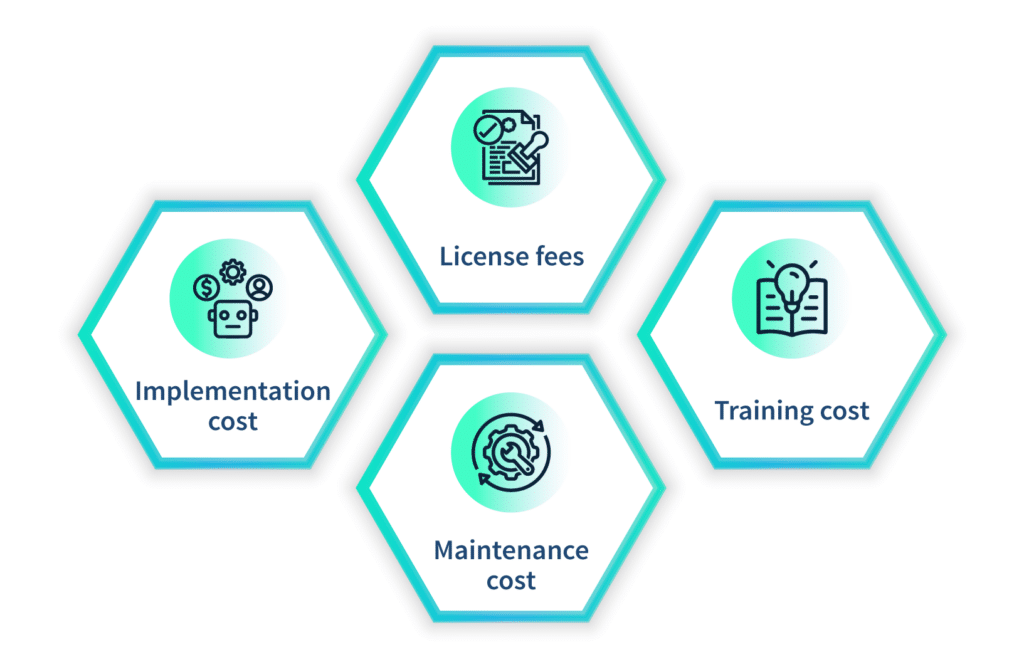
While calculating the ROI of a GRC platform, all the costs associated with it should be considered. Some of the costs of the GRC platform are shown below.

  • License fees

The license fee is the basic cost of the GRC platform. The platform vendor can charge a one-time fee or a yearly or monthly subscription for the platform. It may also vary depending on the subscribed features of the platform.

  • Implementation cost

The implementation cost includes all the costs associated with configuring and setting up the platform in the organizational structure. These costs include costs for project management, consulting, data migration, customization, and integration with other systems.

  • Training costs

The employees and the stakeholders need training for the successful implementation of the GRC platform, and it costs time and effort for the organization. Sometimes this training is conducted in-house, and other times the vendor or a third party conducts such training. No matter who conducts the training, the organization incurs expenses that should be included in the calculation of ROI.

  • Maintenance costs

Maintenance costs of the GRC platform are included in this heading for the calculation of ROI. Maintenance costs include the cost incurred for maintaining and upgrading the GRC software to ensure that it meets all the current requirements for compliance.

The total cost of a GRC platform is then compared to the benefits provided by the GRC platform. A lower cost and higher benefits can result in positive ROI, indicating the financial worthiness of the platform. Below are some of the benefits of implementing a GRC platform. 

Benefits of implementing a GRC platform

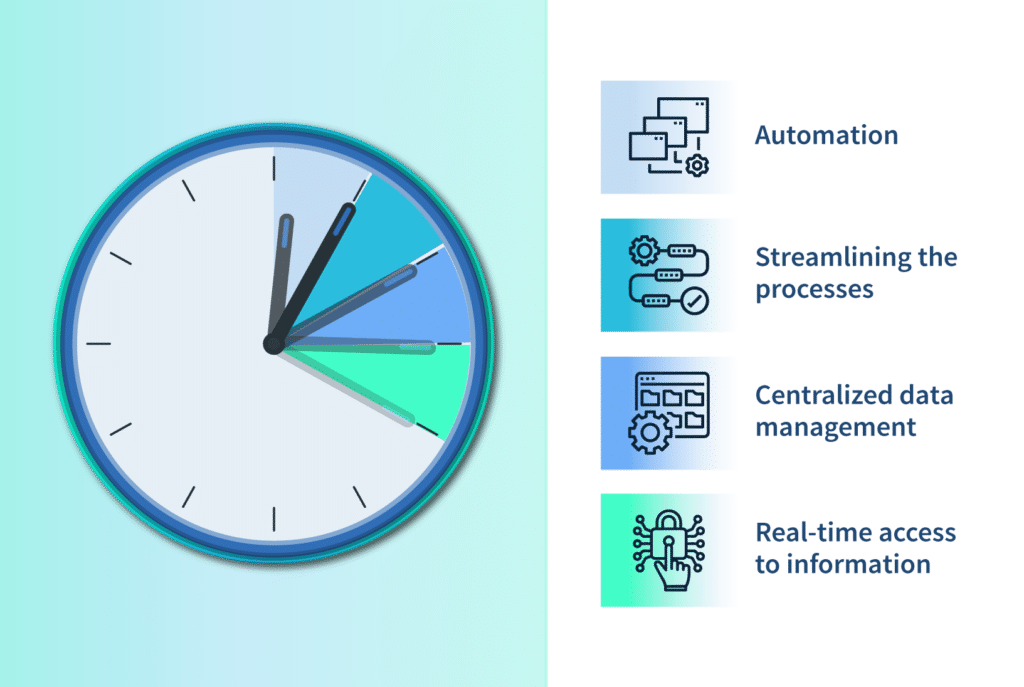
Save time by using GRC management software

When people say “time is money,” they are not wrong. Time, especially in a business organization, is as important as money. By implementing GRC management software, an organization can save time in various possible ways.

  • Automated tasks

A GRC management platform can automate many tasks, including compliance monitoring, risk assessment, evidence collection for audits, and reporting. Automating the tasks can not only save time but also increase efficiency and reduce errors. 

  • Streamlining the processes

A GRC platform can streamline all the processes related to compliance, risk management, and governance. This allows employees to focus on other profit-generating activities rather than spending time and energy on mundane, repetitive tasks.

  • Centralized data management

One of the major challenges for organizations is to retrieve data when required. A GRC platform helps the organization centralize the data for easy retrieval. It becomes easier and faster to gather audit artifacts and evidence. Plus, the management can have more visibility over data. The organization can save precious time by accessing any data needed.

  • Real-time access to information

The real-time access to information reduces the time required to detect, identify, and respond to threats arising in the organization. It can improve the cybersecurity as well as compliance posture of the organization.

The time saved from all the above ways can ultimately increase the output of the organization, reduce labor costs, and impact the ROI of the GRC platform positively. 

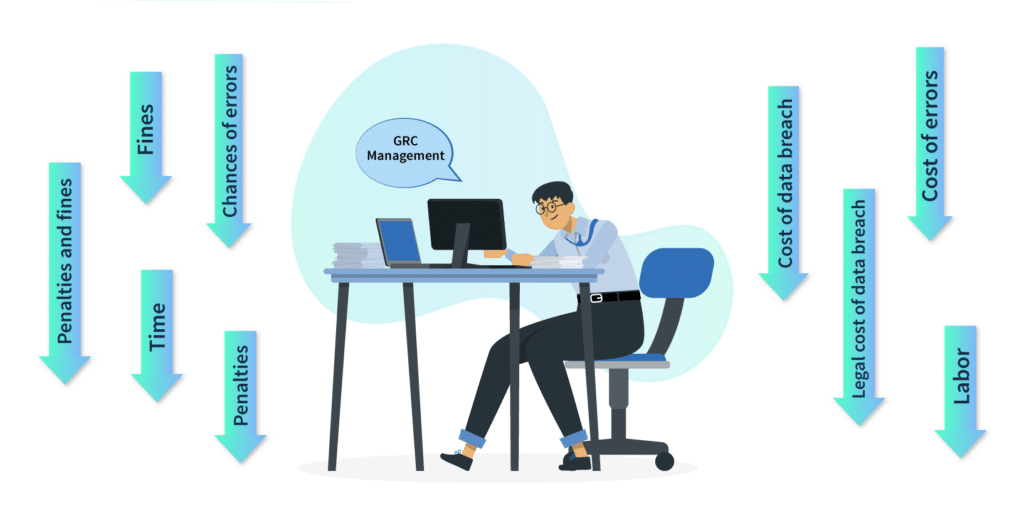
Reduction in compliance costs

Reduction in compliance costs

A GRC platform automates compliance tasks, enabling an organization to save time and labor. The organization can reduce the workforce working on compliance procedures, saving numerous hours spent on these tasks.

Moreover, when the tasks are automated, the chances of errors reduce dramatically. Errors often prove costly for compliance in the organization. A GRC platform can reduce the cost of errors significantly.

Most importantly, a GRC platform can save tons of money and time in case of a data breach. Typically, compliance can help prevent data breaches, but if the organization is unfortunate enough to face a data breach, it can prove to the legal authorities that it did its best to prevent it. This way, the penalties and fines can be controlled.

While calculating the cost of compliance, the organization must consider all the costs it will incur if it doesn’t invest in a GRC management system.

Reduction in legal costs

An organization can face legal charges if it faces data breaches. Regulations like GDPR and HIPAA have serious legal implications. Typically, the organization might have to bear legal costs plus penalties and fines as a result of a data breach. With a robust GRC platform, the organization can reduce the chances of data breaches; thus, the legal expenses, as well as penal expenses, can be saved. 

Calculation of ROI for GRC management software

The ROI for a GRC management platform can be calculated using the figures calculated above.

Let’s understand how to calculate the ROI of the GRC platform with an example of a fictional company called XYZ Ltd.

Let’s assume XYZ Ltd. has invested $200,000 in a GRC platform to manage its compliance requirements and mitigate risks. They expect that the GRC platform will help them achieve the following benefits over the next year:

Reduced legal costs: $100,000

Increased efficiency: $50,000

Reduced risk of fines/penalties: $25,000

Avoided reputational damage: $75,000

To calculate the ROI for the GRC platform, we need to first determine the net benefits. This is the total benefit minus the cost of the investment. In this case, the net benefits would be:

Net Benefits = $100,000 + $50,000 + $25,000 + $75,000 – $200,000

Net Benefits = $50,000

Next, we calculate the ROI by dividing the net benefits by the cost of the investment:

ROI = Net Benefits / Cost of Investment x 100%

ROI = $50,000 / $200,000 x 100%

ROI = 25%

Therefore, the ROI for the GRC platform investment is 25%. This means that for every dollar invested in the GRC platform, XYZ Ltd. can expect to receive $0.25 in net benefits.

Well, you should note that the circumstances for each organization are different for the calculation of ROI for their GRC platforms. Some of the benefits that an organization gets from a GRC platform might not be mentioned above, as they are specific to that organization. These organizations must consider all the benefits and costs associated with the GRC management software to get a fair idea of the ROI. 

Best practices for implementing a GRC management software

Proper implementation of GRC management software is crucial for its success and effectiveness. A GRC platform should be implemented in alignment with the organization’s business goals. A proper GRC platform doesn’t work in a vacuum but in sync with the overall business activities of the organization.

A well-implemented GRC platform can increase the efficiency of the organization by streamlining processes, reducing human effort, and automating routine tasks. The platform should be able to integrate with other applications and software used by the organization for other tasks.

A GRC platform can reduce cyber risks and make an organization compliant with various cybersecurity standards. It ensures that every process of the organization is monitored and defined to mitigate cyber threats. 

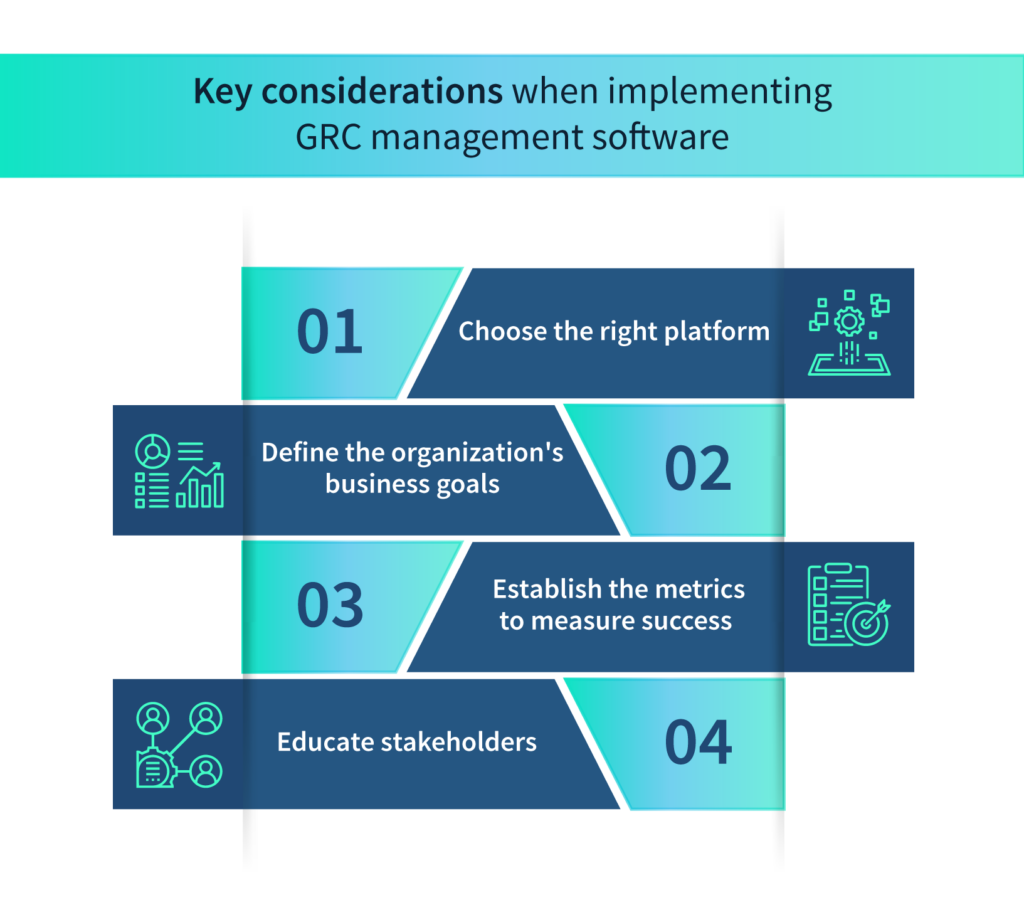
An organization should consider some of the factors shown below for the successful implementation of the GRC management software. 

Key considerations when implementing GRC management software

Even a powerful GRC management tool can fail if the implementation is not done properly in the organization. Here are some of the considerations to be taken into account when choosing and implementing the GRC platform.

  1. Choose the right platform for the implementation of GRC management. The right platform can give you the highest ROI, all the features you need, efficiency, scalability, and security for your organization. 
  2. Define the organization’s business goals and objectives. Check if they align with its GRC objectives. If not, fine-tune the GRC objectives to sync with the business goals.
  3. Once you have implemented the GRC management software, you should establish the metrics you will use to measure its success.
  4. Ensure that all the users and stakeholders have sufficient knowledge about the platform and that they have adopted the platform in their daily lives.

In summary

To conclude, let us recount what we learned in this article. Return on investment or ROI is a measurement of how much net returns an organization generates by investing in a particular asset. When this asset is a GRC management software, the organization must consider the ROI of the product and compare it with other GRC platforms in the market.

The product with the highest ROI is not always the best option. The organization should also consider other factors, such as features, usability, ease of use, scalability,  and effectiveness of the product, before finalizing the GRC platform. If the ROI is negative for a product, the organization should think twice about investing in it, as it can result in long-term loss.

FAQs

What is ROI analysis for GRC management software?

ROI analysis is a method of evaluating the financial return on investment of implementing GRC management software. It involves calculating the cost savings and revenue benefits that result from implementing the platform and comparing them to the cost of implementation. It is denoted in percentage.

Why is ROI analysis important for GRC management software?

ROI analysis helps organizations to determine the financial benefits of implementing GRC management software. This is important because it helps to justify the investment in the platform to key stakeholders, such as executives and investors.

What types of cost savings can be realized through the implementation of a GRC management platform?

Cost savings can be realized through a variety of mechanisms, including increased efficiency and productivity, reduced manual effort and errors, and avoidance of fines and penalties for non-compliance.

Authored by

Aayush Ghosh Choudhary
Co-founder & CEO at Scrut

How to Prevent Cyberattacks by Balancing Security and Compliance?

Security and compliance are the two main indicators of an organization’s safety. A company that is not secure will constantly be under threat of cyber attacks, while a company that is not compliant unconsciously declares to the world that it is unsafe to do business with.

The two are often confused with one another, but it is important to understand that compliance and security are not the same.

Compliance tends to focus on the implementation of controls to complete certification against leading industry standards and frameworks, while security focuses its efforts on protecting these controls and maintaining compliance to fight against cyber attacks. 

Today, organizations are confronted by countless security threats as well as increasing security regulations. Optimizing both cybersecurity and compliance will guarantee that your organization’s security as well as reputation is taken care of.

If you would like to learn how to protect yourself from cyberattacks, figuring out how to strike a balance between security and compliance is the best way to go.

The difference between security and compliance 

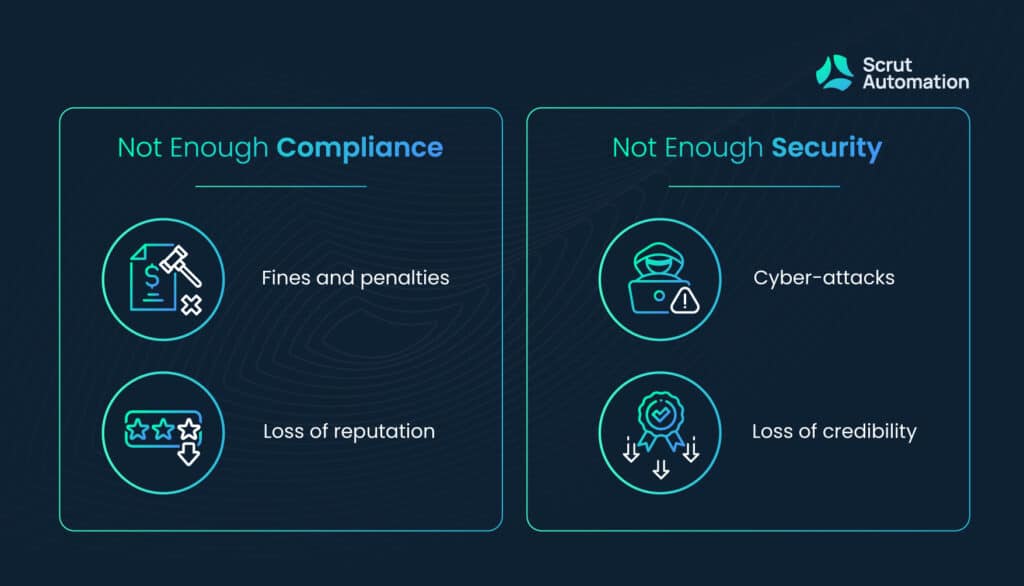
Not Enough Compliance vs Not Enough Security

Compliance focuses on satisfying the security requirements of external regulatory bodies and industries. For instance, organizations with operations in Europe adhere to GDPR, while medical companies adhere to HIPAA.

The process of compliance involves taking steps such as evidence collection, policy development, and control mapping in order to pass audits.

Compliance requirements are increasing by the day, and preparing for these audits uses up a lot of time and resources. If an organization does not pass an audit, it is forced to pay fines and loses its reputation.

On the other hand, security focuses on actively defending an organization against cyber attacks that threaten its assets. It is a constant effort since security threats can strike at any time, without warning.

The failure to implement proper security will result in security breaches that invade, leak, alter, or destroy a company’s assets.

Recovering from an attack is a costly affair. Companies can lose a significant amount of revenue when there is a data breach. They may need to shut down for days to recover. Loss of intellectual property, destruction of cyber assets, and data leaks are some of the brutal consequences of a breach. All this leads, in turn, to the organization losing its credibility.

Consequences of placing security over compliance

Security takes a more holistic approach than compliance when it comes to safety. It takes into account every asset and vulnerability for effective risk management, while a compliance-focused approach focuses on having the right security controls to pass audits.

Efficient security will result in compliance as a byproduct. However, when an organization focuses solely on security, without proving its compliance in audits, it is bound to be penalized.

Every organization has to follow regional and industrial security standards in order to be  deemed compliant. This can be a time-consuming process, which some organizations may fail to carry out regularly if their focus is on security alone.

Even if a company has the most resilient security architecture and knows how to prevent ddos attacks and vicious malware, if it focuses all its resources solely on cybersecurity and ignores reporting functions such as collecting evidence for passing compliance audits, it will be pronounced non-compliant by regulatory bodies.

A non-compliant company is not a credible one, and customers, investors, and vendors will refrain from associating with it.

Consequences of placing compliance over security

-David Geer, Geer Communications

Organizations that prioritize compliance over security invest too much time and resources in trying to look secure on paper instead of actually being secure.

These companies do not allocate enough resources to security operations. This results in gaps in its security architecture, which allow security threats to waltz right in.

Compliance frameworks do provide useful steps in improving an organization’s security posture. Unfortunately, even compliance frameworks that prescribe the best industry practices, such as SOC2, are not enough to tackle the current threat landscape.

This is because compliance frameworks are developed and updated only once in a while. Sometimes it takes years for a framework to be updated. The threat landscape and the security tool landscape, on the other hand, change by the day. 

Due to this, cyberattack prevention and resolution by compliant-first companies are not adequate. Such companies become easy targets for security threats and end up crumbling when hit by a cyberattack.

Striking a balance between compliance and security to prevent cyberattacks

By figuring out the right balance between security and compliance, an organization can not only prevent cyber attacks but also keep customers, investors, and regulatory bodies satisfied.

Here are some ways in which an organization can balance the two and get the best out of both.

Use a security-first approach

Use a security-first approach

Though both compliance and security are important, security is crucial for an organization’s safety. This is because security keeps an eye out for security threats at all times.

A company with strong security has the ability to prevent and resolve security breaches, mitigate their impact and recover cyber assets that are affected by them.

When a company puts security first, it uses technology such as the best malware protection, encryption tools, and firewalls to guard cyber assets.

It also has in place the best controls and strategies such as zero trust that make it difficult for hackers to break in.

A security-first approach integrates security into every operation and decision. All employees in a security-first company go through cybersecurity awareness training to avoid security incidents.

Companies can no longer afford to treat security as a regulatory requirement due to the ever-advancing threat landscape.

However, this is not to say that compliance should be put on the back burner. In fact, a security-first approach guarantees compliance. When a company follows the best security practices, it satisfies compliance requirements as well. 

Compliance is, after all, following security standards that are prescribed by an external body. A company with good security will inevitably fulfill these requirements. All that is left for it to do is present the evidence of its efforts to pass compliance audits.

Maximize security by using compliance as a baseline

Some organizations find it easier to follow compliance frameworks than to come up with a security plan that suits their needs. They do not know where to begin or how to go about enforcing security. 

Following compliance standards lulls them into a false sense of security. As mentioned before, compliance frameworks have outdated security standards. An organization that solely fulfills compliance requirements doesn’t stand a chance in today’s threat landscape.

However, there are compliance frameworks that prescribe useful security measures. They may not be the most effective when it comes to tackling current security issues, but they do act as a good foundation for a security program.

Frameworks such as SOC 2 provide very useful security practices. They are great baselines to build security on. Gaps in these frameworks should be filled using the latest security technology and processes in order to prevent cyber attacks.

Since compliance frameworks use a blanket approach when it comes to security, organizations that rely on it as a baseline have to implement security measures that suit their specific needs. 

The focus should be on preventing and tackling security incidents with the latest security technology and processes while using compliance standards as useful guidelines to cover all bases.

Use automation tools

Use automation tools

Though the threat landscape today is a sea of horrors, there are automation tools that help navigate it with ease. 

These tools help streamline both security and compliance. 

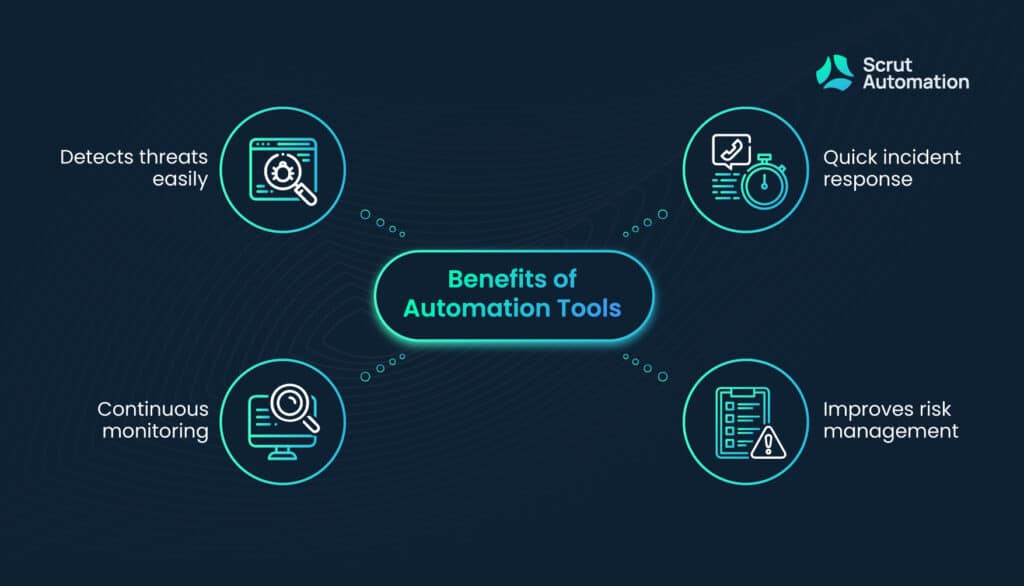
Security and compliance are time-consuming and resource-intensive processes. Using automation takes a huge burden off the security team and helps in monitoring threats continuously. They also make compliance easy by hastening audits and helping in evidence collection.

With automation tools, organizations do not need to compromise on either security or compliance. They can help achieve the perfect balance between both and effectively tackle security threats.

Hire more security personnel

It is common for security teams to be short-staffed. If a company values its safety, it should hire more security personnel to take care of its security needs. There should be enough employees to take care of compliance requirements as well. 

Security and compliance are requisites. Having enough employees to take care of both processes is necessary for an organization to balance both security and compliance.

Allocate more funds to strengthen security 

An organization’s leadership should recognize the role security and compliance play in driving its business goals. They cannot afford to put them on the back burner.

Security and compliance are both business drivers. Customers and investors would want nothing to do with an organization that is not secure or compliant.

It is important for companies to allocate enough funds to support security and compliance. From buying the best security and compliance tools to hiring new talent, if an organization wants to focus on cyberattack prevention, it has to spend more on security and compliance.

Conclusion

Compliance and security do not have to compete. An organization does not have to choose one over the other. They can both exist harmoniously when the right balance is achieved.

By adopting a security-first approach that uses compliance frameworks as a reference, an organization can make the best use of both security and compliance. 

Allocating more resources and funds to facilitate security and compliance is also vital for an organization to balance both processes.

Last and certainly not least, using automation tools such as Scrut that make both compliance and security easy should be a priority when attempting to strike a balance between the two. 

Scrut helps organizations actively monitor and tackle security threats with continuous cloud security and automated risk management. It also speeds up audits and makes compliance a breeze. Schedule a demo with us today to learn more. 
Authored by

Aayush Ghosh Choudhary
Co-founder & CEO at Scrut

10 Ways to Shift Your Organization to a Security-First Mindset

“Better safe than sorry” should be the motto for every organization facing today’s unpredictable threat landscape. Security and compliance are no longer a tickbox. They are business drivers that are necessary for a company’s survival.

Apart from the constant threat of cyber-attacks, a company that is not secure will also repel customers and investors and have regulatory bodies breathing down its neck.

For a company to stay alive and thrive, it has to opt for a security-first mindset. 

This mindset is a company-wide necessity.

Every single employee is responsible when it comes to cybersecurity. The burden of security should not be placed on the security team alone. 

Adopting this mindset takes time, but once it is part of a company’s culture, cybersecurity awareness will become second nature to employees. A small step such as organizing a company-wide security awareness training program goes a long way in ensuring security in the long run.

In this blog, we discuss ten practices that will help shift an organization to a security-first mindset. But before we do that, let’s learn more about what this mindset is and why it is necessary.

What is a security-first mindset?

A security-first mindset is one that weaves security into every process that an organization carries out at every level. A company that has a security-first mindset constantly seeks ways to implement security and employs a set of practices that help prevent, monitor, and tackle security threats.

A company with a security-first mindset takes great care to cover all bases when it comes to security. Every employee in such a company will do their best to cooperate with the security initiatives, making security a unified effort. 

Why should an organization opt for it?

Making security a priority should be at the top of every organization’s checklist. Hackers are constantly on the prowl, innovating ways to get a foot in the door. Unfortunately, many organizations make it easy for them.

Stanford study

A majority of data breaches are caused by the oversight of employees. This is something that could easily be avoided by organizing a security awareness training program.         

Security risks are dangerous, but they are avoidable. An organization that has a security-first mindset makes it extremely difficult for hackers to carry out their missions and does not give them any leeway to wreak havoc.

How to customize a security-first mindset for your organization

A security mindset is key when it comes to protecting the sensitive data of an organization, its customers, investors, and vendors. For this mindset to be effective, it is important for an organization to customize a security program according to its specific needs. Here are three ways to do this.

1. Conduct customer research

Every organization caters to different customers, and it is important to gauge their needs.

Today, more and more customers are wary of companies that collect personal information. It is important for a company to know its customers, but how does it go about doing it non-invasively? 

By conducting customer research.

Customer research helps understand the needs of your customers and will enable you to come up with a security plan that best suits your customers and your company. 

By taking into account your customers’ requirements, you will not only satisfy your customers but also boost your company’s reputation.

2. Come up with a cyber incident response plan

Creating a cyber incident response plan will enable employees, stakeholders, and partners to prepare for, prevent, recognize, and recover from security threats. 

By customizing a response plan according to the needs of your organization, you can devise the best ways to prevent security threats and mitigate their impact in the event of an attack.

3. Allocate funds for security

From hiring new security talent to investing in the latest security tools, the budget for security is taken seriously by an organization with a security-first mindset. 

An organization should assess its security needs, see where it is lacking, and allocate funds to take care of any gaps in its security.

Ten ways to shift your organization to a security-first mindset

1. Conduct a security awareness training program for all employees

Conducting a security awareness training program is probably the most important step when it comes to creating a cybersecurity culture in your organization. It is necessary for every single employee in an organization to be aware of the best security practices that they should be following. 

Since any small error by an employee can compromise a company’s safety, employees should be made aware of the impact of their actions. Learning from security incidents that other organizations went through can help employees be more vigilant.

These programs don’t have to be mundane. Some companies set a good security training awareness program example by rewarding their employees when they complete their training. They also make employees feel more involved and invested in the security process by giving them specialized roles in security.

2. Always keep the security team in the loop

Communication between the security team and all other departments is a requisite for a security-first organization.

Changes in operation, tools, and architecture should be discussed with the security team before they are carried out. This is because any change has the potential to be a security risk.

The security team can review the changes and implement the security practices that apply to them, ensuring that they do not make the organization vulnerable to security threats.

As engineers develop new technologies, they must keep the security team in the loop so that they can develop security tools for them simultaneously. This collaborative effort is necessary to help the organization advance securely.

3. Leadership should address the needs of the security team

A security-first mindset should start from the top. Leadership should listen to the needs of the security team and actively support them. 

From hiring new security talent to allocating funds for new cybersecurity programs, an organization’s security depends on its leadership.

When the people at the top prioritize security, all other employees will follow suit.

4. Have a comprehensive security plan in place

From employee IDs to state-of-the-art security tool stacks, a comprehensive security plan uses the best internal controls to cover all bases.

This plan should be flexible and dynamic. Cybersecurity must take into account changes in technology, the threat landscape, and operations.

For instance, working from home has become the norm for several companies post the pandemic. This has led to the need to secure the devices used at home by employees. The use of technology such as VPNs and authentication tools helps companies do this.

5. Practice zero trust security

Practice zero trust security

A zero trust network is one of the best ways to ensure an organization’s security. But, what is zero trust?

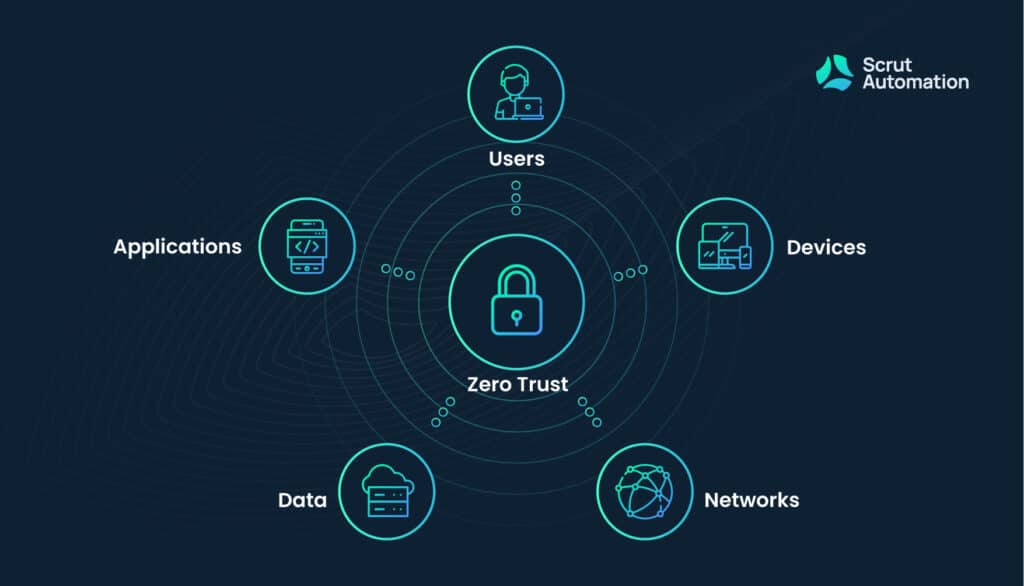
It is a security framework that allows a user access to the company’s cyber assets only after they prove that they are authenticated, authorized, and validated to do so. 

Even employees of an organization are denied access to certain cyber assets if it does not pertain to them.

Zero trust assumes that everyone and everything is a potential security risk until they are verified. It keeps the organization safe by employing practices such as multi-factor authentication and encryption of data, and by securing all communication within an organization.

6. Document security processes and policies

By documenting its security processes and policies, an organization minimizes confusion regarding its security practices. Having them in writing provides clarity to employees across the organization and helps in reinforcing a security-first mindset.

The documents should outline in simple terms how security threats can be prevented and what to do in case there is a security breach. 

Having the practices on paper will ensure that the same secure behavior is followed uniformly by all. These documents will, quite literally, have everyone in the company on the same page when it comes to safety.

7. Assess security posture regularly

Once a good security process is in place, it will need to be reviewed and improved upon frequently. A good security posture will grow with the growth of an organization.

By conducting regular internal audits and adhering to industry frameworks such as SOC 2, an organization can assess and update its security posture diligently.

8. Use automation tools

Using automation is a surefire way to fortify your organization’s security posture. Security automation tools monitor, analyze, and resolve security threats quickly and efficiently.

Using automation tools, like Scrut, will ease the burden on the security team and free up their time to innovate better security solutions.

Quick incident response and round-the-clock monitoring make automation a handy tool to combat security threats. Investing in automation is one of the best ways to shift your organization to a security-first mindset. 

9. Codify policies and processes

It is a good idea to start codifying policies and processes even when an organization is pre-product and pre-customers. It helps in keeping the entire company in the loop. 

When access policies are codified into source code, it enables employees to know who is permitted to work with what. 

This strategy not only has operational benefits, but it also helps an organization shine during compliance certification audits. It also helps team members know what went on before their involvement.

10. Establish uniform protocols and centralize accountability

By establishing uniform protocols for all employees from the start, individual security decisions won’t be mandatory. 

A security-first mindset requires both management and employees to be aligned with their organization’s business and goals. They need to speak the same language. A security-first mindset must be a cooperative effort rather than an imposition. 

All employees across departments must be on the same page when it comes to security practices. Fragmentation of security practices should be kept to a minimum to avoid lags in the implementation of security. 

How to conduct a security awareness training program

How to conduct a security awareness training program

As we have already mentioned, conducting a security awareness training program is one of the best ways to ensure a healthy cybersecurity culture in an organization.

Here are a few steps that will help boost your organization’s security training program.

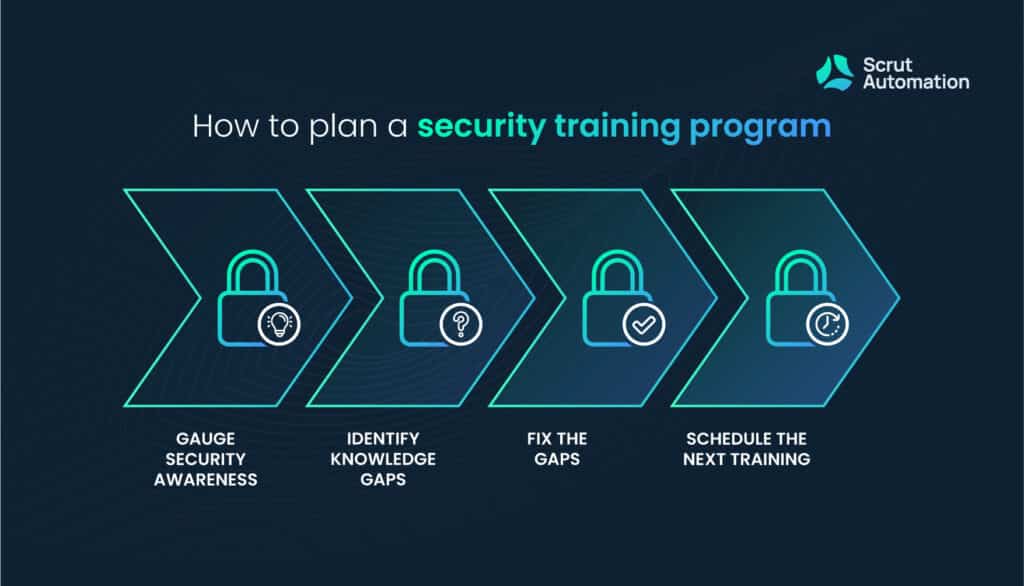
Measure the degree of security awareness and interest

It is a good idea to gauge the level of security awareness among employees before conducting a security training program. Identify the areas where employees need more awareness, and plan the program accordingly.

Set goals

Once you figure out the areas that require attention, make tackling them the goal of the program. For instance, if employees are likely to click on phishing emails, focus on teaching them how to recognize suspicious emails.

Set deadlines and create a roadmap for activities

Short programs with specific targets are likely to be more effective than long-drawn ones that result in information overload. 

It doesn’t have to be a lecture. Activities such as phishing simulations will help train employees better than just telling them what or what not to do.

Conduct security training programs regularly

Since the threat landscape as well as the ways to tackle it keep evolving, employees need to be updated regularly on the best security practices. Security programs should not be a one-time thing. It is essential to conduct training programs regularly.

Conclusion

By putting security first, an organization protects everything it works hard to bring forth to the world. A company can have the most brilliant, life-altering technology, but if it suffers even one security risk, it jeopardizes the pull it has on customers, investors, and the general public.

A security-first mindset is the best approach an organization can adopt to keep its security on track.

Using a cybersecurity and compliance automation platform like Scrut will help foster this mindset across an organization.

From spreading security awareness among employees to easing the burden on the security team, Scrut will help your organization achieve its business goals without compromising on safety.

If you’re interested in learning more, click here.

Authored by

Aayush Ghosh Choudhary
Co-founder & CEO at Scrut

Revolutionizing the Fintech compliance game with Regusense: A Unified Control Framework

The fintech sector is a dynamic space that is constantly advancing with innovative new technologies. This rapidly growing industry regularly witnesses new companies cropping up and redefining the new cashless ecosystem.

Another advancement that the fintech space is currently experiencing is the increasingly focused attention of regulatory bodies on cybersecurity regulations. More and more regulations are being introduced every other day, and while this attention to security is integral, it can weigh heavily on product growth for most organizations.

Since fintech companies deal with a lot of sensitive data, such as financial and personal data, and work with several clients and partners, it is required for them to be secure and reliable in handling data. But adhering to multiple standards is quite overwhelming, to begin with – add to this the complex nature of their respective requirements and the need to keep up with the ever-evolving frameworks – which results in fintech organizations having their hands full. 

The laws and regulations that fintech companies have to follow are implemented by different regulatory bodies such as RBI, SEBI, and PCI SSC, among many others. The requirements of each of these bodies are presented separately, and they also tend to evolve frequently to address the increasing sophistication of cyber attacks, introducing new requirements into the mix. 

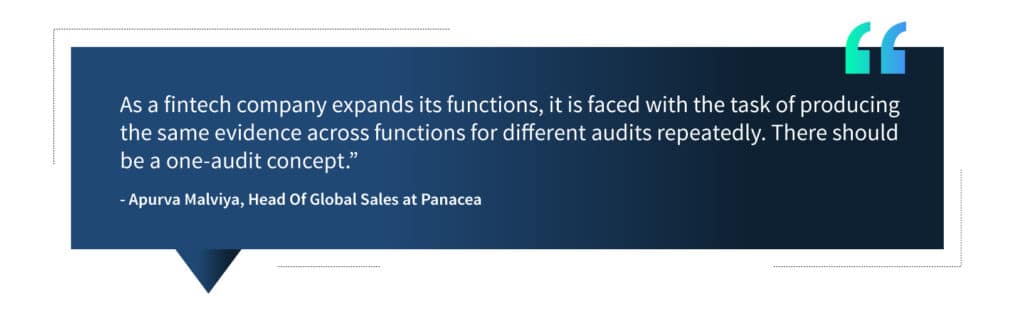
While fintech organizations need regular audits from authorized bodies, many times, clients and partners of these fintech organizations might also have requirements for specific and timely audits. The sheer number of audits that these organizations undertake in a year can prove to be very taxing

This complexity could result in missed security parameters, redundant controls, and unending compliance cycles. Fintech companies face the risk of heavy fines, loss of reputation, and disruptions in their operations or growth if they do not comply with the necessary requirements on time.

Navigating through the convoluted and ever-expanding regulatory maze to avoid undesirable consequences is one of the biggest pain points for fintech organizations. Fortunately, fintech companies do not have to navigate this maze alone! 

Introducing ReguSense: A common control framework for Fintech organizations

With Scrut’s new offering, ReguSense, fintech organizations have a one-stop solution for all their compliance needs. Organizations only need to implement this nifty new tool once, and the resulting control structure allows them to automatically comply with multiple standards at once. 

With Regusense, CISOs, and other security leaders significantly simplify the compliance automation process.

What does ReguSense do?

In a roundtable conference that we organized recently, which brought together CISOs to discuss the growing regulations that fintech companies are faced with, it was unanimously agreed that there is a need for a unified approach that tackles all compliance requirements in one window.

This is exactly what ReguSense does. It is a unified control framework that helps fintech companies reduce audit overhead by eliminating duplicity in controls and in the evidence artifacts of that control.

ReguSense is a pioneering product that has a set of unified controls that are mapped to multiple frameworks and their requirements. These controls are pre-mapped not just to common IT security standards, such as SOC 2 and ISO 27001, but also to frameworks of fintech regulatory bodies such as RBI Cyber Security Framework, SEBI Cyber Security & Cyber Resilience framework, etc. 

It also allows organizations to create their own custom framework according to their requirements by choosing from a pool of 25+ frameworks.

With a set of common controls for all frameworks, the effort required to manage individual artifacts of those controls (such as policies, evidence documents, remediation tasks, etc.) is also significantly reduced, allowing fintech organizations to focus on other important aspects of their business.

What makes ReguSense stand out?

ReguSense is the only out-of-the-box framework in the market that provides a unified solution, regardless of the type of fintech operations that an organization conducts. 

ReguSense includes the most common audit reports in today’s industry, such as SAR Reports – Localization, SAR – Tokenization, and also the latest requirements, such as RBI’s Master Direction on Outsourcing IT Services. 

It is built by experts who have performed over 3000 assessments and have 40+ years of combined experience to ensure that the controls are mapped in an accurate and effective manner. 

Scrut’s expertise is also reflected in the control framework’s scalability. As the operations of an organization evolve or new updates are introduced by regulatory bodies, the company might need to add more frameworks. Regusense’s unified framework makes it all look like a piece of cake!

How does ReguSense work?

ReguSense has a user-friendly interface that makes it easy for teams to navigate and manage frameworks and controls. 

Here’s a step-by-step look at how to use ReguSense.

25+ Most Commonly Applicable Frameworks

Step 1 – Create a framework

Navigate to the Frameworks page and click on create framework. You can then choose from a pool of 25+ most commonly used frameworks of today.

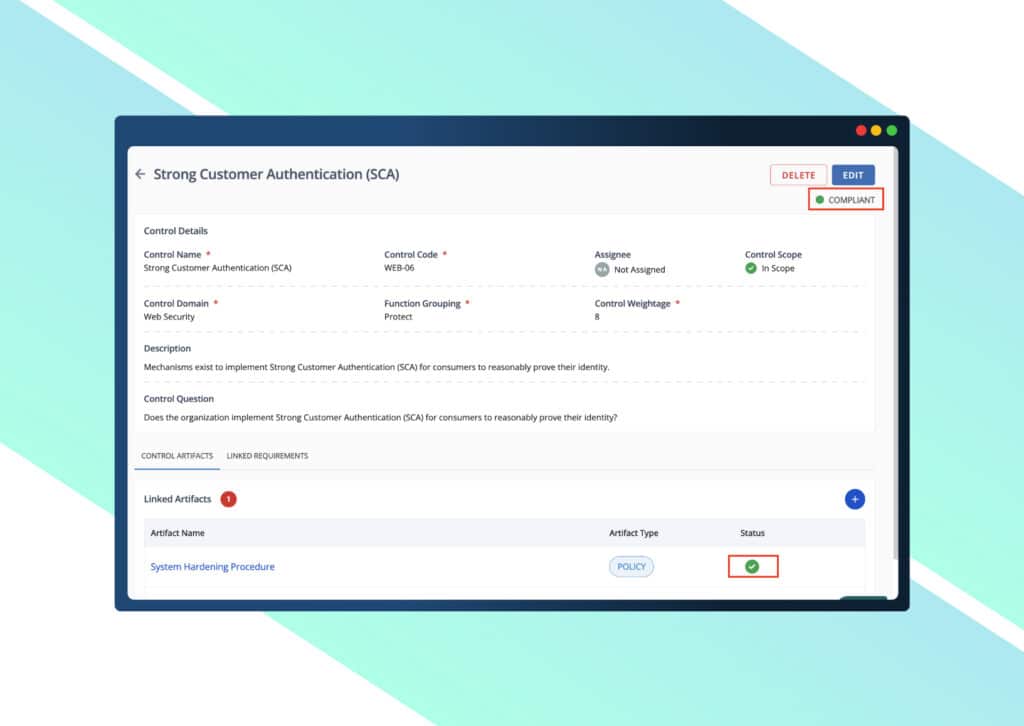
Step 2 – Control status from ‘Non-Compliant’ to ‘Compliant’

Once the linked policies and evidence are uploaded, and the tests have been passed, the control status will automatically change to compliant.

Custom Frameworks

If you’re a fintech organization, it is probable that other entities in the fintech value chain, such as your client/partners, might require specific cybersecurity guidelines to be followed. It could also be possible that you might want to impose specific guidelines for your company to improve your security posture, which is different from other existing standards. In such cases, you might want to add a custom framework. 

Step 1 – Create a custom framework

To create a custom framework as per your organization’s requirements, enter the name of the framework and select a framework color. This will help you identify the framework visually in the future.

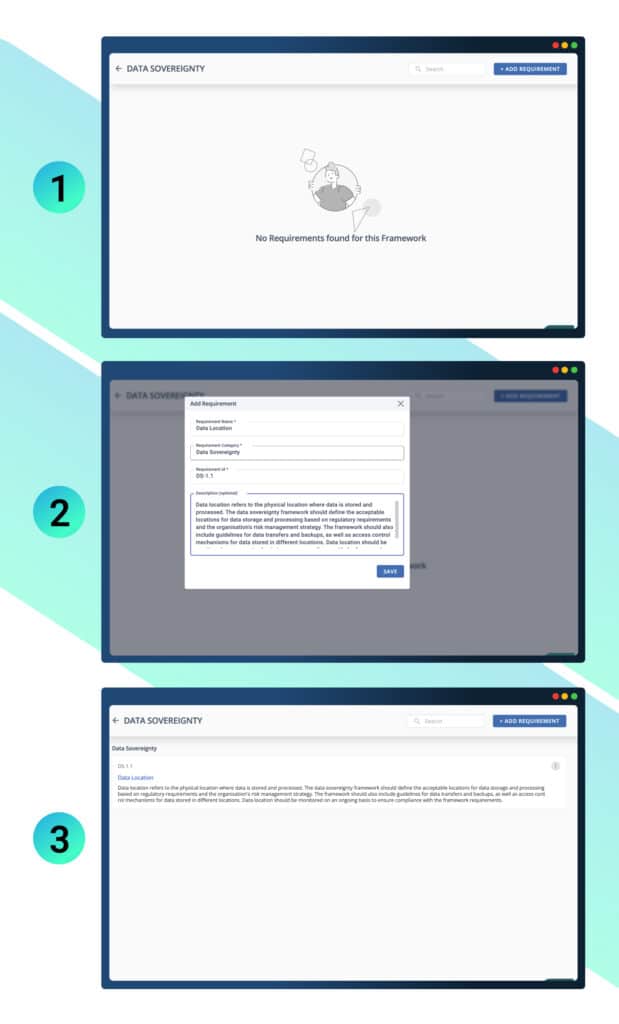
Step 2 – Add requirements

You can start adding requirements to your newly created framework by clicking on Add Requirement. Once you’ve entered the requirement details, click save. You can repeat the process for additional requirements.

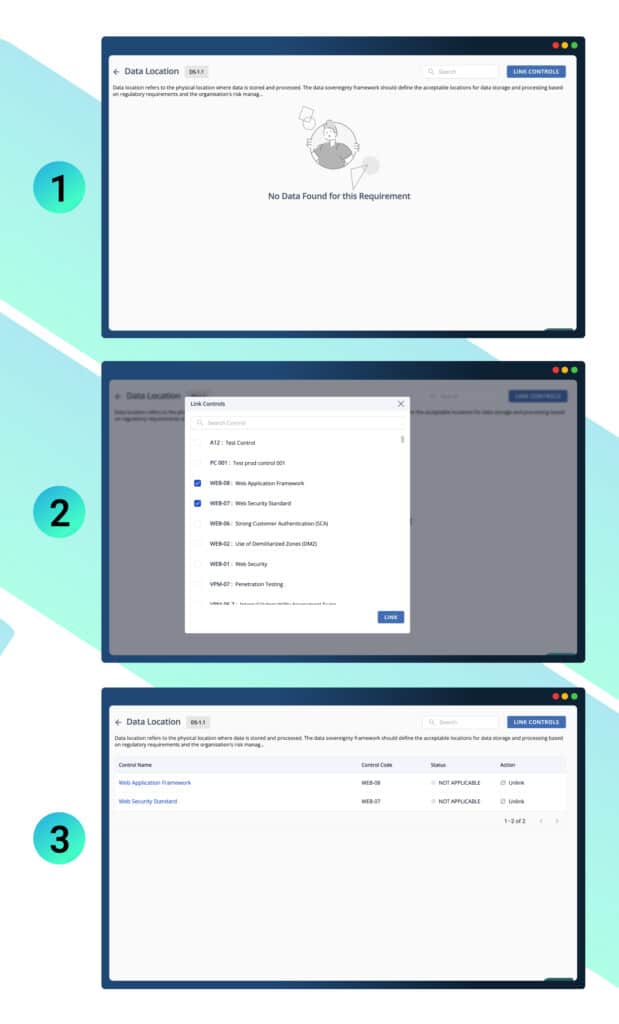
Step 3 – Link controls

To link controls, click on a requirement and then click Link Controls. You can choose from an existing set of 600+ unified controls or create your own custom control. Once you have successfully linked a control, it will be visible under the requirement.

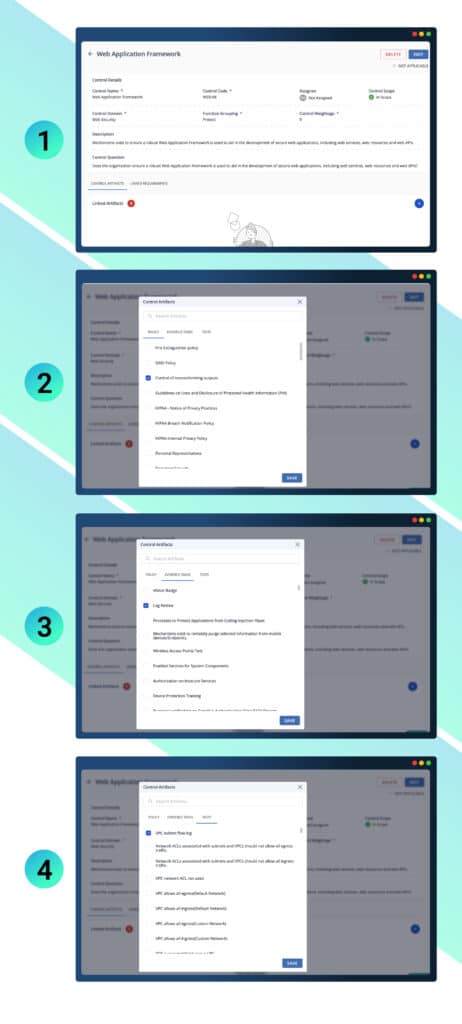
Step 4 – Link Artifacts 

To link artifacts such as policies, evidence, and tests, click the + icon on the Controls page. You can then link the artifacts. 

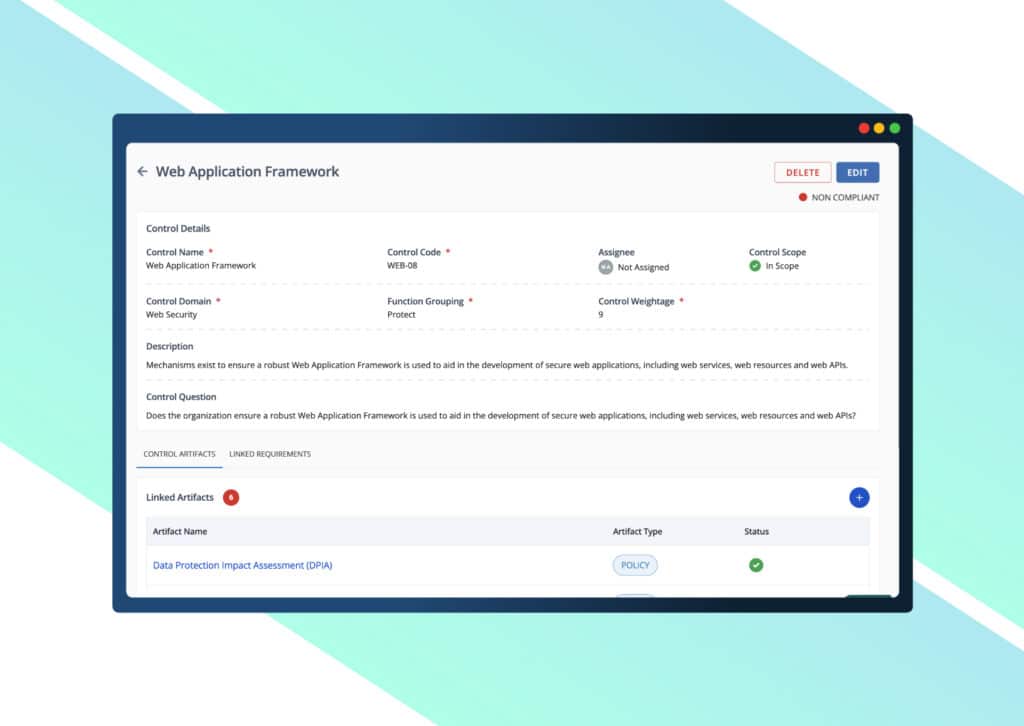
After linking them successfully, they will be visible under the Control Artifacts tab.

Step 5 – Control status from ‘Non-Compliant’ to ‘Compliant’

Once the linked policies and evidence are uploaded, and the tests have been passed, the control status will automatically change to compliant.

How can ReguSense help your organization?

Our development of ReguSense was driven by the proactive approach of fintech organizations to engage with the government while also expanding their product offerings.

ReguSense reduces the administrative time needed to implement and maintain multiple frameworks by offering structured content and guidance. It enables cross-standard mapping, and its framework requirements are updated regularly, eliminating the need to review updates manually. It is a super app for all your compliance needs.

This unified control framework’s evidence-collection mechanism is one of its standout features, benefiting both clients and partners. ReguSense can simplify the process of audits, allowing companies to address requirements with ease and without multiple resources, regular email correspondence, or ground-up evidence collection.

Additionally, ReguSense allows for the creation of custom frameworks to meet organization-specific requirements. This flexibility is essential for fintech companies that have unique business models and operating environments, especially in the current threat landscape. With ReguSense, organizations can create custom frameworks that align with their specific needs, ensuring that their compliance requirements are met in a comprehensive and efficient manner.

Explore how ReguSense can boost your compliance program today! Schedule a demo with us to learn more.

Authored by

Aayush Ghosh Choudhary
Co-founder & CEO at Scrut

9 AWS Security Best Practices for a Secured 2023

As businesses move their applications and data to the cloud, the need for robust cloud security becomes more important than ever.

Amazon Web Services (AWS), one of the most popular cloud providers, offers a wide range of security features and services to help protect its customers’ data and infrastructure. However, security in the cloud is a shared responsibility between the cloud provider and the customer.

Therefore, it’s crucial for organizations to implement their own AWS security best practices to ensure the protection of their sensitive data and maintain compliance with industry regulations.

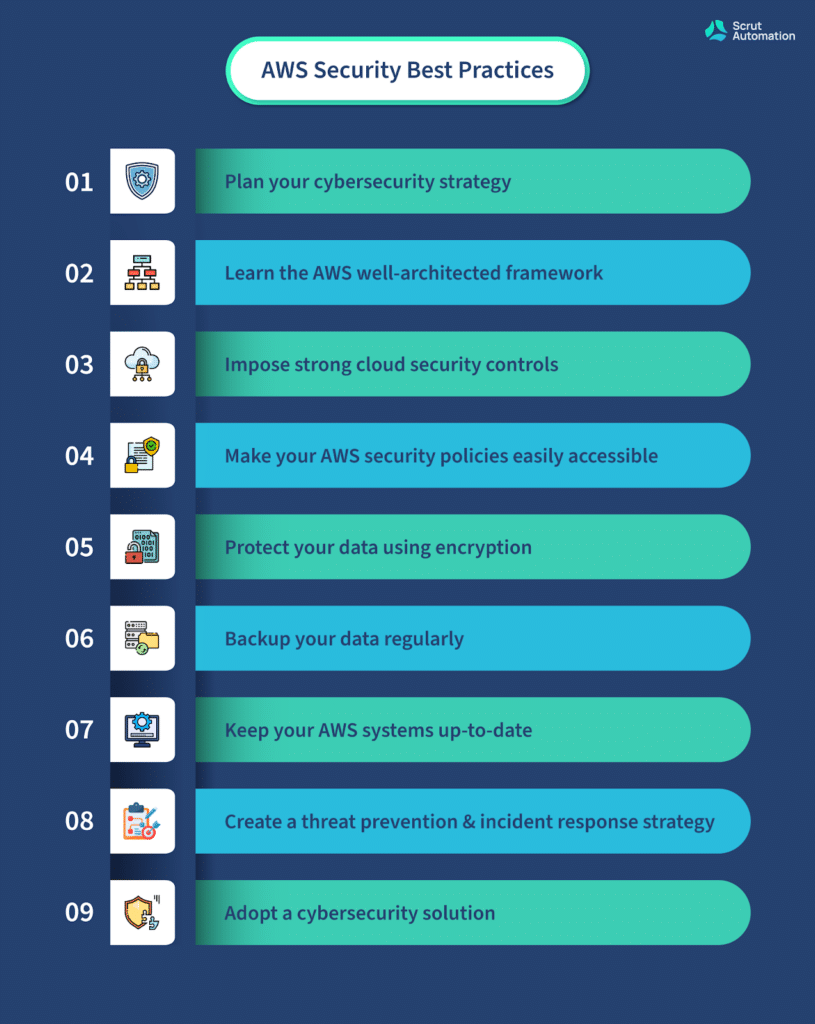
In this article, we’ll discuss the top nine AWS security best practices to help you secure your cloud infrastructure and minimize the risk of a security breach.

What is AWS security?

Meaning of AWS Security

AWS offers several built-in security features as well as services to help organizations secure their cloud infrastructure. This includes network security, encryption monitoring, identity and access management, and compliance. 

However, ensuring AWS cloud security is a shared responsibility. 

The organizations using AWS are responsible for securing their own data, systems, and applications, whereas the AWS platform is responsible for maintaining the security of the underlying cloud infrastructure.

That’s why it’s critical for organizations to learn the best practices for AWS security to enhance their cloud security posture and reduce the risk of cybersecurity threats and incidents.

Importance of AWS cloud security

The importance of AWS cloud security cannot be overstated, especially in today’s evolving threat landscape.

While the AWS platform offers a reliable, scalable, and a cost-effective solution for organizations to store and process their sensitive data, it’s still vulnerable to potential security threats. This is the main reason why strengthening the security posture of your AWS cloud infrastructure is critically important.

Neglecting to do so can result in dire consequences such as cyber attacks, data breaches, legal penalties, and reputational damage.

Without a doubt, every organization using the AWS cloud platform or planning on using it in near future must take proactive measures to secure their cloud infrastructure from potential threats and protect their sensitive data.

AWS cloud security best practices

Now that we’ve gone through the overview and importance of AWS security, it’s time to discuss AWS best practices for security.

Best Practices for AWS Security

1. Plan your cybersecurity strategy

Having a proper cybersecurity strategy in place is extremely important. 

If you’re migrating to AWS cloud for the first time, know that it’s important to have a well-defined cybersecurity strategy before you start deploying your applications on the AWS cloud.

Your cybersecurity strategy should include a risk assessment, threat modeling, and a mitigation plan. Additionally, you should also identify potential risks and vulnerabilities to your cloud infrastructure and put measures in place to mitigate them.

Doing so will help to maintain compliance with relevant industry standards & regulations and be more proactive in preventing potential cyber attacks.

2. Learn the AWS well-architected framework

Like we mentioned earlier, AWS is not directly responsible for the security of your cloud environment. However, it does provide abundant resources to help organizations strengthen the security posture of their cloud infrastructure.

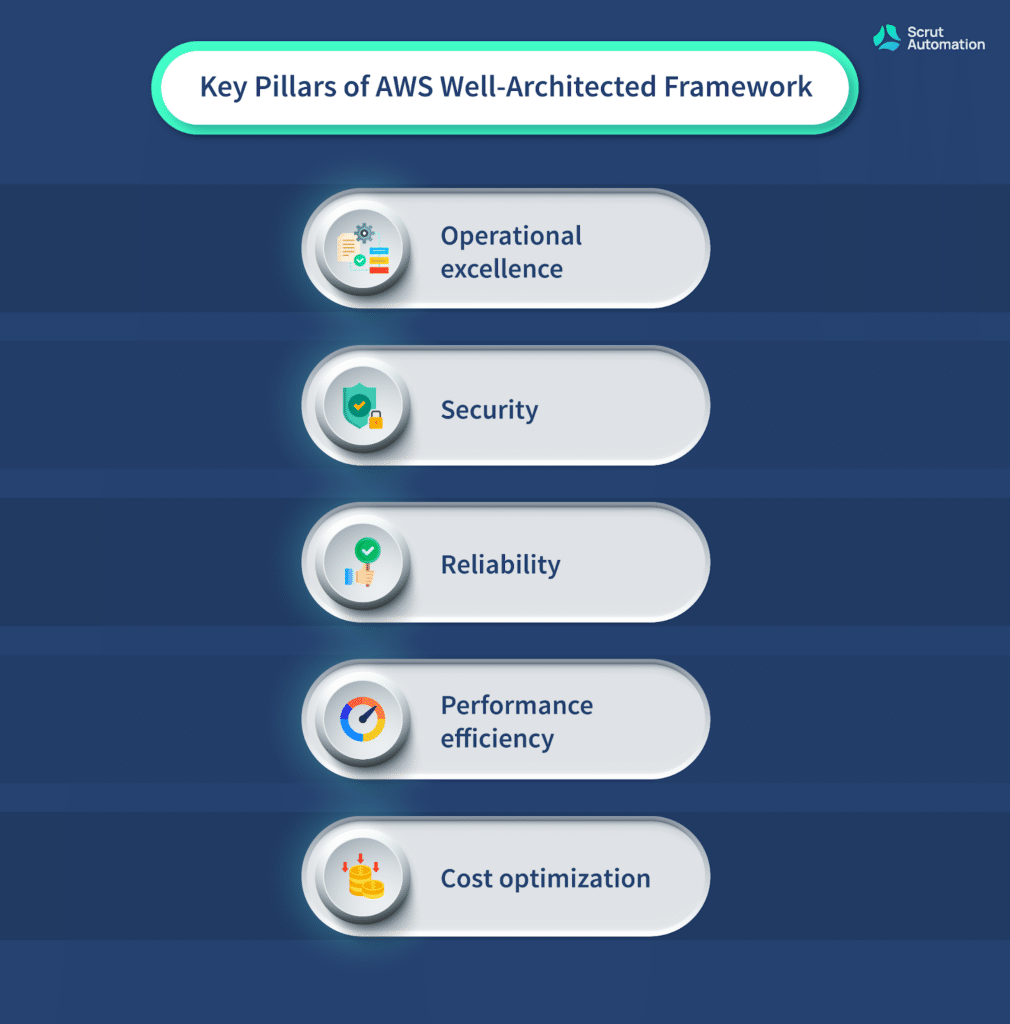
So if you’re planning on adopting the AWS cloud in your organization, you must go through the AWS Well-Architected Framework. It provides guidance and instructions for designing and operating secure and cost-effective systems in the cloud. 

Here are the key pillars of AWS Well-Architected Framework. 

Five key pillars of a well-architected AWS framework.

By learning and implementing the AWS well-architected framework in your organization’s cloud infrastructure, you can ensure that your applications are safe from potential cyber attacks.

3. Impose strong cloud security controls

Imposing strong cloud security controls is a must for every organization to secure their AWS cloud infrastructure.

After all, you’re responsible for securing and protecting your cloud workloads, not AWS.

This means you need to implement proactive measures to ensure that your customer as well as organizational data is protected from cyber attacks.

Following are some of the most important cloud security controls you can consider implementing for minimizing the risks of a security breach:

  • Clearly define user roles – Defining user roles can help to ensure that employees have access only to the resources they need to perform their job. This helps to prevent unauthorized access to sensitive data, systems, and applications, which ultimately lowers the risk of a cyber attack.
  • Conduct privilege audits – Privilege audits usually involve reviewing and monitoring the user privileges to make sure that they’re appropriate and up-to-date. By conducting privilege audits on a regular basis, organizations can identify and prevent potential cybersecurity threats before they turn into a successful security breach.
  • Implement a strong password policy – A strong password policy is an essential aspect of cloud security. A strong password is one that is difficult to guess or crack, and it should be changed regularly. Implementing a strong password policy that requires users to create complex passwords and change them frequently can help prevent unauthorized access to your systems and data.
  • Use Multi-factor authentication (MFA) – Finally, it is recommended to use multi-factor authentication (MFA). For the uninitiated, MFA adds an extra layer of security that makes it mandatory for everyone to provide additional authentication (i.e. fingerprint or OTP) beyond their password. This helps prevent unauthorized access even if a user’s password is compromised.

Incorporating these security controls for your cloud infrastructure can significantly reduce the risk of unauthorized access to your data resulting from poor security practices. 

However, it is crucial to ensure consistent enforcement and adherence to these controls throughout your organization for them to be effective in providing protection against security threats.

4. Make your AWS security policies easily accessible

One of the most important aspects of a good cybersecurity strategy is making sure that your AWS security policies are easily accessible to your team. 

This can include policies related to access control, network security, encryption, and incident response

By making these policies accessible, you can ensure that everyone in your organization understands the importance of security and knows how to act in accordance with your policies.

This, in turn, can help to ensure that everyone is aware of the importance of these policies and strictly adhere to them. 

5. Protect your data using encryption

Encryption, as you may already know, is a critical component of AWS security. 

By encrypting your data, you can prevent unauthorized access and ensure that your data remains secure even if it is intercepted or stolen. But most importantly, encryption is mandatory for certain regulatory compliances as well.

That’s why it’s critical to encrypt all of your data, even if it’s not mandatory for compliance.

AWS offers a number of encryption options, including server-side encryption, client-side encryption, and transit encryption. This helps to make it easy to encrypt sensitive data within your cloud environment. 

All you have to do is get acquainted with these options and choose the one that best meets your needs.

6. Backup your data regularly

Backing up your data regularly is absolutely essential and non-negotiable.

You will at least have your peace of mind in case you need to recover your sensitive data in the event of hardware failure, accidental deletion, or even a cyber attack.

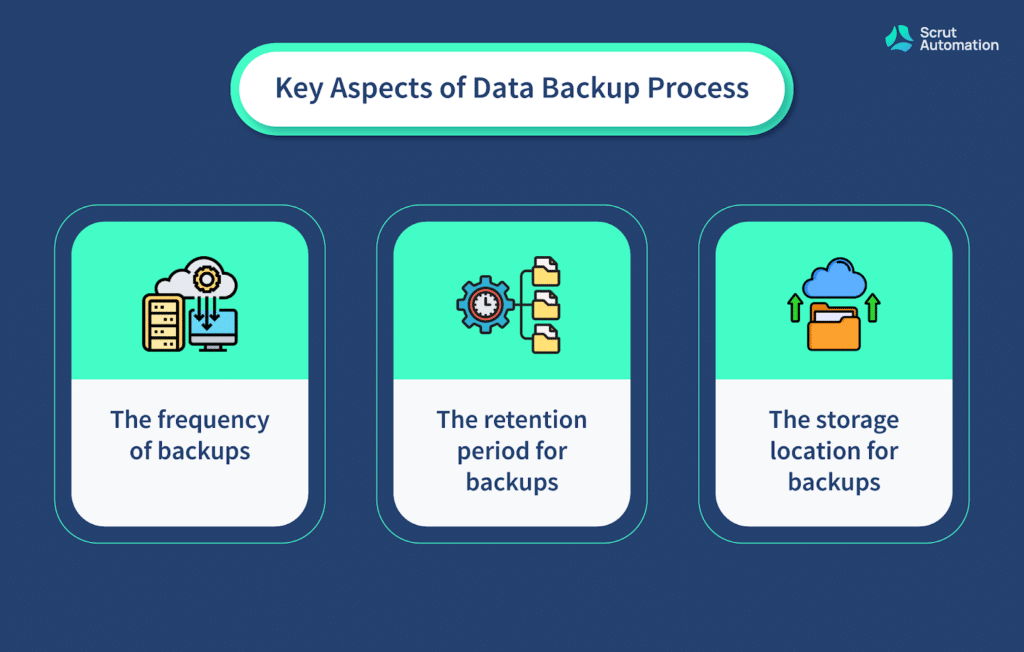
When considering data backup, three features namely frequency, retention period and its storage location are the most important ones.

When backing up your data, it’s important to consider the following aspects:

  • The frequency of backups
  • The retention period for backups
  • The storage location for backups

Fortunately, AWS already offers various backup options such as Amazon EBS, Amazon S3, and AWS Backup.

Using any of these options, you can store your backups in multiple regions to make sure they’re protected at all times against any kind of disaster or data loss. 

Just make sure to regularly test your backups to ensure they are working properly. This can help you identify any issues before a real incident occurs and give you confidence in your backup strategy.

7. Keep your AWS systems up-to-date

AWS regularly releases security patches, bug fixes, and updates to address vulnerabilities and protect against new threats. 

However, it is your responsibility to keep your AWS systems up-to-date is crucial in maintaining the security of your environment and to protect against vulnerabilities and exploits.

What’s more, the AWS platform provides automatic updates for some services through different tools. 

Amazon Inspector, for example, is an automated security assessment tool that can help you test the security of your applications and identify any potential vulnerabilities. 

AWS Systems Manager is another tool you can consider using for automating the patching of your systems and making sure they’re always up-to-date. 

On top of all these, you can even configure your environment to receive notifications when new updates are available.

8. Create a threat prevention & incident response strategy

To ensure maximum security of your AWS cloud infrastructure, you have to have a comprehensive threat prevention & incident response strategy in place. 

Ideally, this strategy should cover the three key aspects of your cloud security such as threat prevention, detection, and response. 

Prevention:

The first step in creating a threat prevention strategy is to identify potential threats and vulnerabilities. 

For this, you can consider using AWS’s built-in security features (i.e. AWS Shield & AWS WAF) to protect against DDoS attacks and web application attacks.

You can even adopt third-party cloud security tools and services such as antivirus software or intrusion detection systems to further enhance your organization’s security posture.

Detection:

Sometimes, even with the best cloud security measures in place, it’s still possible for a security breach to occur. 

That’s why it’s important to have a robust detection system in place. 

Specifically, we recommend using AWS CloudTrail and Amazon GuardDuty to monitor your environment for suspicious activities. 

This can include unauthorized access attempts, unusual traffic, and other similar patterns.

Response:

Along with the detection, you also need to have a clear and effective response plan in place. 

This can help to contain the incident, prevent collateral damage, and restore normal operations as quickly as possible.

Additionally, you should also have a clear communication strategy in place to inform relevant stakeholders including your customers and partners about the security incident and its impact.

9. Adopt a cybersecurity solution

Last but not least, you must also consider adopting a robust and reliable cybersecurity solution such as CAASM (Cyber Asset Attack Surface Management) to strengthen the security of your AWS environment.

What is CAASM? — it’s a new-age cybersecurity solution that can help you detect and respond to threats quickly, and can provide you with the visibility you need to monitor your environment effectively.

Simply put, adopting a third-party solution provides you with additional layers of security. 

This, in turn, can help to protect your organization from potential cyber threats and ensure the security of your critical data, systems, and applications.

Protect your environment with these AWS security practices

Securing your AWS environment requires a multi-layered approach that covers both technical and human factors. 

By staying updated on the latest security best practices and fostering a culture of security, you can minimize your risk and protect your infrastructure and applications.

Remember, AWS security is not a one-time task but a continuous process that requires vigilance and commitment.

While the AWS platform provides several security features, it’s crucial to implement a multi-layered security approach that covers all aspects of your infrastructure and applications.

FAQs

Is AWS a secure platform?

Yes, AWS (Amazon Web Services) is generally considered a secure platform. It has a comprehensive set of security features and services that are especially designed to help protect customer data and infrastructure from potential cyber threats and vulnerabilities.

How can you make your AWS account more secure?

There are several steps you can take to make your AWS account more secure such as enabling multi-factor authentication (MFA), reviewing and updating access controls regularly, and using encryption for sensitive data to name a few.

How can you securely access and manage AWS instances?

To securely access and manage AWS instances, you should use SSH (Secure Shell) or RDP (Remote Desktop Protocol) to connect & configure security groups, monitor instances for security threats, and keep systems updated with latest patches. These measures will help ensure that your AWS instances are secure and protected against potential threats.

Which is the best tool for AWS security?

There is no single “best” tool for AWS security as it depends on your specific needs and requirements. AWS provides a range of security tools and services that can help you secure your environment. This includes, AWS identity and access management, AWS security hub, AWS GuardDuty, and AWS key management service.

Authored by

Aayush Ghosh Choudhary
Co-founder & CEO at Scrut

How do internal control strategies enhance cybersecurity governance?

Cyber threats are rising every single day, and a majority of organizations are becoming more vigilant toward them. However, they tend to narrow down their visions to the technical aspects of cybersecurity and compliance. But what they often neglect is the need to be proactive and use tools to focus on the human aspects of cyber governance. 

Looking through the technical aspects and magnifying them can’t guarantee security in an organization, but adopting a proactive role in cyber governance using a control-focused approach could lead to enhanced security. Let’s understand what cyber governance is before moving on to the strategy of the control-focused approach. 

What is cybersecurity governance? 

Cybersecurity governance is the culmination of policies, processes, procedures, and practices formed and implemented by the organization to manage and mitigate cybersecurity risks. Cybersecurity governance is dependent on the principles of confidentiality, integrity, and availability of the information as well as adherence to standards and frameworks applicable to the organization.

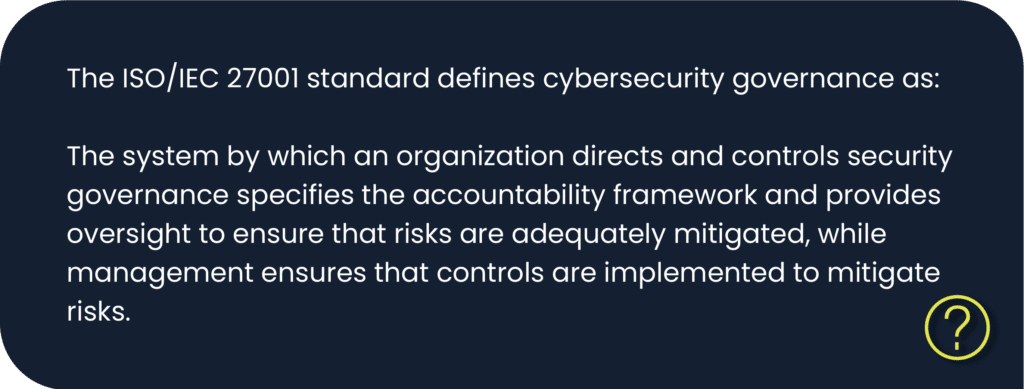
The ISO/IEC 27001 standard defines cybersecurity governance

The system by which an organization directs and controls security governance specifies the accountability framework and provides oversight to ensure that risks are adequately mitigated, while management ensures that controls are implemented to mitigate risks.

Cybersecurity governance is a critical component of the GRC program. Without stringent governance policies and procedures, the whole fabric of the GRC program can be ripped apart. Well-formed control-focused cyber governance can enhance the cybersecurity posture of the organization. To focus on control-focused cybersecurity governance, let’s first understand what control-focused strategies are.

What are internal control strategies?

Control-focused strategies or internal control strategies refer to prioritizing the implementation of controls to mitigate cybersecurity risks. These internal controls include both technical and non-technical measures implemented for mitigating risks.

This approach aims to establish a well-designed, comprehensive program that helps the organization proactively identify, assess, manage, and mitigate cybersecurity risks. Instead of managing the risks after the incidents, this program focuses on preventing the risks and discovering vulnerabilities beforehand.

An internal control based approach shifts the entire cybersecurity paradigm from reactive to proactive.

In this article, we will discuss the ways in which an internal control strategy for cybersecurity governance protects the organization.

Components of a robust internal control cybersecurity governance policy

In our previous article, we discussed the meaning, benefits, types, and components of internal controls. This article focuses on the relationship between internal controls and cybersecurity governance. 

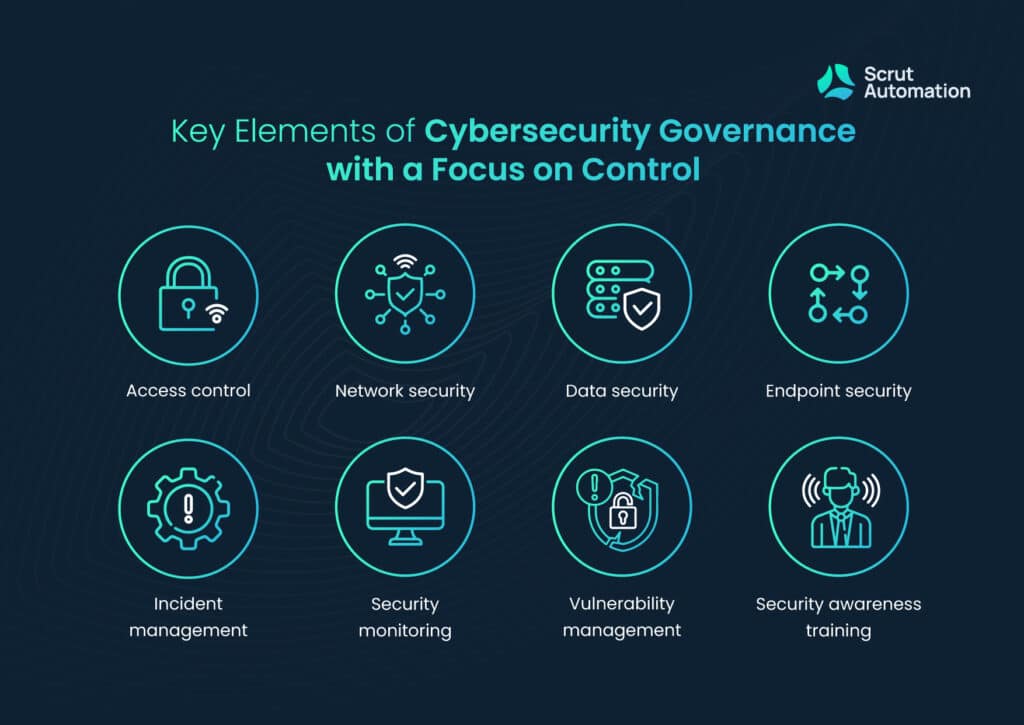
Let us now discuss the eight components of internal controls based cybersecurity governance to help you implement it in your organization.

1. Access control 

Access control refers to the process of limiting access to sensitive data or information to authorized users only. This method involves sharing information on a need-to-know basis only. Access is provided to the authorized user via passwords, multi-factor authentication (MFA), and role-based controls to stop all other users from accessing the information.

2. Network security

Network security is nothing but protecting the organization’s network from unauthorized access. Network infrastructure includes hardware such as routers, switches, hubs, repeaters, gateways, bridges, and modems. Network infrastructure is secured using firewalls, intrusion detection systems, and network segmentation.

3. Data security

The control-focused strategy features two types of data security – protecting data in motion and data at rest. Data in motion is the data transferred from one node to another over an unsecured network, such as the Internet. This data is protected using SSL/TLS certificates. While data at rest is secured using encryption, data loss prevention techniques, and data classification.

4. Endpoint security

Endpoint security refers to securing end-user devices such as laptops, computers, and mobile phones from unauthorized access. Every endpoint has its own security measure like anti-malware software, host-based intrusion prevention system, and device encryption.

5. Incident management

In a cybersecurity context, an incident refers to a breach in security by a malicious actor. Cybersecurity governance includes the detection, mitigation, assessment, and remediation of an incident.

6. Security monitoring

Continuous monitoring involves constant verification of the organization’s systems and network for security threats and vulnerabilities using tools such as security information and event management (SIEM) systems.

7. Vulnerability management

Vulnerabilities are the weaknesses or opportunities in the organization’s systems, software, or hardware that can be exploited by the threat actors entering the organization’s network. Organizations should detect and patch the vulnerabilities as soon as they arise by continual monitoring. Failing to do so can increase the chances of cyber attacks.

8. Security awareness training

All the organization’s employees, from IT and non-IT departments, should be trained in the best cybersecurity practices. They should know how to identify potential threats and how to avoid them.

Let’s take a look at the most common challenges organizations face while implementing an internal control based cyber governance strategy. 

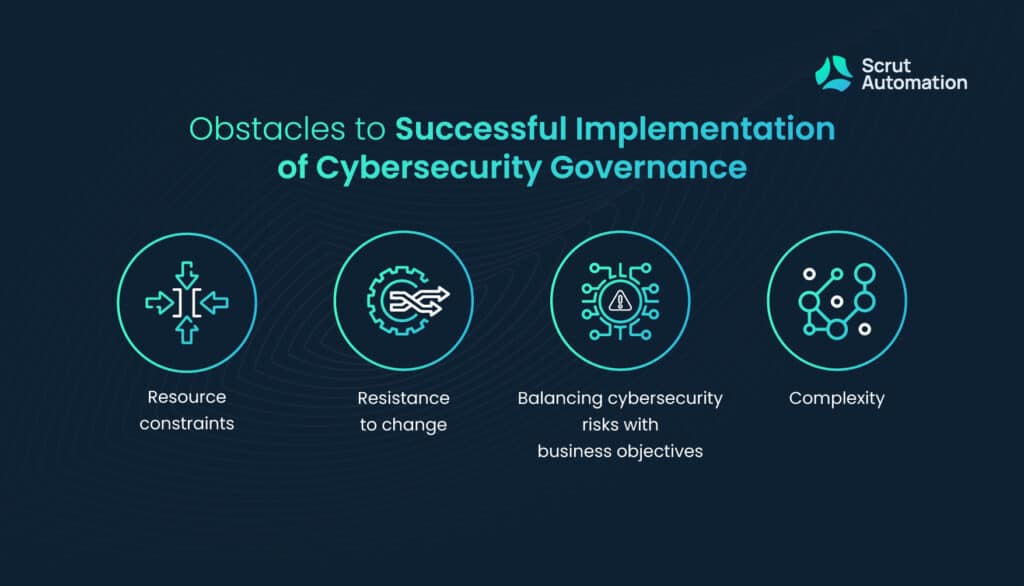
What are the challenges in implementing an internal control-based cybersecurity governance approach?

Organizations face many challenges in implementing internal controls for cyber governance. Some of the most common challenges are:

1. Resource constraints

To implement this approach, organizations require significant amounts of resources, including financial, personnel, and time. Before actually implementing the strategies, the organization should clearly understand how it will bring in the resources for the implementation.

2. Resistance to change

When organizations have been in business for a number of years, the employees, as well as the management, are set in their ways and generally resistant to change. So, if the organization wants to change its approach, it will have to carefully communicate the importance of cyber governance to its employees. It should be willing to supply proper training and support to employees to ensure they comply with the new policies.

3. Balancing cybersecurity risks with business objectives

Any organization has certain main objectives for which it was established. Now, if the organization pivots toward cybersecurity instead of its main objectives, it will fail in essence. So the organization should align cybersecurity goals with its main objectives. The measures should be user-friendly to avoid disturbing its principal business activities.

4. Complexity

This approach requires a deep understanding of the organization’s data, systems, and assets. Organizations must carefully consider the complexity of their systems before implementing the strategy. The program should address all potential vulnerabilities and threats clearly.

Understanding it with an example will make these concepts simpler to understand.

Case study of internal control failure – the Equifax data breach

So what happens when there are failures in internal controls? Failure in internal controls can lead to a data breach, non-compliance, and loss of reputation. Understanding it with an example will be easier.

Equifax is a credit reporting agency that collects and stores personal and financial information, including social security numbers, birth dates, and addresses of millions of customers. The Equifax data breach was a significant cyber attack that happened in 2017, affecting the data of approximately 143 million people. 

The initial attack happened via consumer compliant web portal. There was a widely known vulnerability in the portal, and Equifax had failed to patch it. The failure to patch the vulnerability was the first failure of internal controls.

The second failure – a lack of data segmentation. The attackers were able to move from the web portal to other servers as the data was not segmented adequately. 

Plus, the data, including usernames and passwords, were stored in plain text files allowing the attackers to move forward. The third failure was the failure to encrypt the data appropriately.

The fourth failure was when Equifax failed to renew its encryption certificate. Due to this, the attackers could pull data from the organization for months.

In the aftermath of the breach, Equifax faced significant legal, financial, and reputational damage. The organization was subject to numerous class action lawsuits and regulatory investigations, and it ultimately agreed to a settlement of $700 million to compensate affected consumers and implement cybersecurity measures to prevent future breaches. 

The Equifax data breach is an example of how not having the right internal control based approach can affect an organization. It highlights the importance of cybersecurity measures and prioritization of cybersecurity as a critical component of a business. 

Checklist for implementing an internal control-focused approach to cybersecurity governance

Implementing an internal control based approach to cybersecurity governance is a long process that requires a systematic and organized approach. By focusing on the steps given below, an organization can implement this approach to cyber governance with ease.

1. Conducting a risk assessment

The first step is to conduct risk assessments in order to identify and detect cybersecurity threats and vulnerabilities. Every aspect of the organization must be included in risk assessment, including hardware, software, firmware, data, and people. A thorough assessment can weed out vulnerabilities.

2. Developing control frameworks and policies

Based on the results of the risk assessment, the organization should build policies and procedures that address vulnerabilities and cyber threats. The policy should cover all the components of an internal control approach given above.

3. Implementing technical controls

Technical controls include firewalls, intrusion detection and prevention systems, encryption, and multi-factor authentication implemented in sync with the cybersecurity policies and procedures of the organization.

4. Implementing administrative controls

Administrative controls, like employee training, security awareness programs, and incident response plans, are crucial to establishing control-focused corporate governance. But always remember, the administrative controls should align with the organizational policies and procedures.

5. Monitoring and evaluating the effectiveness of controls

The organization should continuously monitor its cybersecurity measures to ensure they are relevant in the changing times. It should keep an eye on what is happening in the world to know the current threat landscape. The monitoring involves penetration testing, vulnerability scans, and security assessments. 

6. Continuous improvement

The organization should continuously improve its stance based on monitoring and evaluation. The policies and procedures should be updated, the vulnerabilities should be patched, and new technical knowledge should be implemented to keep the organization secure from cyber attacks.

Summing up cybersecurity governance: how control-focused strategies protect organizations

Managing business organizations was never an easy task. However, today’s market calls for special attention to the cybersecurity of the organization in addition to its main functions. An internal  control based approach to cybersecurity governance helps the organization form and implement policies to mitigate risks and prevent cyber attacks. 

Although there are many challenges in implementing this strategy, failing to implement strong internal controls can cause more harm than one can comprehend. We saw an example of internal controls’ failure and how it can affect the organization. So, it is advisable for organizations to implement internal controls and shift to an internal control based approach to cybersecurity governance.

Scrut offers a bouquet of services to organizations that want to focus on compliance and cybersecurity. Talk to our experts today to learn more. 
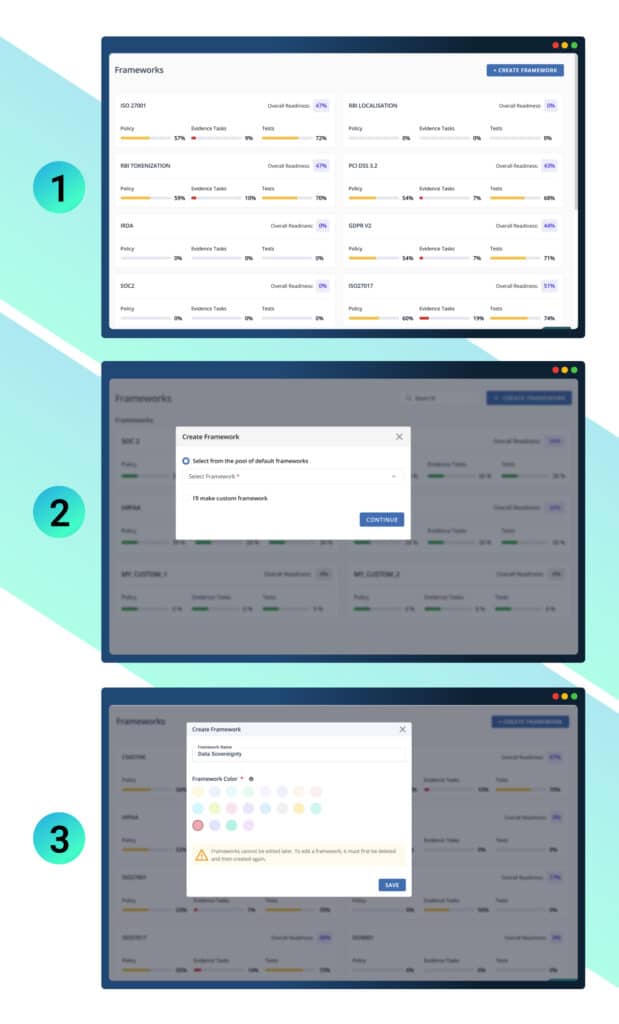
FAQs

How does internal control based cybersecurity governance protect organizations?

It can help protect organizations by providing a comprehensive set of security measures that can detect and prevent cyber-attacks. By implementing these controls, organizations can reduce the likelihood and impact of cyber attacks.

What are some challenges associated with implementing a control-focused approach to cybersecurity governance?

The challenges associated with a control-focused approach to cybersecurity governance are lack of resources, user resistance, complexity, and creating a balance between the main goals of the organization and cybersecurity.

How can organizations ensure that their control-focused cybersecurity governance approach is effective?

Organizations can ensure that their control-focused cybersecurity governance approach is effective by regularly assessing and testing their security controls, staying up-to-date with the latest cybersecurity threats and trends, and continuously improving their cybersecurity measures.

Authored by

Aayush Ghosh Choudhary
Co-founder & CEO at Scrut

IT GRC best practices: A Practical Guide for CISOs

In today’s ever-changing business landscape, the implementation of IT GRC (information technology governance, risk management, and compliance) has become crucial. This blog aims to provide CISOs with a practical guide to mastering IT GRC, enabling them to safeguard their organizations against cyber threats, assess and mitigate risks, and ensure compliance with relevant standards and frameworks. By following these best practices and avoiding common pitfalls, CISOs can achieve success in their IT GRC initiatives.

Importance of implementing an IT GRC program:

An IT GRC program is essential for protecting an organization’s assets, reputation, and bottom line in an increasingly complex and digital business environment. Here are some reasons why it is necessary:

  • An effective IT GRC program aligns the organization’s IT systems with its business goals, ensures compliance with standards and frameworks, and fortifies defenses against cyber attacks. 
  • Numerous regulations and standards apply to organizations, necessitating meticulous adherence. Additionally, partners may require adherence to specific frameworks, such as SOC 2 and ISO 27001.
  • The organization itself may need robust vendor management to ensure data integrity. 

Implementing a comprehensive IT GRC program helps address these challenges and ensure compliance while reducing manual burdens through automation.

Do’s: IT GRC best practices

An organization should carry out certain tasks in order to form a strong GRC process. Let’s look at some of the IT GRC best practices in detail. 

1. Establish a clear GRC strategy:

A clear GRC strategy involves the organization defining its objectives, scope, and priorities. 

a. Defining the objectives

The strategy of GRC begins by defining the objectives of the IT GRC program. Typically, organizations aim to strengthen the security and reliability of IT systems, ensure compliance with IT regulations and frameworks, reduce risk exposure, and increase transparency and accountability in their IT operations. IT GRC objectives should align with the organization’s strategic goals and mission.

b. Deciding the scope

The scope of your GRC program has two sections – the scope of people and the scope of systems. Identify the scope of IT systems that will be covered in the GRC program and the employees that will be involved in the process.

c. Setting the priorities

The priorities of the IT GRC program will be different in every organization depending on its functions, size, how much risk it faces, and its risk tolerance. So, set your customized priorities to suit your needs.

Additionally, an organization should allocate all its resources, including human and administrative resources, for the GRC program. If you don’t prepare adequately beforehand, it can lead to chaos during the GRC implementation phase.

2. Involve stakeholders and establish accountability:

The next crucial step is involving stakeholders and defining their roles clearly to establish accountability. 

a. Identify stakeholders and define their roles

The organization must identify stakeholders, such as management personnel, IT employees, compliance officers, audit staff, and legal departments, for the implementation of the GRC program.

Assign the IT GRC roles and responsibilities to each and every stakeholder in clear terms. They should be aware of the expectations of the organization. Also, the higher management should assess whether the tasks are completed on time.

b. Communicate the importance of IT GRC best practices

It is crucial that every person on the team is aware of the importance of IT GRC. Educate the stakeholders about the legal and financial repercussions of non-compliance for the organization’s overall success.

c. Establish a governance framework

A governance framework involves the creation of policies, procedures, and controls required for an effective IT GRC program. This framework should be reviewed regularly and communicated to all stakeholders.

d. Implement the IT GRC program 

The next step is to implement the IT GRC program. Focus on technologies, including risk management, policy management, and compliance monitoring. Training the stakeholders is one of the significant sections of the IT GRC program.

e. Monitor and report the IT GRC program

Monitoring and reporting all the facets of the IT GRC program, including governance, risk management, and compliance, can help the organization pinpoint flaws as soon as they appear. An outdated program can do more harm than good to the organization, while regular updation of the GRC program ensures its relevance.

3. Conduct regular risk assessments:

Conducting regular risk assessments can aid organizations in identifying vulnerabilities before they have had a chance to take effect. Begin by identifying the IT assets that require regular assessments, including hardware, software, applications, and IoT devices.

Identify both internal and external threats and assess the vulnerabilities existing in the assets. This will help you determine the likelihood and impact of risks and implement the corrective actions required to mitigate them.

Here’s a step-by-step description of how to conduct regular risk assessments:

a. Identify assets and threats

Begin by identifying the IT assets, including hardware, software, applications, and Internet of Things (IoT) devices, that should be assessed for risk management. While conducting the risk assessment, the organization must focus on both types of threats – internal and external.

b. Assess vulnerabilities

Asset vulnerability refers to the flaw in software or hardware that can be responsible for letting cybercriminals into the organization’s systems. Assess all the assets for possible vulnerabilities and patch them as soon as possible. 

c. Calculate risk level

Considering the likelihood and impact of the risks, calculate the risk that is imminent for the organization. Now, address the risks in accordance with your priorities.

d. Identify and implement controls

Create a list of controls you already have in place in the organization’s systems. Controls are the way in which the organization addresses and mitigates the risks. These controls may include but are not limited to updating software and hardware, training employees, and implementing security measures. Review the implementation frequently to ensure its effectiveness.

4. Regularly review and update policies and procedures:

An organization should regularly review and update IT GRC policies, procedures, and guidelines to ensure they remain current and relevant. They should be up to date with the latest industrial frameworks and regulations. 

The policies and procedures should consider the ongoing threats in the industry to maintain the cybersecurity posture of the organization. 

The following steps can be a guide to reviewing your policies and procedures:

a. Establish a review cycle

Experts recommend term reviews in addition to reviewing after every significant event. These events can be changes in organizational structure or legal policies or a cybersecurity incident.

b. Identify stakeholders

Identify the people who will be managing the policy reviews. The roles of these people must be clearly defined with an authoritative structure.
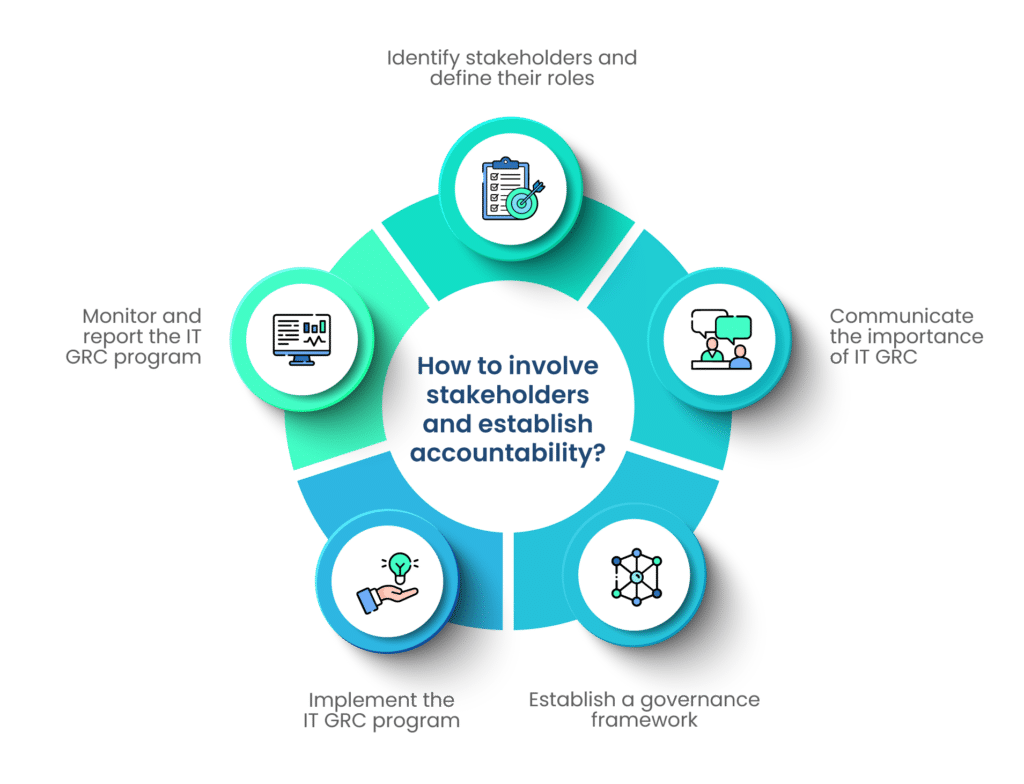
c. Evaluate effectiveness

Review the effectiveness of the current policies and procedures. Gather evidence, artifacts, feedback, and reports from various sections of the organization. Assess this evidence to form a comprehensive report of the effectiveness. 

d. Identify gaps 

The comprehensive report on the effectiveness of the policies and procedures will help you identify the gaps in the systems. These gaps can become vulnerabilities hindering the progress of the organization.

e. Develop updates and communicate changes
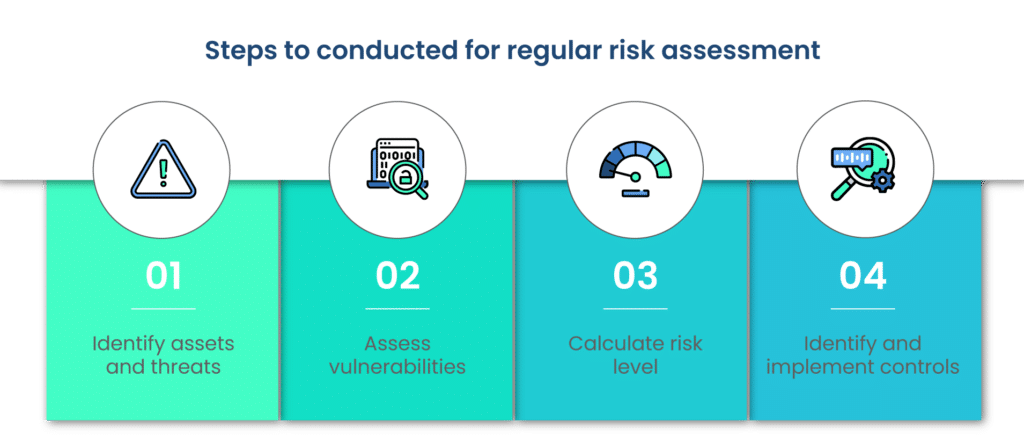
Patch the gaps with necessary updates. A single error in patching the software, hardware, or firmware can be the initial vector of a major cyber incident.
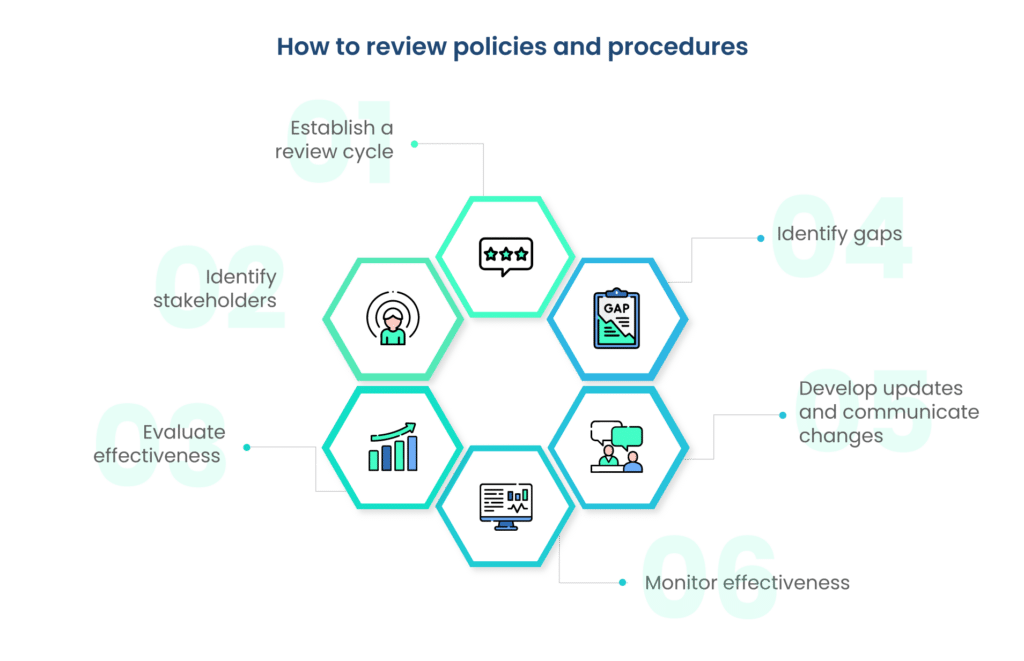
Once you have developed the updates, ensure that all the stakeholders are aware of the changes made in the policies. Train the employees if you see a knowledge gap.

f. Monitor effectiveness 

An organization can’t ever stop reviewing the policies and procedures if it wants effective IT GRC. 

Now that we’ve discussed the IT GRC best practices, let’s take a look at some of the actions organizations must refrain from doing when it comes to effectively implementing a GRC program

Don’ts: Common pitfalls to avoid in IT GRC best practices

Sometimes in an organization’s management, the ‘don’ts’ take precedence over the ‘dos,’ as they are more impactful. Let us list out what an organization should not do in order to have an effective IT GRC program.

1. Don’t treat IT GRC as a one-time project:

IT GRC should be an ongoing process integrated into the core activities of the organization rather than a one-time initiative. Continuously update policies and procedures to align with evolving regulations and technologies. Allocate the necessary resources and ensure ongoing attention from top management. 

2. Don’t overlook the importance of training and awareness:

Training and awareness are vital components of an effective IT GRC program. Educate all stakeholders on the importance of cybersecurity, compliance, and policies. Regularly assess their knowledge through quizzes and tests.

Scrut has an excellent employee training module that can help you train, assess, and encourage your employees to use secure cyber practices. 

3. Don’t neglect regular audits and assessments:

Conducting internal audits is a critical part of evaluating the effectiveness of IT GRC; it ensures compliance with policies, procedures, and regulatory requirements. Additionally, organizations should also engage external auditors to gain an independent assessment of their program, which will help identify areas for improvement. 

4. Don’t underestimate the importance of incident response planning:

Developing a robust incident response plan is essential for effective IT GRC. Establish a formal process for detecting, responding to, and recovering from security incidents. Define roles and responsibilities, establish communication channels, and conduct regular tabletop exercises to test the plan’s effectiveness. Learning from past incidents will help improve your response capabilities and strengthen your overall IT GRC program.

5. Don’t rely solely on technology:

Technology is a crucial role part of IT GRC best practices, it should not be the sole focus. One should remember that IT GRC is a combination of people, processes, and technology. Invest in training your staff, develop clear policies and procedures, and ensure effective communication and collaboration among different teams. Technology should support these efforts but not be considered a complete solution on its own.

Conclusion

Mastering IT GRC is essential for CISOs to protect their organizations from cyber threats, manage risks, and ensure compliance. By following the IT GRC best practices outlined in this guide and avoiding common pitfalls, CISOs can establish a strong and effective IT GRC program.

Remember to involve stakeholders, conduct regular risk assessments, update policies and procedures, provide training and awareness, perform audits and assessments, prioritize incident response planning, and balance technology with people and processes. 

With a proactive and holistic approach to IT GRC, CISOs can achieve success in safeguarding their organizations’ critical assets and maintaining a secure and compliant environment.

To learn more about how smartGRC software can help your organization effectively implement a GRC program, schedule a demo with us today. 

FAQs

1. What are the benefits of implementing an IT GRC program?

Some of the benefits of implementing an IT GRC program are
– Mitigation of cyber risks
– Improved security posture
– Optimized policies and procedures
– Reduced costs
– Slashed fines and penalties

2. What are some common mistakes organizations make when implementing IT GRC?

Organizations often treat IT GRC as a siloed practice and fail to integrate it with the main objectives of the organization. They treat IT GRC as a one-time project rather than an ongoing exercise resulting in the failure of the program. 
Additionally, the organizations overlook the importance of the human factor in IT GRC. They fail to train their employees adequately to use the IT GRC software and to notify the management in case of a breach. This leads to a chaotic IT GRC environment.

3. Can small businesses benefit from implementing an IT GRC program?

Any business, whether small or large, can benefit from implementing an IT GRC program. In a small business, the roles and responsibilities often overlap, as there are fewer employees to carry out multiple tasks. In such cases, the responsibility of IT GRC falls on the shoulders of the IT department or the top management, all of whom have other responsibilities as well. This increases the chances of failure of the program as enough time is not spent on it. An automated IT GRC program can help small businesses carry out their tasks with ease and simplicity without losing productivity.

Authored by

Aayush Ghosh Choudhary
Co-founder & CEO at Scrut

Top Cybersecurity Metrics to Pay Close Attention in 2023

With the growing number of cyber threats, organizations must implement effective security measures to protect their sensitive data and critical infrastructure. Managing your cyberassets effectively can be critical to the performance of your organization, and even its survival.

To measure the performance of these measures and their effectiveness, it is important to track and measure cybersecurity metrics regularly.

In this article, we will discuss the top eleven essential cybersecurity metrics that every organization should track to double-check their security posture and stay protected against cyber threats.

What is a cybersecurity metric?

A cybersecurity metric is a quantitative measure used to track and evaluate the effectiveness of an organization's cybersecurity efforts.

A cybersecurity metric is a quantitative measure used to track and evaluate the effectiveness of an organization’s cybersecurity efforts. These metrics help organizations to identify vulnerabilities, measure associated risks, and provide data-driven insights into the overall IT security policy of an organization. 

Using cybersecurity metrics, organizations can monitor and measure the effectiveness of their security controls, identify potential gaps in the cybersecurity infrastructure, and prioritize security initiatives based on the severity of each potential threat.

Why is tracking cybersecurity metrics important?

Tracking cybersecurity metrics is important as it helps to measure effectiveness of a cybersecurity program, offers visibility into security posture and is essential for compliance with various standards.

There are several reasons to track cybersecurity metrics for any organization. 

For starters, it offers you visibility into the security posture of an organization’s IT infrastructure. This visibility, in turn, helps to make informed decisions about where to focus cybersecurity efforts and resources.

Secondly, tracking the important cybersecurity risk metrics allows organizations to measure the effectiveness of their cybersecurity program and make adjustments if and when necessary. 

Most importantly, tracking cybersecurity metrics is essential in complying with regulatory requirements. 

This can include: 

  • GDPR (General Data Protection Regulation)
  • HIPAA (Health Insurance Portability and Accountability Act)
  • PCI DSS (Payment Card Industry Data Security Standard)

11 Cybersecurity metrics to track in 2023

Now that you have learned what cybersecurity metrics are and their importance, let’s talk about the top cybersecurity metrics organizations need to track in 2023.

There are 11 top cybersecurity metrics that every business should track.

1. Preparedness level

The preparedness level metric measures how prepared an organization is to handle a cyber attack. This metric considers factors such as incident response planning, security awareness training, and effectiveness of security controls.

By tracking this metric, organizations can identify gaps in their security posture and take steps to improve their preparedness.

A higher preparedness level indicates that an organization is very well equipped to respond to a cyber attack and minimize the damage caused. A lower preparedness level indicates that the organization will be unable to effectively respond to or minimize the damage caused by a cyber attack.

Simply put, if an organization has a high preparedness level,  it means they have an incident response plan in place that outlines the steps to be taken in case of a security incident. Additionally, an organization with a high preparedness level also provides regular training to employees and has implemented necessary security controls.

2. Unidentified devices on the network

Unidentified devices on the network can pose a significant risk to an organization’s cybersecurity.

For the uninitiated, an unidentified device on the network could be any smartphone, tablet, or laptop/computer that is not authorized to connect to the network.

These devices can provide attackers with a foothold into the network and can be used to exfiltrate data or launch attacks.

That’s why organizations must measure the number of unidentified devices on the network so that they can identify potential security risks and take appropriate measures to remediate them.

3. Mean time to detect (MTTD)

Mean time to detect (MTTD) metrics helps to measure the time an organization takes to detect a security incident.

The faster an organization can detect a security incident, the better chance it has of containing the damage and preventing further attacks.

This means, if an organization’s MTTD is low, it means they have effective monitoring tools in place that can detect security incidents quickly.

A low MTTD also indicates that the organization has implemented effective security controls, such as intrusion detection systems and firewalls.

4. Mean time to respond (MTTR)

The mean time to respond (MTTR) metric measures the time it takes an organization to respond to a security incident. The faster an organization can respond to a security incident, the better chance it has of containing the damage and preventing further attacks.

A lower MTTR indicates that an organization is capable of responding to security incidents and minimizing the damage caused more quickly, and vice versa.

To achieve this, organizations must consider investing in proactive cybersecurity solutions like CAASM (Cyber Asset Attack Surface Management) that automatically send alerts to cybersecurity personnel in case of any suspicious activity.

Other than this, organizations should also come up with and implement a mature incident response plan to respond quickly and efficiently to remediate any potential threats that may arise.

5. Mean time to contain (MTTC)

Mean time to contain (MTTC) measures the amount of time it takes for an organization to contain a security incident.

A lower MTTC indicates that an organization can contain security incidents more quickly and limit the damage caused, and vice versa.

There are several ways to achieve a lower MTTC. To begin with, every organization must implement effective security controls that help in containing security incidents and prevent them from spreading further and causing serious collateral damage.

Plus, it is essential to have a well-defined incident response plan in place that clearly outlines steps to be taken in case of a security incident. 

6. Intrusion attempts vs security incidents

Measuring the ratio of intrusion attempts to security incidents is another crucial cybersecurity metric to monitor. It can help organizations understand how effective their security controls are in preventing successful attacks.

Intrusion attempts refer to unauthorized access attempts made by an external party to gain access to a company’s network or systems. Security incidents, on the other hand, are actual breaches or successful attempts at unauthorized access. 

By tracking these two metrics, organizations can identify areas of vulnerability in their systems and take appropriate action to improve their security posture.

7. First party security ratings

First party security ratings provide an overall assessment of an organization’s security posture based on factors such as data protection, network security, and patching cadence (more on this later).

These ratings are usually calculated by third-party cybersecurity rating providers, who use various sources of data to assess an organization’s security posture.

Based on these ratings, an organization can identify and assess gaps in its security measures and prioritize cybersecurity efforts & investments to improve its overall cybersecurity program.

8. Average vendor security ratings

The current threat landscape is not confined to just an organization’s IT infrastructure, it extends way beyond that. 

Today, every organization works with third-party vendors in some capacity to help run business operations smoothly. So, it is critical for organizations to implement robust vendor risk management to monitor and reduce third-party risks. 

This is where average vendor security ratings come in. 

Average vendor security ratings are assessments of the cybersecurity practices and measures of third-party vendors that an organization works with. 

These ratings can be useful for identifying potential risks and vulnerabilities in an organization’s supply chain and taking necessary steps to mitigate those risks. 

Simply put, it’s extremely critical for every organization to vet their vendors carefully and ensure that they have strong cybersecurity measures & practices in place.

9. Employee training effectiveness

The employee training effectiveness metric helps to measure the overall effectiveness of the employee cybersecurity training programs at an organization.

Through this metric, organizations can assess how well employees are able to apply the knowledge and skills acquired through cybersecurity training programs to real-world scenarios.

This, in turn, helps to evaluate the level of awareness, understanding, and practical application of cybersecurity concepts and best practices by employees. 

In short, tracking employee training effectiveness is essential for organizations to identify gaps in their cybersecurity training programs and improve cybersecurity awareness among employees. 

By doing so, organizations can ensure that their employees are equipped to protect against cyber threats and to minimize the risks of cyber attacks.

10. Patching cadence and effectiveness

One of the most important aspects of any cybersecurity program is ensuring that all software and systems are up to date with the latest security patches. This is because many cyber attacks exploit vulnerabilities in outdated software that have not been patched.

One metric that can be used to measure the effectiveness of your patching program is the patching cadence. 

This metric measures how quickly patches are applied to systems after they are released. The faster patches are applied, the less time cybercriminals have to exploit vulnerabilities.

Another important metric to measure along with Patching Cadence is the effectiveness of your patching program. 

This metric measures how many vulnerabilities are actually patched with each update. If patches are not effective, vulnerabilities will remain and cybercriminals will still be able to exploit them.

To ensure that your patching program is effective, you should have a process in place for testing patches before they are applied to production systems. 

This will help to identify any issues or conflicts that may arise from applying the patch, and ensure that it does not cause any downtime or other issues.

11. Third-party risk and compliance

Third-party risk management is essential for ensuring the security of your organization’s data. 

As more and more companies rely on third-party vendors to provide services and products, the risk of a data breach or cyber attack increases. 

To effectively manage third-party risk, it’s important to establish clear policies and procedures for vendor management. 

This includes conducting risk assessments of third-party vendors, monitoring their security practices, and ensuring compliance with industry regulations and standards. 

One key metric for measuring third-party risk is the percentage of vendors that have completed a risk assessment. This metric can help you identify areas of vulnerability and prioritize vendor management efforts.

Additionally, you should also measure the percentage of vendors that that meet your organization’s security standards and compliance requirements. 

To ensure compliance with industry regulations and standards, it’s important to establish clear policies and procedures for third-party compliance. 

This includes conducting regular audits of third-party vendors, monitoring their compliance with industry regulations and standards, and providing ongoing training and support.

By effectively managing third-party risk and compliance, you can reduce the risk of a data breach or cyber attack and ensure the security of your organization’s data.

Level up your cybersecurity program!

Tracking these top cybersecurity metrics is essential to effectively manage your organization’s security posture. 

By regularly monitoring and analyzing key performance indicators, you can identify areas of weakness and take proactive measures to mitigate risks. 

Remember that not all metrics are created equal. While it’s important to track a variety of cybersecurity KPIs, it’s equally important to focus on those that are most relevant to your organization’s unique security needs and goals.

Overall, by tracking the right cybersecurity metrics and using them to inform your security strategy, you can help protect your organization from cyber threats and stay one step ahead of attackers.

FAQs

How can you measure cybersecurity?

Measuring cybersecurity requires assessing vulnerability, incident response, compliance with regulations & industry standards, user awareness, and security controls. Regular evaluation of these factors can help improve the overall security posture of an organization.

What are KPI and KRI in cybersecurity?

KPI (Key Performance Indicators) and KRI (Key Risk Indicators) are metrics used in cybersecurity to measure the effectiveness of security measures and identify potential risks. 
KPIs indicate how well an organization is performing in terms of security. KRIs, on the other hand, indicate the level of risk to the organization.

Why is it important to measure cybersecurity?

Measuring cybersecurity is important because it helps to identify risks, evaluate the effectiveness of security measures, meet regulatory requirements, and protect against financial losses.

How can you set metrics in cybersecurity?

To set metrics in cybersecurity, you need to identify goals, determine metrics, establish a baseline, set targets, monitor regularly, take action, and continuously improve your strategy.