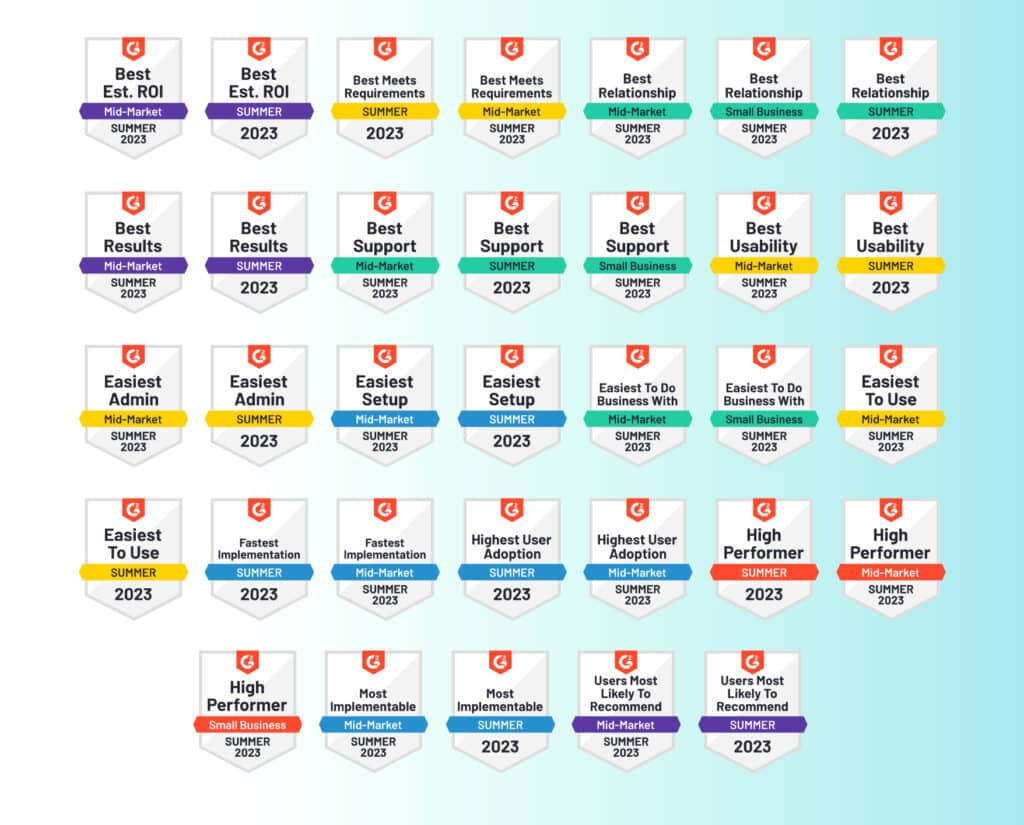
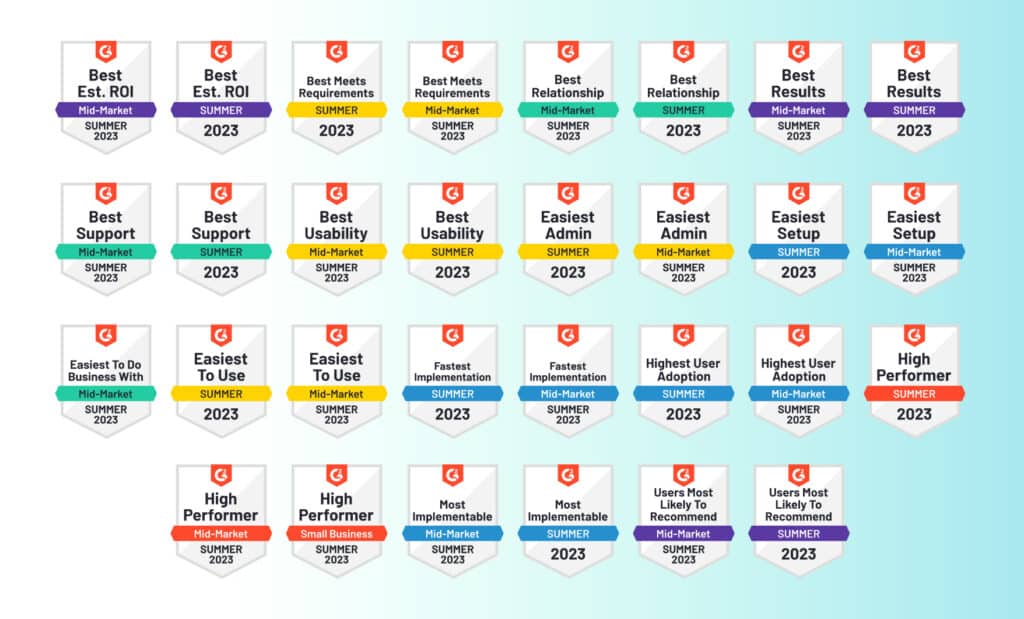
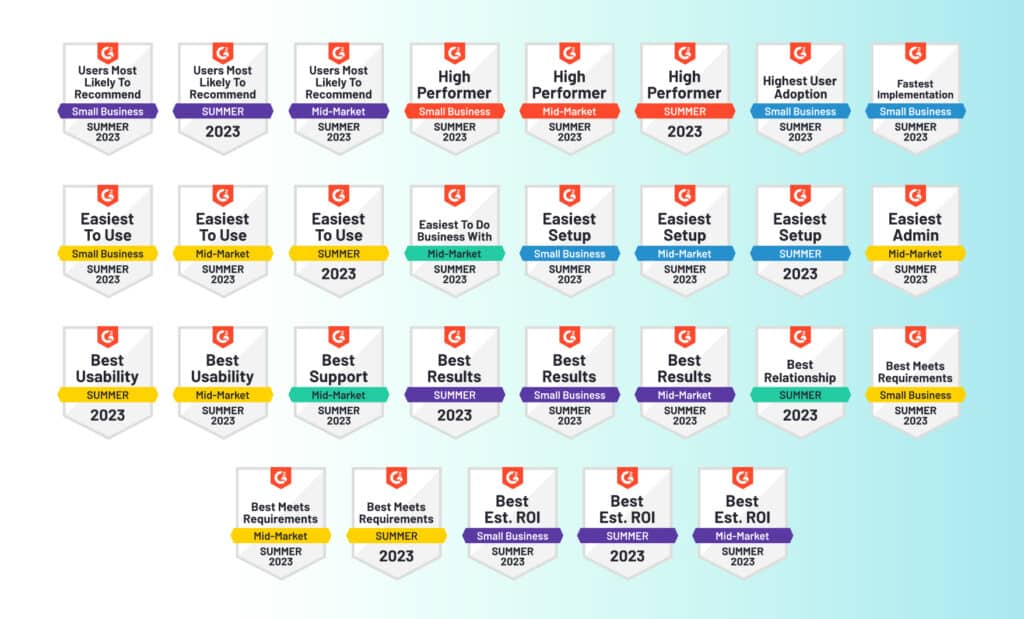
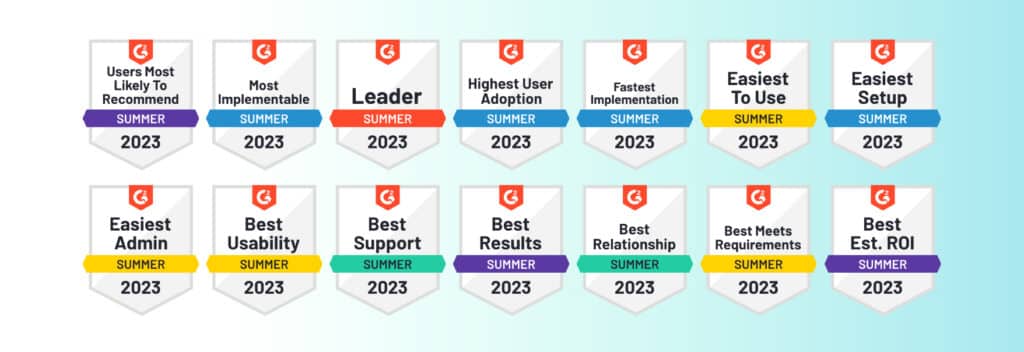
Scrut bags 177 badges in the G2 Summer 2023 Report
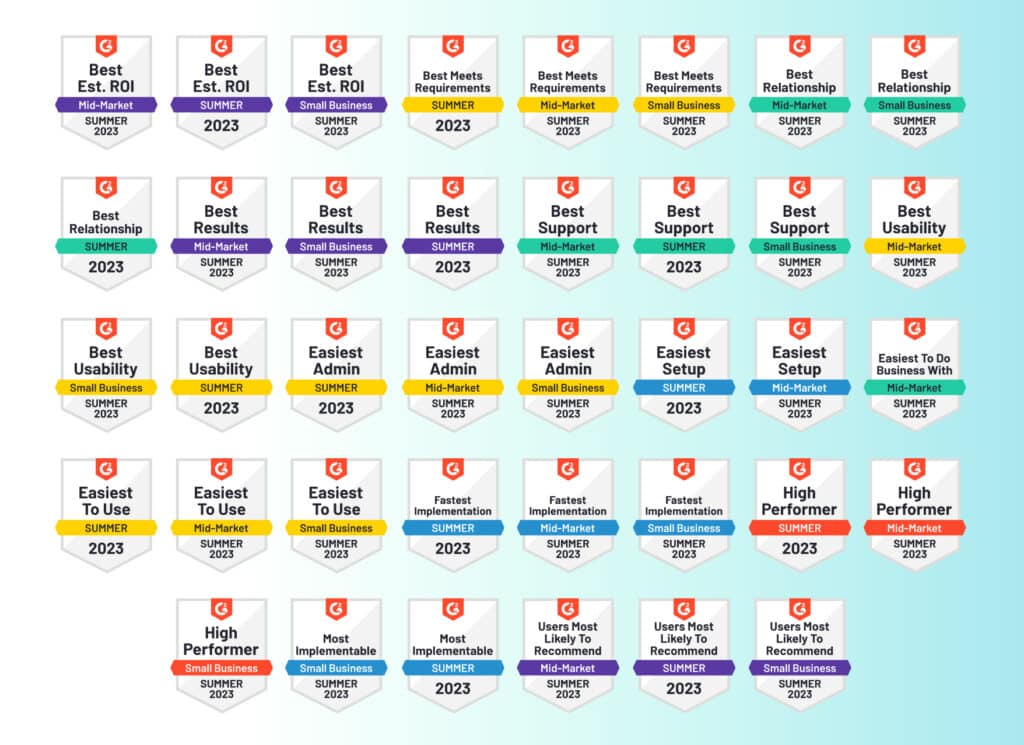
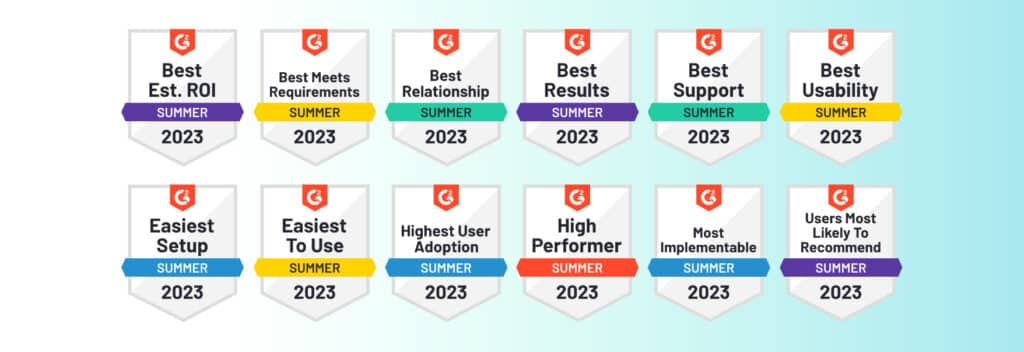
We are ecstatic to announce that Scrut has been awarded 177 badges in the recently released G2 Summer 2023 Report! We beat our own record of 124 badges last season, and we will keep striving to top ourselves.
G2 is the largest marketplace for IT and software companies. It helps consumers and businesses discover, compare, and review technological solutions that suit their needs.
G2 reports are released every quarter to recognize the best tech companies based on unbiased user reviews. We are honoured to once again be named as a high performer in the industry by them.
These badges are a testament to the faith that our customers place in us, and this achievement would not have been possible without them!
We thank our customers for believing in us and motivating us to work harder to boost the infosec and compliance postures of their organizations.
Here is a look at all the badges we were awarded in the G2 Summer 2023 Report.
Scrut stands as the Leader in Security Compliance
Ensuring security compliance is an important part of our service. To be recognized as a leader in this category lets us know that we are on the right track and motivates us to do even better. We are beyond thrilled to be recognized as a leader in security compliance.
Over the moon with 16 High Performer badges
We are extremely delighted to be awarded 16 High Performer badges! Receiving the High Performer badge overall and in mid-market and small business segments across various categories fills us with pride. From IT asset management to cloud compliance, we have delivered quality services consistently to businesses across sizes and industries, and we strive to serve them even better.
Notable badges won at G2 Summer Awards 2023
This report revealed our customers’ appreciation of the user experience and customer support that we provide. We received 14 Best Relationship badges and 13 Best Support badges, lauding the support we extend to our customers.
11 Easiest Setup badges, 9 Easiest Admin badges, and 9 Fastest Implementation badges were awarded to us, indicating that our customers enjoy the seamless user experience that we offer to them.
We also received 15 Users Most Likely to Recommend badges and 7 Highest User Adoption badges signifying that we are a popular name when it comes to compliance and cybersecurity.
Acing Cloud Compliance with 38 badges
We bagged a whopping 38 badges for our efforts in streamlining cloud compliance. Our state-of-the-art compliance automation and management platform leaves no stone unturned when it comes to guaranteeing compliance.
Both small and mid-market businesses have reaped the benefits of our cloud compliance services, and we are honoured to have received the High Performer badge and Best Estimated ROI across business sizes in this category.
Redefining Cloud Security with 21 badges
In this day and age, where most organizations use multi-cloud solutions, cloud security is the need of the hour. We take security very seriously, and the 21 badges that we received are a testament to our vigilant cloud security monitoring program.
We are delighted to have received the High Performer badge among many other badges in this category, and we will strive to keep bolstering the cloud security of our customers.
Elevating Cloud Security Posture Management with 33 badges
We received a staggering 33 badges for cloud security posture management! Apart from winning a High Performer badge, we also received the Best Estimated ROI badge and Best Results badge among several others. We cannot contain our excitement, but we will focus our efforts to keep bringing our A game to satisfy our customers.
Innovating GRC Platforms with 30 badges
We are elated to have received 30 GRC platform badges! At Scrut, we do our best to streamline GRC through automation, and it seems our efforts have paid off, judging by the Best Results and Best Meets Requirements badges that we won in this category.
We will keep innovating GRC with the latest and best technology to serve our customers even better.
Honing IT Asset Management with 29 badges
Receiving 29 badges for IT asset management shows our commitment to using resources efficiently and tapping the full potential of IT assets. We received a High Performer badge and Users Most Likely to Recommend badge, which shows that our efforts in managing IT resources have paid off.
Strengthening Security Compliance with 14 badges
We are proud to be recognized as a leader in security compliance once again! Our team gives it their all when it comes to ensuring that our customers’ organizations are in line with the best security practices.
Receiving badges such as Users Most Likely to Recommend and Best Results motivates us to reach more organizations in need of stronger compliance postures.
Enhancing Vendor Security and Privacy Assessment with 12 badges
We were recognized as a High Performer in vendor security and privacy assessment, and we couldn’t be more thrilled! We view vendor security as a crucial requirement for a robust security posture, and we are happy to see that we have helped organizations manage vendor risks better.
We will continue to do our best to enhance vendor security and privacy assessment so that our customers enjoy a more fulfilling relationship with their vendors.
Our gratifying G2 Reviews
At Scrut the support of our customers means the world to us, and it always makes our day when we come across one of their reviews of our services.
We not only cherish our customers’ appreciation but also value their feedback, which helps us serve them better.
Here are some of the reviews that we received from our customers. Click here to read more reviews based on our performance and services.
What Scrut believes in
Scrut believes in putting the security and compliance of our customers’ organizations first. We innovate ways to enhance risk monitoring and come up with solutions that simplify adherence to multiple frameworks.
Delivering products that are easy to use and providing services that give our customers more than their money’s worth is something that we commit to every single day at Scrut. Our user-friendly platform is sure to cater to all your security and compliance needs. Schedule a demo with us today to learn more.
9 Jun 2023
17minutes
Authored by
Aayush Ghosh Choudhary
Co-founder & CEO at Scrut
Multi-cloud Security – Overview and Challenges
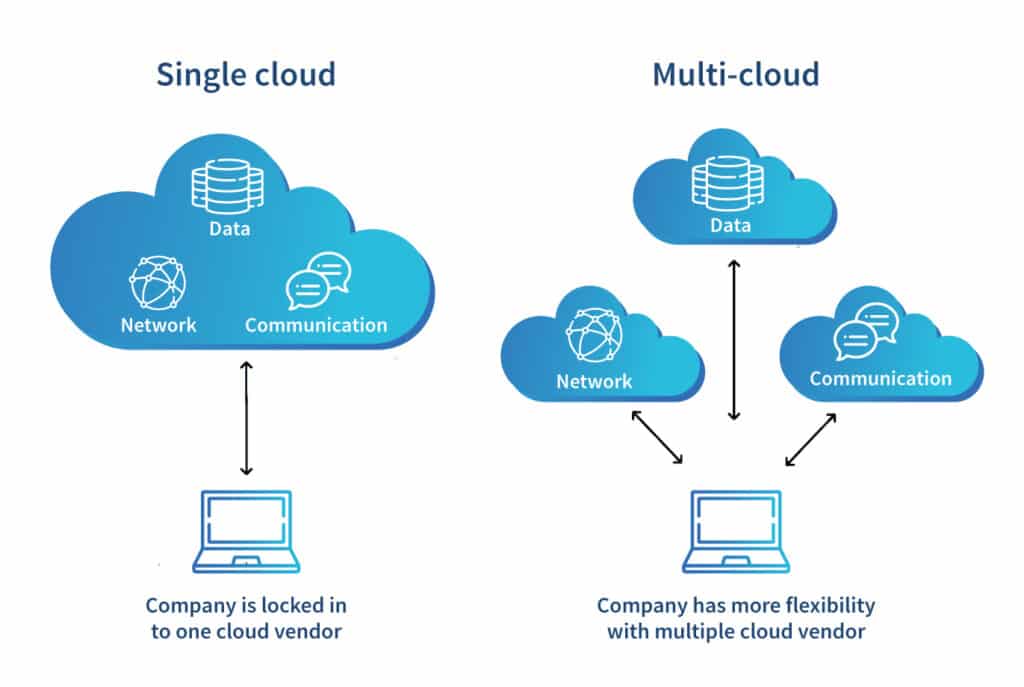
In today’s digital landscape, organizations are increasingly adopting multi-cloud strategies to leverage the benefits of multiple cloud service providers simultaneously. Multi-cloud refers to the practice of using multiple cloud computing platforms and services to meet various business needs. It could involve using a combination of public clouds like AWS, Azure, and Google Cloud, private clouds, and even hybrid cloud environments.
In our previous article, we delved into an overview of multi-cloud security and the challenges it presents. Multi-cloud security is a specialized field that focuses on securing data, applications, and infrastructure across various cloud providers and environments. The challenges in this domain include managing complex architectures, ensuring consistent security policies, and dealing with potential compliance issues across multiple clouds.
The importance of multi-cloud security cannot be overstated. As organizations increasingly rely on multi-cloud environments to drive their digital transformation, security becomes a critical aspect of their success.
Here are some key reasons highlighting the importance of employing multi-cloud security best practices:
Mitigating risks: Multi-cloud environments introduce new security risks and complexities. Without proper security measures, organizations are vulnerable to data breaches, compliance violations, and other threats. Effective multi-cloud security helps mitigate these risks.
Data protection: Businesses store sensitive data across multiple clouds, making data protection a top priority. Multi-cloud security ensures that data is encrypted, backed up, and accessible only to authorized personnel.
Compliance: Many industries have strict regulatory requirements regarding data handling and storage. Multi-cloud security helps organizations maintain compliance with various regulations such as GDPR, HIPAA, and PCI DSS, even when data is spread across multiple clouds.
Business continuity: Multi-cloud security strategies include disaster recovery and business continuity planning. This ensures that in the event of a cloud outage or security incident, operations can quickly switch to alternative cloud providers, minimizing downtime.
Cost management: Security breaches and incidents can result in significant financial losses. By investing in multi-cloud security, organizations protect their assets and reputation, ultimately saving costs associated with security breaches.
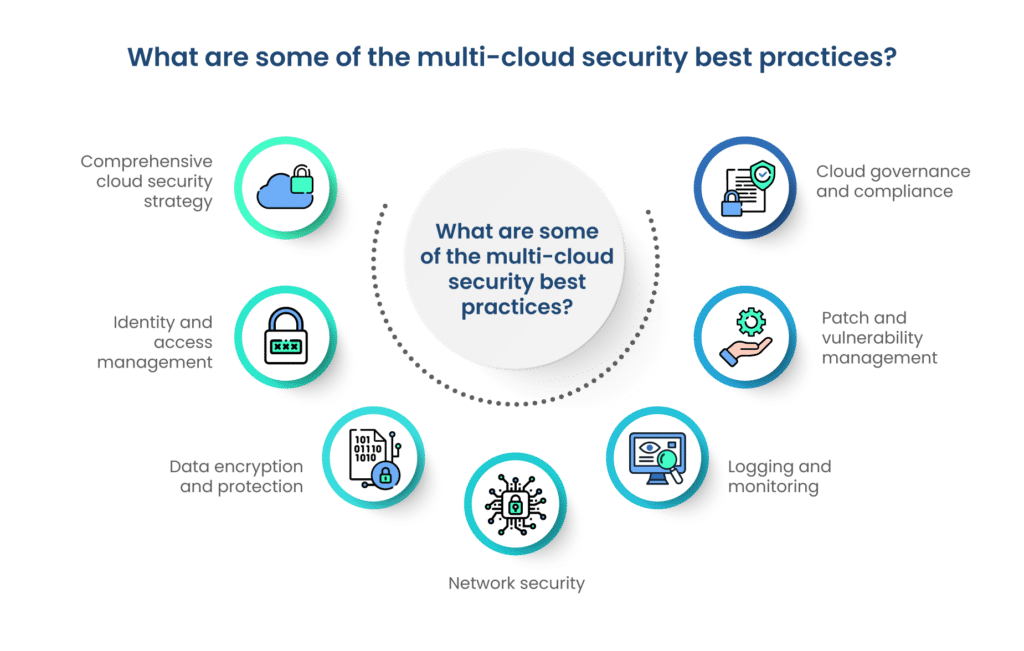
What are multi-cloud security best practices?
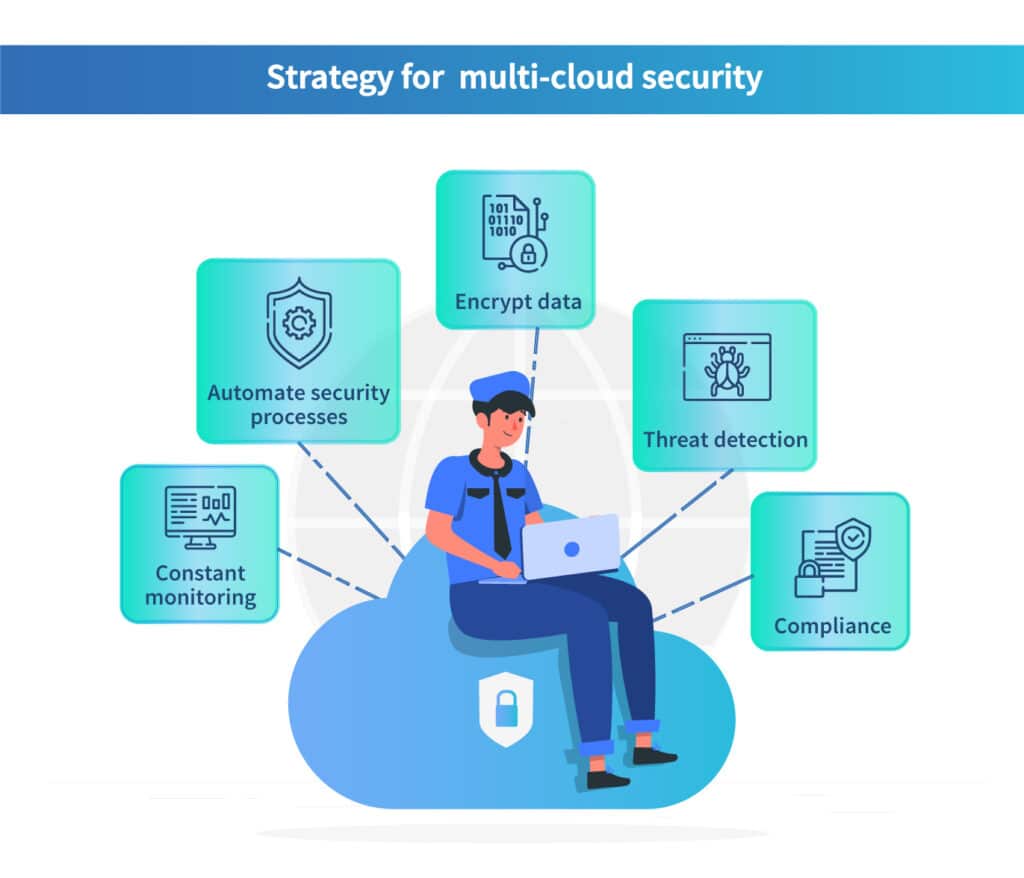
Robust multi-cloud security is crucial for organizations leveraging multiple cloud providers to ensure data protection, compliance, and business continuity.
Here are some multi- cloud security best practices are:
A. Comprehensive cloud security strategy
The following steps lay the foundation for designing, implementing, and maintaining effective security measures in your multi cloud governance:
1. Defining security objectives:
Identify business goals: Understand your organization’s overall business objectives and how cloud services align with them. Determine how multi cloud security best practices support these goals.
Define security goals: Based on business goals, set specific security objectives for your cloud environment. Examples include data confidentiality, system availability, and compliance.
Prioritize objectives: Rank security objectives based on their criticality to your organization. This prioritization will guide resource allocation and risk mitigation efforts.
Establish key performance indicators (KPIs): Define measurable KPIs to assess the effectiveness of your security strategy. For example, you might measure the number of security incidents or compliance audit results.
Allocate resources: Determine the budget, personnel, and technology resources needed to achieve your security objectives.
2. Risk assessment
Identify assets: Identify all assets, data, applications, and services hosted in the cloud. This includes understanding the sensitivity and value of each asset.
Threat identification: Identify potential threats and vulnerabilities that could affect your cloud environment. This may include external threats like cyberattacks and internal threats like data breaches due to employee errors.
Risk analysis: Evaluate the impact and likelihood of each threat scenario on your assets. Consider the potential financial, operational, and reputational impacts.
Risk prioritization: Prioritize risks based on their potential impact and likelihood. Focus on high-impact, high-likelihood risks first.
Mitigation strategies: Develop mitigation strategies for identified risks. These may include implementing security controls, conducting vulnerability assessments, or adopting specific security technologies.
Risk monitoring: Continuously monitor and reassess risks as your cloud environment evolves. New threats may emerge, and existing threats may change in significance.
3. Compliance requirements
Identify applicable regulations: Determine which industry-specific regulations, standards, and compliance requirements apply to your organization. Examples include GDPR, HIPAA, SOC 2, and PCI DSS.
Understand requirements: Thoroughly understand the requirements of each applicable regulation or standard. This includes data protection, auditing, reporting, and security controls.
Assess current compliance status: Evaluate your current multi cloud governance’s compliance status against relevant regulations. Identify gaps and areas of non-compliance.
Develop compliance roadmap: Create a compliance roadmap that outlines the steps needed to achieve and maintain compliance. This may involve implementing specific security controls, documenting processes, or conducting regular audits.
Continuous compliance monitoring: Establish processes and tools for continuous compliance monitoring and reporting. Ensure that your cloud environment remains compliant with changing regulations.
Documentation and reporting: Maintain comprehensive documentation of your compliance efforts, including policies, procedures, and audit reports. This documentation is essential for regulatory audits and reporting.
Employee training: Train employees on compliance requirements and their responsibilities in maintaining compliance. Foster a culture of compliance awareness within the organization.
By carefully defining security objectives, conducting thorough risk assessments, and addressing compliance requirements, you create a strong foundation for your comprehensive cloud security best practices. These steps ensure that your security measures align with business goals, address potential risks, and meet regulatory obligations in your cloud environment. Regularly review and update these components to adapt to changing business and security landscapes.
B. Identity and access management (IAM)
Identity and Access Management (IAM) is a crucial component of any comprehensive cloud security strategy. This cloud strategy best practices focus on managing user identities, controlling access to resources, and ensuring that the right individuals have the appropriate level of access while minimizing security risks.
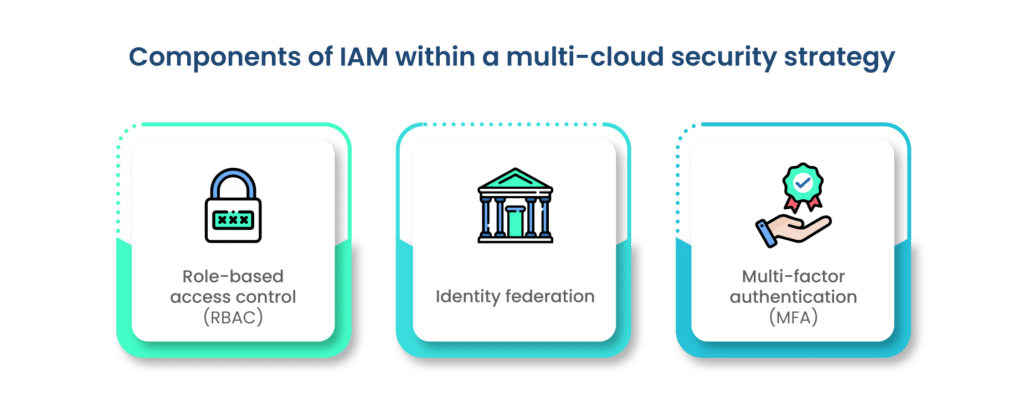
Here are three key aspects of IAM within a cloud security strategy:
1. Role-based access control (RBAC):
RBAC is a fundamental IAM concept that helps organizations manage access permissions efficiently. In a cloud environment, RBAC works by assigning roles to users or entities, and these roles define what actions they can perform and what resources they can access. Here’s how RBAC works:
Roles: Create predefined roles that represent job functions or responsibilities within your organization. Common roles might include administrator, developer, and auditor.
Permissions: Assign permissions to each role, specifying what actions (e.g., read, write, delete) they can perform on various resources (e.g., databases, storage, virtual machines).
Users and groups: Associate users or entities with specific roles. Users inherit the permissions associated with their assigned roles.
Least privilege: Implement the principle of least privilege, ensuring that users have only the minimum level of access needed to perform their tasks. Avoid granting overly broad permissions.
Regular review: Regularly review and update role assignments to align with changing responsibilities and requirements.
2. Identity federation
Identity Federation enables users to access multiple cloud services and applications with a single set of credentials. It establishes trust between different identity providers (IdPs) and service providers (SPs). Here’s how identity federation enhances cloud application security best practices:
Single Sign-On (SSO): Users can log in once using their organization’s identity provider and access various cloud services and applications without needing to re-enter credentials.
Centralized authentication: Centralize authentication and user management, reducing the risk of password-related security issues and simplifying user onboarding and offboarding.
Security Assertion Markup Language (SAML): Use SAML or other federation standards to facilitate secure authentication and authorization between identity providers and service providers.
Multi-cloud access: Extend identity federation to multiple cloud providers, ensuring consistent authentication and access control across different cloud environments.
3. Multi-factor authentication (MFA):
Multi-Factor Authentication (MFA) adds an extra layer of security by requiring users to provide two or more forms of verification before granting access. This enhances security by significantly reducing the risk of unauthorized access, even if login credentials are compromised. Key aspects of MFA include:
Authentication factors: MFA typically involves something the user knows (e.g., a password), something the user has (e.g., a smartphone or hardware token), and something the user is (e.g., biometric data like fingerprints).
Enforce MFA: Require MFA for accessing critical resources or performing sensitive operations in your cloud environment.
Adaptive authentication: Implement adaptive MFA, which adjusts the level of authentication based on contextual factors like user location, device, and behavior.
Self-service MFA: Allow users to set up and manage their MFA methods, making it user-friendly and reducing administrative overhead.
Monitoring and alerts: Monitor MFA events for suspicious activity and set up alerts for unusual login attempts.
Effective IAM, including RBAC, identity federation, and MFA, are multi cloud security best practices that help organizations control access to cloud resources, reduce the risk of unauthorized access, and streamline user management in cloud environments. It is a critical element of a comprehensive cloud security strategy that focuses on protecting sensitive data and ensuring compliance.
C. Data encryption and protection
Data encryption and protection are paramount cloud security best practices in a comprehensive cloud security strategy, especially when dealing with sensitive information. Encryption helps safeguard data from unauthorized access, ensuring its confidentiality and integrity.
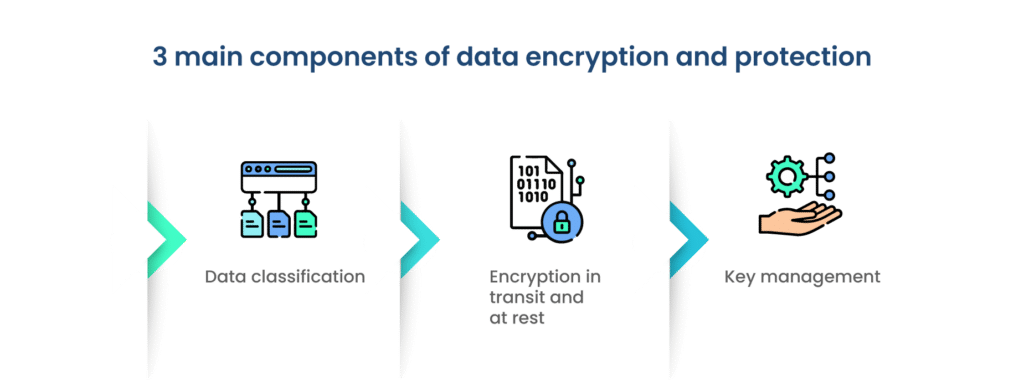
Here are three key aspects of data encryption and protection in the cloud:
1. Data classification
Data classification is the process of categorizing data based on its sensitivity and importance. By classifying data, organizations can apply appropriate security measures to protect it. Here’s how data classification contributes to cloud security:
Sensitive data identification: Identify and label data that is sensitive or confidential. This could include customer information, financial data, intellectual property, and personally identifiable information (PII).
Classification levels: Define classification levels or categories (e.g., public, internal use, confidential, restricted) based on the sensitivity and regulatory requirements of the data.
Access controls: Apply access controls and encryption based on data classification. Sensitive data should have stricter access restrictions and encryption requirements.
Data handling policies: Develop policies and procedures for handling and storing classified data, ensuring that employees understand how to treat different types of information.
2. Encryption in transit and at rest
Encryption should be applied to data both in transit (moving between systems) and at rest (stored on storage devices or databases) to prevent unauthorized access. Key considerations include:
Encryption in transit:
Use secure communication protocols such as TLS/SSL when transmitting data over networks.
Ensure that data sent between cloud services and client devices is encrypted.
Encryption at rest:
Implement encryption mechanisms for data stored in cloud storage services, databases, and backups.
Choose strong encryption algorithms and key lengths to secure data at rest.
Data decryption:
Only decrypt data when necessary, and do so securely within trusted environments. Avoid storing plaintext passwords or encryption keys.
Key rotation:
Regularly rotate encryption keys to limit the exposure of sensitive data in case of a key compromise.
3. Key management
Proper key management is essential to ensure the security and availability of encryption keys used to protect data. Key management as cloud security best practices encompasses the following aspects:
Key generation: Use strong random number generators to create encryption keys. Ensure that keys are unique and not easily predictable.
Key storage: Securely store encryption keys in a dedicated key management system or hardware security module (HSM). Avoid storing keys alongside encrypted data.
Key access control: Implement strict access controls for key management systems. Only authorized personnel should have access to encryption keys.
Key rotation and lifecycle management: Establish key rotation policies and procedures. Regularly update encryption keys to mitigate risks associated with long-lived keys.
Backup and recovery: Develop a backup and recovery plan for encryption keys to prevent data loss in case of key loss or corruption.
Audit and monitoring: Monitor key usage and access, and log key-related activities. Implement alerting for suspicious key access.
Effective data encryption and protection, including data classification, encryption in transit and at rest, and robust key management practices, are essential for safeguarding sensitive information in the cloud. These measures help organizations comply with data privacy regulations, prevent data breaches, and maintain trust with customers and stakeholders.
D. Network security
Network security is a vital aspect of a comprehensive cloud security best practices. It involves protecting the cloud infrastructure, networks, and communication channels to prevent unauthorized access, data breaches, and other cyber threats.
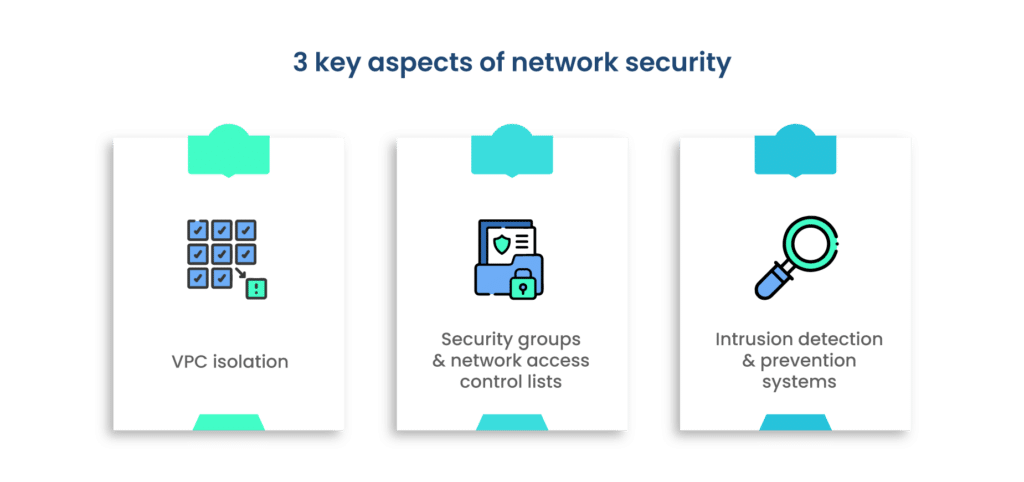
Here are three key components of network security in the cloud:
1. VPC isolation:
Virtual Private Cloud (VPC) isolation is a foundational network security practice in cloud environments. It helps organizations create secure, segmented network architectures. Here’s how VPC isolation contributes to cloud security:
Network segmentation: Divide your cloud environment into isolated VPCs or virtual networks, each serving a specific purpose or workload.
Private subnets: Create private subnets within VPCs to keep internal resources isolated from the public internet. Only necessary resources should be in public subnets.
Network access controls: Define strict network access controls and routing rules to control traffic flow between VPCs and subnets.
Secure communication: Use private VPC peering or VPN connections for secure communication between VPCs or between on-premises networks and cloud resources.
Network monitoring: Implement network monitoring and logging to detect and respond to suspicious network activity.
2. Security groups and network access control lists (NACLs):
Security Groups and Network Access Control Lists (NACLs) are tools provided by cloud service providers to control inbound and outbound traffic to and from cloud resources. Here’s how they enhance network security:
Security groups:
Security Groups act as virtual firewalls at the instance level, controlling inbound and outbound traffic for EC2 instances and other resources.
Define security group rules that specify which IP addresses and ports are allowed or denied access to resources.
Security groups are stateful, meaning that if you allow an incoming connection, the corresponding outbound reply is also allowed.
Network access control lists (NACLs):
NACLs operate at the subnet level and control traffic in and out of entire subnets.
NACLs are stateless and evaluate rules based on a rule number order.
Define allow and deny rules in NACLs to filter traffic based on IP addresses, port ranges, and protocols.
Best practices
Implement the principle of least privilege when configuring security group and NACL rules.
Regularly review and audit security group and NACL configurations to ensure they align with security policies.
3. Intrusion detection and prevention systems (IDPS)
Intrusion Detection and Prevention Systems (IDPS) are security mechanisms that help identify and respond to suspicious or malicious network activities. In a cloud environment, IDPS plays a crucial role in enhancing security. Key points to consider:
Real-time monitoring: Deploy IDPS solutions that provide real-time monitoring of network traffic to detect anomalies, known attack patterns, and unauthorized access attempts.
Alerting and reporting: Configure IDPS systems to generate alerts and reports when suspicious activity is detected. Ensure that security teams receive timely notifications.
Automated response: Integrate IDPS with automated response mechanisms to take immediate action, such as blocking or isolating compromised resources, in response to detected threats.
Regular updates: Keep IDPS signatures and rule sets up-to-date to effectively detect and mitigate new and evolving threats.
Log analysis: Analyze IDPS logs in conjunction with other security logs and event data to correlate and investigate security incidents.
Incident response: Develop incident response procedures that include IDPS alerts as a key input for security incident investigations and mitigation.
Effective network security practices, including VPC isolation, security groups, NACLs, and IDPS, help organizations build resilient and secure cloud environments, protect sensitive data, and mitigate the risks associated with cyber threats and unauthorized access. Regularly assess and update your network security measures to adapt to changing threat landscapes and business requirements.
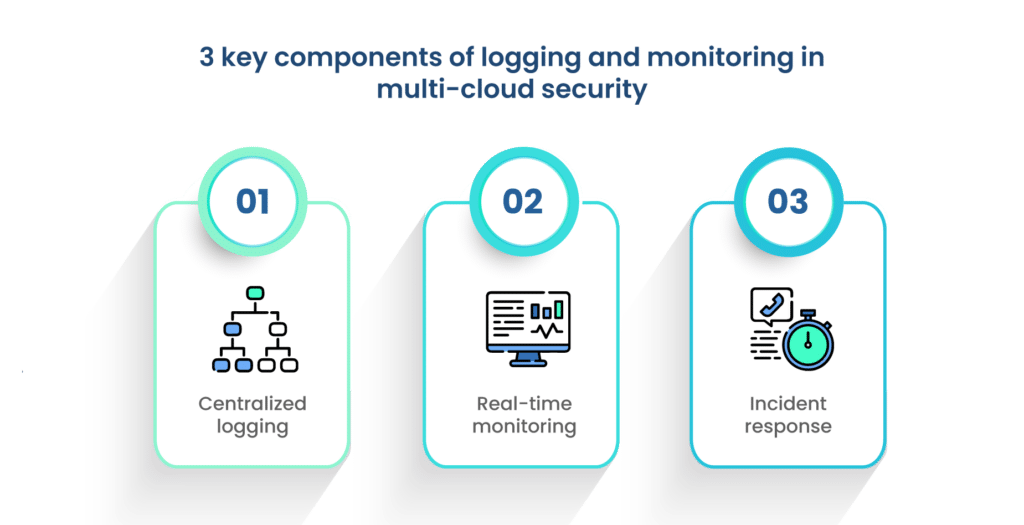
E. Logging and monitoring
Logging and monitoring are essential components of a comprehensive cloud security best practices. They provide visibility into the behavior of cloud resources, help detect security incidents, and facilitate incident response.
Here are three key aspects of logging and monitoring in the context of multi cloud governance:
1. Centralized logging:
Centralized logging involves collecting and storing logs from various cloud resources and services in a centralized location for analysis and auditing. This approach enhances visibility, simplifies log management, and aids in forensic investigations. Here’s how to implement centralized logging:
Log aggregation: Use log aggregation tools or services to collect logs from diverse sources, including virtual machines, databases, network appliances, and cloud services.
Log storage: Choose a secure and scalable storage solution for storing logs, such as cloud-based storage or dedicated log management platforms.
Log formats: Ensure that logs are standardized and follow a common format or schema to facilitate analysis and correlation.
Access controls: Implement strict access controls to limit who can access and modify log data. Only authorized personnel should have access.
Retention policies: Define log retention policies that align with compliance requirements and the need for historical data analysis.
Log analysis tools: Utilize log analysis tools or SIEM platforms to parse, search, and analyze log data efficiently. These tools can help identify security incidents and anomalies.
2. Real-time monitoring:
Real-time monitoring enables organizations to detect and respond to security threats as they occur. It involves continuous tracking of system and network activities to identify suspicious behavior promptly. Here’s how to establish effective real-time monitoring:
Alerting: Configure alerting rules based on predefined thresholds and behavioral patterns. Alerts should trigger notifications to security personnel or automated incident response systems.
Behavioral analytics: Employ behavioral analytics and anomaly detection to identify deviations from normal system behavior, which can indicate security incidents.
Visibility: Gain visibility into network traffic, system logs, user activities, and cloud resource usage. Real-time dashboards can provide instant insights into your environment.
Integration: Integrate real-time monitoring solutions with your cloud environment, including security groups, firewalls, and intrusion detection systems.
Threat intelligence feeds: Subscribe to threat intelligence feeds that provide information on known threats and vulnerabilities, enabling proactive threat detection.
3. Incident response:
Incident response is the process of effectively managing and mitigating security incidents when they occur. Logging and monitoring play a crucial role in incident response by providing early detection and valuable data for analysis. Here’s how to incorporate incident response into your cloud security best practices:
Incident classification: Develop a clear incident classification system to prioritize and categorize incidents based on severity and impact.
Response plan: Create an incident response plan that outlines the steps to take when an incident is detected. Assign roles and responsibilities within your incident response team.
Forensic investigation: Use log data to conduct forensic investigations to determine the scope of the incident, the attackers’ methods, and potential data breaches.
Containment: Implement containment measures to prevent further damage or unauthorized access. This may involve isolating affected systems or blocking malicious traffic.
Communication: Establish clear communication channels for reporting incidents, both internally and externally if necessary. Comply with legal and regulatory requirements for breach notifications.
Lessons learned: After resolving an incident, conduct a post-incident review to identify lessons learned and opportunities for improving security measures.
Automation: Where possible, automate incident response processes to speed up detection and mitigation. Automated playbooks can help respond to common incidents swiftly.
Effective logging and monitoring, combined with a well-defined incident response plan, are critical for identifying and mitigating security threats in a timely manner. These practices are essential for maintaining the security and integrity of your multi cloud governance. Regularly review and update your logging, monitoring, and incident response processes to adapt to evolving threats and technologies.
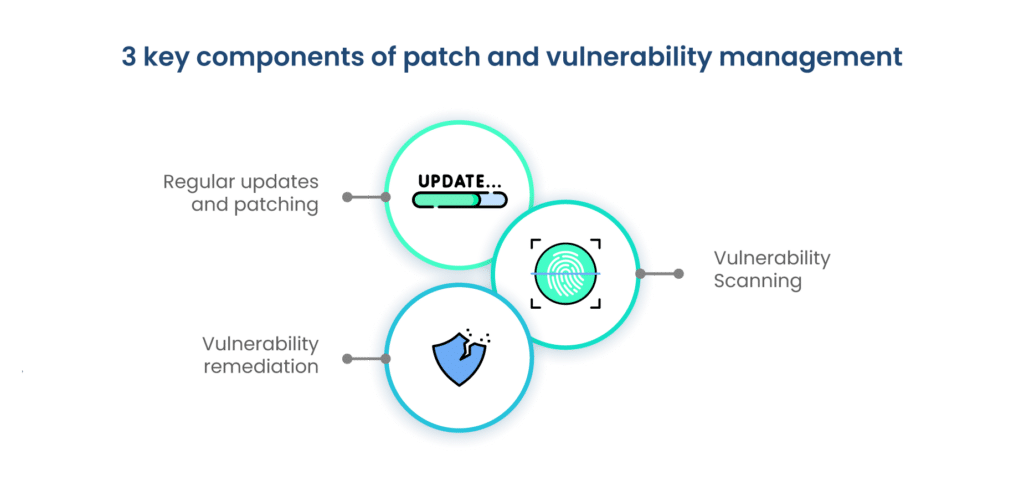
F. Patch and vulnerability management
Patch and vulnerability management are critical components of any comprehensive cloud security best practices. Keeping cloud resources up-to-date and addressing known vulnerabilities helps protect against security threats and reduces the risk of exploitation.
Here are three key aspects of patch and vulnerability management in the cloud:
1. Regular updates and patching:
Regularly updating and patching cloud resources and software is fundamental to maintaining a secure environment. Failing to apply patches promptly can leave vulnerabilities exposed. Here’s how to establish an effective patching process:
Inventory: Maintain an inventory of all cloud resources, including virtual machines, containers, and services, to ensure nothing is overlooked.
Patch management tools: Utilize patch management tools provided by your cloud service provider or third-party solutions to automate the patching process.
Patch prioritization: Prioritize patches based on the severity of vulnerabilities, potential impact on your environment, and the criticality of affected resources.
Patch testing: Before applying patches in production, conduct testing in a staging environment to ensure compatibility and identify potential issues.
Scheduled patching: Implement a regular patching schedule that minimizes downtime and disruption to business operations. Some cloud providers offer maintenance windows for scheduled updates.
Emergency patching: Be prepared to apply emergency patches for critical vulnerabilities as soon as they become available, even outside the regular patching schedule.
Change management: Document and track all patching activities as part of your change management process. This includes patch deployment, rollback procedures, and verification of successful updates.
2. Vulnerability Scanning:
Vulnerability scanning involves the systematic scanning and assessment of cloud resources and applications to identify security weaknesses and vulnerabilities. Here’s how to incorporate vulnerability scanning into your cloud application security best practices:
Automated scanning: Use automated vulnerability scanning tools to regularly scan cloud assets for known vulnerabilities, misconfigurations, and security issues.
Continuous monitoring: Implement continuous monitoring to identify new vulnerabilities and assess their impact on your environment.
Asset discovery: Ensure that the vulnerability scanning tool can discover and assess all cloud assets, including virtual machines, containers, and serverless functions.
Prioritization: Evaluate and prioritize the identified vulnerabilities based on their severity and relevance to your environment.
Integration: Integrate vulnerability scanning tools with your cloud infrastructure to enable automated scanning and reporting as part of your DevSecOps pipeline.
Remediation guidance: Vulnerability scanning tools should provide guidance and remediation steps to help teams address identified vulnerabilities effectively.
3. Vulnerability remediation:
Vulnerability remediation involves taking action to mitigate or eliminate identified vulnerabilities and security weaknesses. Here’s how to approach vulnerability remediation in your cloud environment:
Patch management: Apply patches and updates promptly to address known vulnerabilities. This should be the primary method of remediation.
Configuration changes: Adjust cloud resource configurations to remediate misconfigurations and security weaknesses.
Temporary workarounds: If immediate patching is not possible, implement temporary workarounds or compensating controls to reduce exposure.
Risk acceptance: In some cases, you may decide to accept the risk of certain vulnerabilities due to technical or business constraints. Document such decisions and any mitigating controls in a risk register.
Verification: After remediation, verify that vulnerabilities have been successfully mitigated. Re-scan or retest to ensure that no residual vulnerabilities exist.
Documentation: Maintain detailed records of vulnerability assessments, remediation actions taken, and their outcomes. This documentation is essential for compliance and audit purposes.
Effectively managing patches and vulnerabilities in your multi cloud governance is crucial for reducing the attack surface and minimizing security risks. Continuous monitoring, timely patching, and proactive vulnerability scanning and remediation are key practices to ensure the security and resilience of your cloud infrastructure and applications. Regularly update your patch and vulnerability management processes to adapt to new threats and technologies.
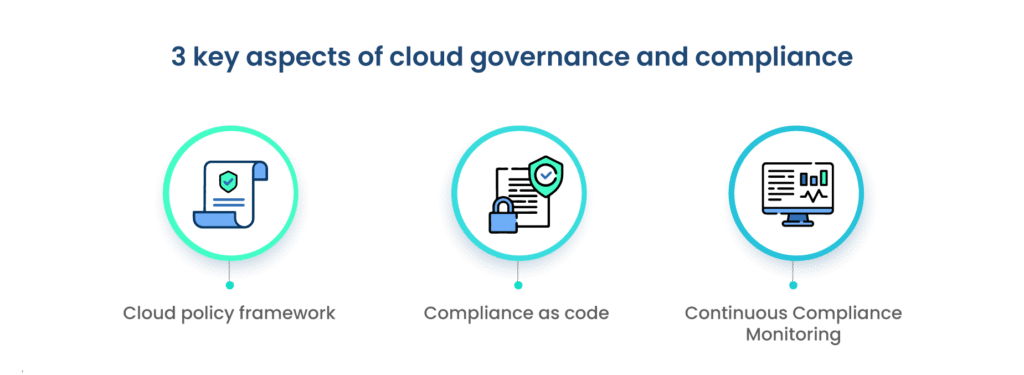
G. Cloud governance and compliance
Cloud governance and compliance are critical aspects of managing cloud resources and ensuring that organizations adhere to regulatory requirements and security standards. Implementing effective governance and compliance practices helps maintain control over cloud operations while mitigating risks.
Here are three key components of multi cloud governance and compliance:
1. Cloud policy framework:
A cloud policy framework defines the set of rules, guidelines, and procedures that govern how cloud resources are provisioned, managed, and used within an organization. It helps establish a standardized and controlled cloud environment. Key considerations for building a cloud policy framework include:
Policy development: Develop clear and comprehensive policies that cover various aspects of cloud usage, including access controls, data protection, encryption, identity management, and resource allocation.
Policy enforcement: Implement mechanisms for enforcing policies through automation, role-based access controls, and cloud service provider tools.
Policy documentation: Document policies in a central repository that is easily accessible to all stakeholders, including IT teams, developers, and compliance officers.
Policy review and revision: Regularly review and update policies to align with changing business requirements, security best practices, and evolving regulatory standards.
Policy awareness: Ensure that all employees and cloud users are aware of and trained on cloud policies. Conduct regular training sessions to reinforce policy adherence.
Policy exceptions: Establish a process for handling policy exceptions, including documenting the reasons for exceptions and obtaining appropriate approvals.
2. Compliance as code:
Compliance as Code (CaC) is an approach that leverages infrastructure as code (IaC) and automation to ensure that cloud resources are provisioned and configured in compliance with regulatory requirements and security standards. Here’s how to implement Compliance as Code:
IaC templates: Define cloud infrastructure using IaC templates (e.g., AWS CloudFormation, Azure Resource Manager templates) that incorporate security and compliance requirements directly into the provisioning process.
Automated checks: Integrate automated compliance checks into your deployment pipelines. Use tools like AWS Config, Azure Policy, or third-party solutions to enforce compliance requirements.
Compliance auditing: Periodically audit cloud resources and configurations to identify and remediate non-compliance issues. Automate auditing where possible.
Version control: Maintain version control for IaC templates and compliance rules to track changes and ensure consistency.
Documentation: Document compliance requirements within the IaC templates, making it clear how each resource should be configured to comply with policies and standards.
Testing and validation: Implement automated testing and validation procedures to confirm that deployed resources meet compliance requirements.
3. Continuous Compliance Monitoring:
Continuous compliance monitoring involves ongoing assessment and verification of cloud resources and configurations to ensure that they remain in compliance with established policies and regulatory standards. Key cloud security best practices for continuous compliance monitoring include:
Automated scanning: Use automated compliance scanning tools and services to regularly evaluate cloud resources against predefined compliance rules.
Alerting and reporting: Set up alerts and notifications for compliance violations. Generate reports for stakeholders and compliance auditors to demonstrate ongoing compliance.
Change management: Implement change management processes to ensure that any changes made to cloud resources are assessed for compliance impact and are properly documented.
Incident response: Include compliance violations in your incident response processes to address non-compliance issues promptly.
Scalability: Ensure that compliance monitoring scales with your cloud environment’s growth. Automate the deployment of monitoring tools as new resources are provisioned.
Integration with DevOps: Integrate compliance checks into your DevOps pipelines to ensure that compliance is a part of the software development lifecycle.
Effective cloud governance and compliance practices help organizations maintain control, security, and compliance in their cloud environments. These practices reduce the risk of non-compliance, data breaches, and security incidents while enabling agility and innovation in cloud adoption. Regularly review and update your governance and compliance framework to adapt to changing regulatory requirements and evolving cloud technologies.
Conclusion
In conclusion, a comprehensive cloud security strategy is essential for organizations to protect their valuable data, applications, and resources in today’s digital landscape. Each facet of this strategy, from Identity and Access Management (IAM) to Network Security, Data Encryption, Logging and Monitoring, Patch and Vulnerability Management, and Cloud Governance and Compliance, plays a crucial role in safeguarding against cyber threats and ensuring regulatory adherence.
In today’s dynamic cloud landscape, where technology evolves rapidly, a robust security strategy is not a one-time effort but a continuous journey. Organizations must remain vigilant, regularly update their strategies, and foster a culture of security awareness among their teams. By doing so, they can harness the power of the cloud while keeping their digital assets safe from ever-evolving threats. With the right approach, organizations can confidently embrace the benefits of cloud technology while safeguarding their most critical assets.
FAQs
1. What is a comprehensive cloud security strategy?
A comprehensive cloud security strategy is a holistic approach to protecting an organization’s data, applications, and resources in cloud environments. It encompasses various measures, including identity and access management, encryption, network security, logging, patch management, and compliance.
2. Why is identity and access management (IAM) important in cloud security?
IAM is crucial because it controls who has access to cloud resources and what actions they can perform. It ensures that only authorized individuals or entities can interact with cloud services, reducing the risk of unauthorized access and data breaches.
3. What is “Compliance as Code,” and why is it beneficial in cloud security?
“Compliance as Code” is an approach that integrates compliance checks and requirements directly into infrastructure as code (IaC) templates. It ensures that cloud resources are provisioned and configured in compliance with policies and standards, reducing the risk of non-compliance and security incidents.
9 Jun 2023
9minutes
Authored by
Aayush Ghosh Choudhary
Co-founder & CEO at Scrut
Cloud Security Strategy: Examples, Elements and Planning
As businesses increasingly rely on cloud computing to store and manage their data, cloud security has become a critical concern for IT leaders all over the world.
The rise of cyber threats and the damages it can incur can be fatal to organizations, if they are not careful.
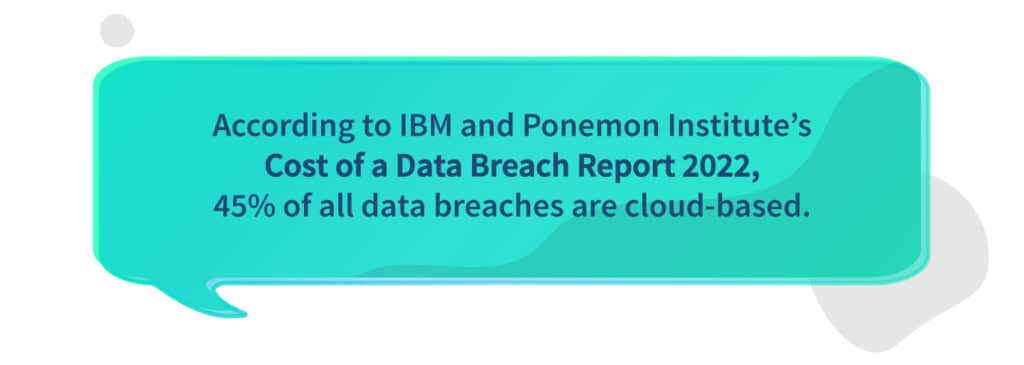
According to IBM research, a single data breach can cost $4.35 million on average. This is why protecting sensitive data stored in the cloud is now more important than ever.
So if you’re an organization currently storing sensitive data in the cloud, it is essential to have a well-designed cloud security strategy.
In this article, we’ll discuss the key components of a cloud security strategy and provide examples of effective strategies. We will also discuss some of the crucial elements that should be included in a cloud security strategy.
By the end of this article, you’ll have a better understanding of how to protect your data in the cloud.
What is cloud security strategy?
A cloud security strategy is a comprehensive plan that outlines an organization’s approach to securing its data and applications in the cloud.
A well-designed cloud security strategy includes a range of security measures such as access controls, encryption, monitoring, and incident response tailored to an organization’s specific needs. This, in turn, helps organizations ensure the confidentiality, integrity, and availability of their data in the cloud.
Importance of cloud security strategy
A cloud security strategy is crucial for organizations that use cloud services to store and manage their data. The cloud presents unique security challenges that require a proactive and comprehensive approach to mitigate risks.
Without an effective cloud security strategy in place, organizations are vulnerable to cyber threats, which can lead to data breaches, loss of revenue, and reputational damage.
A well-designed cloud security strategy can help organizations gain a competitive advantage by demonstrating a commitment to security and attracting customers who value data protection.
In short, a cloud security strategy is essential for any organization that wants to reap the benefits of cloud computing while keeping its data safe and secure.
How to create a cloud security plan for your organization?
Now that you know the importance of having a cloud security strategy, let’s discuss how to create a cloud security plan for your organization.
Step 1. Identification and classification of sensitive data
The first step in planning a cloud security strategy is to identify and classify your sensitive data. This involves identifying all the data that is critical to your organization and classifying it according to its sensitivity and risk level.
Sensitive data may include financial records, personal information, confidential business information, and intellectual property.
Once identified, the data should be classified based on its sensitivity and risk level. This will help you determine the appropriate security controls and measures needed to protect it in the cloud.
Step 2. Access and authentication controls
Access and authentication controls are essential components of a cloud security strategy. They help to ensure that only authorized users can access your organization’s data and applications in the cloud.
For the uninitiated, access controls usually involve setting up permissions and privileges for users and groups, while authentication controls involve verifying the identity of users before granting them access.
The best security measures for access control are strong passwords, multi-factor authentication (MFA), and role-based access control. These are all extremely effective measures and can help to ensure that only authorized users can access your organization’s data in the cloud.
Step 3. Data encryption and tokenization
Data encryption and tokenization are crucial components of a robust cloud security strategy.
Encryption involves converting data into an unreadable format using an encryption algorithm. This makes it difficult for unauthorized users to access and read the data.
Tokenization, on the other hand, involves substituting sensitive data with non-sensitive tokens. This helps protect the data in case of a security breach. Both encryption and tokenization are effective measures for protecting sensitive data in the cloud.
Step 4. Network security and segmentation
Network security refers to the protection of a network’s infrastructure and its associated systems and devices from unauthorized access, misuse, modification, or destruction. In cloud computing, network security is critical as organizations must secure their network from external and internal threats.
Network segmentation, on the other hand, limits the attack surface by ensuring that even if one part of the network is compromised, the rest of the network remains secure.
For instance, you could segment your network based on user roles or application types. By doing so, you can control access to sensitive resources and limit lateral movement in the event of a breach.
Step 5. Application security
Application security is another essential component of any cloud security plan. It involves securing applications hosted in the cloud against various threats such as SQL injection attacks, cross-site scripting, and session hijacking.
To ensure the security of applications, organizations should implement various security measures such as authentication and access control, encryption, and vulnerability management.
To ensure effective application security in the cloud, it is important to implement a multi-layered security approach that covers all aspects of the application’s lifecycle, from development and testing to deployment and maintenance.
This may involve using tools and techniques such as cloud security posture management, vulnerability scanning, penetration testing, and code review to identify and address potential security threats.
Step 6. Incident response and disaster recovery
As the name suggests, incident response and disaster recovery involve planning for and responding to security incidents and disasters that could potentially impact the availability, integrity, or confidentiality of data stored in the cloud.
In order to address security incidents, it is important for organizations to form a Security Incident Response Team (SIRT) that can effectively coordinate the response and take predetermined steps to limit and minimize the impact of the incident.
Disaster recovery, on the other hand, involves developing a set of procedures for recovering from a disaster or service outage that impacts the availability of cloud services.
This may involve establishing a disaster recovery plan (DRP) that outlines the steps needed to recover from a disaster or service outage, including restoring data and systems, testing backups, and implementing redundant systems to ensure business continuity.
Step 7. Monitoring and auditing
Lastly, monitoring and auditing are equally important parts of the cloud security planning process.
Monitoring involves continuously monitoring the cloud environment for potential security threats and anomalous behavior. Auditing, on the other hand, involves conducting regular assessments of the cloud environment to ensure compliance with security policies and regulations.
By monitoring & auditing the cloud environment, organizations can identify and address potential security threats before they can cause harm to the system or data stored within it.
Elements of a cloud security strategy
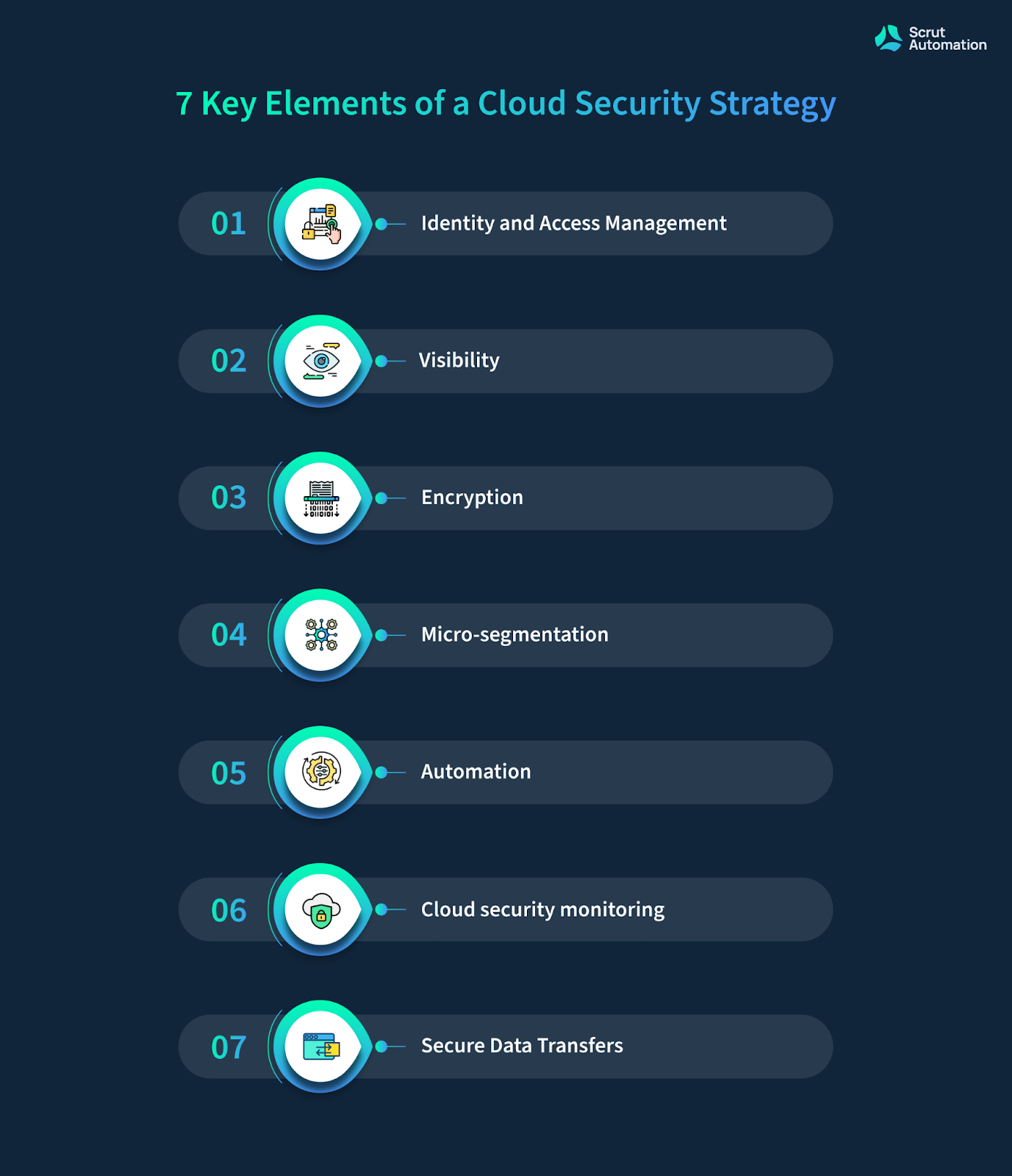
As such, there are seven elements that you should know about while creating a strong cloud security strategy. Remember, your cloud security strategy shall contain several pre-breach and post-breach elements.
1. Identity and Access Management
Since companies need to control access to crucial information, it is important for them to utilize identity and access management (IAM). An IAM system controls who can access your data and applications, and what they can do with it. What’s more, cloud providers offer their own built-in IAM systems that they offer integrations to. Alternatively, you can also have the cloud integrate to your own IAM system
2. Visibility
The second important element that should be a part of your cloud security strategy is visibility. Your security teams should always have visibility into your current cloud architecture, as a lack of it can quickly become a major concern. In case of a spike in demand, or a short-term project, the cloud will make it very easy to spin up new workloads.
Since cloud environments are not dynamic, lack of visibility into changes in your environment can cause your organization to be exposed to security vulnerabilities. Of course, it is not possible to protect what you are unable to see.
3. Encryption
The importance of encrypting data for an organization can not be overstated. You must ensure that your data is securely encrypted when it is being used by the cloud servers, and when it is on the provider’s server. It is important to remember that very few cloud providers actually asseure data protection when your data is idle. You must have a strategy to secure your data, when it is in transit, on the servers, or being accessed by cloud-based applications.
More than anything else, encryption is an additional layer of security for the protections of your data assets. It ensures that your data is inaccessible to anyone who does not have the decryption key.
4. Micro-segmentation
Micro-segmentation is a network security technique using which you can divide the data center into logically distinct security segments right down to the individual workload level. You can then define the security controls for each unique segment, and deliver services for each of them. Micro-segmentation is quite common in implementing cloud security, as it can help you isolate and minimize any damage caused by an attacker, if they are able to get access to your cloud.
5. Automation
When you are building a successful cloud security strategy, you will need to seriously consider automation and IAM policy management. To prevent any vulnerabilities, and timely prevention, it is highly recommended that you automate everything you can in your cloud environment. It can include leveraging serverless architecture, managing alerts to prevent fatigue, and narrowing down the focus of your security team on events that require your immediate attention.
6. Cloud security monitoring
Cloud security monitoring includes several processes that allow companies to manage and monitor the operational workflows of a cloud environment. Ideally, cloud security monitoring will combine manual and automated processes that can track the security of your servers, websites, applications, and software platforms.
When implemented properly, cloud security monitoring can help you maintain compliance, avoid business disruptions, discover vulnerabilities, and protect sensitive data. Additionally, you will also be able to leverage the continuous monitoring to decrease the risk of missing any threats or vulnerabilities.
Cloud Security Posture Management (CSPM), is yet another tool that can help you identify and remediate risks across your cloud infrastructure. It can also help you proactively deal with any software configuration vulnerabilities, and compliance risks.
7. Secure Data Transfers
You must keep in mind that your data is especially vulnerable when it is in transit. While most cloud service providers encrypt the data that is being transferred as a rule, it is not always so. At the very least, you must ensure that your data is transferred over secure HTTP access, and is encrypted using SSL. Encryptions and decryptions basically ensure that all your data-related operations are completely secure.
Examples of cloud security strategy
NextBillion.ai is a leading Singapore-based mapping platform that helps enterprises utilize geospatial data to improve cost, scale, and user experience. The company experiences consistently regular data volumes, and has a diverse client base, which makes it even more important for it to secure its cloud environment, and help them run complex algorithms.
NextBillion.ai automated its cloud security and risk monitoring with Scrut, and has implemented continuous monitoring and testing for over 200+ CIS benchmarks. The company assigns fixes for any possible vulnerabilities and threats directly from the Scrut platform.
Freight Tiger’s digital freight network connects over 60+ shippers, and has emerged as a SaaS platform enabling seamless collaborations for all logistics stakeholders. The company decided to automate its cloud monitoring against 200+ controls using Scrut.
As a result, the fixes were highlighted on the platform, and misconfigurations reported to the DevOps team. With the help of Cloud Security, Freight Tiger is able to ensure continuous compliance and audit-readiness.
Ace your cloud security strategy!
Take the right step forward by securing your cloud environment with the help of an effective cloud security strategy. A cloud security strategy includes elements of identity and access management, visibility, encryption, automation and continuous monitoring. When implemented correctly, a cloud security strategy can help you prevent security breaches and get rid of vulnerabilities.
Cloud Security by Srcut Automation helps you secure and monitor your cloud environment. By continuously monitoring your cloud, and applying proactive fixes, you will be able to ensure compliance and security of your scaling cloud environment.
FAQs
What is cloud security strategy?
Cloud security strategy is the process of securing all the data, applications and assets that you run in your cloud environment. A comprehensive cloud security strategy will include several aspects such as access controls, encryption, micro-segmentation and more, required for it to function properly.
Why is cloud security strategy important?
A cloud security strategy ensures that all the data and applications on your cloud are secured and protected against vulnerabilities. It can prevent data breaches, and safeguard your cloud from any major losses.
What are the key elements of cloud security strategy?
There are seven key elements of cloud security strategy — Identity and Access Management, Visibility, Encryption, Micro-segmentation, Automation, Cloud Security Monitoring, and secure data transfers.
How to implement a cloud security strategy?
Once your cloud security strategy is ready, it is a good idea to review all your digital assets, data, and security policies. You can then go ahead and implement your strategy on your cloud environment.
Which is the best tool for implementing cloud security?
Cloud Security by Scrut Automation can help you fully secure your cloud environment. You can easily connect your cloud environment to the Scrut platform, and scan your assets and root accounts against 150+ CIS benchmarks. With Cloud Security, you can not only automate and strengthen the security of your cloud, but also customize your own security controls.
1 Jun 2023
4minutes
Authored by
Aayush Ghosh Choudhary
Co-founder & CEO at Scrut
Defining cyber and compliance risk for mid-market businesses
Ransomware attacks. Fines from data protection regulators. Lawsuits from customers after a breach.
In 2023, mid-market businesses face all of these cyber and compliance risks, and more.
While enterprises might be the most frequent targets, they also have the resources – people and tools – to address them more effectively. And data suggests smaller businesses suffer disproportionately more after a cyber attack than bigger ones.
The good news, though, is that while this all might seem scary, there is something you can do about it.
In this post, we’ll take a look at defining cyber and compliance risk. By breaking both of these terms down into their core parts, businesses can begin to develop a comprehensive risk management program to address them.
What is cyber risk?
While cyber risk might be top of mind for many people, they might have different ideas of what it means. Thus, it’s important to define.
Simply put, risk is the probable frequency and magnitude of future loss.
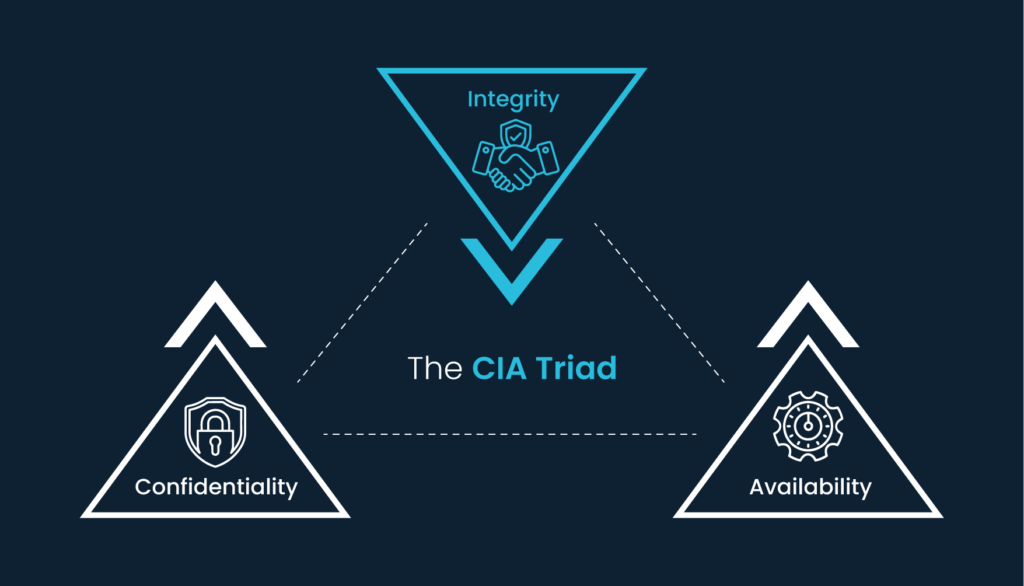
And cyber risk is that which results from losses to data confidentiality, integrity, or availability.
The CIA triad: confidentiality, integrity, and availability
Data confidentiality, integrity, and availability, known together as the CIA triad, are key requirements for any modern business, regardless of sector. And potential losses to any of these components represents cyber risk.
Confidentiality refers to the protection of sensitive information from unauthorized access or disclosure. Even the most transparent business needs to keep information private, such as:
Customer, partner, and employee personally identifiable information (PII).
Financial statements and projections.
Intellectual property like product specifications, strategic plans, and competitive analyses
Integrity involves preserving the accuracy and consistency of data over its entire lifecycle, ensuring that it remains unaltered and uncorrupted from creation to disposal. Maintaining data integrity is vital for businesses to:
Ensure reliable decision-making.
Support daily operations.
Availability ensures that systems are accessible and usable when needed by authorized users. Maintaining it is crucial for:
Employee productivity.
Continued revenue generation.
Physical safety, in use cases like manufacturing and healthcare.
Cyber risk versus compliance risk
Cyber risk and compliance risk are two distinct yet interconnected aspects of an organization’s overall risk picture.
Cyber risk refers to the immediate consequences of potential loss to data CIA. These situations can lead directly to decreased productivity and competitive advantage, response and replacement costs, fines and judgements, as well as reputation damage.
Some real-world scenarios include a:
Ransomware attack preventing employees from doing their job or collecting revenue. After the NotPetya virus outbreak in 2017, for example, FedEx estimated it lost $300 million of potential earnings in the relevant quarter, in part due to forgone revenue.
Data breach causing a company’s intellectual property property being posted on the public internet. This happened to the video game maker Capcom in 2020 after it refused to pay an extortion demand.
Loss of customer trust after a data leak leading to reduced sales. Target, which suffered a major data breach in 2013, saw sales decline 3.8% in the relevant quarter.
In contrast, compliance risk arises when an organization doesn’t follow applicable laws, regulations, or industry standards. Compliance risks can also lead to additional losses.
In the above examples, the victims suffered directly from the loss of data CIA. In contrast, compliance risk might materialize when:
A customer terminates a contract with a vendor who fails to achieve re-certification under ISO 27001.
Consumers file a lawsuit against a company after it leaks their PII, alleging that it failed to protect the data sufficiently in accordance with the California Consumer Privacy Act (CCPA). There have been almost 200 cases of this happening already.
Payment Card Industry (PCI) organizations auditors find your business is not handling credit card information according to the Data Security Standard (DSS), and you are fined until you are back into compliance.
While both types of risk can have significant consequences for an organization, they are intrinsically linked in the sense that effectively managing cyber risk often goes hand-in-hand with maintaining regulatory compliance.
Cybersecurity as one of many business risks
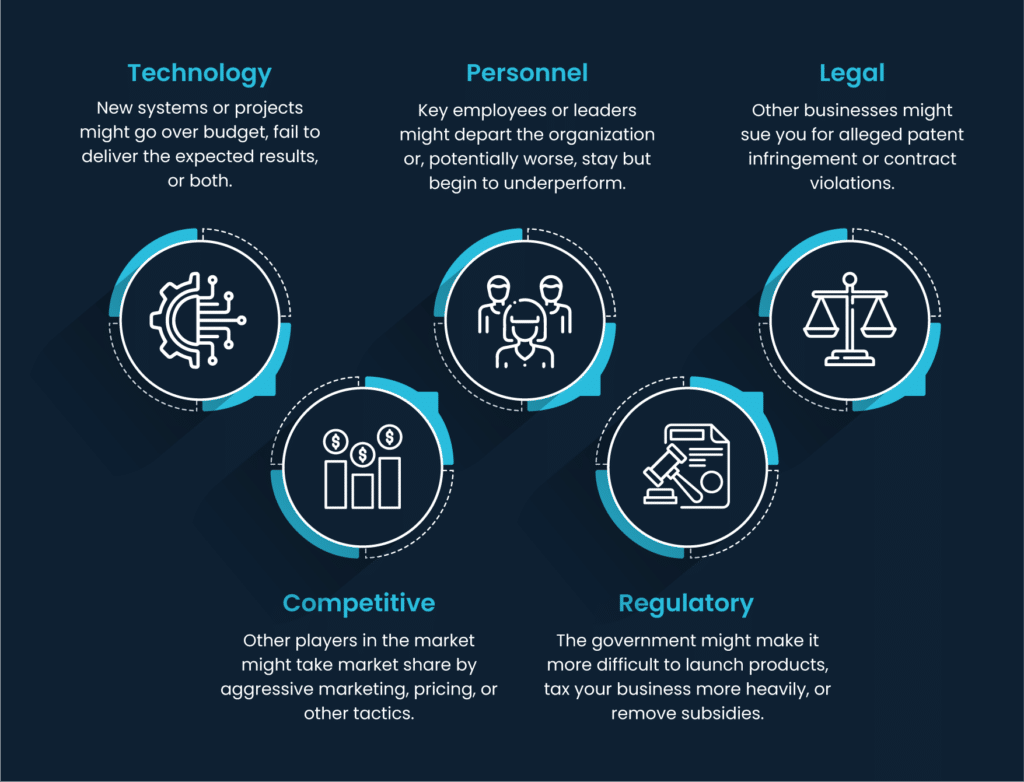
All businesses are, at their core, about delivering value. And executives need to deal with a lot of risks while they are doing this.
While leaders will understandably seek to minimize each of the following, it is simply a fact of life that businesses must contend with risks related to the following components.
If you add cyber and compliance risk to this list, dealing with all of these effectively while still delivering value can seem overwhelming.
And you will never eliminate risk entirely.
The key is understanding exactly where you are exposed and managing all of these risks effectively. And next month, we’ll dive deeper, identifying the sources of cyber and compliance risks.
Conclusion
Cyber and compliance risk are simply another set of challenges – among many others – that business leaders face. Understanding what they are is the first step toward addressing them systematically.
While, in general, cyber risk should be the primary focus, a strong security posture can help you meet compliance obligations as a consequence. And for resource-strapped businesses operating in the mid-market, there are tools and techniques that can help you address both simultaneously.
“Must haves” are a program or process that lets you:
Identify the relevant risks
Measure, track, and monitor them
Map cyber risks and controls to relevant compliance frameworks.
Understand your risk landscape through an intuitive and actionable interface
And if you are ready to start doing just this, then schedule a demo of the Scrut Automation platform now!
1 Jun 2023
4minutes
Authored by
Aayush Ghosh Choudhary
Co-founder & CEO at Scrut
Maintaining a unified security controls framework across compliance standards
With an unrelenting wave of cyberattacks impacting companies of all sizes, customers and regulators are understandably focused on ensuring organizations maintaining sensitive data have effective security programs.
Unfortunately, these efforts have not evolved in a fully coordinated or standardized manner, leading to compliance frameworks sprawl. While enterprises generally have large governance, risk, and compliance (GRC) teams that can address these demands, mid-market businesses can struggle to ensure adherence to a web of overlapping demands.
In this post, we’ll take a look at the challenges associated with meeting multiple compliance standards and identify some key steps organizations can take to address them.
The challenge of compliance overload
Industries face multiple requirements
Organizations that work in a variety of different spaces unfortunately need to meet overlapping compliance requirements. The most extreme example is probably Palantir, which operates in healthcare, financial services, and in both U.S. and international government networks. As a result, it must comply with a vast array of standards.
While most organizations don’t have such comprehensive compliance requirements, it is quite common to see situations requiring adherence to at least two. For all but the largest companies, this can be a heavy administrative burden.
Challenges of compliance framework sprawl
As a result of this web of requirements, companies need to meet many requirements at the same time simply to do business and avoid regulatory penalties.
Body image: can we create clouds of these frameworks around a vector (similar to the first screen in UCF video)
Below are some common examples.
General purpose and business-focused:
Attestations like System and Organization Controls (SOC) 2 report (popular in North America).
Certifications like International Organization for Standardization (ISO) 27001 (common in Europe) and the Payment Card Industry Data Security Standard (PCI-DSS) (specific to those processing payments).
Government-sponsored but non-prescriptive frameworks like the U.S. National Institute of Standards and Technology (NIST):
European Union’s General Data Protection Regulation (GDPR).
Documentation and control requirements vary across standards
Because of the varying motivations and histories of each framework, each has its own precise requirements that don’t necessarily have a direct equivalent in other standards.
Whereas SOC 2 allows organizations to largely define their own control sets, ISO 27001 has more detailed requirements in the form of mandatory information security management system (ISMS) components.
While GDPR applies to “personal data,” the CCPA applies to “personal information,” which have slightly different definitions.
NIST 800-53 includes baselines of “low,” “moderate” and “high” that are not by themselves required by any standard, but which other standards will incorporate (such as the U.S. Federal Risk and Authorization Management Program (FedRAMP).
Managing complexity
Given the complexity that businesses face when it comes to compliance, having an effective program in place to manage it is critical. Important steps you can take include:
Designing controls comprehensively and flexibly
Whenever possible and appropriate, developing policies, procedures, and other controls usable across multiple frameworks is a best practice.
For example, SOC 2 does not specifically mandate vulnerability scanning or penetration testing on certain cadences. With that said, it makes sense from a cybersecurity perspective to establish such a program that meets or exceeds ISO 27001 standards. The latter framework requires timely identification of vulnerabilities, an assessment of the organization’s exposure to it, and the application of appropriate controls considering the risk.
Properly documenting a procedure meeting these criteria will both improve your organization’s security posture while making future ISO 27001 certification much easier.
Maintaining a centralized risk register
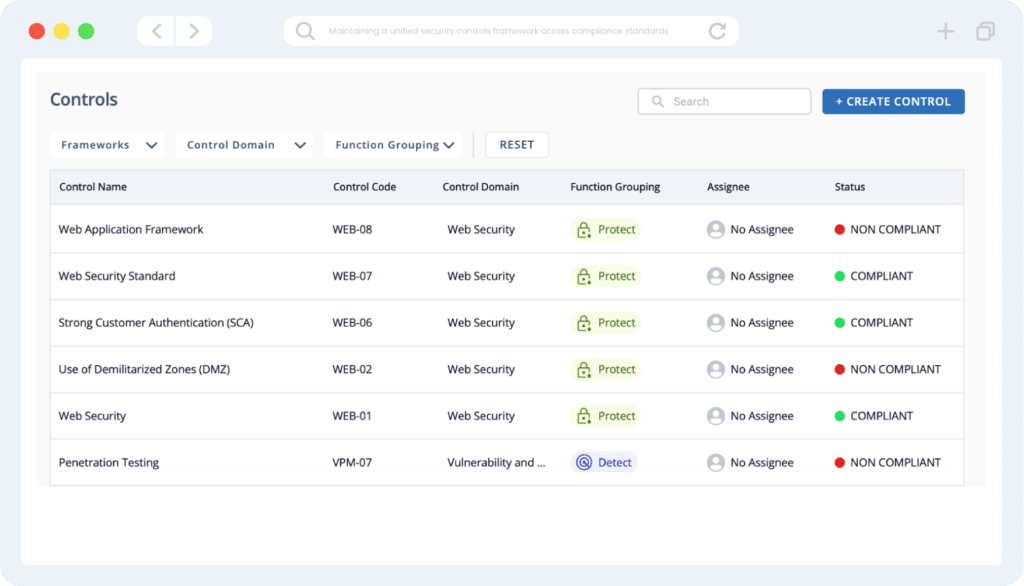
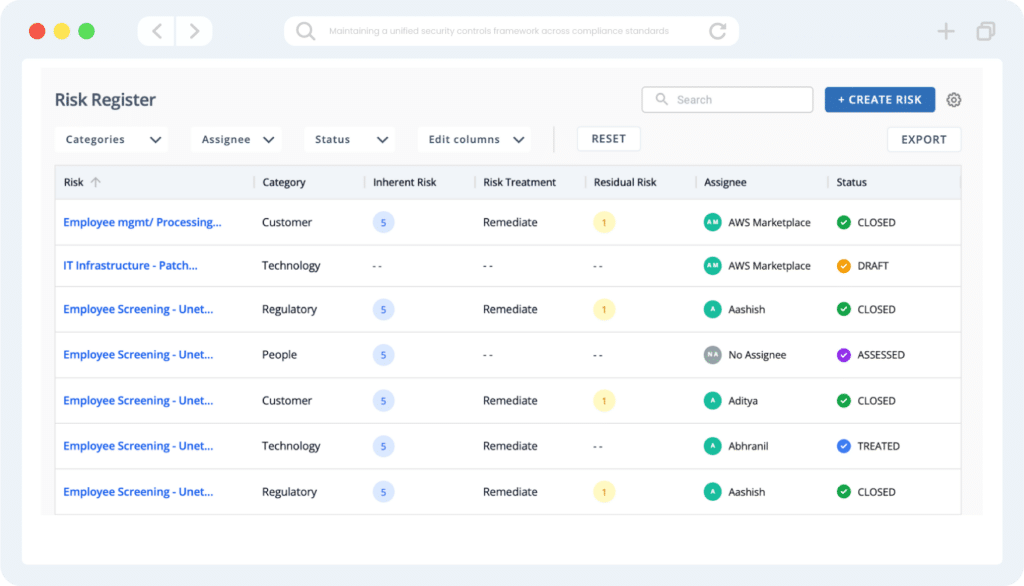
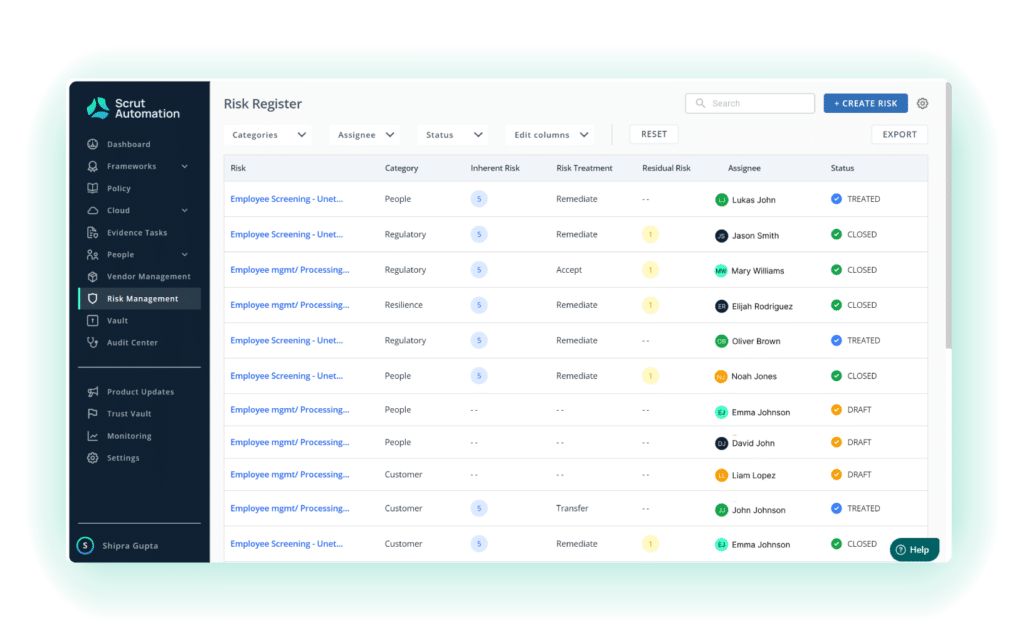
Tracking all of the risks across your organization in a single place is essential to staying secure and meeting compliance requirements. While using spreadsheets or other generic tools might work for a while, a purpose-built risk register will eventually become necessary.
What is especially helpful when tangling with regulatory sprawl is a tool that can map risks and controls to specific frameworks. This can help you to stay on top of overlapping and duplicative requirements without pulling your hair out.
Track security and compliance-related tasks to completion
While having policies and other documentation in place is necessary for regulatory compliance, it is almost never sufficient. Actually implementing these requirements on a daily practice is what will protect your company and ensure you can pass audits.
Especially when dealing with a variety of different requirements across frameworks, ensuring that nothing slips through the cracks becomes critical. That’s why having a compliance-focused workflow management system can help you stay on top of a diverse set of rules and regulations. By reminding action owners and guiding them toward completion, you can rest more easily before the auditors come knocking.
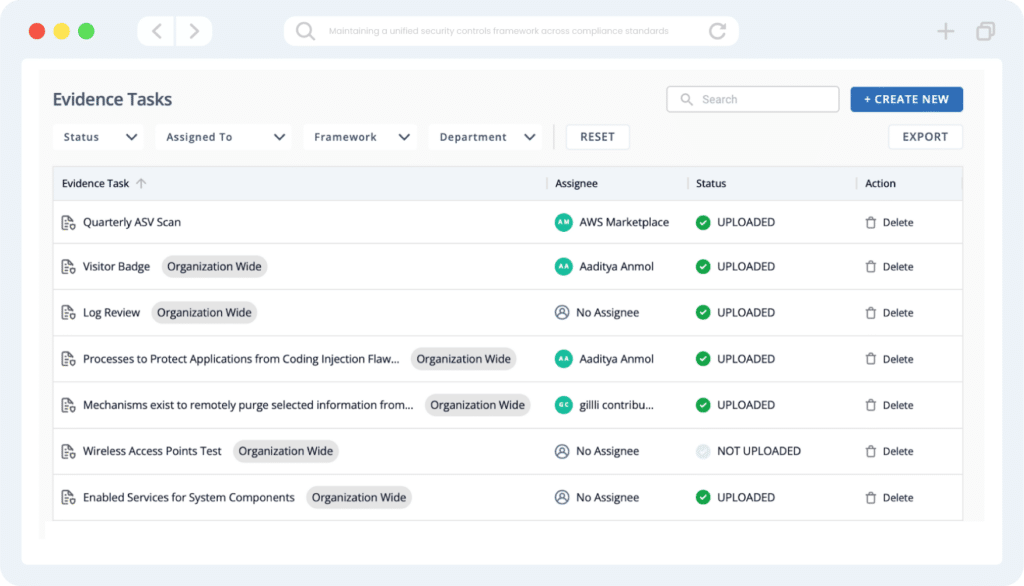
Automating evidence collection
If you are going to face multiple types of audits, having an effective and automated process for collecting evidence is critical to avoiding business disruption while providing reviewers the documentation they need to give your business a stamp of approval.
Since modern businesses run a wide array of different tools and software in their networks, manually pulling data from each one will quickly become unscalable. Thus, having a centralized platform that can continuously and monitor your cloud providers, code repositories, human resources systems, and similar applications will be incredibly helpful.
Conclusion
If you find yourself in the unenviable position of needing to meet multiple regulatory and compliance requirements, there are things you can do to streamline your GRC program and avoid some of the associated pain.
Developing a flexible set of controls, tracking risks in a centralized register, automating compliance tasks, and setting evidence collection on autopilot can go a long way. Having a well-developed and structured system for accomplishing all of these things, though, will be a prerequisite.
So if you are interested in seeing how Scrut can help you stay on top of an array of compliance frameworks, set up a call with one of our experts.
1 Jun 2023
10minutes
Authored by
Aayush Ghosh Choudhary
Co-founder & CEO at Scrut
The ultimate guide on how to create a risk register
Risks are inherent in any business activity. Typically, the higher the risk, the higher the returns. Every opportunity comes with its own set of risks. Therefore, an organization can never be risk-free.
However, it is important for an organization to have a clear understanding of details, including its risks, its impact, the likelihood of its occurrence, and its treatment. All these details are recorded in a risk register.
In layman’s terms, IT risk can be defined as the potential negative impact or harm that can arise from the use, operation, or adoption of information technology within an organization. IT risks include vulnerabilities, threats, and uncertainties associated with data, processes, infrastructure, and technological systems.
Generally, an organization should take all types of risks into account, including IT risks, which we will focus on in the following article. According to the National Institute of Standards and Technology (NIST), a risk register in IT is “a repository of risk information, including the data understood about risks over time.”
An IT risk register is a structured document or database that catalogs, and tracks identified risks related to IT systems, infrastructure, processes, and data within the organization. It serves as a tool for effectively managing and mitigating IT-related risks. Creating a risk register without efficient knowledge of how to build one can be quite challenging. This blog will serve as a complete guide to creating a risk register.
What is risk management?
If you want to create and maintain a risk register, it is important to first understand the process of risk management.
Risk management is a systematic and proactive process that involves identifying, assessing, analyzing, and mitigating risks to minimize potential negative impacts and maximize opportunities. An organization can save losses, improve its chances of success, and increase its lifespan by focusing on risk management.
What are the four key components of risk management?
The process of risk management involves four basic components:
1. Risk identification
This step involves identifying and recognizing potential risks that could affect the organization’s achievement of objectives and desired outcomes. This involves considering internal and external factors, analyzing processes, systems, and activities, and involving relevant stakeholders.
Risk identification can be made through various methods, such as risk assessment, reviewing system configuration, analyzing historical data, and engaging with stakeholders.
2. Risk analysis and assessment
Once the risks are identified, they are assessed based on their potential impact and likelihood of occurrence. Risk assessment refers to evaluating the significance of each identified risk and prioritizing them according to their potential outcome.
Risk assessment helps the organization prioritize its risks and determine which risks need its immediate attention and action for mitigation. This step can be done by qualitative or quantitative analysis or a combination of both.
3. Risk response planning
After the risk assessment is completed, the organization needs to develop strategies and implement measures to mitigate and reduce the impact of the identified risks. This step of the process involves the development of risk mitigation strategies and the implementation of controls to minimize the likelihood of the occurrence of risks.
Risk mitigation measures include implementing security measures, conducting employee training, implementing backup and recovery systems, and adopting appropriate policies and procedures.
4. Risk monitoring and control
Risk monitoring is a continuous effort, and organizations can never take a break from it for its ongoing security. It should continuously review the effectiveness of its risk management efforts.
Risk monitoring and control involves monitoring the implemented controls, identifying emerging risks, and evaluating the effectiveness of risk management measures. Continuous monitoring helps the organization stay relevant in an evolving landscape of threats and opportunities. It helps the organization make necessary changes in its risk management posture as and when required.
What is a risk register?
Once the risks are identified, they are logged into a risk register for timely tracking. A risk register, also known as a risk tracker or a risk log, is a tool used in risk management to systematically capture, track, and manage identified risks within a project, organization, or specific context.
The risk register helps the organization and stakeholders understand the risk they face and the ways to manage risks effectively throughout the project or organizational lifecycle.
What is a risk register used for?
A risk register is a tool used to identify, assess, and track risk in a project, organization, or any other setting. Although sometimes a risk register is used for regulatory compliance obligations, it serves much broader purposes. It helps organizations stay on track with their risk management plan.
A risk register also serves as a point of intersection between the risk managers and the project managers. Both types of managers can decide their plan of action by referring to the risk register. A successful project cannot be completed without mitigating or eliminating the risks it brings in its stride.
A risk manager can alert the project manager about any sort of risks that are urgent in nature and needs to be addressed quickly. A risk register can become a point of reference between the two managers.
What are the components of a risk register?
A risk register is a highly dynamic document that can be customized per an organization’s requirements. However, some of the common components of a risk register are as follows:
1. Risk identifier
The risk register logs each risk identified by the organization. All these risks are given unique identification numbers to distinguish them. For example, XYZ123, ABC456, etc.
2. Risk description
Each risk should include a description of its nature, potential consequences, and relevant contextual information for easy retrieval. For instance,
Risk Description: Data Breach due to Weak Network Security
Risk Details:
There is a risk of a data breach occurring as a result of weak network security measures. The risk arises from vulnerabilities in the organization’s network infrastructure, including outdated firewall configurations, inadequate access controls, and unpatched software. A successful attack could lead to unauthorized access to sensitive customer data, financial loss, reputational damage, and potential legal and regulatory consequences.
3. Risk category
The category of risk refers to the department or the area of responsibility where the risk is applicable. An organization can customize the risk categories such as regulatory, resilience, or people.
4. Risk owner
A risk owner is a person who is responsible for the risk management and monitoring of a particular risk throughout its lifecycle.
5. Inherent risk
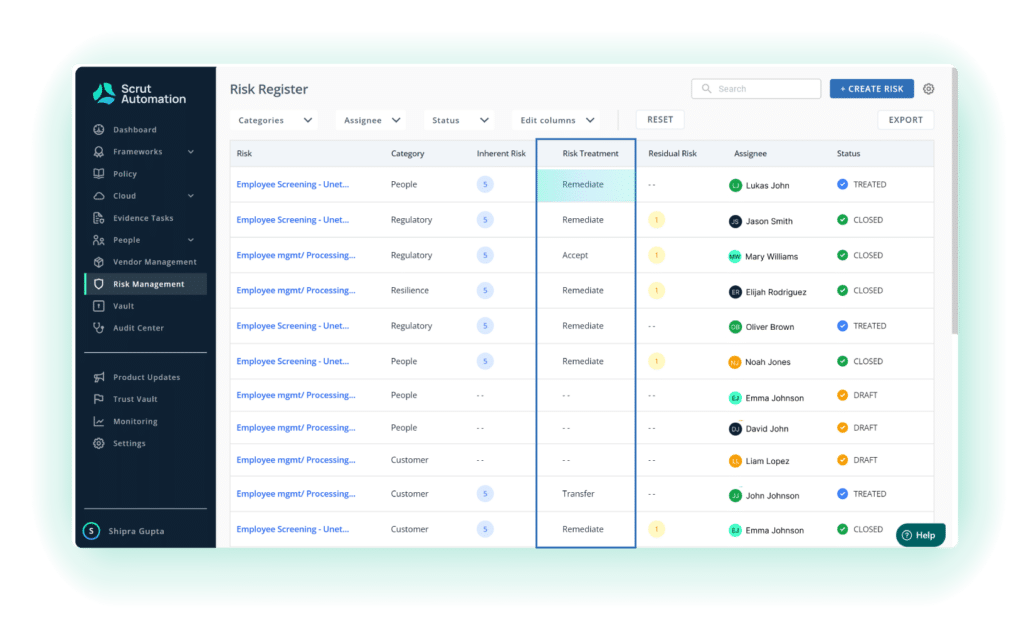
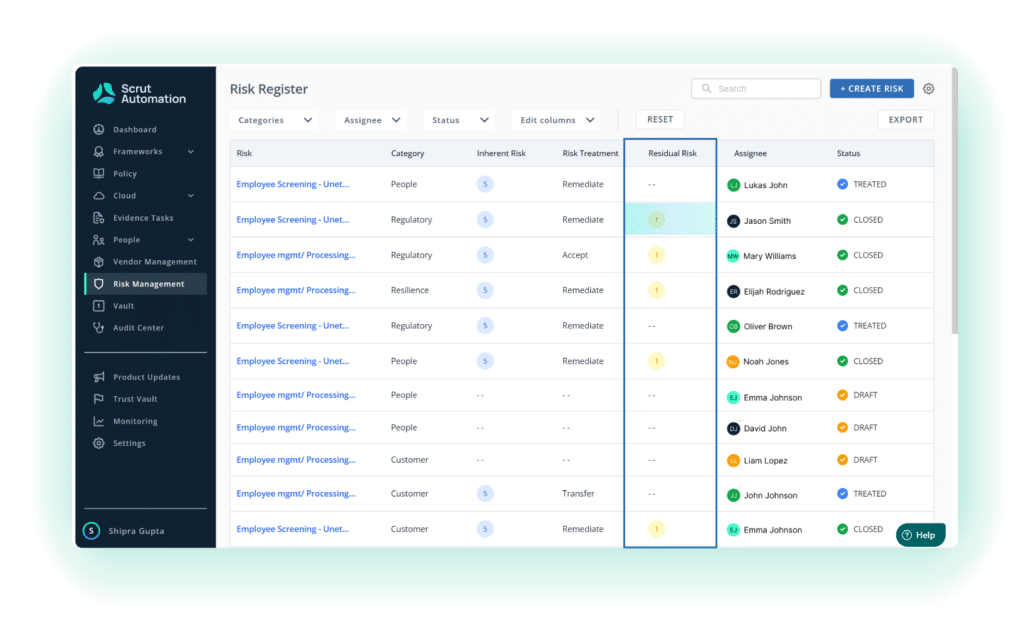
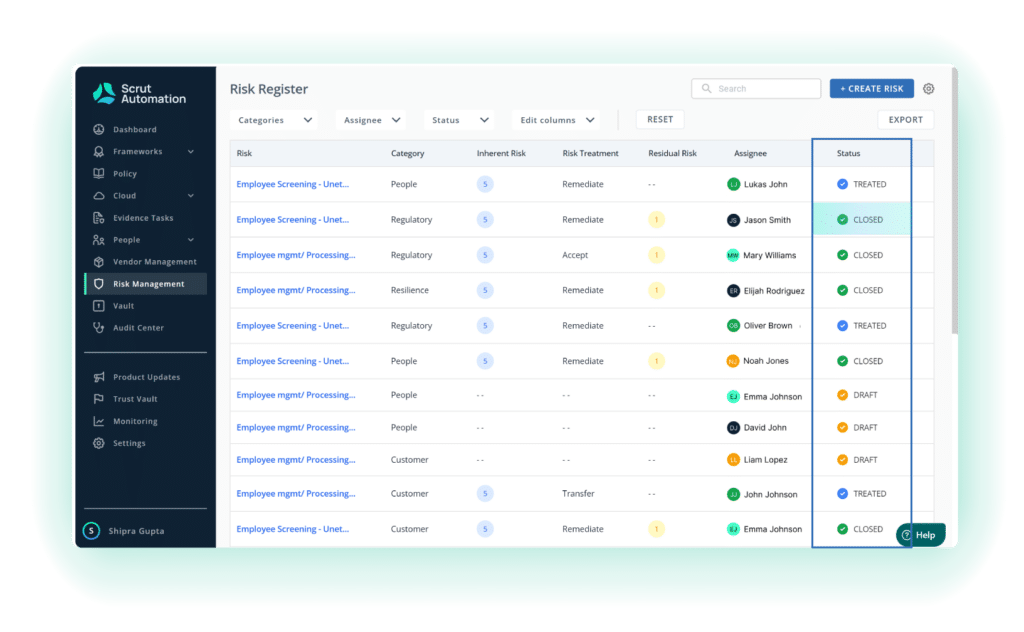
Inherent risk is the possibility of the risk at the time of identification. At this time, the possibility of the risk is the highest. The risk owner and the relevant parties work on mitigation of the risk to bring down this score. Inherent risk is customizable in Scrut’s risk register. So, you can have a score from 0-10 or a score from 0-5 or a score from 0-100 as per your convenience.
6. Risk response strategies
These are the strategies that are implemented to mitigate the particular risk. These actions might be preventive measures, contingency plans, risk transfer strategies, or any other appropriate response. Some of these strategies include, accept, remediate, or transfer the risk.
7. Residual risk
Residual risk is the risk that still exists after an action has been taken. As you can understand, no action an organization can take is without any risk. Some amount of risk, no matter how negligible, is always present.
8. Risk status and updates
The organization should be aware of the status of each risk. This column allows the risk owner to enter the status of the risk, as it may be, in the register. For instance, whether the risk is closed, treated, or in-progress.
What are the benefits of using a risk register?
We saw how to prepare a risk register in the previous section. But why should you prepare a risk register? What would you benefit from it? If you are not familiar with the benefits of a risk register then let’s discuss some of its benefits in detail.
Improved risk awareness
A risk register documents risks along with their likelihood of occurrence and necessary mitigation actions. It improves the visibility of actions and consequences for the stakeholders. As a result, the stakeholders, including employees and contractors, take a proactive approach instead of a reactive approach to risks.
Enhanced decision-making
Opportunities come with risks. When decision-makers weigh opportunities, they can also calculate their risks and their consequences for a comprehensive view. A risk register gives a crystal clear view of the risk scenario of a project or an organizational lifecycle making it easier for the decision-maker to visualize the risk.
Effective communication and collaboration
The project team, stakeholders, and risk owners can communicate effectively through the risk register about the risk an organization faces and the mitigation steps that can be taken. It helps all the parties involved to collaborate effectively and saves time while reducing unnecessary noise in communication.
It can ensure that every stakeholder has the same understanding of the risks and they are on the same page about mitigation efforts.
Proactive risk management
A risk register logs the risks in a systematic manner, promoting proactive risk management efforts and tracking by all stakeholders. It allows for the identification of risks at an early stage, enabling timely and proactive risk response planning. The organization can improve the sustainability of the project by taking early action on the risks.
Compliance and audit trail
Although audits are an integral part of compliance certification processes, they are very cumbersome and lengthy. The risk register proves to be an important part of audit trails and compliance procedures. It enables organizations to demonstrate that they have identified, assessed, and managed risks appropriately, which is often required for regulatory compliance and audits.
7 ways to effectively maintain a risk register
The risk register should be maintained regularly not only to fulfill the regulatory compliance but to have visibility of risk scene of the organization. Here are some tips for maintaining an effective risk register.
1. Regular review and updates
An organization should review the risk register regularly and ensure its accuracy and relevance. The risk register should be updated regularly with new information when new risks are identified or there are changes in the existing ones. It is a good idea to involve stakeholders in the process to gather different perspectives and improve participation.
2. Clear and concise risk descriptions
Instead of using complex terminology, use jargon-free language to describe the risk so that all the stakeholders can understand and act on the information. It is important to include even the non-technical stakeholders in the process so that they don’t make mistakes and increase risks.
3. Consistent risk categorization
When different risk owners make entries in the risk register, they tend to categorize similar risks under different headings, creating confusion. The organization should establish a consistent and well-defined set of rules for risk identification, categorization, and classification.
4. Involvement of stakeholders
Relevant stakeholders should be involved in the identification and assessment of risks. Every subject expert should be consulted when risk in their area of expertise is identified. Active participation and collaboration is the key to a successful risk management strategy.
5. Integration with project management processes
Risk management should not be treated as a project in itself but as part and parcel of the project management process in general. The risk management tasks should be aligned with the project deliverables and timelines. They should be regularly communicated to the project management team to ensure effective risk management throughout the project lifecycle.
6. Regular reporting and communication
Generating regular reports of risks can provide important insights to the relevant stakeholders about the status of the risks and the actions they need to take to mitigate them. Also, emerging risks and action plans to mitigate them should be communicated to all stakeholders.
7. Continuous improvement
A risk-conscious culture should be established by training stakeholders to identify risks and demonstrating the steps to be taken to mitigate them. Stakeholders should be encouraged to learn from their past mistakes, which should be updated on the risk register to educate other stakeholders. The organization should also take regular feedback from stakeholders and implement relevant updates in the methods of upgrading the risk register.
Tools and templates for risk register management
There are various tools and techniques available in the market to manage a risk register. Let’s look at some of the most used ones.
Spreadsheet-based templates
This is the most commonly used method for small companies. On the plus side, they are flexible, customizable, and relatively cheaper options to create a risk register. The organization doesn’t need specialized knowledge to operate and maintain the risk register.
Dedicated risk management software
Sometimes, large organizations invest in dedicated risk management software if there is a specific need. However, small and medium-sized companies hardly require such dedicated software. These software are not only pricey, but they also require specialized training for the organization’s employees to use them.
Scrut’s risk management module
The Scrut platform has an integrated risk management module that helps you manage risk registers in a very efficient manner. It helps you build your risks with your customized fields. You can also color-code your scores to visualize and prioritize your risks. Scrut helps you stay on top of your risk posture by automating risk management tasks and reducing the resources required from your end for continuous risk monitoring
Conclusion
Creating and maintaining an effective risk register is essential for successful risk management within an organization. By following key principles and utilizing appropriate tools and templates, organizations can streamline their risk management processes and improve decision-making.
To facilitate risk register management, organizations can utilize various tools and templates. Spreadsheet applications provide flexibility and customization options. A dedicated risk management software provides advanced functionalities for risk assessment and reporting. When you automate risk management with Scrut’s risk management module, maintaining a risk register becomes a lot easier for your organization.
FAQs
What are the benefits of using a risk register?
The benefits of using a risk register include 1. Improved risk awareness 2. Enhanced decision making 3. Effective communication 4. Proactive risk management 5. Compliance audit trail
What is the risk register used for?
A risk register is used for regulatory compliance. Moreover, it is also used to identify, assess, and track the risks associated with the organization’s activities.
Who is responsible for maintaining the risk register?
A risk manager is responsible for maintaining the risk register. However, all the stakeholders should contribute to the risk register by entering the details of the risks associated with their activities and areas of responsibility. They should also update the risk register regularly to keep track of those risks and to communicate with risk management.
1 Jun 2023
16minutes
Authored by
Aayush Ghosh Choudhary
Co-founder & CEO at Scrut
The ultimate guide for vendor risk management
Vendors are a vital part of most business operations. They provide services and products that some organizations cannot do without and constitute an indispensable part of their supply chain.
Outsourcing helps organizations increase efficiency and focus on their core business functions. But it also opens doors to new vulnerabilities. When an organization uses a vendor, the vendor becomes an extension of itself and increases its attack surface.
It is extremely important to choose vendors wisely. All it takes is one bad apple to spoil a bunch, and one bad vendor to disrupt an entire supply chain by making it vulnerable to security risks.
It is crucial for companies to ensure that their vendors employ adequate cybersecurity practices in order to prevent the risk of cyber attacks as a result of their association. This makes vendor risk management a critical process for any organization.
Vendor risk management can be defined as the process of ensuring that the employment of a vendor does not pose any risks to the security of an organization or come in the way of its business performance.
This blog explores how vendor risk management can strengthen the infosec posture of an organization and suggests ways to help devise an efficient vendor risk management strategy.
What are vendors?
A vendor is an external party that provides services, goods, or support to an organization when it outsources its business-related tasks. Vendors work independently and are employed by organizations to fulfill specific requirements.
Name an industry, and you will find that there are multiple third-party vendors that cater to it. From healthcare to customer support, vendors offer specialized services and resources that organizations across sectors can make use of.
Some examples of third-party vendors are listed below.
IT service providers
Services such as software development, network infrastructure management, cloud computing, cybersecurity, data storage, and technical support are offered by IT service providers.
Consultants
Organizations hire management consulting firms, financial consultants, legal consultants, or subject matter experts to provide specialized services.
Suppliers
Suppliers include manufacturers, wholesalers, retailers, and distributors that provide raw materials, components, equipment, or finished goods that an organization uses for its operations.
Outsourced service providers
It is not uncommon for organizations to outsource some of their functions or processes to specialized vendors. Processes such as customer support, marketing, or accounting services can be outsourced to improve an organization’s efficiency.
Contractors
Organizations may hire contractors to fulfill specific requirements that they do not have the time or skill to take on. Examples of contractors include construction companies or maintenance services.
Cloud service providers
Vendors that offer cloud-based services such as infrastructure as a service (IaaS), platform as a service (PaaS), and software as a service (SaaS) are also commonly hired by organizations to boost their business operations.
What is vendor risk management?
Vendor risk management refers to the management and monitoring of risks associated with external parties, consultants, agencies, contractors, freelancers, and other IT service providers.
Third-party vendors have the potential to introduce cybersecurity risks to an organization. Implementing a vendor risk management program equips an organization to identify potential threats posed by vendors. Assessing the security controls and practices of vendors, evaluating their data protection measures, and ensuring that they adhere to industry best practices and standards are some of the ways in which vendor risk management protects an organization from third-party dangers.
It evaluates the potential risks and benefits of working with specific vendors, implements strategies to minimize or eliminate identified risks, and continuously monitors and manages vendor relationships throughout their lifecycle. It also works to avoid legal liabilities and reputational damage that could arise as a result of associating with a less-than-diligent vendor.
From due diligence to continuous monitoring, vendor risk management is not a one-and-done process—it requires constant effort to prevent and mitigate vendor risks. The process is essential for mitigating potential risks and ensuring a secure and reliable relationship with vendors and promoting business continuity.
What are the risks associated with vendors?
Vendors help make operations easier, but they also carry the unnerving possibility of exposing organizations to multiple risks. Just the prospect of doing business with a third party requires organizations to brace themselves against numerous dangers.
Here are some of the risks associated with hiring vendors.
Cybersecurity risks
Though a vendor is a separate entity, when an organization utilizes its services, it becomes an extension of the company. This means that no matter how secure an organization is, if any one of its vendors does not enforce adequate cybersecurity measures, it becomes vulnerable to cyber attacks and disruptions in services. Vulnerabilities in systems or applications, weak security practices, inadequate access controls, or poor data protection measures from the vendor’s end have the potential to endanger an organization’s cybersecurity.
Compliance risks
When an organization associates with a vendor that does not comply with laws, regulations, or industry standards, it becomes vulnerable to compliance risks. This could result in organizations being slapped with legal consequences, reputational damage, or financial penalties.
Reputational risks
Associating with vendors who have a poor reputation could result in an organization harming its own reputation. It becomes guilty by association if its vendor practices poor security measures or violates regulations. A fallout with a vendor could lead to the organization being badmouthed by the vendor. All these risks could lead to customers, partners, and stakeholders losing trust in the organization.
Strategic risks
When a vendor’s strategies clash with the objectives of an organization it has the potential to hamper the organization’s business outcomes. For instance, if the vendor launches a product that competes with the organization’s product, it negatively impacts the organization’s sales.
Operational risks/business continuity risks
An organization’s operations may be disrupted when its vendor suffers operational challenges. For instance, if the vendor’s employees go on a strike or if the vendor faces a power outage. This results in the organization’s productivity taking a hit.
What is the importance of vendor risk management?
In today’s complicated threat landscape, every decision an organization makes has to be viewed from a security standpoint, and the possible risk that every resource carries should be assessed and monitored. Even the employees of an organization should be considered potential threats to its security.
In such a scenario, external parties, such as vendors, have to be handled with even more care. When an organization outsources operational tasks, sharing access to some of its confidential data with a vendor is inevitable. This increases the risk of data being leaked or misused.
When an organization engages vendors who implement poor security practices, it makes its own security posture vulnerable.
The rise in regulatory expectations around third-party risk management processes also calls for organizations to continuously monitor and manage the potential risks of their vendors. Information security frameworks such as Payment Card Industry Data Security Standard (PCI DSS) and ISO 27001 enforce risk management policies that concern third-party vendors.
All these reasons make third party vendor risk management a dire need when it comes to doing business with vendors.
What are the benefits of vendor risk management?
An effective vendor risk management program makes all the difference when it comes to reaping the benefits of vendor services without the hassle of vendor risks.
It can mitigate the impact of events that could disrupt an organization’s supply chain and also improve the company’s security posture. It enables organizations to track the evolution of their supplier relationships, identify new risks, and assess supplier performance. On the whole, it helps organizations fulfill their agendas efficiently without any hindrance caused by vendors.
Here are some of the many benefits that a good vendor risk management program can offer to an organization.
Mitigates risks
Vendor risk management helps organizations identify vulnerabilities, security gaps, or compliance issues through risk assessments and due diligence, and helps in mitigating these risks through the implementation of necessary controls and remediation measures. This reduces the likelihood of disruptions, security incidents, or regulatory non-compliance caused by vendor risks.
Boosts security
Since third-party vendors could potentially harm the security of an organization, vendor risk management focuses on assessing and mitigating their potential risks. It does this by evaluating the security practices, controls, and data protection measures of vendors. By ensuring that vendors meet the organization’s security requirements, vendor risk management helps in reducing the risk of data breaches, unauthorized access, and other security incidents.
Maintains compliance
If a vendor does not adhere to data privacy regulations, financial regulations, or industry-specific standards, it exposes the organization that uses its services to compliance risks. Vendor risk management helps in determining if vendors comply with applicable regulations to save organizations from the horrors of reputational damage, penalties, and loss of customer trust.
Ensures business continuity
Disruptions in a vendor’s operations can negatively impact an organization’s operations. Vendor risk management helps in zeroing in on potential vulnerabilities in the vendor’s operations. It implements appropriate risk mitigation strategies so that the organization can address these risks and reduce disruptions caused by vendor-related issues, ensuring business continuity.
Saves costs and increases efficiency
A good vendor risk management program can help in saving costs and increasing efficiency. Conducting thorough vendor assessments and due diligence helps organizations select vendors that meet their requirements and align with their business objectives. This does away with the unwanted loss of money and time that comes as a result of engaging unreliable vendors. Establishing clear contractual terms, service level agreements, and performance monitoring mechanisms helps in ensuring that vendors meet or exceed expectations and optimizes cost and resource allocation.
Protects reputation
Vendor risk management assesses the reputation and track record of vendors before entering into a contract with them. It monitors vendor activities and puts in place incident response plans that help in protecting the organization’s reputation and maintain the trust of its customers and stakeholders.
What is vendor risk management policy?
A vendor risk management policy identifies and sets apart vendors who pose a risk to an organization’s operations. This includes vendors who collect sensitive data, have access to internal networks, or perform critical functions.
The vendor risk management policy helps an organization reduce risk and adhere to compliance frameworks such as Service Organization Control Type 2 (SOC 2), HIPAA, and General Data Protection Regulation (GDPR) by establishing certain controls.
How to build a vendor risk management policy
Here are 4 steps you can follow to build an effective vendor risk management policy.
Identify high-risk vendors and audit their access
Start by identifying vendors that pose a high risk to your organization based on factors such as the necessity of their services, the sensitivity of the data they handle, or the possible impact of their actions on your operations. Conducting a thorough vendor assessment helps in determining the level of risk they pose. Their financial stability, reputation, security practices, compliance with regulations, and past security incidents should also be taken into account during the assessment.
It is very important to audit the access of vendors. They should only be given access to the systems, data, or facilities that they require for their services. It is crucial to review and validate their access rights to prevent unauthorized activities or data breaches.
Assign a risk score to each vendor and establish various levels of risk
Assigning a risk score to each vendor helps in planning the focus of risk management efforts and allocating resources accordingly. The risk-scoring methodology should take into account factors such as the criticality of services, sensitivity of data shared, security controls, regulatory compliance, and incident response capabilities.
High-risk vendors would require stricter controls and monitoring, while lower-risk vendors would require less effort.
Create procedures and policies for each risk level
Procedures and policies should be tailored to each risk level. High-risk vendors require stringent due diligence, contract negotiations, and ongoing monitoring. Policies and controls should cover data protection, encryption, security assessments, business continuity plans, incident response protocols, and regulatory compliance.
Lower-risk vendors require less stringent procedures and policies, and standard contracts can be used for them, without the need for special provisions.
Update and monitor risk management policies regularly
Vendor risk management policies should evolve with the vendor landscape and its associated risks. This makes it important to review and update policies regularly. Being aware of emerging threats, regulatory changes, and industry best practices helps in making necessary changes.
What is a vendor risk management framework?
A vendor risk management framework consists of processes that help organizations effectively manage their supplier relationships, optimize their operations and reduce risk across their supply chains.
An effective vendor risk management framework will cover the entire lifecycle of third-party vendor risk management, starting from vendor selection to the continuous monitoring and risk assessment of the vendor. It streamlines the entire vendor risk management process.
How to create a vendor risk management framework
Below are some steps you can follow while creating a vendor risk management framework for your organization.
Identify and outline challenges associated with vendors
It’s important to identify and outline the specific challenges and risks associated with hiring vendors. Conducting a thorough assessment of the vendor ecosystem and identifying potential vulnerabilities, security risks, compliance issues, or operational challenges that may arise from vendor relationships can help organizations develop strategies to address and mitigate them effectively.
Make sure that all employees are on the same page when it comes to vendor management
Effective vendor risk management is a combined effort that requires commitment from all employees involved in the vendor management process such as personnel from procurement, legal, IT, security, and other relevant departments. It is necessary to create clear policies, procedures, and guidelines for vendor management, and ensure that employees receive training and awareness about their roles and responsibilities in managing vendor risks. Proper communication between different departments is crucial for consistent vendor risk management efforts.
Ensure that vendors conduct internal audits of their infosec programs
It’s important to request vendors to conduct internal audits of their information security programs to assess their security posture. Evaluating their security controls, policies, incident response capabilities, and compliance with relevant standards or frameworks will help in gauging how effective their infosec program is. Vendors should be asked to submit the results of their internal audits for review. This will help in gaining insights into their security practices, identifying any gaps or areas of concern, and working collaboratively with the vendor to address the issues.
Establish how and when monitoring takes place and how risks are identified and avoided
Monitoring vendors is an essential part of vendor risk management. It is necessary to establish clear processes and mechanisms for ongoing monitoring of vendor activities, performance, and compliance. Regular assessments, audits, or reviews of vendors will ensure that they consistently meet the organization’s requirements and adhere to its terms.
Defining key performance indicators (KPIs) or metrics that help track and measure vendor performance and compliance will also help in ensuring that vendors deliver what is required while adhering to relevant regulations. Implementing a system for identifying and escalating risks associated with vendors in a timely manner will help mitigate risks and reduce their negative impact on the organization.
What is a vendor risk management maturity model?
A vendor risk management maturity model (VRMMM) is a useful tool for evaluating the maturity of a third-party risk management program by assessing its cybersecurity and business resilience.
It helps organizations to develop a strategy to make their vendor management program robust. A good VRMMM will assess the overall vendor risk management framework by reviewing how risk is being managed and provide guidelines on how to further reduce risks.
VRMMM is one of the best risk management tools for risk managers, as it lets them evaluate their program against a comprehensive set of best practices. It uses governance as its basis and identifies the best steps for effective vendor management risk assessment.
Its practices are adaptable across industries. The tool also helps companies figure out how much resources to allocate to the program. It can be used to determine the level of maturity of the current or future state of an organization’s risk management program.
The maturity levels are as follows:
Initial visioning: No processes are defined at this level.
Approved roadmap: Processes are defined in this stage.
Determined and established: The processes are well-defined and established.
Fully implemented and operational: Compliance measures are carried out and plans for monitoring and governance are defined.
Continuous improvement: The best practices are employed at this level, and it is defined by the use of automation for continuous improvement.
An efficient risk management program will swiftly transition from the initial level to the level of continuous improvement.
How to manage vendor risks effectively through vendor risk management
Comprehensive vendor risk management will help an organization proactively identify, assess, and mitigate the risks associated with engaging third-party vendors. Overall, it will ensure that the organization’s security, compliance, and risk posture are effectively managed.
Here is a step-by-step guide on how to manage vendor risks effectively.
1. Create a comprehensive program
The first step to implementing an effective risk management program is to outline its objectives, scope, and responsibilities. The key stakeholders involved in the process, such as procurement, IT, security, legal, and compliance teams should be clearly defined.
2. Categorize and prioritize vendors
Vendors should then be categorized based on their criticality and the level of risk they pose to the organization. Factors such as the nature of the services provided, access to sensitive data, business impact, and regulatory requirements should be taken into account. Prioritizing vendors based on their risk level helps in allocating resources effectively.
3. Conduct due diligence
It is important to conduct thorough due diligence during the vendor selection process. Vendors should be evaluated against predefined criteria, such as financial stability, reputation, security controls, regulatory compliance, and references. It is advisable to document the due diligence process and maintain records for future reference.
4. Assess risks
A comprehensive risk assessment of selected vendors should then be carried out. Their information security controls, data protection practices, vulnerability management, incident response capabilities, and compliance with relevant regulations should be evaluated. Potential risks and vulnerabilities associated with their systems, processes, and access to sensitive data should also be identified.
5. Create comprehensive contracts
Vendor contracts should contain specific clauses and provisions to address risk management. Data protection requirements, security standards, access controls, notification of security incidents, indemnification clauses, liability limitations, termination conditions, and compliance obligations should be included. Legal and procurement teams should be involved to ensure that contracts align with the organization’s risk tolerance and compliance requirements.
6. Maintain ongoing monitoring and performance management
A process for ongoing monitoring of vendor performance and compliance should be implemented. Metrics and KPIs to assess vendor adherence to contractual obligations, service level agreements, and security controls should be defined. Vendor performance should be reviewed regularly and periodic audits should be conducted to verify that they are compliant with security and regulatory requirements.
7. Create incident response and business continuity procedures
Incident response procedures that outline the steps to be taken in the event of a security incident or disruption caused by a vendor should be created. Roles and responsibilities, communication channels, incident escalation procedures, and coordination with the vendor during incident response efforts should be defined. Provisions for business continuity planning to safeguard operations in case of vendor-related incidents should also be established.
8. Develop a process for vendor offboarding
Terminating vendor relationships or transitioning to alternate vendors should be carried out carefully. Data transfer or destruction, removal of access rights, and returning or securely disposing of any organization-owned assets in the vendor’s possession are crucial steps in the process of severing ties. Exit assessments should be conducted to ensure a smooth transition and to mitigate any risks associated with vendor offboarding.
9. Maintain documentation
It is vital to maintain comprehensive documentation throughout the vendor risk management process. Vendor assessments, risk assessments, contracts, monitoring activities, incident response efforts, and vendor performance evaluations should be documented for future reference. Regular reports for stakeholders, including management, auditors, and regulators, to demonstrate compliance with regulatory requirements and adherence to risk management practices should be maintained.
10. Regularly update the program
The vendor risk management program should be reviewed and updated regularly to address emerging risks, regulatory changes, and findings from risk assessments. Feedback from stakeholders and industry best practices should also be taken into account to increase the effectiveness of the program.
The benefits of automating vendor risk management
Using vendor risk management software is one of the best ways to streamline and strengthen a vendor risk management program. Such software help in the collection and management of vendor risk data. It safeguards organizations from security incidents caused by the non-compliance of vendors.
Vendor risk management software help in streamlining vendor compliance assessment by storing all the vendors’ data in one window and assessing their risk by analyzing security reviews.
A good vendor risk management solution should be scalable, centralized, and consistent to keep up with a dynamic environment.
The key benefits of vendor risk management software are listed below.
Automates processes
A good vendor risk management software automates tasks associated with due diligence and constant monitoring. This reduces the need for manual effort and frees up time for employees to work on other important tasks.
Ensures compliance
Vendor risk management software can help in determining if a vendor is compliant. By screening non-compliant vendors, they help organizations to avoid the payment of fines and penalties and help them protect their reputation.
Creates reports
Reports that address various vendor-risk data points, such as new issues or areas of concern, can be generated by vendor risk management tools with ease. This helps in keeping the vendor risk management program updated.
Choosing a vendor risk management tool
From managing vendor portfolios to calculating risk scores, there is a lot that a good vendor risk management tool can do. It is important to consider the following before zeroing in on software.
It is necessary to determine if the information security team has the budget and resources to carry out an effective risk management program.
Ranking the program on the vendor risk management maturity model is important in knowing where the program stands.
All current vendor issues and risk areas in the vendor risk management lifecycle should be taken into consideration.
How can Scrut help with vendor risk management?
Scrut’s vendor risk management tool provides a comprehensive understanding of who an organization’s vendors are, how they manage their risks, and the potential effects they have on its business.
It is a rapid, effective, and efficient tool, which evaluates, monitors, and manages vendor risks in a single window. It helps in gaining valuable insights into the vendors’ security posture and determines if it aligns with the organization’s expectations.
The key features of the tool are listed below.
Automates vendor audit programs
It automates vendor audit programs, saving time and effort while ensuring comprehensive assessments of vendor risk profiles.
Effortless vendor management
It simplifies the vendor management process by developing tailored programs for vendors across different risk levels.
Offers an intuitive dashboard for vendor comparison
It compares vendor responses effortlessly through an intuitive dashboard, allowing organizations to make informed decisions to mitigate vendor risks effectively.
Comprehensive compliance management
Its console feature provides auditors with vendor security reports, ensuring proof of compliance and regulatory adherence.
Scrut empowers organizations with a smart and streamlined approach to vendor risk assessment and management. Its user-friendly platform automates audit programs, assesses vendor risk profiles, and makes intelligent decisions to mitigate risks effectively.
How to use Scrut’s vendor risk management tool?
The vendor risk management software designed by Scrut covers all bases when it comes to assessing vendor risks. It is a comprehensive tool, but it is easy to use. Here’s how to use the software:
Upload a security questionnaire
You can create and upload a security questionnaire for vendors to fill out or use the pre-built templates.
Invite vendors
You can then invite all your vendors to fill out the security questionnaires. The tool helps you compare vendors and pick the lowest-risk business partner. It also helps in customizing security strategies for each vendor risk category.
Assess InfoSec posture
The tool provides insights into your vendors’ compliance and information security posture. It helps in spotting deviations from a single dashboard.
Share review data
The data from the vendor assessment can be used for compliance and audit purposes. The tool keeps all of the certifications, software vendor audits, and paperwork related to vendor security in one location. This helps in quickly and seamlessly sharing vendor information with auditors and customers.
Conclusion
Vendor risk management is one of the most important programs for any organization that outsources certain tasks. Companies can never be too careful when associating with third parties, especially when their security and reputation is on the line.
Thankfully, organizations can plan and implement their risk management strategies diligently to avoid having their security compromised and name tarnished.
The use of automation tools such as Scrut help greatly in streamlining the process of vendor risk management. Not only do they help in assessing risks, but they also help in mitigating their impact. If you would like to learn more about Scrut, schedule a demo today.
FAQs
What is vendor risk management?
Vendor risk management refers to the management and monitoring of risks associated with external parties, consultants, agencies, contractors, freelancers, and other IT service providers.
Why is vendor risk management important?
Vendor risk management is necessary to prevent and mitigate vendor risks that could compromise an organization’s security and compliance posture.
What is the use of vendor risk management software?
Vendor risk management software help by streamlining the process of vendor risk assessment and mitigation. They reduce the need for manual effort and speed up the process of risk assessment.
17 May 2023
10minutes
Authored by
Aayush Ghosh Choudhary
Co-founder & CEO at Scrut
How governance surpasses compliance and risk management in the GRC program
Governance, compliance, and risk management are the three sections of a GRC program. Governance refers to forming and implementing information technology (IT) policies and procedures. risk management is defined as the process of identifying, defying, and responding to the cyber threats the organization faces. And last but not least, compliance is adherence to standards and frameworks applicable to the organization.
Every person has their own idea about which component among the three is pivotal in the organization. It is not uncommon among people in compliance to debate the importance of one over the other. Some consider risk management the most important factor because the organization must protect itself from security threats. While others regard compliance as an imperative factor, as non-compliance can lead to severe penalties and fines, even operational loss.
However, governance is mostly underestimated. And in our view, without governance, all other cybersecurity efforts are futile. Don’t believe us? Read on for the reasons we think governance grabs the trophy for being the most critical part of the GRC triad among governance, compliance, and risk management.
The dark side of governance neglect: consequences for organizations
Governance of IT assets is not just investing in them but using their every feature and making them beneficial for the organization. Many organizations make the mistake of investing in an asset, like a governance, risk management, and compliance software, and then forgetting all about the same or using the assets minimally. This creates a disconnect between the investment and benefits, thus reducing the return on investment (ROI).
On the other hand, sometimes organizations don’t follow the policies and procedures devised for securing themselves against cyber attacks. The policies and procedures are only on paper and not communicated properly to the employees. This might make the organization vulnerable to attackers and leaves the aftertaste of fines and penalties for the management.
Whether it’s underutilization of assets or implementation of policies and procedures, all fall under governance. In fact, governance plays a much wider role than just these acts. What if there is a gap in governance in an organization? Let’s look at some of these challenges and the consequences of not having adequate governance in an organization in detail.
1. Hard to get a bigger picture
Every organization has defined business goals and IT goals that are used as a base to plan its day-to-day activities. These goals should be aligned with each other to ensure that they work in harmony. Without proper governance, the goals would be haywire. It would be difficult for the organization to progress in such a scenario.
Additionally, governance provides a framework for implementing and evaluating the progress made toward achieving the goals formed. Identifying the gaps in the systems becomes easier with robust governance policies. The organization can formulate improvement procedures after conducting the gap analysis.
For example, a financial services company wants to conduct a risk assessment to identify potential risks to its operations. The company has identified various areas of its business that could be impacted by risks, such as financial risks, operational risks, and cybersecurity risks.
The company conducts a risk assessment by evaluating the likelihood and potential impact of each identified risk. For example, the company determines that a cyber attack on its systems could have a high impact on its operations and a high likelihood of occurring.
Based on the risk assessment, the company develops policies and procedures to manage the identified risks. For example, the company implements a cybersecurity program to protect its systems from cyber attacks, which includes measures such as regular software updates, firewalls, and employee training on cybersecurity best practices.
The company also regularly monitors its compliance with the policies and procedures related to risk management. For example, the company conducts regular internal audits to ensure that employees are following cybersecurity protocols and identifies areas where improvements can be made.
Overall, conducting a risk assessment helps the company to identify potential risks, develop policies and procedures to manage those risks, and monitor compliance to ensure that the policies and procedures are effective in reducing the likelihood and impact of risks.
Figure:
2. Difficulties in adherence to the three As – actionability, accountability, and achievability
The organization’s GRC program must adhere to the three As – actionability, accountability, and achievability.
Actionability – One of the challenges that organizations face without good governance is the lack of actionability of the GRC program. The organization’s GRC policies and procedures should be communicated to the employees in plain and simple language. Complicated and long policy documents are often too much for the employees, so they avoid reading them carefully. Make the policy documents concise and to the point. This will improve readability and, thus, result in better implementation by employees. A clear, implementable plan can mitigate risks, improve compliance, and streamline the organization’s procedures.
Accountability – Imagine an organization where the rules and regulations are laid out clearly, but there is no clear hierarchy. The employees are not held accountable if they fail to follow the GRC standards. It will be a chaotic situation where the employees carry on acting as they please. Good governance dictates the need for accountability. All the employees are aware of the rules and regulations they must follow and also of the consequences if they don’t. A clear hierarchy is defined where they are answerable to their superior for the actions they take. This, in turn, will ensure the successful implementation of GRC policies.
Achievability – An organization sometimes overestimates its capacity to follow the GRC program, and that becomes a challenge for the successful implementation of the GRC program. For example, remaining aware of phishing emails is important, but does that mean the employees should not open emails from unknown sources? That would not be a practical solution. Therefore, there should be a balance between goals and realistic goals.
3. A gap in strong leadership
Many organizations have gaps in leadership, leading to partial or complete failure of the GRC program. In such organizations, it is crucial that the management identifies the gaps in leadership and address them for the successful implementation of GRC.
Robust governance is one section that can fill the gaps in leadership. Governance refers to the policies and procedures through which decisions are made. Governance clearly defines the guidelines to be followed in the decision-making process to help the leadership eradicate any predicament faced by the organization. The employees know exactly what is expected of them.
Secondly, good governance defines the roles and responsibilities of the employees along with the hierarchy, reducing the power struggles or confusion among the ranks. It enhances the accountability of the employees to reduce unethical behavior even in the absence of strong leadership.
To achieve this goal, the organization can introduce automated training for employees about the GRC process. This training can educate the employees about the best practices of GRC management, the GRC goals of the organization, and the consequences of failure to follow GRC policies.
Finally, good governance promotes inclusion in the organization’s decision-making processes. It ensures that all hands are on deck during decision-making, which makes the decision well-rounded and rich. The relevant employees get a seat at the right table with good governance. An organization can share all the information in real-time via the GRC software. No more emailing the reports to colleagues. It is all available on the platform itself.
Leading with compliance is dangerous to the organization
Compliance procedures are designed to improve the cybersecurity posture of the organization. However, treating them as the leading part of the GRC program can have disastrous effects. When an organization focuses too much on compliance, its approach becomes one-dimensional. It treats the GRC program as a tick-box exercise for the regulators. The regulators focus on meeting the minimum requirements set up by the applicable standards rather than thinking proactively about cybersecurity risks.
In addition to this, the regulators might also struggle to keep up with the ever-changing regulatory requirements landscape. They might not have enough expertise and experience to keep pace with additional regulatory requirements.
Instead of leading with compliance, organizations must focus on good governance for overall improvement in the cybersecurity posture of the organization. Compliance alone does not constitute good governance.
Compliance is a byproduct of good governance. When the organization focuses on governance, it automatically churns out policies in sync with the compliance requirements.
Leading with risk has its own pitfalls
Many organizations around the world believe in leading with risk in their GRC program. This approach has many benefits, like
Leading with risk can help organizations align their business objectives with risk management. This ensures that the organization is focused on managing risks that are most critical to achieving its strategic goals.
Leading with risk helps to increase risk awareness across the organization, from senior management to front-line employees, creating a culture of risk management where everyone understands their role in managing risks.
Leading with risk enables organizations to make better-informed decisions by considering risks as a key factor.
On the contrary, when an organization leads with risk vis-a-vis governance, its approach becomes narrow and reactive. The organization is so focused on identifying and mitigating risks that it misses growth opportunities and becomes purely reactive.
Often, a risk-focused approach leads to a compliance-centric culture. A compliance-driven culture can stifle creativity, limit flexibility, and result in missed opportunities. As the people in the organization just focus on the tick-mark activity of compliance, it creates a negative impact on the other activities of the organization.
Rather than leading with a pre-defined plan, the risk-focused approach involves running in different directions as different risks are detected. This approach is purely reactive. And thus, it limits organizational growth.
7 ways to lead the GRC program with governance
Leading the GRC program with risk or compliance is a tricky task. Leading it with good governance can bring a holistic cybersecurity approach to the organization. Here are some of the steps to follow if you want to lead with governance.
1. Develop a clear mission statement
Your mission statement is the first step to begin leading with governance. It is based on your ideals, the regulations applicable to your organization, and the industry you are in. There can’t be a common mission statement that applies to all organizations. It is unique to every organization.
2. Establish policies and procedures
Policies and procedures are keys to governance. They are dependent on the goals – IT and non-IT – that the organization wants to achieve. A clear, well-defined organizational policy and procedure can bridge the gaps, if any, in the organizational structure. Your policies and procedure should cover all types of scenarios ranging from detection to responding to threats.
Review the laws and regulations applicable to the organization, and ensure that your policies and procedures are aligned with them. Define a clear scope for the implementation of the policies and procedures. After the implementation, evaluate the policies to identify any gaps. Fill in these gaps as soon as possible.
3. Appoint a board of directors
The board of directors (BOD) is responsible for implementing the policies and procedures set up in governance policies. If the policies are not implemented properly, the BOD is accountable.
An organization should take the following steps while appointing the BOD for GRC:
Define the roles and responsibilities of the BOD, including its oversight and strategic direction for the GRC program.
Determine the composition of the GRC board depending on the size, complexity, and industry of the organization.
Appoint the members of the board as per their expertise and experience. Establish term limits and plan for succession.
Schedule regular meetings. Define the frequency of meetings in advance.
Establish the process of reporting the effectiveness of the GRC program to the management based on key performance indicators (KPIs).
Have regular training sessions for the board of directors to allow them an opportunity to upgrade their knowledge.
Assess the board and identify the areas of improvement. Update the policies to reflect changes.
4. Implement internal controls
Internal controls are the crux of governance in the GRC program. An organization should identify the risks that the GRC program is expected to manage. It should develop and implement a control framework depending on the industry standards but tailored to fit its own needs. Every individual should be assigned specific roles in the control framework with appropriate accountability. This control framework should be targeted at eliminating the identified and expected risks.
The organization should regularly monitor the control framework for effectiveness by monitoring compliance violations, control failures, and reviewing performance metrics. A specific pre-defined process for escalating control failures and compliance violations should exist.
Don’t forget to identify new risks and add them to the control risks. Refine the controls to accommodate the newly identified risks.
5. Communicate transparently
While communicating with the stakeholders about your GRC program, be clear and concise. Remember, simplicity is key here. An overly complicated program and policy documents can throw off the employees’ interest. Jargon and technical terms should be avoided to maintain the understanding of the stakeholders.
Provide the context about GRC and alert the employees about the consequences of failing to follow the GRC program. Encourage transparency about the risks and threats the organization faces and how it plans to address them. This will help you develop trust with all your employees.
6. Foster a culture of accountability
Once you have formed, communicated, and implemented the internal controls, foster a culture of accountability to ensure proper implementation. Penalize the employees who are negligent in following the GRC program. This will increase the dedication towards the program.
On the other hand, encourage employees to report any issues they find to their supervisor. Create a safe environment where the employees can safely report their concerns.
7. Monitor and evaluate the performance
The last step is to monitor and evaluate the performance of the GRC program. Once improvement opportunities are identified and prioritized, organizations should monitor and report their progress in implementing them. This could be done through regular status updates, performance reports, or GRC meetings, where stakeholders can discuss the progress, issues, and lessons learned from the GRC program. Monitoring and reporting the progress of a GRC program helps to ensure accountability, transparency, and continuous improvement.
Conclusion
Every person has their own idea of which component of the GRC trio is the most important one. According to us, governance is the most crucial factor of GRC management, and after reading the article, you will see why. Without governance, an organization faces challenges in getting a bigger picture, adhering to the three As of GRC (actionable, accountable, and achievable), and having strong leadership.
Leading with compliance can make the organization follow a tick-box approach, and leading with risks can make the organization react rather than act. However, leading the GRC program with governance can balance out any errors in the other two components. It can streamline the process of cybersecurity for the organization.
FAQs
Why is GRC important for organizations?
GRC helps organizations identify and manage risks, comply with regulations, and meet their strategic objectives. It also helps to improve the efficiency of internal processes, reduce costs, and enhance decision-making.
Which is the most important of governance, compliance, and risk management?
The answer to this question is very subjective, depending on the priority of the organization. Leading with compliance and risk management have their own benefits and pitfalls. However, we prioritize the governance first approach as good governance can identify and respond faster to the risks and compliance issues.
What are the benefits of a governance-led GRC program?
The governance-led GRC program will have the following benefits: 1. It can fill in the gaps, if any, for risk management and compliance 2. The whole GRC approach will follow a single direction, thereby increasing growth 3. The organization will be better placed in case of a breach 4. There won’t be overlapping or duplication of efforts.
17 May 2023
7minutes
Authored by
Aayush Ghosh Choudhary
Co-founder & CEO at Scrut
How to Create Strong ROI for Multi-Cloud Solutions Using Security and Compliance?
Multi-cloud solutions have revolutionized the way organizations store their data. They enable companies to use cloud services from two or more vendors, help boost IT flexibility and agility, and also support cost optimization, among other things.
But with great advantages come great responsibilities. Since multi-cloud solutions use multiple cloud environments, they increase the attack surface of an organization.
Thankfully, security and compliance can come to the rescue and help an organization secure its multi-cloud architecture.
In this blog, we will explore how security and compliance can not only help protect organizations that use multi-cloud solutions but also highlight how they can help create a strong return on investment (ROI).
What are multi-cloud solutions?
A multi-cloud solution refers to an organization’s use of cloud computing services from two or more vendors to run its applications. It allows organizations to choose from multiple services and pick the best cloud stacks that cater to their needs.
Single cloud solutions, on the other hand, rely on only one vendor to cater to all their needs.
What are the advantages of using multi-cloud solutions?
Multi-cloud solutions help companies avoid vendor lock-ins, wherein an organization is tied down to one vendor and is forced to contend with its prices and availability. By using a multi-cloud solution, organizations can choose the best cloud service provider for every application.
They facilitate flexibility by allowing companies to choose cloud stacks based on cost, scalability, and necessity. By using multiple cloud solutions, organizations can distribute workloads across the cloud architecture and boost efficiency. They can also scale up or down without spending on physical infrastructure.
Multi-cloud solutions enable companies to pick the most cost-effective provider for each workload and avoid paying for services that are not necessary.
Since they distribute workloads across multiple cloud providers, if one cloud faces a disruption, its workload can be shifted to another cloud provider. This ensures a smooth operation that is quick to recover from any disruption.
Multi-cloud solutions also optimize operational performance and customer service due to their data-driven analytics. Data stored on clouds are easy to analyze and offer valuable pointers that help improve operations and customer service.
Multi cloud security solutions are also available to help protect data and applications across multiple clouds. However, its implementation is challenging, and a lot of work has to go into understanding what is necessary. Setting it up is a time and resource-intensive process.
Do multi-cloud solutions increase vulnerability to threats?
Multi-cloud solutions can be great investments that generate good returns since they boost a company’s efficiency and help it achieve its business goals with ease thanks to their flexibility, scalability, and agility.
However, this ease that comes as a result of using cloud services from different providers also results in vulnerabilities. There is a need for adequate security and compliance measures to ensure that the data and applications stored in the cloud are protected from cyber threats and comply with regulatory requirements.
Keeping on top of all these requirements is not easy, to say the least. Overall, multiple clouds result in a greater need for attack surface management.
Hence, It is important for organizations to incorporate security and compliance considerations while calculating ROI on multi-cloud solutions. This helps assess its overall risk profile.
How can security and compliance help create strong ROI for multi-cloud solutions?
ROI is a financial metric that evaluates the profitability of an investment. It compares the amount of return generated by an investment to its cost.
By improving its security and compliance posture, an organization can effectively protect its multiple clouds and also create strong ROI. Why do we say so? Here are four reasons why implementing a security strategy will help you maneuver multi-cloud environment vulnerabilities and generate ROI.
Data Protection
Data is the most precious asset of any organization. It is crucial for organizations to protect their sensitive data from unauthorized users. Multi-cloud solutions store a lot of data in multiple clouds, which increases the surface area of data breaches. Due to this, security measures such as encryption, access controls, and firewalls have to be implemented to ensure that the data is protected.
Compliance with leading industry standards
It is mandatory for organizations to adhere to certain standards to prove that they are secure and compliant. Based on their industry and location, organizations have to comply with regulatory standards such as HIPAA, PCI DSS, and GDPR, which require strict data protection measures.
Failure to comply with these regulations can lead to the payment of hefty fines, loss of reputation, and even loss of license. An organization that uses multi-cloud solutions may operate smoothly and make great strides in business, but if it doesn’t maintain compliance, it is not likely to succeed for long.
Trust
Organizations have to keep their data secure and comply with regulations in order to gain the trust of their customers and stakeholders. It is vital to build this trust in a multi-cloud environment by implementing adequate security measures to ensure data confidentiality, integrity, and availability.
Risk Management
Since multi-cloud solutions can increase the complexity of a company’s IT infrastructure, they can simultaneously increase the risk of security breaches. Organizations thereby have to implement security and compliance measures to manage this risk and protect their data from potential breaches.
Steps to follow for boosting security and compliance in multi-cloud solutions
Now that we’ve established the importance of security and compliance in organizations that use multi-cloud solutions, let’s take a look at some steps that help boost security and compliance in such organizations.
Analyze your business requirements
The first step to securing a cloud environment is to understand what is necessary for business and what isn’t. An organization can determine whether a multi-cloud solution is of use by seeing if it aligns with its business objectives. If a multi-cloud solution does make business sense, then its potential risks should be assessed before it is implemented. If its benefits outweigh its risks, then it may be a good idea to use the solution.
When companies do not analyze and assess the need for multiple clouds properly, it results in a pileup of tech stacks that are hard to monitor and expensive to maintain. It becomes a case of too many cooks spoiling the broth.
Carry out cloud assessments
It is important to carry out cloud assessments regularly to determine where areas of vulnerability lie. Cloud assessments help figure out how to go about implementing security measures to protect the cloud environment. It also helps to determine if workloads need to be shifted to different clouds for better operation. Regular cloud assessment is necessary to manage and implement security for multi-cloud environments.
Devise a security strategy
Security should be at the center of an effective multi-cloud strategy. After security requirements are assessed, data monitoring, protection, threat detection and prevention, access controls, and compliance should be taken care of in order to ensure security across clouds. Security has to be implemented at every layer of a cloud stack in order to meet business objectives.
Review security strategy regularly
Multi-cloud solutions are dynamic. They evolve constantly, which is what makes them technologically advanced and innovative. But this also means that organizations that use multi cloud solutions have an ever-changing attack surface. This requires their security strategy to be reviewed and revised constantly to protect any new area of vulnerability that arises.
A strong security posture requires security and compliance requirements to be reviewed and revised regularly.
Maintain compliance
Complying with regulatory requirements is important to avoid being fined. It also protects the reputation of an organization. For instance, all fintech companies are required to adhere to PCI DSS to avoid being penalized. Maintaining compliance also helps in carrying out useful security measures regularly and is a necessity for gaining the trust of customers.
Make use of automation
Multi-cloud environments are complex due to the use of multiple clouds provided by multiple vendors. Monitoring the clouds is a laborious task. The use of automation can help by constantly monitoring the cloud environment and preventing threats. It helps streamline security processes such as patching and data backups. It also facilitates configuration management.
Automated tools help in monitoring the cloud environment in real-time and predict security threats by analyzing data constantly.
Conclusion
Multi-cloud solutions are increasing in popularity, and justifiably so. Their cost-effectiveness, flexibility, and agility make them a great choice for any business to use to boost its operations.
However, it is important to keep in mind that they also make an organization more vulnerable to security threats. Implementing security and compliance across the cloud environment is a must. This will not only ensure safety but also create strong ROI and result in overall efficiency.
Using an automated security and compliance tool such as Scrut will help in implementing security and compliance across your cloud environment.
Explore how Scrut can help you boost ROI with its continuous risk monitoring and compliance automation.
FAQs
What are multi-cloud solutions?
A multi-cloud solution refers to an organization’s use of cloud computing services from two or more vendors to run its applications.
What are the advantages of using multi-cloud solutions?
The advantages of using multi-cloud solutions are as follows: 1. Prevents vendor lock-ins 2. Cost-effective 3. Flexible 4. Agile 5. Optimizes operational performance
How can security and compliance boost ROI for multi-cloud solutions?
Security and compliance can boost ROI for multi-cloud solutions by 1. Protecting data 2. Maintaining compliance with regulatory requirements 3. Building trust in customers and stakeholders 4. Enforcing risk management
15 May 2023
5minutes
Authored by
Aayush Ghosh Choudhary
Co-founder & CEO at Scrut
Streamline compliance with generative artificial intelligence
Generative artificial intelligence (AI) has taken the world by storm.
Tools like ChatGPT and others have quickly revolutionized how companies do business. By saving time and eliminating repetitive tasks, these new systems will accelerate development and cut costs throughout the global economy.
Governance, risk, and compliance (GRC) is no different.
Capable of rapidly transforming and querying vast amounts of data, large language models (LLM) will help security and compliance teams cut through huge amounts of paperwork. These professionals will be able to use AI tools to inspect and refine existing documentation, reduce the burden of audits, and build customer trust.
With that said, generative AI tools themselves do introduce a host of privacy and security issues themselves. Using them productively and wisely requires:
Understanding data retention policies as they apply to different usage methods (visual interface versus application programming interface (API), for example).
Opting out of information sharing whenever appropriate.
Implementing proper controls ahead of time and integrating generative AI tools into existing workflows can improve productivity and security at the same time. Additionally, having a properly-structured base of underlying data is crucial to taking advantage of LLMs strengths when it comes to synthesizing and generating new content.
Below are some examples of how GRC teams can do just that.
Analyze and improve existing compliance documents
ChatGPT and similar large language models are great at doing things where humans fall short. Namely, they are excellent at identifying problems with and suggesting improvements to your existing governance framework.
Check for inconsistencies and gaps between policies
When different authors draft policies and update them on varying timelines, it’s common to see problems like:
References to documents which the author expected to eventually exist but were never completed. For example, your GRC team might have drafted an overall risk management policy referring to a vendor risk management policy but no one ever got around to creating the latter.
Unclear decision frameworks. Oftentimes companies will delegate decisions to bodies such as a risk management board, but accidentally forget to identify who will sit on these boards and how often they will meet.
Identify missing controls or ones that can be enhanced
Generative AI can help you to review individual documents and suggest improvements as well. Evaluating an open source example of a vulnerability remediation procedure, ChatGPT provided some excellent tips the authors could use to improve their document:
By using AI to check your work before rolling out policies and procedures, you can save lost time, heartache, and security gaps resulting from incomplete control sets.
Automate and streamline audits
Once your GRC program is up and running, you will likely need to undergo periodic audits under compliance frameworks like SOC 2, ISO 27001, or similar standards. These audits can be disruptive and taxing if not prepared for and handled properly.
AI can help you here as well!
By training an LLM to incorporate your internal data, you can allow your auditors to ask questions quickly and without disrupting your team. Only if the rare case where certain information doesn’t exist or isn’t readily available would human-to-human interaction be necessary.
Jira or Asana could search for tickets related to specific types of events, allowing for the rapid collection of evidence.
Google Docs would be able to search through policies and procedures to determine the proper documentation is in place.
GitHub to determine whether and when certain code changes were made.
On top of saving time for your team, providing audit staff with access to an intuitive and easy to use chatbot can make their experience better as well. Having a happy auditor can only help in making the process less burdensome.
While auditors are almost always under non-disclosure agreement (NDA) with the organizations they review, it still makes sense to limit the access these outside parties receive. If for no other purpose than observing the principle of least privilege, only grant access to necessary data sets and revoke it as soon as the audit is complete.
Build customer trust
A third beneficiary of using AI tools as part of a GRC program are those who actually use your products. Every organization is different, and each buyer will likely have a slightly different way of evaluating your organization’s security.
With a well-structured and organized Trust Vault and the power of LLMs, however, you can both save time and increase confidence in your security program. While saving your team time for higher-value tasks, you can also accelerate your sales efforts.
Because not all prospects or customers are under NDA, though, you’ll need to be especially careful to which data you grant them access. Using publicly-facing material only is probably a good starting point for early experiments.
Auto-generate white papers specific to certain prospects
While having an “off-the-shelf” security white paper is never a bad thing for any organization to have, AI lets you take it to the next level. Using Google’s Bard, for example, you can quickly rewrite one of the company’s own security white papers to address the implications of quantum computing.
AI tools let you customize these documents to customers of different sizes, verticals, and even levels of security sophistication.
Rapidly complete bespoke security questionnaires
Even when provided “self-service” capabilities through your Trust Vault, some prospects will insist that you complete their customized questionnaires, whether in spreadsheet, web portal, or other format.
What would traditionally take hours of painstaking work from highly skilled security team members is now a much simpler task. By providing a generative AI tool with access to an overview of your organization’s security posture as well as the question being asked, you can quickly get a serviceable answer. While there might be some editing required, starting with a 90% solution is far better than beginning from scratch.
Conclusion
No tool is a silver bullet, and generative AI is no different.
In addition to the aforementioned security considerations, it is important to remind those using these applications that they are not infallible. Having a human review all content generated is a critical step of any new system that takes advantage of artificial intelligence.
When properly used, however, they can radically reduce the manual effort required by heavily-taxed GRC teams while at the same time building confidence in external stakeholders like customers and auditors.
If you are interested in seeing how a well-structured GRC platform can let you use generative AI more effectively, then schedule a demo of the Scrut Automation platform now!